

The International Scientific Association for Probiotics and Prebiotics (ISAPP) consensus statement on the definition and scope of synbiotics
Open accessThe DOI matches its Crossref record; 303 of the 307 references it cites were found in a registry or an index.
Abstract
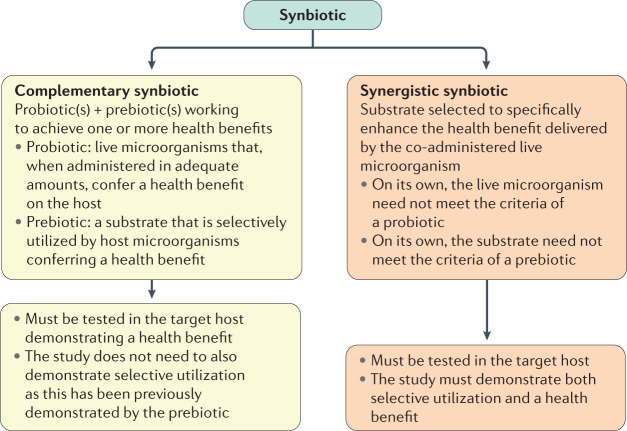
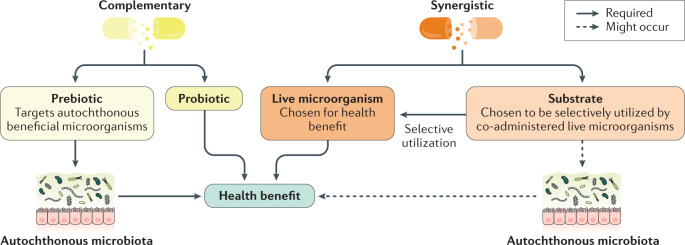
In May 2019, the International Scientific Association for Probiotics and Prebiotics (ISAPP) convened a panel of nutritionists, physiologists and microbiologists to review the definition and scope of synbiotics. The panel updated the definition of a synbiotic to “a mixture comprising live microorganisms and substrate(s) selectively utilized by host microorganisms that confers a health benefit on the host”. The panel concluded that defining synbiotics as simply a mixture of probiotics and prebiotics could suppress the innovation of synbiotics that are designed to function cooperatively. Requiring that each component must meet the evidence and dose requirements for probiotics and prebiotics individually could also present an obstacle. Rather, the panel clarified that a complementary synbiotic, which has not been designed so that its component parts function cooperatively, must be composed of a probiotic plus a prebiotic, whereas a synergistic synbiotic does not need to be so. A synergistic synbiotic is a synbiotic for which the substrate is designed to be selectively utilized by the co-administered microorganisms. This Consensus Statement further explores the levels of evidence (existing and required), safety, effects upon targets and implications for stakeholders of the synbiotic concept.
Overview
The claims and statistics of this paper haven’t been checked yet.
Free: it reads the open-access text and checks the first 5 claims that cite a source we can check. Create a free account to check every claim.
Integrity signals
Registry
Cites
Statistics
Figures
Verification
Claims the paper makes
The claims and statistics of this paper haven’t been checked yet.
Free: it reads the open-access text and checks the first 5 claims that cite a source we can check. Create a free account to check every claim.
Claims other papers make about this one
Each is checked against this paper’s own text: does it say what the citing paper says it does?
The source backs part of the claim, not all of it — or backs it for a different population, condition or comparison.
In the citing paper
“A way to enhance probiotic effectiveness is the combination of probiotics and prebiotic compounds, under the concept of ‘synbiotic’ [69].”
From Psychobiotic effects on anxiety are modulated by lifestyle behaviors: a randomized placebo-controlled trial on healthy adults (2023) · cites this paper as [69]
Experimental — accuracy not yet measuredIn the citing paper
“Third, the minimum fiber concentration suggested for a functional synbiotic [63] was used in the study, that in theory could be sufficient to stimulate the cognate gut microorganisms.”
Self-check
Percentages, sums and reported differences re-computed from the paper’s own numbers.
The self-check needs the paper’s full text.
Citations
Cites
1 retracted
Asemi, Z., Khorrami-Rad, A., Alizadeh, S.-A., Shakeri, H., & Esmaillzadeh, A. (2014) · Clinical Nutrition · doi:10.1016/j.clnu.2013.05.015 · Cited by 190
RetractedDiet rapidly and reproducibly alters the human gut microbiome
David, L. A., Maurice, C. F., Carmody, R. N., Gootenberg, D. B., Button, J. E., Wolfe, B. E., Ling, A. V., Devlin, A. S., Varma, Y., Fischbach, M. A., et al. (2014) · Nature · doi:10.1038/nature12820 · Cited by 10,100
Hill (2014) · doi:10.1038/nrgastro.2014.66 · Cited by 9,592
Moher, D., Hopewell, S., Schulz, K. F., Montori, V., Gotzsche, P. C., Devereaux, P. J., Elbourne, D., Egger, M., & Altman, D. G. (2010) · BMJ · doi:10.1136/bmj.c869 · Cited by 8,883
Dietary Modulation of the Human Colonic Microbiota: Introducing the Concept of Prebiotics
Gibson, G. R., & Roberfroid, M. B. (1995) · The Journal of Nutrition · doi:10.1093/jn/125.6.1401 · Cited by 7,667
Self-citationGibson, G. R., Hutkins, R., Sanders, M. E., Prescott, S. L., Reimer, R. A., Salminen, S. J., Scott, K., Stanton, C., Swanson, K. S., Cani, P. D., et al. (2017) · Nature Reviews Gastroenterology & Hepatology · doi:10.1038/nrgastro.2017.75 · Cited by 5,634
Self-citationDiversity, stability and resilience of the human gut microbiota
Lozupone, C. A., Stombaugh, J. I., Gordon, J. I., Jansson, J. K., & Knight, R. (2012) · Nature · doi:10.1038/nature11550 · Cited by 5,533
Zheng, J., Wittouck, S., Salvetti, E., Franz, C. M. A. P., Harris, H. M. B., Mattarelli, P., O’Toole, P. W., Pot, B., Vandamme, P., Walter, J., et al. (2020) · International Journal of Systematic and Evolutionary Microbiology · doi:10.1099/ijsem.0.004107 · Cited by 3,313
The ecology of the microbiome: Networks, competition, and stability
Coyte, K. Z., Schluter, J., & Foster, K. R. (2015) · Science · doi:10.1126/science.aad2602 · Cited by 2,748
Dethlefsen, L., & Relman, D. A. (2011) · Proceedings of the National Academy of Sciences · doi:10.1073/pnas.1000087107 · Cited by 2,421
Cited by
Items 601–700 of 1,001
Meta-analysis of randomized controlled trials of the effects of probiotics in Parkinson's disease
Chu, C., Yu, L., Li, Y. H., Guo, H., Zhai, Q., Chen, W., & Tian, F. (2023) · Food & Function · doi:10.1039/d2fo03825k · Cited by 36
Battistini, C., Herkenhoff, M. E., Leite, M. D. S., Vieira, A. D. S., Bedani, R., & Saad, S. M. I. (2021) · Probiotics and Antimicrobial Proteins · doi:10.1007/s12602-021-09839-8 · Cited by 35
“Prebiotics may be combined with probiotics, resulting in a “complementary synbiotic,” promoting a better adaptation of the microorganism in the food matrix, besides a possible competitive advantage of the probiotics over the intestinal microbiota [11, 13, 21].”
Backgroundde la Barquera, B. S. Y. S., Carrillo, B. E. M., Garrido, J. F. A., Martínez-Méndez, R., Arciniega, A. D. B., Valdés‐Ramos, R., & Piña, A. E. S. (2022) · The journal of nutrition health & aging · doi:10.1007/s12603-022-1842-4 · Cited by 38
“In 2019, the ISAPP updated the definition of symbiotic to “a mixture comprising live microorganisms and substrate(s) selectively utilized by host microorganisms that confers a health benefit on the host” (22).”
Ice cream as functional food: A review of health‐promoting ingredients in the frozen dairy products
Mohammed, N. K., Khair, M. F. B., Ahmad, N. H., & Hussin, A. S. M. (2022) · Journal of Food Process Engineering · doi:10.1111/jfpe.14171 · Cited by 40
Xie, Z., Zhang, G., Liu, R., Wang, Y., Tsapieva, A., Zhang, L., & Han, J. (2023) · Nutrients · doi:10.3390/nu15071758 · Cited by 36
Ren, L., Wang, S., Liu, S., Prasanthi, H. A. C., Li, Y., Cao, J., Zhong, F., Guo, L., Lu, F., & Luo, X. (2024) · Foods · doi:10.3390/foods13060923 · Cited by 34
Mojgani, N., Ashique, S., Moradi, M., Bagheri, M., Garg, A., Kaushik, M., Hussain, M. S., Yasmin, S., & Ansari, M. Y. (2025) · Probiotics and Antimicrobial Proteins · doi:10.1007/s12602-025-10477-7 · Cited by 41
Zhu, J., Fu, Y., Olovo, C. V., Xu, J., Wu, Q., Wei, W., Jiang, K., & Zheng, X. (2025) · Frontiers in Microbiology · doi:10.3389/fmicb.2025.1535356 · Cited by 33
Faraki, A., Noori, N., Gandomi, H., Banuree, S. A. H., & Rahmani, F. (2020) · Food Science & Nutrition · doi:10.1002/fsn3.1414 · Cited by 33
Hasain, Z., Roos, N. A. C., Rahmat, F., Mustapa, M., Ali, R. A. R., & Mokhtar, N. M. (2021) · Nutrients · doi:10.3390/nu13093045 · Cited by 39
Antidiabetic Effects of Pediococcus acidilactici pA1c on HFD-Induced Mice
Cabello-Olmo, M., Oneca, M., Pajares, M. J., Jiménez, M., Ayo, J., Encío, I., Barajas, M. A., & Araña, M. (2022) · Nutrients · doi:10.3390/nu14030692 · Cited by 34
Miao, M., Wáng, Q., Wang, X., Fan, C., Luan, T., Yan, L., Zhang, Y., Rui, C., Hou, W., Zeng, X., et al. (2022) · Frontiers in Microbiology · doi:10.3389/fmicb.2022.832151 · Cited by 37
Ganda, E., Chakrabarti, A., Sardi, M. I., Tench, M., Kozlowicz, B. K., Norton, S. A., Warren, L. K., & Khafipour, E. (2023) · Frontiers in Veterinary Science · doi:10.3389/fvets.2023.1134092 · Cited by 34
Cui, H., Feng, C., Guo, C., & Duan, Z. (2022) · Indian Journal of Dermatology · doi:10.4103/ijd.ijd_655_22 · Cited by 34
From the past to the future: Fermented milks and their health effects against human diseases
Zhang, T., Geng, S., Cheng, T., Mao, K., Chitrakar, B., Gao, J., & Sang, Y. (2023) · Food Frontiers · doi:10.1002/fft2.304 · Cited by 37
Zhou, L., Abouelezz, K., Momenah, M. A., Bajaber, M. A., Baazaoui, N., Taha, T. F., Awad, A. E., Alamoudi, S. A., Beyari, E. A., Alanazi, Y. F., et al. (2023) · Poultry Science · doi:10.1016/j.psj.2023.103239 · Cited by 33
“Synbiotics are a mixture of live microorganisms and substrate(s) speci fi cally utilized by host microorganisms that provide a health bene fi t to the chickens (Swanson et al., 2020).”
BackgroundSynthesis of prebiotic galactooligosaccharides from lactose and lactulose by dairy propionibacteria
Sabater, C., Fara, A., Palacios, J., Corzo, N., Requena, T., Montilla, A., & Zárate, G. (2018) · Food Microbiology · doi:10.1016/j.fm.2018.08.014 · Cited by 33
Fijan, S., Kocbek, P., Steyer, A., Vodičar, P. M., & Strauss, M. (2022) · Microorganisms · doi:10.3390/microorganisms10122518 · Cited by 38
Hurtado‐Romero, A., Zepeda-Hernández, A., Uribe-Velázquez, T., la Cruz, M. F. R.-D., Raygoza-Murguía, L. V., García-Amezquita, L. E., & García‐Cayuela, T. (2023) · LWT · doi:10.1016/j.lwt.2023.114955 · Cited by 32
Integrating microbiome science and evolutionary medicine into animal health and conservation
Bornbusch, S. L., Power, M. L., Schulkin, J. A., Drea, C. M., Maslanka, M., & Muletz‐Wolz, C. R. (2023) · Biological reviews/Biological reviews of the Cambridge Philosophical Society · doi:10.1111/brv.13030 · Cited by 36
“This combination of relevant microbes and their preferred substrates, known as a ‘ synbiotic ’ , is a novel and promising approach (Swanson et al ., 2020).”
BackgroundTheodorou, I. M., Καπουκρανίδου, Δ., Theodorou, M., Tsetis, J. K., Menni, A.-E., Tzikos, G., Bareka, S., Shrewsbury, A. D., Stavrou, G., & Kotzampassi, K. E. (2024) · Nutrients · doi:10.3390/nu16152526 · Cited by 36
Metabolic syndrome and synbiotic targeting of the gut microbiome
Núñez‐Sánchez, M. Á., Herisson, F. M., Cluzel, G. L., & Caplice, N. M. (2021) · Current Opinion in Food Science · doi:10.1016/j.cofs.2021.02.014 · Cited by 34
Ke, A. (2022) · The Atrium (University of Guelph) · doi:10.3389/fmicb.2021.755083
Bacterial Gut Microbiota and Infections During Early Childhood
George, S., Aguilera, X., Gallardo, P., Farfán, M. J., Lucero, Y., Torres, J. P., Vidal, R. M., & O’Ryan, M. (2022) · Frontiers in Microbiology · doi:10.3389/fmicb.2021.793050 · Cited by 37
Human Microbiome and Its Medical Applications
Zhang, Y., Zhou, L., Xia, J., Dong, C., & Luo, X. (2022) · Frontiers in Molecular Biosciences · doi:10.3389/fmolb.2021.703585 · Cited by 32
“Gut Prevotella/Bacteroides ratio, and the abundance of SCFAs-producing bacteria including Eubacterium, Lactobacillus, and Streptococcus, were positively associated with better clinical response.”
BackgroundHow to Improve Health with Biological Agents—Narrative Review
Zawistowska-Rojek, A., & Tyski, S. S. (2022) · Nutrients · doi:10.3390/nu14091700 · Cited by 34
“Synbiotics a mixture comprising of live microorganisms and substrate(s) selectively utilized by host microorganisms that confers a health benefit on the host [9]”
BackgroundTang, W., Han, S., Zhou, J., Xu, Q., Dong, M., Fan, X., Rui, X., Zhang, Q., Chen, X., Jiang, M., et al. (2020) · Journal of Functional Foods · doi:10.1016/j.jff.2020.103952 · Cited by 31
Tang, W., Zhou, J., Xu, Q., Dong, M., Fan, X., Rui, X., Zhang, Q., Chen, X., Jiang, M., Wu, J., et al. (2020) · Carbohydrate Polymers · doi:10.1016/j.carbpol.2019.115593 · Cited by 31
Pell, L. G., Horne, R. G., Huntley, S., Rahman, H., Kar, S., Islam, M. S., Evans, K. C., Saha, S. K., Campigotto, A. J., Morris, S. K., et al. (2021) · Scientific Reports · doi:10.1038/s41598-021-94997-6 · Cited by 34
Effects of Lactobacillus gasseri CP2305 on Mild Menopausal Symptoms in Middle-Aged Women
Sawada, D., Sugawara, T., Hirota, T., & Nakamura, Y. (2022) · Nutrients · doi:10.3390/nu14091695 · Cited by 33
Targeting the gut-lung axis by synbiotic feeding to infants in a randomized controlled trial
Sjödin, K. S., Sjödin, A., Ruszczyński, M., Kristensen, M. B., Hernell, O., Szajewska, H., & West, C. E. (2023) · BMC Biology · doi:10.1186/s12915-023-01531-3 · Cited by 32
“There is now emerging interest in feeding infants formula with added pre- and probiotics, termed synbiotics [13, 14], when breastfeeding is not feasible.”
BackgroundChu, C., Jiang, J., Yu, L., Li, Y. H., Zhang, S., Zhou, W., Wang, Q., Zhao, J., Zhai, Q., Tian, F., et al. (2023) · Engineering · doi:10.1016/j.eng.2023.04.010 · Cited by 32
Probiotics for oral health: do they deliver what they promise?
Holm, W. V., Lauwens, K., Wever, P. D., Schuermans, A., Zayed, N., Pamuk, F., Saghi, M., Fardim, P., Bernaerts, K., Boon, N., et al. (2023) · Frontiers in Microbiology · doi:10.3389/fmicb.2023.1219692 · Cited by 35
Duysburgh, C., Miclotte, L., Green, J. B., Watts, K. T., Sardi, M. I., Chakrabarti, A., Khafipour, E., & Marzorati, M. (2024) · Frontiers in Microbiology · doi:10.3389/fmicb.2024.1358456 · Cited by 35
The Crucial Roles of Diet, Microbiota, and Postbiotics in Colorectal Cancer
Kuru-Yaşar, R., & Üstün‐Aytekin, Ö. (2024) · Current Nutrition Reports · doi:10.1007/s13668-024-00525-z · Cited by 35
Bezemer, G. F. G., Diks, M. A. P., Mortaz, E., van Ark, I., van Bergenhenegouwen, J., Kraneveld, A. D., Folkerts, G., & Garssen, J. (2024) · Frontiers in Nutrition · doi:10.3389/fnut.2024.1371064 · Cited by 32
Bavaro, A. R., Tarantini, A., Bruno, A., Logrieco, A. F., Gallo, A., Mita, G., Valerio, F., Bleve, G., & Cardinali, A. (2024) · Aging Clinical and Experimental Research · doi:10.1007/s40520-024-02860-1 · Cited by 33
Samarakoon, K., & Rupasinghe, H. P. V. (2025) · Journal of Food Composition and Analysis · doi:10.1016/j.jfca.2025.107656 · Cited by 33
From dysbiosis to longevity: a narrative review into the gut microbiome’s impact on aging
Tseng, C., & Wu, C. (2025) · Journal of Biomedical Science · doi:10.1186/s12929-025-01179-x · Cited by 32
Sun, C., Zhu, J., Sun, X., Zhang, Z., Sun, Y., Jin, Y., & Wu, T. (2025) · Journal of Advanced Research · doi:10.1016/j.jare.2025.12.032 · Cited by 36
“A synergistic synbiotic, by contrast, inc ludes a substrate that is selectively utilized by the co-administered viable microorganism(s) [138].”
Eor, J. Y., Son, Y. J., Kim, J.-Y., Kang, H., Youn, S. E., Kim, J. H., & Kim, S. H. (2021) · Epilepsy Research · doi:10.1016/j.eplepsyres.2021.106668 · Cited by 33
Parhi, P., Song, K. P., & Choo, W. S. (2022) · Journal of Food Science and Technology · doi:10.1007/s13197-022-05361-z · Cited by 31
“Synbiotics were developed and researched to overcome possible survival difficulties for probiotics during production, storage, and passage through the gastrointestinal tract, significantly improving the probiotic effect (Swanson et al. 2020).”
BackgroundDevelopment of a synbiotic that protects against ovariectomy-induced trabecular bone loss
Lawenius, L., Gustafsson, K. L., Wu, J., Nilsson, K. H., Movérare‐Skrtic, S., Schott, E. M., Soto-Girón, M. J., Toledo, G. V., Sjögren, K., & Ohlsson, C. (2022) · American Journal of Physiology-Endocrinology and Metabolism · doi:10.1152/ajpendo.00366.2021 · Cited by 32
Lee, A. H., Lin, C.-Y., Do, S., Oba, P. M., Belchik, S. E., Steelman, A. J., Schauwecker, A., & Swanson, K. S. (2022) · Journal of Animal Science · doi:10.1093/jas/skac048 · Cited by 36
Self-citationWan, J., & Ma, J. (2022) · Frontiers in Microbiology · doi:10.3389/fmicb.2022.927883 · Cited by 34
“Synbiotics are mixture comprising live microorganisms and substrates selectively utilized by host microorganisms that confers a health benefit on the host (Swanson et al., 2020).”
BackgroundAnsari, F., Pimentel, T. C., Pourjafar, H., Ibrahim, S. A., & Jafari, S. M. (2022) · Foods · doi:10.3390/foods11213366 · Cited by 31
“Prebiotics as nondigestible ingredients are digested by the colon’s microflora and produce health-promoting compounds such as various organic acids, short-chain fatty acids, and vitamins [1,2].”
BackgroundFiore, G., Pascuzzi, M. C., Profio, E. D., Corsello, A., Agostinelli, M., Mendola, A. L., Milanta, C., Campoy, C., Calcaterra, V., Zuccotti, G., et al. (2022) · Pharmacological Research · doi:10.1016/j.phrs.2022.106599 · Cited by 33
Asif, A., Afzaal, M., Shahid, H., Saeed, F., Ahmed, A., Shah, Y. A., Ejaz, A., Ghani, S., Ateeq, H., & Khan, M. R. (2023) · Food Science & Nutrition · doi:10.1002/fsn3.3465 · Cited by 36
Kiernan, D. P., O’Doherty, J. V., & Sweeney, T. (2023) · Animals · doi:10.3390/ani13192996 · Cited by 37
“A complementary synbiotic is defined as “a synbiotic composed of a probiotic combined with a prebiotic, which is designed to target autochthonous microorganisms” [305].”
InfluentialKhakpour, M., Mohsenzadeh, M., & Salari, A. (2024) · AMB Express · doi:10.1186/s13568-024-01704-5 · Cited by 34
Li, K., Xiao, X., Li, Y., Lu, S., Zi, J., Sun, X., Xu, J., Liu, H., Li, X., Song, T., et al. (2024) · Journal of Animal Science and Biotechnology/Journal of animal science and biotechnology · doi:10.1186/s40104-024-01073-w · Cited by 36
“Synbiotics are mixtures comprising live microorganisms and substrate(s) selectively utilized by intestinal microorganisms that confer health benefits on the host [170].”
BackgroundIntestinal Microbiota Interventions to Enhance Athletic Performance—A Review
Patel, B. K., Patel, K. H., Lee, C. N., & Moochhala, S. (2024) · International Journal of Molecular Sciences · doi:10.3390/ijms251810076 · Cited by 32
Appraisal of postbiotics in cancer therapy
Sudaarsan, A. S. K., & Ghosh, A. R. (2024) · Frontiers in Pharmacology · doi:10.3389/fphar.2024.1436021 · Cited by 33
Probiotics in Nanotechnology-Driven Wound Healing: From Mechanistic Insight to Clinical Promise
Umekar, M. J., Chaudhary, A. A., Manghani, M., Shidhaye, S. S., Khajone, P., Mahore, J., Rudayni, H. A., & Trivedi, R. (2025) · Pharmaceutics · doi:10.3390/pharmaceutics17070805 · Cited by 35
Li, N., Wang, Z., Qu, T., Kraft, J. E., Oh, J., van Pijkeren, J., Huber, G., & Pan, X. (2019) · Green Chemistry · doi:10.1039/c9gc00663j · Cited by 15
Tavares-Silva, E., Caris, A. V., dos Santos, S. A., Ravacci, G. R., & dos Santos, R. V. T. (2021) · Nutrients · doi:10.3390/nu13051478 · Cited by 36
“In addition, probiotics increase the bioavailability of nutrients and assist the homeostatic development of the resident microbial environment by stimulating immunological functions that include cell maturation, proliferation, and IL-10 production [49,50].”
BackgroundIntaratrakul, K., Nitisinprasert, S., Nguyen, T., Haltrich, D., & Keawsompong, S. (2021) · Bioactive Carbohydrates and Dietary Fibre · doi:10.1016/j.bcdf.2021.100292 · Cited by 30
Role of microbial secreted proteins in gut microbiota-host interactions
Vidal‐Veuthey, B., González, D., & Cárdenas, J. P. (2022) · Frontiers in Cellular and Infection Microbiology · doi:10.3389/fcimb.2022.964710 · Cited by 32
Gut microbiota modulation by plant polyphenols in koi carp (Cyprinus carpio L.)
Zhang, R., Kang, X., Liu, L., Wang, X., Li, H., Zhu, J., Cao, Y., & Zhu, H. (2022) · Frontiers in Microbiology · doi:10.3389/fmicb.2022.977292 · Cited by 30
Intestinal microbiota: A promising therapeutic target for hypertension
Sun, D., Xiang, H., Yan, J., & He, L. (2022) · Frontiers in Cardiovascular Medicine · doi:10.3389/fcvm.2022.970036 · Cited by 31
“Prebiotics are defined as a healthy matrix that is selectively utilized by host microorganisms to promote the growth of beneficial intestinal microorganisms (128, 129).”
BackgroundPaul, P., Kaul, R., & Châari, A. (2022) · International Journal of Molecular Sciences · doi:10.3390/ijms232314838 · Cited by 32
“As per the most recent consensus statements of the International Scientific Association for Probiotics and Prebiotics (ISAPP), probiotics are defined as “live microorganisms which when administered in adequate amounts confer a health benefit on the host” [23]; prebiotics as “a substrate that is selectively utilized by…”
BackgroundThe Role of Short-Chain Fatty Acids in Acute Pancreatitis
Yan, X., Li, J., & Wu, D. (2023) · Molecules · doi:10.3390/molecules28134985 · Cited by 35
Martyniak, A., Zakrzewska, Z., Schab, M., Zawartka, A., Wędrychowicz, A., Skoczeń, S., & Tomasik, P. (2023) · Microorganisms · doi:10.3390/microorganisms11071775 · Cited by 33
Yang, H., Fan, X., Mao, X., Yu, B., He, J., Yan, H., & Wang, J. (2024) · Journal of Animal Science and Biotechnology/Journal of animal science and biotechnology · doi:10.1186/s40104-024-01018-3 · Cited by 32
“Synbiotics are defined as “mixtures of probiotics and prebiotics that beneficially affects the host by improving the survival and implantation of live microbial dietary supplements” [171].”
Backgroundda Silva, J. M., Barão, C. E., Esmerino, E. A., da Cruz, A. G., & Pimentel, T. C. (2021) · Journal of Food Science · doi:10.1111/1750-3841.15566 · Cited by 30
Recommendations to Improve Quality of Probiotic Systematic Reviews With Meta-Analyses
McFarland, L. V., Hecht, G. A., Sanders, M. E., Goff, D. A., Goldstein, E. J. C., Hill, C., Johnson, S., Kashi, M. R., Kullar, R., Marco, M. L., et al. (2023) · JAMA Network Open · doi:10.1001/jamanetworkopen.2023.46872 · Cited by 32
Self-citationGut–Liver Axis as a Therapeutic Target for Drug-Induced Liver Injury
Tao, W., Fan, Q., & Wei, J. (2024) · Current Issues in Molecular Biology · doi:10.3390/cimb46020078 · Cited by 30
Cataldo, P. G., Martínez, M. P. U., Villena, J., Kitazawa, H., Saavedra, L., & Hebert, E. M. (2024) · Frontiers in Microbiology · doi:10.3389/fmicb.2024.1408624 · Cited by 30
Functional properties and safety traits of L. rhamnosus and L. reuteri postbiotic extracts
Jalali, S., Mojgani, N., Sanjabi, M. R., Saremnezhad, S., & Haghighat, S. (2024) · AMB Express · doi:10.1186/s13568-024-01768-3 · Cited by 31
Nutritional and Microbial Strategies for Treating Acne, Alopecia, and Atopic Dermatitis
Borrego-Ruiz, A., & Borrego, J. J. (2024) · Nutrients · doi:10.3390/nu16203559 · Cited by 35
“Swanson et al. [104] redefined a symbiotic as a combination of live microorganisms and substrates (prebiotics) that are selectively utilized by commensal microorganisms, thereby conferring a health benefit on the host.”
BackgroundBiotics and bacterial function: impact on gut and host health
Kandari, A., Al-Odat, M. A., Alzaïd, F., & Scott, K. P. (2024) · The ISME Journal · doi:10.1093/ismejo/wrae226 · Cited by 30
“According to the latest definition from the International Scientific Association for Probiotics and Prebiotics (ISAPP), a synbiotic is “a mixture comprising live microorganisms and substrate(s) selectively utilized by host microorganisms that confers a health benefit on the host” [152].”
Self-citationLi, T., Wu, J., Xia, S., Yang, H., Mu, H., Zhu, Y., Wu, R., & Liu, Z. (2025) · Food Research International · doi:10.1016/j.foodres.2025.117108 · Cited by 34
Verediano, T. A., Viana, M. L., Tostes, M. D. G. V., Oliveira, D. D. S., Nunes, L. D. C., & Costa, N. M. B. (2020) · Journal of the Science of Food and Agriculture · doi:10.1002/jsfa.10595 · Cited by 31
Herreweghen, F. V., Paepe, K. D., Marzorati, M., & de Wiele, T. V. (2020) · Applied and Environmental Microbiology · doi:10.1128/aem.02647-20 · Cited by 34
“limited number of species that can degrade the complex mucin structure and the described health effect conferred by its degradation, mucins fit the definition of prebiotic substances, “substrates that are selectively utilized by host microorganisms conferring a health benefit” (14, 30, 31).”
BackgroundCao, Z., Guo, Y., Liu, Z., Zhang, H., Zhou, H., & Shang, H. (2021) · Process Biochemistry · doi:10.1016/j.procbio.2021.11.008 · Cited by 29
Lalitsuradej, E., Sirilun, S., Sittiprapaporn, P., Sivamaruthi, B. S., Pintha, K., Tantipaiboonwong, P., Khongtan, S., Fukngoen, P., Peerajan, S., & Chaiyasut, C. (2022) · Foods · doi:10.3390/foods11050759 · Cited by 30
Dinu, L.-D., Avram, I., Pelinescu, D. R., & Vamanu, E. (2022) · Biomedicines · doi:10.3390/biomedicines10102392 · Cited by 31
Plaza‐Díaz, J., Ruiz‐Ojeda, F. J., Morales, J., de la Torre, A. I. C., García-García, A., de Prado, C. N., Coronel‐Rodríguez, C., Crespo, C., Ortega, E., Martín-Pérez, E., et al. (2022) · Nutrients · doi:10.3390/nu15010147 · Cited by 33
Miranda, V. C., Souza, R. O., Quintanilha, M. F., Gallotti, B., de Assis, H. C., Faria, A. M. C., Nicoli, J. R., Cara, D. C., & Martins, F. S. (2023) · Probiotics and Antimicrobial Proteins · doi:10.1007/s12602-023-10076-4 · Cited by 30
Egea, M. B., Filho, J. G. D. O., & Lemes, A. C. (2023) · International Journal of Molecular Sciences · doi:10.3390/ijms241512015 · Cited by 35
Gut Microbiota Interventions to Retain Residual Kidney Function
Mafra, D., Kemp, J. A., Borges, N. A., Wong, M., & Stenvinkel, P. (2023) · Toxins · doi:10.3390/toxins15080499 · Cited by 36
“In 2019, the International Scientific Association for Probiotics and Prebiotics (ISAPP) updated the synbiotic definition as “a mixture comprising live microorganisms and substrate(s) selectively utilised by host microorganisms that confers a health benefit on the host” [100].”
BackgroundLiu, L., Wang, A., Shi, H., Tao, H., & Nahata, M. C. (2023) · Clinical Nutrition · doi:10.1016/j.clnu.2023.08.015 · Cited by 29
Kiernan, D. P., O’Doherty, J. V., & Sweeney, T. (2023) · Animals · doi:10.3390/ani13193012 · Cited by 32
Dingenen, L. V., Segers, C., Wouters, S., Mysara, M., Leys, N., Kumar‐Singh, S., Malhotra‐Kumar, S., & Houdt, R. V. (2023) · Frontiers in Cellular and Infection Microbiology · doi:10.3389/fcimb.2023.1298264 · Cited by 31
Kolonics, A., Bori, Z., Torma, F., Ábrahám, D., Fehér, J., & Radak, Z. O. (2023) · BMC Neuroscience · doi:10.1186/s12868-023-00836-x · Cited by 31
Jonova, S., Ilgaža, A., & Zolovs, M. (2021) · Veterinary Medicine International · doi:10.1155/2021/8848441 · Cited by 29
“Synbiotics are defined as “a mixture, comprising live microorganisms and substrate(s) selectively utilized by host microorganisms, that confers a health benefit on the host” [21].”
BackgroundSadighbathi, S., Saris, P. E. J., Amiri, S., & Yousefvand, A. (2023) · Frontiers in Microbiology · doi:10.3389/fmicb.2023.1276268 · Cited by 38
Brockway, M. L. (2024) · Frontiers in Public Health · doi:10.3389/fpubh.2024.1408246 · Cited by 32
The Microbiome in Inflammatory Bowel Disease
Jauregui-Amezaga, A., & Smet, A. (2024) · Journal of Clinical Medicine · doi:10.3390/jcm13164622 · Cited by 30
Espín, J. C., Jarrín‐Orozco, M. P., Osuna‐Galisteo, L., Ávila‐Gálvez, M. Á., Romo‐Vaquero, M., & Selma, M. V. (2024) · Molecular Nutrition & Food Research · doi:10.1002/mnfr.202400526 · Cited by 32
McBeth, A., Miller, E., Thompson, B., Hanaway, P. J., Thexton, A., & Zwickey, H. L. (2025) · Journal of Restorative Medicine · doi:10.14200/jrm.2025.0002 · Cited by 35
Current trends in non-dairy based synbiotics
Mishra, A., Chakravarty, I., & Mandavgane, S. A. (2021) · Critical Reviews in Biotechnology · doi:10.1080/07388551.2021.1898329 · Cited by 30
“A recent definition of synbiotic states that a combination of live microorganisms and a substrate, which is selectively utilized by the microorganism that confers health benefits to the host is called synbiotics [16].”
BackgroundXia, X., Ni, J., Yin, S., Yang, Z., Jiang, H., Wang, C., Peng, J., Wei, H., & Wang, X. (2021) · Frontiers in Microbiology · doi:10.3389/fmicb.2021.686648 · Cited by 29
Mitchell, L. K., & Davies, P. S. W. (2021) · European Journal of Clinical Nutrition · doi:10.1038/s41430-021-01027-9 · Cited by 30
Chaney, W. E., Naqvi, S. A., Gutierrez, M., Gernat, A. G., Johnson, T. J., & Petry, D. B. (2022) · Microorganisms · doi:10.3390/microorganisms10030544 · Cited by 34
Synbiotic Supplements in the Prevention of Obesity and Obesity-Related Diseases
Hijová, E. (2022) · Metabolites · doi:10.3390/metabo12040313 · Cited by 31
“(2) complementary synbiotics—synbiotics composed of a probiotic in combination with a prebiotic, that is intended for targeting the autochthonous microorganisms [49].”
BackgroundPolyphenol Mechanisms against Gastric Cancer and Their Interactions with Gut Microbiota: A Review
Li, M., Zheng, Y., Zhao, J., Liu, M., Shu, X., Li, Q., Wang, Y., & Zhou, Y. (2022) · Current Oncology · doi:10.3390/curroncol29080417 · Cited by 32
Inchingolo, A. M., Patano, A., Piras, F., Mancini, A., Inchingolo, A. D., Paduanelli, G., Inchingolo, F., Palermo, A., Dipalma, G., & Malcangi, G. (2023) · Microorganisms · doi:10.3390/microorganisms11061477 · Cited by 33
“At least one well-designed trial demonstrating a health advantage (complementary synbiotic) or both selective utilization of the substrate and a health benefit (synergistic synbiotic) in the target host has been carried out [28,54].”
BackgroundGut microbiome supplementation as therapy for metabolic syndrome
Antony, M. A., Chowdhury, A., Edem, D., Raj, R., Nain, P., Joglekar, M., Verma, V. K., & Kant, R. (2023) · World Journal of Diabetes · doi:10.4239/wjd.v14.i10.1502 · Cited by 31
Prebiotics, Probiotics, and Synbiotics—A Research Hotspot for Pediatric Obesity
Balas, R. B., Meliţ, L. E., Lupu, A., Lupu, V. V., & Mărginean, C. O. (2023) · Microorganisms · doi:10.3390/microorganisms11112651 · Cited by 34
Metadata
- Authors
- Swanson, K. S., Gibson, G. R., Hutkins, R., Reimer, R. A., Reid, G., Verbeke, K., Scott, K. P., Holscher, H. D., Azad, M. B., Delzenne, N. M., & Sanders, M. E.
- Affiliations
- University of Illinois Urbana-Champaign (US)
- University of Reading (GB)
- University of Nebraska–Lincoln (US)
- University of Calgary (CA)
- Western University (CA)
- KU Leuven (BE)
- University of Aberdeen (GB)
- Children's Hospital Research Institute of Manitoba (CA)
- UCLouvain (BE)
- Corresponding author
- Swanson, Kelly S.
- ORCID
- Venue
- Nature Reviews Gastroenterology & Hepatology
- Published
- 2020-08-21
- Volume
- 17
- Issue
- 11
- Pages
- 687-701
- ISSN
- 1759-5045 (ISSN-L)
- 1759-5053
- PMC
- PMC7581511
- OpenAlex
- W2694487218
- Cited by
- 2,196
- References
- 307
- Citations by year
- 2026: 285 · 2025: 363 · 2024: 446 · 2023: 400 · 2022: 373 · 2021: 225 · 2020: 44
- FWCI
- 22.02
- Type
- journal article
- Language
- en
- Open access
- hybrid
- doi.org
- Licence
- cc-by
- creativecommons.org/licenses/by/4.0 (tdm)
- creativecommons.org/licenses/by/4.0 (vor)
- Locations
- Nature Reviews Gastroenterology & Hepatology (publishedVersion, cc-by)
- PubMed Central (publishedVersion, cc-by)
- PubMed (publishedVersion)
- Aberdeen University Research Archive (Aberdeen University) (submittedVersion)
- Lincoln (University of Nebraska) (submittedVersion)
- Digital Access to Libraries (Université catholique de Louvain (UCL), l'Université de Namur (UNamur) and the Université Saint-Louis (USL-B)) (submittedVersion, other-oa)
- Scholarship@Western (Western University) (submittedVersion)
- Lirias (KU Leuven) (submittedVersion, cc-by)
- Funders
- GlaxoSmithKline
- PepsiCo
- General Mills
- Mead Johnson Nutrition
- Pharmavite
- Danone
- Rural and Environment Science and Analytical Services Division
- Scottish Government
- Medela
- Topics
- Life Sciences › Agricultural and Biological Sciences › Food Science › Probiotics and Fermented Foods
- Health Sciences › Nursing › Nutrition and Dietetics › Microbial Metabolites in Food Biotechnology
- Health Sciences › Nursing › Nutrition and Dietetics › Infant Nutrition and Health
- Keywords
- postbiotics, synbiotics, probiotics, prebiotics, health benefits, mechanism of action, safety, regulation, microbial metabolites
- MeSH terms
- Humans, Probiotics, Prebiotics, Synbiotics
About these checks
Registry, retraction, Cites and statistics results are computed, not judged, with one exception: a printed reference that no index lists is read once by a model before it counts as a citation error. Claims are extracted by a model and kept only when their quote appears verbatim in the text; each cited source is then checked, with a model’s help, for whether it says what the claim relies on. Those verdicts can be wrong — read the claim’s quote and the cited source before relying on one.
Statistics and arithmetic are recomputed, not judged.
Confidence bands are shown only for fields calibrated on our annotated test set. None is calibrated yet, so no band is shown.
What counts as a claim ›How we measure confidence ›How we check this ›
Are you an author, or do you see a problem with this page? Request a review
Data sources
Bibliographic data: Semantic Scholar, OpenAlex, Crossref.
Contains information from the Semantic Scholar Academic Graph Datasets, made available under the ODC Attribution License (ODC-BY 1.0).
Semantic Scholar’s data is described in: Kinney, R., et al. (2023). The Semantic Scholar Open Data Platform. arXiv:2301.10140.
