

The International Scientific Association for Probiotics and Prebiotics (ISAPP) consensus statement on the definition and scope of synbiotics
Open accessThe DOI matches its Crossref record; 303 of the 307 references it cites were found in a registry or an index.
Abstract
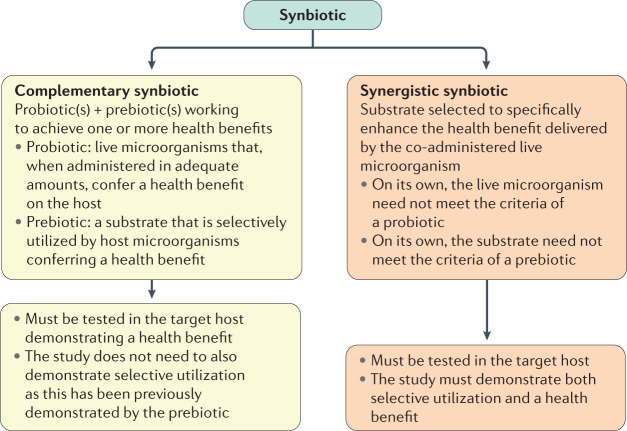
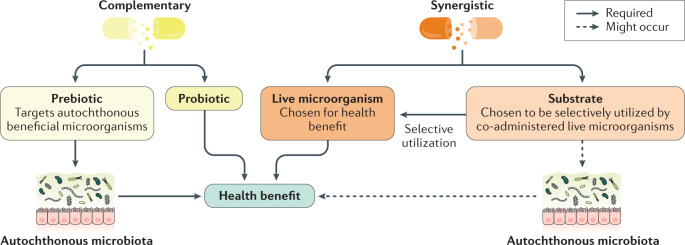
In May 2019, the International Scientific Association for Probiotics and Prebiotics (ISAPP) convened a panel of nutritionists, physiologists and microbiologists to review the definition and scope of synbiotics. The panel updated the definition of a synbiotic to “a mixture comprising live microorganisms and substrate(s) selectively utilized by host microorganisms that confers a health benefit on the host”. The panel concluded that defining synbiotics as simply a mixture of probiotics and prebiotics could suppress the innovation of synbiotics that are designed to function cooperatively. Requiring that each component must meet the evidence and dose requirements for probiotics and prebiotics individually could also present an obstacle. Rather, the panel clarified that a complementary synbiotic, which has not been designed so that its component parts function cooperatively, must be composed of a probiotic plus a prebiotic, whereas a synergistic synbiotic does not need to be so. A synergistic synbiotic is a synbiotic for which the substrate is designed to be selectively utilized by the co-administered microorganisms. This Consensus Statement further explores the levels of evidence (existing and required), safety, effects upon targets and implications for stakeholders of the synbiotic concept.
Overview
The claims and statistics of this paper haven’t been checked yet.
Free: it reads the open-access text and checks the first 5 claims that cite a source we can check. Create a free account to check every claim.
Integrity signals
Registry
Cites
Statistics
Figures
Verification
Claims the paper makes
The claims and statistics of this paper haven’t been checked yet.
Free: it reads the open-access text and checks the first 5 claims that cite a source we can check. Create a free account to check every claim.
Claims other papers make about this one
Each is checked against this paper’s own text: does it say what the citing paper says it does?
The source backs part of the claim, not all of it — or backs it for a different population, condition or comparison.
In the citing paper
“A way to enhance probiotic effectiveness is the combination of probiotics and prebiotic compounds, under the concept of ‘synbiotic’ [69].”
From Psychobiotic effects on anxiety are modulated by lifestyle behaviors: a randomized placebo-controlled trial on healthy adults (2023) · cites this paper as [69]
Experimental — accuracy not yet measuredIn the citing paper
“Third, the minimum fiber concentration suggested for a functional synbiotic [63] was used in the study, that in theory could be sufficient to stimulate the cognate gut microorganisms.”
Self-check
Percentages, sums and reported differences re-computed from the paper’s own numbers.
The self-check needs the paper’s full text.
Citations
Cites
1 retracted
Asemi, Z., Khorrami-Rad, A., Alizadeh, S.-A., Shakeri, H., & Esmaillzadeh, A. (2014) · Clinical Nutrition · doi:10.1016/j.clnu.2013.05.015 · Cited by 190
RetractedDiet rapidly and reproducibly alters the human gut microbiome
David, L. A., Maurice, C. F., Carmody, R. N., Gootenberg, D. B., Button, J. E., Wolfe, B. E., Ling, A. V., Devlin, A. S., Varma, Y., Fischbach, M. A., et al. (2014) · Nature · doi:10.1038/nature12820 · Cited by 10,100
Hill (2014) · doi:10.1038/nrgastro.2014.66 · Cited by 9,592
Moher, D., Hopewell, S., Schulz, K. F., Montori, V., Gotzsche, P. C., Devereaux, P. J., Elbourne, D., Egger, M., & Altman, D. G. (2010) · BMJ · doi:10.1136/bmj.c869 · Cited by 8,883
Dietary Modulation of the Human Colonic Microbiota: Introducing the Concept of Prebiotics
Gibson, G. R., & Roberfroid, M. B. (1995) · The Journal of Nutrition · doi:10.1093/jn/125.6.1401 · Cited by 7,667
Self-citationGibson, G. R., Hutkins, R., Sanders, M. E., Prescott, S. L., Reimer, R. A., Salminen, S. J., Scott, K., Stanton, C., Swanson, K. S., Cani, P. D., et al. (2017) · Nature Reviews Gastroenterology & Hepatology · doi:10.1038/nrgastro.2017.75 · Cited by 5,634
Self-citationDiversity, stability and resilience of the human gut microbiota
Lozupone, C. A., Stombaugh, J. I., Gordon, J. I., Jansson, J. K., & Knight, R. (2012) · Nature · doi:10.1038/nature11550 · Cited by 5,533
Zheng, J., Wittouck, S., Salvetti, E., Franz, C. M. A. P., Harris, H. M. B., Mattarelli, P., O’Toole, P. W., Pot, B., Vandamme, P., Walter, J., et al. (2020) · International Journal of Systematic and Evolutionary Microbiology · doi:10.1099/ijsem.0.004107 · Cited by 3,313
The ecology of the microbiome: Networks, competition, and stability
Coyte, K. Z., Schluter, J., & Foster, K. R. (2015) · Science · doi:10.1126/science.aad2602 · Cited by 2,748
Dethlefsen, L., & Relman, D. A. (2011) · Proceedings of the National Academy of Sciences · doi:10.1073/pnas.1000087107 · Cited by 2,421
Cited by
Items 201–300 of 1,001
The functional roles of short chain fatty acids as postbiotics in human gut: future perspectives
Ragavan, M. L., & Hemalatha, S. (2023) · Food Science and Biotechnology · doi:10.1007/s10068-023-01414-x · Cited by 90
Colantonio, A. G., Werner, S. L., & Brown, M. (2019) · Journal of the Academy of Nutrition and Dietetics · doi:10.1016/j.jand.2018.12.013 · Cited by 89
Wang, L., Ai, C., Wen, C., Qin, Y., Liu, Z., Wang, L., Gong, Y., Su, C., Wang, Z., & Song, S. (2020) · Food & Function · doi:10.1039/d0fo00668h · Cited by 85
Cui, Y., & Qu, X. (2021) · Trends in Food Science & Technology · doi:10.1016/j.tifs.2021.06.058 · Cited by 94
Roselli, M., Natella, F., Zinno, P., Guantario, B., Canali, R., Schifano, E., Angelis, M. D., Nikoloudaki, O., Gobbetti, M., Perozzi, G., et al. (2021) · Frontiers in Nutrition · doi:10.3389/fnut.2021.689084 · Cited by 91
Zhou, B., Jin, G., Pang, X., Mo, Q., Bao, J., Liu, T., Wu, J., Xie, R., Liu, X., Liu, J., et al. (2022) · Pharmacological Research · doi:10.1016/j.phrs.2022.106090 · Cited by 92
Exploring the Potential of Postbiotics for Food Safety and Human Health Improvement
Isaac-Bamgboye, F. J., Mgbechidinma, C. L., Onyeaka, H. N., Isaac-Bamgboye, I. T., & Chukwugozie, D. C. (2024) · Journal of Nutrition and Metabolism · doi:10.1155/2024/1868161 · Cited by 95
Electrospinning and Electrospraying: Emerging Techniques for Probiotic Stabilization and Application
Feng, K., Huangfu, L., Liu, C., Bonfili, L., Xiang, Q., Wu, H., & Bai, Y. (2023) · Polymers · doi:10.3390/polym15102402 · Cited by 94
Han, B., Shi, L., Bao, M.-Y., Yu, F.-L., Zhang, Y., Lu, X., Wang, Y., Lin, J., Lin, J.-C., Jia, W., et al. (2024) · Microbiome · doi:10.1186/s40168-024-01819-8 · Cited by 89
Saeed, H., Díaz, L. A., Gil‐Gómez, A., Burton, J. P., Bajaj, J. S., Romero‐Gómez, M., Arrese, M. A., Arab, J. P., & Khan, M. Q. (2024) · Clinical and Molecular Hepatology · doi:10.3350/cmh.2024.0811 · Cited by 93
“Synbiotics are combinations of live microorganisms and substrates that confer a benefit to host health with potentially synergistic effects 68 .”
Iyer, N. R., & Corr, S. C. (2021) · Nutrients · doi:10.3390/nu13124259 · Cited by 87
Probiotic and postbiotic analytical methods: a perspective of available enumeration techniques
Boyte, M.-E., Benkowski, A., Pane, M., & Shehata, H. R. (2023) · Frontiers in Microbiology · doi:10.3389/fmicb.2023.1304621 · Cited by 90
The role of the microbiome in gastrointestinal inflammation
Sanders, D. J., Inniss, S., Sebepos‐Rogers, G., Rahman, F. Z., & Smith, A. M. (2021) · Bioscience Reports · doi:10.1042/bsr20203850 · Cited by 91
New Insights into Boron Essentiality in Humans and Animals
Biţă, A., Scorei, I. R., Bălşeanu, T. A., Ciocîlteu, M. V., Bejenaru, C., Radu, A., Bejenaru, L. E., Rău, G., Mogoşanu, G. D., Neamţu, J., et al. (2022) · International Journal of Molecular Sciences · doi:10.3390/ijms23169147 · Cited by 87
“In conclusion, NOB species are novel prebiotic candidates (“a prebiotic is a substrate that is selectively utilized by host microorganisms conferring a health benefit”) [21]; they are indigestible, and they do not dissociate postprandially at pH 4.”
BackgroundProbiotics and Postbiotics as the Functional Food Components Affecting the Immune Response
Szydłowska, A., & Sionek, B. (2022) · Microorganisms · doi:10.3390/microorganisms11010104 · Cited by 97
de Albuquerque, M. A. C., Bedani, R., LeBlanc, J. G., & Saad, S. M. I. (2017) · International Journal of Food Microbiology · doi:10.1016/j.ijfoodmicro.2017.09.001 · Cited by 86
Current postbiotics in the cosmetic market—an update and development opportunities
Duarte, M., Oliveira, A. L., Oliveira, C., Pintado, M., Amaro, A. L., & Madureira, A. R. (2022) · Applied Microbiology and Biotechnology · doi:10.1007/s00253-022-12116-5 · Cited by 89
Xu, L., Liu, B., Huang, L., Li, Z., Cheng, Y., Tian, Y., Pan, G., Li, H., Xu, Y., Wu, W., et al. (2022) · Microbiology Spectrum · doi:10.1128/spectrum.00657-22 · Cited by 80
The Microbiome and Acne: Perspectives for Treatment
Dessinioti, C., & Katsambas, A. (2024) · Dermatology and Therapy · doi:10.1007/s13555-023-01079-8 · Cited by 98
Approach to the diagnosis and management of dysbiosis
Alagiakrishnan, K., Morgadinho, J., & Halverson, T. (2024) · Frontiers in Nutrition · doi:10.3389/fnut.2024.1330903 · Cited by 93
Delivering living medicines with biomaterials
Harimoto, T., Jung, W., & Mooney, D. J. (2025) · Nature Reviews Materials · doi:10.1038/s41578-024-00766-y · Cited by 89
“Many probiotics are generally recognized as safe and adapted as over-the-counter supplements 27 .”
Polyphenol-based prebiotics and synbiotics: potential for cancer chemoprevention
Thilakarathna, W. P. D. W., Langille, M. G. I., & Rupasinghe, H. P. V. (2018) · Current Opinion in Food Science · doi:10.1016/j.cofs.2018.02.011 · Cited by 81
Term Infant Formulas Influencing Gut Microbiota: An Overview
Fabiano, V., Indrio, F., Verduci, E., Calcaterra, V., Pop, T. L., Mari, A., Zuccotti, G., Cokugras, F. C., Pettoello‐Mantovani, M., & Goulet, O. (2021) · Nutrients · doi:10.3390/nu13124200 · Cited by 86
“In fact, this statement was made more inclusive by creating subcategories: “synergistic”, where the substrates do not need to be prebiotics but to be metabolized only by the co-administered microorganism with a synergistic beneficial effect on the host; “complementary”, where each of the component must fulfill the req…”
BackgroundLee, H., An, J., Kim, J., Choi, D., Song, Y., Lee, C., Kong, H., Kim, S. B., & Kim, K. (2022) · Frontiers in Microbiology · doi:10.3389/fmicb.2022.858192 · Cited by 86
Wu, Y., Wang, Y., Hu, A., Shu, X., Huang, W., Liu, J., Wang, B., Zhang, R., Yue, M., & Yang, C. (2022) · Frontiers in Nutrition · doi:10.3389/fnut.2022.946096 · Cited by 101
Probiotic-Based Intervention in the Treatment of Ulcerative Colitis: Conventional and New Approaches
Štofilová, J., Kvaková, M., Kamlárová, A., Hijová, E., Bertková, I., & Guľašová, Z. (2022) · Biomedicines · doi:10.3390/biomedicines10092236 · Cited by 81
Gut Microbiota and its Metabolites: Bridge of Dietary Nutrients and Alzheimer’s Disease
Zhu, G., Zhao, J., Zhang, H., Wang, G., & Chen, W. (2023) · Advances in Nutrition · doi:10.1016/j.advnut.2023.04.005 · Cited by 85
Pre-, pro-, syn-, and Postbiotics in Infant Formulas: What Are the Immune Benefits for Infants?
Lemoine, A., Tounian, P., Adel‐Patient, K., & Thomas, M. (2023) · Nutrients · doi:10.3390/nu15051231 · Cited by 85
Voroneanu, L. E., Burlacu, A., Brinza, C., Covic, A. S., Bălan, G. G., Nistor, I., Popa, C. A., Hogas, S. M., & Covic, A. C. (2023) · Journal of Clinical Medicine · doi:10.3390/jcm12051948 · Cited by 83
“Likewise, we defined synbiotics as a “mixture of probiotics and prebiotics” which display beneficial health effects [18].”
BackgroundLee, K., Kim, J., Park, S.-D., Shim, J.-J., & Lee, J.-L. (2021) · International Journal of Molecular Sciences · doi:10.3390/ijms221810023 · Cited by 82
“The effects of orally ingested microorganisms on health and the prevention of disorders have been studied for a long time, and the correlation between microbiota, health conditions, and disease development is an area of active research [36].”
BackgroundMartín‐Peláez, S., Ibáñez, N. C., Pinto-Gallardo, M., & Amezcua‐Prieto, C. (2022) · Nutrients · doi:10.3390/nu14020341 · Cited by 85
“In this sense, it has been suggested that external supplementation with probiotics (live microorganisms that, after ingestion in specific numbers, confer health benefits to the host [21]), prebiotics (a substrate that is selectively utilized by host microorganisms, conferring a health benefit [22]), or synbiotics (a m…”
BackgroundResearch progress on the relationship between intestinal microecology and intestinal bowel disease
Fu, Q.-H., Song, T., Ma, X., & Cui, J. (2022) · Animal Models and Experimental Medicine · doi:10.1002/ame2.12262 · Cited by 85
Shi, J., Wang, Y., Cheng, L., Wang, J., & Raghavan, V. (2022) · Critical Reviews in Food Science and Nutrition · doi:10.1080/10408398.2022.2160962 · Cited by 82
“The definition of a synbiotic is “a mixture comprising live microorganisms and substrate(s) selectively utilized by host microorganisms that confers a health benefit on the host” (Fukaya et al. 2021; Swanson et al. 2020).”
BackgroundProgress in Probiotic Science: Prospects of Functional Probiotic‐Based Foods and Beverages
Manan, M. A. (2025) · International Journal of Food Science · doi:10.1155/ijfo/5567567 · Cited by 91
“Clinical evidence and approvals remain challenging to obtain, leading to varying standards and regulations across jurisdictions [17 – 19].”
Sheyholislami, H., & Connor, K. L. (2021) · Nutrients · doi:10.3390/nu13072382 · Cited by 75
“Prebiotics, compounds that induce growth or activity of beneficial microorganisms, such as bacteria and fungi [4], and synbiotics, combinations of probiotics and prebiotics [5], are also products that have the ability to influence an individual’s microbiomes [4,5].”
BackgroundIn vitro fermentation of raffinose to unravel its potential as prebiotic ingredient
Amorim, C., Silvério, S. C., Cardoso, B. B., Alves, J. I., Pereira, M. A., & Rodrigues, L. R. (2020) · LWT · doi:10.1016/j.lwt.2020.109322 · Cited by 82
Prebiotics, Probiotics, and Postbiotics in the Prevention and Treatment of Anemia
Zakrzewska, Z., Zawartka, A., Schab, M., Martyniak, A., Skoczeń, S., Tomasik, P., & Wędrychowicz, A. (2022) · Microorganisms · doi:10.3390/microorganisms10071330 · Cited by 93
Local and systemic effects of microbiome‐derived metabolites
Spivak, I., Fluhr, L., & Elinav, E. (2022) · EMBO Reports · doi:10.15252/embr.202255664 · Cited by 75
The Role of Probiotics and Their Metabolites in the Treatment of Depression
Jach, M. E., Serefko, A., Szopa, A., Sajnaga, E., Golczyk, H., Santos, L. S., Borowicz, K. K., & Sieniawska, E. (2023) · Molecules · doi:10.3390/molecules28073213 · Cited by 90
Kansandee, W., Moonmangmee, D., Moonmangmee, S., & Itsaranuwat, P. (2019) · Carbohydrate Polymers · doi:10.1016/j.carbpol.2018.10.117 · Cited by 73
Skin Microbiome—The Next Frontier for Probiotic Intervention
McLoughlin, I. J., Wright, E. M., Tagg, J. R., Jain, R., & Hale, J. D. F. (2021) · Probiotics and Antimicrobial Proteins · doi:10.1007/s12602-021-09824-1 · Cited by 83
Colon-targeted engineered postbiotics nanoparticles alleviate osteoporosis through the gut-bone axis
Yu, T., Bai, R., Wang, Z., Qin, Y., Wang, J., Wei, Y., Zhao, R., Nie, G., & Han, B. (2024) · Nature Communications · doi:10.1038/s41467-024-55263-1 · Cited by 79
Balthazar, C. F., Santillo, A., Guimarães, J. T., Capozzi, V., Russo, P., Caroprese, M., Marino, R., Esmerino, E. A., Raices, R. S. L., Silva, M. C., et al. (2019) · Journal of Dairy Science · doi:10.3168/jds.2019-16909 · Cited by 73
Roager, H. M., Stanton, C., & Hall, L. J. (2023) · Gut Microbes · doi:10.1080/19490976.2023.2192151 · Cited by 75
The potential role of mitochondria in the microbiota-gut-brain axis: Implications for brain health
Qiao, L., Yang, G., Wang, P., & Xu, C. (2024) · Pharmacological Research · doi:10.1016/j.phrs.2024.107434 · Cited by 78
Microbiome and Probiotics in Acne Vulgaris—A Narrative Review
Chilicka, K., Dzieńdziora-Urbińska, I., Szyguła, R., Asanova, B., & Nowicka, D. (2022) · Life · doi:10.3390/life12030422 · Cited by 72
Prebiotics and Probiotics in Feed and Animal Health
Anadón, A., Arés, I., Martínez-Larrañaga, M. R., & Martínez, M. (2019) · Springer eBooks · doi:10.1007/978-3-030-04624-8_19 · Cited by 100
Leo, A., Caro, C. D., Mainardi, P., Tallarico, M., Nesci, V., Marascio, N., Striano, P., Russo, E., Constanti, A., Sarro, G. D., et al. (2021) · Neuropharmacology · doi:10.1016/j.neuropharm.2021.108782 · Cited by 75
Keulers, L., Dehghani, A., Knippels, L. M. J., Garssen, J., Papadopoulos, N. G., Folkerts, G., Braber, S., & van Bergenhenegouwen, J. (2022) · Environmental Pollution · doi:10.1016/j.envpol.2022.119066 · Cited by 76
Xu, X., Duarte, M. E., & Kim, S. W. (2022) · Journal of Animal Science · doi:10.1093/jas/skac210 · Cited by 79
Drumond, M. M., Tapia-Costa, A. P., Neumann, E., Nunes, Á. C., Barbosa, J. W., Kassuha, D., & Mancha-Agresti, P. D. C. (2023) · Frontiers in Pharmacology · doi:10.3389/fphar.2023.1152588 · Cited by 83
Gut microbiome in healthy aging versus those associated with frailty
Lim, M. Y., & Nam, Y. (2023) · Gut Microbes · doi:10.1080/19490976.2023.2278225 · Cited by 78
“81 Probiotics, prebiotics, and synbiotics are considered to be a cost-effective strategy for improving gut microbiome homeostasis and health status.”
BackgroundJadhav, A., Jagtap, S., Vyavahare, S., Sharbidre, A. A., & Kunchiraman, B. N. (2023) · Frontiers in Cellular and Infection Microbiology · doi:10.3389/fcimb.2023.1268041 · Cited by 80
Chen, G., Hong, Q., Ji, N., Wu, W.-N., & Li-zhi, M. (2020) · International Journal of Biological Macromolecules · doi:10.1016/j.ijbiomac.2020.03.223 · Cited by 74
Novel and emerging prebiotics: Advances and opportunities
Cardoso, B. B., Amorim, C., Silvério, S. C., & Rodrigues, L. R. (2020) · Advances in food and nutrition research · doi:10.1016/bs.afnr.2020.08.001 · Cited by 79
Organoid technologies for the study of intestinal microbiota–host interactions
Bozzetti, V., & Senger, S. (2022) · Trends in Molecular Medicine · doi:10.1016/j.molmed.2022.02.001 · Cited by 76
Manipulating Microbiota to Treat Atopic Dermatitis: Functions and Therapies
Alam, J., Xie, L., Yap, Y. A., Marques, F. Z., & Robert, R. (2022) · Pathogens · doi:10.3390/pathogens11060642 · Cited by 81
Feng, C., Zhang, W., Zhang, T., He, Q., Kwok, L. Y., Tan, Y. Q., & Zhang, H. (2022) · Nutrients · doi:10.3390/nu14245233 · Cited by 74
Tong, Y., Guo, H., Abbas, Z., Zhang, J., Wang, J., Cheng, Q., Peng, S., Yang, T., Bai, T., Zhou, Y., et al. (2023) · Frontiers in Microbiology · doi:10.3389/fmicb.2023.1229952 · Cited by 70
Probiotics, Photobiomodulation, and Disease Management: Controversies and Challenges
Ailioaie, L. M., & Litscher, G. (2021) · International Journal of Molecular Sciences · doi:10.3390/ijms22094942 · Cited by 75
Microbial-Derived Tryptophan Catabolites, Kidney Disease and Gut Inflammation
Madella, A. M., van Bergenhenegouwen, J., Garssen, J., Masereeuw, R., & Overbeek, S. A. (2022) · Toxins · doi:10.3390/toxins14090645 · Cited by 74
Modulating the Microbiome for Crohn’s Disease Treatment
Gowen, R., Gamal, A., Martino, L. D., McCormick, T. S., & Ghannoum, M. A. (2023) · Gastroenterology · doi:10.1053/j.gastro.2023.01.017 · Cited by 75
Białecka-Dębek, A., Granda, D., Szmidt, M. K., & Zielińska, D. (2021) · Nutrients · doi:10.3390/nu13082514 · Cited by 75
Functional meat products: Trends in pro-, pre-, syn-, para- and post-biotic use
Manassi, C. F., de Souza, S. S., Hassemer, G. D. S., Sartor, S., Lima, C. M. G., Miotto, M., Lindner, J. D. D., Rezzadori, K., Pimentel, T. C., Ramos, G. L. D. P. A., et al. (2022) · Food Research International · doi:10.1016/j.foodres.2022.111035 · Cited by 77
Research progress of anthocyanin prebiotic activity: A review
Wang, M., Zhang, Z., Sun, H., He, S., Liu, S., Zhang, T., Wang, L., & Ma, G. (2022) · Phytomedicine · doi:10.1016/j.phymed.2022.154145 · Cited by 75
Bi, C., Guo, S., Hu, S., Chen, J., Ye, M., & Liu, Z. (2022) · Pharmacological Research · doi:10.1016/j.phrs.2022.106372 · Cited by 71
The Mechanisms of Probiotics, Prebiotics, Synbiotics, and Postbiotics in Oral Cancer Management
Fuad, A. S. M., Amran, N. A., Nasruddin, N. S., Burhanudin, N. A., Dashper, S. G., & Arzmi, M. H. (2022) · Probiotics and Antimicrobial Proteins · doi:10.1007/s12602-022-09985-7 · Cited by 77
Stress Response in Bifidobacteria
Schöpping, M., Zeidan, A. A., & Franzén, C. J. (2022) · Microbiology and Molecular Biology Reviews · doi:10.1128/mmbr.00170-21 · Cited by 78
The role of gut microbiota in gout: Is gut microbiota a potential target for gout treatment
Tong, S., Zhang, P., Cheng, Q., Chen, M., Chen, X., Wang, Z., Lu, X., & Wu, H. (2022) · Frontiers in Cellular and Infection Microbiology · doi:10.3389/fcimb.2022.1051682 · Cited by 79
“A prebiotic published is “a substrate that is selectively utilized by host microorganisms conferring a health benefit (Swanson et al., 2020).”
BackgroundLei, W., Cheng, Y., Liu, X., Gao, J., Zhu, Z., Ding, W., Xu, X., Li, Y., Ling, Z., Jiang, R., et al. (2025) · Frontiers in Immunology · doi:10.3389/fimmu.2025.1582119 · Cited by 68
Zhou, L. Y., Zhang, J., Yan, M., Tang, S., Wang, X., Qin, J. G., Chen, L., & Li, E. (2020) · Aquaculture · doi:10.1016/j.aquaculture.2020.735681 · Cited by 71
Mao, Z., Gao, Z., Liu, D., Liu, Z., & Wu, P. (2023) · Frontiers in Immunology · doi:10.3389/fimmu.2023.1124704 · Cited by 73
“Prebiotics such as noncarbohydrate food components, are substrates that are selectively used by host microorganisms for health benefits (134).”
BackgroundFuture Modulation of Gut Microbiota: From Eubiotics to FMT, Engineered Bacteria, and Phage Therapy
Airola, C., Severino, A., Porcari, S., Fusco, W. G., Mullish, B. H., Gasbarrini, A., Cammarota, G., Ponziani, F. R., & Ianiro, G. (2023) · Antibiotics · doi:10.3390/antibiotics12050868 · Cited by 85
Probiotics for oral health: a critical evaluation of bacterial strains
Beattie, R. E. (2024) · Frontiers in Microbiology · doi:10.3389/fmicb.2024.1430810 · Cited by 80
van der Schoot, A., Helander, C., Whelan, K., & Dimidi, E. (2022) · Clinical Nutrition · doi:10.1016/j.clnu.2022.10.015 · Cited by 67
Cruz, B. C. S., Sarandy, M. M., Messias, A. C., Gonçalves, R. V., Ferreira, C. L. L. F., & Peluzio, M. C. G. (2020) · Nutrition Reviews · doi:10.1093/nutrit/nuz087 · Cited by 67
Role of Probiotics, Prebiotics, and Synbiotics in the Elderly: Insights Into Their Applications
Ale, E. C., & Binetti, A. G. (2021) · Frontiers in Microbiology · doi:10.3389/fmicb.2021.631254 · Cited by 98
Microbiota and body weight control: Weight watchers within?
Boscaini, S., Leigh, S., Lavelle, A., García‐Cabrerizo, R., Lipuma, T., Clarke, G. A., Schellekens, H., & Cryan, J. F. (2021) · Molecular Metabolism · doi:10.1016/j.molmet.2021.101427 · Cited by 74
Tousoulis, D., Guzik, T. J., Padró, T., Duncker, D. J., Luca, G. D., Eringa, E. C., Vavlukis, M., Antonopoulos, A. S., Katsimichas, T., Cenko, E., et al. (2022) · Cardiovascular Research · doi:10.1093/cvr/cvac057 · Cited by 77
“116 Although such results are promising, the most effective synbiotic mixture for reduction of cardiovascular risk has yet to be identified.”
BackgroundWhelan, K., Alexander, M., Gaïani, C., Lunken, G., Holmes, A. J., Staudacher, H. M., Theis, S., & Marco, M. L. (2024) · Nature Microbiology · doi:10.1038/s41564-024-01831-6 · Cited by 69
“…that probiotic effects can be influenced by diet is also indicated by observations from studies on synbiotics, which are mixtures of live microorganisms (probiotics) and substrate(s) that are selectively utilized by host micro-organisms (prebiotics) that confer a health benefit on the host 42 .”
Boger, M. C. L., van Bueren, A. L., & Dijkhuizen, L. (2018) · Applied and Environmental Microbiology · doi:10.1128/aem.01539-18 · Cited by 76
“that are selectively utilized by host microorganisms conferring a health benefit (2).”
BackgroundMethodProbiotic Functions in Fermented Foods: Anti-Viral, Immunomodulatory, and Anti-Cancer Benefits
Pyo, Y., Kwon, K. H., & Jung, Y. J. (2024) · Foods · doi:10.3390/foods13152386 · Cited by 66
“Probiotics affect the HPA axis by modulating the ranges of corticosteroids and adrenocorticotropic hormone [137,138].”
BackgroundMicrobial influence on reproduction, conversion, and growth of mass produced insects
Jordan, H. R., & Tomberlin, J. K. (2021) · Current Opinion in Insect Science · doi:10.1016/j.cois.2021.10.001 · Cited by 69
Feng, P., Yang, J., Zhao, S., Ling, Z., Han, R., Wu, Y., Salama, E., Kakade, A., Khan, A., Jin, W., et al. (2022) · npj Biofilms and Microbiomes · doi:10.1038/s41522-022-00326-8 · Cited by 72
Saeed, M., Afzal, Z., Afzal, F., Khan, R. U., Elnesr, S. S., Alagawany, M. M., & Chen, H. (2023) · Food Science of Animal Resources · doi:10.5851/kosfa.2023.e52 · Cited by 72
Oba, S., Sunagawa, T., Tanihiro, R., Awashima, K., Sugiyama, H., Odani, T., Nakamura, Y., Kondo, A., Sasaki, D., & Sasaki, K. (2020) · Scientific Reports · doi:10.1038/s41598-020-74379-0 · Cited by 70
de Albuquerque, T. M. R., Borges, C. W. P., Cavalcanti, M. T., Lima, M. D. S., Magnani, M., & de Souza, E. L. (2020) · Food Bioscience · doi:10.1016/j.fbio.2020.100614 · Cited by 70
Xu, J., Wang, R., Zhang, H., Wu, J., Zhu, L., & Zhan, X. (2021) · LWT · doi:10.1016/j.lwt.2021.111544 · Cited by 69
Rose, E. C., Blikslager, A. T., & Ziegler, A. L. (2022) · Frontiers in Veterinary Science · doi:10.3389/fvets.2022.834598 · Cited by 72
Zhang, C., Ma, K., Nie, K., Deng, M., Luo, W., Wu, X., Huang, Y., & Wang, X. (2022) · Frontiers in Microbiology · doi:10.3389/fmicb.2022.973046 · Cited by 54
Biofilm-based delivery approaches and specific enrichment strategies of probiotics in the human gut
Gao, J., Sadiq, F. A., Zheng, Y., Zhao, J., He, G., & Sang, Y. (2022) · Gut Microbes · doi:10.1080/19490976.2022.2126274 · Cited by 69
Probiotic Incorporation into Yogurt and Various Novel Yogurt-Based Products
Olson, D. W., & Aryana, K. J. (2022) · Applied Sciences · doi:10.3390/app122412607 · Cited by 71
Fermented foods: a perspective on their role in delivering biotics
Vinderola, G., Cotter, P. D., Freitas, M., Gueimonde, M., Holscher, H. D., Ruas‐Madiedo, P., Salminen, S., Swanson, K. S., Sanders, M. E., & Cifelli, C. J. (2023) · Frontiers in Microbiology · doi:10.3389/fmicb.2023.1196239 · Cited by 73
“, 2017), synbiotics (Swanson et al., 2020), postbiotics (Salminen et al.”
BackgroundSelf-citationAlmanza‐Aguilera, E., Cano, A., Gil‐Lespinard, M., Burguera, N., Zamora‐Ros, R., Agudo, A., & Farràs, M. (2023) · Seminars in Cancer Biology · doi:10.1016/j.semcancer.2023.08.001 · Cited by 67
“Postbiotics have been around in Europe for some time; however, in the European Union, no specific regulation covers probiotics, prebiotics, synbiotics, or post-biotics [236,237].”
Impact of Probiotics and Prebiotics on Gut Microbiome and Hormonal Regulation
Basnet, J., Eissa, M., Cardozo, L. L. Y., Romero, D. G., & Rezq, S. (2024) · Gastrointestinal Disorders · doi:10.3390/gidisord6040056 · Cited by 71
“In May 2019, the International Scientific Association for Probiotics and Prebiotics (ISAPP) updated the definition of a synbiotic to “a mixture of live microorganisms and substrate(s) that confer health benefits to the host” [77].”
A Cascade of Microbiota-Leaky Gut-Inflammation- Is it a Key Player in Metabolic Disorders?
Mishra, S. P., Jain, S., Agadzi, B., & Yadav, H. (2025) · Current Obesity Reports · doi:10.1007/s13679-025-00624-0 · Cited by 70
Ibeagha-Awemu, E. M., Omonijo, F. A., Piché, L. C., & Vincent, A. T. (2025) · Frontiers in Veterinary Science · doi:10.3389/fvets.2025.1605215 · Cited by 77
Bugs in Bugs: The Role of Probiotics and Prebiotics in Maintenance of Health in Mass-Reared Insects
Savio, C., Mugo-Kamiri, L., & Upfold, J. (2022) · Insects · doi:10.3390/insects13040376 · Cited by 75
“It was not long before probiotics and prebiotics were conveniently combined in one synergistic pack known as synbiotics [15,18].”
BackgroundMafe, A. N., Edo, G. I., Akpoghelie, P. O., Gaaz, T. S., Yousif, E., Zainulabdeen, K., Isoje, E. F., Igbuku, U. A., Opiti, R. A., Garba, Y., et al. (2025) · Probiotics and Antimicrobial Proteins · doi:10.1007/s12602-025-10452-2 · Cited by 72
da Silva, J. M., Klososki, S. J., Silva, R., Raices, R. S. L., Silva-Santos, M. C., Freitas, M. Q., Barão, C. E., & Pimentel, T. C. (2020) · LWT · doi:10.1016/j.lwt.2020.109472 · Cited by 67
Metadata
- Authors
- Swanson, K. S., Gibson, G. R., Hutkins, R., Reimer, R. A., Reid, G., Verbeke, K., Scott, K. P., Holscher, H. D., Azad, M. B., Delzenne, N. M., & Sanders, M. E.
- Affiliations
- University of Illinois Urbana-Champaign (US)
- University of Reading (GB)
- University of Nebraska–Lincoln (US)
- University of Calgary (CA)
- Western University (CA)
- KU Leuven (BE)
- University of Aberdeen (GB)
- Children's Hospital Research Institute of Manitoba (CA)
- UCLouvain (BE)
- Corresponding author
- Swanson, Kelly S.
- ORCID
- Venue
- Nature Reviews Gastroenterology & Hepatology
- Published
- 2020-08-21
- Volume
- 17
- Issue
- 11
- Pages
- 687-701
- ISSN
- 1759-5045 (ISSN-L)
- 1759-5053
- PMC
- PMC7581511
- OpenAlex
- W2694487218
- Cited by
- 2,196
- References
- 307
- Citations by year
- 2026: 285 · 2025: 363 · 2024: 446 · 2023: 400 · 2022: 373 · 2021: 225 · 2020: 44
- FWCI
- 22.02
- Type
- journal article
- Language
- en
- Open access
- hybrid
- doi.org
- Licence
- cc-by
- creativecommons.org/licenses/by/4.0 (tdm)
- creativecommons.org/licenses/by/4.0 (vor)
- Locations
- Nature Reviews Gastroenterology & Hepatology (publishedVersion, cc-by)
- PubMed Central (publishedVersion, cc-by)
- PubMed (publishedVersion)
- Aberdeen University Research Archive (Aberdeen University) (submittedVersion)
- Lincoln (University of Nebraska) (submittedVersion)
- Digital Access to Libraries (Université catholique de Louvain (UCL), l'Université de Namur (UNamur) and the Université Saint-Louis (USL-B)) (submittedVersion, other-oa)
- Scholarship@Western (Western University) (submittedVersion)
- Lirias (KU Leuven) (submittedVersion, cc-by)
- Funders
- GlaxoSmithKline
- PepsiCo
- General Mills
- Mead Johnson Nutrition
- Pharmavite
- Danone
- Rural and Environment Science and Analytical Services Division
- Scottish Government
- Medela
- Topics
- Life Sciences › Agricultural and Biological Sciences › Food Science › Probiotics and Fermented Foods
- Health Sciences › Nursing › Nutrition and Dietetics › Microbial Metabolites in Food Biotechnology
- Health Sciences › Nursing › Nutrition and Dietetics › Infant Nutrition and Health
- Keywords
- postbiotics, synbiotics, probiotics, prebiotics, health benefits, mechanism of action, safety, regulation, microbial metabolites
- MeSH terms
- Humans, Probiotics, Prebiotics, Synbiotics
About these checks
Registry, retraction, Cites and statistics results are computed, not judged, with one exception: a printed reference that no index lists is read once by a model before it counts as a citation error. Claims are extracted by a model and kept only when their quote appears verbatim in the text; each cited source is then checked, with a model’s help, for whether it says what the claim relies on. Those verdicts can be wrong — read the claim’s quote and the cited source before relying on one.
Statistics and arithmetic are recomputed, not judged.
Confidence bands are shown only for fields calibrated on our annotated test set. None is calibrated yet, so no band is shown.
What counts as a claim ›How we measure confidence ›How we check this ›
Are you an author, or do you see a problem with this page? Request a review
Data sources
Bibliographic data: Semantic Scholar, OpenAlex, Crossref.
Contains information from the Semantic Scholar Academic Graph Datasets, made available under the ODC Attribution License (ODC-BY 1.0).
Semantic Scholar’s data is described in: Kinney, R., et al. (2023). The Semantic Scholar Open Data Platform. arXiv:2301.10140.
