

The International Scientific Association for Probiotics and Prebiotics (ISAPP) consensus statement on the definition and scope of synbiotics
Open accessThe DOI matches its Crossref record; 303 of the 307 references it cites were found in a registry or an index.
Abstract
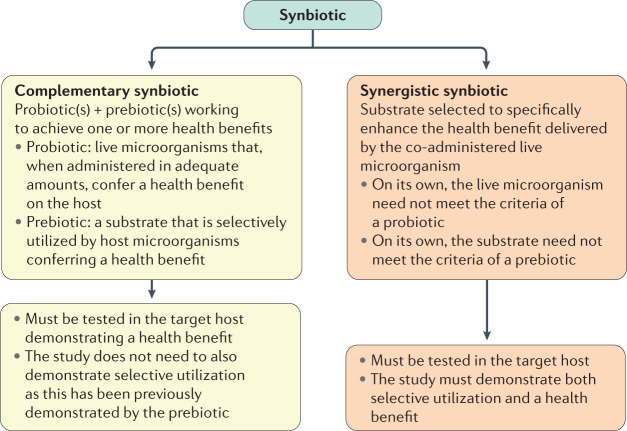
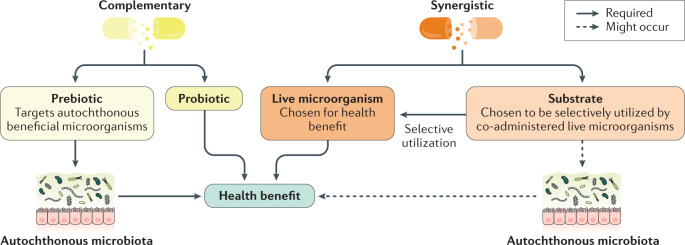
In May 2019, the International Scientific Association for Probiotics and Prebiotics (ISAPP) convened a panel of nutritionists, physiologists and microbiologists to review the definition and scope of synbiotics. The panel updated the definition of a synbiotic to “a mixture comprising live microorganisms and substrate(s) selectively utilized by host microorganisms that confers a health benefit on the host”. The panel concluded that defining synbiotics as simply a mixture of probiotics and prebiotics could suppress the innovation of synbiotics that are designed to function cooperatively. Requiring that each component must meet the evidence and dose requirements for probiotics and prebiotics individually could also present an obstacle. Rather, the panel clarified that a complementary synbiotic, which has not been designed so that its component parts function cooperatively, must be composed of a probiotic plus a prebiotic, whereas a synergistic synbiotic does not need to be so. A synergistic synbiotic is a synbiotic for which the substrate is designed to be selectively utilized by the co-administered microorganisms. This Consensus Statement further explores the levels of evidence (existing and required), safety, effects upon targets and implications for stakeholders of the synbiotic concept.
Overview
The claims and statistics of this paper haven’t been checked yet.
Free: it reads the open-access text and checks the first 5 claims that cite a source we can check. Create a free account to check every claim.
Integrity signals
Registry
Cites
Statistics
Figures
Verification
Claims the paper makes
The claims and statistics of this paper haven’t been checked yet.
Free: it reads the open-access text and checks the first 5 claims that cite a source we can check. Create a free account to check every claim.
Claims other papers make about this one
Each is checked against this paper’s own text: does it say what the citing paper says it does?
The source backs part of the claim, not all of it — or backs it for a different population, condition or comparison.
In the citing paper
“A way to enhance probiotic effectiveness is the combination of probiotics and prebiotic compounds, under the concept of ‘synbiotic’ [69].”
From Psychobiotic effects on anxiety are modulated by lifestyle behaviors: a randomized placebo-controlled trial on healthy adults (2023) · cites this paper as [69]
Experimental — accuracy not yet measuredIn the citing paper
“Third, the minimum fiber concentration suggested for a functional synbiotic [63] was used in the study, that in theory could be sufficient to stimulate the cognate gut microorganisms.”
Self-check
Percentages, sums and reported differences re-computed from the paper’s own numbers.
The self-check needs the paper’s full text.
Citations
Cites
1 retracted
Asemi, Z., Khorrami-Rad, A., Alizadeh, S.-A., Shakeri, H., & Esmaillzadeh, A. (2014) · Clinical Nutrition · doi:10.1016/j.clnu.2013.05.015 · Cited by 190
RetractedDiet rapidly and reproducibly alters the human gut microbiome
David, L. A., Maurice, C. F., Carmody, R. N., Gootenberg, D. B., Button, J. E., Wolfe, B. E., Ling, A. V., Devlin, A. S., Varma, Y., Fischbach, M. A., et al. (2014) · Nature · doi:10.1038/nature12820 · Cited by 10,100
Hill (2014) · doi:10.1038/nrgastro.2014.66 · Cited by 9,592
Moher, D., Hopewell, S., Schulz, K. F., Montori, V., Gotzsche, P. C., Devereaux, P. J., Elbourne, D., Egger, M., & Altman, D. G. (2010) · BMJ · doi:10.1136/bmj.c869 · Cited by 8,883
Dietary Modulation of the Human Colonic Microbiota: Introducing the Concept of Prebiotics
Gibson, G. R., & Roberfroid, M. B. (1995) · The Journal of Nutrition · doi:10.1093/jn/125.6.1401 · Cited by 7,667
Self-citationGibson, G. R., Hutkins, R., Sanders, M. E., Prescott, S. L., Reimer, R. A., Salminen, S. J., Scott, K., Stanton, C., Swanson, K. S., Cani, P. D., et al. (2017) · Nature Reviews Gastroenterology & Hepatology · doi:10.1038/nrgastro.2017.75 · Cited by 5,634
Self-citationDiversity, stability and resilience of the human gut microbiota
Lozupone, C. A., Stombaugh, J. I., Gordon, J. I., Jansson, J. K., & Knight, R. (2012) · Nature · doi:10.1038/nature11550 · Cited by 5,533
Zheng, J., Wittouck, S., Salvetti, E., Franz, C. M. A. P., Harris, H. M. B., Mattarelli, P., O’Toole, P. W., Pot, B., Vandamme, P., Walter, J., et al. (2020) · International Journal of Systematic and Evolutionary Microbiology · doi:10.1099/ijsem.0.004107 · Cited by 3,313
The ecology of the microbiome: Networks, competition, and stability
Coyte, K. Z., Schluter, J., & Foster, K. R. (2015) · Science · doi:10.1126/science.aad2602 · Cited by 2,748
Dethlefsen, L., & Relman, D. A. (2011) · Proceedings of the National Academy of Sciences · doi:10.1073/pnas.1000087107 · Cited by 2,421
Cited by
Items 701–800 of 1,001
Prebiotic potential of natural gums and starch for bifidobacteria of variable origins
Modráčková, N., Makovska, M., Mekadim, C., Vlková, E., Tejnecký, V., Bolechová, P., & Bunešová, V. (2019) · Bioactive Carbohydrates and Dietary Fibre · doi:10.1016/j.bcdf.2019.100199 · Cited by 28
Lam, H. N., Lin, S.-P., Nguyen, D. H. N., Chen, C.-M., Su, C.-T., Fang, T.-C., & Li, S.-C. (2025) · Nutrients · doi:10.3390/nu17040608 · Cited by 27
Mohr, A. E., Pugh, J., O'Sullivan, O., Black, K., Townsend, J. R., Pyne, D. B., Wardenaar, F. C., West, N. P., Whisner, C. M., & McFarland, L. V. (2022) · Frontiers in Nutrition · doi:10.3389/fnut.2022.809983 · Cited by 27
“Synbiotics are defined by the International Scientific Association for Probiotics and Prebiotics (ISAPP) as, “a mixture comprising live microorganisms and substrate(s) selectively utilized by host microorganisms that confers a health benefit on the host” (131).”
BackgroundInfluentialUntangling the web of intratumor microbiota in lung cancer
Liu, W. L., Xu, J., Pi, Z., Chen, Y., Jiang, G., Wan, Y., & Mao, W. (2023) · Biochimica et Biophysica Acta (BBA) - Reviews on Cancer · doi:10.1016/j.bbcan.2023.189025 · Cited by 31
Mao, L., Gao, B., Chang, H., & Shen, H. (2024) · Metabolites · doi:10.3390/metabo14010043 · Cited by 27
Cosier, D., Lambert, K., Neale, E. P., Probst, Y., & Charlton, K. E. (2024) · Nutrition Reviews · doi:10.1093/nutrit/nuae002 · Cited by 37
“15 To date, the clinical benefits of synbiotics have been explored in many chronic and acute disease populations, including infections, 16 irritable bowel syndrome, 17 critical illness, 18 overweight/obesity, 19 and diabetes.”
Wang, P., Tao, W. Y., Li, Q., Ma, W., Jia, W., & Kang, Y. (2024) · Journal of Molecular Medicine · doi:10.1007/s00109-024-02506-9 · Cited by 30
Rondanelli, M., Borromeo, S., Cavioni, A., Gasparri, C., Gattone, I., Genovese, E., Lazzarotti, A., Minonne, L., Moroni, A., Patelli, Z., et al. (2025) · Metabolites · doi:10.3390/metabo15020127 · Cited by 29
Omega-3 fatty acids and the gut microbiome: a new frontier in cardiovascular disease prevention
Kumar, V. S., Rohilla, A., & Ahire, J. J. (2025) · Discover Medicine · doi:10.1007/s44337-025-00212-0 · Cited by 29
“These indispensable fatty acids are vital for the development of the fetus, playing a significant role in ensuring the functioning of the neurons, retina, and immune system [31].”
Özcan, E., Rozycki, M. R., & Sela, D. A. (2021) · Microorganisms · doi:10.3390/microorganisms9030656 · Cited by 30
“This altogether makes the combination of LAB strains with prebiotics and polyphenols good candidates for a “synergistic synbiotic” with the intention to interact specifically with the co-administered microorganisms [15].”
BackgroundEffect of potential prebiotics from selected fruits peel on the growth of probiotics
Hao, C. L., Esah, E. M., Tajarudin, H. A., Akter, B., & Salleh, R. M. (2021) · Journal of Food Processing and Preservation · doi:10.1111/jfpp.15581 · Cited by 29
Diet, Probiotics and Physical Activity: The Right Allies for a Healthy Microbiota
Divella, R., Palma, G. D., Tufaro, A., Pelagio, G., Gadaleta‐Caldarola, G., Bringiotti, R., & Paradiso, A. (2021) · Anticancer Research · doi:10.21873/anticanres.15057 · Cited by 29
Effects of a Postbiotic and Prebiotic Mixture on Suckling Rats’ Microbiota and Immunity
Morales-Ferré, C., Azagra-Boronat, I., Massot‐Cladera, M., Tims, S., Knipping, K., Garssen, J., Knol, J., Franch, À., Castell, M., Rodríguez-Lagunas, M. J., et al. (2021) · Nutrients · doi:10.3390/nu13092975 · Cited by 29
Morales-Ferré, C., Azagra-Boronat, I., Massot‐Cladera, M., Tims, S., Knipping, K., Garssen, J., Knol, J., Franch, À., Castell, M., Pérez-Cano, F. J., et al. (2022) · Nutrients · doi:10.3390/nu14061163 · Cited by 29
Buccigrossi, V., Poeta, M., Cioffi, V., Terranova, S., Nunziata, F., Vecchio, A. L., & Guarino, A. (2022) · Frontiers in Cellular and Infection Microbiology · doi:10.3389/fcimb.2022.854989 · Cited by 29
Tree nuts: Treasure mine for prebiotic and probiotic dairy free vegan products
Udayarajan, C. T., Mohan, K., & Nisha, P. (2022) · Trends in Food Science & Technology · doi:10.1016/j.tifs.2022.04.022 · Cited by 39
A Narrative Review of Irritable Bowel Syndrome with Diarrhea: A Primer for Primary Care Providers
Moshiree, B., Heidelbaugh, J. J., & Sayuk, G. S. (2022) · Advances in Therapy · doi:10.1007/s12325-022-02224-z · Cited by 34
“, oligosaccharides] [60]) and synbiotics (combination of prebiotics and probiotics [61]) in IBS are limited, with a metaanalysis of prebiotics (n = 3 studies) and synbiotics (n = 2 studies) finding no benefit of either for reducing IBS symptoms [59].”
BackgroundChoi, Y. J., Shin, S. H., & Shin, H. S. (2022) · Journal of Microbiology and Biotechnology · doi:10.4014/jmb.2206.06023 · Cited by 41
Khan, F. F., Sohail, A., Ghazanfar, S., Ahmad, A., Riaz, A., Abbasi, K. S., Ibrahim, M. S., Uzair, M., & Arshad, M. U. (2022) · Probiotics and Antimicrobial Proteins · doi:10.1007/s12602-022-09983-9 · Cited by 43
“1 3 prebiotics and probiotics known as synbiotics [101].”
BackgroundPostbiotics versus probiotics in early-onset colorectal cancer
Feizi, H., Plotnikov, A. O., Rezaee, M. A., Ganbarov, K., Kamounah, F. S., Nikitin, S., Kadkhoda, H., Gholizadeh, P., Pagliano, P., & Kafil, H. S. (2022) · Critical Reviews in Food Science and Nutrition · doi:10.1080/10408398.2022.2132464 · Cited by 32
“Simultaneous usage of these two issues leads to the existence of the word synbiotics, which is defined as “a mixture comprising live microorganisms and substrate(s) selectively utilized by host microorganisms that confers a health benefit on the host” (Gholizadeh et al. 2019; Swanson et al. 2020).”
BackgroundSynergy between oligosaccharides and probiotics: From metabolic properties to beneficial effects
Han, D., Żulewska, J., Xiong, K., & Yang, Z. (2022) · Critical Reviews in Food Science and Nutrition · doi:10.1080/10408398.2022.2139218 · Cited by 27
“A synbiotic may manifest health beneficial effects via independent pre-biotic and probiotic properties (complementary synbiotic) or through innate probiotic utilization and metabolism of prebiotic (synergistic synbiotic) (Swanson et al. 2020).”
BackgroundVaezi, M., Ravanshad, S., Rad, M. A., Zarrinfar, H., & Kabiri, M. (2023) · Journal of Medical Virology · doi:10.1002/jmv.28463 · Cited by 30
“The benefits of synbiotic supplementation include the inducing high level of the growth of probiotics and ubiquitous bacteria, enhancement of immunomodulating ability, and balance of gut microbiota, as well as maintenance of intestinal homeostasis through the gut‐lung axis and health of the body.(8,12,13) According to…”
BackgroundQuintanilla-Pineda, M., Garrote-Achou, C., Cano, J. V. D., Gutiérrez-Falcon, A., Bravo, M., Herrera‐Muñoz, J. I., Peña-Navarro, N., Alvarado, C., Ibáñez, F. C., & Marzo, F. (2023) · Foods · doi:10.3390/foods12040861 · Cited by 29
Yang, Q., Hu, Z., Lei, Y., Li, X., Xu, C., Zhang, J., Liu, H., & Du, X. (2023) · Frontiers in Pharmacology · doi:10.3389/fphar.2023.1153070 · Cited by 35
“, 2017), synbiotics (a mixture comprising live microorganisms and substrates selectively utilized by host microorganisms that confers a health benefit on the host) (Swanson et al., 2020), and postbiotics (preparation of inanimate microorganisms and their components that confers a health benefit on the host) (Salminen…”
BackgroundRawling, M. D., Schiavone, M., Mugnier, A., Leclercq, E., Merrifield, D. L., Foey, A., & Apper, E. (2023) · Microorganisms · doi:10.3390/microorganisms11122900 · Cited by 31
Kittana, H., Quintero, M., Bindels, L. B., Neto, J. C. G., Schmaltz, R. J., Muñoz, R. R. S., Cody, L. A., Moxley, R. A., Hostetter, J. M., Hutkins, R. W., et al. (2017) · Microbiology · doi:10.1099/mic.0.000593 · Cited by 28
Self-citationDownscale fermentation for xylooligosaccharides production by recombinant Bacillus subtilis 3610
Amorim, C., Silvério, S. C., Gonçalves, R. F. S., Pinheiro, A. C., Silva, S. P., Coelho, E., Coimbra, M. A., Prather, K. L. J., & Rodrigues, L. R. (2018) · Carbohydrate Polymers · doi:10.1016/j.carbpol.2018.09.088 · Cited by 27
Martín-Ortiz, A., Ruiz‐Matute, A. I., Sanz, M. L., Moreno, F. J., & Herrero, M. (2019) · Analytica Chimica Acta · doi:10.1016/j.aca.2019.01.040 · Cited by 27
Protecting the outside: biological tools to manipulate the skin microbiota
O'Sullivan, J. N., Rea, M. C., Hill, C., & Ross, R. P. (2020) · FEMS Microbiology Ecology · doi:10.1093/femsec/fiaa085 · Cited by 31
Karaca, B., Haliscelik, O., Gursoy, M., Kiran, F., Loimaranta, V., Söderling, E., & Gursoy, U. K. (2022) · Microorganisms · doi:10.3390/microorganisms10112200 · Cited by 26
Talebi, S., Zeraattalab-Motlagh, S., Payandeh, N., Jalilpiran, Y., Ansari, S., Mohammadi, H., Djafarian, K., Ranjbar, M., Sadeghi, S., Taghizadeh, M., et al. (2023) · Frontiers in Nutrition · doi:10.3389/fnut.2023.1178842 · Cited by 30
“The presence of a combination of living microorganisms and substrate(s) that host microorganisms use to their advantage and which benefits the host’s health is called synbiotics (18).”
BackgroundPaudel, D., Nair, D. V. T., Joseph, G., Castro, R., Tiwari, A. K., & Singh, V. (2023) · Gastroenterology report · doi:10.1093/gastro/goae033 · Cited by 32
“Synbiotics are designed to maximize the potential of both probiotics (live bacteria) and FDFs (nourishment for gut bacteria) [62].”
Dong, H., Ren, X., Song, Y., Zhang, J., Zhuang, H., Peng, C., Zhao, J., Shen, J., Yang, J., Zang, J., et al. (2024) · Foods · doi:10.3390/foods13152326 · Cited by 27
Maternal-infant probiotic transmission mitigates early-life stress-induced autism in mice
Qing, L., Qian, X., Zhu, H., Wang, J., Sun, J., Jin, Z., Tang, X., Zhao, Y., Wang, G., Zhao, J., et al. (2025) · Gut Microbes · doi:10.1080/19490976.2025.2456584 · Cited by 27
“42 Specifically, the inhibitory function of bifidobacteria in early life is well recognized.”
Harnessing the human gut microbiota: an emerging frontier in combatting multidrug-resistant bacteria
Ding, W., Cheng, Y., Liu, X., Zhu, Z., Wu, L., Gao, J., Lei, W., Li, Y., Zhou, X., Wu, J., et al. (2025) · Frontiers in Immunology · doi:10.3389/fimmu.2025.1563450 · Cited by 30
ALMAHBASHI, A., & Altuntaş, E. G. (2025) · Food Science & Nutrition · doi:10.1002/fsn3.70294 · Cited by 34
Napier, B. A., Allegretti, J. R., Feuerstadt, P., Kelly, C. R., Hise, N. W. V., Jäger, R., Kassam, Z., & Reid, G. (2025) · Nutrients · doi:10.3390/nu17172734 · Cited by 29
“Synbiotics enable greater impact on biological function as they combine probiotics with prebiotics, dietary substrates that selectively promote the growth or activity of beneficial microorganisms [4].”
Self-citationBiruete, A., Shin, A., Kistler, B. M., & Moe, S. M. (2021) · Seminars in Dialysis · doi:10.1111/sdi.13030 · Cited by 27
“139 Similar to prebiotics and probiotics, the majority of studies on syn-biotics in CKD and kidney failure have been limited to outcomes related to uremic toxins, gut microbial profile, and inflammatory markers, with limited studies on the effects of synbiotics on gastrointestinal symptoms or…”
First encounters of the microbial kind: perinatal factors direct infant gut microbiome establishment
Linehan, K., Dempsey, E. M., Ryan, C. A., Ross, R. P., & Stanton, C. (2022) · Microbiome Research Reports · doi:10.20517/mrr.2021.09 · Cited by 30
Torres-Maravilla, E., Méndez-Trujillo, V., Hernández-Delgado, N. C., Bermúdez‐Humarán, L. G., & Reyes-Pavón, D. (2022) · Fermentation · doi:10.3390/fermentation8030123 · Cited by 28
Intestinal microbiota research from a global perspective
Wallenborn, J. T., & Vonaesch, P. (2022) · Gastroenterology report · doi:10.1093/gastro/goac010 · Cited by 27
Li, H., Song, W., Liu, T., Xu, S., Zhang, S., Zhang, Y., Liu, D., Li, H., & Yu, J. (2022) · International Dairy Journal · doi:10.1016/j.idairyj.2022.105475 · Cited by 26
Rubin, I. M. C., Mollerup, S., Broholm, C., Baker, A., Holm, M. K. A., Pedersen, M. S., Pinholt, M., Westh, H., & Petersen, A. M. (2022) · Applied and Environmental Microbiology · doi:10.1128/aem.01087-22 · Cited by 30
“A synbiotic is defined as “a mixture comprising live microorganisms and substrate(s) selectively utilized by host microorganisms that confers a health benefit on the host” (18).”
Backgroundde Oliveira, L. S., Wendt, G. W., Crestani, A. P. J., & Casaril, K. B. P. B. (2022) · Clinical Nutrition · doi:10.1016/j.clnu.2022.10.003 · Cited by 29
Human gut homeostasis and regeneration: the role of the gut microbiota and its metabolites
Gómez, C. M. A., García-Gutiérrez, E., Escobar, J. S., & Cotter, P. D. (2022) · Critical Reviews in Microbiology · doi:10.1080/1040841x.2022.2142088 · Cited by 29
“…( “ mixture, comprising live microorganisms and substrate(s) selectively utilized by host microorganisms, that confers a health benefit on the host ” (Swanson et al. 2020)) or postbiot-ics ( “ preparation of inanimate microorganisms and/or their components that confers a health benefit on…”
BackgroundBanić, M., Butorac, K., Čuljak, N., Pavunc, A. L., Novak, J., Bellich, B., Kazazić, S., Kazazić, S., Cescutti, P., Šušković, J., et al. (2022) · International Journal of Molecular Sciences · doi:10.3390/ijms232214382 · Cited by 27
Sahoo, D. K., Allenspach, K., Mochel, J. P., Parker, V. J., Rudinsky, A. J., Winston, J. A., Bourgois‐Mochel, A., Ackermann, M. R., Heilmann, R. M., Köller, G., et al. (2022) · Veterinary Sciences · doi:10.3390/vetsci10010025 · Cited by 26
“Probiotics, prebiotics, or their combination (synbiotics) and avian immunoglobulins are current focuses in GI research since they may reduce intestinal inflammation and aid in the recovery of dysbiosis in dogs with CE [14,15].”
BackgroundYuan, L., Zhu, C., Gu, F., Zhu, M., Yao, J., Zhu, C., Li, S., Wang, K., Hu, P., Zhang, Y., et al. (2023) · Animal nutrition · doi:10.1016/j.aninu.2023.04.012 · Cited by 26
Safety and efficacy of adding postbiotics in infant formula: a systematic review and meta-analysis
Liang, X., Li, Y., Zhao, Z., Ding, R., Sun, J., & Chi, C. (2023) · Pediatric Research · doi:10.1038/s41390-023-02813-w · Cited by 28
Evidence for clinical interventions targeting the gut microbiome in cardiometabolic disease
Ghosh, T. S., & Valdes, A. M. (2023) · BMJ · doi:10.1136/bmj-2023-075180 · Cited by 27
García-González, N., Prete, R., Perugini, M., Merola, C., Battista, N., & Corsetti, A. (2020) · FEMS Microbiology Letters · doi:10.1093/femsle/fnaa041 · Cited by 27
Zhang, T., Cheng, T., Geng, S., Mao, K., Li, X., Gao, J., Han, J., & Sang, Y. (2024) · Journal of Agricultural and Food Chemistry · doi:10.1021/acs.jafc.3c08473 · Cited by 25
Shama, S., Asbury, M. R., Kiss, A., Bando, N., Butcher, J., Comelli, E. M., Copeland, J. K., Greco, A., Kothari, A., Sherman, P. M., et al. (2024) · Cell Reports Medicine · doi:10.1016/j.xcrm.2024.101729 · Cited by 30
Besora‐Moreno, M., Llauradó, E., Valls, R. M., Pedret, A., & Solà, R. (2024) · Nutrition Reviews · doi:10.1093/nutrit/nuae145 · Cited by 29
Liu, H., Li, S., Ogamune, K. J., Yuan, P., Shi, X., Ennab, W., Ahmed, A. A., Kim, I. H., Hu, P., & Cai, D. (2025) · Antioxidants · doi:10.3390/antiox14040433 · Cited by 29
“Probiotics, defined as live microorganisms that confer health benefits to the host, have emerged as a promising treatment option for IBD management [16].”
Postbiotics: A Promising Approach to Combat Age-Related Diseases
Hamdi, A., Lloyd, C., Eri, R. D., & Van, T. T. H. (2025) · Life · doi:10.3390/life15081190 · Cited by 27
Pectin in gut health and beyond: A review
Kalita, P., Rahman, M. A., Haloi, P., Bora, N. S., & Pachuau, L. (2025) · International Journal of Biological Macromolecules · doi:10.1016/j.ijbiomac.2025.146954 · Cited by 27
Wang, Y., Tian, L., Fabi, J. P., & de Vos, P. (2025) · Food Bioscience · doi:10.1016/j.fbio.2025.107539 · Cited by 28
The gut microbiota and its metabolites: novel therapeutic targets for inflammatory bowel disease
Shen, X. Z., Li, Y., Wang, D., & Sun, K. (2025) · Frontiers in Immunology · doi:10.3389/fimmu.2025.1690279 · Cited by 31
de Assis, P. O. A., Guerra, G. C. B., Araújo, D. F. D. S., Interaminense, L. F. L., de Araújo, A. A., Júnior, R. F. D. A., de Carvalho, T. G., de Souza, M. D. F. V., Borges, G. D. S. C., Lima, M. D. S., et al. (2019) · Food & Function · doi:10.1039/c9fo00920e · Cited by 30
Wang, Q., Li, Y., Lv, L., Jiang, H., Ren, Y., Wang, S., Lu, Y., Wu, Z., Shen, J. F., Jiang, S., et al. (2022) · Applied Microbiology and Biotechnology · doi:10.1007/s00253-022-11946-7 · Cited by 26
Tran, D. M., Tran, T. T., Phung, T. T. B., Bui, H. T., Nguyen, P. T. T., Vu, T. T., Ngo, N. T. P., Nguyen, M. T., Nguyen, A. H., & Nguyen, A. T. V. (2022) · Scientific Reports · doi:10.1038/s41598-022-16136-z · Cited by 27
Implication of Paraprobiotics in Age-Associated Gut Dysbiosis and Neurodegenerative Diseases
Rahman, Z., & Dandekar, M. P. (2022) · NeuroMolecular Medicine · doi:10.1007/s12017-022-08722-1 · Cited by 26
Wagh, S. K., Lammers, K. M., Padul, M. V., Rodríguez‐Herrera, A., & Dodero, V. I. (2022) · International Journal of Molecular Sciences · doi:10.3390/ijms231911748 · Cited by 26
Steyer, A., Mičetić‐Turk, D., & Fijan, S. (2022) · Microorganisms · doi:10.3390/microorganisms10122392 · Cited by 30
Benefits of Biotics for Cardiovascular Diseases
Hijová, E. (2023) · International Journal of Molecular Sciences · doi:10.3390/ijms24076292 · Cited by 26
Yıldırım, G. K., Dinleyici, M., Vandenplas, Y., & Dinleyici, E. Ç. (2023) · Gut Pathogens · doi:10.1186/s13099-023-00563-y · Cited by 31
“The International Scientific Association for Probiotics and Prebiotics (ISAPP) defined prebiotics as “a substrate that is selectively utilized by host microorganisms conferring a health benefit” and defined synbiotics as “a mixture comprising live microorganisms and substrate(s) selectively utilized by host microorgan…”
BackgroundAhmed, S. A., Noor, A., Tariq, M., & Zaidi, A. (2023) · Food Production Processing and Nutrition · doi:10.1186/s43014-023-00153-0 · Cited by 25
Chen, M., Ma, L., Yu, H., Huang, S., Zhang, J., Gong, J., Yang, L., Chen, L., Luo, H., Tian, L., et al. (2023) · Frontiers in Oncology · doi:10.3389/fonc.2023.1155592 · Cited by 31
Yelverton, C. A., Killeen, S. L., Feehily, C., Moore, R., Callaghan, S. L., Geraghty, A. A., Byrne, D. F., Walsh, C. J., Lawton, E. M., Murphy, E. F., et al. (2023) · Frontiers in Microbiology · doi:10.3389/fmicb.2023.1154114 · Cited by 25
“This bifidobacterial strain, referred to as the probiotic in this study, was chosen as it had previously been shown to increase stearic, arachidonic, and docosahexaenoic acid concentrations in murine liver and brain models (Swanson et al., 2020; Arabi et al., 2022).”
BackgroundShu, Q., Kang, C., Li, J., Hou, Z., Xiong, M., Wang, X., & Peng, H. (2024) · PLoS ONE · doi:10.1371/journal.pone.0296733 · Cited by 26
Rivas, S., Rigual, V., Domínguez, J. C., Alonso, M. V., Oliet, M., Parajó, J. C., & Rodríguez, F. (2020) · Food and Bioproducts Processing · doi:10.1016/j.fbp.2020.07.018 · Cited by 27
Heimer, M., Teschler, M., Schmitz, B., & Mooren, F. C. (2022) · Frontiers in Nutrition · doi:10.3389/fnut.2022.804046 · Cited by 26
Melini, F., Luziatelli, F., Bonini, P., Ficca, A. G., Melini, V., & Ruzzi, M. (2023) · Frontiers in Microbiology · doi:10.3389/fmicb.2023.1022248 · Cited by 27
Novel Gluconobacter oxydans strains selected from Kombucha with potential postbiotic activity
Neffe‐Skocińska, K., Długosz, E., Szulc‐Dąbrowska, L., & Zielińska, D. (2023) · Applied Microbiology and Biotechnology · doi:10.1007/s00253-023-12915-4 · Cited by 27
Sastre, D. E., Sultana, N. A., Navarro, M. V. A. S., Huličiak, M., Du, J. J., Cifuente, J. O., Flowers, M. W., Liu, X., Lollar, P., Trastoy, B., et al. (2024) · Nature Communications · doi:10.1038/s41467-024-48802-3 · Cited by 26
Joishy, T. K., Bhattacharya, A., Singh, C. T., Mukherjee, A. K., & Khan, M. R. (2024) · New Biotechnology · doi:10.1016/j.nbt.2024.07.005 · Cited by 26
Malos, I. G., Pasarin, D., Ghizdareanu, A.-I., & Frunzareanu, B. (2025) · Microorganisms · doi:10.3390/microorganisms13020336 · Cited by 24
“According to ISAPP, a synbiotic is a mixture of live microorganisms and one or more substrates that are selectively utilized by the host microorganisms and have a health benefit for the host [10].”
Zhao, S., Lu, Z., Zhao, F., Tang, S., Zhang, L., & Feng, C. (2025) · Frontiers in Immunology · doi:10.3389/fimmu.2025.1538969 · Cited by 33
Dell’Atti, F., Abreu, H., Malfa, P., Raineri, D., Cappellano, G., & Chiocchetti, A. (2025) · Frontiers in Immunology · doi:10.3389/fimmu.2025.1620185 · Cited by 28
Prebiotics: types, selectivity and utilization by gut microbes
Yalçıntaş, Y. M., Bolino, M. J., Duman, H., Sarıtaş, S., Pekdemir, B., Kalkan, A. E., Canbolat, A. A., Bolat, E., Eker, F., Rocha, J. M., et al. (2025) · International Journal of Food Sciences and Nutrition · doi:10.1080/09637486.2025.2582557 · Cited by 26
“(Swanson et al. 2020).”
Precision Postbiotics and Mental Health: the Management of Post-COVID-19 Complications
Pandey, M., Bhati, A., Priya, K. G. G. L. S., Sharma, K. K., & Singhal, B. (2021) · Probiotics and Antimicrobial Proteins · doi:10.1007/s12602-021-09875-4 · Cited by 25
Isidori, M., Corbee, R. J., & Trabalza‐Marinucci, M. (2022) · Veterinary Sciences · doi:10.3390/vetsci9020037 · Cited by 30
“The combined administration of probiotic microbes and substrate(s) selectively utilised by the host microorganisms, which confers a health advantage on the recipient, is described as synbiotic [185].”
BackgroundTeixeira, L. D., Harrison, N. A., da Silva, D. R. P., Mathews, C. E., González, C. F., & Lorca, G. L. (2022) · Frontiers in Immunology · doi:10.3389/fimmu.2022.899413 · Cited by 24
“The mechanistic action of probiotics are diverse and strain specific (6).”
BackgroundHojsak, I., Kolaček, S., Mihatsch, W., Mosca, A., Shamir, R., Szajewska, H., Vandenplas, Y., Working Group on Probiotics and Prebiotics of the European Society for Paediatric Gastroenterology, H. A. N., van den Akker, C. H. P., Canani, R. B., et al. (2022) · Journal of Pediatric Gastroenterology and Nutrition · doi:10.1097/mpg.0000000000003568 · Cited by 25
“According to ISAAP, studies on a “synergistic synbiotic” that compare the synbiotic to the control can provide supportive evidence, but do not constitute direct evidence of the synergistic effect.”
BackgroundInfluentialZawadzka, K., Kaluzinska, K., Świerz, M. J., Sawiec, Z., Antonowicz, E., Leończyk-Spórna, M., Abadi, A. K., Trofimiuk–Müldner, M., & Bała, M. M. (2023) · Annals of Agricultural and Environmental Medicine · doi:10.26444/aaem/162732 · Cited by 27
“These are preparations that contain beneficial microorganisms, substrates to facilitate their growth, or both [11, 12].”
BackgroundLi, S., Xu, K., Cheng, Y., Chen, L., Yi, A., Xiao, Z., Zhao, X., Chen, M., Tian, Y., Wei, M., et al. (2023) · Frontiers in Microbiology · doi:10.3389/fmicb.2023.1188455 · Cited by 29
Gholami, A., Montazeri‐Najafabady, N., Ashoori, Y., Kazemi, K., Heidari, R., Omidifar, N., Karimzadeh, I., Ommati, M. M., Abootalebi, S. N., & Golkar, N. (2023) · BMC Complementary Medicine and Therapies · doi:10.1186/s12906-023-04068-8 · Cited by 25
Salmeán, G. G., Delgadillo-González, M., Escalona, A. A. R., Islas, J. L. P., & Castro-Eguiluz, D. (2024) · Frontiers in Oncology · doi:10.3389/fonc.2024.1383258 · Cited by 30
Boyajian, J. L., Islam, P., Abosalha, A. K., Schaly, S., Thareja, R., Kassab, A., Arora, K., Santos, M., Shum-Tim, C., & Prakash, S. (2024) · Microbiome Research Reports · doi:10.20517/mrr.2024.05 · Cited by 30
Lin, Y., Dong, Y., Li, X., Cai, J., Cai, L., & Zhang, G. (2024) · International Journal of Biological Macromolecules · doi:10.1016/j.ijbiomac.2024.134014 · Cited by 26
Stanciu, D., Staykov, H., Dragomanova, S., Tancheva, L. P., Pop, R. S., Ielciu, I., & Crișan, G. (2024) · Nutrients · doi:10.3390/nu16213636 · Cited by 26
Anghel, A. C., Țăranu, I., Orțan, A., Spinu, S. M., Cudalbeanu, M. D., Rosu, P. M., & Babeanu, N. E. (2024) · Molecules · doi:10.3390/molecules29246026 · Cited by 25
“This combination allows the selected probiotic strain to utilize a prebiotic substrate for synthesizing beneficial metabolites aimed at achieving specific therapeutic effects [109,112].”
Farah, A., Paul, P., Khan, A. S., Sarkar, A., Laws, S., & Châari, A. (2025) · Frontiers in Medicine · doi:10.3389/fmed.2025.1435030 · Cited by 30
Bikric, S., Aslım, B., Dincer, İ., Yüksekdağ, Z., Ulusoy, S., & Yavuz, S. (2021) · Probiotics and Antimicrobial Proteins · doi:10.1007/s12602-021-09790-8 · Cited by 25
Systems to model the personalized aspects of microbiome health and gut dysbiosis
Matthewman, C., Narin, A., Huston, H., & Hopkins, C. E. (2023) · Molecular Aspects of Medicine · doi:10.1016/j.mam.2022.101115 · Cited by 23
Geroprotective potential of microbiome modulators in the Caenorhabditis elegans model
Miller, B. C., Mathai, M., Yadav, H., & Jain, S. (2023) · GeroScience · doi:10.1007/s11357-023-00901-7 · Cited by 24
Teo, Y. Q. J., Chong, B., Soong, R. Y., Yong, C. L., Chew, N., & Chew, H. S. J. (2024) · Clinical Nutrition · doi:10.1016/j.clnu.2024.05.019 · Cited by 25
Odorskaya, M. V., Мавлетова, Д. А., Nesterov, A. A., Tikhonova, O. V., Soloveva, N. A., Reznikova, D. A., Galanova, O. O., Vatlin, A. A., Slynko, N. M., Vasilieva, A. R., et al. (2024) · Frontiers in Microbiology · doi:10.3389/fmicb.2024.1416688 · Cited by 24
A synbiotic improves performance and gut health in broiler chickens
Khosravi, A., Boldaji, F., Dastar, B., Torshizi, M. A. K., Alemi, M., & Hoseinifar, S. H. (2025) · Scientific Reports · doi:10.1038/s41598-025-04459-6 · Cited by 24
“Based on this, synbiotic are a mixture of probiotics and prebiotics, improving shelf life and binding probiotics to the intestinal wall 22 .”
Metadata
- Authors
- Swanson, K. S., Gibson, G. R., Hutkins, R., Reimer, R. A., Reid, G., Verbeke, K., Scott, K. P., Holscher, H. D., Azad, M. B., Delzenne, N. M., & Sanders, M. E.
- Affiliations
- University of Illinois Urbana-Champaign (US)
- University of Reading (GB)
- University of Nebraska–Lincoln (US)
- University of Calgary (CA)
- Western University (CA)
- KU Leuven (BE)
- University of Aberdeen (GB)
- Children's Hospital Research Institute of Manitoba (CA)
- UCLouvain (BE)
- Corresponding author
- Swanson, Kelly S.
- ORCID
- Venue
- Nature Reviews Gastroenterology & Hepatology
- Published
- 2020-08-21
- Volume
- 17
- Issue
- 11
- Pages
- 687-701
- ISSN
- 1759-5045 (ISSN-L)
- 1759-5053
- PMC
- PMC7581511
- OpenAlex
- W2694487218
- Cited by
- 2,196
- References
- 307
- Citations by year
- 2026: 285 · 2025: 363 · 2024: 446 · 2023: 400 · 2022: 373 · 2021: 225 · 2020: 44
- FWCI
- 22.02
- Type
- journal article
- Language
- en
- Open access
- hybrid
- doi.org
- Licence
- cc-by
- creativecommons.org/licenses/by/4.0 (tdm)
- creativecommons.org/licenses/by/4.0 (vor)
- Locations
- Nature Reviews Gastroenterology & Hepatology (publishedVersion, cc-by)
- PubMed Central (publishedVersion, cc-by)
- PubMed (publishedVersion)
- Aberdeen University Research Archive (Aberdeen University) (submittedVersion)
- Lincoln (University of Nebraska) (submittedVersion)
- Digital Access to Libraries (Université catholique de Louvain (UCL), l'Université de Namur (UNamur) and the Université Saint-Louis (USL-B)) (submittedVersion, other-oa)
- Scholarship@Western (Western University) (submittedVersion)
- Lirias (KU Leuven) (submittedVersion, cc-by)
- Funders
- GlaxoSmithKline
- PepsiCo
- General Mills
- Mead Johnson Nutrition
- Pharmavite
- Danone
- Rural and Environment Science and Analytical Services Division
- Scottish Government
- Medela
- Topics
- Life Sciences › Agricultural and Biological Sciences › Food Science › Probiotics and Fermented Foods
- Health Sciences › Nursing › Nutrition and Dietetics › Microbial Metabolites in Food Biotechnology
- Health Sciences › Nursing › Nutrition and Dietetics › Infant Nutrition and Health
- Keywords
- postbiotics, synbiotics, probiotics, prebiotics, health benefits, mechanism of action, safety, regulation, microbial metabolites
- MeSH terms
- Humans, Probiotics, Prebiotics, Synbiotics
About these checks
Registry, retraction, Cites and statistics results are computed, not judged, with one exception: a printed reference that no index lists is read once by a model before it counts as a citation error. Claims are extracted by a model and kept only when their quote appears verbatim in the text; each cited source is then checked, with a model’s help, for whether it says what the claim relies on. Those verdicts can be wrong — read the claim’s quote and the cited source before relying on one.
Statistics and arithmetic are recomputed, not judged.
Confidence bands are shown only for fields calibrated on our annotated test set. None is calibrated yet, so no band is shown.
What counts as a claim ›How we measure confidence ›How we check this ›
Are you an author, or do you see a problem with this page? Request a review
Data sources
Bibliographic data: Semantic Scholar, OpenAlex, Crossref.
Contains information from the Semantic Scholar Academic Graph Datasets, made available under the ODC Attribution License (ODC-BY 1.0).
Semantic Scholar’s data is described in: Kinney, R., et al. (2023). The Semantic Scholar Open Data Platform. arXiv:2301.10140.
