

The International Scientific Association for Probiotics and Prebiotics (ISAPP) consensus statement on the definition and scope of synbiotics
Open accessThe DOI matches its Crossref record; 303 of the 307 references it cites were found in a registry or an index.
Abstract
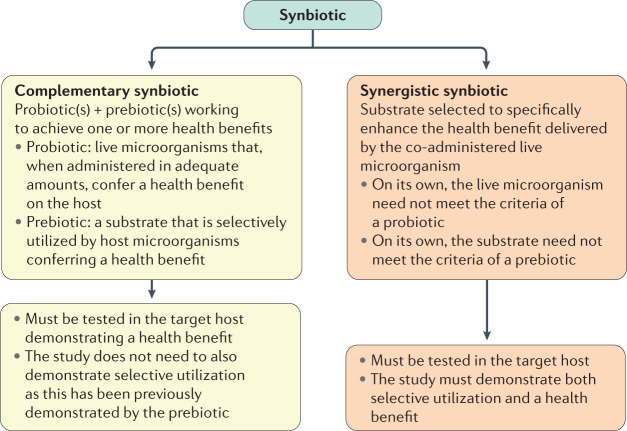
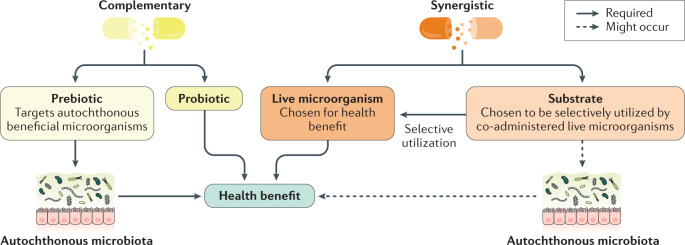
In May 2019, the International Scientific Association for Probiotics and Prebiotics (ISAPP) convened a panel of nutritionists, physiologists and microbiologists to review the definition and scope of synbiotics. The panel updated the definition of a synbiotic to “a mixture comprising live microorganisms and substrate(s) selectively utilized by host microorganisms that confers a health benefit on the host”. The panel concluded that defining synbiotics as simply a mixture of probiotics and prebiotics could suppress the innovation of synbiotics that are designed to function cooperatively. Requiring that each component must meet the evidence and dose requirements for probiotics and prebiotics individually could also present an obstacle. Rather, the panel clarified that a complementary synbiotic, which has not been designed so that its component parts function cooperatively, must be composed of a probiotic plus a prebiotic, whereas a synergistic synbiotic does not need to be so. A synergistic synbiotic is a synbiotic for which the substrate is designed to be selectively utilized by the co-administered microorganisms. This Consensus Statement further explores the levels of evidence (existing and required), safety, effects upon targets and implications for stakeholders of the synbiotic concept.
Overview
The claims and statistics of this paper haven’t been checked yet.
Free: it reads the open-access text and checks the first 5 claims that cite a source we can check. Create a free account to check every claim.
Integrity signals
Registry
Cites
Statistics
Figures
Verification
Claims the paper makes
The claims and statistics of this paper haven’t been checked yet.
Free: it reads the open-access text and checks the first 5 claims that cite a source we can check. Create a free account to check every claim.
Claims other papers make about this one
Each is checked against this paper’s own text: does it say what the citing paper says it does?
The source backs part of the claim, not all of it — or backs it for a different population, condition or comparison.
In the citing paper
“A way to enhance probiotic effectiveness is the combination of probiotics and prebiotic compounds, under the concept of ‘synbiotic’ [69].”
From Psychobiotic effects on anxiety are modulated by lifestyle behaviors: a randomized placebo-controlled trial on healthy adults (2023) · cites this paper as [69]
Experimental — accuracy not yet measuredIn the citing paper
“Third, the minimum fiber concentration suggested for a functional synbiotic [63] was used in the study, that in theory could be sufficient to stimulate the cognate gut microorganisms.”
Self-check
Percentages, sums and reported differences re-computed from the paper’s own numbers.
The self-check needs the paper’s full text.
Citations
Cites
1 retracted
Asemi, Z., Khorrami-Rad, A., Alizadeh, S.-A., Shakeri, H., & Esmaillzadeh, A. (2014) · Clinical Nutrition · doi:10.1016/j.clnu.2013.05.015 · Cited by 190
RetractedDiet rapidly and reproducibly alters the human gut microbiome
David, L. A., Maurice, C. F., Carmody, R. N., Gootenberg, D. B., Button, J. E., Wolfe, B. E., Ling, A. V., Devlin, A. S., Varma, Y., Fischbach, M. A., et al. (2014) · Nature · doi:10.1038/nature12820 · Cited by 10,100
Hill (2014) · doi:10.1038/nrgastro.2014.66 · Cited by 9,592
Moher, D., Hopewell, S., Schulz, K. F., Montori, V., Gotzsche, P. C., Devereaux, P. J., Elbourne, D., Egger, M., & Altman, D. G. (2010) · BMJ · doi:10.1136/bmj.c869 · Cited by 8,883
Dietary Modulation of the Human Colonic Microbiota: Introducing the Concept of Prebiotics
Gibson, G. R., & Roberfroid, M. B. (1995) · The Journal of Nutrition · doi:10.1093/jn/125.6.1401 · Cited by 7,667
Self-citationGibson, G. R., Hutkins, R., Sanders, M. E., Prescott, S. L., Reimer, R. A., Salminen, S. J., Scott, K., Stanton, C., Swanson, K. S., Cani, P. D., et al. (2017) · Nature Reviews Gastroenterology & Hepatology · doi:10.1038/nrgastro.2017.75 · Cited by 5,634
Self-citationDiversity, stability and resilience of the human gut microbiota
Lozupone, C. A., Stombaugh, J. I., Gordon, J. I., Jansson, J. K., & Knight, R. (2012) · Nature · doi:10.1038/nature11550 · Cited by 5,533
Zheng, J., Wittouck, S., Salvetti, E., Franz, C. M. A. P., Harris, H. M. B., Mattarelli, P., O’Toole, P. W., Pot, B., Vandamme, P., Walter, J., et al. (2020) · International Journal of Systematic and Evolutionary Microbiology · doi:10.1099/ijsem.0.004107 · Cited by 3,313
The ecology of the microbiome: Networks, competition, and stability
Coyte, K. Z., Schluter, J., & Foster, K. R. (2015) · Science · doi:10.1126/science.aad2602 · Cited by 2,748
Dethlefsen, L., & Relman, D. A. (2011) · Proceedings of the National Academy of Sciences · doi:10.1073/pnas.1000087107 · Cited by 2,421
Cited by
Items 101–200 of 1,001
Next generation probiotics: Engineering live biotherapeutics
Murali, S. K., & Mansell, T. J. (2024) · Biotechnology Advances · doi:10.1016/j.biotechadv.2024.108336 · Cited by 153
Nyanzi, R., Jooste, P. J., & Buys, E. M. (2021) · Journal of Dairy Science · doi:10.3168/jds.2020-19116 · Cited by 137
Gut-Brain Axis: Role of Microbiome, Metabolomics, Hormones, and Stress in Mental Health Disorders
Verma, A., Inslicht, S. S., & Bhargava, A. (2024) · Cells · doi:10.3390/cells13171436 · Cited by 163
Álvarez-Arraño, V., & Martín-Peláez, S. (2021) · Nutrients · doi:10.3390/nu13103627 · Cited by 136
“A synbiotic, is defined as “a mixture comprising live microorganisms and substrate(s) used selectively by host microorganisms that confers a benefit to the health of the host” [18].”
BackgroundReview on Preventive Measures to Reduce Post-Weaning Diarrhoea in Piglets
Canibe, N., Højberg, O., Kongsted, H., Vodolazs'ka, D., Lauridsen, C., Nielsen, T. S., & Schönherz, A. A. (2022) · Animals · doi:10.3390/ani12192585 · Cited by 155
Frequently asked questions about the ISAPP postbiotic definition
Vinderola, G., Sanders, M. E., Cunningham, M., & Hill, C. (2024) · Frontiers in Microbiology · doi:10.3389/fmicb.2023.1324565 · Cited by 152
Self-citationPrebiotics and the poultry gastrointestinal tract microbiome
Ricke, S. C., Lee, S. I., Kim, S. A., Park, S. H., & Shi, Z. (2020) · Poultry Science · doi:10.1016/j.psj.2019.12.018 · Cited by 146
Tan, Q., Orsso, C. E., Deehan, E. C., Kung, J. Y. C., Tun, H. M., Wine, E., Madsen, K. L., Zwaigenbaum, L., & Haqq, A. M. (2021) · Autism Research · doi:10.1002/aur.2560 · Cited by 146
“, 2017), the recent ISAPP Consensus Statement defines prebiotics as a “substrate that is selectively utilized by host microorganisms conferring a health benefit” (Swanson et al., 2020).”
BackgroundInfluentialCalder, P. C., Ortega, E. F., Meydani, S. N., Adkins, Y. C., Stephensen, C. B., Thompson, B., & Zwickey, H. L. (2022) · Advances in Nutrition · doi:10.1093/advances/nmac052 · Cited by 143
“Synbiotics are combinations of at least 1 prebiotic with at least 1 probiotic (266).”
A review and comparative perspective on health benefits of probiotic and fermented foods
Ibrahim, S. A., Yeboah, P. J., Ayivi, R. D., Eddin, A. S., Wijemanna, N. D., Paidari, S., & Bakhshayesh, R. V. (2023) · International Journal of Food Science & Technology · doi:10.1111/ijfs.16619 · Cited by 146
The potential of tailoring the gut microbiome to prevent and treat cardiometabolic disease
Chakaroun, R., Olsson, L. M., & Bäckhed, F. (2022) · Nature Reviews Cardiology · doi:10.1038/s41569-022-00771-0 · Cited by 141
Molecular and Cellular Mechanisms Influenced by Postbiotics
Jastrząb, R., Graczyk, D., & Siedlecki, P. S. (2021) · International Journal of Molecular Sciences · doi:10.3390/ijms222413475 · Cited by 141
Rocchetti, M. T., Russo, P., Capozzi, V., Drider, D., Spano, G., & Fiocco, D. (2021) · International Journal of Molecular Sciences · doi:10.3390/ijms222112076 · Cited by 146
“While the terms probiotics, prebiotics, and synbiotics have been extensively defined in the last two decades and consensus documents have been provided by experts for each of them [5,31,32], the new concept of postbiotic is taking shape as an important microorganism-derived tool to promote health [10–12].”
BackgroundGut microbiome studies in CKD: opportunities, pitfalls and therapeutic potential
Krukowski, H., Valkenburg, S., Madella, A. M., Garssen, J., van Bergenhenegouwen, J., Overbeek, S. A., Huys, G. R. B., Raes, J., & Glorieux, G. (2022) · Nature Reviews Nephrology · doi:10.1038/s41581-022-00647-z · Cited by 141
Postbiotics as Metabolites and Their Biotherapeutic Potential
Hijová, E. (2024) · International Journal of Molecular Sciences · doi:10.3390/ijms25105441 · Cited by 137
The gut microbiome and cancer: from tumorigenesis to therapy
Nobels, A., van Marcke, C., Jordan, B. F., Hul, M. V., & Cani, P. D. (2025) · Nature Metabolism · doi:10.1038/s42255-025-01287-w · Cited by 137
Lau, H. C.-H., Zhang, X., & Yu, J. (2025) · Nature Reviews Gastroenterology & Hepatology · doi:10.1038/s41575-025-01089-1 · Cited by 139
Mugwanya, M., Dawood, M. A. O., Kimera, F., & Sewilam, H. (2021) · Probiotics and Antimicrobial Proteins · doi:10.1007/s12602-021-09852-x · Cited by 128
“[17], synbiotics are defined as “a mixture comprising live microorganisms and substrate(s) selectively utilized by host microorganisms that confers a health benefit on the host.”
BackgroundInfluentialXavier-Santos, D., Padilha, M., Fabiano, G. A., Vinderola, G., da Cruz, A. G., Sivieri, K., & Antunes, A. E. C. (2022) · Trends in Food Science & Technology · doi:10.1016/j.tifs.2021.12.033 · Cited by 128
Iglesias‐Aguirre, C. E., Cortés‐Martín, A., Ávila‐Gálvez, M. Á., Giménez‐Bastida, J. A., Selma, M. V., González‐Sarrías, A., & Espín, J. C. (2021) · Food & Function · doi:10.1039/d1fo02033a · Cited by 130
Polia, F., Pastor-Belda, M., Martínez-Blázquez, A., Horcajada, M.-N., Tomás-Barberán, F. A., & García-Villalba, R. (2022) · Journal of Agricultural and Food Chemistry · doi:10.1021/acs.jafc.1c07198 · Cited by 111
Stronger gut microbiome modulatory effects by postbiotics than probiotics in a mouse colitis model
Zhang, T., Zhang, W., Feng, C., Kwok, L. Y., He, Q., & Sun, Z. (2022) · npj Science of Food · doi:10.1038/s41538-022-00169-9 · Cited by 129
del Valle, J. C., Bonadero, M. C., & Fernández-Giménez, A. V. (2023) · Aquaculture · doi:10.1016/j.aquaculture.2023.739342 · Cited by 133
Improving quality of poultry and its meat products with probiotics, prebiotics, and phytoextracts
Dong, S., Li, L., Hao, F., Fang, Z., Zhong, R., Wu, J., & Fang, X. (2023) · Poultry Science · doi:10.1016/j.psj.2023.103287 · Cited by 144
The Effect of Bacterial Infections, Probiotics and Zonulin on Intestinal Barrier Integrity
Serek, P., & Oleksy-Wawrzyniak, M. (2021) · International Journal of Molecular Sciences · doi:10.3390/ijms222111359 · Cited by 131
Classifying compounds as prebiotics — scientific perspectives and recommendations
Hutkins, R. W., Walter, J., Gibson, G. R., Bedu-Ferrari, C., Scott, K. P., Tancredi, D. J., Wijeyesekera, A., & Sanders, M. E. (2024) · Nature Reviews Gastroenterology & Hepatology · doi:10.1038/s41575-024-00981-6 · Cited by 138
“An important component of safety evaluation is consideration of the types and frequency of adverse events or serious adverse events reported in RCTs. Reporting of adverse events should be in line with the guidance provided by Consolidated Standards of Reporting Trials standards 131,132 .”
Self-citationPromises of microbiome-based therapies
Bajaj, J. S., Ng, S. C., & Schnabl, B. (2022) · Journal of Hepatology · doi:10.1016/j.jhep.2021.12.003 · Cited by 119
Effects of anti-aging interventions on intestinal microbiota
Du, Y., Gao, Y., Zeng, B., Fan, X., Yang, D., & Yang, M. (2021) · Gut Microbes · doi:10.1080/19490976.2021.1994835 · Cited by 130
Effect of prebiotics, probiotics, synbiotics on depression: results from a meta-analysis
Zhang, Q., Chen, B., Zhang, J., Dong, J., Ma, J., Zhang, Y., Jin, K., & Lü, J. (2023) · BMC Psychiatry · doi:10.1186/s12888-023-04963-x · Cited by 128
“In addition, synbiotics are a mixture of prebiotics and probiotics [11].”
BackgroundPlant Glycan Metabolism by Bifidobacteria
Kelly, S. M., Munoz-Munoz, J., & van Sinderen, D. (2021) · Frontiers in Microbiology · doi:10.3389/fmicb.2021.609418 · Cited by 111
Mills, S., Yang, B. K., Smith, G., Stanton, C., & Ross, R. P. (2023) · Gut Microbes · doi:10.1080/19490976.2023.2186098 · Cited by 126
The emerging role of the gut microbiota and its application in inflammatory bowel disease
Xiu, W., Peng, J., Cai, P., Xia, Y., Yi, C., Shang, A., Akanyibah, F. A., & Mao, F. (2024) · Biomedicine & Pharmacotherapy · doi:10.1016/j.biopha.2024.117302 · Cited by 121
Intestinal Barrier Impairment, Preservation, and Repair: An Update
Matar, A., Damianos, J., Jencks, K. J., & Camilleri, M. (2024) · Nutrients · doi:10.3390/nu16203494 · Cited by 122
“Descriptions and Mechanisms of Action: Synbiotics are defined as “mixture[s] comprising live microorganisms and substrate(s) selectively utilized by host microorganisms that confers a health benefit on the host” [133].”
Backgroundde Albuquerque, M. A. C., Levit, R., Beres, C., Bedani, R., de LeBlanc, A. D. M., Saad, S. M. I., & LeBlanc, J. G. (2018) · Journal of Functional Foods · doi:10.1016/j.jff.2018.12.002 · Cited by 125
Cardiometabolic health, diet and the gut microbiome: a meta-omics perspective
Valles-Colomer, M., Menni, C., Berry, S. E., Valdes, A. M., Spector, T. D., & Segata, N. (2023) · Nature Medicine · doi:10.1038/s41591-023-02260-4 · Cited by 114
Álvarez, J., Fernández‐Real, J. M., Guarner, F., Gueimonde, M., Rodríguez, J. M., de Pipaón, M. S., & Sanz, Y. (2021) · Gastroenterología y Hepatología (English Edition) · doi:10.1016/j.gastre.2021.01.002 · Cited by 155
Kumari, M., Singh, P., Nataraj, B. H., Kokkiligadda, A., Naithani, H., Azmal Ali, S., Behare, P. V., & Nagpal, R. (2021) · Food Research International · doi:10.1016/j.foodres.2021.110716 · Cited by 107
The gut microbiota–brain axis in neurological disorders
You, M., Chen, N., Yang, Y., Cheng, L., He, H., Cai, Y., Liu, Y., Liu, H., & Hong, G. (2024) · MedComm · doi:10.1002/mco2.656 · Cited by 136
“279–282 Probiotics are “living microorganisms that, when consumed in sufficient amounts, confer health benefits to the host” (excluding undefined FMT).”
BackgroundMicrobial short-chain fatty acids: a strategy to tune adoptive T cell therapy
Rangan, P., & Mondino, A. (2022) · Journal for ImmunoTherapy of Cancer · doi:10.1136/jitc-2021-004147 · Cited by 104
The Role of Gut Microbiome-Derived Short-Chain Fatty Acid Butyrate in Hepatobiliary Diseases
Pant, K., Venugopal, S. K., Pisarello, M. J. L., & Gradilone, S. A. (2023) · American Journal Of Pathology · doi:10.1016/j.ajpath.2023.06.007 · Cited by 117
The central role of the gut microbiota in the pathophysiology and management of type 2 diabetes
Baars, D. P., Fondevila, M. F., Meijnikman, A. S., & Nieuwdorp, M. (2024) · Cell Host & Microbe · doi:10.1016/j.chom.2024.07.017 · Cited by 121
Probiotics and postbiotics in colorectal cancer: Prevention and complementary therapy
Kvaková, M., Kamlárová, A., Štofilová, J., Benetinová, V., & Bertková, I. (2022) · World Journal of Gastroenterology · doi:10.3748/wjg.v28.i27.3370 · Cited by 121
Ahmed, S. A., Singh, S., Singh, V., Roberts, K. D., Zaidi, A., & Rodriguez‐Palacios, A. (2022) · Microorganisms · doi:10.3390/microorganisms10122427 · Cited by 117
Postbiotics: The concept and their use in healthy populations
Vinderola, G., Sanders, M. E., Salminen, S., & Szajewska, H. (2022) · Frontiers in Nutrition · doi:10.3389/fnut.2022.1002213 · Cited by 117
Self-citationNatural Ingredients to Improve Immunity
Gasmi, A., Shanaida, M., Oleshchuk, O., Semenova, Y. M., Mujawdiya, P. K., Ivankiv, Y. I., Pokryshko, O., Noor, S., Piscopo, S., Adamiv, S., et al. (2023) · Pharmaceuticals · doi:10.3390/ph16040528 · Cited by 129
Kumar, A., Green, K. M., & Rawat, M. (2024) · Foods · doi:10.3390/foods13182937 · Cited by 119
The Role of the Oral Microbiome in the Development of Diseases
Kozak, M., & Pawlik, A. (2023) · International Journal of Molecular Sciences · doi:10.3390/ijms24065231 · Cited by 109
“However, there is little evidence for this [45].”
BackgroundSales, K. M., & Reimer, R. A. (2022) · Journal of sport and health science/Journal of Sport and Health Science · doi:10.1016/j.jshs.2022.09.002 · Cited by 113
Self-citationFernandez-Julia, P., Muñoz-Muñoz, J., & van Sinderen, D. (2021) · International Journal of Biological Macromolecules · doi:10.1016/j.ijbiomac.2021.04.069 · Cited by 111
Mounir, M., Ibijbijen, A., Farih, K., Rabetafika, H. N., & Razafindralambo, H. L. (2022) · Biomolecules · doi:10.3390/biom12101443 · Cited by 120
“Even though the synbiotic concept was first described 25 years ago, the panel of International Scientific Association for Probiotics and Prebiotics (ISAPP) recently updated the synbiotic definition as “a mixture comprising live microorganisms and substrate(s) selectively utilized by host microorganisms that confers a…”
BackgroundLi, X., Hu, S., Yin, J., Peng, X., King, L., Li, L., Xu, Z., Zhou, L., Peng, Z., Ze, X., et al. (2023) · Gut Microbes · doi:10.1080/19490976.2023.2247025 · Cited by 116
“emerged as potential modulators of gut microbiota and immunity.(3) The synbiotic and its main ingredi-”
BackgroundHorrocks, V., King, O. G., Yip, A. Y. G., Marques, I. M., & McDonald, J. A. K. (2023) · Microbiology · doi:10.1099/mic.0.001377 · Cited by 104
“Synergistic synbiotics have built upon a similar principle, as they contain a mixture of a substrate and a live microorganism that can utilize that substrate to confer a health benefit to the host [98].”
BackgroundZhou, L. Y., Li, H., Qin, J. G., Wang, X., Chen, L., Xu, C., & Li, E. (2019) · Aquaculture · doi:10.1016/j.aquaculture.2019.734847 · Cited by 107
Wegh, C. A. M., Baaleman, D. F., Tabbers, M. M., Smidt, H., & Benninga, M. A. (2021) · The Journal of Pediatrics · doi:10.1016/j.jpeds.2021.09.010 · Cited by 135
Cistanche polysaccharides enhance echinacoside absorption in vivo and affect the gut microbiota
Fu, Z., Han, L., Zhang, P., Mao, H., Zhang, H., Wang, Y., Gao, X., & Liu, E. (2020) · International Journal of Biological Macromolecules · doi:10.1016/j.ijbiomac.2020.01.216 · Cited by 104
Co-Encapsulated Synbiotics and Immobilized Probiotics in Human Health and Gut Microbiota Modulation
Kvaková, M., Bertková, I., Štofilová, J., & Savidge, T. (2021) · Foods · doi:10.3390/foods10061297 · Cited by 116
“A “synergistic synbiotic” is a synbiotic in which the substrate is designed to be selectively utilized by the co-administered microorganism(s) [86].”
BackgroundGut health benefit and application of postbiotics in animal production
Zhong, Y., Wang, S., Di, H., Deng, Z., Liu, J., & Wang, H. (2022) · Journal of Animal Science and Biotechnology/Journal of animal science and biotechnology · doi:10.1186/s40104-022-00688-1 · Cited by 111
NAFLD/MASLD and the Gut–Liver Axis: From Pathogenesis to Treatment Options
Vallianou, N. G., Kounatidis, D. C., Psallida, S., Vythoulkas-Biotis, N., Adamou, A., Zachariadou, T., Kargioti, S., Karampela, Ι., & Dalamaga, Μ. (2024) · Metabolites · doi:10.3390/metabo14070366 · Cited by 112
McFarland, L. V., Karakan, T., & Karataş, A. (2021) · EClinicalMedicine · doi:10.1016/j.eclinm.2021.101154 · Cited by 110
Overview of the Importance of Biotics in Gut Barrier Integrity
Kocot, A. M., Jarocka‐Cyrta, E., & Drabińska, N. (2022) · International Journal of Molecular Sciences · doi:10.3390/ijms23052896 · Cited by 108
“According to the newest definition of ISAPP, synbiotics are defined as “a mixture comprising live microorganisms and substrate(s) selectively utilized by host microorganisms that confers a health benefit on the host” [156].”
MethodThe Future of Synbiotics: Rational Formulation and Design
Quintero, D. F. G., Kok, C. R., & Hutkins, R. W. (2022) · Frontiers in Microbiology · doi:10.3389/fmicb.2022.919725 · Cited by 114
“Thus, one of the advantages of the synbiotic concept is the possibility to circumvent these ecological limitations by providing the microbe along with a substrate that supports the growth of that microbe (Swanson et al., 2020).”
BackgroundSelf-citationMerkouris, E., Mavroudi, T., Miliotas, D., Tsiptsios, D., Serdari, A., Christidi, F., Doskas, T. K., Mueller, C., & Tsamakis, K. (2024) · Microorganisms · doi:10.3390/microorganisms12020411 · Cited by 113
“The combination of probiotics and prebiotics is often described as synbiotics; however, the term has been recently redefined as “a mixture comprising live microorganisms and substrate(s) selectively utilized by host microorganisms that confers a health benefit on the host” [21].”
BackgroundDairy foods and positive impact on the consumer's health
Verruck, S., Balthazar, C. F., Rocha, R. S., Silva, R., Esmerino, E. A., Pimentel, T. C., Freitas, M. Q., Silva-Santos, M. C., da Cruz, A. G., & Prudêncio, E. S. (2019) · Advances in food and nutrition research · doi:10.1016/bs.afnr.2019.03.002 · Cited by 112
Zepeda-Hernández, A., García-Amezquita, L. E., Requena, T., & García‐Cayuela, T. (2021) · Food Research International · doi:10.1016/j.foodres.2021.110208 · Cited by 106
The Metabolic Role and Therapeutic Potential of the Microbiome
Olofsson, L. E., & Bäckhed, F. (2022) · Endocrine Reviews · doi:10.1210/endrev/bnac004 · Cited by 92
Elkrief, A., Pidgeon, R., Vareki, S. M., Messaoudene, M., Castagner, B., & Routy, B. (2025) · Nature Reviews Drug Discovery · doi:10.1038/s41573-025-01211-7 · Cited by 109
Dargenio, V. N., Dargenio, C., Castellaneta, S., De Giacomo, A., Laguardia, M., Schettini, F., Francavilla, R., & Cristofori, F. (2023) · Nutrients · doi:10.3390/nu15071620 · Cited by 98
da Costa, G. M., de Paula, M. M., Barão, C. E., Klososki, S. J., Bonafé, E. G., Visentainer, J. V., da Cruz, A. G., & Pimentel, T. C. (2019) · International Dairy Journal · doi:10.1016/j.idairyj.2019.05.007 · Cited by 102
Beneficial Effects of Anti-Inflammatory Diet in Modulating Gut Microbiota and Controlling Obesity
Bagheri, S., Zolghadri, S., & Stanek, A. (2022) · Nutrients · doi:10.3390/nu14193985 · Cited by 103
“A synbiotic is a mixture of living microorganisms and substrate(s) selectively used by host microorganisms that is beneficial to host health [140].”
BackgroundInterventions on Gut Microbiota for Healthy Aging
Zeppa, S. D., Agostini, D., Ferrini, F., Gervasi, M., Barbieri, E., Bartolacci, A., Piccoli, G., Saltarelli, R., Sestili, P., & Stocchi, V. (2022) · Cells · doi:10.3390/cells12010034 · Cited by 116
Harnessing co-evolutionary interactions between plants and Streptomyces to combat drought stress
Liu, H., Li, J., & Singh, B. K. (2024) · Nature Plants · doi:10.1038/s41477-024-01749-1 · Cited by 105
López-Moreno, A., & Aguilera, M. (2021) · Journal of Clinical Medicine · doi:10.3390/jcm10071461 · Cited by 97
Torres-Maravilla, E., Parra, M., Maisey, K. R., Vargas, R. A., Cabezas‐Cruz, A., González, A., Tello, M., & Bermúdez‐Humarán, L. G. (2024) · Microorganisms · doi:10.3390/microorganisms12030626 · Cited by 107
“Synbiotics can be defined as “a mixture comprising live microorganisms and substrate(s) selectively utilized by host microorganisms that confers a health benefit on the host” [37].”
BackgroundPostbiotics: an insightful review of the latest category in functional biotics
Amobonye, A., Pillay, B., Hlope, F., Asong, S. T., & Pillai, S. (2025) · World Journal of Microbiology and Biotechnology · doi:10.1007/s11274-025-04483-8 · Cited by 112
Probiotics and Their Antimicrobial Effect
Fijan, S. (2023) · Microorganisms · doi:10.3390/microorganisms11020528 · Cited by 116
Amorim, C., Silvério, S. C., & Rodrigues, L. R. (2018) · Food Chemistry · doi:10.1016/j.foodchem.2018.07.080 · Cited by 99
Probiotics in Prevention and Treatment of COVID-19: Current Perspective and Future Prospects
Kurian, S. J., Unnikrishnan, M. K., Miraj, S. S., Bagchi, D., Banerjee, M., Reddy, B. S., Rodrigues, G. S., Manu, M. K., Saravu, K., Mukhopadhyay, C., et al. (2021) · Archives of Medical Research · doi:10.1016/j.arcmed.2021.03.002 · Cited by 100
Almeida-Santos, A. C., Novais, C., Peixe, L. M. S. V., & Freitas, A. R. (2021) · Antibiotics · doi:10.3390/antibiotics10101215 · Cited by 103
Kang, Y., Kuang, X., Yan, H., Ren, P., Yang, X., Liu, H., Liu, Q., Yang, H., Kang, X., Shen, X., et al. (2023) · mSystems · doi:10.1128/msystems.01127-22 · Cited by 101
Tie, Y., Huang, Y., Chen, R., Li, L., Chen, M., & Zhang, S. (2023) · Gut Microbes · doi:10.1080/19490976.2023.2265028 · Cited by 100
Zhu, G., Zhao, J., Zhang, H., Chen, W., & Wang, G. (2021) · Foods · doi:10.3390/foods10071672 · Cited by 88
“According to the consensus statement of the International Scientific Association for Probiotics and Prebiotics (ISAPP), probiotics are defined as ‘live microorganisms that, when administered in adequate amounts, confer a health benefit on the host’ [6]; the definition of a prebiotic is “a substrate that is selectively…”
BackgroundProbiotics and Postbiotics as Substitutes of Antibiotics in Farm Animals: A Review
Zamojska, D., Nowak, A., Nowak, I., & Macierzyńska-Piotrowska, E. (2021) · Animals · doi:10.3390/ani11123431 · Cited by 108
Probiotics, Their Extracellular Vesicles and Infectious Diseases
Rubio, A. P. D., D’Antoni, C. L., Piuri, M., & Pérez, O. E. (2022) · Frontiers in Microbiology · doi:10.3389/fmicb.2022.864720 · Cited by 98
The Athlete Gut Microbiome and its Relevance to Health and Performance: A Review
O’Brien, M., O’Sullivan, Ó., Claesson, M. J., & Cotter, P. D. (2022) · Sports Medicine · doi:10.1007/s40279-022-01785-x · Cited by 98
“Synbiotics are a combination of probiotics and prebiotics designed to work synergistically to selectively enrich health-promoting microorganisms [76].”
Prebiotics can restrict Salmonella populations in poultry: a review
El-Hack, M. E. A., El‐Saadony, M. T., Shafi, M. E., Alshahrani, O. A., Saghir, S. A. M., Al-wajeeh, A. S., Alshargi, O., Taha, A. E.-S., Mesalam, N. M., & Abdel‐Moneim, A. E. (2021) · Animal Biotechnology · doi:10.1080/10495398.2021.1883637 · Cited by 108
Krzyżek, P., Marinacci, B., Vitale, I., & Grande, R. (2023) · Pharmaceutics · doi:10.3390/pharmaceutics15020522 · Cited by 95
Ribera, C., Sánchez‐Ortí, J. V., Clarke, G. A., Marx, W., Mörkl, S., & Balanzá‐Martínez, V. (2024) · Neuroscience & Biobehavioral Reviews · doi:10.1016/j.neubiorev.2024.105561 · Cited by 100
“…conferring a health benefit (Gibson et al., 2017)), syn-biotics (a mix of probiotics and prebiotics that beneficially affects the host (Swanson et al., 2020)) or fermented foods, e.g., foods made through desired microbial growth and enzymatic conversions of food components (Marco et…”
D’Amico, V., Cavaliere, M., Ivone, M., Lacassia, C., Celano, G., Vacca, M., la Forgia, F. M., Fontana, S., Angelis, M. D., Denora, N., et al. (2025) · Pharmaceutics · doi:10.3390/pharmaceutics17020185 · Cited by 97
“Key probiotic activities include interactions with the existing microbiota, strengthening the epithelial barrier, immunomodulation, production of antimicrobial compounds, gut colonisation, and biofilm formation [28].”
InfluentialEarly-onset colorectal cancer: Current insights and future directions
Wu, C. W., & Lui, R. N.-S. (2022) · World Journal of Gastrointestinal Oncology · doi:10.4251/wjgo.v14.i1.230 · Cited by 95
Alameri, F., Tarique, M., Osaili, T. M. I., Obaid, R., Abdalla, A. K., Masad, R. J., Al-Sbiei, A., Fernández-Cabezudo, M. J., Liu, S., al-Ramadi, B. K., et al. (2022) · Microorganisms · doi:10.3390/microorganisms10020389 · Cited by 108
Gut microbial metabolome in inflammatory bowel disease: From association to therapeutic perspectives
Li, M., Yang, L., Mu, C., Sun, Y., Gu, Y., Chen, D., Liu, T., & Cao, H. (2022) · Computational and Structural Biotechnology Journal · doi:10.1016/j.csbj.2022.03.038 · Cited by 100
“In addition, synbiotics have been defined as ‘‘a mixture comprising livemicroorganisms and substrate(s) selectively utilized by host microorganisms that confers a health benefit on the host” in 2019 [197].”
BackgroundBengoa, A. A., Dardis, C., Garrote, G. L., & Abraham, A. G. (2021) · Foods · doi:10.3390/foods10102239 · Cited by 102
Chan, M. Z. A., & Liu, S. (2021) · Current Opinion in Food Science · doi:10.1016/j.cofs.2021.12.009 · Cited by 96
Skin Microbiome, Metabolome and Skin Phenome, from the Perspectives of Skin as an Ecosystem
Chen, H., Zhao, Q., Zhong, Q., Duan, C., Krutmann, J., Wang, J., & Xia, J. (2022) · Phenomics · doi:10.1007/s43657-022-00073-y · Cited by 79
Probiotics and Postbiotics as an Alternative to Antibiotics: An Emphasis on Pigs
Ali, M. S., Lee, E., Hsu, W. H., Suk, K., Sayem, S. A. J., Ullah, H. M. A., Lee, S., & Park, S. (2023) · Pathogens · doi:10.3390/pathogens12070874 · Cited by 97
Recent insights into the nutritional immunomodulation of cancer‐related microRNAs
Şahin, T. Ö., Yılmaz, B., Yeşilyurt, N., Cicia, D., Szymanowska, A., Amero, P., Ağagündüz, D., & Capasso, R. (2023) · Phytotherapy Research · doi:10.1002/ptr.7937 · Cited by 91
“Showing that miRNAs are key molecular regulators in host-microbiota interaction in recent studies, it has been discussed whether or not prebiotics “ a nonviable food component that confers health benefit(s) on the host associated with modulation of the microbiota, ” probiotics " Live microorganisms which when administ…”
BackgroundBarkhidarian, B., Roldos, L., Iskandar, M. M., Saedisomeolia, A., & Kubow, S. J. (2021) · Nutrients · doi:10.3390/nu13093001 · Cited by 92
“A synbiotic is defined by ISAPP as “a mixture comprising live microorganisms and substrate(s) selectively utilized by host microorganisms that confers a health benefit on the host” [53].”
BackgroundReview of microbiota gut brain axis and innate immunity in inflammatory and infective diseases
Yuan, C., He, Y., Xie, K., Feng, L., Gao, S., & Cai, L. (2023) · Frontiers in Cellular and Infection Microbiology · doi:10.3389/fcimb.2023.1282431 · Cited by 96
“Synbiotics are a combination of prebiotics and probiotics, de fi ned as “ amixture comprising live microorganisms and substrate(s) selectively utilized by host microorganisms that confers a health bene fi t on the host ” (Swanson et al., 2020).”
BackgroundFrom Pre- and Probiotics to Post-Biotics: A Narrative Review
Scarpellini, E., Rinninella, E., Basilico, M., Colomier, E., Rasetti, C., Larussa, T., Santori, P., & Abenavoli, L. (2021) · International Journal of Environmental Research and Public Health · doi:10.3390/ijerph19010037 · Cited by 97
Freijy, T. M., Cribb, L., Oliver, G., Metri, N., Opie, R., Jacka, F. N., Hawrelak, J. A., Rucklidge, J. J., Ng, C. H., & Sarris, J. J. (2023) · Frontiers in Neuroscience · doi:10.3389/fnins.2022.1097278 · Cited by 101
“We were additionally interested in whether synbiotics [the complementary combination of probiotics plus prebiotics (Saulnier et al., 2008; Swanson et al., 2020)] would produce an additive or synergistic effect and, if so, prove more useful than stand-alone probiotics or a high-prebiotic diet.”
Background
Metadata
- Authors
- Swanson, K. S., Gibson, G. R., Hutkins, R., Reimer, R. A., Reid, G., Verbeke, K., Scott, K. P., Holscher, H. D., Azad, M. B., Delzenne, N. M., & Sanders, M. E.
- Affiliations
- University of Illinois Urbana-Champaign (US)
- University of Reading (GB)
- University of Nebraska–Lincoln (US)
- University of Calgary (CA)
- Western University (CA)
- KU Leuven (BE)
- University of Aberdeen (GB)
- Children's Hospital Research Institute of Manitoba (CA)
- UCLouvain (BE)
- Corresponding author
- Swanson, Kelly S.
- ORCID
- Venue
- Nature Reviews Gastroenterology & Hepatology
- Published
- 2020-08-21
- Volume
- 17
- Issue
- 11
- Pages
- 687-701
- ISSN
- 1759-5045 (ISSN-L)
- 1759-5053
- PMC
- PMC7581511
- OpenAlex
- W2694487218
- Cited by
- 2,196
- References
- 307
- Citations by year
- 2026: 285 · 2025: 363 · 2024: 446 · 2023: 400 · 2022: 373 · 2021: 225 · 2020: 44
- FWCI
- 22.02
- Type
- journal article
- Language
- en
- Open access
- hybrid
- doi.org
- Licence
- cc-by
- creativecommons.org/licenses/by/4.0 (tdm)
- creativecommons.org/licenses/by/4.0 (vor)
- Locations
- Nature Reviews Gastroenterology & Hepatology (publishedVersion, cc-by)
- PubMed Central (publishedVersion, cc-by)
- PubMed (publishedVersion)
- Aberdeen University Research Archive (Aberdeen University) (submittedVersion)
- Lincoln (University of Nebraska) (submittedVersion)
- Digital Access to Libraries (Université catholique de Louvain (UCL), l'Université de Namur (UNamur) and the Université Saint-Louis (USL-B)) (submittedVersion, other-oa)
- Scholarship@Western (Western University) (submittedVersion)
- Lirias (KU Leuven) (submittedVersion, cc-by)
- Funders
- GlaxoSmithKline
- PepsiCo
- General Mills
- Mead Johnson Nutrition
- Pharmavite
- Danone
- Rural and Environment Science and Analytical Services Division
- Scottish Government
- Medela
- Topics
- Life Sciences › Agricultural and Biological Sciences › Food Science › Probiotics and Fermented Foods
- Health Sciences › Nursing › Nutrition and Dietetics › Microbial Metabolites in Food Biotechnology
- Health Sciences › Nursing › Nutrition and Dietetics › Infant Nutrition and Health
- Keywords
- postbiotics, synbiotics, probiotics, prebiotics, health benefits, mechanism of action, safety, regulation, microbial metabolites
- MeSH terms
- Humans, Probiotics, Prebiotics, Synbiotics
About these checks
Registry, retraction, Cites and statistics results are computed, not judged, with one exception: a printed reference that no index lists is read once by a model before it counts as a citation error. Claims are extracted by a model and kept only when their quote appears verbatim in the text; each cited source is then checked, with a model’s help, for whether it says what the claim relies on. Those verdicts can be wrong — read the claim’s quote and the cited source before relying on one.
Statistics and arithmetic are recomputed, not judged.
Confidence bands are shown only for fields calibrated on our annotated test set. None is calibrated yet, so no band is shown.
What counts as a claim ›How we measure confidence ›How we check this ›
Are you an author, or do you see a problem with this page? Request a review
Data sources
Bibliographic data: Semantic Scholar, OpenAlex, Crossref.
Contains information from the Semantic Scholar Academic Graph Datasets, made available under the ODC Attribution License (ODC-BY 1.0).
Semantic Scholar’s data is described in: Kinney, R., et al. (2023). The Semantic Scholar Open Data Platform. arXiv:2301.10140.
