

The International Scientific Association for Probiotics and Prebiotics (ISAPP) consensus statement on the definition and scope of synbiotics
Open accessThe DOI matches its Crossref record; 303 of the 307 references it cites were found in a registry or an index.
Abstract
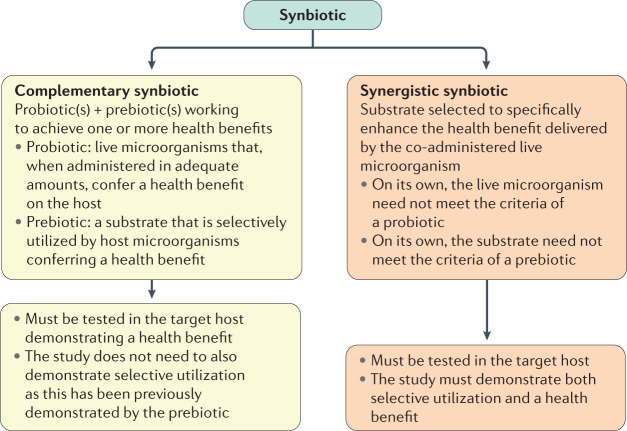
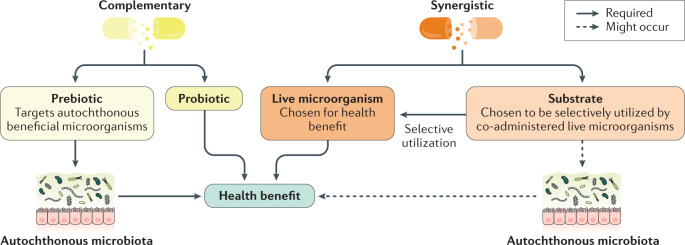
In May 2019, the International Scientific Association for Probiotics and Prebiotics (ISAPP) convened a panel of nutritionists, physiologists and microbiologists to review the definition and scope of synbiotics. The panel updated the definition of a synbiotic to “a mixture comprising live microorganisms and substrate(s) selectively utilized by host microorganisms that confers a health benefit on the host”. The panel concluded that defining synbiotics as simply a mixture of probiotics and prebiotics could suppress the innovation of synbiotics that are designed to function cooperatively. Requiring that each component must meet the evidence and dose requirements for probiotics and prebiotics individually could also present an obstacle. Rather, the panel clarified that a complementary synbiotic, which has not been designed so that its component parts function cooperatively, must be composed of a probiotic plus a prebiotic, whereas a synergistic synbiotic does not need to be so. A synergistic synbiotic is a synbiotic for which the substrate is designed to be selectively utilized by the co-administered microorganisms. This Consensus Statement further explores the levels of evidence (existing and required), safety, effects upon targets and implications for stakeholders of the synbiotic concept.
Overview
The claims and statistics of this paper haven’t been checked yet.
Free: it reads the open-access text and checks the first 5 claims that cite a source we can check. Create a free account to check every claim.
Integrity signals
Registry
Cites
Statistics
Figures
Verification
Claims the paper makes
The claims and statistics of this paper haven’t been checked yet.
Free: it reads the open-access text and checks the first 5 claims that cite a source we can check. Create a free account to check every claim.
Claims other papers make about this one
Each is checked against this paper’s own text: does it say what the citing paper says it does?
The source backs part of the claim, not all of it — or backs it for a different population, condition or comparison.
In the citing paper
“A way to enhance probiotic effectiveness is the combination of probiotics and prebiotic compounds, under the concept of ‘synbiotic’ [69].”
From Psychobiotic effects on anxiety are modulated by lifestyle behaviors: a randomized placebo-controlled trial on healthy adults (2023) · cites this paper as [69]
Experimental — accuracy not yet measuredIn the citing paper
“Third, the minimum fiber concentration suggested for a functional synbiotic [63] was used in the study, that in theory could be sufficient to stimulate the cognate gut microorganisms.”
Self-check
Percentages, sums and reported differences re-computed from the paper’s own numbers.
The self-check needs the paper’s full text.
Citations
Cites
1 retracted
Asemi, Z., Khorrami-Rad, A., Alizadeh, S.-A., Shakeri, H., & Esmaillzadeh, A. (2014) · Clinical Nutrition · doi:10.1016/j.clnu.2013.05.015 · Cited by 190
RetractedDiet rapidly and reproducibly alters the human gut microbiome
David, L. A., Maurice, C. F., Carmody, R. N., Gootenberg, D. B., Button, J. E., Wolfe, B. E., Ling, A. V., Devlin, A. S., Varma, Y., Fischbach, M. A., et al. (2014) · Nature · doi:10.1038/nature12820 · Cited by 10,100
Hill (2014) · doi:10.1038/nrgastro.2014.66 · Cited by 9,592
Moher, D., Hopewell, S., Schulz, K. F., Montori, V., Gotzsche, P. C., Devereaux, P. J., Elbourne, D., Egger, M., & Altman, D. G. (2010) · BMJ · doi:10.1136/bmj.c869 · Cited by 8,883
Dietary Modulation of the Human Colonic Microbiota: Introducing the Concept of Prebiotics
Gibson, G. R., & Roberfroid, M. B. (1995) · The Journal of Nutrition · doi:10.1093/jn/125.6.1401 · Cited by 7,667
Self-citationGibson, G. R., Hutkins, R., Sanders, M. E., Prescott, S. L., Reimer, R. A., Salminen, S. J., Scott, K., Stanton, C., Swanson, K. S., Cani, P. D., et al. (2017) · Nature Reviews Gastroenterology & Hepatology · doi:10.1038/nrgastro.2017.75 · Cited by 5,634
Self-citationDiversity, stability and resilience of the human gut microbiota
Lozupone, C. A., Stombaugh, J. I., Gordon, J. I., Jansson, J. K., & Knight, R. (2012) · Nature · doi:10.1038/nature11550 · Cited by 5,533
Zheng, J., Wittouck, S., Salvetti, E., Franz, C. M. A. P., Harris, H. M. B., Mattarelli, P., O’Toole, P. W., Pot, B., Vandamme, P., Walter, J., et al. (2020) · International Journal of Systematic and Evolutionary Microbiology · doi:10.1099/ijsem.0.004107 · Cited by 3,313
The ecology of the microbiome: Networks, competition, and stability
Coyte, K. Z., Schluter, J., & Foster, K. R. (2015) · Science · doi:10.1126/science.aad2602 · Cited by 2,748
Dethlefsen, L., & Relman, D. A. (2011) · Proceedings of the National Academy of Sciences · doi:10.1073/pnas.1000087107 · Cited by 2,421
Cited by
Items 401–500 of 1,001
Palencia-Argel, M., Rodríguez-Villamil, H., Bernal-Castro, C., Díaz-Moreno, C., & Fuenmayor, C. A. (2022) · Critical Reviews in Food Science and Nutrition · doi:10.1080/10408398.2022.2104806 · Cited by 51
“ISAPP defines a synbiotic as “a mixture comprising live microorganisms and substrate(s) selectively utilized by host microorganisms that confers a health benefit on the host” (Swanson et al. 2020).”
BackgroundSwine enteric colibacillosis: Current treatment avenues and future directions
Castro, J., Barros, M. M., Araújo, D., Campos, A. M. V., Oliveira, R., Silva, S. M., & Almeida, C. (2022) · Frontiers in Veterinary Science · doi:10.3389/fvets.2022.981207 · Cited by 62
Lee, C., Liao, Y.-C., Lee, M., Cheng, Y.-C., Chiou, S., Lin, J., Huang, C., & Watanabe, K. (2022) · Microorganisms · doi:10.3390/microorganisms10112181 · Cited by 51
Zhu, C., Yao, J., Zhu, M., Zhu, C., Yuan, L., Li, Z., Cai, D., Chen, S., Hu, P., & Liu, H. (2022) · Frontiers in Veterinary Science · doi:10.3389/fvets.2022.1045965 · Cited by 57
The Gut Microbiome Advances Precision Medicine and Diagnostics for Inflammatory Bowel Diseases
Mousa, W. K., & Ali, A. (2024) · International Journal of Molecular Sciences · doi:10.3390/ijms252011259 · Cited by 56
“…the probiotics and prebiotics in (1) complementary synbiotics provide health benefits without necessarily co-dependent functions, the second type of synbiotics, (2) synergistic synbiotics, requires a prebiotic substrate/s that is selectively utilized by the co-administered probiotic strain/s [136].”
BackgroundInfluentialHuman microbiome acquisition and transmission
Heidrich, V., Valles‐Colomer, M., & Segata, N. (2025) · Nature Reviews Microbiology · doi:10.1038/s41579-025-01166-x · Cited by 56
“Alternatively, synbiotics (that is, pairing probiotics with substrates they selectively utilize 133 ) can potentiate probiotic colonization by providing them with a competitive advantage.”
Gao, Y., Tan, Y.-J., & Fang, J. (2025) · Nature Reviews Clinical Oncology · doi:10.1038/s41571-025-01026-w · Cited by 55
Amorim, C., Silvério, S. C., Cardoso, B. B., Alves, J. I., Pereira, M. A., & Rodrigues, L. R. (2019) · Carbohydrate Polymers · doi:10.1016/j.carbpol.2019.115460 · Cited by 53
Massa, N. M. L., Menezes, F. N. D. D., de Albuquerque, T. M. R., de Oliveira, S. P. A., Lima, M. D. S., Magnani, M., & de Souza, E. L. (2020) · LWT · doi:10.1016/j.lwt.2020.109766 · Cited by 64
Langlois, L., Akhtar, N., Tam, K. C., Dixon, B., & Reid, G. (2021) · FEMS Microbiology Reviews · doi:10.1093/femsre/fuab030 · Cited by 54
Self-citationBatista, V. L., de Jesus, L. C. L., Tavares, L. M., Barroso, F. A. L., Fernandes, L. J. D. S., Freitas, A. D. S., Américo, M. F., Drumond, M. M., Mancha-Agresti, P. D. C., Ferreira, E. F., et al. (2022) · Microorganisms · doi:10.3390/microorganisms10071418 · Cited by 51
The Role of the Gut Microbiome in Psychiatric Disorders
Andrioaie, I.-M., Duhaniuc, A., Năstase, E. V., Iancu, L. S., Luncă, C., Trofin, F., Anton-Păduraru, D.-T., & Dorneanu, O. (2022) · Microorganisms · doi:10.3390/microorganisms10122436 · Cited by 59
Feeding the gut microbiome: impact on multiple sclerosis
Bronzini, M., Maglione, A., Rosso, R., Matta, M., Masuzzo, F., Rolla, S., & Clerico, M. (2023) · Frontiers in Immunology · doi:10.3389/fimmu.2023.1176016 · Cited by 54
Andreozzi, V., Cuoco, S., Balestrieri, M., Fierro, F., Ferrara, N., Erro, R., Filippo, M. D., Barbella, G., Memoli, M. C., Silvestri, A., et al. (2024) · Scientific Reports · doi:10.1038/s41598-024-74400-w · Cited by 51
Inulin improves the egg production performance and affects the cecum microbiota of laying hens
Shang, H., Zhao, J., Dong, X., Guo, Y., Zhang, H., Cheng, J., & Zhou, H. (2019) · International Journal of Biological Macromolecules · doi:10.1016/j.ijbiomac.2019.11.137 · Cited by 49
Sorensen, K., Cawood, A. L., Gibson, G. R., Cooke, L., & Stratton, R. J. (2021) · Nutrients · doi:10.3390/nu13030935 · Cited by 50
“When used together, probiotics and prebiotics are termed complementary synbiotics [25].”
BackgroundSelf-citationSynbiotic sheep milk ice cream reduces chemically induced mouse colon carcinogenesis
Balthazar, C. F., de Moura, N. A., Romualdo, G. R., Rocha, R. S., Pimentel, T. C., Esmerino, E. A., Freitas, M. Q., Santillo, A., Silva, M. C., Barbisan, L. F., et al. (2021) · Journal of Dairy Science · doi:10.3168/jds.2020-19979 · Cited by 51
García-Gutiérrez, E., & Cotter, P. D. (2021) · Critical Reviews in Microbiology · doi:10.1080/1040841x.2021.1979933 · Cited by 50
“More specifically, the ISAPP has defined a synbiotic as “a mixture comprising live microorganisms and substrate(s) selectively utilized by host microorganisms that confers a health benefit on the host” (Swanson et al. 2020).”
BackgroundWhat If Not All Metabolites from the Uremic Toxin Generating Pathways Are Toxic? A Hypothesis
Vanholder, R. C., Nigám, S. K., Burtey, S., & Glorieux, G. (2022) · Toxins · doi:10.3390/toxins14030221 · Cited by 57
He, J., Hou, T., Wang, Q., Wang, Q., Jiang, Y., Chen, L., Xu, J., Qi, Y., Jia, D., Gu, Y., et al. (2024) · Aging Cell · doi:10.1111/acel.14081 · Cited by 53
Lázaro, Á., Donat, P. V., & Manyes, L. (2024) · Food & Function · doi:10.1039/d4fo01705f · Cited by 56
Li, Y., Ma, X., & Xiong, L. (2018) · Food Hydrocolloids · doi:10.1016/j.foodhyd.2018.11.026 · Cited by 48
Postbiotic Supplementation for Children and Newborn’s Health
Morniroli, D., Vizzari, G., Consales, A., Mosca, F., & Giannì, M. L. (2021) · Nutrients · doi:10.3390/nu13030781 · Cited by 52
“Synbiotics are defined as synergistic mixtures of probiotics and prebiotics that beneficially affect the host by improving the survival and colonization of live beneficial microorganism in the host’s gastrointestinal tract [14].”
BackgroundChaturvedi, S., Khartad, A., & Chakraborty, S. (2021) · Food Bioscience · doi:10.1016/j.fbio.2021.101195 · Cited by 50
Zhang, R., Li, X., Cen, X.-L., Gao, Q.-H., Zhang, M., Li, K.-Y., Wu, Q., Mu, Y., Tang, X., Zhou, J., et al. (2020) · Electronic Journal of Biotechnology · doi:10.1016/j.ejbt.2020.11.001 · Cited by 47
Suwannaphan, S. (2021) · AIMS Microbiology · doi:10.3934/microbiol.2021026 · Cited by 50
“Probiotics have diverse health benefits including promoting good digestion, enhancing resistance to infection, improving the immune system [6], restoring and balancing the gut microflora [7], pathogen interference, as anticarcinogenic and anti-mutagenic agents and ameliorating the effects of diseases such as diabetes…”
BackgroundGueniche, A., Perin, O., Bouslimani, A., Landemaine, L., Misra, N., Cupferman, S., Aguilar, L., Clavaud, C., Chopra, T., & Khodr, A. (2022) · Pathogens · doi:10.3390/pathogens11020121 · Cited by 44
Ghorbani, Z., Kazemi, A., Bartolomaeus, T. U. P., Martami, F., Noormohammadi, M., Salari, A., Löber, U., Balou, H. A., Forslund, S. K., & Mahdavi‐Roshan, M. (2022) · Cardiovascular Research · doi:10.1093/cvr/cvac128 · Cited by 50
Cui, H., Guo, C., Wang, Q., Feng, C., & Duan, Z. (2022) · Frontiers in Medicine · doi:10.3389/fmed.2022.1064460 · Cited by 50
Antimicrobial potential of known and novel probiotics on in vitro periodontitis biofilms
Holm, W. V., Carvalho, R., Delanghe, L., Eilers, T., Zayed, N., Mermans, F., Bernaerts, K., Boon, N., Claes, I. J. J., Lebeer, S., et al. (2023) · npj Biofilms and Microbiomes · doi:10.1038/s41522-023-00370-y · Cited by 56
Fasano, A., Chassaing, B., Haller, D., Ventura, E. F., Collado, M. C., Pastor, N., Koren, O., & Canani, R. B. (2024) · Gut Microbes · doi:10.1080/19490976.2024.2392009 · Cited by 49
Neyrinck, A. M., Rodriguez, J., Taminiau, B., Amadieu, C., Herpin, F., Allaert, F., Cani, P. D., Daube, G., Bindels, L. B., & Delzenne, N. M. (2021) · Scientific Reports · doi:10.1038/s41598-020-80947-1 · Cited by 49
Self-citationGut microbiota and metabolic aspects of cancer cachexia
Ziemons, J., Smidt, M. L., Damink, S. W. M. O., & Rensen, S. S. (2021) · Best Practice & Research Clinical Endocrinology & Metabolism · doi:10.1016/j.beem.2021.101508 · Cited by 50
Pereira, T. D. M. C., Côco, L. Z., Ton, A. M. M., Meyrelles, S. S., Campos‐Toimil, M., Campagnaro, B. P., & Vasquez, E. C. (2021) · Antioxidants · doi:10.3390/antiox10111845 · Cited by 72
“Thus, this probiotic, which exhibits features of synbiotic fermented milk (probiotics and prebiotics that beneficially affect the host, see [299]), must become a potential therapeutic strategy against PD progression in future years.”
BackgroundMicrobiome Modulation as a Novel Strategy to Treat and Prevent Respiratory Infections
Mindt, B. C., & DiGiandomenico, A. (2022) · Antibiotics · doi:10.3390/antibiotics11040474 · Cited by 50
De Giani, A., Sandionigi, A., Zampolli, J., Michelotti, A., Tursi, F., Labra, M., & Di Gennaro, P. (2022) · Microorganisms · doi:10.3390/microorganisms10061256 · Cited by 46
“Third, the minimum fiber concentration suggested for a functional synbiotic [63] was used in the study, that in theory could be sufficient to stimulate the cognate gut microorganisms.”
BackgroundEnterorenal crosstalks in diabetic nephropathy and novel therapeutics targeting the gut microbiota
Ni, Y., Zheng, L., Nan, S., Ke, L., Fu, Z., & Jin, J. (2022) · Acta Biochimica et Biophysica Sinica · doi:10.3724/abbs.2022140 · Cited by 49
Cerdó, T., García-Santos, J. A., Rodríguez-Pöhnlein, A., García-Ricobaraza, M., Nieto-Ruíz, A., García-Bermúdez, M., & Campoy, C. (2022) · Nutrients · doi:10.3390/nu14214691 · Cited by 51
Vijayaram, S., Razafindralambo, H. L., Rabetafika, H. N., Nguyen, H., & Sun, Y. (2023) · Biology · doi:10.3390/biology12121498 · Cited by 54
Fogacci, F., Giovannini, M., Micoli, V. D., Grandi, E., Borghi, C., & Cicero, A. F. G. (2024) · Nutrients · doi:10.3390/nu16152454 · Cited by 50
Synbiotics: Effects of prebiotics on the growth and viability of probiotics in food matrices
Parhi, P., Liu, S., & Choo, W. S. (2024) · Bioactive Carbohydrates and Dietary Fibre · doi:10.1016/j.bcdf.2024.100462 · Cited by 50
Gut Microbiota-Derived Metabolites in Atherosclerosis: Pathways, Biomarkers, and Targets
Tonch-Cerbu, A.-K., Boicean, A., Stoia, O., & Teodoru, M. (2025) · International Journal of Molecular Sciences · doi:10.3390/ijms26178488 · Cited by 47
“While prebiotics and probiotics can increase the abundance of beneficial bacteria such as Bifidobacterium and Lactobacillus , their effects on overall microbiota composition are often modest and usually persist only during the intervention [134].”
Xylooligosaccharides production from wheat middlings bioprocessed with Bacillus subtilis
Reque, P. M., Pinilla, C. M. B., Gautério, G. V., Kalil, S. J., & Brandelli, A. (2019) · Food Research International · doi:10.1016/j.foodres.2019.108673 · Cited by 46
Effects of Different Breakfast Cereals on Alertness and Wellbeing
Smith, A. P. (2019) · Journal of Food Research · doi:10.5539/jfr.v8n5p82 · Cited by 46
Kerezoudi, E. N., Mitsou, E. K., Gioti, K., Terzi, E., Avgousti, I., Panagiotou, A., Koutrotsios, G., Zervakis, G. I., Mountzouris, K. C., Τέντα, Ρ., et al. (2021) · Food & Function · doi:10.1039/d0fo02581j · Cited by 50
Warda, A. K., Clooney, A. G., Ryan, F. J., Bettio, P. H. D. A., Benedetto, G. D., Ross, R. P., & Hill, C. (2021) · Applied and Environmental Microbiology · doi:10.1128/aem.02459-20 · Cited by 49
Hasain, Z., Ali, R. A. R., Ahmad, H. F., Rauf, U. F. A., Oon, S. F., & Mokhtar, N. M. (2022) · Nutrients · doi:10.3390/nu14183878 · Cited by 49
“In addition, a longer duration of probiotics supplementation may be required (≥12 weeks) to reverse certain metabolic outcomes as the effects may vary according to the probiotic’s strains, doses, duration, age, health status, and intestinal transit time [30,32].”
BackgroundImpact of the food grade heat-killed probiotic and postbiotic oral lozenges in oral hygiene
Lin, C., Chen, Y., Ho, H.-H., Kuo, Y., Lin, W., Chen, J., Lin, J., Liu, C., Lin, C.-H., Yeh, Y., et al. (2022) · Aging · doi:10.18632/aging.203923 · Cited by 48
Potential benefits of yeast Saccharomyces and their derivatives in dogs and cats: a review
Maturana, M., Castillejos, L., Martín-Orúe, S. M., Minel, A., Chetty, O., Félix, A. P., & Lesaux, A. A. (2023) · Frontiers in Veterinary Science · doi:10.3389/fvets.2023.1279506 · Cited by 49
Porcari, S., Fusco, W. G., Spivak, I., Fiorani, M., Gasbarrini, A., Elinav, E., Cammarota, G., & Ianiro, G. (2024) · The Lancet. Gastroenterology & hepatology · doi:10.1016/s2468-1253(23)00357-6 · Cited by 47
The Evolution of Science and Regulation of Dietary Supplements: Past, Present, and Future
Coates, P. M., Bailey, R. L., Blumberg, J. B., El‐Sohemy, A., Floyd, Z. E., Goldenberg, J. Z., Shunney, A. G., Holscher, H. D., Nkrumah-Elie, Y. M., Rai, D., et al. (2024) · Journal of Nutrition · doi:10.1016/j.tjnut.2024.06.017 · Cited by 51
“There is a large body of evidence on the health bene fi ts of prebiotics [65] and probiotics [66], but the research on syn-biotics [67] is more limited.”
BackgroundSelf-citationBashir, B., Gulati, M., Vishwas, S., Gupta, G., Dhanasekaran, M., Paudel, K. R., Chellappan, D. K., Anand, K., Negi, P., Singh, P. K., et al. (2025) · Ageing Research Reviews · doi:10.1016/j.arr.2025.102689 · Cited by 48
Metatranscriptomics for Understanding the Microbiome in Food and Nutrition Science
Butowski, C. F., Dixit, Y., dos Reis, M. M., & Mu, C. (2025) · Metabolites · doi:10.3390/metabo15030185 · Cited by 46
“Probiotics are live microorganisms that, when administered in adequate amounts, confer a health benefit on the host [109].”
Luo, K., Zhang, M., Tu, Q., Li, J., Wang, Y., Wan, S., Li, D., Qian, Q., & Lu, X. (2025) · Journal of Neuroinflammation · doi:10.1186/s12974-025-03476-6 · Cited by 49
Spiller, A. L., da Costa, B. G., Yoshihara, R. N. Y., Nogueira, E. J. Z., Castelhano, N. S., Santos, A., de Freitas, M. B., Magro, D. O., & Sassaki, L. Y. (2025) · Nutrients · doi:10.3390/nu17162677 · Cited by 55
“A symbiotic is a mixture containing live microorganisms and substrates selectively utilized by host microorganisms, offering a health benefit [96].”
Chen, C., Su, Q., Zi, M., Hua, X., & Zhang, Z. (2025) · npj Biofilms and Microbiomes · doi:10.1038/s41522-025-00818-3 · Cited by 51
Physicochemical and structural characterization of resistant starch isolated from Vigna unguiculata
Rengadu, D., Gerrano, A. S., & Mellem, J. J. (2020) · International Journal of Biological Macromolecules · doi:10.1016/j.ijbiomac.2020.01.043 · Cited by 45
Devi, P. B., Kavitake, D., Jabastin, J., & Shetty, P. H. (2021) · Food Research International · doi:10.1016/j.foodres.2021.110333 · Cited by 48
Salinas, E., Reyes-Pavón, D., Cortes‐Perez, N. G., Torres-Maravilla, E., Bitzer-Quintero, O. K., Langella, P., & Bermúdez‐Humarán, L. G. (2021) · Microorganisms · doi:10.3390/microorganisms9081634 · Cited by 49
“Along these lines, synbiotics can be classified as synergistic or complementary; in the former case, the substrate is designed to be used selectively by the co-administered microorganism, and in the latter, the prebiotic component is designed to target autochthonous microorganisms [44].”
BackgroundBrdarić, E., Bajić, S. S., Đokić, J., Đurđić, S., Ruas‐Madiedo, P., Stevanović, M. M., Tolinački, M., Dinić, M., Mutić, J. J., Golić, N., et al. (2021) · Frontiers in Microbiology · doi:10.3389/fmicb.2021.759378 · Cited by 48
Sasi, M., Kumar, S., Hasan, M., Arpitha, S. R., García-Gutiérrez, E., Kumari, S., Prakash, O., Nain, L., Sachdev, A., & Dahuja, A. (2022) · Critical Reviews in Food Science and Nutrition · doi:10.1080/10408398.2022.2078272 · Cited by 46
“The definition of synbiotics as per ISAPP is “a mixture comprising live micro-organisms and substrate(s) selectively utilized by host micro-organisms that confers a health benefit on the host” (Swanson et al. 2020).”
BackgroundMorales-Torres, R., Carrasco-Gubernatis, C., Grasso-Cladera, A., Cosmelli, D., Parada, F. J., & Palacios-García, I. (2023) · Nutrients · doi:10.3390/nu15071706 · Cited by 44
“A way to enhance probiotic effectiveness is the combination of probiotics and prebiotic compounds, under the concept of ‘synbiotic’ [69].”
BackgroundTargeting Nrf2 with Probiotics and Postbiotics in the Treatment of Periodontitis
Karaca, B., Yılmaz, M., & Gürsoy, U. K. (2022) · Biomolecules · doi:10.3390/biom12050729 · Cited by 49
Kenneth, M. J., Tsai, H., Fang, C., Hussain, B., Chiu, Y., & Hsu, B. (2022) · Journal of Advanced Research · doi:10.1016/j.jare.2022.12.015 · Cited by 45
“Although several microbes can be probiotics, the majority of probiotics are from the Lactobacillaceae family or species of Bacillus , Bifidobacterium, or Saccharomyces [67].”
BackgroundAbenavoli, L., Scarlata, G. G. M., Scarpellini, E., Boccuto, L., Spagnuolo, R., Tilocca, B., Roncada, P., & Luzza, F. (2023) · Medicina · doi:10.3390/medicina59030594 · Cited by 47
The Skin Microbiome and its Significance for Dermatologists
Whiting, C., Azim, S. A., & Friedman, A. (2024) · American Journal of Clinical Dermatology · doi:10.1007/s40257-023-00842-z · Cited by 45
Prete, R., Dell’Orco, F., Sabatini, G., Montagano, F., Battista, N., & Corsetti, A. (2024) · Foods · doi:10.3390/foods13111663 · Cited by 46
Parisi, G. F., Carota, G., Castruccio Castracani, C., Spampinato, M., Manti, S., Papale, M., Di Rosa, M., Barbagallo, I., & Leonardi, S. (2021) · International Journal of Molecular Sciences · doi:10.3390/ijms22052465 · Cited by 43
“Synbiotics are a mixture of probiotics and prebiotics [26].”
BackgroundGastric microbiota dysbiosis and Helicobacter pylori infection
Zhang, L., Zhao, M. X., & Fu, X. (2023) · Frontiers in Microbiology · doi:10.3389/fmicb.2023.1153269 · Cited by 55
“Synbiotics are mixtures of living microorganisms (Swanson et al., 2020).”
Influence of human gut microbiome on the healthy and the neurodegenerative aging
Borrego-Ruiz, A., & Borrego, J. J. (2024) · Experimental Gerontology · doi:10.1016/j.exger.2024.112497 · Cited by 48
Kim, Y.-T., & Mills, D. A. (2024) · Food Science and Biotechnology · doi:10.1007/s10068-024-01620-1 · Cited by 50
Postbiotics are a candidate for new functional foods
Wei, L., Wang, B., Bai, J., Zhang, Y., Liu, C., Suo, H., & Wang, C. (2024) · Food Chemistry X · doi:10.1016/j.fochx.2024.101650 · Cited by 55
Postbiotics as Adjuvant Therapy in Cancer Care
Balendra, V., Rosenfeld, R., Amoroso, C., Castagnone, C., Rossino, M. G., Garrone, O., & Ghidini, M. (2024) · Nutrients · doi:10.3390/nu16152400 · Cited by 46
García-Gutiérrez, E., O’Mahony, A. K., dos Santos, R. S., Marroquí, L., & Cotter, P. D. (2024) · Gut Microbes · doi:10.1080/19490976.2024.2401654 · Cited by 52
“290 Synbiotics are a “mixture, comprising live microorganisms and substrate(s) selectively utilized by host microorganisms, which confers a health benefit on the host”, 292 like Lactobacillus sp. and Bifidobacterium sp.”
BackgroundBoger, M. C. L., Hekelaar, J., van Leeuwen, S. S., Dijkhuizen, L., & van Bueren, A. L. (2018) · Journal of Structural Biology · doi:10.1016/j.jsb.2018.12.002 · Cited by 44
Nettleton, J. E., Klančič, T., Schick, A., Choo, A. C., Cheng, N., Shearer, J., Borgland, S. L., Rho, J. M., & Reimer, R. A. (2021) · Microorganisms · doi:10.3390/microorganisms9091833 · Cited by 45
“A synbiotic is a product containing both prebiotics and probiotics [29], and it has been shown in rats to improve intestinal permeability and gut microbiota profiles [30], and in children diagnosed with ASD (n = 8) to reduce lethargy and some GI symptoms [31].”
BackgroundSelf-citationParker, J., O'Brien, C., & Hawrelak, J. (2022) · Obstetrics & Gynecology Science · doi:10.5468/ogs.21185 · Cited by 42
“Synbiotics Synbiotics are mixtures of live microorganisms and substrates selectively utilized by host microbes; when consumed, they confer a health benefit to the host [103].”
BackgroundFermented foods and cardiometabolic health: Definitions, current evidence, and future perspectives
Li, K. J., Burton-Pimentel, K. J., Vergères, G., Feskens, E. J. M., & Brouwer-Brolsma, E. M. (2022) · Frontiers in Nutrition · doi:10.3389/fnut.2022.976020 · Cited by 53
Jacquier, E. F., van de Wouw, M., Nekrasov, E., Contractor, N., Kassis, A. N., & Marcu, D. E. (2024) · Foods · doi:10.3390/foods13050739 · Cited by 48
Delivery of Probiotics with Cellulose-Based Films and Their Food Applications
Yang, Y., Zhang, J., & Li, C. (2024) · Polymers · doi:10.3390/polym16060794 · Cited by 60
Montemurro, M., Casertano, M., Vilas-Franquesa, A., Rizzello, C. G., & Fogliano, V. (2024) · LWT · doi:10.1016/j.lwt.2024.115974 · Cited by 46
“The possibility to include probiotic microorganisms in ingredients or products formulations with prebiotic potentials has been widely investigated in the last years to produce synbiontic with positive impact on people health (Palai, Derecho, Kesh, Egbuna, & Onyeike., 2020; Swanson et al., 2020).”
Past, present, and future of microbiome-based therapies
Manrique, P., Montero, I., Fernández-Gosende, M., Martínez, N., Hidalgo-Cantabrana, C., & Ríos-Covián, D. (2024) · Microbiome Research Reports · doi:10.20517/mrr.2023.80 · Cited by 51
Prebiotics, probiotics, synbiotics and postbiotics to adolescents in metabolic syndrome
Luzzi, A., Briata, I. M., Napoli, I. D., Giugliano, S., Sabatino, A. D., Rescigno, M., & Cena, H. (2024) · Clinical Nutrition · doi:10.1016/j.clnu.2024.04.032 · Cited by 46
Wang, S., Cui, Z., & Yang, H. (2024) · BMC Microbiology · doi:10.1186/s12866-024-03255-y · Cited by 46
“The synbiotic is commonly composed of a probiotic combined with a prebiotic, and target on autochthonous microorganisms [126].”
BackgroundChiano, M. D., Rocchetti, M. T., Spano, G., Russo, P., Allegretta, C., Milior, G., Gadaleta, R. M., Sallustio, F., Pontrelli, P., Gesualdo, L., et al. (2024) · Cellular and Molecular Neurobiology · doi:10.1007/s10571-024-01494-1 · Cited by 44
Chen, W., Zou, H., Xu, H., Cao, R., Zhang, H., Zhang, Y., & Zhao, J. (2024) · Frontiers in Microbiology · doi:10.3389/fmicb.2024.1478082 · Cited by 48
The Role of Fermented Vegetables as a Sustainable and Health-Promoting Nutritional Resource
Borrego-Ruiz, A., González-Domenech, C. M., & Borrego, J. J. (2024) · Applied Sciences · doi:10.3390/app142310853 · Cited by 46
Role of feed additives in poultry nutrition: Historical, current and future perspectives
Perera, W. N. U., & Ravindran, V. (2025) · Animal Feed Science and Technology · doi:10.1016/j.anifeedsci.2025.116371 · Cited by 46
Sanders, M. E., & Hill, C. (2025) · Cell Host & Microbe · doi:10.1016/j.chom.2025.04.017 · Cited by 45
Self-citationEffects of prebiotics on affect and cognition in human intervention studies
Desmedt, O., Broers, V. J. V., Zamariola, G., Pachikian, B., Delzenne, N., & Luminet, O. (2019) · Nutrition Reviews · doi:10.1093/nutrit/nuy052 · Cited by 39
Self-citationArabi, S. M., Bahrami, L. S., Rahnama, I., & Sahebkar, A. (2022) · Pharmacological Research · doi:10.1016/j.phrs.2022.106061 · Cited by 46
Guo, S., Chen, M., Wu, T., Liu, K., Zhang, H., & Wang, J. (2022) · Journal of Dairy Science · doi:10.3168/jds.2022-22003 · Cited by 42
“Sufficient living probiotic cells is a prerequisite for beneficial effect, so the minimum number of living cells in fermented milk should exceed 10(6) cfu/mL (Swanson et al., 2020).”
BackgroundReply to: Postbiotics — when simplification fails to clarify
Salminen, S., Collado, M. C., Endo, A., Hill, C., Lebeer, S., Quigley, E. M. M., Sanders, M. E., Shamir, R., Swann, J. R., Szajewska, H., et al. (2021) · Nature Reviews Gastroenterology & Hepatology · doi:10.1038/s41575-021-00522-5 · Cited by 44
Self-citationHuang, Z., Li, Y., Park, H., Ho, M., Bhardwaj, K., Sugimura, N., Lee, H. W., Meng, H., Ebert, M. P., Chao, K., et al. (2023) · Gut Microbes · doi:10.1080/19490976.2023.2237645 · Cited by 41
“As it is often difficult to achieve durable engraftment of probiotics without the use of antibiotics,(165) probiotics are usually proposed to be supplied with prebiotics (substrates selectively utilized by gut microorganisms, such as MACs), together known as synbiotics.(166) Prebiotics are employed to enhance the surv…”
BackgroundAntituberculosis Therapy and Gut Microbiota: Review of Potential Host Microbiota Directed-Therapies
Diallo, D., Somboro, A. M., Diabaté, S., Baya, B., Koné, A., Sarro, Y. D. S., Kone, B., Diarra, B., Diallo, S., Diakité, M., et al. (2021) · Frontiers in Cellular and Infection Microbiology · doi:10.3389/fcimb.2021.673100 · Cited by 43
“The most commonly used prebiotics are the fermentable oligosaccharides such as, inulin, galacto-oligosaccharides, fructo-oligosaccharides, and lactulose (Swanson et al., 2020).”
BackgroundThe Bridge Between Ischemic Stroke and Gut Microbes: Short-Chain Fatty Acids
Fang, Z., Chen, M., Qian, J., Wang, C., & Zhang, J. (2022) · Cellular and Molecular Neurobiology · doi:10.1007/s10571-022-01209-4 · Cited by 45
Özen, M., Piloquet, H., & Schaubeck, M. (2023) · Nutrients · doi:10.3390/nu15092207 · Cited by 44
Yu, L., Gao, Y., Ye, Z., Duan, H., Zhao, J., Zhang, H., Narbad, A., Tian, F., Zhai, Q., & Chen, W. (2023) · Critical Reviews in Food Science and Nutrition · doi:10.1080/10408398.2023.2217727 · Cited by 42
“…supplement, defined as "a mixture of live microorganisms and substrates selectively utilized by host microorganisms for their health benefits" (Swanson et al. 2020), have a wide range of prospects for food applications where their health effects may be mediated through participation in…”
Maternal microbiota and gestational diabetes: impact on infant health
Singh, P., Elhag, D. A., Ibrahim, I., Abdullahi, H., & Khodor, S. A. (2023) · Journal of Translational Medicine · doi:10.1186/s12967-023-04230-3 · Cited by 45
Engineering Strategies to Modulate the Gut Microbiome and Immune System
Han, K., Xu, J., Xie, F., Crowther, J., & Moon, J. J. (2024) · The Journal of Immunology · doi:10.4049/jimmunol.2300480 · Cited by 43
Metadata
- Authors
- Swanson, K. S., Gibson, G. R., Hutkins, R., Reimer, R. A., Reid, G., Verbeke, K., Scott, K. P., Holscher, H. D., Azad, M. B., Delzenne, N. M., & Sanders, M. E.
- Affiliations
- University of Illinois Urbana-Champaign (US)
- University of Reading (GB)
- University of Nebraska–Lincoln (US)
- University of Calgary (CA)
- Western University (CA)
- KU Leuven (BE)
- University of Aberdeen (GB)
- Children's Hospital Research Institute of Manitoba (CA)
- UCLouvain (BE)
- Corresponding author
- Swanson, Kelly S.
- ORCID
- Venue
- Nature Reviews Gastroenterology & Hepatology
- Published
- 2020-08-21
- Volume
- 17
- Issue
- 11
- Pages
- 687-701
- ISSN
- 1759-5045 (ISSN-L)
- 1759-5053
- PMC
- PMC7581511
- OpenAlex
- W2694487218
- Cited by
- 2,196
- References
- 307
- Citations by year
- 2026: 285 · 2025: 363 · 2024: 446 · 2023: 400 · 2022: 373 · 2021: 225 · 2020: 44
- FWCI
- 22.02
- Type
- journal article
- Language
- en
- Open access
- hybrid
- doi.org
- Licence
- cc-by
- creativecommons.org/licenses/by/4.0 (tdm)
- creativecommons.org/licenses/by/4.0 (vor)
- Locations
- Nature Reviews Gastroenterology & Hepatology (publishedVersion, cc-by)
- PubMed Central (publishedVersion, cc-by)
- PubMed (publishedVersion)
- Aberdeen University Research Archive (Aberdeen University) (submittedVersion)
- Lincoln (University of Nebraska) (submittedVersion)
- Digital Access to Libraries (Université catholique de Louvain (UCL), l'Université de Namur (UNamur) and the Université Saint-Louis (USL-B)) (submittedVersion, other-oa)
- Scholarship@Western (Western University) (submittedVersion)
- Lirias (KU Leuven) (submittedVersion, cc-by)
- Funders
- GlaxoSmithKline
- PepsiCo
- General Mills
- Mead Johnson Nutrition
- Pharmavite
- Danone
- Rural and Environment Science and Analytical Services Division
- Scottish Government
- Medela
- Topics
- Life Sciences › Agricultural and Biological Sciences › Food Science › Probiotics and Fermented Foods
- Health Sciences › Nursing › Nutrition and Dietetics › Microbial Metabolites in Food Biotechnology
- Health Sciences › Nursing › Nutrition and Dietetics › Infant Nutrition and Health
- Keywords
- postbiotics, synbiotics, probiotics, prebiotics, health benefits, mechanism of action, safety, regulation, microbial metabolites
- MeSH terms
- Humans, Probiotics, Prebiotics, Synbiotics
About these checks
Registry, retraction, Cites and statistics results are computed, not judged, with one exception: a printed reference that no index lists is read once by a model before it counts as a citation error. Claims are extracted by a model and kept only when their quote appears verbatim in the text; each cited source is then checked, with a model’s help, for whether it says what the claim relies on. Those verdicts can be wrong — read the claim’s quote and the cited source before relying on one.
Statistics and arithmetic are recomputed, not judged.
Confidence bands are shown only for fields calibrated on our annotated test set. None is calibrated yet, so no band is shown.
What counts as a claim ›How we measure confidence ›How we check this ›
Are you an author, or do you see a problem with this page? Request a review
Data sources
Bibliographic data: Semantic Scholar, OpenAlex, Crossref.
Contains information from the Semantic Scholar Academic Graph Datasets, made available under the ODC Attribution License (ODC-BY 1.0).
Semantic Scholar’s data is described in: Kinney, R., et al. (2023). The Semantic Scholar Open Data Platform. arXiv:2301.10140.
