

The International Scientific Association for Probiotics and Prebiotics (ISAPP) consensus statement on the definition and scope of synbiotics
Open accessThe DOI matches its Crossref record; 303 of the 307 references it cites were found in a registry or an index.
Abstract
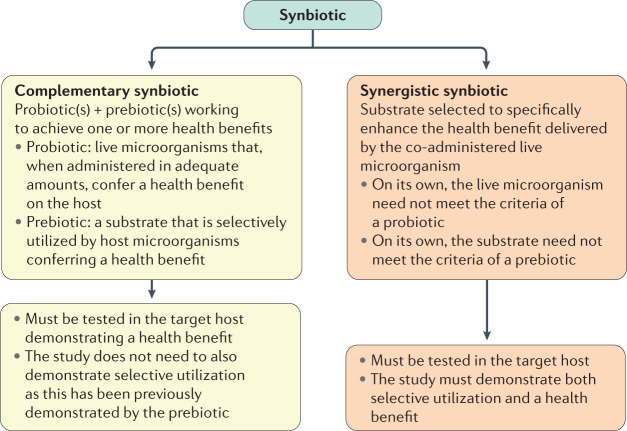
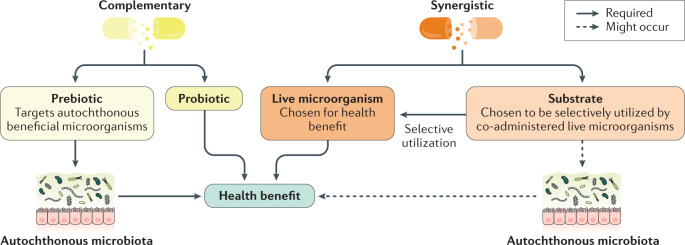
In May 2019, the International Scientific Association for Probiotics and Prebiotics (ISAPP) convened a panel of nutritionists, physiologists and microbiologists to review the definition and scope of synbiotics. The panel updated the definition of a synbiotic to “a mixture comprising live microorganisms and substrate(s) selectively utilized by host microorganisms that confers a health benefit on the host”. The panel concluded that defining synbiotics as simply a mixture of probiotics and prebiotics could suppress the innovation of synbiotics that are designed to function cooperatively. Requiring that each component must meet the evidence and dose requirements for probiotics and prebiotics individually could also present an obstacle. Rather, the panel clarified that a complementary synbiotic, which has not been designed so that its component parts function cooperatively, must be composed of a probiotic plus a prebiotic, whereas a synergistic synbiotic does not need to be so. A synergistic synbiotic is a synbiotic for which the substrate is designed to be selectively utilized by the co-administered microorganisms. This Consensus Statement further explores the levels of evidence (existing and required), safety, effects upon targets and implications for stakeholders of the synbiotic concept.
Overview
The claims and statistics of this paper haven’t been checked yet.
Free: it reads the open-access text and checks the first 5 claims that cite a source we can check. Create a free account to check every claim.
Integrity signals
Registry
Cites
Statistics
Figures
Verification
Claims the paper makes
The claims and statistics of this paper haven’t been checked yet.
Free: it reads the open-access text and checks the first 5 claims that cite a source we can check. Create a free account to check every claim.
Claims other papers make about this one
Each is checked against this paper’s own text: does it say what the citing paper says it does?
The source backs part of the claim, not all of it — or backs it for a different population, condition or comparison.
In the citing paper
“A way to enhance probiotic effectiveness is the combination of probiotics and prebiotic compounds, under the concept of ‘synbiotic’ [69].”
From Psychobiotic effects on anxiety are modulated by lifestyle behaviors: a randomized placebo-controlled trial on healthy adults (2023) · cites this paper as [69]
Experimental — accuracy not yet measuredIn the citing paper
“Third, the minimum fiber concentration suggested for a functional synbiotic [63] was used in the study, that in theory could be sufficient to stimulate the cognate gut microorganisms.”
Self-check
Percentages, sums and reported differences re-computed from the paper’s own numbers.
The self-check needs the paper’s full text.
Citations
Cites
1 retracted
Asemi, Z., Khorrami-Rad, A., Alizadeh, S.-A., Shakeri, H., & Esmaillzadeh, A. (2014) · Clinical Nutrition · doi:10.1016/j.clnu.2013.05.015 · Cited by 190
RetractedDiet rapidly and reproducibly alters the human gut microbiome
David, L. A., Maurice, C. F., Carmody, R. N., Gootenberg, D. B., Button, J. E., Wolfe, B. E., Ling, A. V., Devlin, A. S., Varma, Y., Fischbach, M. A., et al. (2014) · Nature · doi:10.1038/nature12820 · Cited by 10,100
Hill (2014) · doi:10.1038/nrgastro.2014.66 · Cited by 9,592
Moher, D., Hopewell, S., Schulz, K. F., Montori, V., Gotzsche, P. C., Devereaux, P. J., Elbourne, D., Egger, M., & Altman, D. G. (2010) · BMJ · doi:10.1136/bmj.c869 · Cited by 8,883
Dietary Modulation of the Human Colonic Microbiota: Introducing the Concept of Prebiotics
Gibson, G. R., & Roberfroid, M. B. (1995) · The Journal of Nutrition · doi:10.1093/jn/125.6.1401 · Cited by 7,667
Self-citationGibson, G. R., Hutkins, R., Sanders, M. E., Prescott, S. L., Reimer, R. A., Salminen, S. J., Scott, K., Stanton, C., Swanson, K. S., Cani, P. D., et al. (2017) · Nature Reviews Gastroenterology & Hepatology · doi:10.1038/nrgastro.2017.75 · Cited by 5,634
Self-citationDiversity, stability and resilience of the human gut microbiota
Lozupone, C. A., Stombaugh, J. I., Gordon, J. I., Jansson, J. K., & Knight, R. (2012) · Nature · doi:10.1038/nature11550 · Cited by 5,533
Zheng, J., Wittouck, S., Salvetti, E., Franz, C. M. A. P., Harris, H. M. B., Mattarelli, P., O’Toole, P. W., Pot, B., Vandamme, P., Walter, J., et al. (2020) · International Journal of Systematic and Evolutionary Microbiology · doi:10.1099/ijsem.0.004107 · Cited by 3,313
The ecology of the microbiome: Networks, competition, and stability
Coyte, K. Z., Schluter, J., & Foster, K. R. (2015) · Science · doi:10.1126/science.aad2602 · Cited by 2,748
Dethlefsen, L., & Relman, D. A. (2011) · Proceedings of the National Academy of Sciences · doi:10.1073/pnas.1000087107 · Cited by 2,421
Cited by
Items 301–400 of 1,001
From Short- to Long-Term Effects of C-Section Delivery on Microbiome Establishment and Host Health
Ríos-Covián, D., Langella, P., & Martín, R. (2021) · Microorganisms · doi:10.3390/microorganisms9102122 · Cited by 73
Microbiological Testing of Probiotic Preparations
Zawistowska-Rojek, A., Zaręba, T., & Tyski, S. S. (2022) · International Journal of Environmental Research and Public Health · doi:10.3390/ijerph19095701 · Cited by 66
Postbiotics against Obesity: Perception and Overview Based on Pre-Clinical and Clinical Studies
Park, S., Sharma, A., & Lee, H. (2023) · International Journal of Molecular Sciences · doi:10.3390/ijms24076414 · Cited by 69
Ghavami, A., Khorvash, F., Heidari, Z., Khalesi, S., & Askari, G. (2021) · Pharmacological Research · doi:10.1016/j.phrs.2021.105668 · Cited by 62
Probiotics, Prebiotics, and Synbiotics for the Prevention of Necrotizing Enterocolitis
Murphy, K., Ross, R. P., Ryan, C. A., Dempsey, E. M., & Stanton, C. (2021) · Frontiers in Nutrition · doi:10.3389/fnut.2021.667188 · Cited by 68
Emerging Evidence on the Effects of Dietary Factors on the Gut Microbiome in Colorectal Cancer
Appunni, S., Rubens, M., Ramamoorthy, V., Saxena, A., Tonse, R., McGranaghan, P., Kaiser, A., & Kotecha, R. R. (2021) · Frontiers in Nutrition · doi:10.3389/fnut.2021.718389 · Cited by 68
González‐González, F., Delgado, S., Ruíz, L., Margollés, A., & Ruas‐Madiedo, P. (2022) · Journal of Applied Microbiology · doi:10.1111/jam.15510 · Cited by 73
Hepatocellular Carcinoma: How the Gut Microbiota Contributes to Pathogenesis, Diagnosis, and Therapy
Luo, W., Guo, S., Zhou, Y., Zhao, J., Wang, M., Sang, L.-X., Chang, B., & Wang, B. (2022) · Frontiers in Microbiology · doi:10.3389/fmicb.2022.873160 · Cited by 65
Kim, S., Park, S., Choi, T. G., & Kim, S. S. (2022) · Nutrients · doi:10.3390/nu14142982 · Cited by 71
Yan, F., Tian, S., Du, K., Xue, X., Gao, P., & Chen, Z. (2022) · Frontiers in Nutrition · doi:10.3389/fnut.2022.977548 · Cited by 62
“The International Association of probiotics and prebiotics (ISAPP) identified XOS as emergent prebiotic oligosaccharides in its latest update of its prebiotic definition (19).”
BackgroundLi, Y., Chen, M., Ma, Y., Yang, Y., Cheng, Y., Ma, H., Ren, D., & Chen, P. (2022) · npj Science of Food · doi:10.1038/s41538-022-00167-x · Cited by 64
Dong, Y., Han, M., Fei, T., Liu, H., & Gai, Z. (2023) · International Microbiology · doi:10.1007/s10123-023-00446-x · Cited by 52
“Probiotics can improve their hosts’ microecological balance, providing health-related benefits (Swanson et al. 2020b).”
BackgroundInfluentialMarim, A. V. C., & Gabardo, S. (2021) · Biocatalysis and Agricultural Biotechnology · doi:10.1016/j.bcab.2021.102190 · Cited by 66
Li, Z., Tran, N. T., Ji, P., Sun, Z., Wen, X., & Li, S. (2019) · Fish & Shellfish Immunology · doi:10.1016/j.fsi.2019.04.025 · Cited by 65
D’Onofrio, F., Renga, G., Puccetti, M., Pariano, M., Bellet, M. M., Santarelli, I., Stincardini, C., Mosci, P., Ricci, M., Giovagnoli, S., et al. (2021) · Cells · doi:10.3390/cells10071622 · Cited by 68
Monzón-Atienza, L., Bravo, J., Fernández-Montero, Á., Charlie‐Silva, I., Montero, D., Ramos-Vivas, J., Galindo‐Villegas, J., & Acosta, F. (2022) · Fish & Shellfish Immunology · doi:10.1016/j.fsi.2022.03.032 · Cited by 62
Yadav, M. K., Sehrawat, N., Sharma, A. K., Kumar, S., Singh, R., Kumar, A., & Kumar, A. (2022) · Journal of Food Science and Technology · doi:10.1007/s13197-022-05621-y · Cited by 68
“The applicability of synbiotics is not only restricted in humans but could also be valuable for animals and livestock nutrition (Malik et al. 2019; Swanson et al. 2020).”
InfluentialSun, Z., Zhao, Z., Fang, B., Hung, W., Gao, H., Zhao, W. H., Lan, H., Liu, M., Zhao, L., & Zhang, M. (2023) · Foods · doi:10.3390/foods12193579 · Cited by 71
Rao, Y., Deng, J., Zhang, C., Song, Y., & Liu, L. (2024) · Food Hydrocolloids · doi:10.1016/j.foodhyd.2024.110501 · Cited by 68
Kezer, G., Paramithiotis, S., Khwaldia, K., Harahap, I. A., Čagalj, M., Šimat, V., Smaoui, S., Elfalleh, W., Özoğul, F., & Esatbeyoglu, T. (2025) · Frontiers in Microbiology · doi:10.3389/fmicb.2025.1651965 · Cited by 68
Rodrigues, V. C. D. C., da Silva, L. G. S., Simabuco, F. M., Venema, K., & Antunes, A. E. C. (2019) · Journal of Functional Foods · doi:10.1016/j.jff.2019.01.046 · Cited by 62
Development of Healthier and Functional Dry Fermented Sausages: Present and Future
Sirini, N., Munekata, P. E. S., Lorenzo, J. M., Stegmayer, M. Á., Pateiro, M., Pérez‐Álvarez, J. Á., Sepúlveda, N., Sosa‐Morales, M. E., Teixeira, A. D. C., Fernández‐López, J., et al. (2022) · Foods · doi:10.3390/foods11081128 · Cited by 68
“The term symbiotic defines the combination of live microorganisms with a substrate that is metabolized by host microorganisms and generate health benefits for the host [80].”
BackgroundA review on the use of prebiotics in ulcerative colitis
Kennedy, J. M., Silva, A. D., Walton, G., & Gibson, G. R. (2023) · Trends in Microbiology · doi:10.1016/j.tim.2023.11.007 · Cited by 67
Self-citationRole of Postbiotics in Diabetes Mellitus: Current Knowledge and Future Perspectives
Cabello-Olmo, M., Araña, M., Urtasun, R., Encío, I., & Barajas, M. A. (2021) · Foods · doi:10.3390/foods10071590 · Cited by 68
“Probiotic refers to alive microorganisms that provide health benefits to the host through several mechanisms, including improvements of the intestinal barrier function, protection against pathogens, and the modulation of the immune response [12,13].”
BackgroundAbid, S., Farid, A., Abid, R., Rehman, M. U., Alsanie, W. F., Alhomrani, M., Alamri, A. S., Asdaq, S. M. B., Hefft, D. I., Saqib, S., et al. (2022) · Microorganisms · doi:10.3390/microorganisms10050954 · Cited by 70
“The survivability of probiotic bacteria is highly strain-dependent [8].”
BackgroundTargeting the Gut Microbiota in Kidney Disease: The Future in Renal Nutrition and Metabolism
Lambert, K., Rinninella, E., Biruete, A., Sumida, K., Stanford, J., Raoul, P. C., Mele, M. C., Wang, A. Y.-M., & Mafra, D. (2023) · Journal of Renal Nutrition · doi:10.1053/j.jrn.2022.12.004 · Cited by 64
Quality Management of Probiotics: Ensuring Safety and Maximizing Health Benefits
Ahire, J. J., Rohilla, A., Kumar, V., & Tiwari, A. (2023) · Current Microbiology · doi:10.1007/s00284-023-03526-3 · Cited by 67
“To guarantee the quality of the final probiotic product, the manufacturing process should be verified [34].”
BackgroundThe Gut Microbiome in Sepsis: From Dysbiosis to Personalized Therapy
Piccioni, A., Spagnuolo, F., Candelli, M., Voza, A., Covino, M., Gasbarrini, A., & Franceschi, F. (2024) · Journal of Clinical Medicine · doi:10.3390/jcm13206082 · Cited by 63
“Symbiotics are formulations that blend live microorganisms with substances that can be utilized by native and non-native host microorganisms [105].”
BackgroundPostbiotics: a perspective on their quantification
Vinderola, G., Benkowski, A., Bernardeau, M., Chenoll, E., Collado, M. C., Cronin, U. P., Eckhardt, E. R. M., Green, J. B., Ipharraguerre, I. R., Kemperman, R., et al. (2025) · Frontiers in Nutrition · doi:10.3389/fnut.2025.1582733 · Cited by 67
Self-citationO’Connor, L. E., Gahche, J. J., Herrick, K., Davis, C. D., Potischman, N. A., & Vargas, A. J. (2021) · Gastroenterology · doi:10.1053/j.gastro.2021.04.037 · Cited by 63
Bilal, M., Ashraf, S., & Zhao, X. (2022) · Frontiers in Nutrition · doi:10.3389/fnut.2022.931458 · Cited by 58
“These may be synergistic in the sense that synbiotics include a fermentable substrate (prebiotic) for the co-administered live microbe (probiotic), where the substrate and the microbe may or may not be able to elicit a health benefit independent of the other, but they have a proven health benefit in combination (242).”
BackgroundAraújo, M. M., & Botelho, P. B. (2022) · Frontiers in Nutrition · doi:10.3389/fnut.2022.935830 · Cited by 58
“Synbiotics are the association of probiotics and prebiotics, defined as “a mixture comprising live microorganisms and substrate(s) selectively utilized by host microorganisms that confers a health benefit on the host” (84).”
BackgroundSensory evaluation of a novel prebiotic sheep milk strawberry beverage
Balthazar, C. F., Santillo, A., Figliola, L., Silva, H. L. A., Esmerino, E. A., Freitas, M. Q., da Cruz, A. G., & Albenzio, M. (2018) · LWT · doi:10.1016/j.lwt.2018.08.017 · Cited by 57
Fara, A., Sabater, C., Palacios, J., Requena, T., Montilla, A., & Zárate, G. (2020) · Food & Function · doi:10.1039/d0fo00942c · Cited by 57
Biodetoxification and Protective Properties of Probiotics
Pop, O. L., Suharoschi, R., & Gabbianelli, R. (2022) · Microorganisms · doi:10.3390/microorganisms10071278 · Cited by 60
Beneficial Bacteria Isolated from Food in Relation to the Next Generation of Probiotics
Sionek, B., Szydłowska, A., Zielińska, D., Neffe‐Skocińska, K., & Kołożyn‐Krajewska, D. (2023) · Microorganisms · doi:10.3390/microorganisms11071714 · Cited by 63
Megur, A., Daliri, E. B., Balnionytė, T., Stankevičiūtė, J., Lastauskienė, E., & Burokas, A. (2023) · Frontiers in Microbiology · doi:10.3389/fmicb.2023.1213370 · Cited by 64
Emerging clinical relevance of microbiome in cancer: promising biomarkers and therapeutic targets
Dai, J.-H., Tan, X.-R., Qiao, H., & Liu, N. (2023) · Protein & Cell · doi:10.1093/procel/pwad052 · Cited by 59
Rezaie, N., Aghamohammad, S., Khiavi, E. H. A. G., Khatami, S., Sohrabi, A., & Rohani, M. (2024) · Scientific Reports · doi:10.1038/s41598-024-62441-0 · Cited by 63
Targeting nonalcoholic fatty liver disease via gut microbiome-centered therapies
Koning, M., Herrema, H., Nieuwdorp, M., & Meijnikman, A. S. (2023) · Gut Microbes · doi:10.1080/19490976.2023.2226922 · Cited by 56
Andrade, A. C., Marinho, J. F. U., de Souza, A. C., Tavares, T. D. S., Dias, D. R., Schwan, R. F., Nunes, C. A., & Bastos, S. C. (2020) · Food Research International · doi:10.1016/j.foodres.2020.109595 · Cited by 67
Batista, K. S., de Albuquerque, J. G., de Vasconcelos, M. H. A., Bezerra, M. L. R., Barbalho, M. B. D. S., Pinheiro, R. O., & Aquino, J. D. S. (2021) · Nutrition Research Reviews · doi:10.1017/s0954422421000317 · Cited by 60
“These compounds must not be degraded by the target host enzymes, and so they are fermented by the colon bacteria(86).”
BackgroundSpaggiari, L., Sala, A., Ardizzoni, A., Seta, F. D., Singh, D. K., Gácser, A., Blasi, E., & Pericolini, E. (2022) · Microbiology Spectrum · doi:10.1128/spectrum.02696-21 · Cited by 64
Synbiotics and Gut Microbiota: New Perspectives in the Treatment of Type 2 Diabetes Mellitus
Jiang, H., Cai, M., Shen, B., Wang, Q., Zhang, T., & Zhou, X. Q. (2022) · Foods · doi:10.3390/foods11162438 · Cited by 62
“The team updated the definition of commensal microorganisms to “a mixture of matrices selectively utilized by living and host microorganisms, which is beneficial to the health of the host” [33].”
BackgroundAyed, L., M’hir, S., Nuzzolese, D., Cagno, R. D., & Filannino, P. (2024) · Foods · doi:10.3390/foods13101538 · Cited by 61
Microbiome-based therapeutics towards healthier aging and longevity
Kadyan, S., Park, G., Singh, T. P., Patoine, C., Singar, S., Heise, T., Domeier, C., Ray, C. A., Kumar, M., Behare, P. V., et al. (2025) · Genome Medicine · doi:10.1186/s13073-025-01493-x · Cited by 65
Raddatz, G. C., Fonseca, B. D. S., Poletto, G., Lopes, E. J., Cichoski, A. J., Müller, E. I., Flores, É. M. M., da Silva, C. D. B., & de Menezes, C. R. (2019) · Powder Technology · doi:10.1016/j.powtec.2019.11.114 · Cited by 56
Ryan, J. J., Monteagudo-Mera, A., Contractor, N., & Gibson, G. R. (2021) · Nutrients · doi:10.3390/nu13030938 · Cited by 59
“on the host” [14], and a synbiotic is defined as “a mixture comprising live microorganisms and substrate(s) selectively utilized by host microorganisms that confers a health benefit on the host” [15].”
BackgroundSelf-citationFerro, L. E., Crowley, L. N., Bittinger, K. L., Friedman, E. S., Decker, J. E., Russel, K., Katz, S. E., Kim, J. K., & Trabulsi, J. (2022) · Critical Reviews in Food Science and Nutrition · doi:10.1080/10408398.2021.2022595 · Cited by 64
Decreasing microbiota-derived uremic toxins to improve CKD outcomes
Beker, B. M., Colombo, I., González-Torres, H. J., & Musso, C. G. (2022) · Clinical Kidney Journal · doi:10.1093/ckj/sfac154 · Cited by 60
The intestinal microbiome associated with lipid metabolism and obesity in humans and animals
Jian, Z., Zeng, L., Xu, T., Sun, S., Yan, S., Zhao, S., Su, Z., Ge, C., Zhang, Y., Jia, J., et al. (2022) · Journal of Applied Microbiology · doi:10.1111/jam.15740 · Cited by 57
“Mixtures comprising live micro- organisms and substrate(s) and selectively utilized by host micro- organisms that confer health benefit to the host are called synbiotics (Swanson et al., 2020).”
BackgroundRocchetti, M. T., Russo, P., Simone, N. D., Capozzi, V., Spano, G., & Fiocco, D. (2023) · Probiotics and Antimicrobial Proteins · doi:10.1007/s12602-023-10084-4 · Cited by 58
Obesity-Associated Colorectal Cancer
Gonzalez-Gutierrez, L., Motiño, O., Barriuso, D., de la Puente-Aldea, J., Alvarez-Frutos, L., Kroemer, G., Palacios, R., & Senovilla, L. (2024) · International Journal of Molecular Sciences · doi:10.3390/ijms25168836 · Cited by 60
Sustainable Innovations in Food Microbiology: Fermentation, Biocontrol, and Functional Foods
Nascimento, A. P. S., & Barros, A. (2025) · Foods · doi:10.3390/foods14132320 · Cited by 62
Naseri, K., Saadati, S., Yari, Z., Asbaghi, O., Hezaveh, Z. S., Mafi, D., Hoseinian, P., Ashtary‐Larky, D., Hekmatdoost, A., & de Courten, B. V. (2022) · Pharmacological Research · doi:10.1016/j.phrs.2022.106288 · Cited by 59
Ortega, M. A., Fraile‐Μartinez, O., Montero, C. G., Haro, S., Álvarez-Mon, M. Á., León-Oliva, D. D., Gomez-Lahoz, A. M., Monserrat, J., Atienza-Pérez, M., Díaz, D., et al. (2023) · Military Medical Research · doi:10.1186/s40779-023-00461-z · Cited by 77
The impact of geopolitics on international student mobility: The Chinese students' perspective
Mok, K. H., Shen, W., & Gu, F. (2024) · Higher Education Quarterly · doi:10.1111/hequ.12509 · Cited by 54
Probiotics: Shaping the gut immunological responses
Filidou, E., Kandilogiannakis, L., Shrewsbury, A. D., Kolios, G. C., & Kotzampassi, K. E. (2024) · World Journal of Gastroenterology · doi:10.3748/wjg.v30.i15.2096 · Cited by 58
Is There Evidence to Support Probiotic Use for Healthy People?
Merenstein, D. J., Tancredi, D. J., Karl, J. P., Krist, A. H., Lenoir‐Wijnkoop, I., Reid, G., Roos, S., Szajewska, H., & Sanders, M. E. (2024) · Advances in Nutrition · doi:10.1016/j.advnut.2024.100265 · Cited by 59
Self-citationLiu, C., Yang, L., Wei, W., & Fu, P. (2024) · Frontiers in Nutrition · doi:10.3389/fnut.2024.1434613 · Cited by 64
“The current definition of synbiotic has been updated to “a mixture of live microorganisms and substrates selectively utilized by host microorganisms to provide health benefits to the host” (20).”
BackgroundThe complex relationship between gut microbiota and Alzheimer’s disease: A systematic review
Zhou, X.-P., Sun, L.-B., Liu, W., Zhu, W.-M., Li, L.-C., Song, X., Xing, J.-P., & Gao, S. (2024) · Ageing Research Reviews · doi:10.1016/j.arr.2024.102637 · Cited by 57
“Specifically, synbiotics can be divided into complementary synbiotics (composed of probiotics and prebiotics, each working independently) and synergistic synbiotics (where prebiotics are selectively utilized by co-administered live microorganisms) (Swanson et al., 2020).”
Zhang, X., Wang, Y., Qiyu, E., Naveed, M., Wang, X., Liu, Y., & Li, M. (2025) · Journal of Nanobiotechnology · doi:10.1186/s12951-025-03435-6 · Cited by 61
Tarabees, R., Gaafar, K., Elsayed, M. S. A. E., Shehata, A. A., & Ahmed, M. (2018) · Probiotics and Antimicrobial Proteins · doi:10.1007/s12602-018-9459-y · Cited by 54
Danilenko, V., Devyatkin, A., Marsova, M., Shibilova, M., Ilyasov, R. A., & Shmyrev, V. (2021) · Journal of Inflammation Research · doi:10.2147/jir.s333887 · Cited by 57
The Intestinal Microbiota May Be a Potential Theranostic Tool for Personalized Medicine
Domenico, M. D., Ballini, A., Boccellino, M., Scacco, S., Lovero, R., Charitos, I. A., & Santacroce, L. (2022) · Journal of Personalized Medicine · doi:10.3390/jpm12040523 · Cited by 57
“The changes in the amount of butyrate, acetate, and propionate have also been correlated with the deterioration of health in older people, which is further evidence of the importance of bacterial production of SCFAs in the physiology of the gastrointestinal tract [93,95].”
BackgroundZhou, L., Ding, C., Wu, J., Chen, X., Ng, D. M., Wang, H., Zhang, Y., & Shi, N. (2021) · Primary care diabetes · doi:10.1016/j.pcd.2021.08.005 · Cited by 53
Meirlaen, L., Levy, E. I., & Vandenplas, Y. (2021) · Nutrients · doi:10.3390/nu13030934 · Cited by 58
“Human milk is rich in oligosaccharides which have prebiotic properties (a substrate that is selectively utilized by host microorganisms conferring a health benefit [19]) and promote the growth of selected species of bacteria.”
BackgroundDogs’ Microbiome From Tip to Toe
Pereira, A. M., & Clemente, A. (2021) · Topics in companion animal medicine · doi:10.1016/j.tcam.2021.100584 · Cited by 60
Nowak, A., Zakłos‐Szyda, M., Rosicka‐Kaczmarek, J., & Motyl, I. (2022) · Cancers · doi:10.3390/cancers14071853 · Cited by 58
Role of Postbiotics in Diet-Induced Metabolic Disorders
Park, M., Joung, M., Park, J., Ha, S. K., & Park, H. (2022) · Nutrients · doi:10.3390/nu14183701 · Cited by 60
Byeon, J. H., Kang, Y.-R., & Chang, Y. H. (2023) · Food Hydrocolloids · doi:10.1016/j.foodhyd.2023.108757 · Cited by 56
Lessard‐Lord, J., Roussel, C., Lupien‐Meilleur, J., Généreux, P., Richard, V., Guay, V., Roy, D., & Desjardins, Y. (2024) · npj Biofilms and Microbiomes · doi:10.1038/s41522-024-00493-w · Cited by 57
Rasaei, N., Heidari, M., Esmaeili, F., Khosravi, S., Baeeri, M., Tabatabaei‐Malazy, O., & Emamgholipour, S. (2024) · Frontiers in Endocrinology · doi:10.3389/fendo.2024.1277921 · Cited by 55
Clostridioides difficile and Gut Microbiota: From Colonization to Infection and Treatment
Spigaglia, P. (2024) · Pathogens · doi:10.3390/pathogens13080646 · Cited by 60
Amorim, C., Silvério, S. C., Silva, S. P., Coelho, E., Coimbra, M. A., Prather, K. L. J., & Rodrigues, L. R. (2018) · Carbohydrate Polymers · doi:10.1016/j.carbpol.2018.07.017 · Cited by 53
Mars, R. A. T., Frith, M., & Kashyap, P. (2020) · Gastroenterology · doi:10.1053/j.gastro.2020.10.058 · Cited by 54
“Osteomicrobiology”: The Nexus Between Bone and Bugs
Bhardwaj, A., Sapra, L., Tiwari, A., Mishra, P. K., Sharma, S., & Srivastava, R. K. (2022) · Frontiers in Microbiology · doi:10.3389/fmicb.2021.812466 · Cited by 60
Che, J., Shi, J., Fang, C., Zeng, X., Wu, Z., Du, Q., Tu, M., & Pan, D. (2024) · Microorganisms · doi:10.3390/microorganisms12040704 · Cited by 52
Vinderola, G., Druart, C., Gosálbez, L., Salminen, S., Vinot, N., & Lebeer, S. (2023) · Frontiers in Pharmacology · doi:10.3389/fphar.2023.1239745 · Cited by 52
The gut microbiota in retinal diseases
Bringer, M.-A., Gabrielle, P., Bron, A. M., Creuzot-Garcher, C. P., & Acar, N. (2021) · Experimental Eye Research · doi:10.1016/j.exer.2021.108867 · Cited by 53
Chen, L., Shi, J., Ma, X., Shi, D., & Qu, H. (2021) · Advances in Nutrition · doi:10.1093/advances/nmab149 · Cited by 54
Pan, Z., Mao, B., Zhang, Q., Tang, X., Yang, B. K., Zhao, J., Cui, S., & Zhang, H. (2022) · International Journal of Molecular Sciences · doi:10.3390/ijms232113522 · Cited by 53
Beneficial insights into postbiotics against colorectal cancer
Song, D., Wang, X., Ma, Y., Liu, N., & Wang, H. (2023) · Frontiers in Nutrition · doi:10.3389/fnut.2023.1111872 · Cited by 56
Xu, X., Wu, J., Jin, Y., Huang, K., Zhang, Y., & Liang, Z. (2023) · Nutrients · doi:10.3390/nu15061484 · Cited by 54
Dahiya, D., & Nigam, P. S. N. (2023) · Fermentation · doi:10.3390/fermentation9040388 · Cited by 60
Akkermansia muciniphila - friend or foe in colorectal cancer?
Gubernatorova, E. O., Gorshkova, E. A., Bondareva, M. A., Podosokorskaya, O. A., Sheynova, A. D., Yakovleva, A. S., Bonch-Osmolovskaya, E. A., Nedospasov, S. A., Kruglov, A., & Drutskaya, M. S. (2023) · Frontiers in Immunology · doi:10.3389/fimmu.2023.1303795 · Cited by 57
Li, L., Yang, C., Jia, M., Wang, Y., Zhao, Y., Li, Q., Gong, J., He, Y., Xu, K., Liu, X., et al. (2024) · Food & Function · doi:10.1039/d4fo00886c · Cited by 54
Probiotics, Prebiotics, and Synbiotics in the Irritable Bowel Syndrome Treatment: A Review
Chlebicz-Wójcik, A., & Śliżewska, K. (2021) · Biomolecules · doi:10.3390/biom11081154 · Cited by 62
Li, H., Liu, T., Yang, J., Wang, R., Li, Y., Yi, F., Liu, D., Li, H., & Yu, J. (2021) · LWT · doi:10.1016/j.lwt.2021.112302 · Cited by 52
Effect of chestnut flour and probiotic microorganism on the functionality of dry-cured meat sausages
Sirini, N., Roldán, A., Lucas‐González, R., Fernández‐López, J., Viuda‐Martos, M., Pérez‐Álvarez, J. Á., Frizzo, L. S., & Rosmini, M. R. (2020) · LWT · doi:10.1016/j.lwt.2020.110197 · Cited by 51
Heiss, B. E., Ehrlich, A. M., Maldonado-Gómez, M. X., Taft, D. H., Larke, J. A., Goodson, M. L., Slupsky, C. M., Tancredi, D. J., Raybould, H. E., & Mills, D. A. (2021) · Gut Microbes · doi:10.1080/19490976.2021.1986666 · Cited by 53
“Probiotics are commercially available supplements that are increasingly examined for their role in preventing a number of diseases including necrotizing enterocolitis and antibiotic-associated diarrhea among others.(1,2) Despite potential benefits, the specific role of probiotics in mitigating diseases remains controv…”
BackgroundLactobacilli, a Weapon to Counteract Pathogens through the Inhibition of Their Virulence Factors
Colautti, A., Orecchia, E., Comi, G., & Iacumin, L. (2022) · Journal of Bacteriology · doi:10.1128/jb.00272-22 · Cited by 57
Selective nourishing of gut microbiota with amino acids: A novel prebiotic approach?
Beaumont, M., Roura, E., Lambert, W., Turni, C., Michiels, J., & Chalvon‐Demersay, T. (2022) · Frontiers in Nutrition · doi:10.3389/fnut.2022.1066898 · Cited by 53
“Based on recent advances in the field of gut microbiota, the definition of prebiotics was updated in 2017 by the International Scientific Association for Probiotics and Prebiotics (ISAPP) as “a substrate that is selectively utilized by host microorganisms conferring a health benefit” (10).”
BackgroundTagg, J. R., Harold, L. K., Jain, R., & Hale, J. D. F. (2023) · Frontiers in Microbiology · doi:10.3389/fmicb.2023.1161155 · Cited by 59
“A synergistic synbiotic is a synbiotic for which the substrate is designed to be selectively utilized by the co-administered microorganisms (Swanson et al., 2020).”
BackgroundGao, J., Wang, L., Jiang, J., Xu, Q., Zeng, N., Lu, B., Yuan, P., Sun, K., Zhou, H., & He, X. (2023) · Nature Communications · doi:10.1038/s41467-023-38950-3 · Cited by 57
Ramazanidoroh, F., Hosseininezhad, M., Shahrampour, D., & Wu, X. (2023) · Probiotics and Antimicrobial Proteins · doi:10.1007/s12602-023-10110-5 · Cited by 54
“The association of both probiotics and prebiotics leads to synbiotics which are defined as “a mixture comprising live microorganisms and substrate (s) selectively utilized by host microorganisms that confers a health benefit on the host” [11].”
The relationship between thyroid and human-associated microbiota: A systematic review of reviews
Virili, C., Stramazzo, I., Bagaglini, M. F., Carretti, A. L., Capriello, S., Romanelli, F., Trimboli, P., & Centanni, M. (2023) · Reviews in Endocrine and Metabolic Disorders · doi:10.1007/s11154-023-09839-9 · Cited by 57
“In the last years, other compounds have been added to pro-biotics as over-the-counter products such as “prebiotics”, that are “substrates selectively utilized by host microorganisms conferring a health benefit” [121], and “synbiotics”, that are a mixture of pro-and prebiotics [122].”
BackgroundThe Gut Microbiome in Human Obesity: A Comprehensive Review
Borrego-Ruiz, A., & Borrego, J. J. (2025) · Biomedicines · doi:10.3390/biomedicines13092173 · Cited by 66
“Synbiotics, defined as the combination of prebiotics and probiotics, have been shown to exert synergistic effects that exceed those of their components alone [171,172].”
Sun, Y., Cheng, L., Zeng, X., Zhang, X., Liu, Y., Wu, Z., & Weng, P. (2020) · International Journal of Biological Macromolecules · doi:10.1016/j.ijbiomac.2020.12.164 · Cited by 51
Zhao, M., Chen, S., Ji, X., Shen, X., You, J., Liang, X., Yin, H., & Zhao, L. (2021) · Pharmacological Research · doi:10.1016/j.phrs.2021.105517 · Cited by 53
Metadata
- Authors
- Swanson, K. S., Gibson, G. R., Hutkins, R., Reimer, R. A., Reid, G., Verbeke, K., Scott, K. P., Holscher, H. D., Azad, M. B., Delzenne, N. M., & Sanders, M. E.
- Affiliations
- University of Illinois Urbana-Champaign (US)
- University of Reading (GB)
- University of Nebraska–Lincoln (US)
- University of Calgary (CA)
- Western University (CA)
- KU Leuven (BE)
- University of Aberdeen (GB)
- Children's Hospital Research Institute of Manitoba (CA)
- UCLouvain (BE)
- Corresponding author
- Swanson, Kelly S.
- ORCID
- Venue
- Nature Reviews Gastroenterology & Hepatology
- Published
- 2020-08-21
- Volume
- 17
- Issue
- 11
- Pages
- 687-701
- ISSN
- 1759-5045 (ISSN-L)
- 1759-5053
- PMC
- PMC7581511
- OpenAlex
- W2694487218
- Cited by
- 2,196
- References
- 307
- Citations by year
- 2026: 285 · 2025: 363 · 2024: 446 · 2023: 400 · 2022: 373 · 2021: 225 · 2020: 44
- FWCI
- 22.02
- Type
- journal article
- Language
- en
- Open access
- hybrid
- doi.org
- Licence
- cc-by
- creativecommons.org/licenses/by/4.0 (tdm)
- creativecommons.org/licenses/by/4.0 (vor)
- Locations
- Nature Reviews Gastroenterology & Hepatology (publishedVersion, cc-by)
- PubMed Central (publishedVersion, cc-by)
- PubMed (publishedVersion)
- Aberdeen University Research Archive (Aberdeen University) (submittedVersion)
- Lincoln (University of Nebraska) (submittedVersion)
- Digital Access to Libraries (Université catholique de Louvain (UCL), l'Université de Namur (UNamur) and the Université Saint-Louis (USL-B)) (submittedVersion, other-oa)
- Scholarship@Western (Western University) (submittedVersion)
- Lirias (KU Leuven) (submittedVersion, cc-by)
- Funders
- GlaxoSmithKline
- PepsiCo
- General Mills
- Mead Johnson Nutrition
- Pharmavite
- Danone
- Rural and Environment Science and Analytical Services Division
- Scottish Government
- Medela
- Topics
- Life Sciences › Agricultural and Biological Sciences › Food Science › Probiotics and Fermented Foods
- Health Sciences › Nursing › Nutrition and Dietetics › Microbial Metabolites in Food Biotechnology
- Health Sciences › Nursing › Nutrition and Dietetics › Infant Nutrition and Health
- Keywords
- postbiotics, synbiotics, probiotics, prebiotics, health benefits, mechanism of action, safety, regulation, microbial metabolites
- MeSH terms
- Humans, Probiotics, Prebiotics, Synbiotics
About these checks
Registry, retraction, Cites and statistics results are computed, not judged, with one exception: a printed reference that no index lists is read once by a model before it counts as a citation error. Claims are extracted by a model and kept only when their quote appears verbatim in the text; each cited source is then checked, with a model’s help, for whether it says what the claim relies on. Those verdicts can be wrong — read the claim’s quote and the cited source before relying on one.
Statistics and arithmetic are recomputed, not judged.
Confidence bands are shown only for fields calibrated on our annotated test set. None is calibrated yet, so no band is shown.
What counts as a claim ›How we measure confidence ›How we check this ›
Are you an author, or do you see a problem with this page? Request a review
Data sources
Bibliographic data: Semantic Scholar, OpenAlex, Crossref.
Contains information from the Semantic Scholar Academic Graph Datasets, made available under the ODC Attribution License (ODC-BY 1.0).
Semantic Scholar’s data is described in: Kinney, R., et al. (2023). The Semantic Scholar Open Data Platform. arXiv:2301.10140.
