

The International Scientific Association for Probiotics and Prebiotics (ISAPP) consensus statement on the definition and scope of synbiotics
Open accessThe DOI matches its Crossref record; 303 of the 307 references it cites were found in a registry or an index.
Abstract
In May 2019, the International Scientific Association for Probiotics and Prebiotics (ISAPP) convened a panel of nutritionists, physiologists and microbiologists to review the definition and scope of synbiotics. The panel updated the definition of a synbiotic to “a mixture comprising live microorganisms and substrate(s) selectively utilized by host microorganisms that confers a health benefit on the host”. The panel concluded that defining synbiotics as simply a mixture of probiotics and prebiotics could suppress the innovation of synbiotics that are designed to function cooperatively. Requiring that each component must meet the evidence and dose requirements for probiotics and prebiotics individually could also present an obstacle. Rather, the panel clarified that a complementary synbiotic, which has not been designed so that its component parts function cooperatively, must be composed of a probiotic plus a prebiotic, whereas a synergistic synbiotic does not need to be so. A synergistic synbiotic is a synbiotic for which the substrate is designed to be selectively utilized by the co-administered microorganisms. This Consensus Statement further explores the levels of evidence (existing and required), safety, effects upon targets and implications for stakeholders of the synbiotic concept.
Overview
The claims and statistics of this paper haven’t been checked yet.
Free: it reads the open-access text and checks the first 5 claims that cite a source we can check. Create a free account to check every claim.
Integrity signals
Registry
Cites
Statistics
Figures
Verification
Claims the paper makes
The claims and statistics of this paper haven’t been checked yet.
Free: it reads the open-access text and checks the first 5 claims that cite a source we can check. Create a free account to check every claim.
Claims other papers make about this one
Each is checked against this paper’s own text: does it say what the citing paper says it does?
The source backs part of the claim, not all of it — or backs it for a different population, condition or comparison.
In the citing paper
“A way to enhance probiotic effectiveness is the combination of probiotics and prebiotic compounds, under the concept of ‘synbiotic’ [69].”
From Psychobiotic effects on anxiety are modulated by lifestyle behaviors: a randomized placebo-controlled trial on healthy adults (2023) · cites this paper as [69]
Experimental — accuracy not yet measuredIn the citing paper
“Third, the minimum fiber concentration suggested for a functional synbiotic [63] was used in the study, that in theory could be sufficient to stimulate the cognate gut microorganisms.”
Self-check
Percentages, sums and reported differences re-computed from the paper’s own numbers.
The self-check needs the paper’s full text.
Citations
Cites
1 retracted
Asemi, Z., Khorrami-Rad, A., Alizadeh, S.-A., Shakeri, H., & Esmaillzadeh, A. (2014) · Clinical Nutrition · doi:10.1016/j.clnu.2013.05.015 · Cited by 190
RetractedDiet rapidly and reproducibly alters the human gut microbiome
David, L. A., Maurice, C. F., Carmody, R. N., Gootenberg, D. B., Button, J. E., Wolfe, B. E., Ling, A. V., Devlin, A. S., Varma, Y., Fischbach, M. A., et al. (2014) · Nature · doi:10.1038/nature12820 · Cited by 10,100
Hill (2014) · doi:10.1038/nrgastro.2014.66 · Cited by 9,592
Moher, D., Hopewell, S., Schulz, K. F., Montori, V., Gotzsche, P. C., Devereaux, P. J., Elbourne, D., Egger, M., & Altman, D. G. (2010) · BMJ · doi:10.1136/bmj.c869 · Cited by 8,883
Dietary Modulation of the Human Colonic Microbiota: Introducing the Concept of Prebiotics
Gibson, G. R., & Roberfroid, M. B. (1995) · The Journal of Nutrition · doi:10.1093/jn/125.6.1401 · Cited by 7,667
Self-citationGibson, G. R., Hutkins, R., Sanders, M. E., Prescott, S. L., Reimer, R. A., Salminen, S. J., Scott, K., Stanton, C., Swanson, K. S., Cani, P. D., et al. (2017) · Nature Reviews Gastroenterology & Hepatology · doi:10.1038/nrgastro.2017.75 · Cited by 5,634
Self-citationDiversity, stability and resilience of the human gut microbiota
Lozupone, C. A., Stombaugh, J. I., Gordon, J. I., Jansson, J. K., & Knight, R. (2012) · Nature · doi:10.1038/nature11550 · Cited by 5,533
Zheng, J., Wittouck, S., Salvetti, E., Franz, C. M. A. P., Harris, H. M. B., Mattarelli, P., O’Toole, P. W., Pot, B., Vandamme, P., Walter, J., et al. (2020) · International Journal of Systematic and Evolutionary Microbiology · doi:10.1099/ijsem.0.004107 · Cited by 3,313
The ecology of the microbiome: Networks, competition, and stability
Coyte, K. Z., Schluter, J., & Foster, K. R. (2015) · Science · doi:10.1126/science.aad2602 · Cited by 2,748
Dethlefsen, L., & Relman, D. A. (2011) · Proceedings of the National Academy of Sciences · doi:10.1073/pnas.1000087107 · Cited by 2,421
Cited by
Items 801–900 of 1,001
Patricio-Martínez, A., Patricio, F., Macuil-Chapuli, E., Martínez-Juárez, E. Á., Flores-Díaz, S., Cedillo-Ramirez, M. L., & Limón, I. D. (2025) · Frontiers in Neuroscience · doi:10.3389/fnins.2025.1598011 · Cited by 28
Matheus, L. F. D. O., Risolia, L. W., Ernandes, M. C., de Souza, J. M., Oba, P. M., Vendramini, T. H. A., Pedrinelli, V., Henríquez, L. B. F., Massoco, C. D. O., Pontieri, C. F. F., et al. (2021) · BMC Veterinary Research · doi:10.1186/s12917-021-03049-8 · Cited by 23
Barone, M., D’Amico, F., Fabbrini, M., Rampelli, S., Brigidi, P., & Turroni, S. (2021) · World Journal of Gastroenterology · doi:10.3748/wjg.v27.i41.7041 · Cited by 25
Trifkovič, K. Č., Mičetić‐Turk, D., Kmetec, S., Strauss, M., Dahlen, H. G., Foster, J. P., & Fijan, S. (2022) · Healthcare · doi:10.3390/healthcare10060970 · Cited by 28
“However, the International Scientific Association for Probiotics and Prebiotics has published a consensus statement for the terms probiotics [10], prebiotics [11], synbiotics [28], postbiotics [29] and fermented foods [30], but not for pharmabiotics, immunobiotics, psychobiotics, etc.”
BackgroundFarhat, L. B., Romeo, F. V., Foti, P., Russo, N., Randazzo, C. L., Caggia, C., & Abidi, F. (2022) · Microorganisms · doi:10.3390/microorganisms10101876 · Cited by 24
Bednarska, O., Biskou, O., Israelsen, H., Winberg, M. E., Walter, S., & Keita, Å. V. (2022) · Frontiers in Nutrition · doi:10.3389/fnut.2022.1004084 · Cited by 25
Ikeda, Y., & Matsuda, S. (2023) · Molecules · doi:10.3390/molecules28114392 · Cited by 24
Selected Nutrition and Management Strategies in Suckling Pigs to Improve Post-Weaning Outcomes
Arnaud, E. A., Gardiner, G. E., & Lawlor, P. G. (2023) · Animals · doi:10.3390/ani13121998 · Cited by 23
Hu, R., Liu, Z., Geng, Y., Huang, Y., Li, F., Dong, H., Ma, W., Song, K., Zhang, M., & Song, Y. (2023) · Microorganisms · doi:10.3390/microorganisms11071725 · Cited by 25
Zhang, W. X., Shi, L., Zhou, M. S., Wu, J., & Shi, H. Y. (2023) · Journal of Medical Microbiology · doi:10.1099/jmm.0.001758 · Cited by 29
The gut microbiome: an important role in neurodegenerative diseases and their therapeutic advances
Li, S., Zhao, L., Xiao, J., Guo, Y., Fu, R., Zhang, Y., & Xu, S. (2023) · Molecular and Cellular Biochemistry · doi:10.1007/s11010-023-04853-6 · Cited by 29
“Synthetic elements are mixtures of probiotics and prebiotics that meet specific requirements and are defined as “a mixture of live microorganisms and substrates selectively utilized by host microorganisms to confer health benefits to the host” [137].”
Kato, K., Arai, S., Sato, S., Iwabuchi, N., Takara, T., & Tanaka, M. (2024) · Nutrients · doi:10.3390/nu16020216 · Cited by 24
Zhang, Y., Wang, Y., Zhou, Z., Yang, Y., Zhao, J., Kang, X., Li, Z., Shen, X. P., He, F., & Cheng, R. (2024) · Nutrients · doi:10.3390/nu16060844 · Cited by 25
Dikmen, H., Özcan, F. Ş., Özcan, N. A., Bozkurt, F., & Sağdıç, O. (2024) · Journal of Food Science · doi:10.1111/1750-3841.17261 · Cited by 27
Alemu, B. K., Wu, L., Gedefaw, G. A., Lau, S. L., Wang, Y., & Wang, C. C. (2024) · Journal of Global Health · doi:10.7189/jogh.14.04177 · Cited by 26
“3) Synbiotics – mixtures of nonpathogenic microorganisms and substrate(s) selectively utilised by host microorganisms that confer health benefits to the host [30].”
BackgroundNew therapeutic avenues in multiple sclerosis: Is there a place for gut microbiota-based treatments?
Campagnoli, L. I. M., Marchesi, N., Varesi, A., Morozzi, M., Mascione, L., Ricevuti, G., Esposito, C., Galeotti, N., & Pascale, A. (2024) · Pharmacological Research · doi:10.1016/j.phrs.2024.107456 · Cited by 25
Guilarducci, J. D. S., Marcelino, B. A. R., Konig, I. F. M., Orlando, T. M., Varaschin, M. S., & Pereira, L. J. (2020) · Diabetology & Metabolic Syndrome · doi:10.1186/s13098-020-00576-6 · Cited by 24
“The broader definition of prebiotics including noncarbohydrate sources [12] opened space for other substances that could join this concept.”
BackgroundPérez-Castillo, Í. M., Castillo, R. F., Lasserrot-Cuadrado, A., Gallo-Vallejo, J. L., Rojas-Carvajal, A. M., & Cordero, M. J. A. (2021) · Nutrients · doi:10.3390/nu13010256 · Cited by 29
“Similarly, synbiotic products are combinations of probiotic microorganisms and a beneficial substrate constituted by the prebiotic [3].”
BackgroundAbdelazez, A., Alshehry, G. A., Algarni, E. H. A., Aljumayi, H., Abdel-Motaal, H., & Meng, X. (2022) · Frontiers in Microbiology · doi:10.3389/fmicb.2022.943930 · Cited by 25
Ding, F., Hu, M., Ding, Y., Meng, Y., & Zhao, Y. (2024) · BMJ Open · doi:10.1136/bmjopen-2023-074557 · Cited by 22
“16–21 24–32 Among these studies, two studies measured stool frequency by the criteria called ‘CSBM’ 17 26 and one by ‘SBM’, 30 while the remaining didn’t describe specific measurement methodology of stool defecation.”
MethodProbiotic and Postbiotic Potentials of Enterococcus faecalis EF-2001: A Safety Assessment
Han, K. I., Shin, H.-D., Lee, Y., Baek, S., Moon, E., Park, Y. B., Cho, J. H., Lee, J., Kim, T., & Manoharan, R. K. (2024) · Pharmaceuticals · doi:10.3390/ph17101383 · Cited by 25
Zhao, Z., Liswaniso, S., Qin, N., Cao, S., Xin, W., Ma, C., Yan, C., Xu, R., & Sun, X. K. (2024) · Frontiers in Veterinary Science · doi:10.3389/fvets.2024.1468847 · Cited by 22
Setayesh, A., Karimi, M., Karimi, M. A., Pirzad, S., Heydari, M., Asbaghi, O., Davoodi, S. H., & Larijani, B. A. (2025) · Probiotics and Antimicrobial Proteins · doi:10.1007/s12602-025-10644-w · Cited by 27
“When paired with probiotics, they are collectively known as synbiotics, which are thought to work together synergistically to enhance the modulation of the gut microbiota [19–21].”
Evrendilek, G. A. (2026) · Applied Sciences · doi:10.3390/app16062999 · Cited by 23
Calatayud, M., Verstrepen, L., Ghyselinck, J., den Abbeele, P. V., Marzorati, M., Modica, S., Ranjanoro, T., & Maquet, V. (2021) · Nutrients · doi:10.3390/nu13093249 · Cited by 23
“must be composed of a probiotic plus a prebiotic, and synergistic symbiotics, for which the substrate is designed to be selectively utilized by the co-administered microorganisms [8].”
BackgroundThe crosstalk of the human microbiome in breast and colon cancer: A metabolomics analysis
Mukherjee, A. G., Wanjari, U. R., Bradu, P., Murali, R., Kannampuzha, S., Loganathan, T., Doss, C. G. P., Arun Prakash, B. P., Renu, K., Dey, A., et al. (2022) · Critical Reviews in Oncology/Hematology · doi:10.1016/j.critrevonc.2022.103757 · Cited by 23
Li, C., Lu, F., Chen, J., Ma, J., & Xu, N. (2022) · Frontiers in Nutrition · doi:10.3389/fnut.2022.919156 · Cited by 28
“Synbiotic is a mixture comprising live microorganisms and substrate(s) selectively utilized by host microorganisms that confers a health benefit on hosts (67).”
BackgroundProbiotics in the Management of Mental and Gastrointestinal Post-COVID Symptomes
Łoniewski, I., Skonieczna‐Żydecka, K., Sołek-Pastuszka, J., & Marlicz, W. M. (2022) · Journal of Clinical Medicine · doi:10.3390/jcm11175155 · Cited by 26
“In the European Union, probiotics and dietary supplements are subject to food law (Regulation 178/2002/EC; Directive 2000/13/EU).”
BackgroundGastrointestinal Microbiome and Multiple Health Outcomes: Umbrella Review
Chang, C., Yuan, X., Zhang, X., Chen, X., & Li, K. (2022) · Nutrients · doi:10.3390/nu14183726 · Cited by 24
Dysbiosis: The first hit for digestive system cancer
Mei, S., Deng, Z., Chen, Y., Ning, D.-M., Guo, Y., Fan, X., Wang, R., Meng, Y., Zhou, Q., & Tian, X. (2022) · Frontiers in Physiology · doi:10.3389/fphys.2022.1040991 · Cited by 25
Microbiota-Derived Natural Products Targeting Cancer Stem Cells: Inside the Gut Pharma Factory
Artusa, V., Calabrone, L., Mortara, L., Peri, F., & Bruno, A. (2023) · International Journal of Molecular Sciences · doi:10.3390/ijms24054997 · Cited by 24
Karmazyn, M., & Gan, X. T. (2023) · Molecular and Cellular Biochemistry · doi:10.1007/s11010-023-04683-6 · Cited by 23
“ISAPP officially defines synbiotics as “a mixture comprising live microorganisms and substrate(s) selectively utilized by host microorganisms that confers a health benefit on the host” [23].”
BackgroundThe Roles and Mechanisms of Gut Microbiota in Food Allergy
Cheng, Y., Liu, X., Chen, F., Rolnik, B. M., Chleilat, F., Ling, Z., Snyder, M. P., & Zhou, X. (2023) · Advanced Gut & Microbiome Research · doi:10.1155/2023/9575410 · Cited by 23
“ISAPP revised the term synbiotic to “a mixture comprising live microorganisms and substrate(s) selectively utilized by host microorganisms that confers a health benefit on the host” [137].”
BackgroundDinu, L.-D., Gatea, F., Israel-Roming, F., Lakićević, M., Dedović, N., & Vamanu, E. (2023) · Biomedicines · doi:10.3390/biomedicines11102712 · Cited by 24
Bu, L., Yang, L., Wang, C., Jiang, Y., & Suo, H. (2024) · Frontiers in Microbiology · doi:10.3389/fmicb.2024.1342705 · Cited by 25
Mok, K., Honwichit, O., Funnuam, T., Charoensiddhi, S., Nitisinprasert, S., Nielsen, D. S., & Nakphaichit, M. (2024) · Scientific Reports · doi:10.1038/s41598-024-53912-5 · Cited by 22
“A mixture of live microorganisms and a substrate that is selectively utilized by host microorganisms to promote host health is described as a synbiotic 18 .”
BackgroundMuurmann, A. T., Banović, M., Gilbert, M. T. P., Sogari, G., Limborg, M. T., Sicheritz‐Pontén, T., & Bahrndorff, S. (2024) · Food Research International · doi:10.1016/j.foodres.2024.114358 · Cited by 23
Santacroce, L., Topi, S., Bottalico, L., Charitos, I. A., & Jirillo, E. (2024) · Current Issues in Molecular Biology · doi:10.3390/cimb46050299 · Cited by 24
“Also, prebiotics, non-digestible oligosaccharides, have the potential to protect the host against H.p. , normalizing the equilibrium of the gastric microbiota [15].”
BackgroundMore than just a number: the gut microbiota and brain function across the extremes of life
Nuzum, N. D., Deady, C., Kittel‐Schneider, S., Cryan, J. F., O’Mahony, S. M., & Clarke, G. A. (2024) · Gut Microbes · doi:10.1080/19490976.2024.2418988 · Cited by 25
Twetman, S., & Belstrøm, D. (2025) · International Journal of Environmental Research and Public Health · doi:10.3390/ijerph22010072 · Cited by 25
“Synbiotics are a combination of prebiotics and probiotics [11], while the term postbiotics (sometimes called paraprobiotics) refers to inactivated probiotic bacteria, their metabolites, or extracted cell walls [12].”
Wang, Y., Jaggers, R. M., Mar, P. K., Galley, J. D., Shaffer, T. A., Rajab, A., Deshpande, S., Mashburn‐Warren, L., Buzzo, J. R., Goodman, S. D., et al. (2021) · Brain Behavior & Immunity - Health · doi:10.1016/j.bbih.2021.100256 · Cited by 28
“Probiotics are live microorganisms that when administered in adequate amounts confer a health benefit on the host (Swanson et al., 2020).”
BackgroundProbiotics in the Prevention and Management of Human Diseases
Levy, E. I. (2021) · Elsevier eBooks · doi:10.1016/c2020-0-00028-9 · Cited by 24
“Human milk is rich in human milk oligosaccharides, which have prebiotic properties (a substrate that is selectively utilized by host microorganisms conferring a health benefit; Swanson et al., 2020) and promote the growth of selected species of bacteria.”
BackgroundDong, Q., Lu, X., Gao, B., Liu, Y., Aslam, M. Z., Wang, X., & Li, Z. (2022) · Foods · doi:10.3390/foods11020170 · Cited by 26
Yu, C., Luo, Y., Shen, C. X., Luo, Z., Zhang, H., Zhang, J., Xu, W., & Xu, J. (2024) · Journal of Animal Science and Biotechnology/Journal of animal science and biotechnology · doi:10.1186/s40104-024-01088-3 · Cited by 22
Kumar, M., Devi, W. M., Choudhury, T. G., Kamilya, D., Monsang, S. J., Irungbam, S., & Saha, R. K. (2025) · Probiotics and Antimicrobial Proteins · doi:10.1007/s12602-025-10528-z · Cited by 23
Molecular Mechanisms of Probiotic Action Against Gastrointestinal Cancers
Thoda, C., & Touraki, M. (2025) · International Journal of Molecular Sciences · doi:10.3390/ijms26167857 · Cited by 26
Salas-Veizaga, D. M., Bhattacharya, A., Adlercreutz, P., Stålbrand, H., & Karlsson, E. N. (2021) · LWT · doi:10.1016/j.lwt.2021.112348 · Cited by 22
Canaviri-Paz, P., Oscarsson, E., Kjellström, A., Olsson, H., Jois, C., & Håkansson, Å. (2021) · Nutrients · doi:10.3390/nu13103318 · Cited by 22
Synbiotics: a New Route of Self-production and Applications to Human and Animal Health
Nguyen, T.-T., Nguyen, P.-T., Pham, M.-N., Razafindralambo, H. L., Hoang, Q.-K., & Nguyen, H. (2022) · Probiotics and Antimicrobial Proteins · doi:10.1007/s12602-022-09960-2 · Cited by 26
Probiotics: A gut response to the COVID-19 pandemic but what does the evidence show?
Brahma, S., Naik, A. S., & Lordan, R. (2022) · Clinical Nutrition ESPEN · doi:10.1016/j.clnesp.2022.08.023 · Cited by 22
“On the other hand, synbiotics are a mixture of both probiotics and prebiotics that can be ingested via foods or supplements with intended health benefits [141].”
Dini, I., & Mancusi, A. (2023) · Molecules · doi:10.3390/molecules28145357 · Cited by 28
“Synbiotics are “a mixture comprising live microorganisms and substrate(s) utilized by host microorganisms that confer a health benefit on the host” [113].”
BackgroundMetabolites: a converging node of host and microbe to explain meta-organism
Chakraborty, N. (2024) · Frontiers in Microbiology · doi:10.3389/fmicb.2024.1337368 · Cited by 22
Wang, M., Ren, Y., Guo, X., Ye, Y., Zhu, H., Zhang, J., Huang, Z., & Yu, K. (2024) · Foods · doi:10.3390/foods13060874 · Cited by 22
Hong, G.-H., Lee, S., Kim, I. A., Suk, J., Baeg, C., Kim, J. Y., Lee, S.-H., Kim, K. J., Kim, K. T., Kim, M. G., et al. (2024) · Nutrients · doi:10.3390/nu16091339 · Cited by 22
Olivo-Martínez, Y., Martínez-Ruiz, S., Cordero-Alday, C., Bosch, M., Badía, J., & Baldomà, L. (2024) · International Journal of Molecular Sciences · doi:10.3390/ijms25105338 · Cited by 25
Lin, J., Lin, C.-H., Kuo, Y., Liao, C., Chen, J., Tsai, S., Li, C.-M., Hsu, Y.-C., Huang, Y.-Y., Hsia, K.-C., et al. (2024) · PLoS ONE · doi:10.1371/journal.pone.0307181 · Cited by 27
The strategic role of biotics in dental caries prevention: A scoping review
Banakar, M., Fernandes, G. V. O., Etemad‐Moghadam, S., Frankenberger, R., Pourhajibagher, M., Mehran, M., Yazdi, M. H., Haghgoo, R., & Alaeddini, M. (2024) · Food Science & Nutrition · doi:10.1002/fsn3.4473 · Cited by 29
Biotics as novel therapeutics in targeting signs of skin ageing via the gut-skin axis
Millman, J. F., Kondrashina, A. V., Walsh, C., Busca, K., Karawugodage, A., Park, J., Sirisena, S., Martin, F., Felice, V. D., & Lane, J. A. (2024) · Ageing Research Reviews · doi:10.1016/j.arr.2024.102518 · Cited by 26
Ivashkin, V. T., Gorelov, A. V., Abdulganieva, D. I., Alekseeva, O. P., Alekseenko, S. A., Baranovsky, A. Y., Zakharova, I. N., Zolnikova, O. Y., Владимирович, И. К., Ivashkina, N. Y., et al. (2024) · Russian Journal of Gastroenterology Hepatology Coloproctology · doi:10.22416/1382-4376-2024-117-312 · Cited by 25
Carucci, L. R., Coppola, S., Luzzetti, A., Voto, L., Giglio, V., Paparo, L., Nocerino, R., & Canani, R. B. (2021) · Frontiers in Allergy · doi:10.3389/falgy.2021.676200 · Cited by 23
“The definition of a synbiotic is “a mixture comprising live microorganisms and substrate(s) selectively utilized by host microorganisms that confers a health benefit to the host” (63).”
BackgroundAddae, H. Y., Apprey, C., & Kwarteng, A. (2024) · Current Developments in Nutrition · doi:10.1016/j.cdnut.2024.102085 · Cited by 21
“However, synbiotics are a combination of prebiotics and probiotics that work together to confer health bene fi ts to humans [12].”
BackgroundOlivo-Martínez, Y., Martínez-Ruiz, S., Cordero, C., Badía, J., & Baldomà, L. (2024) · Nutrients · doi:10.3390/nu16162719 · Cited by 21
Assessing the safety of microbiome perturbations
Métris, A., Walker, A. W., Showering, A., Doolan, A., McBain, A. J., Ampatzoglou, A., Murphy, B., O’Neill, C. A., Shortt, C., Darby, E. M., et al. (2025) · Microbial Genomics · doi:10.1099/mgen.0.001405 · Cited by 26
Modeel, S., Siwach, S., Dolkar, P., Chaurasia, M., Yadav, P., Atri, A., Yadav, A., Negi, T., & Negi, R. K. (2025) · Cancer Pathogenesis and Therapy · doi:10.1016/j.cpt.2025.06.007 · Cited by 25
“178 The role of synbiotics has been evaluated in randomized clinical trials.”
Zhang, Y., Kaushik, N., Park, P., Liu, R., & Liu, Y. (2025) · Trends in Food Science & Technology · doi:10.1016/j.tifs.2025.105187 · Cited by 20
Next-generation probiotics: an outlook into current applications and future developments
Kern, L., Tofield, A., Frame, J., & Elinav, E. (2026) · Nature Reviews Microbiology · doi:10.1038/s41579-026-01311-0 · Cited by 31
da Silva, R. M., Campelo, P. H., & Rodrigues, S. (2022) · Food Research International · doi:10.1016/j.foodres.2022.111036 · Cited by 20
Christensen, B., Zhu, C., Mohammadigheisar, M., Schulze, H., Huber, L., & Kiarie, E. G. (2022) · Journal of Animal Science · doi:10.1093/jas/skac094 · Cited by 20
Cow’s milk protein allergy; new knowledge from a multidisciplinary perspective
Mehaudy, R., Jauregui, M. B., Vinderola, G., Guzmán, L., Martínez, J., Orsi, M., & Parisi, C. (2022) · Archivos Argentinos de Pediatria · doi:10.5546/aap.2022.eng.200 · Cited by 32
Huang, M., Lo, C.-Y., Lai, C.-Y., Yu, J.-D., & Lee, P. (2022) · Fish & Shellfish Immunology · doi:10.1016/j.fsi.2022.108498 · Cited by 20
Prapa, I., Nikolaou, A., Panas, P., Tassou, C. C., & Kourkoutas, Y. (2023) · Applied Sciences · doi:10.3390/app13010630 · Cited by 20
Exploring the impact of Helicobacter pylori and potential gut microbiome modulation
Ong, I. J., Loo, K.-Y., Law, L. N.-S., Law, J. W., Tan, L. T., & Letchumanan, V. (2023) · Progress In Microbes & Molecular Biology · doi:10.36877/pmmb.a0000273 · Cited by 23
López-Santamarina, A., Sinisterra-Loaiza, L., Mondragón, A. D. C., Ortíz, J., Cardelle‐Cobas, A., Franco, C. M., & Cepeda, A. (2023) · Frontiers in Nutrition · doi:10.3389/fnut.2023.1170392 · Cited by 20
Furone, F., Bellomo, C., Carpinelli, M., Nicoletti, M., Hewa-Munasinghege, F. N., Mordaa, M., Mandile, R., Barone, M. V., & Nanayakkara, M. (2023) · Frontiers in Medicine · doi:10.3389/fmed.2023.1085578 · Cited by 23
Díaz, M. B. N., Carriere, P., & Gentili, C. (2023) · World Journal of Stem Cells · doi:10.4252/wjsc.v15.i5.281 · Cited by 20
Bifidobacterium in anticancer immunochemotherapy: friend or foe?
Procaccianti, G., Roggiani, S., Conti, G., Brigidi, P., Turroni, S., & D’Amico, F. (2023) · Microbiome Research Reports · doi:10.20517/mrr.2023.23 · Cited by 29
Dairy products and constituents: a review of their effects on obesity and related metabolic diseases
Li, A., Han, X., Liu, L., Zhang, G., Du, P., Zhang, C., Li, C., & Chen, B. (2023) · Critical Reviews in Food Science and Nutrition · doi:10.1080/10408398.2023.2257782 · Cited by 21
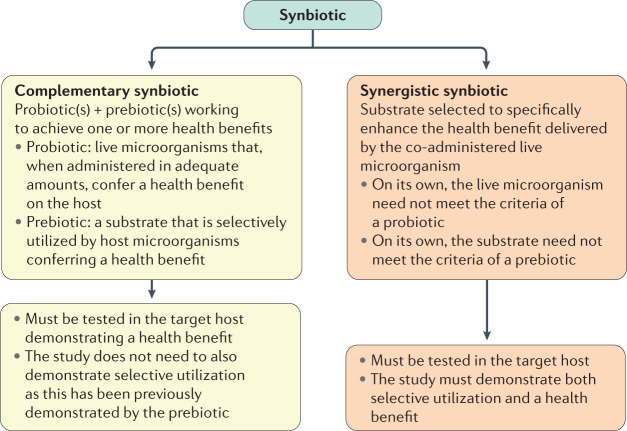
“The dose of probiotics and prebiotics in complementary synbiot-ics is the dose at which both work individually, while the dose of both in synergistic synbiotics is the dose at which the substrate can be fully utilized selectively by the probiotics and exert health benefits (Swanson et al. 2020).”
DuPont, H. L., & Salge, M. H. (2023) · Antibiotics · doi:10.3390/antibiotics12111617 · Cited by 24
“An important research line to pursue in designing microbiota therapy is development and testing of synbiotics, the combination of live microorganisms (probiotics) and selective growth-promoting substrates utilized by the microorganisms (prebiotics) that confer health benefit to the host [175].”
BackgroundGut microbiota influence frailty syndrome in older adults: mechanisms and therapeutic strategies
Wang, X., Fan, L., Meng, C., Wang, Y., Deng, L.-E., Yuan, Z., Zhang, J., Li, Y., & Lv, S. (2023) · Biogerontology · doi:10.1007/s10522-023-10082-7 · Cited by 21
“Symbiosis is a mixture of live microorganisms and substrates that are selectively utilized by hosts, i.e., a combination of probiotics and prebiotics (Swanson et al. 2020).”
Missong, H., Joshi, R., Khullar, N., Thareja, S., Navik, U., Bhatti, G. K., & Bhatti, J. S. (2024) · The Journal of Nutritional Biochemistry · doi:10.1016/j.jnutbio.2024.109592 · Cited by 22
The Role of Gut Microbiota and the Potential Effects of Probiotics in Heart Failure
Petruzziello, C., Saviano, A., Manetti, L. L., Macerola, N., & Ojetti, V. (2024) · Medicina · doi:10.3390/medicina60020271 · Cited by 24
Galli, G. M. M., Andretta, I., Levesque, C. L., Stefanello, T. B., Carvalho, C. L., Perez-Palencia, J. Y., Martins, G. B., Cony, B. S. D. L., de Oliveira, C. R., Franceschi, C. H., et al. (2024) · Frontiers in Veterinary Science · doi:10.3389/fvets.2024.1356455 · Cited by 25
Panaitescu, P.-Ș., Răzniceanu, V., Mocrei-Rebrean, Ș.-M., Neculicioiu, V. S., Dragoș, H.-M., Costache, C. A., & Filip, G. A. (2024) · Current Issues in Molecular Biology · doi:10.3390/cimb46050244 · Cited by 21
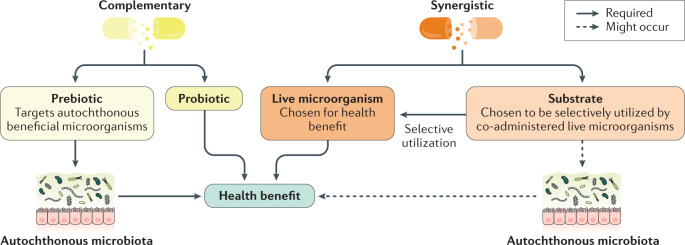
“Synbiotics merge probiotics and prebiotics and can either act synergistically by having the supplemented bacteria consume the prebiotics, or in a complementary manner by having the two components exert their functions independently [49,57,58].”
BackgroundMicrobiota modulation in disorders of gut-brain interaction
Marasco, G., Cremon, C., Barbaro, M. R., Bianco, F., Stanghellini, V., & Barbara, G. (2024) · Digestive and Liver Disease · doi:10.1016/j.dld.2024.05.004 · Cited by 23
Probiotic Bacteria Survival and Shelf Life of High Fibre Plant Snack - Model Study
Kruk, M., Lalowski, P., Hoffmann, M., Trząskowska, M., & Jaworska, D. (2024) · Plant Foods for Human Nutrition · doi:10.1007/s11130-024-01196-5 · Cited by 21
“To demonstrate the synbiotic potential of a food, it must contain probiotics and prebiotics that stimulate their growth [2].”
BackgroundInfluentialBognanni, A., Firmino, R. T., Arasi, S., Chu, D. K., Chu, A. W. L., Waffenschmidt, S., Agarwal, A., Dziechciarz, P., Horvath, A., Mihara, H., et al. (2024) · World Allergy Organization Journal · doi:10.1016/j.waojou.2024.100947 · Cited by 23
“42 , 43 44 – 46 In this review, we focused only on “ probiotics ” , and used the term to refer to the general addition of live bacteria or microorganisms to specialized formulas, specifying the speci fi c stain in brackets.”
Genomic and phenotypic imprints of microbial domestication on cheese starter cultures
Somerville, V., Thierer, N., Schmidt, R. S., Roetschi, A., Braillard, L., Haueter, M., Berthoud, H., Shani, N., von Ah, U., Mazel, F., et al. (2024) · Nature Communications · doi:10.1038/s41467-024-52687-7 · Cited by 20
“…selection for food preservation, (ii) simple and stable microbial diversity bothatthespeciesandstrain-level,asaresultofcontinuouspassaging, (iii) evolutionary origin of focal species coinciding with the start of foodpreservation,(iv)gradualgenomedecayand(v)adaptationtothe food environment by the…”
Duarte, M. E., Deng, Z., & Kim, S. W. (2024) · Journal of Animal Science and Biotechnology/Journal of animal science and biotechnology · doi:10.1186/s40104-024-01098-1 · Cited by 25
Microbiota-Gut-Brain Axis in Age-Related Neurodegenerative Diseases
Nie, T., Li, Y., Tang, F., Duan, Y., Nepovimová, E., Kuča, K., Wu, Q., & Wei, W. (2024) · Current Neuropharmacology · doi:10.2174/1570159x23666241101093436 · Cited by 25
“Synbiotics refer to the synergistic combination of prebiotics and probiotics, which provide benefits to gut health, metabolism, and the immune system by promoting the survival of gut microbiota [110].”
Ribeiro, T. S., Sampaio, K. B., Menezes, F. N. D. D., de Assis, P. O. A., Lima, M. D. S., de Oliveira, M. E. G., de Souza, E. L., & Queiroga, R. D. C. R. D. E. (2020) · 3 Biotech · doi:10.1007/s13205-020-02442-8 · Cited by 22
“Criteria considered for selection of prebiotics include nonabsorbability and fermentability by beneficial intestinal microorganisms, besides to ability to stimulate the growth and metabolism of probiotics in large intestine (Gibson et al. 2017; Mohanty et al. 2018).”
BackgroundMethodResultInfluentialRuíz, L., Flórez, A. B., Sánchez, B., Moreno-Muñoz, J. A., Rodríguez-Palmero, M., Jiménez, J., Reyes‐Gavilán, C. G. D. L., Gueimonde, M., Ruas‐Madiedo, P., & Margollés, A. (2020) · Nutrients · doi:10.3390/nu12113259 · Cited by 21
“In addition, synbiotic formulations, including a mixture comprising live microorganisms and substrate(s) selectively utilized by host microorganisms that confers a health benefit on the host [26], can improve probiotic strains’ performance by enhancing their ability to colonize the human gut [27], or due to their effe…”
BackgroundExploitation of Sea Buckthorn Fruit for Novel Fermented Foods Production: A Review
Schubertová, S., Krepsová, Z., Janotková, L., Potočňáková, M., & Kreps, F. (2021) · Processes · doi:10.3390/pr9050749 · Cited by 21
“[61], as part of The International Scientific Association for Probiotics and Prebiotics, pointed out the benefits of synbiotics—a mixture of live microorganisms and substrate selectively utilized by host microbiota that act towards the health of the host.”
BackgroundHeuven, L. A. J., Pyle, S., Greyling, A., Melse‐Boonstra, A., & Eilander, A. (2021) · Current Developments in Nutrition · doi:10.1093/cdn/nzab124 · Cited by 25
“Prebiotics other than oligosaccharides such as PUFAs were included, because they are recognized as prebiotics by the ISAPP (15).”
BackgroundMethodInfluentialHolm, W. V., Verspecht, T., Carvalho, R., Bernaerts, K., Boon, N., Zayed, N., & Teughels, W. (2022) · Molecular Oral Microbiology · doi:10.1111/omi.12386 · Cited by 23
Microbiota-centered interventions to boost immune checkpoint blockade therapies
Almonte, A. A., Thomas, S., & Zitvogel, L. (2025) · Journal of Experimental Medicine · doi:10.1084/jem.20250378 · Cited by 19
Coleman, J. L., Hatch-McChesney, A., Small, S. D., Allen, J. T., Sullo, E., Agans, R. T., Fagnant, H. S., Bukhari, A. S., & Karl, J. P. (2022) · Advances in Nutrition · doi:10.1093/advances/nmac086 · Cited by 19
Kang, Y.-R., & Chang, Y. H. (2024) · Food Hydrocolloids · doi:10.1016/j.foodhyd.2024.110238 · Cited by 19
Baek, J., Lee, S., Lee, J., Park, J., Choi, E., & Kang, S. (2024) · Food Science of Animal Resources · doi:10.5851/kosfa.2024.e92 · Cited by 20
Biological strategies in aquaculture disease management: Towards a sustainable blue revolution
Lim, K. C., Yusoff, F. M., Natrah, F. M. I., Zoysa, M. D., Yasin, I. S. M., Yaminudin, J., & Karim, M. (2025) · Aquaculture and Fisheries · doi:10.1016/j.aaf.2025.04.002 · Cited by 22
The Effects of Food on Circadian Rhythm: A Comprehensive Review
Hu, J., Ye, H., Wang, M., Yang, H. S., Wu, M., Cao, J., Sun, C., & Wang, Y. (2025) · eFood · doi:10.1002/efd2.70092 · Cited by 20
Metadata
- Authors
- Swanson, K. S., Gibson, G. R., Hutkins, R., Reimer, R. A., Reid, G., Verbeke, K., Scott, K. P., Holscher, H. D., Azad, M. B., Delzenne, N. M., & Sanders, M. E.
- Affiliations
- University of Illinois Urbana-Champaign (US)
- University of Reading (GB)
- University of Nebraska–Lincoln (US)
- University of Calgary (CA)
- Western University (CA)
- KU Leuven (BE)
- University of Aberdeen (GB)
- Children's Hospital Research Institute of Manitoba (CA)
- UCLouvain (BE)
- Corresponding author
- Swanson, Kelly S.
- ORCID
- Venue
- Nature Reviews Gastroenterology & Hepatology
- Published
- 2020-08-21
- Volume
- 17
- Issue
- 11
- Pages
- 687-701
- ISSN
- 1759-5045 (ISSN-L)
- 1759-5053
- PMC
- PMC7581511
- OpenAlex
- W2694487218
- Cited by
- 2,196
- References
- 307
- Citations by year
- 2026: 285 · 2025: 363 · 2024: 446 · 2023: 400 · 2022: 373 · 2021: 225 · 2020: 44
- FWCI
- 22.02
- Type
- journal article
- Language
- en
- Open access
- hybrid
- doi.org
- Licence
- cc-by
- creativecommons.org/licenses/by/4.0 (tdm)
- creativecommons.org/licenses/by/4.0 (vor)
- Locations
- Nature Reviews Gastroenterology & Hepatology (publishedVersion, cc-by)
- PubMed Central (publishedVersion, cc-by)
- PubMed (publishedVersion)
- Aberdeen University Research Archive (Aberdeen University) (submittedVersion)
- Lincoln (University of Nebraska) (submittedVersion)
- Digital Access to Libraries (Université catholique de Louvain (UCL), l'Université de Namur (UNamur) and the Université Saint-Louis (USL-B)) (submittedVersion, other-oa)
- Scholarship@Western (Western University) (submittedVersion)
- Lirias (KU Leuven) (submittedVersion, cc-by)
- Funders
- GlaxoSmithKline
- PepsiCo
- General Mills
- Mead Johnson Nutrition
- Pharmavite
- Danone
- Rural and Environment Science and Analytical Services Division
- Scottish Government
- Medela
- Topics
- Life Sciences › Agricultural and Biological Sciences › Food Science › Probiotics and Fermented Foods
- Health Sciences › Nursing › Nutrition and Dietetics › Microbial Metabolites in Food Biotechnology
- Health Sciences › Nursing › Nutrition and Dietetics › Infant Nutrition and Health
- Keywords
- postbiotics, synbiotics, probiotics, prebiotics, health benefits, mechanism of action, safety, regulation, microbial metabolites
- MeSH terms
- Humans, Probiotics, Prebiotics, Synbiotics
About these checks
Registry, retraction, Cites and statistics results are computed, not judged, with one exception: a printed reference that no index lists is read once by a model before it counts as a citation error. Claims are extracted by a model and kept only when their quote appears verbatim in the text; each cited source is then checked, with a model’s help, for whether it says what the claim relies on. Those verdicts can be wrong — read the claim’s quote and the cited source before relying on one.
Statistics and arithmetic are recomputed, not judged.
Confidence bands are shown only for fields calibrated on our annotated test set. None is calibrated yet, so no band is shown.
What counts as a claim ›How we measure confidence ›How we check this ›
Are you an author, or do you see a problem with this page? Request a review
Data sources
Bibliographic data: Semantic Scholar, OpenAlex, Crossref.
Contains information from the Semantic Scholar Academic Graph Datasets, made available under the ODC Attribution License (ODC-BY 1.0).
Semantic Scholar’s data is described in: Kinney, R., et al. (2023). The Semantic Scholar Open Data Platform. arXiv:2301.10140.
