

The International Scientific Association for Probiotics and Prebiotics (ISAPP) consensus statement on the definition and scope of synbiotics
Open accessThe DOI matches its Crossref record; 303 of the 307 references it cites were found in a registry or an index.
Abstract
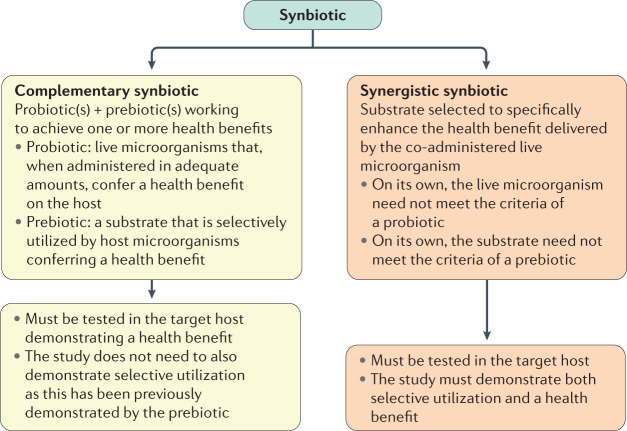
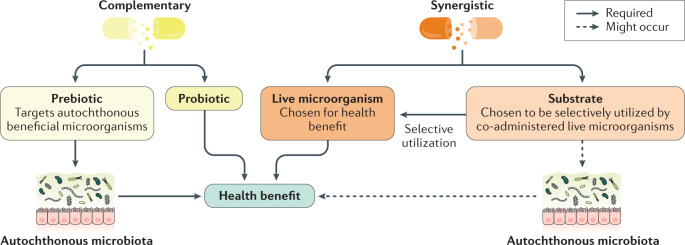
In May 2019, the International Scientific Association for Probiotics and Prebiotics (ISAPP) convened a panel of nutritionists, physiologists and microbiologists to review the definition and scope of synbiotics. The panel updated the definition of a synbiotic to “a mixture comprising live microorganisms and substrate(s) selectively utilized by host microorganisms that confers a health benefit on the host”. The panel concluded that defining synbiotics as simply a mixture of probiotics and prebiotics could suppress the innovation of synbiotics that are designed to function cooperatively. Requiring that each component must meet the evidence and dose requirements for probiotics and prebiotics individually could also present an obstacle. Rather, the panel clarified that a complementary synbiotic, which has not been designed so that its component parts function cooperatively, must be composed of a probiotic plus a prebiotic, whereas a synergistic synbiotic does not need to be so. A synergistic synbiotic is a synbiotic for which the substrate is designed to be selectively utilized by the co-administered microorganisms. This Consensus Statement further explores the levels of evidence (existing and required), safety, effects upon targets and implications for stakeholders of the synbiotic concept.
Overview
The claims and statistics of this paper haven’t been checked yet.
Free: it reads the open-access text and checks the first 5 claims that cite a source we can check. Create a free account to check every claim.
Integrity signals
Registry
Cites
Statistics
Figures
Verification
Claims the paper makes
The claims and statistics of this paper haven’t been checked yet.
Free: it reads the open-access text and checks the first 5 claims that cite a source we can check. Create a free account to check every claim.
Claims other papers make about this one
Each is checked against this paper’s own text: does it say what the citing paper says it does?
The source backs part of the claim, not all of it — or backs it for a different population, condition or comparison.
In the citing paper
“A way to enhance probiotic effectiveness is the combination of probiotics and prebiotic compounds, under the concept of ‘synbiotic’ [69].”
From Psychobiotic effects on anxiety are modulated by lifestyle behaviors: a randomized placebo-controlled trial on healthy adults (2023) · cites this paper as [69]
Experimental — accuracy not yet measuredIn the citing paper
“Third, the minimum fiber concentration suggested for a functional synbiotic [63] was used in the study, that in theory could be sufficient to stimulate the cognate gut microorganisms.”
Self-check
Percentages, sums and reported differences re-computed from the paper’s own numbers.
The self-check needs the paper’s full text.
Citations
Cites
1 retracted
Asemi, Z., Khorrami-Rad, A., Alizadeh, S.-A., Shakeri, H., & Esmaillzadeh, A. (2014) · Clinical Nutrition · doi:10.1016/j.clnu.2013.05.015 · Cited by 190
RetractedDiet rapidly and reproducibly alters the human gut microbiome
David, L. A., Maurice, C. F., Carmody, R. N., Gootenberg, D. B., Button, J. E., Wolfe, B. E., Ling, A. V., Devlin, A. S., Varma, Y., Fischbach, M. A., et al. (2014) · Nature · doi:10.1038/nature12820 · Cited by 10,100
Hill (2014) · doi:10.1038/nrgastro.2014.66 · Cited by 9,592
Moher, D., Hopewell, S., Schulz, K. F., Montori, V., Gotzsche, P. C., Devereaux, P. J., Elbourne, D., Egger, M., & Altman, D. G. (2010) · BMJ · doi:10.1136/bmj.c869 · Cited by 8,883
Dietary Modulation of the Human Colonic Microbiota: Introducing the Concept of Prebiotics
Gibson, G. R., & Roberfroid, M. B. (1995) · The Journal of Nutrition · doi:10.1093/jn/125.6.1401 · Cited by 7,667
Self-citationGibson, G. R., Hutkins, R., Sanders, M. E., Prescott, S. L., Reimer, R. A., Salminen, S. J., Scott, K., Stanton, C., Swanson, K. S., Cani, P. D., et al. (2017) · Nature Reviews Gastroenterology & Hepatology · doi:10.1038/nrgastro.2017.75 · Cited by 5,634
Self-citationDiversity, stability and resilience of the human gut microbiota
Lozupone, C. A., Stombaugh, J. I., Gordon, J. I., Jansson, J. K., & Knight, R. (2012) · Nature · doi:10.1038/nature11550 · Cited by 5,533
Zheng, J., Wittouck, S., Salvetti, E., Franz, C. M. A. P., Harris, H. M. B., Mattarelli, P., O’Toole, P. W., Pot, B., Vandamme, P., Walter, J., et al. (2020) · International Journal of Systematic and Evolutionary Microbiology · doi:10.1099/ijsem.0.004107 · Cited by 3,313
The ecology of the microbiome: Networks, competition, and stability
Coyte, K. Z., Schluter, J., & Foster, K. R. (2015) · Science · doi:10.1126/science.aad2602 · Cited by 2,748
Dethlefsen, L., & Relman, D. A. (2011) · Proceedings of the National Academy of Sciences · doi:10.1073/pnas.1000087107 · Cited by 2,421
Cited by
Items 501–600 of 1,001
Skoufou, M., Tsigalou, C., Vradelis, S., & Bezirtzoglou, E. (2024) · Microorganisms · doi:10.3390/microorganisms12010194 · Cited by 49
Speckmann, B., Ehring, E., Hu, J., & Rodriguez‐Mateos, A. (2024) · Gut Microbes · doi:10.1080/19490976.2024.2305716 · Cited by 43
“118 The ISAPP further defines synbiotics as “a mixture comprising live microorganisms and substrate(s) selectively utilized by host microorganisms that confers a health benefit on the host”, 119 whereby host microorganisms shall include resident as well as externally administered microorganisms.”
BackgroundBruyn, F. D., James, K., Cottenet, G., Maes, D., & Johnson, K. (2024) · Communications Biology · doi:10.1038/s42003-024-06628-1 · Cited by 46
Yi, C., Huang, S., Zhang, W., Guo, L., Xia, T., Huang, F., Yan, Y., Li, H., & Yu, B. (2024) · Microbial Pathogenesis · doi:10.1016/j.micpath.2024.107231 · Cited by 44
Thinkohkaew, K., Jonjaroen, V., Niamsiri, N., McClements, D. J., Panya, A., Suppavorasatit, I., & Potiyaraj, P. (2025) · Carbohydrate Polymers · doi:10.1016/j.carbpol.2025.123582 · Cited by 46
Rahman, M. M., Sazili, A. Q., Ahmad, S. A., Khalil, K. A., Ismail‐Fitry, M. R., & Sarker, M. S. K. (2025) · BMC Microbiology · doi:10.1186/s12866-025-04123-z · Cited by 52
Respiratory diseases and the gut microbiota: an updated review
Xin, Y., Yu, X., Wang, Y., Guo, X., Wang, C., & Wang, F. (2025) · Frontiers in Cellular and Infection Microbiology · doi:10.3389/fcimb.2025.1629005 · Cited by 46
Tayyab, M. B., Zhao, Y., & Zhang, Y. (2025) · Frontiers in Microbiology · doi:10.3389/fmicb.2025.1625265 · Cited by 46
Alili, R., Belda, E., Fabre, O., Pelloux, V., Giordano, N., Legrand, R., Lassen, P. B., Swartz, T. D., Zucker, J., & Clément, K. (2021) · Biomedicines · doi:10.3390/biomedicines10010016 · Cited by 49
“4 mg), which is not sufficient to sustain bacterial growth as observed in previous studies [55].”
ResultAraújo, M. M., Montalvão-Sousa, T. M., Teixeira, P. D. C., Figueiredo, A. C. M. G., & Botelho, P. B. (2022) · Nutrition Reviews · doi:10.1093/nutrit/nuac069 · Cited by 42
Guo, Y., Song, L., Huang, Y., Li, X., Xiao, Y., Wang, Z., & Ren, Z. (2023) · Frontiers in Nutrition · doi:10.3389/fnut.2022.1039403 · Cited by 44
Chen, S., Cai, X., Lao, L., Wang, Y., Su, H., & Sun, H. (2024) · Aging and Disease · doi:10.14336/ad.2023.0524 · Cited by 45
Probiotics: functional food ingredients with the potential to reduce hypertension
Chen, Z., Liang, W., Liang, J., Dou, J., Guo, F., Zhang, D., Xu, Z., & Wang, T. (2023) · Frontiers in Cellular and Infection Microbiology · doi:10.3389/fcimb.2023.1220877 · Cited by 47
Pawar, N. A., Prakash, C., Kohli, M. P. S., Jamwal, A., Dalvi, R. S., Devi, B. N., Singh, S. K., Gupta, S., Lende, S. R., Sontakke, S. D., et al. (2023) · Scientific Reports · doi:10.1038/s41598-023-38267-7 · Cited by 40
Valorisation of walnut shell and pea pod as novel sources for the production of xylooligosaccharides
Cebin, A. V., Ralet, M., Vigouroux, J., Karača, S., Martinić, A., Komes, D., & Bonnin, E. (2021) · Carbohydrate Polymers · doi:10.1016/j.carbpol.2021.117932 · Cited by 41
Ríus, A. G., Kaufman, J. D., Li, M. M., Hanigan, M. D., & Ipharraguerre, I. R. (2022) · Scientific Reports · doi:10.1038/s41598-022-05505-3 · Cited by 45
Gut Microbiota Manipulation in Irritable Bowel Syndrome
Mazzawi, T. R. E. (2022) · Microorganisms · doi:10.3390/microorganisms10071332 · Cited by 46
Kouhounde, S. H. S., Adéoti, K., Mounir, M., Giusti, A., Refinetti, P., Otu, A. A., Effa, E., Ebenso, B., Adetimirin, V. O., Mercader, J., et al. (2022) · Microorganisms · doi:10.3390/microorganisms10091700 · Cited by 50
“This paper reflects only the authors views; the European Union is not liable for any use that may be made of the information contained therein.”
BackgroundInfluentialMuratore, E., Leardini, D., Baccelli, F., Venturelli, F., Prete, A., & Masetti, R. (2022) · Frontiers in Nutrition · doi:10.3389/fnut.2022.993668 · Cited by 41
“Prebiotics are defined as “a substrate which is selectively utilized by host microorganism conferring a health benefit” (78).”
BackgroundCooke, M. B., Catchlove, S. J., & Tooley, K. L. (2022) · Nutrients · doi:10.3390/nu14214623 · Cited by 49
A Narrative Review on the Advance of Probiotics to Metabiotics
Jang, H. J., Lee, N., & Paik, H. (2024) · Journal of Microbiology and Biotechnology · doi:10.4014/jmb.2311.11023 · Cited by 43
“Recently, the ISAPP has defined synbiotics as follows: “a mixture of viable microorganisms and substrate(s) that are selectively utilized by host microorganisms and confer a health benefit on the host” [35].”
BackgroundKaur, H., Ali, S. A., & Yan, F. (2022) · Frontiers in Immunology · doi:10.3389/fimmu.2022.1006081 · Cited by 40
“Likewise, prebiotics is non-digestible dietary ingredients that promote the survival of beneficial probiotic species (19).”
BackgroundRecognition of commensal bacterial peptidoglycans defines Drosophila gut homeostasis and lifespan
Onuma, T., Yamauchi, T., Kosakamoto, H., Kadoguchi, H., Kuraishi, T., Murakami, T., Mori, H., Miura, M., & Obata, F. (2023) · PLoS Genetics · doi:10.1371/journal.pgen.1010709 · Cited by 39
Liu, R., Zhou, Y., Chen, H., Xu, H., Zuo, M., Chen, B., & Wang, H. (2023) · Biomedicine & Pharmacotherapy · doi:10.1016/j.biopha.2023.115204 · Cited by 41
Gigante, V., Aliotta, L., Ascrizzi, R., Pistelli, L., Zinnai, A., Batoni, G., Coltelli, M., & Lazzeri, A. (2023) · Polymers · doi:10.3390/polym15244700 · Cited by 41
Mood and microbes: a comprehensive review of intestinal microbiota’s impact on depression
Luqman, A., He, M., Hassan, A., Ullah, M., Zhang, L., Khan, M. R., Din, A. U., Ullah, K., Wang, W. J., & Wang, G. (2024) · Frontiers in Psychiatry · doi:10.3389/fpsyt.2024.1295766 · Cited by 44
Gut microbiota signatures of vulnerability to food addiction in mice and humans
Samulenaite, S., García‐Blanco, A., Mayneris‐Perxachs, J., Domingo‐Rodriguez, L., Cabana‐Domínguez, J., Fernàndez‐Castillo, N., Gago-García, E., Pineda-Cirera, L., Burokas, A., Espinosa‐Carrasco, J., et al. (2024) · Gut · doi:10.1136/gutjnl-2023-331445 · Cited by 45
Yassine, F., Najm, A., & Bilen, M. (2025) · Frontiers in Systems Biology · doi:10.3389/fsysb.2025.1561047 · Cited by 42
Priyashantha, H., Madushan, R. N. D., Pelpolage, S., Wijesekara, A. V., & Jayarathna, S. (2025) · Frontiers in Food Science and Technology · doi:10.3389/frfst.2025.1581877 · Cited by 47
The Effect of Microbiome-Derived Metabolites in Inflammation-Related Cancer Prevention and Treatment
Mafe, A. N., & Büsselberg, D. (2025) · Biomolecules · doi:10.3390/biom15050688 · Cited by 42
“The classification of probiotics, prebiotics, and postbiotics as dietary supplements rather than pharmaceutical drugs [159] complicates the regulatory process for their clinical use in cancer treatment [160].”
Jeroense, F. M. D., Michel, L., Zeder, C., Herter-Aeberli, I., & Zimmermann, M. B. (2019) · The Journal of Nutrition · doi:10.1093/jn/nxy327 · Cited by 39
Fox, A. T., Bird, J. A., Fiocchi, A. G., Knol, J., Meyer, R. W., Salminen, S., Sitang, G., Szajewska, H., & Papadopoulos, N. G. (2019) · World Allergy Organization Journal · doi:10.1016/j.waojou.2019.100034 · Cited by 40
Hu, Y., He, J., Zheng, P., Mao, X., Huang, Z., Yan, H., Luo, Y., Yu, J., Luo, J., Yu, B., et al. (2021) · Critical Reviews in Food Science and Nutrition · doi:10.1080/10408398.2021.1955654 · Cited by 41
Gut Dysbiosis in Pancreatic Diseases: A Causative Factor and a Novel Therapeutic Target
Zhang, T., Gao, G., Sakandar, H. A., Kwok, L. Y., & Sun, Z. (2022) · Frontiers in Nutrition · doi:10.3389/fnut.2022.814269 · Cited by 48
“Synbiotics The definition of symbiotic is “a mixture comprising live microorganisms and substrate(s) selectively utilized by host microorganisms that confers a health benefit on the host,” according to the ISAPP consensus statement issued in 2019 (152).”
BackgroundSpacova, I., De Boeck, I., Cauwenberghs, E., Delanghe, L., Bron, P. A., Henkens, T., Simons, A., Gamgami, I., Persoons, L., Claes, I., et al. (2023) · Microbial Biotechnology · doi:10.1111/1751-7915.14189 · Cited by 36
Mills, D. A., German, J. B., Lebrilla, C. B., & Underwood, M. A. (2023) · Gut Microbes · doi:10.1080/19490976.2023.2192458 · Cited by 43
Postbiotics as potential new therapeutic agents for sepsis
Lou, X., Xue, J., Shao, R., Mo, C., Wang, F., & Chen, G. (2023) · Burns & Trauma · doi:10.1093/burnst/tkad022 · Cited by 38
“Synbiotics are a mixture of live microorganisms and substrates that can be utilized selectively by microorganisms that are native and nonnative to the host [28].”
BackgroundKarbowiak, M., Szymański, P., & Zielińska, D. (2023) · Foods · doi:10.3390/foods12071430 · Cited by 42
Montgomery, T. L., Peipert, D., & Krementsov, D. N. (2024) · Immunological Reviews · doi:10.1111/imr.13343 · Cited by 38
“221 Genetically tractable probiotic bacterial species can also be engineered to produce defined metabolites or exert tailored immunological effects, to enhance safety and efficacy of their application as therapeutics and are already being explored in models of MS. 222,223 In all such approaches,…”
Alswat, A. S. (2024) · Life · doi:10.3390/life14101279 · Cited by 42
The Impact of Bioactive Molecules from Probiotics on Child Health: A Comprehensive Review
Guamán, L. P., Carrera-Pacheco, S. E., Zúñiga-Miranda, J., Terán, E., Erazo, C., & Barba‐Ostria, C. (2024) · Nutrients · doi:10.3390/nu16213706 · Cited by 42
Simões, L. C. D. O., da Silva, R. R., Nascimento, C. E. D. O., Boscolo, M., Gomes, E., & da Silva, R. (2019) · Applied Biochemistry and Biotechnology · doi:10.1007/s12010-019-02973-8 · Cited by 38
“The International Scientific Association for Probiotics and Prebiotics (ISAPP) defines a prebiotic as Ba substrate that is selectively utilized by host microorganisms conferring a health benefit^ [5].”
BackgroundPotentially synbiotic fermented beverages processed with water-soluble extract of Baru almond
Fernandes, A. B. C., Marcolino, V. A., Silva, C. S., Barão, C. E., & Pimentel, T. C. (2021) · Food Bioscience · doi:10.1016/j.fbio.2021.101200 · Cited by 38
Probiotics and prebiotics in atopic dermatitis: Pros and cons (Review)
Fanfaret, I., Boda, D., Ion, L., Hosseyni, D., Leru, P. M., Ali, S., Corcea, S. L., & Bumbăcea, R. S. (2021) · Experimental and Therapeutic Medicine · doi:10.3892/etm.2021.10811 · Cited by 41
“A synbiotic whose substrate is used selectively by the co‐administered microorganism constitutes a synergistic symbiotic (56).”
Nature-Based One Health Approaches to Urban Agriculture Can Deliver Food and Nutrition Security
Ebenso, B., Otu, A., Giusti, A., Cousin, P., Adetimirin, V. O., Razafindralambo, H. L., Effa, E., Gkisakis, V., Thiaré, O., Levavasseur, V., et al. (2022) · Frontiers in Nutrition · doi:10.3389/fnut.2022.773746 · Cited by 42
Yildirim, G. K., Dinleyici, M., Vandenplas, Y., & Dinleyici, E. Ç. (2022) · Frontiers in Nutrition · doi:10.3389/fnut.2022.898037 · Cited by 38
“In the synbiotic group, at the end of the 12th week, all the following parameters were lower compared to baseline: body weight (p 0.001), body weight Z-score (p 0.001), BMI (p 0.001), BMI Z-score (p 0.001), triceps skinfold (p 0.001) thickness (p 0.001), upper arm circumference (p 0.001), waist circumference (p 0.001)…”
BackgroundResultInfluentialLactobacilli: Legal Regulation and Prospects for New Generation Drugs
Yunes, R. А., Poluektova, E. U., Белкина, Т. В., & Даниленко, В. Н. (2022) · Applied Biochemistry and Microbiology · doi:10.1134/s0003683822050179 · Cited by 42
Shen, X., Xu, L. H., Zhang, Z., Yang, Y., Li, P., Ma, T., Guo, S., Kwok, L. Y., & Sun, Z. (2023) · Frontiers in Cellular and Infection Microbiology · doi:10.3389/fcimb.2023.1114364 · Cited by 40
Toward a health-associated core keystone index for the human gut microbiome
Goel, A., Shete, O., Goswami, S., Samal, A., C.B., L., Kedia, S., Ahuja, V., O’Toole, P. W., Shanahan, F., & Ghosh, T. S. (2025) · Cell Reports · doi:10.1016/j.celrep.2025.115378 · Cited by 37
Chan, M. Z. A., & Liu, S. (2021) · Trends in Food Science & Technology · doi:10.1016/j.tifs.2021.11.030 · Cited by 40
Ye, W., Chen, Z., He, Z., Gong, H., Zhang, J., Sun, J., Yuan, S., Deng, J., Liu, Y., & Zeng, A. (2023) · Nutrients · doi:10.3390/nu15040845 · Cited by 38
Alternatives to antibiotics in pig production: looking through the lens of immunophysiology
Liu, H., Zhu, C., Zhu, M., Yuan, L., Li, S., Gu, F., Hu, P., Chen, S., & Cai, D. (2024) · Stress Biology · doi:10.1007/s44154-023-00134-w · Cited by 39
Huang, X., Liu, R., Wang, J., Bao, Y., Yi, H., Wang, X., & Lü, Y. (2024) · International Journal of Biological Macromolecules · doi:10.1016/j.ijbiomac.2023.129152 · Cited by 41
Health Benefits of Kimchi, Sauerkraut, and Other Fermented Foods of the Genus Brassica
Fijan, S., Fijan, P., Wei, L., & Marco, M. L. (2024) · Applied Microbiology · doi:10.3390/applmicrobiol4030079 · Cited by 42
Takyi, E., Nirmalkar, K., Adams, J. B., & Krajmalnik‐Brown, R. (2025) · Gut Microbes · doi:10.1080/19490976.2025.2499580 · Cited by 45
Lactobacilli-Derived Microbe-Associated Molecular Patterns (MAMPs) in Host Immune Modulation
Furnari, S., Ciantia, R., Garozzo, A., Furneri, P. M., & Fuochi, V. (2025) · Biomolecules · doi:10.3390/biom15111609 · Cited by 40
“These functional attributes justify their widespread use as probiotics, defined by the International Scientific Association for Probiotics and Prebiotics (ISAPP) as “live microorganisms that, when administered in adequate amounts, confer health benefits on the host” [13].”
Conte, M., Nigro, F., Porpora, M., Bellomo, C., Furone, F., Budelli, A., Nigro, R., Barone, M. V., & Nanayakkara, M. (2022) · International Journal of Molecular Sciences · doi:10.3390/ijms23073655 · Cited by 39
“A postbiotic is defined as the “preparation of inanimate microorganisms and/or their components: soluble factors secreted by live bacteria or released after their lysis, including various cell surface components, lactic acid, short-chain fatty acids (SCFA), and bioactive peptides that confer a health benefit on the ho…”
BackgroundAcute Kidney Injury and Gut Dysbiosis: A Narrative Review Focus on Pathophysiology and Treatment
Chou, Y., Kan, W., & Shiao, C. (2022) · International Journal of Molecular Sciences · doi:10.3390/ijms23073658 · Cited by 42
Tan, L. L., Ngiam, J. J., Sim, E. S. Z., Conway, P. L., & Loo, S. C. J. (2022) · Carbohydrate Polymers · doi:10.1016/j.carbpol.2022.119515 · Cited by 42
Leska, A., Nowak, A., Szulc, J., Motyl, I., & Czarnecka, K. H. (2022) · Pathogens · doi:10.3390/pathogens11111367 · Cited by 39
Gut Microbiome-Based Therapeutics in Critically Ill Adult Patients—A Narrative Review
He, S., Lin, F., Hu, X., & Pan, P. (2023) · Nutrients · doi:10.3390/nu15224734 · Cited by 37
“Synbiotics are mixtures of probiotics and prebiotics that exert beneficial effects on the host in two main ways: enhancing the viability of probiotic microorganisms and providing specific health effects [95,96].”
BackgroundThe Gut Microbial Regulation of Epigenetic Modification from a Metabolic Perspective
Lin, X., Han, H. L., Wang, N., Wang, C., Qi, M., Wang, J., & Liu, G. (2024) · International Journal of Molecular Sciences · doi:10.3390/ijms25137175 · Cited by 41
“The understanding of the significant role played by the gut microbiota and epigenetics in energy metabolism, low-grade inflammation, and maternal inheritance has paved the way for innovative nutritional therapeutic strategies to address obesity [111,112].”
BackgroundLee, S., Choi, S.-P., Choi, H., Jeong, H., & Park, Y. (2024) · World Journal of Microbiology and Biotechnology · doi:10.1007/s11274-024-04085-w · Cited by 39
“Synbiotics are defined as a mixture comprising live microorganisms and substrate(s) selectively utilized by host microorganisms that confer a health benefit to the host (Swanson et al. 2020 ).”
The association between the gut microbiota metabolite trimethylamine N-oxide and heart failure
Jarmukhanov, Z., Mukhanbetzhanov, N., Kozhakhmetov, S., Nurgaziyev, M., Sailybayeva, A., Bekbossynova, M. S., & Kushugulova, A. R. (2024) · Frontiers in Microbiology · doi:10.3389/fmicb.2024.1440241 · Cited by 40
López-Almada, G., Mejía-León, M. E., & Salazar‐López, N. J. (2024) · Foods · doi:10.3390/foods13223529 · Cited by 38
Liu, W., Wang, L., Ou, J., Peng, D., Zhang, Y., Chen, W., & Wang, Y. (2025) · International Journal of Molecular Sciences · doi:10.3390/ijms26083752 · Cited by 39
“In 2019, the International Scientific Association for Probiotics and Prebiotics updated the definition of synbiotics as “a mixture of live microorganisms and substrates selectively utilized by the host’s microbiota that confer health benefits to the host” [151].”
Alobaidi, S. A. (2025) · Frontiers in Medicine · doi:10.3389/fmed.2025.1675458 · Cited by 39
Prebiotics and Gut Health: Mechanisms, Clinical Evidence, and Future Directions
Monteiro, C. R. A. V., Bogéa, E. G., Campos, C. D. L., Filho, J. L. P., Almeida, V. S. S., Vale, A. Á. M., de Azevedo-Santos, A. P. S., & Monteiro‐Neto, V. (2026) · Nutrients · doi:10.3390/nu18030372 · Cited by 41
“…validating that the prebiotic selectively enhances the probiotic’s survival, colonization, or production of beneficial metabolites (e.g., SCFAs); and (3) conducting head-to-head clinical trials against stand-alone components to demonstrate superior efficacy for specific health endpoints [89,112].”
Vacilotto, M. M., Pellegrini, V. O. A., Sepulchro, A. G. V., Capetti, C. C. D. M., Curvelo, A. A. S., Marcondes, W. F., Arantes, V., & Polikarpov, I. (2021) · Carbohydrate Polymers · doi:10.1016/j.carbpol.2021.118684 · Cited by 36
In Silico Analysis of Bacteriocins from Lactic Acid Bacteria Against SARS-CoV-2
Erol, İ., Kotil, S., Fidan, Ö., Yetiman, A. E., Durdağı, S., & Ortakcı, F. (2021) · Probiotics and Antimicrobial Proteins · doi:10.1007/s12602-021-09879-0 · Cited by 37
Zhao, H., Wang, D., Zhang, Z., Xian, J., & Bai, X. (2022) · Molecules · doi:10.3390/molecules27154799 · Cited by 38
Beyond probiotics: a narrative review on an era of revolution
Sharma, N., Kang, D., Paik, H., & Park, Y. (2022) · Food Science and Biotechnology · doi:10.1007/s10068-022-01212-x · Cited by 36
Habteweld, H. A., & Asfaw, T. (2023) · Infection and Drug Resistance · doi:10.2147/idr.s413416 · Cited by 42
Probiotics as antifungal agents: Experimental confirmation and future prospects
Kosgey, J. C., Jia, L., Fang, Y., Yang, J., Gao, L., Wang, J., Nyamao, R. M., Cheteu, M., Tong, D., Wekesa, V. W., et al. (2019) · Journal of Microbiological Methods · doi:10.1016/j.mimet.2019.05.001 · Cited by 38
The Role of Genetic, Environmental, and Dietary Factors in Alzheimer’s Disease: A Narrative Review
Mertaş, B., & Boşgelmez, İ. İ. (2025) · International Journal of Molecular Sciences · doi:10.3390/ijms26031222 · Cited by 35
Karbowiak, M., Gałek, M., Szydłowska, A., & Zielińska, D. (2022) · Pathogens · doi:10.3390/pathogens11111260 · Cited by 35
Cui, H., Feng, C., Zhang, T., Rios, V. M., Martorell, P., Tortajada, M., Cheng, S., Cheng, S., & Duan, Z. (2023) · Scientific Reports · doi:10.1038/s41598-023-43336-y · Cited by 40
Popović, N., Stevanović, D., Radojević, D., Veljović, K., Đokić, J., Golić, N., & Terzić-Vidojević, A. (2023) · Microorganisms · doi:10.3390/microorganisms11122844 · Cited by 36
Liu, X., Zhang, B., Zhang, Y., Li, W., Yin, J., Shi, A., Wang, J., & Wang, S. (2024) · Journal of Agricultural and Food Chemistry · doi:10.1021/acs.jafc.3c08305 · Cited by 38
Quintanilla-Pineda, M., Ibáñez, F. C., Garrote-Achou, C., & Marzo, F. (2024) · Animals · doi:10.3390/ani14050744 · Cited by 38
Jin, Y., Wu, J., Huang, K., & Liang, Z. (2024) · Nutrients · doi:10.3390/nu16050702 · Cited by 36
Probiotics for Aquaculture: Hope, Truth, and Reality
Todorov, S. D., Lima, J. M. S., Bucheli, J. E. V., Popov, I. V., Tiwari, S. K., & Chikindas, M. L. (2024) · Probiotics and Antimicrobial Proteins · doi:10.1007/s12602-024-10290-8 · Cited by 35
Dinić, M., Burgess, J. L., Lukić, J., Catanuto, P., Radojević, D., Marjanović, J., Verpile, R., Thaller, S. R., Gonzalez, T., Golić, N., et al. (2024) · The FASEB Journal · doi:10.1096/fj.202400054rr · Cited by 38
The postbiotic potential of Aspergillus oryzae – a narrative review
Seidler, Y., Rimbach, G. H., Lüersen, K., Vinderola, G., & Ipharraguerre, I. R. (2024) · Frontiers in Microbiology · doi:10.3389/fmicb.2024.1452725 · Cited by 38
Microbiota-based therapies in oral health and disorders
Salah, A. N., Doghish, Y. A., Abbass, S. O., Mansour, R. M., Sayed, G. A., Elshami, N. H., Mageed, S. S. A., Mohammed, O. A., Abulsoud, A. I., Zaki, M. B., et al. (2025) · Folia Microbiologica · doi:10.1007/s12223-025-01324-x · Cited by 39
Zhang, Z., Wang, Y., Zhang, Y., Chen, K., Chang, H., Ma, C., Jiang, S., Huo, D., Liu, W., Jha, R., et al. (2021) · Foods · doi:10.3390/foods10061431 · Cited by 35
“Research of synbiotics is expected to be promoted more with the updated definition of synbiotics [45].”
BackgroundProbiotics as Adjuvants in Vaccine Strategy: Is There More Room for Improvement?
Peroni, D. G., & Morelli, L. (2021) · Vaccines · doi:10.3390/vaccines9080811 · Cited by 38
Silva, M. P., Mesquita, M. D. S., Rubio, F. T. V., Thomazini, M., & Fávaro-Trindade, C. S. (2021) · International Dairy Journal · doi:10.1016/j.idairyj.2021.105230 · Cited by 35
Antunes, K. H., Cassão, G., Santos, L. D., Borges, S. G., Poppe, J., Gonçalves, J. B., Nunes, E. D. S., Recacho, G. F., Sousa, V. B., Silva, G. S. D., et al. (2022) · Frontiers in Immunology · doi:10.3389/fimmu.2022.867022 · Cited by 38
Lanthier, N., & Delzenne, N. M. (2022) · Cells · doi:10.3390/cells11172718 · Cited by 37
Self-citationTargeting Gut Microbiota in Cancer Cachexia: Towards New Treatment Options
Panebianco, C., Villani, A., Potenza, A., Favaro, E., Finocchiaro, C., Perri, F., & Pazienza, V. (2023) · International Journal of Molecular Sciences · doi:10.3390/ijms24031849 · Cited by 37
“This kind of intervention is named “synbiotics” and can be classified into two types: synergistic synbiotics, in which the prebiotic fibers are meant to fuel the growth of probiotic bacteria within the formulation, and complementary synbiotics, in which the two components work independently, with prebiotics aimed at p…”
BackgroundCosta, R. J. S., Gaskell, S. K., Henningsen, K., JEACOCKE, N. A., Martinez, I. G., Mika, A. S., Scheer, V., Scrivin, R., Snipe, R. M. J., Wallett, A. M., et al. (2025) · Sports Medicine · doi:10.1007/s40279-025-02186-6 · Cited by 37
Gut microbiota and their influence in brain cancer milieu
BharathwajChetty, B., Kumar, A., Deevi, P. I., Abbas, M., Alqahtani, A., Liang, L., Sethi, G., Liu, L., & Kunnumakkara, A. B. (2025) · Journal of Neuroinflammation · doi:10.1186/s12974-025-03434-2 · Cited by 35
Valle, M. C. P., Vieira, I. A., Fino, L. D. C., Gallina, D. A., Esteves, A. M., da Cunha, D. T., Cabral, L., Benatti, F. B., Maróstica, M. R., Batista, Â. G., et al. (2021) · British Journal Of Nutrition · doi:10.1017/s0007114521000568 · Cited by 37
de Albuquerque, T. M. R., Magnani, M., Lima, M. D. S., Castellano, L. R. C., & de Souza, E. L. (2021) · Journal of Food Science · doi:10.1111/1750-3841.15852 · Cited by 34
Zhang, Y., Zhuang, D., Wang, H., Liu, C.-Y., Lv, G., & Meng, L. (2021) · Carbohydrate Polymers · doi:10.1016/j.carbpol.2021.118854 · Cited by 34
Potential biotherapeutic properties of lactic acid bacteria in foods
Erginkaya, Z., & Konuray, G. (2022) · Food Bioscience · doi:10.1016/j.fbio.2022.101544 · Cited by 37
Postbiotics and Kidney Disease
Favero, C., Giordano, L., Mihaila, S. M., Masereeuw, R., Ortíz, A., & Sánchez-Niño, M. D. (2022) · Toxins · doi:10.3390/toxins14090623 · Cited by 39
Ahmad, R., Yu, Y., Hsiao, F. S., Dybus, A., Ali, I., Hsu, H.-C., & Cheng, Y.-H. (2022) · Fermentation · doi:10.3390/fermentation8120672 · Cited by 34
“Probiotics are live microorganisms that benefit the health of their hosts when applied in sufficient quantities [94].”
BackgroundGut Microbiota and Coronary Artery Disease: Current Therapeutic Perspectives
Katsimichas, T., Theofilis, P., Tsioufis, K. P., & Tousoulis, D. (2023) · Metabolites · doi:10.3390/metabo13020256 · Cited by 38
Metadata
- Authors
- Swanson, K. S., Gibson, G. R., Hutkins, R., Reimer, R. A., Reid, G., Verbeke, K., Scott, K. P., Holscher, H. D., Azad, M. B., Delzenne, N. M., & Sanders, M. E.
- Affiliations
- University of Illinois Urbana-Champaign (US)
- University of Reading (GB)
- University of Nebraska–Lincoln (US)
- University of Calgary (CA)
- Western University (CA)
- KU Leuven (BE)
- University of Aberdeen (GB)
- Children's Hospital Research Institute of Manitoba (CA)
- UCLouvain (BE)
- Corresponding author
- Swanson, Kelly S.
- ORCID
- Venue
- Nature Reviews Gastroenterology & Hepatology
- Published
- 2020-08-21
- Volume
- 17
- Issue
- 11
- Pages
- 687-701
- ISSN
- 1759-5045 (ISSN-L)
- 1759-5053
- PMC
- PMC7581511
- OpenAlex
- W2694487218
- Cited by
- 2,196
- References
- 307
- Citations by year
- 2026: 285 · 2025: 363 · 2024: 446 · 2023: 400 · 2022: 373 · 2021: 225 · 2020: 44
- FWCI
- 22.02
- Type
- journal article
- Language
- en
- Open access
- hybrid
- doi.org
- Licence
- cc-by
- creativecommons.org/licenses/by/4.0 (tdm)
- creativecommons.org/licenses/by/4.0 (vor)
- Locations
- Nature Reviews Gastroenterology & Hepatology (publishedVersion, cc-by)
- PubMed Central (publishedVersion, cc-by)
- PubMed (publishedVersion)
- Aberdeen University Research Archive (Aberdeen University) (submittedVersion)
- Lincoln (University of Nebraska) (submittedVersion)
- Digital Access to Libraries (Université catholique de Louvain (UCL), l'Université de Namur (UNamur) and the Université Saint-Louis (USL-B)) (submittedVersion, other-oa)
- Scholarship@Western (Western University) (submittedVersion)
- Lirias (KU Leuven) (submittedVersion, cc-by)
- Funders
- GlaxoSmithKline
- PepsiCo
- General Mills
- Mead Johnson Nutrition
- Pharmavite
- Danone
- Rural and Environment Science and Analytical Services Division
- Scottish Government
- Medela
- Topics
- Life Sciences › Agricultural and Biological Sciences › Food Science › Probiotics and Fermented Foods
- Health Sciences › Nursing › Nutrition and Dietetics › Microbial Metabolites in Food Biotechnology
- Health Sciences › Nursing › Nutrition and Dietetics › Infant Nutrition and Health
- Keywords
- postbiotics, synbiotics, probiotics, prebiotics, health benefits, mechanism of action, safety, regulation, microbial metabolites
- MeSH terms
- Humans, Probiotics, Prebiotics, Synbiotics
About these checks
Registry, retraction, Cites and statistics results are computed, not judged, with one exception: a printed reference that no index lists is read once by a model before it counts as a citation error. Claims are extracted by a model and kept only when their quote appears verbatim in the text; each cited source is then checked, with a model’s help, for whether it says what the claim relies on. Those verdicts can be wrong — read the claim’s quote and the cited source before relying on one.
Statistics and arithmetic are recomputed, not judged.
Confidence bands are shown only for fields calibrated on our annotated test set. None is calibrated yet, so no band is shown.
What counts as a claim ›How we measure confidence ›How we check this ›
Are you an author, or do you see a problem with this page? Request a review
Data sources
Bibliographic data: Semantic Scholar, OpenAlex, Crossref.
Contains information from the Semantic Scholar Academic Graph Datasets, made available under the ODC Attribution License (ODC-BY 1.0).
Semantic Scholar’s data is described in: Kinney, R., et al. (2023). The Semantic Scholar Open Data Platform. arXiv:2301.10140.
