

The International Scientific Association for Probiotics and Prebiotics (ISAPP) consensus statement on the definition and scope of synbiotics
Open accessThe DOI matches its Crossref record; 303 of the 307 references it cites were found in a registry or an index.
Abstract
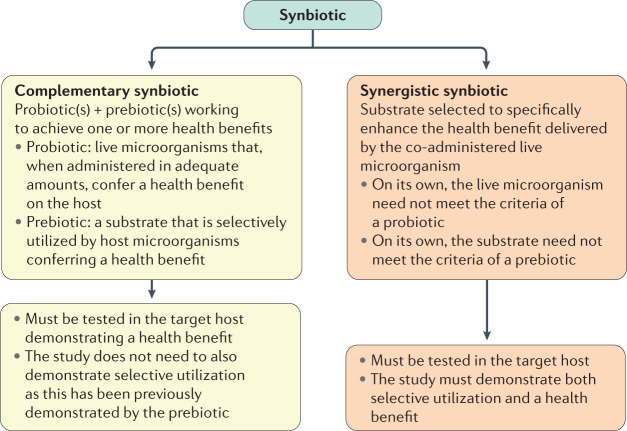
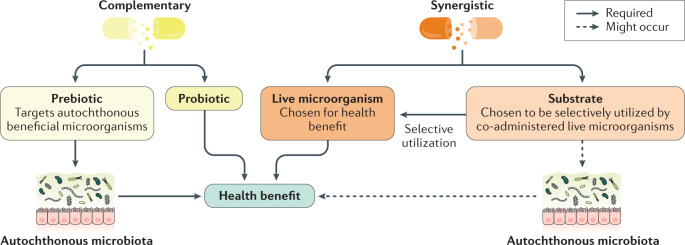
In May 2019, the International Scientific Association for Probiotics and Prebiotics (ISAPP) convened a panel of nutritionists, physiologists and microbiologists to review the definition and scope of synbiotics. The panel updated the definition of a synbiotic to “a mixture comprising live microorganisms and substrate(s) selectively utilized by host microorganisms that confers a health benefit on the host”. The panel concluded that defining synbiotics as simply a mixture of probiotics and prebiotics could suppress the innovation of synbiotics that are designed to function cooperatively. Requiring that each component must meet the evidence and dose requirements for probiotics and prebiotics individually could also present an obstacle. Rather, the panel clarified that a complementary synbiotic, which has not been designed so that its component parts function cooperatively, must be composed of a probiotic plus a prebiotic, whereas a synergistic synbiotic does not need to be so. A synergistic synbiotic is a synbiotic for which the substrate is designed to be selectively utilized by the co-administered microorganisms. This Consensus Statement further explores the levels of evidence (existing and required), safety, effects upon targets and implications for stakeholders of the synbiotic concept.
Overview
The claims and statistics of this paper haven’t been checked yet.
Free: it reads the open-access text and checks the first 5 claims that cite a source we can check. Create a free account to check every claim.
Integrity signals
Registry
Cites
Statistics
Figures
Verification
Claims the paper makes
The claims and statistics of this paper haven’t been checked yet.
Free: it reads the open-access text and checks the first 5 claims that cite a source we can check. Create a free account to check every claim.
Claims other papers make about this one
Each is checked against this paper’s own text: does it say what the citing paper says it does?
The source backs part of the claim, not all of it — or backs it for a different population, condition or comparison.
In the citing paper
“A way to enhance probiotic effectiveness is the combination of probiotics and prebiotic compounds, under the concept of ‘synbiotic’ [69].”
From Psychobiotic effects on anxiety are modulated by lifestyle behaviors: a randomized placebo-controlled trial on healthy adults (2023) · cites this paper as [69]
Experimental — accuracy not yet measuredIn the citing paper
“Third, the minimum fiber concentration suggested for a functional synbiotic [63] was used in the study, that in theory could be sufficient to stimulate the cognate gut microorganisms.”
Self-check
Percentages, sums and reported differences re-computed from the paper’s own numbers.
The self-check needs the paper’s full text.
Citations
Cites
1 retracted
Asemi, Z., Khorrami-Rad, A., Alizadeh, S.-A., Shakeri, H., & Esmaillzadeh, A. (2014) · Clinical Nutrition · doi:10.1016/j.clnu.2013.05.015 · Cited by 190
RetractedDiet rapidly and reproducibly alters the human gut microbiome
David, L. A., Maurice, C. F., Carmody, R. N., Gootenberg, D. B., Button, J. E., Wolfe, B. E., Ling, A. V., Devlin, A. S., Varma, Y., Fischbach, M. A., et al. (2014) · Nature · doi:10.1038/nature12820 · Cited by 10,100
Hill (2014) · doi:10.1038/nrgastro.2014.66 · Cited by 9,592
Moher, D., Hopewell, S., Schulz, K. F., Montori, V., Gotzsche, P. C., Devereaux, P. J., Elbourne, D., Egger, M., & Altman, D. G. (2010) · BMJ · doi:10.1136/bmj.c869 · Cited by 8,883
Dietary Modulation of the Human Colonic Microbiota: Introducing the Concept of Prebiotics
Gibson, G. R., & Roberfroid, M. B. (1995) · The Journal of Nutrition · doi:10.1093/jn/125.6.1401 · Cited by 7,667
Self-citationGibson, G. R., Hutkins, R., Sanders, M. E., Prescott, S. L., Reimer, R. A., Salminen, S. J., Scott, K., Stanton, C., Swanson, K. S., Cani, P. D., et al. (2017) · Nature Reviews Gastroenterology & Hepatology · doi:10.1038/nrgastro.2017.75 · Cited by 5,634
Self-citationDiversity, stability and resilience of the human gut microbiota
Lozupone, C. A., Stombaugh, J. I., Gordon, J. I., Jansson, J. K., & Knight, R. (2012) · Nature · doi:10.1038/nature11550 · Cited by 5,533
Zheng, J., Wittouck, S., Salvetti, E., Franz, C. M. A. P., Harris, H. M. B., Mattarelli, P., O’Toole, P. W., Pot, B., Vandamme, P., Walter, J., et al. (2020) · International Journal of Systematic and Evolutionary Microbiology · doi:10.1099/ijsem.0.004107 · Cited by 3,313
The ecology of the microbiome: Networks, competition, and stability
Coyte, K. Z., Schluter, J., & Foster, K. R. (2015) · Science · doi:10.1126/science.aad2602 · Cited by 2,748
Dethlefsen, L., & Relman, D. A. (2011) · Proceedings of the National Academy of Sciences · doi:10.1073/pnas.1000087107 · Cited by 2,421
Cited by
Salminen, S., Collado, M. C., Endo, A., Hill, C., Lebeer, S., Quigley, E. M. M., Sanders, M. E., Shamir, R., Swann, J. R., Szajewska, H., et al. (2021) · Nature Reviews Gastroenterology & Hepatology · doi:10.1038/s41575-021-00440-6 · Cited by 2,488
“(5) systemic signalling via the nervous system.”
Self-citationMarco, M. L., Sanders, M. E., Gänzle, M., Arrieta, M. C., Cotter, P. D., De Vuyst, L., Hill, C., Holzapfel, W., Lebeer, S., Merenstein, D., et al. (2021) · Nature Reviews Gastroenterology & Hepatology · doi:10.1038/s41575-020-00390-5 · Cited by 937
Self-citationBenefaction of probiotics for human health: A review
George Kerry, R., Patra, J. K., Gouda, S., Park, Y., Shin, H.-S., & Das, G. (2018) · Journal of Food and Drug Analysis · doi:10.1016/j.jfda.2018.01.002 · Cited by 898
Short-chain fatty acids in diseases
Zhang, D., Jian, Y.-P., Zhang, Y.-N., Li, Y., Gu, L.-T., Sun, H.-H., Liu, M.-D., Zhou, H.-L., Wang, Y.-S., & Xu, Z.-X. (2023) · Cell Communication and Signaling · doi:10.1186/s12964-023-01219-9 · Cited by 718
The role of probiotics, prebiotics and synbiotics in animal nutrition
Markowiak, P., & Śliżewska, K. (2018) · Gut Pathogens · doi:10.1186/s13099-018-0250-0 · Cited by 702
The gut–liver axis and gut microbiota in health and liver disease
Hsu, C. L., & Schnabl, B. (2023) · Nature Reviews Microbiology · doi:10.1038/s41579-023-00904-3 · Cited by 737
Shaping the Future of Probiotics and Prebiotics
Cunningham, M., Azcarate-Peril, M. A., Barnard, A., Benoit, V., Grimaldi, R., Guyonnet, D., Holscher, H. D., Hunter, K., Manurung, S., Obis, D., et al. (2021) · Trends in Microbiology · doi:10.1016/j.tim.2021.01.003 · Cited by 637
Self-citationLactobacillus spp. for Gastrointestinal Health: Current and Future Perspectives
Dempsey, E., & Corr, S. C. (2022) · Frontiers in Immunology · doi:10.3389/fimmu.2022.840245 · Cited by 579
Emerging issues in probiotic safety: 2023 perspectives
Merenstein, D., Pot, B., Leyer, G., Ouwehand, A. C., Preidis, G. A., Elkins, C. A., Hill, C., Lewis, Z. T., Shane, A. L., Zmora, N., et al. (2023) · Gut Microbes · doi:10.1080/19490976.2023.2185034 · Cited by 481
Self-citationFacchin, S., Bertin, L., Bonazzi, E., Lorenzon, G., De Barba, C., Barberio, B., Zingone, F., Maniero, D., Scarpa, M., Ruffolo, C., et al. (2024) · Life · doi:10.3390/life14050559 · Cited by 380
Probiotics, prebiotics and synbiotics: Safe options for next-generation therapeutics
Yadav, M. K., Kumari, I., Singh, B., Sharma, K. K., & Tiwari, S. K. (2022) · Applied Microbiology and Biotechnology · doi:10.1007/s00253-021-11646-8 · Cited by 403
“A synergistic synbiotic contains a substrate that is selectively utilized by co-administered microorganism(s) (Swanson et al. 2020).”
BackgroundProbiotics, prebiotics, and postbiotics in health and disease
Ji, J., Jin, W., Liu, S., Jiao, Z., & Li, X. (2023) · MedComm · doi:10.1002/mco2.420 · Cited by 384
Postbiotics: Current Trends in Food and Pharmaceutical Industry
Thorakkattu, P., Khanashyam, A. C., Shah, K., Babu, K. S., Mundanat, A. S., Deliephan, A., Deokar, G. S., Santivarangkna, C., & Nirmal, N. P. (2022) · Foods · doi:10.3390/foods11193094 · Cited by 380
Vinderola, G., Sanders, M. E., & Salminen, S. (2022) · Foods · doi:10.3390/foods11081077 · Cited by 371
“lactis BB-12 + inulin [6]) A mixture comprising live microorganisms and substrate(s) selectively utilized by host microorganisms that confers a health benefit on the host [7] Probiotic + Prebiotic, defined as a complementary synbiotic Two types of synbiotics have been defined: complementary and synergistic.”
BackgroundSelf-citationPrebiotics and Probiotics in Digestive Health
Quigley, E. M. M. (2019) · Clinical Gastroenterology and Hepatology · doi:10.1016/j.cgh.2018.09.028 · Cited by 380
A prebiotic intervention study in children with autism spectrum disorders (ASDs)
Grimaldi, R., Gibson, G. R., Vulevic, J., Giallourou, N., Castro-Mejía, J. L., Hansen, L. H., Leigh Gibson, E., Nielsen, D. S., & Costabile, A. (2018) · Microbiome · doi:10.1186/s40168-018-0523-3 · Cited by 369
Self-citationRole of the gut microbiota in anticancer therapy: from molecular mechanisms to clinical applications
Zhao, L.-Y., Mei, J.-X., Yu, G., Lei, L., Zhang, W.-H., Liu, K., Chen, X.-L., Kołat, D., Yang, K., & Hu, J.-K. (2023) · Signal Transduction and Targeted Therapy · doi:10.1038/s41392-023-01406-7 · Cited by 359
The chicken gut metagenome and the modulatory effects of plant-derived benzylisoquinoline alkaloids
Huang, P., Zhang, Y., Xiao, K., Jiang, F., Wang, H., Tang, D., Liu, D., Liu, B., Liu, Y., He, X., et al. (2018) · Microbiome · doi:10.1186/s40168-018-0590-5 · Cited by 340
“Prebiotics are substrates selectively utilized by gut microbiota and include non-digestible oligosaccharides and polyunsaturated fatty acids [7].”
BackgroundRoy, S., & Dhaneshwar, S. (2023) · World Journal of Gastroenterology · doi:10.3748/wjg.v29.i14.2078 · Cited by 334
The gut microbiota-immune-brain axis: therapeutic implications
O’Riordan, K. J., Moloney, G. M., Keane, L., Clarke, G., & Cryan, J. F. (2025) · Cell Reports Medicine · doi:10.1016/j.xcrm.2025.101982 · Cited by 333
“Synbiotics, which combine probiotics and prebiotics, 148 aim to enhance the survival and efficacy of probiotics by providing a fermentable substrate for them to thrive.”
Wang, Y., Li, N., Yang, J.-J., Zhao, D.-M., Chen, B., Zhang, G.-Q., Chen, S., Cao, R.-F., Yu, H., Zhao, C.-Y., et al. (2020) · Pharmacological Research · doi:10.1016/j.phrs.2020.104784 · Cited by 324
Ma, Z., Zuo, T., Frey, N., & Rangrez, A. Y. (2024) · Signal Transduction and Targeted Therapy · doi:10.1038/s41392-024-01946-6 · Cited by 259
Feeding gut microbes to nourish the brain: unravelling the diet–microbiota–gut–brain axis
Schneider, E., O’Riordan, K. J., Clarke, G., & Cryan, J. F. (2024) · Nature Metabolism · doi:10.1038/s42255-024-01108-6 · Cited by 272
Interindividual variability in gut microbiota and host response to dietary interventions
Healey, G. R., Murphy, R., Brough, L., Butts, C. A., & Coad, J. (2017) · Nutrition Reviews · doi:10.1093/nutrit/nux062 · Cited by 292
McBurney, M. I., Davis, C., Fraser, C. M., Schneeman, B. O., Huttenhower, C., Verbeke, K., Walter, J., & Latulippe, M. E. (2019) · The Journal of Nutrition · doi:10.1093/jn/nxz154 · Cited by 282
Self-citationAntolak, H., Piechota, D., & Kucharska, A. (2021) · Antioxidants · doi:10.3390/antiox10101541 · Cited by 239
Di Stefano, M., Polizzi, A., Santonocito, S., Romano, A., Lombardi, T., & Isola, G. (2022) · International Journal of Molecular Sciences · doi:10.3390/ijms23095142 · Cited by 292
“Symbiotic agents are a mixture of living organisms and specific substrates, which can be selectively utilized by the co-administered live microorganisms (synergistic symbiotic agents) or by the resident or colonizing microflora of the host (complementary symbiotic agents in which the living microorganisms and the subs…”
BackgroundFrom lignocellulosic residues to market: Production and commercial potential of xylooligosaccharides
Amorim, C., Silvério, S. C., Prather, K. L. J., & Rodrigues, L. R. (2019) · Biotechnology Advances · doi:10.1016/j.biotechadv.2019.05.003 · Cited by 277
Gut microbiota influence in type 2 diabetes mellitus (T2DM)
Cunningham, A. L., Stephens, J. W., & Harris, D. A. (2021) · Gut Pathogens · doi:10.1186/s13099-021-00446-0 · Cited by 270
Harnessing the microbiome to prevent global biodiversity loss
Peixoto, R. S., Voolstra, C. R., Sweet, M., Duarte, C. M., Carvalho, S., Villela, H., Lunshof, J. E., Gram, L., Woodhams, D. C., Walter, J., et al. (2022) · Nature Microbiology · doi:10.1038/s41564-022-01173-1 · Cited by 269
Self-citationFermented foods and gastrointestinal health: underlying mechanisms
Mukherjee, A., Breselge, S., Dimidi, E., Marco, M. L., & Cotter, P. D. (2024) · Nature Reviews Gastroenterology & Hepatology · doi:10.1038/s41575-023-00869-x · Cited by 245
Hou, H., Chen, D., Zhang, K., Zhang, W., Liu, T., Wang, S., Dai, X., Wang, B., Zhong, W., & Cao, H. (2022) · Cancer Letters · doi:10.1016/j.canlet.2021.11.027 · Cited by 263
Microbiome-based interventions to modulate gut ecology and the immune system
Hitch, T. C. A., Hall, L. J., Walsh, S. K., Leventhal, G. E., Slack, E., de Wouters, T., Walter, J., & Clavel, T. (2022) · Mucosal Immunology · doi:10.1038/s41385-022-00564-1 · Cited by 243
Healey, G., Murphy, R., Butts, C., Brough, L., Whelan, K., & Coad, J. (2018) · British Journal Of Nutrition · doi:10.1017/s0007114517003440 · Cited by 267
Postbiotics in Human Health: A Narrative Review
Ma, L., Tu, H., & Chen, T. (2023) · Nutrients · doi:10.3390/nu15020291 · Cited by 233
The gut microbial metabolite trimethylamine N-oxide and cardiovascular diseases
Zhen, J., Zhou, Z., He, M., Han, H.-X., Lv, E.-H., Wen, P.-B., Liu, X., Wang, Y.-T., Cai, X.-C., Tian, J.-Q., et al. (2023) · Frontiers in Endocrinology · doi:10.3389/fendo.2023.1085041 · Cited by 229
Microbiota Modulation of the Gut-Lung Axis in COVID-19
de Oliveira, G. L. V., Oliveira, C. N. S., Pinzan, C. F., de Salis, L. V. V., & Cardoso, C. R. D. B. (2021) · Frontiers in Immunology · doi:10.3389/fimmu.2021.635471 · Cited by 237
“Moreover, synbiotics are defined as a “mixtures of probiotics and prebiotics that beneficially affect the host” (109).”
BackgroundFood as medicine: targeting the uraemic phenotype in chronic kidney disease
Mafra, D., Borges, N. A., Lindholm, B., Shiels, P. G., Evenepoel, P., & Stenvinkel, P. (2021) · Nature Reviews Nephrology · doi:10.1038/s41581-020-00345-8 · Cited by 238
Simon, E., Călinoiu, L. F., Mitrea, L., & Vodnar, D. C. (2021) · Nutrients · doi:10.3390/nu13062112 · Cited by 213
Comunian, T. A., Silva, M. P., & Souza, C. J. F. (2021) · Trends in Food Science & Technology · doi:10.1016/j.tifs.2021.01.003 · Cited by 219
The Current and Future Perspectives of Postbiotics
Liang, B., & Xing, D. (2023) · Probiotics and Antimicrobial Proteins · doi:10.1007/s12602-023-10045-x · Cited by 192
Postbiotics and Their Health Modulatory Biomolecules
Scott, E., De Paepe, K., & Van de Wiele, T. (2022) · Biomolecules · doi:10.3390/biom12111640 · Cited by 204
The role of probiotics and prebiotics in modulating of the gut-brain axis
Ansari, F., Neshat, M., Pourjafar, H., Jafari, S. M., Samakkhah, S. A., & Mirzakhani, E. (2023) · Frontiers in Nutrition · doi:10.3389/fnut.2023.1173660 · Cited by 200
“, GABA and brainderived neurotrophic factor, improving CNS function, counting psychiatric disease-related functions, such as anxiety, depression, stress, and memory ability (14, 15, 28).”
BackgroundGut microbiota in overweight and obesity: crosstalk with adipose tissue
Cani, P. D., & Van Hul, M. (2024) · Nature Reviews Gastroenterology & Hepatology · doi:10.1038/s41575-023-00867-z · Cited by 194
Sasso, J. M., Ammar, R. M., Tenchov, R., Lemmel, S., Kelber, O., Grieswelle, M., & Zhou, Q. A. (2023) · ACS Chemical Neuroscience · doi:10.1021/acschemneuro.3c00127 · Cited by 204
Farghali, M., Mohamed, I. M. A., Osman, A. I., & Rooney, D. W. (2023) · Environmental Chemistry Letters · doi:10.1007/s10311-022-01520-y · Cited by 225
Chudzik, A., Orzyłowska, A., Rola, R., & Stanisz, G. J. (2021) · Biomolecules · doi:10.3390/biom11071000 · Cited by 209
Functional Foods, Nutraceuticals and Probiotics: A Focus on Human Health
Damián, M. R., Cortes-Perez, N. G., Quintana, E. T., Ortiz-Moreno, A., Garfias Noguez, C., Cruceño-Casarrubias, C. E., Sánchez Pardo, M. E., & Bermúdez-Humarán, L. G. (2022) · Microorganisms · doi:10.3390/microorganisms10051065 · Cited by 195
Dahiya, D., & Nigam, P. S. (2023) · International Journal of Molecular Sciences · doi:10.3390/ijms24043074 · Cited by 188
Involvement of Probiotics and Postbiotics in the Immune System Modulation
Yeşilyurt, N., Yılmaz, B., Ağagündüz, D., & Capasso, R. (2021) · Biologics · doi:10.3390/biologics1020006 · Cited by 196
“The definition of synbiotics was updated with the consensus published in 2020 as “a mixture containing live microorganisms and substrate(s) selectively used by host microorganisms, beneficially affecting to the host” [13].”
BackgroundThe addition of inulin and Lactobacillus casei 01 in sheep milk ice cream
Balthazar, C. F., Silva, H. L. A., Esmerino, E. A., Rocha, R. S., Moraes, J., Carmo, M. A. V., Azevedo, L., Camps, I., K.D Abud, Y., Sant'Anna, C., et al. (2018) · Food Chemistry · doi:10.1016/j.foodchem.2017.12.002 · Cited by 218
Prebiotics and synbiotics: Recent concepts in nutrition
Mohanty, D., Misra, S., Mohapatra, S., & Sahu, P. S. (2018) · Food Bioscience · doi:10.1016/j.fbio.2018.10.008 · Cited by 206
The promise of the gut microbiome as part of individualized treatment strategies
Schupack, D. A., Mars, R. A. T., Voelker, D. H., Abeykoon, J. P., & Kashyap, P. C. (2022) · Nature Reviews Gastroenterology & Hepatology · doi:10.1038/s41575-021-00499-1 · Cited by 217
Hughes, R. L., & Holscher, H. D. (2021) · Advances in Nutrition · doi:10.1093/advances/nmab077 · Cited by 183
“A synbiotic is “a mixture comprising live microorganisms and substrate(s) selectively utilized by host microorganisms that confers a health benefit on the host” (180).”
BackgroundInfluentialSelf-citationParkinson’s disease and gut microbiota: from clinical to mechanistic and therapeutic studies
Zhang, X., Tang, B., & Guo, J. (2023) · Translational Neurodegeneration · doi:10.1186/s40035-023-00392-8 · Cited by 187
“Synbiotics are synergistic mixtures of probiotics and prebiotics, in which the prebiotic ingredients are selectively beneficial to the metabolism or growth of probiotics, resulting in a beneficial effect on host health [294].”
BackgroundLeveraging diet to engineer the gut microbiome
Wolter, M., Grant, E. T., Boudaud, M., Steimle, A., Pereira, G. V., Martens, E. C., & Desai, M. S. (2021) · Nature Reviews Gastroenterology & Hepatology · doi:10.1038/s41575-021-00512-7 · Cited by 211
Applications of Biopolymers for Drugs and Probiotics Delivery
Gheorghita, R., Anchidin-Norocel, L., Filip, R., Dimian, M., & Covasa, M. (2021) · Polymers · doi:10.3390/polym13162729 · Cited by 194
World Gastroenterology Organisation Global Guidelines: Probiotics and Prebiotics
Guarner, F., Sanders, M. E., Szajewska, H., Cohen, H., Eliakim, R., Herrera-deGuise, C., Karakan, T., Merenstein, D., Piscoya, A., Ramakrishna, B., et al. (2024) · Journal of Clinical Gastroenterology · doi:10.1097/mcg.0000000000002002 · Cited by 209
Self-citationTawfick, M. M., Xie, H., Zhao, C., Shao, P., & Farag, M. A. (2022) · International Journal of Biological Macromolecules · doi:10.1016/j.ijbiomac.2022.03.218 · Cited by 196
An Overview of the Public Health Challenges in Diagnosing and Controlling Human Foodborne Pathogens
Elbehiry, A., Abalkhail, A., Marzouk, E., Elmanssury, A. E., Almuzaini, A. M., Alfheeaid, H., Alshahrani, M. T., Huraysh, N., Ibrahem, M., Alzaben, F., et al. (2023) · Vaccines · doi:10.3390/vaccines11040725 · Cited by 182
Interactions between polysaccharides and gut microbiota: A metabolomic and microbial review
Zhang, D., Liu, J., Cheng, H., Wang, H., Tan, Y., Feng, W., & Peng, C. (2022) · Food Research International · doi:10.1016/j.foodres.2022.111653 · Cited by 190
Review article: the future of microbiome‐based therapeutics
Gulliver, E. L., Young, R. B., Chonwerawong, M., D'Adamo, G. L., Thomason, T., Widdop, J. T., Rutten, E. L., Rossetto Marcelino, V., Bryant, R. V., Costello, S. P., et al. (2022) · Alimentary Pharmacology & Therapeutics · doi:10.1111/apt.17049 · Cited by 180
Health Benefits of Prebiotics, Probiotics, Synbiotics, and Postbiotics
Al-Habsi, N., Al-Khalili, M., Haque, S. A., Elias, M., Olqi, N. A., & Al Uraimi, T. (2024) · Nutrients · doi:10.3390/nu16223955 · Cited by 168
Bella, S. D., Sanson, G., Monticelli, J., Zerbato, V., Principe, L., Giuffrè, M., Pipitone, G., & Luzzati, R. (2024) · Clinical Microbiology Reviews · doi:10.1128/cmr.00135-23 · Cited by 230
Smolińska, S., Popescu, F., & Zemelka‐Wiącek, M. (2025) · Journal of Clinical Medicine · doi:10.3390/jcm14113673 · Cited by 229
“Synbiotics are a mixture of live microorganisms (probiotic or not necessarily proven probiotic) with a substrate(s) used for growth (prebiotic or not necessarily proven prebiotic) that are selectively utilized by resident microorganisms to benefit the host’s health [15].”
Hiel, S., Bindels, L. B., Pachikian, B. D., Kalala, G., Broers, V., Zamariola, G., Chang, B. P. I., Kambashi, B., Rodriguez, J., Cani, P. D., et al. (2019) · The American Journal of Clinical Nutrition · doi:10.1093/ajcn/nqz001 · Cited by 197
Self-citationBioactive compounds for human and planetary health
Kussmann, M., Cunha, D. H. A., & Berciano, S. (2023) · Frontiers in Nutrition · doi:10.3389/fnut.2023.1193848 · Cited by 210
“• Synbiotics: The ISAPP redefined a synbiotic in 2019 as “a mixture comprising live microorganisms and substrate(s) selectively utilized by host micro-organisms that confers a health benefit on the host” (82).”
BackgroundUnderstanding the role of the gut microbiome in gastrointestinal cancer: A review
Ağagündüz, D., Cocozza, E., Cemali, Ö., Bayazıt, A. D., Nanì, M. F., Cerqua, I., Morgillo, F., Saygılı, S. K., Berni Canani, R., Amero, P., et al. (2023) · Frontiers in Pharmacology · doi:10.3389/fphar.2023.1130562 · Cited by 189
Utilization of the microbiome in personalized medicine
Ratiner, K., Ciocan, D., Abdeen, S. K., & Elinav, E. (2024) · Nature Reviews Microbiology · doi:10.1038/s41579-023-00998-9 · Cited by 170
Postbiotic production: harnessing the power of microbial metabolites for health applications
Prajapati, N., Patel, J., Singh, S., Yadav, V. K., Joshi, C., Patani, A., Prajapati, D., Sahoo, D. K., & Patel, A. (2023) · Frontiers in Microbiology · doi:10.3389/fmicb.2023.1306192 · Cited by 161
Targeted Delivery of Probiotics: Perspectives on Research and Commercialization
Yoha, K. S., Nida, S., Dutta, S., Moses, J. A., & Anandharamakrishnan, C. (2022) · Probiotics and Antimicrobial Proteins · doi:10.1007/s12602-021-09791-7 · Cited by 164
Álvarez, J., Fernández‐Real, J. M., Guarner, F., Gueimonde, M., Rodríguez, J. M., de Pipaón, M. S., & Sanz, Y. (2021) · Gastroenterología y Hepatología · doi:10.1016/j.gastrohep.2021.01.009 · Cited by 240
Microbiota–Gut–Brain Axis and Epilepsy: A Review on Mechanisms and Potential Therapeutics
Ding, M., Lang, Y., Shu, H., Shao, J., & Cui, L. (2021) · Frontiers in Immunology · doi:10.3389/fimmu.2021.742449 · Cited by 169
Dahiya, D., & Nigam, P. S. N. (2022) · Fermentation · doi:10.3390/fermentation8070303 · Cited by 233
“This revised definition of synbiotics followed the previous revisions to the definitions for probiotics and prebiotics [29,44].”
MethodGut Microbiota in Anxiety and Depression: Unveiling the Relationships and Management Options
Kumar, A., Pramanik, J., Goyal, N., Chauhan, D., Sivamaruthi, B. S., Prajapati, B. G., & Chaiyasut, C. (2023) · Pharmaceuticals · doi:10.3390/ph16040565 · Cited by 154
Vera-Santander, V. E., Hernández‐Figueroa, R. H., Jiménez‐Munguía, M. T., Mani‐López, E., & López‐Malo, A. (2023) · Molecules · doi:10.3390/molecules28031230 · Cited by 187
Luo, S.-C., Wei, S., Luo, X.-T., Yang, Q.-Q., Wong, K., Cheung, P. C. K., & Zhang, B. (2024) · npj Biofilms and Microbiomes · doi:10.1038/s41522-024-00488-7 · Cited by 201
Moslemi, M. (2021) · Carbohydrate Polymers · doi:10.1016/j.carbpol.2020.117324 · Cited by 163
Effects of dietary fibre on metabolic health and obesity
Deehan, E. C., Mocanu, V., & Madsen, K. L. (2024) · Nature Reviews Gastroenterology & Hepatology · doi:10.1038/s41575-023-00891-z · Cited by 190
“To support this, clinical studies assessing the efficacy of purified fibres should characterize and report the structure and physiochemical properties of the fibre (or fibres) and include evaluations of transit time along the gastrointestinal tract 221 .”
Health promoting microbial metabolites produced by gut microbiota after prebiotics metabolism
Peredo-Lovillo, A., Romero-Luna, H. E., & Jiménez-Fernández, M. (2020) · Food Research International · doi:10.1016/j.foodres.2020.109473 · Cited by 167
Mechanistic Insights into the Link between Gut Dysbiosis and Major Depression: An Extensive Review
Sonali, S., Ray, B., Ahmed Tousif, H., Rathipriya, A. G., Sunanda, T., Mahalakshmi, A. M., Rungratanawanich, W., Essa, M. M., Qoronfleh, M. W., Chidambaram, S. B., et al. (2022) · Cells · doi:10.3390/cells11081362 · Cited by 156
Microbiome therapeutics: exploring the present scenario and challenges
Yadav, M., & Chauhan, N. S. (2021) · Gastroenterology report · doi:10.1093/gastro/goab046 · Cited by 181
Gut microbiome-targeted therapies for Alzheimer’s disease
Zhang, T., Gao, G., Kwok, L. Y., & Sun, Z. (2023) · Gut Microbes · doi:10.1080/19490976.2023.2271613 · Cited by 182
Abdel‐Latif, H. M. R., Yılmaz, E., Dawood, M. A. O., Ringø, E., Ahmadifar, E., & Yılmaz, S. (2022) · Aquaculture · doi:10.1016/j.aquaculture.2022.737951 · Cited by 182
Gurunathan, S., Pratheep, T., & Kim, J. (2023) · Foods · doi:10.3390/foods13010089 · Cited by 183
“A symbiotic is defined as a combination of live microorganisms and substrates that are utilized by host microorganisms only when advantageous to host health [61].”
BackgroundUnderstanding the physiology of human defaecation and disorders of continence and evacuation
Heitmann, P. T., Vollebregt, P. F., Knowles, C. H., Lunniss, P. J., Dinning, P. G., & Scott, S. M. (2021) · Nature Reviews Gastroenterology & Hepatology · doi:10.1038/s41575-021-00487-5 · Cited by 171
The clinical evidence for postbiotics as microbial therapeutics
Mosca, A., y Abreu, A. T. A., Gwee, K., Ianiro, G., Tack, J. F., Nguyễn, T. V. H., & Hill, C. (2022) · Gut Microbes · doi:10.1080/19490976.2022.2117508 · Cited by 173
Gut microbiota in various childhood disorders: Implication and indications
Saeed, N. K., Al‐Beltagi, M., Bediwy, A. S., El-Sawaf, Y., & Toema, O. (2022) · World Journal of Gastroenterology · doi:10.3748/wjg.v28.i18.1875 · Cited by 174
Dairy-Based Probiotic-Fermented Functional Foods: An Update on Their Health-Promoting Properties
Kaur, H., Kaur, G., & Ali, S. A. (2022) · Fermentation · doi:10.3390/fermentation8090425 · Cited by 197
Megur, A., Daliri, E. B., Baltriukienė, D., & Burokas, A. (2022) · International Journal of Molecular Sciences · doi:10.3390/ijms23116097 · Cited by 167
Colorectal cancer and gut microbiota studies in China
Wang, Z., Dan, W., Zhang, N., Fang, J., & Yang, Y. (2023) · Gut Microbes · doi:10.1080/19490976.2023.2236364 · Cited by 173
Pérez-Alvarado, O., Zepeda-Hernández, A., García-Amezquita, L. E., Requena, T., Vinderola, G., & García‐Cayuela, T. (2022) · Frontiers in Microbiology · doi:10.3389/fmicb.2022.969460 · Cited by 163
Overview of Helicobacter pylori Infection: Clinical Features, Treatment, and Nutritional Aspects
Öztekin, M., Yılmaz, B., Ağagündüz, D., & Capasso, R. (2021) · Diseases · doi:10.3390/diseases9040066 · Cited by 182
Averina, O. V., Poluektova, E. U., Марсова, М. В., & Даниленко, В. Н. (2021) · Biomedicines · doi:10.3390/biomedicines9101340 · Cited by 163
Safarchi, A., Al-Qadami, G. H., Tran, C. D., & Conlon, M. A. (2025) · Frontiers in Microbiology · doi:10.3389/fmicb.2025.1559521 · Cited by 158
Nabavi-Rad, A., Sadeghi, A., Aghdaei, H. A., Yadegar, A., Smith, S. M., & Zali, M. R. (2022) · Gut Microbes · doi:10.1080/19490976.2022.2108655 · Cited by 155
‘Multi-omics’ data integration: applications in probiotics studies
Kwoji, I. D., Aiyegoro, O. A., Okpeku, M., & Adeleke, M. A. (2023) · npj Science of Food · doi:10.1038/s41538-023-00199-x · Cited by 126
Balasubramanian, R., Schneider, E., Gunnigle, E., Cotter, P. D., & Cryan, J. F. (2024) · Neuroscience & Biobehavioral Reviews · doi:10.1016/j.neubiorev.2024.105562 · Cited by 152
“…“ A mixture comprising live microorganisms and substrate(s) selectively utilised by host microorganisms that confers a health benefit on the host ” (Swanson et al., 2020) Cryptic peptide Bioactive peptides that require enzyme hydrolysis to release the bioactive portion and hence are encrypted in…”
Oral and Topical Probiotics and Postbiotics in Skincare and Dermatological Therapy: A Concise Review
De Almeida, C. V., Antiga, E., & Lulli, M. (2023) · Microorganisms · doi:10.3390/microorganisms11061420 · Cited by 122
Postbiotics — when simplification fails to clarify
Aguilar-Toalá, J. E., Arioli, S., Behare, P. V., Belzer, C., Canani, R. B., Chatel, J., D’Auria, E., Freitas, M. Q., Elinav, E., Esmerino, E. A., et al. (2021) · Nature Reviews Gastroenterology & Hepatology · doi:10.1038/s41575-021-00521-6 · Cited by 149
Metadata
- Authors
- Swanson, K. S., Gibson, G. R., Hutkins, R., Reimer, R. A., Reid, G., Verbeke, K., Scott, K. P., Holscher, H. D., Azad, M. B., Delzenne, N. M., & Sanders, M. E.
- Affiliations
- University of Illinois Urbana-Champaign (US)
- University of Reading (GB)
- University of Nebraska–Lincoln (US)
- University of Calgary (CA)
- Western University (CA)
- KU Leuven (BE)
- University of Aberdeen (GB)
- Children's Hospital Research Institute of Manitoba (CA)
- UCLouvain (BE)
- Corresponding author
- Swanson, Kelly S.
- ORCID
- Venue
- Nature Reviews Gastroenterology & Hepatology
- Published
- 2020-08-21
- Volume
- 17
- Issue
- 11
- Pages
- 687-701
- ISSN
- 1759-5045 (ISSN-L)
- 1759-5053
- PMC
- PMC7581511
- OpenAlex
- W2694487218
- Cited by
- 2,196
- References
- 307
- Citations by year
- 2026: 285 · 2025: 363 · 2024: 446 · 2023: 400 · 2022: 373 · 2021: 225 · 2020: 44
- FWCI
- 22.02
- Type
- journal article
- Language
- en
- Open access
- hybrid
- doi.org
- Licence
- cc-by
- creativecommons.org/licenses/by/4.0 (tdm)
- creativecommons.org/licenses/by/4.0 (vor)
- Locations
- Nature Reviews Gastroenterology & Hepatology (publishedVersion, cc-by)
- PubMed Central (publishedVersion, cc-by)
- PubMed (publishedVersion)
- Aberdeen University Research Archive (Aberdeen University) (submittedVersion)
- Lincoln (University of Nebraska) (submittedVersion)
- Digital Access to Libraries (Université catholique de Louvain (UCL), l'Université de Namur (UNamur) and the Université Saint-Louis (USL-B)) (submittedVersion, other-oa)
- Scholarship@Western (Western University) (submittedVersion)
- Lirias (KU Leuven) (submittedVersion, cc-by)
- Funders
- GlaxoSmithKline
- PepsiCo
- General Mills
- Mead Johnson Nutrition
- Pharmavite
- Danone
- Rural and Environment Science and Analytical Services Division
- Scottish Government
- Medela
- Topics
- Life Sciences › Agricultural and Biological Sciences › Food Science › Probiotics and Fermented Foods
- Health Sciences › Nursing › Nutrition and Dietetics › Microbial Metabolites in Food Biotechnology
- Health Sciences › Nursing › Nutrition and Dietetics › Infant Nutrition and Health
- Keywords
- postbiotics, synbiotics, probiotics, prebiotics, health benefits, mechanism of action, safety, regulation, microbial metabolites
- MeSH terms
- Humans, Probiotics, Prebiotics, Synbiotics
About these checks
Registry, retraction, Cites and statistics results are computed, not judged, with one exception: a printed reference that no index lists is read once by a model before it counts as a citation error. Claims are extracted by a model and kept only when their quote appears verbatim in the text; each cited source is then checked, with a model’s help, for whether it says what the claim relies on. Those verdicts can be wrong — read the claim’s quote and the cited source before relying on one.
Statistics and arithmetic are recomputed, not judged.
Confidence bands are shown only for fields calibrated on our annotated test set. None is calibrated yet, so no band is shown.
What counts as a claim ›How we measure confidence ›How we check this ›
Are you an author, or do you see a problem with this page? Request a review
Data sources
Bibliographic data: Semantic Scholar, OpenAlex, Crossref.
Contains information from the Semantic Scholar Academic Graph Datasets, made available under the ODC Attribution License (ODC-BY 1.0).
Semantic Scholar’s data is described in: Kinney, R., et al. (2023). The Semantic Scholar Open Data Platform. arXiv:2301.10140.
