

The mutational constraint spectrum quantified from variation in 141,456 humans
Open accessPublished version of a preprint
The DOI matches its Crossref record; 53 of the 53 references it cites were found in a registry or an index.
Abstract
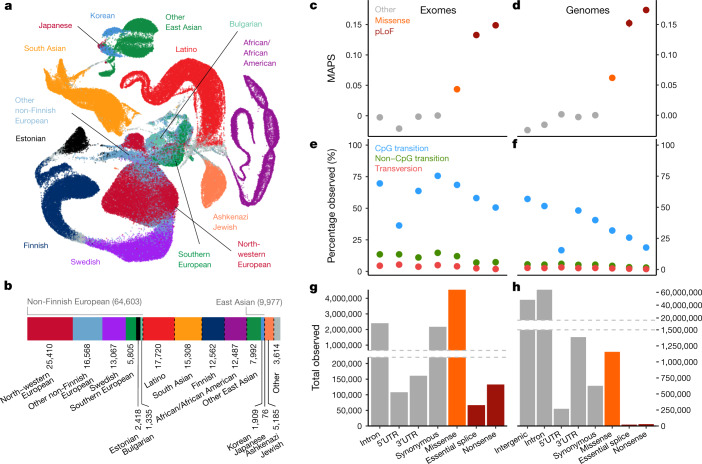
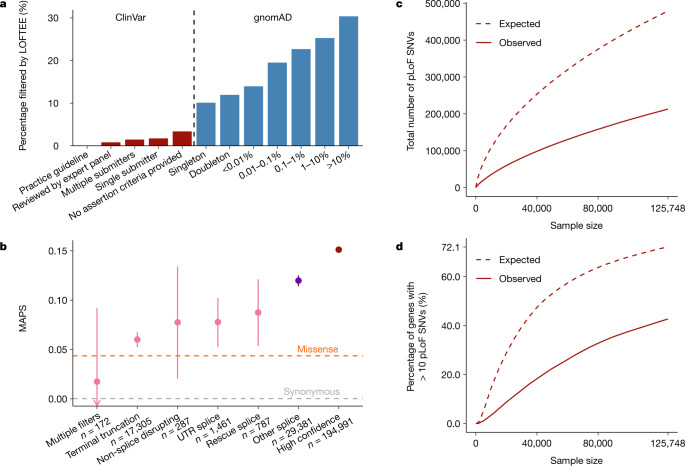
Genetic variants that inactivate protein-coding genes are a powerful source of information about the phenotypic consequences of gene disruption: genes that are crucial for the function of an organism will be depleted of such variants in natural populations, whereas non-essential genes will tolerate their accumulation. However, predicted loss-of-function variants are enriched for annotation errors, and tend to be found at extremely low frequencies, so their analysis requires careful variant annotation and very large sample sizes 1 . Here we describe the aggregation of 125,748 exomes and 15,708 genomes from human sequencing studies into the Genome Aggregation Database (gnomAD). We identify 443,769 high-confidence predicted loss-of-function variants in this cohort after filtering for artefacts caused by sequencing and annotation errors. Using an improved model of human mutation rates, we classify human protein-coding genes along a spectrum that represents tolerance to inactivation, validate this classification using data from model organisms and engineered human cells, and show that it can be used to improve the power of gene discovery for both common and rare diseases.
Overview
The claims and statistics of this paper haven’t been checked yet.
Free: it reads the open-access text and checks the first 5 claims that cite a source we can check. Create a free account to check every claim.
Integrity signals
Registry
Cites
Statistics
Figures
Verification
Claims the paper makes
The claims and statistics of this paper haven’t been checked yet.
Free: it reads the open-access text and checks the first 5 claims that cite a source we can check. Create a free account to check every claim.
Claims other papers make about this one
Each is checked against this paper’s own text: does it say what the citing paper says it does?
The source backs part of the claim, not all of it — or backs it for a different population, condition or comparison.
In the citing paper
“Earlier schizophrenia sequencing studies have established that ultra-rare and de novo mutations contribute to risk as a category, and have prioritized disease-relevant tissues and processes, specifically observing an enrichment in neuronal genes and synaptic processes9,11,19–23.”
From Rare coding variants in ten genes confer substantial risk for schizophrenia (2022) · cites this paper as [23]
Experimental — accuracy not yet measuredThe source backs part of the claim, not all of it — or backs it for a different population, condition or comparison.
In the citing paper
“According to the gnomAD database (Karczewski et al, 2020), the loss-of-function observed/expected upper bound fraction (LOEUF) indicates that SALL4 is depleted of inactivating variants and under purifying selection (LOEUF = 0.101).”
From Structure of SALL4 zinc finger domain reveals link between AT-rich DNA binding and Okihiro syndrome (2023) · cites this paper as Karczewski et al, 2020
Experimental — accuracy not yet measuredThe source backs part of the claim, not all of it — or backs it for a different population, condition or comparison.
In the citing paper
“Based on gnomAD (Karczewski et al. 2020), DOCK4 has a reduced amount of missense and null variants compared to its size of 1,966 amino acids (pLI = 1, Z score = 1.67) in a population without severe, early-onset phenotypes, indicating a mild constraint.”
From Heterozygous loss-of-function variants in DOCK4 cause neurodevelopmental delay and microcephaly (2024) · cites this paper as Karczewski et al. 2020
Experimental — accuracy not yet measuredThe source backs part of the claim, not all of it — or backs it for a different population, condition or comparison.
In the citing paper
“All variants were prioritized considering allele frequency in gnomAD v4.0.0 (Karczewski et al. 2020) below 1%, impact on protein function via different in silico programs (CADD (Rentzsch et al. 2021), REVEL (Ioannidis et al. 2016), MutPred2 (Pejaver et al. 2020) and Metadome (Wiel et al. 2019)) and involvement of candidate genes in neuronal processes.”
From Heterozygous loss-of-function variants in DOCK4 cause neurodevelopmental delay and microcephaly (2024) · cites this paper as Karczewski et al. 2020
Experimental — accuracy not yet measuredThe source backs part of the claim, not all of it — or backs it for a different population, condition or comparison.
In the citing paper
“Owing to the scarcity of reported loss-of-function (LoF) variants, with only 17 cases (allele frequency: ~7E-7) in the Genome Aggregation Database (gnomAD) from healthy subjects100, the WASF1 gene exhibits exceptionally high intolerance to such mutations.”
From The WAVE complex in developmental and adulthood brain disorders (2025) · cites this paper as [100]
Experimental — accuracy not yet measured
20 more claims about this paper
Create a free account to see every claim other papers make about this one.
Self-check
Percentages, sums and reported differences re-computed from the paper’s own numbers.
The self-check needs the paper’s full text.
Citations
Cites
UMAP: Uniform Manifold Approximation and Projection
McInnes, L., Healy, J., Saul, N., & Großberger, L. (2018) · Journal of Open Source Software · doi:10.21105/joss.00861 · Cited by 9,826
Analysis of protein-coding genetic variation in 60,706 humans
Exome Aggregation Consortium, Lek, M., Karczewski, K. J., Minikel, E. V., Samocha, K. E., Banks, E., Fennell, T., O’Donnell-Luria, A. H., Ware, J. S., Hill, A. J., et al. (2016) · Nature · doi:10.1038/nature19057 · Cited by 9,587
Self-citationVan der Auwera, G. A., Carneiro, M. O., Hartl, C., Poplin, R., del Angel, G., Levy‐Moonshine, A., Jordan, T., Shakir, K., Roazen, D., Thibault, J., et al. (2013) · Current Protocols in Bioinformatics · doi:10.1002/0471250953.bi1110s43 · Cited by 6,687
Self-citationGenetic effects on gene expression across human tissues
GTEx Consortium (2017) · Nature · doi:10.1038/nature24277 · Cited by 4,036
Self-citationSequence Variations in PCSK9, Low LDL, and Protection against Coronary Heart Disease
Cohen, J. C., Boerwinkle, E., Mosley, T. H., & Hobbs, H. H. (2006) · New England Journal of Medicine · doi:10.1056/nejmoa054013 · Cited by 3,181
Clinical use of current polygenic risk scores may exacerbate health disparities
Martin, A. R., Kanai, M., Kamatani, Y., Okada, Y., Neale, B. M., & Daly, M. J. (2019) · Nature Genetics · doi:10.1038/s41588-019-0379-x · Cited by 2,821
Self-citationCurrent clinical use of polygenic scores will risk exacerbating health disparities
Martin, A. R., Kanai, M., Kamatani, Y., Okada, Y., Neale, B. M., & Daly, M. J. (2018) · doi:10.1101/441261 · Cited by 2,813
Self-citationPartitioning heritability by functional annotation using genome-wide association summary statistics
ReproGen Consortium, Finucane, H. K., Schizophrenia Working Group of the Psychiatric Genomics Consortium, The RACI Consortium, Bulik-Sullivan, B., Gusev, A., Trynka, G., Reshef, Y., Loh, P.-R., Anttila, V., et al. (2015) · Nature Genetics · doi:10.1038/ng.3404 · Cited by 2,604
Self-citationPatterns and rates of exonic de novo mutations in autism spectrum disorders
Neale, B. M., Kou, Y., Liu, L., Ma’ayan, A., Samocha, K. E., Sabo, A., Lin, C.-F., Stevens, C., Wang, L.-S., Makarov, V., et al. (2012) · Nature · doi:10.1038/nature11011 · Cited by 1,734
Self-citationDe novo mutations in schizophrenia implicate synaptic networks
Fromer, M., Pocklington, A. J., Kavanagh, D. H., Williams, H. J., Dwyer, S., Gormley, P., Georgieva, L., Rees, E., Palta, P., Ruderfer, D. M., et al. (2014) · Nature · doi:10.1038/nature12929 · Cited by 1,617
Self-citation
Cited by
Items 201–300 of 1,234
The human ATP‐binding cassette (ABC) transporter superfamily
Dean, M., Moitra, K., & Allikmets, R. (2022) · Human Mutation · doi:10.1002/humu.24418 · Cited by 187
Wang, A., Chiou, J., Poirion, O. B., Buchanan, J., Valdez, M. J., Verheyden, J. M., Hou, X., Kudtarkar, P., Narendra, S., Newsome, J. M., et al. (2020) · eLife · doi:10.7554/elife.62522 · Cited by 187
“Number of non-singleton genetic variants in gnomAD v3 mapping (Karczewski et al., 2019) in each age-dependent site predicted to disrupt binding”
BackgroundMethodInfluentialSelf-citationAssociation of Genetic Variants With Outcomes in Patients With Nonischemic Dilated Cardiomyopathy
Escobar-Lopez, L., Ochoa, J. P., Mirelis, J. G., Espinosa, M. Á., Navarro, M., Gallego-Delgado, M., Barriales-Villa, R., Robles-Mezcua, A., Basurte-Elorz, M. T., Gutiérrez García-Moreno, L., et al. (2021) · Journal of the American College of Cardiology · doi:10.1016/j.jacc.2021.08.039 · Cited by 187
Evaluating drug targets through human loss-of-function genetic variation
Minikel, E. V., Karczewski, K. J., Martin, H. C., Cummings, B. B., Whiffin, N., Rhodes, D., Alföldi, J., Trembath, R. C., van Heel, D. A., Daly, M. J., et al. (2020) · Nature · doi:10.1038/s41586-020-2267-z · Cited by 187
Self-citationWhole-genome sequencing of acral melanoma reveals genomic complexity and diversity
Newell, F., Wilmott, J. S., Johansson, P. A., Nones, K., Addala, V., Mukhopadhyay, P., Broit, N., Amato, C. M., Van Gulick, R., Kazakoff, S. H., et al. (2020) · Nature Communications · doi:10.1038/s41467-020-18988-3 · Cited by 186
Dingler, F. A., Wang, M., Mu, A., Millington, C. L., Oberbeck, N., Watcham, S., Pontel, L. B., Kamimae-Lanning, A. N., Langevin, F., Nadler, C., et al. (2020) · Molecular Cell · doi:10.1016/j.molcel.2020.10.012 · Cited by 186
Alessi, J. V., Ricciuti, B., Spurr, L. F., Gupta, H., Li, Y. Y., Glass, C., Nishino, M., Cherniack, A. D., Lindsay, J., Sharma, B., et al. (2021) · Journal of Thoracic Oncology · doi:10.1016/j.jtho.2021.03.024 · Cited by 155
Genomic language models: opportunities and challenges
Benegas, G., Ye, C., Albors, C., Li, J. C., & Song, Y. S. (2025) · Trends in Genetics · doi:10.1016/j.tig.2024.11.013 · Cited by 193
“A primary source of data on human allele frequencies in various ancestry groups is the gnomAD database [118].”
Murdock, D. R., Dai, H., Burrage, L. C., Rosenfeld, J. A., Ketkar, S., Müller, M. F., Yépez, V. A., Gagneur, J., Liu, P., Chen, S., et al. (2021) · Journal of Clinical Investigation · doi:10.1172/jci141500 · Cited by 185
“To facilitate the identification of clinically relevant aberrations, we developed custom Perl scripts to annotate the DROP output with information such as OMIM disease gene status (46), gnomAD lossof-function intolerant (pLI) scores (47), DOMINO probabilities of causing dominant disease (48), ClinGen haploinsufficienc…”
MethodSuper-enhancer hypermutation alters oncogene expression in B cell lymphoma
Bal, E., Kumar, R., Hadigol, M., Holmes, A. B., Hilton, L. K., Loh, J. W., Dreval, K., Wong, J. C. H., Vlasevska, S., Corinaldesi, C., et al. (2022) · Nature · doi:10.1038/s41586-022-04906-8 · Cited by 146
Genetic Architecture of Acute Myocarditis and the Overlap With Inherited Cardiomyopathy
Lota, A. S., Hazebroek, M. R., Theotokis, P., Wassall, R., Salmi, S., Halliday, B. P., Tayal, U., Verdonschot, J., Meena, D., Owen, R., et al. (2022) · Circulation · doi:10.1161/circulationaha.121.058457 · Cited by 184
“Age (median/IQR), y 33 (25-45) 35 (27-48) 54 (44-54)”
Self-citationTaiwan Biobank: A rich biomedical research database of the Taiwanese population
Feng, Y.-C. A., Chen, C.-Y., Chen, T.-T., Kuo, P.-H., Hsu, Y.-H., Yang, H.-I., Chen, W. J., Su, M.-W., Chu, H.-W., Shen, C.-Y., et al. (2022) · Cell Genomics · doi:10.1016/j.xgen.2022.100197 · Cited by 184
“, gnomAD (Karczewski et al., 2020)), which has the potential to facilitate discovery of rare disease-causing variants, and, combined with the available information on common genetic variation from TWB array data, to improve genomic prediction for disease (e.”
BackgroundImputation of low-coverage sequencing data from 150,119 UK Biobank genomes
Rubinacci, S., Hofmeister, R. J., Sousa da Mota, B., & Delaneau, O. (2023) · Nature Genetics · doi:10.1038/s41588-023-01438-3 · Cited by 183
3.5KJPNv2: an allele frequency panel of 3552 Japanese individuals including the X chromosome
Tadaka, S., Katsuoka, F., Ueki, M., Kojima, K., Makino, S., Saito, S., Otsuki, A., Gocho, C., Sakurai-Yageta, M., Danjoh, I., et al. (2019) · Human Genome Variation · doi:10.1038/s41439-019-0059-5 · Cited by 183
Nam, Y., Kim, J., Jung, S., Woerner, J., Suh, E. H., Lee, D. A., Shivakumar, M., Lee, M. E., & Kim, D. (2024) · Annual Review of Biomedical Data Science · doi:10.1146/annurev-biodatasci-102523-103801 · Cited by 187
The landscape of tolerated genetic variation in humans and primates
Gao, H., Hamp, T., Ede, J., Schraiber, J. G., McRae, J., Singer-Berk, M., Yang, Y., Dietrich, A., Fiziev, P., Kuderna, L., et al. (2023) · doi:10.1101/2023.05.01.538953 · Cited by 183
Self-citationThe landscape of tolerated genetic variation in humans and primates
(2023) · doi:10.1126/science.abn8197 · Cited by 182
“Compared with the genome Aggregation Database (gnomAD) cohort of 141,456 human individuals from diverse populations (28, 29), the primate sequencing cohort contained ~20% more exome variants despite sequencing 1/175th the number of individuals (Fig.”
Self-citationCombining SNP-to-gene linking strategies to identify disease genes and assess disease omnigenicity
Gazal, S., Weissbrod, O., Hormozdiari, F., Dey, K. K., Nasser, J., Jagadeesh, K. A., Weiner, D. J., Shi, H., Fulco, C. P., O’Connor, L. J., et al. (2022) · Nature Genetics · doi:10.1038/s41588-022-01087-y · Cited by 181
Cook, S. A., & Schafer, S. (2020) · Annual Review of Medicine · doi:10.1146/annurev-med-041818-011649 · Cited by 181
Applications and analysis of targeted genomic sequencing in cancer studies
Bewicke‐Copley, F., Kumar, E. A., Palladino, G., Korfi, K., & Wang, J. (2019) · Computational and Structural Biotechnology Journal · doi:10.1016/j.csbj.2019.10.004 · Cited by 184
The genomic landscape of 2,023 colorectal cancers
Cornish, A. J., Gruber, A. J., Kinnersley, B., Chubb, D., Frangou, A., Caravagna, G., Noyvert, B., Lakatos, E., Wood, H. M., Thorn, S., et al. (2024) · Nature · doi:10.1038/s41586-024-07747-9 · Cited by 180
“• Variants with a population germline allele frequency > 1% in the gnomAD database 53 .”
Transcript expression-aware annotation improves rare variant interpretation
Cummings, B. B., Karczewski, K. J., Kosmicki, J. A., Seaby, E. G., Watts, N. A., Singer-Berk, M., Mudge, J. M., Karjalainen, J., Satterstrom, F. K., O’Donnell-Luria, A. H., et al. (2020) · Nature · doi:10.1038/s41586-020-2329-2 · Cited by 180
Self-citationMutations disrupting neuritogenesis genes confer risk for cerebral palsy
Jin, S. C., Lewis, S. A., Bakhtiari, S., Zeng, X., Sierant, M. C., Shetty, S., Nordlie, S. M., Elie, A., Corbett, M. A., Norton, B. Y., et al. (2020) · Nature Genetics · doi:10.1038/s41588-020-0695-1 · Cited by 180
Variant calling and benchmarking in an era of complete human genome sequences
Olson, N. D., Wagner, J., Dwarshuis, N. J., Miga, K. H., Sedlazeck, F. J., Salit, M., & Zook, J. M. (2023) · Nature Reviews Genetics · doi:10.1038/s41576-023-00590-0 · Cited by 181
Characterising the loss-of-function impact of 5’ untranslated region variants in 15,708 individuals
Whiffin, N., Karczewski, K. J., Zhang, X., Chothani, S., Smith, M. J., Evans, D. G., Roberts, A. M., Quaife, N. M., Schafer, S., Rackham, O., et al. (2020) · Nature Communications · doi:10.1038/s41467-019-10717-9 · Cited by 179
Self-citationMitochondrial DNA variation across 56,434 individuals in gnomAD
Laricchia, K. M., Lake, N. J., Watts, N. A., Shand, M., Haessly, A., Gauthier, L., Benjamin, D., Banks, E., Soto, J., Garimella, K., et al. (2022) · Genome Research · doi:10.1101/gr.276013.121 · Cited by 148
“4E), based on principal component analysis of nuclear SNVs (Karczewski et al. 2020)”
InfluentialSelf-citationAdmixture’s impact on Brazilian population evolution and health
Nunes, K., Silva, M. A. C. E., Rodrigues, M. R., Lemes, R. B., Pezo, P., Kimura, L., Sena, L. S., Krieger, J. E., Varela, M. C., Azevedo, L. O., et al. (2025) · Science · doi:10.1126/science.adl3564 · Cited by 182
Protein-coding repeat polymorphisms strongly shape diverse human phenotypes
Mukamel, R. E., Handsaker, R. E., Sherman, M. A., Barton, A. R., Zheng, Y., McCarroll, S. A., & Loh, P.-R. (2021) · Science · doi:10.1126/science.abg8289 · Cited by 178
Self-citationWhole genome sequencing in clinical practice
Bagger, F. O., Borgwardt, L., Jespersen, A. S., Hansen, A. R., Bertelsen, B., Kodama, M., & Nielsen, F. C. (2024) · BMC Medical Genomics · doi:10.1186/s12920-024-01795-w · Cited by 178
“…very last step of the bioinformatics pipeline, it should also be recalled that most interpretation softwares do not require filtering before uploading and e.g., filtering on genome frequencies [30] should only be applied in the analysis software by the clinical interpreter as a conscious decision.”
BackgroundMethodThe PEMDAC phase 2 study of pembrolizumab and entinostat in patients with metastatic uveal melanoma
Ny, L., Jespersen, H., Karlsson, J., Alsén, S., Filges, S., All-Eriksson, C., Andersson, B., Carneiro, A., Helgadottir, H., Levin, M., et al. (2021) · Nature Communications · doi:10.1038/s41467-021-25332-w · Cited by 177
Rapid protein stability prediction using deep learning representations
Blaabjerg, L. M., Kassem, M. M., Good, L. L., Jonsson, N., Cagiada, M., Johansson, K. E., Boomsma, W., Stein, A., & Lindorff-Larsen, K. (2023) · eLife · doi:10.7554/elife.82593 · Cited by 177
A pangenome reference of 36 Chinese populations
Gao, Y., Yang, X., Chen, H., Tan, X., Yang, Z., Deng, L., Wang, B., Kong, S., Li, S., Cui, Y., et al. (2023) · Nature · doi:10.1038/s41586-023-06173-7 · Cited by 176
Detection of aberrant splicing events in RNA-seq data using FRASER
Mertes, C., Scheller, I. F., Yépez, V. A., Çelik, M. H., Liang, Y., Kremer, L. S., Gusic, M., Prokisch, H., & Gagneur, J. (2021) · Nature Communications · doi:10.1038/s41467-020-20573-7 · Cited by 176
Rapid protein stability prediction using deep learning representations
Blaabjerg, L. M., Kassem, M. M., Good, L. L., Jonsson, N., Cagiada, M., Johansson, K. E., Boomsma, W., Stein, A., & Lindorff-Larsen, K. (2022) · doi:10.1101/2022.07.14.500157 · Cited by 176
Responsible, practical genomic data sharing that accelerates research
Byrd, J. B., Greene, A. C., Prasad, D. V., Jiang, X., & Greene, C. S. (2020) · Nature Reviews Genetics · doi:10.1038/s41576-020-0257-5 · Cited by 145
Autism Spectrum Disorder Genetics and the Search for Pathological Mechanisms
Manoli, D. S., & State, M. W. (2021) · American Journal of Psychiatry · doi:10.1176/appi.ajp.2020.20111608 · Cited by 146
Genetic and molecular architecture of familial hypercholesterolemia
Abifadel, M., & Boileau, C. (2022) · Journal of Internal Medicine · doi:10.1111/joim.13577 · Cited by 178
Structural variation in 1,019 diverse humans based on long-read sequencing
Schloissnig, S., Pani, S., Ebler, J., Hain, C., Tsapalou, V., Söylev, A., Hüther, P., Ashraf, H., Prodanov, T., Asparuhova, M., et al. (2025) · Nature · doi:10.1038/s41586-025-09290-7 · Cited by 177
Analysis of AlphaMissense data in different protein groups and structural context
Tordai, H., Torres, O., Csepi, M., Padányi, R., Lukács, G. L., & Hegedűs, T. (2024) · Scientific Data · doi:10.1038/s41597-024-03327-8 · Cited by 135
“In both the medical field and the broader realm of biology, understanding the pathogenicity of mutations holds high significance 1,2 .”
BackgroundFrom variant to function in human disease genetics
Lappalainen, T., & MacArthur, D. G. (2021) · Science · doi:10.1126/science.abi8207 · Cited by 173
Self-citationSeo, G. H., Kim, T., Choi, I. H., Park, J., Lee, J., Kim, S., Won, D., Oh, A., Lee, Y., Choi, J., et al. (2020) · Clinical Genetics · doi:10.1111/cge.13848 · Cited by 172
Self-citationDe La Vega, F. M., Chowdhury, S., Moore, B., Frise, E., McCarthy, J., Hernandez, E. J., Wong, T., James, K., Guidugli, L., Agrawal, P. B., et al. (2021) · Genome Medicine · doi:10.1186/s13073-021-00965-0 · Cited by 172
Self-citationMolecular profiling of driver events in metastatic uveal melanoma
Karlsson, J. W., Nilsson, L. M., Mitra, S., Alsén, S., Shelke, G. V., Sah, V. R., Forsberg, E. M. V., Stierner, U. K., All‐Eriksson, C., Einarsdottir, B. O., et al. (2020) · Nature Communications · doi:10.1038/s41467-020-15606-0 · Cited by 172
Inherited basis of visceral, abdominal subcutaneous and gluteofemoral fat depots
Agrawal, S., Wang, M., Klarqvist, M. D. R., Smith, K., Shin, J., Dashti, H., Diamant, N., Choi, S. H., Jurgens, S. J., Ellinor, P. T., et al. (2022) · Nature Communications · doi:10.1038/s41467-022-30931-2 · Cited by 156
Self-citationRNA editing: Expanding the potential of RNA therapeutics
Booth, B. J., Nourreddine, S., Katrekar, D., Savva, Y., Bose, D., Long, T. J., Huss, D. J., & Mali, P. (2023) · Molecular Therapy · doi:10.1016/j.ymthe.2023.01.005 · Cited by 171
“edu INTRODUCTION Large-scale genome sequencing has progressively revealed the causal genetic variation underlying many human diseases.(1,2) This information has driven significant innovation in biotechnology and ushered in the modern era of DNA and RNA therapeutics.”
Transcriptomic signatures across human tissues identify functional rare genetic variation
Ferraro, N. M., Strober, B. J., Einson, J., Abell, N. S., Aguet, F., Barbeira, A. N., Brandt, M., Bucan, M., Castel, S. E., Davis, J. R., et al. (2020) · Science · doi:10.1126/science.aaz5900 · Cited by 171
“We defined RVs as those with <1% MAF within GTEx and, for SNVs and indels, also occurring at <1% frequency in non-Finnish Europeans within gnomAD (21).”
BackgroundSelf-citationLópez-Rivera, J. A., Pérez‐Palma, E., Symonds, J. D., Lindy, A. S., McKnight, D., Leu, C., Zuberi, S. M., Brunklaus, A., Møller, R. S., & Lal, D. (2020) · Brain · doi:10.1093/brain/awaa051 · Cited by 171
The proteogenomic subtypes of acute myeloid leukemia
Jayavelu, A. K., Wolf, S., Buettner, F., Alexe, G., Häupl, B., Comoglio, F., Schneider, C., Doebele, C., Fuhrmann, D. C., Wagner, S., et al. (2022) · Cancer Cell · doi:10.1016/j.ccell.2022.02.006 · Cited by 172
Using deep mutational scanning to benchmark variant effect predictors and identify disease mutations
Livesey, B. J., & Marsh, J. A. (2020) · Molecular Systems Biology · doi:10.15252/msb.20199380 · Cited by 170
A framework for individualized splice-switching oligonucleotide therapy
Kim, J., Woo, S., de Gusmao, C. M., Zhao, B., Chin, D. H., DiDonato, R. L., Nguyen, M. A., Nakayama, T., Hu, C. A., Soucy, A., et al. (2023) · Nature · doi:10.1038/s41586-023-06277-0 · Cited by 170
Jurgens, S. J., Choi, S. H., Morrill, V. N., Chaffin, M., Pirruccello, J. P., Halford, J. L., Weng, L.-C., Nauffal, V., Roselli, C., Hall, A. W., et al. (2022) · Nature Genetics · doi:10.1038/s41588-021-01011-w · Cited by 170
“We found that our rare variant associations were not negatively affected by adjustment for nearby common variation, likely due to our strict variant filter at MAF 0.1% in both the UK Biobank and gnomAD 58 , as employed previously 15 .”
InfluentialSelf-citationCharacterization and visualization of tandem repeats at genome scale
Dolzhenko, E., English, A. C., Dashnow, H., Brandine, G. D. S., Mokveld, T., Rowell, W. J., Karniski, C., Kronenberg, Z. N., Danzi, M. C., Cheung, W., et al. (2024) · Nature Biotechnology · doi:10.1038/s41587-023-02057-3 · Cited by 174
The benefits and pitfalls of machine learning for biomarker discovery
Ng, S., Masarone, S., Watson, D., & Barnes, M. R. (2023) · Cell and Tissue Research · doi:10.1007/s00441-023-03816-z · Cited by 169
“The data includes information on single-nucleotide variants (SNVs), small insertions and deletions (indels) and structural variants (SVs) (Karczewski et al. 2020) The Human Microbiome Project (HMP) is a research effort to understand the microbial communities that live in and on the human body and…”
BackgroundDiverse viral proteases activate the NLRP1 inflammasome
Tsu, B. V., Beierschmitt, C., Ryan, A. P., Agarwal, R., Mitchell, P. S., & Daugherty, M. D. (2021) · eLife · doi:10.7554/elife.60609 · Cited by 169
Jones, E. M., Lubock, N. B., Venkatakrishnan, A., Wang, J., Tseng, A. M., Paggi, J. M., Latorraca, N. R., Cancilla, D., Satyadi, M., Davis, J. E., et al. (2020) · eLife · doi:10.7554/elife.54895 · Cited by 168
Regenerative Metaplastic Clones in COPD Lung Drive Inflammation and Fibrosis
Rao, W., Wang, S., Duleba, M., Niroula, S., Goller, K., Xie, J., Mahalingam, R., Neupane, R., Liew, A.-A., Vincent, M., et al. (2020) · Cell · doi:10.1016/j.cell.2020.03.047 · Cited by 168
rs641738C>T near MBOAT7 is associated with liver fat, ALT and fibrosis in NAFLD: A meta-analysis
Teo, K., Abeysekera, K. W. M., Adams, L., Aigner, E., Anstee, Q. M., Banales, J. M., Banerjee, R., Basu, P., Berg, T., Bhatnagar, P., et al. (2021) · Journal of Hepatology · doi:10.1016/j.jhep.2020.08.027 · Cited by 152
“53 in those of South Asian ancestry.(58) Moreover, the majority of studies included in this meta-analysis used self-reported ethnicity, rather than genetic ancestry.”
BackgroundSelf-citationA DNA language model based on multispecies alignment predicts the effects of genome-wide variants
Benegas, G., Albors, C., Aw, A. J., Ye, C., & Song, Y. S. (2025) · Nature Biotechnology · doi:10.1038/s41587-024-02511-w · Cited by 115
“For each gene, we considered annotations from the canonical Ensembl transcript in the gnomAD version 2 constraint table 33 and divided all variants into two groups: (1) exonic and splice donor or acceptor variants and (2) remaining variants.”
Genetic Modifiers and Rare Mendelian Disease
Rahit, K. M. T. H., & Tarailo-Graovac, M. (2020) · Genes · doi:10.3390/genes11030239 · Cited by 167
A review of UMAP in population genetics
Diaz-Papkovich, A., Anderson-Trocmé, L., & Gravel, S. (2021) · Journal of Human Genetics · doi:10.1038/s10038-020-00851-4 · Cited by 167
“The gnomAD image is reproduced from [10], and the BBJ image is reproduced from [12] 88 A.”
MethodSpecifications of the ACMG/AMP variant interpretation guidelines for germline TP53 variants
Fortuno, C., Lee, K., Olivier, M., Pesaran, T., Mai, P. L., Andrade, K. C., Attardi, L. D., Crowley, S., Evans, D. G., Feng, B., et al. (2021) · Human Mutation · doi:10.1002/humu.24152 · Cited by 167
Widman, A. J., Shah, M. J., Frydendahl, A., Halmos, D., Khamnei, C. C., Øgaard, N., Rajagopalan, S., Arora, A., Deshpande, A. S., Hooper, W. F., et al. (2024) · Nature Medicine · doi:10.1038/s41591-024-03040-4 · Cited by 170
“To further exclude potential germline variants, we used the gnomAD database (v.3.0) which contains genetic variants from >70,000 whole genomes 68 .”
InfluentialPolygenic architecture of rare coding variation across 394,783 exomes
Weiner, D. J., Nadig, A., Jagadeesh, K. A., Dey, K. K., Neale, B. M., Robinson, E. B., Karczewski, K. J., & O’Connor, L. J. (2023) · Nature · doi:10.1038/s41586-022-05684-z · Cited by 165
Self-citationDetection of aberrant gene expression events in RNA sequencing data
Yépez, V. A., Mertes, C., Müller, M. F., Klaproth-Andrade, D., Wachutka, L., Frésard, L., Gusic, M., Scheller, I. F., Goldberg, P. F., Prokisch, H., et al. (2021) · Nature Protocols · doi:10.1038/s41596-020-00462-5 · Cited by 165
Improved pathogenicity prediction for rare human missense variants
Wu, Y., Liu, H., Li, R., Sun, S., Weile, J., & Roth, F. P. (2021) · The American Journal of Human Genetics · doi:10.1016/j.ajhg.2021.08.012 · Cited by 164
Jin, S. C., Dong, W., Kundishora, A. J., Panchagnula, S., Moreno-De-Luca, A., Furey, C. G., Allocco, A. A., Walker, R. L., Nelson-Williams, C. J., Smith, H. L., et al. (2020) · Nature Medicine · doi:10.1038/s41591-020-1090-2 · Cited by 166
Buckley, R. M., Davis, B. W., Brashear, W. A., Farias, F. G., Kuroki, K., Graves, T., Hillier, L., Kremitzki, M., Li, G., Middleton, R. P., et al. (2020) · PLoS Genetics · doi:10.1371/journal.pgen.1008926 · Cited by 165
Carrot‐Zhang, J., Soca‐Chafre, G., Patterson, N. J., Thorner, A. R., Nag, A., Watson, J., Genovese, G., Rodríguez, J. K., Gelbard, M. K., Corrales, L., et al. (2021) · Cancer Discovery · doi:10.1158/2159-8290.cd-20-1165 · Cited by 165
Tamborero, D., Dienstmann, R., Rachid, M. H., Boekel, J., López‐Fernández, A., Jonsson, M., Razzak, A., Braña, I., Petris, L. D., Yachnin, J., et al. (2022) · Nature Cancer · doi:10.1038/s43018-022-00332-x · Cited by 168
Genetic associations of protein-coding variants in human disease
Sun, B. B., Kurki, M. I., Foley, C. N., Mechakra, A., Chen, C.-Y., Marshall, E., Wilk, J. B., Biogen Biobank Team, Sun, B. B., Ghen, C.-Y., et al. (2022) · Nature · doi:10.1038/s41586-022-04394-w · Cited by 147
Self-citationThe human genetic epidemiology of COVID-19
Niemi, M., Daly, M. J., & Ganna, A. (2022) · Nature Reviews Genetics · doi:10.1038/s41576-022-00478-5 · Cited by 165
Self-citationSingle-cell genomics and regulatory networks for 388 human brains
Emani, P. S., Liu, J. J., Clarke, D., Jensen, M., Warrell, J., Gupta, C., Meng, R., Lee, C. Y., Xu, S., Dursun, C., et al. (2024) · Science · doi:10.1126/science.adi5199 · Cited by 163
The role of polygenic risk and susceptibility genes in breast cancer over the course of life
Mars, N., Widén, E., Kerminen, S., Meretoja, T., Pirinen, M., della Briotta Parolo, P., Palta, P., FinnGen, Havulinna, A., Elliott, A., et al. (2020) · Nature Communications · doi:10.1038/s41467-020-19966-5 · Cited by 163
Self-citationBinkley, M. S., Jeon, Y.-J., Nesselbush, M., Moding, E. J., Nabet, B. Y., Almanza, D., Kunder, C., Stehr, H., Yoo, C. H., Rhee, S., et al. (2020) · Cancer Discovery · doi:10.1158/2159-8290.cd-20-0282 · Cited by 163
GATK-gCNV enables the discovery of rare copy number variants from exome sequencing data
Babadi, M., Fu, J. M., Lee, S. K., Smirnov, A. N., Gauthier, L. D., Walker, M., Benjamin, D. I., Zhao, X., Karczewski, K. J., Wong, I., et al. (2023) · Nature Genetics · doi:10.1038/s41588-023-01449-0 · Cited by 163
“It is possible that these challenges may be mitigated in the future by incorporating prior weights on the distribution of population copy numbers at a given locus based on WGS-based databases of CNVs such as gnomAD 36 or the UKBB 33 .”
Self-citationCellular development and evolution of the mammalian cerebellum
Sepp, M., Leiss, K., Murat, F., Okonechnikov, K., Joshi, P., Leushkin, E., Spänig, L., Mbengue, N., Schneider, C., Schmidt, J., et al. (2024) · Nature · doi:10.1038/s41586-023-06884-x · Cited by 162
“The dynamic genes show low tolerance to heterozygous inactivation in human population 39 , with those dynamic in both neuron types under the strongest functional constraint (Fig.”
More than a marker: potential pathogenic functions of MAP2
DeGiosio, R. A., Grubisha, M. J., MacDonald, M. L., McKinney, B. C., Camacho, C. J., & Sweet, R. A. (2022) · Frontiers in Molecular Neuroscience · doi:10.3389/fnmol.2022.974890 · Cited by 162
“1 (Karczewski et al., 2020)] and limit the ability of organisms to transmit MAP2 mutations that could later cause neuropathology.”
BackgroundTadaka, S., Hishinuma, E., Komaki, S., Motoike, I. N., Kawashima, J., Saigusa, D., Inoue, J., Takayama, J., Okamura, Y., Aoki, Y., et al. (2020) · Nucleic Acids Research · doi:10.1093/nar/gkaa1034 · Cited by 162
“The search result table (Figure 3A) contains allele frequencies in 8.3KJPN with rsIDs, functional and disease annotations, average depth of whole-genome analysis, and allele frequencies in several other populations in the Genome Aggregation Database (gnomAD) (18).”
Childhood amyotrophic lateral sclerosis caused by excess sphingolipid synthesis
Mohassel, P., Donkervoort, S., Lone, M. A., Nalls, M., Gable, K., Gupta, S. D., Foley, A. R., Hu, Y., Saute, J. A. M., Moreira, A. L., et al. (2021) · Nature Medicine · doi:10.1038/s41591-021-01346-1 · Cited by 148
Zhou, H., Arapoglou, T., Li, X., Li, Z., Zheng, X., Moore, J. E., Asok, A., Kumar, S., Blue, E., Buyske, S. G., et al. (2022) · Nucleic Acids Research · doi:10.1093/nar/gkac966 · Cited by 159
“FAVOR integrates multiple AFs of observed variants from multiple variant databases, including the overall AFs, from 1000 Genome (45), TOPMed Bravo Freeze 8 (1) and gnomAD (40), and ancestry-specific AFs and gender-specific AFs from 1000 Genome (45) and gnomAD (40).”
BackgroundMethodSelf-citationDocherty, A. R., Mullins, N., Ashley-Koch, A. E., Qin, X., Coleman, J. R. I., Shabalin, A., Kang, J., Murnyak, B., Wendt, F., Adams, M., et al. (2023) · American Journal of Psychiatry · doi:10.1176/appi.ajp.21121266 · Cited by 160
Vlasschaert, C., Mack, T., Heimlich, J. B., Niroula, A., Uddin, M. M., Weinstock, J. S., Sharber, B., Silver, A. J., Xu, Y., Savona, M. R., et al. (2023) · Blood · doi:10.1182/blood.2022018825 · Cited by 160
The evolution of dbSNP: 25 years of impact in genomic research
Phan, L., Zhang, H., Wang, Q., Villamarin, R., Hefferon, T., Ramanathan, A., & Kattman, B. (2025) · Nucleic Acids Research · doi:10.1093/nar/gkae977 · Cited by 160
Self-citationTET2-mutant clonal hematopoiesis and risk of gout
Agrawal, M., Niroula, A., Cunin, P., McConkey, M., Shkolnik, V., Kim, P. G., Wong, W. J., Weeks, L. D., Lin, A. E., Miller, P. G., et al. (2022) · Blood · doi:10.1182/blood.2022015384 · Cited by 160
Zheng, Z., Huang, D., Wang, J., Zhao, K., Zhou, Y., Guo, Z., Zhai, S., Xu, H., Cui, H., Yao, H., et al. (2020) · Nucleic Acids Research · doi:10.1093/nar/gkz888 · Cited by 134
“For variant information, we collected variant identity from dbSNP; and variant allele frequency was derived from gnomAD (36) and 1 KGP Phase 3 (37).”
MethodOthman, H., Bouslama, Z., Brandenburg, J.-T., da Rocha, J., Hamdi, Y., Ghedira, K., Srairi-Abid, N., & Hazelhurst, S. (2020) · Biochemical and Biophysical Research Communications · doi:10.1016/j.bbrc.2020.05.028 · Cited by 146
lentiMPRA and MPRAflow for high-throughput functional characterization of gene regulatory elements
Gordon, M. G., Inoue, F., Martin, B., Schubach, M., Agarwal, V., Whalen, S., Feng, S., Zhao, J., Ashuach, T., Ziffra, R., et al. (2020) · Nature Protocols · doi:10.1038/s41596-020-0333-5 · Cited by 150
Whole-genome sequencing of 1,171 elderly admixed individuals from Brazil
Naslavsky, M. S., Scliar, M. O., Yamamoto, G. L., Wang, J. Y. T., Zverinova, S., Karp, T., Nunes, K., Ceroni, J. R. M., de Carvalho, D. L., da Silva Simões, C. E., et al. (2022) · Nature Communications · doi:10.1038/s41467-022-28648-3 · Cited by 159
“5 M, Peruvian and Guatemalan datasets using (1) the SABE haplotypes as phasing references, for the imputation with the SABE reference panel; (2) the 1KGP3 haplotypes as phasing references, for the imputation with the 1KGP3 reference panel; and (3) the 1KGP3 haplotypes as phasing references, for the imputation with the…”
A Global Map of G Protein Signaling Regulation by RGS Proteins
Masuho, I., Balaji, S., Muntean, B. S., Skamangas, N. K., Chavali, S., Tesmer, J. J. G., Babu, M. M., & Martemyanov, K. A. (2020) · Cell · doi:10.1016/j.cell.2020.08.052 · Cited by 159
LeBlanc, V. G., Trinh, D. L., Aslanpour, S., Hughes, M., Livingstone, D., Jin, D., Ahn, B. Y., Blough, M. D., Cairncross, J. G., Chan, J. A., et al. (2022) · Cancer Cell · doi:10.1016/j.ccell.2022.02.016 · Cited by 159
Self-citationChromosomal alterations among age-related haematopoietic clones in Japan
Terao, C., Suzuki, A., Momozawa, Y., Akiyama, M., Ishigaki, K., Yamamoto, K., Matsuda, K., Murakami, Y., McCarroll, S. A., Kubo, M., et al. (2020) · Nature · doi:10.1038/s41586-020-2426-2 · Cited by 154
Self-citationKolmogorov, M., Billingsley, K. J., Mastoras, M., Meredith, M., Monlong, J., Lorig-Roach, R., Asri, M., Jerez, P. Á., Malik, L., Dewan, R., et al. (2023) · Nature Methods · doi:10.1038/s41592-023-01993-x · Cited by 158
“4.1 pore version and Guppy version 6.1.2 in super accuracy mode for base and methylation calls; median read identity mapped to GRCh38 was 96%.”
BackgroundInfluentialUse of race, ethnicity, and ancestry data in health research
Lu, C., Ahmed, R., Lamri, A., & Anand, S. S. (2022) · PLOS Global Public Health · doi:10.1371/journal.pgph.0001060 · Cited by 158
“Large databases aggregating data from multiple sources and ethnic groups are also being developed [87].”
BackgroundIndiGenomes: a comprehensive resource of genetic variants from over 1000 Indian genomes
Jain, A. K., Bhoyar, R. C., Pandhare, K., Mishra, A., Sharma, D., Imran, M., Senthivel, V., Divakar, M. K., Rophina, M., Jolly, B., et al. (2020) · Nucleic Acids Research · doi:10.1093/nar/gkaa923 · Cited by 158
“edu/EVS/) and gnomAD (14) have generated reference and patient genome datasets from populations across the continents.”
BackgroundInfluentialLeblond, C. S., Le, T.-L., Malesys, S., Cliquet, F., Tabet, A.-C., Delorme, R., Rolland, T., & Bourgeron, T. (2021) · Molecular and Cellular Neuroscience · doi:10.1016/j.mcn.2021.103623 · Cited by 136
The AML microenvironment catalyzes a stepwise evolution to gilteritinib resistance
Joshi, S. K., Nechiporuk, T., Bottomly, D., Piehowski, P., Reisz, J. A., Pittsenbarger, J., Kaempf, A. J., Gosline, S. J. C., Wang, Y.-T., Hansen, J., et al. (2021) · Cancer Cell · doi:10.1016/j.ccell.2021.06.003 · Cited by 162
Schatz, M. C., Philippakis, A. A., Afgan, E., Banks, E., Carey, V. J., Carroll, R. J., Culotti, A., Ellrott, K., Goecks, J., Grossman, R. L., et al. (2022) · Cell Genomics · doi:10.1016/j.xgen.2021.100085 · Cited by 143
“Across ancestry analysis (Byrska-Bishop et al., 2021; Karczewski et al., 2020), disease & trait associations (Taliun et al., 2021; Wainschtein et al., 2019), developmental biology (Tanay & Regev, 2017; Trapnell et al., 2014), and many other fields, large scale genome and genomics sequencing has…”
BackgroundSelf-citationDecomposition of phenotypic heterogeneity in autism reveals underlying genetic programs
Litman, A., Sauerwald, N., Snyder, L. G., Foss‐Feig, J. H., Park, C. Y., Hao, Y., Dinstein, I., Theesfeld, C. L., & Troyanskaya, O. G. (2025) · Nature Genetics · doi:10.1038/s41588-025-02224-z · Cited by 161
“The high-constraint and moderate-constraint gene sets were selected using pLI scores from gnomAD 42 .”
InfluentialLandscape of multi-nucleotide variants in 125,748 human exomes and 15,708 genomes
Wang, Q., Pierce-Hoffman, E., Cummings, B. B., Alföldi, J., Francioli, L. C., Gauthier, L. D., Hill, A. J., O’Donnell-Luria, A. H., Genome Aggregation Database Production Team, Armean, I. M., et al. (2020) · Nature Communications · doi:10.1038/s41467-019-12438-5 · Cited by 147
Self-citationBeyond the exome: What’s next in diagnostic testing for Mendelian conditions
Wojcik, M. H., Reuter, C. M., Marwaha, S., Mahmoud, M., Duyzend, M., Barseghyan, H., Yuan, B., Boone, P. M., Groopman, E., Délot, E. C., et al. (2023) · The American Journal of Human Genetics · doi:10.1016/j.ajhg.2023.06.009 · Cited by 157
Self-citation
Metadata
- Authors
- Karczewski, K. J., Francioli, L. C., Tiao, G., Cummings, B. B., Alföldi, J., Wang, Q., Collins, R. L., Laricchia, K. M., Ganna, A., Birnbaum, D. P., Gauthier, L. D., Brand, H., Solomonson, M., Watts, N. A., Rhodes, D., Singer-Berk, M., England, E. M., Seaby, E. G., Kosmicki, J. A., Walters, R. K., Tashman, K., Farjoun, Y., Banks, E., Poterba, T., Wang, A., Seed, C., Whiffin, N., Chong, J. X., Samocha, K. E., Pierce-Hoffman, E., Zappala, Z., O’Donnell-Luria, A. H., Minikel, E. V., Weisburd, B., Lek, M., Ware, J. S., Vittal, C., Armean, I. M., Bergelson, L., Cibulskis, K., Connolly, K. M., Covarrubias, M., Donnelly, S., Ferriera, S., Gabriel, S., Gentry, J., Gupta, N., Jeandet, T., Kaplan, D., Llanwarne, C., Munshi, R., Novod, S., Petrillo, N., Roazen, D., Ruano-Rubio, V., Saltzman, A., Schleicher, M., Soto, J., Tibbetts, K., Tolonen, C., Wade, G., Talkowski, M. E., Genome Aggregation Database Consortium, Aguilar Salinas, C. A., Ahmad, T., Albert, C. M., Ardissino, D., Atzmon, G., Barnard, J., Beaugerie, L., Benjamin, E. J., Boehnke, M., Bonnycastle, L. L., Bottinger, E. P., Bowden, D. W., Bown, M. J., Chambers, J. C., Chan, J. C., Chasman, D., Cho, J., Chung, M. K., Cohen, B., Correa, A., Dabelea, D., Daly, M. J., Darbar, D., Duggirala, R., Dupuis, J., Ellinor, P. T., Elosua, R., Erdmann, J., Esko, T., Färkkilä, M., Florez, J., Franke, A., Getz, G., Glaser, B., Glatt, S. J., Goldstein, D., Gonzalez, C., Groop, L., Haiman, C., Hanis, C., Harms, M., Hiltunen, M., Holi, M. M., Hultman, C. M., Kallela, M., Kaprio, J., Kathiresan, S., Kim, B.-J., Kim, Y. J., Kirov, G., Kooner, J., Koskinen, S., Krumholz, H. M., Kugathasan, S., Kwak, S. H., Laakso, M., Lehtimäki, T., Loos, R. J. F., Lubitz, S. A., Ma, R. C. W., MacArthur, D. G., Marrugat, J., Mattila, K. M., McCarroll, S., McCarthy, M. I., McGovern, D., McPherson, R., Meigs, J. B., Melander, O., Metspalu, A., Neale, B. M., Nilsson, P. M., O’Donovan, M. C., Ongur, D., Orozco, L., Owen, M. J., Palmer, C. N. A., Palotie, A., Park, K. S., Pato, C., Pulver, A. E., Rahman, N., Remes, A. M., Rioux, J. D., Ripatti, S., Roden, D. M., Saleheen, D., Salomaa, V., Samani, N. J., Scharf, J., Schunkert, H., Shoemaker, M. B., Sklar, P., Soininen, H., Sokol, H., Spector, T., Sullivan, P. F., Suvisaari, J., Tai, E. S., Teo, Y. Y., Tiinamaija, T., Tsuang, M., Turner, D., Tusie-Luna, T., Vartiainen, E., Vawter, M. P., Ware, J. S., Watkins, H., Weersma, R. K., Wessman, M., Wilson, J. G., Xavier, R. J., Neale, B. M., Daly, M. J., & MacArthur, D. G.
- Affiliations
- Broad Institute (US)
- Queen Mary University of London (GB)
- University of Washington (US)
- Wellcome Sanger Institute (GB)
- Yale University (US)
- Peninsula College of Medicine and Dentistry (GB)
- Brigham and Women's Hospital (US)
- University of Parma (IT)
- Albert Einstein College of Medicine (US)
- Cleveland Clinic (US)
- Sorbonne Université (FR)
- Boston University (US)
- University of Michigan (US)
- National Institutes of Health (US)
- Wake Forest University Health Sciences (US)
- University of Leicester (GB)
- Imperial College Healthcare NHS Trust (GB)
- Chinese University of Hong Kong (HK)
- Icahn School of Medicine at Mount Sinai (US)
- Harvard University (US)
- University of Mississippi Medical Center (US)
- Colorado School of Public Health (US)
- University of Illinois Chicago (US)
- Texas Biomedical Research Institute (US)
- German Centre for Cardiovascular Research (DE)
- University of Helsinki (FI)
- SUNY Upstate Medical University (US)
- Columbia University Irving Medical Center (US)
- Lund University (SE)
- The University of Texas Health Science Center at Houston (US)
- Columbia University (US)
- University of Eastern Finland (FI)
- Helsinki University Hospital (FI)
- Karolinska Institutet (SE)
- Korea National Institute of Health (KR)
- Cardiff University (GB)
- Finnish Institute for Health and Welfare (FI)
- Emory University (US)
- Seoul National University (KR)
- Tampere University (FI)
- Centro de Investigación en Red en Enfermedades Cardiovasculares (ES)
- Centre for Human Genetics (GB)
- Cedars-Sinai Medical Center (US)
- Ottawa Heart Institute (CA)
- University of Tartu (EE)
- National Institute of Genomic Medicine (MX)
- University of Dundee (GB)
- University of Southern California (US)
- Johns Hopkins University (US)
- Institute of Cancer Research (GB)
- Oulu University Hospital (FI)
- Montreal Heart Institute (CA)
- Vanderbilt University Medical Center (US)
- Center for Non-Communicable Diseases (PK)
- Deutsches Herzzentrum München (DE)
- Vanderbilt University (US)
- Massachusetts General Hospital (US)
- King's College London (GB)
- University of North Carolina at Chapel Hill (US)
- National University of Singapore (SG)
- University of California San Diego (US)
- Hebrew University of Jerusalem (IL)
- University of California, Irvine (US)
- University of Oxford (GB)
- University Medical Center Groningen (NL)
- Institute for Molecular Medicine Finland (FI)
- Corresponding author
- Karczewski, Konrad J.
- ORCID
- Karczewski, Konrad J.
- Francioli, Laurent C.
- Tiao, Grace
- Cummings, Beryl B.
- Alföldi, Jessica
- Wang, Qingbo
- Collins, Ryan L.
- Laricchia, Kristen M.
- Ganna, Andrea
- Brand, Harrison
- Solomonson, Matthew
- Rhodes, Daniel
- Seaby, Eleanor G.
- Kosmicki, Jack A.
- Walters, Raymond K.
- Tashman, Katherine
- Farjoun, Yossi
- Banks, Eric
- Poterba, Timothy
- Whiffin, Nicola
- Chong, Jessica X.
- Samocha, Kaitlin E.
- Zappala, Zachary
- O’Donnell-Luria, Anne H.
- Minikel, Eric Vallabh
- Weisburd, Ben
- Lek, Monkol
- Armean, Irina M.
- Cibulskis, Kristian
- Donnelly, Stacey
- Gabriel, Stacey
- Gupta, Namrata
- Saltzman, Andrea
- Talkowski, Michael E.
- Ahmad, Tariq
- Albert, Christine M.
- Ardissino, Diego
- Atzmon, Gil
- Barnard, John
- Beaugerie, Laurent
- Benjamin, Emelia J.
- Boehnke, Michael
- Bonnycastle, Lori L.
- Bowden, Donald W.
- Bown, Matthew J.
- Chambers, John C.
- Chan, Juliana C.
- Chasman, Daniel
- Cho, Judy
- Chung, Mina K.
- Cohen, Bruce
- Correa, Adolfo
- Dabelea, Dana
- Darbar, Dawood
- Duggirala, Ravindranath
- Dupuis, Josée
- Ellinor, Patrick T.
- Erdmann, Jeanette
- Esko, Tõnu
- Färkkilä, Martti
- Getz, Gad
- Glatt, Stephen J.
- Goldstein, David
- Groop, Leif
- Hanis, Craig
- Harms, Matthew
- Hiltunen, Mikko
- Holi, Matti M.
- Hultman, Christina M.
- Kallela, Mikko
- Kaprio, Jaakko
- Kathiresan, Sekar
- Kim, Bong-Jo
- Kim, Young Jin
- Kirov, George
- Kooner, Jaspal
- Krumholz, Harlan M.
- Kugathasan, Subra
- Kwak, Soo Heon
- Laakso, Markku
- Lehtimäki, Terho
- Loos, Ruth J. F.
- Lubitz, Steven A.
- Marrugat, Jaume
- McCarroll, Steven
- McCarthy, Mark I.
- McGovern, Dermot
- McPherson, Ruth
- Meigs, James B.
- Melander, Olle
- Metspalu, Andres
- Nilsson, Peter M.
- O’Donovan, Michael C.
- Orozco, Lorena
- Owen, Michael J.
- Palmer, Colin N. A.
- Palotie, Aarno
- Park, Kyong Soo
- Pato, Carlos
- Rahman, Nazneen
- Rioux, John D.
- Ripatti, Samuli
- Roden, Dan M.
- Saleheen, Danish
- Salomaa, Veikko
- Samani, Nilesh J.
- Scharf, Jeremiah
- Schunkert, Heribert
- Shoemaker, Moore B.
- Sklar, Pamela
- Soininen, Hilkka
- Sokol, Harry
- Spector, Tim
- Sullivan, Patrick F.
- Suvisaari, Jaana
- Tai, E. Shyong
- Tsuang, Ming
- Turner, Dan
- Vartiainen, Erkki
- Vawter, Marquis P.
- Watkins, Hugh
- Weersma, Rinse K.
- Wilson, James G.
- Xavier, Ramnik J.
- Venue
- Nature
- Published
- 2020-05-27
- Volume
- 581
- Issue
- 7809
- Pages
- 434-443
- ISSN
- 0028-0836 (ISSN-L)
- 1476-4687
- PMC
- PMC7334197
- OpenAlex
- W3029661147
- Cited by
- 9,434
- References
- 51
- Citations by year
- 2026: 1027 · 2025: 1275 · 2024: 1531 · 2023: 1631 · 2022: 1774 · 2021: 1613 · 2020: 573
- FWCI
- 833.03
- Type
- journal article
- Language
- en
- Update notices
- Open access
- hybrid
- doi.org
- Licence
- cc-by
- creativecommons.org/licenses/by/4.0 (tdm)
- creativecommons.org/licenses/by/4.0 (vor)
- Locations
- Nature (publishedVersion, cc-by)
- PubMed Central (publishedVersion, cc-by)
- PubMed (publishedVersion)
- University of Groningen research database (University of Groningen / Centre for Information Technology) (publishedVersion, cc-by)
- National University of Singapore (submittedVersion, cc-by)
- HAL (submittedVersion)
- Discovery Research Portal (University of Dundee) (submittedVersion, other-oa)
- ePrints Soton (University of Southampton) (submittedVersion)
- Työväentutkimus Vuosikirja (submittedVersion)
- Lund University Publications (Lund University) (submittedVersion)
- Spiral (Imperial College London) (submittedVersion, cc-by)
- Tampere University Institutional Repository (Tampere University) (submittedVersion, cc-by)
- Funders
- National Science Foundation
- Sanofi
- Massachusetts General Hospital
- BioMarin Pharmaceutical
- Wellcome Trust (107469/Z/15/Z)
- Broad Institute
- British Heart Foundation (RG/18/10/33842, CS/14/2/30841)
- University of Oxford
- Rosetrees Trust
- Schweizerischer Nationalfonds zur Förderung der Wissenschaftlichen Forschung (177853)
- Rijksuniversiteit Groningen
- Hebrew University of Jerusalem
- Samfundet Folkhälsan
- Universitair Medisch Centrum Groningen
- National Institutes of Health (MH115957, HG006493, UL1TR001863)
- University of California, San Diego
- University of California, Irvine
- Sanofi Genzyme
- Instituto de Investigaciones Biomédicas, Universidad Nacional Autónoma de México
- National Institute on Aging
- National Heart, Lung, and Blood Institute (HG006493)
- National Institute of Mental Health (R01MH085548, R56MH115957, MH115957, R01MH115957)
- National Human Genome Research Institute (HG006493, HG008956, HG008900, UM1HG008900, phs000178, UM1HG006493, U24HG008956, T32HG002295)
- National Cancer Institute
- National Institute of General Medical Sciences (F32GM115208, R01GM104371, GM115208)
- National Institute of Diabetes and Digestive and Kidney Diseases (U54DK105566)
- National Center for Advancing Translational Sciences
- Eunice Kennedy Shriver National Institute of Child Health and Human Development (HD081256, R01HD081256)
- Common Fund
- Topics
- Life Sciences › Biochemistry, Genetics and Molecular Biology › Genetics › Genomics and Rare Diseases
- Life Sciences › Biochemistry, Genetics and Molecular Biology › Genetics › Genetic Associations and Epidemiology
- Life Sciences › Biochemistry, Genetics and Molecular Biology › Genetics › Evolution and Genetic Dynamics
- Keywords
- loss-of-function mutations, protein-coding genes, gene essentiality, disease gene discovery, rare diseases, common diseases
- MeSH terms
- Proprotein Convertase 9, Whole Genome Sequencing, Exome Sequencing, Loss of Function Mutation, Adult, Brain, Cardiovascular Diseases, Female, Humans, Male, RNA, Messenger, Genetic Variation, Reproducibility of Results, Cohort Studies, Genome, Human, Genetic Predisposition to Disease, Genes, Essential, Databases, Genetic, Genome-Wide Association Study, Exome, Mutation Rate
About these checks
Registry, retraction, Cites and statistics results are computed, not judged, with one exception: a printed reference that no index lists is read once by a model before it counts as a citation error. Claims are extracted by a model and kept only when their quote appears verbatim in the text; each cited source is then checked, with a model’s help, for whether it says what the claim relies on. Those verdicts can be wrong — read the claim’s quote and the cited source before relying on one.
Statistics and arithmetic are recomputed, not judged.
Confidence bands are shown only for fields calibrated on our annotated test set. None is calibrated yet, so no band is shown.
What counts as a claim ›How we measure confidence ›How we check this ›
Are you an author, or do you see a problem with this page? Request a review
Data sources
Bibliographic data: Semantic Scholar, OpenAlex, Crossref.
Contains information from the Semantic Scholar Academic Graph Datasets, made available under the ODC Attribution License (ODC-BY 1.0).
Semantic Scholar’s data is described in: Kinney, R., et al. (2023). The Semantic Scholar Open Data Platform. arXiv:2301.10140.
