

The mutational constraint spectrum quantified from variation in 141,456 humans
Open accessPublished version of a preprint
The DOI matches its Crossref record; 53 of the 53 references it cites were found in a registry or an index.
Abstract
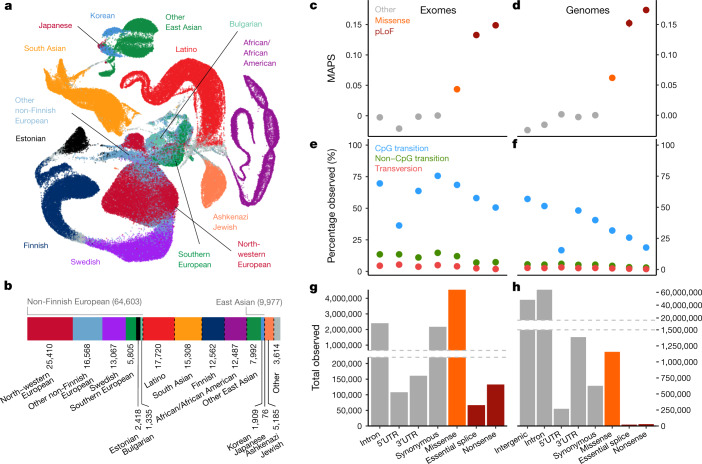
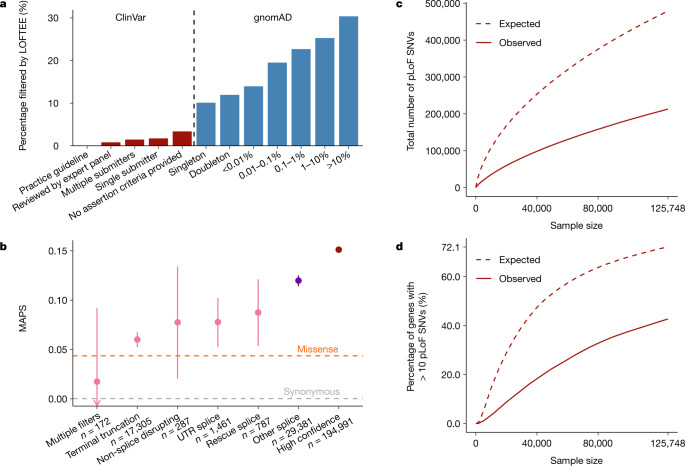
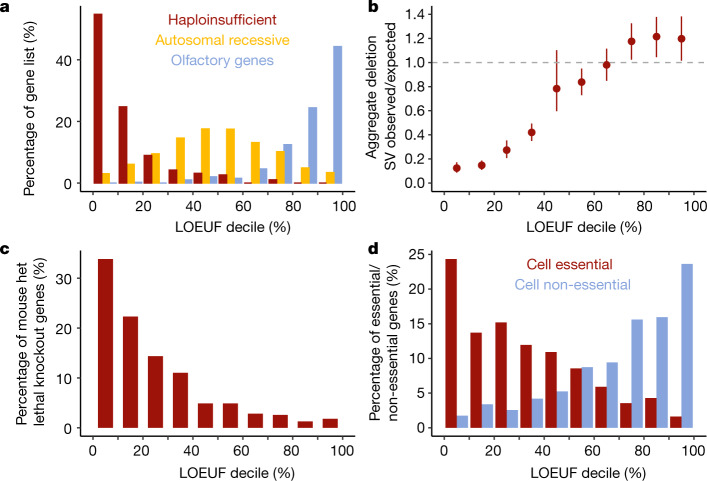
Genetic variants that inactivate protein-coding genes are a powerful source of information about the phenotypic consequences of gene disruption: genes that are crucial for the function of an organism will be depleted of such variants in natural populations, whereas non-essential genes will tolerate their accumulation. However, predicted loss-of-function variants are enriched for annotation errors, and tend to be found at extremely low frequencies, so their analysis requires careful variant annotation and very large sample sizes 1 . Here we describe the aggregation of 125,748 exomes and 15,708 genomes from human sequencing studies into the Genome Aggregation Database (gnomAD). We identify 443,769 high-confidence predicted loss-of-function variants in this cohort after filtering for artefacts caused by sequencing and annotation errors. Using an improved model of human mutation rates, we classify human protein-coding genes along a spectrum that represents tolerance to inactivation, validate this classification using data from model organisms and engineered human cells, and show that it can be used to improve the power of gene discovery for both common and rare diseases.
Overview
The claims and statistics of this paper haven’t been checked yet.
Free: it reads the open-access text and checks the first 5 claims that cite a source we can check. Create a free account to check every claim.
Integrity signals
Registry
Cites
Statistics
Figures
Verification
Claims the paper makes
The claims and statistics of this paper haven’t been checked yet.
Free: it reads the open-access text and checks the first 5 claims that cite a source we can check. Create a free account to check every claim.
Claims other papers make about this one
Each is checked against this paper’s own text: does it say what the citing paper says it does?
The source backs part of the claim, not all of it — or backs it for a different population, condition or comparison.
In the citing paper
“Earlier schizophrenia sequencing studies have established that ultra-rare and de novo mutations contribute to risk as a category, and have prioritized disease-relevant tissues and processes, specifically observing an enrichment in neuronal genes and synaptic processes9,11,19–23.”
From Rare coding variants in ten genes confer substantial risk for schizophrenia (2022) · cites this paper as [23]
Experimental — accuracy not yet measuredThe source backs part of the claim, not all of it — or backs it for a different population, condition or comparison.
In the citing paper
“According to the gnomAD database (Karczewski et al, 2020), the loss-of-function observed/expected upper bound fraction (LOEUF) indicates that SALL4 is depleted of inactivating variants and under purifying selection (LOEUF = 0.101).”
From Structure of SALL4 zinc finger domain reveals link between AT-rich DNA binding and Okihiro syndrome (2023) · cites this paper as Karczewski et al, 2020
Experimental — accuracy not yet measuredThe source backs part of the claim, not all of it — or backs it for a different population, condition or comparison.
In the citing paper
“Based on gnomAD (Karczewski et al. 2020), DOCK4 has a reduced amount of missense and null variants compared to its size of 1,966 amino acids (pLI = 1, Z score = 1.67) in a population without severe, early-onset phenotypes, indicating a mild constraint.”
From Heterozygous loss-of-function variants in DOCK4 cause neurodevelopmental delay and microcephaly (2024) · cites this paper as Karczewski et al. 2020
Experimental — accuracy not yet measuredThe source backs part of the claim, not all of it — or backs it for a different population, condition or comparison.
In the citing paper
“All variants were prioritized considering allele frequency in gnomAD v4.0.0 (Karczewski et al. 2020) below 1%, impact on protein function via different in silico programs (CADD (Rentzsch et al. 2021), REVEL (Ioannidis et al. 2016), MutPred2 (Pejaver et al. 2020) and Metadome (Wiel et al. 2019)) and involvement of candidate genes in neuronal processes.”
From Heterozygous loss-of-function variants in DOCK4 cause neurodevelopmental delay and microcephaly (2024) · cites this paper as Karczewski et al. 2020
Experimental — accuracy not yet measuredThe source backs part of the claim, not all of it — or backs it for a different population, condition or comparison.
In the citing paper
“Owing to the scarcity of reported loss-of-function (LoF) variants, with only 17 cases (allele frequency: ~7E-7) in the Genome Aggregation Database (gnomAD) from healthy subjects100, the WASF1 gene exhibits exceptionally high intolerance to such mutations.”
From The WAVE complex in developmental and adulthood brain disorders (2025) · cites this paper as [100]
Experimental — accuracy not yet measured
20 more claims about this paper
Create a free account to see every claim other papers make about this one.
Self-check
Percentages, sums and reported differences re-computed from the paper’s own numbers.
The self-check needs the paper’s full text.
Citations
Cites
UMAP: Uniform Manifold Approximation and Projection
McInnes, L., Healy, J., Saul, N., & Großberger, L. (2018) · Journal of Open Source Software · doi:10.21105/joss.00861 · Cited by 9,826
Analysis of protein-coding genetic variation in 60,706 humans
Exome Aggregation Consortium, Lek, M., Karczewski, K. J., Minikel, E. V., Samocha, K. E., Banks, E., Fennell, T., O’Donnell-Luria, A. H., Ware, J. S., Hill, A. J., et al. (2016) · Nature · doi:10.1038/nature19057 · Cited by 9,587
Self-citationVan der Auwera, G. A., Carneiro, M. O., Hartl, C., Poplin, R., del Angel, G., Levy‐Moonshine, A., Jordan, T., Shakir, K., Roazen, D., Thibault, J., et al. (2013) · Current Protocols in Bioinformatics · doi:10.1002/0471250953.bi1110s43 · Cited by 6,687
Self-citationGenetic effects on gene expression across human tissues
GTEx Consortium (2017) · Nature · doi:10.1038/nature24277 · Cited by 4,036
Self-citationSequence Variations in PCSK9, Low LDL, and Protection against Coronary Heart Disease
Cohen, J. C., Boerwinkle, E., Mosley, T. H., & Hobbs, H. H. (2006) · New England Journal of Medicine · doi:10.1056/nejmoa054013 · Cited by 3,181
Clinical use of current polygenic risk scores may exacerbate health disparities
Martin, A. R., Kanai, M., Kamatani, Y., Okada, Y., Neale, B. M., & Daly, M. J. (2019) · Nature Genetics · doi:10.1038/s41588-019-0379-x · Cited by 2,821
Self-citationCurrent clinical use of polygenic scores will risk exacerbating health disparities
Martin, A. R., Kanai, M., Kamatani, Y., Okada, Y., Neale, B. M., & Daly, M. J. (2018) · doi:10.1101/441261 · Cited by 2,813
Self-citationPartitioning heritability by functional annotation using genome-wide association summary statistics
ReproGen Consortium, Finucane, H. K., Schizophrenia Working Group of the Psychiatric Genomics Consortium, The RACI Consortium, Bulik-Sullivan, B., Gusev, A., Trynka, G., Reshef, Y., Loh, P.-R., Anttila, V., et al. (2015) · Nature Genetics · doi:10.1038/ng.3404 · Cited by 2,604
Self-citationPatterns and rates of exonic de novo mutations in autism spectrum disorders
Neale, B. M., Kou, Y., Liu, L., Ma’ayan, A., Samocha, K. E., Sabo, A., Lin, C.-F., Stevens, C., Wang, L.-S., Makarov, V., et al. (2012) · Nature · doi:10.1038/nature11011 · Cited by 1,734
Self-citationDe novo mutations in schizophrenia implicate synaptic networks
Fromer, M., Pocklington, A. J., Kavanagh, D. H., Williams, H. J., Dwyer, S., Gormley, P., Georgieva, L., Rees, E., Palta, P., Ruderfer, D. M., et al. (2014) · Nature · doi:10.1038/nature12929 · Cited by 1,617
Self-citation
Cited by
Items 601–700 of 1,234
Somatic variants in diverse genes leads to a spectrum of focal cortical malformations
Lai, D., Gade, M., Yang, E., Koh, H. Y., Lü, J., Walley, N. M., Buckley, A. F., Sands, T. T., Akman, Ç. I., Mikati, M. A., et al. (2022) · Brain · doi:10.1093/brain/awac117 · Cited by 90
Self-citationLiang, G., Cao, W., Tang, D., Zhang, H., Yu, Y., Ding, J., Karges, J., & Xiao, H. (2024) · ACS Nano · doi:10.1021/acsnano.3c11154 · Cited by 89
Germline CDH1 Variants and Lifetime Cancer Risk
Ryan, C. E., Fasaye, G., Gallanis, A. F., Gamble, L. A., McClelland, P. H.-T., Duemler, A., Samaranayake, S. G., Blakely, A. M., Drogan, C. M., Kingham, K. E., et al. (2024) · JAMA · doi:10.1001/jama.2024.10852 · Cited by 91
Examining the role of common variants in rare neurodevelopmental conditions
Huang, Q. Q., Wigdor, E. M., Malawsky, D. S., Campbell, P. H., Samocha, K. E., Chundru, V. K., Danecek, P., Lindsay, S., Marchant, T., Koko, M., et al. (2024) · Nature · doi:10.1038/s41586-024-08217-y · Cited by 89
“…donor and stop gained) annotated as high-confidence by LOFTEE 93 (HC PTVs), as well as variants in the following classes that we grouped as ‘missense’: missense, stop lost, start lost, inframe insertion, inframe deletion and loss-of-function variants annotated as low-confidence by LOFTEE 93 .”
InfluentialSelf-citationTanigawa, Y., Li, J., Justesen, J. M., Horn, H., Aguirre, M., DeBoever, C., Chang, C. C., Narasimhan, B., Lage, K., Hastie, T. J., et al. (2019) · Nature Communications · doi:10.1038/s41467-019-11953-9 · Cited by 89
Salvadores, M., Fuster-Tormo, F., & Supek, F. (2020) · Science Advances · doi:10.1126/sciadv.aba1862 · Cited by 71
Courage, C., Oliver, K. L., Park, E. J., Cameron, J. M., Grabińska, K. A., Muona, M., Canafoglia, L., Gambardella, A., Said, E., Afawi, Z., et al. (2021) · The American Journal of Human Genetics · doi:10.1016/j.ajhg.2021.03.013 · Cited by 89
Self-citationArvanitis, M., Tayeb, K., Strober, B. J., & Battle, A. (2022) · The American Journal of Human Genetics · doi:10.1016/j.ajhg.2022.01.002 · Cited by 78
Circular extrachromosomal DNA promotes tumor heterogeneity in high-risk medulloblastoma
Chapman, O. S., Luebeck, J., Sridhar, S., Wong, I. T.-L., Dixit, D., Wang, S., Prasad, G., Rajkumar, U., Pagadala, M. S., Larson, J. D., et al. (2023) · Nature Genetics · doi:10.1038/s41588-023-01551-3 · Cited by 91
Predicting protein-protein interactions in the human proteome
Zhang, J., Humphreys, I. R., Pei, J., Kim, J., Choi, C., Yuan, R., Durham, J., Liu, S., Choi, H.-J., Baek, M., et al. (2025) · Science · doi:10.1126/science.adt1630 · Cited by 87
Wang, Q. S., Kelley, D. R., Ulirsch, J., Kanai, M., Sadhuka, S., Cui, R., Albors, C., Cheng, N., Okada, Y., The Biobank Japan Project, et al. (2021) · Nature Communications · doi:10.1038/s41467-021-23134-8 · Cited by 87
Self-citationAn update on the central nervous system manifestations of Li–Fraumeni syndrome
Orr, B. A., Clay, M. R., Pinto, E. M., & Kesserwan, C. A. (2019) · Acta Neuropathologica · doi:10.1007/s00401-019-02055-3 · Cited by 87
Genetic basis of mitochondrial diseases
Gušić, M., & Prokisch, H. (2021) · FEBS Letters · doi:10.1002/1873-3468.14068 · Cited by 88
Fridman, H., Yntema, H. G., Mägi, R., Andreson, R., Metspalu, A., Mezzavilla, M., Tyler‐Smith, C., Xue, Y., Carmi, S., Levy‐Lahad, E., et al. (2021) · The American Journal of Human Genetics · doi:10.1016/j.ajhg.2021.03.004 · Cited by 89
Self-citationGenetic architecture of autism spectrum disorder: Lessons from large-scale genomic studies
Choi, L., & An, J. (2021) · Neuroscience & Biobehavioral Reviews · doi:10.1016/j.neubiorev.2021.06.028 · Cited by 88
Transcription factor protein interactomes reveal genetic determinants in heart disease
Gonzalez-Teran, B., Pittman, M., Felix, F., Thomas, R., Richmond-Buccola, D., Hüttenhain, R., Choudhary, K., Moroni, E., Costa, M. W., Huang, Y., et al. (2022) · Cell · doi:10.1016/j.cell.2022.01.021 · Cited by 81
Wortmann, S. B., Oud, M. M., Alders, M. M., Coene, K. L. M., van der Crabben, S. N., Feichtinger, R. G., Garanto, A., Hoischen, A., Langeveld, M., Lefeber, D. J., et al. (2022) · Journal of Inherited Metabolic Disease · doi:10.1002/jimd.12507 · Cited by 90
“org) contains the genomic data of more than 140 000 genomic data sets of “healthy/unaffected” individuals.(48,49) - GeneMatcher (www.”
BackgroundOpenPBTA: The Open Pediatric Brain Tumor Atlas
Shapiro, J. A., Gaonkar, K. S., Spielman, S. J., Savonen, C., Bethell, C. J., Jin, R., Rathi, K. S., Zhu, Y., Egolf, L. E., Farrow, B., et al. (2023) · Cell Genomics · doi:10.1016/j.xgen.2023.100340 · Cited by 87
DECIPHER: Improving Genetic Diagnosis Through Dynamic Integration of Genomic and Clinical Data
Foreman, J., Perrett, D., Mazaika, E., Hunt, S. E., Ware, J. S., & Firth, H. V. (2023) · Annual Review of Genomics and Human Genetics · doi:10.1146/annurev-genom-102822-100509 · Cited by 87
Self-citationBraat, S., Fielding, K., Han, J., Jackson, V. E., Zaloumis, S. G., Xu, J., Moir-Meyer, G., Blaauwendraad, S. M., Jaddoe, V. W. V., Gaillard, R., et al. (2024) · The Lancet Haematology · doi:10.1016/s2352-3026(24)00030-9 · Cited by 90
Mutational and phenotypic characterization of hereditary hemorrhagic telangiectasia
Shovlin, C. L., Simeoni, I., Downes, K., Frazer, Z., Mégy, K., Bernabeu-Herrero, M. E., Shurr, A., Brimley, J., Patel, D., Kell, L., et al. (2020) · Blood · doi:10.1182/blood.2019004560 · Cited by 87
McInnes, G., Sharo, A. G., Koleske, M. L., Brown, J. E. H., Norstad, M., Adhikari, A. N., Wang, S., Brenner, S. E., Halpern, J., Koenig, B. A., et al. (2021) · The American Journal of Human Genetics · doi:10.1016/j.ajhg.2021.03.003 · Cited by 86
An integrated molecular profile of endometrioid ovarian cancer
Pierson, W. E., Peters, P., Chang, M. T., Chen, L.-M., Quigley, D. A., Ashworth, A., & Chapman, J. (2020) · Gynecologic Oncology · doi:10.1016/j.ygyno.2020.02.011 · Cited by 86
ATP1A3-Related Disorders: An Ever-Expanding Clinical Spectrum
Salles, P. A., Mata, I. F., Brünger, T., Lal, D., & Fernandez, H. H. (2021) · Frontiers in Neurology · doi:10.3389/fneur.2021.637890 · Cited by 86
Precision Medicine in Catecholaminergic Polymorphic Ventricular Tachycardia
Priori, S. G., Mazzanti, A., Santiago, D. J., Kukavica, D., Trancuccio, A., & Kovacic, J. C. (2021) · Journal of the American College of Cardiology · doi:10.1016/j.jacc.2020.12.073 · Cited by 86
Exome sequencing in obsessive–compulsive disorder reveals a burden of rare damaging coding variants
Halvorsen, M., SAMUELS, J. F., Wang, Y., Greenberg, B. D., Fyer, A. J., McCracken, J. T., GELLER, D. A., Knowles, J. A., Zoghbi, A. W., Pottinger, T. D., et al. (2021) · Nature Neuroscience · doi:10.1038/s41593-021-00876-8 · Cited by 87
Self-citationCubuk, C., Garrett, A., Choi, S., King, L., Loveday, C., Torr, B., Burghel, G. J., Durkie, M., Callaway, A., Robinson, R., et al. (2021) · Genetics in Medicine · doi:10.1038/s41436-021-01265-z · Cited by 79
Self-citationAxenfeld-Rieger syndrome: more than meets the eye
Reis, L. M., Maheshwari, M., Capasso, J. E., Atilla, H., Ďuďáková, Ľ., Thompson, S., Zitano, L., Guillermo Lay-Son, R., Lowry, R. B., Black, J., et al. (2022) · Journal of Medical Genetics · doi:10.1136/jmg-2022-108646 · Cited by 87
Genotype first: Clinical genomics research through a reverse phenotyping approach
Wilczewski, C. M., Obasohan, J., Paschall, J. E., Zhang, S., Singh, S., Maxwell, G. L., Similuk, M. N., Wolfsberg, T. G., Turner, C., Biesecker, L. G., et al. (2023) · The American Journal of Human Genetics · doi:10.1016/j.ajhg.2022.12.004 · Cited by 86
Zhou, Y., Nevosadová, L., Eliasson, E., & Lauschke, V. M. (2023) · Human Genomics · doi:10.1186/s40246-023-00461-z · Cited by 89
The EN-TEx resource of multi-tissue personal epigenomes & variant-impact models
Rozowsky, J., Gao, J., Borsari, B., Yang, Y. T., Galeev, T., Gürsoy, G., Epstein, C. B., Xiong, K., Xu, J., Li, T., et al. (2023) · Cell · doi:10.1016/j.cell.2023.02.018 · Cited by 78
Integrating non-mammalian model organisms in the diagnosis of rare genetic diseases in humans
Yamamoto, S., Kanca, O., Wangler, M. F., & Bellen, H. J. (2023) · Nature Reviews Genetics · doi:10.1038/s41576-023-00633-6 · Cited by 87
“Many of these variants can be ruled out as being the causative one because individuals in the general population without apparent severe disease also carry them 16 .”
Indigenous Australian genomes show deep structure and rich novel variation
Silcocks, M., Farlow, A., Hermes, A., Tsambos, G., Patel, H. R., Huebner, S., Baynam, G. S., Jenkins, M. R., Vukcevic, D., Easteal, S., et al. (2023) · Nature · doi:10.1038/s41586-023-06831-w · Cited by 86
“%) are not present in either the 1000 Genomes 18 or the Human Genome Diversity Project (HGDP) 19 (Extended Data Table 1).”
BackgroundInfluentialLlamosas, N., Arora, V., Vij, R., Kılınç, M., Bijoch, Ł., Rojas, C., Reich, A. M., Sridharan, B., Willems, E., Piper, D. R., et al. (2020) · Journal of Neuroscience · doi:10.1523/jneurosci.1367-20.2020 · Cited by 87
“1 gnomAD database (Karczewski et al., 2020), demonstrating its extreme loss-of-function mutation intolerance.”
BackgroundMethodInfluentialCubellis, M. V., Pignata, L., Verma, A., Sparago, A., Prete, R. D., Monticelli, M., Calzari, L., Antona, V., Melis, D., Tenconi, R., et al. (2020) · Clinical Epigenetics · doi:10.1186/s13148-020-00925-2 · Cited by 85
Modulating gene regulation to treat genetic disorders
Matharu, N. K., & Ahituv, N. (2020) · Nature Reviews Drug Discovery · doi:10.1038/s41573-020-0083-7 · Cited by 85
Park, C. Y., Zhou, J., Wong, A. K., Chen, K. M., Theesfeld, C. L., Darnell, R. B., & Troyanskaya, O. G. (2021) · Nature Genetics · doi:10.1038/s41588-020-00761-3 · Cited by 85
Jehl, F., Degalez, F., Bernard, M., Lecerf, F., Lagoutte, L., Désert, C., Coulée, M., Bouchez, O., Leroux, S., Abasht, B., et al. (2021) · Frontiers in Genetics · doi:10.3389/fgene.2021.655707 · Cited by 87
Lemoine, H., Raud, L., Foulquier, F., Sayer, J. A., Lambert, B., Olinger, E. G., Lefèvre, S., Knebelmann, B., Harris, P. C., Trouvé, P., et al. (2022) · The American Journal of Human Genetics · doi:10.1016/j.ajhg.2022.06.013 · Cited by 86
Klarin, D. M., Devineni, P., Sendamarai, A. K., Angueira, A. R., Graham, S. E., Shen, Y. H., Levin, M. G., Pirruccello, J. P., Surakka, I. L., Karnam, P., et al. (2023) · Nature Genetics · doi:10.1038/s41588-023-01420-z · Cited by 85
Self-citationWeisschuh, N., Mazzola, P., Zuleger, T., Schaeferhoff, K., Kuehlewein, L., Kortüm, F. C., Witt, D., Liebmann, A., Falb, R. J., Pohl, L., et al. (2023) · Journal of Medical Genetics · doi:10.1136/jmg-2023-109470 · Cited by 85
Computational immunogenomic approaches to predict response to cancer immunotherapies
Addala, V., Newell, F., Pearson, J. V., Redwood, A., Robinson, B. W. S., Creaney, J., & Waddell, N. (2023) · Nature Reviews Clinical Oncology · doi:10.1038/s41571-023-00830-6 · Cited by 86
“Indeed, greater HLA diversity, resulting in a more diverse set of MHC molecules that can present a wider range of mutant peptides to immune cells, is associated with a lower risk of developing certain cancers 79 and is associated with a better response to ICIs 80 .”
A proactive genotype-to-patient-phenotype map for cystathionine beta-synthase
Sun, S., Weile, J., Verby, M., Wu, Y., Wang, Y., Cote, A. G., Fotiadou, I., Kitaygorodsky, J., Vidal, M., Rine, J., et al. (2020) · Genome Medicine · doi:10.1186/s13073-020-0711-1 · Cited by 67
Absence of mucosal-associated invariant T cells in a person with a homozygous point mutation in MR1
Howson, L. J., Awad, W., von Borstel, A., Lim, H. J., McWilliam, H. E. G., Sandoval-Romero, M. L., Majumdar, S., Hamzeh, A. R., Andrews, T. D., McDermott, D. H., et al. (2020) · Science Immunology · doi:10.1126/sciimmunol.abc9492 · Cited by 87
Deficiency of Adenosine Deaminase 2 in Adults and Children: Experience From India
Sharma, A., Naidu, G., Sharma, V. M., Jha, S., Dhooria, A., Dhir, V., Bhatia, P., Sharma, V., Bhattad, S., Kavadichanda, C. G., et al. (2020) · Arthritis & Rheumatology · doi:10.1002/art.41500 · Cited by 85
“G47R variant is uncommon in the general population (minor allele frequency of 1 × 10 in the gnomAD database) but was found in ~1 of 10 individuals in the Georgian-Jewish community in Israel (6,29).”
BackgroundHaskamp, S., Bruns, H., Hahn, M., Hoffmann, M., Gregor, A., Löhr, S., Hahn, J., Schauer, C., Ringer, M., Flamann, C., et al. (2020) · The American Journal of Human Genetics · doi:10.1016/j.ajhg.2020.07.001 · Cited by 84
A review on age‐related cancer risks in PTEN hamartoma tumor syndrome
Hendricks, L. A. J., Hoogerbrugge, N., Schuurs-Hoeijmakers, J. H. M., & Vos, J. R. (2020) · Clinical Genetics · doi:10.1111/cge.13875 · Cited by 84
DDX3X and DDX3Y are redundant in protein synthesis
Venkataramanan, S., Gadek, M., Calviello, L., Wilkins, K., & Floor, S. N. (2021) · RNA · doi:10.1261/rna.078926.121 · Cited by 85
“However, it is worth noting that the ability of male mice with genetic lesions in Ddx3x to survive without neurological anomalies has not been recapitulated in humans as genetic variation in DDX3X in the human population is extremely low (Karczewski et al., 2020).”
BackgroundMutational signatures are markers of drug sensitivity of cancer cells
Levatić, J., Salvadores, M., Fuster‐Tormo, F., & Supek, F. (2022) · Nature Communications · doi:10.1038/s41467-022-30582-3 · Cited by 85
Kozycki, C. T., Kodati, S., Huryn, L. A., Wang, H., Warner, B. M., Jani, P. H., Hammoud, D. A., Abu-Asab, M. S., Jittayasothorn, Y., Mattapallil, M. J., et al. (2022) · Annals of the Rheumatic Diseases · doi:10.1136/annrheumdis-2022-222629 · Cited by 84
The human disease gene LYSET is essential for lysosomal enzyme transport and viral infection
Richards, C. M., Jabs, S., Qiao, W., Varanese, L., Schweizer, M., Mosen, P., Riley, N. M., Klüssendorf, M., Zengel, J. R., Flynn, R. A., et al. (2022) · Science · doi:10.1126/science.abn5648 · Cited by 85
Rare penetrant mutations confer severe risk of common diseases
Fiziev, P. P., McRae, J. F., Ulirsch, J. C., Dron, J. S., Hamp, T., Yang, Y., Wainschtein, P., Ni, Z., Schraiber, J. G., Gao, H., et al. (2023) · Science · doi:10.1126/science.abo1131 · Cited by 85
“Recent large-scale genome and exome sequencing studies of the general population have revealed that the average person carries dozens of potentially deleterious rare variants that have arisen through recent germline mutation (11).”
BackgroundSelf-citationStawiński, P., & Płoski, R. (2024) · Clinical Genetics · doi:10.1111/cge.14516 · Cited by 86
Understanding the genetic complexity of puberty timing across the allele frequency spectrum
Kentistou, K. A., Kaisinger, L. R., Stankovic, S., Vaudel, M., de Oliveira, E. M., Messina, A., Walters, R. G., Liu, X., Busch, A. S., Helgason, H., et al. (2024) · Nature Genetics · doi:10.1038/s41588-024-01798-4 · Cited by 85
“We defined the following two functional categories of rare variants: (1) HC PTV annotated using VEP 78 and LOFTEE 79 and (2) DMG including HC PTVs plus missense variants with CADD score ≥25 (ref.”
MethodSelf-citationDetection and characterization of mosaicism in autosomal dominant polycystic kidney disease
Hopp, K., Gall, É. C.-L., Senum, S. R., Paske, I. T., Raj, S., Lavu, S., Baheti, S., Edwards, M. E., Madsen, C. D., Heyer, C. M., et al. (2019) · Kidney International · doi:10.1016/j.kint.2019.08.038 · Cited by 85
Wright, C. F., Quaife, N. M., Ramos-Hernández, L., Danecek, P., Ferla, M. P., Samocha, K. E., Kaplanis, J., Gardner, E. J., Eberhardt, R. Y., Chao, K. R., et al. (2021) · The American Journal of Human Genetics · doi:10.1016/j.ajhg.2021.04.025 · Cited by 73
Self-citationCombined Effect of a Polygenic Risk Score and Rare Genetic Variants on Prostate Cancer Risk
Darst, B. F., Sheng, X., Eeles, R. A., Kote‐Jarai, Z., Conti, D. V., & Haiman, C. A. (2021) · European Urology · doi:10.1016/j.eururo.2021.04.013 · Cited by 83
Self-citationHindy, G., Dornbos, P., Chaffin, M. D., Liu, D. J., Wang, M., Selvaraj, M. S., Zhang, D., Park, J., Aguilar-Salinas, C. A., Fulton, L., et al. (2021) · The American Journal of Human Genetics · doi:10.1016/j.ajhg.2021.11.021 · Cited by 83
Self-citationClinical exome sequencing—Mistakes and caveats
Corominas, J., Smeekens, S. P., Nelen, M. R., Yntema, H. G., Kamsteeg, E., Pfundt, R., & Gilissen, C. (2022) · Human Mutation · doi:10.1002/humu.24360 · Cited by 85
Human OTULIN haploinsufficiency impairs cell-intrinsic immunity to staphylococcal α-toxin
Spaan, A. N., Neehus, A., Laplantine, E., Staels, F., Ogishi, M., Seeleuthner, Y., Rapaport, F., Lacey, K. A., Nieuwenhove, E. V., Chrabieh, M., et al. (2022) · Science · doi:10.1126/science.abm6380 · Cited by 83
“In contrast to the alleles of the patients, the two alleles common in the general population (20) were found to be isomorphic (fig.”
BackgroundMethodResultInfluentialCytochrome b5 reductases: Redox regulators of cell homeostasis
Hall, R., Yuan, S. S., Wood, K. C., Katona, M., & Straub, A. C. (2022) · Journal of Biological Chemistry · doi:10.1016/j.jbc.2022.102654 · Cited by 84
“A study with purified enzyme showed that CYB5R3 binds to CYB5 with a Km of 20 μM and reaches a Vmax of 272 μmol min −1 mg when NADH is used as an electron donor (30).”
BackgroundMethodPervasive mislocalization of pathogenic coding variants underlying human disorders
Lacoste, J., Haghighi, M., Haider, S., Reno, C., Lin, Z.-Y., Segal, D., Qian, W. W., Xiong, X., Teelucksingh, T., Miglietta, E., et al. (2024) · Cell · doi:10.1016/j.cell.2024.09.003 · Cited by 65
Huang, M., Tailor, J. K., Zhen, Q., Gillmor, A. H., Miller, M. L., Weishaupt, H., Chen, J., Zheng, T., Nash, E. K., McHenry, L. K., et al. (2019) · Cell stem cell · doi:10.1016/j.stem.2019.05.013 · Cited by 84
Buonocore, F., Clifford-Mobley, O., King, T., Striglioni, N., Man, E., Suntharalingham, J. P., del Valle, I., Lin, L., Lagos, C. F., Rumsby, G., et al. (2019) · Journal of the Endocrine Society · doi:10.1210/js.2019-00306 · Cited by 83
Coding and noncoding drivers of mantle cell lymphoma identified through exome and genome sequencing
Pararajalingam, P., Coyle, K. M., Arthur, S. E., Thomas, N., Alcaide, M., Meissner, B., Boyle, M., Qureshi, Q., Grande, B. M., Rushton, C. K., et al. (2020) · Blood · doi:10.1182/blood.2019002385 · Cited by 83
A cross-species proteomic map reveals neoteny of human synapse development
Wang, L., Pang, K., Zhou, L., Cebrián-Silla, A., González-Granero, S., Wang, S., Bi, Q., White, M. L., Ho, B., Li, J., et al. (2023) · Nature · doi:10.1038/s41586-023-06542-2 · Cited by 82
A cross-species proteomic map reveals neoteny of human synapse development
Wang, L., Pang, K., Zhou, L., Cebrián-Silla, A., González-Granero, S., Wang, S., Bi, Q., White, M. L., Ho, B., Li, J., et al. (2022) · doi:10.1101/2022.10.24.513541 · Cited by 82
Insights into the pathophysiology of DFNA10 hearing loss associated with novel EYA4 variants
Morin, M., Borreguero, L., Booth, K. T. A., Lachgar-Ruiz, M., Huygen, P. L. M., Villamar, M., Mayo, F., Barrio, L. C., de Castro, L. S. S., Morales‐Angulo, C., et al. (2020) · Scientific Reports · doi:10.1038/s41598-020-63256-5 · Cited by 82
Phenotype‐driven approaches to enhance variant prioritization and diagnosis of rare disease
Jacobsen, J. O. B., Kelly, C., Cipriani, V., Research Consortium, G. E., Mungall, C. J., Reese, J., Danis, D., Robinson, P. N., & Smedley, D. (2022) · Human Mutation · doi:10.1002/humu.24380 · Cited by 70
Arora, K. S., Tran, T. N., Kemel, Y. M., Mehine, M. M., Liu, Y. L., Nandakumar, S., Smith, S. A., Brannon, A. R., Ostrovnaya, I., Stopsack, K. H., et al. (2022) · Cancer Discovery · doi:10.1158/2159-8290.cd-22-0312 · Cited by 82
The genomic landscape across 474 surgically accessible epileptogenic human brain lesions
López-Rivera, J. A., Leu, C., Macnee, M., Khoury, J., Hoffmann, L., Coras, R., Kobow, K., Bhattarai, N., Pérez‐Palma, E., Hamer, H. M., et al. (2022) · Brain · doi:10.1093/brain/awac376 · Cited by 83
Comprehensive genomic characterization of HER2-low and HER2-0 breast cancer
Tarantino, P., Gupta, H. V., Hughes, M. E., Files, J. L., Strauss, S., Kirkner, G. J., Feeney, A.-M., Li, Y. Y., Garrido-Castro, A. C., Barroso‐Sousa, R., et al. (2023) · Nature Communications · doi:10.1038/s41467-023-43324-w · Cited by 83
“Mutations were further fi ltered by removing variants present in the gnomAD 39 and ClinVar 40 databases (both the 7/31/19 update) unless they were found more than once in the COSMIC 40 database (7/11/19 update) to remove non-cancer-causing germline mutations.”
Natural Selection Shapes Codon Usage in the Human Genome
Dhindsa, R. S., Copeland, B. R., Mustoe, A. M., & Goldstein, D. B. (2020) · The American Journal of Human Genetics · doi:10.1016/j.ajhg.2020.05.011 · Cited by 82
Self-citationBayesian estimation of gene constraint from an evolutionary model with gene features
Zeng, T., Spence, J. P., Mostafavi, H., & Pritchard, J. K. (2024) · Nature Genetics · doi:10.1038/s41588-024-01820-9 · Cited by 81
“In addition, predicted LOFs were further annotated using LOF-TEE [12], which implements a series of filters to identify variants that may be misannotated (for example, LOFTEE considers predicted LOFs near the ends of transcripts as likely misannotations).”
InfluentialLess Is More, Natural Loss-of-Function Mutation Is a Strategy for Adaptation
Xu, Y., & Guo, Y. (2020) · Plant Communications · doi:10.1016/j.xplc.2020.100103 · Cited by 81
“thaliana have indicated that essential genes (lethal genes) are depleted in genes with LoF mutations (Xu et al., 2019; Karczewski et al., 2020).”
BackgroundEffect Sizes of Deletions and Duplications on Autism Risk Across the Genome
Douard, E., Zeribi, A., Schramm, C., Tamer, P., Loum, M. A., Nowak, S., Saci, Z., Lord, M.-P., Rodríguez-Herreros, B., Jean-Louis, M., et al. (2021) · American Journal of Psychiatry · doi:10.1176/appi.ajp.2020.19080834 · Cited by 72
Heterozygous OAS1 gain-of-function variants cause an autoinflammatory immunodeficiency
Magg, T., Okano, T., König, L. M., Boehmer, D. F. R., Schwartz, S. L., Inoue, K., Heimall, J. R., Licciardi, F., Ley‐Zaporozhan, J., Ferdman, R. M., et al. (2021) · Science Immunology · doi:10.1126/sciimmunol.abf9564 · Cited by 81
Similuk, M. N., Yan, J., Ghosh, R., Oler, A. J., Franco, L. M., Setzer, M. R., Kamen, M. J., Jodarski, C., DiMaggio, T., Davis, J., et al. (2022) · Journal of Allergy and Clinical Immunology · doi:10.1016/j.jaci.2022.06.009 · Cited by 82
Complex genomic rearrangements: an underestimated cause of rare diseases
Schuy, J., Grochowski, C. M., Carvalho, C. M. B., & Lindstrand, A. (2022) · Trends in Genetics · doi:10.1016/j.tig.2022.06.003 · Cited by 82
“Databases such as ExAC and gnomAD provide population-wide information about single nucleotide variants (SNVs), enabling statistical calculations of the likelihood that a gene will cause disease, for example, pLoF (probability to cause loss of function), pLI (probability for intolerance to heterozygous pLoF variants),…”
Whole genome sequence analysis of blood lipid levels in >66,000 individuals
Selvaraj, M. S., Li, X., Li, Z., Pampana, A., Zhang, D. Y., Park, J., Aslibekyan, S., Bis, J. C., Brody, J. A., Cade, B. E., et al. (2022) · Nature Communications · doi:10.1038/s41467-022-33510-7 · Cited by 69
Self-citationA deep population reference panel of tandem repeat variation
Jam, H. Z., Li, Y., DeVito, R., Mousavi, N., Ma, N., Lujumba, I., Adam, Y., Maksimov, M., Huang, B. B., Dolzhenko, E., et al. (2023) · Nature Communications · doi:10.1038/s41467-023-42278-3 · Cited by 82
Beyond the Human Genome Project: The Age of Complete Human Genome Sequences and Pangenome References
Taylor, D. J., Eizenga, J. M., Li, Q., Das, A., Jenike, K. M., Kenny, E. E., Miga, K. H., Monlong, J., McCoy, R. C., Paten, B., et al. (2024) · Annual Review of Genomics and Human Genetics · doi:10.1146/annurev-genom-021623-081639 · Cited by 81
“Another transformative aspect of the human genome reference sequence has been its role in the identification and analysis of genetic variation,which has propelled the fields of population genetics and comparative genomics (19,80).”
BackgroundCross-ancestry atlas of gene, isoform, and splicing regulation in the developing human brain
Wen, C. H., Margolis, M. P., Dai, R., Zhang, P., Przytycki, P. F., Vo, D., Bhattacharya, A., Matoba, N., Tang, M., Jiao, C., et al. (2024) · Science · doi:10.1126/science.adh0829 · Cited by 81
Genome-wide mapping of somatic mutation rates uncovers drivers of cancer
Sherman, M. A., Yaari, A. U., Priebe, O., Dietlein, F., Loh, P.-R., & Berger, B. (2022) · Nature Biotechnology · doi:10.1038/s41587-022-01353-8 · Cited by 80
Sheppard, S. E., Campbell, I. M., Harr, M. H., Gold, N. B., Li, D., Bjornsson, H. T., Cohen, J. S., Fahrner, J. A., Fatemi, A. S., Harris, J. R., et al. (2021) · American Journal of Medical Genetics Part A · doi:10.1002/ajmg.a.62124 · Cited by 80
Shifting landscapes of human MTHFR missense-variant effects
Weile, J., Kishore, N., Sun, S., Maaieh, R., Verby, M., Li, R., Fotiadou, I., Kitaygorodsky, J., Wu, Y., Holenstein, A., et al. (2021) · The American Journal of Human Genetics · doi:10.1016/j.ajhg.2021.05.009 · Cited by 67
Schobers, G., Schieving, J., Yntema, H. G., Pennings, M., Pfundt, R., Derks, R. C., Hofste, T. G. J., de Wijs, I. J., Wieskamp, N., van den Heuvel, S., et al. (2022) · Genome Medicine · doi:10.1186/s13073-022-01069-z · Cited by 80
“Reannotations reflected gene-panel updates and the Variant Effect Predictor (VEP) [20] for prioritization as well as knowledge bases such as gnomAD [21], in-house variant frequencies, OMIM phenotypes, and new literature searches.”
BackgroundMethodNOD2in Crohn’s Disease—Unfinished Business
Ashton, J. J., Seaby, E. G., Beattie, R. M., & Ennis, S. (2022) · Journal of Crohn s and Colitis · doi:10.1093/ecco-jcc/jjac124 · Cited by 82
Self-citationCharacterization of genome-wide STR variation in 6487 human genomes
Shi, Y., Niu, Y., Zhang, P., Luo, H., Liu, S., Zhang, S., Wang, J., Li, Y., Liu, X., Song, T., et al. (2023) · Nature Communications · doi:10.1038/s41467-023-37690-8 · Cited by 80
Multi-scale signaling and tumor evolution in high-grade gliomas
Liu, J., Cao, S., Imbach, K. J., Gritsenko, M. A., Lih, T. M., Kyle, J. E., Yaron-Barir, T. M., Binder, Z. A., Li, Y., Strunilin, I., et al. (2024) · Cancer Cell · doi:10.1016/j.ccell.2024.06.004 · Cited by 81
Self-citationTakata, A., Nakashima, M., Saitsu, H., Mizuguchi, T., Mitsuhashi, S., Takahashi, Y., Okamoto, N., Osaka, H., Nakamura, K., Tohyama, J., et al. (2019) · Nature Communications · doi:10.1038/s41467-019-10482-9 · Cited by 81
Haploinsufficiency of the Notch Ligand DLL1 Causes Variable Neurodevelopmental Disorders
Fischer‐Zirnsak, B., Segebrecht, L., Schubach, M., Charles, P., Alderman, E., Brown, K. E., Cadieux‐Dion, M., Cartwright, T., Chen, Y., Costin, C., et al. (2019) · The American Journal of Human Genetics · doi:10.1016/j.ajhg.2019.07.002 · Cited by 81
Chen, S., Wang, G., Zheng, X., Ge, S., Dai, Y., Ping, P., Chen, X., Liu, G., Zhang, J., Yang, Y., et al. (2020) · Human Molecular Genetics · doi:10.1093/hmg/ddaa101 · Cited by 80
Predicting the pathogenicity of missense variants using features derived from AlphaFold2
Schmidt, A., Röner, S., Mai, K., Klinkhammer, H., Kircher, M., & Ludwig, K. U. (2023) · Bioinformatics · doi:10.1093/bioinformatics/btad280 · Cited by 79
“This is exacerbated by the fact that missense variants occur more frequently in individual genomes than LoF variants (Karczewski et al., 2020), and missense variants cover a broad spectrum of functional consequences – ranging from benign to pathogenic - with most being benign (Zuk et al., 2014).”
BackgroundAllTheBacteria: a community resource empowers biology and discovers novel peptide antibiotics
Hunt, M., Torres, M. D. T., Alikhan, N.-F., Anderson, D., Andreani, M. L., Blom, J., Bouras, G., Brinkman, F. S. L., Carroll, L. M., Croxen, M. A., et al. (2024) · doi:10.1101/2024.03.08.584059 · Cited by 79
VarFish: comprehensive DNA variant analysis for diagnostics and research
Holtgrewe, M., Stolpe, O., Nieminen, M., Mundlos, S., Knaus, A., Kornak, U., Seelow, D., Segebrecht, L., Spielmann, M., Fischer‐Zirnsak, B., et al. (2020) · Nucleic Acids Research · doi:10.1093/nar/gkaa241 · Cited by 79
“the file and annotated with molecular impact using the Jannovar (17) library for both RefSeq (18) and ENSEMBL (19) transcripts, with the distance to the closest exon in either database, with its population frequencies in the ExAC (20), gnomAD (21), and Thousand Genomes Project (22) databases, and its presence in ClinV…”
MethodA glycolytic metabolite bypasses “two-hit” tumor suppression by BRCA2
Kong, L. R., Gupta, K., Wu, A., Perera, D., Iványi-Nagy, R., Ahmed, S. M., Tan, T. Z., Tan, S. L.-W., Fuddin, A., Sundaramoorthy, E., et al. (2024) · Cell · doi:10.1016/j.cell.2024.03.006 · Cited by 79
Schmidt, A., Danyel, M., Grundmann, K., Brunet, T., Klinkhammer, H., Hsieh, T., Engels, H., Peters, S., Knaus, A., Moosa, S., et al. (2024) · Nature Genetics · doi:10.1038/s41588-024-01836-1 · Cited by 79
“Variants with a high likelihood of being disease-causing, for example, those with loss of function or high pathogenicity scores, or those that had arisen de novo, were shared through MatchMaker Exchange or a similar network in order to identify similar patients 88,89 .”
The correlation between CpG methylation and gene expression is driven by sequence variants
Stefánsson, Ó. A., Sigurpalsdottir, B. D., Rögnvaldsson, S., Halldorsson, G. H., Juliusson, K., Sveinbjörnsson, G., Gunnarsson, B., Beyter, D., Jónsson, H., Gudjonsson, S. A., et al. (2024) · Nature Genetics · doi:10.1038/s41588-024-01851-2 · Cited by 79
“This model works well to estimate enrichment of VEP (variant effect predictor) annotations 60,61 but has its drawbacks in the current context.”
Predicting the pathogenicity of missense variants using features derived from AlphaFold2
Schmidt, A., Röner, S., Mai, K., Klinkhammer, H., Kircher, M., & Ludwig, K. U. (2022) · doi:10.1101/2022.03.05.483091 · Cited by 79
Metadata
- Authors
- Karczewski, K. J., Francioli, L. C., Tiao, G., Cummings, B. B., Alföldi, J., Wang, Q., Collins, R. L., Laricchia, K. M., Ganna, A., Birnbaum, D. P., Gauthier, L. D., Brand, H., Solomonson, M., Watts, N. A., Rhodes, D., Singer-Berk, M., England, E. M., Seaby, E. G., Kosmicki, J. A., Walters, R. K., Tashman, K., Farjoun, Y., Banks, E., Poterba, T., Wang, A., Seed, C., Whiffin, N., Chong, J. X., Samocha, K. E., Pierce-Hoffman, E., Zappala, Z., O’Donnell-Luria, A. H., Minikel, E. V., Weisburd, B., Lek, M., Ware, J. S., Vittal, C., Armean, I. M., Bergelson, L., Cibulskis, K., Connolly, K. M., Covarrubias, M., Donnelly, S., Ferriera, S., Gabriel, S., Gentry, J., Gupta, N., Jeandet, T., Kaplan, D., Llanwarne, C., Munshi, R., Novod, S., Petrillo, N., Roazen, D., Ruano-Rubio, V., Saltzman, A., Schleicher, M., Soto, J., Tibbetts, K., Tolonen, C., Wade, G., Talkowski, M. E., Genome Aggregation Database Consortium, Aguilar Salinas, C. A., Ahmad, T., Albert, C. M., Ardissino, D., Atzmon, G., Barnard, J., Beaugerie, L., Benjamin, E. J., Boehnke, M., Bonnycastle, L. L., Bottinger, E. P., Bowden, D. W., Bown, M. J., Chambers, J. C., Chan, J. C., Chasman, D., Cho, J., Chung, M. K., Cohen, B., Correa, A., Dabelea, D., Daly, M. J., Darbar, D., Duggirala, R., Dupuis, J., Ellinor, P. T., Elosua, R., Erdmann, J., Esko, T., Färkkilä, M., Florez, J., Franke, A., Getz, G., Glaser, B., Glatt, S. J., Goldstein, D., Gonzalez, C., Groop, L., Haiman, C., Hanis, C., Harms, M., Hiltunen, M., Holi, M. M., Hultman, C. M., Kallela, M., Kaprio, J., Kathiresan, S., Kim, B.-J., Kim, Y. J., Kirov, G., Kooner, J., Koskinen, S., Krumholz, H. M., Kugathasan, S., Kwak, S. H., Laakso, M., Lehtimäki, T., Loos, R. J. F., Lubitz, S. A., Ma, R. C. W., MacArthur, D. G., Marrugat, J., Mattila, K. M., McCarroll, S., McCarthy, M. I., McGovern, D., McPherson, R., Meigs, J. B., Melander, O., Metspalu, A., Neale, B. M., Nilsson, P. M., O’Donovan, M. C., Ongur, D., Orozco, L., Owen, M. J., Palmer, C. N. A., Palotie, A., Park, K. S., Pato, C., Pulver, A. E., Rahman, N., Remes, A. M., Rioux, J. D., Ripatti, S., Roden, D. M., Saleheen, D., Salomaa, V., Samani, N. J., Scharf, J., Schunkert, H., Shoemaker, M. B., Sklar, P., Soininen, H., Sokol, H., Spector, T., Sullivan, P. F., Suvisaari, J., Tai, E. S., Teo, Y. Y., Tiinamaija, T., Tsuang, M., Turner, D., Tusie-Luna, T., Vartiainen, E., Vawter, M. P., Ware, J. S., Watkins, H., Weersma, R. K., Wessman, M., Wilson, J. G., Xavier, R. J., Neale, B. M., Daly, M. J., & MacArthur, D. G.
- Affiliations
- Broad Institute (US)
- Queen Mary University of London (GB)
- University of Washington (US)
- Wellcome Sanger Institute (GB)
- Yale University (US)
- Peninsula College of Medicine and Dentistry (GB)
- Brigham and Women's Hospital (US)
- University of Parma (IT)
- Albert Einstein College of Medicine (US)
- Cleveland Clinic (US)
- Sorbonne Université (FR)
- Boston University (US)
- University of Michigan (US)
- National Institutes of Health (US)
- Wake Forest University Health Sciences (US)
- University of Leicester (GB)
- Imperial College Healthcare NHS Trust (GB)
- Chinese University of Hong Kong (HK)
- Icahn School of Medicine at Mount Sinai (US)
- Harvard University (US)
- University of Mississippi Medical Center (US)
- Colorado School of Public Health (US)
- University of Illinois Chicago (US)
- Texas Biomedical Research Institute (US)
- German Centre for Cardiovascular Research (DE)
- University of Helsinki (FI)
- SUNY Upstate Medical University (US)
- Columbia University Irving Medical Center (US)
- Lund University (SE)
- The University of Texas Health Science Center at Houston (US)
- Columbia University (US)
- University of Eastern Finland (FI)
- Helsinki University Hospital (FI)
- Karolinska Institutet (SE)
- Korea National Institute of Health (KR)
- Cardiff University (GB)
- Finnish Institute for Health and Welfare (FI)
- Emory University (US)
- Seoul National University (KR)
- Tampere University (FI)
- Centro de Investigación en Red en Enfermedades Cardiovasculares (ES)
- Centre for Human Genetics (GB)
- Cedars-Sinai Medical Center (US)
- Ottawa Heart Institute (CA)
- University of Tartu (EE)
- National Institute of Genomic Medicine (MX)
- University of Dundee (GB)
- University of Southern California (US)
- Johns Hopkins University (US)
- Institute of Cancer Research (GB)
- Oulu University Hospital (FI)
- Montreal Heart Institute (CA)
- Vanderbilt University Medical Center (US)
- Center for Non-Communicable Diseases (PK)
- Deutsches Herzzentrum München (DE)
- Vanderbilt University (US)
- Massachusetts General Hospital (US)
- King's College London (GB)
- University of North Carolina at Chapel Hill (US)
- National University of Singapore (SG)
- University of California San Diego (US)
- Hebrew University of Jerusalem (IL)
- University of California, Irvine (US)
- University of Oxford (GB)
- University Medical Center Groningen (NL)
- Institute for Molecular Medicine Finland (FI)
- Corresponding author
- Karczewski, Konrad J.
- ORCID
- Karczewski, Konrad J.
- Francioli, Laurent C.
- Tiao, Grace
- Cummings, Beryl B.
- Alföldi, Jessica
- Wang, Qingbo
- Collins, Ryan L.
- Laricchia, Kristen M.
- Ganna, Andrea
- Brand, Harrison
- Solomonson, Matthew
- Rhodes, Daniel
- Seaby, Eleanor G.
- Kosmicki, Jack A.
- Walters, Raymond K.
- Tashman, Katherine
- Farjoun, Yossi
- Banks, Eric
- Poterba, Timothy
- Whiffin, Nicola
- Chong, Jessica X.
- Samocha, Kaitlin E.
- Zappala, Zachary
- O’Donnell-Luria, Anne H.
- Minikel, Eric Vallabh
- Weisburd, Ben
- Lek, Monkol
- Armean, Irina M.
- Cibulskis, Kristian
- Donnelly, Stacey
- Gabriel, Stacey
- Gupta, Namrata
- Saltzman, Andrea
- Talkowski, Michael E.
- Ahmad, Tariq
- Albert, Christine M.
- Ardissino, Diego
- Atzmon, Gil
- Barnard, John
- Beaugerie, Laurent
- Benjamin, Emelia J.
- Boehnke, Michael
- Bonnycastle, Lori L.
- Bowden, Donald W.
- Bown, Matthew J.
- Chambers, John C.
- Chan, Juliana C.
- Chasman, Daniel
- Cho, Judy
- Chung, Mina K.
- Cohen, Bruce
- Correa, Adolfo
- Dabelea, Dana
- Darbar, Dawood
- Duggirala, Ravindranath
- Dupuis, Josée
- Ellinor, Patrick T.
- Erdmann, Jeanette
- Esko, Tõnu
- Färkkilä, Martti
- Getz, Gad
- Glatt, Stephen J.
- Goldstein, David
- Groop, Leif
- Hanis, Craig
- Harms, Matthew
- Hiltunen, Mikko
- Holi, Matti M.
- Hultman, Christina M.
- Kallela, Mikko
- Kaprio, Jaakko
- Kathiresan, Sekar
- Kim, Bong-Jo
- Kim, Young Jin
- Kirov, George
- Kooner, Jaspal
- Krumholz, Harlan M.
- Kugathasan, Subra
- Kwak, Soo Heon
- Laakso, Markku
- Lehtimäki, Terho
- Loos, Ruth J. F.
- Lubitz, Steven A.
- Marrugat, Jaume
- McCarroll, Steven
- McCarthy, Mark I.
- McGovern, Dermot
- McPherson, Ruth
- Meigs, James B.
- Melander, Olle
- Metspalu, Andres
- Nilsson, Peter M.
- O’Donovan, Michael C.
- Orozco, Lorena
- Owen, Michael J.
- Palmer, Colin N. A.
- Palotie, Aarno
- Park, Kyong Soo
- Pato, Carlos
- Rahman, Nazneen
- Rioux, John D.
- Ripatti, Samuli
- Roden, Dan M.
- Saleheen, Danish
- Salomaa, Veikko
- Samani, Nilesh J.
- Scharf, Jeremiah
- Schunkert, Heribert
- Shoemaker, Moore B.
- Sklar, Pamela
- Soininen, Hilkka
- Sokol, Harry
- Spector, Tim
- Sullivan, Patrick F.
- Suvisaari, Jaana
- Tai, E. Shyong
- Tsuang, Ming
- Turner, Dan
- Vartiainen, Erkki
- Vawter, Marquis P.
- Watkins, Hugh
- Weersma, Rinse K.
- Wilson, James G.
- Xavier, Ramnik J.
- Venue
- Nature
- Published
- 2020-05-27
- Volume
- 581
- Issue
- 7809
- Pages
- 434-443
- ISSN
- 0028-0836 (ISSN-L)
- 1476-4687
- PMC
- PMC7334197
- OpenAlex
- W3029661147
- Cited by
- 9,434
- References
- 51
- Citations by year
- 2026: 1027 · 2025: 1275 · 2024: 1531 · 2023: 1631 · 2022: 1774 · 2021: 1613 · 2020: 573
- FWCI
- 833.03
- Type
- journal article
- Language
- en
- Update notices
- Open access
- hybrid
- doi.org
- Licence
- cc-by
- creativecommons.org/licenses/by/4.0 (tdm)
- creativecommons.org/licenses/by/4.0 (vor)
- Locations
- Nature (publishedVersion, cc-by)
- PubMed Central (publishedVersion, cc-by)
- PubMed (publishedVersion)
- University of Groningen research database (University of Groningen / Centre for Information Technology) (publishedVersion, cc-by)
- National University of Singapore (submittedVersion, cc-by)
- HAL (submittedVersion)
- Discovery Research Portal (University of Dundee) (submittedVersion, other-oa)
- ePrints Soton (University of Southampton) (submittedVersion)
- Työväentutkimus Vuosikirja (submittedVersion)
- Lund University Publications (Lund University) (submittedVersion)
- Spiral (Imperial College London) (submittedVersion, cc-by)
- Tampere University Institutional Repository (Tampere University) (submittedVersion, cc-by)
- Funders
- National Science Foundation
- Sanofi
- Massachusetts General Hospital
- BioMarin Pharmaceutical
- Wellcome Trust (107469/Z/15/Z)
- Broad Institute
- British Heart Foundation (RG/18/10/33842, CS/14/2/30841)
- University of Oxford
- Rosetrees Trust
- Schweizerischer Nationalfonds zur Förderung der Wissenschaftlichen Forschung (177853)
- Rijksuniversiteit Groningen
- Hebrew University of Jerusalem
- Samfundet Folkhälsan
- Universitair Medisch Centrum Groningen
- National Institutes of Health (MH115957, HG006493, UL1TR001863)
- University of California, San Diego
- University of California, Irvine
- Sanofi Genzyme
- Instituto de Investigaciones Biomédicas, Universidad Nacional Autónoma de México
- National Institute on Aging
- National Heart, Lung, and Blood Institute (HG006493)
- National Institute of Mental Health (R01MH085548, R56MH115957, MH115957, R01MH115957)
- National Human Genome Research Institute (HG006493, HG008956, HG008900, UM1HG008900, phs000178, UM1HG006493, U24HG008956, T32HG002295)
- National Cancer Institute
- National Institute of General Medical Sciences (F32GM115208, R01GM104371, GM115208)
- National Institute of Diabetes and Digestive and Kidney Diseases (U54DK105566)
- National Center for Advancing Translational Sciences
- Eunice Kennedy Shriver National Institute of Child Health and Human Development (HD081256, R01HD081256)
- Common Fund
- Topics
- Life Sciences › Biochemistry, Genetics and Molecular Biology › Genetics › Genomics and Rare Diseases
- Life Sciences › Biochemistry, Genetics and Molecular Biology › Genetics › Genetic Associations and Epidemiology
- Life Sciences › Biochemistry, Genetics and Molecular Biology › Genetics › Evolution and Genetic Dynamics
- Keywords
- loss-of-function mutations, protein-coding genes, gene essentiality, disease gene discovery, rare diseases, common diseases
- MeSH terms
- Proprotein Convertase 9, Whole Genome Sequencing, Exome Sequencing, Loss of Function Mutation, Adult, Brain, Cardiovascular Diseases, Female, Humans, Male, RNA, Messenger, Genetic Variation, Reproducibility of Results, Cohort Studies, Genome, Human, Genetic Predisposition to Disease, Genes, Essential, Databases, Genetic, Genome-Wide Association Study, Exome, Mutation Rate
About these checks
Registry, retraction, Cites and statistics results are computed, not judged, with one exception: a printed reference that no index lists is read once by a model before it counts as a citation error. Claims are extracted by a model and kept only when their quote appears verbatim in the text; each cited source is then checked, with a model’s help, for whether it says what the claim relies on. Those verdicts can be wrong — read the claim’s quote and the cited source before relying on one.
Statistics and arithmetic are recomputed, not judged.
Confidence bands are shown only for fields calibrated on our annotated test set. None is calibrated yet, so no band is shown.
What counts as a claim ›How we measure confidence ›How we check this ›
Are you an author, or do you see a problem with this page? Request a review
Data sources
Bibliographic data: Semantic Scholar, OpenAlex, Crossref.
Contains information from the Semantic Scholar Academic Graph Datasets, made available under the ODC Attribution License (ODC-BY 1.0).
Semantic Scholar’s data is described in: Kinney, R., et al. (2023). The Semantic Scholar Open Data Platform. arXiv:2301.10140.
