

The mutational constraint spectrum quantified from variation in 141,456 humans
Open accessPublished version of a preprint
The DOI matches its Crossref record; 53 of the 53 references it cites were found in a registry or an index.
Abstract
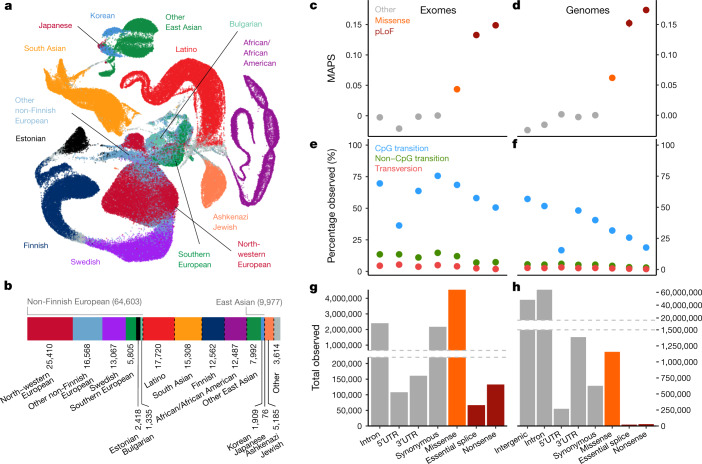
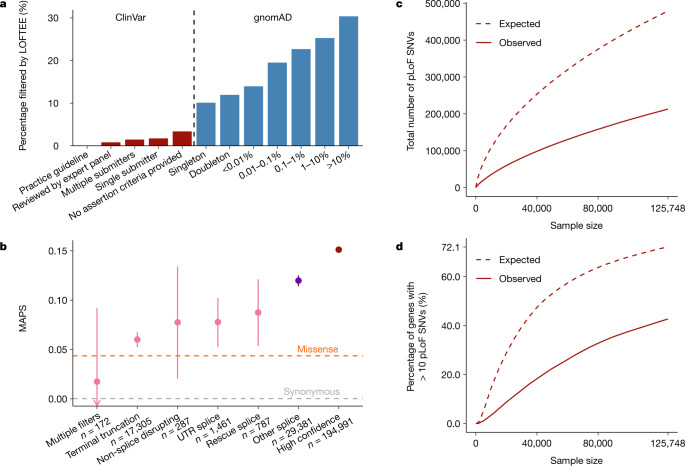
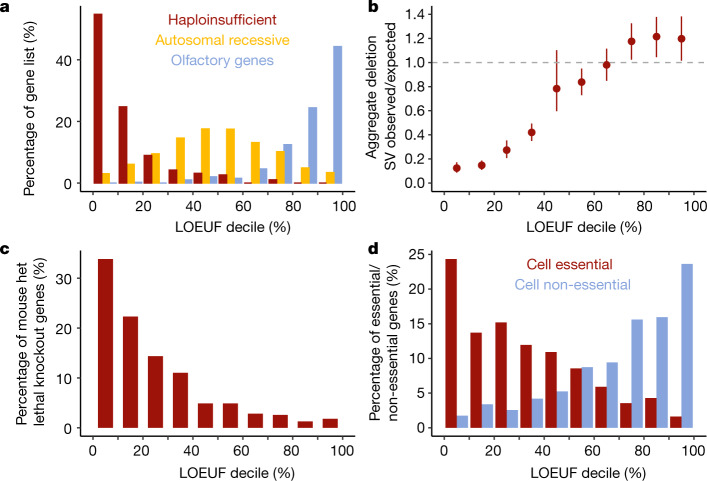
Genetic variants that inactivate protein-coding genes are a powerful source of information about the phenotypic consequences of gene disruption: genes that are crucial for the function of an organism will be depleted of such variants in natural populations, whereas non-essential genes will tolerate their accumulation. However, predicted loss-of-function variants are enriched for annotation errors, and tend to be found at extremely low frequencies, so their analysis requires careful variant annotation and very large sample sizes 1 . Here we describe the aggregation of 125,748 exomes and 15,708 genomes from human sequencing studies into the Genome Aggregation Database (gnomAD). We identify 443,769 high-confidence predicted loss-of-function variants in this cohort after filtering for artefacts caused by sequencing and annotation errors. Using an improved model of human mutation rates, we classify human protein-coding genes along a spectrum that represents tolerance to inactivation, validate this classification using data from model organisms and engineered human cells, and show that it can be used to improve the power of gene discovery for both common and rare diseases.
Overview
The claims and statistics of this paper haven’t been checked yet.
Free: it reads the open-access text and checks the first 5 claims that cite a source we can check. Create a free account to check every claim.
Integrity signals
Registry
Cites
Statistics
Figures
Verification
Claims the paper makes
The claims and statistics of this paper haven’t been checked yet.
Free: it reads the open-access text and checks the first 5 claims that cite a source we can check. Create a free account to check every claim.
Claims other papers make about this one
Each is checked against this paper’s own text: does it say what the citing paper says it does?
The source backs part of the claim, not all of it — or backs it for a different population, condition or comparison.
In the citing paper
“Earlier schizophrenia sequencing studies have established that ultra-rare and de novo mutations contribute to risk as a category, and have prioritized disease-relevant tissues and processes, specifically observing an enrichment in neuronal genes and synaptic processes9,11,19–23.”
From Rare coding variants in ten genes confer substantial risk for schizophrenia (2022) · cites this paper as [23]
Experimental — accuracy not yet measuredThe source backs part of the claim, not all of it — or backs it for a different population, condition or comparison.
In the citing paper
“According to the gnomAD database (Karczewski et al, 2020), the loss-of-function observed/expected upper bound fraction (LOEUF) indicates that SALL4 is depleted of inactivating variants and under purifying selection (LOEUF = 0.101).”
From Structure of SALL4 zinc finger domain reveals link between AT-rich DNA binding and Okihiro syndrome (2023) · cites this paper as Karczewski et al, 2020
Experimental — accuracy not yet measuredThe source backs part of the claim, not all of it — or backs it for a different population, condition or comparison.
In the citing paper
“Based on gnomAD (Karczewski et al. 2020), DOCK4 has a reduced amount of missense and null variants compared to its size of 1,966 amino acids (pLI = 1, Z score = 1.67) in a population without severe, early-onset phenotypes, indicating a mild constraint.”
From Heterozygous loss-of-function variants in DOCK4 cause neurodevelopmental delay and microcephaly (2024) · cites this paper as Karczewski et al. 2020
Experimental — accuracy not yet measuredThe source backs part of the claim, not all of it — or backs it for a different population, condition or comparison.
In the citing paper
“All variants were prioritized considering allele frequency in gnomAD v4.0.0 (Karczewski et al. 2020) below 1%, impact on protein function via different in silico programs (CADD (Rentzsch et al. 2021), REVEL (Ioannidis et al. 2016), MutPred2 (Pejaver et al. 2020) and Metadome (Wiel et al. 2019)) and involvement of candidate genes in neuronal processes.”
From Heterozygous loss-of-function variants in DOCK4 cause neurodevelopmental delay and microcephaly (2024) · cites this paper as Karczewski et al. 2020
Experimental — accuracy not yet measuredThe source backs part of the claim, not all of it — or backs it for a different population, condition or comparison.
In the citing paper
“Owing to the scarcity of reported loss-of-function (LoF) variants, with only 17 cases (allele frequency: ~7E-7) in the Genome Aggregation Database (gnomAD) from healthy subjects100, the WASF1 gene exhibits exceptionally high intolerance to such mutations.”
From The WAVE complex in developmental and adulthood brain disorders (2025) · cites this paper as [100]
Experimental — accuracy not yet measured
20 more claims about this paper
Create a free account to see every claim other papers make about this one.
Self-check
Percentages, sums and reported differences re-computed from the paper’s own numbers.
The self-check needs the paper’s full text.
Citations
Cites
UMAP: Uniform Manifold Approximation and Projection
McInnes, L., Healy, J., Saul, N., & Großberger, L. (2018) · Journal of Open Source Software · doi:10.21105/joss.00861 · Cited by 9,826
Analysis of protein-coding genetic variation in 60,706 humans
Exome Aggregation Consortium, Lek, M., Karczewski, K. J., Minikel, E. V., Samocha, K. E., Banks, E., Fennell, T., O’Donnell-Luria, A. H., Ware, J. S., Hill, A. J., et al. (2016) · Nature · doi:10.1038/nature19057 · Cited by 9,587
Self-citationVan der Auwera, G. A., Carneiro, M. O., Hartl, C., Poplin, R., del Angel, G., Levy‐Moonshine, A., Jordan, T., Shakir, K., Roazen, D., Thibault, J., et al. (2013) · Current Protocols in Bioinformatics · doi:10.1002/0471250953.bi1110s43 · Cited by 6,687
Self-citationGenetic effects on gene expression across human tissues
GTEx Consortium (2017) · Nature · doi:10.1038/nature24277 · Cited by 4,036
Self-citationSequence Variations in PCSK9, Low LDL, and Protection against Coronary Heart Disease
Cohen, J. C., Boerwinkle, E., Mosley, T. H., & Hobbs, H. H. (2006) · New England Journal of Medicine · doi:10.1056/nejmoa054013 · Cited by 3,181
Clinical use of current polygenic risk scores may exacerbate health disparities
Martin, A. R., Kanai, M., Kamatani, Y., Okada, Y., Neale, B. M., & Daly, M. J. (2019) · Nature Genetics · doi:10.1038/s41588-019-0379-x · Cited by 2,821
Self-citationCurrent clinical use of polygenic scores will risk exacerbating health disparities
Martin, A. R., Kanai, M., Kamatani, Y., Okada, Y., Neale, B. M., & Daly, M. J. (2018) · doi:10.1101/441261 · Cited by 2,813
Self-citationPartitioning heritability by functional annotation using genome-wide association summary statistics
ReproGen Consortium, Finucane, H. K., Schizophrenia Working Group of the Psychiatric Genomics Consortium, The RACI Consortium, Bulik-Sullivan, B., Gusev, A., Trynka, G., Reshef, Y., Loh, P.-R., Anttila, V., et al. (2015) · Nature Genetics · doi:10.1038/ng.3404 · Cited by 2,604
Self-citationPatterns and rates of exonic de novo mutations in autism spectrum disorders
Neale, B. M., Kou, Y., Liu, L., Ma’ayan, A., Samocha, K. E., Sabo, A., Lin, C.-F., Stevens, C., Wang, L.-S., Makarov, V., et al. (2012) · Nature · doi:10.1038/nature11011 · Cited by 1,734
Self-citationDe novo mutations in schizophrenia implicate synaptic networks
Fromer, M., Pocklington, A. J., Kavanagh, D. H., Williams, H. J., Dwyer, S., Gormley, P., Georgieva, L., Rees, E., Palta, P., Ruderfer, D. M., et al. (2014) · Nature · doi:10.1038/nature12929 · Cited by 1,617
Self-citation
Cited by
Items 701–800 of 1,234
The mutational landscape of the SCAN‐B real‐world primary breast cancer transcriptome
Brueffer, C., Gladchuk, S., Winter, C., Vallon‐Christersson, J., Hegardt, C., Häkkinen, J., George, A. M., Chen, Y., Ehinger, A., Larsson, C., et al. (2020) · EMBO Molecular Medicine · doi:10.15252/emmm.202012118 · Cited by 79
Disrupting upstream translation in mRNAs is associated with human disease
Lee, D. S. M., Park, J., Kromer, A., Baras, A., Rader, D. J., Ritchie, M. D., Ghanem, L. R., & Barash, Y. (2021) · Nature Communications · doi:10.1038/s41467-021-21812-1 · Cited by 81
Takebe, N., Naqash, A. R., Coyne, G. O., Kummar, S., Do, K. T., Bruns, A. B., Juwara, L., Zlott, J., Rubinstein, L., Piekarz, R., et al. (2021) · Clinical Cancer Research · doi:10.1158/1078-0432.ccr-21-0329 · Cited by 78
“Number of patients (female, male) 42 (27, 15)”
Rare loss-of-function variants in type I IFN immunity genes are not associated with severe COVID-19
Povysil, G., Butler‐Laporte, G., Shang, N., Wang, C., Khan, A., Alaamery, M. A., Nakanishi, T., Zhou, S., Forgetta, V., Eveleigh, R. J. M., et al. (2021) · Journal of Clinical Investigation · doi:10.1172/jci147834 · Cited by 78
Self-citationLaurie, S., Piscia, D., Matalonga, L., Corvò, A., García, C., Fernández-Callejo, M., Hernandéz-Ferrer, C., Luengo, C., Papakonstantinou, A., Protasio, J., et al. (2022) · Human Mutation · doi:10.1002/humu.24353 · Cited by 78
“…identified as described in Kancheva et al. (2016) Variant filtration Remove common variants Filter by allele frequency from: • RD ‐ Connect Internal Frequency • gnomAD (Karczewski et al., 2020) • 1000 Genomes Project (Genomes Project et al., 2015) Variant prioritization Score and rank list of…”
BackgroundCenters for Mendelian Genomics: A decade of facilitating gene discovery
Baxter, S. M., Posey, J. E., Lake, N. J., Sobreira, N. L. D. M., Chong, J. X., Buyske, S. G., Blue, E., Chadwick, L. H., Coban‐Akdemir, Z., Doheny, K. F., et al. (2022) · Genetics in Medicine · doi:10.1016/j.gim.2021.12.005 · Cited by 78
Self-citationGenetic risk factors have a substantial impact on healthy life years
Jukarainen, S., Kiiskinen, T., Kuitunen, S., Havulinna, A. S., Karjalainen, J. M., Cordioli, M., Rämö, J. T., Mars, N., FinnGen, Samocha, K. E., et al. (2022) · Nature Medicine · doi:10.1038/s41591-022-01957-2 · Cited by 75
Self-citationAnalyses of rare predisposing variants of lung cancer in 6,004 whole genomes in Chinese
Wang, C., Dai, J., Qin, N., Fan, J., Ma, H., Chen, C., An, M., Zhang, J., Yan, C., Gu, Y., et al. (2022) · Cancer Cell · doi:10.1016/j.ccell.2022.08.013 · Cited by 78
Expert Panel Curation of 113 Primary Mitochondrial Disease Genes for the Leigh Syndrome Spectrum
McCormick, E. M., Keller, K. N., Taylor, J. P., Coffey, A. J., Shen, L., Krotoski, D. M., Harding, B. N., Panel, N. C. U. M. D. G. C. E., Gai, X., Falk, M. J., et al. (2023) · Annals of Neurology · doi:10.1002/ana.26716 · Cited by 78
“…publications reporting large cohorts of patients who had received a genetic diagnosis of PMD through exome sequencing); and fi nding high allele frequencies in control databases such as gnomAD, 36 raising questions regarding whether these variants were truly pathogenic, hypomorphic, or even benign.”
BackgroundLiu, Y., Huang, X., Nguyen, D., Shammas, M. K., Wu, B. P., Dombi, E., Springer, D., Poulton, J., Sekine, S., & Narendra, D. P. (2020) · Human Molecular Genetics · doi:10.1093/hmg/ddaa077 · Cited by 78
Garaulet, M., Lopez-Minguez, J., Dashti, H. S., Vetter, C., Hernández-Martínez, A. M., Pérez-Ayala, M., Baraza, J. C., Wang, W., Florez, J. C., Scheer, F. A. J. L., et al. (2022) · Diabetes Care · doi:10.2337/dc21-1314 · Cited by 77
Self-citationStructural basis of organic cation transporter-3 inhibition
Khanppnavar, B., Maier, J., Herborg, F., Gradisch, R., Lazzarin, E., Luethi, D., Yang, J.-W., Qi, C., Holy, M., Jäntsch, K., et al. (2022) · Nature Communications · doi:10.1038/s41467-022-34284-8 · Cited by 77
McDiarmid, T. A., Belmadani, M., Liang, J., Meili, F., Mathews, E., Mullen, G. P., Hendi, A., Wong, W.-R., Rand, J. B., Mizumoto, K., et al. (2019) · Proceedings of the National Academy of Sciences · doi:10.1073/pnas.1912049116 · Cited by 78
Human NK cell deficiency as a result of biallelic mutations in MCM10
Mace, E. M., Paust, S., Conte, M. I., Baxley, R. M., Schmit, M., Patil, S. L., Guilz, N. C., Mukherjee, M., Pezzi, A. E., Chmielowiec, J., et al. (2020) · Journal of Clinical Investigation · doi:10.1172/jci134966 · Cited by 77
StellarPGx: A Nextflow Pipeline for Calling Star Alleles in Cytochrome P450 Genes
Twesigomwe, D., Drögemöller, B. I., Wright, G. E. B., Siddiqui, A., da Rocha, J., Lombard, Z., & Hazelhurst, S. (2021) · Clinical Pharmacology & Therapeutics · doi:10.1002/cpt.2173 · Cited by 76
“These variants include SNVs identified from large-scale genomics projects such as the 1000 Genomes Project 40 and gnomAD 41 , as well as possible missense variants that could occur in the target CYP genes even though they haven’t been identified in previous studies.”
BackgroundThe impact of rare protein coding genetic variation on adult cognitive function
Chen, C., Tian, R., Ge, T., Lam, M., Sánchez-Andrade, G., Singh, T., Urpa, L., Liu, J. Z., Sanderson, M., Rowley, C., et al. (2023) · Nature Genetics · doi:10.1038/s41588-023-01398-8 · Cited by 77
Self-citationMolecular determinants of ligand efficacy and potency in GPCR signaling
Heydenreich, F. M., Martí-Solano, M., Sandhu, M., Kobilka, B. K., Bouvier, M., & Babu, M. M. (2023) · Science · doi:10.1126/science.adh1859 · Cited by 77
“An analysis of the genome sequence data from over 140,000 individuals available through the gnomAD database (45) revealed a striking pattern in the distribution of single nucleotide polymorphisms (SNP) according to the different residue categories (Fig.”
The genetic changes that shaped Neandertals, Denisovans, and modern humans
Zeberg, H., Jakobsson, M., & Pääbo, S. (2024) · Cell · doi:10.1016/j.cell.2023.12.029 · Cited by 77
DNA mismatch and damage patterns revealed by single-molecule sequencing
Liu, M. H., Costa, B. M., Bianchini, E. C., Choi, U., Bandler, R. C., Lassen, E., Grońska-Pęski, M., Schwing, A., Murphy, Z. R., Rosenkjær, D., et al. (2024) · Nature · doi:10.1038/s41586-024-07532-8 · Cited by 79
Cochran, J. N., Geier, E. G., Bonham, L. W., Newberry, J. S., Amaral, M. D., Thompson, M. L., Lasseigne, B. N., Karydas, A. M., Roberson, E. D., Cooper, G. M., et al. (2020) · The American Journal of Human Genetics · doi:10.1016/j.ajhg.2020.03.010 · Cited by 77
Structural basis of organic cation transporter-3 inhibition
Khanppnavar, B., Maier, J., Herborg, F., Gradisch, R., Lazzarin, E., Luethi, D., Yang, J.-W., Qi, C., Holy, M., Jäntsch, K., et al. (2022) · doi:10.1101/2022.07.14.499921 · Cited by 77
Dysfunction of the ciliary ARMC9/TOGARAM1 protein module causes Joubert syndrome
Latour, B. L., Van De Weghe, J. C., Rusterholz, T. D. S., Letteboer, S. J. F., Gomez, A., Shaheen, R., Gesemann, M., Karamzade, A., Asadollahi, M., Barroso-Gil, M., et al. (2020) · Journal of Clinical Investigation · doi:10.1172/jci131656 · Cited by 76
“org) (42) and predicted to be deleterious by combined annotation-dependent depletion (CADD) (43) (Table 1).”
BackgroundThe contribution of X-linked coding variation to severe developmental disorders
Martin, H. C., Gardner, E. J., Samocha, K. E., Kaplanis, J., Akawi, N. A., Sifrim, A., Eberhardt, R. Y., Tavares, A. L. T., Neville, M. D. C., Niemi, M., et al. (2021) · Nature Communications · doi:10.1038/s41467-020-20852-3 · Cited by 77
Self-citationZawatsky, C. L. B., Shah, N. D., Machini, K., Perez, E. F., Christensen, K. D., Zouk, H., Steeves, M. A., Koch, C., Uveges, M. K., Shea, J., et al. (2021) · The American Journal of Human Genetics · doi:10.1016/j.ajhg.2021.10.005 · Cited by 77
Comparison of GATK and DeepVariant by trio sequencing
Lin, Y., Chang, P.-C., Hsu, C., Hung, M., Chien, Y., Hwu, W., Lai, F., & Lee, N. (2022) · Scientific Reports · doi:10.1038/s41598-022-05833-4 · Cited by 77
Laver, T. W., Wakeling, M. N., Knox, O., Colclough, K., Wright, C. F., Ellard, S., Hattersley, A. T., Weedon, M. N., & Patel, K. (2022) · Diabetes · doi:10.2337/db21-0844 · Cited by 78
“The detailed description of the cohort is previously published [16].”
BackgroundMethodInfluentialFeasibility of whole genome and transcriptome profiling in pediatric and young adult cancers
Shukla, N. N., Levine, M. F., Gundem, G., Domenico, D., Spitzer, B. G., Bouvier, N., Ossa, J. A., Głodzik, D., Medina-Martinez, J. S., Bhanot, U. K., et al. (2022) · Nature Communications · doi:10.1038/s41467-022-30233-7 · Cited by 77
Cheng, S., Xu, Z., Bian, S., Chen, X., Shi, Y., Li, Y., Duan, Y., Liu, Y., Lin, J., Jiang, Y., et al. (2023) · Cell Discovery · doi:10.1038/s41421-023-00582-8 · Cited by 76
Epilepsy-associated SCN2A (NaV1.2) variants exhibit diverse and complex functional properties
Thompson, C. H., Potet, F., Abramova, T. V., DeKeyser, J., Ghabra, N. F., Vanoye, C. G., Millichap, J. G., & George, A. L. (2023) · The Journal of General Physiology · doi:10.1085/jgp.202313375 · Cited by 76
“Population variants were chosen based on minor allele frequency >0.0001 in the gnomAD database (Karczewski et al., 2020), while pathogenic variants were chosen to represent either GoF or LoF effects based on previously published data (BenShalom et al., 2017; Berecki et al., 2018; Lauxmann et al.,…”
MethodInfluentialHop, P. J., Lai, D., Keagle, P. J., Baron, D. M., Kenna, B., Kooyman, M., Shankaracharya, Halter, C. A., Straniero, L., Asselta, R., et al. (2024) · Nature Genetics · doi:10.1038/s41588-024-01787-7 · Cited by 77
Khanna, T., Hanna, G., Sternberg, M. J. E., & David, A. (2021) · Human Genetics · doi:10.1007/s00439-020-02246-z · Cited by 67
Hetemäki, I., Kaustio, M., Kinnunen, M., Heikkilä, N., Keskitalo, S., Nowlan, K., Miettinen, S., Sarkkinen, J., Glumoff, V., Andersson, N., et al. (2021) · Science Immunology · doi:10.1126/sciimmunol.abe3454 · Cited by 76
The Role of Z-disc Proteins in Myopathy and Cardiomyopathy
Wadmore, K., Azad, A. J., & Gehmlich, K. (2021) · International Journal of Molecular Sciences · doi:10.3390/ijms22063058 · Cited by 75
Findley, A. S., Monziani, A., Richards, A. L., Rhodes, K., Ward, M. C., Kalita, C. A., Alazizi, A., Pazokitoroudi, A., Sankararaman, S., Wen, X., et al. (2021) · eLife · doi:10.7554/elife.67077 · Cited by 74
Population sequencing data reveal a compendium of mutational processes in the human germ line
Seplyarskiy, V. B., Soldatov, R. A., Koch, E., McGinty, R. J., Goldmann, J. M., Hernandez, R. D., Barnes, K., Correa, A., Burchard, E. G., Ellinor, P. T., et al. (2021) · Science · doi:10.1126/science.aba7408 · Cited by 62
Self-citationThe genetic architecture of pediatric cardiomyopathy
Ware, S. M., Bhatnagar, S., Dexheimer, P. J., Wilkinson, J. D., Sridhar, A., Fan, X., Shen, Y., Tariq, M., Schubert, J. A., Colan, S. D., et al. (2022) · The American Journal of Human Genetics · doi:10.1016/j.ajhg.2021.12.006 · Cited by 76
Twenty years of the Human Genome Diversity Project
Aneli, S., Birolo, G., & Matullo, G. (2022) · Green Energy and Sustainability · doi:10.47248/hpgg2202040005 · Cited by 75
Whole-genome doubling drives oncogenic loss of chromatin segregation
Lambuta, R. A., Nanni, L., Liu, Y., Díaz-Miyar, J., Iyer, A., Tavernari, D., Katanayeva, N., Ciriello, G., & Oricchio, E. (2023) · Nature · doi:10.1038/s41586-023-05794-2 · Cited by 77
Matalon, D. R., Zepeda‐Mendoza, C. J., Aarabi, M., Brown, K. M., Fullerton, S. M., Kaur, S., Quintero‐Rivera, F., & Vatta, M. (2023) · Genetics in Medicine · doi:10.1016/j.gim.2023.100812 · Cited by 75
Alves, C. R. R., Ha, L. L., Yaworski, R., Sutton, E. R., Lazzarotto, C. R., Christie, K. A., Reilly, A., Beauvais, A., Doll, R. M., de la Cruz, D., et al. (2023) · Nature Biomedical Engineering · doi:10.1038/s41551-023-01132-z · Cited by 76
Single-cell chromatin accessibility reveals malignant regulatory programs in primary human cancers
Sundaram, L., Kumar, A., Zatzman, M., Salcedo, A., Ravindra, N. G., Shams, S., Louie, B. H., Bagdatli, S. T., Myers, M. A., Sarmashghi, S., et al. (2024) · Science · doi:10.1126/science.adk9217 · Cited by 75
Genomic reanalysis of a pan-European rare-disease resource yields new diagnoses
Laurie, S., Steyaert, W., de Boer, E., Polavarapu, K., Schuermans, N., Sommer, A. K., Demidov, G., Ellwanger, K., Paramonov, I., Thomas, C., et al. (2025) · Nature Medicine · doi:10.1038/s41591-024-03420-w · Cited by 76
“SNVs, InDels and mitochondrial variants received detailed annotations provided by Ensembl Variant Effect Predictor 61 , gnomAD 62 and ClinVar 16 , among other resources.”
Solving patients with rare diseases through programmatic reanalysis of genome-phenome data
Matalonga, L., Hernandéz-Ferrer, C., Piscia, D., Solve-RD SNV-indel working group, Cohen, E., Cuesta, I., Danis, D., Denommé‐Pichon, A., Duffourd, Y., Gilissen, C., et al. (2021) · European Journal of Human Genetics · doi:10.1038/s41431-021-00852-7 · Cited by 76
Saini, N. Y., Swoboda, D. M., Greenbaum, U., Ma, J., Patel, R. D., Devashish, K., Das, K., Tanner, M. R., Strati, P., Nair, R., et al. (2022) · Blood Cancer Discovery · doi:10.1158/2643-3230.bcd-21-0177 · Cited by 74
Eight novel susceptibility loci and putative causal variants in atopic dermatitis
Tanaka, N., Koido, M., Suzuki, A., Otomo, N., Suetsugu, H., Kochi, Y., Tomizuka, K., Momozawa, Y., Kamatani, Y., Ikegawa, S., et al. (2021) · Journal of Allergy and Clinical Immunology · doi:10.1016/j.jaci.2021.04.019 · Cited by 74
Cafiero, C., Rosapepe, F., Palmirotta, R., Re, A., Ottaiano, M. P., Benincasa, G., Peroné, R., Varriale, E., D’Amato, G., Cacciamani, A., et al. (2021) · Pharmacogenomics and Personalized Medicine · doi:10.2147/pgpm.s303666 · Cited by 75
Vanoye, C. G., Desai, R. R., Ji, Z., Adusumilli, S., Jairam, N. P., Ghabra, N. F., Joshi, N., Fitch, E., Helbig, K. L., McKnight, D., et al. (2022) · JCI Insight · doi:10.1172/jci.insight.156314 · Cited by 76
Clinical Risk Score to Predict Pathogenic Genotypes in Patients With Dilated Cardiomyopathy
Escobar-López, L., Ochoa, J. P., Royuela, A., Verdonschot, J. A. J., Ferro, M. D., Espinosa, M. Á., Molina, M. S., Gallego‐Delgado, M., Larrañaga-Moreira, J. M., García‐Pinilla, J. M., et al. (2022) · Journal of the American College of Cardiology · doi:10.1016/j.jacc.2022.06.040 · Cited by 75
UNC13A in amyotrophic lateral sclerosis: from genetic association to therapeutic target
Willemse, S. W., Harley, P., van Eijk, R. P. A., Demaegd, K. C., Zelina, P., Pasterkamp, R. J., Damme, P. V., Ingre, C., van Rheenen, W., Veldink, J. H., et al. (2023) · Journal of Neurology Neurosurgery & Psychiatry · doi:10.1136/jnnp-2022-330504 · Cited by 74
Lowther, C., Valkanas, E., Giordano, J. L., Wang, H. Z., Currall, B., O’Keefe, K., Pierce‐Hoffman, E., Kurtas, N. E., Whelan, C. W., Hao, S. P., et al. (2023) · The American Journal of Human Genetics · doi:10.1016/j.ajhg.2023.07.010 · Cited by 74
Self-citationA genome-wide DNA methylation signature for SETD1B-related syndrome
Krzyzewska, I. M., Maas, S. M., Henneman, P., van der Lip, K., Venema, A., Baranano, K. W., Chassevent, A., Aref‐Eshghi, E., van Essen, A. J., Fukuda, T., et al. (2019) · Clinical Epigenetics · doi:10.1186/s13148-019-0749-3 · Cited by 74
Brodehl, A., Hakimi, S. A. P., Stanasiuk, C., Ratnavadivel, S., Hendig, D., Gärtner, A., Gerull, B., Gummert, J. F., Paluszkiewicz, L., & Milting, H. (2019) · Genes · doi:10.3390/genes10110918 · Cited by 74
The impact of cell type and context-dependent regulatory variants on human immune traits
Mu, Z., Wei, W., Fair, B., Miao, J., Zhu, P., & Li, Y. I. (2021) · Genome Biology · doi:10.1186/s13059-021-02334-x · Cited by 73
“5 Characterizations of uncolocalized GWAS loci. a Genes closest to uncolocalized loci are expressed at lower levels compared to colocalized eGenes. b Genes closest to uncolocalized loci have higher EDS, indicating their expression is more constrained. c Genes closest to uncolocalized loci have lower LOEUF [40], sugges…”
BackgroundMethodInfluentialStrafella, C., Caputo, V., Termine, A., Barati, S., Gambardella, S., Borgiani, P., Caltagirone, C., Novelli, G., Giardina, E., & Cascella, R. (2020) · Genes · doi:10.3390/genes11070741 · Cited by 74
Sandling, J. K., Pucholt, P., Rosenberg, L. H., Farias, F. H. G., Kozyrev, S. V., Eloranta, M., Alexsson, A., Bianchi, M., Padyukov, L., Bengtsson, C., et al. (2020) · Annals of the Rheumatic Diseases · doi:10.1136/annrheumdis-2020-218636 · Cited by 73
Ghaleb, Y. E., Schneeberger, P. E., Fernández‐Quintero, M. L., Geisler, S. M., Pelizzari, S., Polstra, A. M., van Hagen, J. M., Denecke, J., Campiglio, M., Liedl, K. R., et al. (2021) · Brain · doi:10.1093/brain/awab101 · Cited by 73
MTSplice predicts effects of genetic variants on tissue-specific splicing
Cheng, J., Çelik, M. H., Kundaje, A., & Gagneur, J. (2021) · Genome Biology · doi:10.1186/s13059-021-02273-7 · Cited by 69
Sporadic and Lynch syndrome-associated mismatch repair-deficient brain tumors
Kim, H., Lim, K. Y., Park, J. W., Kang, J., Won, J., Lee, K., Shim, Y., Park, C., Kim, S., Choi, S. H., et al. (2021) · Laboratory Investigation · doi:10.1038/s41374-021-00694-3 · Cited by 73
De novo variants in exomes of congenital heart disease patients identify risk genes and pathways
Bayrak, Ç. S., Zhang, P., Tristani‐Firouzi, M., Gelb, B. D., & Itan, Y. (2020) · Genome Medicine · doi:10.1186/s13073-019-0709-8 · Cited by 73
Cuny, H., Rapadas, M., Gereis, J. M., Martin, E. M. M. A., Kirk, R. B., Shi, H., & Dunwoodie, S. L. (2020) · Proceedings of the National Academy of Sciences · doi:10.1073/pnas.1916588117 · Cited by 73
Reduced reproductive success is associated with selective constraint on human genes
Gardner, E. J., Neville, M. D. C., Samocha, K. E., Barclay, K., Kolk, M., Niemi, M. E. K., Kirov, G., Martin, H. C., & Hurles, M. E. (2022) · Nature · doi:10.1038/s41586-022-04549-9 · Cited by 72
Self-citationCipriani, V., Pontikos, N., Arno, G., Sergouniotis, P. I., Lenassi, E., Thawong, P., Daniš, D., Michaelides, M., Webster, A. R., Moore, A. T., et al. (2020) · Genes · doi:10.3390/genes11040460 · Cited by 73
Uzilov, A. V., Taik, P., Cheesman, K. C., Javanmard, P., Ying, K., Roehnelt, A., Wang, H., Fink, M. Y., Lau, C. Y., Moe, A. S., et al. (2020) · The Journal of Clinical Endocrinology & Metabolism · doi:10.1210/clinem/dgaa853 · Cited by 73
Huang, D., Zhou, Y., Yi, X., Fan, X., Wang, J., Yao, H., Sham, P. C., Hao, J., Chen, K., & Li, M. J. (2021) · Nucleic Acids Research · doi:10.1093/nar/gkab853 · Cited by 72
“In addition to the 1000 Genomes project (17) and gnomAD (16), VannoPortal also incorporates allele frequency information from other genome sequencing projects.”
BackgroundHeterozygous PRKN mutations are common but do not increase the risk of Parkinson’s disease
Zhu, W. Y., Huang, X., Yoon, E., Bandrés‐Ciga, S., Blauwendraat, C., Billingsley, K. J., Cade, J. H., Wu, B. P., Williams, V. H., Schindler, A. B., et al. (2022) · Brain · doi:10.1093/brain/awab456 · Cited by 72
Halman, A., Dolzhenko, E., & Oshlack, A. (2022) · Human Mutation · doi:10.1002/humu.24382 · Cited by 75
Waldman, S., Backenroth, D., Harney, É., Flohr, S., Neff, N. C., Buckley, G. M., Fridman, H., Akbari, A., Rohland, N., Mallick, S., et al. (2022) · Cell · doi:10.1016/j.cell.2022.11.002 · Cited by 43
“In each iteration and for each founder SNP, we drew a minor allele count as a binomial variable with n equals to the number of (pseudo-haploid) EAJ individuals that were genotyped in that SNP and p equals the allele frequency inMAJ (from gnomAD (Karczewski et al., 2020)).”
Self-citationApplications of artificial intelligence in clinical laboratory genomics
Aradhya, S., Facio, F. M., Metz, H. C., Manders, T. R., Colavin, A., Kobayashi, Y., Nykamp, K., Johnson, B. A., & Nussbaum, R. L. (2023) · American Journal of Medical Genetics Part C Seminars in Medical Genetics · doi:10.1002/ajmg.c.32057 · Cited by 72
“We and others are working on using Pangolin to annotate exome and genome sequences in the next version of the gnomAD database (Karczewski et al., 2020).”
McGurk, K. A., Zhang, X., Theotokis, P. I., Thomson, K. L., Harper, A. R., Buchan, R. J., Mazaika, E., Ormondroyd, E., Wright, W. T., Macaya, D., et al. (2023) · The American Journal of Human Genetics · doi:10.1016/j.ajhg.2023.08.003 · Cited by 74
Self-citationCiliopathy patient variants reveal organelle-specific functions for TUBB4B in axonemal microtubules
Dodd, D. O., Mechaussier, S., Yeyati, P. L., McPhie, F., Anderson, J. R., Khoo, C. J., Shoemark, A., Gupta, D. K., Attard, T., Zariwala, M. A., et al. (2024) · Science · doi:10.1126/science.adf5489 · Cited by 61
A human ciliopathy reveals essential functions for NEK10 in airway mucociliary clearance
Chivukula, R. R., Montoro, D. T., Leung, H. M., Yang, J., Shamseldin, H. E., Taylor, M. S., Dougherty, G. W., Zariwala, M. A., Carson, J., Daniels, M. L. A., et al. (2020) · Nature Medicine · doi:10.1038/s41591-019-0730-x · Cited by 69
A Large‐Scale Full GBA1 Gene Screening in Parkinson's Disease in the Netherlands
den Heijer, J. M., Cullen, V., Quadri, M., Schmitz, A., Hilt, D. C., Lansbury, P. T., Berendse, H. W., van de Berg, W. D. J., de Bie, R. M. A., Boertien, J. M., et al. (2020) · Movement Disorders · doi:10.1002/mds.28112 · Cited by 74
De Novo VPS4A Mutations Cause Multisystem Disease with Abnormal Neurodevelopment
Rodger, C. E., Flex, E., Allison, R. J., Sanchis‐Juan, A., Hasenahuer, M. A., Cecchetti, S., French, C. E., Edgar, J. R., Carpentieri, G., Ciolfi, A., et al. (2020) · The American Journal of Human Genetics · doi:10.1016/j.ajhg.2020.10.012 · Cited by 72
“X (07-627), mouse monoclonal anti-myc (clone 4A6, 05-724) from EMD Millipore; mouse monoclonal anti-TfnR (13-6800), mouse monoclonal AntiBrdU (B35130) from Invitrogen; IRDye-conjugated secondary antibodies from LICOR; rabbit polyclonal anti IST1 (51002-1-AP) from Proteintech Group; mouse monoclonal antiSNX1 (611582),…”
BackgroundAncestry-Dependent Enrichment of Deleterious Homozygotes in Runs of Homozygosity
Szpiech, Z. A., Mak, A. C. Y., White, M. J., Hu, D., Eng, C., Burchard, E. G., & Hernandez, R. D. (2019) · The American Journal of Human Genetics · doi:10.1016/j.ajhg.2019.08.011 · Cited by 70
The HuaBiao project: whole-exome sequencing of 5000 Han Chinese individuals
Hao, M., Pu, W., Li, Y., Wen, S., Sun, C., Ma, Y., Zheng, H., Chen, X., Tan, J., Zhang, G., et al. (2021) · Journal of genetics and genomics/Journal of Genetics and Genomics · doi:10.1016/j.jgg.2021.07.013 · Cited by 71
Peet, C. J., Rowczenio, D. M., Omoyinmi, E., Papadopoulou, C., Mapalo, B. R. R., Wood, M. R., Capon, F., & Lachmann, H. J. (2022) · Journal of the American Heart Association · doi:10.1161/jaha.121.024931 · Cited by 71
“21,22 A scaled Combined Annotation Depletion Dependent score >10 was considered evidence of deleterious potential.”
Intestinal mucin is a chaperone of multivalent copper
Reznik, N., Gallo, A. D., Rush, K. W., Javitt, G., Fridmann‐Sirkis, Y., Ilani, T., Nairner, N. A., Fishilevich, S., Gokhman, D., Chacón, K. N., et al. (2022) · Cell · doi:10.1016/j.cell.2022.09.021 · Cited by 71
Genetic features and genomic targets of human KRAB-zinc finger proteins
de Tribolet-Hardy, J., Thorball, C. W., Forey, R., Planet, E., Duc, J., Coudray, A., Khubieh, B., Offner, S., Pulver, C., Fellay, J., et al. (2023) · Genome Research · doi:10.1101/gr.277722.123 · Cited by 74
“In short: FASTA sequences for the indicated subfamilies were extracted from the hg19 genome assembly, aligned individually using MAFFT (Katoh and Standley 2013) with parameters ‐‐ reorder ‐‐ auto, and then merged together using MAFFT ’ s -merge option.”
MethodBhattacharya, A., Vo, D., Jops, C. T., Kim, M., Wen, C. H., Hervoso, J. L., Paşaniuc, B., & Gandal, M. J. (2023) · Nature Genetics · doi:10.1038/s41588-023-01560-2 · Cited by 71
“Altogether, isoTWAS not only recovers the vast majority of TWAS associations but also increases discovery of candidate GWAS mechanisms, particularly for genes intolerant to protein-truncating variation 70 .”
BackgroundSeplyarskiy, V., Koch, E. M., Lee, D. J., Lichtman, J. S., Luan, H. H., & Sunyaev, S. R. (2023) · Nature Genetics · doi:10.1038/s41588-023-01562-0 · Cited by 53
“We trained Roulette using noncoding SNVs with a frequency of below 0.001 from gnomAD v3 whole genomes 7 (524 M rare SNVs after filtering low-quality sites; Supplementary Table 1; Methods), rescaled to account for recurrent mutation, and grouped the predicted rates into 100 bins to facilitate…”
BackgroundMethodInfluentialKastenschmidt, J. M., Schroers‐Martin, J. G., Sworder, B. J., Sureshchandra, S., Khodadoust, M. S., Liu, C. L., Olsen, M. N., Kurtz, D. M., Diehn, M., Wagar, L. E., et al. (2024) · Cell stem cell · doi:10.1016/j.stem.2024.01.012 · Cited by 71
Yao, S., Harder, A., Darki, F., Chang, Y.-W., Li, A., Nikouei, K., Volpe, G., Lundström, J. N., Zeng, J., Wray, N. R., et al. (2025) · Nature Communications · doi:10.1038/s41467-024-55611-1 · Cited by 72
Self-citationProteome-wide model for human disease genetics
Orenbuch, R., Shearer, C. A., Kollasch, A. W., Spinner, A. D., Hopf, T., van Niekerk, L., Franceschi, D., Dias, M., Frazer, J., & Marks, D. S. (2025) · Nature Genetics · doi:10.1038/s41588-025-02400-1 · Cited by 50
“To overcome this problem, we developed popEVE, a model that places variants on a proteome-wide scale of deleteriousness, enabling us to predict if a variant seen in one gene is more detrimental to human health than a variant seen in another. popEVE leverages deep evolutionary data to achieve missense-resolution varian…”
InfluentialWalker, R. W., Belbin, G. M., Sorokin, E. P., Van Vleck, T., Wojcik, G. L., Moscati, A., Gignoux, C. R., Cho, J., Abul-Husn, N. S., Nadkarni, G., et al. (2020) · Journal of Hepatology · doi:10.1016/j.jhep.2020.01.029 · Cited by 65
Self-citationHuguet, G., Schramm, C., Douard, E. A., Tamer, P., Main, A., Monin, P., England, J., Jizi, K., Renne, T., Poirier, M., et al. (2021) · Molecular Psychiatry · doi:10.1038/s41380-020-00985-z · Cited by 71
Merinero, H. M., Zhang, Y., Arjona, E., del Angel, G., Goodfellow, R. X., Gómez-Rubio, E., Ji, R., Michelena, M., Smith, R. J., & de Córdoba, S. R. (2021) · Blood · doi:10.1182/blood.2021012037 · Cited by 75
Sharo, A. G., Hu, Z., Sunyaev, S. R., & Brenner, S. E. (2022) · The American Journal of Human Genetics · doi:10.1016/j.ajhg.2021.12.007 · Cited by 71
Transcriptome-wide analysis of differential expression in perturbation atlases
Nadig, A., Replogle, J. M., Pogson, A. N., Murthy, M., McCarroll, S. A., Weissman, J. S., Robinson, E. B., & O’Connor, L. J. (2025) · Nature Genetics · doi:10.1038/s41588-025-02169-3 · Cited by 70
“We quantified two types of enrichment: (1) the perturbation impact enrichment, which quantifies enrichment for effects on other genes and (2) the perturbation response enrichment, which quantifies enrichment for differential expression in response to perturbations (Supplementary Table 7 and Methods).”
InfluentialSelf-citationA loss-of-function IFNAR1 allele in Polynesia underlies severe viral diseases in homozygotes
Bastard, P., Hsiao, K.-C., Zhang, Q., Choin, J., Best, E., Chen, J., Gervais, A., Bizien, L., Materna, M., Harmant, C., et al. (2022) · Journal of Experimental Medicine · doi:10.1084/jem.20220028 · Cited by 70
“By contrast, the frequency of G>T in gnomAD 2.1.1 (Karczewski et al., 2020) and TOPMed BRAVO freeze 8 (Taliun et al., 2021) combined is four of a total of 485,756 alleles (AF = 0.00000823).”
BackgroundInfluentialThe position of nonsense mutations can predict the phenotype severity: A survey on the DMD gene
Torella, A., Zanobio, M., Zeuli, R., Blanco, F. D. V., Savarese, M., Giugliano, T., Garofalo, A., Piluso, G., Politano, L., & Nigro, V. (2020) · PLoS ONE · doi:10.1371/journal.pone.0237803 · Cited by 70
“Arg3681 in exon 78, found in six African individuals (5 females and 1 male), and reported as variant of uncertain significance [67, 68].”
BackgroundNKCC1: Newly Found as a Human Disease-Causing Ion Transporter
Koumangoye, R. B., Bastarache, L. A., & Delpire, E. J. (2020) · Function · doi:10.1093/function/zqaa028 · Cited by 70
“96, a value that establishes that the gene is extremely intolerant to loss of function mutations.(11,12) As we will see in the next sections, the third explanation turns out to also be correct, SLC12A2 is a disease-causing gene.”
BackgroundUshiki, A., Zhang, Y., Xiong, C., Zhao, J., Georgakopoulos-Soares, I., Kane, L., Jamieson, K., Bamshad, M. J., Nickerson, D. A., University of Washington Center for Mendelian Genomics, et al. (2021) · Nature Communications · doi:10.1038/s41467-021-22470-z · Cited by 68
Maternal iron deficiency perturbs embryonic cardiovascular development in mice
Kalisch-Smith, J. I., Ved, N., Szumska, D., Munro, J. E., Troup, M., Harris, S., Rodriguez‐Caro, H., Jacquemot, A., Miller, J. J. J. J., Stuart, E. M., et al. (2021) · Nature Communications · doi:10.1038/s41467-021-23660-5 · Cited by 71
Bakhuizen, J. J., Hanson, H., van der Tuin, K., Lalloo, F. I., Tischkowitz, M. D., Wadt, K., Jongmans, M. C. J., SIOPE Host Genome Working Group, Dörgeloh, B. B., Farah, R. A., et al. (2021) · Familial Cancer · doi:10.1007/s10689-021-00264-y · Cited by 70
Placental methylome reveals a 22q13.33 brain regulatory gene locus associated with autism
Zhu, Y., Gomez, J. A., Laufer, B. I., Mordaunt, C. E., Mouat, J. S., Soto, D. C., Dennis, M. Y., Benke, K. S., Bakulski, K. M., Dou, J., et al. (2022) · Genome biology · doi:10.1186/s13059-022-02613-1 · Cited by 70
Somatic mosaicism reveals clonal distributions of neocortical development
Breuss, M. W., Yang, X., Schlachetzki, J. C. M., Antaki, D., Lana, A. J., Xu, X., Chung, C., Chai, G., Stanley, V., Song, Q., et al. (2022) · Nature · doi:10.1038/s41586-022-04602-7 · Cited by 74
ClinPharmSeq: A targeted sequencing panel for clinical pharmacogenetics implementation
Lee, S., Shin, J.-Y., Kwon, N., Kim, C., & Seo, J. (2022) · PLoS ONE · doi:10.1371/journal.pone.0272129 · Cited by 70
“27, respectively, according to gnomAD [38].”
Immunogenetics associated with severe coccidioidomycosis
Hsu, A. P., Korzeniowska, A., Aguilar, C. C., Gu, J., Karlins, E., Oler, A. J., Chen, G., Reynoso, G. V., Davis, J., Chaput, A., et al. (2022) · JCI Insight · doi:10.1172/jci.insight.159491 · Cited by 70
Single-molecule genome-wide mutation profiles of cell-free DNA for non-invasive detection of cancer
Bruhm, D. C., Mathios, D., Foda, Z. H., Annapragada, A. V., Medina, J. E., Adleff, V., Chiao, E. J., Ferreira, L., Cristiano, S., White, J. R., et al. (2023) · Nature Genetics · doi:10.1038/s41588-023-01446-3 · Cited by 70
Genetic determinants of micronucleus formation in vivo
Adams, D. J., Barlas, B., McIntyre, R. E., Salguero, I., van der Weyden, L., Barros, A., Vicente, J. R., Karimpour, N., Haider, A., Ranzani, M., et al. (2024) · Nature · doi:10.1038/s41586-023-07009-0 · Cited by 72
“We have made this clear in the revised (supplementary) figure legend which also points readers at the underlying data.”
Background
Metadata
- Authors
- Karczewski, K. J., Francioli, L. C., Tiao, G., Cummings, B. B., Alföldi, J., Wang, Q., Collins, R. L., Laricchia, K. M., Ganna, A., Birnbaum, D. P., Gauthier, L. D., Brand, H., Solomonson, M., Watts, N. A., Rhodes, D., Singer-Berk, M., England, E. M., Seaby, E. G., Kosmicki, J. A., Walters, R. K., Tashman, K., Farjoun, Y., Banks, E., Poterba, T., Wang, A., Seed, C., Whiffin, N., Chong, J. X., Samocha, K. E., Pierce-Hoffman, E., Zappala, Z., O’Donnell-Luria, A. H., Minikel, E. V., Weisburd, B., Lek, M., Ware, J. S., Vittal, C., Armean, I. M., Bergelson, L., Cibulskis, K., Connolly, K. M., Covarrubias, M., Donnelly, S., Ferriera, S., Gabriel, S., Gentry, J., Gupta, N., Jeandet, T., Kaplan, D., Llanwarne, C., Munshi, R., Novod, S., Petrillo, N., Roazen, D., Ruano-Rubio, V., Saltzman, A., Schleicher, M., Soto, J., Tibbetts, K., Tolonen, C., Wade, G., Talkowski, M. E., Genome Aggregation Database Consortium, Aguilar Salinas, C. A., Ahmad, T., Albert, C. M., Ardissino, D., Atzmon, G., Barnard, J., Beaugerie, L., Benjamin, E. J., Boehnke, M., Bonnycastle, L. L., Bottinger, E. P., Bowden, D. W., Bown, M. J., Chambers, J. C., Chan, J. C., Chasman, D., Cho, J., Chung, M. K., Cohen, B., Correa, A., Dabelea, D., Daly, M. J., Darbar, D., Duggirala, R., Dupuis, J., Ellinor, P. T., Elosua, R., Erdmann, J., Esko, T., Färkkilä, M., Florez, J., Franke, A., Getz, G., Glaser, B., Glatt, S. J., Goldstein, D., Gonzalez, C., Groop, L., Haiman, C., Hanis, C., Harms, M., Hiltunen, M., Holi, M. M., Hultman, C. M., Kallela, M., Kaprio, J., Kathiresan, S., Kim, B.-J., Kim, Y. J., Kirov, G., Kooner, J., Koskinen, S., Krumholz, H. M., Kugathasan, S., Kwak, S. H., Laakso, M., Lehtimäki, T., Loos, R. J. F., Lubitz, S. A., Ma, R. C. W., MacArthur, D. G., Marrugat, J., Mattila, K. M., McCarroll, S., McCarthy, M. I., McGovern, D., McPherson, R., Meigs, J. B., Melander, O., Metspalu, A., Neale, B. M., Nilsson, P. M., O’Donovan, M. C., Ongur, D., Orozco, L., Owen, M. J., Palmer, C. N. A., Palotie, A., Park, K. S., Pato, C., Pulver, A. E., Rahman, N., Remes, A. M., Rioux, J. D., Ripatti, S., Roden, D. M., Saleheen, D., Salomaa, V., Samani, N. J., Scharf, J., Schunkert, H., Shoemaker, M. B., Sklar, P., Soininen, H., Sokol, H., Spector, T., Sullivan, P. F., Suvisaari, J., Tai, E. S., Teo, Y. Y., Tiinamaija, T., Tsuang, M., Turner, D., Tusie-Luna, T., Vartiainen, E., Vawter, M. P., Ware, J. S., Watkins, H., Weersma, R. K., Wessman, M., Wilson, J. G., Xavier, R. J., Neale, B. M., Daly, M. J., & MacArthur, D. G.
- Affiliations
- Broad Institute (US)
- Queen Mary University of London (GB)
- University of Washington (US)
- Wellcome Sanger Institute (GB)
- Yale University (US)
- Peninsula College of Medicine and Dentistry (GB)
- Brigham and Women's Hospital (US)
- University of Parma (IT)
- Albert Einstein College of Medicine (US)
- Cleveland Clinic (US)
- Sorbonne Université (FR)
- Boston University (US)
- University of Michigan (US)
- National Institutes of Health (US)
- Wake Forest University Health Sciences (US)
- University of Leicester (GB)
- Imperial College Healthcare NHS Trust (GB)
- Chinese University of Hong Kong (HK)
- Icahn School of Medicine at Mount Sinai (US)
- Harvard University (US)
- University of Mississippi Medical Center (US)
- Colorado School of Public Health (US)
- University of Illinois Chicago (US)
- Texas Biomedical Research Institute (US)
- German Centre for Cardiovascular Research (DE)
- University of Helsinki (FI)
- SUNY Upstate Medical University (US)
- Columbia University Irving Medical Center (US)
- Lund University (SE)
- The University of Texas Health Science Center at Houston (US)
- Columbia University (US)
- University of Eastern Finland (FI)
- Helsinki University Hospital (FI)
- Karolinska Institutet (SE)
- Korea National Institute of Health (KR)
- Cardiff University (GB)
- Finnish Institute for Health and Welfare (FI)
- Emory University (US)
- Seoul National University (KR)
- Tampere University (FI)
- Centro de Investigación en Red en Enfermedades Cardiovasculares (ES)
- Centre for Human Genetics (GB)
- Cedars-Sinai Medical Center (US)
- Ottawa Heart Institute (CA)
- University of Tartu (EE)
- National Institute of Genomic Medicine (MX)
- University of Dundee (GB)
- University of Southern California (US)
- Johns Hopkins University (US)
- Institute of Cancer Research (GB)
- Oulu University Hospital (FI)
- Montreal Heart Institute (CA)
- Vanderbilt University Medical Center (US)
- Center for Non-Communicable Diseases (PK)
- Deutsches Herzzentrum München (DE)
- Vanderbilt University (US)
- Massachusetts General Hospital (US)
- King's College London (GB)
- University of North Carolina at Chapel Hill (US)
- National University of Singapore (SG)
- University of California San Diego (US)
- Hebrew University of Jerusalem (IL)
- University of California, Irvine (US)
- University of Oxford (GB)
- University Medical Center Groningen (NL)
- Institute for Molecular Medicine Finland (FI)
- Corresponding author
- Karczewski, Konrad J.
- ORCID
- Karczewski, Konrad J.
- Francioli, Laurent C.
- Tiao, Grace
- Cummings, Beryl B.
- Alföldi, Jessica
- Wang, Qingbo
- Collins, Ryan L.
- Laricchia, Kristen M.
- Ganna, Andrea
- Brand, Harrison
- Solomonson, Matthew
- Rhodes, Daniel
- Seaby, Eleanor G.
- Kosmicki, Jack A.
- Walters, Raymond K.
- Tashman, Katherine
- Farjoun, Yossi
- Banks, Eric
- Poterba, Timothy
- Whiffin, Nicola
- Chong, Jessica X.
- Samocha, Kaitlin E.
- Zappala, Zachary
- O’Donnell-Luria, Anne H.
- Minikel, Eric Vallabh
- Weisburd, Ben
- Lek, Monkol
- Armean, Irina M.
- Cibulskis, Kristian
- Donnelly, Stacey
- Gabriel, Stacey
- Gupta, Namrata
- Saltzman, Andrea
- Talkowski, Michael E.
- Ahmad, Tariq
- Albert, Christine M.
- Ardissino, Diego
- Atzmon, Gil
- Barnard, John
- Beaugerie, Laurent
- Benjamin, Emelia J.
- Boehnke, Michael
- Bonnycastle, Lori L.
- Bowden, Donald W.
- Bown, Matthew J.
- Chambers, John C.
- Chan, Juliana C.
- Chasman, Daniel
- Cho, Judy
- Chung, Mina K.
- Cohen, Bruce
- Correa, Adolfo
- Dabelea, Dana
- Darbar, Dawood
- Duggirala, Ravindranath
- Dupuis, Josée
- Ellinor, Patrick T.
- Erdmann, Jeanette
- Esko, Tõnu
- Färkkilä, Martti
- Getz, Gad
- Glatt, Stephen J.
- Goldstein, David
- Groop, Leif
- Hanis, Craig
- Harms, Matthew
- Hiltunen, Mikko
- Holi, Matti M.
- Hultman, Christina M.
- Kallela, Mikko
- Kaprio, Jaakko
- Kathiresan, Sekar
- Kim, Bong-Jo
- Kim, Young Jin
- Kirov, George
- Kooner, Jaspal
- Krumholz, Harlan M.
- Kugathasan, Subra
- Kwak, Soo Heon
- Laakso, Markku
- Lehtimäki, Terho
- Loos, Ruth J. F.
- Lubitz, Steven A.
- Marrugat, Jaume
- McCarroll, Steven
- McCarthy, Mark I.
- McGovern, Dermot
- McPherson, Ruth
- Meigs, James B.
- Melander, Olle
- Metspalu, Andres
- Nilsson, Peter M.
- O’Donovan, Michael C.
- Orozco, Lorena
- Owen, Michael J.
- Palmer, Colin N. A.
- Palotie, Aarno
- Park, Kyong Soo
- Pato, Carlos
- Rahman, Nazneen
- Rioux, John D.
- Ripatti, Samuli
- Roden, Dan M.
- Saleheen, Danish
- Salomaa, Veikko
- Samani, Nilesh J.
- Scharf, Jeremiah
- Schunkert, Heribert
- Shoemaker, Moore B.
- Sklar, Pamela
- Soininen, Hilkka
- Sokol, Harry
- Spector, Tim
- Sullivan, Patrick F.
- Suvisaari, Jaana
- Tai, E. Shyong
- Tsuang, Ming
- Turner, Dan
- Vartiainen, Erkki
- Vawter, Marquis P.
- Watkins, Hugh
- Weersma, Rinse K.
- Wilson, James G.
- Xavier, Ramnik J.
- Venue
- Nature
- Published
- 2020-05-27
- Volume
- 581
- Issue
- 7809
- Pages
- 434-443
- ISSN
- 0028-0836 (ISSN-L)
- 1476-4687
- PMC
- PMC7334197
- OpenAlex
- W3029661147
- Cited by
- 9,434
- References
- 51
- Citations by year
- 2026: 1027 · 2025: 1275 · 2024: 1531 · 2023: 1631 · 2022: 1774 · 2021: 1613 · 2020: 573
- FWCI
- 833.03
- Type
- journal article
- Language
- en
- Update notices
- Open access
- hybrid
- doi.org
- Licence
- cc-by
- creativecommons.org/licenses/by/4.0 (tdm)
- creativecommons.org/licenses/by/4.0 (vor)
- Locations
- Nature (publishedVersion, cc-by)
- PubMed Central (publishedVersion, cc-by)
- PubMed (publishedVersion)
- University of Groningen research database (University of Groningen / Centre for Information Technology) (publishedVersion, cc-by)
- National University of Singapore (submittedVersion, cc-by)
- HAL (submittedVersion)
- Discovery Research Portal (University of Dundee) (submittedVersion, other-oa)
- ePrints Soton (University of Southampton) (submittedVersion)
- Työväentutkimus Vuosikirja (submittedVersion)
- Lund University Publications (Lund University) (submittedVersion)
- Spiral (Imperial College London) (submittedVersion, cc-by)
- Tampere University Institutional Repository (Tampere University) (submittedVersion, cc-by)
- Funders
- National Science Foundation
- Sanofi
- Massachusetts General Hospital
- BioMarin Pharmaceutical
- Wellcome Trust (107469/Z/15/Z)
- Broad Institute
- British Heart Foundation (RG/18/10/33842, CS/14/2/30841)
- University of Oxford
- Rosetrees Trust
- Schweizerischer Nationalfonds zur Förderung der Wissenschaftlichen Forschung (177853)
- Rijksuniversiteit Groningen
- Hebrew University of Jerusalem
- Samfundet Folkhälsan
- Universitair Medisch Centrum Groningen
- National Institutes of Health (MH115957, HG006493, UL1TR001863)
- University of California, San Diego
- University of California, Irvine
- Sanofi Genzyme
- Instituto de Investigaciones Biomédicas, Universidad Nacional Autónoma de México
- National Institute on Aging
- National Heart, Lung, and Blood Institute (HG006493)
- National Institute of Mental Health (R01MH085548, R56MH115957, MH115957, R01MH115957)
- National Human Genome Research Institute (HG006493, HG008956, HG008900, UM1HG008900, phs000178, UM1HG006493, U24HG008956, T32HG002295)
- National Cancer Institute
- National Institute of General Medical Sciences (F32GM115208, R01GM104371, GM115208)
- National Institute of Diabetes and Digestive and Kidney Diseases (U54DK105566)
- National Center for Advancing Translational Sciences
- Eunice Kennedy Shriver National Institute of Child Health and Human Development (HD081256, R01HD081256)
- Common Fund
- Topics
- Life Sciences › Biochemistry, Genetics and Molecular Biology › Genetics › Genomics and Rare Diseases
- Life Sciences › Biochemistry, Genetics and Molecular Biology › Genetics › Genetic Associations and Epidemiology
- Life Sciences › Biochemistry, Genetics and Molecular Biology › Genetics › Evolution and Genetic Dynamics
- Keywords
- loss-of-function mutations, protein-coding genes, gene essentiality, disease gene discovery, rare diseases, common diseases
- MeSH terms
- Proprotein Convertase 9, Whole Genome Sequencing, Exome Sequencing, Loss of Function Mutation, Adult, Brain, Cardiovascular Diseases, Female, Humans, Male, RNA, Messenger, Genetic Variation, Reproducibility of Results, Cohort Studies, Genome, Human, Genetic Predisposition to Disease, Genes, Essential, Databases, Genetic, Genome-Wide Association Study, Exome, Mutation Rate
About these checks
Registry, retraction, Cites and statistics results are computed, not judged, with one exception: a printed reference that no index lists is read once by a model before it counts as a citation error. Claims are extracted by a model and kept only when their quote appears verbatim in the text; each cited source is then checked, with a model’s help, for whether it says what the claim relies on. Those verdicts can be wrong — read the claim’s quote and the cited source before relying on one.
Statistics and arithmetic are recomputed, not judged.
Confidence bands are shown only for fields calibrated on our annotated test set. None is calibrated yet, so no band is shown.
What counts as a claim ›How we measure confidence ›How we check this ›
Are you an author, or do you see a problem with this page? Request a review
Data sources
Bibliographic data: Semantic Scholar, OpenAlex, Crossref.
Contains information from the Semantic Scholar Academic Graph Datasets, made available under the ODC Attribution License (ODC-BY 1.0).
Semantic Scholar’s data is described in: Kinney, R., et al. (2023). The Semantic Scholar Open Data Platform. arXiv:2301.10140.
