

The mutational constraint spectrum quantified from variation in 141,456 humans
Open accessPublished version of a preprint
The DOI matches its Crossref record; 53 of the 53 references it cites were found in a registry or an index.
Abstract
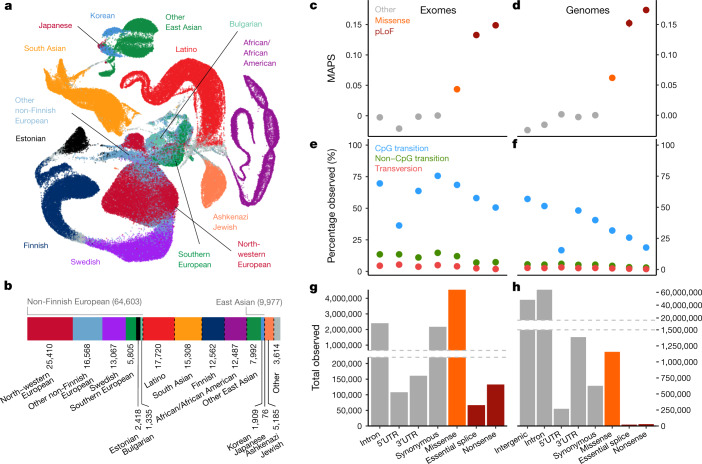
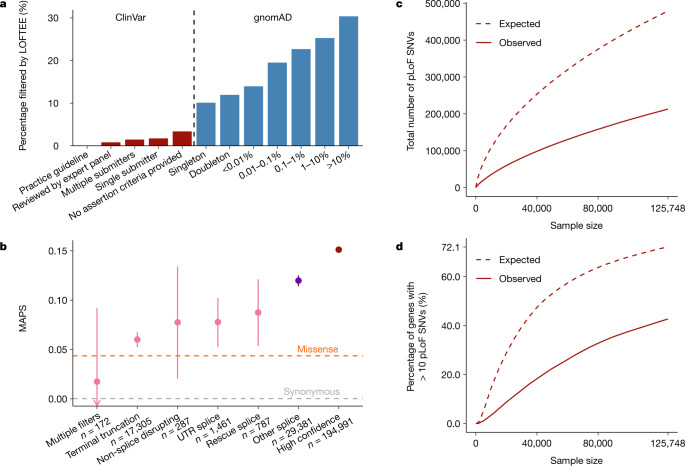
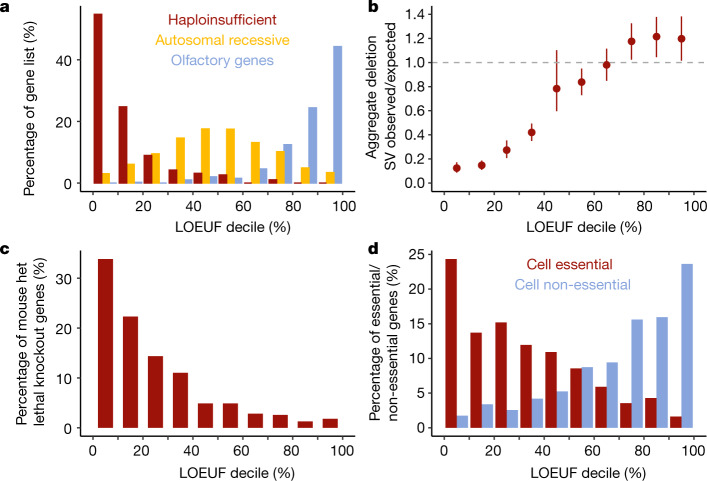
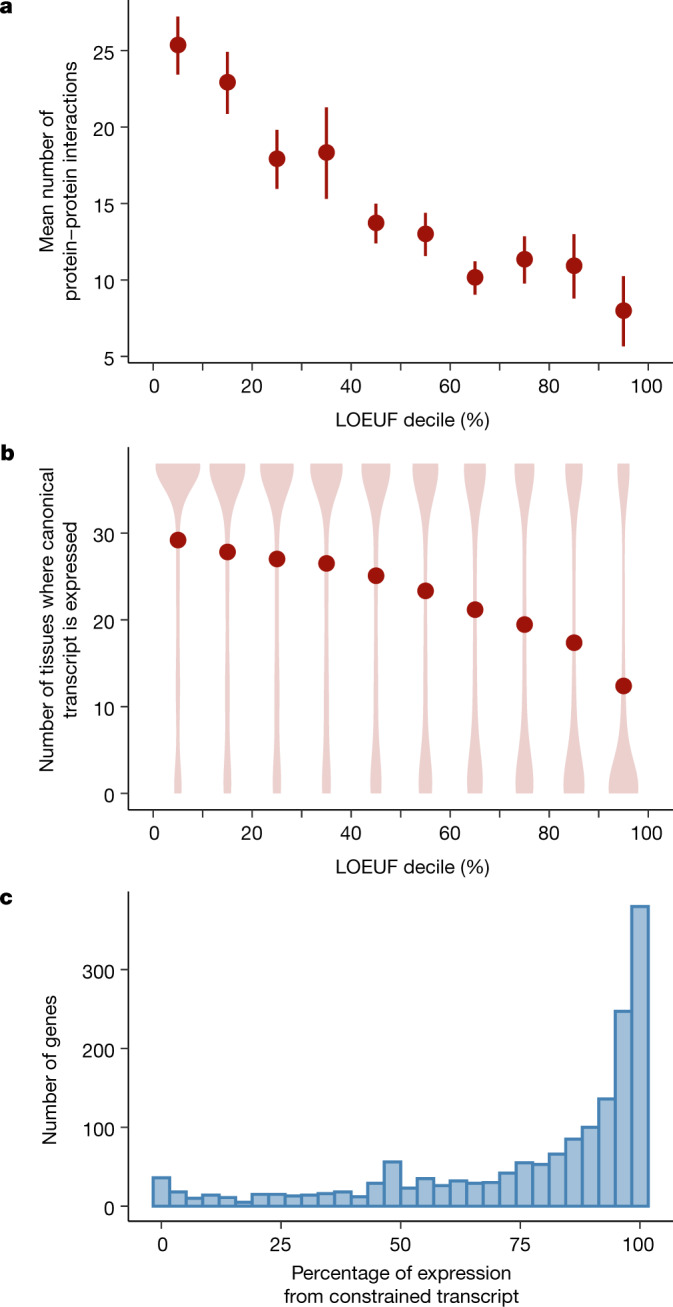
Genetic variants that inactivate protein-coding genes are a powerful source of information about the phenotypic consequences of gene disruption: genes that are crucial for the function of an organism will be depleted of such variants in natural populations, whereas non-essential genes will tolerate their accumulation. However, predicted loss-of-function variants are enriched for annotation errors, and tend to be found at extremely low frequencies, so their analysis requires careful variant annotation and very large sample sizes 1 . Here we describe the aggregation of 125,748 exomes and 15,708 genomes from human sequencing studies into the Genome Aggregation Database (gnomAD). We identify 443,769 high-confidence predicted loss-of-function variants in this cohort after filtering for artefacts caused by sequencing and annotation errors. Using an improved model of human mutation rates, we classify human protein-coding genes along a spectrum that represents tolerance to inactivation, validate this classification using data from model organisms and engineered human cells, and show that it can be used to improve the power of gene discovery for both common and rare diseases.
Overview
The claims and statistics of this paper haven’t been checked yet.
Free: it reads the open-access text and checks the first 5 claims that cite a source we can check. Create a free account to check every claim.
Integrity signals
Registry
Cites
Statistics
Figures
Verification
Claims the paper makes
The claims and statistics of this paper haven’t been checked yet.
Free: it reads the open-access text and checks the first 5 claims that cite a source we can check. Create a free account to check every claim.
Claims other papers make about this one
Each is checked against this paper’s own text: does it say what the citing paper says it does?
The source backs part of the claim, not all of it — or backs it for a different population, condition or comparison.
In the citing paper
“Earlier schizophrenia sequencing studies have established that ultra-rare and de novo mutations contribute to risk as a category, and have prioritized disease-relevant tissues and processes, specifically observing an enrichment in neuronal genes and synaptic processes9,11,19–23.”
From Rare coding variants in ten genes confer substantial risk for schizophrenia (2022) · cites this paper as [23]
Experimental — accuracy not yet measuredThe source backs part of the claim, not all of it — or backs it for a different population, condition or comparison.
In the citing paper
“According to the gnomAD database (Karczewski et al, 2020), the loss-of-function observed/expected upper bound fraction (LOEUF) indicates that SALL4 is depleted of inactivating variants and under purifying selection (LOEUF = 0.101).”
From Structure of SALL4 zinc finger domain reveals link between AT-rich DNA binding and Okihiro syndrome (2023) · cites this paper as Karczewski et al, 2020
Experimental — accuracy not yet measuredThe source backs part of the claim, not all of it — or backs it for a different population, condition or comparison.
In the citing paper
“Based on gnomAD (Karczewski et al. 2020), DOCK4 has a reduced amount of missense and null variants compared to its size of 1,966 amino acids (pLI = 1, Z score = 1.67) in a population without severe, early-onset phenotypes, indicating a mild constraint.”
From Heterozygous loss-of-function variants in DOCK4 cause neurodevelopmental delay and microcephaly (2024) · cites this paper as Karczewski et al. 2020
Experimental — accuracy not yet measuredThe source backs part of the claim, not all of it — or backs it for a different population, condition or comparison.
In the citing paper
“All variants were prioritized considering allele frequency in gnomAD v4.0.0 (Karczewski et al. 2020) below 1%, impact on protein function via different in silico programs (CADD (Rentzsch et al. 2021), REVEL (Ioannidis et al. 2016), MutPred2 (Pejaver et al. 2020) and Metadome (Wiel et al. 2019)) and involvement of candidate genes in neuronal processes.”
From Heterozygous loss-of-function variants in DOCK4 cause neurodevelopmental delay and microcephaly (2024) · cites this paper as Karczewski et al. 2020
Experimental — accuracy not yet measuredThe source backs part of the claim, not all of it — or backs it for a different population, condition or comparison.
In the citing paper
“Owing to the scarcity of reported loss-of-function (LoF) variants, with only 17 cases (allele frequency: ~7E-7) in the Genome Aggregation Database (gnomAD) from healthy subjects100, the WASF1 gene exhibits exceptionally high intolerance to such mutations.”
From The WAVE complex in developmental and adulthood brain disorders (2025) · cites this paper as [100]
Experimental — accuracy not yet measured
20 more claims about this paper
Create a free account to see every claim other papers make about this one.
Self-check
Percentages, sums and reported differences re-computed from the paper’s own numbers.
The self-check needs the paper’s full text.
Citations
Cites
UMAP: Uniform Manifold Approximation and Projection
McInnes, L., Healy, J., Saul, N., & Großberger, L. (2018) · Journal of Open Source Software · doi:10.21105/joss.00861 · Cited by 9,826
Analysis of protein-coding genetic variation in 60,706 humans
Exome Aggregation Consortium, Lek, M., Karczewski, K. J., Minikel, E. V., Samocha, K. E., Banks, E., Fennell, T., O’Donnell-Luria, A. H., Ware, J. S., Hill, A. J., et al. (2016) · Nature · doi:10.1038/nature19057 · Cited by 9,587
Self-citationVan der Auwera, G. A., Carneiro, M. O., Hartl, C., Poplin, R., del Angel, G., Levy‐Moonshine, A., Jordan, T., Shakir, K., Roazen, D., Thibault, J., et al. (2013) · Current Protocols in Bioinformatics · doi:10.1002/0471250953.bi1110s43 · Cited by 6,687
Self-citationGenetic effects on gene expression across human tissues
GTEx Consortium (2017) · Nature · doi:10.1038/nature24277 · Cited by 4,036
Self-citationSequence Variations in PCSK9, Low LDL, and Protection against Coronary Heart Disease
Cohen, J. C., Boerwinkle, E., Mosley, T. H., & Hobbs, H. H. (2006) · New England Journal of Medicine · doi:10.1056/nejmoa054013 · Cited by 3,181
Clinical use of current polygenic risk scores may exacerbate health disparities
Martin, A. R., Kanai, M., Kamatani, Y., Okada, Y., Neale, B. M., & Daly, M. J. (2019) · Nature Genetics · doi:10.1038/s41588-019-0379-x · Cited by 2,821
Self-citationCurrent clinical use of polygenic scores will risk exacerbating health disparities
Martin, A. R., Kanai, M., Kamatani, Y., Okada, Y., Neale, B. M., & Daly, M. J. (2018) · doi:10.1101/441261 · Cited by 2,813
Self-citationPartitioning heritability by functional annotation using genome-wide association summary statistics
ReproGen Consortium, Finucane, H. K., Schizophrenia Working Group of the Psychiatric Genomics Consortium, The RACI Consortium, Bulik-Sullivan, B., Gusev, A., Trynka, G., Reshef, Y., Loh, P.-R., Anttila, V., et al. (2015) · Nature Genetics · doi:10.1038/ng.3404 · Cited by 2,604
Self-citationPatterns and rates of exonic de novo mutations in autism spectrum disorders
Neale, B. M., Kou, Y., Liu, L., Ma’ayan, A., Samocha, K. E., Sabo, A., Lin, C.-F., Stevens, C., Wang, L.-S., Makarov, V., et al. (2012) · Nature · doi:10.1038/nature11011 · Cited by 1,734
Self-citationDe novo mutations in schizophrenia implicate synaptic networks
Fromer, M., Pocklington, A. J., Kavanagh, D. H., Williams, H. J., Dwyer, S., Gormley, P., Georgieva, L., Rees, E., Palta, P., Ruderfer, D. M., et al. (2014) · Nature · doi:10.1038/nature12929 · Cited by 1,617
Self-citation
Cited by
Items 501–600 of 1,234
Discovering functionally important sites in proteins
Cagiada, M., Bottaro, S., Lindemose, S., Schenstrøm, S. M., Stein, A., Hartmann-Petersen, R., & Lindorff-Larsen, K. (2023) · Nature Communications · doi:10.1038/s41467-023-39909-0 · Cited by 79
McVey, J. H., Rallapalli, P. M., Kemball‐Cook, G., Hampshire, D. J., Giansily‐Blaizot, M., Gomez, K., Perkins, S. J., & Ludlam, C. A. (2020) · Haemophilia · doi:10.1111/hae.13947 · Cited by 102
Chiasson, M. A., Rollins, N. J., Stephany, J. J., Sitko, K. A., Matreyek, K. A., Verby, M., Sun, S., Roth, F. P., DeSloover, D., Marks, D. S., et al. (2020) · eLife · doi:10.7554/elife.58026 · Cited by 89
Haploinsufficiency of SF3B2 causes craniofacial microsomia
Timberlake, A. T., Griffin, C., Heike, C. L., Hing, A. V., Cunningham, M. L., Chitayat, D. A., Davis, M. R., Doust, S. J., Drake, A. F., Dueñas, M., et al. (2021) · Nature Communications · doi:10.1038/s41467-021-24852-9 · Cited by 104
Mitani, T., Işıkay, S., Gezdirici, A., Güleç, E. Y., Punetha, J., Fatih, J. M., Herman, I., Akay, G., Du, H., Calame, D. G., et al. (2021) · The American Journal of Human Genetics · doi:10.1016/j.ajhg.2021.08.009 · Cited by 102
Rapid genotype imputation from sequence with reference panels
Davies, R. W., Kučka, M., Su, D., Shi, S., Flanagan, M., Cunniff, C. M., Chan, Y. F., & Myers, S. (2021) · Nature Genetics · doi:10.1038/s41588-021-00877-0 · Cited by 103
Base editing screens map mutations affecting interferon-γ signaling in cancer
Coelho, M. A., Cooper, S., Strauß, M. E., Karakoç, E., Bhosle, S. G., Gonçalves, E., Picco, G., Burgold, T., Cattaneo, C. M., Veninga, V., et al. (2023) · Cancer Cell · doi:10.1016/j.ccell.2022.12.009 · Cited by 103
The human inactive X chromosome modulates expression of the active X chromosome
Roman, A. K. S., Godfrey, A. K., Skaletsky, H., Bellott, D. W., Groff, A. F., Harris, H. L., Blanton, L. V., Hughes, J. F., Brown, L. G., Phou, S., et al. (2023) · Cell Genomics · doi:10.1016/j.xgen.2023.100259 · Cited by 102
Aberrant splicing prediction across human tissues
Wagner, N., Çelik, M. H., Hölzlwimmer, F. R., Mertes, C., Prokisch, H., Yépez, V. A., & Gagneur, J. (2023) · Nature Genetics · doi:10.1038/s41588-023-01373-3 · Cited by 96
“For every individual, we considered every protein coding gene carrying at least one rare variant (minor allele frequency less than 0.1% based on gnomAD 9 and found in no more than two individuals across GTEx) and set out to predict in which tissue, if any, is this gene aberrantly spliced.”
MethodInfluentialGenomic Sequencing as a First-Tier Screening Test and Outcomes of Newborn Screening
Chen, T., Fan, C., Huang, Y., Feng, J., Zhang, Y., Miao, J., Wang, X., Li, Y., Huang, C., Jin, W., et al. (2023) · JAMA Network Open · doi:10.1001/jamanetworkopen.2023.31162 · Cited by 105
“Eye disorder Retinoblastoma 1 0 0 1 100 (6-100)”
BackgroundInfluentialDiversity and consequences of structural variation in the human genome
Collins, R. L., & Talkowski, M. E. (2025) · Nature Reviews Genetics · doi:10.1038/s41576-024-00808-9 · Cited by 105
Self-citationPolygenic and developmental profiles of autism differ by age at diagnosis
Zhang, X., Grove, J., Gu, Y., Buus, C. K., Nielsen, L. K., Neufeld, S., Koko, M., Malawsky, D. S., Wade, E. E., Verhoef, E., et al. (2025) · Nature · doi:10.1038/s41586-025-09542-6 · Cited by 108
“We identified high-impact protein-truncating variants by restricting it to variants in loss-of-function observed/expected upper bound fraction (LOEUF) 80 ; highly constrained decile (LOEUF < 0.37) that were annotated as either frameshift, stop gained or start lost; and that had a loss-of-function transcript effect est…”
InfluentialScalable genetic screening for regulatory circuits using compressed Perturb-seq
Yao, D., Binan, L., Bezney, J., Simonton, B., Freedman, J., Frangieh, C. J., Dey, K., Geiger-Schuller, K., Eraslan, B., Gusev, A., et al. (2024) · Nature Biotechnology · doi:10.1038/s41587-023-01964-9 · Cited by 101
“6e), suggesting that our power to detect cis -by- trans eQTLs was affected by selection-induced depletion of SNPs affecting the trans genes 54,68 (Supplementary Note, section 12).”
Aprea, I., Raidt, J., Höben, I. M., Loges, N. T., Nöthe-Menchen, T., Pennekamp, P., Olbrich, H., Kaiser, T., Biebach, L., Tüttelmann, F., et al. (2021) · PLoS Genetics · doi:10.1371/journal.pgen.1009306 · Cited by 104
“The single nucleotide variation c.31C>T has a frequency below 0.1% in dbSNP, GnomAD, 1000 Genomes Project and the Trans-Omics for Precision Medicine (TOPMed) program sponsored by the National Institutes of Health (NIH) [84,85,87].”
BackgroundInfluentialTyrmi, J. S., Arffman, R. K., Pujol‐Gualdo, N., Kurra, V., Morin-Papunen, L. C., Sliz, E., FinnGen, Piltonen, T., Laisk, T., Kettunen, J., et al. (2021) · Human Reproduction · doi:10.1093/humrep/deab250 · Cited by 104
“Functional characterization of this locus revealed a frameshift variant, c.1100delC (Karczewski et al. , 2020).”
InfluentialHuman autoinflammatory disease reveals ELF4 as a transcriptional regulator of inflammation
Tyler, P. M., Bucklin, M. L., Zhao, M., Maher, T. J., Rice, A. J., Ji, W., Warner, N. E., Pan, J., Morotti, R. A., McCarthy, P. L., et al. (2021) · Nature Immunology · doi:10.1038/s41590-021-00984-4 · Cited by 103
“(i) Volcano plots of differentially expressed genes in Elf4 KO (1) or W250S (2) versus WT mouse naïve CD4+ T cells or W250S versus WT mouse in vitro differentiation Th17 cells after 48 hours under non-pathogenic (3) or pathogenic (4) conditions.”
BackgroundParker, G. J., McKiernan, H. E., Legg, K. M., & Goecker, Z. C. (2021) · Forensic Science International Genetics · doi:10.1016/j.fsigen.2021.102529 · Cited by 104
Genetic and chemotherapeutic influences on germline hypermutation
Kaplanis, J., Ide, B., Sanghvi, R., Neville, M. D. C., Danecek, P., Coorens, T. H. H., Prigmore, E., Short, P., Gallone, G., McRae, J. F., et al. (2022) · Nature · doi:10.1038/s41586-022-04712-2 · Cited by 102
Genetic variability in sporadic amyotrophic lateral sclerosis
Daele, S. H. V., Moisse, M., van Vugt, J. J. F. A., Zwamborn, R. A. J., van der Spek, R. A. A., van Rheenen, W., van Eijk, K. R., Kenna, K. P., Corcia, P., Vourc’h, P., et al. (2023) · Brain · doi:10.1093/brain/awad120 · Cited by 101
“org and processed through our modified ACMG criteria, retaining only the pathogenic and likely pathogenic variants.(29) These were compared to the pathogenic and likely pathogenic variants pre-”
BackgroundThe mutagenic forces shaping the genomes of lung cancer in never smokers
Díaz‐Gay, M., Zhang, T., Hoang, P. H., Leduc, C., Baine, M. K., Travis, W. D., Sholl, L. M., Joubert, P., Khandekar, A., Wei, Z., et al. (2025) · Nature · doi:10.1038/s41586-025-09219-0 · Cited by 105
Germline TET2 loss of function causes childhood immunodeficiency and lymphoma
Stremenova Spegarova, J., Lawless, D., Mohamad, S. M. B., Engelhardt, K. R., Doody, G., Shrimpton, J., Rensing-Ehl, A., Ehl, S., Rieux-Laucat, F., Cargo, C., et al. (2020) · Blood · doi:10.1182/blood.2020005844 · Cited by 87
Natural history of Charcot-Marie-Tooth disease type 2A: a large international multicentre study
Pipis, M., Feely, S. M. E., Polke, J. M., Skorupinska, M., Pérez, L., Shy, R. R., Laurá, M., Morrow, J. M., Moroni, I., Pisciotta, C., et al. (2020) · Brain · doi:10.1093/brain/awaa323 · Cited by 102
“Interestingly, the former, which is described in three further families in this study, is absent from the genome aggregation population database (gnomAD) (Karczewski et al., 2020) whereas the latter is present nine times in gnomAD.”
BackgroundInfluentialHirsch, T. Z., Pilet, J., Morcrette, G., Roehrig, A., Monteiro, B. J. E., Molina, L. M., Bayard, Q., Trépo, E., Meunier, L., Caruso, S., et al. (2021) · Cancer Discovery · doi:10.1158/2159-8290.cd-20-1809 · Cited by 100
Rajagopal, V. M., Duan, J., Vilar-Ribó, L., Grove, J., Zayats, T., Ramos-Quiroga, J. A., Satterstrom, F. K., Artigas, M. S., Bybjerg-Grauholm, J., Bækvad-Hansen, M., et al. (2022) · Nature Genetics · doi:10.1038/s41588-022-01143-7 · Cited by 78
Self-citationA Clinician’s Guide to Bioinformatics for Next-Generation Sequencing
Larson, N. B., Oberg, A. L., Adjei, A. A., & Wang, L. (2022) · Journal of Thoracic Oncology · doi:10.1016/j.jtho.2022.11.006 · Cited by 101
Genotype–phenotype correlation in children with hereditary spherocytosis
Tole, S., Dhir, P., Pugi, J., Drury, L. J., Butchart, S., Fantauzzi, M., Langer, J. C., Baker, J. M., Blanchette, V. S., Kirby-Allen, M. A., et al. (2020) · British Journal of Haematology · doi:10.1111/bjh.16750 · Cited by 99
Breast Tumor Microenvironment in Black Women: A Distinct Signature of CD8+ T-Cell Exhaustion
Yao, S., Cheng, T. D., Elkhanany, A. M., Yan, L., Omilian, A. R., Abrams, S. I., Evans, S. S., Hong, C., Qi, Q., Davis, W., et al. (2021) · JNCI Journal of the National Cancer Institute · doi:10.1093/jnci/djaa215 · Cited by 100
“According to gnomAD data (25), the allele associated with a higher TFH fraction had a markedly higher frequency in Black than in White populations (0.”
BackgroundUsing human genetics to improve safety assessment of therapeutics
Carss, K., Deaton, A. M., Río-Espínola, A. D., Diogo, D., Fielden, M. R., Kulkarni, D. A., Moggs, J. G., Newham, P., Nelson, M. R., Sistare, F. D., et al. (2022) · Nature Reviews Drug Discovery · doi:10.1038/s41573-022-00561-w · Cited by 100
Collaborative, E., Chen, S., Abou-Khalil, B. W., Afawi, Z., Ali, Q. Z., Amadori, E., Anderson, A., Anderson, J., Andrade, D. M., Annesi, G., et al. (2024) · Nature Neuroscience · doi:10.1038/s41593-024-01747-8 · Cited by 100
Self-citationPredicting functional effect of missense variants using graph attention neural networks
Zhang, H., Xu, M. S., Fan, X., Chung, W. K., & Shen, Y. (2022) · Nature Machine Intelligence · doi:10.1038/s42256-022-00561-w · Cited by 98
Thompson, R., Spendiff, S., Roos, A., Bourque, P. R., Warman‐Chardon, J., Kirschner, J., Horváth, R., & Lochmüller, H. (2020) · The Lancet Neurology · doi:10.1016/s1474-4422(20)30028-4 · Cited by 100
Steinberg, C., Davies, B., Mellor, G. J., Tadros, R., Laksman, Z., Roberts, J. D., Green, M. S., Alqarawi, W., Angaran, P., Healey, J. S., et al. (2021) · European Heart Journal · doi:10.1093/eurheartj/ehab275 · Cited by 98
Zaritsky, A., Jamieson, A. R., Welf, E. S., Nevarez, A., Cillay, J., Eskiocak, U., Cantarel, B. L., & Danuser, G. (2021) · Cell Systems · doi:10.1016/j.cels.2021.05.003 · Cited by 92
Quinodoz, M., Peter, V. G., Cisarova, K. V., Royer‐Bertrand, B., Stenson, P. D., Cooper, D. N., Unger, S., Superti‐Furga, A., & Rivolta, C. (2022) · The American Journal of Human Genetics · doi:10.1016/j.ajhg.2022.01.006 · Cited by 98
Genome interpretation using in silico predictors of variant impact
Katsonis, P., Wilhelm, K. O., Williams, A. M., & Lichtarge, O. (2022) · Human Genetics · doi:10.1007/s00439-022-02457-6 · Cited by 99
“Larger population-wide sequencing datasets, such as the Exome Aggregation Consortium (ExAC) (Karczewski et al. 2017; Lek et al. 2016) and the more recent Genome Aggregation Database (gno-mAD) (Karczewski et al. 2020), seek to aggregate variants from various projects.”
BackgroundTransposable element-mediated rearrangements are prevalent in human genomes
Balachandran, P., Walawalkar, I. A., Flores, J. I., Dayton, J. N., Audano, P. A., & Beck, C. R. (2022) · Nature Communications · doi:10.1038/s41467-022-34810-8 · Cited by 98
Genomic signature of Fanconi anaemia DNA repair pathway deficiency in cancer
Webster, A., Sanders, M. A., Patel, K., Dietrich, R., Noonan, R. J., Lach, F. P., White, R. R., Goldfarb, A. M., Hadi, K., Edwards, M. M., et al. (2022) · Nature · doi:10.1038/s41586-022-05253-4 · Cited by 100
Defining the clinical validity of genes reported to cause pulmonary arterial hypertension
Welch, C. L., Aldred, M. A., Balachandar, S., Dooijes, D., Eichstaedt, C. A., Gräf, S., Houweling, A. C., Machado, R. D., Pandya, D., Prapa, M., et al. (2023) · Genetics in Medicine · doi:10.1016/j.gim.2023.100925 · Cited by 98
A general and efficient representation of ancestral recombination graphs
Wong, Y., Ignatieva, A., Koskela, J., Gorjanc, G., Wohns, A. W., & Kelleher, J. (2024) · Genetics · doi:10.1093/genetics/iyae100 · Cited by 100
“As datasets approach the population scale (e.g. Bycroft et al. 2018; Turnbull et al. 2018; Hayes and Daetwyler 2019; Karczewski et al. 2020; Ros-Freixedes et al. 2020; Tanjo et al. 2021; Halldorsson et al. 2022) representing such uncertainty directly through the data structure is a useful…”
Tadros, R., Zheng, S. L., Grace, C., Jordà, P., Francis, C., West, D. M., Jurgens, S. J., Thomson, K. L., Harper, A. R., Ormondroyd, E., et al. (2025) · Nature Genetics · doi:10.1038/s41588-025-02087-4 · Cited by 98
“58) were selected.”
Self-citationPapier, K., Atkins, J. R., Tong, T. Y. N., Gaitskell, K., Desai, T., Ogamba, C. F., Parsaeian, M., Reeves, G. K., Mills, I. G., Key, T. J., et al. (2024) · Nature Communications · doi:10.1038/s41467-024-48017-6 · Cited by 97
Rare ATG7 genetic variants predispose patients to severe fatty liver disease
Baselli, G. A., Jamialahmadi, O., Pelusi, S., Ciociola, E., Malvestiti, F., Saracino, M., Santoro, L., Cherubini, A., Dongiovanni, P., Maggioni, M., et al. (2022) · Journal of Hepatology · doi:10.1016/j.jhep.2022.03.031 · Cited by 97
The performance of genome sequencing as a first-tier test for neurodevelopmental disorders
van der Sanden, B. P. G. H., Schobers, G., Corominas Galbany, J., Koolen, D. A., Sinnema, M., van Reeuwijk, J., Stumpel, C. T. R. M., Kleefstra, T., de Vries, B. B. A., Ruiterkamp-Versteeg, M., et al. (2023) · European Journal of Human Genetics · doi:10.1038/s41431-022-01185-9 · Cited by 97
YIPF5 mutations cause neonatal diabetes and microcephaly through endoplasmic reticulum stress
De Franco, E., Lytrivi, M., Ibrahim, H., Montaser, H., Wakeling, M. N., Fantuzzi, F., Patel, K., Demarez, C., Cai, Y., Igoillo-Esteve, M., et al. (2020) · Journal of Clinical Investigation · doi:10.1172/jci141455 · Cited by 91
Germline AGO2 mutations impair RNA interference and human neurological development
Lessel, D., Zeitler, D. M., Reijnders, M. R. F., Kazantsev, A., Nia, F. H., Bartholomäus, A., Martens, V., Bruckmann, A., Graus, V., McConkie‐Rosell, A., et al. (2020) · Nature Communications · doi:10.1038/s41467-020-19572-5 · Cited by 99
Rapaport, F., Boisson, B., Gregor, A., Béziat, V., Boisson‐Dupuis, S., Bustamante, J. C., Jouanguy, E., Puel, A., Rosain, J., Zhang, Q., et al. (2021) · Proceedings of the National Academy of Sciences · doi:10.1073/pnas.2001248118 · Cited by 97
“We developed a score, consensus negative selection (CoNeS), to take into account information from both interspecies [the f parameter from SnIPRE (11), lofTool (13), and evoTol (22)] and intraspecies [RVIS (5), LOEUF (23), pLI (12), and SIS (24)] statistics to approximate the strength of negative selection.”
BackgroundMethodUnexpectedly Low Natriuretic Peptide Levels in Patients With Heart Failure
Bachmann, K. N., Gupta, D. K., Xu, M., Brittain, E. L., Farber‐Eger, E. H., Arora, P. K., Collins, S., Wells, Q. S., & Wang, T. J. (2021) · JACC Heart Failure · doi:10.1016/j.jchf.2020.10.008 · Cited by 97
Deep neural networks identify sequence context features predictive of transcription factor binding
Zheng, A., Lamkin, M., Zhao, H., Wu, C., Su, H., & Gymrek, M. (2021) · Nature Machine Intelligence · doi:10.1038/s42256-020-00282-y · Cited by 90
The Complex and Diverse Genetic Architecture of Dilated Cardiomyopathy
Hershberger, R. E., Cowan, J. R., Jordan, E., & Kinnamon, D. D. (2021) · Circulation Research · doi:10.1161/circresaha.121.318157 · Cited by 97
Exome Sequencing of a Clinical Population for Autosomal Dominant Polycystic Kidney Disease
Chang, A. R., Moore, B. S., Luo, J. Z., Sartori, G., Fang, B., Jacobs, S., Abdalla, Y., Taher, M., Carey, D. J., Triffo, W. J., et al. (2022) · JAMA · doi:10.1001/jama.2022.22847 · Cited by 98
Dron, J. S., Wang, J., McIntyre, A. D., Iacocca, M. A., Robinson, J. F., Ban, M. R., Cao, H., & Hegele, R. A. (2020) · BMC Medical Genomics · doi:10.1186/s12920-020-0669-2 · Cited by 86
Turelli, P., Playfoot, C., Grun, D., Raclot, C., Pontis, J., Coudray, A., Thorball, C., Duc, J., Pankevich, E. V., Deplancke, B., et al. (2020) · Science Advances · doi:10.1126/sciadv.aba3200 · Cited by 85
Boyle, L., Rao, L., Kaur, S., Fan, X., Mebane, C. M., Hamm, L., Thornton, A., Ahrendsen, J. T., Anderson, M. P., Christodoulou, J., et al. (2021) · Human Genetics and Genomics Advances · doi:10.1016/j.xhgg.2021.100026 · Cited by 96
Clonal myelopoiesis promotes adverse outcomes in chronic kidney disease
Dawoud, A. A. Z., Gilbert, R. D., Tapper, W. J., & Cross, N. C. P. (2022) · Leukemia · doi:10.1038/s41375-021-01382-3 · Cited by 92
Network analysis reveals rare disease signatures across multiple levels of biological organization
Buphamalai, P., Kokotovic, T., Nagy, V., & Menche, J. (2021) · Nature Communications · doi:10.1038/s41467-021-26674-1 · Cited by 95
Evidence for polygenic and oligogenic basis of Australian sporadic amyotrophic lateral sclerosis
McCann, E. P., Henden, L., Fifita, J. A., Zhang, K. Y., Grima, N., Bauer, D. C., Chan Moi Fat, S., Twine, N. A., Pamphlett, R., Kiernan, M. C., et al. (2021) · Journal of Medical Genetics · doi:10.1136/jmedgenet-2020-106866 · Cited by 87
Transcriptional adaptation: a mechanism underlying genetic robustness
Sztal, T. E., & Stainier, D. Y. R. (2020) · Development · doi:10.1242/dev.186452 · Cited by 96
“More recent analyses have reported that HLoF mutations are tolerated within outbred human populations, and exist at a frequency of approximately 18% in genes that do not show any disease association (Karczewski et al., 2020; Minikel et al., 2020).”
BackgroundInfluentialHuang, K. K., Huang, J., Wu, J., Lee, M., Tay, S. T., Kumar, V., Ramnarayanan, K., Padmanabhan, N., Xu, C., Tan, A. L. K., et al. (2021) · Genome biology · doi:10.1186/s13059-021-02261-x · Cited by 97
“Somatic mutations were identified using Mutect2 [18] on tumor-only mode, with germline subtraction using the gnomAD database [19]”
MethodHarris, H. K., Nakayama, T., Lai, J. F., Zhao, B., Argyrou, N., Gubbels, C. S., Soucy, A., Genetti, C. A., Suslovitch, V., Rodan, L. H., et al. (2021) · Genetics in Medicine · doi:10.1038/s41436-021-01114-z · Cited by 97
“1 and v3 were examined for the presence of each variant.(5) Predictions of the functional effects for all variants were assessed using MutationTaster, SIFT, PolyPhen-2, PROVEAN, LRT, and MutationAssessor, and the total number of algorithms out of six with a deleterious prediction is referred to as the Nonsynonymous Da…”
MethodTruty, R., Ouyang, K., Rojahn, S., Garcia, S., Colavin, A., Hamlington, B., Freivogel, M. E., Nussbaum, R. L., Nykamp, K., & Aradhya, S. (2021) · The American Journal of Human Genetics · doi:10.1016/j.ajhg.2021.03.006 · Cited by 95
“2).(31) The >8 million gnomAD variants included in this study comprised coding-region variants (including missense variants, truncating variants, silent variants, in-frame indels, and”
BackgroundAnalysis and Interpretation of the Impact of Missense Variants in Cancer
Petrosino, M., Novak, L., Pasquo, A., Chiaraluce, R., Turina, P., Capriotti, E., & Consalvi, V. (2021) · International Journal of Molecular Sciences · doi:10.3390/ijms22115416 · Cited by 96
“Recent advances in the high-throughput sequencing technologies have led to the detection of a large amount of genomic data, which are used for generating detailed catalogues of genetic variations in both diseased and healthy patients [1,2].”
BackgroundSchachtl-Riess, J. F., Kheirkhah, A., Grüneis, R., Di Maio, S., Schoenherr, S., Streiter, G., Losso, J. L., Paulweber, B., Eckardt, K.-U., Köttgen, A., et al. (2021) · Journal of the American College of Cardiology · doi:10.1016/j.jacc.2021.05.037 · Cited by 81
Decoding disease: from genomes to networks to phenotypes
Wong, A. K., Sealfon, R. S. G., Theesfeld, C. L., & Troyanskaya, O. G. (2021) · Nature Reviews Genetics · doi:10.1038/s41576-021-00389-x · Cited by 98
Duncan, C. J. A., Skouboe, M. K., Howarth, S., Hollensen, A. K., Chen, R., Børresen, M. L., Thompson, B. J., Spegarova, J. S., Hatton, C. F., Stæger, F. F., et al. (2022) · The Journal of Experimental Medicine · doi:10.1084/jem.20212427 · Cited by 97
Diverse monogenic subforms of human spermatogenic failure
Nagirnaja, L., Lopes, A. M., Charng, W., Miller, B., Stakaitis, R., Golubickaitė, I., Stendahl, A. M., Luan, T., Friedrich, C., Mahyari, E., et al. (2022) · Nature Communications · doi:10.1038/s41467-022-35661-z · Cited by 97
Yuan, K., Longchamps, R. J., Pardiñas, A. F., Yu, M., Chen, T.-T., Lin, S.-C., Chen, Y., Lam, M., Liu, R., Xia, Y., et al. (2023) · doi:10.1101/2023.01.07.23284293 · Cited by 94
Self-citationNg, K. K., Titus, E. W., Lieve, K. V. V., Roston, T. M., Mazzanti, A., Deiter, F., Denjoy, I., Ingles, J., Till, J. A., Robyns, T., et al. (2020) · Circulation · doi:10.1161/circulationaha.120.045723 · Cited by 94
Rare variant MX1 alleles increase human susceptibility to zoonotic H7N9 influenza virus
Chen, Y., Graf, L., Chen, T., Liao, Q., Bai, T., Petric, P. P., Zhu, W., Yang, L., Dong, J., Lü, J., et al. (2021) · Science · doi:10.1126/science.abg5953 · Cited by 95
McAllister, B., Donaldson, J., Binda, C. S., Powell, S., Chughtai, U., Edwards, G., Stone, J., Lobanov, S. V., Elliston, L., Schuhmacher, L.-N., et al. (2022) · Nature Neuroscience · doi:10.1038/s41593-022-01033-5 · Cited by 95
The Phenotypic Continuum of ATP1A3 -Related Disorders
Vezyroglou, A., Akilapa, R., Barwick, K. E., Koene, S., Brownstein, C. A., Holder‐Espinasse, M., Fry, A. E., Nemeth, A. H., Tofaris, G. K., Hay, E., et al. (2022) · Neurology · doi:10.1212/wnl.0000000000200927 · Cited by 94
Scalable Functional Assays for the Interpretation of Human Genetic Variation
Tabet, D., Parikh, V., Mali, P., Roth, F. P., & Claussnitzer, M. (2022) · Annual Review of Genetics · doi:10.1146/annurev-genet-072920-032107 · Cited by 81
Predicting expression-altering promoter mutations with deep learning
Jaganathan, K., Ferraro, N. M., Novakovsky, G., Wang, Y., James, T., Schwartzentruber, J., Fiziev, P. P., Kassam, I., Cao, F., Hawe, J. S., et al. (2025) · Science · doi:10.1126/science.ads7373 · Cited by 98
Self-citationAssociation of Rare APOE Missense Variants V236E and R251G With Risk of Alzheimer Disease
Le Guen, Y., Belloy, M. E., Grenier-Boley, B., de Rojas, I., Castillo-Morales, A., Jansen, I., Nicolas, A., Bellenguez, C., Dalmasso, C., Küçükali, F., et al. (2022) · JAMA Neurology · doi:10.1001/jamaneurol.2022.1166 · Cited by 93
Self-citationMammalian cell proliferation requires noncatalytic functions of O-GlcNAc transferase
Levine, Z. G., Potter, S. C., Joiner, C. M., Fei, G. Q., Nabet, B., Sonnett, M., Zachara, N. E., Gray, N. S., Paulo, J. A., & Walker, S. (2021) · Proceedings of the National Academy of Sciences · doi:10.1073/pnas.2016778118 · Cited by 93
A cfDNA methylation-based tissue-of-origin classifier for cancers of unknown primary
Conway, A., Pearce, S. P., Clipson, A., Hill, S. M., Chemi, F., Slane-Tan, D., Ferdous, S., Hossain, A., Kamieniecka, K., White, D. J., et al. (2024) · Nature Communications · doi:10.1038/s41467-024-47195-7 · Cited by 95
SynGAP regulates synaptic plasticity and cognition independently of its catalytic activity
Araki, Y., Rajkovich, K. E., Gerber, E. E., Gamache, T. R., Johnson, R. C., Tran, T. H. N., Liu, B., Zhu, Q., Hong, I., Kirkwood, A., et al. (2024) · Science · doi:10.1126/science.adk1291 · Cited by 92
The Parkinson's Disease Genome‐Wide Association Study Locus Browser
Grenn, F. P., Kim, J. J., Makarious, M. B., Iwaki, H., Illarionova, A., Brolin, K., Kluss, J. H., Schumacher‐Schuh, A. F., Leonard, H., Faghri, F., et al. (2020) · Movement Disorders · doi:10.1002/mds.28197 · Cited by 92
Katz, D. H., Tahir, U. A., Bick, A. G., Pampana, A., Ngo, D., Benson, M. D., Yu, Z., Robbins, J. M., Chen, Z.-Z., Cruz, D. E., et al. (2022) · Circulation · doi:10.1161/circulationaha.121.055117 · Cited by 92
Self-citationA novel RFC1 repeat motif (ACAGG) in two Asia-Pacific CANVAS families
Scriba, C. K., Beecroft, S. J., Clayton, J. S., Cortese, A., Sullivan, R., Yau, W. Y., Dominik, N., Rodrigues, M. J., Walker, E. B., Dyer, Z., et al. (2020) · Brain · doi:10.1093/brain/awaa263 · Cited by 91
Self-citationJohnston, J. J., Dirksen, R. T., Girard, T., Gonsalves, S. G., Hopkins, P. M., Riazi, S., Saddic, L. A., Sambuughin, N., Saxena, R., Stowell, K., et al. (2021) · Genetics in Medicine · doi:10.1038/s41436-021-01125-w · Cited by 80
mSWI/SNF promotes Polycomb repression both directly and through genome-wide redistribution
Weber, C. M., Hafner, A., Kirkland, J. G., Braun, S. M. G., Stanton, B. Z., Boettiger, A. N., & Crabtree, G. R. (2021) · Nature Structural & Molecular Biology · doi:10.1038/s41594-021-00604-7 · Cited by 84
Genetic association analysis of 77,539 genomes reveals rare disease etiologies
Greene, D., Pirri, D., Frudd, K., Sackey, E., Al‐Owain, M. A., Giese, A. P. J., Ramzan, K., Riaz, S., Yamanaka, I., Boeckx, N., et al. (2023) · Nature Medicine · doi:10.1038/s41591-023-02211-z · Cited by 93
Context-specific functions of chromatin remodellers in development and disease
Gourisankar, S. P., Krokhotin, A., Wenderski, W., & Crabtree, G. R. (2023) · Nature Reviews Genetics · doi:10.1038/s41576-023-00666-x · Cited by 93
“All data is from gnomAD 55,61 . b , Remodelling complex genes are enriched among all genes conserved in copy number across mammals and enriched in known pathogenic copy number variants (CNVs), suggesting strong selective pressure on their dosage.”
Warrier, V., Stauffer, E.-M., Huang, Q. Q., Wigdor, E. M., Slob, E. A. W., Seidlitz, J., Ronan, L., Valk, S. L., Mallard, T. T., Grotzinger, A. D., et al. (2023) · Nature Genetics · doi:10.1038/s41588-023-01475-y · Cited by 91
“We further reasoned that GWAS signals for some of these phenotypes would be enriched for constrained genes (i.e., genes from which damaging variants are removed by natural selection) 49 , genes associated with severe neurodevelopmental conditions 50 , or genes related to microcephaly.”
BackgroundMethodInfluentialJužnić, L., Peuker, K., Strigli, A., Brosch, M., Herrmann, A., Häsler, R., Koch, M., Matthiesen, L., Zeißig, Y., Löscher, B.-S., et al. (2020) · Gut · doi:10.1136/gutjnl-2020-321339 · Cited by 91
Self-citationMaillard, P., Baer, S., Schaefer, É., Desnous, B., Villeneuve, N., Lepine, A. F., Fabre, A., Lacoste, C., Chehadeh, S. E., Piton, A., et al. (2022) · Epilepsia · doi:10.1111/epi.17336 · Cited by 91
Catalytic deficiency of O-GlcNAc transferase leads to X-linked intellectual disability
Pravatà, V. M., Muha, V., Gundogdu, M., Ferenbach, A. T., Kakade, P. S., Vandadi, V., Wilmes, A. C., Borodkin, V. S., Joss, S. K., Stavridis, M. P., et al. (2019) · Proceedings of the National Academy of Sciences · doi:10.1073/pnas.1900065116 · Cited by 91
RosettaDDGPrediction for high‐throughput mutational scans: From stability to binding
(2022) · doi:10.1002/pro.4527 · Cited by 90
A MicroRNA Linking Human Positive Selection and Metabolic Disorders
Wang, L., Sinnott-Armstrong, N., Wagschal, A., Wark, A. R., Camporez, J. P., Perry, R. J., Ji, F., Sohn, Y., Oh, J. D., Wu, S., et al. (2020) · Cell · doi:10.1016/j.cell.2020.09.017 · Cited by 91
“org/) and reported allele frequency was folded (AF = min(AF, 1-AF)) and subset to either African or non-Finnish European as designated by gnomAD (Karczewski et al., 2020), then plotted using R and ggplot2.”
MethodLahtinen, A., Lavikka, K., Virtanen, A., Li, Y., Jamalzadeh, S., Skorda, A., Lauridsen, A. R., Zhang, K., Marchi, G., Isoviita, V., et al. (2023) · Cancer Cell · doi:10.1016/j.ccell.2023.04.017 · Cited by 92
eXclusionarY: 10 years later, where are the sex chromosomes in GWASs?
Sun, L., Wang, Z., Lu, T., Manolio, T. A., & Paterson, A. D. (2023) · The American Journal of Human Genetics · doi:10.1016/j.ajhg.2023.04.009 · Cited by 92
Landscape of mSWI/SNF chromatin remodeling complex perturbations in neurodevelopmental disorders
Valencia, A. M., Sankar, A., van der Sluijs, P. J., Satterstrom, F. K., Fu, J. M., Talkowski, M. E., Vergano, S. A. S., Santen, G. W. E., & Kadoch, C. (2023) · Nature Genetics · doi:10.1038/s41588-023-01451-6 · Cited by 92
Self-citationClonal Hematopoiesis and Incident Heart Failure With Preserved Ejection Fraction
Schuermans, A., Honigberg, M. C., Raffield, L. M., Yu, B., Roberts, M. B., Kooperberg, C. L., Desai, P. M., Carson, A. P., Shah, A. M., Ballantyne, C. M., et al. (2024) · JAMA Network Open · doi:10.1001/jamanetworkopen.2023.53244 · Cited by 92
Absalom, N. L., Liao, V. W. Y., Johannesen, K. M. H., Gardella, E., Jacobs, J., Lesca, G., Gokce-Samar, Z., Arzimanoglou, A., Zeidler, S., Striano, P., et al. (2022) · Nature Communications · doi:10.1038/s41467-022-29280-x · Cited by 89
Accurate detection of mosaic variants in sequencing data without matched controls
Dou, Y., Kwon, M., Rodin, R. E., Cortés‐Ciriano, I., Doan, R. N., Luquette, L. J., Galor, A., Bohrson, C. L., Walsh, C. A., & Park, P. J. (2020) · Nature Biotechnology · doi:10.1038/s41587-019-0368-8 · Cited by 89
Clinical spectrum, prognosis and estimated prevalence of DNAJB11-kidney disease
Huynh, V. T., Audrézet, M., Sayer, J. A., Ong, A. C. M., Lefèvre, S., Brun, V. L., Després, A., Senum, S. R., Chebib, F. T., Barroso‐Gil, M., et al. (2020) · Kidney International · doi:10.1016/j.kint.2020.02.022 · Cited by 89
Rapid Whole-Exome Sequencing as a Diagnostic Tool in a Neonatal/Pediatric Intensive Care Unit
Śmigiel, R. S., Biela, M., Szmyd, K., Błoch, M., Szmida, E., Skiba, P., Walczak, A., Gasperowicz, P., Kosińska, J., Rydzanicz, M., et al. (2020) · Journal of Clinical Medicine · doi:10.3390/jcm9072220 · Cited by 89
“08, which indicates intolerance to monoallelic loss of function [26].”
BackgroundMinoche, A. E., Lundie, B., Peters, G. B., Ohnesorg, T., Pinese, M., Thomas, D. M., Zankl, A., Roscioli, T., Schönrock, N., Kummerfeld, S., et al. (2021) · Genome Medicine · doi:10.1186/s13073-021-00841-x · Cited by 89
Rots, D., Chater‐Diehl, E., Dingemans, A. J. M., Goodman, S. J., Siu, M. T., Cytrynbaum, C. S., Choufani, S., Hoang, N., Walker, S., Awamleh, Z., et al. (2021) · The American Journal of Human Genetics · doi:10.1016/j.ajhg.2021.04.008 · Cited by 89
Signatures of TOP1 transcription-associated mutagenesis in cancer and germline
Reijns, M. A. M., Parry, D. A., Williams, T. C., Nadeu, F., Hindshaw, R. L., Rios Szwed, D. O., Nicholson, M. D., Carroll, P., Boyle, S., Royo, R., et al. (2022) · Nature · doi:10.1038/s41586-022-04403-y · Cited by 82
Metadata
- Authors
- Karczewski, K. J., Francioli, L. C., Tiao, G., Cummings, B. B., Alföldi, J., Wang, Q., Collins, R. L., Laricchia, K. M., Ganna, A., Birnbaum, D. P., Gauthier, L. D., Brand, H., Solomonson, M., Watts, N. A., Rhodes, D., Singer-Berk, M., England, E. M., Seaby, E. G., Kosmicki, J. A., Walters, R. K., Tashman, K., Farjoun, Y., Banks, E., Poterba, T., Wang, A., Seed, C., Whiffin, N., Chong, J. X., Samocha, K. E., Pierce-Hoffman, E., Zappala, Z., O’Donnell-Luria, A. H., Minikel, E. V., Weisburd, B., Lek, M., Ware, J. S., Vittal, C., Armean, I. M., Bergelson, L., Cibulskis, K., Connolly, K. M., Covarrubias, M., Donnelly, S., Ferriera, S., Gabriel, S., Gentry, J., Gupta, N., Jeandet, T., Kaplan, D., Llanwarne, C., Munshi, R., Novod, S., Petrillo, N., Roazen, D., Ruano-Rubio, V., Saltzman, A., Schleicher, M., Soto, J., Tibbetts, K., Tolonen, C., Wade, G., Talkowski, M. E., Genome Aggregation Database Consortium, Aguilar Salinas, C. A., Ahmad, T., Albert, C. M., Ardissino, D., Atzmon, G., Barnard, J., Beaugerie, L., Benjamin, E. J., Boehnke, M., Bonnycastle, L. L., Bottinger, E. P., Bowden, D. W., Bown, M. J., Chambers, J. C., Chan, J. C., Chasman, D., Cho, J., Chung, M. K., Cohen, B., Correa, A., Dabelea, D., Daly, M. J., Darbar, D., Duggirala, R., Dupuis, J., Ellinor, P. T., Elosua, R., Erdmann, J., Esko, T., Färkkilä, M., Florez, J., Franke, A., Getz, G., Glaser, B., Glatt, S. J., Goldstein, D., Gonzalez, C., Groop, L., Haiman, C., Hanis, C., Harms, M., Hiltunen, M., Holi, M. M., Hultman, C. M., Kallela, M., Kaprio, J., Kathiresan, S., Kim, B.-J., Kim, Y. J., Kirov, G., Kooner, J., Koskinen, S., Krumholz, H. M., Kugathasan, S., Kwak, S. H., Laakso, M., Lehtimäki, T., Loos, R. J. F., Lubitz, S. A., Ma, R. C. W., MacArthur, D. G., Marrugat, J., Mattila, K. M., McCarroll, S., McCarthy, M. I., McGovern, D., McPherson, R., Meigs, J. B., Melander, O., Metspalu, A., Neale, B. M., Nilsson, P. M., O’Donovan, M. C., Ongur, D., Orozco, L., Owen, M. J., Palmer, C. N. A., Palotie, A., Park, K. S., Pato, C., Pulver, A. E., Rahman, N., Remes, A. M., Rioux, J. D., Ripatti, S., Roden, D. M., Saleheen, D., Salomaa, V., Samani, N. J., Scharf, J., Schunkert, H., Shoemaker, M. B., Sklar, P., Soininen, H., Sokol, H., Spector, T., Sullivan, P. F., Suvisaari, J., Tai, E. S., Teo, Y. Y., Tiinamaija, T., Tsuang, M., Turner, D., Tusie-Luna, T., Vartiainen, E., Vawter, M. P., Ware, J. S., Watkins, H., Weersma, R. K., Wessman, M., Wilson, J. G., Xavier, R. J., Neale, B. M., Daly, M. J., & MacArthur, D. G.
- Affiliations
- Broad Institute (US)
- Queen Mary University of London (GB)
- University of Washington (US)
- Wellcome Sanger Institute (GB)
- Yale University (US)
- Peninsula College of Medicine and Dentistry (GB)
- Brigham and Women's Hospital (US)
- University of Parma (IT)
- Albert Einstein College of Medicine (US)
- Cleveland Clinic (US)
- Sorbonne Université (FR)
- Boston University (US)
- University of Michigan (US)
- National Institutes of Health (US)
- Wake Forest University Health Sciences (US)
- University of Leicester (GB)
- Imperial College Healthcare NHS Trust (GB)
- Chinese University of Hong Kong (HK)
- Icahn School of Medicine at Mount Sinai (US)
- Harvard University (US)
- University of Mississippi Medical Center (US)
- Colorado School of Public Health (US)
- University of Illinois Chicago (US)
- Texas Biomedical Research Institute (US)
- German Centre for Cardiovascular Research (DE)
- University of Helsinki (FI)
- SUNY Upstate Medical University (US)
- Columbia University Irving Medical Center (US)
- Lund University (SE)
- The University of Texas Health Science Center at Houston (US)
- Columbia University (US)
- University of Eastern Finland (FI)
- Helsinki University Hospital (FI)
- Karolinska Institutet (SE)
- Korea National Institute of Health (KR)
- Cardiff University (GB)
- Finnish Institute for Health and Welfare (FI)
- Emory University (US)
- Seoul National University (KR)
- Tampere University (FI)
- Centro de Investigación en Red en Enfermedades Cardiovasculares (ES)
- Centre for Human Genetics (GB)
- Cedars-Sinai Medical Center (US)
- Ottawa Heart Institute (CA)
- University of Tartu (EE)
- National Institute of Genomic Medicine (MX)
- University of Dundee (GB)
- University of Southern California (US)
- Johns Hopkins University (US)
- Institute of Cancer Research (GB)
- Oulu University Hospital (FI)
- Montreal Heart Institute (CA)
- Vanderbilt University Medical Center (US)
- Center for Non-Communicable Diseases (PK)
- Deutsches Herzzentrum München (DE)
- Vanderbilt University (US)
- Massachusetts General Hospital (US)
- King's College London (GB)
- University of North Carolina at Chapel Hill (US)
- National University of Singapore (SG)
- University of California San Diego (US)
- Hebrew University of Jerusalem (IL)
- University of California, Irvine (US)
- University of Oxford (GB)
- University Medical Center Groningen (NL)
- Institute for Molecular Medicine Finland (FI)
- Corresponding author
- Karczewski, Konrad J.
- ORCID
- Karczewski, Konrad J.
- Francioli, Laurent C.
- Tiao, Grace
- Cummings, Beryl B.
- Alföldi, Jessica
- Wang, Qingbo
- Collins, Ryan L.
- Laricchia, Kristen M.
- Ganna, Andrea
- Brand, Harrison
- Solomonson, Matthew
- Rhodes, Daniel
- Seaby, Eleanor G.
- Kosmicki, Jack A.
- Walters, Raymond K.
- Tashman, Katherine
- Farjoun, Yossi
- Banks, Eric
- Poterba, Timothy
- Whiffin, Nicola
- Chong, Jessica X.
- Samocha, Kaitlin E.
- Zappala, Zachary
- O’Donnell-Luria, Anne H.
- Minikel, Eric Vallabh
- Weisburd, Ben
- Lek, Monkol
- Armean, Irina M.
- Cibulskis, Kristian
- Donnelly, Stacey
- Gabriel, Stacey
- Gupta, Namrata
- Saltzman, Andrea
- Talkowski, Michael E.
- Ahmad, Tariq
- Albert, Christine M.
- Ardissino, Diego
- Atzmon, Gil
- Barnard, John
- Beaugerie, Laurent
- Benjamin, Emelia J.
- Boehnke, Michael
- Bonnycastle, Lori L.
- Bowden, Donald W.
- Bown, Matthew J.
- Chambers, John C.
- Chan, Juliana C.
- Chasman, Daniel
- Cho, Judy
- Chung, Mina K.
- Cohen, Bruce
- Correa, Adolfo
- Dabelea, Dana
- Darbar, Dawood
- Duggirala, Ravindranath
- Dupuis, Josée
- Ellinor, Patrick T.
- Erdmann, Jeanette
- Esko, Tõnu
- Färkkilä, Martti
- Getz, Gad
- Glatt, Stephen J.
- Goldstein, David
- Groop, Leif
- Hanis, Craig
- Harms, Matthew
- Hiltunen, Mikko
- Holi, Matti M.
- Hultman, Christina M.
- Kallela, Mikko
- Kaprio, Jaakko
- Kathiresan, Sekar
- Kim, Bong-Jo
- Kim, Young Jin
- Kirov, George
- Kooner, Jaspal
- Krumholz, Harlan M.
- Kugathasan, Subra
- Kwak, Soo Heon
- Laakso, Markku
- Lehtimäki, Terho
- Loos, Ruth J. F.
- Lubitz, Steven A.
- Marrugat, Jaume
- McCarroll, Steven
- McCarthy, Mark I.
- McGovern, Dermot
- McPherson, Ruth
- Meigs, James B.
- Melander, Olle
- Metspalu, Andres
- Nilsson, Peter M.
- O’Donovan, Michael C.
- Orozco, Lorena
- Owen, Michael J.
- Palmer, Colin N. A.
- Palotie, Aarno
- Park, Kyong Soo
- Pato, Carlos
- Rahman, Nazneen
- Rioux, John D.
- Ripatti, Samuli
- Roden, Dan M.
- Saleheen, Danish
- Salomaa, Veikko
- Samani, Nilesh J.
- Scharf, Jeremiah
- Schunkert, Heribert
- Shoemaker, Moore B.
- Sklar, Pamela
- Soininen, Hilkka
- Sokol, Harry
- Spector, Tim
- Sullivan, Patrick F.
- Suvisaari, Jaana
- Tai, E. Shyong
- Tsuang, Ming
- Turner, Dan
- Vartiainen, Erkki
- Vawter, Marquis P.
- Watkins, Hugh
- Weersma, Rinse K.
- Wilson, James G.
- Xavier, Ramnik J.
- Venue
- Nature
- Published
- 2020-05-27
- Volume
- 581
- Issue
- 7809
- Pages
- 434-443
- ISSN
- 0028-0836 (ISSN-L)
- 1476-4687
- PMC
- PMC7334197
- OpenAlex
- W3029661147
- Cited by
- 9,434
- References
- 51
- Citations by year
- 2026: 1027 · 2025: 1275 · 2024: 1531 · 2023: 1631 · 2022: 1774 · 2021: 1613 · 2020: 573
- FWCI
- 833.03
- Type
- journal article
- Language
- en
- Update notices
- Open access
- hybrid
- doi.org
- Licence
- cc-by
- creativecommons.org/licenses/by/4.0 (tdm)
- creativecommons.org/licenses/by/4.0 (vor)
- Locations
- Nature (publishedVersion, cc-by)
- PubMed Central (publishedVersion, cc-by)
- PubMed (publishedVersion)
- University of Groningen research database (University of Groningen / Centre for Information Technology) (publishedVersion, cc-by)
- National University of Singapore (submittedVersion, cc-by)
- HAL (submittedVersion)
- Discovery Research Portal (University of Dundee) (submittedVersion, other-oa)
- ePrints Soton (University of Southampton) (submittedVersion)
- Työväentutkimus Vuosikirja (submittedVersion)
- Lund University Publications (Lund University) (submittedVersion)
- Spiral (Imperial College London) (submittedVersion, cc-by)
- Tampere University Institutional Repository (Tampere University) (submittedVersion, cc-by)
- Funders
- National Science Foundation
- Sanofi
- Massachusetts General Hospital
- BioMarin Pharmaceutical
- Wellcome Trust (107469/Z/15/Z)
- Broad Institute
- British Heart Foundation (RG/18/10/33842, CS/14/2/30841)
- University of Oxford
- Rosetrees Trust
- Schweizerischer Nationalfonds zur Förderung der Wissenschaftlichen Forschung (177853)
- Rijksuniversiteit Groningen
- Hebrew University of Jerusalem
- Samfundet Folkhälsan
- Universitair Medisch Centrum Groningen
- National Institutes of Health (MH115957, HG006493, UL1TR001863)
- University of California, San Diego
- University of California, Irvine
- Sanofi Genzyme
- Instituto de Investigaciones Biomédicas, Universidad Nacional Autónoma de México
- National Institute on Aging
- National Heart, Lung, and Blood Institute (HG006493)
- National Institute of Mental Health (R01MH085548, R56MH115957, MH115957, R01MH115957)
- National Human Genome Research Institute (HG006493, HG008956, HG008900, UM1HG008900, phs000178, UM1HG006493, U24HG008956, T32HG002295)
- National Cancer Institute
- National Institute of General Medical Sciences (F32GM115208, R01GM104371, GM115208)
- National Institute of Diabetes and Digestive and Kidney Diseases (U54DK105566)
- National Center for Advancing Translational Sciences
- Eunice Kennedy Shriver National Institute of Child Health and Human Development (HD081256, R01HD081256)
- Common Fund
- Topics
- Life Sciences › Biochemistry, Genetics and Molecular Biology › Genetics › Genomics and Rare Diseases
- Life Sciences › Biochemistry, Genetics and Molecular Biology › Genetics › Genetic Associations and Epidemiology
- Life Sciences › Biochemistry, Genetics and Molecular Biology › Genetics › Evolution and Genetic Dynamics
- Keywords
- loss-of-function mutations, protein-coding genes, gene essentiality, disease gene discovery, rare diseases, common diseases
- MeSH terms
- Proprotein Convertase 9, Whole Genome Sequencing, Exome Sequencing, Loss of Function Mutation, Adult, Brain, Cardiovascular Diseases, Female, Humans, Male, RNA, Messenger, Genetic Variation, Reproducibility of Results, Cohort Studies, Genome, Human, Genetic Predisposition to Disease, Genes, Essential, Databases, Genetic, Genome-Wide Association Study, Exome, Mutation Rate
About these checks
Registry, retraction, Cites and statistics results are computed, not judged, with one exception: a printed reference that no index lists is read once by a model before it counts as a citation error. Claims are extracted by a model and kept only when their quote appears verbatim in the text; each cited source is then checked, with a model’s help, for whether it says what the claim relies on. Those verdicts can be wrong — read the claim’s quote and the cited source before relying on one.
Statistics and arithmetic are recomputed, not judged.
Confidence bands are shown only for fields calibrated on our annotated test set. None is calibrated yet, so no band is shown.
What counts as a claim ›How we measure confidence ›How we check this ›
Are you an author, or do you see a problem with this page? Request a review
Data sources
Bibliographic data: Semantic Scholar, OpenAlex, Crossref.
Contains information from the Semantic Scholar Academic Graph Datasets, made available under the ODC Attribution License (ODC-BY 1.0).
Semantic Scholar’s data is described in: Kinney, R., et al. (2023). The Semantic Scholar Open Data Platform. arXiv:2301.10140.
