

Swarm Learning for decentralized and confidential clinical machine learning
Open accessPublished version of a preprint
The DOI matches its Crossref record; 82 of the 86 references it cites were found in a registry or an index, and 1 are not checked yet; 9 of the 25 sources its claims cite were checked for support.
Abstract
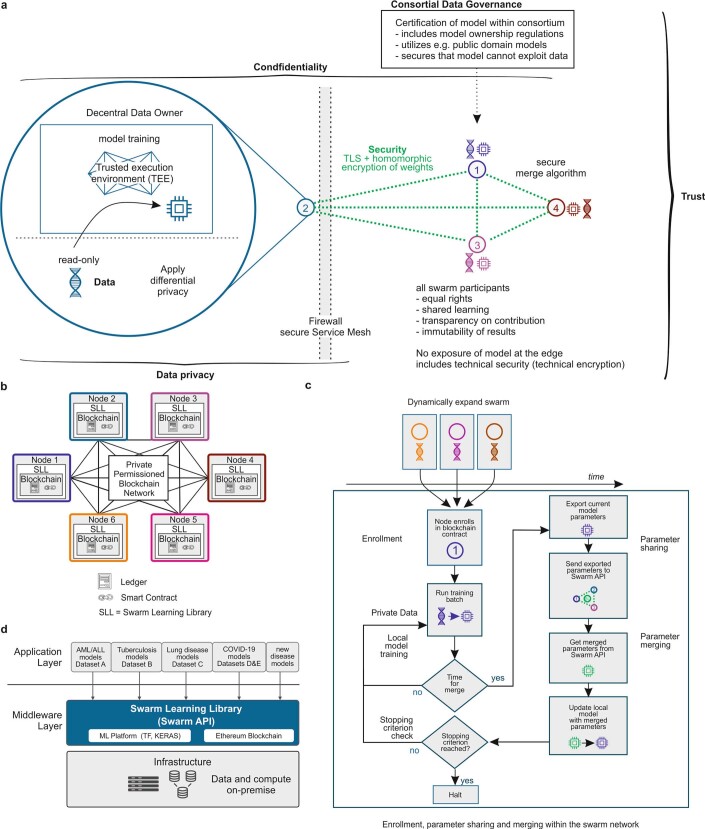
Fast and reliable detection of patients with severe and heterogeneous illnesses is a major goal of precision medicine 1,2 . Patients with leukaemia can be identified using machine learning on the basis of their blood transcriptomes 3 . However, there is an increasing divide between what is technically possible and what is allowed, because of privacy legislation 4,5 . Here, to facilitate the integration of any medical data from any data owner worldwide without violating privacy laws, we introduce Swarm Learning—a decentralized machine-learning approach that unites edge computing, blockchain-based peer-to-peer networking and coordination while maintaining confidentiality without the need for a central coordinator, thereby going beyond federated learning. To illustrate the feasibility of using Swarm Learning to develop disease classifiers using distributed data, we chose four use cases of heterogeneous diseases (COVID-19, tuberculosis, leukaemia and lung pathologies). With more than 16,400 blood transcriptomes derived from 127 clinical studies with non-uniform distributions of cases and controls and substantial study biases, as well as more than 95,000 chest X-ray images, we show that Swarm Learning classifiers outperform those developed at individual sites. In addition, Swarm Learning completely fulfils local confidentiality regulations by design. We believe that this approach will notably accelerate the introduction of precision medicine.
Verified 2026-10-05 · 1 reference not checked yet
Overview
CoChat Summary
TL;DR
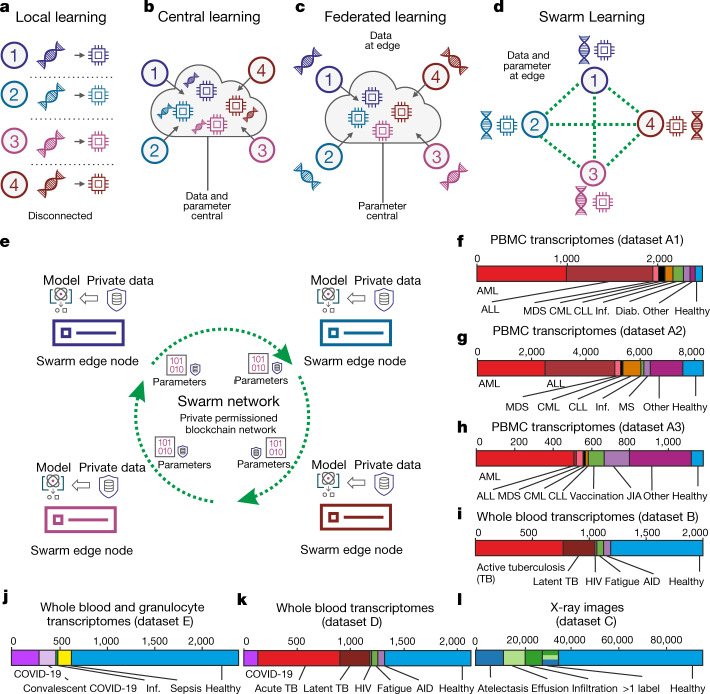
Swarm Learning (SL) is a decentralized machine-learning approach that combines edge computing, permissioned blockchain peer-to-peer networking, and coordination without a central parameter server, preserving confidentiality by design. Across four disease use cases—leukaemia, tuberculosis, COVID-19, and lung pathologies—SL classifiers trained on distributed data outperformed classifiers developed at individual sites and were close to or equivalent to centralized models.
Key findings
- Using more than 16,400 blood transcriptomes from 127 clinical studies and more than 95,000 chest X-ray images, SL outperformed individual nodes across leukaemia, tuberculosis, COVID-19, and lung pathology use cases; central models were only slightly better or equivalent in several scenarios.
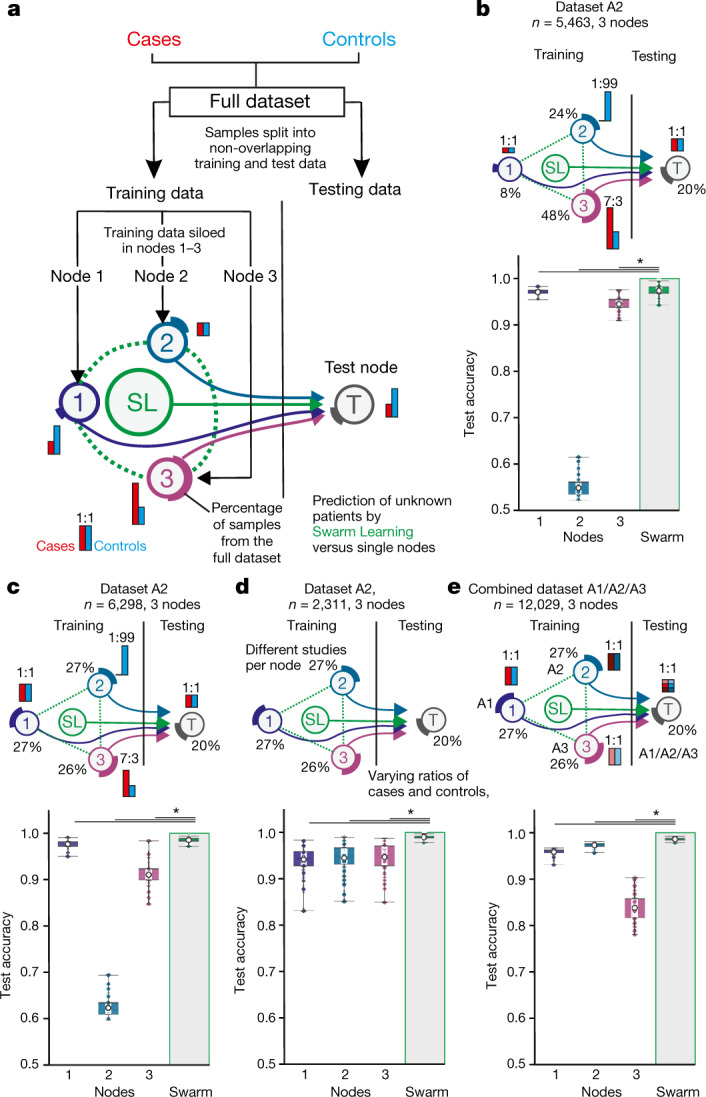
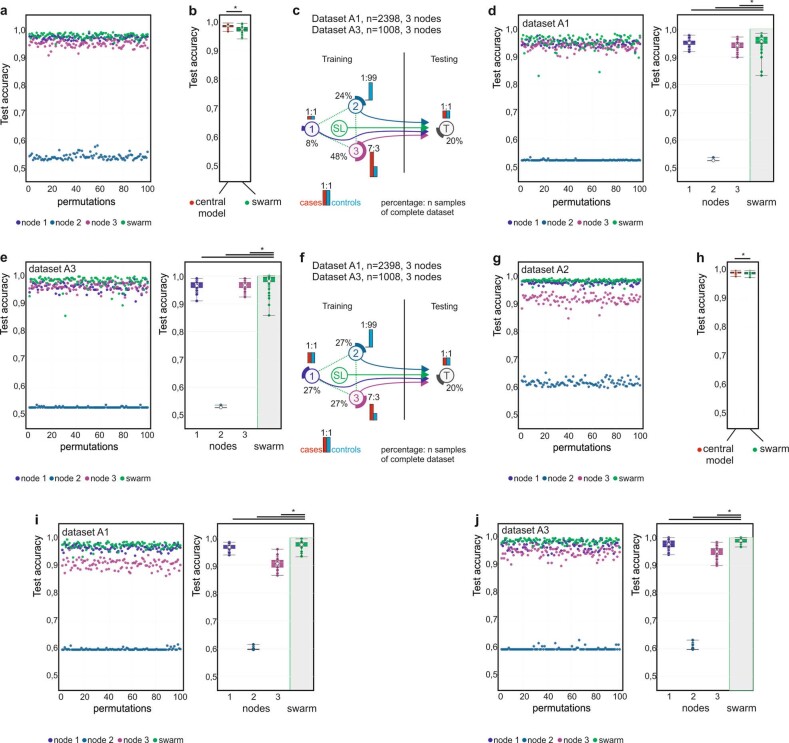
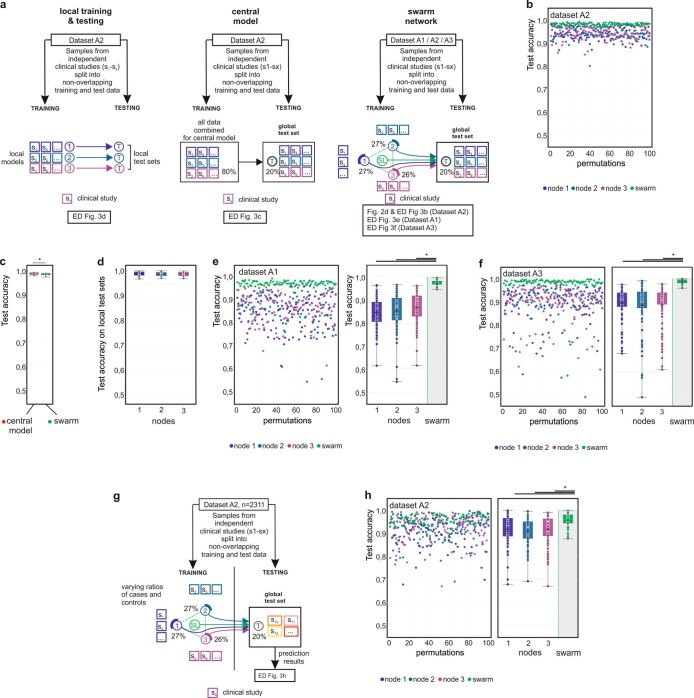
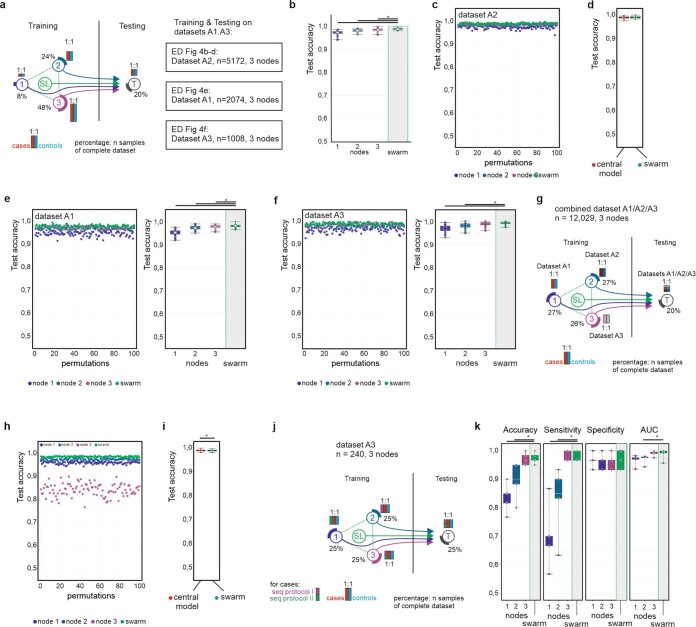
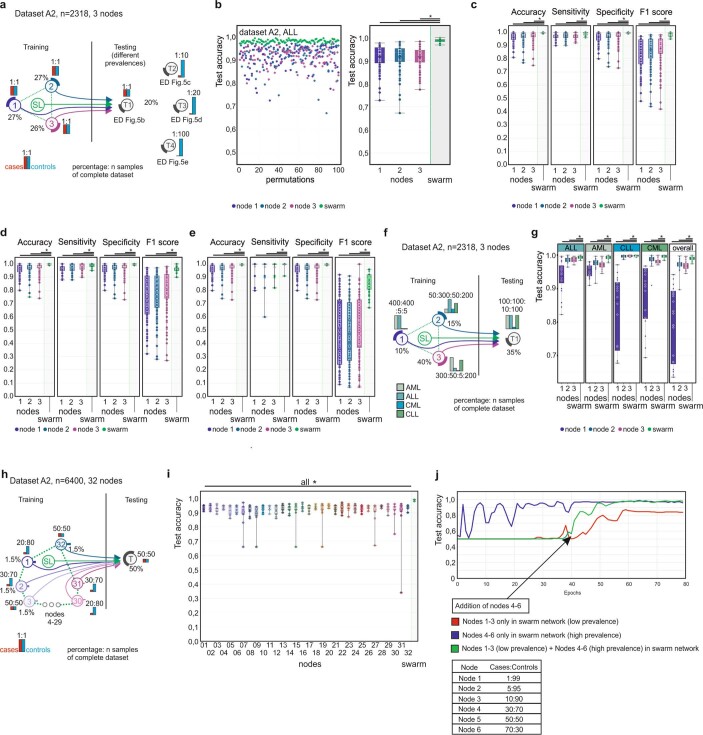
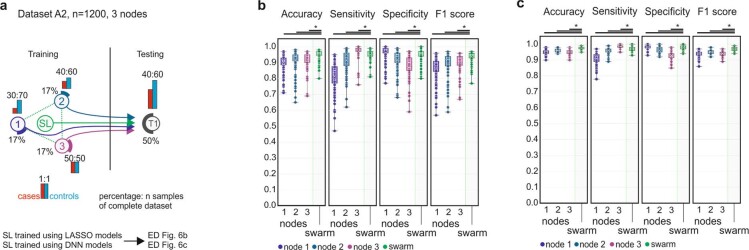
- In leukaemia PBMC datasets A1–A3, comprising more than 12,000 individuals, SL outperformed each node across multiple scenarios, including uneven case/control distributions, study-specific siloing, different transcriptomic technologies, up to 32 nodes, and LASSO instead of deep neural networks.
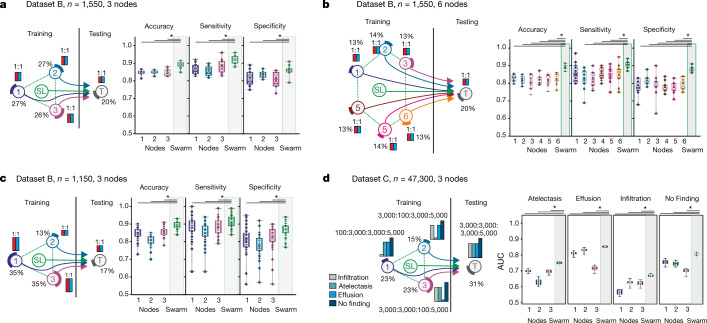
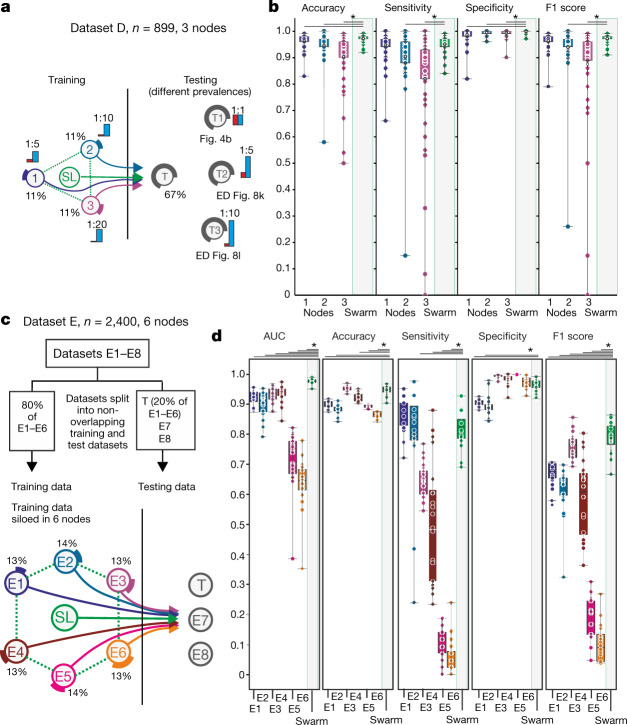
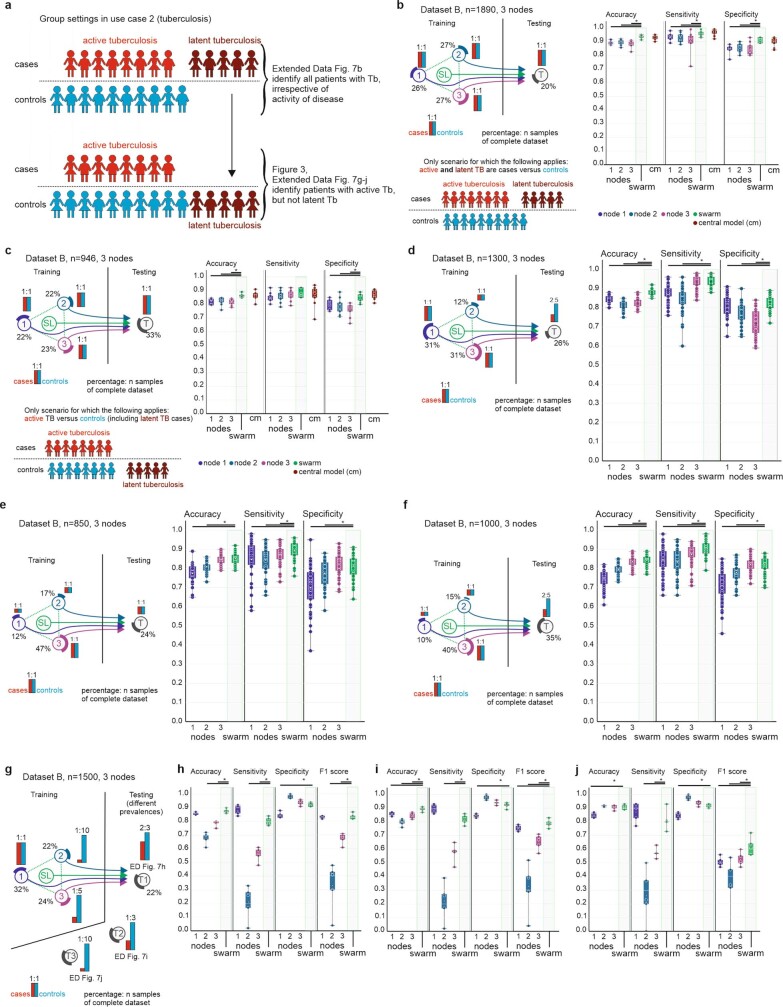
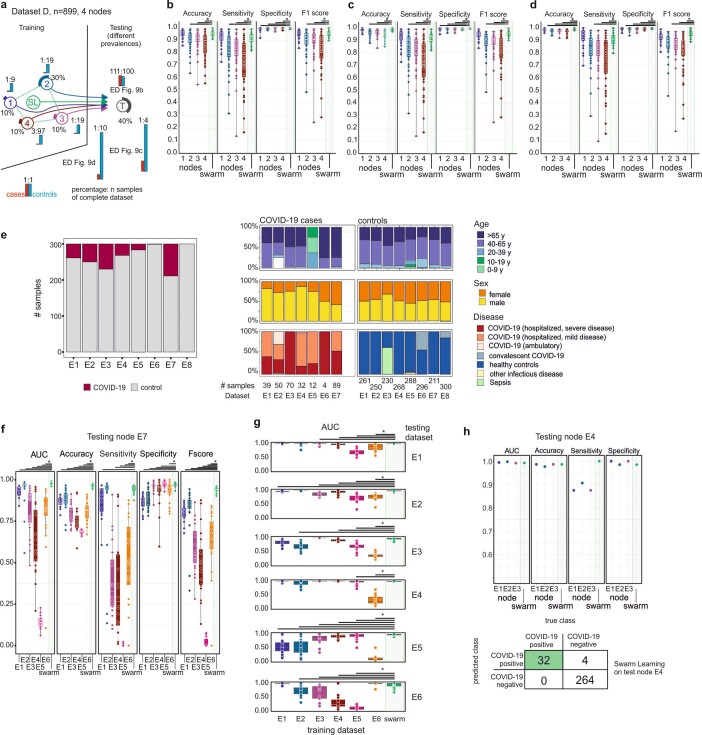
- For tuberculosis, SL outperformed individual nodes even when training samples were reduced by 50% or split into six smaller nodes; for COVID-19, SL outperformed all nodes in AUC on global test datasets and predicted samples from other centres when individual centre nodes could not.
- Overall, 16,694 analyses were performed across 26 AML, 4 ALL, 13 TB, 1 X-ray, and 18 COVID-19 scenarios, with 5–100 permutations per scenario and a total of 8,347 computer hours.
Methods
- Design: decentralized SL framework using edge nodes and a permissioned blockchain for secure onboarding, dynamic leader election, and parameter merging, with no central parameter server; raw data remain local and model parameters are exchanged and merged.
- Data: PBMC transcriptome datasets A1 (n = 2,500), A2 (n = 8,348), and A3 (n = 1,181); whole-blood datasets B (n = 1,999), D (n = 2,143), and E (n = 2,400); chest X-ray dataset C (95,831 images); simulations used 3–32 training nodes and independent test nodes.
- Analysis: deep neural network (Keras sequential) and LASSO; performance metrics included sensitivity, specificity, accuracy, F1 score, and AUC; differences were tested with one-sided Wilcoxon signed-rank test with continuity correction, using 5–100 permutations per scenario.
Limitations
- Stated: no statistical methods were used to predetermine sample size; experiments were not randomized, although permutations were performed; investigators were not blinded to allocation during experiments and outcome assessment.
- Stated/implied: SL performance was tested in simulated siloing and outbreak scenarios using existing datasets, not in a prospective real-world multi-centre clinical deployment; the paper notes potential limitations in TB outbreak scenarios but does not quantify them.
- Evident: although confidentiality is preserved by design and no raw data are exchanged, model parameters are shared; the paper suggests SL can inherit differential privacy, functional encryption, or encrypted transfer learning, but these were not implemented or tested here.
Model-written summary. Check it against the paper before relying on it.
Integrity signals
Registry
Cites
Statistics
Figures
Verification
Claims the paper makes
6 Valid · 0 Not valid · 7 Not checked · 58 Own results and interpretations
The cited sources support only part of this claim — read each source’s verdict below.
In the paper
“As medicine is inherently decentral, the volume of local data is often insufficient to train reliable classifiers20,21.”
§ Swarm Learning for decentralized and confidential clinical machine learning > Main
What the sources say
- Not checked yetcites [20] Rajkomar A Dean J Kohane I Machine learning in medicine N. Engl. J. Med. 2019 380 1347 1358 10.1056/NEJMra1814259 30943338 source
- Partly supportedcites [21] Savage N Calculating disease Nature 2017 550 S115 S117 10.1038/550S115a 29045372 sourceExperimental — accuracy not yet measured
In “BIOPSY BY NUMBERS” (page unavailable), the paper says a researcher wants a much larger dataset to validate and refine an ALS classification algorithm, and describes a shared MRI repository assembled to provide larger datasets. It does not say that medicine is inherently decentralized or that local datasets are often insufficient to train reliable classifiers; it also reports good predictions from a relatively small dataset. (LLM, conf=0.78)
plainstates a cause- Asserted: passes — The authors put it forward as true.
- Checkable: passes — It can be checked against evidence.
- Load-bearing: passes — The paper’s conclusions depend on it.
- Based: passes — The paper gives a reason why it holds.
The cited sources support only part of this claim — read each source’s verdict below.
In the paper
“With increasing efforts to enforce data privacy and security5,9,10 and to reduce data traffic and duplication, a decentralized data model will become the preferred choice for handling, storing, managing, and analysing any kind of large medical dataset19.”
§ Swarm Learning for decentralized and confidential clinical machine learning > Discussion
What the sources say
- Partly supportedcites [19] Kaissis GA Makowski MR Rückert D Braren RF Secure, privacy-preserving and federated machine learning in medical imaging Nat. Mach. Intell. 2020 2 305 311 10.1038/s42256-020-0186-1 sourceExperimental — accuracy not yet measured
The Outlook section of our copy supports the direction of the claim: it states that decentralized data storage and federated learning systems are 'replacing the current paradigm of data sharing and centralized storage' and are driven by privacy requirements, and the paper elsewhere notes such methods 'should require minimal or no data transfer'. However, the source hedges this as having 'the greatest potential to enable privacy-preserving cross-institutional research in a breadth of biomedical disciplines in the near future', whereas the citing sentence asserts it as a certainty ('will become the preferred choice') and extends it to 'handling, storing, managing, and analysing any kind of large medical dataset' — a scope and a confidence level the source does not claim. The 'reduce data traffic and duplication' motive is only partly reflected (the paper in fact lists communication overhead and burdensome data transfer as limitations of decentralized/federated and SMPC approaches). (LLM, conf=0.72)
plainstates a cause- Asserted: passes — The authors put it forward as true.
- Checkable: unclear — It is unclear whether it could be checked against evidence.
- Load-bearing: passes — The paper’s conclusions depend on it.
- Based: passes — The paper gives a reason why it holds.
- Partly supported
The cited sources support only part of this claim — read each source’s verdict below.
In the paper
“with current privacy regulations5,9,10 making it less appealing to develop centralized AI systems”
§ Swarm Learning for decentralized and confidential clinical machine learning > Discussion
What the sources say
- Partly supportedcites [5] Price WN II Cohen IG Privacy in the age of medical big data Nat. Med. 2019 25 37 43 10.1038/s41591-018-0272-7 30617331 PMC6376961 sourceExperimental — accuracy not yet measured
Price & Cohen (2019) do support the general thrust: in 'A path forward' they write that 'The basic harm of privacy overprotection is the brakes it puts on data-driven innovation,' that privacy protections limit data aggregation and innovative data use, and that 'Patchy, fragmented health data make data-driven innovation hard, imposing both technological and economic hurdles' (A path forward); they also note in 'Why do we need big data in health?' that AI uses 'require very large sets of data' and that without them 'algorithms cannot be trained or ... evaluated.' But our copy nowhere contrasts centralized with decentralized/federated architectures, and says nothing about privacy regulation making 'centralized' AI systems specifically less appealing — that comparative claim is the citing authors'. The paper's regulatory discussion is also confined to U.S. law (HIPAA de-identification, covered entities), narrower than the unqualified 'current privacy regulations' in the citing sentence. (LLM, conf=0.72)
- Not checked yetcites [9] Kels CG HIPAA in the era of data sharing J. Am. Med. Assoc. 2020 323 476 477 10.1001/jama.2019.19645 32016301 source
- Not checked yetcites [10] McCall B What does the GDPR mean for the medical community? Lancet 2018 391 1249 1250 10.1016/S0140-6736(18)30739-6 29619949 source
plainstates a cause- Asserted: passes — The authors put it forward as true.
- Checkable: passes — It can be checked against evidence.
- Load-bearing: passes — The paper’s conclusions depend on it.
- Based: passes — The paper gives a reason why it holds.
- Partly supported
Every source the paper cites for this claim was checked and supports it.
In the paper
“but progress is hindered by the limited size of datasets19”
§ Swarm Learning for decentralized and confidential clinical machine learning > Discussion
What the sources say
- Supportedcites [19] Kaissis GA Makowski MR Rückert D Braren RF Secure, privacy-preserving and federated machine learning in medical imaging Nat. Mach. Intell. 2020 2 305 311 10.1038/s42256-020-0186-1 source
The opening of our copy (Abstract/front-matter, p. 305) states that 'the broad application of artificial intelligence techniques in medicine is currently hindered by limited dataset availability for algorithm training and validation.' The Introduction (Abstract section, p. 305) ties progress specifically to oncology applications (tumour detection, genomic characterization, subtyping, grading, outcome/relapse risk) to 'the release of large, curated corpora of images', notes that 'even the largest current imaging studies in the field ... include considerably less data than, for example, ImageNet', and that 'the inability to access and leverage this data poses a significant barrier to AI applications in this field.' This supports the paraphrase that limited dataset size hinders progress in oncology machine learning, with the caveat that the source's scope is medical imaging AI generally rather than oncology alone. (LLM, conf=0.85)
plainstates a cause- Asserted: passes — The authors put it forward as true.
- Checkable: passes — It can be checked against evidence.
- Load-bearing: passes — The paper’s conclusions depend on it.
- Based: passes — The paper gives a reason why it holds.
- Supported
A result the paper reports from its own data — it cites no other source for it, so there is none to check. The quote shows it is in the paper.
In the paper
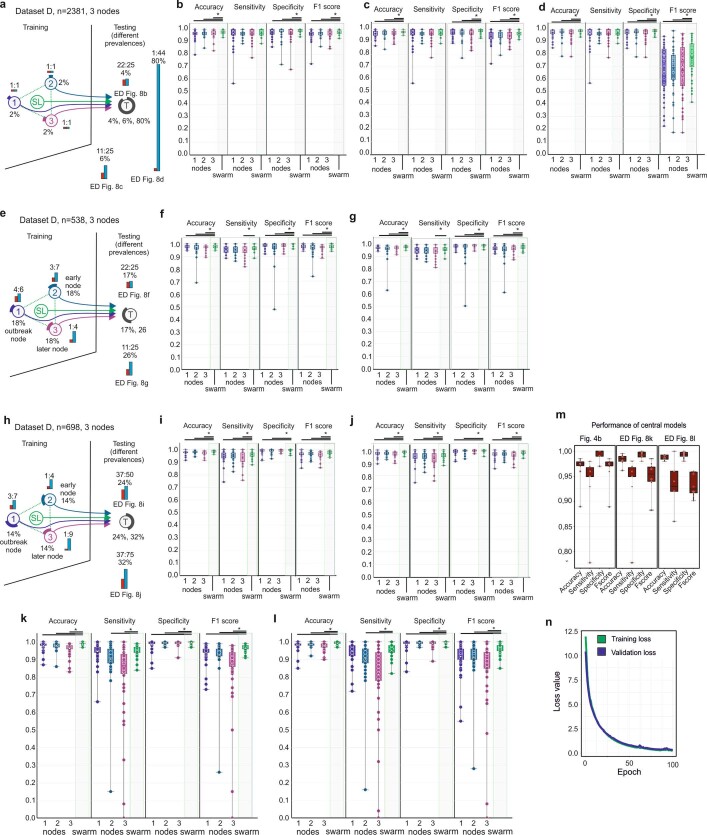
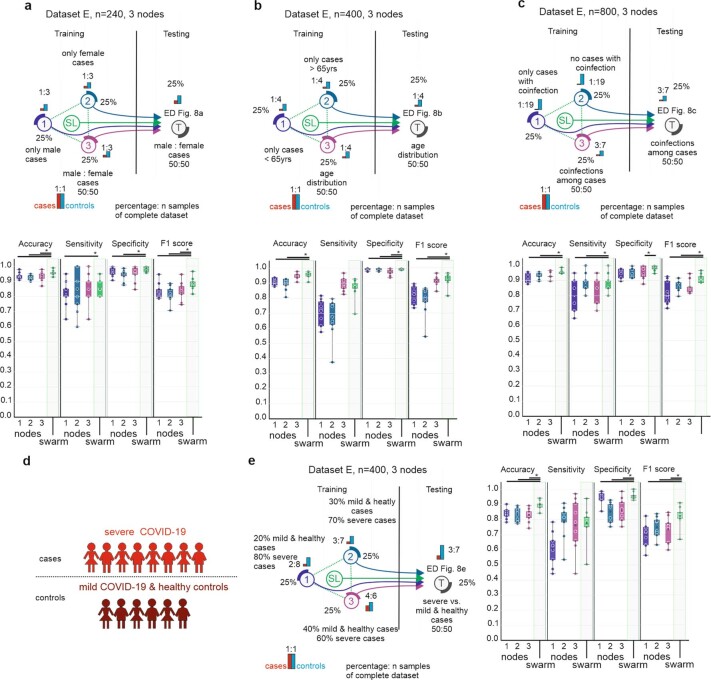
“When we reduced cases at training nodes, all performance measures remained very high at the test node for SL and individual nodes (Extended Data Fig. 8e–j).”
§ Swarm Learning for decentralized and confidential clinical machine learning > Identification of COVID-19
plain- Asserted: passes — The authors put it forward as true.
- Checkable: passes — It can be checked against evidence.
- Load-bearing: unclear — It is unclear whether the paper’s conclusions depend on it.
- Based: passes — The paper gives a reason why it holds.
32 more claims
Create a free account to see all 71 claims and to verify the 16 references still open.
- It may state two separate claims as one. 18
- Probably not a substantial claim. 20
Claims other papers make about this one
Each is checked against this paper’s own text: does it say what the citing paper says it does?
The source backs part of the claim, not all of it — or backs it for a different population, condition or comparison.
In the citing paper
“It can also overcome the straggler dilemma with heterogeneous hardware, as well as improve the robustness to data poisoning attacks and master node fails [35], [145].”
From Edge artificial intelligence for 6g: vision, enabling technologies, and applications (2022) · cites this paper as [35]
Experimental — accuracy not yet measuredThe source backs part of the claim, not all of it — or backs it for a different population, condition or comparison.
In the citing paper
“FL allows training of AI models through averaging of local updates from numerous healthcare facilities and smart devices, such as IoMT, despite the lack of local data.”
From Federated learning-based AI approaches in smart healthcare: Concepts, taxonomies, challenges and open issues (2023) · cites this paper as [11]
Experimental — accuracy not yet measuredThe source backs part of the claim, not all of it — or backs it for a different population, condition or comparison.
In the citing paper
“Federated Learning has presented itself as a viable method for implementing economic, innovative healthcare systems while ensuring privacy [11–15].”
From Federated learning-based AI approaches in smart healthcare: Concepts, taxonomies, challenges and open issues (2023) · cites this paper as [11]
Experimental — accuracy not yet measuredThe cited source says what the claim attributes to it.
In the citing paper
“In particular, swarm learning [35] provides a completely decentralized AI solution based on decentralized ML by keeping local datasets at each edge device.”
From Edge artificial intelligence for 6g: vision, enabling technologies, and applications (2022) · cites this paper as [35]
The cited source says what the claim attributes to it.
In the citing paper
“Besides, swarm learning has recently been developed in [35] to provide a decentralized and confidential clinical disease detection solution for diseases (e.g., COVID-19, tuberculosis, and leukaemia).”
From Edge artificial intelligence for 6g: vision, enabling technologies, and applications (2022) · cites this paper as [35]
6 more claims about this paper
Create a free account to see every claim other papers make about this one.
Citations
Cites
Moderated estimation of fold change and dispersion for RNA-seq data with DESeq2
Love, M. I., Huber, W., & Anders, S. (2014) · Genome Biology · doi:10.1186/s13059-014-0550-8 · Cited by 95,106
LeCun, Y., Bengio, Y., & Hinton, G. (2015) · Nature · doi:10.1038/nature14539 · Cited by 84,126
Scikit-learn: Machine Learning in Python
Pedregosa, F., Varoquaux, G., Gramfort, A., Michel, V., Thirion, B., Grisel, O., Blondel, M., Müller, A., Nothman, J., Louppe, G., et al. (2012) · arXiv · doi:10.48550/arxiv.1201.0490 · Cited by 71,016
STAR: ultrafast universal RNA-seq aligner
Dobin, A., Davis, C. A., Schlesinger, F., Drenkow, J., Zaleski, C., Jha, S., Batut, P., Chaisson, M., & Gingeras, T. R. (2013) · Bioinformatics · doi:10.1093/bioinformatics/bts635 · Cited by 51,709
Bootstrap methods: another look at the jackknife
Efron, B. (1979) · The Annals of Statistics · doi:10.1214/aos/1176344552 · Cited by 17,602
Dermatologist-level classification of skin cancer with deep neural networks
Esteva, A., Kuprel, B., Novoa, R. A., Ko, J., Swetter, S. M., Blau, H. M., & Thrun, S. (2017) · Nature · doi:10.1038/nature21056 · Cited by 14,362 · cited 1×
“Particularly in oncology, success has been reported in machine-learning-based tumour detection 3,37 , sub-typing 38 , and outcome prediction 39 , but progress is hindered by the limited size of datasets 19 , with current privacy regulations 5,9,10 making it less appealing to develop centralized AI…”
BackgroundCommunication-Efficient Learning of Deep Networks from Decentralized Data
McMahan, H. B., Moore, E., Ramage, D., Hampson, S., & Arcas, B. A. Y. (2016) · arXiv · doi:10.48550/arxiv.1602.05629 · Cited by 14,215
Gene Expression Omnibus: NCBI gene expression and hybridization array data repository
Edgar, R. (2002) · Nucleic Acids Research · doi:10.1093/nar/30.1.207 · Cited by 13,288
Exploration, normalization, and summaries of high density oligonucleotide array probe level data
Irizarry, R. A. (2003) · Biostatistics · doi:10.1093/biostatistics/4.2.249 · Cited by 10,603
Detection of 2019 novel coronavirus (2019-nCoV) by real-time RT-PCR
Corman, V. M., Landt, O., Kaiser, M., Molenkamp, R., Meijer, A., Chu, D. K., Bleicker, T., Brünink, S., Schneider, J., Schmidt, M. L., et al. (2020) · Eurosurveillance · doi:10.2807/1560-7917.es.2020.25.3.2000045 · Cited by 7,344 · cited 10×
“We obtained very similar results using datasets A1 and A3, which strongly supports the idea that the improvement in performance of SL is independent of data collection (clinical studies) or the technologies (microarray or RNA-seq) used for data generation (Extended Data Fig.”
MethodInfluential
Cited by
Items 601–700 of 944
Chen, K., Xu, C., & Wang, H. (2025) · IEEE International Conference on Parallel and Distributed Systems (ICPADS) · doi:10.1109/icpads67057.2025.11322948 · Cited by 2
“Federated Learning (FL) is well-established for privacy-preserving collaboration in medicine across imaging, EHRs, and drug discovery [19]–[22].”
Decentralized Online Federated Learning With Bandit Feedback in Wireless IoT Networks
Zhao, Z., & Wei, M. (2026) · IEEE Transactions on Mobile Computing · doi:10.1109/tmc.2026.3672595 · Cited by 2
“The network is modeled as an unbalanced network with row stochasticity and the weight of each edge is assumed to be 3) Baseline Selection: We compare our algorithm to FedAvg [33], the distributed gradient descent algorithm (DGD), Swarm Learning [35] and online mirror descent (OMD) [34].”
Yin, C., Sun, X., Dai, A., Ye, X., Lu, Y., Wang, W., Chen, Y., Jiang, H., Yu, J., Chong, S., et al. (2026) · APL Bioengineering · doi:10.1063/5.0299327 · Cited by 2
Zhao, Z., Alzubaidi, L., Alwzwazy, H. A., Zhang, J., Alammar, Z., & Gu, Y. (2026) · Artificial Intelligence Review · doi:10.1007/s10462-026-11540-7 · Cited by 2
Privacy Decentralized Online Federated Learning for Smart Healthcare Service Systems
Jiang, L., Ming, X., & Wei, M. (2026) · IEEE Transactions on Network and Service Management · doi:10.1109/tnsm.2026.3680310 · Cited by 2
“Warnat-Herresthal et al. proposed Swarm Learning, a DFL approach that combines edge computing and blockchain, achieving good performance in various disease classification tasks in [17].”
Ferdowsi, M., Moustafa, N., Keshk, M., & Turnbull, B. (2026) · Electronics · doi:10.3390/electronics15071519 · Cited by 4
AI‐Driven Cancer Multi‐Omics: A Review From the Data Pipeline Perspective
Liu, S., Li, S. X., & Qian, K. (2026) · Advanced Intelligent Discovery · doi:10.1002/aidi.202500249 · Cited by 2
Privacy-Preserving Medical Image Sharing using Federated Learning and Watermarking
D.Kavitha, Mosses, A., Pitchandi., R., Sumiya, S., & Sukumar, T. (2026) · International Conference on Expert Clouds and Applications (ICOECA) · doi:10.1109/icoeca68095.2026.11485538 · Cited by 2
“Rising distributed designs like swarm learning use blockchain-based peer-to-peer synchronization [24] to further eliminate the need for a central orchestrator.”
Large-scale analysis of temporal gene expression variation in peripheral blood
Mishra, N., Kimmig, F., Vandeputte, D., Talevi, V., Commer, L. D., Verspecht, C., Vila, A. V., Moustafa, J. S. E.-S., Kreft, Ł., Botzki, A., et al. (2026) · Nature Communications · doi:10.1038/s41467-026-73218-6 · Cited by 3
“During During the SARS-CoV2 pandemic, RNA-based analyses from peripheral blood were among the fi rst published molecular studies 11,14,24 – 27 , which delineated mechanisms and biomarkers for a severe disease course and complications, e.g., thromboembolic events or respiratory failure.”
Self-citationJiang, L., Ming, X., Leng, J., Xu, J., Sha, W., & Zhang, X. (2026) · Advanced Engineering Informatics · doi:10.1016/j.aei.2026.104866 · Cited by 2
Rizwan, A., Khan, A. N., Ahmad, R., Khan, Q. W., Choi, M., & Kim, D. H. (2026) · Journal of Parallel and Distributed Computing · doi:10.1016/j.jpdc.2026.105300 · Cited by 2
Advances in the Interpretation of the Electrocardiogram by Artificial Intelligence
Lobodzinski, S. S., & Piotrowicz, R. (2026) · Diagnostics · doi:10.3390/diagnostics16142167 · Cited by 2
“Countermeasures must leverage privacy-preserving architectures, including differential privacy during training, homomorphic encryption for inference, and federated learning paradigms (see Table 8) that update models without exchanging raw patient data [137,138].”
Embedding-Based Federated Learning with Runtime Governance for Iron Deficiency Prediction
Zhang, F., Deltadahl, S., Delouee, M. L., Kreuter, D., Taylor, J., Visser, A., BloodCounts consortium, Rudd, J. H. F., Gleadall, N., Sivapalaratnam, S., et al. (2026) · International Conference on Federated Learning and Intelligent Computing Systems (FLICS) · doi:10.1109/flics70075.2026.11621932 · Cited by 2
“R ELATED W ORK Federated learning has been applied to medical imaging, electronic health records, and multi-centre clinical prediction, with recurrent emphasis on data heterogeneity, generalisation, and deployability [5], [7], [14], [15].”
Federated Multicriteria Learning: A Goal Programming Perspective
Repetto, M., & Torre, D. L. (2022) · International Conference on Decision Aid Sciences and Applications (DASA) · doi:10.1109/dasa54658.2022.9765262 · Cited by 2
Valous, N. A., Charoentong, P., Lenoir, B., Zörnig, I., & Jäger, D. (2022) · ImmunoInformatics · doi:10.1016/j.immuno.2022.100016 · Cited by 2
Digital Biomarkers and Passive Digital Indicators of Generalized Anxiety Disorder
Heinz, M. V., Price, G. D., Song, S. H., Bhattacharya, S., & Jacobson, N. C. (2023) · Springer eBooks · doi:10.1007/978-3-031-10698-9_2 · Cited by 4
Double Auction Mechanism for Cooperative Swarm Learning in Internet of Vehicles
Lin, S., Li, Y., Zhuang, B., Ning, T., Li, Z., Zhang, C., & Zheng, H. (2022) · IEEE Globecom Workshops (GC Wkshps) · doi:10.1109/gcwkshps56602.2022.10008678 · Cited by 3
“Also, as a distributed framework, the originally suggested SL in work [8] is not coordinated by a central authority, which minimizes redundant communication processes as well as communication overhead compared with FL.”
BackgroundSelf-citationTBFL: A Trusted Blockchain-based Federated Learning System
Wu, Y., Chen, G., Liu, Y., Li, C., Hu, M., & Wang, W. (2022) · IEEE International Conference on High Performance Computing and Communications; IEEE International Conference on Smart City; IEEE International Conference on Data Science and Systems (HPCC/SmartCity/DSS) · doi:10.1109/hpcc-dss-smartcity-dependsys57074.2022.00072 · Cited by 3
“Swarm Learning, proposed by Warnat-Herresthal et al. [30], introduces a private permission blockchain where participants can only transact if authorized.”
BackgroundResearch on Fault Management System based on Artificial Intelligence in Data Network
Dong, Y., Wang, X., Fu, F., Lin, Z., Yin, C., Liao, Y., & Lin, P. (2023) · IEEE International Symposium on Broadband Multimedia Systems and Broadcasting (BMSB) · doi:10.1109/bmsb58369.2023.10211345 · Cited by 2
“In literature [4], bee colony learning algorithm is applied to problem solving in distributed environment.”
Blockchain-based engine data trustworthy swarm learning management method
Luo, Z., & Zhang, H. (2024) · Blockchain Research and Applications · doi:10.1016/j.bcra.2023.100185 · Cited by 3
Semi-supervised small-sample gearbox fault diagnosis with privacy protection
Xin, H. E., Duan, Y., Wang, Z., & ZHANG, Y. (2024) · Scientia Sinica Technologica · doi:10.1360/sst-2023-0351 · Cited by 2
Künstliche Intelligenz in der Pathologie: Status quo und Zukunftsperspektiven
Foersch, S., & Schulz, S. (2024) · Die Onkologie · doi:10.1007/s00761-024-01482-6 · Cited by 2
Federated Learning for Seismic Data Denoising: Privacy-Preserving Paradigm
Guruprasad, K. K. M., Ambulkar, G. S., & Nair, G. (2024) · International Petroleum Technology Conference · doi:10.2523/iptc-23888-ms · Cited by 2
Analysis of comprehensive biomolecules in critically ill patients via bioinformatics technologies
Matsumoto, H., Ogura, H., & Oda, J. (2024) · Acute Medicine & Surgery · doi:10.1002/ams2.944 · Cited by 2
“48 As a specific example, a blood atlas (COvid-19 Multi-omics Blood ATlas [COMBAT]) was created during the COVID-19 pandemic to support future drug development.”
MethodCollaborative Multi-Task Learning across Internet Edges with Device-to-Device Communications
Higuchi, R., Esaki, H., & Ochiai, H. (2023) · IEEE International Conference on Internet of Things (iThings) and IEEE Green Computing and Communications (GreenCom) and IEEE Cyber, Physical and Social Computing (CPSCom) and IEEE Smart Data (SmartData) · doi:10.1109/ithings-greencom-cpscom-smartdata-cybermatics60724.2023.00105 · Cited by 2
“Blockchain-based systems [16]–[20] were proposed for updating global models without any centralized mechanisms.”
BackgroundDevelopment Strategy of Collective Intelligence and Its Industrial Clusters
Wu, W., Zheng, Z., Wang, H., Tang, S., & Wang, T. (2024) · Strategic Study of CAE · doi:10.15302/j-sscae-2024.01.008 · Cited by 4
A Conceptual Swarm Intelligence Framework for Deriving a Global Healthcare Machine Learning Model
Davalos, S. V. (2024) · International Journal of Business and Applied Social Science · doi:10.33642/ijbass.v10n5p2 · Cited by 2
Kollinal, R. K., Joseph, J., Kuriakose, S. M., & Govind, P. V. S. (2024) · Cureus · doi:10.7759/cureus.67546 · Cited by 4
“Warnat-Herresthal et al. demonstrate the practicability of employing swarm learning for evolving disease classifiers, displaying its potential to quicken customized medication [5].”
BackgroundDemystifying Swarm Learning: An Emerging Decentralized Federated Learning System
Han, J., Han, Y., Zhang, Y., Jing, X., & Ma, Y. (2024) · IEEE/ACM International Symposium on Cluster, Cloud and Grid Computing (CCGrid) · doi:10.1109/ccgrid59990.2024.00049 · Cited by 2
Application of artificial intelligence as a public health tool: Current scenario and challenges
Kumar, A., Bankar, N. J., Makade, J. G., Kale, Y. S., & Shende, P. (2024) · AIP conference proceedings · doi:10.1063/5.0240283 · Cited by 2
The Western Channel Observatory Automated Plankton Imaging and Classification System
Clark, J. R., Fileman, E. S., Fishwick, J., Rühl, S., & Widdicombe, C. E. (2025) · Oceanography · doi:10.5670/oceanog.2025e106 · Cited by 2
Maurya, A. K., & Verma, K. (2025) · AIP conference proceedings · doi:10.1063/5.0248335 · Cited by 4
Healthchain - Bidimensional Blockchain for Collaborative and Secure Deep Learning in Healthcare
de Souza, R. M. M., Holm, A., Biczyk, M., & de Castro, L. N. (2025) · Lecture notes in networks and systems · doi:10.1007/978-3-031-82073-1_10 · Cited by 2
Setwise Coordinate Descent for Dual Asynchronous Decentralized Optimization
Costantini, M., Liakopoulos, N., Mertikopoulos, P., & Spyropoulos, T. (2025) · IEEE Transactions on Automatic Control · doi:10.1109/tac.2025.3543463 · Cited by 2
“…and computation loads (e.g., training large machine learning models [1]), or to avoid transferring data that is naturally collected in a decentralized manner, either due to the communication costs or to privacy reasons (e.g., sensor networks [2], edge computing [3], and precision medicine [4]).”
SwarmMAP: swarm learning for decentralized cell type annotation in single cell sequencing data
Saldanha, O. L., Goepp, V., Pfeiffer, K., Kim, H., Zhu, J. F., Kramann, R., Hayat, S., & Kather, J. N. (2026) · npj Systems Biology and Applications · doi:10.1038/s41540-026-00667-6 · Cited by 2
Federated learning for multi-institutional AI in healthcare via digital pathology
Soleimani, R., Azimi, M., & Talebi, N. (2026) · Biomedizinische Technik/Biomedical Engineering · doi:10.1515/bmt-2025-0489 · Cited by 2
“On the other hand, it introduces complexities such as non-IID data distributions, di ff erences in WSI formats and staining protocols, and system-level concerns including latency and communication costs [9, 10].”
Sensitivity of volumetric brain analysis to systematic and random errors
Thanellas, A.-K., & Pollari, M. (2010) · Proceedings - IEEE Symposium on Computer-Based Medical Systems · doi:10.1109/cbms.2010.6042648 · Cited by 3
Künstliche Intelligenz: Infrastrukturen und Voraussetzungen auf europäischer Ebene
Fritsch, S. J., Maaßen, O., & Riedel, M. (2022) · AINS - Anästhesiologie · Intensivmedizin · Notfallmedizin · Schmerztherapie · doi:10.1055/a-1423-8052 · Cited by 2
Multi-index Federated Aggregation Algorithm Based on Trusted Verification
Bao, Z., Bai, W., & Zhang, W. (2022) · Lecture notes in computer science · doi:10.1007/978-3-030-96772-7_37 · Cited by 2
When blockchain meets artificial intelligence: An application to cancer histopathology
Hong, R., & Fenyö, D. (2022) · Cell Reports Medicine · doi:10.1016/j.xcrm.2022.100666 · Cited by 2
“An alternative option is swarm learning (SL), which uses blockchain-based coordination between each locally trained models, eliminating the central coordinator of FL.(9) When training multicentric models on medical data, SL has its advantages over FL, because it centralizes neither the data nor the models (Figure 1).”
BackgroundA Three-layer Security Assurance Model for a Decentralized Federated Learning System
Liu, J., Wang, Z., Yang, Q. P., & Wu, S. X. (2022) · Wireless and Optical Communications Conference · doi:10.1109/wocc55104.2022.9880591 · Cited by 3
Bidirectional Contrastive Split Learning for Visual Question Answering
Sun, Y., & Ochiai, H. (2024) · Proceedings of the AAAI Conference on Artificial Intelligence · doi:10.1609/aaai.v38i19.30158 · Cited by 4
“Decentralized Machine Learning (DML) (Sun, Ochiai, and Esaki 2021) encompasses methods such as Federated Learning (FL) (McMahan et al. 2017; He et al. 2021; Pillutla et al. 2022), Split Learning (SL) (Thapa et al. 2022), and Swarm Learning (Warnat et al. 2021).”
MethodEfficiently Distributed Federated Learning
Mittone, G., Birke, R., & Aldinucci, M. (2024) · Lecture notes in computer science · doi:10.1007/978-3-031-48803-0_40 · Cited by 2
“…like FedML [8] and NVIDIA FLARE [18], and usually only one, like Intel OpenFL [17], and FLOWER [3]; this means that the federation structure is hard-coded in the framework itself, and a peer-to-peer federation created by HP Swarm Learning [21] cannot be replicated with Intel OpenFL, and vice-versa.”
Foldercase: A Science-Focused Platform Supporting Collaborative ResearchPreprint
Schwarz, E. (2022) · SSRN Electronic Journal · doi:10.2139/ssrn.4174576 · Cited by 2
MentalHealthAI: Utilizing Personal Health Device Data to Optimize Psychiatry TreatmentPreprint
Shukla, M., & Seneviratne, O. W. (2023) · PubMed Central · doi:10.48550/arxiv.2307.04777 · Cited by 8
“At the same time, input features are all uniform in the original swarm learning implementation 17 , which we believe is an assumption that may not hold in other decentralized settings.”
BackgroundInfluentialDistributed cloud-edge analytics and machine learning for transportation emissions estimation
Gutierrez-Torre, A. (2022) · UPCommons institutional repository (Universitat Politècnica de Catalunya) · doi:10.5821/dissertation-2117-380817 · Cited by 2
Similarity Distribution Density: An Optimized Approach to Outlier Detection
Quan, L., Gong, T., & Jiang, K. (2023) · Electronics · doi:10.3390/electronics12204227 · Cited by 1
Beyond “business as usual”: lessons from FIFA for fair benefit-sharing in global health
Wahl, B., Butin, G., Gombe, S., Demiray, A., & Schwalbe, N. (2024) · Health Affairs Scholar · doi:10.1093/haschl/qxae068 · Cited by 1
“One example of decentralized access is swarm learning, 15 an artificial intelligence–enabled decentralized approach to data that allows multiple data owners to collaborate on model development and share insights while retaining the data locally.”
Artificial intelligence in healthcare
Canelas‐Pais, M., Coutinho‐Almeida, J., Araujo, S. M., Rafael, F. M., Cruz-Correia, R. J., & Rodrigues, P. P. (2024) · Elsevier eBooks · doi:10.1016/b978-0-323-91819-0.00009-9 · Cited by 1
Xu, J., Feng, B., Shi, J., Lu, S., Chen, Y., & Chen, X. (2024) · International Conference on Internet of Things and Cloud Computing Technology (IoTCCT) · doi:10.1145/3702879.3702906 · Cited by 1
“However, training artificial intelligence algorithms that are useful for clinical decision support often require a large amount of data as support, necessitating data sharing between multiple institutions [ 5 ] .”
Role of Genomics in Neonatal Care and Research—A Narrative Review
Kar, S. S., Dube, R., George, B. T., & Jhancy, M. (2024) · OBM Genetics · doi:10.21926/obm.genet.2404276 · Cited by 1
Puskaric, M., Attieh, H. A., Praßer, F., Gusinow, R., Dellacasa, C. M., Rossi, E., Naranjo, J. M., Canziani, L. M., Górska, A., & Hasenauer, J. (2024) · IEEE International Conference on Big Data (BigData) · doi:10.1109/bigdata62323.2024.10825699 · Cited by 1
A Network-Based Intrusion Detection System for Internet of Things on Swarm Learning
Van-Thien, L., Vu-Minh, D., Duong-Tran-Tra, M., Pham-Nguyen-Hai, A., Nguyen-Dam-Nhat, A., Nguyen-Khanh, T., & Le‐Trung, Q. (2024) · IEEE International Conference on Communication, Networks and Satellite (COMNETSAT) · doi:10.1109/comnetsat63286.2024.10862791 · Cited by 1
“To address this limitation, Swarm Learning (SL) [15] has been proposed as a decentralized, privacy-preserving Machine Learning framework, where each node within the SL network is capable of aggregating models collected from the remaining nodes, thereby eliminating the central Fig.”
Towards A Common Task Framework for Distributed Collaborative Machine Learning
Liao, Q., Landuyt, D. V., Preuveneers, D., & Joosen, W. (2025) · IEEE International Conference on Software Testing, Verification and Validation Workshops (ICSTW) · doi:10.1109/icstw64639.2025.10962497 · Cited by 1
“Peer-to-Peer ML (P2PL), also known as fully decentralized ML [8], Gossip Learning [9] and Swarm Learning [22], is a DCML approach where clients learn simultaneously from their own local data, and interact directly among each other (e.g., to local neighbors) to share and aggregate models.”
Swarm Dynamic Spectrum Access for Internet-of-Things
Wang, Y., Shen, B., Li, F., & Lam, K. (2025) · IEEE Wireless Communications and Networking Conference · doi:10.1109/wcnc61545.2025.10978419 · Cited by 1
“Inspired by blockchain networks, Warnat-Herresthal et al. proposed SL [15] based on FL. Unlike FL, which uses a centralized server to collect and aggregate model parameters, SL creates the initial model locally by edge nodes using private datasets.”
Ghaderi, M., Chitzan-Zadeh, K., Mokarami, M., Mokarami, M., Shokoohi, M., & Vafa, R. G. (2025) · Next research. · doi:10.1016/j.nexres.2025.100472 · Cited by 1
Duda, L., Alibabaei, K., Vollmer, E., Klug, L., Kozlov, V. Y., Berberi, L., Benz, M., Volk, R., Muriedas, J. P. G. H., Götz, M., et al. (2025) · Lecture notes in computer science · doi:10.1007/978-3-031-97000-9_18 · Cited by 2
“This process enables collaborative model training while reducing the need to share raw data; however, information leakage risks may still exist without additional privacy safeguards such as differential privacy [8,46].”
Scandola, M., Esposito, M. J., Guidotti, R., & Romano, D. (2025) · Journal of Neuropsychology · doi:10.1111/jnp.70009 · Cited by 2
“In this context, decentralised approaches like Swarm Learning and the possibility of leveraging Transfer Learning offer promising alternatives that preserve data privacy while facilitating cross-institutional model training (Hosna et al., 2022; Warnat-Herresthal et al., 2021).”
Saxena, P., Singh, S. K., Rashid, M., & Alshamrani, S. S. (2025) · Traitement du signal · doi:10.18280/ts.420410 · Cited by 1
“Such tools can bridge the gap between algorithmic output and clinical reasoning [42, 43].”
Smart Telemedicine: Leveraging IoT to Transform Remote Healthcare Monitoring and Access
Arena, F., Pau, G., Salerno, V. M., Ruggieri, M., Ricciardello, A., Scuro, C., & Collotta, M. (2025) · IEEE International Workshop on Metrology for Living Environment (MetroLivEnv) · doi:10.1109/metrolivenv64961.2025.11106989 · Cited by 1
“Telemedicine—defined as the provision of healthcare services over distances via digital technologies— has gained prominence as a means to address longstanding barriers in healthcare accessibility and efficiency [2].”
InfluentialCarstens, M., Pfeiffer, M., Speidel, S., Distler, M., Weitz, J., & Kolbinger, F. R. (2025) · Die Chirurgie · doi:10.1007/s00104-025-02366-0 · Cited by 1
Kumar, S., Malviya, R., Sridhar, S. B., Shareef, J., & Wadhwa, T. (2025) · Anti-Inflammatory & Anti-Allergy Agents in Medicinal Chemistry · doi:10.2174/0118715230389406250906142050 · Cited by 1
Trustworthy Multi-Hop Cooperative Task Offloading in Device-Edge-Cloud Computing
Liu, J., Wang, X., Yu, S., Xue, G., & Li, M. (2025) · IEEE Transactions on Services Computing · doi:10.1109/tsc.2025.3615156 · Cited by 1
“For example, nodes in DEC can collaborate in training a machine learning model in swarm learning(SL)[5].”
Federated Learning Models for Privacy-Preserving Medical Image Analysis
Kumar, S., & Vinoth Kumar, S. (2025) · International Innovative Research Journal of Engineering and Technology · doi:10.32595/iirjet.org/v10i4.2025.226 · Cited by 3
Xiao, Y., Guo, S., Yang, Z., & Luo, Y.-Z. (2025) · IEEE Transactions on Aerospace and Electronic Systems · doi:10.1109/taes.2025.3625899 · Cited by 1
“…theory[20],whichofferssubstantialbenefitsindesigning unmannedsystemswithhighadaptabilityandrobustness [21],aswellasdecentralizedswarmlearning[22],serves asacrucialtoolforanalyzingevolutionarydynamicsof complexnetworksystemsandfordevisingstrategiesin distributedmultiagentsystems.”
FedNCV: Optimizing Federated Learning With Networked Control Variates
Liu, Y., Chen, X., Du, H., Wang, M., Zhao, Y., Xu, L., & Xu, Y. (2025) · Transactions on Emerging Telecommunications Technologies · doi:10.1002/ett.70287 · Cited by 1
Emerging Paradigms for Securing Federated Learning Systems
Abouelmagd, A. A., & Hilal, A. E. (2025) · IEEE Global Conference on Artificial Intelligence and Internet of Things (GCAIoT) · doi:10.1109/gcaiot68269.2025.11275564 · Cited by 1
“SI leverages self-organization, peer-to-peer collaboration, and local decision-making to tackle complex problems more effectively than individual agents or centralized systems [47].”
Controlled Self-Recovery of the Aggregator in Federated Learning Using RAFT Protocol
Dautov, R., & Husom, E. J. (2026) · ACM Transactions on Autonomous and Adaptive Systems · doi:10.1145/3785470 · Cited by 1
“While such models improve robustness, they also introduce added complexity and overhead, particularly in large-scale or resource-constrained deployments.”
Acim, B., Izouaouen, Z., Kharmoum, N., & Ziti, S. (2025) · IEEE Access · doi:10.1109/access.2025.3647279 · Cited by 1
Uma, D., & Yogi, M. K. (2026) · Studies in computational intelligence · doi:10.1007/978-3-032-03985-9_31 · Cited by 1
Future Trends in Federated Learning: Enabling Secure and Personalized Healthcare Solutions
Baghel, R. S., & Mamodiya, U. (2026) · Studies in computational intelligence · doi:10.1007/978-3-032-03985-9_40 · Cited by 1
Comparative Evaluation of Machine-Learning Classifiers for High-Dimensional Gene Expression Data
Babichev, S. A., & Yarema, O. R. (2026) · IEEE Access · doi:10.1109/access.2026.3662150 · Cited by 1
“Type C data were constructed based on a meta-analysis of heterogeneous leukemia gene expression profiles from the SuperSeries GSE122517 [16], [17].”
Beyond Centralized AI: Blockchain-Enabled Decentralized Learning
Wang, D., Ma, T., Zhu, J., & Duan, H. (2026) · Future Internet · doi:10.3390/fi18020098 · Cited by 1
“One notable approach to blockchain-enabled decentralized learning is Swarm Learning (SL), proposed by Warnat-Herresthal et al. in 2021 [51].”
InfluentialAutomation 5.0: The Step to Systems Intelligence for a Sustainable Future
Yang, J., Dotoli, M., Wang, Y., Wang, X., Liu, Y., Tian, Y., Ge, J., Ni, Q., Carli, R., Süli, P. P., et al. (2026) · IEEE Transactions on Automation Science and Engineering · doi:10.1109/tase.2026.3668032 · Cited by 1
“Moreover, blockchain and federated learning [60] find application in smart healthcare, serving to authenticate identities and safeguard privacy.”
Human Systems Immunology in the Omics Era: Challenges, Methods, and Emerging Directions
Riemann, L., & Förster, R. (2026) · European Journal of Immunology · doi:10.1002/eji.70164 · Cited by 3
“Here, decentralized swarm learning could enable the integration and joint analysis of data from multiple sources while keeping data locally and preserving privacy [ 104 ].”
Anaissi, A., Huang, W., Hua, J., Akram, J., Hussein, A., & Braytee, A. (2025) · International Conference on Information Technology: IoT and Smart City (ICIT) · doi:10.1145/3787330.3787354 · Cited by 1
“For instance, it has been applied to a multicenter dataset of over 5,000 patients to predict BRAF mutation status and microsatellite instability, outperforming most locally trained models [22].”
Xu, F., Wei, X., Zhao, Z., & Sun, P. (2026) · Scientific Reports · doi:10.1038/s41598-026-44843-4 · Cited by 1
KI-SL: An Efficient and Secure Knowledge Index-Based Swarm Learning Method of Data Collaboration
Kang, H., & Zhang, C. (2026) · IEEE Internet of Things Journal · doi:10.1109/jiot.2026.3676793 · Cited by 1
“As a machine learning framework that integrates blockchain and federated learning, SL [28] enables decentralized collaborative model training to e ff ectively address the data privacy and cooperation challenges inherent in centralized learning, demonstrating immense application value in domains such…”
Josephine, R. A., Zafar Ali Khan, N., & Devi., S. (2025) · International Conference on Signal Processing, Computation, Electronics, Power and Telecommunication (IConSCEPT) · doi:10.1109/iconscept66142.2025.11437031 · Cited by 1
“…offer ultra-wide 320 MHz channels, 4,096 QAM modulation and multi-link capability, achieving throughputs up to 46 Gbps with four times lower latency than Wi Fi 6, whilst LoRaWAN continues as the de facto low power wide area technology providing kilometer scale connectivity at kilobit rates [1].”
Privacy-preserving verification of preprocessing in federated learning for genomic data
Li, W., Halimi, A., Vaidya, J. S., Jiang, X., & Ayday, E. (2026) · JAMIA Open · doi:10.1093/jamiaopen/ooag040 · Cited by 1
Privacy Preserving Federated Learning for Decentralized Electronic Health Records in Smart Cities
Gomathi, D. S., Subramaniam, K., & Srinivasan, D. P. (2025) · International Academic Journal of Science and Engineering · doi:10.71086/iajse/v12i3/iajse1265 · Cited by 1
Rajeswari, R., Janarthanam, S., & Shanthakumar, M. (2026) · International Journal of Drug Delivery Technology · doi:10.25258/ijddt.16.8s.48 · Cited by 1
Wu, X., He, Y., Wang, T., & Cao, B. (2026) · Expert Systems with Applications · doi:10.1016/j.eswa.2026.132322 · Cited by 1
Qasem, M. H., Sariera, T. M. A., Alhumaid, K. F., Alshraah, S. M., Mufleh, A. S. S., & Chihaoui, N. (2026) · Journal of Imaging · doi:10.3390/jimaging12060228 · Cited by 1
Alwzwazy, H. A., Alzubaidi, L., Zhao, Z., Crawford, R., Alnaseri, O., Jurdak, R., & Gu, Y. (2026) · Neural Networks · doi:10.1016/j.neunet.2026.109190 · Cited by 1
Alshawy, R., Al-Dossari, H. Z., & Alyahya, S. (2026) · IEEE Access · doi:10.1109/access.2026.3698732 · Cited by 1
“Visual-based methods dominate this category [50] and leverage deep learning and reinforcement learning to enhance navigation and collaboration among swarm agents.”
Closing the Loop in Precision Oncology: A Digital Twin‐Driven Paradigm for Dynamic Decision‐Making
Zhu, J., Yang, M., Ouyang, C., & Zhang, L. (2026) · iMetaMed · doi:10.1002/imm3.70044 · Cited by 1
Son, N. D. H., Ngan, V. D. T., Nha, L. M., Luong, T. D., Pham, V.-H., & Duy, P. T. (2026) · Computers & Electrical Engineering · doi:10.1016/j.compeleceng.2026.111349 · Cited by 1
Lu, Y., Tian, Y., Zhou, T., Xia, J., Zhao, Z., Sun, H., Liu, K., & Li, J. (2026) · JMIR Formative Research · doi:10.2196/87306 · Cited by 1
“Among them, many used federated learning and have been applied in various tasks [15-18], allowing parties to share only local intermediate results like gradients, thus enabling the training of predictive models without direct original data exposure [19].”
Bilal, K. H., Gibson, J., Kim, D., LEVI, A. W., Nassar, A., Oen, H. O., Robila, V., Saieg, M. A., Shi, Q., Torous, V. F., et al. (2026) · Cancer Cytopathology · doi:10.1002/cncy.70134 · Cited by 1
ST-SL: A spatiotemporal swarm learning architecture for dynamic spectrum access in edge computing
Li, F., Han, D., & Wang, L. (2026) · Ad Hoc Networks · doi:10.1016/j.adhoc.2026.104396 · Cited by 1
Künstliche Intelligenz und maschinelles Lernen in der Diabetesforschung
Nguyen, P., Ohnmacht, A. J., Galhoz, A., Büttner, M., Theis, F. J., & Menden, M. P. (2021) · Der Diabetologe · doi:10.1007/s11428-021-00817-w · Cited by 1
Self-citationArtificial Intelligence in Blood Transcriptomics
Warnat‐Herresthal, S., Oestreich, M., Schultze, J. L., & Becker, M. (2021) · Springer eBooks · doi:10.1007/978-3-030-58080-3_262-1 · Cited by 1
Self-citationAdvancing translational research in neuroscience through multi-task learning
Cao, H., Hong, X., Tost, H., Meyer‐Lindenberg, A., & Schwarz, E. (2022) · Frontiers in Psychiatry · doi:10.3389/fpsyt.2022.993289 · Cited by 2
“For example, one study integrated COVID-19 patients’ information across multiple hospitals for training a prediction model using a variant of a federated algorithm (60).”
MethodZhu, T., Liao, C., Guo, L., Zhou, Z., Ruan, W., Wang, W., Li, X., Zhang, Q., Zheng, H., Wang, S., et al. (2022) · IEEE International Conference on Smart Cloud (SmartCloud) · doi:10.1109/smartcloud55982.2022.00018 · Cited by 1
“# of feature s Run time performance (seconds) MSE of model parameters between PROTECT ION and VERTIGO PROTECTION VERTI GO [19] D P 1 D P 2 DP1 DP2 GN Ne tw ork Tot al”
BackgroundMethodInfluentialWarner, J. L., Rooney, M. K., & Patt, D. A. (2022) · Yearbook of Medical Informatics · doi:10.1055/s-0042-1742521 · Cited by 1
“Warnat-Herresthal, et al., [10] described a decentralized machine-learning approach for privacy-preserving studies.”
BackgroundThreat Modeling in Machine Learning
Raddatz, M. (2022) · Open Conference Proceedings · doi:10.52825/ocp.v2i.161 · Cited by 1
Data Stewardship Plan templates designed to support the FAIR principles
Schultes, E. (2023) · Fair Connect · doi:10.3233/fc-221508 · Cited by 1
Digitalisierung in der Dermatoonkologie: künstliche Intelligenz zur Diagnostik
Sitaru, S., & Zink, A. (2023) · best practice onkologie · doi:10.1007/s11654-022-00461-w · Cited by 1
Analysis of the implementation of federated learning in boundary computing using the FL protocol
Довгаль, В. А. (2023) · Вестник Адыгейского государственного университета серия «Естественно-математические и технические науки» · doi:10.53598/2410-3225-2022-4-311-60-65 · Cited by 1
Metadata
- Authors
- Warnat-Herresthal, S., Schultze, H., Shastry, K. L., Manamohan, S., Mukherjee, S., Garg, V., Sarveswara, R., Händler, K., Pickkers, P., Aziz, N. A., Ktena, S., Tran, F., Bitzer, M., Ossowski, S., Casadei, N., Herr, C., Petersheim, D., Behrends, U., Kern, F., Fehlmann, T., Schommers, P., Lehmann, C., Augustin, M., Rybniker, J., Altmüller, J., Mishra, N., Bernardes, J. P., Krämer, B., Bonaguro, L., Schulte-Schrepping, J., De Domenico, E., Siever, C., Kraut, M., Desai, M., Monnet, B., Saridaki, M., Siegel, C. M., Drews, A., Nuesch-Germano, M., Theis, H., Heyckendorf, J., Schreiber, S., Kim-Hellmuth, S., (COVAS), C.-1. A. S., Balfanz, P., Eggermann, T., Boor, P., Hausmann, R., Kuhn, H., Isfort, S., Stingl, J. C., Schmalzing, G., Kuhl, C. K., Röhrig, R., Marx, G., Uhlig, S., Dahl, E., Müller-Wieland, D., Dreher, M., Marx, N., Nattermann, J., Skowasch, D., Kurth, I., Keller, A., Bals, R., Nürnberg, P., Rieß, O., Rosenstiel, P., Netea, M. G., Theis, F., Mukherjee, S., Backes, M., Aschenbrenner, A. C., Ulas, T., (DeCOI), D. C.-1. O. I., Angelov, A., Bartholomäus, A., Becker, A., Bezdan, D., Blumert, C., Bonifacio, E., Bork, P., Boyke, B., Blum, H., Clavel, T., Colome-Tatche, M., Cornberg, M., De La Rosa Velázquez, I. A., Diefenbach, A., Dilthey, A., Fischer, N., Förstner, K., Franzenburg, S., Frick, J.-S., Gabernet, G., Gagneur, J., Ganzenmueller, T., Gauder, M., Geißert, J., Goesmann, A., Göpel, S., Grundhoff, A., Grundmann, H., Hain, T., Hanses, F., Hehr, U., Heimbach, A., Hoeper, M., Horn, F., Hübschmann, D., Hummel, M., Iftner, T., Iftner, A., Illig, T., Janssen, S., Kalinowski, J., Kallies, R., Kehr, B., Keppler, O. T., Klein, C., Knop, M., Kohlbacher, O., Köhrer, K., Korbel, J., Kremsner, P. G., Kühnert, D., Landthaler, M., Li, Y., Ludwig, K. U., Makarewicz, O., Marz, M., McHardy, A. C., Mertes, C., Münchhoff, M., Nahnsen, S., Nöthen, M., Ntoumi, F., Overmann, J., Peter, S., Pfeffer, K., Pink, I., Poetsch, A. R., Protzer, U., Pühler, A., Rajewsky, N., Ralser, M., Reiche, K., Ripke, S., da Rocha, U. N., Saliba, A.-E., Sander, L. E., Sawitzki, B., Scheithauer, S., Schiffer, P., Schmid-Burgk, J., Schneider, W., Schulte, E.-C., Sczyrba, A., Sharaf, M. L., Singh, Y., Sonnabend, M., Stegle, O., Stoye, J., Vehreschild, J., Velavan, T. P., Vogel, J., Volland, S., von Kleist, M., Walker, A., Walter, J., Wieczorek, D., Winkler, S., Ziebuhr, J., Breteler, M. M. B., Giamarellos-Bourboulis, E. J., Kox, M., Becker, M., Cheran, S., Woodacre, M. S., Goh, E. L., & Schultze, J. L.
- Affiliations
- Hewlett Packard Enterprise (United States) (US)
- German Center for Neurodegenerative Diseases (DE)
- University of Bonn (DE)
- Radboud University Nijmegen (NL)
- National and Kapodistrian University of Athens (GR)
- Christian-Albrechts-Universität zu Kiel (DE)
- Universitätsklinikum Tübingen (DE)
- University of Tübingen (DE)
- Universitätsklinikum des Saarlandes (DE)
- LMU Klinikum (DE)
- Technical University of Munich (DE)
- Saarland University (DE)
- University of Cologne (DE)
- German Center for Infection Research (DE)
- Universitätsklinikum Aachen (DE)
- RWTH Aachen University (DE)
- University Hospital Bonn (DE)
- GFZ Helmholtz Centre for Geosciences (DE)
- Philipps University of Marburg (DE)
- Center for Regenerative Therapies Dresden (DE)
- European Molecular Biology Laboratory (DE)
- Helmholtz Munich (DE)
- Medizinische Hochschule Hannover (DE)
- University Medical Center Hamburg-Eppendorf (DE)
- Düsseldorf University Hospital (DE)
- ZB MED - Information Centre for Life Sciences (DE)
- Quantitative Biology Center (DE)
- Justus-Liebig-Universität Gießen (DE)
- University Medical Center Freiburg (DE)
- Leibniz Institute of Virology (LIV) (DE)
- German Cancer Research Center (DE)
- Fraunhofer Institute for Cell Therapy and Immunology (DE)
- Charité – Universitätsmedizin Berlin (DE)
- Bielefeld University (DE)
- Helmholtz Centre for Environmental Research (DE)
- Heidelberg University (DE)
- Max Delbrück Center (DE)
- Helmholtz Centre for Infection Research (DE)
- Helmholtz Institute for RNA-based Infection Research (DE)
- Universitätsmedizin Göttingen (DE)
- Robert Koch Institute (DE)
- Max Planck Institute of Molecular Cell Biology and Genetics (DE)
- Corresponding author
- Schultze, Joachim L.
- ORCID
- Warnat-Herresthal, Stefanie
- Schultze, Hartmut
- Manamohan, Sathyanarayanan
- Mukherjee, Saikat
- Garg, Vishesh
- Händler, Kristian
- Pickkers, Peter
- Aziz, N. Ahmad
- Ktena, Sofia
- Tran, Florian
- Bitzer, Michael
- Ossowski, Stephan
- Casadei, Nicolas
- Herr, Christian
- Petersheim, Daniel
- Behrends, Uta
- Kern, Fabian
- Fehlmann, Tobias
- Schommers, Philipp
- Lehmann, Clara
- Augustin, Max
- Rybniker, Jan
- Altmüller, Janine
- Mishra, Neha
- Bernardes, Joana P.
- Krämer, Benjamin
- Bonaguro, Lorenzo
- Schulte-Schrepping, Jonas
- De Domenico, Elena
- Siever, Christian
- Desai, Milind
- Saridaki, Maria
- Siegel, Charles Martin
- Drews, Anna
- Nuesch-Germano, Melanie
- Theis, Heidi
- Heyckendorf, Jan
- Schreiber, Stefan
- Kim-Hellmuth, Sarah
- Balfanz, Paul
- Eggermann, Thomas
- Boor, Peter
- Hausmann, Ralf
- Kuhn, Hannah
- Isfort, Susanne
- Stingl, Julia Carolin
- Kuhl, Christiane K.
- Röhrig, Rainer
- Marx, Gernot
- Uhlig, Stefan
- Dahl, Edgar
- Dreher, Michael
- Marx, Nikolaus
- Nattermann, Jacob
- Skowasch, Dirk
- Kurth, Ingo
- Keller, Andreas
- Bals, Robert
- Nürnberg, Peter
- Rieß, Olaf
- Rosenstiel, Philip
- Netea, Mihai G.
- Theis, Fabian
- Aschenbrenner, Anna C.
- Ulas, Thomas
- Angelov, Angel
- Bartholomäus, Alexander
- Becker, Anke
- Bezdan, Daniela
- Blumert, Conny
- Bonifacio, Ezio
- Blum, Helmut
- Clavel, Thomas
- Cornberg, Markus
- Diefenbach, Andreas
- Dilthey, Alexander
- Fischer, Nicole
- Förstner, Konrad
- Franzenburg, Sören
- Frick, Julia-Stefanie
- Gabernet, Gisela
- Gagneur, Julien
- Ganzenmueller, Tina
- Gauder, Marie
- Geißert, Janina
- Goesmann, Alexander
- Göpel, Siri
- Grundhoff, Adam
- Grundmann, Hajo
- Hain, Torsten
- Hanses, Frank
- Hehr, Ute
- Hoeper, Marius
- Hübschmann, Daniel
- Hummel, Michael
- Iftner, Thomas
- Illig, Thomas
- Kalinowski, Jörn
- Kallies, René
- Kehr, Birte
- Keppler, Oliver T.
- Klein, Christoph
- Knop, Michael
- Kohlbacher, Oliver
- Köhrer, Karl
- Korbel, Jan
- Kremsner, Peter G.
- Kühnert, Denise
- Landthaler, Markus
- Li, Yang
- Ludwig, Kerstin U.
- Makarewicz, Oliwia
- Marz, Manja
- McHardy, Alice C.
- Mertes, Christian
- Nahnsen, Sven
- Nöthen, Markus
- Ntoumi, Francine
- Overmann, Jörg
- Peter, Silke
- Pfeffer, Klaus
- Pink, Isabell
- Poetsch, Anna R.
- Protzer, Ulrike
- Pühler, Alfred
- Rajewsky, Nikolaus
- Ralser, Markus
- Reiche, Kristin
- Ripke, Stephan
- da Rocha, Ulisses Nunes
- Saliba, Antoine-Emmanuel
- Sander, Leif Erik
- Sawitzki, Birgit
- Scheithauer, Simone
- Schiffer, Philipp
- Schmid-Burgk, Jonathan
- Schulte, Eva-Christina
- Sczyrba, Alexander
- Singh, Yogesh
- Sonnabend, Michael
- Stegle, Oliver
- Stoye, Jens
- Velavan, Thirumalaisamy P.
- Vogel, Jörg
- Volland, Sonja
- von Kleist, Max
- Walker, Andreas
- Walter, Jörn
- Wieczorek, Dagmar
- Winkler, Sylke
- Ziebuhr, John
- Breteler, Monique M. B.
- Giamarellos-Bourboulis, Evangelos J.
- Kox, Matthijs
- Becker, Matthias
- Cheran, Sorin
- Goh, Eng Lim
- Schultze, Joachim L.
- Venue
- Nature
- Published
- 2021-05-26
- Volume
- 594
- Issue
- 7862
- Pages
- 265-270
- ISSN
- 0028-0836 (ISSN-L)
- 1476-4687
- PMC
- PMC8189907
- OpenAlex
- W3164573547
- Cited by
- 884
- References
- 85
- Citations by year
- 2026: 131 · 2025: 174 · 2024: 177 · 2023: 207 · 2022: 157 · 2021: 36
- FWCI
- 50.98
- Type
- journal article
- Language
- en
- Open access
- hybrid
- doi.org
- Licence
- cc-by
- creativecommons.org/licenses/by/4.0 (tdm)
- creativecommons.org/licenses/by/4.0 (vor)
- Locations
- Nature (publishedVersion, cc-by)
- bioRxiv (Cold Spring Harbor Laboratory) (acceptedVersion, cc-by-nc-nd)
- PubMed Central (publishedVersion, cc-by)
- PubMed (publishedVersion)
- Kölner Universitäts PublikationsServer (Universität zu Köln) (publishedVersion)
- University of Groningen research database (University of Groningen / Centre for Information Technology) (publishedVersion, cc-by)
- MDC Repository (Max-Delbrueck-Center for Molecular Medicine) (acceptedVersion)
- Publication server of the Robert Koch Institute (Robert Kock Institute) (submittedVersion, cc-by)
- RePEc: Research Papers in Economics (submittedVersion)
- Figshare (submittedVersion, cc-by)
- Publikationsdatenbank der Fraunhofer-Gesellschaft (Fraunhofer-Gesellschaft) (submittedVersion, other-oa)
- Publication Database GFZ (GFZ German Research Centre for Geosciences) (submittedVersion, other-oa)
- Publication Database GFZ (GFZ German Research Centre for Geosciences) (submittedVersion, cc-by)
- mediaTUM (Technical University of Munich) (submittedVersion, other-oa)
- mediaTUM (Technical University of Munich) (submittedVersion)
- Site cant be reached (submittedVersion, cc-by)
- DZNE Pub (submittedVersion, cc-by)
- DZNE Pub (submittedVersion)
- Fraunhofer-Publica (Fraunhofer-Gesellschaft) (submittedVersion)
- GoeScholar The Publication Server of the Georg-August-Universität Göttingen (Georg-August-Universität Göttingen) (submittedVersion, cc-by)
- RWTH Publications (RWTH Aachen) (submittedVersion, cc-by)
- PuSH - Publication Server of Helmholtz Zentrum München (submittedVersion, cc-by)
- Radboud Repository (Radboud University) (submittedVersion)
- Radboud Repository (Radboud University) (submittedVersion, other-oa)
- University of Groningen research database (University of Groningen / Centre for Information Technology) (submittedVersion, cc-by)
- RWTH Publications (RWTH Aachen)
- Publications of the UdS (Saarland University) (cc-by)
- Funders
- Michael J. Fox Foundation for Parkinson's Research (14446)
- Care-for-Rare Foundation
- Francis Crick Institute (10134)
- European Commission (733100)
- Deutsche Forschungsgemeinschaft (SPP193 7, 733100, INST 216/981‐1, INST 217/577-1, EXC 2151, ZT-I-0007, INST 217/988-1, 01KX2021, INST 37/1049-1, INST 269/768-1, INST 257/605-1, INST 269/768, 390873048)
- Bundesministerium für Bildung und Forschung (FKZ 01KX2021, 01EA1809A, 01KX2021)
- National and Kapodistrian University of Athens
- Deutsches Zentrum für Neurodegenerative Erkrankungen
- Universität des Saarlandes
- Hector Fellow Academy
- Dr. Rolf M. Schwiete Stiftung
- Hector Stiftung
- Helmholtz Artificial Intelligence Cooperation Unit (ZT-I-0007)
- H2020 European Research Council (833247)
- Topics
- Physical Sciences › Computer Science › Artificial Intelligence › Privacy-Preserving Technologies in Data
- Physical Sciences › Computer Science › Information Systems › Blockchain Technology Applications and Security
- Health Sciences › Medicine › Health Informatics › Artificial Intelligence in Healthcare and Education
- Keywords
- swarm learning, decentralized machine learning, privacy-preserving data sharing, edge computing, federated learning, blood transcriptome, leukemia classification, COVID-19 pandemic, tuberculosis, lung pathology, chest X-ray classification, precision medicine, data ownership
- MeSH terms
- Clinical Decision-Making, Machine Learning, Blockchain, COVID-19, Confidentiality, Disease Outbreaks, Female, Humans, Leukemia, Leukocytes, Lung Diseases, Male, Software, Tuberculosis, Precision Medicine, Datasets as Topic
About these checks
Registry, retraction, Cites and statistics results are computed, not judged, with one exception: a printed reference that no index lists is read once by a model before it counts as a citation error. Claims are extracted by a model and kept only when their quote appears verbatim in the text; each cited source is then checked, with a model’s help, for whether it says what the claim relies on. Those verdicts can be wrong — read the claim’s quote and the cited source before relying on one.
The claim verdicts this report counts are experimental: their accuracy is not yet measured.
A language model drew the claims from the paper on 2026-10-05, under version 3 of the claim definition (model deepseek-v4.1-flash, prompt extract-v3).
A second model labelled each claim on 2026-10-05 (model jev-1.13-20260917, definition revision gold-guideline-v0.2).
Cited sources are checked with a language model’s help (gpt-6-sol and qwen3.8-omni-flash).
Statistics and arithmetic are recomputed, not judged.
Confidence bands are shown only for fields calibrated on our annotated test set. None is calibrated yet, so no band is shown.
What counts as a claim ›How we measure confidence ›How we check this ›
Are you an author, or do you see a problem with this page? Request a review
Data sources
Bibliographic data: Semantic Scholar, OpenAlex, Crossref.
Contains information from the Semantic Scholar Academic Graph Datasets, made available under the ODC Attribution License (ODC-BY 1.0).
Semantic Scholar’s data is described in: Kinney, R., et al. (2023). The Semantic Scholar Open Data Platform. arXiv:2301.10140.
