

Dissecting cell identity via network inference and in silico gene perturbation
Open accessThe DOI matches its Crossref record; 91 of the 91 references it cites were found in a registry or an index; 27 of the 108 sources its claims cite were checked for support.
Abstract
Cell identity is governed by the complex regulation of gene expression, represented as gene-regulatory networks 1 . Here we use gene-regulatory networks inferred from single-cell multi-omics data to perform in silico transcription factor perturbations, simulating the consequent changes in cell identity using only unperturbed wild-type data. We apply this machine-learning-based approach, CellOracle, to well-established paradigms—mouse and human haematopoiesis, and zebrafish embryogenesis—and we correctly model reported changes in phenotype that occur as a result of transcription factor perturbation. Through systematic in silico transcription factor perturbation in the developing zebrafish, we simulate and experimentally validate a previously unreported phenotype that results from the loss of noto , an established notochord regulator. Furthermore, we identify an axial mesoderm regulator, lhx1a . Together, these results show that CellOracle can be used to analyse the regulation of cell identity by transcription factors, and can provide mechanistic insights into development and differentiation.
Overview
CoChat Summary
TL;DR
CellOracle combines inferred gene-regulatory networks with in silico transcription-factor perturbation to simulate shifts in cell identity from unperturbed single-cell multi-omics data. The authors validate it in mouse and human haematopoiesis and zebrafish embryogenesis, then use it to predict and experimentally confirm a noto loss-of-function prechordal plate expansion and identify lhx1a as an axial mesoderm regulator.
Key findings
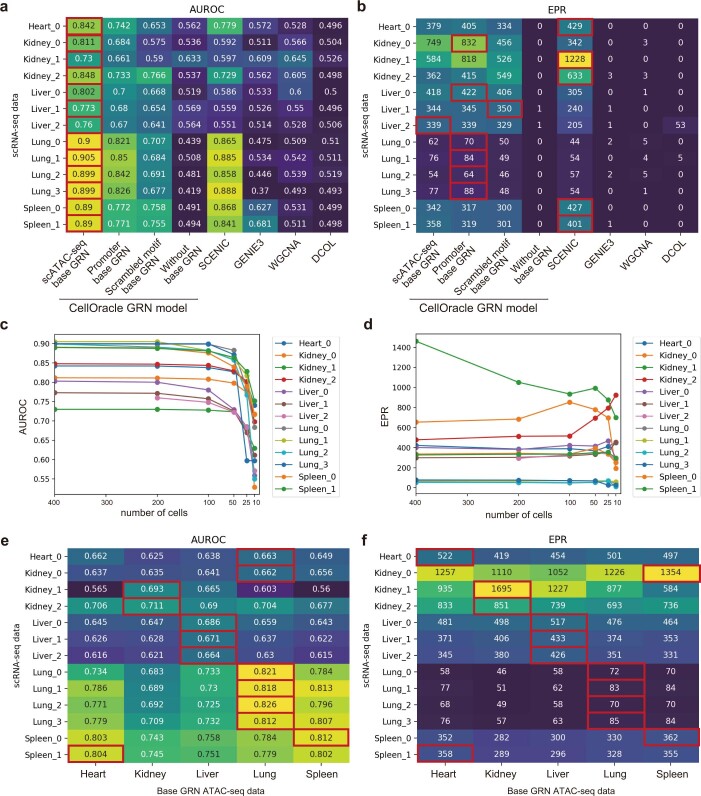
- CellOracle GRN inference benchmarked against 1,298 ChIP–seq datasets for 80 regulatory factors across 5 tissues achieved AUROC 0.66–0.85 with a promoter base GRN and 0.73–0.91 with an scATAC-seq base GRN.
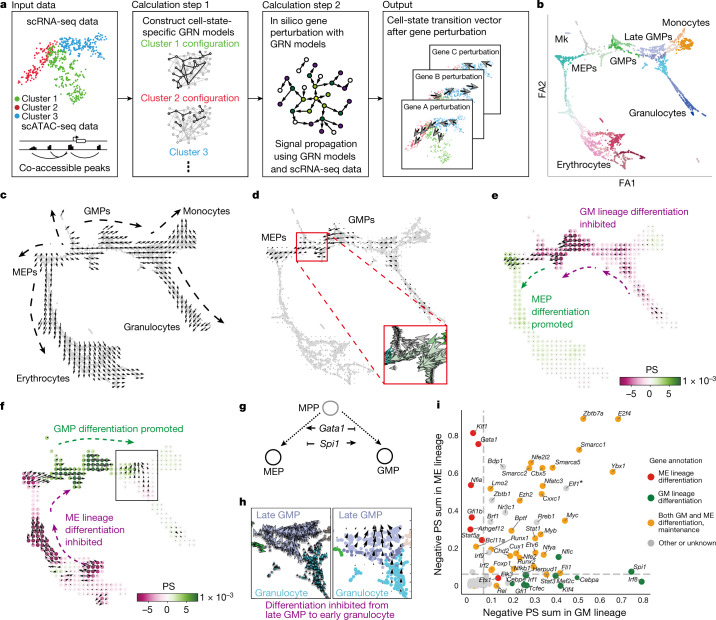
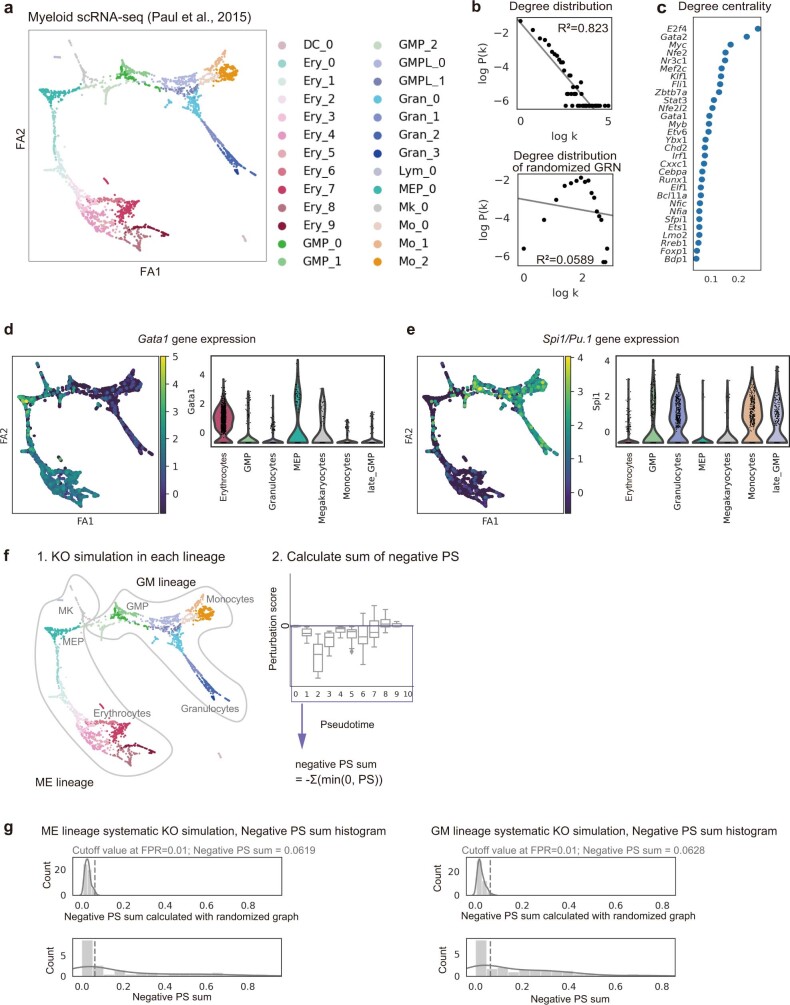
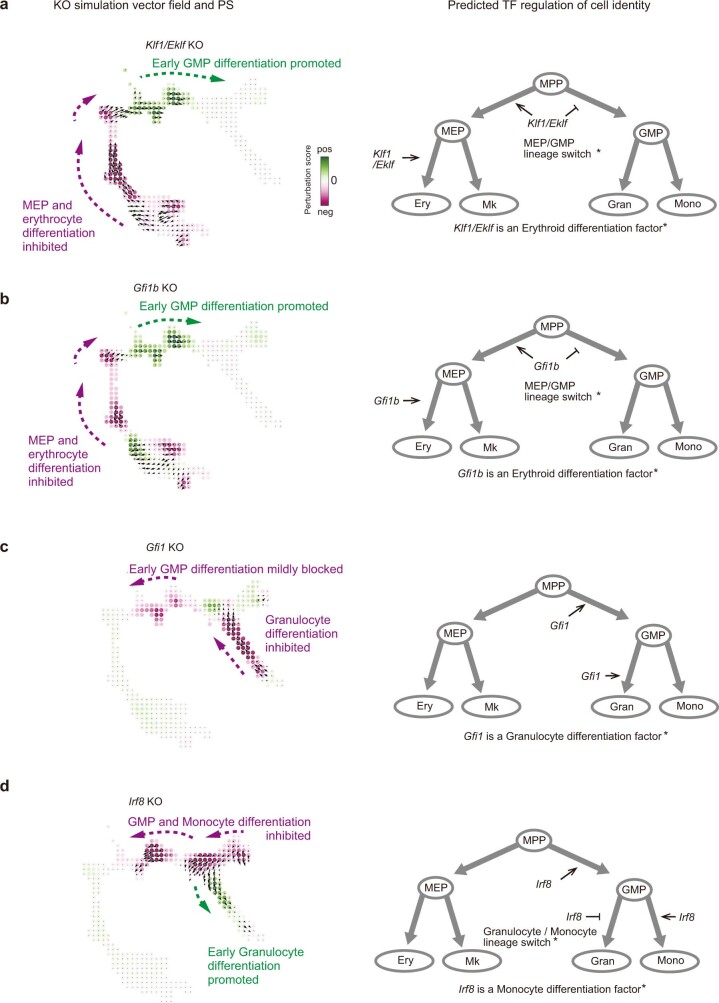
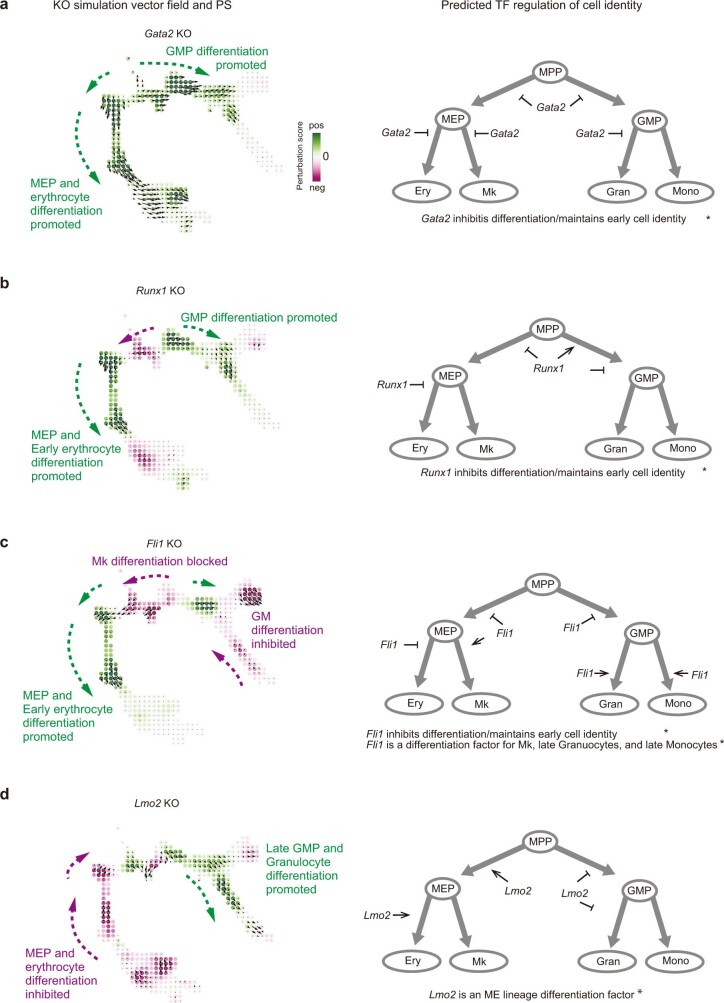
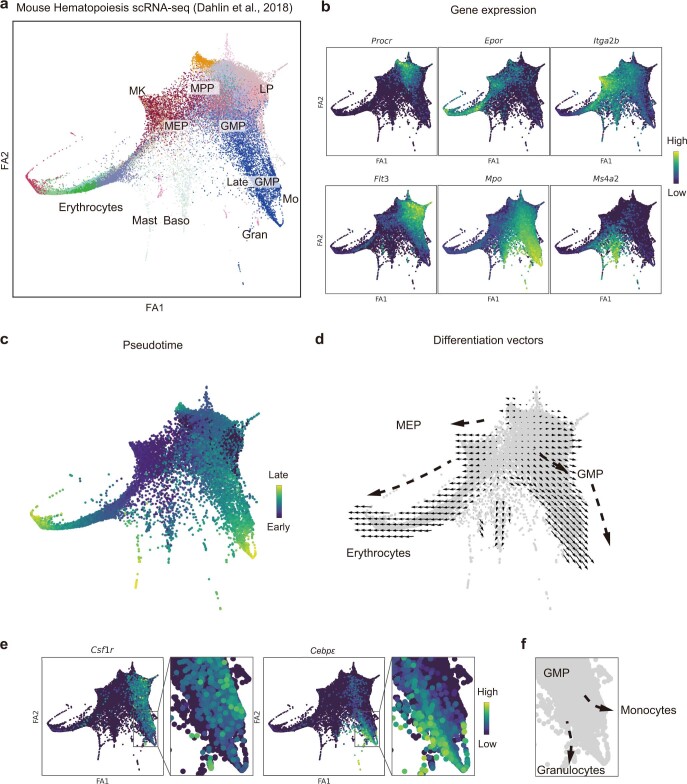
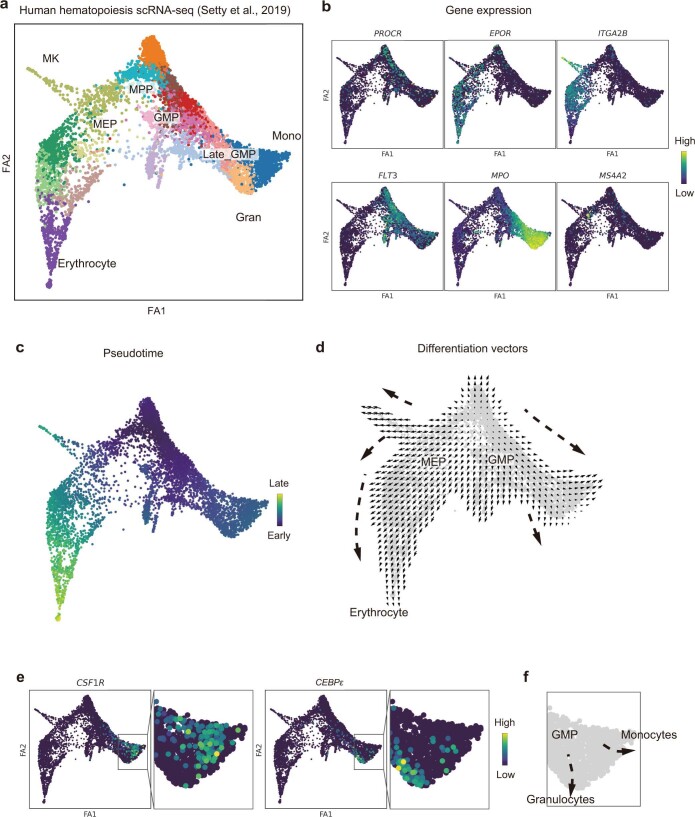
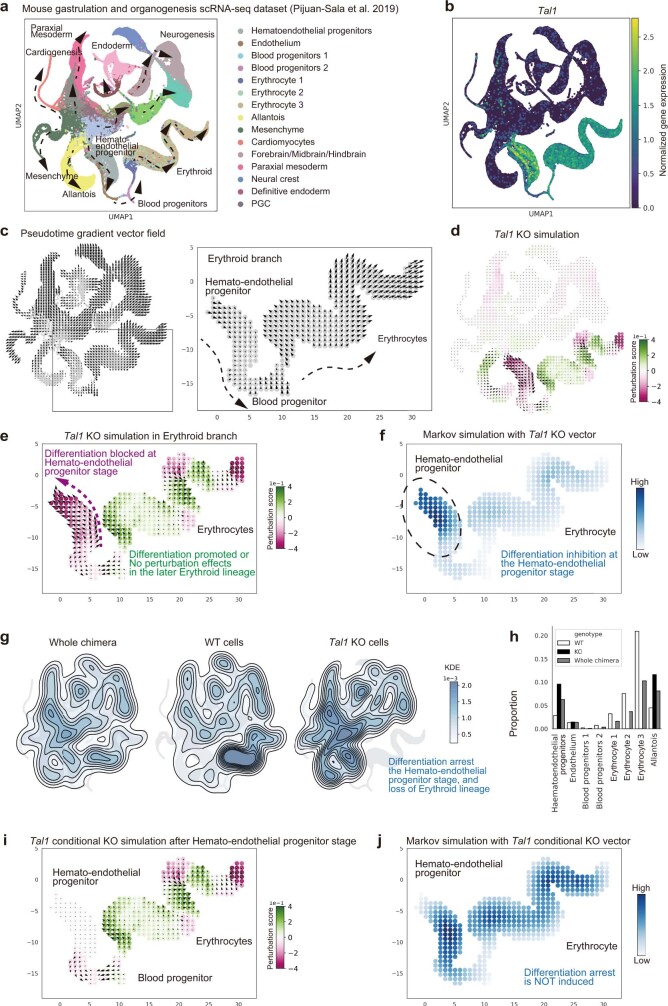
- In a 2,730-cell mouse myeloid progenitor atlas, CellOracle reproduced known Spi1/Gata1 lineage-switching phenotypes; among the top 30 TFs ranked by systematic KO simulation, 85% were reported regulators of myeloid differentiation.
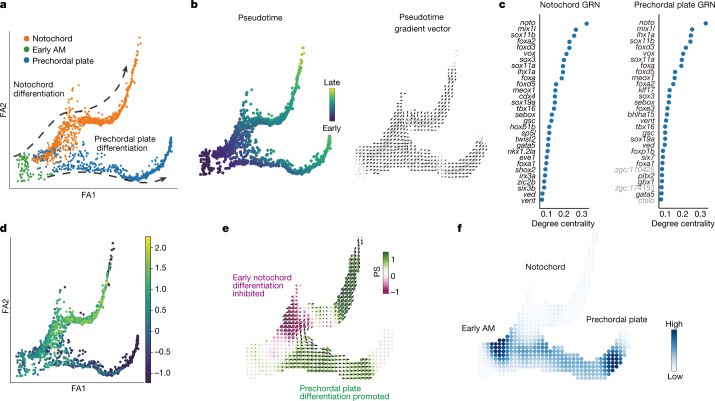
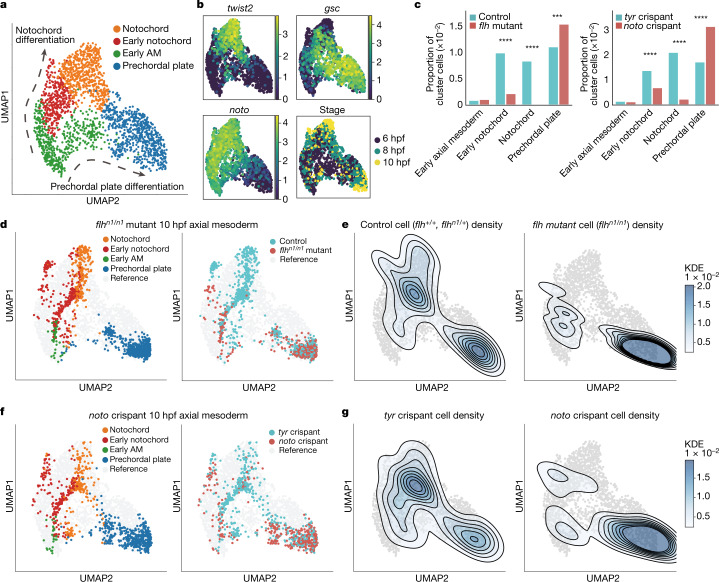
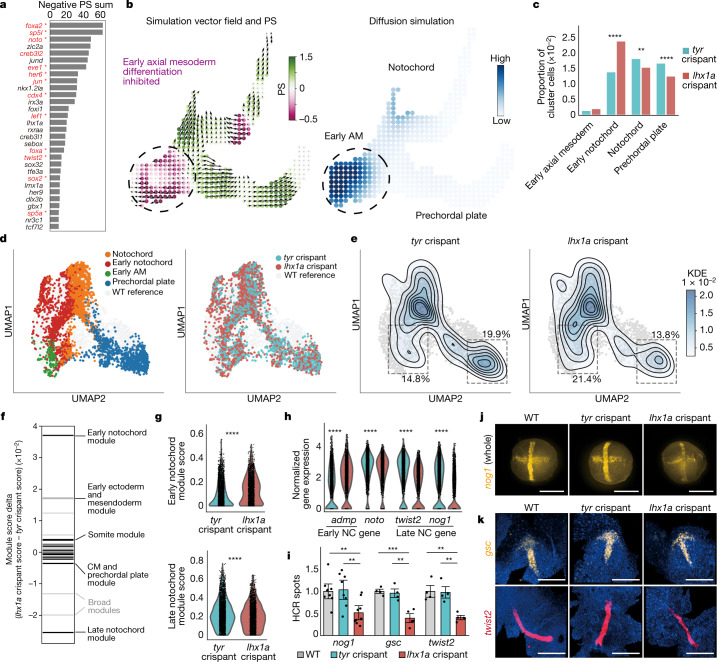
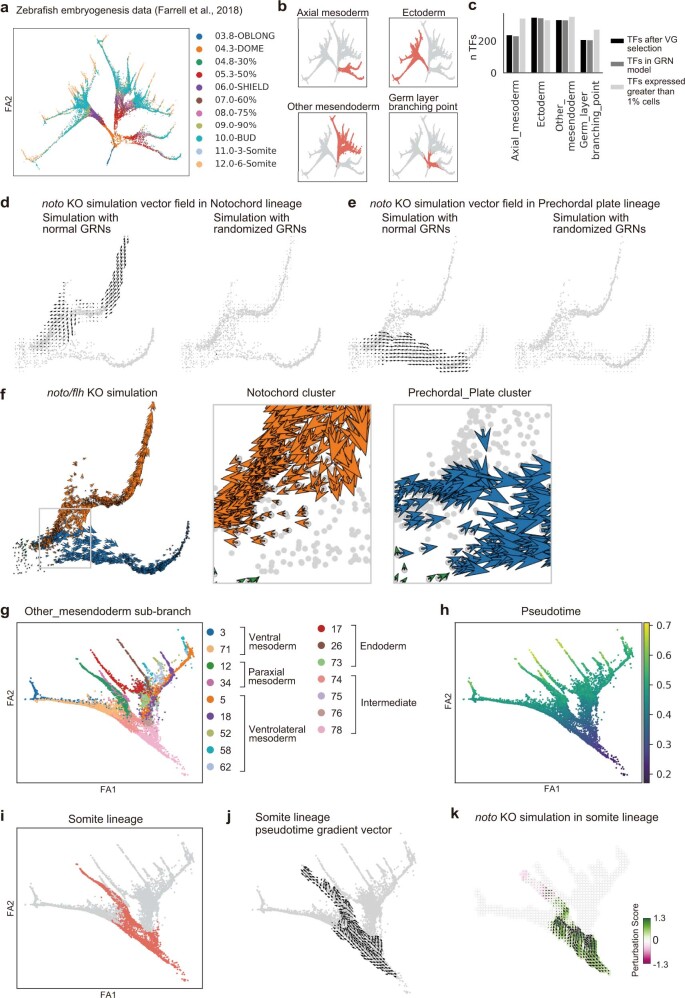
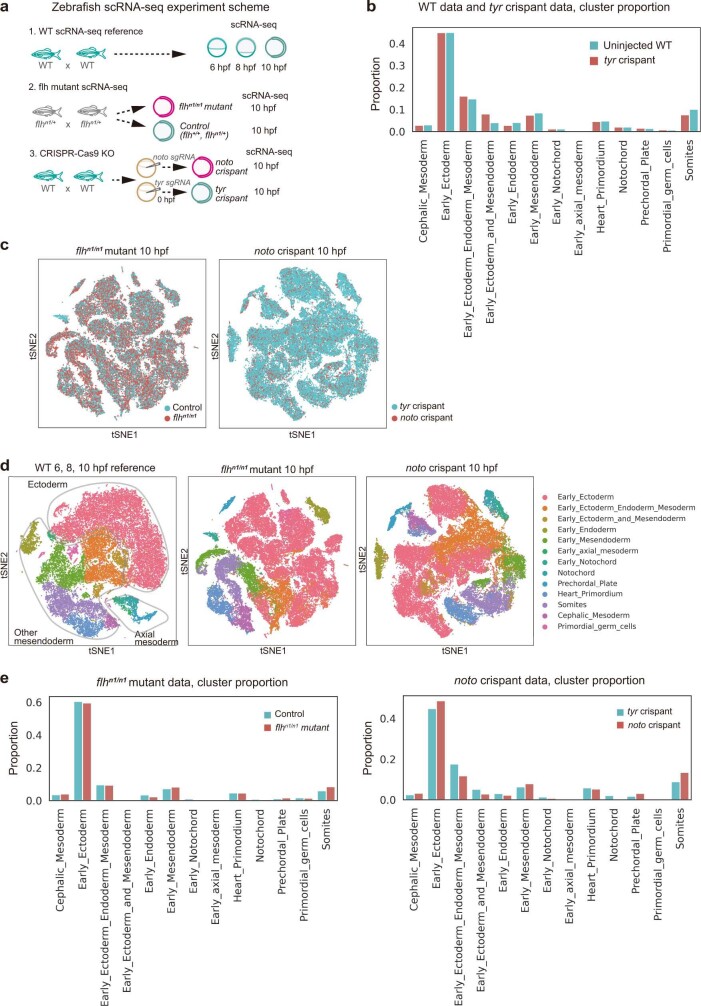
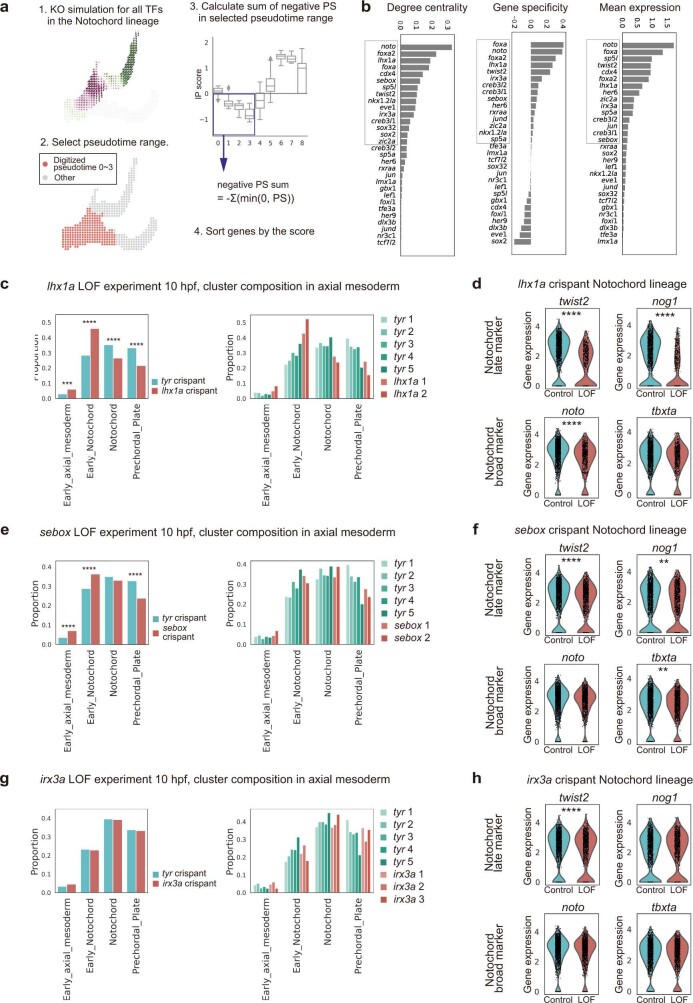
- In zebrafish, systematic KO simulation of 232 active TFs ranked noto top by degree centrality in notochord; noto LOF simulation predicted prechordal plate expansion, validated in flhn1/n1 mutants (notochord −98%, P = 5.55 × 10−52; prechordal plate +38.6%, P = 1.07 × 10⁻⁴) and noto crispants.
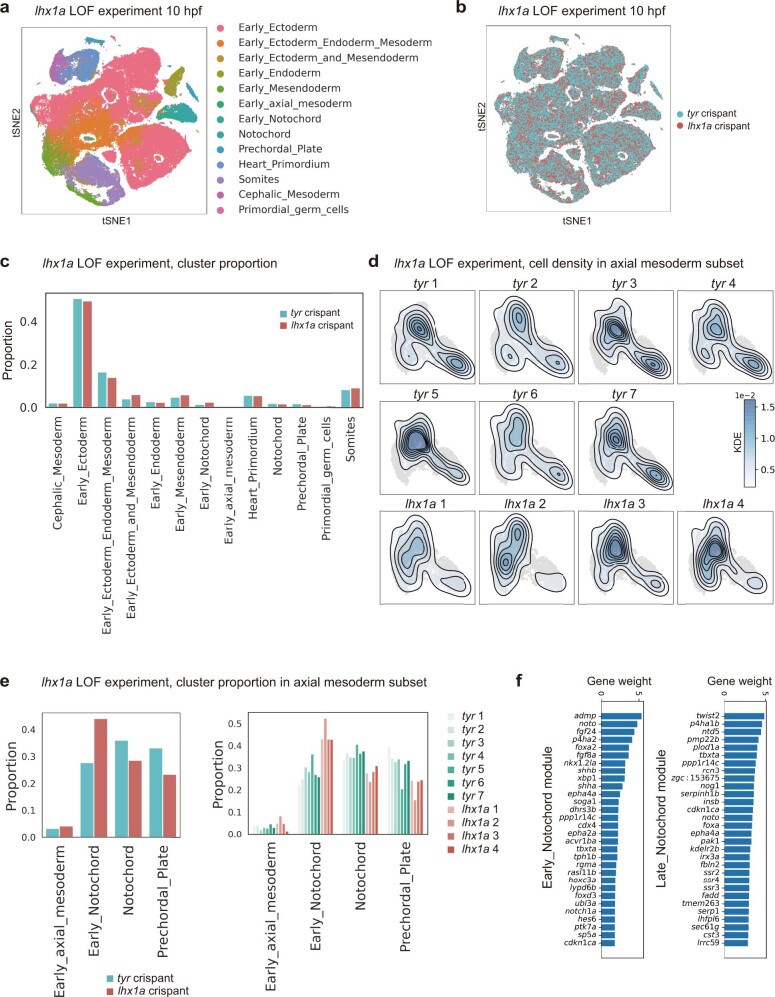
- lhx1a LOF simulation predicted inhibited early axial mesoderm differentiation; lhx1a crispants showed early notochord expansion (+70.2%, P = 1.34 × 10⁻³⁵) and depletion of later notochord (−15.3%, P = 3.83 × 10⁻³) and prechordal plate (−24.7%, P = 1.28 × 10⁻⁷).
Methods
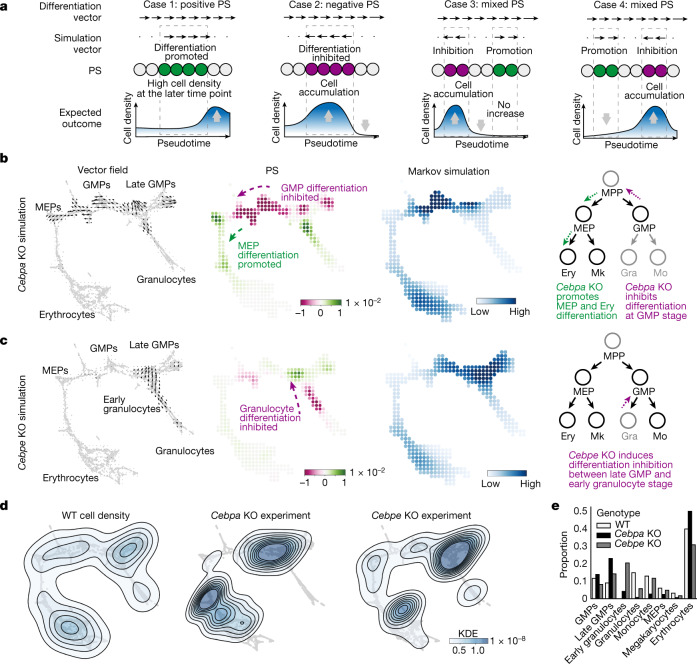
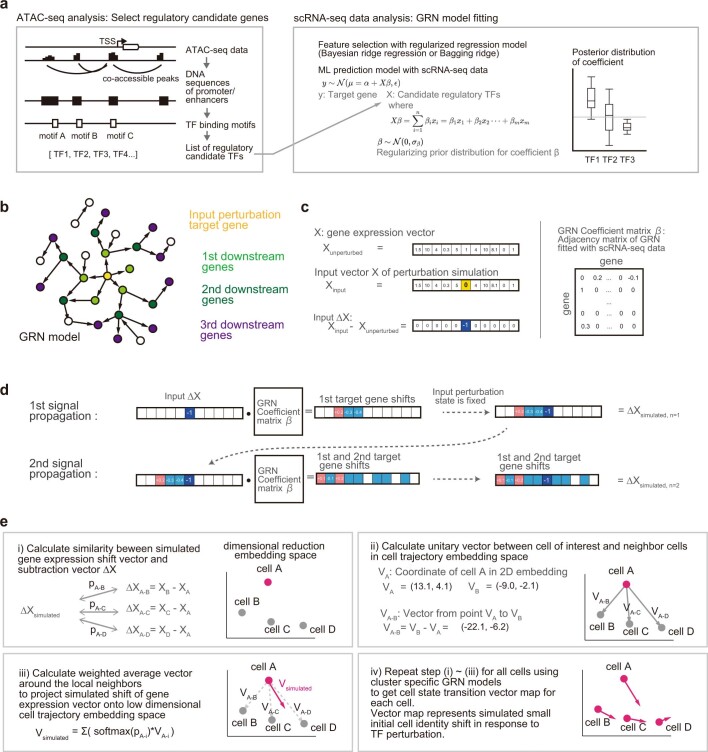
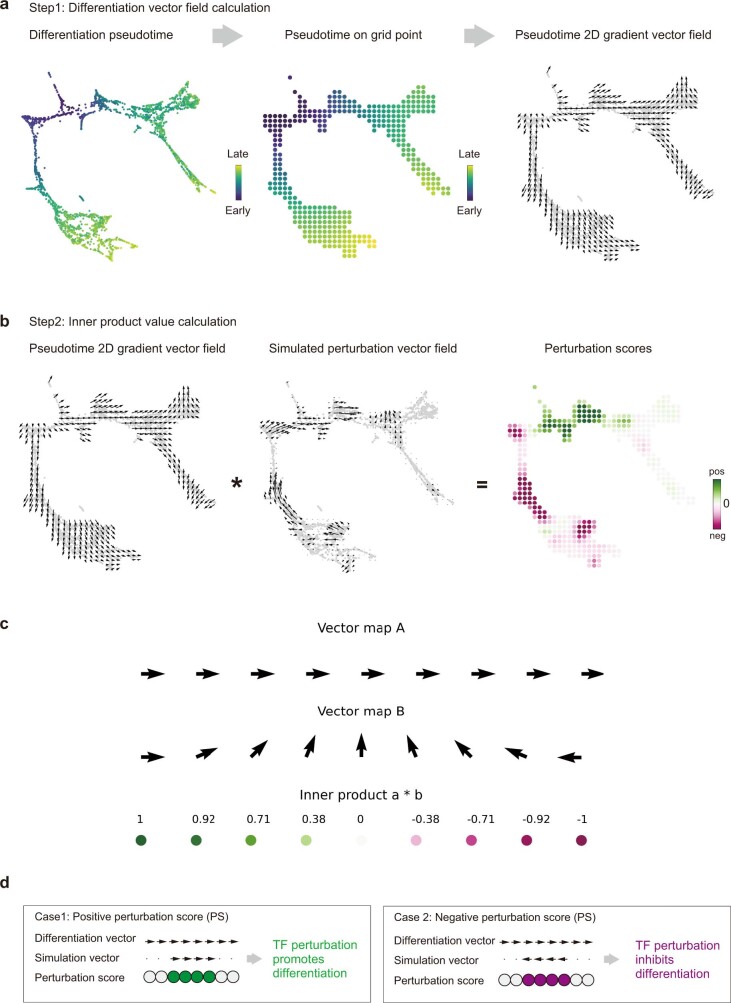
- CellOracle builds cluster-wise regularized linear GRN models using scRNA-seq plus scATAC-seq or promoter databases, propagates TF perturbation signals through the network, estimates transition probabilities, and projects simulated cell-identity shifts as 2D vectors; perturbation scores compare simulation vectors with pseudotime differentiation vectors.
- Validation used mouse and human haematopoiesis datasets, a 38,731-cell zebrafish embryogenesis atlas, a 38,606-cell wild-type zebrafish reference atlas, flhn1/n1 mutants, and CRISPR–Cas9 F0 crispants; experimental readouts included scRNA-seq, NMF, HCR, qRT-PCR and whole-mount in situ hybridization.
- Benchmarking compared CellOracle with WGCNA, DCOL, GENIE3 and SCENIC using ground-truth GRNs from ChIP–seq data; simulations also used randomized GRNs, no signal propagation, varying signal-propagation rounds, and different dimensionality-reduction methods.
Limitations
- Stated: CellOracle can only analyse cell states present in the input scRNA-seq data, and simulation is limited by input data availability and quality, such as unknown TF-binding motifs or sparse TF expression; the authors note foxa3 was filtered out owing to low expression.
- Stated: experimental validation is essential where possible; the authors stress that predictions should be validated experimentally.
- Evident: the simulation output is deliberately limited to a 2D vector rather than absolute expression changes; the negative perturbation score may oversimplify TF roles (e.g. Elf1), and CellOracle did not detect a reported erythrocyte progenitor depletion after Spi1 KO, probably owing to proliferation changes not predicted by the method.
Model-written summary. Check it against the paper before relying on it.
Integrity signals
Registry
Cites
Statistics
Figures
Verification
Claims the paper makes
14 Valid · 2 Not valid · 54 Not checked · 208 Own results and interpretations
The cited sources support only part of this claim — read each source’s verdict below.
In the paper
“To benchmark our GRN inference method, we generated a comprehensive transcriptional ground-truth GRN using 1,298 chromatin immunoprecipitation followed by sequencing (ChIP–seq) datasets for 80 regulatory factors across 5 different tissues14.”
§ Dissecting cell identity via network inference and in silico gene perturbation > GRN inference and benchmarking with CellOracle
What the sources say
- Partly supportedcites [14] Oki S ChIP-Atlas: a data-mining suite powered by full integration of public ChIP-seq data EMBO Rep. 2018 19 e46255 10.15252/embr.201846255 30413482 PMC6280645 sourceExperimental — accuracy not yet measured
Our copy of ChIP‑Atlas confirms it is a fully integrated public ChIP‑seq/DNase‑seq resource (76,217 SRXs across six organisms, Abstract; Overview of the data set and design of analyses, Table 1) with curated antigen and cell‑type metadata and a TR–gene ('Target Genes') integration that 'provides insight into gene regulatory networks' — so it can be the dataset source behind a ChIP‑seq‑derived regulatory network. However, no passage states the specific quantities the claim attributes here (1,298 datasets, 80 regulatory factors, 5 tissues), nor that the resource constitutes or was used to generate a 'ground‑truth' GRN; on the contrary, the Results section 'TR–gene and TR–gene interactions' cautions that 'the genes listed by "Target Genes" are not necessarily functional targets of a given TR and that actual regulation ... would need to be confirmed experimentally'. Searched: 1,298/80 factors/five tissues, ground-truth GRN benchmark, gold-standard TF–target set. (LLM, conf=0.65)
plain- Asserted: passes — The authors put it forward as true.
- Checkable: passes — It can be checked against evidence.
- Load-bearing: passes — The paper’s conclusions depend on it.
- Based: passes — The paper gives a reason why it holds.
- Partly supported
The cited sources support only part of this claim — read each source’s verdict below.
In the paper
“In this respect, gene-regulatory network (GRN) modelling approaches are promising as they reconstruct systematic gene–gene associations from unperturbed single-cell omics data6–11.”
§ Dissecting cell identity via network inference and in silico gene perturbation > Main
What the sources say
- Supportedcites [6] Fiers MWEJ Mapping gene regulatory networks from single-cell omics data Brief. Funct. Genomics 2018 17 246 254 10.1093/bfgp/elx046 29342231 PMC6063279 source
The “GRN inference from scRNA-seq data” section describes reconstructing networks from pairwise associations and co-expression in single-cell data. The Introduction discusses perturbation assays separately as a way to validate predictions, consistent with the claim that these associations can be inferred from unperturbed data. (LLM, conf=0.90)
- Supportedcites [7] Aibar S SCENIC: single-cell regulatory network inference and clustering Nat. Methods 2017 14 1083 1086 10.1038/nmeth.4463 28991892 PMC5937676 source
The Abstract describes SCENIC as reconstructing gene regulatory networks from single-cell RNA-seq data and identifies co-expressed genes as its first step. The Online Methods (GENIE3; page unavailable) specify an expression matrix as the input for network inference, consistent with reconstructing gene associations without requiring perturbation data. The paper addresses single-cell transcriptomics specifically, rather than every type of single-cell omics data. (LLM, conf=0.86)
- Supportedcites [8] Iacono G Massoni-Badosa R Heyn H Single-cell transcriptomics unveils gene regulatory network plasticity Genome Biol. 2019 20 110 10.1186/s13059-019-1713-4 31159854 PMC6547541 source
The Results section describes inferring regulatory networks from single-cell expression data by identifying gene-to-gene correlations and retaining significant correlations as network edges. The Background also states that the approach was applied to healthy tissue datasets, supporting the claim that it can reconstruct associations from unperturbed single-cell data. (LLM, conf=0.91)
- Supportedcites [9] Fleck, J. S. et al. Inferring and perturbing cell fate regulomes in human brain organoids. Nature10.1038/s41586-022-05279-8 (2022). PMC10499607 36198796 source
The ‘Regulatory network inference with Pando’ section describes using multimodal single-cell measurements and regression to infer relationships among transcription-factor expression, binding-site accessibility and target-gene expression. The Methods section (‘GRN inference with Pando’; page unavailable) says the resulting model coefficients define interactions in a regulatory graph. This supports the claim that GRN modelling reconstructs gene–gene regulatory associations from single-cell omics data without requiring perturbations for the inference step. (LLM, conf=0.90)
- Partly supportedcites [10] Kartha VK Functional inference of gene regulation using single-cell multi-omics Cell Genom. 2022 2 100166 10.1016/j.xgen.2022.100166 36204155 PMC9534481 sourceExperimental — accuracy not yet measured
The Discussion (page unavailable) says FigR constructs gene-regulatory networks from correlations across single-cell chromatin and RNA profiles, supporting the claim about reconstructing gene associations. But the paper describes an atlas of immunological stimulation and analyses across stimulus conditions, so it does not establish the claim's qualification that the data are unperturbed. (LLM, conf=0.82)
- Supportedcites [11] González-Blas, C. B. et al. SCENIC+: single-cell multiomic inference of enhancers and gene regulatory networks. Preprint at bioRxiv10.1101/2022.08.19.504505 (2022). source
The SCENIC+ methods (p. 2) describe inferring TF-to-gene relationships from single-cell gene-expression and chromatin-accessibility data using correlation and regression, then combining them into gene regulatory networks. The Discussion (p. 13) also describes GRN methods that search expression data for putative TF–target-gene relationships. This supports the claim as a broad description of network modelling from observational single-cell data. (LLM, conf=0.91)
plainstates a cause- Asserted: passes — The authors put it forward as true.
- Checkable: passes — It can be checked against evidence.
- Load-bearing: passes — The paper’s conclusions depend on it.
- Based: passes — The paper gives a reason why it holds.
- Supported
Every source the paper cites for this claim was checked and supports it.
In the paper
“To support GRN inference without requiring sample-specific scATAC-seq datasets, we have assembled a base GRN from a mouse scATAC-seq atlas13.”
§ Dissecting cell identity via network inference and in silico gene perturbation > GRN inference and benchmarking with CellOracle
What the sources say
- Supportedcites [13] Cusanovich DA A single-cell atlas of in vivo mammalian chromatin accessibility Cell 2018 174 1309 1324 10.1016/j.cell.2018.06.052 30078704 PMC6158300 source
The Results describe profiling chromatin accessibility in single nuclei from 13 mouse tissues using sci-ATAC-seq, identifying the cited work as a mouse single-cell ATAC-seq atlas. The sentence attributes the assembly of the base GRN and its use without sample-specific datasets to the citing authors, not to this source. (LLM, conf=0.92)
plainstates a cause- Asserted: passes — The authors put it forward as true.
- Checkable: passes — It can be checked against evidence.
- Load-bearing: passes — The paper’s conclusions depend on it.
- Based: passes — The paper gives a reason why it holds.
- Supported
Every source the paper cites for this claim was checked and supports it.
In the paper
“Because of this second constraint, we cannot use pre-existing GRN inference algorithms, such as GENIE3 and GRNboost (refs. 7,51).”
§ Dissecting cell identity via network inference and in silico gene perturbation > Methods > Context-dependent GRN inference using scRNA-seq data
What the sources say
- Supportedcites [7] Aibar S SCENIC: single-cell regulatory network inference and clustering Nat. Methods 2017 14 1083 1086 10.1038/nmeth.4463 28991892 PMC5937676 source
The Online Methods (GRNboost) identify GRNboost and GENIE3 as gene-regulatory-network inference methods and explain that they use boosted regression trees and random forests, respectively, rather than linear regression. The citing authors’ inability to use them under their constraint is their own conclusion; the citation supports the identification of the algorithms and their methods. (LLM, conf=0.92)
- Supportedcites [51] Huynh-Thu VA Irrthum A Wehenkel L Geurts P Inferring regulatory networks from expression data using tree-based methods PLoS ONE 2010 5 e12776 10.1371/journal.pone.0012776 20927193 PMC2946910 source
The Introduction identifies GENIE3 as a GRN inference method using ensembles of regression trees and says it can model non-linear relationships. This supports citing the paper as an example of an algorithm unsuitable for the citing authors’ linear-regression constraint; that constraint is the citing authors’ own premise. The paper is not being cited here for GRNboost. (LLM, conf=0.91)
plainstates a cause- Asserted: passes — The authors put it forward as true.
- Checkable: passes — It can be checked against evidence.
- Load-bearing: passes — The paper’s conclusions depend on it.
- Based: passes — The paper gives a reason why it holds.
- Supported
The sources with a verdict support this claim; the rest weren’t checked yet, have no full text we could read, or their verdicts aren’t rated yet.
In the paper
“Cebpa promotes GM lineage differentiation while inhibiting ME lineage differentiation16,72, and promoting granulocyte differentiation in particular15.”
§ Dissecting cell identity via network inference and in silico gene perturbation > Methods > Comparison between CellOracle haematopoiesis KO simulation results and previous reports
What the sources say
- Not checked yetcites [16] Paul F Transcriptional heterogeneity and lineage commitment in myeloid progenitors Cell 2015 163 1663 1677 10.1016/j.cell.2015.11.013 26627738 source
- Supportedcites [72] Hyung CS C/EBPα determines hematopoietic cell fate in multipotential progenitor cells by inhibiting erythroid differentiation and inducing myeloid differentiation Blood 2006 107 4308 10.1182/blood-2005-06-2216 16469877 PMC1895788 source
In the section on lineage switching of EML cells, the paper reports that C/EBPα overexpression promoted more rapid and complete granulocyte differentiation than the comparison treatment. This directly supports the attributed claim. (LLM, conf=0.94)
- Not checked yetcites [15] Orkin SH Zon LI Hematopoiesis: an evolving paradigm for stem cell biology Cell 2008 132 631 644 10.1016/j.cell.2008.01.025 18295580 PMC2628169 source
plainstates a cause- Asserted: passes — The authors put it forward as true.
- Checkable: passes — It can be checked against evidence.
- Load-bearing: passes — The paper’s conclusions depend on it.
- Based: passes — The paper gives a reason why it holds.
147 more claims · 3 with their cited sources checked
Create a free account to see all 278 claims and to verify the 81 references still open.
- It may state two separate claims as one. 87
- Probably not a substantial claim. 53
Claims other papers make about this one
Each is checked against this paper’s own text: does it say what the citing paper says it does?
The source backs part of the claim, not all of it — or backs it for a different population, condition or comparison.
In the citing paper
“CellOracle surpassed other GRN-inference algorithms such as PIDC, GENIE3, and GRNBoost2 in accurately identifying biological ground truth [44]”
From A mini-review on perturbation modelling across single-cell omic modalities (2024) · cites this paper as [44]
Experimental — accuracy not yet measuredThe cited source says what the claim attributes to it.
In the citing paper
“By leveraging gene-regulatory networks derived from these data types, CellOracle performs in silico transcription factors perturbations, effectively simulating cell state changes in response to TF perturbations.”
From A mini-review on perturbation modelling across single-cell omic modalities (2024) · cites this paper as [44]
In the citing paper
“For instance, CellOracle can simulate cell identity transitions following digital (in silico) TF perturbations such as knockout or overexpression.”
From A mini-review on perturbation modelling across single-cell omic modalities (2024) · cites this paper as [44]
In the citing paper
“whereas in silico ChIP–seq predicts transcription factor binding at individual cis-regulatory elements179.”
From The technological landscape and applications of single-cell multi-omics (2023) · cites this paper as [179]
In the citing paper
“Similarly, CellOracle179 leverages multi-omics data, either collected in parallel or integrated computationally, to learn gene regulatory networks and infer the results of in silico perturbations, whereas in silico ChIP–seq predicts transcription factor binding at individual cis-regulatory elements179.”
From The technological landscape and applications of single-cell multi-omics (2023) · cites this paper as [179]
Self-check
Percentages, sums and reported differences re-computed from the paper’s own numbers.
Each contradiction between two passages listed here was confirmed by an independent check.
Rated minor: it would not touch a result — a value no result rests on, a p-value that stays on the same side of the significance level, or a conflict that is clerical, resolved elsewhere in the paper, or outside its own findings.
In the paper
§ Dissecting cell identity via network inference and in silico gene perturbation > Methods > Simulation of cell identity following perturbation of regulatory genes
“This process consists of four steps: (i) data preprocessing; (ii) signal propagation within the GRN; (iii) estimation of transition probabilities; and (iv) analysis of simulated transition in cell identity.”
§ Dissecting cell identity via network inference and in silico gene perturbation > Methods > Simulation of cell identity following perturbation of regulatory genes
“(v)Calculation of vector field”
Rated minor: it would not touch a result — a value no result rests on, a p-value that stays on the same side of the significance level, or a conflict that is clerical, resolved elsewhere in the paper, or outside its own findings.
In the paper
§ Dissecting cell identity via network inference and in silico gene perturbation > Methods > Preparation of input data for GRN inference
“Cells were subsampled for each tissue on the basis of the original tissue-type annotation: spleen, lung, muscle, liver and kidney.”
§ Dissecting cell identity via network inference and in silico gene perturbation > Methods > Ground-truth data preparation for GRN benchmarking
“Here, we selected tissues commonly available in the Tabula Muris scRNA-seq dataset, mouse sci-ATAC-seq atlas data and ground-truth datasets: heart, kidney, liver, lung and spleen.”
Rated minor: it would not touch a result — a value no result rests on, a p-value that stays on the same side of the significance level, or a conflict that is clerical, resolved elsewhere in the paper, or outside its own findings.
In the paper
§ Dissecting cell identity via network inference and in silico gene perturbation > Systematic TF KO simulations in zebrafish
“c, Degree centrality scores were used to rank the top 30 TFs in notochord (left) and prechordal plate (right).”
§ Dissecting cell identity via network inference and in silico gene perturbation > Systematic TF KO simulations in zebrafish
“Black text denotes TFs. Grey text denotes non-TFs.”
Citations
Cites
Comprehensive Integration of Single-Cell Data
Stuart, T., Butler, A., Hoffman, P., Hafemeister, C., Papalexi, E., Mauck, W. M., Hao, Y., Stoeckius, M., Smibert, P., & Satija, R. (2019) · Cell · doi:10.1016/j.cell.2019.05.031 · Cited by 15,453
SCANPY: large-scale single-cell gene expression data analysis
Wolf, F. A., Angerer, P., & Theis, F. J. (2018) · Genome Biology · doi:10.1186/s13059-017-1382-0 · Cited by 8,881
Scenic: single-cell regulatory network inference and clustering.
Aibar, S., González-Blas, C. B., Moerman, T., Huynh-Thu, V. A., Imrichova, H., Hulselmans, G., Rambow, F., Marine, J.-C., Geurts, P., Aerts, J., et al. (2017) · Nature Methods · doi:10.1038/nmeth.4463 · Cited by 6,520
A General Framework for Weighted Gene Co-Expression Network Analysis
Zhang, B., & Horvath, S. (2005) · Statistical Applications in Genetics and Molecular Biology · doi:10.2202/1544-6115.1128 · Cited by 5,684
Hafemeister, C., & Satija, R. (2019) · Genome Biology · doi:10.1186/s13059-019-1874-1 · Cited by 4,479
La Manno, G., Soldatov, R., Zeisel, A., Braun, E., Hochgerner, H., Petukhov, V., Lidschreiber, K., Kastriti, M. E., Lönnerberg, P., Furlan, A., et al. (2018) · Nature · doi:10.1038/s41586-018-0414-6 · Cited by 4,118
Jacomy, M., Venturini, T., Heymann, S., & Bastian, M. (2014) · PLoS ONE · doi:10.1371/journal.pone.0098679 · Cited by 2,909
Single-cell transcriptomics of 20 mouse organs creates a Tabula Muris
The Tabula Muris Consortium, coordination, O., coordination, L., processing, O. C. A., sequencing, L. P. A., analysis, C. D., annotation, C. T., Writing group, Supplemental text writing group, & Principal investigators (2018) · Nature · doi:10.1038/s41586-018-0590-4 · Cited by 2,842
High-resolution in situ hybridization to whole-mount zebrafish embryos
Thisse, C., & Thisse, B. (2008) · Nature Protocols · doi:10.1038/nprot.2007.514 · Cited by 2,578
Hematopoiesis: An Evolving Paradigm for Stem Cell Biology
Orkin, S. H., & Zon, L. I. (2008) · Cell · doi:10.1016/j.cell.2008.01.025 · Cited by 2,570
Cited by
Items 201–300 of 721
Pereira, M. F., Finazzi, V., Rizzuti, L., Aprile, D., Aiello, V., Mollica, L., Riva, M., Soriani, C., Dossena, F., Shyti, R., et al. (2025) · Molecular Psychiatry · doi:10.1038/s41380-025-02929-x · Cited by 11
“Gene regulatory networks (GRNs) were built using CellOracle [42] (v. 0.10.12).”
InfluentialA unified multimodal single-cell framework reveals a discrete state model of hematopoiesis in mice
Ferchen, K., Zhang, X., Thakkar, K., Li, G., Bernardicius, D., Sen, S., Rawat, P., Olsson, A., Bennett, S. N., Potter, C., et al. (2025) · Nature Immunology · doi:10.1038/s41590-025-02307-3 · Cited by 12
Self-citationInferring regulators of cell identity in the human adult pancreas
Vanheer, L., Fantuzzi, F., To, S. K., Schiavo, A. A., Haele, M. V., Ostyn, T., Haesen, T., Yi, X., Janiszewski, A., Chappell, J., et al. (2023) · NAR Genomics and Bioinformatics · doi:10.1093/nargab/lqad068 · Cited by 12
Quantifying cancer cell plasticity with gene regulatory networks and single-cell dynamics
Groves, S. M., & Quaranta, V. (2023) · Frontiers in Network Physiology · doi:10.3389/fnetp.2023.1225736 · Cited by 12
“Many computational algorithms have also been developed to infer both network structure and single-cell dynamics based on Boolean, Bayesian, or other regulatory rules (Chan et al., 2017; Khan et al., 2017; Sanchez-Castillo et al., 2017; Chen and March 2018; Castro et al., 2019; Dunn et al., 2019;Wooten et al., 2019; Aa…”
MethodDevelopmental gene expression patterns driving species-specific cortical features
Javed, A., Gómez, L., Pravatà, V. M., Sarhadi, M., Giudice, Q. L., Szalai, T., Aubert, L., Ribierre, T., Nguyen, L., Cappello, S., et al. (2026) · Nature · doi:10.1038/s41586-026-10491-x · Cited by 11
Zhang, Z., Han, J., Song, L., & Zhang, X. (2026) · Bioinformatics · doi:10.1093/bioinformatics/btag324 · Cited by 15
“CellOracle (Kamimoto et al. 2023) constructs a cis-regulatory network from scATAC-seq data and refines the network using scRNA-seq data through a linear regression model. scMTNI (Zhang et al. 2023) is a probabilistic graphical model that infers cell-type-specific GRNs using cell lineage tree,…”
Chen, Y., Hou, Y., Zeng, Q., Wang, I., Shang, M., Shin, K., Hemauer, C., Xing, X., Kang, J., Zhao, G., et al. (2025) · Genome Research · doi:10.1101/gr.279372.124 · Cited by 13
“11.0) (Kamimoto et al. 2023) standard tutorials with default parameters for GRN construction for each subclusters and in silico TF perturbation.”
InfluentialLinking signal input, cell state, and spatial context to inflammatory responses
Gottschalk, R. A., & Germain, R. N. (2024) · Current Opinion in Immunology · doi:10.1016/j.coi.2024.102462 · Cited by 9
Single nucleus RNA-seq reveals the process from onset to chronic kidney disease in IgA nephropathy
You, J.-P., Cheng, G., Zhang, X., Wang, Z., Liu, C., Ning, W., Liu, Y.-R., Hu, H.-M., Zhai, Y., Qi, Y., et al. (2025) · Scientific Reports · doi:10.1038/s41598-025-04292-x · Cited by 12
Rivera-Gonzalez, G. C., Butka, E. G., Gonzalez, C. E., Mintz, R. L., Kleb, S. S., Josephson, V., Kong, W., Jindal, K., Kamimoto, K., Shook, B. A., et al. (2025) · Cell stem cell · doi:10.1016/j.stem.2025.07.004 · Cited by 9
Self-citationDynamical systems theory as an organizing principle for single-cell biology
Islam, S., & Bhattacharya, S. (2025) · npj Systems Biology and Applications · doi:10.1038/s41540-025-00565-3 · Cited by 12
Single cell multiomics systems biology for molecular toxicity
Diamante, G., Ha, S. M., Wijaya, D., & Yang, X. (2024) · Current Opinion in Toxicology · doi:10.1016/j.cotox.2024.100477 · Cited by 11
Mircea, M., & Semrau, S. (2021) · Biochemical Society Transactions · doi:10.1042/bst20210135 · Cited by 12
genomepy: genes and genomes at your fingertips
Frölich, S., van der Sande, M., Schäfers, T., & van Heeringen, S. J. (2023) · Bioinformatics · doi:10.1093/bioinformatics/btad119 · Cited by 12
“Similarly, genomepy has been incorporated into other packages, such as pybedtools (Dale et al. 2011) and CellOracle (Kamimoto et al. 2020).”
MethodTjärnberg, A., Beheler-Amass, M., Jackson, C. A., Christiaen, L., Gresham, D., & Bonneau, R. (2024) · Genome biology · doi:10.1186/s13059-023-03134-1 · Cited by 12
“Workarounds to contextualize regulatory relationships have been proposed [14, 15]; however, the inflexibility of the models and the lack of interpretability of latent factors remain an issue.”
BackgroundMEF2C controls segment-specific gene regulatory networks that direct heart tube morphogenesis
Muncie, J. M., Sinha, T., Clark, A. P., Brower, E. F., Saucerman, J. J., Black, B. L., & Bruneau, B. G. (2025) · Genes & Development · doi:10.1101/gad.352889.125 · Cited by 12
CRISPR-GEM: A Novel Machine Learning Model for CRISPR Genetic Target Discovery and Evaluation
Graham, J. P., Zhang, Y., He, L., & Gonzalez‐Fernandez, T. (2024) · ACS Synthetic Biology · doi:10.1021/acssynbio.4c00473 · Cited by 13
Luo, H., Yu, X., Sun, T., Sun, Z., Zhao, T., Chen, L., Volponi, A. A., Flores‐Borja, F., Sun, H., & An, Z. (2025) · Communications Biology · doi:10.1038/s42003-025-08754-w · Cited by 8
Multi-omics uncovers transcriptional programs of gut-resident memory CD4+ T cells in Crohn’s disease
Arase, M., Murakami, M., Kihara, T., Kuwahara, R., Toyota, H., Sumitani, N., Kinoshita, N., Chen, K. Y., Yokoi, T., Motooka, D., et al. (2025) · The Journal of Experimental Medicine · doi:10.1084/jem.20242106 · Cited by 8
“…and BHLHE40 in T RM_ 2, we applied CellOracle, in silico gene perturbation analysis, which simulates shifts in cell identity associated with TF perturbation, providing a systematic understanding of the role of TFs in controlling cell fate decisions and cellular functions (Kamimoto et al., 2023).”
Hepatic leukemia factor directs tissue residency of proinflammatory memory CD4 + T cells
Kiuchi, M., Nemoto, M., Yagyu, H., Aoki, A., Iwamura, C., Sugimoto, H., Masuo, Y., Morita, H., Ma, S., Okuno, Y., et al. (2025) · Science · doi:10.1126/science.adp0714 · Cited by 11
Ma, Y., Yao, Y., Zhou, Y., Dai, W., Li, J., Gui, Y., Sun, H., Zhu, Z., Jiang, D., Cheng Ann, C. H. E. N., et al. (2025) · Nature Aging · doi:10.1038/s43587-025-01027-5 · Cited by 18
“Single-cell data are sparse and noisy at the per-gene level, hindering GRN inference 15,19 .”
Fernández, E. C., Tomassoni, L., Zhang, X., Wang, J., Obradović, A., Laise, P., Griffin, A. T., Vlahos, L. J., Minns, H. E., Morales, D. V., et al. (2026) · Nature Genetics · doi:10.1038/s41588-026-02550-w · Cited by 9
Atherosclerosis Profiling Reveals BHLHE40 as a Candidate Modulator of VSMC
Ibikunle, C., Garcia, E. J., Xue, C., Kim, E., Yan, H., Coronel, J., Zhu, L. Y., Cui, J., Chung, A. Y., Fries, L. E., et al. (2026) · Circulation Research · doi:10.1161/circresaha.125.326821 · Cited by 10
Hou, Y., Khatri, P. H., Rindy, J., Schultz, Z. D., Gao, A., Chen, Z., Gibson, A. L. F., Huttenlocher, A., & Dinh, H. Q. (2024) · The Journal of Immunology · doi:10.4049/jimmunol.2400149 · Cited by 9
Reconstructing the regulatory programs underlying the phenotypic plasticity of neural cancers
Larsson, I., Held, F., Popova, G., Koc, A., Kundu, S., Jörnsten, R. J., & Nelander, S. (2024) · Nature Communications · doi:10.1038/s41467-024-53954-3 · Cited by 12
AI: A transformative opportunity in cell biology
Carr, A., Cool, J., Karaletsos, T., Li, D., Lowe, A. R., Otte, S., & Schmid, S. L. (2024) · Molecular Biology of the Cell · doi:10.1091/mbc.e24-09-0415 · Cited by 9
Explainable modeling of single-cell perturbation data using attention and sparse dictionary learning
Xu, Y., Fleming, S., Tegtmeyer, M., McCarroll, S. A., & Babadi, M. (2025) · Cell Systems · doi:10.1016/j.cels.2025.101245 · Cited by 16
NeMO Analytics: a compendium of transcriptomic data for the exploration of neocortical development
Sonthalia, S., Herb, B. R., Adkins, R. S., Orvis, J., Liu, J., Liao, X., Yu, Q., Mato-Blanco, X., Casella, A. M., Liu, J., et al. (2026) · Nature Neuroscience · doi:10.1038/s41593-026-02204-4 · Cited by 10
“We preprocessed the data as suggested in the CellOracle pipeline 108 .”
Zebrafish regulatory genomic resources for disease modelling and regeneration
Jiménez-González, A., Baranas̆ić, D., & Müller, F. (2023) · Disease Models & Mechanisms · doi:10.1242/dmm.050280 · Cited by 10
“2) (Argelaguet et al., 2022 preprint; Kamimoto et al., 2023).”
Kearns, N. A., Lobo, M., Genga, R. M. J., Abramowitz, R. G., Parsi, K. M., Min, J., Kernfeld, E. M., Huey, J. D., Kady, J., Hennessy, E., et al. (2023) · Developmental Cell · doi:10.1016/j.devcel.2023.08.024 · Cited by 10
Kathiriya, I. S., Rao, K. S., Clark, A. P., Hu, K. M., Grant, Z. L., Matthews, M. N., Chen, Z., Hota, S. K., Saucerman, J. J., & Bruneau, B. G. (2026) · Development · doi:10.1242/dev.205173 · Cited by 8
Artificial intelligence in clinical oncology: Multimodal integration and translational development
Lin, R., Zhao, Z., Liu, Z., Kang, J., Zhang, K., Huang, X., & Yu, Y. (2026) · Cancer Letters · doi:10.1016/j.canlet.2026.218493 · Cited by 8
Single-cell multi-omics analysis identifies context-specific gene regulatory gates and mechanisms
Malekpour, S. A., Haghverdi, L., & Sadeghi, M. (2024) · Briefings in Bioinformatics · doi:10.1093/bib/bbae180 · Cited by 7
“While recent studies such as CellOracle [12] have focused on inferring the directed graph of TF-gene (linear) interactions, logic-based models provide a flexible framework for understanding more complex relationships (i.e. second-order interactions) among TFs.”
BackgroundMethodLu, Z., Xiao, X., Zheng, Q., Wang, X., & Xu, L. (2024) · Briefings in Bioinformatics · doi:10.1093/bib/bbae366 · Cited by 8
“We further mention that the identification of TRs can serve as a downstream application of network construction analysis as well [23–25].”
MethodApproaches for Benchmarking Single-Cell Gene Regulatory Network Methods
Karamveer, K., & Uzun, Y. (2024) · Bioinformatics and Biology Insights · doi:10.1177/11779322241287120 · Cited by 12
“Other tools such as CellOracle 55 and Pando 180 also employ single-cell multi-omics data.”
Machine learning approaches enable the discovery of therapeutics across domains
Chhibbar, P., & Das, J. (2025) · Molecular Therapy · doi:10.1016/j.ymthe.2025.04.001 · Cited by 7
“CellOracle 43 infers base gene regulatory networks (GRNs), elucidating the broad regulatory relationships between gene and TFs from scATAC-seq datasets.”
Immune-mediated cardiac development and regeneration
Byatt, T. C., Razaghi, E., Tüzüner, S., & Simões, F. C. (2025) · Seminars in Cell and Developmental Biology · doi:10.1016/j.semcdb.2025.103613 · Cited by 7
“Tools like SCENIC+ [143] and CellOracle [144] enable prediction of regulatory programmes and in silico modelling of gene perturbation.”
Cell identity and 5-hydroxymethylcytosine
Honig, F., & Murrell, A. (2025) · Epigenetics & Chromatin · doi:10.1186/s13072-025-00601-w · Cited by 10
“Combining such big data (including the incorporation of the 5hmC landscape) with machine learning approaches paves the way for enhanced predictive modelling of cell identity-spe-cific gene expression dynamics and the identification of transcription factors that maintain such GRNs [107, 108].”
Cho, C., Lee, D., Jeong, D., Kim, S., Kim, M. K., & Srinivasan, S. (2023) · Scientific Reports · doi:10.1038/s41598-023-31509-8 · Cited by 8
Shen, R., Cheng, M., Wang, W., Fan, Q., Yan, H., Wen, J., Yuan, Z., Yao, J., Li, Y., & Yuan, J. (2024) · Briefings in Bioinformatics · doi:10.1093/bib/bbae576 · Cited by 7
Tran, A., Yang, P., Yang, J. Y. H., & Ormerod, J. T. (2022) · Briefings in Functional Genomics · doi:10.1093/bfgp/elac008 · Cited by 9
“For example, CellOracle [27] uses scATAC-seq data to first build a base GRN of possible TF-gene regulations, and then fits a linear model for the gene expression y using the list of”
MethodInfluentialDiscoGen: Learning to Discover Gene Regulatory NetworksPreprint
Ke, N. R., Dunn, S.-J., Bornschein, J., Chiappa, S., Rey, M., Lespiau, J.-B., Cassirer, A., Wang, J., Weber, T., Barrett, D. G. T., et al. (2023) · bioRxiv (Cold Spring Harbor Laboratory) · doi:10.1101/2023.04.11.536361 · Cited by 8
“Beyond this, they are a powerful tool to perform in silico tests that guide experimental exploration, particularly for the goal of engineering cell fate through targeted genetic perturbation [6].”
MethodWang, K. C., Lau, J., Garcia, S. M., Wague, A., Sharma, S., Liu, X., & Feeley, B. T. (2025) · Journal of Shoulder and Elbow Surgery · doi:10.1016/j.jse.2025.02.008 · Cited by 7
Johnson, C., Johnson, Z., Mackey, L. S., Li, X., Sadler, N., Zhang, T., Qian, W., Bohutskyi, P., Feng, S., & Cheung, M. S. (2025) · PRX Life · doi:10.1103/l2dp-kw2t · Cited by 9
“These orchestrated response of a cell to stimuli is often regulated by a limited number of transcriptional factors (TFs) that modulate transcription (10-12) through conformational changes in proteins and nucleic acids.”
Kang, Y., Li, M., Hu, B., Lv, Y., Du, J., Zhang, D. C., Zhou, H., & Feng, S. (2026) · Inflammation · doi:10.1007/s10753-025-02429-8 · Cited by 8
“Cell perturbation response simulations were conducted using the celloracle software (version 0.12.0) [41].”
InfluentialTargeting hypoxic exosomal IGFBP2 overcomes CD47-mediated immune evasion in glioblastoma
Qi, Y., Zhao, R., Zhang, X., Xia, H., Zhang, P., Wang, Q., Zhao, S., Wang, S., Zhao, H., Guo, X., et al. (2026) · Cell Death and Disease · doi:10.1038/s41419-026-08430-9 · Cited by 6
“MES-GBM exhibits highly invasive characteristics [28], prompting us to establish an invasion model of GBM tumor spheroids co-cultured with normal rat brain organoids, as previously described [29, 30], to more accurately mimic the physiologically invasive tumor microenvironment.”
Guo, X., Jin, W., Wen, Y., Wang, Z., Ren, X., Liu, Z., Fu, R., Cai, Z., & Li, L. (2024) · Journal of Translational Medicine · doi:10.1186/s12967-024-05496-x · Cited by 7
“4G; See Methods for detail) [19].”
MethodStem cell expression of CXCR4 regulates tissue composition in the vomeronasal organ
Dietz, A., Senf, K., & Neuhaus, E. M. (2025) · Journal of Cell Science · doi:10.1242/jcs.263451 · Cited by 7
TRENDY: gene regulatory network inference enhanced by transformer
Tian, X., Patel, Y., & Wang, Y. (2025) · Bioinformatics · doi:10.1093/bioinformatics/btaf314 · Cited by 9
“…data, the most common approach is to assume that gene expression follows a certain mechanism, such as an ordinary differential equation (ODE) system (Hache et al. 2009, Kamimoto et al. 2023) or a stochastic differential equation (SDE) system (Schaffter et al. 2011, Dibaeinia and Sinha 2020).”
Andricovich, J., Lap, C. J. G., & Tzatsos, A. (2025) · Blood · doi:10.1182/blood.2024026417 · Cited by 7
Ferreira, R. M., Gisch, D. L., Phillips, C. L., Cheng, Y., Lucarelli, N., Yennapureddy, S., Asthana, M., Lake, B. B., Bowen, W. S., Fang, F., et al. (2026) · Kidney International · doi:10.1016/j.kint.2026.03.020 · Cited by 7
Computational single cell oncology: state of the art
Paas-Oliveros, E., Lemus, E. H., & de Anda‐Jáuregui, G. (2023) · Frontiers in Genetics · doi:10.3389/fgene.2023.1256991 · Cited by 7
scANANSE gene regulatory network and motif analysis of single-cell clusters
Smits, J. G. A., Arts, J. A., Frölich, S., Snabel, R. R., Heuts, B. M. H., Martens, J. H. A., van Heeringen, S. J., & Zhou, H. (2023) · F1000Research · doi:10.12688/f1000research.130530.2 · Cited by 6
Kyaw, W., Chai, R. C. C., Khoo, W. H., Goldstein, L. D., Croucher, P. I., Murray, J. M., & Phan, T. G. (2023) · Bioinformatics · doi:10.1093/bioinformatics/btad765 · Cited by 9
“We next generated synthetic datasets using CellOracle (Kamimoto et al. 2023) to simulate in silico the effects of knocking out the TFs Hes1 and Hes5 on GRN in the Manno et al. dataset (Supplementary Information, Supplementary Fig.”
MethodSPREd: a simulation-supervised neural network tool for gene regulatory network reconstruction
Wu, Z., & Sinha, S. (2024) · Bioinformatics Advances · doi:10.1093/bioadv/vbae011 · Cited by 8
“…knockout/knockdown data are used in influential studies (Siahpirani and Roy 2017, Skok Gibbs et al. 2022, Bravo Gonz (cid:1) alez -Blas et al. 2023, Kamimoto et al. 2023), but such data may not always be easily available, which necessitates continued attention to the core problem of…”
Terms of Latin origin relating to sample characterization (IUPAC Technical Report)
Peterson, V. K., Bianchini, M., Chapman, K. W., Elice, M., Hibbert, D. B., ROCHE, P. W., Silvano, L., & Stievano, L. (2024) · Pure and Applied Chemistry · doi:10.1515/pac-2022-1103 · Cited by 6
Canalizing kernel for cell fate determination
Kim, N., Lee, J., Kim, J., Kim, Y., & Cho, K. (2024) · Briefings in Bioinformatics · doi:10.1093/bib/bbae406 · Cited by 6
“In line with this advance, many useful methods for regulatory network inference, such as Single-Cell Network Synthesis [63], CellOracle [64], scTenifoldKnk [65], and SCENIC + [66], have been suggested.”
MethodCell-GraphCompass: modeling single cells with graph structure foundation model
Fang, C., Cui, W., Hu, Z., Liu, W., Chen, S., Chang, S., Long, Q., Li, C., Liu, Y., Jiang, H., et al. (2025) · National Science Review · doi:10.1093/nsr/nwaf255 · Cited by 10
Mechanistic models of blood cell fate decisions in the era of single-cell data
Glauche, I., & Marr, C. (2021) · Current Opinion in Systems Biology · doi:10.1016/j.coisb.2021.100355 · Cited by 8
“The combination of these two data types has also been used for the assembly of regulatory networks from gene-gene correlations [41–43] and points towards a more comprehensive approach beyond mRNA abundance that also integrates information of the epigenetic level.”
Comparative gene regulatory networks modulating APOE expression in microglia and astrocytesPreprint
Brase, L., Yu, Y., McDade, E., Dominantly Inherited Alzheimer Network (DIAN), Harari, O., & Benítez, B. A. (2024) · medRxiv · doi:10.1101/2024.04.19.24306098 · Cited by 9
Duran, M., Barkan, E. R., Tresenrider, A. M., Lee, H., Friedman, R. Z., Lammers, N. C., Colón, M., Franks, J. M., Ewing, B., Kimelman, D., et al. (2025) · bioRxiv (Cold Spring Harbor Laboratory) · doi:10.1101/2025.04.03.646654 · Cited by 8
“Other tools, such as CellOracle 10 , SCENIC+ 11 , and D-SPIN 12 , adopt a “bottom-up” approach, first learning gene regulatory networks and then using them to predict how interventions in the network will impact each cell’s transcriptome.”
Advances in modeling cellular state dynamics: integrating omics data and predictive techniques
Jung, S. (2025) · Animal Cells and Systems · doi:10.1080/19768354.2024.2449518 · Cited by 7
“…Matsumoto et al. 2017; Specht and Li 2017; Papili Gao et al. 2018; Woodhouse et al. 2018; Moerman et al. 2019; Kartha et al. 2022; Osorio et al. 2022; Fleck et al. 2023; González-Blas C et al. 2023; Kamimoto et al. 2023; Shin and Cho 2023; Wang et al. 2023; Zhang et al. 2023; Lee et al. 2024a).”
Hu, C., Hong, Y. M., Xiang, L., Chen, Y., Shao, J., & Zhang, H. (2025) · Reviews in Aquaculture · doi:10.1111/raq.70073 · Cited by 6
Raghav, P. K., Banerjee, B., & Chadha, R. (2025) · Frontiers in Cell and Developmental Biology · doi:10.3389/fcell.2025.1589823 · Cited by 6
Multi-view gene panel characterization for spatially resolved omics
Kim, D. J., Ding, W., Shaw, A. N., Torkel, M., Turtle, C. J., Yang, P., & Yang, J. Y. H. (2025) · Briefings in Bioinformatics · doi:10.1093/bib/bbaf478 · Cited by 5
“…in AI and multi-omics data, such as scGen, which uses a uto encoders for latent space shifts; CellOT, which applies optimal transport theory; CellOracle, which integrates chromatin accessibility for genetic perturbations; and PerturbNet, which uses both genetic and chemical structure data [31–34].”
Application of Machine Learning in Predicting Osteogenic Differentiation of Mesenchymal Stem Cells
Mao, H., Zhou, Z. O., Yang, Y., Lin, K., Zhou, C., & Wang, X. (2025) · Bioengineering · doi:10.3390/bioengineering12101089 · Cited by 5
“K. Kamimoto utilized network inference models to identify key signaling nodes in cell identity determination, providing a theoretical basis for targeted interventions in osteogenic differentiation [29].”
Li, C., Gu, Y., Virgilio, M., Lee, K. H., Collins, K. L., & Welch, J. D. (2025) · Nature Communications · doi:10.1038/s41467-025-66287-6 · Cited by 9
“To do this, we performed in silico perturbation of two key hematopoietic transcription factors: SPI1 (PU.1) and GATA1 52,53 .”
IRF7 orchestrates maladaptive smooth muscle cell phenotype switching in atherosclerosis
Cai, R., Chen, X., Zhang, H., Wang, Q., Xie, W., Pan, X., Liang, C., & Zhu, H. (2025) · Precision Clinical Medicine · doi:10.1093/pcmedi/pbaf039 · Cited by 7
“To further validate the regulatory hierarchy of IRF7, we utilized CellOracle to model cell-type-specific gene regulatory networks [ 19 ].”
Defining the cellular and molecular identities of histologic subtypes in lung adenocarcinoma
Lee, J., Jeong, J. Y., Hong, M. J., Choi, Y. H., Kim, J. Y., Lee, J. H., Choi, J. E., Kim, M., Do, Y. W., Lee, E. B., et al. (2026) · Experimental Hematology and Oncology · doi:10.1186/s40164-025-00740-6 · Cited by 5
“Furthermore, in silico knockout of HMGA1 using CellOracle [51] resulted in a transcriptional shift towards a more well-differentiated state (Fig.”
Condensates and cell states: A new paradigm for understanding tumor biology
Nussinov, R., & Jang, H. (2026) · Biophysical Journal · doi:10.1016/j.bpj.2026.01.052 · Cited by 5
An emergent disease-associated motor neuron state precedes cell death in ALS
Gautier, O., Blum, J. A., Nguyen, T. P., Cao, S., Klemm, S. L., Yamakawa, M., Huh, D., Hurt, J. A., Sinnott-Armstrong, N., Zeng, Y., et al. (2026) · Cell · doi:10.1016/j.cell.2026.05.047 · Cited by 8
Read, J. F., Serralha, M., Armitage, J. D., Iqbal, M. M., Cruickshank, M. N., Saxena, A., Strickland, D. H., Waithman, J. C., Holt, P. G., & Bosco, A. (2023) · Frontiers in Immunology · doi:10.3389/fimmu.2023.1275937 · Cited by 5
Transcriptomic changes associated with oral immunotherapy for food allergy
Ashley, S., Bosco, A., & Tang, M. L. K. (2024) · Pediatric Allergy and Immunology · doi:10.1111/pai.14106 · Cited by 5
“12 Trajectory inference can be employed to study dynamic biological processes and map individual immune cells into a pseudotemporal order based on their progression through the activation process.”
BackgroundData-driven modeling of core gene regulatory network underlying leukemogenesis in IDH mutant AML
Katebi, A., Chen, X., Ramirez, D., Li, S., & Lu, M. (2024) · npj Systems Biology and Applications · doi:10.1038/s41540-024-00366-0 · Cited by 6
Ghobashi, A. H., Lanzloth, R., Ladaika, C. A., Masood, A., & O’Hagan, H. M. (2024) · Cancers · doi:10.3390/cancers16112040 · Cited by 6
“Simulated Gene Perturbation Simulated gene perturbation was performed using CellOracle [41].”
MethodTranscriptional rewiring in CD8+ T cells: implications for CAR-T cell therapy against solid tumours
Srinivasan, S., Armitage, J. D., Nilsson, J. A., & Waithman, J. C. (2024) · Frontiers in Immunology · doi:10.3389/fimmu.2024.1412731 · Cited by 7
He, S., Zhang, X., & Zhu, H. (2024) · Biology of Sex Differences · doi:10.1186/s13293-024-00659-3 · Cited by 5
“We used the CellOracle program (threshold = 17) to scan the promoter regions (1.5 kb upstream and downstream of transcription start sites (TSSs)) of sex-biased genes and non-sex-biased genes for binding sites of AR and ER [34].”
MethodInfluentialSox17 and Erg synergistically activate endothelial cell fate in reprogramming fibroblasts
Farber, G., Takasugi, P., Ricketts, S. N., Wang, H., Xie, Y., Farber, E., Liu, J., & Li, Q. (2024) · Journal of Molecular and Cellular Cardiology · doi:10.1016/j.yjmcc.2024.11.012 · Cited by 6
Zhou, Z., Li, J., Xin, H., Pan, X., & Shen, H. (2025) · NAR Genomics and Bioinformatics · doi:10.1093/nargab/lqaf144 · Cited by 6
“For instance, CellOracle [ 16 ] presents an approach for network inference combined with simulated gene perturbation to unravel cell identity.”
Rommelfanger, M. K., Behrends, M., Chen, Y.-L., Martinez, J., Kurella, N., Geisler, N., Guturu, D., Bens, M., Xiong, L., Xiang, Z., et al. (2025) · iScience · doi:10.1016/j.isci.2025.114010 · Cited by 8
2023 – HEMATOPOIETIC STEM CELLS UNDERGO BIDIRECTIONAL FATE TRANSITIONS IN VIVO
Fukushima, T., Kristiansen, T. A., Wong, L. P., Tanaka, Y., Yagi, M., Chang, Y.-H., Kimura, T., Keyes, S., Mazzola, M., Zhao, T., et al. (2025) · Experimental Hematology · doi:10.1016/j.exphem.2025.104936 · Cited by 5
Feng, G., Qin, X. Y., Zhang, J., Huang, W., Zhang, Y., Cui, W., Yao, C., Li, S., Liu, W., Tian, Y., et al. (2026) · Advanced Science · doi:10.1002/advs.202508697 · Cited by 6
“Finally, we estimated the effect of TF perturbations on cell developmental processes by adopting a strategy similar to CellOracle [ 24 ].”
InfluentialA variegated model of transcription factor function in the immune system
Chowdhary, K., & Benoist, C. O. (2023) · Trends in Immunology · doi:10.1016/j.it.2023.05.001 · Cited by 5
Critical role of Spatio-Temporally Regulated Maternal RNAs in Zebrafish EmbryogenesisPreprint
Kushawah, G., Amaral, D. B., Hassan, H., Gogol, M., Nowotarski, S. H., & Bazzini, A. (2024) · bioRxiv (Cold Spring Harbor Laboratory) · doi:10.1101/2024.11.07.622483 · Cited by 6
Gronskaia, S., Deviatiiarov, R. M., Chekhonin, V. P., Dedov, I. I., Buklemishev, Y. V., Boulytcheva, I. V., Utkina, M. V., Popov, S. V., Rodionova, S. S., Rozhinskaya, L. Y., et al. (2025) · Bone · doi:10.1016/j.bone.2025.117640 · Cited by 4
Funk, M. W., Wang, Y., & Wang, L. (2025) · Nature Communications · doi:10.1038/s41467-025-66214-9 · Cited by 5
Multi-omics to study chronic respiratory diseases and viral infections
Idrees, S., Chen, H., Sadaf, T., Rehman, S. F., Johansen, M. D., Paudel, K. R., Liu, G., Wang, Y., Luecken, M. D., Hortle, E., et al. (2026) · European Respiratory Review · doi:10.1183/16000617.0286-2024 · Cited by 10
“Tools such as CellOracle [165] and SCENIC+ [166] are also available for inferring gene regulatory networks.”
Learning genetic perturbation effects with variational causal inference
Liu, E., Zhang, J., & Uhler, C. (2026) · PLoS Computational Biology · doi:10.1371/journal.pcbi.1013194 · Cited by 5
Lin, H., Makhlouf, A., Echegaray, C. V., Zawada, D. M., & Simões, F. C. (2023) · Development · doi:10.1242/dev.202300 · Cited by 5
Nasr, S., Li, L., Asad, M., Moridi, M., Wang, M., Zemp, F. J., Mahoney, D. J., & Wang, E. (2024) · EBioMedicine · doi:10.1016/j.ebiom.2024.105167 · Cited by 4
“30 The construction of the base GRN began with the annotation of co-accessible genomic regions using snATAC data.”
MethodWENDY: Covariance dynamics based gene regulatory network inference
Wang, Y., Zheng, P., Cheng, Y., Wang, Z., & Aravkin, A. Y. (2024) · Mathematical Biosciences · doi:10.1016/j.mbs.2024.109284 · Cited by 5
Reconstructing Molecular Networks by Causal Diffusion Do‐Calculus Analysis with Deep Learning
Wang, J., Zhang, Y., Chen, L., & Liu, X. (2024) · Advanced Science · doi:10.1002/advs.202409170 · Cited by 5
Gene function revealed at the moment of stochastic gene silencing
Gupta, S., & Cai, J. J. (2025) · Communications Biology · doi:10.1038/s42003-025-07530-0 · Cited by 8
“Genes with large d were called highly variable.”
SCIG: Machine learning uncovers cell identity genes in single cells by genetic sequence codes
Kulandaisamy, A., Xia, B., Yu, Y., Chen, H., Pu, W. T., Zhang, L., & Chen, K. (2025) · Nucleic Acids Research · doi:10.1093/nar/gkaf431 · Cited by 5
“Additionally, we compared the cell identity TFs predicted by SCIG and CellOracle [ 87 ].”
O-GlcNAcylation promotes angiogenic transdifferentiation to reverse vascular ischemia
Li, S., Lu, A., Nagueh, E. S., Li, Y., Graber, M., Carter, K. N., Morales, E., Kriss, C. L., Chen, K., Liu, J., et al. (2025) · Nature Cardiovascular Research · doi:10.1038/s44161-025-00673-7 · Cited by 5
Zandigohar, M., Rehman, J., & Dai, Y. D. (2025) · Bioinformatics · doi:10.1093/bioinformatics/btaf638 · Cited by 5
“Benchmarking was performed against five representative baseline tools (pySCENIC, BITFAM, decoupleR, BIOTIC, CellOracle) chosen as top-performing and widely used meth-ods.”
InfluentialDecoding cell fate: integrated experimental and computational analysis at the single-cell level
Zhou, Y., Hou, S., Miao, X., Zhang, G., Li, Z., Zhang, D., Lin, Y., & Lin, Y. (2025) · Bioinformatics · doi:10.1093/bioinformatics/btaf603 · Cited by 4
“Second, GRNs can be used to predict fate transitions, exemplified by CellOracle (Kamimoto et al. 2023) and SCENIC þ (Bravo Gonz � alez-Blas et al. 2023), which performs in silico TF perturbations to estimate cell identity transition probabilities (Qiu et al. 2022).”
Ran, R., Uslu, M., Siddiqui, M. F., Brubaker, D. K., & Trapečar, M. (2026) · Cell Reports · doi:10.1016/j.celrep.2025.116916 · Cited by 4
“To test whether genes varying along Slingshot pseudotime are functionally linked to cell-state changes, we used CellOracle 40 to simulate in silico knockouts (KOs) of TFs among those genes.”
InfluentialEarly lineage divergence segregates sensory and motor-associative identities in the thalamus
Puche-Aroca, L., Andrés-Bayón, B., Wilson, E. S., Javed, A., Torregrosa-Mira, A., Rodríguez-Malmierca, L. M., López‐Atalaya, J. P., & López‐Bendito, G. (2026) · Nature Neuroscience · doi:10.1038/s41593-026-02485-9 · Cited by 4
Dissection of cellular disruptions in autism spectrum disorder comorbidities
Griffin, A., Chen, M., & Tiwari, V. K. (2023) · European Journal of Neuroscience · doi:10.1111/ejn.16155 · Cited by 4
“To further elucidate the characteristics of our candidate genes at an in silico level, we utilised CellOracle (Kamimoto et al., 2023) to construct GRNs and determine F I G U R E 3 Cell-type-specific differentially expressed genes are associated with neurodevelopmental disorders and expressed during crucial fetal devel…”
MethodInfluential
Metadata
- Authors
- Kamimoto, K., Stringa, B., Hoffmann, C. M., Jindal, K., Solnica-Krezel, L., & Morris, S. A.
- Affiliations
- Washington University in St. Louis (US)
- Corresponding author
- Morris, Samantha A.
- ORCID
- Venue
- Nature
- Published
- 2023-02-08
- Volume
- 614
- Issue
- 7949
- Pages
- 742-751
- ISSN
- 0028-0836 (ISSN-L)
- 1476-4687
- PMC
- PMC9946838
- OpenAlex
- W4319591822
- Semantic Scholar
- 9672a8fe4712abd9e74c40d8e906c9a82f33ef39
- Cited by
- 677
- References
- 89
- Citations by year
- 2026: 226 · 2025: 198 · 2024: 146 · 2023: 80
- FWCI
- 57.74
- Type
- journal article
- Language
- en
- Open access
- hybrid
- doi.org
- Licence
- cc-by
- creativecommons.org/licenses/by/4.0 (tdm)
- creativecommons.org/licenses/by/4.0 (vor)
- Locations
- Nature (publishedVersion, cc-by)
- PubMed Central (publishedVersion, cc-by)
- PubMed (publishedVersion)
- Digital Commons@Becker (Washington University School of Medicine) (submittedVersion, cc-by)
- RePEc: Research Papers in Economics (submittedVersion)
- Funders
- National Science Foundation (1745038, 2139839)
- Silicon Valley Community Foundation (DAF2021-238797, HCA2-A-1708- 02799)
- Washington University in St. Louis
- Paul G. Allen Frontiers Group
- National Institutes of Health (5r01gm126112-05)
- Japan Society for the Promotion of Science
- National Institute of General Medical Sciences (GM126112, R01-GM126112, R35GM118179)
- Topics
- Life Sciences › Biochemistry, Genetics and Molecular Biology › Molecular Biology › Gene Regulatory Network Analysis
- Life Sciences › Biochemistry, Genetics and Molecular Biology › Molecular Biology › Single-cell and spatial transcriptomics
- Life Sciences › Biochemistry, Genetics and Molecular Biology › Molecular Biology › Developmental Biology and Gene Regulation
- Keywords
- cell identity, gene regulatory networks, transcription factor perturbation, single-cell multi-omics, hematopoiesis, zebrafish embryonic development, Noto, notochord, axial mesoderm, developmental regulation, differentiation
- MeSH terms
- Animals, Cell Differentiation, Computer Simulation, Hematopoiesis, Humans, Mesoderm, Phenotype, Transcription Factors, Zebrafish, Homeodomain Proteins, Zebrafish Proteins, Embryonic Development, Mice, Gene Regulatory Networks, LIM-Homeodomain Proteins
About these checks
Registry, retraction, Cites and statistics results are computed, not judged, with one exception: a printed reference that no index lists is read once by a model before it counts as a citation error. Claims are extracted by a model and kept only when their quote appears verbatim in the text; each cited source is then checked, with a model’s help, for whether it says what the claim relies on. Those verdicts can be wrong — read the claim’s quote and the cited source before relying on one.
The claim verdicts this report counts are experimental: their accuracy is not yet measured.
A language model drew the claims from the paper on 2026-10-05, under version 3 of the claim definition (model deepseek-v4.1-flash, prompt extract-v3).
A second model labelled each claim on 2026-10-05 (model jev-1.13-20260917, definition revision gold-guideline-v0.2).
Cited sources are checked with a language model’s help (qwen3.8-omni-flash and gpt-6-sol).
Statistics and arithmetic are recomputed, not judged.
Confidence bands are shown only for fields calibrated on our annotated test set. None is calibrated yet, so no band is shown.
What counts as a claim ›How we measure confidence ›How we check this ›
Are you an author, or do you see a problem with this page? Request a review
Data sources
Bibliographic data: Semantic Scholar, OpenAlex, Crossref.
Contains information from the Semantic Scholar Academic Graph Datasets, made available under the ODC Attribution License (ODC-BY 1.0).
Semantic Scholar’s data is described in: Kinney, R., et al. (2023). The Semantic Scholar Open Data Platform. arXiv:2301.10140.
