

Dissecting cell identity via network inference and in silico gene perturbation
Open accessThe DOI matches its Crossref record; 91 of the 91 references it cites were found in a registry or an index; 27 of the 108 sources its claims cite were checked for support.
Abstract
Cell identity is governed by the complex regulation of gene expression, represented as gene-regulatory networks 1 . Here we use gene-regulatory networks inferred from single-cell multi-omics data to perform in silico transcription factor perturbations, simulating the consequent changes in cell identity using only unperturbed wild-type data. We apply this machine-learning-based approach, CellOracle, to well-established paradigms—mouse and human haematopoiesis, and zebrafish embryogenesis—and we correctly model reported changes in phenotype that occur as a result of transcription factor perturbation. Through systematic in silico transcription factor perturbation in the developing zebrafish, we simulate and experimentally validate a previously unreported phenotype that results from the loss of noto , an established notochord regulator. Furthermore, we identify an axial mesoderm regulator, lhx1a . Together, these results show that CellOracle can be used to analyse the regulation of cell identity by transcription factors, and can provide mechanistic insights into development and differentiation.
Overview
CoChat Summary
TL;DR
CellOracle combines inferred gene-regulatory networks with in silico transcription-factor perturbation to simulate shifts in cell identity from unperturbed single-cell multi-omics data. The authors validate it in mouse and human haematopoiesis and zebrafish embryogenesis, then use it to predict and experimentally confirm a noto loss-of-function prechordal plate expansion and identify lhx1a as an axial mesoderm regulator.
Key findings
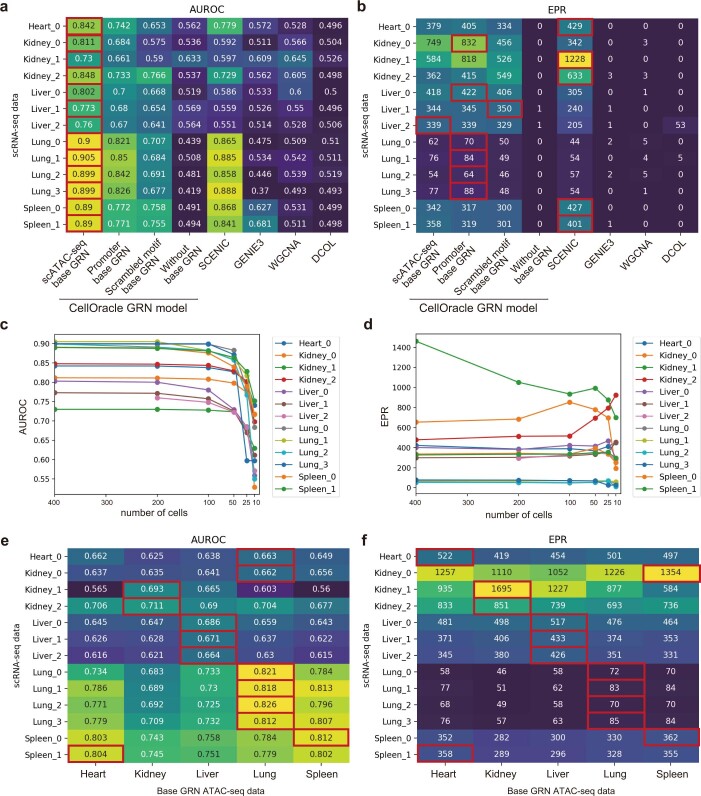
- CellOracle GRN inference benchmarked against 1,298 ChIP–seq datasets for 80 regulatory factors across 5 tissues achieved AUROC 0.66–0.85 with a promoter base GRN and 0.73–0.91 with an scATAC-seq base GRN.
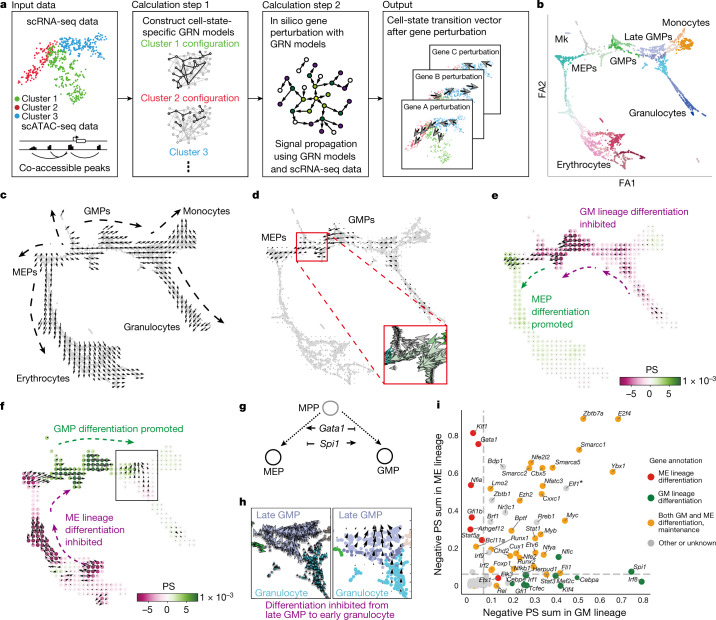
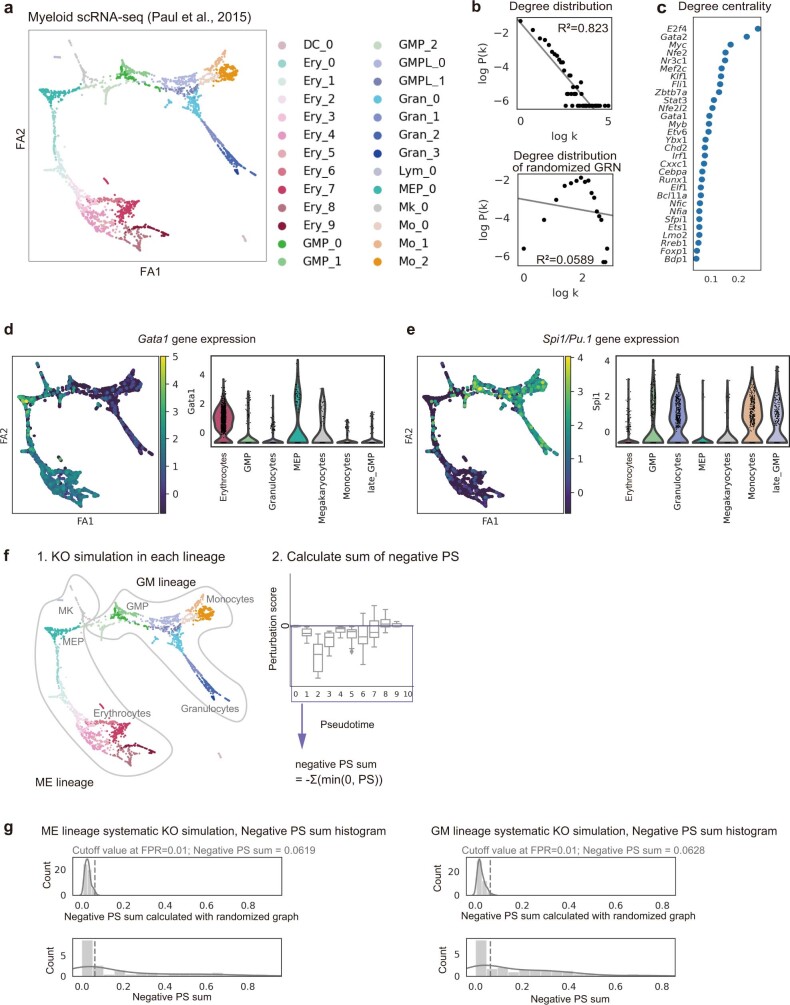
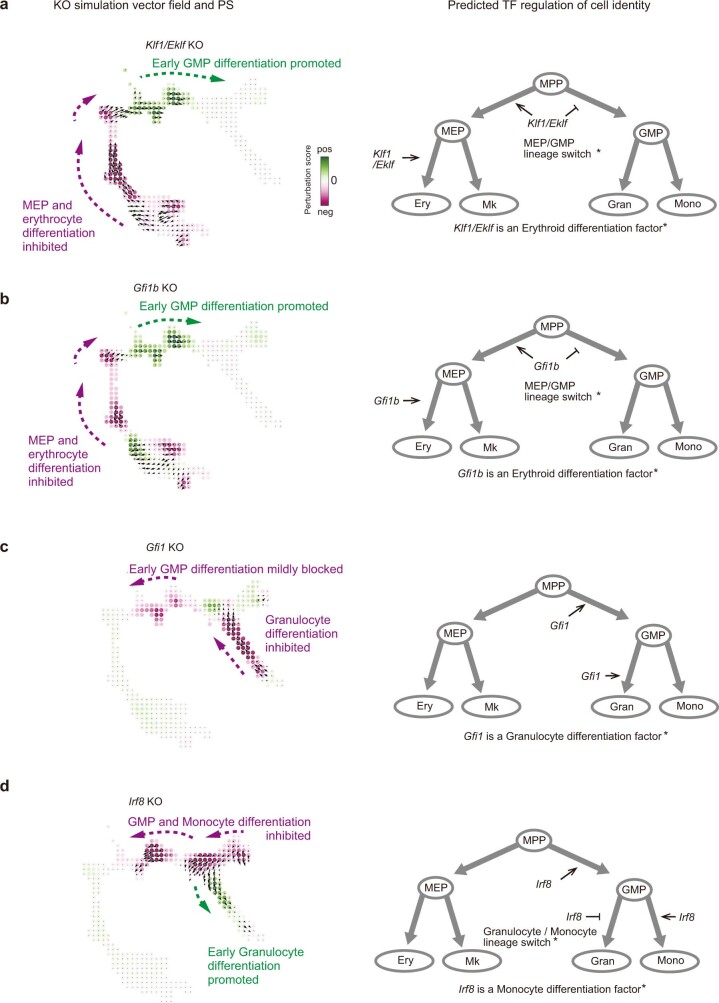
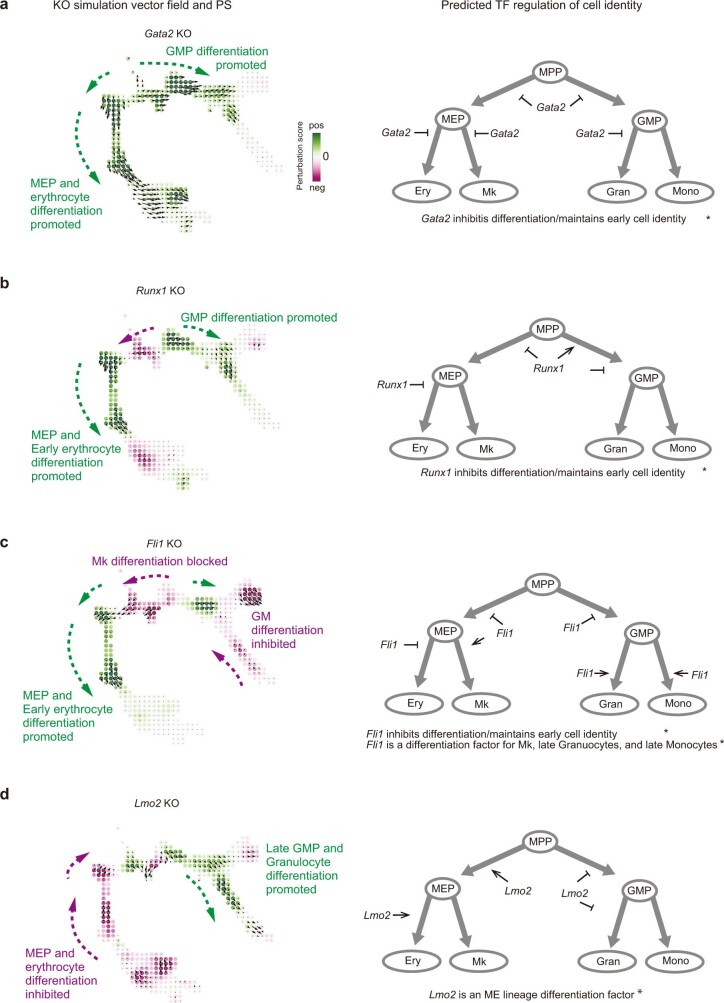
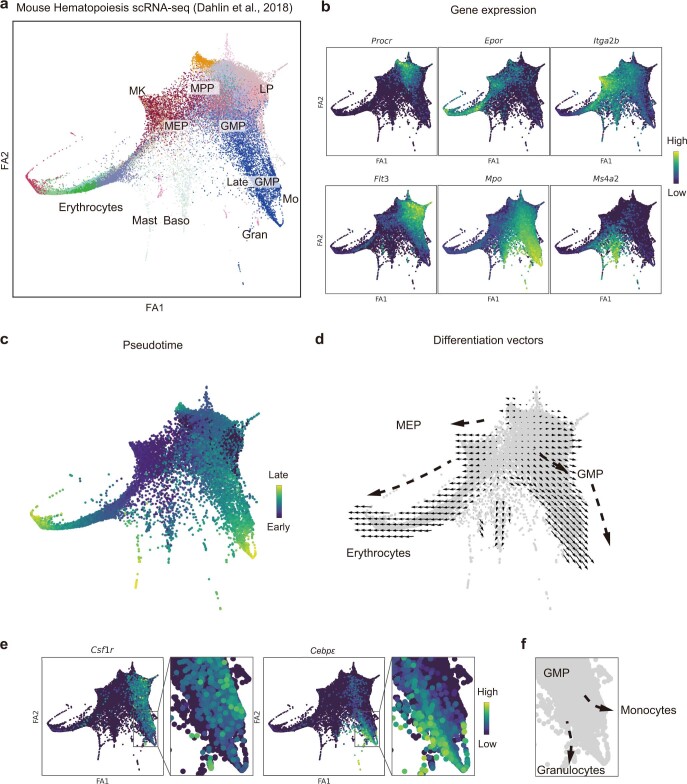
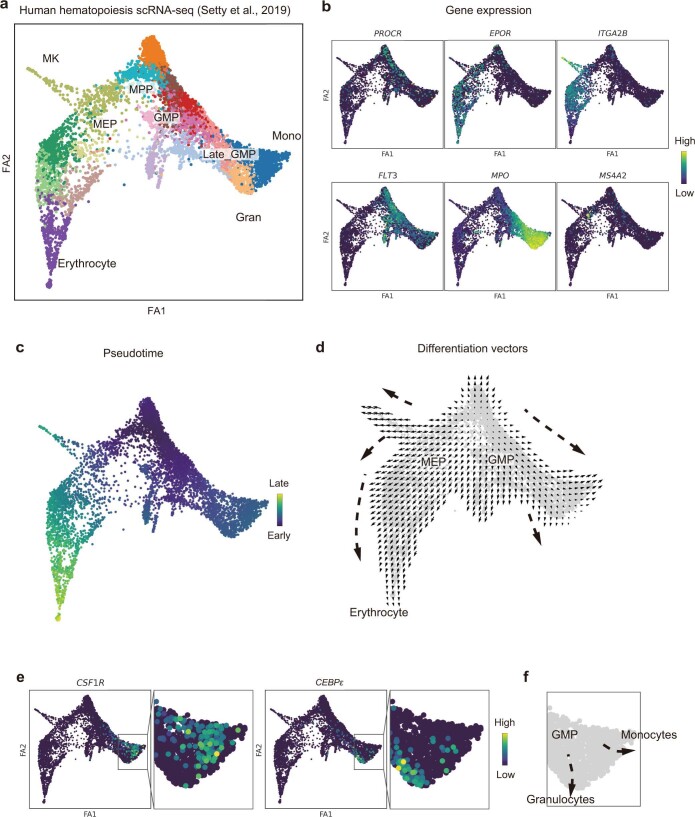
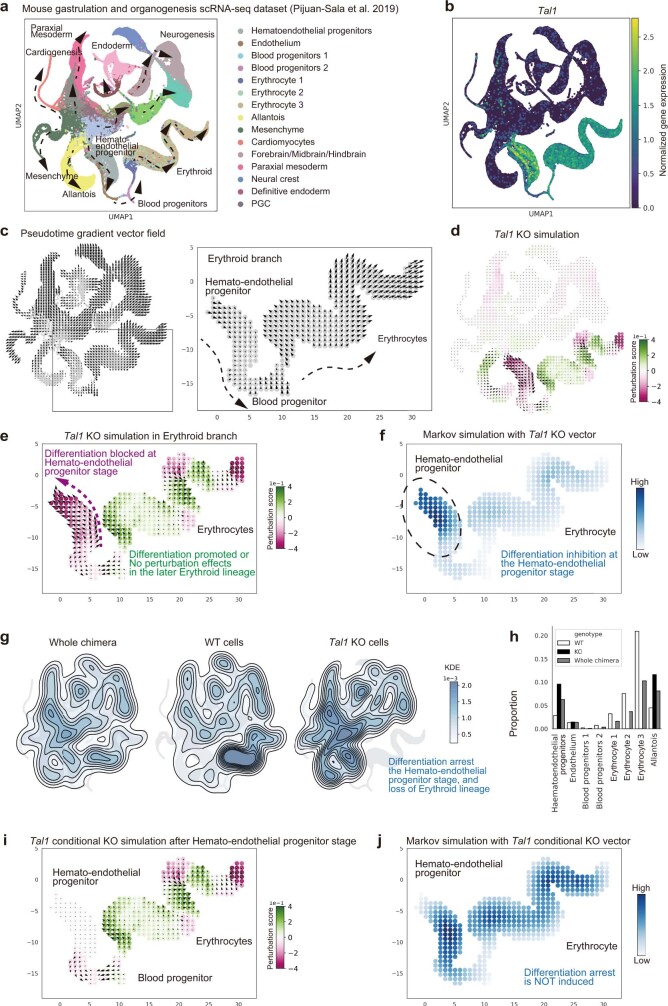
- In a 2,730-cell mouse myeloid progenitor atlas, CellOracle reproduced known Spi1/Gata1 lineage-switching phenotypes; among the top 30 TFs ranked by systematic KO simulation, 85% were reported regulators of myeloid differentiation.
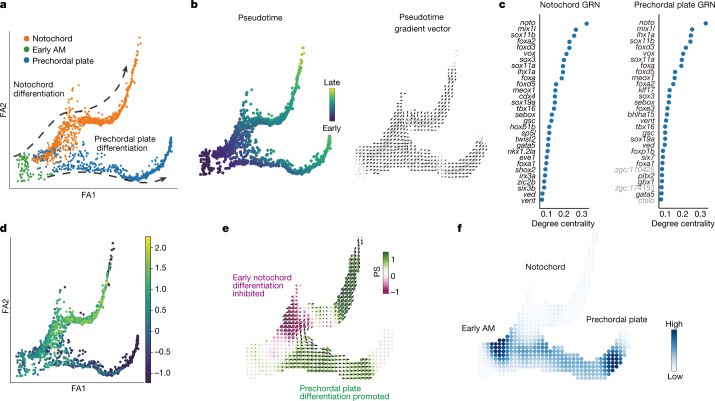
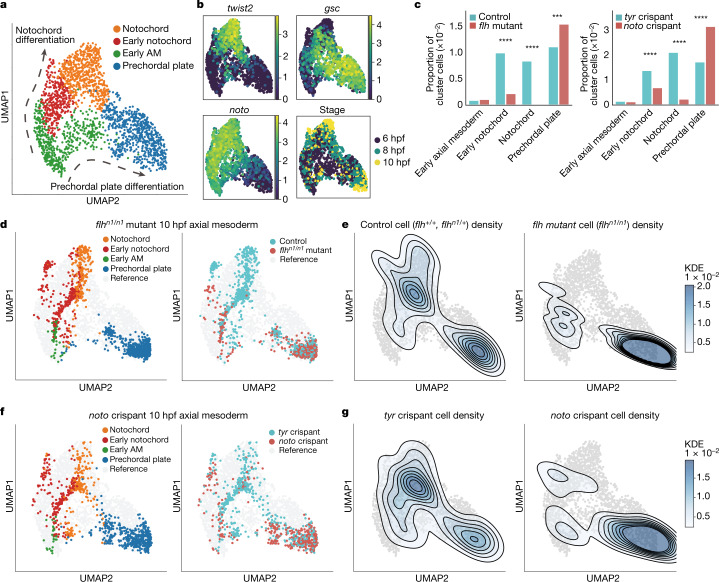
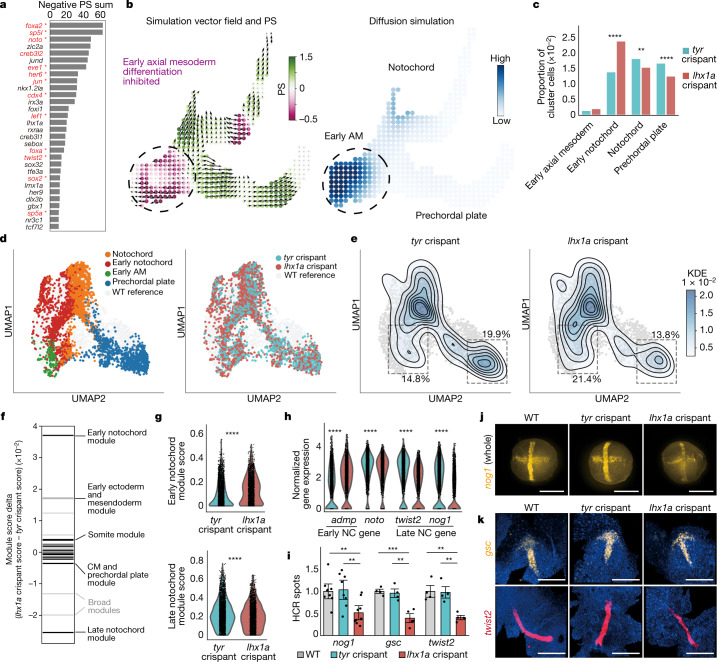
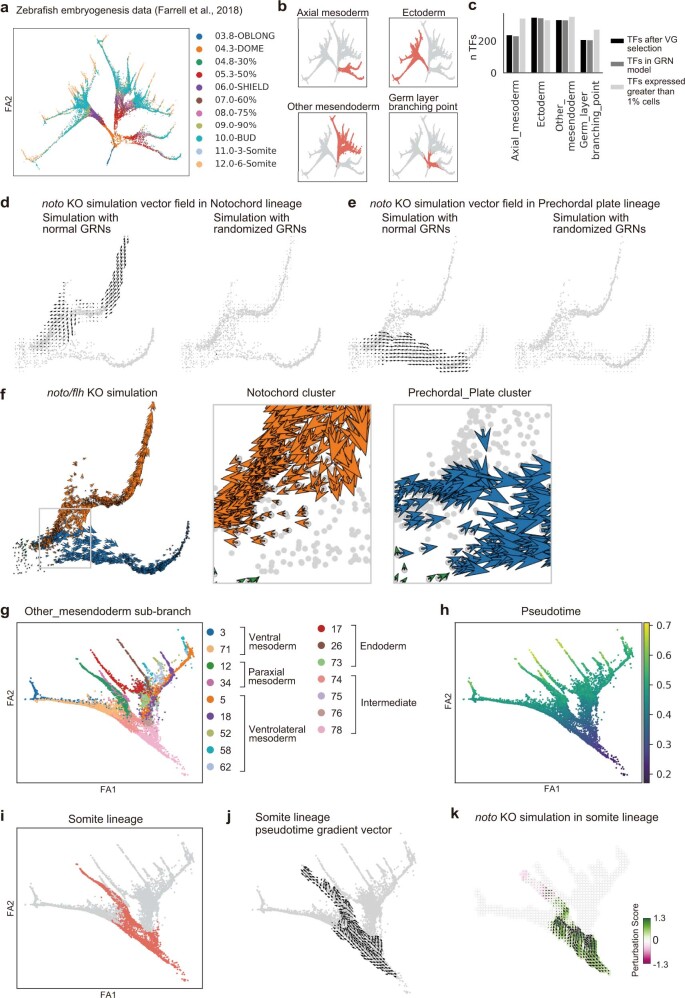
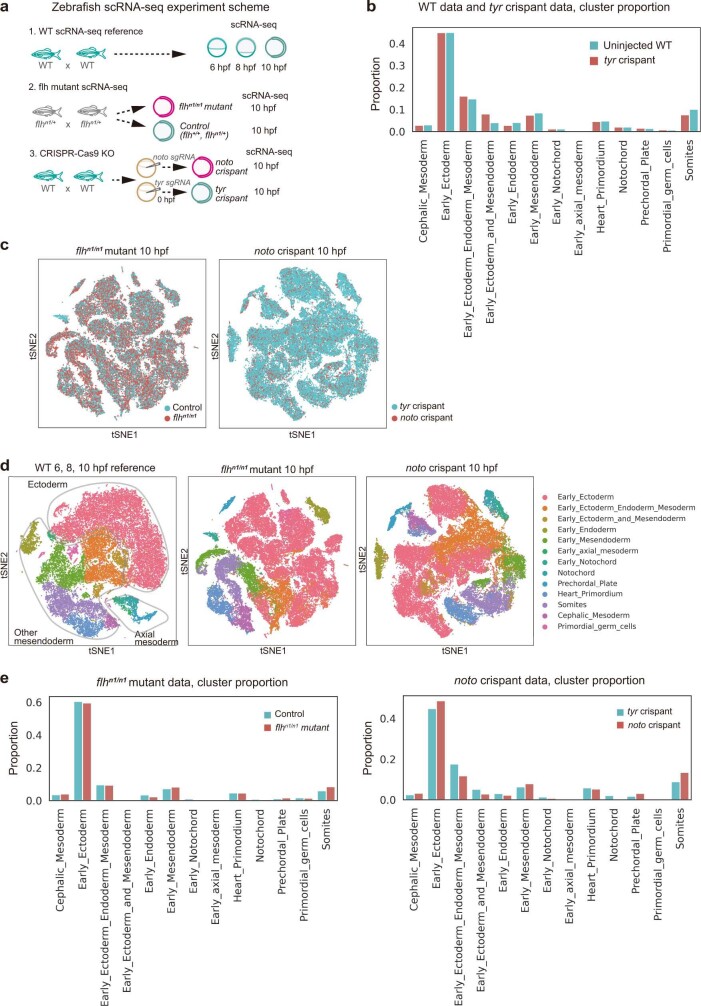
- In zebrafish, systematic KO simulation of 232 active TFs ranked noto top by degree centrality in notochord; noto LOF simulation predicted prechordal plate expansion, validated in flhn1/n1 mutants (notochord −98%, P = 5.55 × 10−52; prechordal plate +38.6%, P = 1.07 × 10⁻⁴) and noto crispants.
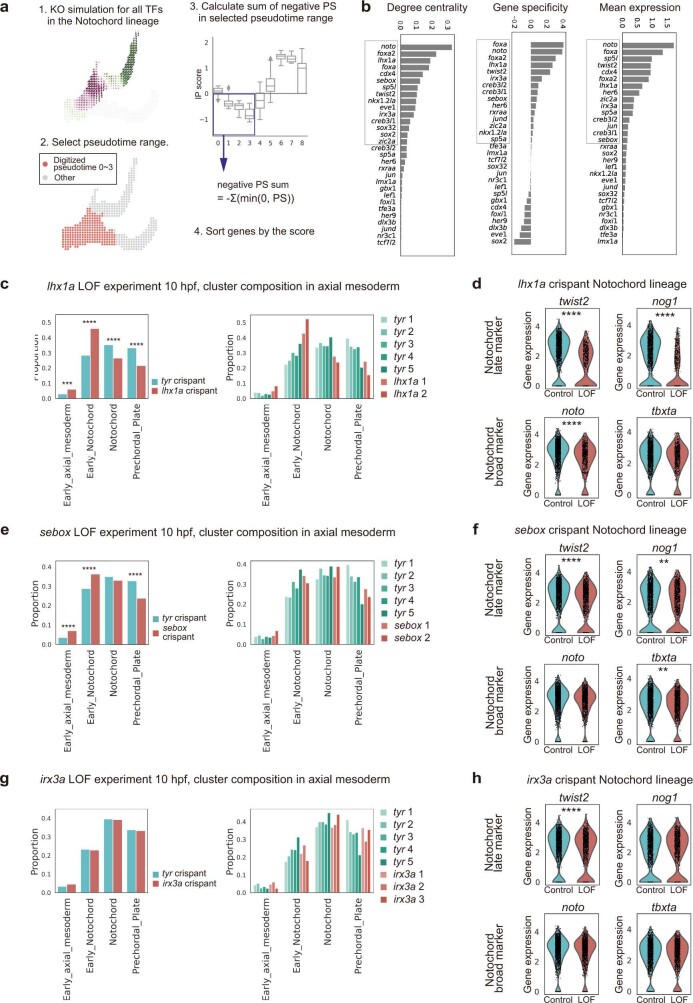
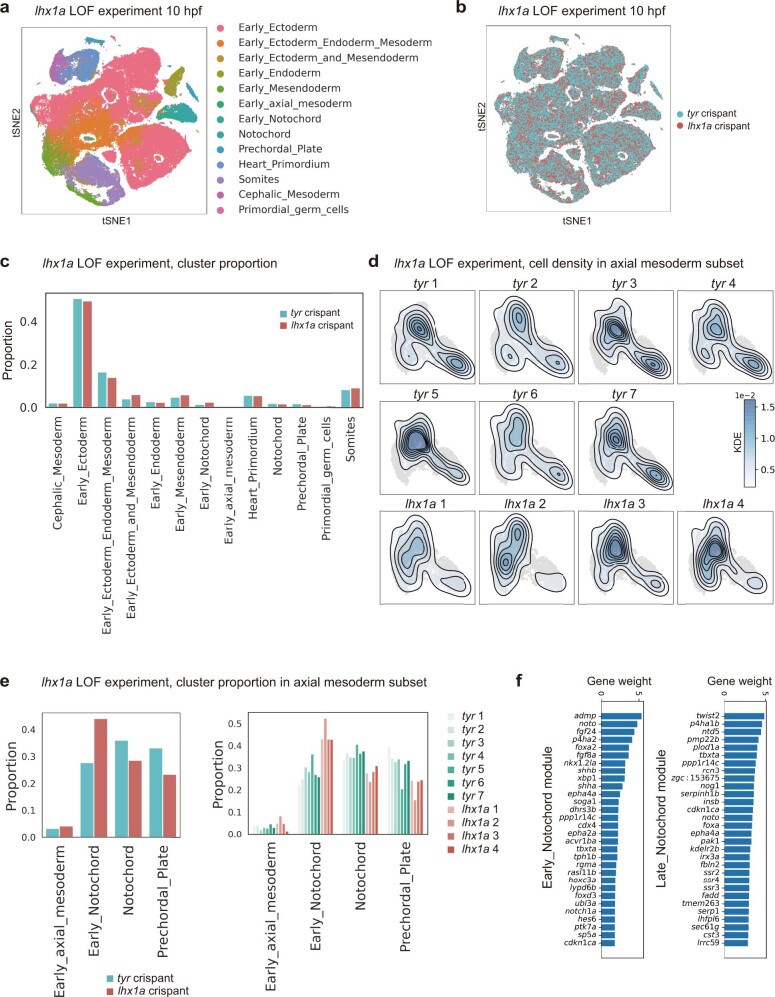
- lhx1a LOF simulation predicted inhibited early axial mesoderm differentiation; lhx1a crispants showed early notochord expansion (+70.2%, P = 1.34 × 10⁻³⁵) and depletion of later notochord (−15.3%, P = 3.83 × 10⁻³) and prechordal plate (−24.7%, P = 1.28 × 10⁻⁷).
Methods
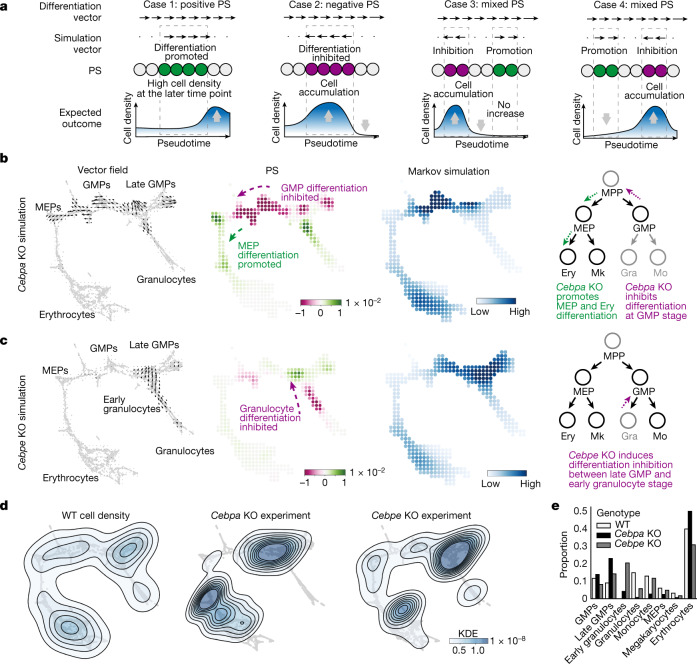
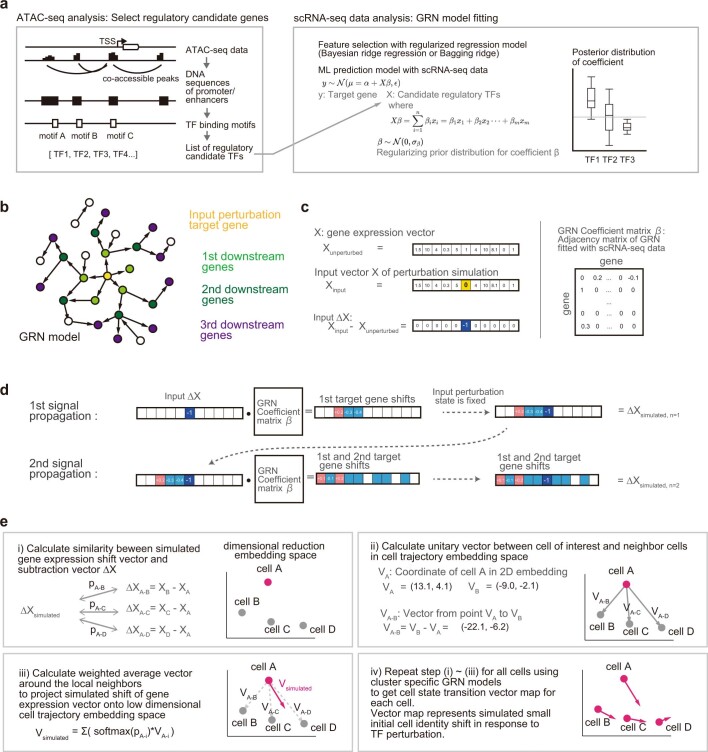
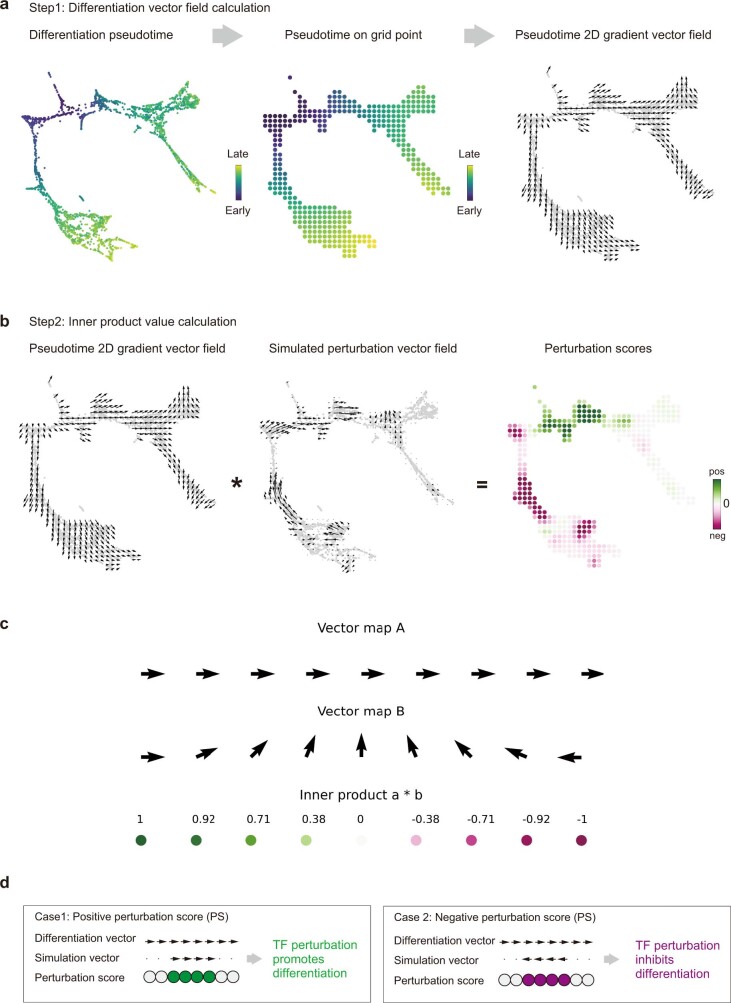
- CellOracle builds cluster-wise regularized linear GRN models using scRNA-seq plus scATAC-seq or promoter databases, propagates TF perturbation signals through the network, estimates transition probabilities, and projects simulated cell-identity shifts as 2D vectors; perturbation scores compare simulation vectors with pseudotime differentiation vectors.
- Validation used mouse and human haematopoiesis datasets, a 38,731-cell zebrafish embryogenesis atlas, a 38,606-cell wild-type zebrafish reference atlas, flhn1/n1 mutants, and CRISPR–Cas9 F0 crispants; experimental readouts included scRNA-seq, NMF, HCR, qRT-PCR and whole-mount in situ hybridization.
- Benchmarking compared CellOracle with WGCNA, DCOL, GENIE3 and SCENIC using ground-truth GRNs from ChIP–seq data; simulations also used randomized GRNs, no signal propagation, varying signal-propagation rounds, and different dimensionality-reduction methods.
Limitations
- Stated: CellOracle can only analyse cell states present in the input scRNA-seq data, and simulation is limited by input data availability and quality, such as unknown TF-binding motifs or sparse TF expression; the authors note foxa3 was filtered out owing to low expression.
- Stated: experimental validation is essential where possible; the authors stress that predictions should be validated experimentally.
- Evident: the simulation output is deliberately limited to a 2D vector rather than absolute expression changes; the negative perturbation score may oversimplify TF roles (e.g. Elf1), and CellOracle did not detect a reported erythrocyte progenitor depletion after Spi1 KO, probably owing to proliferation changes not predicted by the method.
Model-written summary. Check it against the paper before relying on it.
Integrity signals
Registry
Cites
Statistics
Figures
Verification
Claims the paper makes
14 Valid · 2 Not valid · 54 Not checked · 208 Own results and interpretations
The cited sources support only part of this claim — read each source’s verdict below.
In the paper
“To benchmark our GRN inference method, we generated a comprehensive transcriptional ground-truth GRN using 1,298 chromatin immunoprecipitation followed by sequencing (ChIP–seq) datasets for 80 regulatory factors across 5 different tissues14.”
§ Dissecting cell identity via network inference and in silico gene perturbation > GRN inference and benchmarking with CellOracle
What the sources say
- Partly supportedcites [14] Oki S ChIP-Atlas: a data-mining suite powered by full integration of public ChIP-seq data EMBO Rep. 2018 19 e46255 10.15252/embr.201846255 30413482 PMC6280645 sourceExperimental — accuracy not yet measured
Our copy of ChIP‑Atlas confirms it is a fully integrated public ChIP‑seq/DNase‑seq resource (76,217 SRXs across six organisms, Abstract; Overview of the data set and design of analyses, Table 1) with curated antigen and cell‑type metadata and a TR–gene ('Target Genes') integration that 'provides insight into gene regulatory networks' — so it can be the dataset source behind a ChIP‑seq‑derived regulatory network. However, no passage states the specific quantities the claim attributes here (1,298 datasets, 80 regulatory factors, 5 tissues), nor that the resource constitutes or was used to generate a 'ground‑truth' GRN; on the contrary, the Results section 'TR–gene and TR–gene interactions' cautions that 'the genes listed by "Target Genes" are not necessarily functional targets of a given TR and that actual regulation ... would need to be confirmed experimentally'. Searched: 1,298/80 factors/five tissues, ground-truth GRN benchmark, gold-standard TF–target set. (LLM, conf=0.65)
plain- Asserted: passes — The authors put it forward as true.
- Checkable: passes — It can be checked against evidence.
- Load-bearing: passes — The paper’s conclusions depend on it.
- Based: passes — The paper gives a reason why it holds.
- Partly supported
The cited sources support only part of this claim — read each source’s verdict below.
In the paper
“In this respect, gene-regulatory network (GRN) modelling approaches are promising as they reconstruct systematic gene–gene associations from unperturbed single-cell omics data6–11.”
§ Dissecting cell identity via network inference and in silico gene perturbation > Main
What the sources say
- Supportedcites [6] Fiers MWEJ Mapping gene regulatory networks from single-cell omics data Brief. Funct. Genomics 2018 17 246 254 10.1093/bfgp/elx046 29342231 PMC6063279 source
The “GRN inference from scRNA-seq data” section describes reconstructing networks from pairwise associations and co-expression in single-cell data. The Introduction discusses perturbation assays separately as a way to validate predictions, consistent with the claim that these associations can be inferred from unperturbed data. (LLM, conf=0.90)
- Supportedcites [7] Aibar S SCENIC: single-cell regulatory network inference and clustering Nat. Methods 2017 14 1083 1086 10.1038/nmeth.4463 28991892 PMC5937676 source
The Abstract describes SCENIC as reconstructing gene regulatory networks from single-cell RNA-seq data and identifies co-expressed genes as its first step. The Online Methods (GENIE3; page unavailable) specify an expression matrix as the input for network inference, consistent with reconstructing gene associations without requiring perturbation data. The paper addresses single-cell transcriptomics specifically, rather than every type of single-cell omics data. (LLM, conf=0.86)
- Supportedcites [8] Iacono G Massoni-Badosa R Heyn H Single-cell transcriptomics unveils gene regulatory network plasticity Genome Biol. 2019 20 110 10.1186/s13059-019-1713-4 31159854 PMC6547541 source
The Results section describes inferring regulatory networks from single-cell expression data by identifying gene-to-gene correlations and retaining significant correlations as network edges. The Background also states that the approach was applied to healthy tissue datasets, supporting the claim that it can reconstruct associations from unperturbed single-cell data. (LLM, conf=0.91)
- Supportedcites [9] Fleck, J. S. et al. Inferring and perturbing cell fate regulomes in human brain organoids. Nature10.1038/s41586-022-05279-8 (2022). PMC10499607 36198796 source
The ‘Regulatory network inference with Pando’ section describes using multimodal single-cell measurements and regression to infer relationships among transcription-factor expression, binding-site accessibility and target-gene expression. The Methods section (‘GRN inference with Pando’; page unavailable) says the resulting model coefficients define interactions in a regulatory graph. This supports the claim that GRN modelling reconstructs gene–gene regulatory associations from single-cell omics data without requiring perturbations for the inference step. (LLM, conf=0.90)
- Partly supportedcites [10] Kartha VK Functional inference of gene regulation using single-cell multi-omics Cell Genom. 2022 2 100166 10.1016/j.xgen.2022.100166 36204155 PMC9534481 sourceExperimental — accuracy not yet measured
The Discussion (page unavailable) says FigR constructs gene-regulatory networks from correlations across single-cell chromatin and RNA profiles, supporting the claim about reconstructing gene associations. But the paper describes an atlas of immunological stimulation and analyses across stimulus conditions, so it does not establish the claim's qualification that the data are unperturbed. (LLM, conf=0.82)
- Supportedcites [11] González-Blas, C. B. et al. SCENIC+: single-cell multiomic inference of enhancers and gene regulatory networks. Preprint at bioRxiv10.1101/2022.08.19.504505 (2022). source
The SCENIC+ methods (p. 2) describe inferring TF-to-gene relationships from single-cell gene-expression and chromatin-accessibility data using correlation and regression, then combining them into gene regulatory networks. The Discussion (p. 13) also describes GRN methods that search expression data for putative TF–target-gene relationships. This supports the claim as a broad description of network modelling from observational single-cell data. (LLM, conf=0.91)
plainstates a cause- Asserted: passes — The authors put it forward as true.
- Checkable: passes — It can be checked against evidence.
- Load-bearing: passes — The paper’s conclusions depend on it.
- Based: passes — The paper gives a reason why it holds.
- Supported
Every source the paper cites for this claim was checked and supports it.
In the paper
“To support GRN inference without requiring sample-specific scATAC-seq datasets, we have assembled a base GRN from a mouse scATAC-seq atlas13.”
§ Dissecting cell identity via network inference and in silico gene perturbation > GRN inference and benchmarking with CellOracle
What the sources say
- Supportedcites [13] Cusanovich DA A single-cell atlas of in vivo mammalian chromatin accessibility Cell 2018 174 1309 1324 10.1016/j.cell.2018.06.052 30078704 PMC6158300 source
The Results describe profiling chromatin accessibility in single nuclei from 13 mouse tissues using sci-ATAC-seq, identifying the cited work as a mouse single-cell ATAC-seq atlas. The sentence attributes the assembly of the base GRN and its use without sample-specific datasets to the citing authors, not to this source. (LLM, conf=0.92)
plainstates a cause- Asserted: passes — The authors put it forward as true.
- Checkable: passes — It can be checked against evidence.
- Load-bearing: passes — The paper’s conclusions depend on it.
- Based: passes — The paper gives a reason why it holds.
- Supported
Every source the paper cites for this claim was checked and supports it.
In the paper
“Because of this second constraint, we cannot use pre-existing GRN inference algorithms, such as GENIE3 and GRNboost (refs. 7,51).”
§ Dissecting cell identity via network inference and in silico gene perturbation > Methods > Context-dependent GRN inference using scRNA-seq data
What the sources say
- Supportedcites [7] Aibar S SCENIC: single-cell regulatory network inference and clustering Nat. Methods 2017 14 1083 1086 10.1038/nmeth.4463 28991892 PMC5937676 source
The Online Methods (GRNboost) identify GRNboost and GENIE3 as gene-regulatory-network inference methods and explain that they use boosted regression trees and random forests, respectively, rather than linear regression. The citing authors’ inability to use them under their constraint is their own conclusion; the citation supports the identification of the algorithms and their methods. (LLM, conf=0.92)
- Supportedcites [51] Huynh-Thu VA Irrthum A Wehenkel L Geurts P Inferring regulatory networks from expression data using tree-based methods PLoS ONE 2010 5 e12776 10.1371/journal.pone.0012776 20927193 PMC2946910 source
The Introduction identifies GENIE3 as a GRN inference method using ensembles of regression trees and says it can model non-linear relationships. This supports citing the paper as an example of an algorithm unsuitable for the citing authors’ linear-regression constraint; that constraint is the citing authors’ own premise. The paper is not being cited here for GRNboost. (LLM, conf=0.91)
plainstates a cause- Asserted: passes — The authors put it forward as true.
- Checkable: passes — It can be checked against evidence.
- Load-bearing: passes — The paper’s conclusions depend on it.
- Based: passes — The paper gives a reason why it holds.
- Supported
The sources with a verdict support this claim; the rest weren’t checked yet, have no full text we could read, or their verdicts aren’t rated yet.
In the paper
“Cebpa promotes GM lineage differentiation while inhibiting ME lineage differentiation16,72, and promoting granulocyte differentiation in particular15.”
§ Dissecting cell identity via network inference and in silico gene perturbation > Methods > Comparison between CellOracle haematopoiesis KO simulation results and previous reports
What the sources say
- Not checked yetcites [16] Paul F Transcriptional heterogeneity and lineage commitment in myeloid progenitors Cell 2015 163 1663 1677 10.1016/j.cell.2015.11.013 26627738 source
- Supportedcites [72] Hyung CS C/EBPα determines hematopoietic cell fate in multipotential progenitor cells by inhibiting erythroid differentiation and inducing myeloid differentiation Blood 2006 107 4308 10.1182/blood-2005-06-2216 16469877 PMC1895788 source
In the section on lineage switching of EML cells, the paper reports that C/EBPα overexpression promoted more rapid and complete granulocyte differentiation than the comparison treatment. This directly supports the attributed claim. (LLM, conf=0.94)
- Not checked yetcites [15] Orkin SH Zon LI Hematopoiesis: an evolving paradigm for stem cell biology Cell 2008 132 631 644 10.1016/j.cell.2008.01.025 18295580 PMC2628169 source
plainstates a cause- Asserted: passes — The authors put it forward as true.
- Checkable: passes — It can be checked against evidence.
- Load-bearing: passes — The paper’s conclusions depend on it.
- Based: passes — The paper gives a reason why it holds.
147 more claims · 3 with their cited sources checked
Create a free account to see all 278 claims and to verify the 81 references still open.
- It may state two separate claims as one. 87
- Probably not a substantial claim. 53
Claims other papers make about this one
Each is checked against this paper’s own text: does it say what the citing paper says it does?
The source backs part of the claim, not all of it — or backs it for a different population, condition or comparison.
In the citing paper
“CellOracle surpassed other GRN-inference algorithms such as PIDC, GENIE3, and GRNBoost2 in accurately identifying biological ground truth [44]”
From A mini-review on perturbation modelling across single-cell omic modalities (2024) · cites this paper as [44]
Experimental — accuracy not yet measuredThe cited source says what the claim attributes to it.
In the citing paper
“By leveraging gene-regulatory networks derived from these data types, CellOracle performs in silico transcription factors perturbations, effectively simulating cell state changes in response to TF perturbations.”
From A mini-review on perturbation modelling across single-cell omic modalities (2024) · cites this paper as [44]
In the citing paper
“For instance, CellOracle can simulate cell identity transitions following digital (in silico) TF perturbations such as knockout or overexpression.”
From A mini-review on perturbation modelling across single-cell omic modalities (2024) · cites this paper as [44]
In the citing paper
“whereas in silico ChIP–seq predicts transcription factor binding at individual cis-regulatory elements179.”
From The technological landscape and applications of single-cell multi-omics (2023) · cites this paper as [179]
In the citing paper
“Similarly, CellOracle179 leverages multi-omics data, either collected in parallel or integrated computationally, to learn gene regulatory networks and infer the results of in silico perturbations, whereas in silico ChIP–seq predicts transcription factor binding at individual cis-regulatory elements179.”
From The technological landscape and applications of single-cell multi-omics (2023) · cites this paper as [179]
Self-check
Percentages, sums and reported differences re-computed from the paper’s own numbers.
Each contradiction between two passages listed here was confirmed by an independent check.
Rated minor: it would not touch a result — a value no result rests on, a p-value that stays on the same side of the significance level, or a conflict that is clerical, resolved elsewhere in the paper, or outside its own findings.
In the paper
§ Dissecting cell identity via network inference and in silico gene perturbation > Methods > Simulation of cell identity following perturbation of regulatory genes
“This process consists of four steps: (i) data preprocessing; (ii) signal propagation within the GRN; (iii) estimation of transition probabilities; and (iv) analysis of simulated transition in cell identity.”
§ Dissecting cell identity via network inference and in silico gene perturbation > Methods > Simulation of cell identity following perturbation of regulatory genes
“(v)Calculation of vector field”
Rated minor: it would not touch a result — a value no result rests on, a p-value that stays on the same side of the significance level, or a conflict that is clerical, resolved elsewhere in the paper, or outside its own findings.
In the paper
§ Dissecting cell identity via network inference and in silico gene perturbation > Methods > Preparation of input data for GRN inference
“Cells were subsampled for each tissue on the basis of the original tissue-type annotation: spleen, lung, muscle, liver and kidney.”
§ Dissecting cell identity via network inference and in silico gene perturbation > Methods > Ground-truth data preparation for GRN benchmarking
“Here, we selected tissues commonly available in the Tabula Muris scRNA-seq dataset, mouse sci-ATAC-seq atlas data and ground-truth datasets: heart, kidney, liver, lung and spleen.”
Rated minor: it would not touch a result — a value no result rests on, a p-value that stays on the same side of the significance level, or a conflict that is clerical, resolved elsewhere in the paper, or outside its own findings.
In the paper
§ Dissecting cell identity via network inference and in silico gene perturbation > Systematic TF KO simulations in zebrafish
“c, Degree centrality scores were used to rank the top 30 TFs in notochord (left) and prechordal plate (right).”
§ Dissecting cell identity via network inference and in silico gene perturbation > Systematic TF KO simulations in zebrafish
“Black text denotes TFs. Grey text denotes non-TFs.”
Citations
Cites
Comprehensive Integration of Single-Cell Data
Stuart, T., Butler, A., Hoffman, P., Hafemeister, C., Papalexi, E., Mauck, W. M., Hao, Y., Stoeckius, M., Smibert, P., & Satija, R. (2019) · Cell · doi:10.1016/j.cell.2019.05.031 · Cited by 15,453
SCANPY: large-scale single-cell gene expression data analysis
Wolf, F. A., Angerer, P., & Theis, F. J. (2018) · Genome Biology · doi:10.1186/s13059-017-1382-0 · Cited by 8,881
Scenic: single-cell regulatory network inference and clustering.
Aibar, S., González-Blas, C. B., Moerman, T., Huynh-Thu, V. A., Imrichova, H., Hulselmans, G., Rambow, F., Marine, J.-C., Geurts, P., Aerts, J., et al. (2017) · Nature Methods · doi:10.1038/nmeth.4463 · Cited by 6,520
A General Framework for Weighted Gene Co-Expression Network Analysis
Zhang, B., & Horvath, S. (2005) · Statistical Applications in Genetics and Molecular Biology · doi:10.2202/1544-6115.1128 · Cited by 5,684
Hafemeister, C., & Satija, R. (2019) · Genome Biology · doi:10.1186/s13059-019-1874-1 · Cited by 4,479
La Manno, G., Soldatov, R., Zeisel, A., Braun, E., Hochgerner, H., Petukhov, V., Lidschreiber, K., Kastriti, M. E., Lönnerberg, P., Furlan, A., et al. (2018) · Nature · doi:10.1038/s41586-018-0414-6 · Cited by 4,118
Jacomy, M., Venturini, T., Heymann, S., & Bastian, M. (2014) · PLoS ONE · doi:10.1371/journal.pone.0098679 · Cited by 2,909
Single-cell transcriptomics of 20 mouse organs creates a Tabula Muris
The Tabula Muris Consortium, coordination, O., coordination, L., processing, O. C. A., sequencing, L. P. A., analysis, C. D., annotation, C. T., Writing group, Supplemental text writing group, & Principal investigators (2018) · Nature · doi:10.1038/s41586-018-0590-4 · Cited by 2,842
High-resolution in situ hybridization to whole-mount zebrafish embryos
Thisse, C., & Thisse, B. (2008) · Nature Protocols · doi:10.1038/nprot.2007.514 · Cited by 2,578
Hematopoiesis: An Evolving Paradigm for Stem Cell Biology
Orkin, S. H., & Zon, L. I. (2008) · Cell · doi:10.1016/j.cell.2008.01.025 · Cited by 2,570
Cited by
Items 601–700 of 721
Immune BioGraphy: A tale of graphical approaches in systems and virtual immunology
Keshari, S., Chakraborty, T., & Das, J. (2026) · Cell Systems · doi:10.1016/j.cels.2026.101618
scMTG reconstructs single-cell temporal dynamics with Markov transition generatorsPreprint
Cui, X., Wang, H., Gao, Z., Jiang, R., Wong, W. H., & Liu, Q. (2026) · bioRxiv (Cold Spring Harbor Laboratory) · doi:10.64898/2026.06.04.730241
Yang, Z., Huang, S., Bai, G., Dong, J., Wang, J., & Li, S. Z. (2026) · bioRxiv (Cold Spring Harbor Laboratory) · doi:10.64898/2026.06.05.729520
“This has driven a deep methodological schism: GRN inference methods 4–6 produce static, non-transferable networks, while perturbation response predictors 10–13 achieve quantitative forecasting as black boxes.”
Li, S., & Liu, Y. (2026) · Frontiers in Cardiovascular Medicine · doi:10.3389/fcvm.2026.1798922
“Counterfactual simulation and causal inference frameworks may further support in silico prioritization before prospective validation (102, 103).”
Deng, Q., Liu, Y., Bracey, N. A., Wang, Y.-C., Wadsworth, P. A., Afrin, M., Santoro, M., Chen, S.-Y., Wu, J. C., Charu, V., et al. (2026) · bioRxiv (Cold Spring Harbor Laboratory) · doi:10.64898/2026.06.09.731164
Charting the computational landscape of single-cell genetic perturbation
Zhang, Y., Huang, J., Li, Y., Liu, T., Ren, L., Huang, J. H., Lin, H., Feng, J., & Zhang, Y. (2026) · Journal of Advanced Research · doi:10.1016/j.jare.2026.06.012 · Cited by 1
Jin, H., Ye, X., Jian, G., & Xiong, H. (2026) · International Journal of Molecular Sciences · doi:10.3390/ijms27125453
“Future experiments should test MUC20 knockdown or overexpression in macrophages and assess efferocytosis, lysosomal acidification, lipid load, inflammatory mediator production, and osteoclastogenic capacity [37].”
Kokaji, T., Suzuki, K. T., Kunida, K., & Sakumura, Y. (2026) · bioRxiv (Cold Spring Harbor Laboratory) · doi:10.64898/2026.06.12.731835
“In addition, methods have been proposed that integrate additional regulatory evidence, such as ChIP-seq profiles and transcription factor binding motifs, to infer transcription factor (TF)–target relationships 7–9 .”
Adel, H., Arafat, A. M. A., Khattab, E. H. A., Khattab, M. A., Khallaf, A. M., & Mahgoub, S. M. A. (2026) · World Journal of Stem Cells · doi:10.4252/wjsc.121077
He, Z., & Dong, K. (2026) · PLoS Computational Biology · doi:10.1371/journal.pcbi.1014167
“For example, CellOracle simulates the effects of transcription factor (TF) perturbations on cell identity dynamics by modeling GRN influences, providing interpretable and quantitative insights into developmental trajectories [7].”
Liaskos, D., Oftadeh, O., Tonini, M., Masid, M., & Hatzimanikatis, V. (2026) · bioRxiv (Cold Spring Harbor Laboratory) · doi:10.64898/2026.06.19.733348 · Cited by 1
Generative Modeling of Mouse Embryogenesis for Fate and Disease PredictionPreprint
Fan, Y., Liu, X., Wang, Y., Zeng, Z., Li, L., Qiu, X., & Li, Y. (2026) · bioRxiv (Cold Spring Harbor Laboratory) · doi:10.64898/2026.06.18.733286 · Cited by 1
“CellOracle [128] integrates GRN modeling with in silico perturbation to predict changes in cell identity following TF perturbations.”
Plant Regulatory Networks Uncovered by Spatial and Multiple Omics Tools
Misra, V., & Mall, A. K. (2026) · CABI biotechnology series. · doi:10.1079/9781836994572.0008
Transcriptional repression by TGIF2 coordinates neurogenic priming and neural stem cell maintenance
Li, Y., Krontira, A. C., Vierl, F., Richter, M. L., Wang, W., Merl‐Pham, J., Theis, F. J., Hauck, S. M., & Götz, M. (2026) · Science Advances · doi:10.1126/sciadv.aea9974 · Cited by 1
Decoding Immune Regulation: From Genetic Variation to Mechanism Through Single-Cell Genomics
Koh, J. H., & Ye, C. (2026) · Immune Network · doi:10.4110/in.2026.26.e24 · Cited by 1
Chen, Y., Wen, T., Nie, W., Wu, S., & Zhang, Q. (2026) · Cancer Genetics · doi:10.1016/j.cancergen.2026.06.010
Lee, H. J., Kim, C. J., Ahn, H., Cho, G., Mun, S.-H., Kim, S. W., Choi, H.-S., Um, D., Kim, H., Ko, H., et al. (2026) · Nature Communications · doi:10.1038/s41467-026-75308-x · Cited by 1
“To explore whether human C/EBP α plays a similar role in human Tfr differentiation, we utilized CellOracle, a computational framework for in silico transcription factor perturbation analysis 37 .”
InfluentialWang, J., Jiang, S., Zhang, Y., Gao, H., Zhao, X., Liu, L., & Li, Z. (2026) · Toxicology Mechanisms and Methods · doi:10.1080/15376516.2026.2698865
Peraki, I., Zhang, L., Botskaris, D., Stagaki, M., Deligiannis, I. K., Kontaki, H., Deligianni, E., Giannoulakis, I., Hazapis, O. G., Lavigne, M. D., et al. (2026) · iScience · doi:10.1016/j.isci.2026.116731
Context-Aware Dual-Graph Neural Network for Cellular State Inference Under Genetic Perturbations
Cai, L., Yu, J., Liu, L., Lin, Q., Li, X., & Wong, K. (2026) · IEEE Transactions on Big Data · doi:10.1109/tbdata.2026.3712210 · Cited by 1
“Traditional approaches map transcriptional relationships through gene regulatory networks (GRNs), thereby enabling the prediction of cellular responses to single perturbations [20], [21], [22], [23].”
Synthetic developmental engineering of human liver organogenesis
Taheri, M. N., Xiang, Y., & Ebrahimkhani, M. R. (2026) · Development · doi:10.1242/dev.205040
Feng, C., Li, W., & Li, C. (2026) · Lecture notes in computer science · doi:10.1007/978-981-92-3498-1_3
Lu, F., Zhang, T., Li, Z., Yao, R., Hu, H., Guan, R., & Xu, M. (2026) · Cancers · doi:10.3390/cancers18142259
“In parallel, in silico perturbation methods such as scTenifoldKnk and CellOracle provide a practical framework for prioritizing regulatory nodes from single-cell gene-regulatory networks when experimental perturbation is not immediately feasible [21,22].”
Wang, X., Liu, M., Jia, M., Wang, Q., Li, X., Zou, Q., Huang, X., Zhang, L., Lv, X., Wang, J., et al. (2026) · The Innovation Oncology · doi:10.59717/j.xinn-oncol.2026.100027 · Cited by 1
Filippi, M., & Katzschmann, R. K. (2026) · Bio-Design and Manufacturing · doi:10.1631/bdm.2500560
Yang, B., Hua, J., Zhou, G., Feng, Y., Qi, J., Guo, Y., Sheng, D., & Jin, S. (2026) · Genome Research · doi:10.1101/gr.281661.125
IC2: interventional dynamical causality under latent confounders
Yan, J., Zhang, X., Shi, J. Y., Zhang, C. H. I., & Chen, L. (2026) · Journal of The Royal Society Interface · doi:10.1098/rsif.2025.1289
Wang, C., Zhang, Z., Huang, Y., Shi, Y., & Lei, P. (2026) · Ecotoxicology and Environmental Safety · doi:10.1016/j.ecoenv.2026.120551 · Cited by 1
Evaluation Choices in Gene Regulatory Network Inference: An Empirical Analysis on DREAM4Preprint
Chen, L. (2026) · Research Square · doi:10.21203/rs.3.rs-10462009/v1
Chen, L. (2026) · Research Square · doi:10.21203/rs.3.rs-10462037/v1
Xu, Z., Liu, Y., Cheng, L., & Xu, J. (2026) · Frontiers in Oncology · doi:10.3389/fonc.2026.1915323
Yao, M., Xing, C., Li, X., Sun, X., Zhang, C., You, X., & Li, S. (2026) · Frontiers in Pharmacology · doi:10.3389/fphar.2026.1916973 · Cited by 1
Atfa, S. E., Hajami, A., Machhour, H., & Allali, H. (2026) · Genetics and Molecular Research · doi:10.4238/06xby968
A confound-diagnostic toolkit for in silico perturbation with single-cell foundation modelsPreprint
Qiu, R., & Zhao, M. M. (2026) · bioRxiv (Cold Spring Harbor Laboratory) · doi:10.64898/2026.08.04.732812
Mirza, M., Hohl, T., Fullio, C. L., Vidos, C., Rollin, J., Manke, T., & Vogel, T. (2026) · bioRxiv (Cold Spring Harbor Laboratory) · doi:10.64898/2026.09.11.750559
Kadiatou, D., Camara, F., KEITA, M., & Leclercq, S. (2025) · Pharmacophore · doi:10.51847/a1xh4xuw5o
The structural origin of irreversible transitions in biological networks
Kim, J., Jang, S., Lee, J., Hopper, C., & Cho, K. (2026) · Proceedings of the National Academy of Sciences · doi:10.1073/pnas.2600800123
Horcoff, J., Goswami, A., & Mishra, B. (2026) · bioRxiv (Cold Spring Harbor Laboratory) · doi:10.64898/2026.08.16.744839
HIF-1α Restrains Oxidative Metabolism and Suppressive Function in RORγt⁺ Regulatory T CellsPreprint
Cipelli, M., da Silva, E. M., Menezes-Silva, L., Padovani, B. N., do Amaral, M. A., Paredes, L. C., Nunes, B. G., Yariwake, V. Y., Neto, J. A. D. O. N., Bos, N. N., et al. (2026) · SSRN Electronic Journal · doi:10.2139/ssrn.7674603
Wu, S., Wu, S., Yang, Z., Wang, Z., Jianping, C. A. I., Jianping, C. A. I., & Ge, W. (2026) · bioRxiv (Cold Spring Harbor Laboratory) · doi:10.64898/2026.08.11.744106
Wang, B. H., Wang, Y., Cao, W., Wang, P., Yang, X., Wang, S., Li, C., & Yin, Y. (2026) · Neuroscience · doi:10.1016/j.neuroscience.2026.08.027
Sensitivity analysis of cell fate trajectories from single-cell transcriptomics
Noman, A. A., & Sashittal, P. (2026) · Bioinformatics · doi:10.1093/bioinformatics/btag473
“2009, Kamimoto et al .”
Thomas, N. T., Goh, J. Z., Murach, K. A., Fry, C. S., Peterson, C. A., Ismaeel, A., McCarthy, J. J., & Wen, Y. (2026) · bioRxiv (Cold Spring Harbor Laboratory) · doi:10.64898/2026.08.26.747125
AI and multiplex gene editing: The future of gene editing in plants
Mermaz, B., de Souza, A. A., & Sagawa, C. H. D. (2026) · Elsevier eBooks · doi:10.1016/b978-0-443-44079-3.00018-8
In vivo multimodal lineage tracing of mammalian development by DeepTrack barcodingPreprint
Guo, C., Jiang, J., Wang, X., Huang, X., Zhang, S., Shao, C., Zhang, M., Hu, X., Yang, W., Shang, F., et al. (2026) · bioRxiv (Cold Spring Harbor Laboratory) · doi:10.64898/2026.08.29.748052 · Cited by 1
Human T cell communication shapes naïve CD8 T cell fate through Enolase-1Preprint
Agyei, Y., Tandon, I., Zhou, J., Al-Moussawy, M., Khalifa, A. M., Suryawanshi, N., Sharma, A., Bellamkonda, S., yosri, M., Yu, R., et al. (2026) · Research Square · doi:10.21203/rs.3.rs-10628933/v1
Inference of Gene–Gene Interaction and Its Function
Kamimoto, K. (2026) · Methods in molecular biology · doi:10.1007/978-1-0716-5284-8_5
Self-citationKim, H., Lee, S.-H., Yang, C. M., Lee, E.-C., Lee, R.-R., Lee, S., & Kim, H. (2026) · BMB Reports · doi:10.5483/bmbrep.2026-0119
“Candidate TFs for CellOracle perturbation analysis were not manually selected but were defined from filtered CellOracle GRNs. Regulatory edges were retained using P < 0.001 and ranked by absolute regression coefficient, with up to the top 2,000 edges retained per cell state.”
InfluentialAgeas enables time-agnostic cell fate inference from single-cell and spatial multi-omics dataPreprint
Jiang, J., Kong, A., & Yu, G. (2026) · bioRxiv (Cold Spring Harbor Laboratory) · doi:10.64898/2026.08.30.748098 · Cited by 1
“To further explore the potential regulatory relevance, we deployed CellOracle[71], a GRN-based in silico perturbation frame-335 work, to simulate the targeted loss-of-function of these factors.”
The study of evolvability in gene regulatory networks
Jorritsma, A., Kiggen, A., Belleghem, S. M. V., & van den Berg, P. (2026) · Trends in Genetics · doi:10.1016/j.tig.2026.08.004 · Cited by 1
Faisal, S., Ejaz, M. A., Kambey, P. A., Malik, A., & Li, Y.-X. (2026) · International Journal of Molecular Sciences · doi:10.3390/ijms27188023
“Regulator– target relationships are inferred from co-expression constrained by sequence-motif evidence at target promoters [24,25].”
Gu, Y., Shi, S., Rao, Y., Zhang, S., Zhang, J., Zhang, W., & Zeng, X. (2026) · Frontiers in Immunology · doi:10.3389/fimmu.2026.1936742
Tumor-associated osteoclasts converge on a matrix-sulfation program across human bone tumors
Lei, M., Chang, S., Lei, N., Zhang, Z., & Luo, C. (2026) · Frontiers in Cell and Developmental Biology · doi:10.3389/fcell.2026.1914698
“…to zero and propagating the change through ˆ W for three steps, reimplementing the CellOracle propagation without building on its architecture (Kamimoto et al., 2023); the effect was reported as a raw change and a factor-specific null-calibrated score: with μ null , σ null estimated per…”
Gibbs, C. S., Chen, A., Bonneau, R., & Cho, K. (2026) · Nature Communications · doi:10.1038/s41467-026-77381-8
“CellOracle ’ s base GRN draws edges between TFs bound within promoter regions of accessible target genes 8 .”
A transcription factor regulatory atlas for activity inference and perturbation prediction
Sugimoto, H., Tsuyuzaki, K., Zou, Z., Oki, S., Ohta, T., & Kawakami, E. (2026) · Nucleic Acids Research · doi:10.1093/nar/gkag897
“To systematically characterize TF–mRNA regulatory relationships, we first assembled a comprehensive set of candidate TF–mRNA interactions by integrating evidence from ChIP-Atlas [ 33 ], motif-based predictions [ 26 ], and curated regulatory databases [ 3 ].”
InfluentialIwase, A., Uchijima, Y., Seya, D., Kida, M., Higashiyama, H., Matsui, K., Taguchi, A., Harada, Y., Wang, Y., Yamamoto, S., et al. (2026) · The EMBO Journal · doi:10.1038/s44318-026-00886-x
“To test this, we performed in silico gene perturbation using CellOracle (Kamimoto et al, 2023) on GRNs during lineage commitment.”
Uncovering pan-cancer signatures of chemoresistance
Inayatullah, M., Demirdizen, E., Keepers, Z., Correia, C. M., Hashemi, S. M., Tripathi, K. K., Sadhukhan, S., Bardhan, I., Mariappan, A., Rassool, F. V., et al. (2026) · Genome Medicine · doi:10.1186/s13073-026-01763-2
“Transcription factor (TF) regulatory network analysis was performed on low, medium and high resistant state malignant cells using CellOracle (v. 0.10.15) [27] following tutorials from h t t p s : / / m o r r i s - l a b . g i t h u b . i o / C e l l O r a c l e . d o c u m e n t a t i o n / .”
InfluentialDirect lineage conversion of postnatal mouse cortical astrocytes to oligodendrocyte lineage cellsPreprint
Bajohr, J., Scott, E., Olfat, A., Sadria, M., Lee, K., Fahim, M., Taha, H. T., Casasbuenas, D. L., Derham, A., Yuzwa, S. A., et al. (2026) · eLife · doi:10.7554/elife.98632.3
Ukaegbu, D. C., Curean, V., Bender, A., & Maertens, A. (2026) · ALTEX · doi:10.14573/altex.2606062 · Cited by 1
Huang, Y., Liu, X., Fan, G., Gong, G., & Lee, S. M. (2026) · British Journal of Pharmacology · doi:10.1111/bph.70662
Single-cell epigenomics in plants
Tong, C., Liu, C., Liang, Z., & Gu, X. (2026) · The Plant Cell · doi:10.1093/plcell/koag298
Reference-cell design shapes model evaluation in single-cell perturbation predictionPreprint
Zhou, H., Su, L., Liu, M., Abdussaitova, A., Tarantino, B., Giudici, P., Maruotti, A., Everett, D., & Fonseca, G. J. (2026) · Research Square · doi:10.21203/rs.3.rs-11119348/v1
Senf, K., Dietz, A., Karius, J., & Neuhaus, E. M. (2026) · Molecular Neurobiology · doi:10.1007/s12035-026-06215-x
Hu, J., Singh, H., Das, J., Pinello, L., & Ma, R. (2026) · bioRxiv (Cold Spring Harbor Laboratory) · doi:10.64898/2026.09.21.753192
Semeraro, R., & Magi, A. (2026) · World Congress on Medical Physics and Biomedical Engineering, September 7 - 12, 2009, Munich, Germany · doi:10.1007/978-3-032-37739-5_56
Basto, E., Wajid, B., Read, J., Armitage, J. D., Waithman, J. C., Small, M., & Bosco, A. (2026) · Cell Communication and Signaling · doi:10.1186/s12964-026-03241-z
Xu, Y., Gao, A., Zhang, Y., Zhang, Z., Zhao, Y., & Huo, C. (2026) · Frontiers in Pharmacology · doi:10.3389/fphar.2026.1944363
“20.0 (Kamimoto et al., 2023) and a mouse promoter-motif-constrained gene regulatory network.”
InfluentialRarani, Z. H., Keshari, S., Sachan, A., Saini, A. S., Pease, N. A., Fan, J., Fu, A., Liu, Y. C., Gurkar, A. U., Delgoffe, G. M., et al. (2026) · bioRxiv (Cold Spring Harbor Laboratory) · doi:10.64898/2026.09.28.754797
DRIFT: Disentangled Responsive-Invariant Flow Transport for Single-Cell Perturbation PredictionPreprint
Bounoua, M., Franzese, G., & Michiardi, P. (2026) · arXiv (Cornell University) · doi:10.48550/arxiv.2609.35106
“2) Graph-based models: GEARS (Roohani et al., 2023), CellOracle (Kamimoto et al., 2023), and GraphVCI (Wu et al., 2023).”
Inferring cascade drivers of VEXAS syndrome by a causal machine learning tool CauNagiPreprint
Bao, D., Yao, H., Liu, J., Dong, G., Xu, S., & Cai, Z. (2026) · bioRxiv (Cold Spring Harbor Laboratory) · doi:10.64898/2026.09.23.753348
Artificial Intelligence for Plant Gene Regulatory Networks
Yu, H. (2026) · International Journal of Molecular Sciences · doi:10.3390/ijms27198819
“For chromatin accessibility or multi-omic data, MINI-AC is tailored to plant genomes [47], whereas SCENIC+ and CellOracle require plant motif databases to be supplied [39,40].”
InfluentialDecoding epithelial–mesenchymal transitions with multi-omics
Narwade, N. P., & Nieto, M. A. (2026) · Nature Reviews Genetics · doi:10.1038/s41576-026-01015-4
Sun, Q., Cao, T., & 张春兆 (2026) · bioRxiv (Cold Spring Harbor Laboratory) · doi:10.64898/2026.10.05.756860
Spatially resolved genome architecture in mouse embryonic development
Ma, Y., Gou, B., Xu, Y., Sun, F., Shu, M., Lu, F., Jiang, N., & Li, X. (2026) · Developmental Cell · doi:10.1016/j.devcel.2026.09.004
Pham, H. M. Q., Chen, C., Feng, P., Lee, K.-Y., HUNG, Y.-P., & Lin, C.-F. (2026) · Frontiers in Immunology · doi:10.3389/fimmu.2026.1908216
“CellOracle perturbation analysis revealed distinct regulatory sensitivities across transcription factors (22).”
InfluentialKumagai, K., Suzuki, Y., Kitahara, K., Chiba, A., & Yajima, H. (2026) · Medical Oncology · doi:10.1007/s12032-026-03445-w
“…gene-regulatory networks, can estimate how regulatory networks may respond when specific nodes are activated or suppressed, whereas compositional perturbation autoen-coder (CPA) and related approaches estimate transcriptional responses to perturbations, doses, and cellular contexts [81, 82].”
Elucidation and in vitro modeling of early primate embryonic development
Zhi-Yuan, G. U. O., Ting-Yi, W. U., & Hong-Mei, W. A. N. G. (2026) · Shengming kexue · doi:10.3724/cbls.2026114
Cross-Tissue Inflammatory Convergence Supports a Putative Muscle–Brain Axis in Alzheimer’s DiseasePreprint
Zhang, A., Shen, W., Yan, S., Chen, J., Liu, X., Zou, J., Li, S., Hu, S., Liu, Y., Pan, C., et al. (2026) · bioRxiv (Cold Spring Harbor Laboratory) · doi:10.64898/2026.10.07.751107
High-throughput identification of chromatin-opening transcription factorsPreprint
Keith, A., Jain, S., Daza, R. M., Qiu, C., Germain, P., Shendure, J., & Domcke, S. (2026) · bioRxiv (Cold Spring Harbor Laboratory) · doi:10.64898/2026.10.07.757445
Single-cell gene networks nominate IKZF1 as an Alzheimer's disease microglial regulator
ÖZKURT, Ç. (2026) · Journal of Alzheimer s Disease · doi:10.1177/13872877261496918
Wang, Y., & Wu, J. (2026) · British Journal of Pharmacology · doi:10.1111/bph.70712
Pan, B., Zheng, J., Luo, Z., Hou, S., 袁彩君, Wang, Y., Cao, X., Huang, L., Li, M., Wang, H., et al. (2026) · Translational Oncology · doi:10.1016/j.tranon.2026.103067
“To further assess the regulatory role of RBPJ in DLL4-associated endothelial states, CellOracle [54] analysis was performed specifically within the TipEC_2 population.”
Wang, H., & Oba, K. (2026) · Frontiers in Bioinformatics · doi:10.3389/fbinf.2026.1924703
“Recent work such as CellOracle further integrates gene regulatory network (GRN) inference with in silico gene perturbation to forecast changes in cell identity landscapes at single-cell resolution (Kamimoto et al., 2023).”
Emerging frontiers for AI in single-cell genomics
Mitra, S., Li, J., & Leslie, C. S. (2026) · Molecular Cell · doi:10.1016/j.molcel.2026.09.014 · Cited by 1
A cellular view of seed development and germination
He, C., Auroux, L., Lewsey, M. G., & Whelan, J. (2026) · The Plant Cell · doi:10.1093/plcell/koag286
Liu, X., Zhang, B., Zou, K., Wan, R., & Zhu, Q. (2026) · Biosensors · doi:10.3390/bios16100581
“CellOracle begins with a base gene regulatory network derived from transcription-factor motifs and open-chromatin information and then applies regularized regression within cell clusters or local states to estimate context-specific regulatory coefficients [49].”
An m5C-associated NSUN5–YBX1–CENPF programme marks melanoma cell states and immune features
Liu, A., Yuan, K., Yi, S., Mao, H., Xie, X., Yin, S., Fan, H., Zhang, A., Liu, X., Hu, Y., et al. (2026) · Frontiers in Immunology · doi:10.3389/fimmu.2026.1952519
“18.0 was applied to the same 10,000 malignant cells, with the M05 embedding and pseudotime retained (88).”
InfluentialDonor-Resolved Analysis of HES1-Associated Fibroblast States in Systemic Sclerosis
shenyi, F., Huang, L., & Wang, M. (2026) · Biomedicines · doi:10.3390/biomedicines14102360
“CellOracle evaluated every TF with non-zero fitted edges under skin-multiome and promoter regulatory priors: 107 and 109 factors, respectively, [6,15].”
InfluentialDecomposing multi-scale dynamic regulation from single-cell multiomics with scMagnify
Chen, X., Yan, X., Shen, B., Wang, H., Tang, Z., Zang, Y., Lin, P., Zhang, H., Li, Y., & Li, H. (2026) · Nature Communications · doi:10.1038/s41467-026-78441-9
Cell Reprogramming: Therapeutic Advances and Challenges
Li, A., Zhipeng, W., Lyu, Z., Tuo, Z., Li, X., Wu, R., Wang, J., Wusiman, D., Wang, Y., Zhang, Q., et al. (2026) · Research · doi:10.34133/research.1472
Ji, P., Sun, S., Xu, X., & Chen, S. (2026) · International Journal of Women s Health · doi:10.2147/ijwh.s638672
SP1 tethers NR2F2 to drive atrial cardiomyocyte identityPreprint
Gergen, P. N., Clark, A. P., & Saucerman, J. J. (2026) · bioRxiv (Cold Spring Harbor Laboratory) · doi:10.64898/2026.10.19.760167
Tracing causal cascades underlying biological state changes
(2026) · Nature Methods · doi:10.1038/s41592-026-03273-w
Shi, H., Qiao, L., Su, Q., Gao, H., & Cao, Y. (2026) · Frontiers in Oncology · doi:10.3389/fonc.2026.1962237
“Given that CellOracle infers state responses from gene-regulatory networks rather than experimentally manipulating gene activity (29), these fi ndings should not be interpreted as evidence that HEY1 is required for maintenance of the EOCRC phenotype.”
InfluentialDefining early human developmental identity: A curated, cross-platform marker framework
Dobner, J., Prigione, A., & Rossi, A. (2026) · Stem Cell Reports · doi:10.1016/j.stemcr.2026.103123
Ren, Y., Qu, Y., Wang, F., zhang, T., & Zhang, X. (2026) · SSRN Electronic Journal · doi:10.2139/ssrn.7661425
Metadata
- Authors
- Kamimoto, K., Stringa, B., Hoffmann, C. M., Jindal, K., Solnica-Krezel, L., & Morris, S. A.
- Affiliations
- Washington University in St. Louis (US)
- Corresponding author
- Morris, Samantha A.
- ORCID
- Venue
- Nature
- Published
- 2023-02-08
- Volume
- 614
- Issue
- 7949
- Pages
- 742-751
- ISSN
- 0028-0836 (ISSN-L)
- 1476-4687
- PMC
- PMC9946838
- OpenAlex
- W4319591822
- Semantic Scholar
- 9672a8fe4712abd9e74c40d8e906c9a82f33ef39
- Cited by
- 677
- References
- 89
- Citations by year
- 2026: 226 · 2025: 198 · 2024: 146 · 2023: 80
- FWCI
- 57.74
- Type
- journal article
- Language
- en
- Open access
- hybrid
- doi.org
- Licence
- cc-by
- creativecommons.org/licenses/by/4.0 (tdm)
- creativecommons.org/licenses/by/4.0 (vor)
- Locations
- Nature (publishedVersion, cc-by)
- PubMed Central (publishedVersion, cc-by)
- PubMed (publishedVersion)
- Digital Commons@Becker (Washington University School of Medicine) (submittedVersion, cc-by)
- RePEc: Research Papers in Economics (submittedVersion)
- Funders
- National Science Foundation (1745038, 2139839)
- Silicon Valley Community Foundation (DAF2021-238797, HCA2-A-1708- 02799)
- Washington University in St. Louis
- Paul G. Allen Frontiers Group
- National Institutes of Health (5r01gm126112-05)
- Japan Society for the Promotion of Science
- National Institute of General Medical Sciences (GM126112, R01-GM126112, R35GM118179)
- Topics
- Life Sciences › Biochemistry, Genetics and Molecular Biology › Molecular Biology › Gene Regulatory Network Analysis
- Life Sciences › Biochemistry, Genetics and Molecular Biology › Molecular Biology › Single-cell and spatial transcriptomics
- Life Sciences › Biochemistry, Genetics and Molecular Biology › Molecular Biology › Developmental Biology and Gene Regulation
- Keywords
- cell identity, gene regulatory networks, transcription factor perturbation, single-cell multi-omics, hematopoiesis, zebrafish embryonic development, Noto, notochord, axial mesoderm, developmental regulation, differentiation
- MeSH terms
- Animals, Cell Differentiation, Computer Simulation, Hematopoiesis, Humans, Mesoderm, Phenotype, Transcription Factors, Zebrafish, Homeodomain Proteins, Zebrafish Proteins, Embryonic Development, Mice, Gene Regulatory Networks, LIM-Homeodomain Proteins
About these checks
Registry, retraction, Cites and statistics results are computed, not judged, with one exception: a printed reference that no index lists is read once by a model before it counts as a citation error. Claims are extracted by a model and kept only when their quote appears verbatim in the text; each cited source is then checked, with a model’s help, for whether it says what the claim relies on. Those verdicts can be wrong — read the claim’s quote and the cited source before relying on one.
The claim verdicts this report counts are experimental: their accuracy is not yet measured.
A language model drew the claims from the paper on 2026-10-05, under version 3 of the claim definition (model deepseek-v4.1-flash, prompt extract-v3).
A second model labelled each claim on 2026-10-05 (model jev-1.13-20260917, definition revision gold-guideline-v0.2).
Cited sources are checked with a language model’s help (qwen3.8-omni-flash and gpt-6-sol).
Statistics and arithmetic are recomputed, not judged.
Confidence bands are shown only for fields calibrated on our annotated test set. None is calibrated yet, so no band is shown.
What counts as a claim ›How we measure confidence ›How we check this ›
Are you an author, or do you see a problem with this page? Request a review
Data sources
Bibliographic data: Semantic Scholar, OpenAlex, Crossref.
Contains information from the Semantic Scholar Academic Graph Datasets, made available under the ODC Attribution License (ODC-BY 1.0).
Semantic Scholar’s data is described in: Kinney, R., et al. (2023). The Semantic Scholar Open Data Platform. arXiv:2301.10140.
