

Dissecting cell identity via network inference and in silico gene perturbation
Open accessThe DOI matches its Crossref record; 91 of the 91 references it cites were found in a registry or an index; 27 of the 108 sources its claims cite were checked for support.
Abstract
Cell identity is governed by the complex regulation of gene expression, represented as gene-regulatory networks 1 . Here we use gene-regulatory networks inferred from single-cell multi-omics data to perform in silico transcription factor perturbations, simulating the consequent changes in cell identity using only unperturbed wild-type data. We apply this machine-learning-based approach, CellOracle, to well-established paradigms—mouse and human haematopoiesis, and zebrafish embryogenesis—and we correctly model reported changes in phenotype that occur as a result of transcription factor perturbation. Through systematic in silico transcription factor perturbation in the developing zebrafish, we simulate and experimentally validate a previously unreported phenotype that results from the loss of noto , an established notochord regulator. Furthermore, we identify an axial mesoderm regulator, lhx1a . Together, these results show that CellOracle can be used to analyse the regulation of cell identity by transcription factors, and can provide mechanistic insights into development and differentiation.
Overview
CoChat Summary
TL;DR
CellOracle combines inferred gene-regulatory networks with in silico transcription-factor perturbation to simulate shifts in cell identity from unperturbed single-cell multi-omics data. The authors validate it in mouse and human haematopoiesis and zebrafish embryogenesis, then use it to predict and experimentally confirm a noto loss-of-function prechordal plate expansion and identify lhx1a as an axial mesoderm regulator.
Key findings
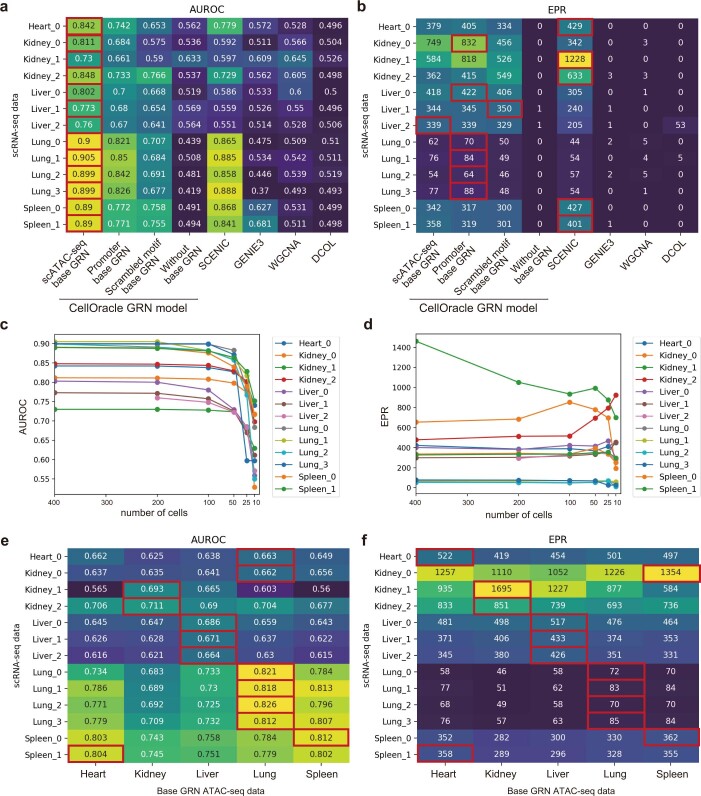
- CellOracle GRN inference benchmarked against 1,298 ChIP–seq datasets for 80 regulatory factors across 5 tissues achieved AUROC 0.66–0.85 with a promoter base GRN and 0.73–0.91 with an scATAC-seq base GRN.
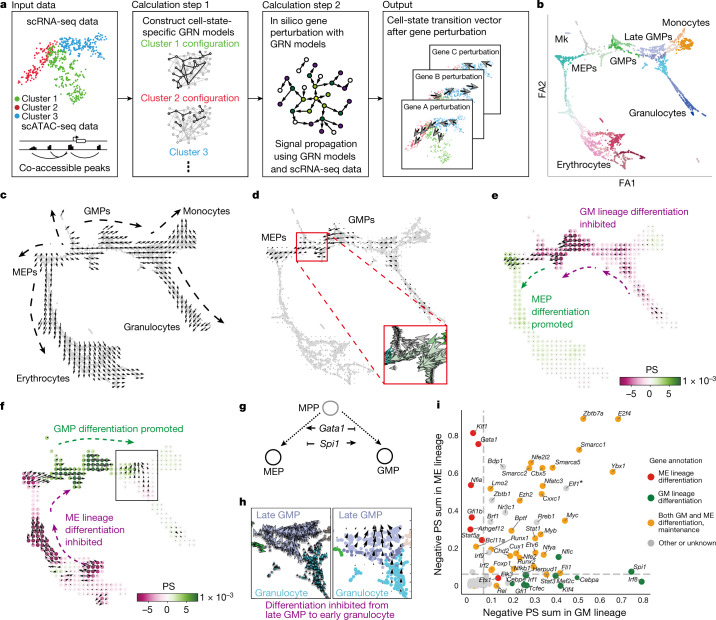
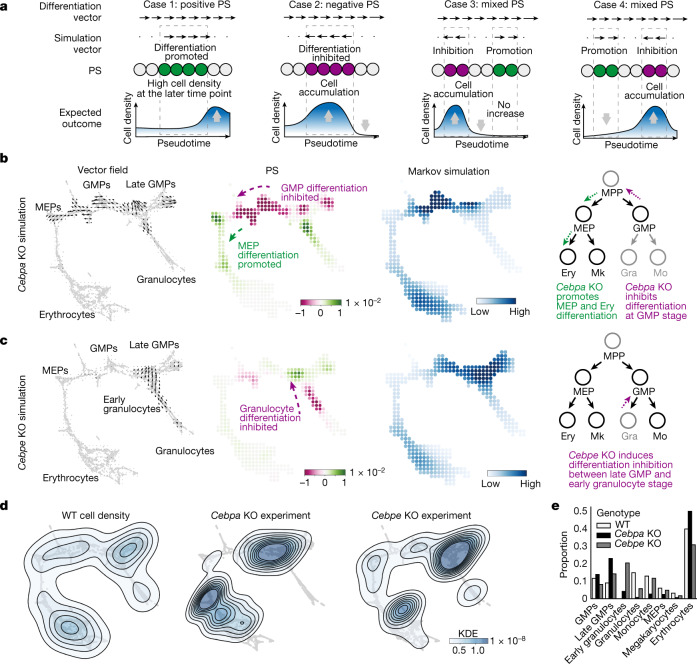
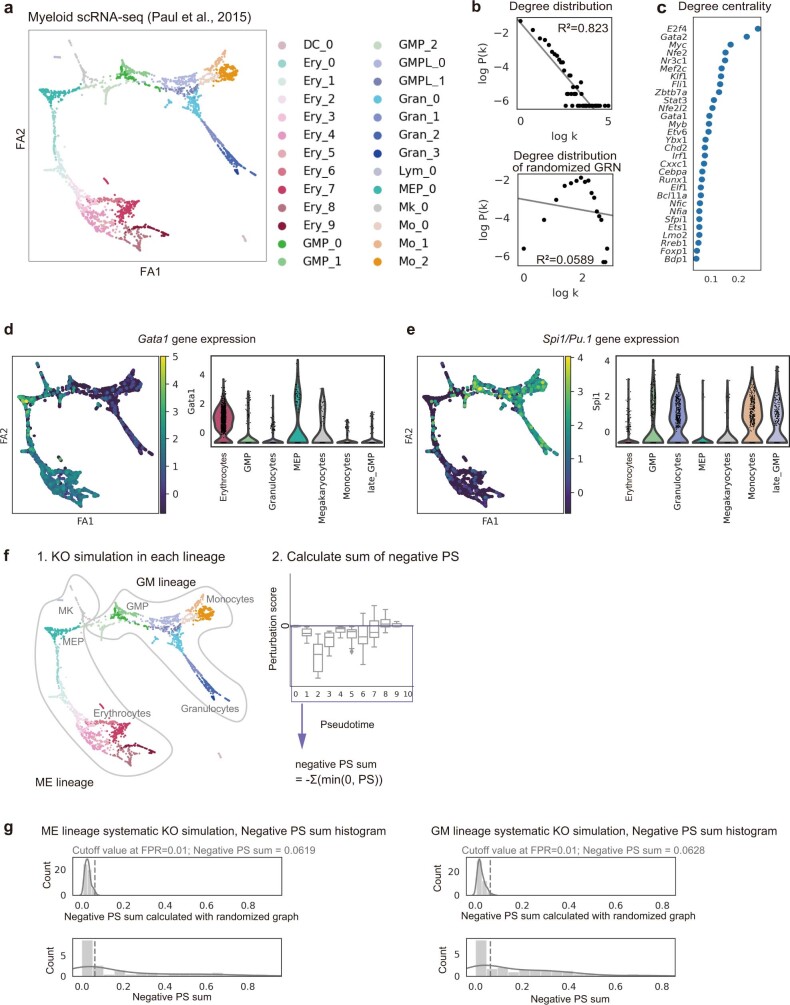
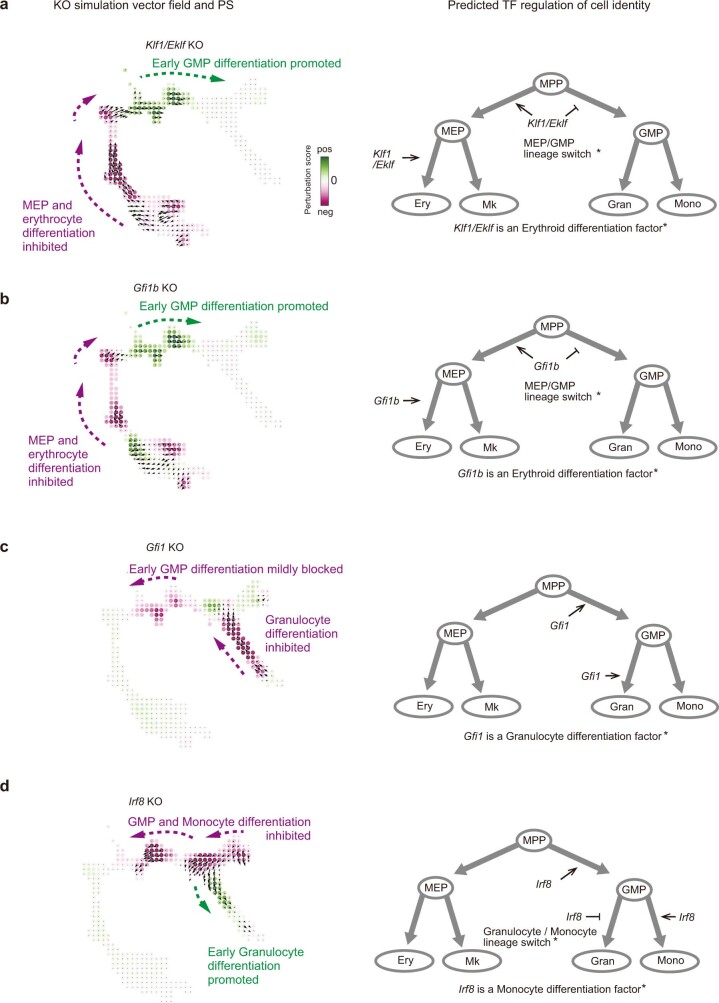
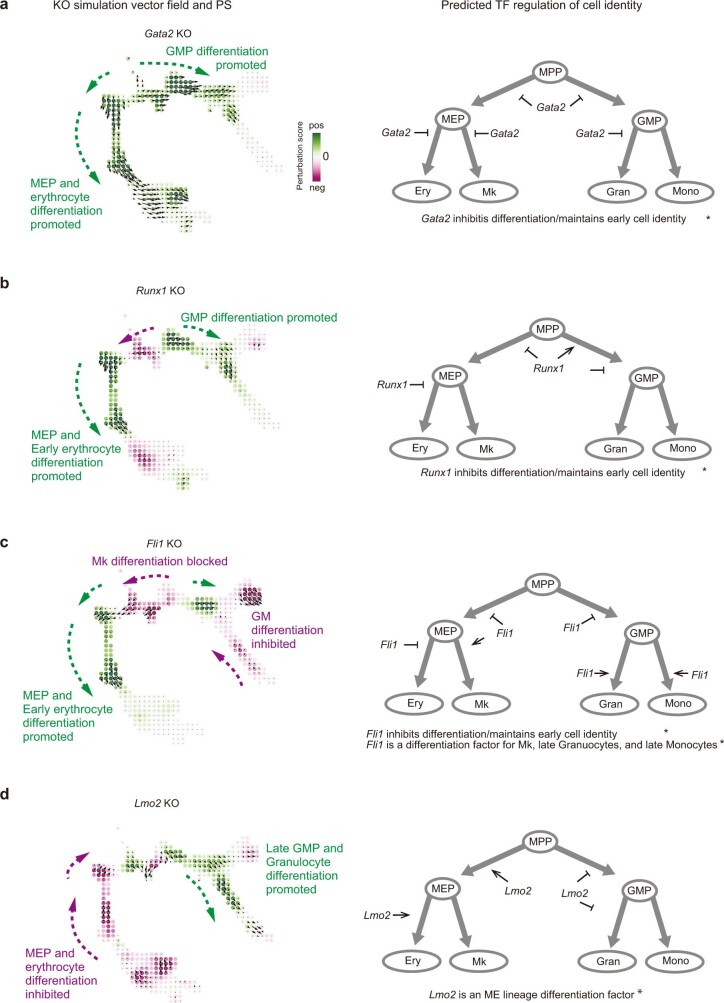
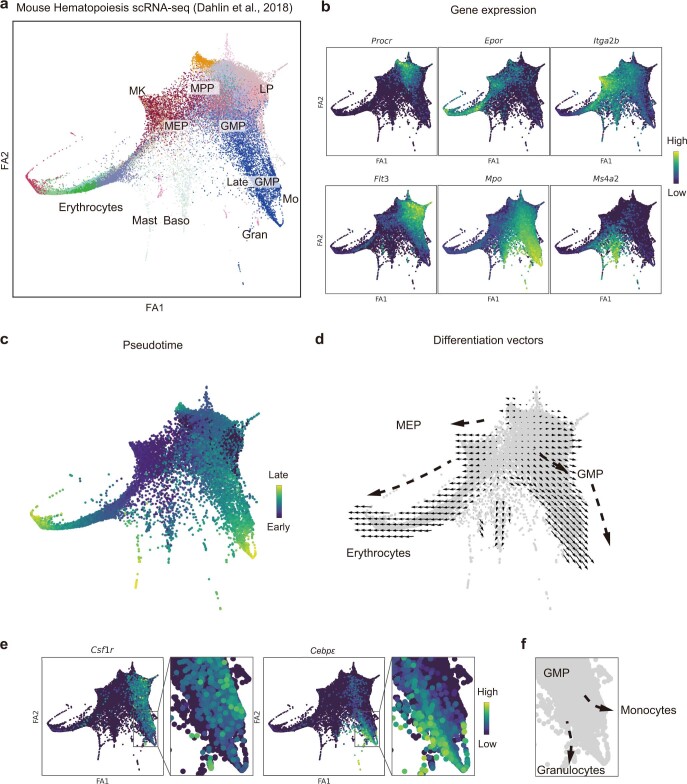
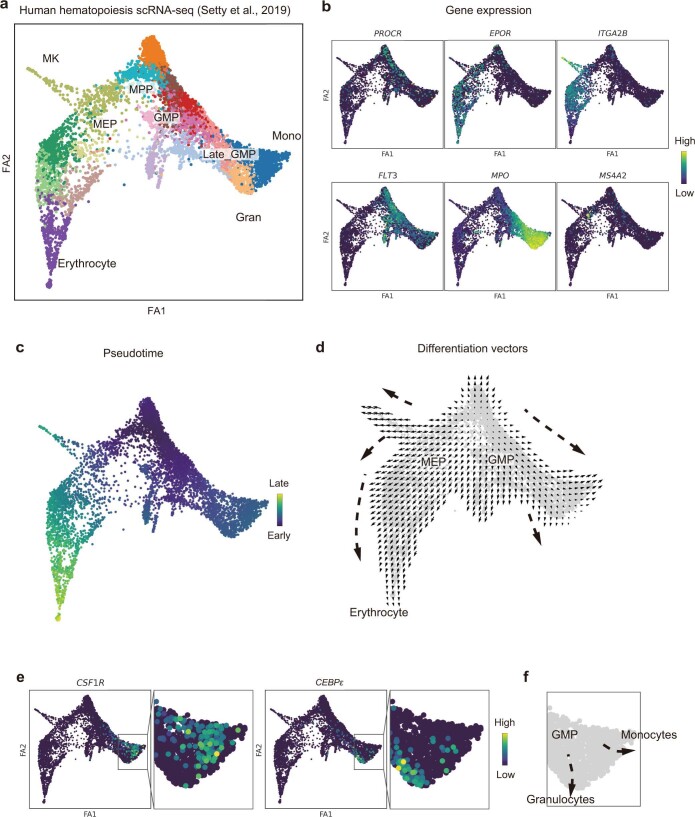
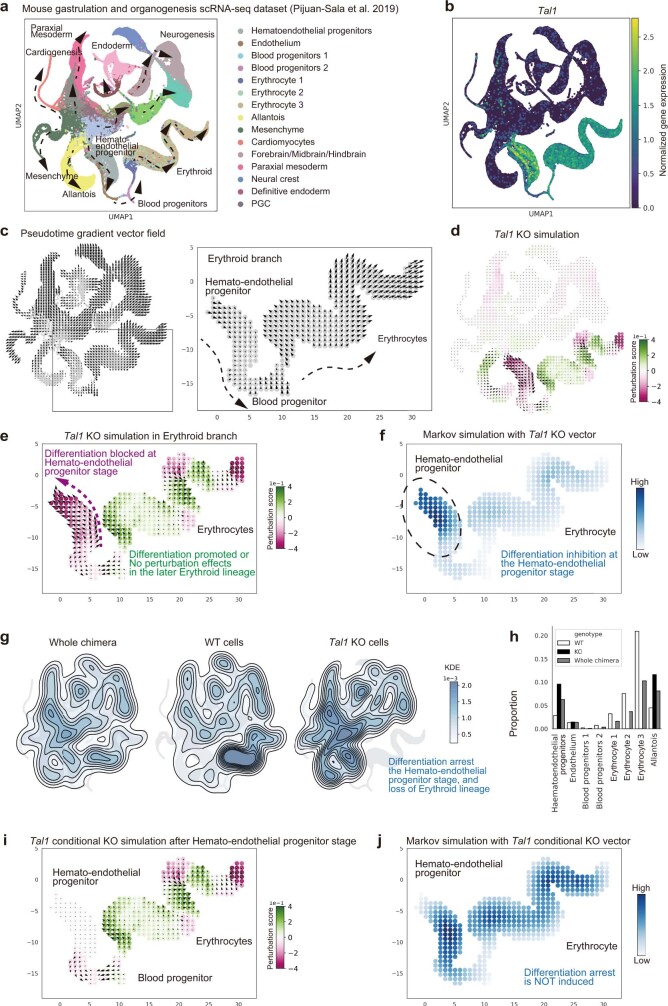
- In a 2,730-cell mouse myeloid progenitor atlas, CellOracle reproduced known Spi1/Gata1 lineage-switching phenotypes; among the top 30 TFs ranked by systematic KO simulation, 85% were reported regulators of myeloid differentiation.
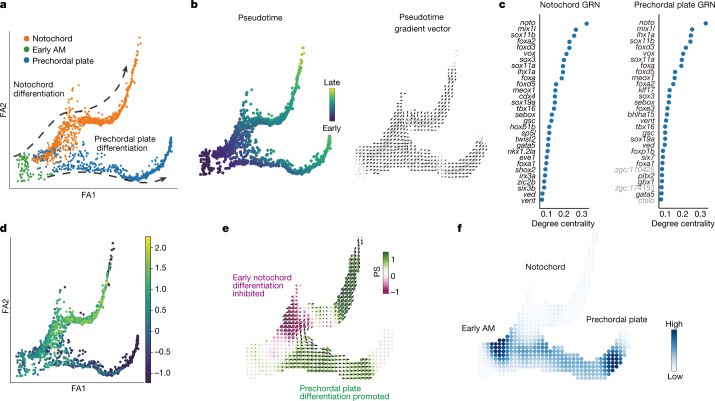
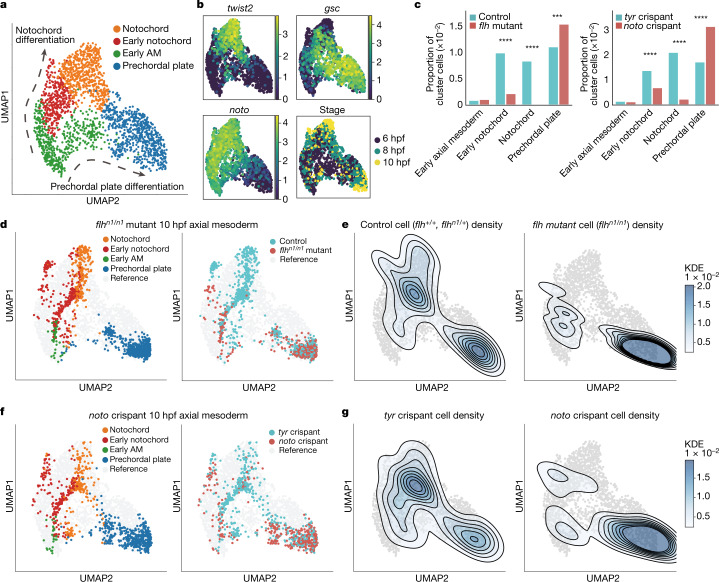
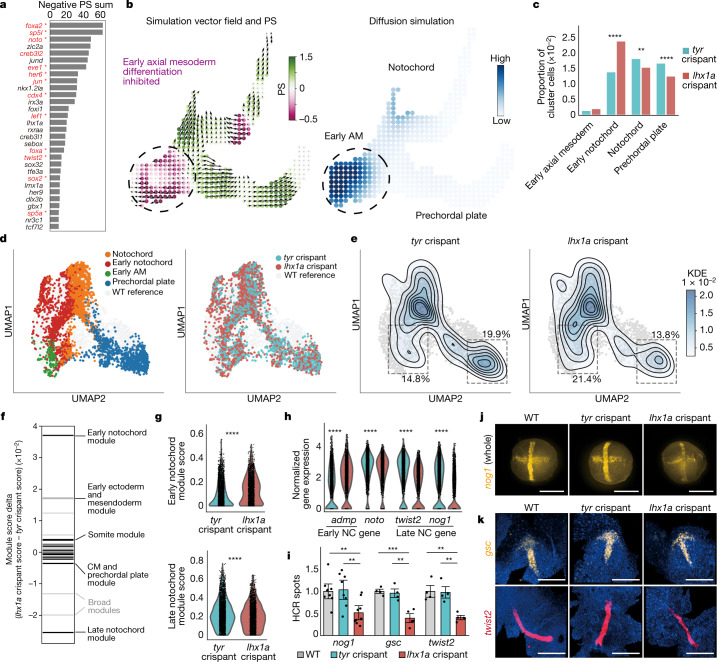
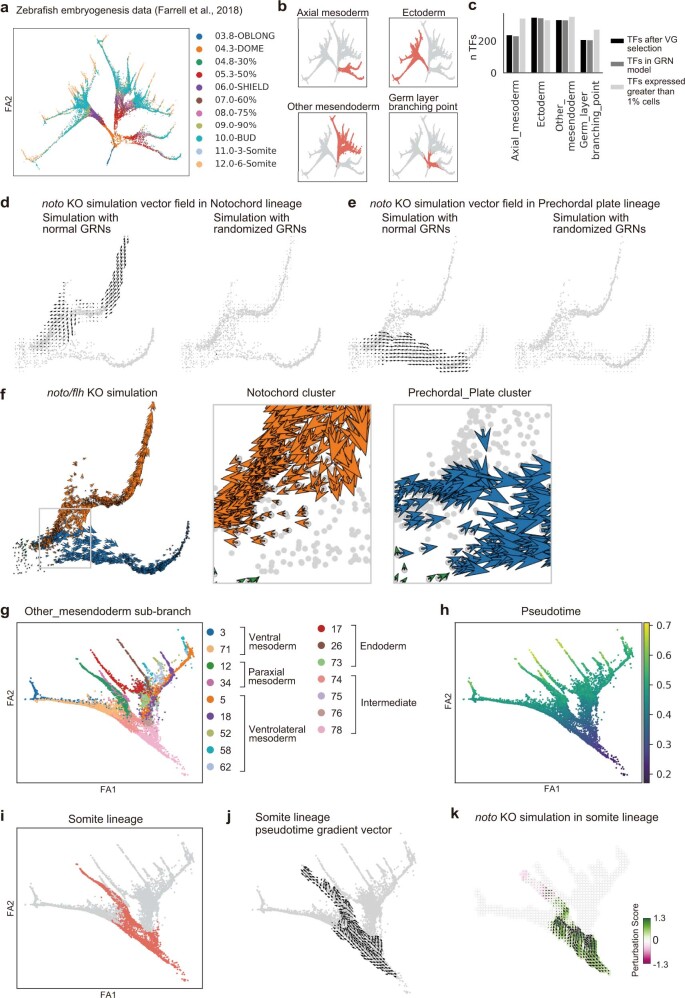
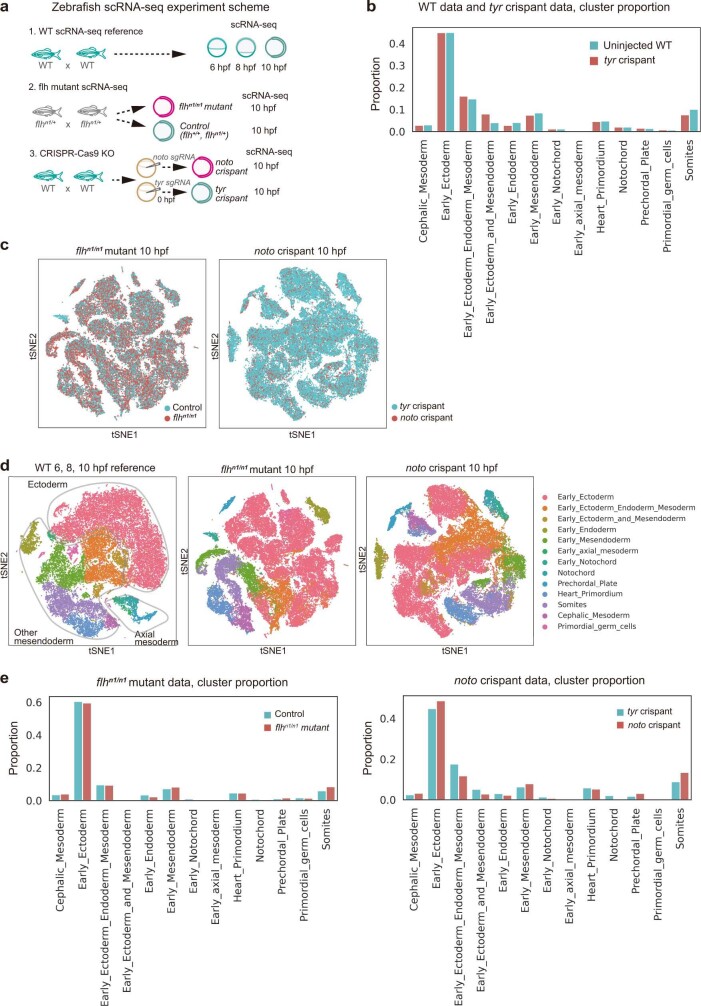
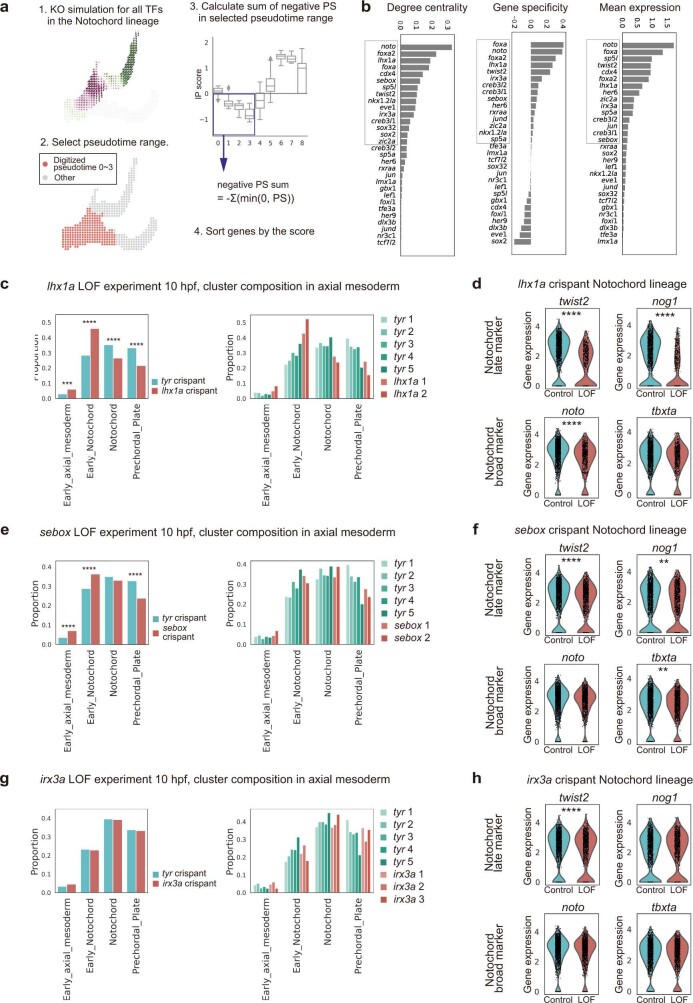
- In zebrafish, systematic KO simulation of 232 active TFs ranked noto top by degree centrality in notochord; noto LOF simulation predicted prechordal plate expansion, validated in flhn1/n1 mutants (notochord −98%, P = 5.55 × 10−52; prechordal plate +38.6%, P = 1.07 × 10⁻⁴) and noto crispants.
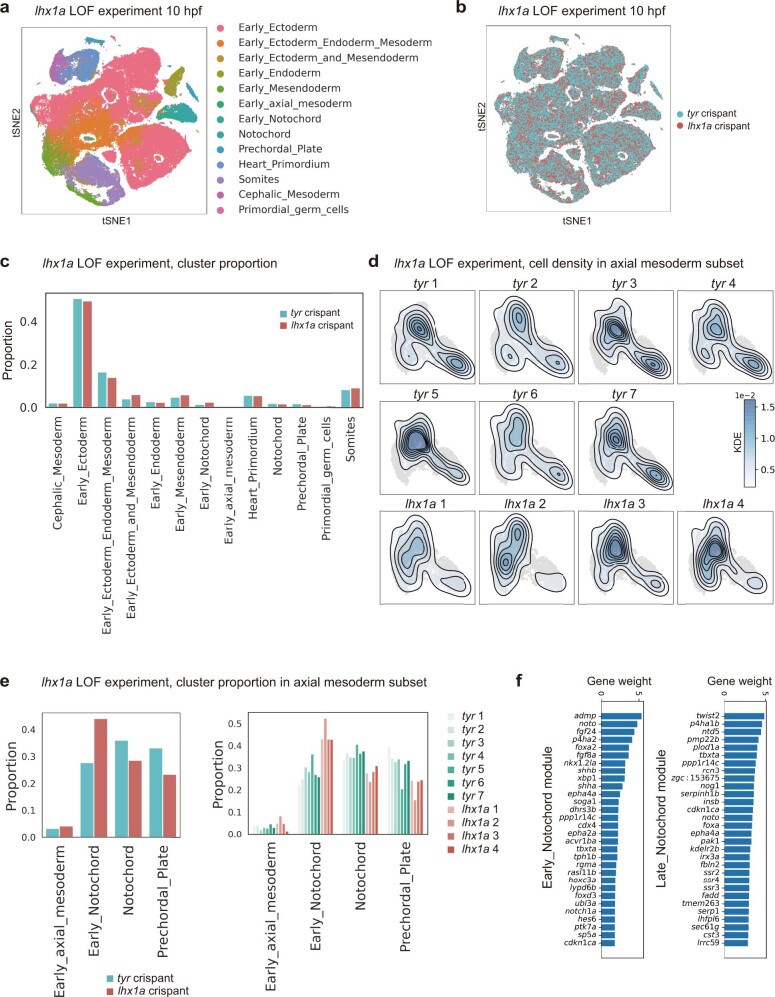
- lhx1a LOF simulation predicted inhibited early axial mesoderm differentiation; lhx1a crispants showed early notochord expansion (+70.2%, P = 1.34 × 10⁻³⁵) and depletion of later notochord (−15.3%, P = 3.83 × 10⁻³) and prechordal plate (−24.7%, P = 1.28 × 10⁻⁷).
Methods
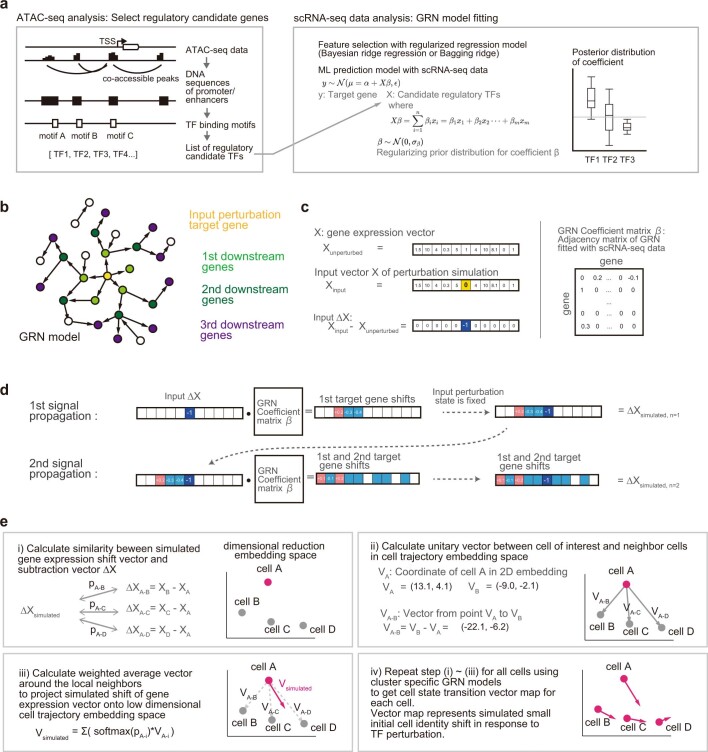
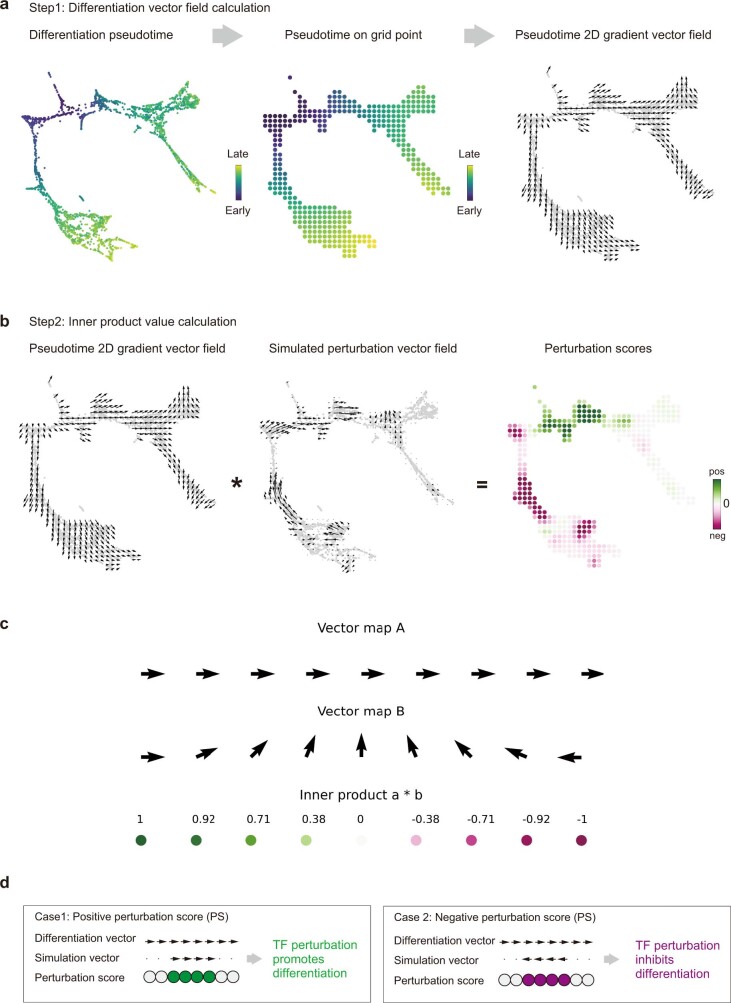
- CellOracle builds cluster-wise regularized linear GRN models using scRNA-seq plus scATAC-seq or promoter databases, propagates TF perturbation signals through the network, estimates transition probabilities, and projects simulated cell-identity shifts as 2D vectors; perturbation scores compare simulation vectors with pseudotime differentiation vectors.
- Validation used mouse and human haematopoiesis datasets, a 38,731-cell zebrafish embryogenesis atlas, a 38,606-cell wild-type zebrafish reference atlas, flhn1/n1 mutants, and CRISPR–Cas9 F0 crispants; experimental readouts included scRNA-seq, NMF, HCR, qRT-PCR and whole-mount in situ hybridization.
- Benchmarking compared CellOracle with WGCNA, DCOL, GENIE3 and SCENIC using ground-truth GRNs from ChIP–seq data; simulations also used randomized GRNs, no signal propagation, varying signal-propagation rounds, and different dimensionality-reduction methods.
Limitations
- Stated: CellOracle can only analyse cell states present in the input scRNA-seq data, and simulation is limited by input data availability and quality, such as unknown TF-binding motifs or sparse TF expression; the authors note foxa3 was filtered out owing to low expression.
- Stated: experimental validation is essential where possible; the authors stress that predictions should be validated experimentally.
- Evident: the simulation output is deliberately limited to a 2D vector rather than absolute expression changes; the negative perturbation score may oversimplify TF roles (e.g. Elf1), and CellOracle did not detect a reported erythrocyte progenitor depletion after Spi1 KO, probably owing to proliferation changes not predicted by the method.
Model-written summary. Check it against the paper before relying on it.
Integrity signals
Registry
Cites
Statistics
Figures
Verification
Claims the paper makes
14 Valid · 2 Not valid · 54 Not checked · 208 Own results and interpretations
The cited sources support only part of this claim — read each source’s verdict below.
In the paper
“To benchmark our GRN inference method, we generated a comprehensive transcriptional ground-truth GRN using 1,298 chromatin immunoprecipitation followed by sequencing (ChIP–seq) datasets for 80 regulatory factors across 5 different tissues14.”
§ Dissecting cell identity via network inference and in silico gene perturbation > GRN inference and benchmarking with CellOracle
What the sources say
- Partly supportedcites [14] Oki S ChIP-Atlas: a data-mining suite powered by full integration of public ChIP-seq data EMBO Rep. 2018 19 e46255 10.15252/embr.201846255 30413482 PMC6280645 sourceExperimental — accuracy not yet measured
Our copy of ChIP‑Atlas confirms it is a fully integrated public ChIP‑seq/DNase‑seq resource (76,217 SRXs across six organisms, Abstract; Overview of the data set and design of analyses, Table 1) with curated antigen and cell‑type metadata and a TR–gene ('Target Genes') integration that 'provides insight into gene regulatory networks' — so it can be the dataset source behind a ChIP‑seq‑derived regulatory network. However, no passage states the specific quantities the claim attributes here (1,298 datasets, 80 regulatory factors, 5 tissues), nor that the resource constitutes or was used to generate a 'ground‑truth' GRN; on the contrary, the Results section 'TR–gene and TR–gene interactions' cautions that 'the genes listed by "Target Genes" are not necessarily functional targets of a given TR and that actual regulation ... would need to be confirmed experimentally'. Searched: 1,298/80 factors/five tissues, ground-truth GRN benchmark, gold-standard TF–target set. (LLM, conf=0.65)
plain- Asserted: passes — The authors put it forward as true.
- Checkable: passes — It can be checked against evidence.
- Load-bearing: passes — The paper’s conclusions depend on it.
- Based: passes — The paper gives a reason why it holds.
- Partly supported
The cited sources support only part of this claim — read each source’s verdict below.
In the paper
“In this respect, gene-regulatory network (GRN) modelling approaches are promising as they reconstruct systematic gene–gene associations from unperturbed single-cell omics data6–11.”
§ Dissecting cell identity via network inference and in silico gene perturbation > Main
What the sources say
- Supportedcites [6] Fiers MWEJ Mapping gene regulatory networks from single-cell omics data Brief. Funct. Genomics 2018 17 246 254 10.1093/bfgp/elx046 29342231 PMC6063279 source
The “GRN inference from scRNA-seq data” section describes reconstructing networks from pairwise associations and co-expression in single-cell data. The Introduction discusses perturbation assays separately as a way to validate predictions, consistent with the claim that these associations can be inferred from unperturbed data. (LLM, conf=0.90)
- Supportedcites [7] Aibar S SCENIC: single-cell regulatory network inference and clustering Nat. Methods 2017 14 1083 1086 10.1038/nmeth.4463 28991892 PMC5937676 source
The Abstract describes SCENIC as reconstructing gene regulatory networks from single-cell RNA-seq data and identifies co-expressed genes as its first step. The Online Methods (GENIE3; page unavailable) specify an expression matrix as the input for network inference, consistent with reconstructing gene associations without requiring perturbation data. The paper addresses single-cell transcriptomics specifically, rather than every type of single-cell omics data. (LLM, conf=0.86)
- Supportedcites [8] Iacono G Massoni-Badosa R Heyn H Single-cell transcriptomics unveils gene regulatory network plasticity Genome Biol. 2019 20 110 10.1186/s13059-019-1713-4 31159854 PMC6547541 source
The Results section describes inferring regulatory networks from single-cell expression data by identifying gene-to-gene correlations and retaining significant correlations as network edges. The Background also states that the approach was applied to healthy tissue datasets, supporting the claim that it can reconstruct associations from unperturbed single-cell data. (LLM, conf=0.91)
- Supportedcites [9] Fleck, J. S. et al. Inferring and perturbing cell fate regulomes in human brain organoids. Nature10.1038/s41586-022-05279-8 (2022). PMC10499607 36198796 source
The ‘Regulatory network inference with Pando’ section describes using multimodal single-cell measurements and regression to infer relationships among transcription-factor expression, binding-site accessibility and target-gene expression. The Methods section (‘GRN inference with Pando’; page unavailable) says the resulting model coefficients define interactions in a regulatory graph. This supports the claim that GRN modelling reconstructs gene–gene regulatory associations from single-cell omics data without requiring perturbations for the inference step. (LLM, conf=0.90)
- Partly supportedcites [10] Kartha VK Functional inference of gene regulation using single-cell multi-omics Cell Genom. 2022 2 100166 10.1016/j.xgen.2022.100166 36204155 PMC9534481 sourceExperimental — accuracy not yet measured
The Discussion (page unavailable) says FigR constructs gene-regulatory networks from correlations across single-cell chromatin and RNA profiles, supporting the claim about reconstructing gene associations. But the paper describes an atlas of immunological stimulation and analyses across stimulus conditions, so it does not establish the claim's qualification that the data are unperturbed. (LLM, conf=0.82)
- Supportedcites [11] González-Blas, C. B. et al. SCENIC+: single-cell multiomic inference of enhancers and gene regulatory networks. Preprint at bioRxiv10.1101/2022.08.19.504505 (2022). source
The SCENIC+ methods (p. 2) describe inferring TF-to-gene relationships from single-cell gene-expression and chromatin-accessibility data using correlation and regression, then combining them into gene regulatory networks. The Discussion (p. 13) also describes GRN methods that search expression data for putative TF–target-gene relationships. This supports the claim as a broad description of network modelling from observational single-cell data. (LLM, conf=0.91)
plainstates a cause- Asserted: passes — The authors put it forward as true.
- Checkable: passes — It can be checked against evidence.
- Load-bearing: passes — The paper’s conclusions depend on it.
- Based: passes — The paper gives a reason why it holds.
- Supported
Every source the paper cites for this claim was checked and supports it.
In the paper
“To support GRN inference without requiring sample-specific scATAC-seq datasets, we have assembled a base GRN from a mouse scATAC-seq atlas13.”
§ Dissecting cell identity via network inference and in silico gene perturbation > GRN inference and benchmarking with CellOracle
What the sources say
- Supportedcites [13] Cusanovich DA A single-cell atlas of in vivo mammalian chromatin accessibility Cell 2018 174 1309 1324 10.1016/j.cell.2018.06.052 30078704 PMC6158300 source
The Results describe profiling chromatin accessibility in single nuclei from 13 mouse tissues using sci-ATAC-seq, identifying the cited work as a mouse single-cell ATAC-seq atlas. The sentence attributes the assembly of the base GRN and its use without sample-specific datasets to the citing authors, not to this source. (LLM, conf=0.92)
plainstates a cause- Asserted: passes — The authors put it forward as true.
- Checkable: passes — It can be checked against evidence.
- Load-bearing: passes — The paper’s conclusions depend on it.
- Based: passes — The paper gives a reason why it holds.
- Supported
Every source the paper cites for this claim was checked and supports it.
In the paper
“Because of this second constraint, we cannot use pre-existing GRN inference algorithms, such as GENIE3 and GRNboost (refs. 7,51).”
§ Dissecting cell identity via network inference and in silico gene perturbation > Methods > Context-dependent GRN inference using scRNA-seq data
What the sources say
- Supportedcites [7] Aibar S SCENIC: single-cell regulatory network inference and clustering Nat. Methods 2017 14 1083 1086 10.1038/nmeth.4463 28991892 PMC5937676 source
The Online Methods (GRNboost) identify GRNboost and GENIE3 as gene-regulatory-network inference methods and explain that they use boosted regression trees and random forests, respectively, rather than linear regression. The citing authors’ inability to use them under their constraint is their own conclusion; the citation supports the identification of the algorithms and their methods. (LLM, conf=0.92)
- Supportedcites [51] Huynh-Thu VA Irrthum A Wehenkel L Geurts P Inferring regulatory networks from expression data using tree-based methods PLoS ONE 2010 5 e12776 10.1371/journal.pone.0012776 20927193 PMC2946910 source
The Introduction identifies GENIE3 as a GRN inference method using ensembles of regression trees and says it can model non-linear relationships. This supports citing the paper as an example of an algorithm unsuitable for the citing authors’ linear-regression constraint; that constraint is the citing authors’ own premise. The paper is not being cited here for GRNboost. (LLM, conf=0.91)
plainstates a cause- Asserted: passes — The authors put it forward as true.
- Checkable: passes — It can be checked against evidence.
- Load-bearing: passes — The paper’s conclusions depend on it.
- Based: passes — The paper gives a reason why it holds.
- Supported
The sources with a verdict support this claim; the rest weren’t checked yet, have no full text we could read, or their verdicts aren’t rated yet.
In the paper
“Cebpa promotes GM lineage differentiation while inhibiting ME lineage differentiation16,72, and promoting granulocyte differentiation in particular15.”
§ Dissecting cell identity via network inference and in silico gene perturbation > Methods > Comparison between CellOracle haematopoiesis KO simulation results and previous reports
What the sources say
- Not checked yetcites [16] Paul F Transcriptional heterogeneity and lineage commitment in myeloid progenitors Cell 2015 163 1663 1677 10.1016/j.cell.2015.11.013 26627738 source
- Supportedcites [72] Hyung CS C/EBPα determines hematopoietic cell fate in multipotential progenitor cells by inhibiting erythroid differentiation and inducing myeloid differentiation Blood 2006 107 4308 10.1182/blood-2005-06-2216 16469877 PMC1895788 source
In the section on lineage switching of EML cells, the paper reports that C/EBPα overexpression promoted more rapid and complete granulocyte differentiation than the comparison treatment. This directly supports the attributed claim. (LLM, conf=0.94)
- Not checked yetcites [15] Orkin SH Zon LI Hematopoiesis: an evolving paradigm for stem cell biology Cell 2008 132 631 644 10.1016/j.cell.2008.01.025 18295580 PMC2628169 source
plainstates a cause- Asserted: passes — The authors put it forward as true.
- Checkable: passes — It can be checked against evidence.
- Load-bearing: passes — The paper’s conclusions depend on it.
- Based: passes — The paper gives a reason why it holds.
147 more claims · 3 with their cited sources checked
Create a free account to see all 278 claims and to verify the 81 references still open.
- It may state two separate claims as one. 87
- Probably not a substantial claim. 53
Claims other papers make about this one
Each is checked against this paper’s own text: does it say what the citing paper says it does?
The source backs part of the claim, not all of it — or backs it for a different population, condition or comparison.
In the citing paper
“CellOracle surpassed other GRN-inference algorithms such as PIDC, GENIE3, and GRNBoost2 in accurately identifying biological ground truth [44]”
From A mini-review on perturbation modelling across single-cell omic modalities (2024) · cites this paper as [44]
Experimental — accuracy not yet measuredThe cited source says what the claim attributes to it.
In the citing paper
“By leveraging gene-regulatory networks derived from these data types, CellOracle performs in silico transcription factors perturbations, effectively simulating cell state changes in response to TF perturbations.”
From A mini-review on perturbation modelling across single-cell omic modalities (2024) · cites this paper as [44]
In the citing paper
“For instance, CellOracle can simulate cell identity transitions following digital (in silico) TF perturbations such as knockout or overexpression.”
From A mini-review on perturbation modelling across single-cell omic modalities (2024) · cites this paper as [44]
In the citing paper
“whereas in silico ChIP–seq predicts transcription factor binding at individual cis-regulatory elements179.”
From The technological landscape and applications of single-cell multi-omics (2023) · cites this paper as [179]
In the citing paper
“Similarly, CellOracle179 leverages multi-omics data, either collected in parallel or integrated computationally, to learn gene regulatory networks and infer the results of in silico perturbations, whereas in silico ChIP–seq predicts transcription factor binding at individual cis-regulatory elements179.”
From The technological landscape and applications of single-cell multi-omics (2023) · cites this paper as [179]
Self-check
Percentages, sums and reported differences re-computed from the paper’s own numbers.
Each contradiction between two passages listed here was confirmed by an independent check.
Rated minor: it would not touch a result — a value no result rests on, a p-value that stays on the same side of the significance level, or a conflict that is clerical, resolved elsewhere in the paper, or outside its own findings.
In the paper
§ Dissecting cell identity via network inference and in silico gene perturbation > Methods > Simulation of cell identity following perturbation of regulatory genes
“This process consists of four steps: (i) data preprocessing; (ii) signal propagation within the GRN; (iii) estimation of transition probabilities; and (iv) analysis of simulated transition in cell identity.”
§ Dissecting cell identity via network inference and in silico gene perturbation > Methods > Simulation of cell identity following perturbation of regulatory genes
“(v)Calculation of vector field”
Rated minor: it would not touch a result — a value no result rests on, a p-value that stays on the same side of the significance level, or a conflict that is clerical, resolved elsewhere in the paper, or outside its own findings.
In the paper
§ Dissecting cell identity via network inference and in silico gene perturbation > Methods > Preparation of input data for GRN inference
“Cells were subsampled for each tissue on the basis of the original tissue-type annotation: spleen, lung, muscle, liver and kidney.”
§ Dissecting cell identity via network inference and in silico gene perturbation > Methods > Ground-truth data preparation for GRN benchmarking
“Here, we selected tissues commonly available in the Tabula Muris scRNA-seq dataset, mouse sci-ATAC-seq atlas data and ground-truth datasets: heart, kidney, liver, lung and spleen.”
Rated minor: it would not touch a result — a value no result rests on, a p-value that stays on the same side of the significance level, or a conflict that is clerical, resolved elsewhere in the paper, or outside its own findings.
In the paper
§ Dissecting cell identity via network inference and in silico gene perturbation > Systematic TF KO simulations in zebrafish
“c, Degree centrality scores were used to rank the top 30 TFs in notochord (left) and prechordal plate (right).”
§ Dissecting cell identity via network inference and in silico gene perturbation > Systematic TF KO simulations in zebrafish
“Black text denotes TFs. Grey text denotes non-TFs.”
Citations
Cites
Comprehensive Integration of Single-Cell Data
Stuart, T., Butler, A., Hoffman, P., Hafemeister, C., Papalexi, E., Mauck, W. M., Hao, Y., Stoeckius, M., Smibert, P., & Satija, R. (2019) · Cell · doi:10.1016/j.cell.2019.05.031 · Cited by 15,453
SCANPY: large-scale single-cell gene expression data analysis
Wolf, F. A., Angerer, P., & Theis, F. J. (2018) · Genome Biology · doi:10.1186/s13059-017-1382-0 · Cited by 8,881
Scenic: single-cell regulatory network inference and clustering.
Aibar, S., González-Blas, C. B., Moerman, T., Huynh-Thu, V. A., Imrichova, H., Hulselmans, G., Rambow, F., Marine, J.-C., Geurts, P., Aerts, J., et al. (2017) · Nature Methods · doi:10.1038/nmeth.4463 · Cited by 6,520
A General Framework for Weighted Gene Co-Expression Network Analysis
Zhang, B., & Horvath, S. (2005) · Statistical Applications in Genetics and Molecular Biology · doi:10.2202/1544-6115.1128 · Cited by 5,684
Hafemeister, C., & Satija, R. (2019) · Genome Biology · doi:10.1186/s13059-019-1874-1 · Cited by 4,479
La Manno, G., Soldatov, R., Zeisel, A., Braun, E., Hochgerner, H., Petukhov, V., Lidschreiber, K., Kastriti, M. E., Lönnerberg, P., Furlan, A., et al. (2018) · Nature · doi:10.1038/s41586-018-0414-6 · Cited by 4,118
Jacomy, M., Venturini, T., Heymann, S., & Bastian, M. (2014) · PLoS ONE · doi:10.1371/journal.pone.0098679 · Cited by 2,909
Single-cell transcriptomics of 20 mouse organs creates a Tabula Muris
The Tabula Muris Consortium, coordination, O., coordination, L., processing, O. C. A., sequencing, L. P. A., analysis, C. D., annotation, C. T., Writing group, Supplemental text writing group, & Principal investigators (2018) · Nature · doi:10.1038/s41586-018-0590-4 · Cited by 2,842
High-resolution in situ hybridization to whole-mount zebrafish embryos
Thisse, C., & Thisse, B. (2008) · Nature Protocols · doi:10.1038/nprot.2007.514 · Cited by 2,578
Hematopoiesis: An Evolving Paradigm for Stem Cell Biology
Orkin, S. H., & Zon, L. I. (2008) · Cell · doi:10.1016/j.cell.2008.01.025 · Cited by 2,570
Cited by
Items 501–600 of 721
Trajectory Inference and Cell Fate Prediction
Raza, K. (2024) · SpringerBriefs in applied sciences and technology · doi:10.1007/978-981-97-6703-8_5
GAGER: gene regulatory network assisted gene expression restorationPreprint
Chowdhury, M. Z. U. S., Any, S. S., Samee, M. A. H., & Rahman, A. H. (2024) · bioRxiv (Cold Spring Harbor Laboratory) · doi:10.1101/2024.11.27.625595
Targeting Osteosarcoma heterogeneity to improve therapeutic responsePreprint
Melano, B., Dinh, T., Zirak, B., Woo, B. J., Choi, M. H., Karimzadeh, M., Goodarzi, H., & Sweet-Cordero, A. (2025) · bioRxiv (Cold Spring Harbor Laboratory) · doi:10.1101/2025.01.02.631118
“2,8,9 Recent studies have explored the complexity of intratumoral OS heterogeneity using single-cell sequencing and cell-state transition modeling, identifying states and pathways associated with relapse and metastasis.”
Improving Genetic Perturbation Response Prediction with an Enhanced Biological Knowledge Graph
Li, Y., Chen, R., Tan, Y., Zhong, X. Y., Li, B., & Yin, Z. (2024) · IEEE International Conference on Bioinformatics and Biomedicine (BIBM) · doi:10.1109/bibm62325.2024.10822049
“Computational methods of modeling cellular systems, especially gene regulatory networks (GRNs), have predominantly been used to predict genetic perturbation responses [12], [13], [14].”
Li, S., Ma, Z., Li, G., Liu, X., Wang, J., Sun, F., Liang, B., Wang, Y., Wang, C., Rong, X., et al. (2025) · Research Square · doi:10.21203/rs.3.rs-5821401/v1
Zhang, C., Wang, J., Dang, P., Wei, Y., Wang, X., Brothwell, J. A., Sun, Y., Zhu, H., So, K., Liu, J., et al. (2025) · Research Square · doi:10.21203/rs.3.rs-5629379/v1 · Cited by 1
Cafe: An integrated platform for exploring cell fatePreprint
Huang, Z., Ma, H., Peng, Y., Zhao, C., & Yu, L. (2025) · bioRxiv (Cold Spring Harbor Laboratory) · doi:10.1101/2025.02.04.636565
A gene regulatory network method based on single-cell multi-omics data
Li, X., Zhao, J., Zhang, L., & Zhou, J. (2024) · International Conference on Robotics, Intelligent Control and Artificial Intelligence (RICAI) · doi:10.1109/ricai64321.2024.10911259 · Cited by 1
“And a Bayesian or nesting strategy can present the determinism of connections as distributions, which allows weak or unimportant connections to be removed from the underlying GRNs (Figure 2, down) so that GRNs specific to cell type or cell state can be constructed [9].”
A review on single-cell perturbation data analysis
Fu, Z., Yang, M., & Hou, L. (2025) · Scientia Sinica Mathematica · doi:10.1360/ssm-2024-0315
Deng, Y., Mao, J., Choi, J., & Cao, K. L. (2025) · bioRxiv (Cold Spring Harbor Laboratory) · doi:10.1101/2025.03.27.645629 · Cited by 1
Intratumor Heterogeneity Through the Lens of Gene Regulatory NetworksPreprint
Rao, N., Sapoval, N., Nakhleh, L. K., & Zafar, H. (2025) · bioRxiv (Cold Spring Harbor Laboratory) · doi:10.1101/2025.04.01.646625
“We have originally considered three state-of-the-art GRN inference methods for this study: Cel-lOracle [33], GRNboost2 [40] as a part of the SCENIC [3] pipeline, and Inferelator [52].”
Wang, S., Liu, N., & Qu, K. (2025) · Developmental Cell · doi:10.1016/j.devcel.2025.04.009
Molecular phenotyping of Parkinson's disease
Lee, K. W. (2025) · doi:10.69622/28760255
Deep-learning-enabled multi-omics analyses for prediction of future metastasis in cancer
Wang, X., Duan, M., Snyder, A. J., Su, P., Li, J., Krull, J. E., Jin, J., Sun, Y., Sun, Y., Chen, H., et al. (2026) · Nature Communications · doi:10.1038/s41467-026-76277-x
“Weinitiallyconductedin-silicoperturbationusingCellOracle 44 for each breast cancer patient.”
InfluentialSwann, J. W., Fung, J. H., Chen, Z., Olson, O. C., Collins, A., Lhakhang, T. W., Proven, M. A., Zhang, R., Rabadán, R., & Passegue, E. A. (2026) · Cell stem cell · doi:10.1016/j.stem.2026.05.007 · Cited by 1
Thai, B., Sargent, E. J., Luff, S. A., Fields, C. A., Churko, J. M., Young, J. N., Bosco, A., Sturgeon, C. M., & Bhattacharya, D. (2026) · Stem Cell Reports · doi:10.1016/j.stemcr.2026.102964
Predicting Multigene Transcriptional Outcomes Based on Dual-Stream Mamba Neural Network
Li, Z., & Liu, L. (2025) · Frontiers in Computing and Intelligent Systems · doi:10.54097/bzn8kc09
Three-State Gene Expression Model Parameterized for Single-Cell Multi-omics Data
Peyric, T., Lepoutre, T., Crombach, A., & Guyet, T. (2025) · Lecture notes in computer science · doi:10.1007/978-3-032-01436-8_2
Zinati, Y., & Emad, A. (2025) · bioRxiv (Cold Spring Harbor Laboratory) · doi:10.1101/2025.08.14.670294
Cell-DRL Reconstructs Unseen Cellular Paths in Health and DiseasePreprint
Mahmoud, A., Chan, A., Rebs, S., Streckfuß‐Bömeke, K., & Gruen, D. (2025) · Research Square · doi:10.21203/rs.3.rs-3461523/v1
Natarajan, N., Xiao, H., Haque, S., Cundiff, M. D., Hara, M., Sriram, V., Das, J., & Dutta, P. (2025) · medRxiv · doi:10.1101/2025.08.18.25333841 · Cited by 3
“To better dissect transcription factors (TFs) and corresponding regulatory circuits controlling these cellular programs identified by SLIDE, we adapted Cell Oracle to reconstruct cell-state-specific gene regulatory networks (GRNs) for these macrophages [49].”
Ready, set, but no go: Skin fat comes preloaded with waiting precursors
Shin, J. M., & Plikus, M. V. (2025) · Cell stem cell · doi:10.1016/j.stem.2025.08.003
Metabolic Immunosuppression Mediated by Proliferative CD168 + TAMs in Colon CancerPreprint
Wei, Z., Dong, Y., Zi, R., Liu, T., Fan, Y., Zhang, R., Shang, Y., Jiang, H., Zhao, X., & Li, J. (2025) · bioRxiv (Cold Spring Harbor Laboratory) · doi:10.1101/2025.09.02.673578
Advances in single-cell perturbation modeling
Qi, X., Zhao, L., Chen, R., & Zhao, Y. C. (2025) · Chinese Science Bulletin (Chinese Version) · doi:10.1360/csb-2025-0682
DynPerturb:Dynamic Perturbation Modeling for Spatiotemporal Single-Cell SystemsPreprint
Qin, H., Zhang, Y., Guo, Z., Hu, L., Li, Q., Cao, L., Xia, T., Deng, Z., Zhang, Y., Li, Y. P., et al. (2025) · bioRxiv (Cold Spring Harbor Laboratory) · doi:10.1101/2025.09.15.676236
Yu, J. J., Gupta, N., Guo, M., Olatoke, T., & Xu, Y. J. (2025) · Seminars in Respiratory and Critical Care Medicine · doi:10.1055/a-2698-7273 · Cited by 2
“Examples include SCENIC, GRNBoost2, Direct-Net, Pando, CellOracle, and SCENIC þ 81 – 86 ( ► Table 2 ). scGRN is powerful in dissecting the regulatory circuits, pinpointing crucial factors that determine cell-speci fi c phenotypes, and providing mechanistic insights into causal dependencies in…”
Liang, X., Miao, Y., Han, D., Li, Y., Zhang, W., & Wang, Z. (2026) · Nucleic Acids Research · doi:10.1093/nar/gkag437 · Cited by 3
“14.0), which integrates Cicero results with TSS peak information to infer peak–gene links from scATAC-seq data [ 46 ]; (ii) DIRECT-NET (v0.”
InfluentialLin, J., Wen, Y., Tang, J., Zhang, X., Zhang, H., & Zhu, H. (2025) · eLife · doi:10.7554/elife.89001.4
Yuen, K. A., Taibi, T., Hoang, Q. A., Yue, M., Liu, Z., Habibi, E., Spiliotopoulos, E., Ramkumar, N., Nation, N., Edin, G., et al. (2025) · bioRxiv (Cold Spring Harbor Laboratory) · doi:10.1101/2025.10.23.684176
Genetic Perturbation Modeling for Human Cell Therapy With BRNET
Cai, L., Yu, J., Lin, Q., Liu, L., Li, X., & Wong, K. (2025) · IEEE Journal of Biomedical and Health Informatics · doi:10.1109/jbhi.2025.3629554 · Cited by 1
“Existing methods primarily rely on gene regulatory network to model single-perturbation condition [23], [24], [25], [26].”
A Thalamocortical Cell-Adhesion Code Primes Sensory Cortical SpecificationPreprint
Guillamón-Vivancos, T., Puche-Aroca, L., Wang, L., Fuentes-Jurado, I., Vandael, D., Torres, D., Aníbal-Martínez, M., Martini, F. J., & López‐Bendito, G. (2025) · bioRxiv (Cold Spring Harbor Laboratory) · doi:10.1101/2025.11.17.688831
Stem cell-based approach to identify regulatory TFs during mammalian cell differentiation
Pei, Y., Li, S., Garipler, G., Kamimoto, K., & Mazzoni, E. O. (2025) · Stem Cell Reports · doi:10.1016/j.stemcr.2025.102716
Self-citationLink prediction for biomedical network reconstruction
Cao, Z., Pan, Y., Liu, C., Zhang, Y., Guan, J., Zhou, S., & Ou, C. (2025) · Physica A Statistical Mechanics and its Applications · doi:10.1016/j.physa.2025.131144 · Cited by 2
Lusby, R., Chowdhury, D., Carl, S. H., & Tiwari, V. K. (2025) · eLife · doi:10.7554/elife.108876.1
Temporal Transcriptional Regulation of Human Neuronal Differentiation via Forward Programming
Zhu, L., Wang, W., Zhang, J., Liu, L., Huang, M., Diao, L., Feng, S., Yang, Q., Qiu, H., Pan, B., et al. (2025) · Advanced Science · doi:10.1002/advs.202510641 · Cited by 1
Direct lineage conversion of postnatal mouse cortical astrocytes to oligodendrocyte lineage cellsPreprint
Bajohr, J., Scott, E., Olfat, A., Sadria, M., Lee, K. C., Fahim, M., Taha, H. T., Casasbuenas, D. L., Derham, A., Yuzwa, S. A., et al. (2025) · eLife · doi:10.7554/elife.98632.2 · Cited by 1
Bajohr, J., Scott, E., Olfat, A., Sadria, M., Lee, K. C., Fahim, M., Taha, H. T., Casasbuenas, D. L., Derham, A., Yuzwa, S. A., et al. (2025) · eLife · doi:10.7554/elife.98632.2.sa0
Spatial and Multiomic profiling of muscle regeneration dynamics in Duchenne Muscular DystrophyPreprint
Virtanen, L., D’Ercole, C., Saillard, L., Grandi, F. C., Peccate, C., Hoareau‐Coudert, B., Karunanuthy, V., Bertholle, C., Izac, B., Saintpierre, B., et al. (2025) · bioRxiv (Cold Spring Harbor Laboratory) · doi:10.64898/2025.12.02.691824
Spectral Analysis of Graph Collapse in Hematopoietic Gene Networks
Cho, S. Y. (2025) · IEEE-EMBS International Conference on Biomedical and Health Informatics (BHI ...) · doi:10.1109/bhi67747.2025.11269496
“[14] For each subpopulation (cluster), we constructed a context-specific GRN by integrating scRNA-seq expression profiles with a genome-wide transcription factor binding prior from scATAC-seq data.”
Cao, M., Ke, D., Huang, D., Ni, J., Yuan, Y., Dai, X., & Zhou, H. (2025) · The FASEB Journal · doi:10.1096/fj.202502947rr
Dalpedri, B. (2024) · Institutional Research Information System (Università degli Studi di Trento) · doi:10.15168/11572_437302
Guo, X., Jin, W., Wen, Y., Wang, Z., Ren, X., Liu, Z., Fu, R., Cai, Z., & Li, L. (2024) · Figshare · doi:10.6084/m9.figshare.26752192
Reprogramming Osteosarcoma transcriptomic states to improve sensitivity to anti-cancer therapy
Melano, B. (2025) · eScholarship (California Digital Library)
Logistic Biologically Annotated Neural Networks for Single-Cell RNA-Seq Data
Dsouza, R. A. (2025) · eScholarship (California Digital Library)
Ip, K. (2025) · cIRcle (University of British Columbia) · doi:10.14288/1.0450337
Lusby, R., Chowdhury, D., Carl, S. H., & Tiwari, V. K. (2025) · eLife · doi:10.7554/elife.108876
Stock, M. E., Colomé‐Tatché, M., & München, T. U. (2025)
Damme, P. V., Georgopoulou, M., Hobin, F., Dubin, J., Masrori, P., Arekatla, G., Poesen, K., Cruz, S. D., Bosch, L. V. D., Thal, D. R., et al. (2026) · Research Square · doi:10.21203/rs.3.rs-8351425/v1
Sakamoto, S., & Kelley, M. W. (2026) · bioRxiv (Cold Spring Harbor Laboratory) · doi:10.64898/2026.01.19.700450
spaNetReg: A Dependency-Aware Graph Neural Network for Inferring TRNS from Spatial ATAC-Seq
Miao, J., Hou, P., & Tian, T. (2025) · IEEE International Conference on Bioinformatics and Biomedicine (BIBM) · doi:10.1109/bibm66473.2025.11356838
“For example, CellOracle [21] determines TF binding sites from scATAC-seq data and infers regulatory relationships between TFs and target genes via linear regression modeling of scRNA-seq data.”
InfluentialInference of Gene Regulatory Networks for Overcoming Low Performance in Real-World Data
Hiki, Y., Tokuoka, Y., Yamada, T., & Funahashi, A. (2026) · IEEE Access · doi:10.1109/access.2026.3659303
“Several studies have modeled expression dynamics from inferred gene regulatory networks but have not directly considered edge dynamics and require multi-omics data [35], [36].”
Ge, Z., Han, J., Takaesu, F., Brazhkina, O., Mishra, R., Sharma, S., Chen, L., Fu, X., Filipp, M. E., Wai, C. M., et al. (2026) · JACC Basic to Translational Science · doi:10.64898/2026.01.29.702616
“41,42 Unlike single-cell GRN models like CellOracle 80 or LINGER 81 This work expands on prior regenerative therapy studies in HFpEF in several keyways.”
Tissue-Specific Spatial Regulation of Innate Immune Checkpoints in Cancer
Stojanovic, A., Giorgetta, S., Vonhören, D., Krieghoff‐Henning, E., Platten, M., Loges, S., Tugues, S., & Cerwenka, A. (2026) · Cancer Discovery · doi:10.1158/2159-8290.cd-25-2112
Scaling and regeneration in the developing cerebellum
Christensen, J. B., Vanacore, G., Divers, N., & Bayin, N. S. (2026) · Current topics in developmental biology/Current Topics in Developmental Biology · doi:10.1016/bs.ctdb.2026.01.006
Reconstructing Early Human Embryonic Development: From in vitro Models to Multimodal Integration
Chen, G., Guo, Z., Wang, H., & Yan, L. (2026) · Cells Tissues Organs · doi:10.1159/000550960
“…descriptive mapping requires multidisciplinary convergence: integrating biophysical models like foambryo [43] to capture cellular mechanics, AI-driven tools such as CellOracle [44] to predict fate transitions, and mathematical frameworks like Boolean networks to simulate developmental logic [45].”
Kruszelnicki, S., Chakraborty, S., Wang, X., Rehman, J., Singh, H., & Gottschalk, R. A. (2026) · bioRxiv (Cold Spring Harbor Laboratory) · doi:10.64898/2026.02.16.706134 · Cited by 1
“To generate gene regulatory networks using CellOracle, we generated a base GRN using the Tn5 bias-corrected open chromatin regions from the ChromBPNet model using CellOracle’s pipeline, which utilizes the gimmemotifs python package for motif scanning.”
Leveraging Twin Information for Inference of Gene Regulatory NetworksPreprint
Arun, K. M., Scher, Y., Zhang, Y. D., Büschel, I., Kuznets-Speck, B., Marr, C., & Goyal, Y. (2026) · bioRxiv (Cold Spring Harbor Laboratory) · doi:10.64898/2026.02.22.707230
Directing stem cell differentiation by chromatin state approximation
Montano-Gutierrez, L. F., Müller, S., Kutschat, A. P., Adameyko, I. I., Seruggia, D., & Halbritter, F. (2026) · Nucleic Acids Research · doi:10.1093/nar/gkag124
Intercellular Signaling Networks of a Tissue from Single-Cell Transcriptomics
Innes, B. T. (2024) · TSpace (University of Toronto)
scDynOmics: An Optimized Transformer Model for Representation Learning from Single-Cell MultiomicsPreprint
Yu, G., Ramnarine, T. J. S., Klughammer, J., & Mages, S. (2026) · bioRxiv (Cold Spring Harbor Laboratory) · doi:10.64898/2026.02.28.708160
“In other research domains, two major concerns have been raised with using Linformer: Linformer is not compatible with autoregressive processing that is essential for generative tasks in various domains, and Linformer assumes a fixed input length[61].”
Predicting how perturbations reshape cellular trajectories with PerturbGenPreprint
Ly, K. C. H., Feriz, A. M., Isobe, T., Vahidi, A., Vaghari, D., Rostron, A., Londoño, M. Q., Mende, N., Vijayabaskar, M. S., Moullet, M., et al. (2026) · bioRxiv (Cold Spring Harbor Laboratory) · doi:10.64898/2026.03.04.709254 · Cited by 3
A Latent Space Thermodynamic Model of Cell DifferentiationPreprint
Poursina, A., Hajhashemi, S., Saberi, A., Namini, A. M., Madrigal, A., Emad, A., & Najafabadi, H. S. (2026) · bioRxiv (Cold Spring Harbor Laboratory) · doi:10.64898/2026.03.04.709512
Epithelial plasticity in lung cancer evolution: insights from organoids
Moon, S., Lee, D., Choi, J., Lee, S., & Kim, J. (2026) · Organoid · doi:10.51335/organoid.2026.6.e2
Han, X., Gao, M., Quan, Y., & Zhang, C. (2026) · Nano Research · doi:10.26599/nr.2026.94908631 · Cited by 1
Gene regulatory network determinants of rapid recall in human memory CD4+ T cells
Katko, A., Korinfskaya, S., Bejjani, A. T., Owoeye, S. M., Yang, Z. F., Rudrapatna, A. N., Potter, S., Wayman, J. A., Kotliar, M., Kottyan, L. C., et al. (2026) · Cell Reports · doi:10.1016/j.celrep.2026.117103 · Cited by 2
Ren, X., Cai, Y., Gao, C., Qiu, Y., Wang, X., Song, H., Zhu, Y., Zhou, X., Li, J., Zhou, G., et al. (2026) · International Journal of Molecular Sciences · doi:10.3390/ijms27062879
“To better understand the impact of Sp1 on the angiogenic states of capVEC2 during the middle stage, we performed in silico perturbation analysis using CellOracle [46].”
InfluentialSimple systems, complex dynamics: Lessons from minimal gene regulatory networks
Maretvadakethope, S., & Perez‐Carrasco, R. (2026) · Current Opinion in Systems Biology · doi:10.1016/j.coisb.2026.100587 · Cited by 1
Fu, X., Yang, C., Cui, C., Geng, A., Sun, Y., Zha, C., Cui, F., Wei, L., Zou, Q., Gao, X.-J., et al. (2026) · Genome Research · doi:10.1101/gr.281523.125
Martini, L., Bardini, R., Savino, A., & Carlo, S. D. (2026) · International Joint Conference on Biomedical Engineering Systems and Technologies (BIOSTEC) · doi:10.5220/0014631000004070
GUO, J., Cancellieri, S., Xu, C., Wiik, C., Fei, L., Dahal‐Koirala, S., Haapaniemi, E. M., Aittokallio, T. A., Verbeke, C. S., & Sahu, B. (2026) · bioRxiv (Cold Spring Harbor Laboratory) · doi:10.64898/2026.04.04.716465
Microglia as transcriptional pacemakers of neuronal aging heterogeneity across individualsPreprint
Lim, C. M., & Vendruscolo, M. (2026) · bioRxiv (Cold Spring Harbor Laboratory) · doi:10.64898/2026.04.05.716624
Inside 'n Out: ETV2 Specification of Hemangiogenic Lineages from FLK1+ Mesoderm
Alleyne, D. (2026) · Open Scholarship Institutional Repository (Washington University in St. Louis) · doi:10.7936/37b4-0906
Si, Y., Li, C., & Shi, M. (2026) · Computational Biology and Chemistry · doi:10.1016/j.compbiolchem.2026.109064
IMAS resolves perturbation-sensitive regulatory architectures from matched tumour multiomicsPreprint
Deyang, W., Yamashiro, T., & Inubushi, T. (2026) · bioRxiv (Cold Spring Harbor Laboratory) · doi:10.64898/2026.04.09.717444
Tao, Z., Zhang, Q., Chen, Y., Lv, S., Huang, Q., Tian, H., Liu, Q., Li, C., Wang, Y., Lu, H., et al. (2026) · International Journal of Molecular Sciences · doi:10.3390/ijms27083522
Lee, H., Lee, S., Jo, S. J., Lee, S., Go, H., Kwon, O., & Kim, J. (2026) · Experimental & Molecular Medicine · doi:10.1038/s12276-026-01692-5 · Cited by 1
Behera, R., Zhou, Y., Gerges, P., Fan, J., Tabib, T., Gaydosik, A. M., Huang, M., Das, J., Pachera, E., Hukara, A., et al. (2026) · JCI Insight · doi:10.1172/jci.insight.189107
“However, a subset of genes regulated in SSc-ILD-PH strongly overlapped with EC genes regulated in Hx-treated mice (Supplemental Table 16, 37 upregulated and 35 downregulated genes, P adj < 0.05, log 2 FC > |0.25|, hypergeometric P value: 3.2 × 10 –21 ).”
InfluentialModeling Dynamics, Cell Type Specificity, and Perturbations in Gene Regulatory Networks
Shin, J., Halberg, S., Liu, Y., Hazra, S., Lee, E. D.-I., & Roy, S. (2026) · Annual Review of Genomics and Human Genetics · doi:10.1146/annurev-genom-120922-103729
“…this information as “soft” prior to guide which TF-target edges could be added or removed in the final inferred GRN, while others like CellOracle [53], Pando [34], Dictys [123] treat the TF-target prior network as the universe of possible interactions and remove edges not supported by expression.”
Gupta, N., Dautle, M., Zhang, S., & Chen, Y. (2026) · Advanced Intelligent Discovery · doi:10.1002/aidi.202500247
Lukas, B., Pang, J., Dai, Y., & Koh, T. J. (2026) · bioRxiv (Cold Spring Harbor Laboratory) · doi:10.64898/2026.04.21.719960
“Using CellOracle [24], we performed in silico TR perturbation to predict which TRs drive the various cell state transitions in non-diabetic and diabetic wounds.”
InfluentialRobust identification of cell-cell communication heterogeneity in single cells
Bocci, F., Jia, Y. Y., Atwood, S. X., & Nie, Q. H. (2026) · Cell Systems · doi:10.1016/j.cels.2026.101703
Yao, D., Zhang, B., Zhan, X., Wang, W., & Liang, N. (2026) · Briefings in Bioinformatics · doi:10.1093/bib/bbag202
“Recent advances in single-cell sequencing technologies have enabled the exploration of g ene regulatory processes at single-cell resolution [3, 4].”
A Perturb-seq screen guided by species divergence uncovers pathways for collateral artery formationPreprint
Fan, X., Zhou, R., Raftrey, B. C., Coronado, P. E. R., Trimm, E., Clancy, E., Chen, X., Bozeman, J., Chen, M. S., Alimukhamedov, S., et al. (2026) · bioRxiv (Cold Spring Harbor Laboratory) · doi:10.64898/2026.04.29.721711
Robust identification of cell-cell communication heterogeneity in single cellsPreprint
Bocci, F., Jia, Y. Y., Atwood, S. X., & Nie, Q. H. (2026) · bioRxiv (Cold Spring Harbor Laboratory) · doi:10.64898/2026.04.29.721691
Joint library preparation and analysis methods for single-cell genome-transcriptome co-assays
Li, Y., He, Y., Qiao, Y., & Tu, J. (2026) · EngMedicine · doi:10.1016/j.engmed.2026.100139
Postnatal Reprogramming Shapes Human Intestinal Epithelial Immune CompetencyPreprint
Lee, C. H.-J., Fawkner-Corbett, D., Christoforidou, Z., Gerós, A. S., Lentsch, V., Sheikh, L., Bridges, E., Jagielowicz, M., Deng, L., Qin, X., et al. (2026) · bioRxiv (Cold Spring Harbor Laboratory) · doi:10.64898/2026.05.05.722861
Emerging Paradigms for Innovative Drug Discovery:Targetome and Original Combination Drugs
Yang, H., Zeng, H., Yang, Z., Jiang, J., Li, J., Wang, G., Wang, H., Li, P., & Hao, H. (2026) · 中国科学基金 · doi:10.3724/bnsfc-2026-0002
mRNA trends in cancer therapeutics
Joneidi, F., Sabouri, M., Mohsen-Pour, N., & Sharafi, A. (2026) · Elsevier eBooks · doi:10.1016/b978-0-443-43870-7.00003-5
Kaneko, S., & Urushitani, M. (2026) · bioRxiv (Cold Spring Harbor Laboratory) · doi:10.64898/2026.05.16.716261
“Gene regulatory network inference (SCENIC+, Bravo González-Blas et al. 2023; GRNBoost2, Moerman et al. 2019; CellOracle, Kamimoto et al. 2023) requires chromatin accessibility or perturbation training data.”
Computational modelling of cell identity
Shim, W. J., Chow, C. S. Y., Bao, S. C., Zhao, Q., & Palpant, N. J. (2026) · Biochemical Journal · doi:10.1042/bcj20250132
The development and application of deep learning for stem cell research
Li, Z., Zhang, W., Wu, Y., Ye, Y., Chen, Y., Wu, J., & Chen, D. (2026) · Journal of genetics and genomics/Journal of Genetics and Genomics · doi:10.1016/j.jgg.2026.05.008
Munipalle, M., Dang, A., Celiz, A. D., Li, J., & Li‐Jessen, N. Y. K. (2026) · Tissue Engineering Part B Reviews · doi:10.1177/19373368261449957 · Cited by 2
Resolving thyroid lineage cell trajectories merging into a dual endocrine gland in mammals
Lobo, M., Johansson, E., Kumari, S., Schoultz, E., Ahlinder, I., Liang, S., Carlsson, T., Johansson, B. R., Marotta, P., Felice, M. D., et al. (2026) · Nature Communications · doi:10.1038/s41467-026-73385-6
“The difference of simulated knockout and imputed counts (delta_X in CellOracle) was de fi ned as velocity, and the imputed counts obtained according to the CellOracle pipelineintheoriginalstudywerede fi nedasthesplicedmomentMsin scvelo.”
InfluentialMacrophages as predictors and new targets for immunotherapy in colorectal cancer
Sudarskikh, T., Shalygina, K., Shmakova, E., Iamshchikov, P. S., Dobrodeev, А. Y., Larionova, I., & Kzhyshkowska, J. G. (2026) · Exploration of Digestive Diseases · doi:10.37349/edd.2026.1005124
Computational blueprints for cell fate programming
Yang, P. (2026) · Stem Cell Reports · doi:10.1016/j.stemcr.2026.102929
Network methods for diagonal integration of unpaired single-cell multiomics data: a review
Barylli, M., Saha, J., Buffart, T. E., Köster, J., Lenos, K., Vermeulen, L., Bumbuc, R. V., & Sheraton, V. M. (2026) · Bioinformatics · doi:10.1093/bioinformatics/btag353
“Network-based approaches allow modelling of the effect of perturbations spanning different biological layers instead of being limited to one (Kamimoto et al. 2023).”
Discovering what is possible: How synthetic biology illuminates development
Hutchins, N. T., Cao, A., & Li, P. (2026) · Cell Systems · doi:10.1016/j.cels.2026.101619
Metadata
- Authors
- Kamimoto, K., Stringa, B., Hoffmann, C. M., Jindal, K., Solnica-Krezel, L., & Morris, S. A.
- Affiliations
- Washington University in St. Louis (US)
- Corresponding author
- Morris, Samantha A.
- ORCID
- Venue
- Nature
- Published
- 2023-02-08
- Volume
- 614
- Issue
- 7949
- Pages
- 742-751
- ISSN
- 0028-0836 (ISSN-L)
- 1476-4687
- PMC
- PMC9946838
- OpenAlex
- W4319591822
- Semantic Scholar
- 9672a8fe4712abd9e74c40d8e906c9a82f33ef39
- Cited by
- 677
- References
- 89
- Citations by year
- 2026: 226 · 2025: 198 · 2024: 146 · 2023: 80
- FWCI
- 57.74
- Type
- journal article
- Language
- en
- Open access
- hybrid
- doi.org
- Licence
- cc-by
- creativecommons.org/licenses/by/4.0 (tdm)
- creativecommons.org/licenses/by/4.0 (vor)
- Locations
- Nature (publishedVersion, cc-by)
- PubMed Central (publishedVersion, cc-by)
- PubMed (publishedVersion)
- Digital Commons@Becker (Washington University School of Medicine) (submittedVersion, cc-by)
- RePEc: Research Papers in Economics (submittedVersion)
- Funders
- National Science Foundation (1745038, 2139839)
- Silicon Valley Community Foundation (DAF2021-238797, HCA2-A-1708- 02799)
- Washington University in St. Louis
- Paul G. Allen Frontiers Group
- National Institutes of Health (5r01gm126112-05)
- Japan Society for the Promotion of Science
- National Institute of General Medical Sciences (GM126112, R01-GM126112, R35GM118179)
- Topics
- Life Sciences › Biochemistry, Genetics and Molecular Biology › Molecular Biology › Gene Regulatory Network Analysis
- Life Sciences › Biochemistry, Genetics and Molecular Biology › Molecular Biology › Single-cell and spatial transcriptomics
- Life Sciences › Biochemistry, Genetics and Molecular Biology › Molecular Biology › Developmental Biology and Gene Regulation
- Keywords
- cell identity, gene regulatory networks, transcription factor perturbation, single-cell multi-omics, hematopoiesis, zebrafish embryonic development, Noto, notochord, axial mesoderm, developmental regulation, differentiation
- MeSH terms
- Animals, Cell Differentiation, Computer Simulation, Hematopoiesis, Humans, Mesoderm, Phenotype, Transcription Factors, Zebrafish, Homeodomain Proteins, Zebrafish Proteins, Embryonic Development, Mice, Gene Regulatory Networks, LIM-Homeodomain Proteins
About these checks
Registry, retraction, Cites and statistics results are computed, not judged, with one exception: a printed reference that no index lists is read once by a model before it counts as a citation error. Claims are extracted by a model and kept only when their quote appears verbatim in the text; each cited source is then checked, with a model’s help, for whether it says what the claim relies on. Those verdicts can be wrong — read the claim’s quote and the cited source before relying on one.
The claim verdicts this report counts are experimental: their accuracy is not yet measured.
A language model drew the claims from the paper on 2026-10-05, under version 3 of the claim definition (model deepseek-v4.1-flash, prompt extract-v3).
A second model labelled each claim on 2026-10-05 (model jev-1.13-20260917, definition revision gold-guideline-v0.2).
Cited sources are checked with a language model’s help (qwen3.8-omni-flash and gpt-6-sol).
Statistics and arithmetic are recomputed, not judged.
Confidence bands are shown only for fields calibrated on our annotated test set. None is calibrated yet, so no band is shown.
What counts as a claim ›How we measure confidence ›How we check this ›
Are you an author, or do you see a problem with this page? Request a review
Data sources
Bibliographic data: Semantic Scholar, OpenAlex, Crossref.
Contains information from the Semantic Scholar Academic Graph Datasets, made available under the ODC Attribution License (ODC-BY 1.0).
Semantic Scholar’s data is described in: Kinney, R., et al. (2023). The Semantic Scholar Open Data Platform. arXiv:2301.10140.
