

Dissecting cell identity via network inference and in silico gene perturbation
Open accessThe DOI matches its Crossref record; 91 of the 91 references it cites were found in a registry or an index; 27 of the 108 sources its claims cite were checked for support.
Abstract
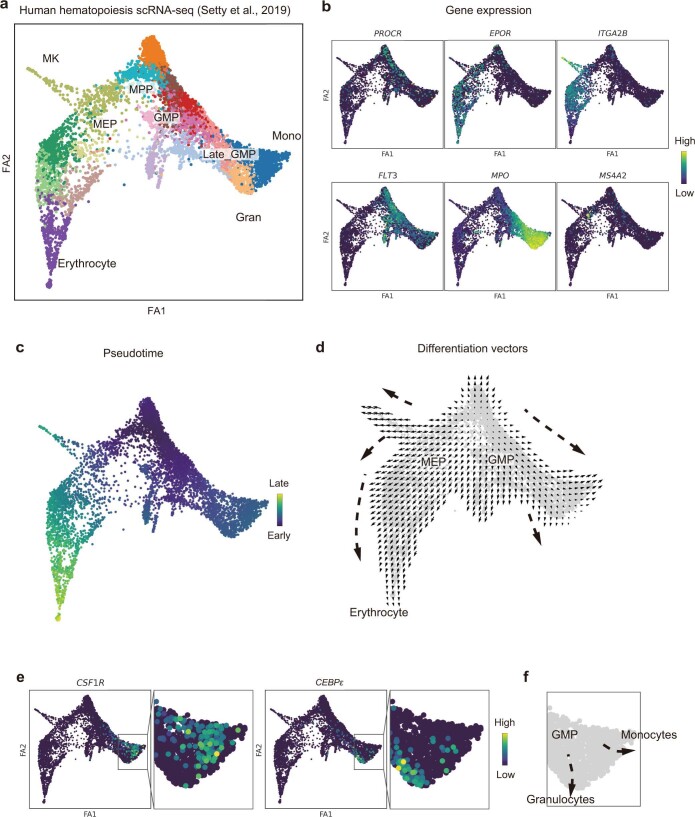
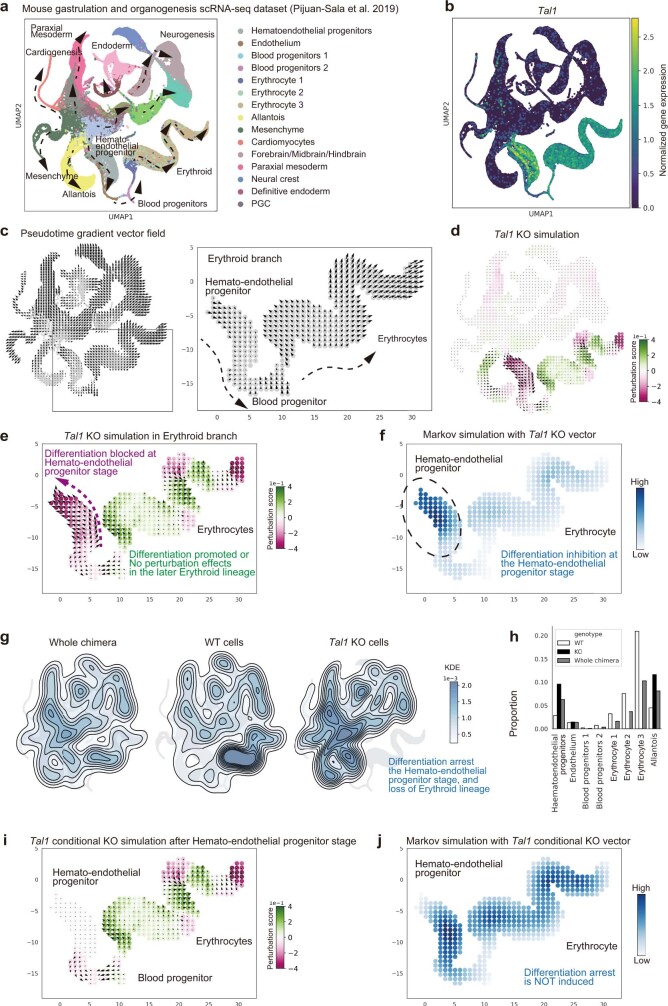
Cell identity is governed by the complex regulation of gene expression, represented as gene-regulatory networks 1 . Here we use gene-regulatory networks inferred from single-cell multi-omics data to perform in silico transcription factor perturbations, simulating the consequent changes in cell identity using only unperturbed wild-type data. We apply this machine-learning-based approach, CellOracle, to well-established paradigms—mouse and human haematopoiesis, and zebrafish embryogenesis—and we correctly model reported changes in phenotype that occur as a result of transcription factor perturbation. Through systematic in silico transcription factor perturbation in the developing zebrafish, we simulate and experimentally validate a previously unreported phenotype that results from the loss of noto , an established notochord regulator. Furthermore, we identify an axial mesoderm regulator, lhx1a . Together, these results show that CellOracle can be used to analyse the regulation of cell identity by transcription factors, and can provide mechanistic insights into development and differentiation.
Overview
CoChat Summary
TL;DR
CellOracle combines inferred gene-regulatory networks with in silico transcription-factor perturbation to simulate shifts in cell identity from unperturbed single-cell multi-omics data. The authors validate it in mouse and human haematopoiesis and zebrafish embryogenesis, then use it to predict and experimentally confirm a noto loss-of-function prechordal plate expansion and identify lhx1a as an axial mesoderm regulator.
Key findings
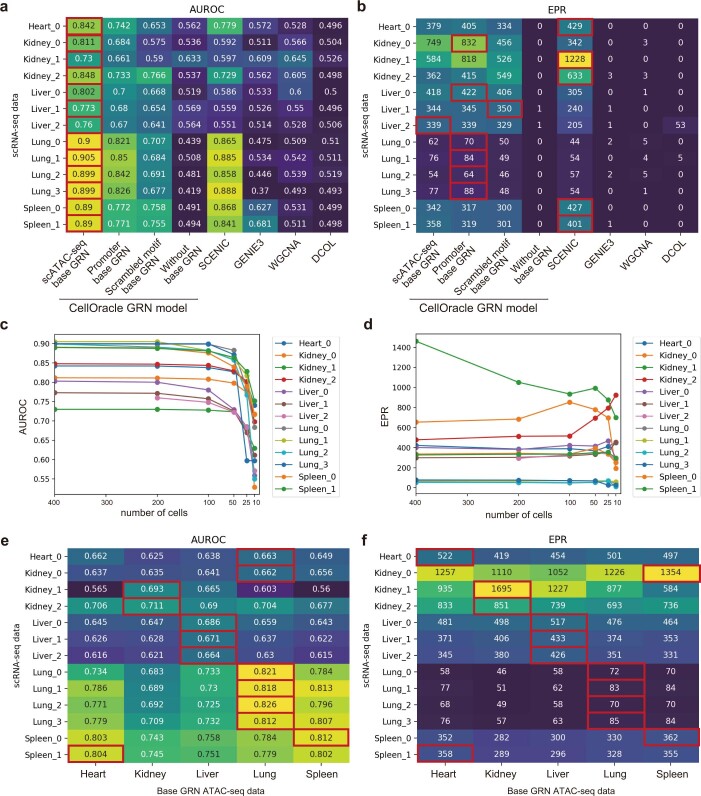
- CellOracle GRN inference benchmarked against 1,298 ChIP–seq datasets for 80 regulatory factors across 5 tissues achieved AUROC 0.66–0.85 with a promoter base GRN and 0.73–0.91 with an scATAC-seq base GRN.
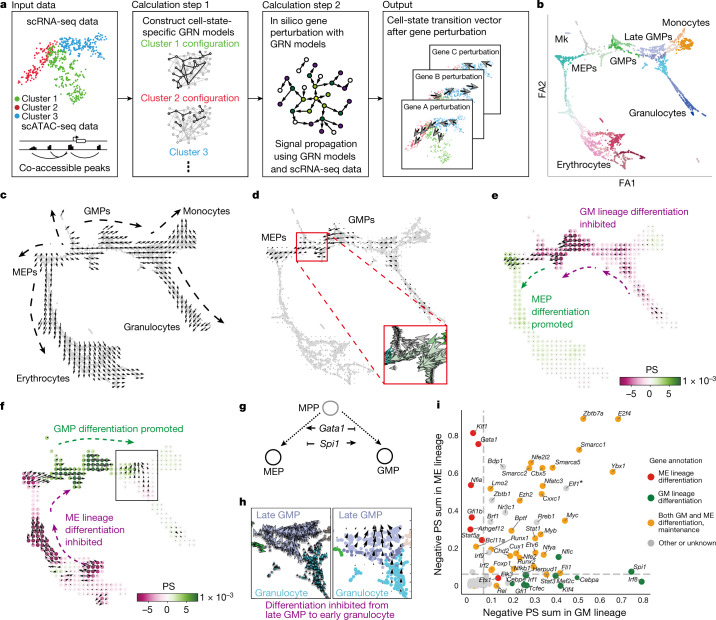
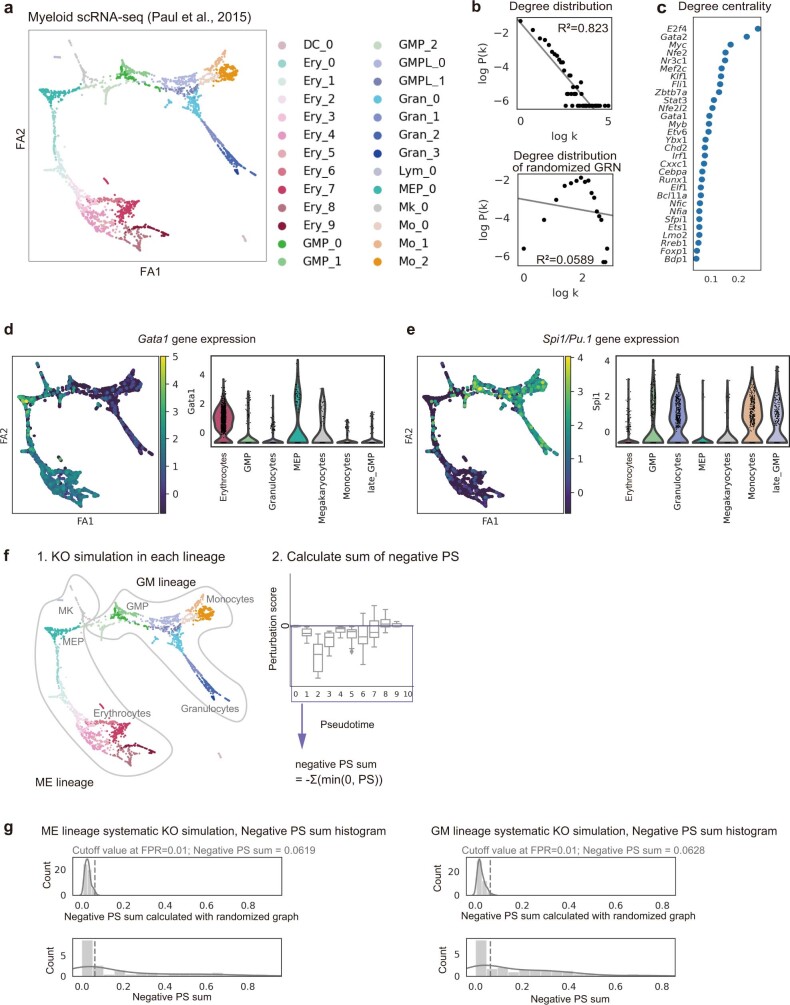
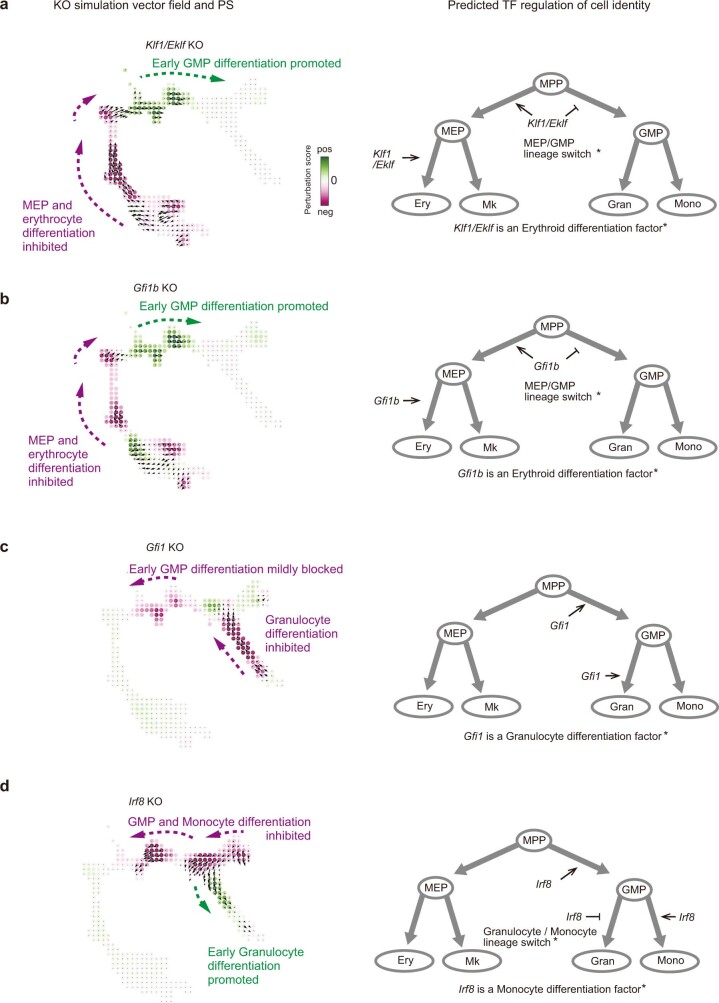
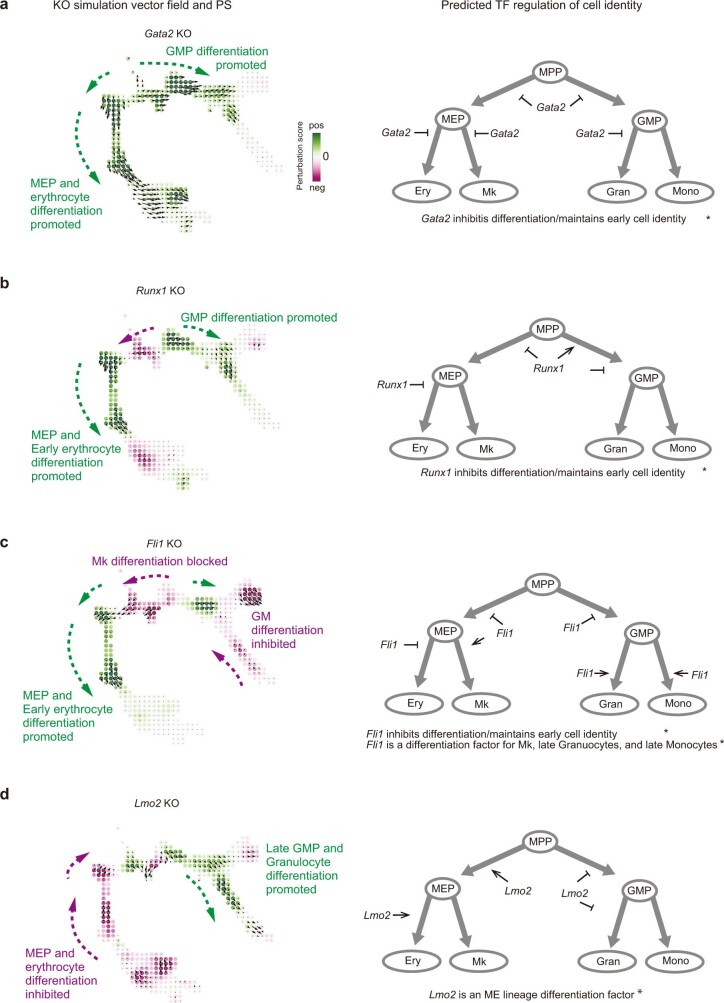
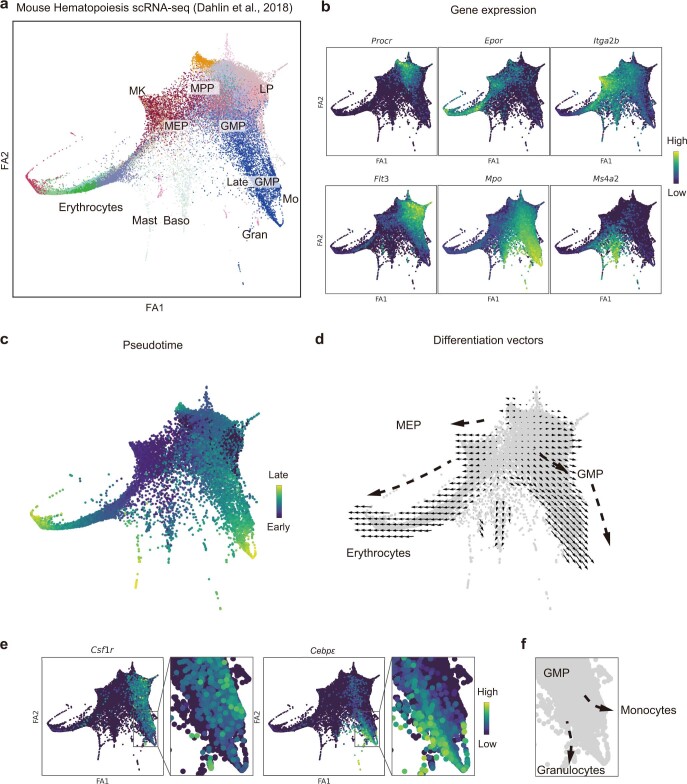
- In a 2,730-cell mouse myeloid progenitor atlas, CellOracle reproduced known Spi1/Gata1 lineage-switching phenotypes; among the top 30 TFs ranked by systematic KO simulation, 85% were reported regulators of myeloid differentiation.
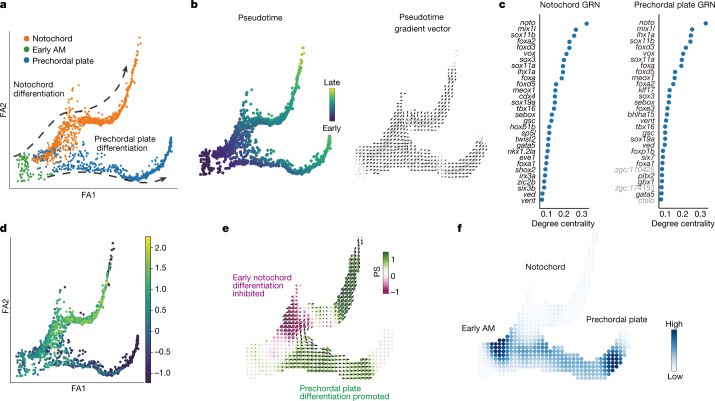
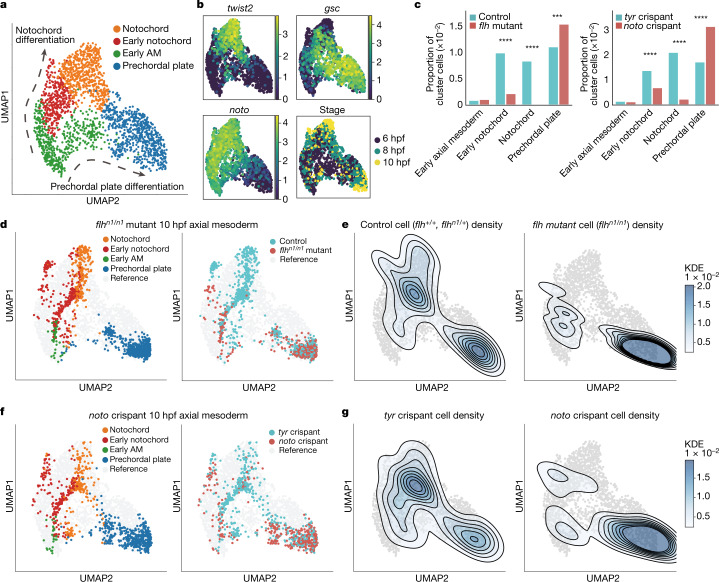
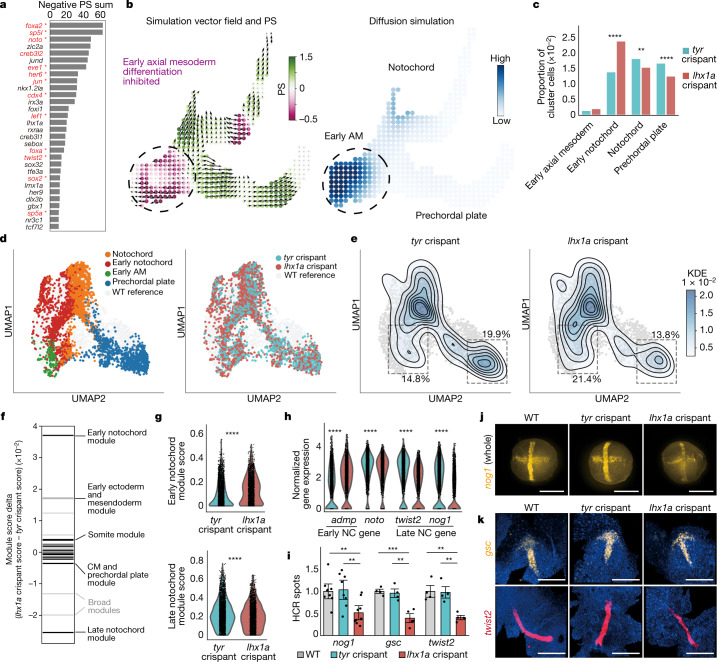
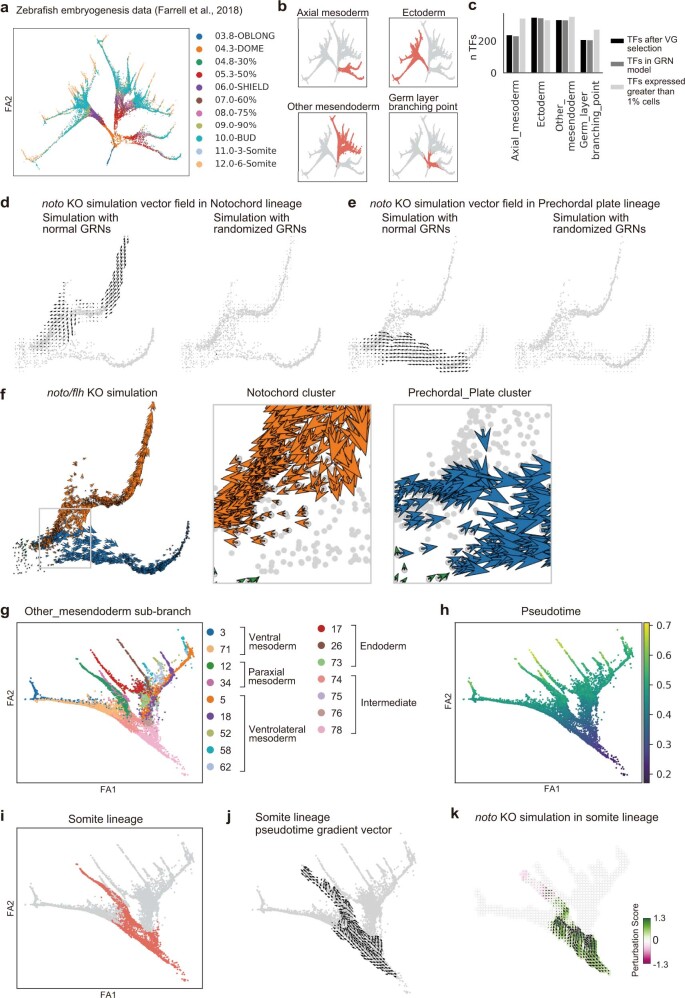
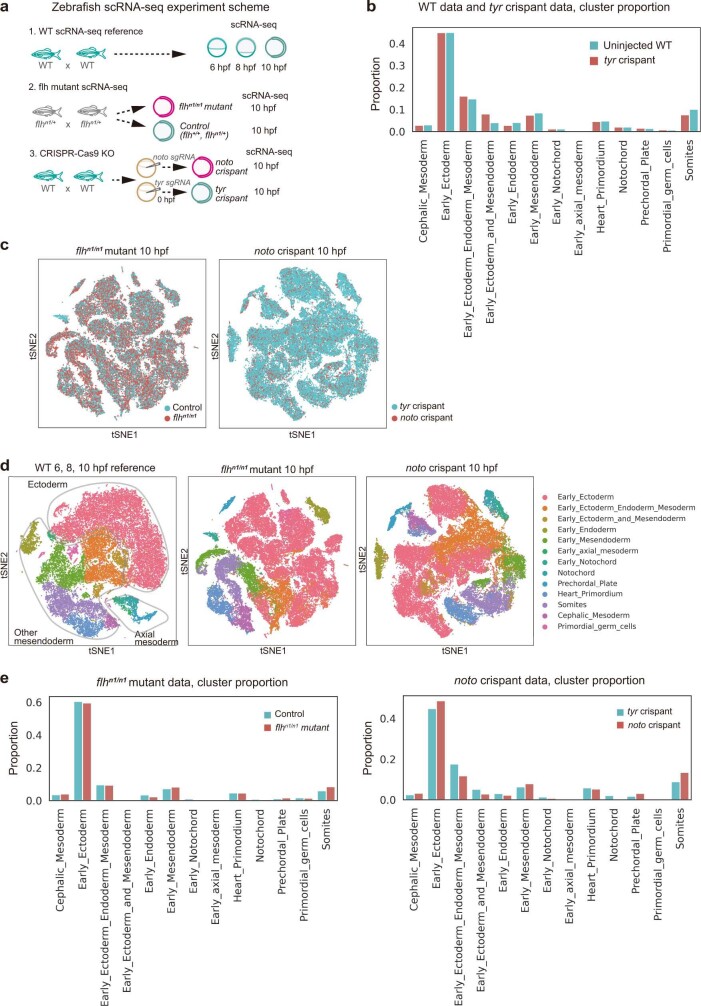
- In zebrafish, systematic KO simulation of 232 active TFs ranked noto top by degree centrality in notochord; noto LOF simulation predicted prechordal plate expansion, validated in flhn1/n1 mutants (notochord −98%, P = 5.55 × 10−52; prechordal plate +38.6%, P = 1.07 × 10⁻⁴) and noto crispants.
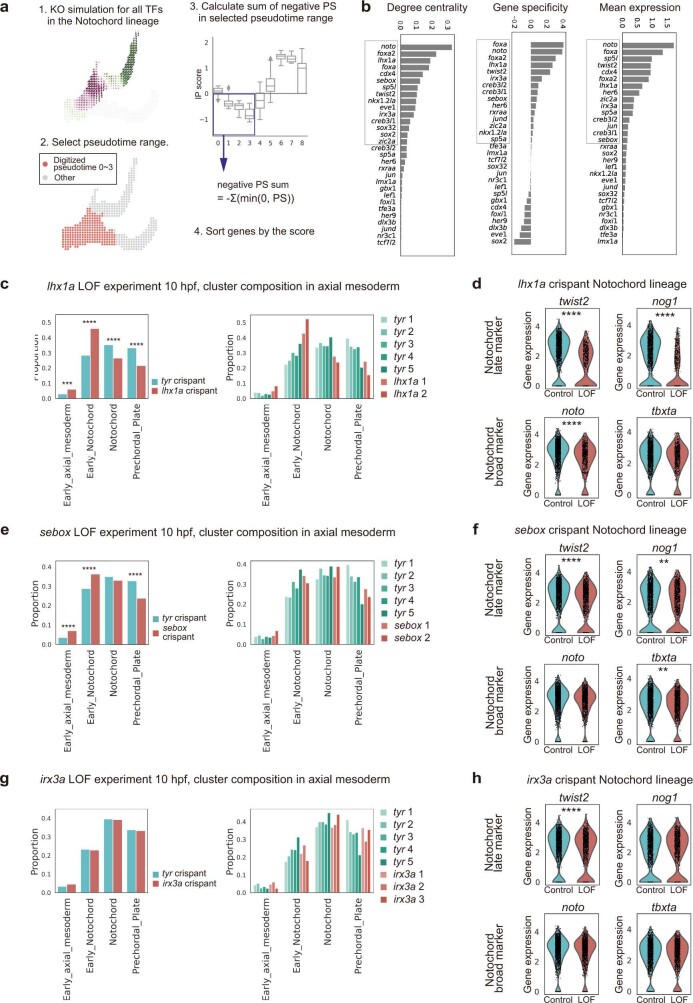
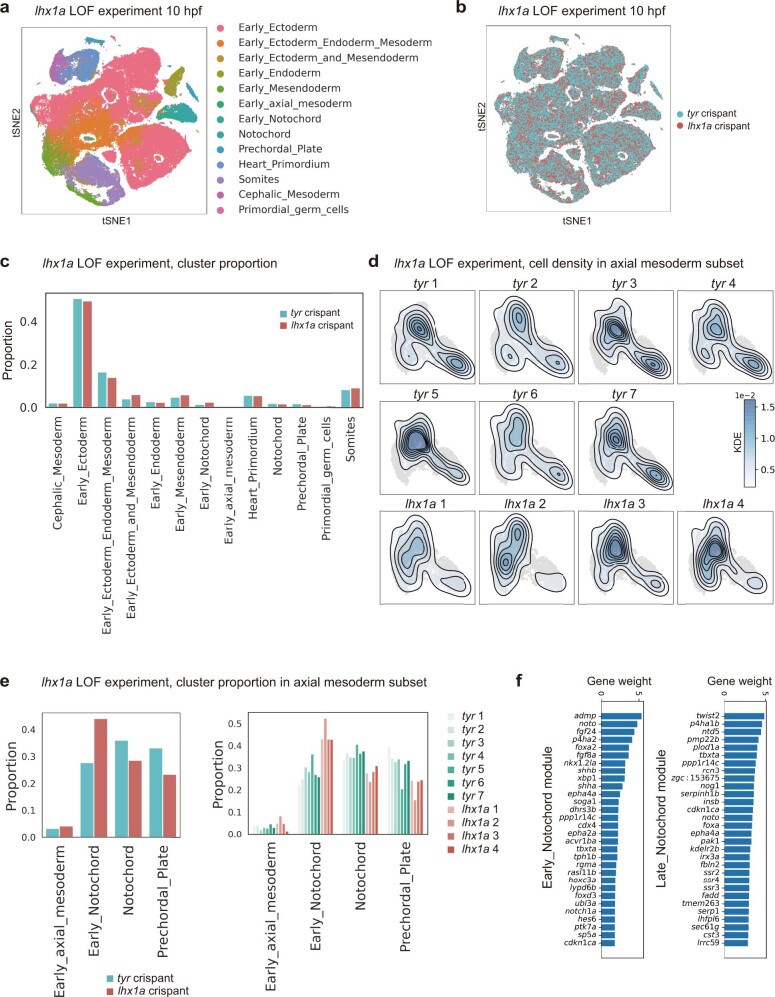
- lhx1a LOF simulation predicted inhibited early axial mesoderm differentiation; lhx1a crispants showed early notochord expansion (+70.2%, P = 1.34 × 10⁻³⁵) and depletion of later notochord (−15.3%, P = 3.83 × 10⁻³) and prechordal plate (−24.7%, P = 1.28 × 10⁻⁷).
Methods
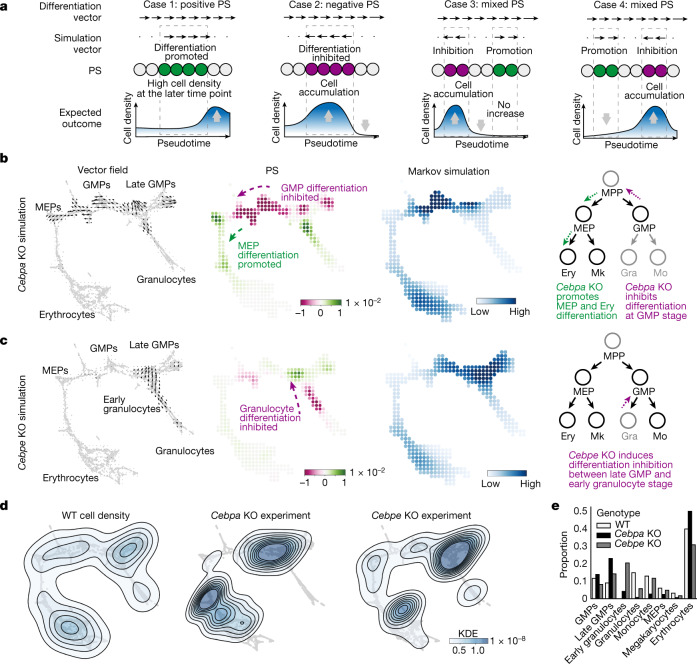
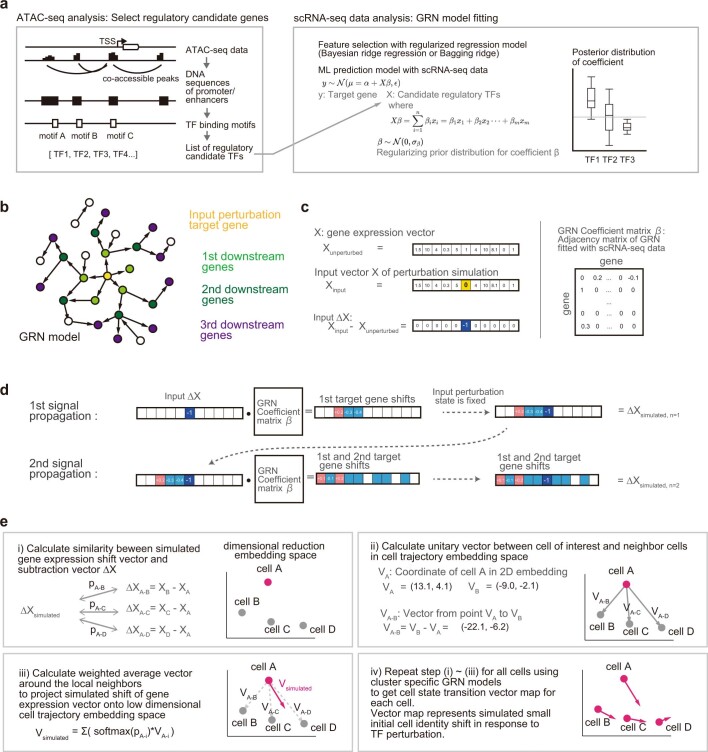
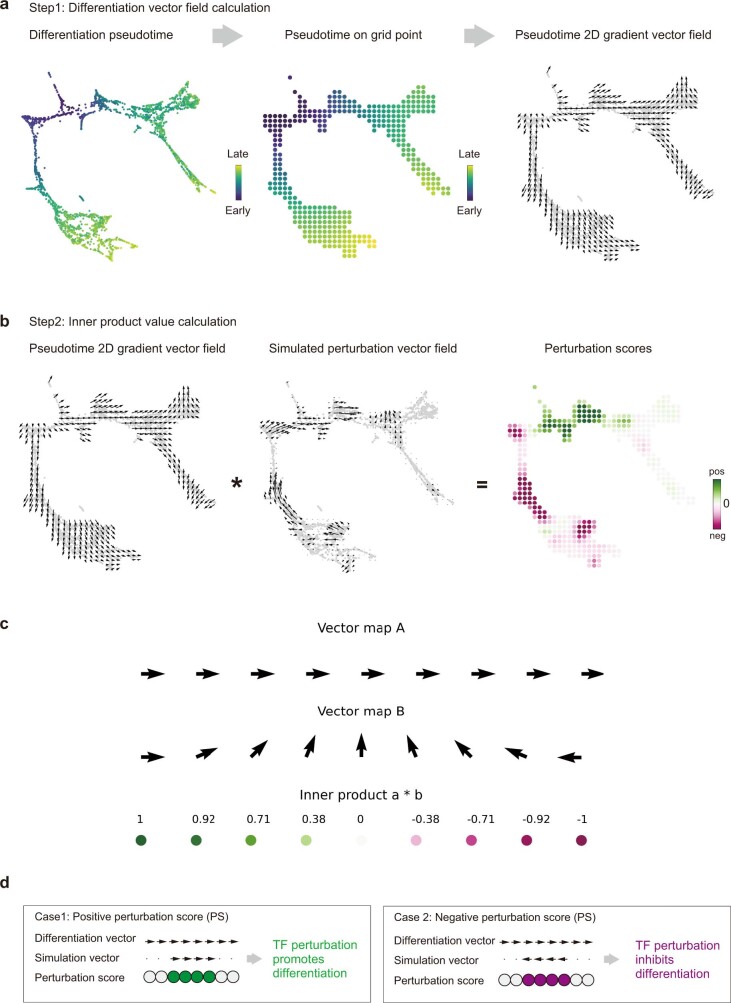
- CellOracle builds cluster-wise regularized linear GRN models using scRNA-seq plus scATAC-seq or promoter databases, propagates TF perturbation signals through the network, estimates transition probabilities, and projects simulated cell-identity shifts as 2D vectors; perturbation scores compare simulation vectors with pseudotime differentiation vectors.
- Validation used mouse and human haematopoiesis datasets, a 38,731-cell zebrafish embryogenesis atlas, a 38,606-cell wild-type zebrafish reference atlas, flhn1/n1 mutants, and CRISPR–Cas9 F0 crispants; experimental readouts included scRNA-seq, NMF, HCR, qRT-PCR and whole-mount in situ hybridization.
- Benchmarking compared CellOracle with WGCNA, DCOL, GENIE3 and SCENIC using ground-truth GRNs from ChIP–seq data; simulations also used randomized GRNs, no signal propagation, varying signal-propagation rounds, and different dimensionality-reduction methods.
Limitations
- Stated: CellOracle can only analyse cell states present in the input scRNA-seq data, and simulation is limited by input data availability and quality, such as unknown TF-binding motifs or sparse TF expression; the authors note foxa3 was filtered out owing to low expression.
- Stated: experimental validation is essential where possible; the authors stress that predictions should be validated experimentally.
- Evident: the simulation output is deliberately limited to a 2D vector rather than absolute expression changes; the negative perturbation score may oversimplify TF roles (e.g. Elf1), and CellOracle did not detect a reported erythrocyte progenitor depletion after Spi1 KO, probably owing to proliferation changes not predicted by the method.
Model-written summary. Check it against the paper before relying on it.
Integrity signals
Registry
Cites
Statistics
Figures
Verification
Claims the paper makes
14 Valid · 2 Not valid · 54 Not checked · 208 Own results and interpretations
The cited sources support only part of this claim — read each source’s verdict below.
In the paper
“To benchmark our GRN inference method, we generated a comprehensive transcriptional ground-truth GRN using 1,298 chromatin immunoprecipitation followed by sequencing (ChIP–seq) datasets for 80 regulatory factors across 5 different tissues14.”
§ Dissecting cell identity via network inference and in silico gene perturbation > GRN inference and benchmarking with CellOracle
What the sources say
- Partly supportedcites [14] Oki S ChIP-Atlas: a data-mining suite powered by full integration of public ChIP-seq data EMBO Rep. 2018 19 e46255 10.15252/embr.201846255 30413482 PMC6280645 sourceExperimental — accuracy not yet measured
Our copy of ChIP‑Atlas confirms it is a fully integrated public ChIP‑seq/DNase‑seq resource (76,217 SRXs across six organisms, Abstract; Overview of the data set and design of analyses, Table 1) with curated antigen and cell‑type metadata and a TR–gene ('Target Genes') integration that 'provides insight into gene regulatory networks' — so it can be the dataset source behind a ChIP‑seq‑derived regulatory network. However, no passage states the specific quantities the claim attributes here (1,298 datasets, 80 regulatory factors, 5 tissues), nor that the resource constitutes or was used to generate a 'ground‑truth' GRN; on the contrary, the Results section 'TR–gene and TR–gene interactions' cautions that 'the genes listed by "Target Genes" are not necessarily functional targets of a given TR and that actual regulation ... would need to be confirmed experimentally'. Searched: 1,298/80 factors/five tissues, ground-truth GRN benchmark, gold-standard TF–target set. (LLM, conf=0.65)
plain- Asserted: passes — The authors put it forward as true.
- Checkable: passes — It can be checked against evidence.
- Load-bearing: passes — The paper’s conclusions depend on it.
- Based: passes — The paper gives a reason why it holds.
- Partly supported
The cited sources support only part of this claim — read each source’s verdict below.
In the paper
“In this respect, gene-regulatory network (GRN) modelling approaches are promising as they reconstruct systematic gene–gene associations from unperturbed single-cell omics data6–11.”
§ Dissecting cell identity via network inference and in silico gene perturbation > Main
What the sources say
- Supportedcites [6] Fiers MWEJ Mapping gene regulatory networks from single-cell omics data Brief. Funct. Genomics 2018 17 246 254 10.1093/bfgp/elx046 29342231 PMC6063279 source
The “GRN inference from scRNA-seq data” section describes reconstructing networks from pairwise associations and co-expression in single-cell data. The Introduction discusses perturbation assays separately as a way to validate predictions, consistent with the claim that these associations can be inferred from unperturbed data. (LLM, conf=0.90)
- Supportedcites [7] Aibar S SCENIC: single-cell regulatory network inference and clustering Nat. Methods 2017 14 1083 1086 10.1038/nmeth.4463 28991892 PMC5937676 source
The Abstract describes SCENIC as reconstructing gene regulatory networks from single-cell RNA-seq data and identifies co-expressed genes as its first step. The Online Methods (GENIE3; page unavailable) specify an expression matrix as the input for network inference, consistent with reconstructing gene associations without requiring perturbation data. The paper addresses single-cell transcriptomics specifically, rather than every type of single-cell omics data. (LLM, conf=0.86)
- Supportedcites [8] Iacono G Massoni-Badosa R Heyn H Single-cell transcriptomics unveils gene regulatory network plasticity Genome Biol. 2019 20 110 10.1186/s13059-019-1713-4 31159854 PMC6547541 source
The Results section describes inferring regulatory networks from single-cell expression data by identifying gene-to-gene correlations and retaining significant correlations as network edges. The Background also states that the approach was applied to healthy tissue datasets, supporting the claim that it can reconstruct associations from unperturbed single-cell data. (LLM, conf=0.91)
- Supportedcites [9] Fleck, J. S. et al. Inferring and perturbing cell fate regulomes in human brain organoids. Nature10.1038/s41586-022-05279-8 (2022). PMC10499607 36198796 source
The ‘Regulatory network inference with Pando’ section describes using multimodal single-cell measurements and regression to infer relationships among transcription-factor expression, binding-site accessibility and target-gene expression. The Methods section (‘GRN inference with Pando’; page unavailable) says the resulting model coefficients define interactions in a regulatory graph. This supports the claim that GRN modelling reconstructs gene–gene regulatory associations from single-cell omics data without requiring perturbations for the inference step. (LLM, conf=0.90)
- Partly supportedcites [10] Kartha VK Functional inference of gene regulation using single-cell multi-omics Cell Genom. 2022 2 100166 10.1016/j.xgen.2022.100166 36204155 PMC9534481 sourceExperimental — accuracy not yet measured
The Discussion (page unavailable) says FigR constructs gene-regulatory networks from correlations across single-cell chromatin and RNA profiles, supporting the claim about reconstructing gene associations. But the paper describes an atlas of immunological stimulation and analyses across stimulus conditions, so it does not establish the claim's qualification that the data are unperturbed. (LLM, conf=0.82)
- Supportedcites [11] González-Blas, C. B. et al. SCENIC+: single-cell multiomic inference of enhancers and gene regulatory networks. Preprint at bioRxiv10.1101/2022.08.19.504505 (2022). source
The SCENIC+ methods (p. 2) describe inferring TF-to-gene relationships from single-cell gene-expression and chromatin-accessibility data using correlation and regression, then combining them into gene regulatory networks. The Discussion (p. 13) also describes GRN methods that search expression data for putative TF–target-gene relationships. This supports the claim as a broad description of network modelling from observational single-cell data. (LLM, conf=0.91)
plainstates a cause- Asserted: passes — The authors put it forward as true.
- Checkable: passes — It can be checked against evidence.
- Load-bearing: passes — The paper’s conclusions depend on it.
- Based: passes — The paper gives a reason why it holds.
- Supported
Every source the paper cites for this claim was checked and supports it.
In the paper
“To support GRN inference without requiring sample-specific scATAC-seq datasets, we have assembled a base GRN from a mouse scATAC-seq atlas13.”
§ Dissecting cell identity via network inference and in silico gene perturbation > GRN inference and benchmarking with CellOracle
What the sources say
- Supportedcites [13] Cusanovich DA A single-cell atlas of in vivo mammalian chromatin accessibility Cell 2018 174 1309 1324 10.1016/j.cell.2018.06.052 30078704 PMC6158300 source
The Results describe profiling chromatin accessibility in single nuclei from 13 mouse tissues using sci-ATAC-seq, identifying the cited work as a mouse single-cell ATAC-seq atlas. The sentence attributes the assembly of the base GRN and its use without sample-specific datasets to the citing authors, not to this source. (LLM, conf=0.92)
plainstates a cause- Asserted: passes — The authors put it forward as true.
- Checkable: passes — It can be checked against evidence.
- Load-bearing: passes — The paper’s conclusions depend on it.
- Based: passes — The paper gives a reason why it holds.
- Supported
Every source the paper cites for this claim was checked and supports it.
In the paper
“Because of this second constraint, we cannot use pre-existing GRN inference algorithms, such as GENIE3 and GRNboost (refs. 7,51).”
§ Dissecting cell identity via network inference and in silico gene perturbation > Methods > Context-dependent GRN inference using scRNA-seq data
What the sources say
- Supportedcites [7] Aibar S SCENIC: single-cell regulatory network inference and clustering Nat. Methods 2017 14 1083 1086 10.1038/nmeth.4463 28991892 PMC5937676 source
The Online Methods (GRNboost) identify GRNboost and GENIE3 as gene-regulatory-network inference methods and explain that they use boosted regression trees and random forests, respectively, rather than linear regression. The citing authors’ inability to use them under their constraint is their own conclusion; the citation supports the identification of the algorithms and their methods. (LLM, conf=0.92)
- Supportedcites [51] Huynh-Thu VA Irrthum A Wehenkel L Geurts P Inferring regulatory networks from expression data using tree-based methods PLoS ONE 2010 5 e12776 10.1371/journal.pone.0012776 20927193 PMC2946910 source
The Introduction identifies GENIE3 as a GRN inference method using ensembles of regression trees and says it can model non-linear relationships. This supports citing the paper as an example of an algorithm unsuitable for the citing authors’ linear-regression constraint; that constraint is the citing authors’ own premise. The paper is not being cited here for GRNboost. (LLM, conf=0.91)
plainstates a cause- Asserted: passes — The authors put it forward as true.
- Checkable: passes — It can be checked against evidence.
- Load-bearing: passes — The paper’s conclusions depend on it.
- Based: passes — The paper gives a reason why it holds.
- Supported
The sources with a verdict support this claim; the rest weren’t checked yet, have no full text we could read, or their verdicts aren’t rated yet.
In the paper
“Cebpa promotes GM lineage differentiation while inhibiting ME lineage differentiation16,72, and promoting granulocyte differentiation in particular15.”
§ Dissecting cell identity via network inference and in silico gene perturbation > Methods > Comparison between CellOracle haematopoiesis KO simulation results and previous reports
What the sources say
- Not checked yetcites [16] Paul F Transcriptional heterogeneity and lineage commitment in myeloid progenitors Cell 2015 163 1663 1677 10.1016/j.cell.2015.11.013 26627738 source
- Supportedcites [72] Hyung CS C/EBPα determines hematopoietic cell fate in multipotential progenitor cells by inhibiting erythroid differentiation and inducing myeloid differentiation Blood 2006 107 4308 10.1182/blood-2005-06-2216 16469877 PMC1895788 source
In the section on lineage switching of EML cells, the paper reports that C/EBPα overexpression promoted more rapid and complete granulocyte differentiation than the comparison treatment. This directly supports the attributed claim. (LLM, conf=0.94)
- Not checked yetcites [15] Orkin SH Zon LI Hematopoiesis: an evolving paradigm for stem cell biology Cell 2008 132 631 644 10.1016/j.cell.2008.01.025 18295580 PMC2628169 source
plainstates a cause- Asserted: passes — The authors put it forward as true.
- Checkable: passes — It can be checked against evidence.
- Load-bearing: passes — The paper’s conclusions depend on it.
- Based: passes — The paper gives a reason why it holds.
147 more claims · 3 with their cited sources checked
Create a free account to see all 278 claims and to verify the 81 references still open.
- It may state two separate claims as one. 87
- Probably not a substantial claim. 53
Claims other papers make about this one
Each is checked against this paper’s own text: does it say what the citing paper says it does?
The source backs part of the claim, not all of it — or backs it for a different population, condition or comparison.
In the citing paper
“CellOracle surpassed other GRN-inference algorithms such as PIDC, GENIE3, and GRNBoost2 in accurately identifying biological ground truth [44]”
From A mini-review on perturbation modelling across single-cell omic modalities (2024) · cites this paper as [44]
Experimental — accuracy not yet measuredThe cited source says what the claim attributes to it.
In the citing paper
“By leveraging gene-regulatory networks derived from these data types, CellOracle performs in silico transcription factors perturbations, effectively simulating cell state changes in response to TF perturbations.”
From A mini-review on perturbation modelling across single-cell omic modalities (2024) · cites this paper as [44]
In the citing paper
“For instance, CellOracle can simulate cell identity transitions following digital (in silico) TF perturbations such as knockout or overexpression.”
From A mini-review on perturbation modelling across single-cell omic modalities (2024) · cites this paper as [44]
In the citing paper
“whereas in silico ChIP–seq predicts transcription factor binding at individual cis-regulatory elements179.”
From The technological landscape and applications of single-cell multi-omics (2023) · cites this paper as [179]
In the citing paper
“Similarly, CellOracle179 leverages multi-omics data, either collected in parallel or integrated computationally, to learn gene regulatory networks and infer the results of in silico perturbations, whereas in silico ChIP–seq predicts transcription factor binding at individual cis-regulatory elements179.”
From The technological landscape and applications of single-cell multi-omics (2023) · cites this paper as [179]
Self-check
Percentages, sums and reported differences re-computed from the paper’s own numbers.
Each contradiction between two passages listed here was confirmed by an independent check.
Rated minor: it would not touch a result — a value no result rests on, a p-value that stays on the same side of the significance level, or a conflict that is clerical, resolved elsewhere in the paper, or outside its own findings.
In the paper
§ Dissecting cell identity via network inference and in silico gene perturbation > Methods > Simulation of cell identity following perturbation of regulatory genes
“This process consists of four steps: (i) data preprocessing; (ii) signal propagation within the GRN; (iii) estimation of transition probabilities; and (iv) analysis of simulated transition in cell identity.”
§ Dissecting cell identity via network inference and in silico gene perturbation > Methods > Simulation of cell identity following perturbation of regulatory genes
“(v)Calculation of vector field”
Rated minor: it would not touch a result — a value no result rests on, a p-value that stays on the same side of the significance level, or a conflict that is clerical, resolved elsewhere in the paper, or outside its own findings.
In the paper
§ Dissecting cell identity via network inference and in silico gene perturbation > Methods > Preparation of input data for GRN inference
“Cells were subsampled for each tissue on the basis of the original tissue-type annotation: spleen, lung, muscle, liver and kidney.”
§ Dissecting cell identity via network inference and in silico gene perturbation > Methods > Ground-truth data preparation for GRN benchmarking
“Here, we selected tissues commonly available in the Tabula Muris scRNA-seq dataset, mouse sci-ATAC-seq atlas data and ground-truth datasets: heart, kidney, liver, lung and spleen.”
Rated minor: it would not touch a result — a value no result rests on, a p-value that stays on the same side of the significance level, or a conflict that is clerical, resolved elsewhere in the paper, or outside its own findings.
In the paper
§ Dissecting cell identity via network inference and in silico gene perturbation > Systematic TF KO simulations in zebrafish
“c, Degree centrality scores were used to rank the top 30 TFs in notochord (left) and prechordal plate (right).”
§ Dissecting cell identity via network inference and in silico gene perturbation > Systematic TF KO simulations in zebrafish
“Black text denotes TFs. Grey text denotes non-TFs.”
Citations
Cites
Comprehensive Integration of Single-Cell Data
Stuart, T., Butler, A., Hoffman, P., Hafemeister, C., Papalexi, E., Mauck, W. M., Hao, Y., Stoeckius, M., Smibert, P., & Satija, R. (2019) · Cell · doi:10.1016/j.cell.2019.05.031 · Cited by 15,453
SCANPY: large-scale single-cell gene expression data analysis
Wolf, F. A., Angerer, P., & Theis, F. J. (2018) · Genome Biology · doi:10.1186/s13059-017-1382-0 · Cited by 8,881
Scenic: single-cell regulatory network inference and clustering.
Aibar, S., González-Blas, C. B., Moerman, T., Huynh-Thu, V. A., Imrichova, H., Hulselmans, G., Rambow, F., Marine, J.-C., Geurts, P., Aerts, J., et al. (2017) · Nature Methods · doi:10.1038/nmeth.4463 · Cited by 6,520
A General Framework for Weighted Gene Co-Expression Network Analysis
Zhang, B., & Horvath, S. (2005) · Statistical Applications in Genetics and Molecular Biology · doi:10.2202/1544-6115.1128 · Cited by 5,684
Hafemeister, C., & Satija, R. (2019) · Genome Biology · doi:10.1186/s13059-019-1874-1 · Cited by 4,479
La Manno, G., Soldatov, R., Zeisel, A., Braun, E., Hochgerner, H., Petukhov, V., Lidschreiber, K., Kastriti, M. E., Lönnerberg, P., Furlan, A., et al. (2018) · Nature · doi:10.1038/s41586-018-0414-6 · Cited by 4,118
Jacomy, M., Venturini, T., Heymann, S., & Bastian, M. (2014) · PLoS ONE · doi:10.1371/journal.pone.0098679 · Cited by 2,909
Single-cell transcriptomics of 20 mouse organs creates a Tabula Muris
The Tabula Muris Consortium, coordination, O., coordination, L., processing, O. C. A., sequencing, L. P. A., analysis, C. D., annotation, C. T., Writing group, Supplemental text writing group, & Principal investigators (2018) · Nature · doi:10.1038/s41586-018-0590-4 · Cited by 2,842
High-resolution in situ hybridization to whole-mount zebrafish embryos
Thisse, C., & Thisse, B. (2008) · Nature Protocols · doi:10.1038/nprot.2007.514 · Cited by 2,578
Hematopoiesis: An Evolving Paradigm for Stem Cell Biology
Orkin, S. H., & Zon, L. I. (2008) · Cell · doi:10.1016/j.cell.2008.01.025 · Cited by 2,570
Cited by
Items 401–500 of 721
RAGulate: Retrieval-Augmented Generation for Post-hoc Literature-Grounded Regulatory AssessmentPreprint
Zandigohar, M., & Dai, Y. D. (2026) · bioRxiv (Cold Spring Harbor Laboratory) · doi:10.64898/2026.01.20.700704 · Cited by 2
“Representative tools include regulon-centric approaches such as SCENIC (Aibar et al. 2017), probabilistic frameworks such as BITFAM (Gao et al. 2021), and more recent methods including CellOracle (Kamimoto et al. 2023) and scRegulate (Zandigohar et al. 2025) that infer context-specific regulatory programs.”
pertTF: context-aware AI modeling for genome-scale and cross-system perturbation predictionPreprint
Su, Y., Liu, D., Menon, V. K., Song, B., Boccara, S., Zhang, N., Zhao, H., Zhao, J. H., Wang, L., Hu, N., et al. (2026) · bioRxiv (Cold Spring Harbor Laboratory) · doi:10.64898/2026.03.12.711379 · Cited by 3
Fields, C. A., Read, J. F., Coffman, H., Petrow, E. P., Bosco, A., & Bhattacharya, D. (2026) · eLife · doi:10.7554/elife.110953
Rahimimovassagh, M., Barham, C., Garibay, I. I., & Yousefi, N. (2026) · arXiv (Cornell University) · doi:10.48550/arxiv.2607.18602 · Cited by 2
Effect of SNPs on Litter Size in Swine
Guo, Z., Lv, L., Liu, D., Ma, H., & Radović, Č. (2024) · Current Issues in Molecular Biology · doi:10.3390/cimb46070378 · Cited by 1
“Salmonella infection remains a major problem in pig farms [61], and in Germany, over 90% of pig farms tested positive [62].”
BackgroundOneSC: a computational platform for recapitulating cell state transitions
Peng, D., & Cahan, P. (2024) · Bioinformatics · doi:10.1093/bioinformatics/btae703 · Cited by 2
Single-cell technology for plant systems biology
Amini, S., Thibivilliers, S., Farmer, A. A., Martin, O., & Libault, M. (2025) · Elsevier eBooks · doi:10.1016/b978-0-443-23736-2.00008-3 · Cited by 1
Conference Report: Cerebellar Development and Disease at Single-Cell Resolution
Kutscher, L. M., Aprile, D., Bayin, N. S., Becker, E. B. E., Cerrato, V., Turrini, G., Coolen, M., Cantagrel, V., Durand, B., Evans, M. K., et al. (2025) · The Cerebellum · doi:10.1007/s12311-025-01864-5 · Cited by 1
“Using scRNA-seq and scATAC-seq data to model gene expression and chromatin accessibility, respectively, the GRNs will be perturbed in CellOracle [15] and SCENIC+ [16] to simulate Pax6 knockouts and the in silico findings will be compared with Pax6 -null scRNA-seq and PAX6 CUT&Tag-seq data to…”
Kolmogorov-Arnold Network for Gene Regulatory Network Inference
Tong, T. P., Wang, A., Panagopoulos, G., & Pang, J. (2025) · Lecture notes in computer science · doi:10.1007/978-3-032-01436-8_12 · Cited by 1
Langohr, L., Kaaja, I., Douglas, S. P. M., Nebelung, H., Koski, J., Ikonen, I., Katainen, L., Maljanen, K., Hakkarainen, M., Räisänen, T., et al. (2026) · HemaSphere · doi:10.1002/hem3.70374 · Cited by 2
“This yielded 32 distinct cell types, including all major erythroid stages: hematopoietic stem cells and multipotent progenitor cells (HSCs and MPPs), erythroid – myeloid progenitors (EMPs), early erythroid progenitors (EEPs), and late erythroid progenitors (LEPs) (Figure 1C).”
Xu, S., Yu, N., Zhang, D., & Wang, C. (2025) · Genes · doi:10.3390/genes16111255 · Cited by 2
“Recent frameworks, including DeepMAPS [13], CellOracle [14], Dictys [15], and LINGER [16], integrate epigenomic features to improve prediction reliability and biological interpretability.”
Integrated approaches for discovery and functional annotation of proteins of unknown function
Moitra, T., & Larrouy-Maumus, G. J. (2025) · Trends in Biochemical Sciences · doi:10.1016/j.tibs.2025.11.001 · Cited by 4
Single cell transcriptomic landscape of adult and pediatric non-ischemic cardiomyopathy
Tadros, H. J. J., Turaga, D., Hope, K. D., Spinner, J. A., Adachi, I., Li, X., & Martin, J. F. (2025) · Journal of Molecular and Cellular Cardiology · doi:10.1016/j.yjmcc.2025.12.002 · Cited by 1
He, S., Xiong, W., Huo, J., Lin, J., Li, J., & Zhu, H. (2026) · BMC Biology · doi:10.1186/s12915-026-02524-8 · Cited by 2
“We also used the CellOracle program (with default parameters) to predict DBSs of differentially expressed TFs (https:// github. com/ morris-lab/ CellO racle) [65], but identifying transcriptional regulatory modules of TFs is not a focus of this study.”
Huang, Y., Liu, C., Yang, Z., Liu, B., Zhai, X., Zheng, J., Xiao, J., & Song, T. (2025) · Briefings in Bioinformatics · doi:10.1093/bib/bbaf664 · Cited by 2
“This strategy w as subsequently advanced by CellOracle [33] and regX, which integrated with cell fate modeling.”
Central Dogma Transformer II: an AI microscope for understanding cellular regulatory mechanisms
Ota, N. (2026) · Bioinformatics Advances · doi:10.1093/bioadv/vbag268 · Cited by 1
“The consistent enrichment across 28 independent loci suggests that CDT-II learns aspects of three-dimensional chromatin organization from sequence-derived genomic representations and expression data alone.”
Șerban, M., Toader, C., & Covache-Busuioc, R.-A. (2026) · International Journal of Molecular Sciences · doi:10.3390/ijms27041826 · Cited by 1
“…(e.g., mitochondrial function, channel distribution, branch structure, or stability of the paranode) by selectively disrupting them, and examining compensatory capacity under defined loads—which is particularly useful for traumatic axonal injury with focal swelling and transport failure [137–140].”
As 5mC enters a programmable era: charted avenues for cancer understanding and intervention
Shi, Q., Liu, P., Zhu, J.-K., & Sun, S. (2026) · Oral Science and Homeostatic Medicine · doi:10.26599/oshm.2026.9610044 · Cited by 1
Boolean logic links chromatin accessibility states to gene expression variability across cell types
Malekpour, S. A., Jafari, M., & Sadeghi, M. (2026) · Nucleic Acids Research · doi:10.1093/nar/gkag230 · Cited by 1
“By jointly analyzing these data, researchers can identify enhancer –gene interactions [ 1 –5 ], reconstruct gene regulatory networks (GRNs) [ 6 –9 ], and infer cellular differentiation trajectories [ 10 –12 ], thereby advancing our understanding of cellular dynamics and plasticity.”
Wan, M., Zhong, T., Shi, W., Shen, J., Zhang, W., & Sun, Y. (2026) · Computational and Structural Biotechnology Journal · doi:10.34133/csbj.0092 · Cited by 1
“Given the induction and network centrality of PRDM1 in CRT-associated aNK cells, we next used CellOracle [ 35 ] to perform in silico perturbation and evaluate how PRDM1 disruption reshapes inferred cell-state dynamics.”
Clonal analysis for understanding fate biases in developing embryos
Isaev, S. V., & Adameyko, I. I. (2026) · Current Opinion in Genetics & Development · doi:10.1016/j.gde.2026.102475 · Cited by 1
Xinhan, S., Deng, K., Chen, M., & Guan, Y. (2026) · Science Advances · doi:10.1126/sciadv.aeb3376 · Cited by 1
“Recent studies, such as DIRECT-NET, CellOracle, and FigR, have demonstrated the benefits of integrating these diverse data types in uncovering more comprehensive and biologically meaningful GRNs ( 27 , 28 ).”
Inferring cell-specific gene regulatory networks based on causal graph embedding
Li, G., Qiao, R., Xu, Y., Jiao, F., Li, P., & Chen, L. (2026) · Cell Reports Methods · doi:10.1016/j.crmeth.2026.101423 · Cited by 1
“CellOracle was employed to process gene expression data alongside the GRNs inferred from CSGRN, facilitating the simulation of knockout perturbations of TFs. 50 The resulting cell types (Figure 6A) revealed notable differences in cellular fates within the same lineage (Figure 6B).”
Kumar, S., Botey-Bataller, J., Nguyen, N., Li, W., Liu, Z., Xu, C.-J., & Li, Y. (2026) · Advances in experimental medicine and biology · doi:10.1007/978-3-032-18966-0_15 · Cited by 1
Temporal network analysis in systems biology: concepts, inference, and validation
Khazaal, A., & Vafaee, F. (2026) · Frontiers in Bioinformatics · doi:10.3389/fbinf.2026.1822526 · Cited by 1
“Finally, external and orthogonal validation represents the highest tier of evidence, grounding inference in experimental reality (Marku and Pancaldi, 2023; Kim et al., 2023; Kamimoto et al., 2023).”
Lin, N., Zhang, Z., Sha, X., Yao, J., Sun, X.-Z., Sun, R., 杨佳佳, Yu, Q., Wu, Z., Guan, J., et al. (2026) · Journal of genetics and genomics/Journal of Genetics and Genomics · doi:10.1016/j.jgg.2026.05.005 · Cited by 1
Shen, H., Liu, W., Li, Y., He, Z., Yang, Z., Hu, Z. Y., & Wu, T. (2026) · Plants · doi:10.3390/plants15101578 · Cited by 1
“18.0) to instantiate a TFinfo object [36].”
InfluentialCurrent Progress and Future Outlook for Synthetic Gene Circuits in Cardiovascular Therapy
Khalilitousi, M., Dhingra, A., Rohani, L., & Weiss, R. (2026) · Biomolecules · doi:10.3390/biom16050754 · Cited by 1
Identifying fate-determining transcription factors with single-cell omics
Xi, X., Li, C., Wei, L., & Zhang, X. (2026) · Trends in Genetics · doi:10.1016/j.tig.2026.05.005 · Cited by 1
Single-Cell Studies Advance Understanding of the Genetic and Molecular Basis of Atherosclerosis
Li, D. Y., Monteiro, J. P., Zhao, Q., Stitziel, N. O., & Quertermous, T. (2026) · Circulation Research · doi:10.1161/circresaha.125.327472 · Cited by 5
The evolution of AI-integrated genome editing and its challenges
Wong, M. T. J., Zulkifli, N. D., Ravichandran, T., Vasodavan, K., Bin-Alshaibah, O., Himel, G. M. S., Achuthan, A., Anthonysamy, M. A., & Das, K. T. (2026) · Mammalian Genome · doi:10.1007/s00335-026-10248-x · Cited by 1
“AI tools such as CellOracle leverage gene regulatory networks inferred from single-cell multi-omics data to simulate in silico transcription factor perturbations and model consequent changes in cell identity, including in hematopoietic stem cell differentiation (Kamimoto et al. 2023 ).”
Corneal Innervation Research at a Crossroads: A Tool-Driven Roadmap for the Future
Matynia, A., Meng, I. D., Davis, B. M., Pflugfelder, S. C., Galor, A., Perez, V., Felix, E. R., Hamrah, P., Rompolas, P., Ruiz‐Lozano, R. E., et al. (2026) · Investigative Ophthalmology & Visual Science · doi:10.1167/iovs.67.6.25 · Cited by 1
CauFinder: Steering Cell‐State and Phenotype Transitions by Causal Disentanglement Learning
Zhang, C., Chen, Z., Miao, Y., Shen, Z., Cai, D., Tang, S., Xue, Y., Guo, W.-F., Ji, H., Liu, J., et al. (2026) · Advanced Science · doi:10.1002/advs.76177 · Cited by 2
“We evaluated performance using top-k precision and compared CauFinder with CEFCON, CellOracle [ 23 ], and WMDS.net (Note S2 ).”
From candidate genes to omics: Unbiased approaches reshaping arthropod Evo-Devo
Vieira, J., & da Fonseca, R. N. (2026) · Genetics and Molecular Biology · doi:10.1590/1678-4685-gmb-2025-0217 · Cited by 1
Lin, W., Altayar, B. A., Jiang, S., He, K., Zhao, Y., Wu, Q., Lin, Y. W., Xing, M., & Yuan, Q. (2026) · International Journal of Oral Science · doi:10.1038/s41368-026-00447-2 · Cited by 1
“40 Primary fi broblast culture and conditioned medium preparation Primary fi broblasts were isolated from PI lesions and healthy gingiva by explant outgrowth or enzymatic digestion and cultured in DMEM supplemented with 10% FBS and 1% penicillin-streptomycin.”
Integrating single-cell RNA sequencing with multi-omics to decode disease microenvironments
Devi, A., Pathak, V., Dwibedi, V., Singh, J., Pathak, A. K., George, N., Kumar, A. C. S., Kaur, G., Rath, S. K., & Chatterjee, A. (2026) · Molecular Biology Reports · doi:10.1007/s11033-026-12250-7 · Cited by 2
“This approach enables the modelling of dynamic regulatory changes during biological processes such as hematopoiesis, allowing the identification and prediction of key transcription factors that drive lineage specification and cellular state transitions [ 51].”
Mu, C., Ding, Y., Weiss, A., Rosenfeld, S., Li, F., & Geng, X. (2026) · Biomolecules · doi:10.3390/biom16071054 · Cited by 1
“However, in silico predictions are constrained by the input data and the inferred regulatory network [101,102], and may show limited generalizability to unseen perturbations or cellular contexts [103].”
Faisal, S., Sammad, A., Ejaz, M. R., & Wang, Z. (2026) · Journal of Genetic Engineering and Biotechnology · doi:10.1016/j.jgeb.2026.100777 · Cited by 1
Zhou, L., Luo, S., Huang, Z., Zhang, Z., Wang, Z., & Zhang, J. (2026) · Molecular Systems Biology · doi:10.1038/s44320-026-00235-4 · Cited by 3
“To set up the ground truth through biologically plausible regulatory interactions, we employed scATAC-seq-derived TF – target priors (Kamimoto et al, 2023) as an ATAC-supported reference network for performance evaluation.”
InfluentialReconstruction of interpretable causal network dynamics from time series data
Gao, X., Sun, X., Wu, T., An, S., An, F., Leng, S., Wei, H., Zhang, Y., Marwan, N., & Kurths, J. (2026) · Physics Reports · doi:10.1016/j.physrep.2026.07.004 · Cited by 2
Li, W., Aziz, A. U. R., Xu, B., Xu, J., Yu, X., Wang, D., & Ha, C. (2026) · Frontiers in Cell and Developmental Biology · doi:10.3389/fcell.2026.1900624 · Cited by 1
“…2024; Kedzierska et al., 2025; Wang T. et al., 2025; Chevalley et al., 2025; He et al., 2025; Wang F-a et al., 2025; Li et al., 2025; Wu et al., 2025; Bahrami et al., 2026; Aibar et al., 2017; Pratapa et al., 2020; Kamimoto et al., 2023; Low et al., 2021; Kim et al., 2020; Fatehullah et al., 2016).”
Towards a Quantitative Understanding of Cellular Dynamics via Lineage Tracing Inference
Wang, K., Meng, R., Hu, Z., & Zhou, D. (2026) · CSIAM transactions on life sciences. · doi:10.4208/csiam-ls.so-2026-0426 · Cited by 1
Hyperosmotic niche adaptation and tissue polyamines underlie MRSA persistence in the kidney
Kanazawa, N., Martens, C. P., Makino, S., Heruye, S., Zollman, A., Myslinski, J., White, A., Poudel, C., Yanagida, J., Syed, F., et al. (2026) · Science Translational Medicine · doi:10.1126/scitranslmed.aed4200 · Cited by 1
A Comparative Study of Computational Methods for Multimodal Single-Cell Data Integration
Tran, B., Pham, T. N., Huynh, T. V., & Hoang, K. (2023) · International Conference on Multimedia Analysis and Pattern Recognition (MAPR) · doi:10.1109/mapr59823.2023.10289050 · Cited by 1
“…methods to the problem exhibit significant diversity, ranging from probabilistic and statistical models (e.g. MIRA [19], MultiVelo [20]), matrix factorization-based models (e.g. LIGER [21]), network-based models (e.g. CellOracle [22]), to neural network-based models (e.g. totalVI [23], Cobolt [24]).”
MethodThe potential clinical impact of cell type‐specific genetic regulation: Crohn's disease
Tyebally, M., Xue, A., & Powell, J. E. (2023) · Clinical and Translational Medicine · doi:10.1002/ctm2.1474 · Cited by 1
“33,34 Currently, successful outcomes from single-cell multi-modal gene regulatory networks have been based on transcriptome and chromatin accessibility data.”
BackgroundComputational Methods for Image Analysis in Craniofacial Development and Disease
James, E., Caetano, A. J., & Sharpe, P. T. (2024) · Journal of Dental Research · doi:10.1177/00220345241265048 · Cited by 1
Inferring Gene Regulatory Network Based on scATAC-seq Data with Gene Perturbation
Shao, W., Liu, Y., Zhang, S., Chen, S., Liu, Q., Zhou, J., & Zeng, W. (2024) · IEEE International Conference on Bioinformatics and Biomedicine (BIBM) · doi:10.1109/bibm62325.2024.10822868 · Cited by 1
Beyond “Trapped Pets” and “Red Buttons”: Bioinformatics as an Experimental Discipline
Ratti, E., & D’Agostino, G. A. (2025) · Perspectives on Science · doi:10.1162/posc_a_00638 · Cited by 1
HemAtlas: A Multi-omics Hematopoiesis Database
Kang, Z., Zhu, T., Zou, D., Liu, M., Zhang, Y., Wang, L., Zhang, Z., & Liu, F. (2025) · Genomics Proteomics & Bioinformatics · doi:10.1093/gpbjnl/qzaf026 · Cited by 3
“In the HSPC development module of HemAtlas, we integrated various analysis tools, such as CellOracle [41], CellChat [42], and scMetabolism [43], to comprehensively unveil HSPC cross-stage development for each species at single-cell resolution.”
Xiong, Y., Zito, A., Liang, H., Biouss, G., Yang, J., Balsamo, F., Yeganeh, M., Lee, C., Lee, D., Wang, C.-Y., et al. (2026) · Cellular and Molecular Gastroenterology and Hepatology · doi:10.1016/j.jcmgh.2026.101730 · Cited by 4
Dissecting cell state transitions by causal inferencePreprint
Xu, L., Cong, T., Xu, H., Yang, N., Chen, T., Yang, S., Zhu, M., Sinha, R., Yamamoto, R., Zhang, W., et al. (2023) · bioRxiv (Cold Spring Harbor Laboratory) · doi:10.1101/2023.02.08.527606 · Cited by 1
“Recently, new methods 15,16 have been developed to infer how cell identity is governed by the complex regulation of gene expression through in silico transcription factor (TF) perturbation.”
MethodWang, C., Zhou, Y., Wang, Y. J., Guha, T. K., Luo, Z., McIntyre, T. I., Schwab, M. E., Davidson, B. R., Reeder, G. C., Wong, R. J., et al. (2024) · bioRxiv (Cold Spring Harbor Laboratory) · doi:10.1101/2024.01.18.576324 · Cited by 1
Direct lineage conversion of postnatal mouse cortical astrocytes to oligodendrocyte lineage cellsPreprint
Bajohr, J., Scott, E., Olfat, A., Sadria, M., Lee, K. C., Fahim, M., Taha, H. T., Casasbuenas, D. L., Derham, A., Yuzwa, S. A., et al. (2024) · eLife · doi:10.7554/elife.98632.1 · Cited by 3
Niu, Y., Wu, D., Zhang, S., Zheng, H., Wu, X., Chen, J., Zhang, Y., Zhang, T., He, W., & Chen, L. (2024) · bioRxiv (Cold Spring Harbor Laboratory) · doi:10.1101/2024.10.28.620557 · Cited by 1
Johnson, L., Casaletto, J. A., Costes, S. V., Proctor, C. R., & Sanders, L. (2024) · bioRxiv (Cold Spring Harbor Laboratory) · doi:10.1101/2024.11.28.625741 · Cited by 1
Characterizing Gene Regulatory Network Ensembles in Kidney Injury and RepairPreprint
Tannenbaum, E., Markiewitz, D., Tomer Kalisky, C., & Kugler, H. (2025) · bioRxiv (Cold Spring Harbor Laboratory) · doi:10.1101/2025.01.12.632586 · Cited by 1
Peng, R., Gao, Y., Chen, Y., & Wang, J. (2025) · bioRxiv (Cold Spring Harbor Laboratory) · doi:10.1101/2025.02.05.636766 · Cited by 1
Opportunities in AI/ML to endotype asthma and other eosinophilic diseases
Ray, A., Das, J., & Khoury, P. (2025) · Journal of Allergy and Clinical Immunology · doi:10.1016/j.jaci.2025.01.044 · Cited by 1
Terrian, L., Thompson, J., Bowman, D. E., Panda, V., Contreras, G. A., Rockwell, C. E., Sather, L., Fink, G. D., Lauver, A. A., Nault, R., et al. (2025) · bioRxiv (Cold Spring Harbor Laboratory) · doi:10.1101/2025.02.13.636878 · Cited by 1
“Finally, gene regulatory network analysis with CellOracle 14 identified key transcriptional drivers of changes in adipocyte gene expression and revealed potential molecular targets to suppress or possibly reverse diet-dependent alterations in gene expression.”
InfluentialRizzuti, L., Vitriolo, A., Mariana, P. D. A., Pereira, M. F., Meert, L., Dossena, F., Prazzoli, F., Dekker, M. R., Dekkers, D. H. W., Demmers, J., et al. (2025) · bioRxiv (Cold Spring Harbor Laboratory) · doi:10.1101/2025.03.06.641037 · Cited by 1
Regulatory logic of human cortex evolution by combinatorial perturbationsPreprint
Skaros, A., Vitriolo, A., Leonardi, O., Finazzi, V., Pereira, M. F., Prazzoli, F., Trattaro, S., Moriano, J., Capocefalo, D., Villa, C. E., et al. (2025) · bioRxiv (Cold Spring Harbor Laboratory) · doi:10.1101/2025.04.28.651083 · Cited by 2
“To build gene-regulatory networks and leverage the information provided by the perturbations we leveraged CellOracle v.0.10.15 ( 61) .”
InfluentialEYKTHYR reveals transcriptional regulators of spatial gene programsPreprint
Krieger, S., Haber, E., & Ma, J. (2025) · bioRxiv (Cold Spring Harbor Laboratory) · doi:10.1101/2025.05.19.654884 · Cited by 2
“These predictions were significantly enriched for validated downstream genes from an existing GRN [14] ( P = 4 × 10 − 7 ; Fig.”
InfluentialGurung, R., Lee, C. J. M., Liehn, E. A., Nurjanah, S. B., Minqin, R., van Kan, J. A., Villanueva, E., Amrute, J., Loong, S. S. E., Ackers-Johnson, M. A., et al. (2025) · bioRxiv (Cold Spring Harbor Laboratory) · doi:10.1101/2025.05.22.655434 · Cited by 1
Refate identifies chemical compounds to target trans-regulatory networks for cellular conversionPreprint
Xiao, D., Sahadevan, S., Mangala, M. M., Kim, H. J., Fredericks, A., Huang, H., Jothi, R., Tam, P., Gonzalez-Cordero, A., Zyner, K. G., et al. (2025) · bioRxiv (Cold Spring Harbor Laboratory) · doi:10.1101/2025.07.09.664003 · Cited by 2
Expanding the DNA Motif Lexicon of the Transcriptional Regulatory CodePreprint
Fan, J., Chaudhri, V. K., Bisht, D., Pease, N. A., Keshari, S., Gerges, P., Hall, D. R., Yi, V. F., Kales, S., Ho, C., et al. (2025) · bioRxiv (Cold Spring Harbor Laboratory) · doi:10.1101/2025.07.09.662874 · Cited by 2
GeneSys: Generative Modeling of Developmental SystemPreprint
Hsu, C., Chen, C., Nolan, T. M., Benfey, P. N., & Ohler, U. (2025) · bioRxiv (Cold Spring Harbor Laboratory) · doi:10.1101/2025.08.20.671385 · Cited by 1
“Network centrality measures were then computed using CellOracle’s built -in functions.”
InfluentialYOU, Y., Caranica, C., Dai, G., & Lu, M. (2025) · bioRxiv (Cold Spring Harbor Laboratory) · doi:10.64898/2025.12.08.693064 · Cited by 1
Reinforcement learning enables single-cell foundation models to learn cellular differentiationPreprint
Chang, K.-L., Chen, H., & Liu, Z. (2025) · bioRxiv (Cold Spring Harbor Laboratory) · doi:10.64898/2025.12.09.693267 · Cited by 1
“Recent method like CellOracle has leveraged single-cell data to construct gene regulatory networks for in silico perturbation analysis 17 .”
Polikarpova, A., Rivero-García, I., Gerber, T., Wang, J., Novatchkova, M., Fischer, A., Torres, M., Sánchez‐Cabo, F., & Tanaka, E. M. (2025) · bioRxiv (Cold Spring Harbor Laboratory) · doi:10.64898/2025.12.10.692203 · Cited by 1
“To further interrogate the functional effect of these TFs on the CT cell fate, we used the CellOracle algorithm [Kamimoto et al. 2023] to simulate the effect of TF overexpression or KO.”
Georgopoulou, M., Hobin, F., Dubin, J., Masrori, P., Arekatla, G., Poesen, K., Cruz, S. D., Bosch, L. V. D., Thal, D. R., Sifrim, A., et al. (2025) · bioRxiv (Cold Spring Harbor Laboratory) · doi:10.64898/2025.12.09.693234 · Cited by 1
Sozzi, E., Garrote, M. G., Mudannayake, J. M., Passarello, G. R., Bruzelius, A., Corsi, S., Galeotti, G., Habekost, M., Scaramuzza, L., Kajtez, J., et al. (2025) · bioRxiv (Cold Spring Harbor Laboratory) · doi:10.64898/2025.12.19.695615 · Cited by 1
“Gene regulatory network analysis and in silico perturbations using CellOracle 27 identified EBF3 and PBX3 as transcriptional regulators of DA neuron specification and maturation.”
InfluentialPseudotime graph diffusion for post hoc visualization of inferred single-cell trajectoriesPreprint
Lukas, B., Pang, J., Koh, T. J., & Dai, Y. D. (2026) · bioRxiv (Cold Spring Harbor Laboratory) · doi:10.64898/2026.01.27.702126 · Cited by 1
“These representations play a critical role in data interpretation and hypothesis generation and, in some frameworks, serve as substrates from which quantities are derived [5].”
Lin, J., Wen, Y., Tang, J., Zhang, X., Zhang, H., & Zhu, H. (2026) · eLife · doi:10.7554/elife.89001.5 · Cited by 1
Fields, C. A., Read, J. F., Coffman, H., Petrow, E. P., Bosco, A., & Bhattacharya, D. (2026) · bioRxiv (Cold Spring Harbor Laboratory) · doi:10.64898/2026.02.16.706247 · Cited by 1
Trimbour, R., Sáez-Rodríguez, J., & Cantini, L. (2026) · Bioinformatics · doi:10.1093/bioinformatics/btag092 · Cited by 2
“Among them, Cicero, an al-gorithm developed for analysing single-cell ATAC-seq data (Pliner et al. 2018), has been widely adopted to uncover cis-regulatory DNA interactions and gene regulatory mechanisms (Kamimoto et al. 2023, Trimbour et al. 2024).”
BARTsc identifies key transcriptional regulators from single-cell omics dataPreprint
Zhang, H., Kang, L., Wang, J., Liang, K., Wang, Z., Xu, K., & Zang, C. (2026) · bioRxiv (Cold Spring Harbor Laboratory) · doi:10.64898/2026.02.24.707729 · Cited by 1
Co-regulatory changes in Homo sapiens prefrontal cortex shape RNA-chromatin interactionsPreprint
Vitriolo, A., Leonardi, O., Finazzi, V., Castaldi, D., Basile, L., Prazzoli, F., Lambolez, A., Yasuzawa, K., Yip, C. W., Murata, M., et al. (2026) · bioRxiv (Cold Spring Harbor Laboratory) · doi:10.64898/2026.03.14.711601 · Cited by 1
“Additional TF-gene associations derived from Remap were added after generation of the base GRN. CellOracle was also used for virtual KO experiments.”
InfluentialXue, A. G., Cai, B., Xue, Q., Liu, N., Qiu, X., Hernández-López, R. A., & Ting, A. Y. (2026) · bioRxiv (Cold Spring Harbor Laboratory) · doi:10.64898/2026.03.17.712496 · Cited by 2
“We applied CellOracle 41 to infer gene regulatory networks and identify transcription factors that may be controlling these cell states.”
Fields, C. A., Read, J. F., Coffman, H., Petrow, E. P., Bosco, A., & Bhattacharya, D. (2026) · eLife · doi:10.7554/elife.110953.1 · Cited by 1
Unbalanced Perturbation Dynamics For Cell Fate DesignPreprint
Peng, Q., Wang, Y., Li, J., Wang, X., Xiao, Y., & Zhou, P. (2026) · bioRxiv (Cold Spring Harbor Laboratory) · doi:10.64898/2026.06.30.735555 · Cited by 1
Chen, S., Zahedi, R., Chhuo, L., Nguyen, R., BaghGolshani, M., Beheshti, A., Grosser, M., Yang, M., Farbehi, N., Lovell, N. H., et al. (2026) · arXiv (Cornell University) · doi:10.48550/arxiv.2607.17227 · Cited by 2
IntraTalker - Modelling Intracellular Signalling in Cellular CrosstalkPreprint
Klöker, V., Nagai, J. S., Feng, Z., Mavrommatis, L., Hermanns, L., Moscoso, J. M. J., Ruiz, M., Kuppe, C., & Costa, I. G. (2026) · bioRxiv (Cold Spring Harbor Laboratory) · doi:10.64898/2026.07.17.739174 · Cited by 1
“These models can then be used to investigate whether perturbations such as knock-outs (KO) or stimulation of a TF in these networks induce expression changes that drive cell state transitions (CellOracle 21 and SCENIC+ 20 ).”
InfluentialCauTrigger: deciphering biological system state transitions by hierarchical causal decomposition
Zhang, C., Cai, D., Aihara, K., & Chen, L. (2026) · Nature Methods · doi:10.1038/s41592-026-03274-9
An oracle predicts regulators of cell identity
Farrell, J. A. (2023) · Nature · doi:10.1038/d41586-023-00251-6
Lin, L., Cai, Q., & Chen, J. (2023) · 中国科学通报:英文版 · doi:10.1016/j.scib.2023.04.032
Machine learning predicts cellular response to genetic perturbation
(2023) · Nature Biotechnology · doi:10.1038/s41587-023-01907-4
Aging models make waves: predicting vascular aging in virtual patients
Pavelka, J., & Lau, E. (2023) · American Journal of Physiology-Heart and Circulatory Physiology · doi:10.1152/ajpheart.00617.2023
VaeSSC: Enhanced GRN Inference with Structural Similarity Constrained Beta-VAE
Zhang, H., Shi, M., Huang, Z., Yang, Z. X., Zhou, R., & Gan, H. (2023) · Lecture notes in computer science · doi:10.1007/978-981-99-7019-3_41
Schmidt, B., Sers, C., & Klein, N. (2023) · Bioinformatics Advances · doi:10.1093/bioadv/vbad175
“However, predictions of state-of-the-art network inference methods such as STASNet (Dorel et al. 2018) or CellOracle (Kamimoto et al. 2023) are based on the analysis of 1-to-1 signals.”
Gene Regulatory Networks: Improving Inferences with Transfer Learning
Moura, M. T. (2023) · Cellular Reprogramming · doi:10.1089/cell.2023.0095
Recent advances in computational modeling
Pinky, P., Neha, N., & Parvez, S. (2024) · Elsevier eBooks · doi:10.1016/b978-0-443-13222-3.00006-x
Paradigm shift in stem cell research with computational tools, techniques, and databases
Raha, A., Paul, P., Gupta, S., Kaushal, S., & Dhanjal, J. K. (2024) · Elsevier eBooks · doi:10.1016/b978-0-443-13222-3.00019-8
Corridori, C., Romeike, M., Nicoletti, G., Buecker, C., Suweis, S. S., Azaele, S., & Martello, G. (2026) · PLoS Computational Biology · doi:10.1371/journal.pcbi.1014067 · Cited by 1
“To do so, we searched for GRNs that maximised FCI.”
InfluentialLin, S., Xiong, J., Zhou, F., Fu, J., Luo, H., Wan, Z., Luo, J., & Cao, K. (2024) · Translational Cancer Research · doi:10.21037/tcr-23-2070
“This allows them to deduce the potential roles that these genes play in the development of tumours (18,19).”
Direct lineage conversion of postnatal mouse cortical astrocytes to oligodendrocyte lineage cellsPreprint
Bajohr, J., Scott, E., Olfat, A., Sadria, M., Lee, K. C., Fahim, M., Taha, H. T., Casasbuenas, D. L., Derham, A., Yuzwa, S. A., et al. (2024) · bioRxiv (Cold Spring Harbor Laboratory) · doi:10.1101/2024.05.28.596294 · Cited by 1
He, S., Xiong, W., Huo, J.-P., Lin, J., Li, J., & Zhu, H. (2024) · bioRxiv (Cold Spring Harbor Laboratory) · doi:10.1101/2024.07.13.603398
Direct lineage conversion of postnatal mouse cortical astrocytes to oligodendrocyte lineage cellsPreprint
Bajohr, J., Scott, E., Olfat, A., Sadria, M., Lee, K. C., Fahim, M., Taha, H. T., Casasbuenas, D. L., Derham, A., Yuzwa, S. A., et al. (2026) · eLife · doi:10.7554/elife.98632 · Cited by 2
Bajohr, J., Scott, E. Y., Olfat, A., et al. (2024) · eLife · doi:10.7554/elife.98632.1.sa1
Bajohr, J., Scott, E. Y., Olfat, A., et al. (2024) · eLife · doi:10.7554/elife.98632.1.sa0
Metadata
- Authors
- Kamimoto, K., Stringa, B., Hoffmann, C. M., Jindal, K., Solnica-Krezel, L., & Morris, S. A.
- Affiliations
- Washington University in St. Louis (US)
- Corresponding author
- Morris, Samantha A.
- ORCID
- Venue
- Nature
- Published
- 2023-02-08
- Volume
- 614
- Issue
- 7949
- Pages
- 742-751
- ISSN
- 0028-0836 (ISSN-L)
- 1476-4687
- PMC
- PMC9946838
- OpenAlex
- W4319591822
- Semantic Scholar
- 9672a8fe4712abd9e74c40d8e906c9a82f33ef39
- Cited by
- 677
- References
- 89
- Citations by year
- 2026: 226 · 2025: 198 · 2024: 146 · 2023: 80
- FWCI
- 57.74
- Type
- journal article
- Language
- en
- Open access
- hybrid
- doi.org
- Licence
- cc-by
- creativecommons.org/licenses/by/4.0 (tdm)
- creativecommons.org/licenses/by/4.0 (vor)
- Locations
- Nature (publishedVersion, cc-by)
- PubMed Central (publishedVersion, cc-by)
- PubMed (publishedVersion)
- Digital Commons@Becker (Washington University School of Medicine) (submittedVersion, cc-by)
- RePEc: Research Papers in Economics (submittedVersion)
- Funders
- National Science Foundation (1745038, 2139839)
- Silicon Valley Community Foundation (DAF2021-238797, HCA2-A-1708- 02799)
- Washington University in St. Louis
- Paul G. Allen Frontiers Group
- National Institutes of Health (5r01gm126112-05)
- Japan Society for the Promotion of Science
- National Institute of General Medical Sciences (GM126112, R01-GM126112, R35GM118179)
- Topics
- Life Sciences › Biochemistry, Genetics and Molecular Biology › Molecular Biology › Gene Regulatory Network Analysis
- Life Sciences › Biochemistry, Genetics and Molecular Biology › Molecular Biology › Single-cell and spatial transcriptomics
- Life Sciences › Biochemistry, Genetics and Molecular Biology › Molecular Biology › Developmental Biology and Gene Regulation
- Keywords
- cell identity, gene regulatory networks, transcription factor perturbation, single-cell multi-omics, hematopoiesis, zebrafish embryonic development, Noto, notochord, axial mesoderm, developmental regulation, differentiation
- MeSH terms
- Animals, Cell Differentiation, Computer Simulation, Hematopoiesis, Humans, Mesoderm, Phenotype, Transcription Factors, Zebrafish, Homeodomain Proteins, Zebrafish Proteins, Embryonic Development, Mice, Gene Regulatory Networks, LIM-Homeodomain Proteins
About these checks
Registry, retraction, Cites and statistics results are computed, not judged, with one exception: a printed reference that no index lists is read once by a model before it counts as a citation error. Claims are extracted by a model and kept only when their quote appears verbatim in the text; each cited source is then checked, with a model’s help, for whether it says what the claim relies on. Those verdicts can be wrong — read the claim’s quote and the cited source before relying on one.
The claim verdicts this report counts are experimental: their accuracy is not yet measured.
A language model drew the claims from the paper on 2026-10-05, under version 3 of the claim definition (model deepseek-v4.1-flash, prompt extract-v3).
A second model labelled each claim on 2026-10-05 (model jev-1.13-20260917, definition revision gold-guideline-v0.2).
Cited sources are checked with a language model’s help (qwen3.8-omni-flash and gpt-6-sol).
Statistics and arithmetic are recomputed, not judged.
Confidence bands are shown only for fields calibrated on our annotated test set. None is calibrated yet, so no band is shown.
What counts as a claim ›How we measure confidence ›How we check this ›
Are you an author, or do you see a problem with this page? Request a review
Data sources
Bibliographic data: Semantic Scholar, OpenAlex, Crossref.
Contains information from the Semantic Scholar Academic Graph Datasets, made available under the ODC Attribution License (ODC-BY 1.0).
Semantic Scholar’s data is described in: Kinney, R., et al. (2023). The Semantic Scholar Open Data Platform. arXiv:2301.10140.
