

Dissecting cell identity via network inference and in silico gene perturbation
Open accessThe DOI matches its Crossref record; 91 of the 91 references it cites were found in a registry or an index; 27 of the 108 sources its claims cite were checked for support.
Abstract
Cell identity is governed by the complex regulation of gene expression, represented as gene-regulatory networks 1 . Here we use gene-regulatory networks inferred from single-cell multi-omics data to perform in silico transcription factor perturbations, simulating the consequent changes in cell identity using only unperturbed wild-type data. We apply this machine-learning-based approach, CellOracle, to well-established paradigms—mouse and human haematopoiesis, and zebrafish embryogenesis—and we correctly model reported changes in phenotype that occur as a result of transcription factor perturbation. Through systematic in silico transcription factor perturbation in the developing zebrafish, we simulate and experimentally validate a previously unreported phenotype that results from the loss of noto , an established notochord regulator. Furthermore, we identify an axial mesoderm regulator, lhx1a . Together, these results show that CellOracle can be used to analyse the regulation of cell identity by transcription factors, and can provide mechanistic insights into development and differentiation.
Overview
CoChat Summary
TL;DR
CellOracle combines inferred gene-regulatory networks with in silico transcription-factor perturbation to simulate shifts in cell identity from unperturbed single-cell multi-omics data. The authors validate it in mouse and human haematopoiesis and zebrafish embryogenesis, then use it to predict and experimentally confirm a noto loss-of-function prechordal plate expansion and identify lhx1a as an axial mesoderm regulator.
Key findings
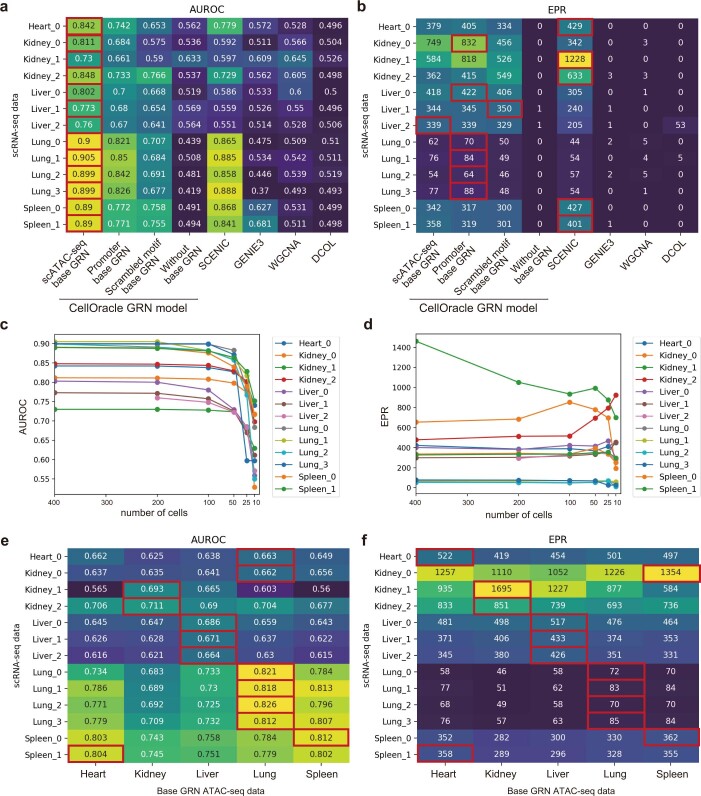
- CellOracle GRN inference benchmarked against 1,298 ChIP–seq datasets for 80 regulatory factors across 5 tissues achieved AUROC 0.66–0.85 with a promoter base GRN and 0.73–0.91 with an scATAC-seq base GRN.
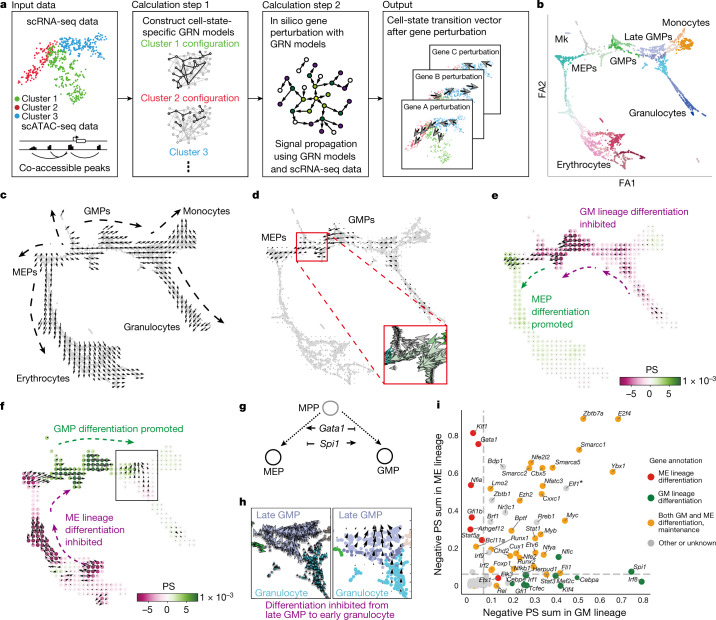
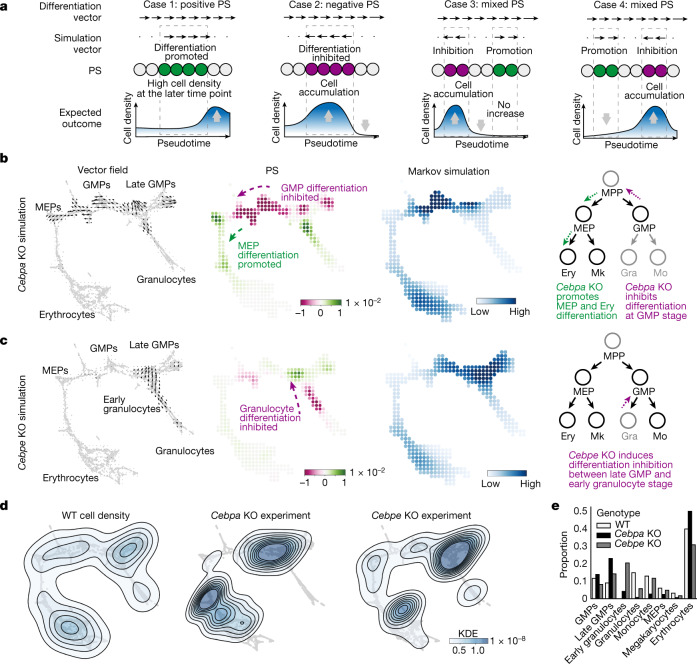
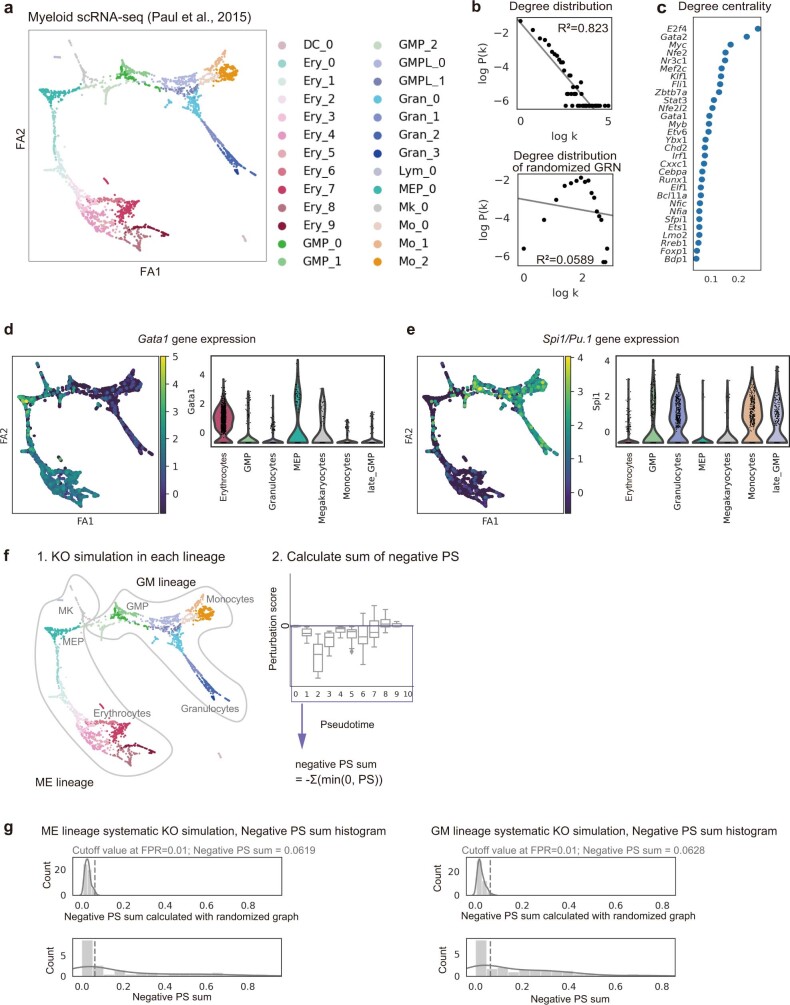
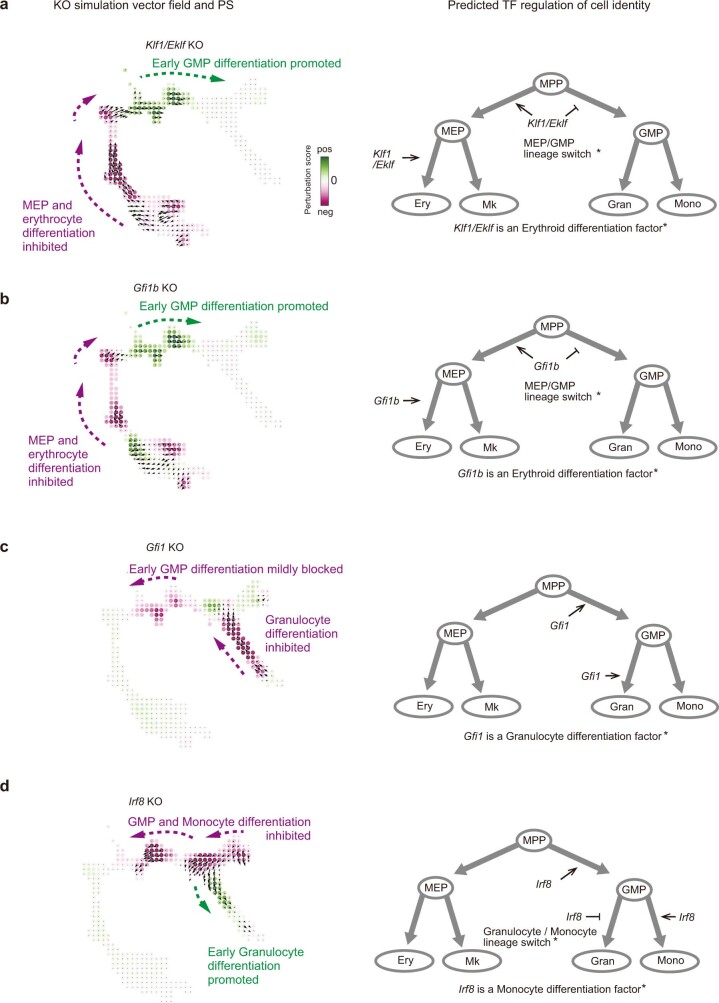
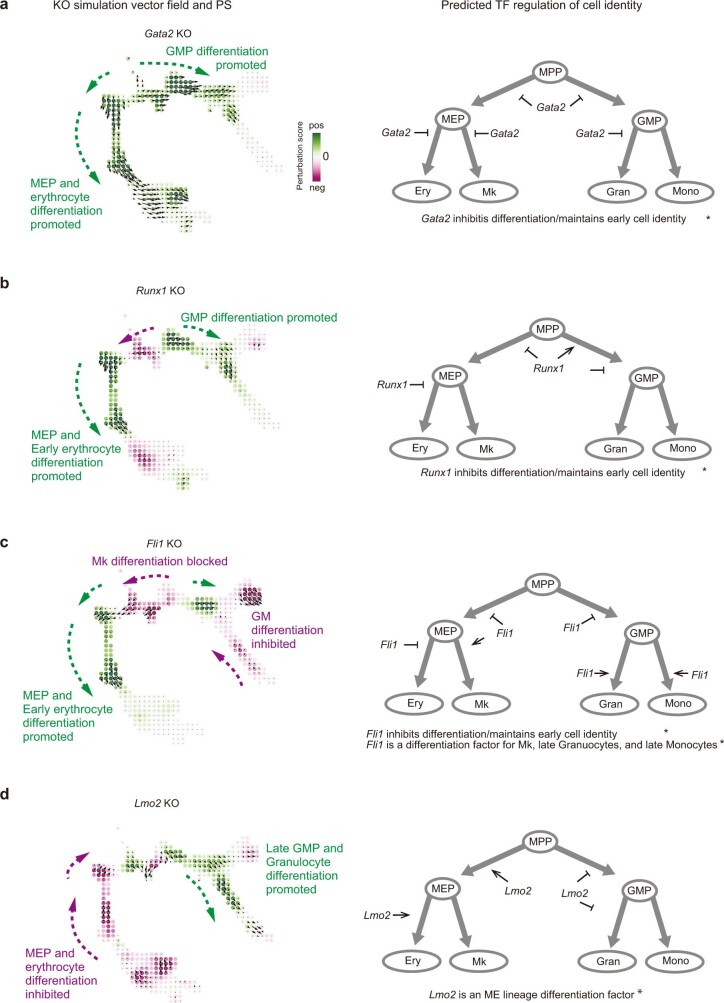
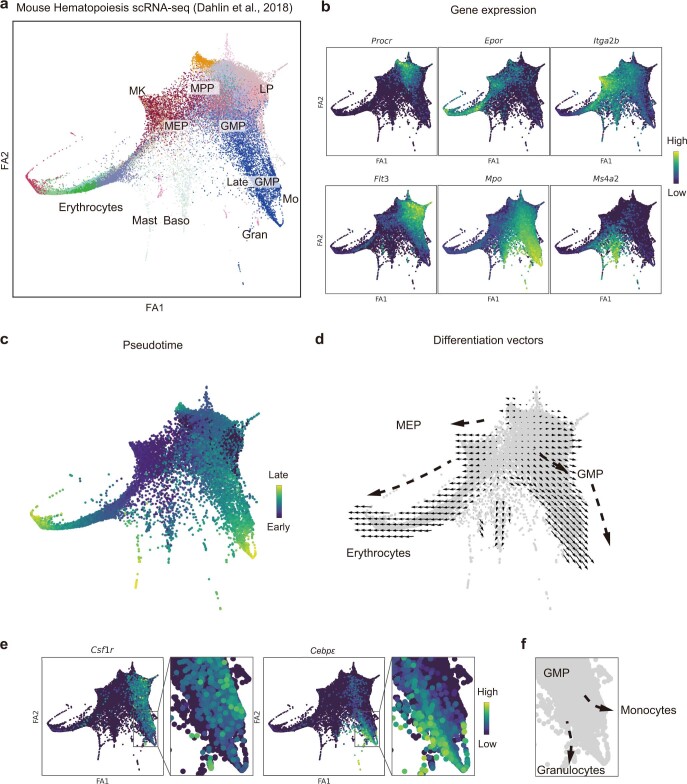
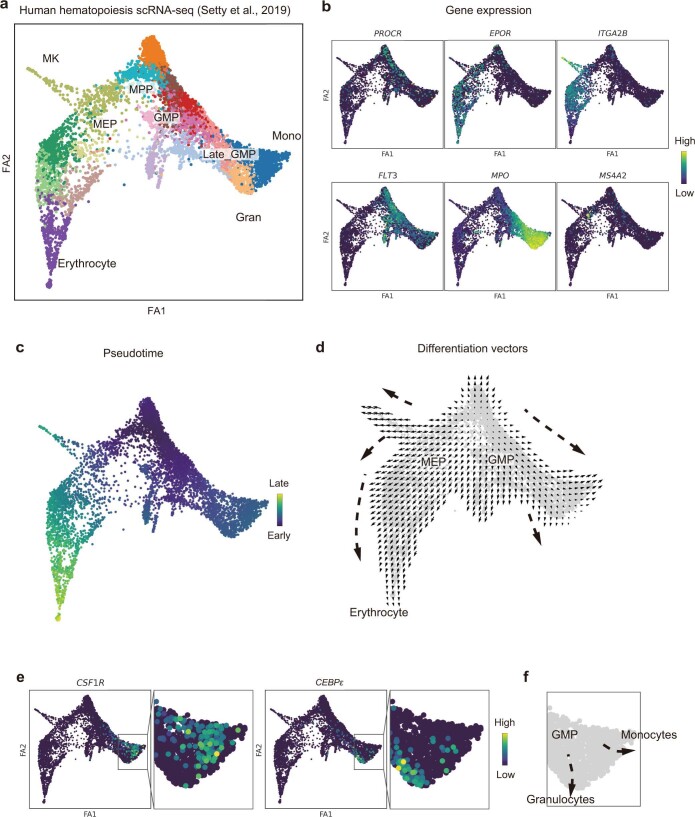
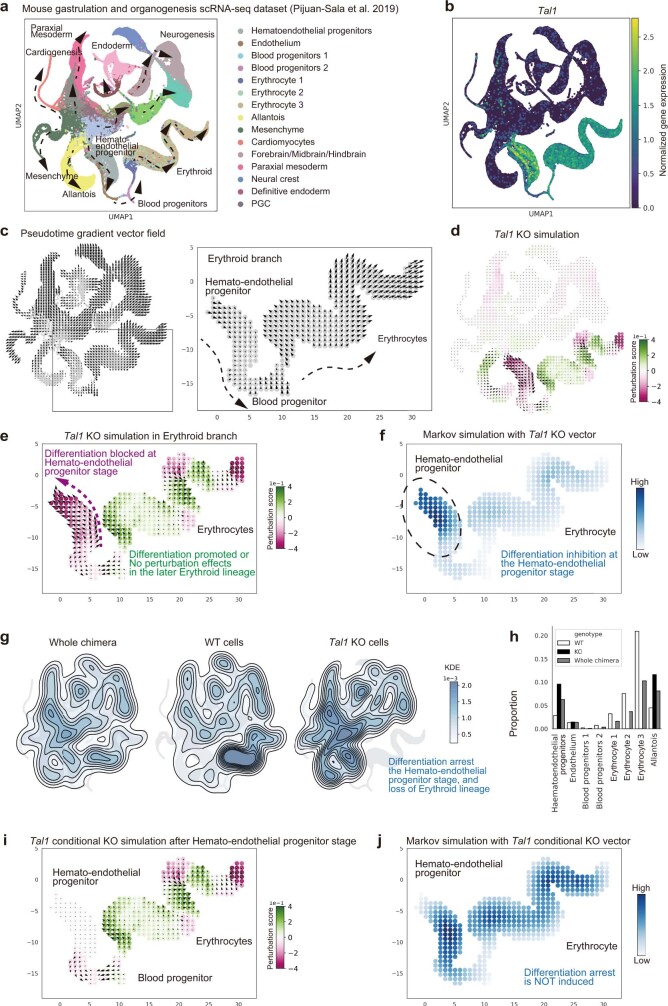
- In a 2,730-cell mouse myeloid progenitor atlas, CellOracle reproduced known Spi1/Gata1 lineage-switching phenotypes; among the top 30 TFs ranked by systematic KO simulation, 85% were reported regulators of myeloid differentiation.
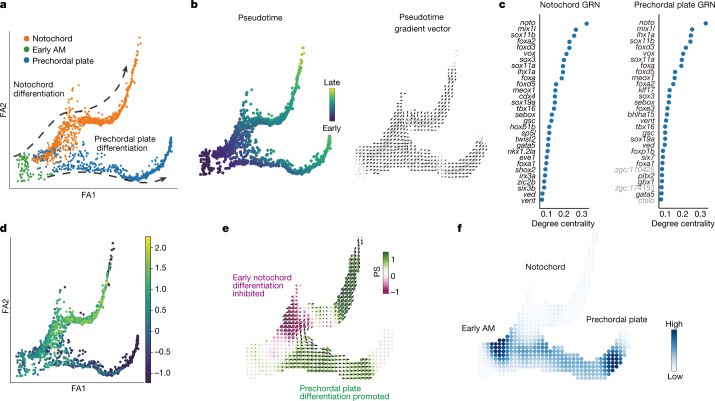
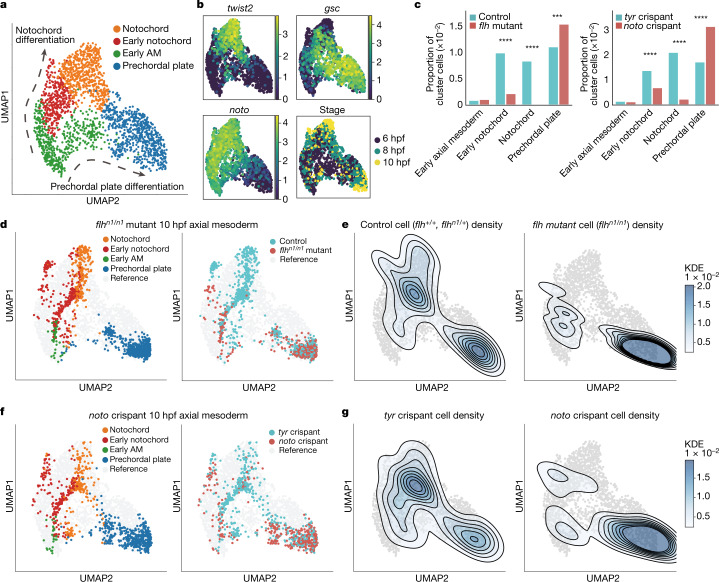
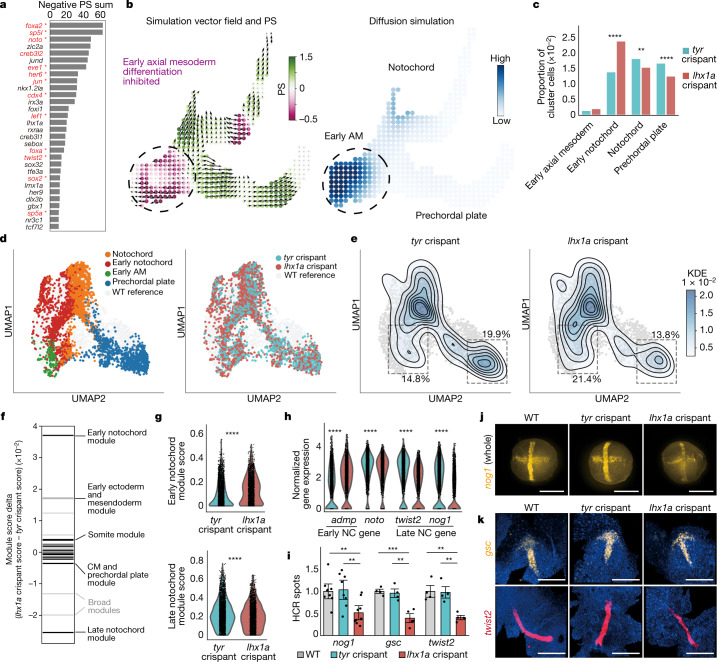
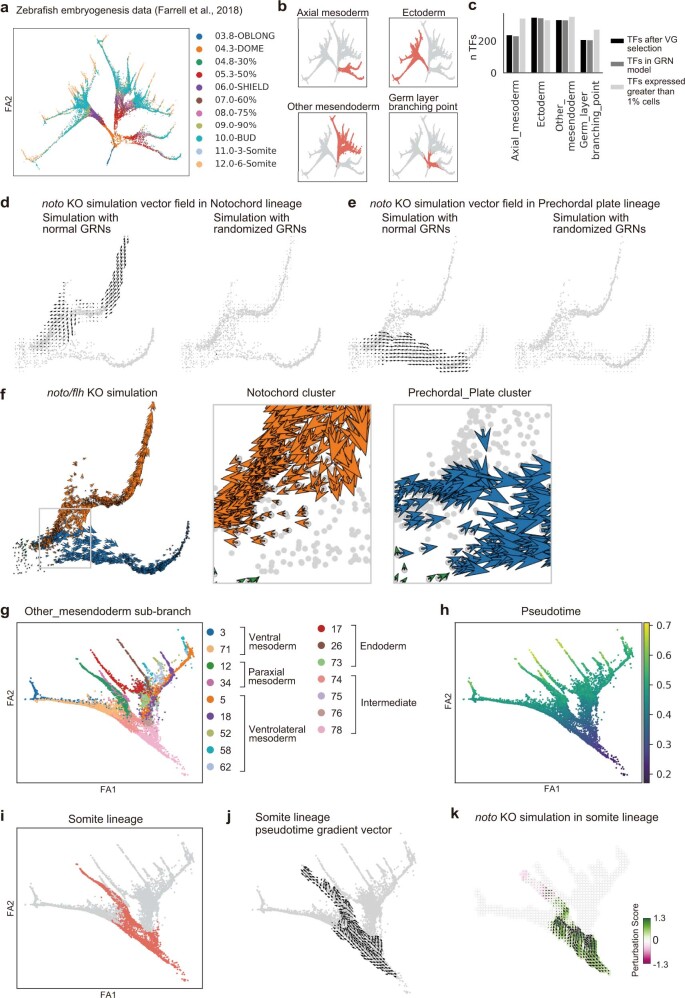
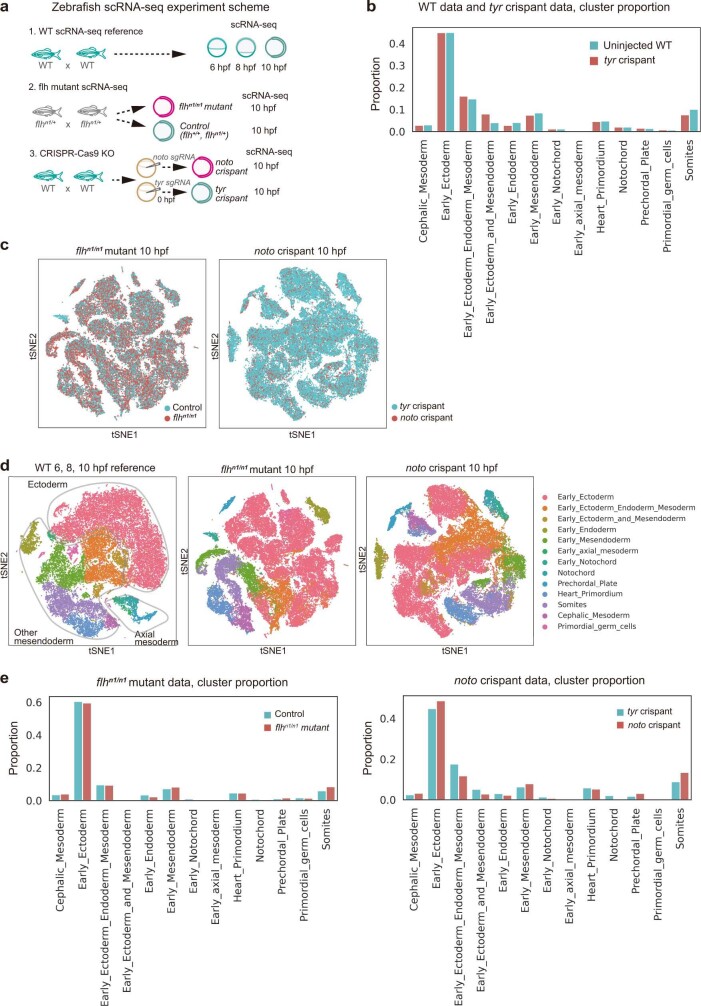
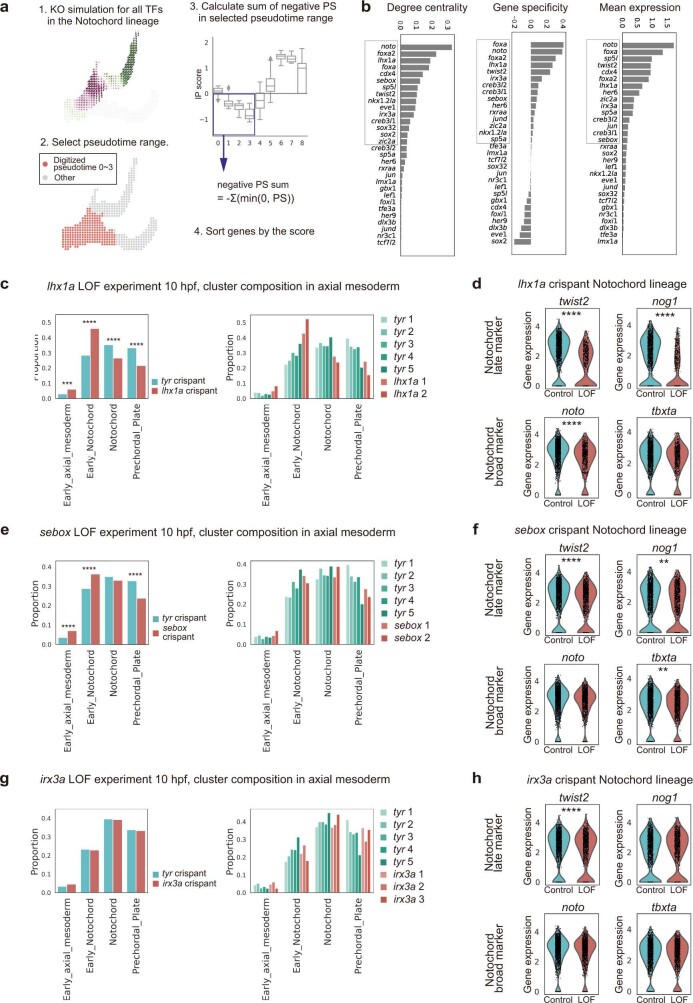
- In zebrafish, systematic KO simulation of 232 active TFs ranked noto top by degree centrality in notochord; noto LOF simulation predicted prechordal plate expansion, validated in flhn1/n1 mutants (notochord −98%, P = 5.55 × 10−52; prechordal plate +38.6%, P = 1.07 × 10⁻⁴) and noto crispants.
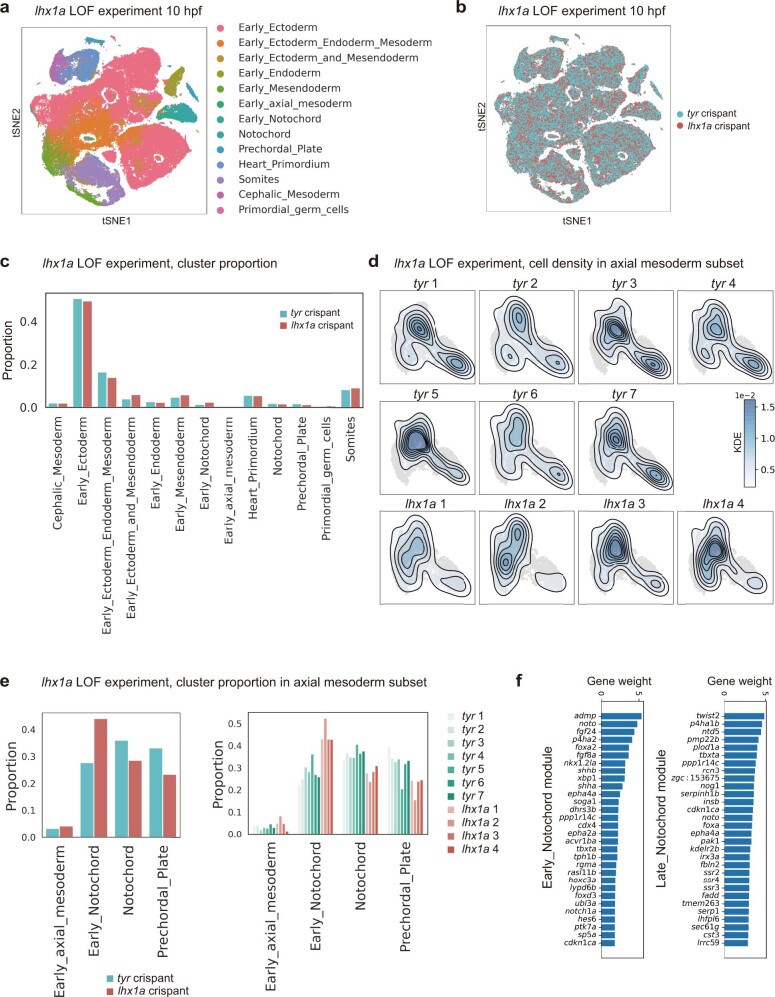
- lhx1a LOF simulation predicted inhibited early axial mesoderm differentiation; lhx1a crispants showed early notochord expansion (+70.2%, P = 1.34 × 10⁻³⁵) and depletion of later notochord (−15.3%, P = 3.83 × 10⁻³) and prechordal plate (−24.7%, P = 1.28 × 10⁻⁷).
Methods
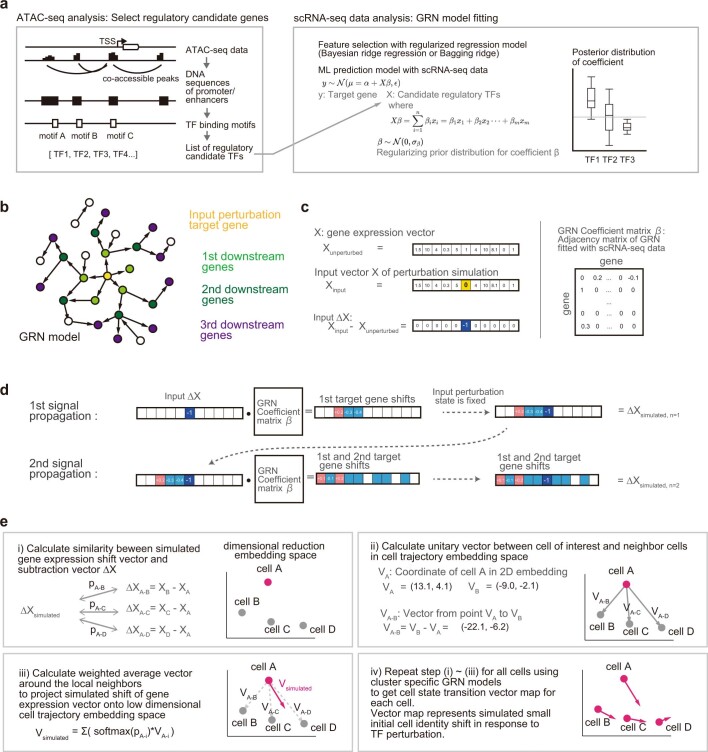
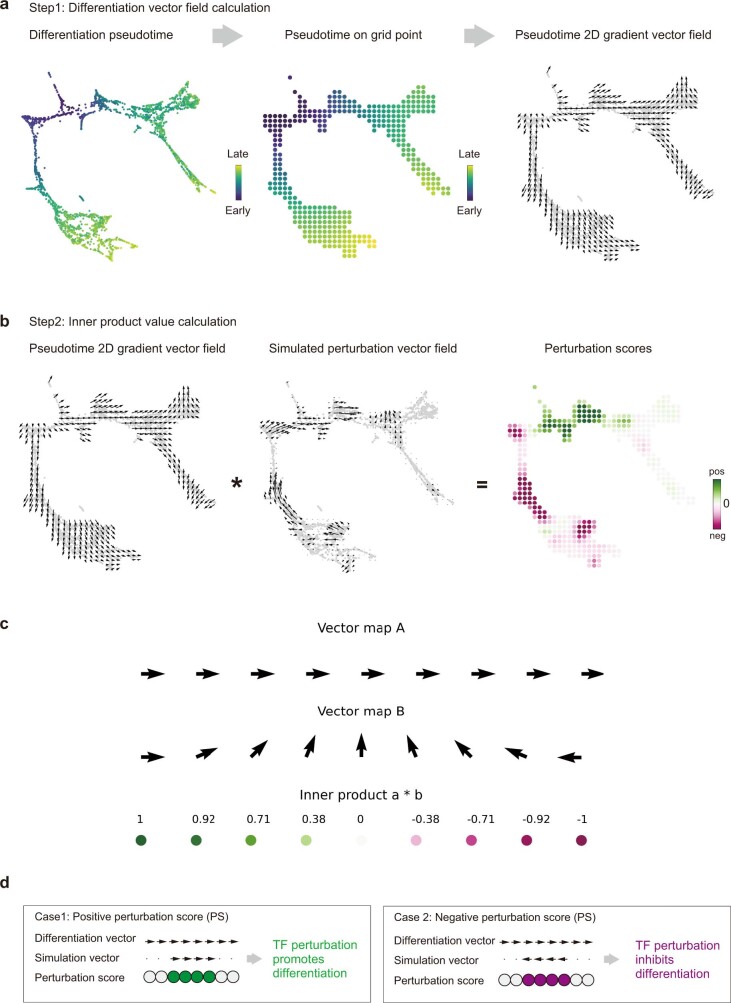
- CellOracle builds cluster-wise regularized linear GRN models using scRNA-seq plus scATAC-seq or promoter databases, propagates TF perturbation signals through the network, estimates transition probabilities, and projects simulated cell-identity shifts as 2D vectors; perturbation scores compare simulation vectors with pseudotime differentiation vectors.
- Validation used mouse and human haematopoiesis datasets, a 38,731-cell zebrafish embryogenesis atlas, a 38,606-cell wild-type zebrafish reference atlas, flhn1/n1 mutants, and CRISPR–Cas9 F0 crispants; experimental readouts included scRNA-seq, NMF, HCR, qRT-PCR and whole-mount in situ hybridization.
- Benchmarking compared CellOracle with WGCNA, DCOL, GENIE3 and SCENIC using ground-truth GRNs from ChIP–seq data; simulations also used randomized GRNs, no signal propagation, varying signal-propagation rounds, and different dimensionality-reduction methods.
Limitations
- Stated: CellOracle can only analyse cell states present in the input scRNA-seq data, and simulation is limited by input data availability and quality, such as unknown TF-binding motifs or sparse TF expression; the authors note foxa3 was filtered out owing to low expression.
- Stated: experimental validation is essential where possible; the authors stress that predictions should be validated experimentally.
- Evident: the simulation output is deliberately limited to a 2D vector rather than absolute expression changes; the negative perturbation score may oversimplify TF roles (e.g. Elf1), and CellOracle did not detect a reported erythrocyte progenitor depletion after Spi1 KO, probably owing to proliferation changes not predicted by the method.
Model-written summary. Check it against the paper before relying on it.
Integrity signals
Registry
Cites
Statistics
Figures
Verification
Claims the paper makes
14 Valid · 2 Not valid · 54 Not checked · 208 Own results and interpretations
The cited sources support only part of this claim — read each source’s verdict below.
In the paper
“To benchmark our GRN inference method, we generated a comprehensive transcriptional ground-truth GRN using 1,298 chromatin immunoprecipitation followed by sequencing (ChIP–seq) datasets for 80 regulatory factors across 5 different tissues14.”
§ Dissecting cell identity via network inference and in silico gene perturbation > GRN inference and benchmarking with CellOracle
What the sources say
- Partly supportedcites [14] Oki S ChIP-Atlas: a data-mining suite powered by full integration of public ChIP-seq data EMBO Rep. 2018 19 e46255 10.15252/embr.201846255 30413482 PMC6280645 sourceExperimental — accuracy not yet measured
Our copy of ChIP‑Atlas confirms it is a fully integrated public ChIP‑seq/DNase‑seq resource (76,217 SRXs across six organisms, Abstract; Overview of the data set and design of analyses, Table 1) with curated antigen and cell‑type metadata and a TR–gene ('Target Genes') integration that 'provides insight into gene regulatory networks' — so it can be the dataset source behind a ChIP‑seq‑derived regulatory network. However, no passage states the specific quantities the claim attributes here (1,298 datasets, 80 regulatory factors, 5 tissues), nor that the resource constitutes or was used to generate a 'ground‑truth' GRN; on the contrary, the Results section 'TR–gene and TR–gene interactions' cautions that 'the genes listed by "Target Genes" are not necessarily functional targets of a given TR and that actual regulation ... would need to be confirmed experimentally'. Searched: 1,298/80 factors/five tissues, ground-truth GRN benchmark, gold-standard TF–target set. (LLM, conf=0.65)
plain- Asserted: passes — The authors put it forward as true.
- Checkable: passes — It can be checked against evidence.
- Load-bearing: passes — The paper’s conclusions depend on it.
- Based: passes — The paper gives a reason why it holds.
- Partly supported
The cited sources support only part of this claim — read each source’s verdict below.
In the paper
“In this respect, gene-regulatory network (GRN) modelling approaches are promising as they reconstruct systematic gene–gene associations from unperturbed single-cell omics data6–11.”
§ Dissecting cell identity via network inference and in silico gene perturbation > Main
What the sources say
- Supportedcites [6] Fiers MWEJ Mapping gene regulatory networks from single-cell omics data Brief. Funct. Genomics 2018 17 246 254 10.1093/bfgp/elx046 29342231 PMC6063279 source
The “GRN inference from scRNA-seq data” section describes reconstructing networks from pairwise associations and co-expression in single-cell data. The Introduction discusses perturbation assays separately as a way to validate predictions, consistent with the claim that these associations can be inferred from unperturbed data. (LLM, conf=0.90)
- Supportedcites [7] Aibar S SCENIC: single-cell regulatory network inference and clustering Nat. Methods 2017 14 1083 1086 10.1038/nmeth.4463 28991892 PMC5937676 source
The Abstract describes SCENIC as reconstructing gene regulatory networks from single-cell RNA-seq data and identifies co-expressed genes as its first step. The Online Methods (GENIE3; page unavailable) specify an expression matrix as the input for network inference, consistent with reconstructing gene associations without requiring perturbation data. The paper addresses single-cell transcriptomics specifically, rather than every type of single-cell omics data. (LLM, conf=0.86)
- Supportedcites [8] Iacono G Massoni-Badosa R Heyn H Single-cell transcriptomics unveils gene regulatory network plasticity Genome Biol. 2019 20 110 10.1186/s13059-019-1713-4 31159854 PMC6547541 source
The Results section describes inferring regulatory networks from single-cell expression data by identifying gene-to-gene correlations and retaining significant correlations as network edges. The Background also states that the approach was applied to healthy tissue datasets, supporting the claim that it can reconstruct associations from unperturbed single-cell data. (LLM, conf=0.91)
- Supportedcites [9] Fleck, J. S. et al. Inferring and perturbing cell fate regulomes in human brain organoids. Nature10.1038/s41586-022-05279-8 (2022). PMC10499607 36198796 source
The ‘Regulatory network inference with Pando’ section describes using multimodal single-cell measurements and regression to infer relationships among transcription-factor expression, binding-site accessibility and target-gene expression. The Methods section (‘GRN inference with Pando’; page unavailable) says the resulting model coefficients define interactions in a regulatory graph. This supports the claim that GRN modelling reconstructs gene–gene regulatory associations from single-cell omics data without requiring perturbations for the inference step. (LLM, conf=0.90)
- Partly supportedcites [10] Kartha VK Functional inference of gene regulation using single-cell multi-omics Cell Genom. 2022 2 100166 10.1016/j.xgen.2022.100166 36204155 PMC9534481 sourceExperimental — accuracy not yet measured
The Discussion (page unavailable) says FigR constructs gene-regulatory networks from correlations across single-cell chromatin and RNA profiles, supporting the claim about reconstructing gene associations. But the paper describes an atlas of immunological stimulation and analyses across stimulus conditions, so it does not establish the claim's qualification that the data are unperturbed. (LLM, conf=0.82)
- Supportedcites [11] González-Blas, C. B. et al. SCENIC+: single-cell multiomic inference of enhancers and gene regulatory networks. Preprint at bioRxiv10.1101/2022.08.19.504505 (2022). source
The SCENIC+ methods (p. 2) describe inferring TF-to-gene relationships from single-cell gene-expression and chromatin-accessibility data using correlation and regression, then combining them into gene regulatory networks. The Discussion (p. 13) also describes GRN methods that search expression data for putative TF–target-gene relationships. This supports the claim as a broad description of network modelling from observational single-cell data. (LLM, conf=0.91)
plainstates a cause- Asserted: passes — The authors put it forward as true.
- Checkable: passes — It can be checked against evidence.
- Load-bearing: passes — The paper’s conclusions depend on it.
- Based: passes — The paper gives a reason why it holds.
- Supported
Every source the paper cites for this claim was checked and supports it.
In the paper
“To support GRN inference without requiring sample-specific scATAC-seq datasets, we have assembled a base GRN from a mouse scATAC-seq atlas13.”
§ Dissecting cell identity via network inference and in silico gene perturbation > GRN inference and benchmarking with CellOracle
What the sources say
- Supportedcites [13] Cusanovich DA A single-cell atlas of in vivo mammalian chromatin accessibility Cell 2018 174 1309 1324 10.1016/j.cell.2018.06.052 30078704 PMC6158300 source
The Results describe profiling chromatin accessibility in single nuclei from 13 mouse tissues using sci-ATAC-seq, identifying the cited work as a mouse single-cell ATAC-seq atlas. The sentence attributes the assembly of the base GRN and its use without sample-specific datasets to the citing authors, not to this source. (LLM, conf=0.92)
plainstates a cause- Asserted: passes — The authors put it forward as true.
- Checkable: passes — It can be checked against evidence.
- Load-bearing: passes — The paper’s conclusions depend on it.
- Based: passes — The paper gives a reason why it holds.
- Supported
Every source the paper cites for this claim was checked and supports it.
In the paper
“Because of this second constraint, we cannot use pre-existing GRN inference algorithms, such as GENIE3 and GRNboost (refs. 7,51).”
§ Dissecting cell identity via network inference and in silico gene perturbation > Methods > Context-dependent GRN inference using scRNA-seq data
What the sources say
- Supportedcites [7] Aibar S SCENIC: single-cell regulatory network inference and clustering Nat. Methods 2017 14 1083 1086 10.1038/nmeth.4463 28991892 PMC5937676 source
The Online Methods (GRNboost) identify GRNboost and GENIE3 as gene-regulatory-network inference methods and explain that they use boosted regression trees and random forests, respectively, rather than linear regression. The citing authors’ inability to use them under their constraint is their own conclusion; the citation supports the identification of the algorithms and their methods. (LLM, conf=0.92)
- Supportedcites [51] Huynh-Thu VA Irrthum A Wehenkel L Geurts P Inferring regulatory networks from expression data using tree-based methods PLoS ONE 2010 5 e12776 10.1371/journal.pone.0012776 20927193 PMC2946910 source
The Introduction identifies GENIE3 as a GRN inference method using ensembles of regression trees and says it can model non-linear relationships. This supports citing the paper as an example of an algorithm unsuitable for the citing authors’ linear-regression constraint; that constraint is the citing authors’ own premise. The paper is not being cited here for GRNboost. (LLM, conf=0.91)
plainstates a cause- Asserted: passes — The authors put it forward as true.
- Checkable: passes — It can be checked against evidence.
- Load-bearing: passes — The paper’s conclusions depend on it.
- Based: passes — The paper gives a reason why it holds.
- Supported
The sources with a verdict support this claim; the rest weren’t checked yet, have no full text we could read, or their verdicts aren’t rated yet.
In the paper
“Cebpa promotes GM lineage differentiation while inhibiting ME lineage differentiation16,72, and promoting granulocyte differentiation in particular15.”
§ Dissecting cell identity via network inference and in silico gene perturbation > Methods > Comparison between CellOracle haematopoiesis KO simulation results and previous reports
What the sources say
- Not checked yetcites [16] Paul F Transcriptional heterogeneity and lineage commitment in myeloid progenitors Cell 2015 163 1663 1677 10.1016/j.cell.2015.11.013 26627738 source
- Supportedcites [72] Hyung CS C/EBPα determines hematopoietic cell fate in multipotential progenitor cells by inhibiting erythroid differentiation and inducing myeloid differentiation Blood 2006 107 4308 10.1182/blood-2005-06-2216 16469877 PMC1895788 source
In the section on lineage switching of EML cells, the paper reports that C/EBPα overexpression promoted more rapid and complete granulocyte differentiation than the comparison treatment. This directly supports the attributed claim. (LLM, conf=0.94)
- Not checked yetcites [15] Orkin SH Zon LI Hematopoiesis: an evolving paradigm for stem cell biology Cell 2008 132 631 644 10.1016/j.cell.2008.01.025 18295580 PMC2628169 source
plainstates a cause- Asserted: passes — The authors put it forward as true.
- Checkable: passes — It can be checked against evidence.
- Load-bearing: passes — The paper’s conclusions depend on it.
- Based: passes — The paper gives a reason why it holds.
147 more claims · 3 with their cited sources checked
Create a free account to see all 278 claims and to verify the 81 references still open.
- It may state two separate claims as one. 87
- Probably not a substantial claim. 53
Claims other papers make about this one
Each is checked against this paper’s own text: does it say what the citing paper says it does?
The source backs part of the claim, not all of it — or backs it for a different population, condition or comparison.
In the citing paper
“CellOracle surpassed other GRN-inference algorithms such as PIDC, GENIE3, and GRNBoost2 in accurately identifying biological ground truth [44]”
From A mini-review on perturbation modelling across single-cell omic modalities (2024) · cites this paper as [44]
Experimental — accuracy not yet measuredThe cited source says what the claim attributes to it.
In the citing paper
“By leveraging gene-regulatory networks derived from these data types, CellOracle performs in silico transcription factors perturbations, effectively simulating cell state changes in response to TF perturbations.”
From A mini-review on perturbation modelling across single-cell omic modalities (2024) · cites this paper as [44]
In the citing paper
“For instance, CellOracle can simulate cell identity transitions following digital (in silico) TF perturbations such as knockout or overexpression.”
From A mini-review on perturbation modelling across single-cell omic modalities (2024) · cites this paper as [44]
In the citing paper
“whereas in silico ChIP–seq predicts transcription factor binding at individual cis-regulatory elements179.”
From The technological landscape and applications of single-cell multi-omics (2023) · cites this paper as [179]
In the citing paper
“Similarly, CellOracle179 leverages multi-omics data, either collected in parallel or integrated computationally, to learn gene regulatory networks and infer the results of in silico perturbations, whereas in silico ChIP–seq predicts transcription factor binding at individual cis-regulatory elements179.”
From The technological landscape and applications of single-cell multi-omics (2023) · cites this paper as [179]
Self-check
Percentages, sums and reported differences re-computed from the paper’s own numbers.
Each contradiction between two passages listed here was confirmed by an independent check.
Rated minor: it would not touch a result — a value no result rests on, a p-value that stays on the same side of the significance level, or a conflict that is clerical, resolved elsewhere in the paper, or outside its own findings.
In the paper
§ Dissecting cell identity via network inference and in silico gene perturbation > Methods > Simulation of cell identity following perturbation of regulatory genes
“This process consists of four steps: (i) data preprocessing; (ii) signal propagation within the GRN; (iii) estimation of transition probabilities; and (iv) analysis of simulated transition in cell identity.”
§ Dissecting cell identity via network inference and in silico gene perturbation > Methods > Simulation of cell identity following perturbation of regulatory genes
“(v)Calculation of vector field”
Rated minor: it would not touch a result — a value no result rests on, a p-value that stays on the same side of the significance level, or a conflict that is clerical, resolved elsewhere in the paper, or outside its own findings.
In the paper
§ Dissecting cell identity via network inference and in silico gene perturbation > Methods > Preparation of input data for GRN inference
“Cells were subsampled for each tissue on the basis of the original tissue-type annotation: spleen, lung, muscle, liver and kidney.”
§ Dissecting cell identity via network inference and in silico gene perturbation > Methods > Ground-truth data preparation for GRN benchmarking
“Here, we selected tissues commonly available in the Tabula Muris scRNA-seq dataset, mouse sci-ATAC-seq atlas data and ground-truth datasets: heart, kidney, liver, lung and spleen.”
Rated minor: it would not touch a result — a value no result rests on, a p-value that stays on the same side of the significance level, or a conflict that is clerical, resolved elsewhere in the paper, or outside its own findings.
In the paper
§ Dissecting cell identity via network inference and in silico gene perturbation > Systematic TF KO simulations in zebrafish
“c, Degree centrality scores were used to rank the top 30 TFs in notochord (left) and prechordal plate (right).”
§ Dissecting cell identity via network inference and in silico gene perturbation > Systematic TF KO simulations in zebrafish
“Black text denotes TFs. Grey text denotes non-TFs.”
Citations
Cites
Comprehensive Integration of Single-Cell Data
Stuart, T., Butler, A., Hoffman, P., Hafemeister, C., Papalexi, E., Mauck, W. M., Hao, Y., Stoeckius, M., Smibert, P., & Satija, R. (2019) · Cell · doi:10.1016/j.cell.2019.05.031 · Cited by 15,453
SCANPY: large-scale single-cell gene expression data analysis
Wolf, F. A., Angerer, P., & Theis, F. J. (2018) · Genome Biology · doi:10.1186/s13059-017-1382-0 · Cited by 8,881
Scenic: single-cell regulatory network inference and clustering.
Aibar, S., González-Blas, C. B., Moerman, T., Huynh-Thu, V. A., Imrichova, H., Hulselmans, G., Rambow, F., Marine, J.-C., Geurts, P., Aerts, J., et al. (2017) · Nature Methods · doi:10.1038/nmeth.4463 · Cited by 6,520
A General Framework for Weighted Gene Co-Expression Network Analysis
Zhang, B., & Horvath, S. (2005) · Statistical Applications in Genetics and Molecular Biology · doi:10.2202/1544-6115.1128 · Cited by 5,684
Hafemeister, C., & Satija, R. (2019) · Genome Biology · doi:10.1186/s13059-019-1874-1 · Cited by 4,479
La Manno, G., Soldatov, R., Zeisel, A., Braun, E., Hochgerner, H., Petukhov, V., Lidschreiber, K., Kastriti, M. E., Lönnerberg, P., Furlan, A., et al. (2018) · Nature · doi:10.1038/s41586-018-0414-6 · Cited by 4,118
Jacomy, M., Venturini, T., Heymann, S., & Bastian, M. (2014) · PLoS ONE · doi:10.1371/journal.pone.0098679 · Cited by 2,909
Single-cell transcriptomics of 20 mouse organs creates a Tabula Muris
The Tabula Muris Consortium, coordination, O., coordination, L., processing, O. C. A., sequencing, L. P. A., analysis, C. D., annotation, C. T., Writing group, Supplemental text writing group, & Principal investigators (2018) · Nature · doi:10.1038/s41586-018-0590-4 · Cited by 2,842
High-resolution in situ hybridization to whole-mount zebrafish embryos
Thisse, C., & Thisse, B. (2008) · Nature Protocols · doi:10.1038/nprot.2007.514 · Cited by 2,578
Hematopoiesis: An Evolving Paradigm for Stem Cell Biology
Orkin, S. H., & Zon, L. I. (2008) · Cell · doi:10.1016/j.cell.2008.01.025 · Cited by 2,570
Cited by
Items 301–400 of 721
A Commentary on Multi-omics Data Integration in Systems Vaccinology
Shannon, C. P., Lee, A. H., Tebbutt, S. J., & Singh, A. (2024) · Journal of Molecular Biology · doi:10.1016/j.jmb.2024.168522 · Cited by 4
Deciphering gene regulatory programs in mouse embryonic skin through single-cell multiomics analysis
Deng, Q., Cai, P., Luo, Y., Zhang, Z., Ma, W., Huang, Z., Chen, X., Hao, S., Ma, W., Xu, J., et al. (2025) · Genome biology · doi:10.1186/s13059-025-03652-0 · Cited by 4
“18.0) [67].”
InfluentialSingle-Cell Genomics: Catalyst for Cell Fate Engineering
Li, B., & Hon, G. C. (2021) · Frontiers in Bioengineering and Biotechnology · doi:10.3389/fbioe.2021.748942 · Cited by 5
“Second, leveraging both scRNA-seq and single-cell ATAC-seq data, the same group developed CellOracle, a computational method to reconstruct GRNs which enabled them to identify additional factors at play in endoderm progenitor reprogramming (Kamimoto et al., 2020).”
MethodGenome-Wide Screening Approaches for Biochemical Reactions Independent of Cell Growth
Noguchi, Y., Matsui, R., Suh, J., Dou, Y., & Suzuki, J. (2024) · Annual Review of Genomics and Human Genetics · doi:10.1146/annurev-genom-121222-115958 · Cited by 4
Jackson, C. A., Beheler-Amass, M., Tjärnberg, A., Suresh, I., Hickey, A. S.-M., Bonneau, R., & Gresham, D. (2023) · bioRxiv (Cold Spring Harbor Laboratory) · doi:10.1101/2023.09.21.558277 · Cited by 5
User-friendly exploration of epigenomic data in single cells using sinceiPreprint
Bhardwaj, V., & Mourragui, S. M. C. (2024) · bioRxiv (Cold Spring Harbor Laboratory) · doi:10.1101/2024.07.27.605424 · Cited by 4
“More sophisticated tasks, such as batch effect aware data integration, or gene regulatory network inference would require a deeper dive into the data and are supported by a range of existing toolkits in R or Python 2,19,20 .”
MethodMagnusson, J. P., Roohani, Y., Stauber, D., Situ, Y., teba, P. A. R. D. C., Sandberg, R., Leskovec, J., & Qi, L. S. (2024) · bioRxiv (Cold Spring Harbor Laboratory) · doi:10.1101/2024.11.04.621938 · Cited by 6
Pease, N. A., Fan, J., Keshari, S., Stratton, J., Gierlack, S., Sachan, A., Rarani, Z. H., Swaminathan, T., McGinnis, C. S., Zhang, W., et al. (2025) · bioRxiv (Cold Spring Harbor Laboratory) · doi:10.1101/2025.04.23.649973 · Cited by 4
Rathore, G. S., Ankjær, M., Rifes, P., Hänninen, E., Sanchís-Calleja, F., Rusimbi, C., Kajtez, J., Nygaard, A. H., Piilgaard, L., Dubonyte, U., et al. (2025) · bioRxiv (Cold Spring Harbor Laboratory) · doi:10.1101/2025.05.23.655442 · Cited by 5
“The in-silico perturbation of transcription factors was simulated using python library CellOracle (Kamimoto et al. 2023).”
InfluentialNguyen, V., Mao, I., He, S., Castellanos, I. A. A., Azuero, M., Hochman, M. L., Yin, R. H., Pernomian, L., Chen, E. H., Friedman, H. I., et al. (2025) · bioRxiv (Cold Spring Harbor Laboratory) · doi:10.1101/2025.09.02.673874 · Cited by 4
Characterizing spatial functional microniches with SpaceTravLRPreprint
Ramjattun, K., Wang, A., Lee, H. J., Giri, S., Chen, Y., MacDonald, W. A., Lord, N. D., Poholek, A. C., Lee, Y., & Das, J. (2025) · bioRxiv (Cold Spring Harbor Laboratory) · doi:10.1101/2025.11.13.688264 · Cited by 4
Liu, D., Song, B., Li, Z., Zhang, S., Fabiha, T., Zhao, J., Inoki, A., Piccand, J., Soh, C.-L., Dixon, G., et al. (2025) · bioRxiv (Cold Spring Harbor Laboratory) · doi:10.64898/2025.12.23.696311 · Cited by 4
Aponte-Santiago, N. A., Su, Y., & Wagner, D. E. (2026) · bioRxiv (Cold Spring Harbor Laboratory) · doi:10.64898/2026.03.23.713599 · Cited by 8
Predictive control of human pancreatic cell fate using a digital model of in vitro differentiationPreprint
Sanchez-Castro, E. E., Ishahak, M., Le, T., Maestas, M. M., Hernandez-Rincon, D. C., Mukherjee, N., Bradley, K., Lu, J., Gale, S. E., & Millman, J. R. (2026) · bioRxiv (Cold Spring Harbor Laboratory) · doi:10.64898/2026.04.27.721124 · Cited by 5
“We then inferred cell state-specific gene regulatory networks (GRNs) using an approach that incorporates both gene expression and chromatin accessibility data at regulatory genomic regions 58 .”
Genetic variants shape single-cell chromatin accessibility and disease risk
Xue, A., Fan, J., Dong, O. A., Huang, H. L., Chen, L., Allen, P. C., Spenceley, E., Sagi-Zsigmond, E., Bowen, B., Henry, A., et al. (2026) · Nature · doi:10.1038/s41586-026-11173-4 · Cited by 3
Computing hematopoiesis plasticity in response to genetic mutations and environmental stimulations
Wen, Y., He, H., Ma, Y., Bao, D., Cai, L. C., Wang, H., Li, Y., Zhao, B., & Cai, Z. (2024) · Life Science Alliance · doi:10.26508/lsa.202402971 · Cited by 3
da Silva, J. E. H., Bernardino, H. S., de Oliveira, I. L., & Camata, J. J. (2025) · Biosystems · doi:10.1016/j.biosystems.2025.105464 · Cited by 6
Engineering Cell Fate with Adaptive Feedback Control
Bisso, F. B., Giordano, G., & Samaniego, C. C. (2025) · ACS Synthetic Biology · doi:10.1021/acssynbio.5c00299 · Cited by 5
“This approach led to the development of pancreatic islet replacement therapies for restoring normal glycemic control in diabetic patients, with currently an FDA-approved treatment for type 1 diabetes, 5 and a promising case report for diabetes type 2; 6 as well as stem-cell-derived dopaminergic…”
Wang, X., Mei, Y., Wang, X., Wu, H., Wang, R., Zhang, P., Zhang, G., Li, J., Jiang, M., Fang, X., et al. (2025) · Clinical and Translational Medicine · doi:10.1002/ctm2.70461 · Cited by 3
Alleyne, D., Kim, M.-S., Wu, J., Kwon, Y., Kim, Y.-R., Kabir, A., Ishahak, M., Millman, J., Fan, C.-X., Lee, H., et al. (2025) · Cell Reports · doi:10.1016/j.celrep.2025.116733 · Cited by 2
“34 When the Etv2-KO DP GRN was applied to the data, we observed that differentiation (shown as pseudotime) directs mesoderm allocation away from hematoendothelial progenitors and in the direction of cardiac mesoderm or reverts to nascent mesoderm (Figure S3B).”
Yu, Z., Yang, D., Chen, Q., Zhang, Y., Li, Z., Wang, Y., Wang, C., & Zhang, Y. (2026) · Cell Genomics · doi:10.1016/j.xgen.2025.101130 · Cited by 6
“19 However, these motif-centric approaches are limited as accessible motifs account for only a fraction of actual binding events, and many transcription regulators lack well-characterized motifs.”
Lim, Y., Akula, S. K., Myers, A. K., Chen, C., Rafael, K. A., Ibach, M., Trevathan, E., Walsh, C. A., Golden, J. A., & Cho, G. (2026) · Brain · doi:10.1093/brain/awag036 · Cited by 4
“21 Next, gene regulatory network analyses performed using CellOracle 34 demonstrated that major hub genes identified in WT samples, such as Sp9 , Maf , Mef2c and Pbx , are no longer detected as major hubs (e.g. Maf ) or show altered influence within the network (Fig.”
Single-Cell Multi-Omics Reveal Gene Regulatory Mechanisms Underlying Cardiac Embryonic Development
Feng, E., Zheng, X., Zhu, F., Xiang, L., Liu, C., Wang, L., Cao, Y., & Dai, Y. (2026) · Genes · doi:10.3390/genes17040414 · Cited by 3
“Notably, computational frameworks such as CellOracle empower researchers to perform in silico perturbations, simulating the transcriptomic consequences of transcription factor knock-outs or forced over-expression to predict systemic shifts in the cardiac regulatory landscape [98].”
Nuanpirom, J., & Charoensawan, V. (2026) · Briefings in Bioinformatics · doi:10.1093/bib/bbag152 · Cited by 4
“Chromatinaccessibility profiling via scATAC-seq has been widely adopted with scRNA-seq for inferring causal GRNs through both experimental and computational approaches [145, 153, 154].”
Wang, Z., Li, Y., Li, X., Zhang, J., Xu, J., Han, F., Du, J., Yang, T., Chen, M., Guo, Y., et al. (2026) · Arthritis & Rheumatology · doi:10.1002/art.70185 · Cited by 3
Li, J., Song, Z., Wang, G., Chen, Y., Cheng, J., & Zhang, Z. (2026) · Frontiers in Cell and Developmental Biology · doi:10.3389/fcell.2026.1851275 · Cited by 4
“20.0) (Kamimoto et al., 2023) within the WSL (Windows Subsystem for Linux) environment.”
InfluentialMapping and engineering the human cell–cell interactome
Carlo, D. D., Morsut, L., McCain, M. L., Wright, H. J., Abedi, M. H., Yamada‐Hunter, S. A., Zhang, J. Z., Backus, K. M., Chung, E., Wang, Y., et al. (2026) · Nature Biotechnology · doi:10.1038/s41587-026-03177-2 · Cited by 4
“For example, models like scVI 73 , CellOracle 74 and Geneformer 75 can predict transcriptional changes based on genotype, perturbation or developmental stage.”
Prater, K. E., & Lin, K. (2024) · Glia · doi:10.1002/glia.24633 · Cited by 2
“In fact, many authors argue that the regulatory network is a more meaningful biological representation of a cell's identity (Kamimoto et al., 2023).”
Wang, G., Zhang, D., He, Z., Mao, B., Hu, X., Chen, L., Yang, Q., Zhou, Z., Zhang, Y., Linghu, K., et al. (2025) · PLoS Computational Biology · doi:10.1371/journal.pcbi.1012877 · Cited by 3
“20.0) [9] was used to predict functional TFs by simulating knockouts and calculating perturbation scores.”
InfluentialZeng, X., Liu, S., Liu, B., Zhang, W., Xu, K., Toriumi, F., & Nakai, K. (2025) · BMC Bioinformatics · doi:10.1186/s12859-025-06128-x · Cited by 3
Wu, W. E., Wei, Q., Zhou, Z., Ring, H. Z., Islam, M. T., & Xing, L. (2025) · Computers in Biology and Medicine · doi:10.1016/j.compbiomed.2025.110534 · Cited by 3
Multimodal single cell analyses reveal gene networks of planarian stem cell differentiation
Pérez-Posada, A., García-Castro, H., Emili, E., Guixeras-Fontana, A., Vanni, V., Salamanca-Díaz, D. A., Arias-Baldrich, C., Frölich, S., van Heeringen, S. J., Cebrià, F., et al. (2025) · Nature Communications · doi:10.1038/s41467-025-65712-0 · Cited by 6
“Recent single-cell technologies predict TF/target gene interactions across various contexts 31,32 but often lack experimental validation, and it is unclear if these methods can scale beyond individual tissues to whole complex organisms.”
Stucchi, S., Sepulveda-Rincon, L. P., Dion, C., Matassa, G., Valenti, A., Cheroni, C., Vitriolo, A., Prazzoli, F., Young, G. R., Rigoli, M. T., et al. (2025) · Stem Cell Reports · doi:10.1016/j.stemcr.2025.102746 · Cited by 5
GRNRI: Gene Regulatory Network Inference using Unsupervised Graph Neural Network
Abdulhameed, F., Abbas, H. M., & Salama, C. R. (2024) · International Journal of Computing and Digital Systems · doi:10.12785/ijcds/150110 · Cited by 4
Nourisa, J., Passemiers, A., Shakeri, F., Omidi, M., Helmholz, H., Raimondi, D., Moreau, Y., Tomforde, S., Schlüter, H., Luthringer-Feyerabend, B., et al. (2024) · Computational and Structural Biotechnology Journal · doi:10.1016/j.csbj.2024.04.033 · Cited by 3
“We obtained protein functional relationships from the STRING database (version 11.5), which is a comprehensive resource on protein networks, and used them as ground truth to evaluate the inferred models [20,48].”
InfluentialInference and prioritization of tissue-specific regulons in Arabidopsis and Oryza
Dai, H., Fan, Y., Mei, Y., Chen, L., & Gao, J. (2024) · aBIOTECH · doi:10.1007/s42994-024-00176-2 · Cited by 3
Guo, Y., & Xiao, Z. (2024) · Briefings in Bioinformatics · doi:10.1093/bib/bbae542 · Cited by 3
“…extensive time-series single-cell data, many methods have been proposed to consider the challenges in single-cell data analysis and reconstruct the dynamic TRNs at the level of cell types, such as SCENIC [26], CellOracle [27], Monocle3 [28, 29], CSHMM [30], CICT [31], GNNLink [9], Dictys [18], etc.”
MethodAkimov, V. E., Tychinin, D. I., Antonova, O. A., Shaymardanov, A. M., Voronina, M. D., Deinichenko, K. A., Fateev, O. D., Yudin, V. S., Yudin, S. M., Mukhin, V. E., et al. (2024) · Frontiers in Immunology · doi:10.3389/fimmu.2024.1415317 · Cited by 3
“The CellOrcale have been applied to the monocytes according to the description at https:// morris-lab.github.io/CellOracle.documentation/.”
InfluentialA timed epigenetic switch balances T and ILC lineage proportions in the thymus
Pease, N. A., Denecke, K. M., Chen, L., Gerges, P. H., & Kueh, H. Y. (2024) · Development · doi:10.1242/dev.203016 · Cited by 4
Dunkenberger, L., Li, D. Y., Karakikes, I., & Quertermous, T. (2025) · Trends in Cell Biology · doi:10.1016/j.tcb.2025.05.001 · Cited by 4
MCNET: Multi-Omics Integration for Gene Regulatory Network Inference from scRNA-seqPreprint
Tiwari, A., & Trankatwar, S. (2023) · medRxiv · doi:10.1101/2023.05.29.23290691 · Cited by 3
Scaling deep identifiable models enables zero-shot characterization of single-cell biological statesPreprint
Dong, M., Agrawal, K., Fan, R., Sefik, E., Flavell, R. A., & Kluger, Y. (2023) · bioRxiv (Cold Spring Harbor Laboratory) · doi:10.1101/2023.11.11.566161 · Cited by 3
“Integrating epigenomic or prioritizing gene regulatory information may help guide the model for better transfer learning [21, 63, 64].”
Nourisa, J., Passemiers, A., & Tomforde, S. (2024) · bioRxiv (Cold Spring Harbor Laboratory) · doi:10.1101/2024.10.16.618746 · Cited by 3
“A and B of the original paper [1].”
BackgroundMethodLi, C., Chen, S., Chen, Y., Bian, H., Hao, M., Wei, L., & Zhang, X. (2025) · Genome Research · doi:10.1101/gr.279955.124 · Cited by 5
“Here we used CellOracle (Kamimoto et al. 2023) to construct linear GRNs, and it has proved to be more accurate than tree-based ensemble methods, such as SCENIC (Aibar et al. 2017) and GENIE3 (Huynh-Thu et al. 2010).”
Hu, L., Zhang, S., Zhang, X., Luo, Y., Gu, H., Liu, P., Mao, S., Chen, L., Xia, Y., Yang, M., et al. (2025) · bioRxiv (Cold Spring Harbor Laboratory) · doi:10.1101/2025.08.21.671434 · Cited by 4
A multi-omics cell atlas unlocks new frontiers in crop biotechnology
Tian, X., & Xu, J. (2025) · aBIOTECH · doi:10.1007/s42994-025-00246-z · Cited by 3
“Computational perturbation analyses predicted broad impacts on root development if RSR1 activity were altered (Kamimoto et al. 2023).”
Post-translational Tuning of Human Cortical Progenitor Neuronal OutputPreprint
Pigeon, J., Dietl, T., Mrad, M. A., Rizzuti, L., Silva, M., Danda, N., Marie, C., Avalos, C. B., Mokrani, H., Khattabi, L. E., et al. (2025) · bioRxiv (Cold Spring Harbor Laboratory) · doi:10.1101/2025.10.27.684791 · Cited by 3
Li, C., Wei, L., & Zhang, X. (2025) · bioRxiv (Cold Spring Harbor Laboratory) · doi:10.1101/2025.11.13.688367 · Cited by 6
“We compared X-Pert with six representative methods, including linear models 41 (Linear, Linear-164 scGPT), deep learning methods (CellOracle 42 , GEARS 22 ), and large cellular foundation models (scGPT 25 , scFoundation 24 ), and the mean predictor (AveKnown) that have been used as a naive baseline…”
Dynamic Gene Regulatory Network Inference with Interpretable, Biophysically-Motivated Neural ODEsPreprint
Beheler-Amass, M., Jackson, C. A., Gresham, D., & Bonneau, R. (2025) · bioRxiv (Cold Spring Harbor Laboratory) · doi:10.1101/2025.09.19.676870 · Cited by 5
“The goal of transcriptional GRN inference (GRNi) is to determine a network which represents how transcriptional activators and repressors control RNA transcription, to create a systems-level understanding of cellular regulation (6; 7; 8; 9; 10).”
STRAND: Sequence-Conditioned Transport for Single-Cell PerturbationsPreprint
Fu, B., Gabbita, S., Dasoulas, G., Lin, X., Gao, S., Su, X., Ghosh, S., & Žitnik, M. (2026) · arXiv (Cornell University) · doi:10.48550/arxiv.2602.10156 · Cited by 4
“Graph-and relation-aware models, including graphVCI, GEARS, CellOracle, BioLord, and PertAdapt impose structure on the perturbation space using gene-gene or regulatory networks (Wu et al., 2022; Roohani et al., 2023; Kamimoto et al., 2023; Piran et al., 2024; Bai et al., 2025).”
Directional coherence and effect magnitude in single-cell CRISPR perturbation responsesPreprint
Raju, P. C. (2026) · arXiv (Cornell University) · doi:10.48550/arxiv.2604.16642 · Cited by 3
Kumagai, Y. (2024) · PLoS Computational Biology · doi:10.1371/journal.pcbi.1012480 · Cited by 2
Cheng, H., Liang, M., Gao, Y., Zhao, W., & Guo, W.-F. (2025) · Genes · doi:10.3390/genes16030244 · Cited by 2
“Although some contemporary methods consider sample-specific perturbation networks [43,45,102] and dynamic responses to gene perturbations [39], they are limited to molecular-level relationships and cannot depict multiomics dynamics across different developmental stages and cell types in cancer…”
Leveraging transcription factor physical proximity for enhancing gene regulation inference
Huang, X., Hullur, A. R., Jafari, E., Shridhar, K., Zhou, M., Mackie, K., Huang, K., & Wang, Y. (2025) · Bioinformatics · doi:10.1093/bioinformatics/btaf186 · Cited by 2
“…et al. 2022, Gibbs et al. 2022, Jiang et al. 2022, Kartha et al. 2022, Zhang et al. 2022, Bravo Gonz � alez-Blas et al. 2023, Kamal et al. 2023, Kamimoto et al. 2023, Li et al. 2023, Zhang et al. 2023) have been proposed to utilize existing additional context-specific multi-omics data and…”
InfluentialFeng, Z., Chen, X. X., Duren, Z., Xin, J., Hao, M., Yuan, Q., Wang, Y., & Wong, W. H. (2025) · Genome biology · doi:10.1186/s13059-025-03680-w · Cited by 4
“…dynamic modeling or deep learning components with cRegulon’s regulatory architecture into recent large language models such as CellOracle [164], scGPT [165], and Geneformer [166] can enable predictions of cell state transitions or gene expression changes following TF module perturbations.”
Farina-Morillas, M., Ollé-Monràs, L., Maas, S. C. E., de Rojas-P, I., Segura, M. F., & Seoane, J. A. (2025) · Epigenomics · doi:10.1080/17501911.2025.2548756 · Cited by 2
“Some methods, such as scGen [91], scVIDR [92], and CellOracle [93], are broadly aimed at perturbation prediction, while others, like beyondcell [94], scDEAL [95] and scRank [96] are specifically designed for drug-response predictions.”
Abouhashem, A. S., Saber, S., Abouzekry, S., Elkholy, M., Moustafa, A., Abdellatif, A., Azzazy, H. M. E., Elbaz, A. A., Singh, K., Sen, C. K., et al. (2025) · Advances in Wound Care · doi:10.1177/21621918251376348 · Cited by 2
“36 Initially, Monocle3 was employed to construct baseline developmental fl ow fi elds for fi broblast, endothelial cell, and myeloid cell subsets independently.”
Role of Stress-Responsive NR4A2 in Aldosterone-Producing Cell Cluster Formation
Iwahashi, N., Umakoshi, H., Kitamura, Y., Kaneko, H., Fujita, M., Ogasawara, T., Fukumoto, T., Sakamoto, R., Seki, M., Matsumoto, T., et al. (2025) · Hypertension · doi:10.1161/hypertensionaha.125.24825 · Cited by 2
Christensen, J. B., Donovan, A. P. A., Moradi, M., Vanacore, G., Helmy, M., Reid, A. J., Lee, J. T. H., Bayraktar, O. A., Brand, A. H., & Bayin, N. S. (2025) · Development · doi:10.1242/dev.204811 · Cited by 2
“In silico transcription factor perturbationswere carried out using CellOracle (Kamimoto et al., 2023) (v0.”
InfluentialWhat Do Single-Cell Models Already Know About Perturbations?
Bjerregaard, A., Prada-Luengo, I., Das, V., & Krogh, A. (2025) · Genes · doi:10.3390/genes16121439 · Cited by 5
“Recent methods explicitly learn perturbation mappings with supervision or mechanistic priors, including scGen and trVAE [4,5], regulatory network-based approaches such as CellOracle [6], and optimal transport formulations [7].”
The Need for a Systems Biology Approach in Cancer Explained
Zhu, H., Zhang, X., Nazemalhosseini-Mojarad, E., Roelands, J. P., de Muynck, L. D. A. N., Ravensbergen, C. J., Hoorntje, R., Stouten, I., Hokland, M., Vahrmeijer, A. L., et al. (2025) · International Journal of Molecular Sciences · doi:10.3390/ijms27010141 · Cited by 2
Lin, Z., Jariyasakulroj, S., Shu, Y., Chen, J., Chang, Q., Ko, P., Qiu, Y., Chen, F., Ahn, D., Zhao, Z., et al. (2026) · Advanced Science · doi:10.1002/advs.202519816 · Cited by 3
“One such metric, degree centrality, treats cell types as nodes and spatial proximities as edges [ 34, 35 ]; higher values reflect increased connectivity with surrounding cell types.”
Ran, R., & Brubaker, D. K. (2026) · Frontiers in Immunology · doi:10.3389/fimmu.2025.1715827 · Cited by 3
“Brie fl y, CellOracle utilizes reference GRN and then fi ts regularized linear models to learn context-speci fi c edge weights that predict target-gene expression from candidate TFs. KO effects are simulated by setting the TF of interest to 0 expression, propagating signals through this GRN, and estimating cell-state tra…”
Marku, M., Chenel, H., Bordenave, J., Hurtado, M., Domagala, M., Raynal, F., Poupot, M., Ysebaert, L., Zinovyev, A. Y., & Pancaldi, V. (2026) · npj Systems Biology and Applications · doi:10.1038/s41540-025-00645-4 · Cited by 2
BMP and NODAL paracrine signalling regulate the totipotent-like cell state in embryonic stem cells
Jagdish, S., Joumier, L., Dhakal, S., Duran-Bishop, G., Usama, M., & Malleshaiah, M. K. (2026) · Frontiers in Cell and Developmental Biology · doi:10.3389/fcell.2025.1720355 · Cited by 2
“To verify that the CellOracle correctly predicts the stem cell state dynamic transitions, we first perturbed the well-known pluripotency TFs.”
InfluentialSingle-nucleus multiple-organ chromatin accessibility landscape in the adult rat
Li, R., Yuan, Y., Duan, S., Deng, Q., Ma, W., Liu, C., Gao, P., Lu, L., & Liu, C. (2026) · GigaScience · doi:10.1093/gigascience/giag013 · Cited by 3
“Furthermore, some tools (e.g., CellOracle [ 42 ]) can support in silico perturbation analyses using GRN and prioritize candidate regulatory interactions for experimental validation using targeted genetic perturbations, ultimately advancing a causal and predictive understanding of tissue-specific…”
Zhang, J., von Ehr, J., Look, T., Benotmane, J. K., Neidert, N. N., Kueckelhaus, J., Weiß, T., Heiland, D. H., & Yabo, Y. A. (2026) · BMC Medicine · doi:10.1186/s12916-026-04783-2 · Cited by 2
“We reconstructed the gene regulatory networks (GRN) of these CD8 subsets using CellOracle [51] and identified the most highly active transcription factors (TFs) associated with CAR-T and Mock groups (Fig.”
Single‐Cell Virtual Perturbation Screening Identifies STAT3 as a Key Regulator of Dentinogenesis
Zhu, Y., Xu, H., Zhang, Z., Sun, S., Huang, Z., Gao, X., Pan, H., Huang, X., Liu, Y., Wang, X., et al. (2026) · Cell Proliferation · doi:10.1111/cpr.70203 · Cited by 2
“To evaluate the causal role of key TFs in cell state transition and lineage commitment, in silico gene knockout analysis was performed using CellOracle [22].”
The changing landscape of gene expression analysis
Zhao, Q., Shen, S., Shim, W. J., & Palpant, N. J. (2026) · Briefings in Bioinformatics · doi:10.1093/bib/bbag185 · Cited by 3
“…models, and graph neural networks, are now capable of multimodal data integration, capturing non-linear dependencies in gene regulatory networks, predicting perturbation responses, and enabling cross-species transfer learning in gene expression analysis, among other applications [105, 109– 111].”
Multimodal foundation models in colorectal cancer: from prediction to trustworthy clinical insight
Gharaie, D., Feriz, A. M., & Safarpour, H. (2026) · Briefings in Bioinformatics · doi:10.1093/bib/bbag179 · Cited by 4
“Early approaches such as CellOracledemonstratedhowgeneregulatorynetworksreconstructed from single-cell data can be perturbed in silico to reveal transcription factorscriticalforfatedecisions[118].”
Peng, R., Liu, Z. H., Gao, Y., & Wang, J. (2026) · Cell Reports Methods · doi:10.1016/j.crmeth.2026.101459 · Cited by 2
“Therefore, incorporating advanced inference frameworks like KINDLE 40 or CellOracle 41 could enhance our model’s causal interpretability.”
Multiscale learning of gene network-driven phenotypic dynamics of single cells
Zhang, D., Li, J., Nie, Q. H., & (493308), X. S. (2026) · Molecular Systems Biology · doi:10.1038/s44320-026-00220-x · Cited by 3
“…online for this fi gure. methods: GRNVBEM (Sanchez-Castillo et al, 2018), LEAP (Specht and Li, 2017), GENIE3 (Huynh-Thu et al, 2010), CellOracle (Kamimoto et al, 2023), GRNBoost2 (Moerman et al, 2019), TIGON (Sha et al, 2024), SINCERITIES (Gao et al, 2018), PPCOR (Kim, 2015), SCODE (Matsumoto…”
Duan, M., Shi, Y., Tian, H., Wu, Q., Wang, X., & Liu, B. (2026) · Computational and Structural Biotechnology Journal · doi:10.34133/csbj.0163 · Cited by 2
“20.0 [ 25 ], a framework for transcription factor perturbation and cell-state transition modeling, to reconstruct the gene regulatory network (GRN) of DNT cells and perform in silico perturbation simulations.”
InfluentialCausal intervention validation of gene regulatory signals in scGPT
Kendiukhov, I. (2026) · Journal of Biomedical Informatics · doi:10.1016/j.jbi.2026.105080 · Cited by 2
Elder, N. H., Majd, A., Cesiulis, A., Nyarady, S., Sankar, K., Bulger, E. A., Samuel, R. M., Zholudeva, L. V., McDevitt, T. C., & Fattahi, F. (2026) · Nature Communications · doi:10.1038/s41467-026-76054-w · Cited by 2
“For this, we turned to Cel-lOracle, a computational tool which takes snRNA-seq and snATAC-seq data to construct population-speci fi c GRNs based on correlating RNA expression and chromatin peak co-accessibility 46 .”
InfluentialAlkhateeb, N. J., & Awad, M. (2026) · Frontiers in Bioinformatics · doi:10.3389/fbinf.2026.1883130 · Cited by 2
“CellOracle is strong in interpretability and perturbation analysis, but its reliance on a staged prior-construction-and-pruning pipeline and regularized linear modeling may limit its ability to capture more complex higher-order regulatory dependencies.”
InfluentialAn integrated spatially defined roadmap of normal and cancer-associated colon fibroblasts
Viitala, E. W., Salminen, E. S., Miihkinen, M., Lemmetyinen, T. T., Sévigny, M., Porvari, K. K., Malpani, T., Chalkidi, N., Stavropoulou, A., Päivinen, P., et al. (2026) · Molecular Systems Biology · doi:10.1038/s44320-026-00247-0 · Cited by 2
Gene-regulation modules in nonalcoholic fatty liver disease revealed by single-nucleus ATAC-seq
Takeuchi, F., Liang, Y.-Q., Shimizu-Furusawa, H., Isono, M., Ang, M. Y., Mori, K., Mori, T., Kakazu, E., Yoshio, S., & Kato, N. (2023) · Life Science Alliance · doi:10.26508/lsa.202301988 · Cited by 3
Pathway to Independence: the future of developmental biology
Agarwal, P., Cadart, C., Fort, L., Gahan, J. M., Greenspan, L. J., Juan, T., Kameneva, P., & Miao, Y. (2023) · Development · doi:10.1242/dev.202360 · Cited by 2
“For example, AI algorithms can predict cell behaviour across development and identify new putative regulators (Kamimoto et al., 2023), making”
InfluentialDiscovering mechanisms of human genetic variation and controlling cell states at scale
Frenkel, M. P. C., & Raman, S. (2024) · Trends in Genetics · doi:10.1016/j.tig.2024.03.010 · Cited by 2
Yang, Y., Seninge, L., Wang, Z., Oro, A. E., Stuart, J. M., & Ding, H. (2024) · Scientific Reports · doi:10.1038/s41598-024-62620-z · Cited by 2
Nuclear remodeling during cell fate transitions
Liu, X., Ling, X., Tian, Q., Huang, Z., & Ding, J. (2024) · Current Opinion in Genetics & Development · doi:10.1016/j.gde.2024.102287 · Cited by 2
Goudarzi, H. T., & Pouyan, M. B. (2025) · Computers in Biology and Medicine · doi:10.1016/j.compbiomed.2025.109880 · Cited by 2
“Gene-gene interaction, which is known as epistasis, has an important role in a cell’s identity formation [14].”
Wang, Y., Fu, Y., Lu, Y., Zhang, Z., Clarke, R., Parker, S. J., Herrington, D. M., Yu, G., & Wang, Y. (2024) · Bioinformatics Advances · doi:10.1093/bioadv/vbaf086 · Cited by 3
“For instance, we may combinatorially reestablish the wiring of a normal network from a disease-altered network to detect critical rewiring events, along with the associated nodes and edges (Kamimoto et al. 2023).”
The Use of Single-Cell and Spatial Omics to Study Copy Number Variants
Malwade, S., Ingason, A., & Khodosevich, K. (2025) · Biological Psychiatry · doi:10.1016/j.biopsych.2025.06.010 · Cited by 2
He, L., Wang, W., Dang, K., Zhang, W., Ye, K., Wang, H., Huang, Y., & Zhao, X. (2025) · TrAC Trends in Analytical Chemistry · doi:10.1016/j.trac.2025.118418 · Cited by 4
Inference of marker genes of subtle cell state changes via iLR: iterative logistic regression
Liu, Y., Baugh, A. G., Torres, E. T. R., & MacLean, A. L. (2026) · Bioinformatics · doi:10.1093/bioinformatics/btag051 · Cited by 4
“These might include cell-cell communication network inference (Jin et al. 2021, Mitchell et al. 2025), GRN inference (Kamimoto et al. 2023, Wang et al. 2023, Rommelfanger et al. 2025), or generative modeling (Lopez et al. 2018, Mitra and MacLean, 2021).”
Single-cell spatial map of cis-regulatory elements for disease-related genes in the macaque cortex
Meng, J., Chen, C., Zhu, Z., Sun, Y., Huang, Y., Hu, K., Fu, J., Wu, L., Li, L., Bai, Y., et al. (2026) · Nature Communications · doi:10.1038/s41467-026-70497-x · Cited by 3
Tong, T. P., Wang, A., Panagopoulos, G., & Pang, J. (2026) · Communications in computer and information science · doi:10.1007/978-3-032-25311-8_21 · Cited by 2
scNetViz: from single cells to networks using Cytoscape
Choudhary, K., Meng, E. C., Díaz-Mejía, J. J., Bader, G. D., Pico, A. R., & Morris, J. H. (2021) · F1000Research · doi:10.12688/f1000research.52460.1 · Cited by 2
Lin, J., Wen, Y., Tang, J., Zhang, X., Zhang, H., & Zhu, H. (2026) · eLife · doi:10.1101/2023.05.31.543169 · Cited by 3
Li, C., Chen, S., Chen, Y., Bian, H., Hao, M., Wei, L., & Zhang, X. (2024) · bioRxiv (Cold Spring Harbor Laboratory) · doi:10.1101/2024.01.08.574757 · Cited by 3
“The constructed GRN can be utilized for TF perturbation, the inverse task of TF identification, which perturbs cells by the influence of given specific TFs’ variation propagating on the GRN [25].”
MethodCell-state plasticity drives heterogeneity in Group 3/4 medulloblastomaPreprint
Joshi, P. K., da Silva, P. B. G., Okonechnikov, K., Stelzer, T., Sarropoulos, I., Sepp, M., Nolle, J., Pour-Jamnani, M. V., Rademacher, A., Yamada-Saito, T., et al. (2024) · bioRxiv (Cold Spring Harbor Laboratory) · doi:10.1101/2024.02.09.579680 · Cited by 4
Lusby, R., Chowdhury, D., Carl, S. H., & Tiwari, V. K. (2024) · bioRxiv (Cold Spring Harbor Laboratory) · doi:10.1101/2024.03.08.584083 · Cited by 2
“These were enriched in pathways related to extracellular matrix remodelling, immune modulation, chemotaxis, and cell adhesion ( Supplementary Figure 3D ), processes closely tied to metastatic progression.”
Cell state and transcription factor modulation during extended ex vivo CD8 + T-cell expansionPreprint
Lui, Y., Jenkins, E. M., Ng, E. Z. Q., Kotowski, M., Mullin, S., Clarke, J., Davis, S. J., Santos, A. M., & Sharma, S. (2024) · bioRxiv (Cold Spring Harbor Laboratory) · doi:10.1101/2024.07.17.603780 · Cited by 2
Learning sequence-based regulatory dynamics in single-cell genomicsPreprint
Ibarra, I. L., Schneeberger, J., Erdogan, E., Redl, L., Martens, L. D., Klein, D., Aliee, H., & Theis, F. J. (2024) · bioRxiv (Cold Spring Harbor Laboratory) · doi:10.1101/2024.08.07.605876 · Cited by 2
Endothelial regulatory circuits control cranial neural crest migration and plasticityPreprint
Hu, Z., Mayes, S., Wang, W., Santos-Pereira, J. M., Theis, F. J., & Sauka‐Spengler, T. (2024) · bioRxiv (Cold Spring Harbor Laboratory) · doi:10.1101/2024.09.17.613303 · Cited by 2
An atlas of TF driven gene programs across human cellsPreprint
Pett, J. P., Prete, M., Pham, D., England, N., Yuan, H., Prigmore, E., Tuck, E. J., Oszlánczi, Á., To, K., Xu, C., et al. (2025) · bioRxiv (Cold Spring Harbor Laboratory) · doi:10.1101/2025.05.30.657075 · Cited by 2
“Conversely, GRNs from CellRegulon may also serve as prior knowledge for machine learning approaches, such as graph neural networks or with frameworks similar to CellOracle 108 .”
Targeting RUNX1 in Macrophages Facilitates Cardiac RecoveryPreprint
Amrute, J., Zhu, A., Pai, Y.-L., Hector-Greene, M., An, Y., Kim, K. R., Sheth, M. U., Padmanabhan, A., Lee, C. Y., Yamawaki, T., et al. (2025) · bioRxiv (Cold Spring Harbor Laboratory) · doi:10.1101/2025.07.25.665779 · Cited by 8
Fundamental Limits of Inferring Dynamical Gene Regulatory Models from Single-Cell DataPreprint
Balubaid, A., Bernal-Tamayo, J. P., Kumar, R., Agboola, H., Gómez-Cabrero, D., Kiani, N. A., & Tegner, J. N. (2025) · bioRxiv (Cold Spring Harbor Laboratory) · doi:10.1101/2025.09.12.674509 · Cited by 2
Metadata
- Authors
- Kamimoto, K., Stringa, B., Hoffmann, C. M., Jindal, K., Solnica-Krezel, L., & Morris, S. A.
- Affiliations
- Washington University in St. Louis (US)
- Corresponding author
- Morris, Samantha A.
- ORCID
- Venue
- Nature
- Published
- 2023-02-08
- Volume
- 614
- Issue
- 7949
- Pages
- 742-751
- ISSN
- 0028-0836 (ISSN-L)
- 1476-4687
- PMC
- PMC9946838
- OpenAlex
- W4319591822
- Semantic Scholar
- 9672a8fe4712abd9e74c40d8e906c9a82f33ef39
- Cited by
- 677
- References
- 89
- Citations by year
- 2026: 226 · 2025: 198 · 2024: 146 · 2023: 80
- FWCI
- 57.74
- Type
- journal article
- Language
- en
- Open access
- hybrid
- doi.org
- Licence
- cc-by
- creativecommons.org/licenses/by/4.0 (tdm)
- creativecommons.org/licenses/by/4.0 (vor)
- Locations
- Nature (publishedVersion, cc-by)
- PubMed Central (publishedVersion, cc-by)
- PubMed (publishedVersion)
- Digital Commons@Becker (Washington University School of Medicine) (submittedVersion, cc-by)
- RePEc: Research Papers in Economics (submittedVersion)
- Funders
- National Science Foundation (1745038, 2139839)
- Silicon Valley Community Foundation (DAF2021-238797, HCA2-A-1708- 02799)
- Washington University in St. Louis
- Paul G. Allen Frontiers Group
- National Institutes of Health (5r01gm126112-05)
- Japan Society for the Promotion of Science
- National Institute of General Medical Sciences (GM126112, R01-GM126112, R35GM118179)
- Topics
- Life Sciences › Biochemistry, Genetics and Molecular Biology › Molecular Biology › Gene Regulatory Network Analysis
- Life Sciences › Biochemistry, Genetics and Molecular Biology › Molecular Biology › Single-cell and spatial transcriptomics
- Life Sciences › Biochemistry, Genetics and Molecular Biology › Molecular Biology › Developmental Biology and Gene Regulation
- Keywords
- cell identity, gene regulatory networks, transcription factor perturbation, single-cell multi-omics, hematopoiesis, zebrafish embryonic development, Noto, notochord, axial mesoderm, developmental regulation, differentiation
- MeSH terms
- Animals, Cell Differentiation, Computer Simulation, Hematopoiesis, Humans, Mesoderm, Phenotype, Transcription Factors, Zebrafish, Homeodomain Proteins, Zebrafish Proteins, Embryonic Development, Mice, Gene Regulatory Networks, LIM-Homeodomain Proteins
About these checks
Registry, retraction, Cites and statistics results are computed, not judged, with one exception: a printed reference that no index lists is read once by a model before it counts as a citation error. Claims are extracted by a model and kept only when their quote appears verbatim in the text; each cited source is then checked, with a model’s help, for whether it says what the claim relies on. Those verdicts can be wrong — read the claim’s quote and the cited source before relying on one.
The claim verdicts this report counts are experimental: their accuracy is not yet measured.
A language model drew the claims from the paper on 2026-10-05, under version 3 of the claim definition (model deepseek-v4.1-flash, prompt extract-v3).
A second model labelled each claim on 2026-10-05 (model jev-1.13-20260917, definition revision gold-guideline-v0.2).
Cited sources are checked with a language model’s help (qwen3.8-omni-flash and gpt-6-sol).
Statistics and arithmetic are recomputed, not judged.
Confidence bands are shown only for fields calibrated on our annotated test set. None is calibrated yet, so no band is shown.
What counts as a claim ›How we measure confidence ›How we check this ›
Are you an author, or do you see a problem with this page? Request a review
Data sources
Bibliographic data: Semantic Scholar, OpenAlex, Crossref.
Contains information from the Semantic Scholar Academic Graph Datasets, made available under the ODC Attribution License (ODC-BY 1.0).
Semantic Scholar’s data is described in: Kinney, R., et al. (2023). The Semantic Scholar Open Data Platform. arXiv:2301.10140.
