

Dissecting cell identity via network inference and in silico gene perturbation
Open accessThe DOI matches its Crossref record; 91 of the 91 references it cites were found in a registry or an index; 27 of the 108 sources its claims cite were checked for support.
Abstract
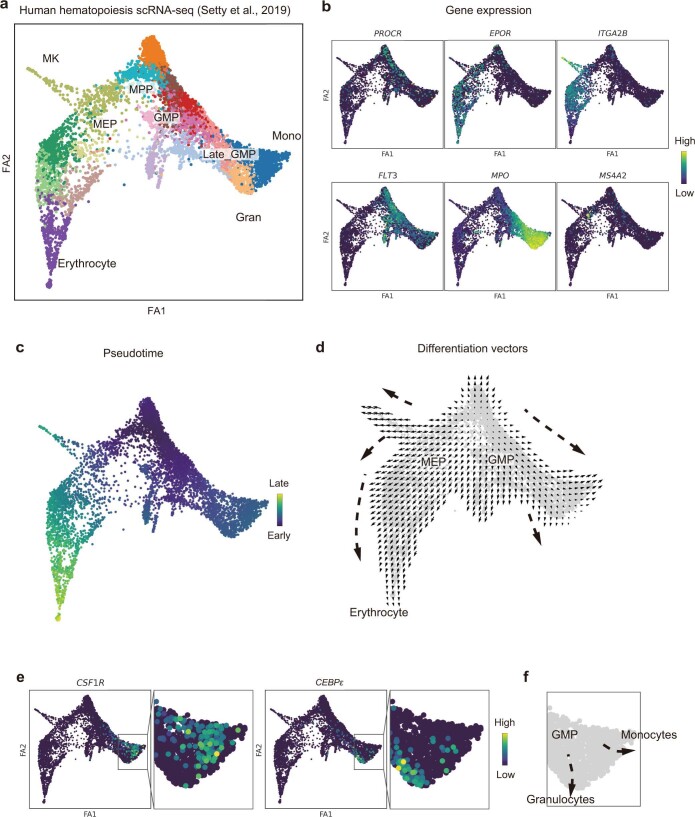
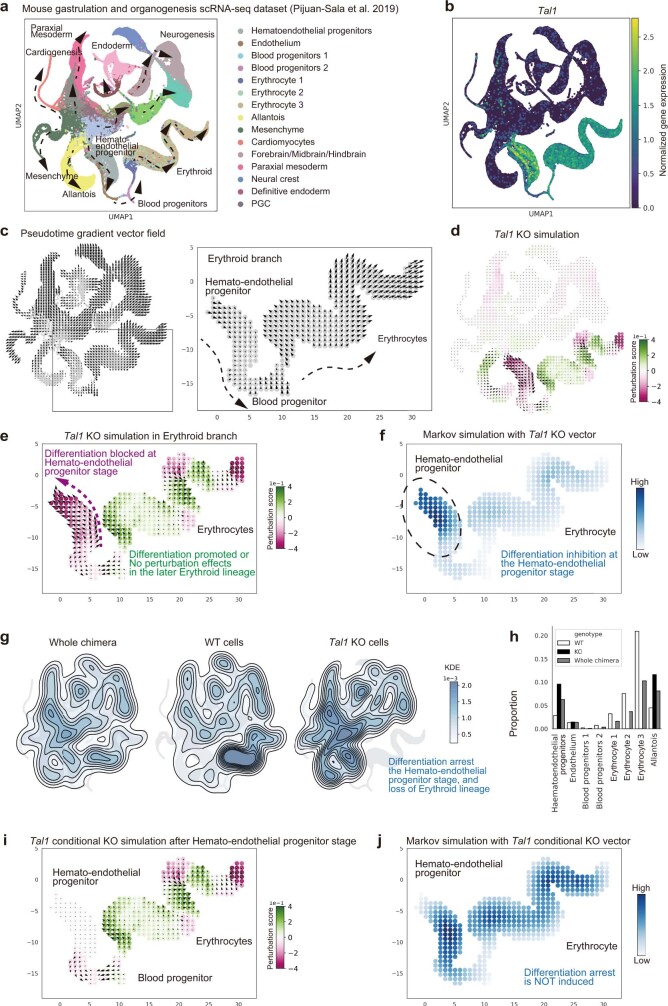
Cell identity is governed by the complex regulation of gene expression, represented as gene-regulatory networks 1 . Here we use gene-regulatory networks inferred from single-cell multi-omics data to perform in silico transcription factor perturbations, simulating the consequent changes in cell identity using only unperturbed wild-type data. We apply this machine-learning-based approach, CellOracle, to well-established paradigms—mouse and human haematopoiesis, and zebrafish embryogenesis—and we correctly model reported changes in phenotype that occur as a result of transcription factor perturbation. Through systematic in silico transcription factor perturbation in the developing zebrafish, we simulate and experimentally validate a previously unreported phenotype that results from the loss of noto , an established notochord regulator. Furthermore, we identify an axial mesoderm regulator, lhx1a . Together, these results show that CellOracle can be used to analyse the regulation of cell identity by transcription factors, and can provide mechanistic insights into development and differentiation.
Overview
CoChat Summary
TL;DR
CellOracle combines inferred gene-regulatory networks with in silico transcription-factor perturbation to simulate shifts in cell identity from unperturbed single-cell multi-omics data. The authors validate it in mouse and human haematopoiesis and zebrafish embryogenesis, then use it to predict and experimentally confirm a noto loss-of-function prechordal plate expansion and identify lhx1a as an axial mesoderm regulator.
Key findings
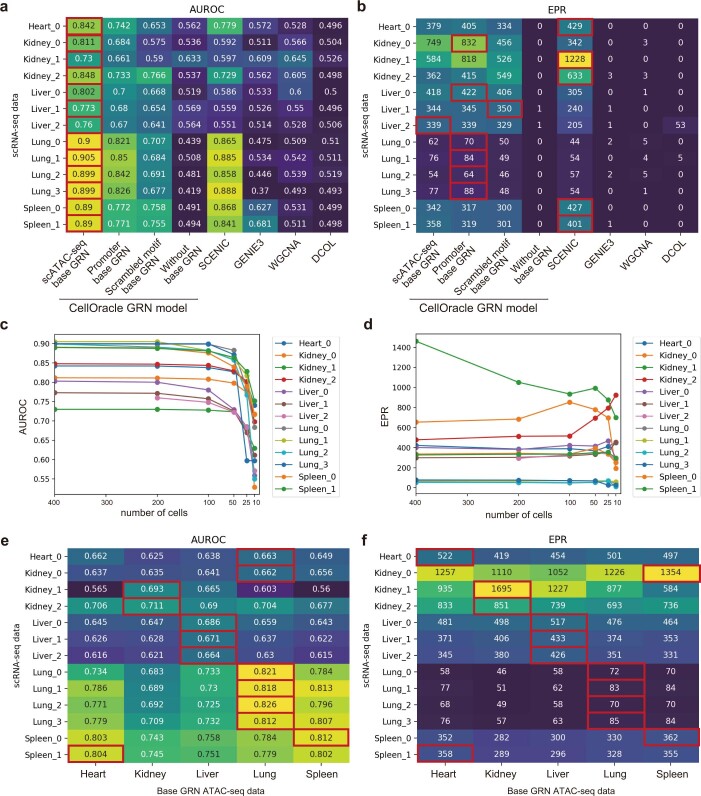
- CellOracle GRN inference benchmarked against 1,298 ChIP–seq datasets for 80 regulatory factors across 5 tissues achieved AUROC 0.66–0.85 with a promoter base GRN and 0.73–0.91 with an scATAC-seq base GRN.
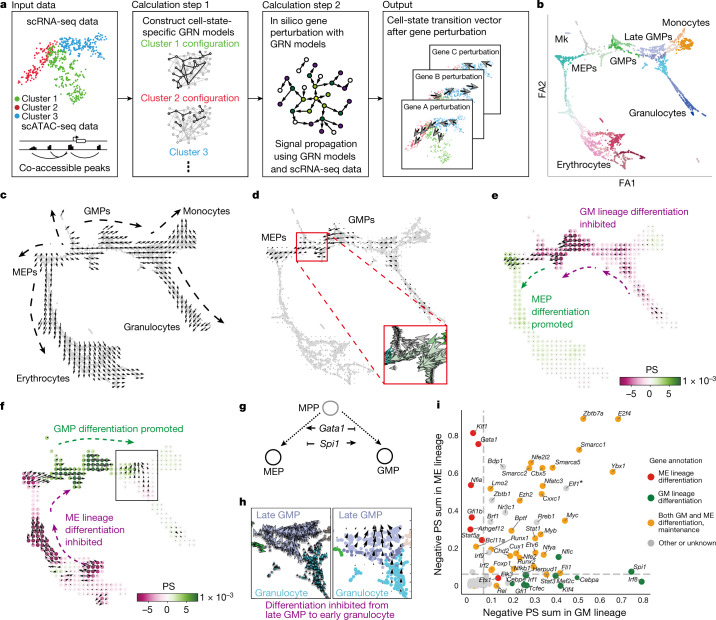
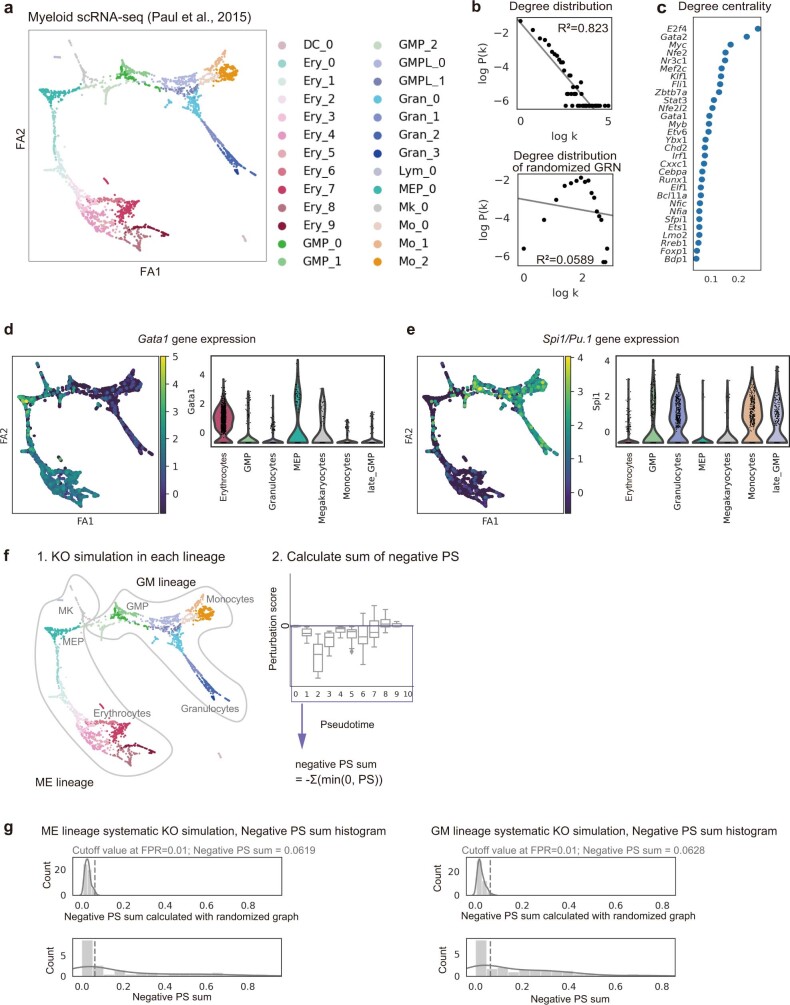
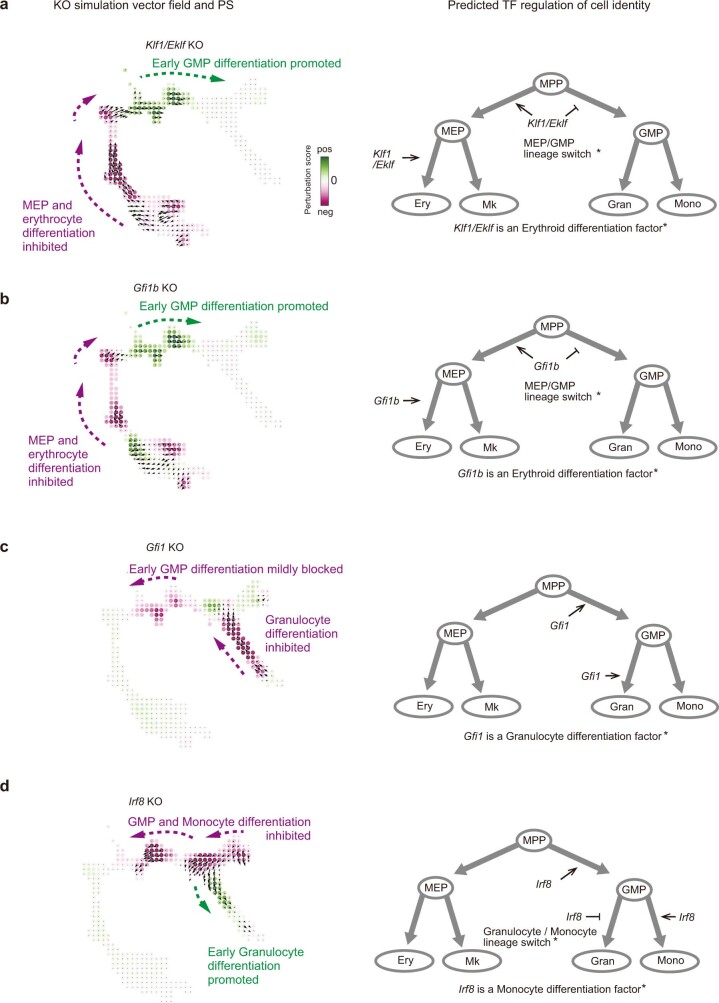
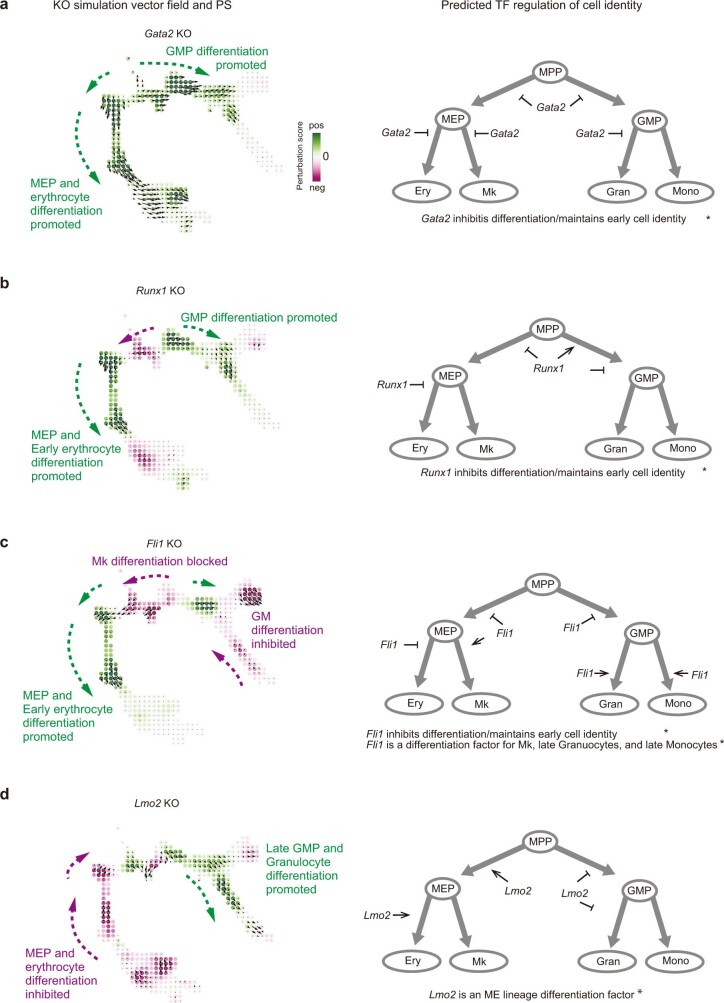
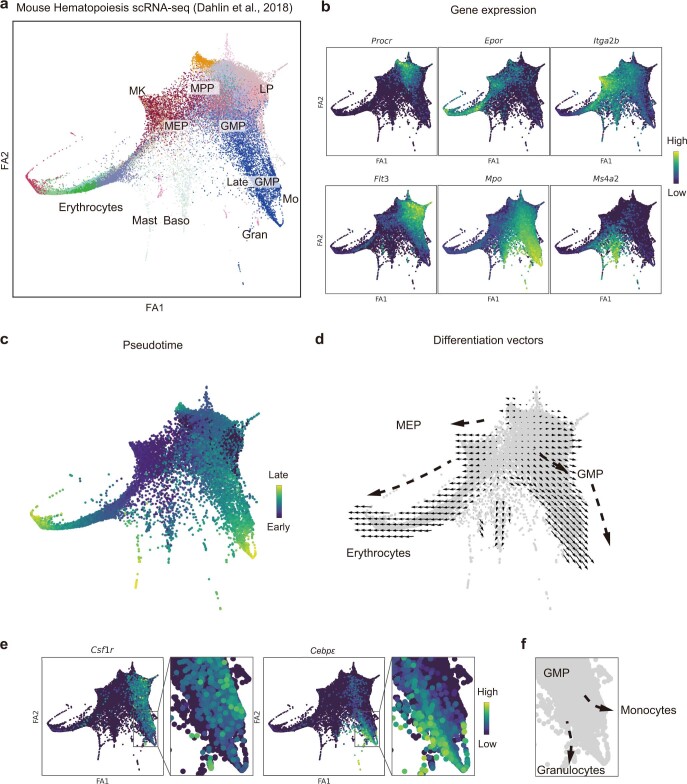
- In a 2,730-cell mouse myeloid progenitor atlas, CellOracle reproduced known Spi1/Gata1 lineage-switching phenotypes; among the top 30 TFs ranked by systematic KO simulation, 85% were reported regulators of myeloid differentiation.
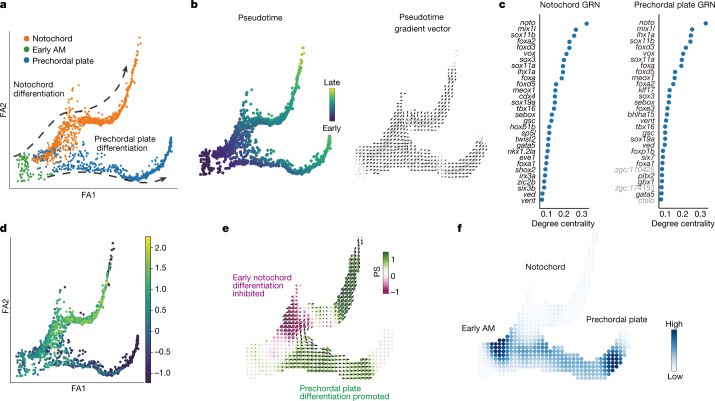
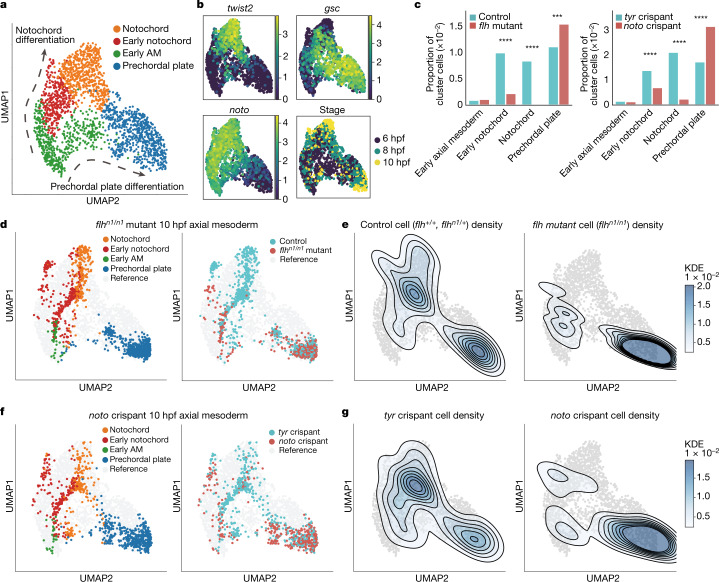
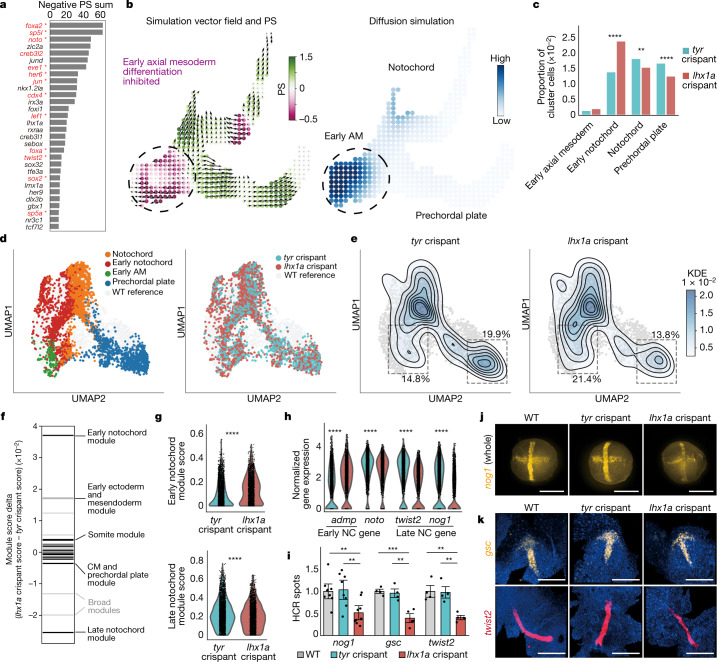
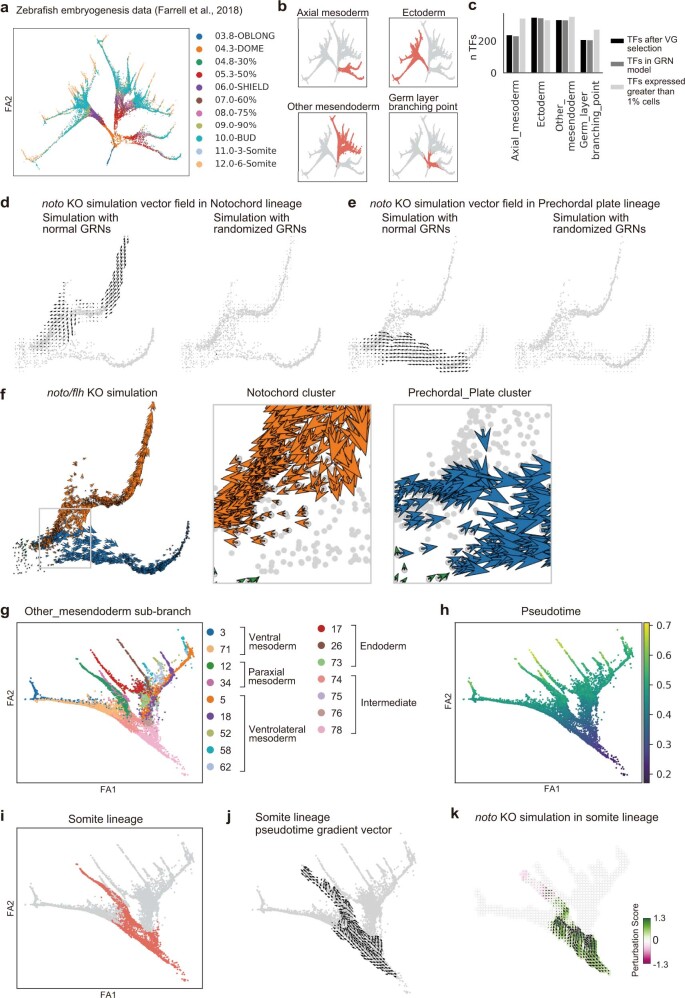
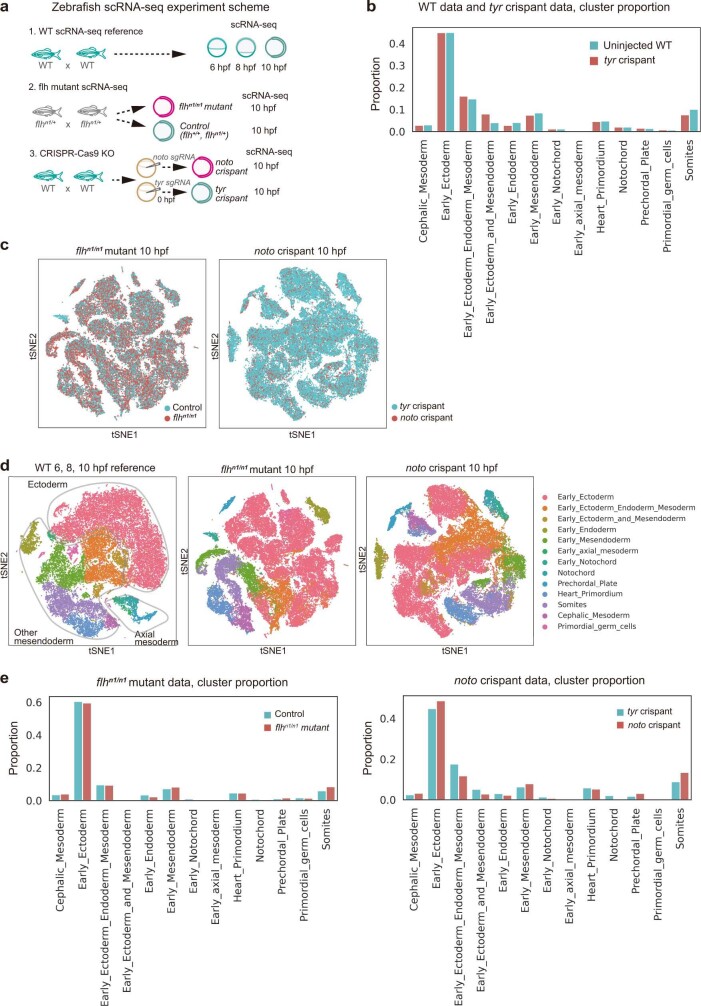
- In zebrafish, systematic KO simulation of 232 active TFs ranked noto top by degree centrality in notochord; noto LOF simulation predicted prechordal plate expansion, validated in flhn1/n1 mutants (notochord −98%, P = 5.55 × 10−52; prechordal plate +38.6%, P = 1.07 × 10⁻⁴) and noto crispants.
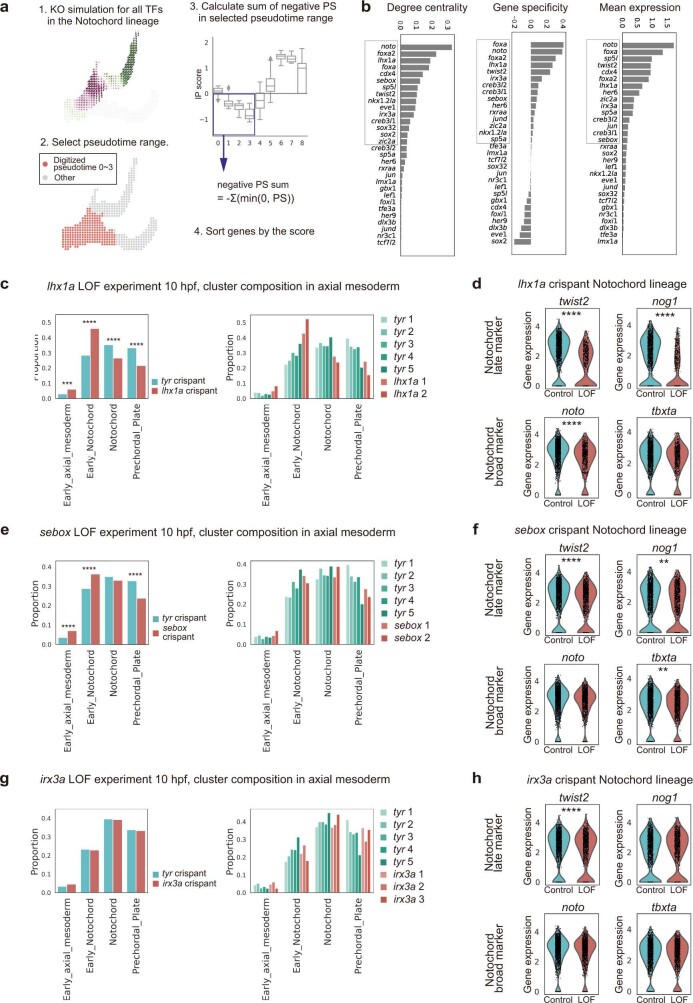
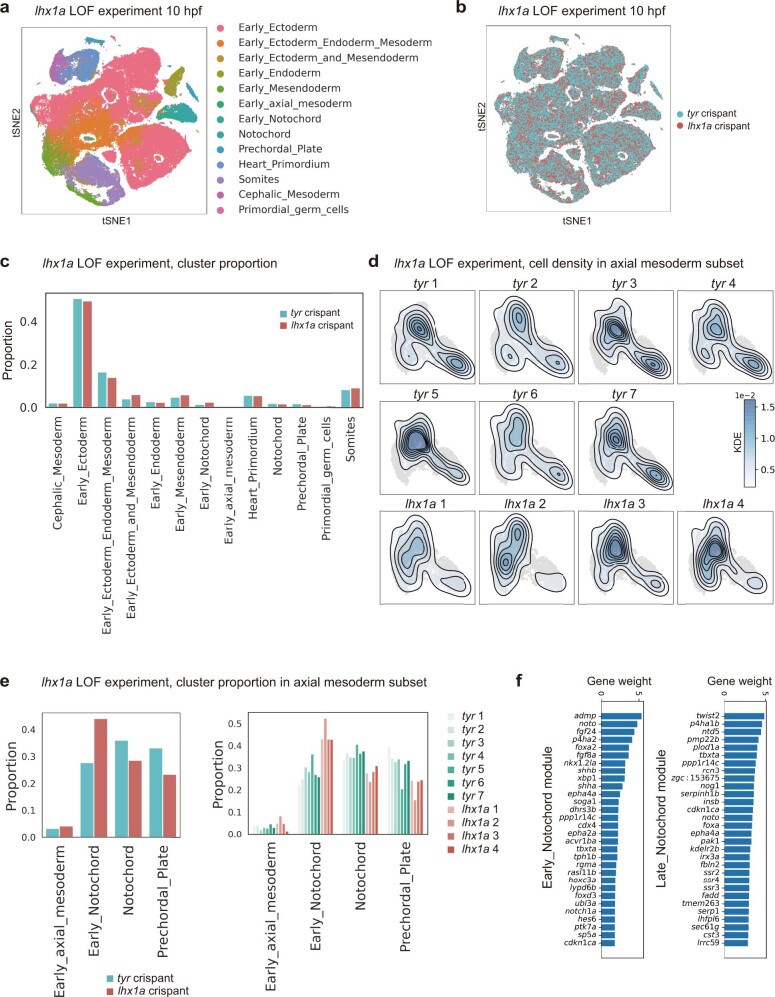
- lhx1a LOF simulation predicted inhibited early axial mesoderm differentiation; lhx1a crispants showed early notochord expansion (+70.2%, P = 1.34 × 10⁻³⁵) and depletion of later notochord (−15.3%, P = 3.83 × 10⁻³) and prechordal plate (−24.7%, P = 1.28 × 10⁻⁷).
Methods
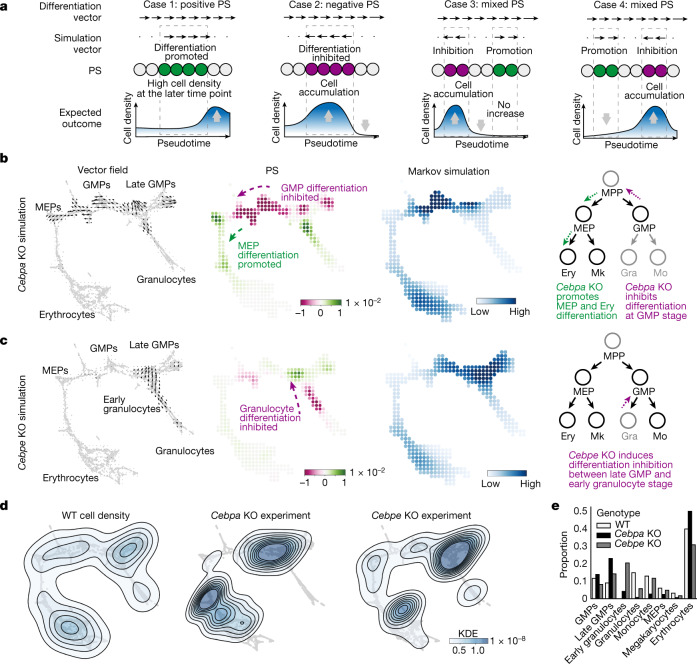
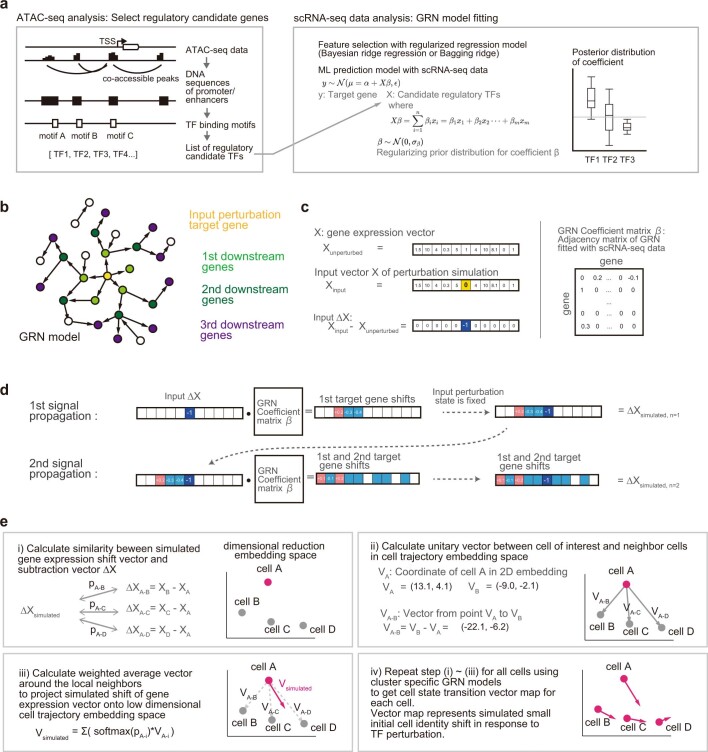
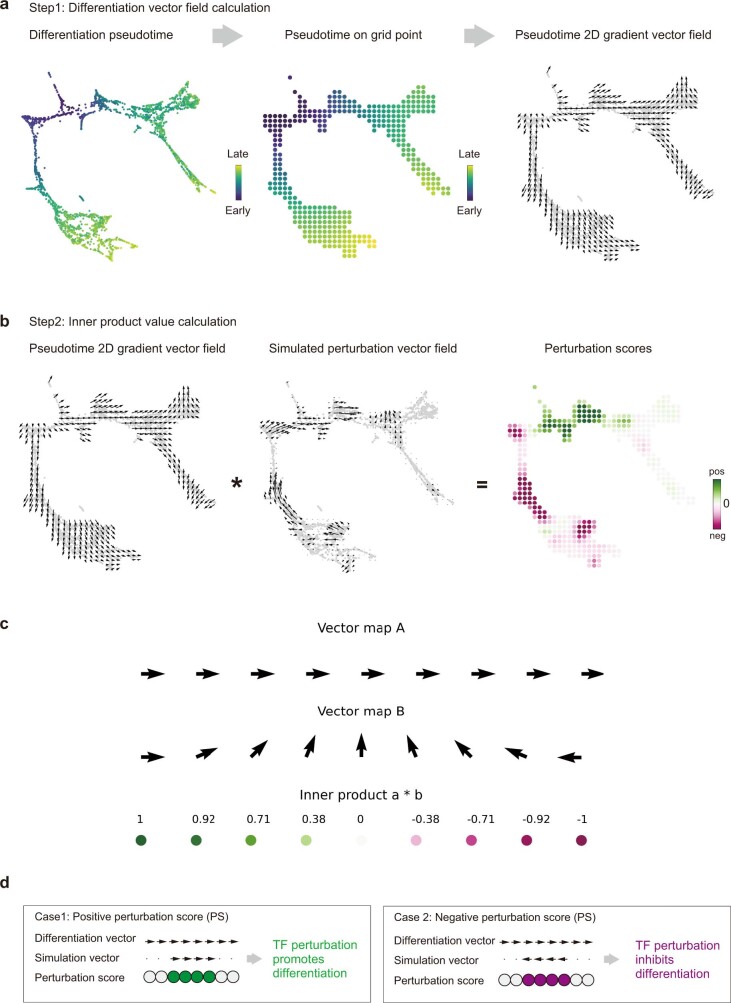
- CellOracle builds cluster-wise regularized linear GRN models using scRNA-seq plus scATAC-seq or promoter databases, propagates TF perturbation signals through the network, estimates transition probabilities, and projects simulated cell-identity shifts as 2D vectors; perturbation scores compare simulation vectors with pseudotime differentiation vectors.
- Validation used mouse and human haematopoiesis datasets, a 38,731-cell zebrafish embryogenesis atlas, a 38,606-cell wild-type zebrafish reference atlas, flhn1/n1 mutants, and CRISPR–Cas9 F0 crispants; experimental readouts included scRNA-seq, NMF, HCR, qRT-PCR and whole-mount in situ hybridization.
- Benchmarking compared CellOracle with WGCNA, DCOL, GENIE3 and SCENIC using ground-truth GRNs from ChIP–seq data; simulations also used randomized GRNs, no signal propagation, varying signal-propagation rounds, and different dimensionality-reduction methods.
Limitations
- Stated: CellOracle can only analyse cell states present in the input scRNA-seq data, and simulation is limited by input data availability and quality, such as unknown TF-binding motifs or sparse TF expression; the authors note foxa3 was filtered out owing to low expression.
- Stated: experimental validation is essential where possible; the authors stress that predictions should be validated experimentally.
- Evident: the simulation output is deliberately limited to a 2D vector rather than absolute expression changes; the negative perturbation score may oversimplify TF roles (e.g. Elf1), and CellOracle did not detect a reported erythrocyte progenitor depletion after Spi1 KO, probably owing to proliferation changes not predicted by the method.
Model-written summary. Check it against the paper before relying on it.
Integrity signals
Registry
Cites
Statistics
Figures
Verification
Claims the paper makes
14 Valid · 2 Not valid · 54 Not checked · 208 Own results and interpretations
The cited sources support only part of this claim — read each source’s verdict below.
In the paper
“To benchmark our GRN inference method, we generated a comprehensive transcriptional ground-truth GRN using 1,298 chromatin immunoprecipitation followed by sequencing (ChIP–seq) datasets for 80 regulatory factors across 5 different tissues14.”
§ Dissecting cell identity via network inference and in silico gene perturbation > GRN inference and benchmarking with CellOracle
What the sources say
- Partly supportedcites [14] Oki S ChIP-Atlas: a data-mining suite powered by full integration of public ChIP-seq data EMBO Rep. 2018 19 e46255 10.15252/embr.201846255 30413482 PMC6280645 sourceExperimental — accuracy not yet measured
Our copy of ChIP‑Atlas confirms it is a fully integrated public ChIP‑seq/DNase‑seq resource (76,217 SRXs across six organisms, Abstract; Overview of the data set and design of analyses, Table 1) with curated antigen and cell‑type metadata and a TR–gene ('Target Genes') integration that 'provides insight into gene regulatory networks' — so it can be the dataset source behind a ChIP‑seq‑derived regulatory network. However, no passage states the specific quantities the claim attributes here (1,298 datasets, 80 regulatory factors, 5 tissues), nor that the resource constitutes or was used to generate a 'ground‑truth' GRN; on the contrary, the Results section 'TR–gene and TR–gene interactions' cautions that 'the genes listed by "Target Genes" are not necessarily functional targets of a given TR and that actual regulation ... would need to be confirmed experimentally'. Searched: 1,298/80 factors/five tissues, ground-truth GRN benchmark, gold-standard TF–target set. (LLM, conf=0.65)
plain- Asserted: passes — The authors put it forward as true.
- Checkable: passes — It can be checked against evidence.
- Load-bearing: passes — The paper’s conclusions depend on it.
- Based: passes — The paper gives a reason why it holds.
- Partly supported
The cited sources support only part of this claim — read each source’s verdict below.
In the paper
“In this respect, gene-regulatory network (GRN) modelling approaches are promising as they reconstruct systematic gene–gene associations from unperturbed single-cell omics data6–11.”
§ Dissecting cell identity via network inference and in silico gene perturbation > Main
What the sources say
- Supportedcites [6] Fiers MWEJ Mapping gene regulatory networks from single-cell omics data Brief. Funct. Genomics 2018 17 246 254 10.1093/bfgp/elx046 29342231 PMC6063279 source
The “GRN inference from scRNA-seq data” section describes reconstructing networks from pairwise associations and co-expression in single-cell data. The Introduction discusses perturbation assays separately as a way to validate predictions, consistent with the claim that these associations can be inferred from unperturbed data. (LLM, conf=0.90)
- Supportedcites [7] Aibar S SCENIC: single-cell regulatory network inference and clustering Nat. Methods 2017 14 1083 1086 10.1038/nmeth.4463 28991892 PMC5937676 source
The Abstract describes SCENIC as reconstructing gene regulatory networks from single-cell RNA-seq data and identifies co-expressed genes as its first step. The Online Methods (GENIE3; page unavailable) specify an expression matrix as the input for network inference, consistent with reconstructing gene associations without requiring perturbation data. The paper addresses single-cell transcriptomics specifically, rather than every type of single-cell omics data. (LLM, conf=0.86)
- Supportedcites [8] Iacono G Massoni-Badosa R Heyn H Single-cell transcriptomics unveils gene regulatory network plasticity Genome Biol. 2019 20 110 10.1186/s13059-019-1713-4 31159854 PMC6547541 source
The Results section describes inferring regulatory networks from single-cell expression data by identifying gene-to-gene correlations and retaining significant correlations as network edges. The Background also states that the approach was applied to healthy tissue datasets, supporting the claim that it can reconstruct associations from unperturbed single-cell data. (LLM, conf=0.91)
- Supportedcites [9] Fleck, J. S. et al. Inferring and perturbing cell fate regulomes in human brain organoids. Nature10.1038/s41586-022-05279-8 (2022). PMC10499607 36198796 source
The ‘Regulatory network inference with Pando’ section describes using multimodal single-cell measurements and regression to infer relationships among transcription-factor expression, binding-site accessibility and target-gene expression. The Methods section (‘GRN inference with Pando’; page unavailable) says the resulting model coefficients define interactions in a regulatory graph. This supports the claim that GRN modelling reconstructs gene–gene regulatory associations from single-cell omics data without requiring perturbations for the inference step. (LLM, conf=0.90)
- Partly supportedcites [10] Kartha VK Functional inference of gene regulation using single-cell multi-omics Cell Genom. 2022 2 100166 10.1016/j.xgen.2022.100166 36204155 PMC9534481 sourceExperimental — accuracy not yet measured
The Discussion (page unavailable) says FigR constructs gene-regulatory networks from correlations across single-cell chromatin and RNA profiles, supporting the claim about reconstructing gene associations. But the paper describes an atlas of immunological stimulation and analyses across stimulus conditions, so it does not establish the claim's qualification that the data are unperturbed. (LLM, conf=0.82)
- Supportedcites [11] González-Blas, C. B. et al. SCENIC+: single-cell multiomic inference of enhancers and gene regulatory networks. Preprint at bioRxiv10.1101/2022.08.19.504505 (2022). source
The SCENIC+ methods (p. 2) describe inferring TF-to-gene relationships from single-cell gene-expression and chromatin-accessibility data using correlation and regression, then combining them into gene regulatory networks. The Discussion (p. 13) also describes GRN methods that search expression data for putative TF–target-gene relationships. This supports the claim as a broad description of network modelling from observational single-cell data. (LLM, conf=0.91)
plainstates a cause- Asserted: passes — The authors put it forward as true.
- Checkable: passes — It can be checked against evidence.
- Load-bearing: passes — The paper’s conclusions depend on it.
- Based: passes — The paper gives a reason why it holds.
- Supported
Every source the paper cites for this claim was checked and supports it.
In the paper
“To support GRN inference without requiring sample-specific scATAC-seq datasets, we have assembled a base GRN from a mouse scATAC-seq atlas13.”
§ Dissecting cell identity via network inference and in silico gene perturbation > GRN inference and benchmarking with CellOracle
What the sources say
- Supportedcites [13] Cusanovich DA A single-cell atlas of in vivo mammalian chromatin accessibility Cell 2018 174 1309 1324 10.1016/j.cell.2018.06.052 30078704 PMC6158300 source
The Results describe profiling chromatin accessibility in single nuclei from 13 mouse tissues using sci-ATAC-seq, identifying the cited work as a mouse single-cell ATAC-seq atlas. The sentence attributes the assembly of the base GRN and its use without sample-specific datasets to the citing authors, not to this source. (LLM, conf=0.92)
plainstates a cause- Asserted: passes — The authors put it forward as true.
- Checkable: passes — It can be checked against evidence.
- Load-bearing: passes — The paper’s conclusions depend on it.
- Based: passes — The paper gives a reason why it holds.
- Supported
Every source the paper cites for this claim was checked and supports it.
In the paper
“Because of this second constraint, we cannot use pre-existing GRN inference algorithms, such as GENIE3 and GRNboost (refs. 7,51).”
§ Dissecting cell identity via network inference and in silico gene perturbation > Methods > Context-dependent GRN inference using scRNA-seq data
What the sources say
- Supportedcites [7] Aibar S SCENIC: single-cell regulatory network inference and clustering Nat. Methods 2017 14 1083 1086 10.1038/nmeth.4463 28991892 PMC5937676 source
The Online Methods (GRNboost) identify GRNboost and GENIE3 as gene-regulatory-network inference methods and explain that they use boosted regression trees and random forests, respectively, rather than linear regression. The citing authors’ inability to use them under their constraint is their own conclusion; the citation supports the identification of the algorithms and their methods. (LLM, conf=0.92)
- Supportedcites [51] Huynh-Thu VA Irrthum A Wehenkel L Geurts P Inferring regulatory networks from expression data using tree-based methods PLoS ONE 2010 5 e12776 10.1371/journal.pone.0012776 20927193 PMC2946910 source
The Introduction identifies GENIE3 as a GRN inference method using ensembles of regression trees and says it can model non-linear relationships. This supports citing the paper as an example of an algorithm unsuitable for the citing authors’ linear-regression constraint; that constraint is the citing authors’ own premise. The paper is not being cited here for GRNboost. (LLM, conf=0.91)
plainstates a cause- Asserted: passes — The authors put it forward as true.
- Checkable: passes — It can be checked against evidence.
- Load-bearing: passes — The paper’s conclusions depend on it.
- Based: passes — The paper gives a reason why it holds.
- Supported
The sources with a verdict support this claim; the rest weren’t checked yet, have no full text we could read, or their verdicts aren’t rated yet.
In the paper
“Cebpa promotes GM lineage differentiation while inhibiting ME lineage differentiation16,72, and promoting granulocyte differentiation in particular15.”
§ Dissecting cell identity via network inference and in silico gene perturbation > Methods > Comparison between CellOracle haematopoiesis KO simulation results and previous reports
What the sources say
- Not checked yetcites [16] Paul F Transcriptional heterogeneity and lineage commitment in myeloid progenitors Cell 2015 163 1663 1677 10.1016/j.cell.2015.11.013 26627738 source
- Supportedcites [72] Hyung CS C/EBPα determines hematopoietic cell fate in multipotential progenitor cells by inhibiting erythroid differentiation and inducing myeloid differentiation Blood 2006 107 4308 10.1182/blood-2005-06-2216 16469877 PMC1895788 source
In the section on lineage switching of EML cells, the paper reports that C/EBPα overexpression promoted more rapid and complete granulocyte differentiation than the comparison treatment. This directly supports the attributed claim. (LLM, conf=0.94)
- Not checked yetcites [15] Orkin SH Zon LI Hematopoiesis: an evolving paradigm for stem cell biology Cell 2008 132 631 644 10.1016/j.cell.2008.01.025 18295580 PMC2628169 source
plainstates a cause- Asserted: passes — The authors put it forward as true.
- Checkable: passes — It can be checked against evidence.
- Load-bearing: passes — The paper’s conclusions depend on it.
- Based: passes — The paper gives a reason why it holds.
147 more claims · 3 with their cited sources checked
Create a free account to see all 278 claims and to verify the 81 references still open.
- It may state two separate claims as one. 87
- Probably not a substantial claim. 53
Claims other papers make about this one
Each is checked against this paper’s own text: does it say what the citing paper says it does?
The source backs part of the claim, not all of it — or backs it for a different population, condition or comparison.
In the citing paper
“CellOracle surpassed other GRN-inference algorithms such as PIDC, GENIE3, and GRNBoost2 in accurately identifying biological ground truth [44]”
From A mini-review on perturbation modelling across single-cell omic modalities (2024) · cites this paper as [44]
Experimental — accuracy not yet measuredThe cited source says what the claim attributes to it.
In the citing paper
“By leveraging gene-regulatory networks derived from these data types, CellOracle performs in silico transcription factors perturbations, effectively simulating cell state changes in response to TF perturbations.”
From A mini-review on perturbation modelling across single-cell omic modalities (2024) · cites this paper as [44]
In the citing paper
“For instance, CellOracle can simulate cell identity transitions following digital (in silico) TF perturbations such as knockout or overexpression.”
From A mini-review on perturbation modelling across single-cell omic modalities (2024) · cites this paper as [44]
In the citing paper
“whereas in silico ChIP–seq predicts transcription factor binding at individual cis-regulatory elements179.”
From The technological landscape and applications of single-cell multi-omics (2023) · cites this paper as [179]
In the citing paper
“Similarly, CellOracle179 leverages multi-omics data, either collected in parallel or integrated computationally, to learn gene regulatory networks and infer the results of in silico perturbations, whereas in silico ChIP–seq predicts transcription factor binding at individual cis-regulatory elements179.”
From The technological landscape and applications of single-cell multi-omics (2023) · cites this paper as [179]
Self-check
Percentages, sums and reported differences re-computed from the paper’s own numbers.
Each contradiction between two passages listed here was confirmed by an independent check.
Rated minor: it would not touch a result — a value no result rests on, a p-value that stays on the same side of the significance level, or a conflict that is clerical, resolved elsewhere in the paper, or outside its own findings.
In the paper
§ Dissecting cell identity via network inference and in silico gene perturbation > Methods > Simulation of cell identity following perturbation of regulatory genes
“This process consists of four steps: (i) data preprocessing; (ii) signal propagation within the GRN; (iii) estimation of transition probabilities; and (iv) analysis of simulated transition in cell identity.”
§ Dissecting cell identity via network inference and in silico gene perturbation > Methods > Simulation of cell identity following perturbation of regulatory genes
“(v)Calculation of vector field”
Rated minor: it would not touch a result — a value no result rests on, a p-value that stays on the same side of the significance level, or a conflict that is clerical, resolved elsewhere in the paper, or outside its own findings.
In the paper
§ Dissecting cell identity via network inference and in silico gene perturbation > Methods > Preparation of input data for GRN inference
“Cells were subsampled for each tissue on the basis of the original tissue-type annotation: spleen, lung, muscle, liver and kidney.”
§ Dissecting cell identity via network inference and in silico gene perturbation > Methods > Ground-truth data preparation for GRN benchmarking
“Here, we selected tissues commonly available in the Tabula Muris scRNA-seq dataset, mouse sci-ATAC-seq atlas data and ground-truth datasets: heart, kidney, liver, lung and spleen.”
Rated minor: it would not touch a result — a value no result rests on, a p-value that stays on the same side of the significance level, or a conflict that is clerical, resolved elsewhere in the paper, or outside its own findings.
In the paper
§ Dissecting cell identity via network inference and in silico gene perturbation > Systematic TF KO simulations in zebrafish
“c, Degree centrality scores were used to rank the top 30 TFs in notochord (left) and prechordal plate (right).”
§ Dissecting cell identity via network inference and in silico gene perturbation > Systematic TF KO simulations in zebrafish
“Black text denotes TFs. Grey text denotes non-TFs.”
Citations
Cites
Comprehensive Integration of Single-Cell Data
Stuart, T., Butler, A., Hoffman, P., Hafemeister, C., Papalexi, E., Mauck, W. M., Hao, Y., Stoeckius, M., Smibert, P., & Satija, R. (2019) · Cell · doi:10.1016/j.cell.2019.05.031 · Cited by 15,453
SCANPY: large-scale single-cell gene expression data analysis
Wolf, F. A., Angerer, P., & Theis, F. J. (2018) · Genome Biology · doi:10.1186/s13059-017-1382-0 · Cited by 8,881
Scenic: single-cell regulatory network inference and clustering.
Aibar, S., González-Blas, C. B., Moerman, T., Huynh-Thu, V. A., Imrichova, H., Hulselmans, G., Rambow, F., Marine, J.-C., Geurts, P., Aerts, J., et al. (2017) · Nature Methods · doi:10.1038/nmeth.4463 · Cited by 6,520
A General Framework for Weighted Gene Co-Expression Network Analysis
Zhang, B., & Horvath, S. (2005) · Statistical Applications in Genetics and Molecular Biology · doi:10.2202/1544-6115.1128 · Cited by 5,684
Hafemeister, C., & Satija, R. (2019) · Genome Biology · doi:10.1186/s13059-019-1874-1 · Cited by 4,479
La Manno, G., Soldatov, R., Zeisel, A., Braun, E., Hochgerner, H., Petukhov, V., Lidschreiber, K., Kastriti, M. E., Lönnerberg, P., Furlan, A., et al. (2018) · Nature · doi:10.1038/s41586-018-0414-6 · Cited by 4,118
Jacomy, M., Venturini, T., Heymann, S., & Bastian, M. (2014) · PLoS ONE · doi:10.1371/journal.pone.0098679 · Cited by 2,909
Single-cell transcriptomics of 20 mouse organs creates a Tabula Muris
The Tabula Muris Consortium, coordination, O., coordination, L., processing, O. C. A., sequencing, L. P. A., analysis, C. D., annotation, C. T., Writing group, Supplemental text writing group, & Principal investigators (2018) · Nature · doi:10.1038/s41586-018-0590-4 · Cited by 2,842
High-resolution in situ hybridization to whole-mount zebrafish embryos
Thisse, C., & Thisse, B. (2008) · Nature Protocols · doi:10.1038/nprot.2007.514 · Cited by 2,578
Hematopoiesis: An Evolving Paradigm for Stem Cell Biology
Orkin, S. H., & Zon, L. I. (2008) · Cell · doi:10.1016/j.cell.2008.01.025 · Cited by 2,570
Cited by
Best practices for single-cell analysis across modalities
Heumos, L., Schaar, A. C., Lance, C., Litinetskaya, A., Drost, F., Zappia, L., Lücken, M. D., Strobl, D. C., Henao, J., Curion, F., et al. (2023) · Nature Reviews Genetics · doi:10.1038/s41576-023-00586-w · Cited by 1,051
The technological landscape and applications of single-cell multi-omics
Baysoy, A., Bai, Z., Satija, R., & Fan, R. (2023) · Nature Reviews Molecular Cell Biology · doi:10.1038/s41580-023-00615-w · Cited by 1,037
SCENIC+: single-cell multiomic inference of enhancers and gene regulatory networks
Bravo González-Blas, C., De Winter, S., Hulselmans, G., Hecker, N., Matetovici, I., Christiaens, V., Poovathingal, S., Wouters, J., Aibar, S., & Aerts, S. (2023) · Nature Methods · doi:10.1038/s41592-023-01938-4 · Cited by 778
SCENIC+: single-cell multiomic inference of enhancers and gene regulatory networks
González-Blas, C. B., De Winter, S., Hulselmans, G., Hecker, N., Matetovici, I., Christiaens, V., Poovathingal, S., Wouters, J., Aibar, S., & Aerts, S. (2022) · doi:10.1101/2022.08.19.504505 · Cited by 778
Large Scale Foundation Model on Single-cell Transcriptomics
Hao, M., Gong, J., Zeng, X., Liu, C., Guo, Y., Cheng, X., Wang, T., Ma, J., Song, L., & Zhang, X. (2023) · doi:10.1101/2023.05.29.542705 · Cited by 639
Large-scale foundation model on single-cell transcriptomics
Hao, M., Gong, J., Zeng, X., Liu, C., Guo, Y., Cheng, X., Wang, T., Ma, J., Zhang, X., & Song, L. (2024) · Nature Methods · doi:10.1038/s41592-024-02305-7 · Cited by 988
Gene regulatory network inference in the era of single-cell multi-omics
Badia-i-Mompel, P., Wessels, L., Müller-Dott, S., Trimbour, R., Ramirez Flores, R. O., Argelaguet, R., & Saez-Rodriguez, J. (2023) · Nature Reviews Genetics · doi:10.1038/s41576-023-00618-5 · Cited by 469
“Using the CellOracle 76 framework for in silico predictions, followed by experimental validation, they characterized a role of Brachyury in priming cis -regulatory elements (CREs) for differentiation.”
BackgroundMethodInfluentialOsorio, D., Zhong, Y., Li, G., Xu, Q., Yang, Y., Tian, Y., Chapkin, R. S., Huang, J. Z., & Cai, J. J. (2022) · Patterns · doi:10.1016/j.patter.2022.100434 · Cited by 307
“6,7 scGen is a package implemented in Python, using TensorFlow variational autoencoders combined with vector arithmetic to predict gene expression changes in cells.”
MethodShahan, R., Hsu, C.-W., Nolan, T. M., Cole, B. J., Taylor, I. W., Greenstreet, L., Zhang, S., Afanassiev, A., Vlot, A. H. C., Schiebinger, G., et al. (2022) · Developmental Cell · doi:10.1016/j.devcel.2022.01.008 · Cited by 363
The Specious Art of Single-Cell Genomics
Chari, T., & Pachter, L. (2021) · doi:10.1101/2021.08.25.457696 · Cited by 379
Ravi, V. M., Neidert, N., Will, P., Joseph, K., Maier, J. P., Kückelhaus, J., Vollmer, L., Goeldner, J. M., Behringer, S. P., Scherer, F., et al. (2022) · Nature Communications · doi:10.1038/s41467-022-28523-1 · Cited by 343
Predicting transcriptional outcomes of novel multigene perturbations with GEARS
Roohani, Y., Huang, K., & Leskovec, J. (2024) · Nature Biotechnology · doi:10.1038/s41587-023-01905-6 · Cited by 355
“GEARS functionalizes this graph-based inductive bias using a graph neural network (GNN) architecture 33 .”
InfluentialProfiling cell identity and tissue architecture with single-cell and spatial transcriptomics
Gulati, G. S., D’Silva, J. P., Liu, Y., Wang, L., & Newman, A. M. (2025) · Nature Reviews Molecular Cell Biology · doi:10.1038/s41580-024-00768-2 · Cited by 293
“CellOracle 129 leverages knowledge of gene regulatory networks derived from single-cell multi-omics analyses to perform in silico transcription-factor perturbations and demonstrate fate alterations.”
Kwok, A. J., Allcock, A., Ferreira, R. C., Cano-Gamez, E., Smee, M., Burnham, K. L., Zurke, Y.-X., (EMROx), E. M. R. O., Novak, A., Darwent, M., et al. (2023) · Nature Immunology · doi:10.1038/s41590-023-01490-5 · Cited by 302
Predicting cellular responses to complex perturbations in high‐throughput screens
Lotfollahi, M., Klimovskaia Susmelj, A., De Donno, C., Hetzel, L., Ji, Y., Ibarra, I. L., Srivatsan, S. R., Naghipourfar, M., Daza, R. M., Martin, B., et al. (2023) · Molecular Systems Biology · doi:10.15252/msb.202211517 · Cited by 307
Single-cell analysis of shared signatures and transcriptional diversity during zebrafish development
Sur, A., Wang, Y., Capar, P., Margolin, G., Prochaska, M. K., & Farrell, J. A. (2023) · Developmental Cell · doi:10.1016/j.devcel.2023.11.001 · Cited by 265
538 Spatiotemporal Single-Cell Roadmap of Human Skin Wound Healing
Liu, Z., Bian, X., Luo, L., Björklund, Å. K., Li, L., Zhang, L., Chen, Y., Guo, L., Gao, J., 曹春艳, et al. (2024) · Cell stem cell · doi:10.1016/j.jid.2024.10.551 · Cited by 310
Molecular and cellular evolution of the primate dorsolateral prefrontal cortex
Ma, S., Skarica, M., Li, Q., Xu, C., Risgaard, R. D., Tebbenkamp, A. T. N., Mato-Blanco, X., Kovner, R., Krsnik, Ž., de Martin, X., et al. (2022) · Science · doi:10.1126/science.abo7257 · Cited by 260
Functional inference of gene regulation using single-cell multi-omics
Kartha, V. K., Duarte, F. M., Hu, Y., Ma, S., Chew, J. G., Lareau, C. A., Earl, A., Burkett, Z. D., Kohlway, A. S., Lebofsky, R., et al. (2022) · Cell Genomics · doi:10.1016/j.xgen.2022.100166 · Cited by 224
Brassinosteroid gene regulatory networks at cellular resolution in the Arabidopsis root
Nolan, T. M., Vukašinović, N., Hsu, C.-W., Zhang, J., Vanhoutte, I., Shahan, R., Taylor, I. W., Greenstreet, L., Heitz, M., Afanassiev, A., et al. (2023) · Science · doi:10.1126/science.adf4721 · Cited by 176
“Analysis of network importance scores, such as centrality measures, is a powerful approach to prioritize candidate regulators among DEGs (60).”
BackgroundHuman organoids with an autologous tissue-resident immune compartment
Recaldin, T., Steinacher, L., Gjeta, B., Harter, M. F., Adam, L., Kromer, K., Mendes, M. P., Bellavista, M., Nikolaev, M., Lazzaroni, G., et al. (2024) · Nature · doi:10.1038/s41586-024-07791-5 · Cited by 187
Towards multimodal foundation models in molecular cell biology
Cui, H., Tejada-Lapuerta, A., Brbić, M., Sáez-Rodríguez, J., Cristea, S., Goodarzi, H., Lotfollahi, M., Theis, F. J., & Wang, B. (2025) · Nature · doi:10.1038/s41586-025-08710-y · Cited by 186
“Recently, models such as scGPT 45 , CellOracle 74 , Geneformer 46 , CellOT 75 , CPA 38 , chemcCPA 76 and GEARS 39 have shown initial success in perturbing learned cell embeddings to predict resulting expression profiles.”
Single-cell DNA methylome and 3D multi-omic atlas of the adult mouse brain
Liu, H., Zeng, Q., Zhou, J., Bartlett, A., Wang, B.-A., Berube, P., Tian, W., Kenworthy, M., Altshul, J., Nery, J. R., et al. (2023) · Nature · doi:10.1038/s41586-023-06805-y · Cited by 139
“Numerous important TFs orchestrate the intricate spatial and cell-type-specific gene expression patterns within GRNs, which can be elucidated using multi-omic information 42,43 .”
A foundation model of transcription across human cell types
(2025) · doi:10.1038/s41586-024-08391-z · Cited by 130
GET: a foundation model of transcription across human cell types
Fu, X., Mo, S., Buendia, A., Laurent, A., Shao, A., Alvares-Torres, M. D. M., Yu, T., Tan, J., Su, J., Sagatelian, R., et al. (2023) · doi:10.1101/2023.09.24.559168 · Cited by 130
Zhang, S., Pyne, S., Pietrzak, S., Halberg, S., McCalla, S. G., Siahpirani, A. F., Sridharan, R., & Roy, S. (2023) · Nature Communications · doi:10.1038/s41467-023-38637-9 · Cited by 133
“20, 21).”
InfluentialDictys: dynamic gene regulatory network dissects developmental continuum with single-cell multiomics
Wang, L., Trasanidis, N., Wu, T., Dong, G., Hu, M., Bauer, D. E., & Pinello, L. (2023) · Nature Methods · doi:10.1038/s41592-023-01971-3 · Cited by 137
A multi-omic atlas of human embryonic skeletal development
To, K., Fei, L., Pett, J. P., Roberts, K., Blain, R., Polański, K., Li, T., Yayon, N., He, P., Xu, C., et al. (2024) · Nature · doi:10.1038/s41586-024-08189-z · Cited by 138
Inferring gene regulatory networks from single-cell multiome data using atlas-scale external data
Yuan, Q., & Duren, Z. (2025) · Nature Biotechnology · doi:10.1038/s41587-024-02182-7 · Cited by 165
“We used the LINGER-inferred GRN as an input to CellOracle.”
InfluentialGene regulatory network reconstruction: harnessing the power of single-cell multi-omic data
Kim, D. J., Tran, A., Kim, H. J., Lin, Y., Yang, J. Y. H., & Yang, P. (2023) · npj Systems Biology and Applications · doi:10.1038/s41540-023-00312-6 · Cited by 131
Le, J., Dian, Y., Zhao, D., Guo, Z., Luo, Z., Chen, X., Zeng, F., & Deng, G. (2025) · Molecular Cancer · doi:10.1186/s12943-025-02426-3 · Cited by 130
Reconstructing growth and dynamic trajectories from single-cell transcriptomics data
Sha, Y., Qiu, Y., Zhou, P., & Nie, Q. H. (2023) · Nature Machine Intelligence · doi:10.1038/s42256-023-00763-w · Cited by 170
“Overall, TIGON provides an effective framework to connect temporal measurements for predicting novel dynamics that may not be seen directly from the data.”
Single-cell analysis of chromatin accessibility in the adult mouse brain
Zu, S., Li, Y. E., Wang, K., Armand, E. J., Mamde, S., Amaral, M. L., Wang, Y., Chu, A., Xie, Y., Miller, M., et al. (2023) · Nature · doi:10.1038/s41586-023-06824-9 · Cited by 119
“We next applied CellOracle 52 to the snATAC–seq and scRNA-seq data (Methods and Extended Data Fig.”
MethodQi, X., Zhao, L., Tian, C., Li, Y., Chen, Z.-L., Huo, P., Chen, R., Liu, X., Wan, B., Yang, S., et al. (2024) · Nature Communications · doi:10.1038/s41467-024-53457-1 · Cited by 131
Causal identification of single-cell experimental perturbation effects with CINEMA-OT
Dong, M., Wang, B., Wei, J., de O. Fonseca, A. H., Perry, C. J., Frey, A., Ouerghi, F., Foxman, E. F., Ishizuka, J. J., Dhodapkar, R. M., et al. (2023) · Nature Methods · doi:10.1038/s41592-023-02040-5 · Cited by 94
Cancer Evolution: A Multifaceted Affair
Ciriello, G., Magnani, L., Aitken, S. J., Akkari, L., Behjati, S., Hanahan, D., Landau, D. A., López-Bigas, N., Lupiáñez, D. G., Marine, J., et al. (2023) · Cancer Discovery · doi:10.1158/2159-8290.cd-23-0530 · Cited by 106
“The integration of transcriptional activity and chromatin states and accessibility in single cells provide a more comprehensive description of cell states allowing to infer a fingerprint for transcription factor activity and cell state transitions (88–90).”
BackgroundHou, Y., Lin, B., Xu, T., Jiang, J., Luo, S., Chen, W., Chen, X., Wang, Y., Liao, G., Wang, J., et al. (2024) · Nature Communications · doi:10.1038/s41467-024-49824-7 · Cited by 93
“We build gene regulatory networks (GRNs) with CellOracle (v.0.12.0) following the tutorials on https://morris-lab.github.io/CellOracle.documentation/ 39 .”
InfluentialAn Integrated Epigenomic and Transcriptomic Map of Mouse and Human αβ T Cell Development
Chopp, L. B., Gopalan, V., Ciucci, T., Ruchinskas, A. J., Rae, Z., Lagarde, M., Gao, Y., Li, C., Bosticardo, M., Pala, F., et al. (2020) · Immunity · doi:10.1016/j.immuni.2020.10.024 · Cited by 91
Human microglia maturation is underpinned by specific gene regulatory networks
Han, C. Z., Li, R. Z., Hansen, E., Trescott, S., Fixsen, B. R., Nguyen, C. T., Mora, C. M., Spann, N. J., Bennett, H. R., Poirion, O., et al. (2023) · Immunity · doi:10.1016/j.immuni.2023.07.016 · Cited by 84
A single-cell multi-omics atlas of rice
Wang, X., Huang, H., Jiang, S., Kang, J., Li, D., Wang, K., Xie, S. B., Cheng, T., Liu, C., Hu, G., et al. (2025) · Nature · doi:10.1038/s41586-025-09251-0 · Cited by 97
“We performed gene perturbation analysis using single-cell multi-omics data from roots 15 .”
Sanborn, M. A., Wang, X., Gao, S., Dai, Y., & Rehman, J. (2025) · Nature Communications · doi:10.1038/s41467-025-57047-7 · Cited by 82
Computational biology and artificial intelligence in mRNA vaccine design for cancer immunotherapy
İmani, S., Li, X., Chen, K., Maghsoudloo, M., Kaboli, P. J., Hashemi, M., Khoushab, S., & Li, X. (2025) · Frontiers in Cellular and Infection Microbiology · doi:10.3389/fcimb.2024.1501010 · Cited by 112
“AI-driven analysis of genomic (Kamimoto et al., 2023), transcriptomic, proteomic, and metabolomic data will enable the identi fi cation of key biomarkers and pathways, leading to more targeted and effective vaccine strategies.”
Defining cardiac functional recovery in end-stage heart failure at single-cell resolution
Amrute, J. M., Lai, L., Ma, P., Koenig, A. L., Kamimoto, K., Bredemeyer, A., Shankar, T. S., Kuppe, C., Kadyrov, F. F., Schulte, L. J., et al. (2023) · Nature Cardiovascular Research · doi:10.1038/s44161-023-00260-8 · Cited by 79
“We then used CellOracle 21 to build macrophage-specific and fibroblast-specific GRNs and ascertained the predicted effects of RUNX1 deletion using in silico transcription factor perturbation.”
BackgroundMethodInfluentialSelf-citationHigh-performance single-cell gene regulatory network inference at scale: the Inferelator 3.0
Gibbs, C. S., Jackson, C. A., Saldi, G.-A., Tjärnberg, A., Shah, A., Watters, A., Veaux, N. D., Tchourine, K., Yi, R., Hamamsy, T., et al. (2022) · Bioinformatics · doi:10.1093/bioinformatics/btac117 · Cited by 86
“(H) Performance of the Inferelator (FTT-transformed, non-normalized AMuSR) compared to SCENIC and CellOracle without holding genes out of the prior knowledge network.”
InfluentialLi, H., Han, Z., Sun, Y., Wang, F., Hu, P., Gao, Y., Bai, X., Peng, S., Ren, C., Xu, X., et al. (2024) · Nature Communications · doi:10.1038/s41467-024-50426-6 · Cited by 93
“Molecular networks are important issues in biological studies 2,11,29 .”
From time-series transcriptomics to gene regulatory networks: A review on inference methods
Marku, M., & Pancaldi, V. (2023) · PLoS Computational Biology · doi:10.1371/journal.pcbi.1011254 · Cited by 80
“In another approach, Kamimoto and colleagues [91] used single-cell RNAseq and ATACseq datasets to infer cell state–specific GRNs that emerge during the differentiation process of fibroblasts.”
MethodInfluentialLedru, N., Wilson, P. C., Muto, Y., Yoshimura, Y., Wu, H., Li, D., Asthana, A., Tullius, S. G., Waikar, S. S., Orlando, G., et al. (2024) · Nature Communications · doi:10.1038/s41467-024-45706-0 · Cited by 83
Noordijk, B., García‐Gómez, M. L., ten Tusscher, K., de Ridder, D., van Dijk, A. D. J., & Smith, R. W. (2024) · Frontiers in Systems Biology · doi:10.3389/fsysb.2024.1407994 · Cited by 86
GRaNIE and GRaNPA : inference and evaluation of enhancer‐mediated gene regulatory networks
Kamal, A., Arnold, C., Claringbould, A., Moussa, R., Servaas, N. H., Kholmatov, M., Daga, N., Nogina, D., Mueller‐Dott, S., Reyes‐Palomares, A., et al. (2023) · Molecular Systems Biology · doi:10.15252/msb.202311627 · Cited by 63
“…in bulk (Huynh-Thu et al , 2010; Haynes et al , 2013), or single-cell expression data (Aibar et al , 2017; Moerman et al , 2019; preprint: Kamimoto et al , 2020), based on partial information decomposition (Chan et al , 2017), time-course data (Huynh-Thu & Geurts, 2018) or data curation…”
MethodSchäfer, P. S. L., Dimitrov, D., Villablanca, E. J., & Sáez-Rodríguez, J. (2024) · Nature Immunology · doi:10.1038/s41590-024-01768-2 · Cited by 80
“In silico perturbation: Some GRN inference tools additionally offer methods to simulate the effects of TF expression changes on differentiation dynamics 45,111 .”
Active learning framework leveraging transcriptomics identifies modulators of disease phenotypes
DeMeo, B., Nesbitt, C., Miller, S. A., Burkhardt, D. B., Lipchina, I., Fu, D., Holderrieth, P., Kim, D., Kolchenko, S., Szałata, A., et al. (2025) · Science · doi:10.1126/science.adi8577 · Cited by 90
“…identification, such as prioritizing genes on the basis of fate mapping ( 69 ), paired single-cell genotyping ( 70 ), transfer learning of signatures between contexts informed by epigenetic or spatial atlas priors, or by causal inference of regulatory relationships between genes ( 71 , 72 ).”
scPRINT: pre-training on 50 million cells allows robust gene network predictions
Kalfon, J., Samaran, J., Peyré, G., & Cantini, L. (2025) · Nature Communications · doi:10.1038/s41467-025-58699-1 · Cited by 100
Ma, H., Srivastava, S., Ho, S. W. T., Xu, C., Lian, B. S. X., Ong, X., Tay, S. T., Sheng, T., Lum, H. Y. J., Ghani, S. A. B. A., et al. (2025) · Cancer Discovery · doi:10.1158/2159-8290.cd-24-0605 · Cited by 78
“To investigate a functional role for SOX9 in driving internal diaspora evolution, we used CellOracle, a recently described gene-regulatory network modeling approach which allows in silico knockouts (KO) of transcription factors (TF) in scRNA-seq data (77).”
Capybara: A computational tool to measure cell identity and fate transitions
Kong, W., Fu, Y. C., Holloway, E. M., Garipler, G., Yang, X., Mazzoni, E. O., & Morris, S. A. (2022) · Cell Stem Cell · doi:10.1016/j.stem.2022.03.001 · Cited by 64
Self-citationLi, H., Zhang, Z., Squires, M., Chen, X. X., & Zhang, X. (2025) · Nature Methods · doi:10.1038/s41592-025-02651-0 · Cited by 78
Qiao, L., Khalilimeybodi, A., Linden-Santangeli, N. J., & Rangamani, P. (2025) · Annual Review of Biomedical Engineering · doi:10.1146/annurev-bioeng-102723-065309 · Cited by 62
“First, it enables the discovery of key regulators for cellular functions (111).”
BackgroundNew horizons at the interface of artificial intelligence and translational cancer research
Yates, J., & Allen, E. M. V. (2025) · Cancer Cell · doi:10.1016/j.ccell.2025.03.018 · Cited by 63
A mini-review on perturbation modelling across single-cell omic modalities
Gavriilidis, G. I., Vasileiou, V., Orfanou, A., Ishaque, N., & Psomopoulos, F. (2024) · Computational and Structural Biotechnology Journal · doi:10.1016/j.csbj.2024.04.058 · Cited by 54
“CellOracle [44,45], is an innovative tool that seamlessly integrates scRNA-seq and scATAC-seq datasets to pinpoint crucial transcription factors controlling gene targets within understandable network models.”
MethodMarsGT: Multi-omics analysis for rare population inference using single-cell graph transformer
Wang, X., Duan, M., Li, J., Ma, A., Xin, G., Xu, D. H., Li, Z., Liu, B., & Ma, Q. (2024) · Nature Communications · doi:10.1038/s41467-023-44570-8 · Cited by 64
“The second tool is GiniClust, the second-best tool for rare cell identification in our benchmark section (Fig.”
The chromatin landscape of pathogenic transcriptional cell states in rheumatoid arthritis
Weinand, K., Sakaue, S., Nathan, A., Jonsson, A. H., Zhang, F., Watts, G. F. M., Suqri, M. A., Zhu, Z., Accelerating Medicines Partnership Program: Rheumatoid Arthritis and Systemic Lupus Erythematosus (AMP RA/SLE) Network, Albrecht, J., et al. (2024) · Nature Communications · doi:10.1038/s41467-024-48620-7 · Cited by 57
“At a large scale, these TF-gene interactions can be linked together to form gene regulatory networks in silico 117,118 to interrogate the more widespread effects of disrupting signaling cascades.”
BackgroundThe chromatin landscape of healthy and injured cell types in the human kidney
Gisch, D. L., Brennan, M., Lake, B. B., Basta, J. M., Keller, M. S., Ferreira, R. M., Akilesh, S., Ghag, R. R., Lu, C., Cheng, Y., et al. (2024) · Nature Communications · doi:10.1038/s41467-023-44467-6 · Cited by 55
“Following the CellOracle (v.0.10.12) pipeline 34 , 9 subclusters were identi fi ed, and the connections in gene expression were modeled with a graph abstraction.”
InfluentialPhenotypic noise and plasticity in cancer evolution
Whiting, F. J. H., Househam, J., Baker, A., Sottoriva, A., & Graham, T. A. (2023) · Trends in Cell Biology · doi:10.1016/j.tcb.2023.10.002 · Cited by 56
Cesaro, G., Nagai, J. S., Nicolò, G., Chiodi, A., Tussardi, G., Klöker, V., Musumarra, C. V., Mosca, E., Costa, I. G., Camillo, B. D., et al. (2025) · Briefings in Bioinformatics · doi:10.1093/bib/bbaf280 · Cited by 60
Li, C., Shao, X., Zhang, S., Wang, Y., Jin, K., Yang, P., Lu, X., Fan, X., & Wang, Y. (2024) · Cell Reports Medicine · doi:10.1016/j.xcrm.2024.101568 · Cited by 60
Gene regulatory networks in disease and ageing
Avila, P. U., Padvitski, T., Leote, A. C., Chen, H., Sáez-Rodríguez, J., Kann, M., & Beyer, A. (2024) · Nature Reviews Nephrology · doi:10.1038/s41581-024-00849-7 · Cited by 57
“Computational models of GRNs have the potential to capture the complexity of gene–gene relationships and predict systems-level consequences of perturbations 10 .”
InfluentialEnhancer-driven cell type comparison reveals similarities between the mammalian and bird pallium
Hecker, N., Kempynck, N., Mauduit, D., Abaffyová, D., Vandepoel, R., Dieltiens, S., Borm, L. E., Sarropoulos, I., González‐Blas, C. B., Man, J. D., et al. (2025) · Science · doi:10.1126/science.adp3957 · Cited by 54
Advances in single-cell omics: Transformative applications in basic and clinical research
Inayatullah, M., Dwivedi, A. K., & Tiwari, V. K. (2025) · Current Opinion in Cell Biology · doi:10.1016/j.ceb.2025.102548 · Cited by 48
Combinatorial prediction of therapeutic perturbations using causally inspired neural networks
Gonzalez, G., Lin, X., Herath, I. S., Veselkov, K., Bronstein, M. M., & Žitnik, M. (2025) · Nature Biomedical Engineering · doi:10.1038/s41551-025-01481-x · Cited by 60
“This finding suggests that PDGrapher predicts targets in a manner that reflects PPI network structure 32 .”
Li, H., Bao, S., Farzad, N., Qin, X., Fung, A. A., Zhang, D., Bai, Z., Tao, B., & Fan, R. (2025) · Nature Protocols · doi:10.1038/s41596-025-01145-9 · Cited by 50
“…critical, as multimodal co-profiling is essential for investigating gene expression regulatory mechanisms and constructing gene regulatory networks 36 , and recent single-cell multiomics studies have suggested that epigenomic profiling alone is less effective for cell type classification without…”
Gene regulation technologies for gene and cell therapy
Butterfield, G. L., Reisman, S. J., Iglesias, N., & Gersbach, C. A. (2025) · Molecular Therapy · doi:10.1016/j.ymthe.2025.04.004 · Cited by 48
Gene regulatory network reconfiguration in direct lineage reprogramming
Kamimoto, K., Adil, M. T., Jindal, K., Hoffmann, C. M., Kong, W., Yang, X., & Morris, S. A. (2023) · Stem Cell Reports · doi:10.1016/j.stemcr.2022.11.010 · Cited by 42
Self-citationscMEGA: single-cell multi-omic enhancer-based gene regulatory network inference
Li, Z., Nagai, J. S., Kuppe, C., Kramann, R., & Costa, I. G. (2023) · Bioinformatics Advances · doi:10.1093/bioadv/vbad003 · Cited by 45
Advancing biological understanding of cellular senescence with computational multiomics
Li, S., Agudelo Garcia, P. A., Aliferis, C., Becich, M. J., Calyeca, J., Cosgrove, B. D., Elisseeff, J., Farzad, N., Fertig, E. J., Glass, C., et al. (2025) · Nature Genetics · doi:10.1038/s41588-025-02314-y · Cited by 40
A comparison of computational methods for expression forecasting
Kernfeld, E. M., Yang, Y., Weinstock, J. S., Battle, A. J., & Cahan, P. (2025) · Genome biology · doi:10.1186/s13059-025-03840-y · Cited by 51
Computational Stem Cell Biology: Open Questions and Guiding Principles
Cahan, P., Cacchiarelli, D., Dunn, S.-J., Hemberg, M., Lopes, S. M. C. D. S., Morris, S. A., Rackham, O. J. L., del Sol, A., & Wells, C. A. (2021) · Cell stem cell · doi:10.1016/j.stem.2020.12.012 · Cited by 42
Self-citationMagaletta, M. E., Lobo, M., Kernfeld, E. M., Aliee, H., Huey, J. D., Parsons, T. J., Theis, F. J., & Maehr, R. (2022) · Nature Communications · doi:10.1038/s41467-022-28067-4 · Cited by 43
Understanding developmental system drift
McColgan, Á., & DiFrisco, J. (2024) · Development · doi:10.1242/dev.203054 · Cited by 42
Chinese Immune Multi-Omics Atlas
Yin, J., Zheng, Y., Huang, Z., Zhou, W., Yuan, Y., Cai, P., Bai, Y., Yang, S., Gao, Y., Duan, S., et al. (2026) · Science · doi:10.1126/science.adt3130 · Cited by 54
Single-cell multi-omics and lineage tracing to dissect cell fate decision-making
Haghverdi, L., & Ludwig, L. S. (2023) · Stem Cell Reports · doi:10.1016/j.stemcr.2022.12.003 · Cited by 41
Loers, J. U., & Vermeirssen, V. (2024) · Briefings in Bioinformatics · doi:10.1093/bib/bbae382 · Cited by 45
“Existing models usually implement regression frameworks, and examples include CellOracle, SCENIC + , Intrinsic,RENIN or scREMOTE [9,35,126,138,147].”
BackgroundMethodInfluentialA single-cell genomic atlas for maturation of the human cerebellum during early childhood
Ament, S. A., Cortes-Gutierrez, M., Herb, B. R., Mocci, E., Colantuoni, C., & McCarthy, M. M. (2023) · Science Translational Medicine · doi:10.1126/scitranslmed.ade1283 · Cited by 45
Leveraging prior knowledge to infer gene regulatory networks from single-cell RNA-sequencing data
Stock, M., Losert, C., Zambon, M., Popp, N., Lubatti, G., Hörmanseder, E., Heinig, M., & Scialdone, A. (2025) · Molecular Systems Biology · doi:10.1038/s44320-025-00088-3 · Cited by 37
“CellOracle (Kamimoto et al, 2023) uses ridge regression, which adds an L2-regularization, either as Bayesian ridge regression or as Bagging ridge regression.”
InfluentialLiao, G., Nakayama, T., Zhu, B., Lee, I. T., Yeung, J., Yeo, Y. Y., Chang, Y., Wang, C., Liao, S. C., Nkosi, D., et al. (2025) · Immunity · doi:10.1016/j.immuni.2025.08.009 · Cited by 39
“…Factor 4 (KLF4) in the IMM remodeling cell fate (Figure 4F), we performed an in silico perturbation analysis to examine its role in basal cell development with CellOracle, 26 which computationally predicts cellular state trajectories when specific TF is knocked out using gene regulatory networks.”
InfluentialPan-cancer drivers of metastasis
Lusby, R., Demirdizen, E., Inayatullah, M., Kundu, P., Maiques, Ó., Zhang, Z., Terp, M. G., Sanz‐Moreno, V., & Tiwari, V. K. (2025) · Molecular Cancer · doi:10.1186/s12943-024-02182-w · Cited by 42
Spatially resolved multiomics on the neuronal effects induced by spaceflight in mice
Masarapu, Y., Cekanaviciute, E., Andrusivová, Ž., Westholm, J. O., Björklund, Å. K., Fallegger, R., Badia-i-Mompel, P., Boyko, V., Vasisht, S., Saravia-Butler, A., et al. (2024) · Nature Communications · doi:10.1038/s41467-024-48916-8 · Cited by 35
“We inferred a gene regulatory network (GRN) from the brain multio-micsdatasetusingCellOracle 43 .”
InfluentialMapping lineage-traced cells across time points with moslin
Lange, M., Piran, Z., Klein, M., Spanjaard, B., Klein, D., Junker, J. P., Theis, F. J., & Nitzan, M. (2024) · Genome biology · doi:10.1186/s13059-024-03422-4 · Cited by 38
“Moslin’s couplings could further be employed to regularize the inference of gene regulatory networks [89, 90], or to improve perturbation predictions [91].”
MethodDual lineage origins contribute to neocortical astrocyte diversity
Zhou, J., Vitali, I., Roig‐Puiggros, S., Javed, A., Cantando, I., Puglisi, M., Bezzi, P., Jabaudon, D., Mayer, C., & Bocchi, R. (2025) · Nature Communications · doi:10.1038/s41467-025-61829-4 · Cited by 37
“10f, left and Supplementary Data 6) 33 .”
Jiang, J., Chen, S., Tsou, T., McGinnis, C. S., Khazaei, T., Zhu, Q., Park, J. H., Strazhnik, I.-M., Vielmetter, J., Gong, Y., et al. (2026) · Cell · doi:10.1016/j.cell.2026.04.028 · Cited by 37
RegVelo: Gene-regulatory-informed dynamics of single cells
Wang, W., Hu, Z., Weiler, P., Mayes, S., Lange, M., Fountain, D. M., Haug, J. O., Wang, J., Xue, Z., Sauka‐Spengler, T., et al. (2026) · Cell · doi:10.1016/j.cell.2026.04.022 · Cited by 38
scKINETICS: inference of regulatory velocity with single-cell transcriptomics data
Burdziak, C., Zhao, C. J., Haviv, D., Alonso‐Curbelo, D., Lowe, S. W., & Pe’er, D. (2023) · Bioinformatics · doi:10.1093/bioinformatics/btad267 · Cited by 34
“We perform inference to jointly learn a GRN along with these cell-state dynamics, as opposed to CellOracle which derives information on cell-state dynamics dependent on a learned GRN.”
InfluentialLambert, J., Oc, S., Worssam, M. D., Häußler, D., Solomon, C. U., Figg, N. L., Baxter, R. M., Imaz, M., Taylor, J. C. K., Foote, K., et al. (2024) · Nature Cardiovascular Research · doi:10.1038/s44161-024-00474-4 · Cited by 30
“The integration of scRNA-seq data with epigenetic information led to the identification of factors regulating developmental processes and disease 24 .”
InfluentialElfatimi, E., Lekbach, Y., Prakash, S., Karan, S., Dorotta, J. C., Garcia, A., Suoth, B. S., Maurya, C., Omorogieva, E., Ng, S. X. L., et al. (2025) · Frontiers in Artificial Intelligence · doi:10.3389/frai.2025.1681106 · Cited by 31
“Several scientific barriers to entirely replacing animal studies with AI stem from the complexity of living systems and the current limitations of computational models (Rudroff, 2024; Kamimoto et al., 2023; Fruhwein and Paul, 2025).”
InfluentialWang, L., Zhang, Q., Qin, Q., Trasanidis, N., Vinyard, M. E., Chen, H., & Pinello, L. (2021) · Current Opinion in Systems Biology · doi:10.1016/j.coisb.2021.03.006 · Cited by 33
Advancing root developmental research through single-cell technologies
Minne, M., Ke, Y., Saura-Sánchez, M., & Rybel, B. D. (2021) · Current Opinion in Plant Biology · doi:10.1016/j.pbi.2021.102113 · Cited by 29
scGRN: a comprehensive single-cell gene regulatory network platform of human and mouse
Huang, X., Song, C., Zhang, G., Li, Y., Zhao, Y., Zhang, Q., Zhang, Y., Fan, S., Zhao, J., Xie, L., et al. (2023) · Nucleic Acids Research · doi:10.1093/nar/gkad885 · Cited by 30
Wang, P., Xiao, W., Li, H., Peng, L., Li, S., Lei, Y., Shu, H., Gao, L., Zhao, D. Y., & Zeng, J. (2023) · Nature Communications · doi:10.1038/s41467-023-44103-3 · Cited by 33
“Moreover, we found that the methods depending on a prior interaction network (i.e., NetREX, CellOracle, Random_NicheNet, and CEFCON) performed better than those non-prior-based methods in most cases, suggesting that the input prior interaction network can provide favorable information for GRN construction.”
InfluentialTangeman, J. A., Rebull, S. M., Grajales‐Esquivel, E., Weaver, J. M., Bendezu-Sayas, S., Robinson, M. L., Lachke, S. A., & Rio‐Tsonis, K. D. (2024) · Development · doi:10.1242/dev.202249 · Cited by 29
Single-cell multiomics decodes regulatory programs for mouse secondary palate development
Yan, F., Suzuki, A., Iwaya, C., Pei, G., Chen, X., Yoshioka, H., Yu, M., Simon, L. M., Iwata, J., & Zhao, Z. (2024) · Nature Communications · doi:10.1038/s41467-024-45199-x · Cited by 28
“Next, we applied CellOracle to assess the impact of perturbing speci fi c regulators on the development of the secondary palate 32 .”
InfluentialComputational tools for inferring transcription factor activity
Hecker, D., Lauber, M., Ardakani, F. B., Ashrafiyan, S., Manz, Q., Kersting, J., Hoffmann, M., Schulz, M. H., & List, M. (2023) · PROTEOMICS · doi:10.1002/pmic.202200462 · Cited by 33
“As an example application in this context, Kamimoto et al. used their in silico perturbation approach to predict TFs that are important for axial mesoderm development in zebrafish, followed by experimental validation [83].”
BackgroundMethodA large-scale benchmark for network inference from single-cell perturbation data
Chevalley, M., Roohani, Y. H., Mehrjou, A., Leskovec, J., & Schwab, P. (2025) · Communications Biology · doi:10.1038/s42003-025-07764-y · Cited by 26
“Subsequent papers approached this as a feature ranking problem where machine learning methods such as linear regression 58 or random forests 25,59 are used to predict the expression of any one gene using the expression of all other genes.”
Metadata
- Authors
- Kamimoto, K., Stringa, B., Hoffmann, C. M., Jindal, K., Solnica-Krezel, L., & Morris, S. A.
- Affiliations
- Washington University in St. Louis (US)
- Corresponding author
- Morris, Samantha A.
- ORCID
- Venue
- Nature
- Published
- 2023-02-08
- Volume
- 614
- Issue
- 7949
- Pages
- 742-751
- ISSN
- 0028-0836 (ISSN-L)
- 1476-4687
- PMC
- PMC9946838
- OpenAlex
- W4319591822
- Semantic Scholar
- 9672a8fe4712abd9e74c40d8e906c9a82f33ef39
- Cited by
- 677
- References
- 89
- Citations by year
- 2026: 226 · 2025: 198 · 2024: 146 · 2023: 80
- FWCI
- 57.74
- Type
- journal article
- Language
- en
- Open access
- hybrid
- doi.org
- Licence
- cc-by
- creativecommons.org/licenses/by/4.0 (tdm)
- creativecommons.org/licenses/by/4.0 (vor)
- Locations
- Nature (publishedVersion, cc-by)
- PubMed Central (publishedVersion, cc-by)
- PubMed (publishedVersion)
- Digital Commons@Becker (Washington University School of Medicine) (submittedVersion, cc-by)
- RePEc: Research Papers in Economics (submittedVersion)
- Funders
- National Science Foundation (1745038, 2139839)
- Silicon Valley Community Foundation (DAF2021-238797, HCA2-A-1708- 02799)
- Washington University in St. Louis
- Paul G. Allen Frontiers Group
- National Institutes of Health (5r01gm126112-05)
- Japan Society for the Promotion of Science
- National Institute of General Medical Sciences (GM126112, R01-GM126112, R35GM118179)
- Topics
- Life Sciences › Biochemistry, Genetics and Molecular Biology › Molecular Biology › Gene Regulatory Network Analysis
- Life Sciences › Biochemistry, Genetics and Molecular Biology › Molecular Biology › Single-cell and spatial transcriptomics
- Life Sciences › Biochemistry, Genetics and Molecular Biology › Molecular Biology › Developmental Biology and Gene Regulation
- Keywords
- cell identity, gene regulatory networks, transcription factor perturbation, single-cell multi-omics, hematopoiesis, zebrafish embryonic development, Noto, notochord, axial mesoderm, developmental regulation, differentiation
- MeSH terms
- Animals, Cell Differentiation, Computer Simulation, Hematopoiesis, Humans, Mesoderm, Phenotype, Transcription Factors, Zebrafish, Homeodomain Proteins, Zebrafish Proteins, Embryonic Development, Mice, Gene Regulatory Networks, LIM-Homeodomain Proteins
About these checks
Registry, retraction, Cites and statistics results are computed, not judged, with one exception: a printed reference that no index lists is read once by a model before it counts as a citation error. Claims are extracted by a model and kept only when their quote appears verbatim in the text; each cited source is then checked, with a model’s help, for whether it says what the claim relies on. Those verdicts can be wrong — read the claim’s quote and the cited source before relying on one.
The claim verdicts this report counts are experimental: their accuracy is not yet measured.
A language model drew the claims from the paper on 2026-10-05, under version 3 of the claim definition (model deepseek-v4.1-flash, prompt extract-v3).
A second model labelled each claim on 2026-10-05 (model jev-1.13-20260917, definition revision gold-guideline-v0.2).
Cited sources are checked with a language model’s help (qwen3.8-omni-flash and gpt-6-sol).
Statistics and arithmetic are recomputed, not judged.
Confidence bands are shown only for fields calibrated on our annotated test set. None is calibrated yet, so no band is shown.
What counts as a claim ›How we measure confidence ›How we check this ›
Are you an author, or do you see a problem with this page? Request a review
Data sources
Bibliographic data: Semantic Scholar, OpenAlex, Crossref.
Contains information from the Semantic Scholar Academic Graph Datasets, made available under the ODC Attribution License (ODC-BY 1.0).
Semantic Scholar’s data is described in: Kinney, R., et al. (2023). The Semantic Scholar Open Data Platform. arXiv:2301.10140.
