

Extending and improving metagenomic taxonomic profiling with uncharacterized species using MetaPhlAn 4
Open accessThe DOI matches its Crossref record; 101 of the 101 references it cites were found in a registry or an index.
Abstract
Metagenomic assembly enables new organism discovery from microbial communities, but it can only capture few abundant organisms from most metagenomes. Here we present MetaPhlAn 4, which integrates information from metagenome assemblies and microbial isolate genomes for more comprehensive metagenomic taxonomic profiling. From a curated collection of 1.01 M prokaryotic reference and metagenome-assembled genomes, we define unique marker genes for 26,970 species-level genome bins, 4,992 of them taxonomically unidentified at the species level. MetaPhlAn 4 explains ~20% more reads in most international human gut microbiomes and >40% in less-characterized environments such as the rumen microbiome and proves more accurate than available alternatives on synthetic evaluations while also reliably quantifying organisms with no cultured isolates. Application of the method to >24,500 metagenomes highlights previously undetected species to be strong biomarkers for host conditions and lifestyles in human and mouse microbiomes and shows that even previously uncharacterized species can be genetically profiled at the resolution of single microbial strains.
Overview
The claims and statistics of this paper haven’t been checked yet.
Free: it reads the open-access text and checks the first 5 claims that cite a source we can check. Create a free account to check every claim.
Integrity signals
Registry
Cites
Statistics
Figures
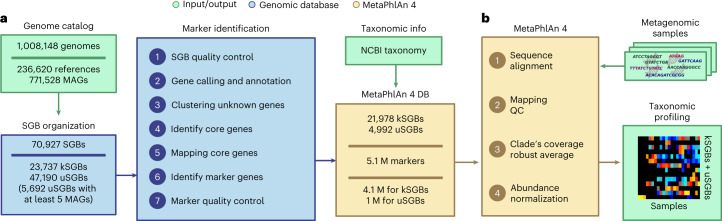
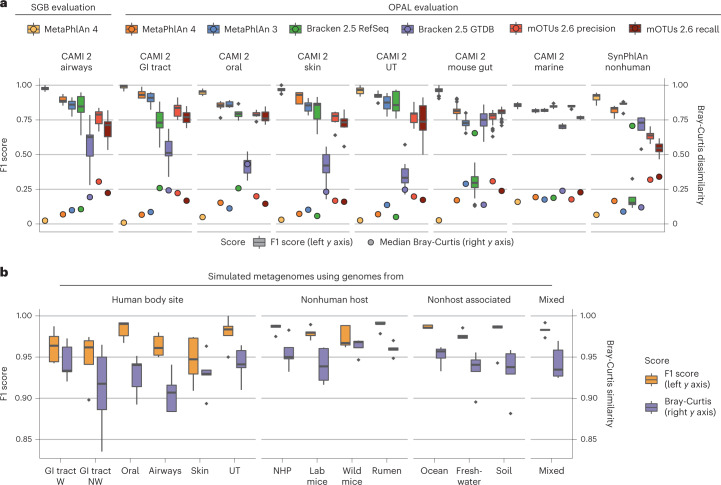
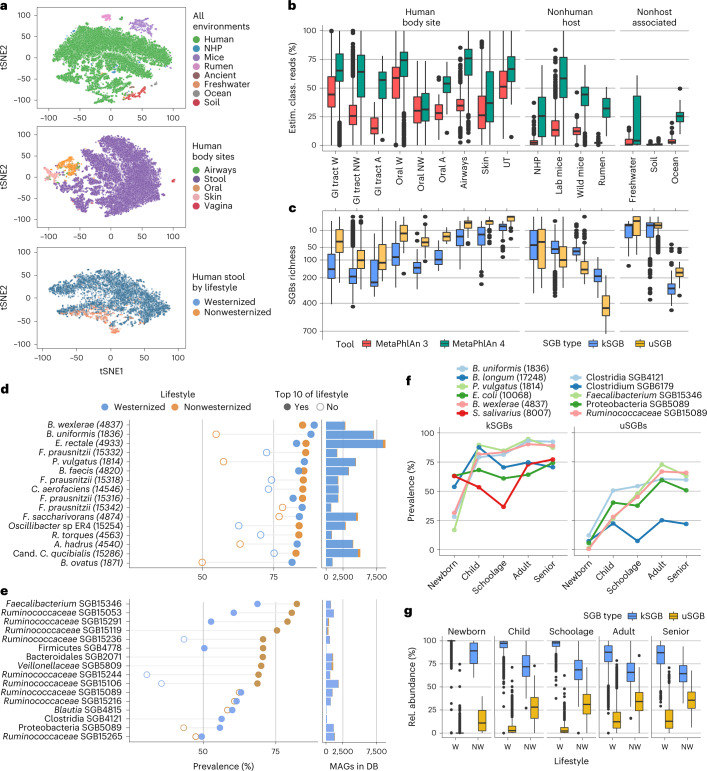
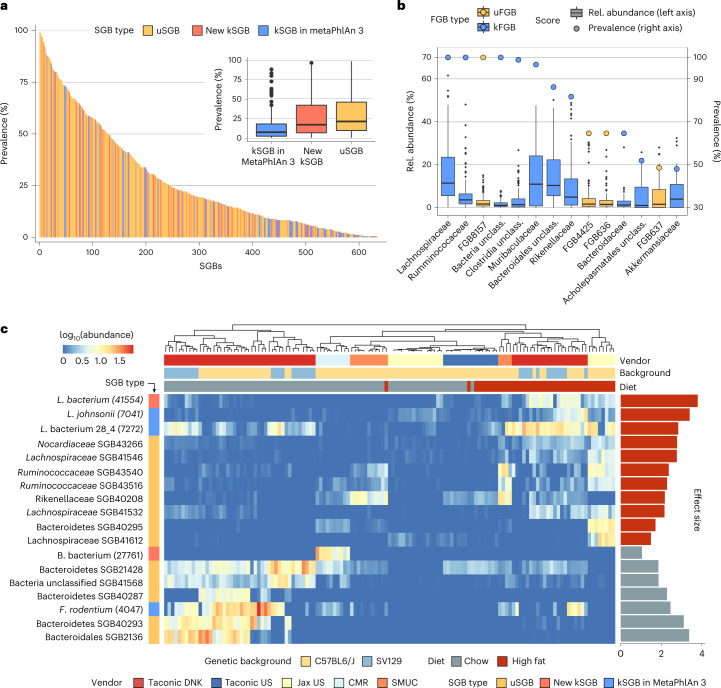
Verification
Claims the paper makes
The claims and statistics of this paper haven’t been checked yet.
Free: it reads the open-access text and checks the first 5 claims that cite a source we can check. Create a free account to check every claim.
Claims other papers make about this one
Each is checked against this paper’s own text: does it say what the citing paper says it does?
The cited source says what the claim attributes to it.
In the citing paper
“we performed a meta-analysis and mega-analysis of stools taxonomically profiled with MetaPhlAn 4 (ref. 37) and from patients enrolled in 12 cohorts from eight published studies26,38–44 across three cancer types, and classified as responders (n = 248) or non-responders (n = 513) based on RECIST1.1 criteria response rates”
From Gut OncoMicrobiome Signatures (GOMS) as next-generation biomarkers for cancer immunotherapy (2023) · cites this paper as [37]
The cited source says what the claim attributes to it.
In the citing paper
“We further performed strain-level and strain-matching analysis via StrainPhlAn 4 84 (STAR Methods) and identified potential transmission patterns for some food-human overlapping SGBs (Figures 6 and S6).”
From Unexplored microbial diversity from 2,500 food metagenomes and links with the human microbiome. (2024) · cites this paper as [84]
The check wasn’t confident either way, so it gives no verdict — never disputed.
In the citing paper
“A meta- and mega-analysis of stools obtained from patients with cancer treated with ICIs showed that GOMS associated with ICI resistance comprised microorganisms affiliated with chronic inflammation and immunosuppression and oral genera, and were shared across various pathological disorders.22,155”
From Melanoma and microbiota: Current understanding and future directions (2024) · cites this paper as [155]
Experimental — accuracy not yet measuredIn the citing paper
“We used MetaPhlAn 4 (ref. 37) for microbiome taxonomic profiling of stool samples from 1,879 adults across eight different cancer types (included in 30 cohorts from 23 published studies)25–29,38–55 and from a control group comprising 5,341 individuals without cancer (included in 17 cohorts from 14 published studies)”
From Gut OncoMicrobiome Signatures (GOMS) as next-generation biomarkers for cancer immunotherapy (2023) · cites this paper as [37]
In the citing paper
“Taxonomic profiling was performed at the level of species-level genome bins (SGBs) using MetaPhlAn4, which represent both existing and yet-to-be-characterized microbial species17.”
From Longitudinal gut microbiome changes in immune checkpoint blockade-treated advanced melanoma (2024) · cites this paper as [17]
1 more claim about this paper
Create a free account to see every claim other papers make about this one.
Self-check
Percentages, sums and reported differences re-computed from the paper’s own numbers.
The self-check needs the paper’s full text.
Citations
Cites
The Sequence Alignment/Map format and SAMtools
Li, H., Handsaker, B., Wysoker, A., Fennell, T., Ruan, J., Homer, N., Marth, G., Abecasis, G., Durbin, R., & 1000 Genome Project Data Processing Subgroup (2009) · Bioinformatics · doi:10.1093/bioinformatics/btp352 · Cited by 62,041 · cited 1×
“For item (1), StrainPhlAn 4 considers as input the reads-to-markers alignment results (in SAM format 96 ) from the MetaPhlAn 4 profiling together with the MetaPhlAn 4 database.”
MethodFast gapped-read alignment with Bowtie 2
Langmead, B., & Salzberg, S. L. (2012) · Nature Methods · doi:10.1038/nmeth.1923 · Cited by 56,400 · cited 1×
“To detect the SGB-specific marker genes, each set of core genes was then aligned against the genomes of the other SGBs using Bowtie 2 (version 2.3.5.1; -- sensitive parameter) 83 .”
MethodInfluentialMAFFT Multiple Sequence Alignment Software Version 7: Improvements in Performance and Usability
Katoh, K., & Standley, D. M. (2013) · Molecular Biology and Evolution · doi:10.1093/molbev/mst010 · Cited by 46,209 · cited 2×
“By default, multiple-sequence alignment is performed by MAFFT 92 , gappy positions (that is, positions with more than 67% of gaps) are trimmed by trimAl 91 and phylogenetic trees are inferred by RAxML 97 .”
MethodInfluentialRAxML version 8: a tool for phylogenetic analysis and post-analysis of large phylogenies
Stamatakis, A. (2014) · Bioinformatics · doi:10.1093/bioinformatics/btu033 · Cited by 32,291 · cited 3×
“By default, multiple-sequence alignment is performed by MAFFT 92 , gappy positions (that is, positions with more than 67% of gaps) are trimmed by trimAl 91 and phylogenetic trees are inferred by RAxML 97 .”
MethodInfluentialIQ-TREE: A Fast and Effective Stochastic Algorithm for Estimating Maximum-Likelihood Phylogenies
Nguyen, L.-T., Schmidt, H. A., von Haeseler, A., & Minh, B. Q. (2015) · Molecular Biology and Evolution · doi:10.1093/molbev/msu300 · Cited by 26,046
Prokka: rapid prokaryotic genome annotation
Seemann, T. (2014) · Bioinformatics · doi:10.1093/bioinformatics/btu153 · Cited by 18,818
Fast and sensitive protein alignment using DIAMOND
Buchfink, B., Xie, C., & Huson, D. H. (2015) · Nature Methods · doi:10.1038/nmeth.3176 · Cited by 14,201
trimAl: a tool for automated alignment trimming in large-scale phylogenetic analyses
Capella-Gutiérrez, S., Silla-Martínez, J. M., & Gabaldón, T. (2009) · Bioinformatics · doi:10.1093/bioinformatics/btp348 · Cited by 12,751 · cited 1×
“By default, multiple-sequence alignment is performed by MAFFT 92 , gappy positions (that is, positions with more than 67% of gaps) are trimmed by trimAl 91 and phylogenetic trees are inferred by RAxML 97 .”
MethodParks, D. H., Imelfort, M., Skennerton, C. T., Hugenholtz, P., & Tyson, G. W. (2015) · Genome Research · doi:10.1101/gr.186072.114 · Cited by 12,496
Diet rapidly and reproducibly alters the human gut microbiome
David, L. A., Maurice, C. F., Carmody, R. N., Gootenberg, D. B., Button, J. E., Wolfe, B. E., Ling, A. V., Devlin, A. S., Varma, Y., Fischbach, M. A., et al. (2014) · Nature · doi:10.1038/nature12820 · Cited by 10,100
Cited by
Next-Generation Sequencing Technology: Current Trends and Advancements
Satam, H., Joshi, K., Mangrolia, U., Waghoo, S., Zaidi, G., Rawool, S., Thakare, R. P., Banday, S., Mishra, A. K., Das, G., et al. (2023) · Biology · doi:10.3390/biology12070997 · Cited by 1,299
Fecal microbiota transplantation plus anti-PD-1 immunotherapy in advanced melanoma: a phase I trial
Routy, B., Lenehan, J. G., Miller, W. H., Jamal, R., Messaoudene, M., Daisley, B. A., Hes, C., Al, K. F., Martinez-Gili, L., Punčochář, M., et al. (2023) · Nature Medicine · doi:10.1038/s41591-023-02453-x · Cited by 526
Self-citationA distinct Fusobacterium nucleatum clade dominates the colorectal cancer niche
Zepeda-Rivera, M., Minot, S. S., Bouzek, H., Wu, H., Blanco-Míguez, A., Manghi, P., Jones, D. S., LaCourse, K. D., Wu, Y., McMahon, E. F., et al. (2024) · Nature · doi:10.1038/s41586-024-07182-w · Cited by 451
Self-citationThe person-to-person transmission landscape of the gut and oral microbiomes
Valles-Colomer, M., Blanco-Míguez, A., Manghi, P., Asnicar, F., Dubois, L., Golzato, D., Armanini, F., Cumbo, F., Huang, K. D., Manara, S., et al. (2023) · Nature · doi:10.1038/s41586-022-05620-1 · Cited by 449
Self-citationIaniro, G., Punčochář, M., Karcher, N., Porcari, S., Armanini, F., Asnicar, F., Beghini, F., Blanco-Míguez, A., Cumbo, F., Manghi, P., et al. (2022) · Nature Medicine · doi:10.1038/s41591-022-01964-3 · Cited by 366
Self-citationKey determinants of success in fecal microbiota transplantation: From microbiome to clinic
Porcari, S., Benech, N., Valles-Colomer, M., Segata, N., Gasbarrini, A., Cammarota, G., Sokol, H., & Ianiro, G. (2023) · Cell Host & Microbe · doi:10.1016/j.chom.2023.03.020 · Cited by 331
Self-citationMetagenomics: An Effective Approach for Exploring Microbial Diversity and Functions
Nam, N., Do, H., Loan Trinh, K., & Lee, N. (2023) · Foods · doi:10.3390/foods12112140 · Cited by 181
Woodcroft, B. J., Aroney, S. T. N., Zhao, R., Cunningham, M., Mitchell, J. A. M., Nurdiansyah, R., Blackall, L., & Tyson, G. W. (2025) · Nature Biotechnology · doi:10.1038/s41587-025-02738-1 · Cited by 175
Nickols, W. A., Kuntz, T. M., Shen, J., Maharjan, S., Mallick, H., Franzosa, E. A., Thompson, K. N., Nearing, J. T., & Huttenhower, C. (2026) · Nature Methods · doi:10.1038/s41592-025-02923-9 · Cited by 249
“1c but with 100 samples for all datasets and either the typical five metadata uncorrelated with read depth or one metadatum correlated with read depth.”
Self-citationEffects of a personalized nutrition program on cardiometabolic health: a randomized controlled trial
Bermingham, K. M., Linenberg, I., Polidori, L., Asnicar, F., Arrè, A., Wolf, J., Badri, F., Bernard, H., Capdevila, J., Bulsiewicz, W. J., et al. (2024) · Nature Medicine · doi:10.1038/s41591-024-02951-6 · Cited by 166
Self-citationLongitudinal gut microbiome changes in immune checkpoint blockade-treated advanced melanoma
Björk, J. R., Bolte, L. A., Maltez Thomas, A., Lee, K. A., Rossi, N., Wind, T. T., Smit, L. M., Armanini, F., Asnicar, F., Blanco-Miguez, A., et al. (2024) · Nature Medicine · doi:10.1038/s41591-024-02803-3 · Cited by 156
“In this Article, we therefore describe the profiling of the gut micro-biome (via shotgun metagenomics followed by MetaPhlAn4 17 and microbial metabolic (MetaCyc) 18 analyses) at four time points during the first 12 weeks of treatment in a multicenter cohort comprising 175 patients treated with ICB for advanced melanom…”
InfluentialSelf-citationUnexplored microbial diversity from 2,500 food metagenomes and links with the human microbiome.
Carlino, N., Blanco-Míguez, A., Punčochář, M., Mengoni, C., Pinto, F., Tatti, A., Manghi, P., Armanini, F., Avagliano, M., Barcenilla, C., et al. (2024) · Cell · doi:10.1016/j.cell.2024.07.039 · Cited by 146
“We further identified SGB-specific marker genes for MetaPhlAn v4 84,86 (Figure 1E) to enable the profiling—even at low abundances—of all SGBs in metagenomes.”
Self-citationFackelmann, G., Manghi, P., Carlino, N., Heidrich, V., Piccinno, G., Ricci, L., Piperni, E., Arrè, A., Bakker, E., Creedon, A. C., et al. (2025) · Nature Microbiology · doi:10.1038/s41564-024-01870-z · Cited by 142
“These microbes were organized into SGBs that represent not only known species (for which reference genomes exist), but also unknown species currently described only by metagenome-assembled genomes (MAGs), thus expanding the resolution of taxonomic profiling 55,56 .”
InfluentialSelf-citationGut OncoMicrobiome Signatures (GOMS) as next-generation biomarkers for cancer immunotherapy
Thomas, A. M., Fidelle, M., Routy, B., Kroemer, G., Wargo, J. A., Segata, N., & Zitvogel, L. (2023) · Nature Reviews Clinical Oncology · doi:10.1038/s41571-023-00785-8 · Cited by 141
Self-citationPiccinno (2025) · doi:10.1038/s41591-025-03693-9 · Cited by 133
“The cardiometabolic microbial signature was estimated, as reported in our previous work 25,36 , as the species most associated with the set of cardiometabolic indices defined in ref.”
InfluentialInternational consensus statement on microbiome testing in clinical practice
Porcari, S., Mullish, B. H., Asnicar, F., Ng, S. C., Zhao, L., Hansen, R., O’Toole, P. W., Raes, J., Hold, G. L., Putignani, L., et al. (2024) · The Lancet. Gastroenterology & hepatology · doi:10.1016/s2468-1253(24)00311-x · Cited by 147
“33,48 The panel stated that appropriate comparison to a matched healthy control group should be included in microbiome testing to aid the interpretation of patient taxonomic and diversity profile (statement 18).”
Self-citationUnveiling microbial diversity: harnessing long-read sequencing technology
Agustinho, D. P., Fu, Y., Menon, V. K., Metcalf, G., Treangen, T. J., & Sedlazeck, F. J. (2024) · Nature Methods · doi:10.1038/s41592-024-02262-1 · Cited by 142
Yan, Q., Li, S., Yan, Q., Huo, X., Wang, C., Wang, X., Sun, Y., Zhao, W., Yu, Z., Zhang, Y., et al. (2024) · Cell · doi:10.1016/j.cell.2024.04.043 · Cited by 137
Rapid species-level metagenome profiling and containment estimation with sylph
Shaw, J., & Yu, Y. W. (2024) · Nature Biotechnology · doi:10.1038/s41587-024-02412-y · Cited by 148
“We attempted to profile MetaPhlAn4 on the 95–100% binned ANI dataset; its database should contain all GTDB-R89 species as its taxonomy can be mapped to GTDB-R207, a newer data-base 11 .”
Piperni, E., Nguyen, L. H., Manghi, P., Kim, H., Pasolli, E., Andreu‐Sánchez, S., Arrè, A., Bermingham, K. M., Blanco‐Míguez, A., Manara, S., et al. (2024) · Cell · doi:10.1016/j.cell.2024.06.018 · Cited by 115
Self-citationSequencing-based analysis of microbiomes
Pinto, Y., & Bhatt, A. S. (2024) · Nature Reviews Genetics · doi:10.1038/s41576-024-00746-6 · Cited by 117
Ten common issues with reference sequence databases and how to mitigate them
Chorlton, S. D. (2024) · Frontiers in Bioinformatics · doi:10.3389/fbinf.2024.1278228 · Cited by 116
Duttagupta, S., Messaoudene, M., Hunter, S., Desîlets, A., Jamal, R., Mihalcioiu, C. L. D., Belkaïd, W., Marcoux, N., Fidelle, M., Suissa, D., et al. (2026) · Nature Medicine · doi:10.1038/s41591-025-04186-5 · Cited by 126
Self-citationBallerini, M., Galié, S., Tyagi, P., Catozzi, C., Raji, H., Nabinejad, A., Macandog, A. D. G., Cordiale, A., Slivinschi, B. I., Kugiejko, K. K., et al. (2025) · Nature Biomedical Engineering · doi:10.1038/s41551-024-01318-z · Cited by 103
Self-citationLiu, S., Rodriguez, J. S., Munteanu, V., Ronkowski, C., Sharma, N. K., Alser, M., Andreace, F., Blekhman, R., Błaszczyk, D., Chikhi, R., et al. (2025) · Nature Reviews Methods Primers · doi:10.1038/s43586-024-00376-6 · Cited by 116
“…gene databases in MetaPhlAn4 are curated by combining marker genes from MAGs with those from reference genomes, thereby augmenting the accuracy and specificity of taxonomic profiling by incorporating genetic data from previously uncharacterized microbial taxa found in a metagenomic sample 137 .”
Elkrief, A., Pidgeon, R., Vareki, S. M., Messaoudene, M., Castagner, B., & Routy, B. (2025) · Nature Reviews Drug Discovery · doi:10.1038/s41573-025-01211-7 · Cited by 109
“• Advantages: widely used, cost-effective 228 and provides high accuracy and depth of microbiome characterization with established bioinformatic pipelines such as MetaPhlAn4 and MetaHIT 229,230 .”
MGnify Genomes: A Resource for Biome-specific Microbial Genome Catalogues
Gurbich, T. A., Almeida, A., Beracochea, M., Burdett, T., Burgin, J., Cochrane, G., Raj, S., Richardson, L., Rogers, A. B., Sakharova, E., et al. (2023) · Journal of Molecular Biology · doi:10.1016/j.jmb.2023.168016 · Cited by 100
Melanoma and microbiota: Current understanding and future directions
Routy, B., Jackson, T., Mählmann, L., Baumgartner, C. K., Blaser, M., Byrd, A., Corvaia, N., Couts, K., Davar, D., Derosa, L., et al. (2024) · Cancer Cell · doi:10.1016/j.ccell.2023.12.003 · Cited by 89
Tierney, B. T., Kim, J., Overbey, E. G., Ryon, K. A., Foox, J., Sierra, M. A., Bhattacharya, C., Damle, N., Najjar, D., Park, J., et al. (2024) · Nature Microbiology · doi:10.1038/s41564-024-01635-8 · Cited by 100
Impact of dietary interventions on pre-diabetic oral and gut microbiome, metabolites and cytokines
Shoer, S., Shilo, S., Godneva, A., Ben-Yacov, O., Rein, M., Wolf, B. C., Lotan‐Pompan, M., Bar, N., Weiss, E. I., Houri‐Haddad, Y., et al. (2023) · Nature Communications · doi:10.1038/s41467-023-41042-x · Cited by 115
Glitza, I. C., Seo, Y. D., Spencer, C. N., Wortman, J. R., Burton, E. M., Alayli, F. A., Loo, C. P., Gautam, S., Damania, A., Densmore, J., et al. (2024) · Cancer Discovery · doi:10.1158/2159-8290.cd-24-0066 · Cited by 87
“Taxonomic profiling of WMS data for both SER-401 and participant samples was performed using the MetaPhlAn4 software (28), which additionally includes taxonomic markers of custom-curated species of interest (involving isolation and functional screening of strains of interest) not available in the…”
Arnold, A., McLellan, S., & Stokes, J. M. (2025) · npj Antimicrobials and Resistance · doi:10.1038/s44259-025-00085-4 · Cited by 108
Manghi, P., Bhosle, A., Wang, K., Marconi, R., Selma‐Royo, M., Ricci, L., Asnicar, F., Golzato, D., Ma, W., Hang, D., et al. (2024) · Nature Microbiology · doi:10.1038/s41564-024-01858-9 · Cited by 91
Self-citationBlanco‐Míguez, A., Gálvez, E. J. C., Pasolli, E., Filippis, F. D., Amend, L., Huang, K. D., Manghi, P., Lesker, T.-R., Riedel, T., Cova, L., et al. (2023) · Cell Host & Microbe · doi:10.1016/j.chom.2023.09.013 · Cited by 90
Self-citationAndreu-Sánchez, S., Blanco-Míguez, A., Wang, D., Golzato, D., Manghi, P., Heidrich, V., Fackelmann, G., Zhernakova, D. V., Kurilshikov, A., Valles-Colomer, M., et al. (2025) · Cell · doi:10.1016/j.cell.2025.04.014 · Cited by 81
Self-citationEmergence and global spread of a dominant multidrug-resistant clade within Acinetobacter baumannii
Li, S., Jiang, G., Wang, S., Wang, M., Wu, Y., Zhang, J., Liu, X., Zhong, L., Zhou, M., Xie, S., et al. (2025) · Nature Communications · doi:10.1038/s41467-025-58106-9 · Cited by 100
Zhu, J., Sun, C., Li, M., Hu, G., Zhao, X., & Chen, W. (2023) · Gut · doi:10.1136/gutjnl-2023-330168 · Cited by 93
“Species-level profiling was performed on all the samples with MetaPhlAn4 (V.4.0.3) 23 with default parameters using the marker gene database of mpa_vJan21_CHOCOPhlAnSGB_202103.”
MethodInfluentialDietary- and host-derived metabolites are used by diverse gut bacteria for anaerobic respiration
Little, A. S., Younker, I. T., Schechter, M. S., Bernardino, P. N., Méheust, R., Stemczynski, J., Scorza, K., Mullowney, M. W., Sharan, D., Waligurski, E., et al. (2024) · Nature Microbiology · doi:10.1038/s41564-023-01560-2 · Cited by 80
“69).”
Next-Generation sequencing transforming clinical practice and precision medicine
Yadav, D., Patil‐Takbhate, B., Khandagale, A. S., Bhawalkar, J., Tripathy, S. P., & Khopkar-Kale, P. (2023) · Clinica Chimica Acta · doi:10.1016/j.cca.2023.117568 · Cited by 83
Primary succession of Bifidobacteria drives pathogen resistance in neonatal microbiota assembly
Shao, Y., Garcia-Mauriño, C., Clare, S., Dawson, N. J. R., Mu, A., Adoum, A., Harcourt, K., Liu, J., Browne, H. P., Stares, M. D., et al. (2024) · Nature Microbiology · doi:10.1038/s41564-024-01804-9 · Cited by 75
“…were from cohorts derived from diverse geographical populations and lifestyles, including Sweden 13,42 (PRJEB6456, days 4–12, N = 37), Israel 14 (PRJNA994433, weeks 1–24, N = 60), the USA (TEDDY cohort 15,16 , PRJNA400115, months 2–6, N = 69) and Bangladesh 17 (PRJNA806984, months 0–2, N = 234).”
Cardiometabolic benefits of a non-industrialized-type diet are linked to gut microbiome modulation
Li, F., Armet, A. M., Korpela, K., Liu, J., Quevedo, R. M., Asnicar, F., Seethaler, B., Rusnak, T., Cole, J. L., Zhang, Z., et al. (2025) · Cell · doi:10.1016/j.cell.2024.12.034 · Cited by 88
Self-citationKim, J., Tierney, B. T., Overbey, E. G., Dantas, E., Fuentealba, M., Park, J., Narayanan, S. A., Wu, F., Najjar, D., Chin, C. R., et al. (2024) · Nature Communications · doi:10.1038/s41467-024-49211-2 · Cited by 96
Faecalibacterium prausnitzii strain EXL01 boosts efficacy of immune checkpoint inhibitors
Bredon, M., Danne, C., Pham, H. P., Ruffié, P., Bessede, A., Rolhion, N., Creusot, L., Brot, L., Alonso, I., Langella, P., et al. (2024) · OncoImmunology · doi:10.1080/2162402x.2024.2374954 · Cited by 74
Self-citationDeep learning methods in metagenomics: a review
Roy, G., Prifti, E., Belda, E., & Zucker, J. (2024) · Microbial Genomics · doi:10.1099/mgen.0.001231 · Cited by 96
Gut microbiota contributes to high-altitude hypoxia acclimatization of human populations
Su, Q., Zhuang, D., Li, Y., Chen, Y., Wang, X.-Y., Ge, M., Xue, T.-Y., Zhang, Q.-Y., Liu, X., Yin, F.-Q., et al. (2024) · Genome biology · doi:10.1186/s13059-024-03373-w · Cited by 76
“Using Metaphlan4 software, we generated abundance matrices [60].”
MethodSimpson, J. B., Walker, M. E., Sekela, J. J., Ivey, S. M., Jariwala, P. B., Storch, C. M., Kowalewski, M. E., Graboski, A. L., Lietzan, A. D., Walton, W. G., et al. (2024) · Cell Host & Microbe · doi:10.1016/j.chom.2024.04.018 · Cited by 78
Wu, H., Lv, B., Zhi, L., Shao, Y., Liu, X., Mitteregger, M., Chakaroun, R., Tremaroli, V., Hazen, S. L., Wang, R., et al. (2025) · Nature Medicine · doi:10.1038/s41591-025-03642-6 · Cited by 79
“31), were used to evaluate the robustness of the taxonomic profiles derived from the reference-free canopy clustering methods described above 25 .”
Meta-analysis of shotgun sequencing of gut microbiota in Parkinson’s disease
Nishiwaki, H., Ueyama, J., Ito, M., Hamaguchi, T., Takimoto, K., Maeda, T., Kashihara, K., Tsuboi, Y., Mori, H., Kurokawa, K., et al. (2024) · npj Parkinson s Disease · doi:10.1038/s41531-024-00724-z · Cited by 86
Robustness of cancer microbiome signals over a broad range of methodological variation
Sepich‐Poore, G. D., McDonald, D. T., Kopylova, E., Guccione, C., Zhu, Q., Austin, G. I., Carpenter, C. S., Fraraccio, S., Wandro, S., Kościółek, T., et al. (2024) · Oncogene · doi:10.1038/s41388-024-02974-w · Cited by 72
Saeedi Saravi, S. S., Pugin, B., Constancias, F., Shabanian, K., Spalinger, M., Thomas, A., Le Gludic, S., Shabanian, T., Karsai, G., Colucci, M., et al. (2025) · Nature Aging · doi:10.1038/s43587-025-00864-8 · Cited by 68
“Taxonomic profiling was performed using kraken2/Bracken2 (parameters, –confidence 0.51) 60 against the mouse microbiota genome catalog (CMMG) (https://ezmeta.unige.ch/CMMG/ Kraken2db/cmmg) 61 .”
InfluentialSelf-citationOdenwald, M. A., Lin, H., Lehmann, C. J., Dylla, N. P., Cole, C. G., Mostad, J. D., Pappas, T. E., Ramaswamy, R., Moran, A., Hutchison, A. L., et al. (2023) · Nature Microbiology · doi:10.1038/s41564-023-01493-w · Cited by 75
“Taxonomy was profiled using metaphlan4 using the resultant high-quality reads 88 .”
MethodThe relationship between the gut microbiota and thyroid disorders
Ludgate, M., Masetti, G., & Soares, P. (2024) · Nature Reviews Endocrinology · doi:10.1038/s41574-024-01003-w · Cited by 80
“151) or Kraken2 (ref.”
Paternal and induced gut microbiota seeding complement mother-to-infant transmission
Dubois, L., Valles‐Colomer, M., Ponsero, A. J., Helve, O., Andersson, S., Kolho, K.-L., Asnicar, F., Korpela, K., Salonen, A., Segata, N., et al. (2024) · Cell Host & Microbe · doi:10.1016/j.chom.2024.05.004 · Cited by 73
Self-citationInflammation and bacteriophages affect DNA inversion states and functionality of the gut microbiota
Carasso, S., Zaatry, R., Hajjo, H., Kadosh-Kariti, D., Ben-Assa, N., Naddaf, R., Mandelbaum, N., Pressman, S., Chowers, Y., Gefen, T., et al. (2024) · Cell Host & Microbe · doi:10.1016/j.chom.2024.02.003 · Cited by 70
Ennis, D., Shmorak, S., Jantscher‐Krenn, E., & Yassour, M. (2024) · Nature Communications · doi:10.1038/s41467-024-45209-y · Cited by 66
A metagenomic catalog of the early-life human gut virome
Zeng, S., Almeida, A., Li, S., Ying, J., Wang, H., Qu, Y., Ross, R. P., Stanton, C., Zhou, Z., Niu, X., et al. (2024) · Nature Communications · doi:10.1038/s41467-024-45793-z · Cited by 70
Wang, Z., Kang, S., Wu, Z., Liu, X., Zhang, X., Wu, Y., Wen, Y., Zhou, X., Zhang, G., Wang, J., et al. (2025) · The ISME Journal · doi:10.1093/ismejo/wraf069 · Cited by 63
“Microbial taxonomic profiles were generated using MetaPhlAn4 (version 3.0.7) [24].”
InfluentialPorcari, S., CICCARESE, C., Heidrich, V., Rondinella, D., Quaranta, G., Severino, A., Arduini, D., Buti, S., Fornarini, G., Primi, F., et al. (2026) · Nature Medicine · doi:10.1038/s41591-025-04189-2 · Cited by 71
“These were then used as input in MetaPhlAn 4 (version 4.1) 11,12 using the marker genes database vJun23_202307 to generate taxonomic profiles at species-level genome bin (SGB) resolution for each sample.”
InfluentialSelf-citationTegegne, H. A., & Savidge, T. (2025) · Gut Microbes · doi:10.1080/19490976.2025.2569739 · Cited by 67
“78 Bars-Cortina et al. 77 conducted a comparative analysis of 16S rRNA and shotgun metagenomics on 156 stool samples spanning healthy individuals, patients with advanced colorectal lesions, and colorectal carcinoma cases.”
Gut micro-organisms associated with health, nutrition and dietary interventions
Asnicar, F., Manghi, P., Fackelmann, G., Baldanzi, G., Bakker, E., Ricci, L., Piccinno, G., Piperni, E., Mladenović, K., Amati, F., et al. (2025) · Nature · doi:10.1038/s41586-025-09854-7 · Cited by 82
“…across age, as well as the inter-population microbiome variability, the existence of several distinct health-associated microbiome configurations 19,46 , the personalized nature of diet’s impact on the gut microbiome 16,47 , the diversity of dietary regimes 48,49 and the effect of social…”
InfluentialSelf-citationClemente‐Suárez, V. J., Redondo-Flórez, L., Rubio-Zarapuz, A., Martín-Rodríguez, A., & Tornero-Aguilera, J. F. (2024) · Biomedicines · doi:10.3390/biomedicines12010221 · Cited by 65
Gopikrishnan, M., Haryini, S., & Doss, C. G. P. (2024) · Journal of Basic Microbiology · doi:10.1002/jobm.202300579 · Cited by 72
Bai, D., Chen, T., Xun, J., Ma, C., Luo, H., Yang, H., Cao, C., Cao, X., Cui, J., Deng, Y., et al. (2025) · iMeta · doi:10.1002/imt2.70001 · Cited by 65
Fecal microbiota transplantation in clinical practice: Present controversies and future prospects
Tian, H., Wang, X., Fang, Z., Li, L., Wu, C., Bi, D., Li, N., Chen, Q., & Qin, H. (2024) · hLife · doi:10.1016/j.hlife.2024.01.006 · Cited by 56
“Remarkably, Meta-PhlAn 4 has forged ahead in de fi ning unique marker genes for an impressive tally of 26,970 species-level genome libraries, including 4992 that occupy the pinnacle of species-level taxonomy, remaining unrecognized by other methods [46].”
Data pre-processing for analyzing microbiome data – A mini review
Zhou, R., Ng, S. K., Sung, J. J. �., Goh, W. W. B., & Wong, S. H. (2023) · Computational and Structural Biotechnology Journal · doi:10.1016/j.csbj.2023.10.001 · Cited by 66
“Metagenomic data, on the other hand, are processed using different workflows and pipelines such as MetaPhlAn [44] and MEGAN [45].”
MethodBiswas, A., Kumari, A., Gaikwad, D. S., & Pandey, D. K. (2023) · OMICS A Journal of Integrative Biology · doi:10.1089/omi.2023.0197 · Cited by 68
Fernández-Pato, A., Sinha, T., Gaćeša, R., Andreu‐Sánchez, S., Gois, M. F. B., Gelderloos-Arends, J., Jansen, D. B. H., Kruk, M., Jaeger, M., Joosten, L. A. B., et al. (2024) · Scientific Reports · doi:10.1038/s41598-024-54353-w · Cited by 63
Nogal, A., Asnicar, F., Vijay, A., Kouraki, A., Visconti, A., Louca, P., Wong, K. E., Baleanu, A.-F., Giordano, F., Wolf, J., et al. (2023) · Gut Microbes · doi:10.1080/19490976.2023.2240050 · Cited by 62
Self-citationReddi, S., Senyshyn, L., Ebadi, M., Podlesny, D., Minot, S. S., Gooley, T. A., Kabage, A. J., Hill, G. R., Lee, S. J., Khoruts, A., et al. (2025) · Nature Communications · doi:10.1038/s41467-025-56375-y · Cited by 57
“MetaPhlAn4 36 with default parameters was used for species-level taxonomic assignment.”
Discovery of disease-adapted bacterial lineages in inflammatory bowel diseases
Kumbhari, A., Cheng, T. N. H., Ananthakrishnan, A. N., Kochar, B., Burke, K. E., Shannon, K., Lau, H., Xavier, R. J., & Smillie, C. S. (2024) · Cell Host & Microbe · doi:10.1016/j.chom.2024.05.022 · Cited by 54
An in-depth evaluation of metagenomic classifiers for soil microbiomes
Edwin, N. R., Fitzpatrick, A., Brennan, F., Abram, F., & O’Sullivan, Ó. (2024) · Environmental Microbiome · doi:10.1186/s40793-024-00561-w · Cited by 59
“This schematic illustrates the steps and criteria employed to curate genomes of bacteria, archaea, and fungi from various databases and 4 were mpa_v30_CHOCOPhlAn_201901 and mpa_ vJan21_CHOCOPhlAnSGB_202103, respectively [32].”
MethodAI-empowered human microbiome research
Tian, Z., & Zhao, F. (2025) · Gut · doi:10.1136/gutjnl-2025-335946 · Cited by 84
“16 For instance, k - mer-based approaches such as Kraken 2 enable fast taxonomic profiling by leveraging short sequence patterns rather than full alignments.”
Sun, L., Li, Z., Hu, C., Ding, J., Zhou, Q., Pang, G., Wu, Z., Yang, R., Li, S., Li, J., et al. (2023) · Aging Cell · doi:10.1111/acel.14028 · Cited by 56
“Additionally, we conducted a taxonomic and compositional analysis of the metagenome by the Metaphlan4 (V 4.0.6) (Blanco-Míguez et al., 2023) tool using the MetaPhlAn database of marker genes mpa_vOct22_CHOCOPhlAnSGB_202212.”
MethodResultInfluentialConsistent signatures in the human gut microbiome of longevous populations
Chen, S., Zhang, Z., Liu, S., Chen, T., Lu, Z., Zhao, W., Mou, X., & Liu, S. (2024) · Gut Microbes · doi:10.1080/19490976.2024.2393756 · Cited by 56
Krueger, M. E., Boles, J. S., Simon, Z. D., Alvarez, S. D., McFarland, N. R., Okun, M. S., Zimmermann, E. M., Forsmark, C. E., & Tansey, M. G. (2025) · npj Parkinson's Disease · doi:10.1038/s41531-025-00894-4 · Cited by 57
“Following QC, sequences were pro fi led using MetaPhlAn4 [https:// huttenhower.sph.harvard.edu/metaphlan] (RRID:SCR_004915) a computational tool permitting the taxonomic classi fi cation of microbial commu-nitiesincludingbacteria,archaea,andeukaryotes 105 .”
Gut microbiome strain-sharing within isolated village social networks
Beghini, F., Pullman, J., Alexander, M., Shridhar, S. V., Prinster, D., Singh, A., Matute Juárez, R., Airoldi, E. M., Brito, I. L., & Christakis, N. A. (2025) · Nature · doi:10.1038/s41586-024-08222-1 · Cited by 51
Self-citationInhibiting the cGAS-STING Pathway in Ulcerative Colitis with Programmable Micelles
Uthaman, S., Parvinroo, S., Mathew, A. P., Jia, X., Hernandez, B., Proctor, A., Sajeevan, K. A., Nenninger, A. S., Long, M. J., Park, I., et al. (2024) · ACS Nano · doi:10.1021/acsnano.3c11257 · Cited by 52
Veillonella intestinal colonization promotes C. difficile infection in Crohn’s disease
Yang, Z., Wang, J., Chen, Y., Chen, T., Shen, Z., Wang, Y., Jian, Y., Xiang, G., Ma, X., Zhao, N., et al. (2025) · Cell Host & Microbe · doi:10.1016/j.chom.2025.07.019 · Cited by 54
Multi-omics analysis reveals the key factors involved in the severity of the Alzheimer’s disease
Meng, L., Jin, H., Yulug, B., Altay, O., Li, X., Hanoglu, L., Cankaya, S., Coskun, E., Idil, E., Nogaylar, R., et al. (2024) · Alzheimer's Research & Therapy · doi:10.1186/s13195-024-01578-6 · Cited by 49
“The analysis presented utilized MetaPhlAn4 as the primary tool [13].”
MethodLindner, B. G., Gerhardt, K., Feistel, D. J., Rodriguez‐R, L. M., Hatt, J. K., & Konstantinidis, K. T. (2023) · International Journal of Food Microbiology · doi:10.1016/j.ijfoodmicro.2023.110488 · Cited by 57
Chen, Q., Wu, C., Xu, J., Ye, C., Chen, X., Tian, H., Zong, N., Zhang, S., Li, L., Gao, Y., et al. (2024) · Cell Host & Microbe · doi:10.1016/j.chom.2024.01.013 · Cited by 51
Transmission and dynamics of mother-infant gut viruses during pregnancy and early life
Garmaeva, S., Sinha, T., Gulyaeva, A. A., Kuzub, N., Spreckels, J. E., Andreu‐Sánchez, S., Gaćeša, R., Vila, A. V., Brushett, S., Kruk, M., et al. (2024) · Nature Communications · doi:10.1038/s41467-024-45257-4 · Cited by 51
“Taxonomic composition of totalmetagenomes waspro fi led using the MetaPhlAn4 tool with the MetaPhlAn database of marker genes mpa_vJan21 and the ChocoPhlAn SGB database (202103) 39 .”
BackgroundMethodResultInfluentialRegional antimicrobial resistance gene flow among the One Health sectors in China
Feng, Y., Lu, X., Zhao, J., Li, H., Xu, J., Li, Z., Wang, M., Peng, Y., Tian, T., Yuan, G., et al. (2025) · Microbiome · doi:10.1186/s40168-024-01983-x · Cited by 52
“0.2 [32] with default parameters.”
InfluentialManghi, P., Blanco‐Míguez, A., Manara, S., Nabinejad, A., Cumbo, F., Beghini, F., Armanini, F., Golzato, D., Huang, K. D., Thomas, A. M., et al. (2023) · Cell Reports · doi:10.1016/j.celrep.2023.112464 · Cited by 52
Self-citationSoil microbial ecology through the lens of metatranscriptomics
Peng, J., Zhou, X., Rensing, C., Liesack, W., & Zhu, Y. (2023) · Soil Ecology Letters · doi:10.1007/s42832-023-0217-z · Cited by 70
Diet, Microbiome, and Inflammation Predictors of Fecal and Plasma Short-Chain Fatty Acids in Humans
Oliver, A., Alkan, Z., Stephensen, C. B., Newman, J. W. I., Kable, M. E., & Lemay, D. G. (2024) · Journal of Nutrition · doi:10.1016/j.tjnut.2024.08.012 · Cited by 53
Human microbiome acquisition and transmission
Heidrich, V., Valles‐Colomer, M., & Segata, N. (2025) · Nature Reviews Microbiology · doi:10.1038/s41579-025-01166-x · Cited by 56
Self-citationFernandes, R., Jabbarizadeh, B., Rajeh, A., Hong, M. M. Y., Baines, K. J., Ernst, S., Winquist, E., Ali, A. S., Penny, S. L., Figueredo, R., et al. (2026) · Nature Medicine · doi:10.1038/s41591-025-04183-8 · Cited by 57
DendroPy 5: a mature Python library for phylogenetic computing
Moreno, M. A., Holder, M. T., & Sukumaran, J. (2024) · The Journal of Open Source Software · doi:10.21105/joss.06943 · Cited by 54
A blueprint for contemporary studies of microbiomes
Bindels, L. B., Watts, J. E. M., Theis, K. R., Carrión, V. J., Ossowicki, A., Seifert, J., Oh, J., Shao, Y., Hilty, M., Kumar, P., et al. (2025) · Microbiome · doi:10.1186/s40168-025-02091-0 · Cited by 52
“Improvements in genome-resolved metagenomics have enabled the creation of comprehensive and ecosystem-specific catalogs of population genomes or taxonomically annotated genes [52–57].”
Orberg, E. T., Meedt, E., Hiergeist, A., Xue, J., Heinrich, P., Ru, J., Ghimire, S., Miltiadous, O., Lindner, S., Tiefgraber, M., et al. (2024) · Nature Cancer · doi:10.1038/s43018-023-00669-x · Cited by 49
Challenges in IBD Research 2024: Preclinical Human IBD Mechanisms
Ciorba, M. A., Konnikova, L., Hirota, S. A., Lucchetta, E. M., Turner, J. R., Slavin, A., Johnson, K., Condray, C. D., Hong, S., Cressall, B. K., et al. (2024) · Inflammatory Bowel Diseases · doi:10.1093/ibd/izae081 · Cited by 47
Dmitrijeva, M., Ruscheweyh, H., Feer, L., Li, K., Miravet‐Verde, S., Sintsova, A., Mende, D. R., Zeller, G., & Sunagawa, S. (2024) · Nucleic Acids Research · doi:10.1093/nar/gkae1004 · Cited by 56
“For example, the MetaPhlAn (v.4.0) database includes 169 111 isolate / single-cell genomes and 560 084 MAGs clustered into 70 927 species-level genome bins ( 11 ).”
InfluentialLongitudinal phage–bacteria dynamics in the early life gut microbiome
Tisza, M. J., Lloyd, R. E., Hoffman, K. L., Smith, D. P., Rewers, M., Cregeen, S. J., & Petrosino, J. F. (2025) · Nature Microbiology · doi:10.1038/s41564-024-01906-4 · Cited by 48
Liébana-García, R., López‐Almela, I., Olivares, M., Romaní‐Pérez, M., Manghi, P., Torres-Mayo, A., Tolosa-Enguís, V., Flor‐Duro, A., Bullich‐Vilarrubias, C., Rubio, T., et al. (2025) · Nature Microbiology · doi:10.1038/s41564-025-01989-7 · Cited by 53
“Samples were downloaded from NCBI and profiled taxonomically using MetaPhlAn 4 (Jun23 database) 49 .”
Self-citationBarcenilla, C., Cobo-Díaz, J. F., Filippis, F. D., Valentino, V., Cabrera‐Rubio, R., O’Neil, D., de Sanchez, L. M., Armanini, F., Carlino, N., Blanco‐Míguez, A., et al. (2024) · Nature Protocols · doi:10.1038/s41596-023-00949-x · Cited by 47
Self-citationUnlocking the Potential of Metagenomics with the PacBio High-Fidelity Sequencing Technology
Han, Y., He, J., Li, M., Peng, Y., Jiang, H., Zhao, J., Li, Y., & Deng, F. (2024) · Microorganisms · doi:10.3390/microorganisms12122482 · Cited by 48
“…enable researchers to extract and reconstruct microbial genomes from com ‐ plex communities, providing deeper insights into their diversity and ecological functions. sequencing making it a critical tool for advancing research on microbial functions and their associations with diseases [27,28].”
Metagenomic estimation of dietary intake from human stool
Diener, C., Holscher, H. D., Filek, K., Corbin, K. D., Moissl-Eichinger, C., & Gibbons, S. M. (2025) · Nature Metabolism · doi:10.1038/s42255-025-01220-1 · Cited by 38
Fan, K.-C., Lin, C.-C., Chiu, Y., Koh, S., Liu, Y., & Chuang, Y. (2025) · Alzheimer s Research & Therapy · doi:10.1186/s13195-025-01769-9 · Cited by 49
“0.6) pipeline [16] and its default database mpa_vOct22_ CHOCOPhlAnSGB_202212.”
InfluentialGut Microbiota Modulation through Akkermansia spp . Supplementation Increases CAR T-cell Potency
Marcos-Kovandzic, L., Avagliano, M., Khelil, M. B., Srikanthan, J., Abdallah, R., Petrocelli, V., Rengassamy, J., Alfaro, A., Bied, M., Fidelle, M., et al. (2025) · Cancer Discovery · doi:10.1158/2159-8290.cd-24-1230 · Cited by 45
“Indoles were analyzed by pseudo-targeted analysis with ultrahigh-performance liquid chromatography–high-resolution accurate mass, performed on a U3000 (Dionex)/Orbitrap Q Exactive (Thermo Fisher Scientific) coupling, as previously described (59).”
InfluentialSelf-citation
Metadata
- Authors
- Blanco-Míguez, A., Beghini, F., Cumbo, F., McIver, L. J., Thompson, K. N., Zolfo, M., Manghi, P., Dubois, L., Huang, K. D., Thomas, A. M., Nickols, W. A., Piccinno, G., Piperni, E., Punčochář, M., Valles-Colomer, M., Tett, A., Giordano, F., Davies, R., Wolf, J., Berry, S. E., Spector, T. D., Franzosa, E. A., Pasolli, E., Asnicar, F., Huttenhower, C., & Segata, N.
- Affiliations
- University of Trento (IT)
- Broad Institute (US)
- University of Vienna (AT)
- ZOE (United Kingdom) (GB)
- King's College London (GB)
- University of Naples Federico II (IT)
- Corresponding author
- Segata, Nicola
- ORCID
- Blanco-Míguez, Aitor
- Beghini, Francesco
- Cumbo, Fabio
- McIver, Lauren J.
- Thompson, Kelsey N.
- Zolfo, Moreno
- Manghi, Paolo
- Huang, Kun D.
- Thomas, Andrew Maltez
- Nickols, William A.
- Piccinno, Gianmarco
- Piperni, Elisa
- Punčochář, Michal
- Tett, Adrian
- Giordano, Francesca
- Davies, Richard
- Wolf, Jonathan
- Berry, Sarah E.
- Spector, Tim D.
- Franzosa, Eric A.
- Pasolli, Edoardo
- Asnicar, Francesco
- Huttenhower, Curtis
- Segata, Nicola
- Venue
- Nature Biotechnology
- Published
- 2023-02-23
- Volume
- 41
- Issue
- 11
- Pages
- 1633-1644
- ISSN
- 0733-222X (ISSN-L)
- 1087-0156
- 1546-1696
- PMC
- PMC10635831
- OpenAlex
- W4321611856
- Semantic Scholar
- e28eff291a1b5c8f0a98f826de240f846be03334
- Cited by
- 1,442
- References
- 101
- Citations by year
- 2026: 517 · 2025: 521 · 2024: 309 · 2023: 93
- FWCI
- 129.03
- Type
- journal article
- Language
- en
- Open access
- hybrid
- doi.org
- Licence
- cc-by
- creativecommons.org/licenses/by/4.0 (tdm)
- creativecommons.org/licenses/by/4.0 (vor)
- Locations
- Nature Biotechnology (publishedVersion, cc-by)
- PubMed Central (publishedVersion, cc-by)
- PubMed (publishedVersion)
- Iris (University of Trento) (submittedVersion, cc-by)
- Funders
- Harvard T.H. Chan School of Public Health
- Cancer Research UK (#C10674/A27140, A27140)
- National Institutes of Health (1u01ca230551-01a1, H2020, 1U01CA230551)
- Horizon 2020 Framework Programme (OncoBiome 825410, 818368, ONCOBIOME-825410 project, MASTER-818368 project, 825410)
- National Cancer Institute (1U01CA230551, U01 CA230551)
- National Institute of Allergy and Infectious Diseases (U19AI110820)
- National Institute of Diabetes and Digestive and Kidney Diseases (R24DK110499, P30DK043351)
- H2020 European Research Council (716575)
- HORIZON EUROPE European Research Council (101045015)
- Topics
- Life Sciences › Biochemistry, Genetics and Molecular Biology › Molecular Biology › Genomics and Phylogenetic Studies
- Life Sciences › Biochemistry, Genetics and Molecular Biology › Molecular Biology › Gut microbiota and health
- Physical Sciences › Environmental Science › Ecology › Microbial Community Ecology and Physiology
- Keywords
- metagenome-assembled genomes, marker genes, human gut microbiome, rumen microbiome, microbial biomarkers, metagenome assembly
- MeSH terms
- Gastrointestinal Microbiome, Animals, Humans, Phylogeny, Mice, Metagenome, Metagenomics, Microbiota
About these checks
Registry, retraction, Cites and statistics results are computed, not judged, with one exception: a printed reference that no index lists is read once by a model before it counts as a citation error. Claims are extracted by a model and kept only when their quote appears verbatim in the text; each cited source is then checked, with a model’s help, for whether it says what the claim relies on. Those verdicts can be wrong — read the claim’s quote and the cited source before relying on one.
Statistics and arithmetic are recomputed, not judged.
Confidence bands are shown only for fields calibrated on our annotated test set. None is calibrated yet, so no band is shown.
What counts as a claim ›How we measure confidence ›How we check this ›
Are you an author, or do you see a problem with this page? Request a review
Data sources
Bibliographic data: Semantic Scholar, OpenAlex, Crossref.
Contains information from the Semantic Scholar Academic Graph Datasets, made available under the ODC Attribution License (ODC-BY 1.0).
Semantic Scholar’s data is described in: Kinney, R., et al. (2023). The Semantic Scholar Open Data Platform. arXiv:2301.10140.
