

The future of digital health with federated learning
Open accessThe DOI matches its Crossref record; 75 of the 76 references it cites were found in a registry or an index, and 1 are not checked yet; 31 of the 51 sources its claims cite were checked for support.
Abstract
Data-driven machine learning (ML) has emerged as a promising approach for building accurate and robust statistical models from medical data, which is collected in huge volumes by modern healthcare systems. Existing medical data is not fully exploited by ML primarily because it sits in data silos and privacy concerns restrict access to this data. However, without access to sufficient data, ML will be prevented from reaching its full potential and, ultimately, from making the transition from research to clinical practice. This paper considers key factors contributing to this issue, explores how federated learning (FL) may provide a solution for the future of digital health and highlights the challenges and considerations that need to be addressed.
Verified 2026-11-25 · 1 reference not checked yet
Overview
CoChat Summary
TL;DR
This perspective paper argues that federated learning (FL) is a promising way to train medical AI across institutions without centralizing sensitive data, potentially improving accuracy, robustness, and privacy in digital health. It also emphasizes that FL does not remove core challenges such as data heterogeneity, privacy leakage, and the need for standardization and governance.
Key findings
- FL is presented as a learning paradigm that lets multiple parties train collaboratively without exchanging or centralizing datasets, by moving the model to the data rather than the data to the model.
- The paper states that recent research has shown FL models can achieve performance comparable to centrally hosted data sets and superior to models trained on isolated single-institution data.
- Reported application areas already include EHR tasks such as finding clinically similar patients and predicting hospitalizations due to cardiac events, mortality, and ICU stay time, as well as medical imaging tasks such as whole-brain segmentation, brain tumor segmentation, and fMRI classification.
- Concrete initiatives mentioned include a collaboration across 4 hospitals in France (HealthChain), an international federation of 30 healthcare institutions (FeTS), and a project across 10 pharmaceutical companies (Melloddy).
Methods
- Not stated in the paper.
- The article is a perspective/consensus paper rather than an empirical study; it synthesizes prior work and examples to discuss FL’s promise, current uses, and technical considerations.
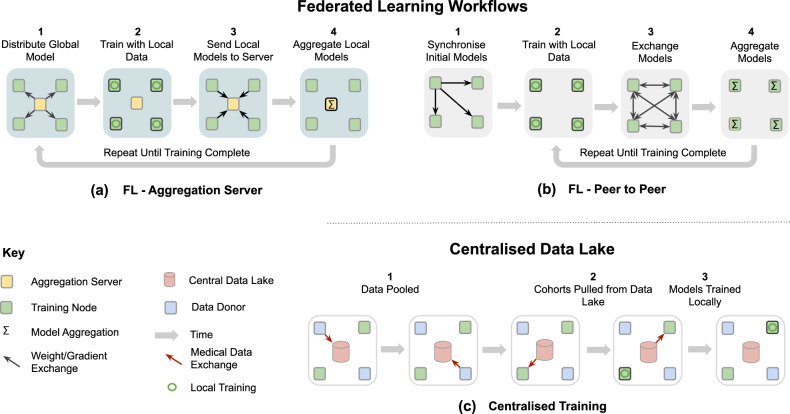
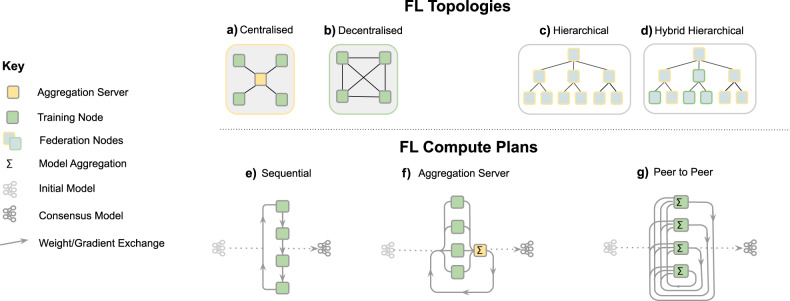
- The text describes FL workflows, including aggregation-server and peer-to-peer topologies, and discusses mechanisms such as FedAvg, FedProx, domain adaptation, and differential privacy at a conceptual level.
Limitations
- The paper explicitly states that FL does not solve all issues inherent to learning on medical data; success still depends on data quality, bias, and standardization.
- It states that FL does not eliminate privacy risks: models can still memorize information, and gradients/model updates may leak private data through inversion or adversarial attacks.
- Evident from the text: this is a perspective article, so it does not report original experimental results, sample sizes, or statistical testing.
Model-written summary. Check it against the paper before relying on it.
Integrity signals
Registry
Cites
Statistics
Figures
Verification
Claims the paper makes
16 Valid · 0 Not valid · 4 Not checked · 19 Own results and interpretations
The cited sources support only part of this claim — read each source’s verdict below.
In the paper
“Modern DL models feature millions of parameters that need to be learned from sufficiently large curated data sets in order to achieve clinical-grade accuracy, while being safe, fair, equitable and generalising well to unseen data2–5.”
§ The future of digital health with federated learning > Introduction
What the sources say
- Not checked — no full text of the sourcecites [2] Wang F Casalino LP Khullar D Deep learning in medicine—promise, progress, and challenges JAMA Intern. Med. 2019 179 293 294 10.1001/jamainternmed.2018.7117 30556825 source
- Not checked — no full text of the sourcecites [3] Chartrand G Deep learning: a primer for radiologists Radiographics 2017 37 2113 2131 10.1148/rg.2017170077 29131760 source
- Partly supportedcites [4] De Fauw J Clinically applicable deep learning for diagnosis and referral in retinal disease Nat. Med. 2018 24 1342 10.1038/s41591-018-0107-6 30104768 sourceExperimental — accuracy not yet measured
Split into 2 atoms — 0 confirmed, 2 partially supported, 0 disputed, 0 misattributed, 0 unverifiable. Expand the claim to see per-atom verdicts.
- Partly supportedcites [5] Sun, C., Shrivastava, A., Singh, S. & Gupta, A. Revisiting unreasonable effectiveness of data in deep learning era. In Proceedings of the IEEE international conference on computer vision, 843–852 (IEEE, 2017). sourceExperimental — accuracy not yet measured
Split into 2 atoms — 0 confirmed, 2 partially supported, 0 disputed, 0 misattributed, 0 unverifiable. Expand the claim to see per-atom verdicts.
plainstates a cause- Asserted: passes — The authors put it forward as true.
- Checkable: passes — It can be checked against evidence.
- Load-bearing: passes — The paper’s conclusions depend on it.
- Based: passes — The paper gives a reason why it holds.
The cited sources support only part of this claim — read each source’s verdict below.
In the paper
“Existing medical data is not fully exploited by ML primarily because it sits in data silos and privacy concerns restrict access to this data.”
§ The future of digital health with federated learning > Abstract
What the sources say
- Partly supportedcites [6] Van Panhuis WG A systematic review of barriers to data sharing in public health BMC Public Health 2014 14 1144 10.1186/1471-2458-14-1144 25377061 PMC4239377 sourceExperimental — accuracy not yet measured
The Background describes routinely collected public-health data as underused, and Results > Legal barriers says privacy concerns can lead to restrictive data-access policies. Results > Technical barriers describes difficulties integrating datasets. The paper does not establish that machine learning is the affected use or that data silos and privacy are the primary reasons medical data is underexploited. (LLM, conf=0.87)
- Partly supportedcites [7] Rocher L Hendrickx JM De Montjoye Y-A Estimating the success of re-identifications in incomplete datasets using generative models Nat. Commun. 2019 10 1 9 10.1038/s41467-019-10933-3 31337762 PMC6650473 sourceExperimental — accuracy not yet measured
The Introduction (page not provided) says medical and other personal data can advance AI, while privacy concerns affect its collection, use, and sharing. It does not say that medical data sits in silos or that silos and privacy restrictions are the primary reasons ML underuses it. (LLM, conf=0.85)
plainstates a cause- Asserted: passes — The authors put it forward as true.
- Checkable: passes — It can be checked against evidence.
- Load-bearing: passes — The paper’s conclusions depend on it.
- Based: passes — The paper gives a reason why it holds.
- Partly supported
The cited sources support only part of this claim — read each source’s verdict below.
In the paper
“The more rounds of local training are performed, the less it is guaranteed that the overall procedure is minimising (Eq. 1)9,12.”
§ The future of digital health with federated learning > Technical considerations > Federated learning definition
What the sources say
- Partly supportedcites [9] McMahan, B., Moore, E., Ramage, D., Hampson, S. & y Arcas, B. A. Communication-efficient learning of deep networks from decentralized data. In Artificial Intelligence and Statistics, 1273–1282. https://scholar.google.de/scholar?hl=de&as_sdt=0%2C5&q=Communicationefficient+learning+of+deep+networks+from+decentralized+data&btnG= (2017). sourceExperimental — accuracy not yet measured
The Experimental Results (p. 7) report that with very many local epochs, FedAvg can plateau or diverge on the Shakespeare LSTM task. But they also report no significant convergence degradation for large numbers of local epochs on the MNIST CNN, so the paper does not establish a general rule that more local training makes minimisation of the global loss less assured. (LLM, conf=0.86)
- Supportedcites [12] Kairouz, P. et al. Advances and open problems in federated learning. arXiv preprint arXiv:1912.04977 (2019). source
Section 3.2.1 states that more local updates increase divergence between client models and slow convergence of the training loss. Section 3.2.2 also reports more restrictive convergence bounds for local updates with non-IID data. Together, these support the claim that increasing local training weakens convergence assurances for the global loss. (LLM, conf=0.86)
plainstates a cause- Asserted: passes — The authors put it forward as true.
- Checkable: passes — It can be checked against evidence.
- Load-bearing: unclear — It is unclear whether the paper’s conclusions depend on it.
- Based: passes — The paper gives a reason why it holds.
- Partly supported
A conclusion the paper draws from its own results — it cites no other source for it, so there is none to check. The quote shows it is in the paper.
In the paper
“By linking healthcare institutions, not restricted to research centres, FL can have direct clinical impact.”
§ The future of digital health with federated learning > Data-driven medicine requires federated efforts > Current FL efforts for digital health
plainstates a possible cause- Asserted: passes — The authors put it forward as true.
- Checkable: passes — It can be checked against evidence.
- Load-bearing: passes — The paper’s conclusions depend on it.
- Based: passes — The paper gives a reason why it holds.
A conclusion the paper draws from its own results — it cites no other source for it, so there is none to check. The quote shows it is in the paper.
In the paper
“FL enables collaborative research for, even competing, companies.”
§ The future of digital health with federated learning > Data-driven medicine requires federated efforts > Current FL efforts for digital health
plainstates a cause- Asserted: passes — The authors put it forward as true.
- Checkable: passes — It can be checked against evidence.
- Load-bearing: unclear — It is unclear whether the paper’s conclusions depend on it.
- Based: passes — The paper gives a reason why it holds.
14 references still to check
A free account verifies the references that are still open.
- Probably not a substantial claim. 19
- It may state two separate claims as one. 32
- The quote only partly states this claim. 1
Claims other papers make about this one
Each is checked against this paper’s own text: does it say what the citing paper says it does?
The source backs part of the claim, not all of it — or backs it for a different population, condition or comparison.
In the citing paper
“This is currently addressed by sharing multi-site data, but such centralization is challenging/infeasible to scale due to various limitations.”
From Federated learning enables big data for rare cancer boundary detection (2022) · cites this paper as [10]
Experimental — accuracy not yet measuredThe source backs part of the claim, not all of it — or backs it for a different population, condition or comparison.
In the citing paper
“However, these methods often come with trade-offs in accuracy and computational efficiency.”
From The role of multimodality in clinical disease diagnosis: advances, challenges, and opportunities (2026) · cites this paper as [34]
Experimental — accuracy not yet measuredThe source backs part of the claim, not all of it — or backs it for a different population, condition or comparison.
In the citing paper
“The experts in healthcare and life sciences can use FL to solve the unique problem of data governance by training algorithms behind the hospital's firewall and only sharing models so that data remain secure [31].”
From A comprehensive survey on federated learning techniques for healthcare informatics (2023) · cites this paper as [31]
Experimental — accuracy not yet measuredThe source backs part of the claim, not all of it — or backs it for a different population, condition or comparison.
In the citing paper
“It also improves patient privacy and reduces low latency during the collaboration of multiple hospitals/entities [7].”
From Handling privacy-sensitive medical data with federated learning: Challenges and future directions (2023) · cites this paper as [7]
Experimental — accuracy not yet measuredThe source backs part of the claim, not all of it — or backs it for a different population, condition or comparison.
In the citing paper
“Enabling privacy protected data sharing across clinical centers is advocated as an essential pathway to promote collaborations internationally yet underexplored so far6,7.”
From Federated deep learning for detecting COVID-19 lung abnormalities in CT: a privacy-preserving multinational validation study (2021) · cites this paper as [7]
Experimental — accuracy not yet measured
27 more claims about this paper
Create a free account to see every claim other papers make about this one.
Citations
Cites
LeCun, Y., Bengio, Y., & Hinton, G. (2015) · Nature · doi:10.1038/nature14539 · Cited by 84,126
Communication-Efficient Learning of Deep Networks from Decentralized Data
McMahan, H. B., Moore, E., Ramage, D., Hampson, S., & Arcas, B. A. Y. (2016) · arXiv · doi:10.48550/arxiv.1602.05629 · Cited by 14,215
Sudlow, C., Gallacher, J., Allen, N., Beral, V., Burton, P., Danesh, J., Downey, P., Elliott, P., Green, J., Landray, M., et al. (2015) · PLOS Medicine · doi:10.1371/journal.pmed.1001779 · Cited by 12,728 · cited 2×
“Substantial, albeit smaller, initiatives include the Human Connectome25, the UK Biobank26, the Cancer Imaging Archive (TCIA)27, NIH CXR828, NIH DeepLesion29, the Cancer Genome Atlas (TCGA)30, the Alzheimer’s Disease Neuroimaging Initiative (ADNI)31, as well as medical grand challenges32 such as the CAMELYON challenge3…”
BackgroundAdvances and Open Problems in Federated Learning
Kairouz, P., McMahan, H. B., Avent, B., Bellet, A., Bennis, M., Bhagoji, A. N., Bonawitz, K., Charles, Z., Cormode, G., Cummings, R., et al. (2019) · arXiv · doi:10.48550/arxiv.1912.04977 · Cited by 7,857
Advances and Open Problems in Federated Learning
Kairouz, P., & McMahan, H. B. (2021) · Foundations and Trends in Machine Learning · doi:10.1561/2200000083 · Cited by 7,772
The multimodal brain tumor image segmentation benchmark (BRATS)
Menze, B. H., Jakab, A., Bauer, S., Kalpathy-Cramer, J., Farahani, K., Kirby, J., Burren, Y., Porz, N., Slotboom, J., Wiest, R., et al. (2015) · IEEE Transactions on Medical Imaging · doi:10.1109/tmi.2014.2377694 · Cited by 6,781
Deep Learning with Differential Privacy
Abadi, M., Chu, A., Goodfellow, I., McMahan, H. B., Mironov, I., Talwar, K., & Zhang, L. (2016) · Proceedings of the 2016 ACM SIGSAC Conference on Computer and Communications Security · doi:10.1145/2976749.2978318 · Cited by 6,578 · cited 2×
“Countermeasures, such as limiting the granularity of the shared model updates and to add specific noise to ensure differential privacy [34, 12, 57] may be needed and is still an active area of research [14].”
BackgroundMethodFederated Machine Learning: Concept and Applications
Yang, Q., Liu, Y., Chen, T., & Tong, Y. (2019) · ACM Transactions on Intelligent Systems and Technology · doi:10.1145/3298981 · Cited by 6,322 · cited 4×
“d FL approaches are still under development. 3 Technical Considerations FL is perhaps best-known from the work of Konecnˇ y` et al. [36], but various other definitions have been proposed in literature [14, 11, 15, 9]. These approaches can be realised via different communication architectures (see Figure 1) and respecti…”
BackgroundInfluentialFederated learning: Challenges, methods, and future directions
Li, T., Sahu, A. K., Talwalkar, A., & Smith, V. (2020) · IEEE Signal Processing Magazine · doi:10.1109/msp.2020.2975749 · Cited by 6,210 · cited 3×
“However, there is a trade-off in terms of performance and these techniques may affect for example the accuracy of the final model [10].”
BackgroundMethodShin, H.-C., Roth, H. R., Gao, M., Lu, L., Xu, Z., Nogues, I., Yao, J., Mollura, D., & Summers, R. M. (2016) · IEEE Transactions on Medical Imaging · doi:10.1109/tmi.2016.2528162 · Cited by 5,759
Self-citation
Cited by
Items 101–200 of 3,132
Topology-aware Federated Learning in Edge Computing: A Comprehensive Survey
Wu, J., Dong, F., Leung, H., Zhu, Z., Zhou, J., & Drew, S. (2024) · ACM Computing Surveys · doi:10.1145/3659205 · Cited by 130
“Our survey aims to give readers a good understanding of FL, and the upsides and downsides of several network topology structures, so we have selected the following criteria for inclusion.”
BackgroundA systematic review of federated learning applications for biomedical data
Crowson, M. G., Moukheiber, D., Arévalo, A. R., Lam, B. D., Mantena, S., Rana, A., Goss, D., Bates, D. W., & Celi, L. A. (2022) · PLOS Digital Health · doi:10.1371/journal.pdig.0000033 · Cited by 129
“Observational Health Data Sciences and Informatics, IBM Merge Healthcare, Health Data Research UK), these are challenging to implement and maintain because of technical and regulatory barriers.[1] Another key challenge for the development of robust ML models is the requirement to validate the model on data from extern…”
BackgroundMethodInfluentialFedBERT : When Federated Learning Meets Pre-training
Tian, Y., Wan, Y., Lyu, L., Yao, D., Jin, H., & Sun, L. (2022) · ACM Transactions on Intelligent Systems and Technology · doi:10.1145/3510033 · Cited by 202
“Specifically for the CV task, federated learning has been applied to many applications such as medical image analysis [22, 28, 48, 67], object detection [29], and landmark classification [19].”
MethodMapping the regulatory landscape for artificial intelligence in health within the European Union
Schmidt, J., Schutte, N. M., Buttigieg, S., Novillo-Ortiz, D., Sutherland, E., Anderson, M., de Witte, B., Peolsson, M., Unim, B., Pavlova, M., et al. (2024) · npj Digital Medicine · doi:10.1038/s41746-024-01221-6 · Cited by 192
Multimodal Federated Learning: A Survey
Che, L., Wang, J., Zhou, Y., & Ma, F. (2023) · doi:10.20944/preprints202307.1420.v1 · Cited by 127
Multimodal Federated Learning: A Survey
Che, L., Wang, J., Zhou, Y., & Ma, F. (2023) · Sensors · doi:10.3390/s23156986 · Cited by 185
“The heterogeneity of the data is further amplified within healthcare institutions due to differences in medical equipment, diagnostic methods, and data management practices, making federated collaboration [67] more difficult.”
BackgroundMaassen, O., Fritsch, S., Palm, J., Deffge, S., Kunze, J., Marx, G., Riedel, M., Schuppert, A., & Bickenbach, J. (2021) · Journal of Medical Internet Research · doi:10.2196/26646 · Cited by 125
“In this context, federated ML [30] is a promising approach to obtain powerful, accurate, safe, robust, and unbiased models by enabling multiple organizations to train collaboratively without the need to exchange or centralize datasets.”
BackgroundSynthetic data as an enabler for machine learning applications in medicine
Rajotte, J.-F., Bergen, R., Buckeridge, D. L., El Emam, K., Ng, R., & Strome, E. (2022) · iScience · doi:10.1016/j.isci.2022.105331 · Cited by 124
“Federated learning (FL) is often proposed as a privacy preserving alternative for learning algorithms while keeping the sensitive real data local (Rieke et al., 2020).”
FedMix: Mixed Supervised Federated Learning for Medical Image Segmentation
Wicaksana, J., Yan, Z., Zhang, D., Huang, X., Wu, H., Yang, X. Y., & Cheng, K.-T. T. (2022) · IEEE Transactions on Medical Imaging · doi:10.1109/tmi.2022.3233405 · Cited by 169
Do Gradient Inversion Attacks Make Federated Learning Unsafe?
Hatamizadeh, A., Yin, H., Molchanov, P., Myronenko, A., Li, W., Dogra, P., Feng, A., Flores, M. G., Kautz, J., Xu, D., et al. (2023) · IEEE Transactions on Medical Imaging · doi:10.1109/tmi.2023.3239391 · Cited by 125
“F EDERATED learning (FL) allows the collaborative training of Artificial Intelligence (AI) models without the need to share raw data [1].”
BackgroundSelf-citationA comprehensive survey on federated learning techniques for healthcare informatics
Dasaradharami Reddy, K., & Gadekallu, T. R. (2023) · Computational Intelligence and Neuroscience · doi:10.1155/2023/8393990 · Cited by 126
Recent Advances in Wearable Sensing Technologies
Pérez, A. J., & Zeadally, S. (2021) · Sensors · doi:10.3390/s21206828 · Cited by 158
“The resulting models built using FL can be as robust as models built using centralized ML/DL and are useful in areas such as telecommunications [240] and healthcare [241], amongst others.”
MethodSpecificity-Preserving Federated Learning for MR Image Reconstruction
Feng, C.-M., Yan, Y., Wang, S., Xu, Y. D., Shao, L., & Fu, H. (2023) · IEEE Transactions on Medical Imaging · doi:10.1109/tmi.2022.3202106 · Cited by 154
“In contrast, we propose a specificity-preserving mechanism (c) to consider both “generalized shared in-formation” as well as “client-specific properties”. a large amount of diverse paired data, which is difficult to collect due to the patient privacy issues [31].”
BackgroundDeep learning for computational cytology: A survey
Jiang, H., Zhou, Y., Lin, Y., Chan, R., Liu, J., & Chen, H. (2022) · Medical Image Analysis · doi:10.1016/j.media.2022.102691 · Cited by 150
“Currently, privacy-preserving learning approaches are being explored and studied for improving the availability of multi-center data (Chen et al., 2021), e.g., federated learning (Rieke et al., 2020).”
BackgroundPlant Genotype to Phenotype Prediction Using Machine Learning
Danilevicz, M. F., Gill, M., Anderson, R., Batley, J., Bennamoun, M., Bayer, P. E., & Edwards, D. (2022) · Frontiers in Genetics · doi:10.3389/fgene.2022.822173 · Cited by 150
“Federated learning has seen increasing application in digital health, where data sensitivity is a major issue (Brisimi et al., 2018; Lee et al., 2018; Rieke et al., 2020).”
BackgroundRecent methodological advances in federated learning for healthcare
Zhang, F., Kreuter, D., Chen, Y. K., Dittmer, S., Tull, S., Shadbahr, T., Schut, M. C., Asselbergs, F. W., Kar, S., Sivapalaratnam, S., et al. (2024) · Patterns · doi:10.1016/j.patter.2024.101006 · Cited by 190
Machine learning in rare disease
Banerjee, J., Taroni, J., Allaway, R. J., Prasad, D. V., Guinney, J., & Greene, C. S. (2023) · Nature Methods · doi:10.1038/s41592-023-01886-z · Cited by 163
“Finally, federated learning methods, such as those used in mobile health 75 and electronic healthcare record studies 76 , may allow researchers to develop ML models on data from larger numbers of people with rare diseases while protecting patient privacy.”
MethodMoor, M., Bennett, N., Plečko, D., Horn, M., Rieck, B., Meinshausen, N., Bühlmann, P., & Borgwardt, K. (2023) · eClinicalMedicine · doi:10.1016/j.eclinm.2023.102124 · Cited by 118
“35,36 The availability of the harmonised and annotated dataset used in this study allows for other researchers and clinicians to evaluate their prediction models on external hospital sites, which could be a valuable consideration when making decisions about implementing early warning systems in new…”
MethodÜnal, D., Hammoudeh, M. A. A., Khan, M. A., Abuarqoub, A., Epiphaniou, G., & Hamila, R. (2021) · Computers & Security · doi:10.1016/j.cose.2021.102393 · Cited by 144
Islam, M., Reza, M. T., Kaosar, M. G., & Parvez, M. Z. (2022) · Neural Processing Letters · doi:10.1007/s11063-022-11014-1 · Cited by 158
“Deep learning (DL) approaches to classify medical images usually require an extensive database, including the complete spectrum of feasible anatomies, pathologies, and image scans [1].”
BackgroundApplication of Artificial Intelligence in Orthodontics: Current State and Future Perspectives
Liu, J., Zhang, C., & Shan, Z. (2023) · Healthcare · doi:10.3390/healthcare11202760 · Cited by 177
Federated Learning of Generative Image Priors for MRI Reconstruction
Elmas, G., Dar, S. U. H., Korkmaz, Y., Ceyani, E., Susam, B., Ozbey, M., Avestimehr, S., & Çukur, T. (2023) · IEEE Transactions on Medical Imaging · doi:10.1109/tmi.2022.3220757 · Cited by 115
“Aiming at this limitation, federated learning (FL) is a promising framework that facilitates multi-institutional collaborations via decentralized training of learning-based models [23], [24], [25], [26], [27], [28].”
BackgroundA systematic review on federated learning in medical image analysis
Sohan, M. F., & Basalamah, A. (2023) · IEEE Access · doi:10.1109/access.2023.3260027 · Cited by 114
“A well-known article in this field [12], where the authors discussed the prime factors related to FL in digital health with challenges and solutions.”
BackgroundAddressing 6 challenges in generative AI for digital health: A scoping review
Templin, T., Perez, M. W., Sylvia, S., Leek, J. T., & Sinnott-Armstrong, N. (2024) · PLOS Digital Health · doi:10.1371/journal.pdig.0000503 · Cited by 139
“In response to patient privacy concerns and acknowledgment that models may not perform well in unique patient populations [44], there is interest in federated learning [45,46].”
BackgroundMemory-aware curriculum federated learning for breast cancer classification
Jiménez-Sánchez, A., Tardy, M., González Ballester, M. A., Mateus, D., & Piella, G. (2023) · Computer Methods and Programs in Biomedicine · doi:10.1016/j.cmpb.2022.107318 · Cited by 114
“FL is a potential solution for the future of digital health [48], especially for classification tasks without access to sufficient data.”
BackgroundThe potential for AI to revolutionize conservation: a horizon scan
Reynolds, S. A., Beery, S., Burgess, N. D., Burgman, M. A., Butchart, S. H. M., Cooke, S. J., Coomes, D. A., Danielsen, F., Minin, E. D., Durán, A. P., et al. (2024) · Trends in Ecology & Evolution · doi:10.1016/j.tree.2024.11.013 · Cited by 176
“Using expertise in managing sensitive data from other fi elds, such as healthcare [60], it may be possible through federated learning to train a distributed model for biodiversity characteristics which is an accurate representation of the underlying raw sensitive data and delivers real-time insights…”
Privacy-Preserving Artificial Intelligence Techniques in Biomedicine
Torkzadehmahani, R., Nasirigerdeh, R., Blumenthal, D. B., Kacprowski, T., List, M., Matschinske, J., Spaeth, J., Wenke, N. K., & Baumbach, J. (2022) · Methods of Information in Medicine · doi:10.1055/s-0041-1740630 · Cited by 111
Chen, Y., Wang, L., Qin, X., Wang, J., & Xie, X. (2023) · IEEE Transactions on Neural Networks and Learning Systems · doi:10.1109/tnnls.2023.3297103 · Cited by 155
“Rieke et al. [32] considered key factors to FL, while FedH2L [33] utilized mutual distillation to exchange posteriors on a shared seed set between participants in a decentralized manner.”
BackgroundFIDChain: Federated Intrusion Detection System for Blockchain-Enabled IoT Healthcare Applications
Ashraf, E., Areed, N. F. F., Salem, H., Abdelhay, E. H., & Farouk, A. (2022) · Healthcare · doi:10.3390/healthcare10061110 · Cited by 145
“Rieke et al. [31] discussed the impact of FL on the future of digital healthcare by presenting the issues of medical sensitive data privacy without the need to exchange or centralize datasets.”
BackgroundAbedi, A., Colella, T. J. F., Pakosh, M. T., & Khan, S. S. (2024) · npj Digital Medicine · doi:10.1038/s41746-024-00998-w · Cited by 157
Toward Trustworthy Artificial Intelligence (TAI) in the Context of Explainability and Robustness
chander, B., John, C., Warrier, L., & Gopalakrishnan, K. (2025) · ACM Computing Surveys · doi:10.1145/3675392 · Cited by 108
“The robustness of the technical methods, transparency, and fairness are all taken into account in these scenarios [145].”
Federated learning: Applications, challenges and future directions
Bharati, S., Mondal, M. R. H., Podder, P., & Prasath, V. B. S. (2022) · International Journal of Hybrid Intelligent Systems · doi:10.3233/his-220006 · Cited by 198
“Although the processing and gathering of data presents security problems, i.e., the exposure of patients’ private information [67], In light of patient requirements, the authors of [68] evaluated the current moral/legal problems and proposed ways to utilize patient data apart from revealing privacy.”
Learning disentangled representations in the imaging domain
Liu, X., Sanchez, P., Thermos, S., O’Neil, A. Q., & Tsaftaris, S. A. (2022) · Medical Image Analysis · doi:10.1016/j.media.2022.102516 · Cited by 172
“isting concepts, such as differential privacy (Dwork, 2006) and federated learning (Rieke et al., 2020), with the disentanglement paradigm.”
Lo, J., Yu, T. T., Ma, D., Zang, P., Owen, J. P., Zhang, Q., Wang, R. K., Beg, M. F., Lee, A. Y., Jia, Y., et al. (2021) · Ophthalmology Science · doi:10.1016/j.xops.2021.100069 · Cited by 105
“Frameworks for developing federated learning algorithms such as Tensor fl ow Federated, NVIDIA Clara, 21 and PySyft 22 exist; however, for medical applications with a small number of participating (collaborating) institutions, this approach can be simpli fi ed.”
BackgroundA comprehensive review on federated learning based models for healthcare applications
Sharma, S., & Guleria, K. (2023) · Artificial Intelligence in Medicine · doi:10.1016/j.artmed.2023.102691 · Cited by 128
Jiang, P., Li, X., Shen, H., Chen, Y., Wang, L., Chen, H., Feng, J., & Liu, J. (2023) · Artificial Intelligence Review · doi:10.1007/s10462-023-10588-z · Cited by 142
Naser, M. A., Majeed, A. A., Alsabah, M. Q., Al-Shaikhli, T. R., & Kaky, K. M. (2024) · Algorithms · doi:10.3390/a17020078 · Cited by 168
“To address these issues, the idea of federated learning is introduced, where the focus is on sharing model knowledge instead of sharing raw data [216].”
Personalized Retrogress-Resilient Federated Learning Toward Imbalanced Medical Data
Chen, Z., Yang, C., Zhu, M., Peng, Z., & Yuan, Y. (2022) · IEEE Transactions on Medical Imaging · doi:10.1109/tmi.2022.3192483 · Cited by 97
“In medical FL, hospitals would serve as clients [4] and pursue superior diagnostic performance, where the cost of training the deputy model is completely affordable.”
BackgroundFederated disentangled representation learning for unsupervised brain anomaly detection
Bercea, C. I., Wiestler, B., Rueckert, D., & Albarqouni, S. (2022) · Nature Machine Intelligence · doi:10.1038/s42256-022-00515-2 · Cited by 153
Self-citationSmart home energy management systems: Research challenges and survey
Raza, A., Li, J., Ghadi, Y. Y., Adnan, M., & Ali, M. (2024) · Alexandria Engineering Journal · doi:10.1016/j.aej.2024.02.033 · Cited by 126
Federated learning for medical imaging radiology
Rehman, M. H. U., Pinaya, W. H. L., Nachev, P., Teo, J., Sebastien Ourselin, A., & Cardoso, M. J. (2023) · British Journal of Radiology · doi:10.1259/bjr.20220890 · Cited by 160
“(1) the learning process is initiated by an orchestration server, (2) the server selects, registers, and/or clusters participating institutions, (3) the server broadcasts the training and evaluation configurations along with information about datasets, (4) participating institutions execute their local single/multitas…”
Self-citationMultimodal federated learning: Concept, methods, applications and future directions
Huang, W. X., Wang, D., Ouyang, X., Wan, J., Liu, J., & Li, T. (2024) · Information Fusion · doi:10.1016/j.inffus.2024.102576 · Cited by 132
Pain, C. D., Egan, G. F., & Chen, Z. (2022) · European Journal of Nuclear Medicine and Molecular Imaging · doi:10.1007/s00259-022-05746-4 · Cited by 107
“Methods such as federated learning [137] can provide a more robust means for anonymous use of medical data without the need for explicit data transfer between parties.”
BackgroundHadjiiski, L. M., Cha, K., Chan, H., Drukker, K., Morra, L., Näppi, J. J., Sahiner, B., Yoshida, H., Chen, Q., Deserno, T. M., et al. (2023) · Medical Physics · doi:10.1002/mp.16188 · Cited by 122
Self-citationArtificial intelligence in neurology: opportunities, challenges, and policy implications
Voigtlaender, S., Pawelczyk, J., Geiger, M., Vaios, E., Karschnia, P., Cudkowicz, M., Dietrich, J., Haraldsen, I., Feigin, V. L., Owolabi, M. O., et al. (2024) · Journal of Neurology · doi:10.1007/s00415-024-12220-8 · Cited by 127
“Although partially mitigable with decentralized, privacy-preserving techniques such as federated learning (cf. Glos-sary) [115], poor accessibility limits development of complex models.”
Malik, H., Naeem, A., Naqvi, R. A., & Loh, W.-K. (2023) · Sensors · doi:10.3390/s23020743 · Cited by 115
Federated Semi-Supervised Learning for Medical Image Segmentation via Pseudo-Label Denoising
Qiu, L., Cheng, J., Gao, H., Xiong, W., & Ren, H. (2023) · IEEE Journal of Biomedical and Health Informatics · doi:10.1109/jbhi.2023.3274498 · Cited by 117
Opportunities and Challenges for Machine Learning in Rare Diseases
Decherchi, S., Pedrini, E., Mordenti, M., Cavalli, A., & Sangiorgi, L. (2021) · Frontiers in Medicine · doi:10.3389/fmed.2021.747612 · Cited by 109
“The need to maintain privacy and avoiding to move a significant amount of data inspired what is now commonly under the name of federated ML (53).”
BackgroundImmune digital twins for complex human pathologies: applications, limitations, and challenges
Niarakis, A., Laubenbacher, R., An, G. C., Ilan, Y., Fisher, J., Flobak, Å., Reiche, K., Martínez, M. R., Geris, L., Ladeira, L., et al. (2024) · npj Systems Biology and Applications · doi:10.1038/s41540-024-00450-5 · Cited by 128
Hauschild, A.-C., Lemanczyk, M., Matschinske, J., Frisch, T., Zolotareva, O. I., Holzinger, A., Baumbach, J., & Heider, D. (2022) · Bioinformatics · doi:10.1093/bioinformatics/btac065 · Cited by 110
RoFL: Robustness of Secure Federated Learning
Lycklama, H., Burkhalter, L., Viand, A., Küchler, N., & Hithnawi, A. (2023) · IEEE Symposium on Security and Privacy (S&P) · doi:10.1109/sp46215.2023.10179400 · Cited by 227
“Federated Learning (FL) is a prominent form of collaborative ML that has recently emerged and is already being used in practice to train models for a variety of privacy-sensitive applications [16, 17, 68, 70, 74, 75].”
BackgroundPuente-Castro, A., Rivero, D., Pedrosa, E., Pereira, A., Lau, N., & Fernández-Blanco, E. (2023) · Expert Systems with Applications · doi:10.1016/j.eswa.2023.121240 · Cited by 124
Image biomarkers and explainable AI: handcrafted features versus deep learned features
Rundo, L., & Militello, C. (2024) · European Radiology Experimental · doi:10.1186/s41747-024-00529-y · Cited by 123
Requirements and reliability of AI in the medical context
Balagurunathan, Y., Mitchell, R., & El Naqa, I. (2021) · Physica Medica · doi:10.1016/j.ejmp.2021.02.024 · Cited by 91
“Recently, there has been an extensive effort to learn localized data at multiple sources in a federated fashion that encouraged decentralized learning [80].”
BackgroundFederated learning for 6G-enabled secure communication systems: a comprehensive survey
Sirohi, D., Kumar, N., Rana, P. S., Tanwar, S., Iqbal, R., & Hijji, M. (2023) · Artificial Intelligence Review · doi:10.1007/s10462-023-10417-3 · Cited by 118
van der Velden, J., Asselbergs, F. W., Bakkers, J., Bátkai, S., Bertrand, L., Bezzina, C. R., Bot, I., Brundel, B. J. J. M., Carrier, L., Chamuleau, S. A. J., et al. (2022) · Cardiovascular Research · doi:10.1093/cvr/cvab370 · Cited by 106
“325 Instead of sharing data within a huge central data storage (data-to-code), the algorithms will be distributed across centres (code-to-data) without any actual data sharing.”
BackgroundSplit Federated Learning for 6G Enabled-Networks: Requirements, Challenges, and Future Directions
Hafi, H., Brik, B., Frangoudis, P. A., Ksentini, A., & Bagaa, M. (2024) · IEEE Access · doi:10.1109/access.2024.3351600 · Cited by 90
“In 2020, Rieke et al. [150] introduced a paper that explores the future of digital health with federated learning (FL) and its potential impact on the various healthcare stakeholders.”
Khan, J. I., Khan, J., Ali, F., Ullah, F., Bacha, J., & Lee, S. (2022) · IEEE Access · doi:10.1109/access.2022.3181605 · Cited by 118
“Studies have suggested CT scans to be more sensitive to detection of COVID-19 by 20 percent, as compared to RT-PCR test [461], but this approach may not be economical.”
ResultPackhäuser, K., Gündel, S., Münster, N., Syben, C., Christlein, V., & Maier, A. (2022) · Scientific Reports · doi:10.1038/s41598-022-19045-3 · Cited by 88
Security of federated learning with IoT systems: Issues, limitations, challenges, and solutions
Yaacoub, J.-P. A., Noura, H. N., & Salman, O. (2023) · Internet of Things and Cyber-Physical Systems · doi:10.1016/j.iotcps.2023.04.001 · Cited by 87
Biomedical Big Data Technologies, Applications, and Challenges for Precision Medicine: A Review
Yang, X., Huang, K., Yang, D., Zhao, W., & Zhou, X. (2023) · Global Challenges · doi:10.1002/gch2.202300163 · Cited by 121
Wang, H., Xing, L., Pan, Y. F., Gu, F., Fang, J., Yu, X., Pang, C. P., Chong, K. K. L., Cheung, C. Y.-L., Liao, X., et al. (2024) · Big Data Mining and Analytics · doi:10.26599/bdma.2023.9020024 · Cited by 112
McInnes, G., Sharo, A. G., Koleske, M. L., Brown, J. E. H., Norstad, M., Adhikari, A. N., Wang, S., Brenner, S. E., Halpern, J., Koenig, B. A., et al. (2021) · The American Journal of Human Genetics · doi:10.1016/j.ajhg.2021.03.003 · Cited by 86
“This approach involves a centrally pooled dataset with non-colocated data only; data are not shared directly, and model parameters could be protected by research collaboration agreements, advances in data encryption, and a trusted third-party to oversee data access.(104) The use of artificial intelligence in healthcar…”
BackgroundFederated Learning Systems for Healthcare: Perspective and Recent Progress
Kumar, Y., & Singla, R. P. (2021) · Studies in computational intelligence · doi:10.1007/978-3-030-70604-3_6 · Cited by 121
Evolution of Surgical Robot Systems Enhanced by Artificial Intelligence: A Review
Liu, Y., Wu, X., Sang, Y., Zhao, C., Wang, Y., Shi, B., & Fan, Y. (2024) · Advanced Intelligent Systems · doi:10.1002/aisy.202300268 · Cited by 119
Federated Learning for Privacy-Preserving Open Innovation Future on Digital Health
Long, G., Shen, T., Tan, Y., Gerrard, L., Clarke, A., & Jiang, J. (2022) · Humanity Driven AI · doi:10.1007/978-3-030-72188-6_6 · Cited by 85
Trustworthy federated learning: privacy, security, and beyond
Chen, C., Liu, J., Tan, H., Li, X., Wang, K. I., Li, P., Sakurai, K., & Dou, D. (2024) · Knowledge and Information Systems · doi:10.1007/s10115-024-02285-2 · Cited by 152
“FLiscurrentlyappliedinvariousareas,suchashealthcare [88,133,180],IoT[159],autonomousvehicles[135,242],finance[187],wirelesstechnology [150], and recommendation systems [260].”
Privacy preserving Generative Adversarial Networks to model Electronic Health Records
Venugopal, R., Shafqat, N., Venugopal, I., Tillbury, B. M. J., Stafford, H. D., & Bourazeri, A. (2022) · Neural Networks · doi:10.1016/j.neunet.2022.06.022 · Cited by 97
Hiwale, M., Walambe, R. A., Potdar, V. M., & Kotecha, K. V. (2023) · Healthcare Analytics · doi:10.1016/j.health.2023.100192 · Cited by 114
Medical Imaging Applications of Federated Learning
Sandhu, S. S., Gorji, H. T., Tavakolian, P., Tavakolian, K., & Akhbardeh, A. (2023) · Diagnostics · doi:10.3390/diagnostics13193140 · Cited by 115
“Since McMahan et al. proposed the concept in 2016, researchers have utilized FL in several domains, such as edge computing, blockchain, IOT, and others [1,4–6].”
Artificial intelligence applications in histopathology
Bahadir, C. D., Omar, M., Rosenthal, J., Marchionni, L., Liechty, B., Pisapia, D. J., & Sabuncu, M. R. (2024) · Nature Reviews Electrical Engineering · doi:10.1038/s44287-023-00012-7 · Cited by 113
“Technical approaches such as federated learning aim to work around this problem to enable collaborative training by passing the model weights among institutions without moving the data 166–168 .”
Zhang, C., Xu, Q., Yu, Y., Zhou, G., Zeng, K., Chang, F., & Ding, K. (2024) · Robotics and Computer-Integrated Manufacturing · doi:10.1016/j.rcim.2024.102883 · Cited by 124
Trustworthy AI: Securing Sensitive Data in Large Language Models
Feretzakis, G., & Verykios, V. S. (2024) · AI · doi:10.3390/ai5040134 · Cited by 83
“Compliance challenges include ensuring data minimization [12], obtaining informed consent for data processing [105], and implementing techniques such as anonymization and pseudonymization to protect personal data [29, 111, 112].”
Federated Learning and Its Role in the Privacy Preservation of IoT Devices
Alam, T., & Gupta, R. (2022) · Future Internet · doi:10.3390/fi14090246 · Cited by 93
“Some authors [113] have presented a revolutionary FL architecture for efficient communication and privacy protection that increases IoT performance.”
BackgroundWhere do we stand in AI for endoscopic image analysis? Deciphering gaps and future directions
Ali, S. (2022) · npj Digital Medicine · doi:10.1038/s41746-022-00733-3 · Cited by 107
“…to data due to privacy concerns can make the assessment dif fi cult, the way forward in this direction is to use a federated learning approach that enables assess of multi-centre data and help in the development of generalisable methods that can be both used to build and validate methods 111 .”
MethodFederated Semi-supervised Medical Image Classification via Inter-client Relation Matching
Liu, Q., Yang, H., Dou, Q., & Heng, P. (2021) · Lecture notes in computer science · doi:10.1007/978-3-030-87199-4_31 · Cited by 144
“Recently, federated learning (FL) has emerged as a privacy-preserving solution for this, which allows to learn from distributed data sources by aggregating the locally learned model parameters without exchanging the sensitive health data [8,12,14,16,23].”
BackgroundArtificial Intelligence and Deep Learning for Rheumatologists
McMaster, C., Bird, A., Liew, D. F. L., Buchanan, R. R. C., Owen, C., Chapman, W. W., & Pires, D. E. V. (2022) · Arthritis & Rheumatology · doi:10.1002/art.42296 · Cited by 98
“…learning is not without signi fi - cant challenges, including the high cost of setting up a central server and communication between sites, black box models (particularly if only model weights are shared and not raw data), and no clear best way to aggregate data from heterogeneous sites (76).”
BackgroundJaved, A. R., Saadia, A., Mughal, H., Gadekallu, T. R., Rizwan, M., Maddikunta, P. K. R., Mahmud, M., Liyanage, M., & Hussain, A. (2023) · Cognitive Computation · doi:10.1007/s12559-023-10153-4 · Cited by 82
“In this way, the FL can solve the multi-hospital collaboration issue of lack of adequate data [296].”
BackgroundFederated Networks for Distributed Analysis of Health Data
Hallock, H., Marshall, S., Hoen, P. A. C. ’., Nygård, J. F., Hoorne, B., Fox, C., & Alagaratnam, S. (2021) · Frontiers in Public Health · doi:10.3389/fpubh.2021.712569 · Cited by 96
“Both common operating standards, for example relevant common data formats and structures, quality thresholds, biases, technical imbalances and agreed data definitions required to allow interoperability between nodes (11), and the governance framework agreed upon during the establishment of a FHDN, need to be implement…”
BackgroundPatel, V. A., Bhattacharya, P., Tanwar, S., Gupta, R., Sharma, G., Bokoro, P. N., & Sharma, R. (2022) · IEEE Access · doi:10.1109/access.2022.3201876 · Cited by 79
“[14] provided a detailed survey on FL in the field of healthcare and discussed its implementation challenges.”
BackgroundInfluentialRadiomics in neuro-oncological clinical trials
Lohmann, P., Franceschi, E., Vollmuth, P., Dhermain, F. G., Weller, M., Preusser, M., Smits, M., & Galldiks, N. (2022) · The Lancet Digital Health · doi:10.1016/s2589-7500(22)00144-3 · Cited by 89
Federated Cycling (FedCy): Semi-Supervised Federated Learning of Surgical Phases
Kassem, H., Alapatt, D., Mascagni, P., Karargyris, A., & Padoy, N. (2023) · IEEE Transactions on Medical Imaging · doi:10.1109/tmi.2022.3222126 · Cited by 78
“Given the sensitive nature of medical data, federated learning has naturally been utilized in a variety of healthcare applications [16].”
BackgroundA review of artificial intelligence in prostate cancer detection on imaging
Bhattacharya, I., Khandwala, Y. S., Vesal, S., Shao, W., Yang, Q., Soerensen, S. J. C., Fan, R. E., Ghanouni, P., Kunder, C. A., Brooks, J. D., et al. (2022) · Therapeutic Advances in Urology · doi:10.1177/17562872221128791 · Cited by 123
Closing the life-cycle of normative modeling using federated hierarchical Bayesian regression
Kia, S. M., Huijsdens, H., Rutherford, S. E., de Boer, A. A. A., Dinga, R., Wolfers, T., Berthet, P., Mennes, M., Andreassen, O. A., Westlye, L. T., et al. (2022) · PLoS ONE · doi:10.1371/journal.pone.0278776 · Cited by 101
Translation of AI into oncology clinical practice
El Naqa, I., Karolak, A., Luo, Y., Folio, L., Tarhini, A. A., Rollison, D., & Parodi, K. (2023) · Oncogene · doi:10.1038/s41388-023-02826-z · Cited by 81
Qiao, C., Li, M., Liu, Y., & Tian, Z. (2024) · IEEE Communications Surveys & Tutorials · doi:10.1109/comst.2024.3399612 · Cited by 113
“Protecting the privacy of patients is of great importance, which poses challenges to collecting medical data from different hospitals [262], [263].”
Applications and Techniques for Fast Machine Learning in Science
Deiana, A. M., Tran, N., Agar, J., Blott, M., Di Guglielmo, G., Duarte, J., Harris, P., Hauck, S., Liu, M., Neubauer, M. S., et al. (2022) · Frontiers in Big Data · doi:10.3389/fdata.2022.787421 · Cited by 63
Analyzing Patient Trajectories With Artificial Intelligence
Allam, A., Feuerriegel, S., Rebhan, M., & Krauthammer, M. (2021) · Journal of Medical Internet Research · doi:10.2196/29812 · Cited by 77
“Furthermore, in the last couple of years, there has been an increasing number of studies focused on federated learning [45-47] that allows for AI algorithms to operate on decentralized data sets/systems in a privacy-preserving manner.”
BackgroundTowards efficient communications in federated learning: A contemporary survey
Zhao, Z., Mao, Y., Liu, Y., Song, L., Ouyang, Y., Chen, X., & Ding, W. (2023) · Journal of the Franklin Institute · doi:10.1016/j.jfranklin.2022.12.053 · Cited by 124
IOP-FL: Inside-Outside Personalization for Federated Medical Image Segmentation
Jiang, M., Yang, H., Chen, C., & Dou, Q. (2023) · IEEE Transactions on Medical Imaging · doi:10.1109/tmi.2023.3263072 · Cited by 96
“FEDERATED learning (FL) in medical image analysis has been an increasingly important topic, owning to its advantage of jointly learning a global model on many clients in a decentralized way [1], [2], [3], [4], [5], [6], [7], [8], [9],”
Federated Learning Via Inexact ADMM
Zhou, S., & Li, G. Y. (2023) · IEEE Transactions on Pattern Analysis and Machine Intelligence · doi:10.1109/tpami.2023.3243080 · Cited by 128
“F EDERATED learning (FL), originated from [1], [2], gains its popularity recently due to its ability to address various applications, such as vehicular communications [3], [4], [5], [6], digital health [7], and mobile edge and over-the-air computing [8], [9], [10], [11].”
BackgroundNaik, K., Goyal, R. K., Foschini, L., Chak, C. M., Thielscher, C., Zhu, H., Lu, J. J.-Q., Lehár, J., Pacanoswki, M. A., Terranova, N., et al. (2024) · Clinical Pharmacology & Therapeutics · doi:10.1002/cpt.3152 · Cited by 105
“14 17 However, none of these advancements would have been sufficient with the massive increase in computing power that has been the driving force behind this acceleration.”
BackgroundMethodHan, F., Huang, X., Wang, X., Chen, Y., Lu, C., Li, S., Lu, L., & Zhang, D. (2025) · MedComm · doi:10.1002/mco2.70260 · Cited by 114
“Building multinational collaborative networks and standardized data platforms is crucial to improve the generalizability of AI models and expand access to high-quality orthopedic care [326].”
Petersen, E., Potdevin, Y., Mohammadi, E., Zidowitz, S., Breyer, S., Nowotka, D., Henn, S., Pechmann, L., Leucker, M., Rostalski, P., et al. (2022) · IEEE Access · doi:10.1109/access.2022.3178382 · Cited by 113
“Federated and distributed learning both are techniques using which several parties can keep their (confidential) data local yet train a global model together [140], [340], and many groups have advocated for the use of such techniques for healthcare data [101], [141], [142], [165].”
BackgroundArtificial intelligence for medicine: Progress, challenges, and perspectives
Huang, T., Xu, H., Wang, H., Huang, H., Xu, Y., Li, B., Hong, S., Feng, G., Kui, S., Liu, G., et al. (2023) · The Innovation Medicine · doi:10.59717/j.xinn-med.2023.100030 · Cited by 108
Alsalem, M. A., Alamoodi, A. H., Albahri, O. S., Albahri, A. S., Martínez, L. M., Yera, R., Duhaim, A. M., & Sharaf, I. M. (2024) · Expert Systems with Applications · doi:10.1016/j.eswa.2023.123066 · Cited by 95
The Promise of AI in Detection, Diagnosis, and Epidemiology for Combating COVID-19: Beyond the Hype
Abdulkareem, M., & Petersen, S. E. (2021) · Frontiers in Artificial Intelligence · doi:10.3389/frai.2021.652669 · Cited by 98
“In addition, researchers, such as in Brisimi et al. (2018), Lee et al. (2018), Rieke et al. (2020), Li et al. (2020d), and Xu et al. (2020d), have proposed the use of federated learning (FL) whereby, rather than participating healthcare institutions hand over healthcare data to AI experts to…”
BackgroundJadon, A., & Kumar, S. (2023) · 2023 International Conference on Smart Applications, Communications and Networking (SmartNets) · doi:10.1109/smartnets58706.2023.10215825 · Cited by 73
“We also present future research directions and the potential impact of synthetic data on healthcare research and practice, including its integration with other privacy-preserving techniques such as differential privacy [9], federated learning [10] and data anonymization [11].”
BackgroundRockenschaub, P., Hilbert, A., Kossen, T., Elbers, P., von Dincklage, F., Madai, V. I., & Frey, D. (2024) · Critical Care Medicine · doi:10.1097/ccm.0000000000006359 · Cited by 73
Gallifant, J., Zhang, J., del Pilar Arias Lopez, M., Zhu, T., Camporota, L., Celi, L. A., & Formenti, F. (2022) · British Journal of Anaesthesia · doi:10.1016/j.bja.2021.09.025 · Cited by 72
Metadata
- Authors
- Rieke, N., Hancox, J., Li, W., Milletarì, F., Roth, H. R., Albarqouni, S., Bakas, S., Galtier, M. N., Landman, B. A., Maier-Hein, K., Ourselin, S., Sheller, M., Summers, R. M., Trask, A., Xu, D., Baust, M., & Cardoso, M. J.
- Affiliations
- Technical University of Munich (DE)
- Nvidia (United Kingdom) (GB)
- Nvidia (United States) (US)
- Imperial College London (GB)
- University of Pennsylvania (US)
- Vanderbilt University (US)
- German Cancer Research Center (DE)
- Intel (United States) (US)
- National Institutes of Health (US)
- University of Oxford (GB)
- King's College London (GB)
- Corresponding author
- Rieke, Nicola
- ORCID
- Venue
- npj Digital Medicine
- Published
- 2020-09-14
- Volume
- 3
- Issue
- 1
- Pages
- 119-119
- ISSN
- 2398-6352 (ISSN-L)
- PMC
- PMC7490367
- OpenAlex
- W3012501605
- Semantic Scholar
- b245c5d36702eaae0ff374fad92848024bc99534
- Cited by
- 4,015
- References
- 38
- Citations by year
- 2026: 1453 · 2025: 921 · 2024: 618 · 2023: 473 · 2022: 353 · 2021: 175 · 2020: 18
- FWCI
- 13.36
- Type
- journal article
- Language
- en
- Open access
- gold
- doi.org
- Licence
- cc-by
- creativecommons.org/licenses/by/4.0 (tdm)
- creativecommons.org/licenses/by/4.0 (vor)
- Locations
- npj Digital Medicine (publishedVersion, cc-by)
- PubMed (publishedVersion)
- arXiv (Cornell University) (submittedVersion, other-oa)
- Informationszentrum Lebenswissenschaften (ZB MED) (submittedVersion, cc-by)
- DOAJ (DOAJ: Directory of Open Access Journals) (submittedVersion, cc-by-sa)
- Research Portal (King's College London) (submittedVersion, other-oa)
- mediaTUM – the media and publications repository of the Technical University Munich (Technical University Munich) (submittedVersion, other-oa)
- arXiv (Cornell University)
- Funders
- U.S. Department of Health and Human Services (R01NS042645, U01CA242871)
- Nvidia
- Wellcome Trust
- UK Research and Innovation
- Bpifrance
- Deutscher Akademischer Austauschdienst
- Bundesministerium für Bildung und Forschung
- National Institutes of Health (1s10od023495-01)
- Engineering and Physical Sciences Research Council ([WT203148/Z/16/Z], WT213038/Z/18/Z)
- Centre For Medical Engineering, King’s College London (WT 203148/Z/16/Z)
- National Cancer Institute (U24CA189523, U01CA242871)
- National Institute of Neurological Disorders and Stroke (R01NS042645)
- NIH Clinical Center
- Topics
- Physical Sciences › Computer Science › Artificial Intelligence › Privacy-Preserving Technologies in Data
- Health Sciences › Medicine › Health Informatics › Artificial Intelligence in Healthcare and Education
- Physical Sciences › Computer Science › Artificial Intelligence › Machine Learning in Healthcare
- Keywords
- federated learning, digital health, medical data privacy, data silos, data-driven machine learning, health information access
About these checks
Registry, retraction, Cites and statistics results are computed, not judged, with one exception: a printed reference that no index lists is read once by a model before it counts as a citation error. Claims are extracted by a model and kept only when their quote appears verbatim in the text; each cited source is then checked, with a model’s help, for whether it says what the claim relies on. Those verdicts can be wrong — read the claim’s quote and the cited source before relying on one.
The claim verdicts this report counts are experimental: their accuracy is not yet measured.
A language model drew the claims from the paper on 2026-10-10, under version 3 of the claim definition (model deepseek-v4.1-flash, prompt extract-v3).
A second model labelled each claim on 2026-10-10 (model jev-1.13-20260917, definition revision gold-guideline-v0.2).
Cited sources are checked with a language model’s help (gpt-6-sol and qwen3.8-omni-flash).
Statistics and arithmetic are recomputed, not judged.
Confidence bands are shown only for fields calibrated on our annotated test set. None is calibrated yet, so no band is shown.
What counts as a claim ›How we measure confidence ›How we check this ›
Are you an author, or do you see a problem with this page? Request a review
Data sources
Bibliographic data: Semantic Scholar, OpenAlex, Crossref.
Contains information from the Semantic Scholar Academic Graph Datasets, made available under the ODC Attribution License (ODC-BY 1.0).
Semantic Scholar’s data is described in: Kinney, R., et al. (2023). The Semantic Scholar Open Data Platform. arXiv:2301.10140.
