

How mitochondria produce reactive oxygen species
Open accessThe DOI matches its Crossref record; 135 of the 136 references it cites were found in a registry or an index.
Abstract
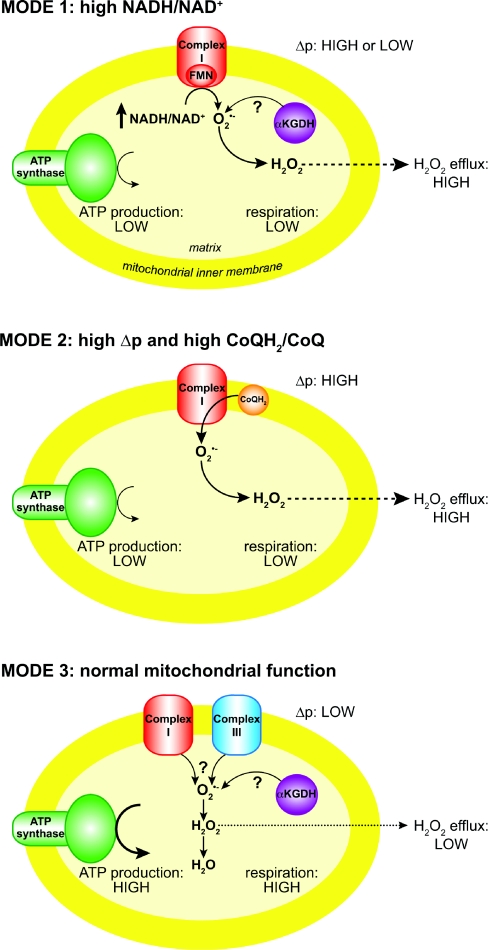
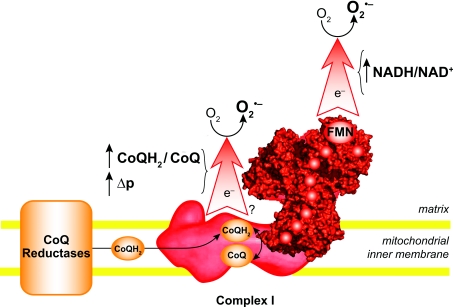
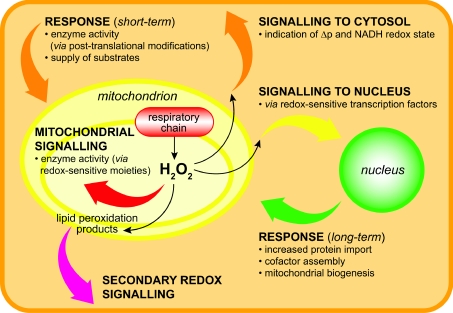
The production of ROS (reactive oxygen species) by mammalian mitochondria is important because it underlies oxidative damage in many pathologies and contributes to retrograde redox signalling from the organelle to the cytosol and nucleus. Superoxide (O2•−) is the proximal mitochondrial ROS, and in the present review I outline the principles that govern O2•− production within the matrix of mammalian mitochondria. The flux of O2•− is related to the concentration of potential electron donors, the local concentration of O2 and the second-order rate constants for the reactions between them. Two modes of operation by isolated mitochondria result in significant O2•− production, predominantly from complex I: (i) when the mitochondria are not making ATP and consequently have a high Δp (protonmotive force) and a reduced CoQ (coenzyme Q) pool; and (ii) when there is a high NADH/NAD+ ratio in the mitochondrial matrix. For mitochondria that are actively making ATP, and consequently have a lower Δp and NADH/NAD+ ratio, the extent of O2•− production is far lower. The generation of O2•− within the mitochondrial matrix depends critically on Δp, the NADH/NAD+ and CoQH2/CoQ ratios and the local O2 concentration, which are all highly variable and difficult to measure in vivo. Consequently, it is not possible to estimate O2•− generation by mitochondria in vivo from O2•−-production rates by isolated mitochondria, and such extrapolations in the literature are misleading. Even so, the description outlined here facilitates the understanding of factors that favour mitochondrial ROS production. There is a clear need to develop better methods to measure mitochondrial O2•− and H2O2 formation in vivo, as uncertainty about these values hampers studies on the role of mitochondrial ROS in pathological oxidative damage and redox signalling.
Overview
The claims and statistics of this paper haven’t been checked yet.
Free: it reads the open-access text and checks the first 5 claims that cite a source we can check. Create a free account to check every claim.
Integrity signals
Registry
Cites
Statistics
Figures
Verification
Claims the paper makes
The claims and statistics of this paper haven’t been checked yet.
Free: it reads the open-access text and checks the first 5 claims that cite a source we can check. Create a free account to check every claim.
Claims other papers make about this one
Each is checked against this paper’s own text: does it say what the citing paper says it does?
The source backs part of the claim, not all of it — or backs it for a different population, condition or comparison.
In the citing paper
“Mitochondria-derived ROS (mtROS) are mainly produced by complexes I and III as O2●−.”
From Functions of ROS in Macrophages and Antimicrobial Immunity (2021) · cites this paper as [86]
Experimental — accuracy not yet measuredThe source backs part of the claim, not all of it — or backs it for a different population, condition or comparison.
In the citing paper
“Antimycin A blocks the Qi site of complex III of the ETC [86,422], thereby preventing electrons from entering the complex, which leads to increased leakage of electrons into the IMS.”
From Functions of ROS in Macrophages and Antimicrobial Immunity (2021) · cites this paper as [86]
Experimental — accuracy not yet measuredThe source backs part of the claim, not all of it — or backs it for a different population, condition or comparison.
In the citing paper
“Normally, the unpaired electron of ubisemiquinone is transferred to the cytochrome b center of complex III; however, this electron can also react with molecular oxygen to form superoxide 2, 26.”
From Mitochondrial reactive oxygen species regulate cellular signaling and dictate biological outcomes (2010) · cites this paper as [2]
Experimental — accuracy not yet measuredThe source backs part of the claim, not all of it — or backs it for a different population, condition or comparison.
In the citing paper
“Within the mitochondria, the main sites of superoxide production have been localized to the electron transport chain (ETC) complexes I (C I) and Ⅲ [6–9].”
From Honokiol induces superoxide production by targeting mitochondrial respiratory chain complex I in Candida albicans (2017) · cites this paper as [6]
Experimental — accuracy not yet measuredThe source backs part of the claim, not all of it — or backs it for a different population, condition or comparison.
In the citing paper
“The mitochondrial respiratory chain is the major source of intracellular ROS generation.”
From Honokiol induces superoxide production by targeting mitochondrial respiratory chain complex I in Candida albicans (2017) · cites this paper as [6]
Experimental — accuracy not yet measured
10 more claims about this paper
Create a free account to see every claim other papers make about this one.
Self-check
Percentages, sums and reported differences re-computed from the paper’s own numbers.
The self-check needs the paper’s full text.
Citations
Cites
Free Radicals in the Physiological Control of Cell Function
Dröge, W. (2002) · Physiological Reviews · doi:10.1152/physrev.00018.2001 · Cited by 9,855
Electron transfers in chemistry and biology
Marcus, R. A., & Sutin, N. (1985) · Biochimica et Biophysica Acta (BBA) - Reviews on Bioenergetics · doi:10.1016/0304-4173(85)90014-x · Cited by 8,050
Hydroperoxide metabolism in mammalian organs.
Chance, B., Sies, H., & Boveris, A. (1979) · Physiological Reviews · doi:10.1152/physrev.1979.59.3.527 · Cited by 5,827
Mitochondrial formation of reactive oxygen species
Turrens, J. F. (2003) · The Journal of Physiology · doi:10.1113/jphysiol.2003.049478 · Cited by 5,084
Schafer, F. Q., & Buettner, G. R. (2001) · Free Radical Biology and Medicine · doi:10.1016/s0891-5849(01)00480-4 · Cited by 4,587
Mitochondria, Oxidants, and Aging
Balaban, R. S., Nemoto, S., & Finkel, T. (2005) · Cell · doi:10.1016/j.cell.2005.02.001 · Cited by 4,388
The Free Radical Theory of Aging Matures
BECKMAN, K. B., & AMES, B. N. (1998) · Physiological Reviews · doi:10.1152/physrev.1998.78.2.547 · Cited by 3,879
Mitochondrial free radical generation, oxidative stress, and aging
Cadenas, E., & Davies, K. J. A. (2000) · Free Radical Biology and Medicine · doi:10.1016/s0891-5849(00)00317-8 · Cited by 3,010
Boveris, A., & Chance, B. (1973) · Biochemical Journal · doi:10.1042/bj1340707 · Cited by 2,626
Peroxynitrite: biochemistry, pathophysiology and development of therapeutics
Szabó, C., Ischiropoulos, H., & Radi, R. (2007) · Nature Reviews Drug Discovery · doi:10.1038/nrd2222 · Cited by 2,134
Research works printed but not linked: 1
- Hurd T. R. Prime T. A. Harbour M. E. Lilley K. S. Murphy M. P. Detection of reactive oxygen species-sensitive thiol proteins by redox difference gel electrophoresis: implications for mitochondrial redox signaling J. Biol. Chem. 2007 282 22040 22051 17525152 · DOI · Paper page
Cited by
Items 401–500 of 1,117
Microvesicles: ROS scavengers and ROS producers
Bodega, G., Alique, M., Puebla, L., Carracedo, J., & Ramírez, R. M. (2019) · Journal of Extracellular Vesicles · doi:10.1080/20013078.2019.1626654 · Cited by 258
Flavonoids: Antioxidant Powerhouses and Their Role in Nanomedicine
Zahra, M., Abrahamse, H., & George, B. P. (2024) · Antioxidants · doi:10.3390/antiox13080922 · Cited by 250
Oxidative stress, redox regulation and diseases of cellular differentiation
Ye, Z.-W., Zhang, J., Townsend, D. M., & Tew, K. D. (2015) · Biochimica et Biophysica Acta (BBA) - General Subjects · doi:10.1016/j.bbagen.2014.11.010 · Cited by 257
Etiology of Metabolic Syndrome and Dietary Intervention
Xu, H., Li, X., Adams, H., Kubena, K., & Guo, S. (2018) · International Journal of Molecular Sciences · doi:10.3390/ijms20010128 · Cited by 257
New Perspectives on Proton Pumping in Cellular Respiration
Wikström, M., Sharma, V., Kaila, V. R. I., Hosler, J. P., & Hummer, G. (2015) · Chemical Reviews · doi:10.1021/cr500448t · Cited by 256
Reactive oxygen species and insulin resistance: the good, the bad and the ugly
Tiganis, T. (2011) · Trends in Pharmacological Sciences · doi:10.1016/j.tips.2010.11.006 · Cited by 256
Mitochondrial redox signalling at a glance
Collins, Y., Chouchani, E. T., James, A. M., Menger, K. E., Cochemé, H. M., & Murphy, M. P. (2012) · Journal of Cell Science · doi:10.1242/jcs.098475 · Cited by 254
Self-citationFatigue, Sleep, and Autoimmune and Related Disorders
Zielinski, M. R., Systrom, D. M., & Rose, N. R. (2019) · Frontiers in Immunology · doi:10.3389/fimmu.2019.01827 · Cited by 254
Do reactive oxygen species play a role in myeloid leukemias?
Hole, P. S., Darley, R. L., & Tonks, A. (2011) · Blood · doi:10.1182/blood-2011-01-326025 · Cited by 254
OXPHOS mutations and neurodegeneration
Koopman, W. J. H., Distelmaier, F., Smeitink, J. A., & Willems, P. H. (2013) · The EMBO Journal · doi:10.1038/emboj.2012.300 · Cited by 254
Mitochondrial Dysfunction and Oxidative Stress Caused by Cryopreservation in Reproductive Cells
Gualtieri, R., Kalthur, G., Barbato, V., Di Nardo, M., Adiga, S. K., & Talevi, R. (2021) · Antioxidants · doi:10.3390/antiox10030337 · Cited by 251
The epigenetic landscape related to reactive oxygen species formation in the cardiovascular system
Kietzmann, T., Petry, A., Shvetsova, A., Gerhold, J. M., & Görlach, A. (2017) · British Journal of Pharmacology · doi:10.1111/bph.13792 · Cited by 253
“Thus, important risk factors of cardiovascular diseases are unhealthy diet, physical inactivity, smoking and harmful use of alcohol, which contribute to hypertension, hyperglycaemia, hyperlipidaemia, obesity and diabetes (Murray and Lopez, 2013).”
BackgroundMonoamine oxidases as sources of oxidants in the heart
Kaludercic, N., Mialet-Perez, J., Paolocci, N., Parini, A., & Di Lisa, F. (2014) · Journal of Molecular and Cellular Cardiology · doi:10.1016/j.yjmcc.2013.12.032 · Cited by 253
Oxidative Stress Signaling to Chromatin in Health and Disease
Kreuz, S., & Fischle, W. (2016) · Epigenomics · doi:10.2217/epi-2016-0002 · Cited by 250
Pérez-Torres, I., Guarner-Lans, V., & Rubio-Ruiz, M. E. (2017) · International Journal of Molecular Sciences · doi:10.3390/ijms18102098 · Cited by 252
“Mitochondrial ROS and their depletion by RS play an essential and necessary role in the correct folding of proteins and in the formation of disulfide bonds, which determine the normal structure and function of many proteins [19].”
BackgroundPhysiological Signaling Functions of Reactive Oxygen Species in Stem Cells: From Flies to Man
Sinenko, S. A., Starkova, T. Y., Kuzmin, A. A., & Tomilin, A. N. (2021) · Frontiers in Cell and Developmental Biology · doi:10.3389/fcell.2021.714370 · Cited by 250
Redox Proteomics: Chemical Principles, Methodological Approaches and Biological/Biomedical Promises
Bachi, A., Dalle-Donne, I., & Scaloni, A. (2013) · Chemical Reviews · doi:10.1021/cr300073p · Cited by 251
Quercetin and the mitochondria: A mechanistic view
de Oliveira, M. R., Nabavi, S. M., Braidy, N., Setzer, W. N., Ahmed, T., & Nabavi, S. F. (2016) · Biotechnology Advances · doi:10.1016/j.biotechadv.2015.12.014 · Cited by 250
On the Origin and Fate of Reactive Oxygen Species in Plant Cell Compartments
Janků, M., Luhová, L., & Petřivalský, M. (2019) · Antioxidants · doi:10.3390/antiox8040105 · Cited by 251
Mitochondrial dysfunction and mitophagy: the beginning and end to diabetic nephropathy?
Higgins, G. C., & Coughlan, M. T. (2014) · British Journal of Pharmacology · doi:10.1111/bph.12503 · Cited by 250
How location and cellular signaling combine to activate the NLRP3 inflammasome
Akbal, A., Dernst, A., Lovotti, M., Mangan, M. S. J., McManus, R. M., & Latz, E. (2022) · Cellular & Molecular Immunology · doi:10.1038/s41423-022-00922-w · Cited by 247
Motori, E., Puyal, J., Toni, N., Ghanem, A., Angeloni, C., Malaguti, M., Cantelli-Forti, G., Berninger, B., Conzelmann, K.-K., Götz, M., et al. (2013) · Cell Metabolism · doi:10.1016/j.cmet.2013.11.005 · Cited by 249
Hypothermic oxygenated perfusion protects from mitochondrial injury before liver transplantation
Schlegel, A., Muller, X., Mueller, M., Stepanova, A., Kron, P., de Rougemont, O., Muiesan, P., Clavien, P.-A., Galkin, A., Meierhofer, D., et al. (2020) · EBioMedicine · doi:10.1016/j.ebiom.2020.103014 · Cited by 249
“We interpreted this as direct evidence for complex I damage with mitochondria operating preferably in Mode 1 according to Murphy [1], underlining an early oxidative injury of complex I, for example by modification of critical thiol residues (-SH) [34].”
BackgroundThe mitochondrial voltage-dependent anion channel 1 in tumor cells
Shoshan-Barmatz, V., Ben-Hail, D., Admoni, L., Krelin, Y., & Tripathi, S. S. (2015) · Biochimica et Biophysica Acta (BBA) - Biomembranes · doi:10.1016/j.bbamem.2014.10.040 · Cited by 247
The electron transfer flavoprotein: Ubiquinone oxidoreductases
Watmough, N. J., & Frerman, F. E. (2010) · Biochimica et Biophysica Acta (BBA) - Bioenergetics · doi:10.1016/j.bbabio.2010.10.007 · Cited by 249
Antioxidant and bioenergetic coupling between neurons and astrocytes
Fernandez-Fernandez, S., Almeida, A., & Bolaños, J. P. (2012) · Biochemical Journal · doi:10.1042/bj20111943 · Cited by 247
Román-Pintos, L. M., Villegas-Rivera, G., Rodríguez-Carrizalez, A. D., Miranda-Díaz, A. G., & Cardona-Muñoz, E. G. (2016) · Journal of Diabetes Research · doi:10.1155/2016/3425617 · Cited by 248
“Mitochondria are intrinsically associated with ROS production; its normal function is altered by hyperglycemia [101].”
BackgroundCalcium and Mitochondrial Reactive Oxygen Species Generation: How to Read the Facts
Adam-Vizi, V., & Starkov, A. A. (2010) · Journal of Alzheimer's Disease · doi:10.3233/jad-2010-100465 · Cited by 246
Javadov, S., Karmazyn, M., & Escobales, N. (2009) · The Journal of Pharmacology and Experimental Therapeutics · doi:10.1124/jpet.109.153213 · Cited by 248
“It has been shown in isolated perfused rat hearts that ROS levels increase with the progression of ischemia (Kevin et al., 2003; Murphy, 2009).”
BackgroundN6-Deoxyadenosine Methylation in Mammalian Mitochondrial DNA
Hao, Z., Wu, T., Cui, X., Zhu, P., Tan, C., Dou, X., Hsu, K.-W., Lin, Y.-T., Peng, P.-H., Zhang, L.-S., et al. (2020) · Molecular Cell · doi:10.1016/j.molcel.2020.02.018 · Cited by 246
Coordination of DNA single strand break repair
Abbotts, R., & Wilson, D. M. (2017) · Free Radical Biology and Medicine · doi:10.1016/j.freeradbiomed.2016.11.039 · Cited by 240
Mitochondrial Energy Metabolism and Redox Signaling in Brain Aging and Neurodegeneration
Yin, F., Boveris, A., & Cadenas, E. (2014) · Antioxidants & Redox Signaling · doi:10.1089/ars.2012.4774 · Cited by 247
Reactive Oxygen Species and Oxidative Stress in Obesity—Recent Findings and Empirical Approaches
McMurray, F., Patten, D. A., & Harper, M. (2016) · Obesity · doi:10.1002/oby.21654 · Cited by 247
“Useful probes for biological applications must possess the following qualities: (1) compatibility with aqueous media at physiological pH; (2) cell permeability and/or subcellular targetability; (3) high selectivity and sensitivity for their biologically relevant ROS species target; and (4) spectroscopic properties tha…”
BackgroundMitochondrial fatty acid oxidation in obesity
Serra, D., Mera, P., Malandrino, M. I., Mir, J. F., & Herrero, L. (2013) · Antioxidants & Redox Signaling · doi:10.1089/ars.2012.4875 · Cited by 246
“However, high ROS levels are associated with significant cell damage and mitochondrial dysfunction in a process known as oxidative stress (122), usually associated with the etiology of obesity, insulin resistance, and type 2 diabetes (67).”
The glutamine-alpha-ketoglutarate (AKG) metabolism and its nutritional implications
Xiao, D., Zeng, L., Yao, K., Kong, X., Wu, G., & Yin, Y. (2016) · Amino Acids · doi:10.1007/s00726-016-2254-8 · Cited by 246
Classification of mitocans, anti-cancer drugs acting on mitochondria
Neuzil, J., Dong, L.-F., Rohlena, J., Truksa, J., & Ralph, S. J. (2013) · Mitochondrion · doi:10.1016/j.mito.2012.07.112 · Cited by 245
The many roles of NOX2 NADPH oxidase-derived ROS in immunity
Lam, G. Y., Huang, J., & Brumell, J. H. (2010) · Seminars in Immunopathology · doi:10.1007/s00281-010-0221-0 · Cited by 244
Targeting Oxidative Stress for the Treatment of Liver Fibrosis
Luangmonkong, T., Suriguga, S., Mutsaers, H. A. M., Groothuis, G. M. M., Olinga, P., & Boersema, M. (2018) · Reviews of Physiology, Biochemistry and Pharmacology · doi:10.1007/112_2018_10 · Cited by 245
Hole hopping through tyrosine/tryptophan chains protects proteins from oxidative damage
Gray, H. B., & Winkler, J. R. (2015) · Proceedings of the National Academy of Sciences · doi:10.1073/pnas.1512704112 · Cited by 244
“The sulfur-containing amino acids (Met and Cys) can undergo reversible changes in response to ROS and RNS, whereas the oxidative reactions of other susceptible residues (Trp and Tyr) and the protein backbone are generally considered to be irreversible (4).”
BackgroundInfluentialIron and redox cycling. Do's and don'ts
Koppenol, W. H., & Hider, R. H. (2019) · Free Radical Biology and Medicine · doi:10.1016/j.freeradbiomed.2018.09.022 · Cited by 244
Liu, X. R., Zhang, M. M., & Gross, M. L. (2020) · Chemical Reviews · doi:10.1021/acs.chemrev.9b00815 · Cited by 242
Role of reactive oxygen species in ultraviolet-induced photodamage of the skin
Wei, M., He, X., Liu, N., & Deng, H. (2024) · Cell Division · doi:10.1186/s13008-024-00107-z · Cited by 244
“Meanwhile, most of the O 2 • − produced by mitochondria are changed to H 2 O 2 by manganese-superoxide dismutase in the mitochondrial matrix [14].”
BackgroundIdentification of a novel mitochondrial uncoupler that does not depolarize the plasma membrane
Kenwood, B. M., Weaver, J. L., Bajwa, A., Poon, I. K., Byrne, F. L., Murrow, B. A., Calderone, J. A., Huang, L., Divakaruni, A. S., Tomsig, J. L., et al. (2014) · Molecular Metabolism · doi:10.1016/j.molmet.2013.11.005 · Cited by 243
“Therapeutically, mitochondrial uncoupling is an attractive drug target due to its ability to lower mitochondrial ROS production [29].”
BackgroundOxidative Stress in COPD: Sources, Markers, and Potential Mechanisms
McGuinness, A., & Sapey, E. (2017) · Journal of Clinical Medicine · doi:10.3390/jcm6020021 · Cited by 243
“Mitochondrial respiration [32] Altered mitochondrial function [92,95–97]”
BackgroundMitochondrial dysfunction in neurodegenerative diseases and cancer
de Moura, M. B., dos Santos, L. S., & Van Houten, B. (2010) · Environmental and Molecular Mutagenesis · doi:10.1002/em.20575 · Cited by 243
Wang, Z., Sun, R., Wang, G., Chen, Z., Li, Y., Zhao, Y., Liu, D., Zhao, H., Zhang, F., Yao, J., et al. (2020) · Redox Biology · doi:10.1016/j.redox.2019.101343 · Cited by 243
Shvedova, A. A., Kagan, V. E., & Fadeel, B. (2010) · Annual Review of Pharmacology and Toxicology · doi:10.1146/annurev.pharmtox.010909.105819 · Cited by 242
Double-edge sword roles of iron in driving energy production versus instigating ferroptosis
Zhang, S., Xin, W., Anderson, G. J., Li, R., Gao, L., Chen, S., Zhao, J., & Liu, S. (2022) · Cell Death & Disease · doi:10.1038/s41419-021-04490-1 · Cited by 241
Makrecka-Kuka, M., Krumschnabel, G., & Gnaiger, E. (2015) · Biomolecules · doi:10.3390/biom5031319 · Cited by 242
“35% in OXPHOS and ETS states (Table 2) are consistent with values reported for isolated mitochondria [1,11,42].”
BackgroundZhou, J., Li, L., Shi, W., Gao, X., Li, X., & Ma, H. (2015) · Chemical Science · doi:10.1039/c5sc01562f · Cited by 241
Chemodynamic Therapy: Tumour Microenvironment‐Mediated Fenton and Fenton‐like Reactions
Tang, Z., Liu, Y., He, M., & Bu, W. (2019) · Angewandte Chemie · doi:10.1002/ange.201805664 · Cited by 240
Oxidative stress and its impact on neurons and glia in multiple sclerosis lesions
Lassmann, H., & van Horssen, J. (2016) · Biochimica et Biophysica Acta (BBA) - Molecular Basis of Disease · doi:10.1016/j.bbadis.2015.09.018 · Cited by 238
Basic Biology of Oxidative Stress and the Cardiovascular System
Sack, M. N., Fyhrquist, F. Y., Saijonmaa, O. J., Fuster, V., & Kovacic, J. C. (2017) · Journal of the American College of Cardiology · doi:10.1016/j.jacc.2017.05.034 · Cited by 240
Calorie Restriction and Aging in Humans
Flanagan, E. W., Most, J., Mey, J. T., & Redman, L. M. (2020) · Annual Review of Nutrition · doi:10.1146/annurev-nutr-122319-034601 · Cited by 239
“In turn, oxidative stress disrupts numerous molecular and cellular structures and functions (41, 90).”
BackgroundCrosstalk between calcium and reactive oxygen species signaling in cancer
Hempel, N., & Trebak, M. (2017) · Cell Calcium · doi:10.1016/j.ceca.2017.01.007 · Cited by 239
The roles of reactive oxygen species and antioxidants in cryopreservation
Len, J. S., Koh, W. S. D., & Tan, S.-X. (2019) · Bioscience Reports · doi:10.1042/bsr20191601 · Cited by 236
Guidelines for evaluating myocardial cell death
Mishra, P. K., Adameova, A., Hill, J. A., Baines, C. P., Kang, P. M., Downey, J. M., Narula, J., Takahashi, M., Abbate, A., Piristine, H. C., et al. (2019) · American Journal of Physiology-Heart and Circulatory Physiology · doi:10.1152/ajpheart.00259.2019 · Cited by 236
Wilson, C., & González-Billault, C. (2015) · Frontiers in Cellular Neuroscience · doi:10.3389/fncel.2015.00381 · Cited by 238
“In mitochondria, complexes I and III of the electron transfer chain produce the short-lived O2⊕–, a radical derived from O2 (Murphy, 2009; Bigarella et al., 2014).”
BackgroundLockwood, B. L., Sanders, J. G., & Somero, G. N. (2010) · Journal of Experimental Biology · doi:10.1242/jeb.046094 · Cited by 238
Healthful aging mediated by inhibition of oxidative stress
Vatner, S. F., Zhang, J., Oydanich, M., Berkman, T., Naftalovich, R., & Vatner, D. E. (2020) · Ageing Research Reviews · doi:10.1016/j.arr.2020.101194 · Cited by 238
Yoboue, E. D., Sitia, R., & Simmen, T. (2018) · Cell Death & Disease · doi:10.1038/s41419-017-0033-4 · Cited by 236
Blokhina, O., & Fagerstedt, K. V. (2010) · Physiologia Plantarum · doi:10.1111/j.1399-3054.2009.01340.x · Cited by 234
MacRae, J. I., Sheiner, L., Nahid, A., Tonkin, C., Striepen, B., & McConville, M. J. (2012) · Cell Host & Microbe · doi:10.1016/j.chom.2012.09.013 · Cited by 236
Calcium, Bioenergetics, and Neuronal Vulnerability in Parkinson's Disease
Surmeier, D. J., & Schumacker, P. T. (2013) · Journal of Biological Chemistry · doi:10.1074/jbc.r112.410530 · Cited by 236
Adaptive regulation of the brain’s antioxidant defences by neurons and astrocytes
Baxter, P. S., & Hardingham, G. E. (2016) · Free Radical Biology and Medicine · doi:10.1016/j.freeradbiomed.2016.06.027 · Cited by 234
Hole, P. S., Zabkiewicz, J., Munje, C., Newton, Z., Pearn, L., White, P., Marquez, N., Hills, R. K., Burnett, A. K., Tonks, A., et al. (2013) · Blood · doi:10.1182/blood-2013-04-491944 · Cited by 234
Mitochondrial Glutathione in Cellular Redox Homeostasis and Disease Manifestation
Chen, T.-H., Wang, H.-C., Chang, C.-J., & Lee, S.-Y. (2024) · International Journal of Molecular Sciences · doi:10.3390/ijms25021314 · Cited by 226
Roca, F. J., Whitworth, L. J., Redmond, S., Jones, A. A., & Ramakrishnan, L. (2019) · Cell · doi:10.1016/j.cell.2019.08.004 · Cited by 233
“MitoTracker Red CM-H2-Xros fluoresces red upon oxidation by diverse ROS while MitoSOX requires oxidation selectively by superoxide, the proximal reactive oxygen species produced by mitochondrial electron transport complexes before becoming fluorescent after binding DNA (Murphy, 2009).”
BackgroundMitophagy pathways in health and disease
Killackey, S. A., Philpott, D. J., & Girardin, S. E. (2020) · Journal of Cell Biology · doi:10.1083/jcb.202004029 · Cited by 233
“Not only are damaged mitochondria deficient at making ATP and other biosynthetic products, but, as a result, they release greater levels of reactive oxygen species (ROS; Murphy, 2009).”
BackgroundDonaghy, L., Lambert, C., Choi, K.-S., & Soudant, P. (2009) · Aquaculture · doi:10.1016/j.aquaculture.2009.09.003 · Cited by 233
Diabetic nephropathy: Is there a role for oxidative stress?
Sagoo, M. K., & Gnudi, L. (2018) · Free Radical Biology and Medicine · doi:10.1016/j.freeradbiomed.2017.12.040 · Cited by 233
Mandal, M., Sarkar, M., Khan, A., Biswas, M., Masi, A., Rakwal, R., Agrawal, G. K., Srivastava, A., & Sarkar, A. (2022) · Advances in Redox Research · doi:10.1016/j.arres.2022.100039 · Cited by 230
The mitochondrial respiratory chain
Rich, P. R., & Maréchal, A. (2010) · Essays in Biochemistry · doi:10.1042/bse0470001 · Cited by 232
“However, the rate of ROS formation in vivo is dependent on factors such as magnitude of PMF, redox state of components and local oxygen concentration [32].”
BackgroundSzumiel, I. (2015) · International Journal of Radiation Biology · doi:10.3109/09553002.2014.934929 · Cited by 232
“…amount of superoxide radical anion (O 2 • ) which is transformed into hydrogen peroxide (H 2 O 2 ) by the mitochondrial SOD2 (manganese superoxide dismutase) (reviews in Kowaltowski et al. 2001, Brady et al. 2006, Murphy 2009, Brand 2010, Daiber 2010, Treberg et al. 2011, Drose and Brand 2012).”
BackgroundRequejo, R., Hurd, T. R., Costa, N. J., & Murphy, M. P. (2010) · The FEBS Journal · doi:10.1111/j.1742-4658.2010.07576.x · Cited by 231
Self-citationPossible Side Effects of Polyphenols and Their Interactions with Medicines
Duda-Chodak, A., & Tarko, T. (2023) · Molecules · doi:10.3390/molecules28062536 · Cited by 231
EMT and Oxidative Stress: A Bidirectional Interplay Affecting Tumor Malignancy
Giannoni, E., Parri, M., & Chiarugi, P. (2012) · Antioxidants & Redox Signaling · doi:10.1089/ars.2011.4280 · Cited by 231
“…species (ROS) are radicals, ions or molecules that have a single unpaired electron in their outermost shell of electrons and are constantly generated inside cells by dedicated enzyme complexes or as by-products of redox reactions, including those underlying mitochondrial respiration (71, 80, 114).”
Jaeschke, H., McGill, M. R., Williams, C. D., & Ramachandran, A. (2011) · Life Sciences · doi:10.1016/j.lfs.2011.01.025 · Cited by 231
“The most likely source of the superoxide is complex I of the mitochondrial electron transport chain (Murphy 2009).”
Mitochondrial Dysfunction Indirectly Elevates ROS Production by the Endoplasmic Reticulum
Murphy, M. P. (2013) · Cell Metabolism · doi:10.1016/j.cmet.2013.07.006 · Cited by 230
Self-citationNLRC5 senses NAD+ depletion, forming a PANoptosome and driving PANoptosis and inflammation
Sundaram, B., Pandian, N., Kim, H. J., Abdelaal, H. M., Mall, R., Indari, O., Sarkar, R., Tweedell, R. E., Alonzo, E. Q., Klein, J., et al. (2024) · Cell · doi:10.1016/j.cell.2024.05.034 · Cited by 226
Evolving and Expanding the Roles of Mitophagy as a Homeostatic and Pathogenic Process
Gustafsson, Å. B., & Dorn, G. W. (2019) · Physiological Reviews · doi:10.1152/physrev.00005.2018 · Cited by 228
Mouse mtDNA mutant model of Leber hereditary optic neuropathy
Lin, C. S., Sharpley, M. S., Fan, W., Waymire, K. G., Sadun, A. A., Carelli, V., Ross-Cisneros, F. N., Baciu, P., Sung, E., McManus, M. J., et al. (2012) · Proceedings of the National Academy of Sciences · doi:10.1073/pnas.1217113109 · Cited by 228
Autophagy Signaling Through Reactive Oxygen Species
Huang, J., Lam, G. Y., & Brumell, J. H. (2011) · Antioxidants & Redox Signaling · doi:10.1089/ars.2010.3554 · Cited by 228
Redox signaling in cardiovascular health and disease
Madamanchi, N. R., & Runge, M. S. (2013) · Free Radical Biology and Medicine · doi:10.1016/j.freeradbiomed.2013.04.001 · Cited by 228
Zhai, S., Hu, X., Hu, Y., Wu, B., & Xing, D. (2017) · Biomaterials · doi:10.1016/j.biomaterials.2017.01.002 · Cited by 228
“whereas the concentration of the most abundant and stable nonradical ROS, H2O2, is just around 20 nM in normal tissues [54].”
BackgroundGrasso, D., Zampieri, L. X., Capelôa, T., Van de Velde, J. A., & Sonveaux, P. (2020) · Cell Stress · doi:10.15698/cst2020.06.221 · Cited by 227
“IDH1 and IDH2 have been reported to be mutated in 70% of grade II and III gliomas and glioblastomas [117, 118], as well as in angio-immunoblastic T-cell lymphomas [119], acute myeloid leukemia (AML) [120, 121] and other common cancer types, such as thyroid, colorectal and prostate cancers [122, 123].”
BackgroundInfluentialMitochondrial diseases: from molecular mechanisms to therapeutic advances
Wen, H., Deng, H., Li, B., Chen, J., Zhu, J., Zhang, X., Yoshida, S., & Zhou, Y. (2025) · Signal Transduction and Targeted Therapy · doi:10.1038/s41392-024-02044-3 · Cited by 222
Nonalcoholic fatty liver disease in adults: current concepts in etiology, outcomes, and management
Marjot, T., Moolla, A., Cobbold, J. F., Hodson, L., & Tomlinson, J. W. (2020) · Endocrine Reviews · doi:10.1210/endrev/bnz009 · Cited by 228
Metabolic transformation in cancer
Tennant, D. A., Duran, R. V., Boulahbel, H., & Gottlieb, E. (2009) · Carcinogenesis · doi:10.1093/carcin/bgp070 · Cited by 225
Protein Oxidative Modifications: Beneficial Roles in Disease and Health.
Cai, Z., & Yan, L. (2013) · PubMed · Cited by 320
Behl, T., Rana, T., Alotaibi, G. H., Shamsuzzaman, M., Naqvi, M., Sehgal, A., Singh, S., Sharma, N., Almoshari, Y., Abdellatif, A. A. H., et al. (2022) · Biomedicine & Pharmacotherapy · doi:10.1016/j.biopha.2021.112545 · Cited by 221
Succinate dehydrogenase: the complex roles of a simple enzyme
Huang, S., & Millar, A. H. (2013) · Current Opinion in Plant Biology · doi:10.1016/j.pbi.2013.02.007 · Cited by 224
Tamura, Y., Omura, T., Toyoshima, K., & Araki, A. (2020) · Nutrients · doi:10.3390/nu12113367 · Cited by 224
“Reactive oxygen species, which are dominantly produced by mitochondria [57], are in a physiological balance to maintain muscle volume and function.”
BackgroundOxidative Stress Is a Key Modulator in the Development of Nonalcoholic Fatty Liver Disease
Ma, Y., Lee, G., Heo, S.-Y., & Roh, Y.-S. (2021) · Antioxidants · doi:10.3390/antiox11010091 · Cited by 220
Abuaita, B. H., Schultz, T. L., & O’Riordan, M. X. (2018) · Cell Host & Microbe · doi:10.1016/j.chom.2018.10.005 · Cited by 223
“…for generation of bactericidal mH2O2 and is delivered to bacteriacontaining phagosomes Hydrogen peroxide is constitutively generated in the mitochondria from superoxide produced by respiration that is converted by the mitochondrial matrix enzyme manganese superoxide dismutase (Sod2) (Murphy, 2009).”
BackgroundOxidant/Antioxidant Imbalance in Alzheimer’s Disease: Therapeutic and Diagnostic Prospects
Wojsiat, J., Zoltowska, K. M., Laskowska-Kaszub, K., & Wojda, U. (2018) · Oxidative Medicine and Cellular Longevity · doi:10.1155/2018/6435861 · Cited by 221
“Moreover, Aβ has been demonstrated to detrimentally impact mitochondrial enzymes, which contain iron-sulphur center, inhibit complex I and IV, reduce ATP levels, and induce mitochondrial depolarization [113–118].”
BackgroundInfluentialKalyanaraman, B., Cheng, G., Hardy, M., Ouari, O., Bennett, B., & Zielonka, J. (2018) · Redox Biology · doi:10.1016/j.redox.2017.12.012 · Cited by 221
Dimethyl Sulfoxide Damages Mitochondrial Integrity and Membrane Potential in Cultured Astrocytes
Yuan, C., Gao, J., Guo, J., Bai, L., Marshall, C., Cai, Z., Wang, L., & Xiao, M. (2014) · PLoS ONE · doi:10.1371/journal.pone.0107447 · Cited by 217
Clemente-Suárez, V., Redondo-Flórez, L., Beltrán-Velasco, A., Ramos-Campo, D., Belinchón-deMiguel, P., Martinez-Guardado, I., Dalamitros, A., Yáñez-Sepúlveda, R., Martín-Rodríguez, A., & Tornero-Aguilera, J. (2023) · Biomedicines · doi:10.3390/biomedicines11092488 · Cited by 219
Dysfunctional Mitochondria and Mitophagy as Drivers of Alzheimer’s Disease Pathogenesis
Chakravorty, A., Jetto, C. T., & Manjithaya, R. (2019) · Frontiers in Aging Neuroscience · doi:10.3389/fnagi.2019.00311 · Cited by 219
“Reactive oxygen species (ROS) are generated as a byproduct of the electron transport chain in mitochondria Frontiers in Aging Neuroscience | www.frontiersin.org 3 November 2019 | Volume 11 | Article 311 (Murphy, 2009).”
Background
Metadata
- Authors
- Murphy, M. P.
- Affiliations
- MRC Mitochondrial Biology Unit (GB)
- Corresponding author
- Murphy, Michael P.
- ORCID
- Murphy, Michael P.
- Venue
- Biochemical Journal
- Publisher
- Portland Press Ltd.
- Published
- 2008-12-12
- Volume
- 417
- Issue
- 1
- Pages
- 1-13
- ISSN
- 0264-6021 (ISSN-L)
- 1470-8728
- PMC
- PMC2605959
- OpenAlex
- W2122341467
- Cited by
- 8,207
- References
- 136
- Citations by year
- 2026: 507 · 2025: 579 · 2024: 601 · 2023: 551 · 2022: 670 · 2021: 686 · 2020: 650 · 2019: 553 · 2018: 568 · 2017: 529 · 2016: 444 · 2015: 384 · 2014: 366 · 2013: 329 · 2012: 293
- FWCI
- 12.49
- Type
- journal article
- Language
- en
- Open access
- hybrid
- doi.org
- Licence
- Locations
- Biochemical Journal (publishedVersion, cc-by-nc)
- PubMed Central (publishedVersion, cc-by-nc)
- PubMed (publishedVersion)
- Topics
- Life Sciences › Biochemistry, Genetics and Molecular Biology › Molecular Biology › Mitochondrial Function and Pathology
- Life Sciences › Biochemistry, Genetics and Molecular Biology › Molecular Biology › Redox biology and oxidative stress
- Life Sciences › Biochemistry, Genetics and Molecular Biology › Cell Biology › Autophagy in Disease and Therapy
- Keywords
- mitochondrial reactive oxygen species, superoxide production, mitochondrial matrix, complex I, proton motive force, NAD+/NADH ratio, coenzyme Q10, oxygen concentration, oxidative damage, hydrogen peroxide production, isolated mitochondria
- MeSH terms
- Animals, Humans, Hydrogen Peroxide, Mitochondria, Models, Biological, Superoxides, Reactive Oxygen Species, Electron Transport Complex I
About these checks
Registry, retraction, Cites and statistics results are computed, not judged, with one exception: a printed reference that no index lists is read once by a model before it counts as a citation error. Claims are extracted by a model and kept only when their quote appears verbatim in the text; each cited source is then checked, with a model’s help, for whether it says what the claim relies on. Those verdicts can be wrong — read the claim’s quote and the cited source before relying on one.
Statistics and arithmetic are recomputed, not judged.
Confidence bands are shown only for fields calibrated on our annotated test set. None is calibrated yet, so no band is shown.
What counts as a claim ›How we measure confidence ›How we check this ›
Are you an author, or do you see a problem with this page? Request a review
Data sources
Bibliographic data: Semantic Scholar, OpenAlex, Crossref.
Contains information from the Semantic Scholar Academic Graph Datasets, made available under the ODC Attribution License (ODC-BY 1.0).
Semantic Scholar’s data is described in: Kinney, R., et al. (2023). The Semantic Scholar Open Data Platform. arXiv:2301.10140.
