

How mitochondria produce reactive oxygen species
Open accessThe DOI matches its Crossref record; 135 of the 136 references it cites were found in a registry or an index.
Abstract
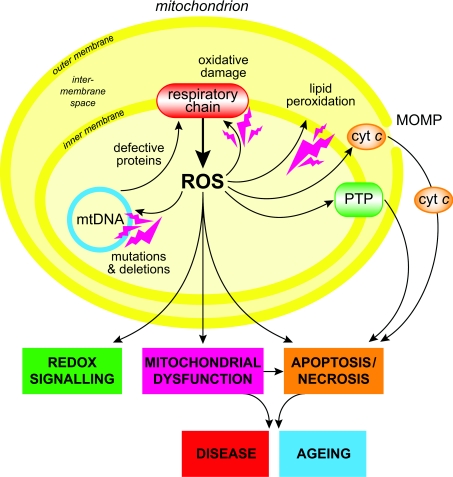
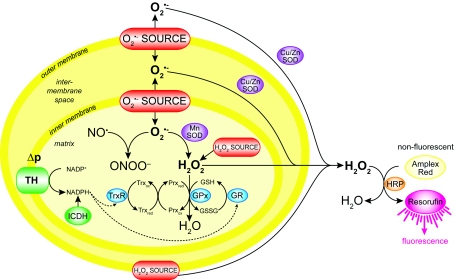
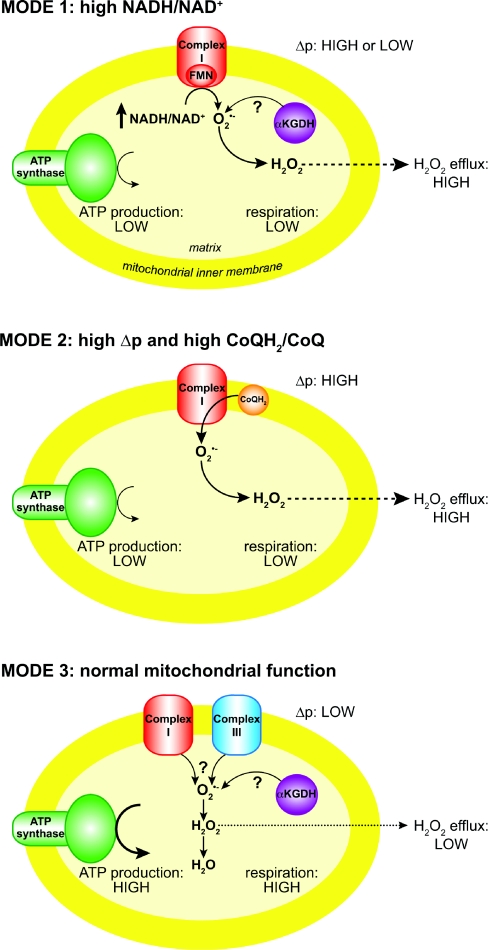
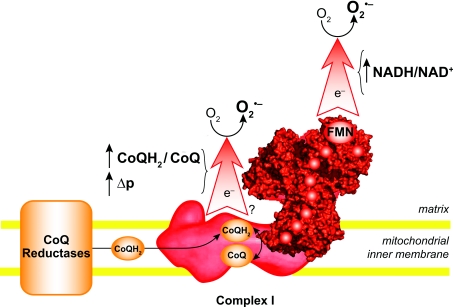
The production of ROS (reactive oxygen species) by mammalian mitochondria is important because it underlies oxidative damage in many pathologies and contributes to retrograde redox signalling from the organelle to the cytosol and nucleus. Superoxide (O2•−) is the proximal mitochondrial ROS, and in the present review I outline the principles that govern O2•− production within the matrix of mammalian mitochondria. The flux of O2•− is related to the concentration of potential electron donors, the local concentration of O2 and the second-order rate constants for the reactions between them. Two modes of operation by isolated mitochondria result in significant O2•− production, predominantly from complex I: (i) when the mitochondria are not making ATP and consequently have a high Δp (protonmotive force) and a reduced CoQ (coenzyme Q) pool; and (ii) when there is a high NADH/NAD+ ratio in the mitochondrial matrix. For mitochondria that are actively making ATP, and consequently have a lower Δp and NADH/NAD+ ratio, the extent of O2•− production is far lower. The generation of O2•− within the mitochondrial matrix depends critically on Δp, the NADH/NAD+ and CoQH2/CoQ ratios and the local O2 concentration, which are all highly variable and difficult to measure in vivo. Consequently, it is not possible to estimate O2•− generation by mitochondria in vivo from O2•−-production rates by isolated mitochondria, and such extrapolations in the literature are misleading. Even so, the description outlined here facilitates the understanding of factors that favour mitochondrial ROS production. There is a clear need to develop better methods to measure mitochondrial O2•− and H2O2 formation in vivo, as uncertainty about these values hampers studies on the role of mitochondrial ROS in pathological oxidative damage and redox signalling.
Overview
The claims and statistics of this paper haven’t been checked yet.
Free: it reads the open-access text and checks the first 5 claims that cite a source we can check. Create a free account to check every claim.
Integrity signals
Registry
Cites
Statistics
Figures
Verification
Claims the paper makes
The claims and statistics of this paper haven’t been checked yet.
Free: it reads the open-access text and checks the first 5 claims that cite a source we can check. Create a free account to check every claim.
Claims other papers make about this one
Each is checked against this paper’s own text: does it say what the citing paper says it does?
The source backs part of the claim, not all of it — or backs it for a different population, condition or comparison.
In the citing paper
“Mitochondria-derived ROS (mtROS) are mainly produced by complexes I and III as O2●−.”
From Functions of ROS in Macrophages and Antimicrobial Immunity (2021) · cites this paper as [86]
Experimental — accuracy not yet measuredThe source backs part of the claim, not all of it — or backs it for a different population, condition or comparison.
In the citing paper
“Antimycin A blocks the Qi site of complex III of the ETC [86,422], thereby preventing electrons from entering the complex, which leads to increased leakage of electrons into the IMS.”
From Functions of ROS in Macrophages and Antimicrobial Immunity (2021) · cites this paper as [86]
Experimental — accuracy not yet measuredThe source backs part of the claim, not all of it — or backs it for a different population, condition or comparison.
In the citing paper
“Normally, the unpaired electron of ubisemiquinone is transferred to the cytochrome b center of complex III; however, this electron can also react with molecular oxygen to form superoxide 2, 26.”
From Mitochondrial reactive oxygen species regulate cellular signaling and dictate biological outcomes (2010) · cites this paper as [2]
Experimental — accuracy not yet measuredThe source backs part of the claim, not all of it — or backs it for a different population, condition or comparison.
In the citing paper
“Within the mitochondria, the main sites of superoxide production have been localized to the electron transport chain (ETC) complexes I (C I) and Ⅲ [6–9].”
From Honokiol induces superoxide production by targeting mitochondrial respiratory chain complex I in Candida albicans (2017) · cites this paper as [6]
Experimental — accuracy not yet measuredThe source backs part of the claim, not all of it — or backs it for a different population, condition or comparison.
In the citing paper
“The mitochondrial respiratory chain is the major source of intracellular ROS generation.”
From Honokiol induces superoxide production by targeting mitochondrial respiratory chain complex I in Candida albicans (2017) · cites this paper as [6]
Experimental — accuracy not yet measured
10 more claims about this paper
Create a free account to see every claim other papers make about this one.
Self-check
Percentages, sums and reported differences re-computed from the paper’s own numbers.
The self-check needs the paper’s full text.
Citations
Cites
Free Radicals in the Physiological Control of Cell Function
Dröge, W. (2002) · Physiological Reviews · doi:10.1152/physrev.00018.2001 · Cited by 9,855
Electron transfers in chemistry and biology
Marcus, R. A., & Sutin, N. (1985) · Biochimica et Biophysica Acta (BBA) - Reviews on Bioenergetics · doi:10.1016/0304-4173(85)90014-x · Cited by 8,050
Hydroperoxide metabolism in mammalian organs.
Chance, B., Sies, H., & Boveris, A. (1979) · Physiological Reviews · doi:10.1152/physrev.1979.59.3.527 · Cited by 5,827
Mitochondrial formation of reactive oxygen species
Turrens, J. F. (2003) · The Journal of Physiology · doi:10.1113/jphysiol.2003.049478 · Cited by 5,084
Schafer, F. Q., & Buettner, G. R. (2001) · Free Radical Biology and Medicine · doi:10.1016/s0891-5849(01)00480-4 · Cited by 4,587
Mitochondria, Oxidants, and Aging
Balaban, R. S., Nemoto, S., & Finkel, T. (2005) · Cell · doi:10.1016/j.cell.2005.02.001 · Cited by 4,388
The Free Radical Theory of Aging Matures
BECKMAN, K. B., & AMES, B. N. (1998) · Physiological Reviews · doi:10.1152/physrev.1998.78.2.547 · Cited by 3,879
Mitochondrial free radical generation, oxidative stress, and aging
Cadenas, E., & Davies, K. J. A. (2000) · Free Radical Biology and Medicine · doi:10.1016/s0891-5849(00)00317-8 · Cited by 3,010
Boveris, A., & Chance, B. (1973) · Biochemical Journal · doi:10.1042/bj1340707 · Cited by 2,626
Peroxynitrite: biochemistry, pathophysiology and development of therapeutics
Szabó, C., Ischiropoulos, H., & Radi, R. (2007) · Nature Reviews Drug Discovery · doi:10.1038/nrd2222 · Cited by 2,134
Research works printed but not linked: 1
- Hurd T. R. Prime T. A. Harbour M. E. Lilley K. S. Murphy M. P. Detection of reactive oxygen species-sensitive thiol proteins by redox difference gel electrophoresis: implications for mitochondrial redox signaling J. Biol. Chem. 2007 282 22040 22051 17525152 · DOI · Paper page
Cited by
Items 301–400 of 1,117
Salabei, J. K., Gibb, A. A., & Hill, B. G. (2014) · Nature Protocols · doi:10.1038/nprot.2014.018 · Cited by 324
Mitochondrial DNA mutations in disease and aging
Park, C. B., & Larsson, N.-G. (2011) · Journal of Cell Biology · doi:10.1083/jcb.201010024 · Cited by 277
Unraveling the Potential Role of Glutathione in Multiple Forms of Cell Death in Cancer Therapy
Lv, H., Zhen, C., Liu, J., Yang, P., Hu, L., & Shang, P. (2019) · Oxidative Medicine and Cellular Longevity · doi:10.1155/2019/3150145 · Cited by 320
“Mitochondria are sites of cellular oxidative respiration, in which ROS are produced by enzymatic or nonenzymatic reactions [58].”
BackgroundCellular metabolic and autophagic pathways: Traffic control by redox signaling
Dodson, M., Darley-Usmar, V., & Zhang, J. (2013) · Free Radical Biology and Medicine · doi:10.1016/j.freeradbiomed.2013.05.014 · Cited by 324
Reactive Oxygen Species: Involvement in T Cell Signaling and Metabolism
Franchina, D. G., Dostert, C., & Brenner, D. (2018) · Trends in Immunology · doi:10.1016/j.it.2018.01.005 · Cited by 322
Toxicity of carbon tetrachloride, free radicals and role of antioxidants
Unsal, V., Cicek, M., & Sabancilar, İ. (2021) · Reviews on Environmental Health · doi:10.1515/reveh-2020-0048 · Cited by 320
Mitochondrial Channels: Ion Fluxes and More
Szabo, I., & Zoratti, M. (2014) · Physiological Reviews · doi:10.1152/physrev.00021.2013 · Cited by 321
Mitochondrial complex I ROS production and redox signaling in hypoxia
Okoye, C. N., Koren, S. A., & Wojtovich, A. P. (2023) · Redox Biology · doi:10.1016/j.redox.2023.102926 · Cited by 314
Mitochondrial Dysfunctions in Neurodegenerative Diseases: Relevance to Alzheimer’s Disease
Hroudová, J., Singh, N., & Fišar, Z. (2014) · BioMed Research International · doi:10.1155/2014/175062 · Cited by 318
PPAR-γ signaling in nonalcoholic fatty liver disease: Pathogenesis and therapeutic targets
Chen, H., Tan, H., Wan, J., Zeng, Y., Wang, J., Wang, H., & Lu, X. (2023) · Pharmacology & Therapeutics · doi:10.1016/j.pharmthera.2023.108391 · Cited by 311
Mitochondrial reactive oxygen species production and elimination
Nickel, A., Kohlhaas, M., & Maack, C. (2014) · Journal of Molecular and Cellular Cardiology · doi:10.1016/j.yjmcc.2014.03.011 · Cited by 317
Redox signaling in cardiac myocytes
Santos, C. X. C., Anilkumar, N., Zhang, M., Brewer, A. C., & Shah, A. M. (2011) · Free Radical Biology and Medicine · doi:10.1016/j.freeradbiomed.2011.01.003 · Cited by 317
A disproportionate role for mt DNA in Dobzhansky–Muller incompatibilities?
Burton, R. S., & Barreto, F. S. (2012) · Molecular Ecology · doi:10.1111/mec.12006 · Cited by 314
Long-term effect of ZnO nanoparticles on waste activated sludge anaerobic digestion
Mu, H., & Chen, Y. (2011) · Water Research · doi:10.1016/j.watres.2011.08.022 · Cited by 315
Redox regulation of mitochondrial function with emphasis on cysteine oxidation reactions
Mailloux, R. J., Jin, X., & Willmore, W. G. (2014) · Redox Biology · doi:10.1016/j.redox.2013.12.011 · Cited by 314
Mitochondria, Oxidative Stress and Innate Immunity
Chen, Y., Zhou, Z., & Min, W. (2018) · Frontiers in Physiology · doi:10.3389/fphys.2018.01487 · Cited by 315
“As the sites of the tricarboxylic acid (TCA) cycle and OXPHOS, mitochondria produce substantial ATP using the electrochemical gradient by the electron transport chain (ETC), whereas mitochondria could also produce ROS predominately at the ETC complex I and complex III (Murphy, 2009).”
BackgroundMitochondrial-targeted fluorescent probes for reactive oxygen species
Dickinson, B. C., Srikun, D., & Chang, C. J. (2010) · Current Opinion in Chemical Biology · doi:10.1016/j.cbpa.2009.10.014 · Cited by 314
Mitochondrial function — gatekeeper of intestinal epithelial cell homeostasis
Rath, E., Moschetta, A., & Haller, D. (2018) · Nature Reviews Gastroenterology & Hepatology · doi:10.1038/s41575-018-0021-x · Cited by 312
Cochemé, H. M., Quin, C., McQuaker, S. J., Cabreiro, F., Logan, A., Prime, T. A., Abakumova, I., Patel, J. V., Fearnley, I. M., James, A. M., et al. (2011) · Cell Metabolism · doi:10.1016/j.cmet.2011.02.003 · Cited by 313
“Hyperoxia increases mitochondrial H2O2 production because mitochondrial superoxide production is dependent on [O2] (Murphy, 2009).”
InfluentialSelf-citationAnticancer Activity of Chitosan, Chitosan Derivatives, and Their Mechanism of Action
Adhikari, H. S., & Yadav, P. N. (2018) · International Journal of Biomaterials · doi:10.1155/2018/2952085 · Cited by 313
Connecting Mitochondria, Metabolism, and Stem Cell Fate
Wanet, A., Arnould, T., Najimi, M., & Renard, P. (2015) · Stem Cells and Development · doi:10.1089/scd.2015.0117 · Cited by 313
Role of Oxidative Stress and Mitochondrial Dysfunction in Sepsis and Potential Therapies
Mantzarlis, K., Tsolaki, V., & Zakynthinos, E. (2017) · Oxidative Medicine and Cellular Longevity · doi:10.1155/2017/5985209 · Cited by 311
Targeting Oxidative Stress in Central Nervous System Disorders
Patel, M. (2016) · Trends in Pharmacological Sciences · doi:10.1016/j.tips.2016.06.007 · Cited by 312
Metastasis: cancer cell’s escape from oxidative stress
Pani, G., Galeotti, T., & Chiarugi, P. (2010) · Cancer and Metastasis Reviews · doi:10.1007/s10555-010-9225-4 · Cited by 313
How mitochondrial dynamism orchestrates mitophagy
Shirihai, O. S., Song, M., & Dorn, G. W. (2015) · Circulation Research · doi:10.1161/circresaha.116.306374 · Cited by 311
Cadmium-Induced Oxidative Stress: Focus on the Central Nervous System
Branca, J. J. V., Fiorillo, C., Carrino, D., Paternostro, F., Taddei, N., Gulisano, M., Pacini, A., & Becatti, M. (2020) · Antioxidants · doi:10.3390/antiox9060492 · Cited by 309
Quinlan, C. L., Goncalves, R. L. S., Hey-Mogensen, M., Yadava, N., Bunik, V. I., & Brand, M. D. (2014) · Journal of Biological Chemistry · doi:10.1074/jbc.m113.545301 · Cited by 310
Willenborg, S., Sanin, D. E., Jais, A., Ding, X., Ulas, T., Nüchel, J., Popović, M., MacVicar, T., Langer, T., Schultze, J. L., et al. (2021) · Cell Metabolism · doi:10.1016/j.cmet.2021.10.004 · Cited by 310
Bajzikova, M., Kovarova, J., Coelho, A. R., Boukalova, S., Oh, S., Rohlenova, K., Svec, D., Hubackova, S., Endaya, B., Judasova, K., et al. (2019) · Cell Metabolism · doi:10.1016/j.cmet.2018.10.014 · Cited by 306
Recent Advances in Glucose‐Oxidase‐Based Nanocomposites for Tumor Therapy
Wang, M., Wang, D., Chen, Q., Li, C., Li, Z., & Lin, J. (2019) · Small · doi:10.1002/smll.201903895 · Cited by 302
Interplay between oxidant species and energy metabolism
Quijano, C., Trujillo, M., Castro, L., & Trostchansky, A. (2016) · Redox Biology · doi:10.1016/j.redox.2015.11.010 · Cited by 304
The role of oxidative stress on breast cancer development and therapy
Hecht, F., Pessoa, C. F., Gentile, L. B., Rosenthal, D., Carvalho, D. P., & Fortunato, R. S. (2016) · Tumor Biology · doi:10.1007/s13277-016-4873-9 · Cited by 303
Oxidative Stress, Tumor Microenvironment, and Metabolic Reprogramming: A Diabolic Liaison
Fiaschi, T., & Chiarugi, P. (2012) · International Journal of Cell Biology · doi:10.1155/2012/762825 · Cited by 302
Superoxide Is Produced by the Reduced Flavin in Mitochondrial Complex I
Pryde, K. R., & Hirst, J. (2011) · Journal of Biological Chemistry · doi:10.1074/jbc.m110.186841 · Cited by 302
Mitochondrial ROS control of cancer
Idelchik, M. D. P. S., Begley, U., Begley, T. J., & Melendez, J. A. (2017) · Seminars in Cancer Biology · doi:10.1016/j.semcancer.2017.04.005 · Cited by 303
Unearthing the secrets of mitochondrial ROS and glutathione in bioenergetics
Mailloux, R. J., McBride, S. L., & Harper, M.-E. (2013) · Trends in Biochemical Sciences · doi:10.1016/j.tibs.2013.09.001 · Cited by 302
Scavenging of reactive oxygen and nitrogen species with nanomaterials
Ferreira, C. A., Ni, D., Rosenkrans, Z. T., & Cai, W. (2018) · Nano Research · doi:10.1007/s12274-018-2092-y · Cited by 301
Doskey, C. M., Buranasudja, V., Wagner, B. A., Wilkes, J. G., Du, J., Cullen, J. J., & Buettner, G. R. (2016) · Redox Biology · doi:10.1016/j.redox.2016.10.010 · Cited by 300
NLRP3 inflammasome contributes to inflammation after intracerebral hemorrhage
Ma, Q., Chen, S., Hu, Q., Feng, H., Zhang, J. H., & Tang, J. (2014) · Annals of Neurology · doi:10.1002/ana.24070 · Cited by 293
The molecular basis of neurodegeneration in multiple sclerosis
Lassmann, H., & van Horssen, J. (2011) · FEBS Letters · doi:10.1016/j.febslet.2011.08.004 · Cited by 294
Antitelomerase Therapy Provokes ALT and Mitochondrial Adaptive Mechanisms in Cancer
Hu, J., Hwang, S. S., Liesa, M., Gan, B., Sahin, E., Jaskelioff, M., Ding, Z., Ying, H., Boutin, A. T., Zhang, H., et al. (2012) · Cell · doi:10.1016/j.cell.2011.12.028 · Cited by 296
Inflammasomes on the Crossroads of Innate Immune Recognition and Metabolic Control
Próchnicki, T., & Latz, E. (2017) · Cell Metabolism · doi:10.1016/j.cmet.2017.06.018 · Cited by 297
Brand, M. D., Orr, A. L., Perevoshchikova, I. V., & Quinlan, C. L. (2013) · British Journal of Dermatology · doi:10.1111/bjd.12208 · Cited by 290
ROS homeostasis and metabolism: a critical liaison for cancer therapy
Kim, J., Kim, J., & Bae, J.-S. (2016) · Experimental & Molecular Medicine · doi:10.1038/emm.2016.119 · Cited by 293
Jaeschke, H., & Woolbright, B. L. (2012) · Transplantation Reviews · doi:10.1016/j.trre.2011.10.006 · Cited by 292
Diabetes-Induced Reactive Oxygen Species: Mechanism of Their Generation and Role in Renal Injury
Fakhruddin, S., Alanazi, W., & Jackson, K. E. (2017) · Journal of Diabetes Research · doi:10.1155/2017/8379327 · Cited by 292
Crosstalk between mitochondrial biogenesis and mitophagy to maintain mitochondrial homeostasis
Liu, L., Li, Y., Chen, G., & Chen, Q. (2023) · Journal of Biomedical Science · doi:10.1186/s12929-023-00975-7 · Cited by 286
Oxidative stress and metabolic pathologies: from an adipocentric point of view
Le Lay, S., Simard, G., Martinez, M. C., & Andriantsitohaina, R. (2014) · Oxidative Medicine and Cellular Longevity · doi:10.1155/2014/908539 · Cited by 291
“It is currently accepted that between 0.15% and 2% of O 2 consumption is incompletely metabolized and results in O 2 ∙− production, predominantly at complexes I and III [15].”
BackgroundInfluentialTomanek, L., & Zuzow, M. J. (2010) · Journal of Experimental Biology · doi:10.1242/jeb.041228 · Cited by 291
Oxidative Stress in the Tumor Microenvironment and Its Relevance to Cancer Immunotherapy
Aboelella, N. S., Brandle, C., Kim, T., Ding, Z.-C., & Zhou, G. (2021) · Cancers · doi:10.3390/cancers13050986 · Cited by 286
Barja, G. (2013) · Antioxidants & Redox Signaling · doi:10.1089/ars.2012.5148 · Cited by 290
“Significant production of O2 - , predominantly by complex I occurs when (i) mitochondria are not making ATP and, consequently, have a high proton motive force; and (ii) when there is a high NADH/NAD + ratio in the mitochondrial matrix (110).”
BackgroundThe CoQH2/CoQ Ratio Serves as a Sensor of Respiratory Chain Efficiency
Guarás, A., Perales-Clemente, E., Calvo, E., Acín-Pérez, R., Loureiro-Lopez, M., Pujol, C., Martínez-Carrascoso, I., Nuñez, E., García-Marqués, F., Rodríguez-Hernández, M. A., et al. (2016) · Cell Reports · doi:10.1016/j.celrep.2016.03.009 · Cited by 289
ROS and RNS signalling: adaptive redox switches through oxidative/nitrosative protein modifications
Moldogazieva, N. T., Mokhosoev, I. M., Feldman, N. B., & Lutsenko, S. V. (2018) · Free Radical Research · doi:10.1080/10715762.2018.1457217 · Cited by 288
Sirtuins and Type 2 Diabetes: Role in Inflammation, Oxidative Stress, and Mitochondrial Function
Kitada, M., Ogura, Y., Monno, I., & Koya, D. (2019) · Frontiers in Endocrinology · doi:10.3389/fendo.2019.00187 · Cited by 288
Perluigi, M., Di Domenico, F., & Butterfield, D. A. (2024) · Physiological Reviews · doi:10.1152/physrev.00030.2022 · Cited by 282
The muscle fiber type–fiber size paradox: hypertrophy or oxidative metabolism?
van Wessel, T., de Haan, A., van der Laarse, W. J., & Jaspers, R. T. (2010) · European Journal of Applied Physiology · doi:10.1007/s00421-010-1545-0 · Cited by 287
The Roles of ROS in Cancer Heterogeneity and Therapy
de Sá Junior, P. L., Câmara, D. A. D., Porcacchia, A. S., Fonseca, P. M. M., Jorge, S. D., Araldi, R. P., & Ferreira, A. K. (2017) · Oxidative Medicine and Cellular Longevity · doi:10.1155/2017/2467940 · Cited by 287
Styskal, J., Van Remmen, H., Richardson, A., & Salmon, A. B. (2012) · Free Radical Biology and Medicine · doi:10.1016/j.freeradbiomed.2011.10.441 · Cited by 287
Tamoxifen Resistance in Breast Cancer
Chang, M.-S. (2012) · Biomolecules and Therapeutics · doi:10.4062/biomolther.2012.20.3.256 · Cited by 285
Mailloux, R. J. (2015) · Redox Biology · doi:10.1016/j.redox.2015.02.001 · Cited by 285
Assessing Cardiac Metabolism: A Scientific Statement From the American Heart Association
Taegtmeyer, H., Young, M. E., Lopaschuk, G. D., Abel, E. D., Brunengraber, H., Darley-Usmar, V., Des Rosiers, C., Gerszten, R., Glatz, J. F., Griffin, J. L., et al. (2016) · Circulation Research · doi:10.1161/res.0000000000000097 · Cited by 286
Inflammation and Oxidative Stress in an Obese State and the Protective Effects of Gallic Acid
Dludla, P. V., Nkambule, B. B., Jack, B., Mkandla, Z., Mutize, T., Silvestri, S., Orlando, P., Tiano, L., Louw, J., & Mazibuko-Mbeje, S. E. (2018) · Nutrients · doi:10.3390/nu11010023 · Cited by 286
The Oxidative Phosphorylation System in Mammalian Mitochondria
Papa, S., Martino, P. L., Capitanio, G., Gaballo, A., De Rasmo, D., Signorile, A., & Petruzzella, V. (2012) · Advances in Experimental Medicine and Biology · doi:10.1007/978-94-007-2869-1_1 · Cited by 282
Huang, H., Feng, W., & Chen, Y. (2021) · Chemical Society Reviews · doi:10.1039/d0cs01138j · Cited by 285
Reactive oxygen species: a volatile driver of field cancerization and metastasis
Liao, Z., Chua, D., & Tan, N. S. (2019) · Molecular Cancer · doi:10.1186/s12943-019-0961-y · Cited by 284
Seifert, E. L., Estey, C., Xuan, J. Y., & Harper, M.-E. (2010) · Journal of Biological Chemistry · doi:10.1074/jbc.m109.026203 · Cited by 280
TDP-43 induces mitochondrial damage and activates the mitochondrial unfolded protein response
Wang, P., Deng, J., Dong, J., Liu, J., Bigio, E. H., Mesulam, M., Wang, T., Sun, L., Wang, L., Lee, A. Y.-L., et al. (2019) · PLOS Genetics · doi:10.1371/journal.pgen.1007947 · Cited by 277
Sun, Y., Lu, Y., Saredy, J., Wang, X., Drummer IV, C., Shao, Y., Saaoud, F., Xu, K., Liu, M., Yang, W. Y., et al. (2020) · Redox Biology · doi:10.1016/j.redox.2020.101696 · Cited by 277
Mitochondrial metabolism regulates macrophage biology
Wang, Y., Li, N., Zhang, X., & Horng, T. (2021) · Journal of Biological Chemistry · doi:10.1016/j.jbc.2021.100904 · Cited by 270
Cadmium-Induced Kidney Injury: Oxidative Damage as a Unifying Mechanism
Yan, L.-J., & Allen, D. C. (2021) · Biomolecules · doi:10.3390/biom11111575 · Cited by 277
Alqahtani, T., Deore, S. L., Kide, A. A., Shende, B. A., Sharma, R., Dadarao Chakole, R., Nemade, L. S., Kishor Kale, N., Borah, S., Shrikant Deokar, S., et al. (2023) · Mitochondrion · doi:10.1016/j.mito.2023.05.007 · Cited by 274
Metabolic Dysfunction and Oxidative Stress in Epilepsy
Pearson-Smith, J., & Patel, M. (2017) · International Journal of Molecular Sciences · doi:10.3390/ijms18112365 · Cited by 276
Mitochondrial adaptation in cancer drug resistance: prevalence, mechanisms, and management
Jin, P., Jiang, J., Zhou, L., Huang, Z., Nice, E. C., Huang, C., & Fu, L. (2022) · Journal of Hematology & Oncology · doi:10.1186/s13045-022-01313-4 · Cited by 273
The role of type 2 diabetes in neurodegeneration
Verdile, G., Fuller, S. J., & Martins, R. N. (2015) · Neurobiology of Disease · doi:10.1016/j.nbd.2015.04.008 · Cited by 272
Bioanalytical methods for hypochlorous acid detection: Recent advances and challenges
Zhang, R., Song, B., & Yuan, J. (2018) · TrAC Trends in Analytical Chemistry · doi:10.1016/j.trac.2017.11.015 · Cited by 274
Oxidative stress in alzheimer’s disease: A review on emergent natural polyphenolic therapeutics
Cassidy, L., Fernandez, F., Johnson, J. B., Naiker, M., Owoola, A. G., & Broszczak, D. A. (2020) · Complementary Therapies in Medicine · doi:10.1016/j.ctim.2019.102294 · Cited by 275
Ponnampalam, E. N., Kiani, A., Santhiravel, S., Holman, B. W. B., Lauridsen, C., & Dunshea, F. R. (2022) · Animals · doi:10.3390/ani12233279 · Cited by 274
The sirtuins, oxidative stress and aging: an emerging link
Merksamer, P. I., Liu, Y., He, W., Hirschey, M. D., Chen, D., & Verdin, E. (2013) · Aging · doi:10.18632/aging.100544 · Cited by 275
Mitochondria and Reactive Oxygen Species: Physiology and Pathophysiology
Bolisetty, S., & Jaimes, E. (2013) · International Journal of Molecular Sciences · doi:10.3390/ijms14036306 · Cited by 273
Mitochondria as a therapeutic target for ischemic stroke
He, Z., Ning, N., Zhou, Q., Khoshnam, S. E., & Farzaneh, M. (2020) · Free Radical Biology and Medicine · doi:10.1016/j.freeradbiomed.2019.11.005 · Cited by 267
Redox imbalance links COVID-19 and myalgic encephalomyelitis/chronic fatigue syndrome
Paul, B. D., Lemle, M. D., Komaroff, A. L., & Snyder, S. H. (2021) · Proceedings of the National Academy of Sciences · doi:10.1073/pnas.2024358118 · Cited by 267
Cameron, A. M., Castoldi, A., Sanin, D. E., Flachsmann, L. J., Field, C. S., Puleston, D. J., Kyle, R. L., Patterson, A. E., Hässler, F., Buescher, J. M., et al. (2019) · Nature Immunology · doi:10.1038/s41590-019-0336-y · Cited by 269
Functional role of mitochondrial reactive oxygen species in physiology
Angelova, P. R., & Abramov, A. Y. (2016) · Free Radical Biology and Medicine · doi:10.1016/j.freeradbiomed.2016.06.005 · Cited by 267
Nrf2 for protection against oxidant generation and mitochondrial damage in cardiac injury
Chen, Q. M. (2022) · Free Radical Biology and Medicine · doi:10.1016/j.freeradbiomed.2021.12.001 · Cited by 267
Umeno, A., Biju, V., & Yoshida, Y. (2017) · Free Radical Research · doi:10.1080/10715762.2017.1315114 · Cited by 268
Yuan, R., Zhao, W., Wang, Q.-Q., He, J., Han, S., Gao, H., Feng, Y., & Yang, S. (2021) · Pharmacological Research · doi:10.1016/j.phrs.2021.105748 · Cited by 265
Itaconic acid mediates crosstalk between macrophage metabolism and peritoneal tumors
Weiss, J. M., Davies, L. C., Karwan, M., Ileva, L., Ozaki, M. K., Cheng, R. Y. S., Ridnour, L. A., Annunziata, C. M., Wink, D. A., & McVicar, D. W. (2018) · Journal of Clinical Investigation · doi:10.1172/jci99169 · Cited by 267
“Their oxidation may help fuel increases in OXPHOS that comprise a major source of cellular ROS (23, 44).”
BackgroundTomanek, L., Zuzow, M. J., Ivanina, A. V., Beniash, E., & Sokolova, I. M. (2011) · Journal of Experimental Biology · doi:10.1242/jeb.055475 · Cited by 267
The role of mitochondrial DNA mutations and free radicals in disease and ageing
Lagouge, M., & Larsson, N. ‐. (2013) · Journal of Internal Medicine · doi:10.1111/joim.12055 · Cited by 266
Yang, L., Tan, G.-Y., Fu, Y.-Q., Feng, J.-H., & Zhang, M.-H. (2010) · Comparative Biochemistry and Physiology Part C: Toxicology & Pharmacology · doi:10.1016/j.cbpc.2009.10.010 · Cited by 265
Dehdashtian, E., Mehrzadi, S., Yousefi, B., Hosseinzadeh, A., Reiter, R. J., Safa, M., Ghaznavi, H., & Naseripour, M. (2018) · Life Sciences · doi:10.1016/j.lfs.2017.12.001 · Cited by 263
Xanthine oxidoreductase regulates macrophage IL1β secretion upon NLRP3 inflammasome activation
Ives, A., Nomura, J., Martinon, F., Roger, T., LeRoy, D., Miner, J. N., Simon, G., Busso, N., & So, A. (2015) · Nature Communications · doi:10.1038/ncomms7555 · Cited by 264
Caielli, S., Veiga, D. T., Balasubramanian, P., Athale, S., Domic, B., Murat, E., Banchereau, R., Xu, Z., Chandra, M., Chung, C.-H., et al. (2019) · Nature Medicine · doi:10.1038/s41591-018-0254-9 · Cited by 263
Gioscia‐Ryan, R. A., LaRocca, T. J., Sindler, A. L., Zigler, M. C., Murphy, M. P., & Seals, D. R. (2014) · The Journal of Physiology · doi:10.1113/jphysiol.2013.268680 · Cited by 263
Self-citationMitochondrial ROS Formation in the Pathogenesis of Diabetic Cardiomyopathy
Kaludercic, N., & Di Lisa, F. (2020) · Frontiers in Cardiovascular Medicine · doi:10.3389/fcvm.2020.00012 · Cited by 263
Nanozyme-involved biomimetic cascade catalysis for biomedical applications
Cai, X., Jiao, L., Yan, H., Wu, Y., Gu, W., Du, D., Lin, Y., & Zhu, C. (2021) · Materials Today · doi:10.1016/j.mattod.2020.12.005 · Cited by 260
Salin, K., Auer, S. K., Rey, B., Selman, C., & Metcalfe, N. B. (2015) · Proceedings of the Royal Society B: Biological Sciences · doi:10.1098/rspb.2015.1028 · Cited by 262
Chowanadisai, W., Bauerly, K. A., Tchaparian, E., Wong, A., Cortopassi, G. A., & Rucker, R. B. (2010) · Journal of Biological Chemistry · doi:10.1074/jbc.m109.030130 · Cited by 259
Wang, Y., & Hekimi, S. (2016) · Trends in Cell Biology · doi:10.1016/j.tcb.2015.12.007 · Cited by 256
Mitochondrial involvement and oxidative stress in temporal lobe epilepsy
Rowley, S., & Patel, M. (2013) · Free Radical Biology and Medicine · doi:10.1016/j.freeradbiomed.2013.02.002 · Cited by 258
Metadata
- Authors
- Murphy, M. P.
- Affiliations
- MRC Mitochondrial Biology Unit (GB)
- Corresponding author
- Murphy, Michael P.
- ORCID
- Murphy, Michael P.
- Venue
- Biochemical Journal
- Publisher
- Portland Press Ltd.
- Published
- 2008-12-12
- Volume
- 417
- Issue
- 1
- Pages
- 1-13
- ISSN
- 0264-6021 (ISSN-L)
- 1470-8728
- PMC
- PMC2605959
- OpenAlex
- W2122341467
- Cited by
- 8,207
- References
- 136
- Citations by year
- 2026: 507 · 2025: 579 · 2024: 601 · 2023: 551 · 2022: 670 · 2021: 686 · 2020: 650 · 2019: 553 · 2018: 568 · 2017: 529 · 2016: 444 · 2015: 384 · 2014: 366 · 2013: 329 · 2012: 293
- FWCI
- 12.49
- Type
- journal article
- Language
- en
- Open access
- hybrid
- doi.org
- Licence
- Locations
- Biochemical Journal (publishedVersion, cc-by-nc)
- PubMed Central (publishedVersion, cc-by-nc)
- PubMed (publishedVersion)
- Topics
- Life Sciences › Biochemistry, Genetics and Molecular Biology › Molecular Biology › Mitochondrial Function and Pathology
- Life Sciences › Biochemistry, Genetics and Molecular Biology › Molecular Biology › Redox biology and oxidative stress
- Life Sciences › Biochemistry, Genetics and Molecular Biology › Cell Biology › Autophagy in Disease and Therapy
- Keywords
- mitochondrial reactive oxygen species, superoxide production, mitochondrial matrix, complex I, proton motive force, NAD+/NADH ratio, coenzyme Q10, oxygen concentration, oxidative damage, hydrogen peroxide production, isolated mitochondria
- MeSH terms
- Animals, Humans, Hydrogen Peroxide, Mitochondria, Models, Biological, Superoxides, Reactive Oxygen Species, Electron Transport Complex I
About these checks
Registry, retraction, Cites and statistics results are computed, not judged, with one exception: a printed reference that no index lists is read once by a model before it counts as a citation error. Claims are extracted by a model and kept only when their quote appears verbatim in the text; each cited source is then checked, with a model’s help, for whether it says what the claim relies on. Those verdicts can be wrong — read the claim’s quote and the cited source before relying on one.
Statistics and arithmetic are recomputed, not judged.
Confidence bands are shown only for fields calibrated on our annotated test set. None is calibrated yet, so no band is shown.
What counts as a claim ›How we measure confidence ›How we check this ›
Are you an author, or do you see a problem with this page? Request a review
Data sources
Bibliographic data: Semantic Scholar, OpenAlex, Crossref.
Contains information from the Semantic Scholar Academic Graph Datasets, made available under the ODC Attribution License (ODC-BY 1.0).
Semantic Scholar’s data is described in: Kinney, R., et al. (2023). The Semantic Scholar Open Data Platform. arXiv:2301.10140.
