

The role of beliefs in teacher agency
Open accessThe DOI matches its Crossref record; 44 of the 47 references it cites were found in a registry or an index; none of the 31 sources its claims cite is checked for support yet.
Abstract
There is an ongoing tension within educational policy worldwide between countries that seek to reduce the opportunities for teachers to exert judgement and control over their own work, and those who seek to promote it. Some see teacher agency as a weakness within the operation of schools and seek to replace it with evidence-based and data-driven approaches, whereas others argue that because of the complexities of situated educational practices, teacher agency is an indispensable element of good and meaningful education. While the ideological debate about the shape and form of teacher professionalism is important, it is equally important to understand the dynamics of teacher agency and the factors that contribute to its promotion and enhancement. In this paper, we draw from a two-year study into teacher agency against the backdrop of large-scale educational reform – the implementation of Scotland’s Curriculum for Excellence – in order to explore these questions. We focus on teachers’ beliefs in order to get a sense of the individual and collective discourses that inform teachers’ perceptions, judgements and decision-making and that motivate and drive teachers’ action. While the research suggests that beliefs play an important role in teachers’ work, an apparent mismatch between teachers’ individual beliefs and values and wider institutional discourses and cultures, and a relative lack of a clear and robust professional vision of the purposes of education indicate that the promotion of teacher agency does not just rely on the beliefs that individual teachers bring to their practice, but also requires collective development and consideration.
Overview
CoChat Summary
## TL;DR
The paper argues that teacher beliefs matter for agency, but mainly insofar as they are shaped by policy discourse, schooling culture, and limited professional visions of what education is for. Using ethnographic case studies from three Scottish schools during Curriculum for Excellence, the authors find that teachers’ beliefs were often short-term, instrumental, and only loosely connected to broader purposes or values.
## Key findings
- Across the six classroom teachers, beliefs about children, teaching, and educational purpose were notably similar, and often framed by recent policy language rather than a robust professional discourse.
- Teachers strongly emphasized relationships, safety, care, enjoyment, skills, socialisation, and “maximising student potential,” but gave little sustained attention to knowledge, qualification, social justice, or democratic values.
- The paper argues that a narrow view of purpose limits agency: teachers were effective at short-term classroom management and curriculum delivery, but less able to use beliefs to imagine or enact longer-term educational aims.
- The authors report that teachers’ understandings of Curriculum for Excellence were often superficial or vague; some described the curriculum as “airy fairy,” “overly complicated,” or something they were “fumbling about trying.”
## Methods
- Ethnographic research in one Scottish education authority, in one primary school and two secondary schools, focusing on two experienced classroom teachers in each setting; senior managers were also interviewed.
- The project ran over a full year with three data-collection phases and used observation, semi-structured individual and group interviews, a personal/professional history interview, policy-text analysis, and teacher network mapping.
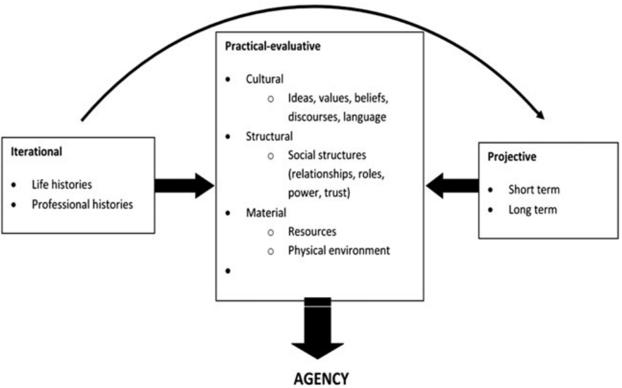
- For this paper, the authors primarily analyzed interview data from all three phases, using codes from an agency model and then open coding to interpret beliefs and aspirations.
## Limitations
- The authors explicitly say the data refer to “one particular though nonetheless interesting case,” so the findings are limited in scope.
- The study draws primarily on the stories of six classroom teachers, which is a small sample; this is evident in the text.
- The analysis focuses on interviews and selected themes from one reform context in Scotland, so transferability beyond this setting is not established; this is evident in the text.
Model-written summary. Check it against the paper before relying on it.
Integrity signals
Registry
Cites
Statistics
Figures
Verification
Claims the paper makes
0 Valid · 2 Not valid · 30 Not checked · 99 Own results and interpretations
A result the paper reports from its own data — it cites no other source for it, so there is none to check. The quote shows it is in the paper.
In the paper
“The significance of what was often referred to as a safe and caring learning environment for everyone who came into their classrooms was articulated strongly.”
§ 4. Teachers’ beliefs > 4.1. Beliefs relating to children and young people
boosted- Asserted: passes — The authors put it forward as true.
- Checkable: passes — It can be checked against evidence.
- Load-bearing: unclear — It is unclear whether the paper’s conclusions depend on it.
- Based: passes — The paper gives a reason why it holds.
A result the paper reports from its own data — it cites no other source for it, so there is none to check. The quote shows it is in the paper.
In the paper
“In analysing the data, we were struck by the similarity of beliefs articulated across this small group of teachers, despite their location in different sectors of education.”
plain- Asserted: passes — The authors put it forward as true.
- Checkable: passes — It can be checked against evidence.
- Load-bearing: passes — The paper’s conclusions depend on it.
- Based: passes — The paper gives a reason why it holds.
A result the paper reports from its own data — it cites no other source for it, so there is none to check. The quote shows it is in the paper.
In the paper
“The data clearly convey the strong sense of teachers’ professional responsibility towards their students.”
§ 4. Teachers’ beliefs > 4.1. Beliefs relating to children and young people
boosted- Asserted: passes — The authors put it forward as true.
- Checkable: passes — It can be checked against evidence.
- Load-bearing: unclear — It is unclear whether the paper’s conclusions depend on it.
- Based: passes — The paper gives a reason why it holds.
A result the paper reports from its own data — it cites no other source for it, so there is none to check. The quote shows it is in the paper.
In the paper
“Indeed, only one participant strongly referred to the importance of subject knowledge, lamenting what she saw as the detrimental effects of vocationalism on the academic content of her subject.”
§ 4. Teachers’ beliefs > 4.2. Beliefs about the role of the teacher
plainSingle case- Asserted: passes — The authors put it forward as true.
- Checkable: passes — It can be checked against evidence.
- Load-bearing: unclear — It is unclear whether the paper’s conclusions depend on it.
- Based: passes — The paper gives a reason why it holds.
A result the paper reports from its own data — it cites no other source for it, so there is none to check. The quote shows it is in the paper.
In the paper
“these discourses appear to be fairly restricted in scope, more geared to short-term goals, and predominantly articulated via the language of recent policy documentation.”
hedged- Asserted: passes — The authors put it forward as true.
- Checkable: passes — It can be checked against evidence.
- Load-bearing: passes — The paper’s conclusions depend on it.
- Based: passes — The paper gives a reason why it holds.
57 more claims
Create a free account to see all 131 claims and every source verdict.
- It may state two separate claims as one. 39
- Probably not a substantial claim. 46
Claims other papers make about this one
Each is checked against this paper’s own text: does it say what the citing paper says it does?
The cited source says what the claim attributes to it.
In the citing paper
“This absence leaves teachers unsure about their roles and contributions (Biesta et al. 2015).”
From Unveiling teachers’ professional agency and decision-making in professional learning: the illusion of choice (2025) · cites this paper as Biesta et al. 2015
The cited source says what the claim attributes to it.
In the citing paper
“As Biesta et al. (2015) suggests, teachers' agency is influenced not just by their attributes, but also by their professional experience.”
From Unveiling teachers’ professional agency and decision-making in professional learning: the illusion of choice (2025) · cites this paper as Biesta et al. 2015
The cited source says what the claim attributes to it.
In the citing paper
“Likewise Biesta, Priestley and Robinson (2015) point to a lack of discourses among teachers that constructs education in terms other than the technical-rational concerns of 'efficiency' to include questions of purpose and value.”
From Teacher agency and professional learning communities; what can Learning Rounds in Scotland teach us? (2017) · cites this paper as Biesta, Priestley and Robinson (2015)
The cited source says what the claim attributes to it.
In the citing paper
“Biesta, Priestley and Robinson (2015) report that the Scottish teachers in their research had a very similar set of views about teaching, learning and education more broadly, even though they were from diverse locations and sectors.”
From Teacher agency and professional learning communities; what can Learning Rounds in Scotland teach us? (2017) · cites this paper as Biesta, Priestley and Robinson (2015)
The cited source says what the claim attributes to it.
In the citing paper
“Biesta, Priestley and Robinson (2015) report a similar experience in their research on teacher agency.”
From Teacher agency and professional learning communities; what can Learning Rounds in Scotland teach us? (2017) · cites this paper as Biesta, Priestley and Robinson (2015)
1 more claim about this paper
Create a free account to see every claim other papers make about this one.
Citations
Cites
Outline of a Theory of Practice
Bourdieu, P. (1977) · doi:10.1017/cbo9780511812507 · Cited by 27,606
(1984) · Cited by 21,166
Outline of a Theory of Practice.
Frank, A. W., & Bourdieu, P. (1980) · Contemporary Sociology · doi:10.2307/2066038 · Cited by 14,545
Teachers' beliefs and educational research: cleaning up a messy construct
Pajares, M. F. (1992) · Review of Educational Research · doi:10.3102/00346543062003307 · Cited by 9,007 · cited 2×
“In the discussion section, we explore what this reveals about the role of beliefs in teacher agency.”
BackgroundEmirbayer, M., & Mische, A. (1998) · American Journal of Sociology · doi:10.1086/231294 · Cited by 6,165
Outline of a Theory of Practice
BOURDIEU, P. (2007) · On Violence · doi:10.2307/j.ctv120qr2d.16 · Cited by 5,527
Realist Social Theory: The Morphogenetic Approach
Archer, M. S. (1995) · Cambridge University Press eBooks · doi:10.1017/cbo9780511557675 · Cited by 3,125
Change Forces: Probing the Depths of Educational Reform
Fullan, M. (1993) · doi:10.4324/9780203059005 · Cited by 3,111
Realist social theory the morphogenetic approach
Archer, M. S. (1995) · Cited by 2,938
Change Forces: Probing the Depths of Educational Reform
Davies, S., & Fullan, M. (1995) · Canadian Public Policy / Analyse de Politiques · doi:10.2307/3552051 · Cited by 2,809
Research works printed but not linked: 3
- Brown, S., & McIntyre, D. (1993). Making sense of teaching: Developing teachers and teaching. Buckingham: Open University Press. (Open in a new window)Google Scholar
- Hollis, M. (1994). The philosophy of social science: An introduction. Cambridge: Cambridge University Press. (Open in a new window)Google Scholar · doi:10.1017/ccol0521447801
- Nieveen N. (2011 September 14). Teachers’ professional development in curriculum design in the Netherlands. Paper presented at the European Conference for Educational Research Berlin.
Cited by
What is Education For? On Good Education, Teacher Judgement, and Educational Professionalism
Biesta, G. (2015) · European Journal of Education · doi:10.1111/ejed.12109 · Cited by 900
Self-citationTeacher agency and identity commitment in curricular reform
Tao, J., & Gao, X. (2017) · Teaching and Teacher Education · doi:10.1016/j.tate.2017.01.010 · Cited by 408
An Entangled Pedagogy: Looking Beyond the Pedagogy—Technology Dichotomy
Fawns, T. (2022) · Postdigital Science and Education · doi:10.1007/s42438-022-00302-7 · Cited by 350
“However, teachers may hold only vague notions of purpose, and a clear articulation of purposes (particularly longer-term ones) is challenging (Priestley et al. 2015).”
BackgroundHuman-centred learning analytics and AI in education: A systematic literature review
Alfredo, R., Echeverria, V., Jin, Y., Yan, L., Swiecki, Z., Gašević, D., & Martinez-Maldonado, R. (2024) · Computers and Education: Artificial Intelligence · doi:10.1016/j.caeai.2024.100215 · Cited by 281
“This notion of human control encompasses key elements of intentional, purposeful, and meaningful learning (Jääskelä et al., 2021) and teaching (Biesta et al., 2015).”
BackgroundA model of teacher agency in professional development and school reform
Imants, J., & Van der Wal, M. M. (2020) · Journal of Curriculum Studies · doi:10.1080/00220272.2019.1604809 · Cited by 251
“Within thediscourse of agency, teacher agency is considered a specific formof professional agency—their active contribution to shaping their work and its conditions is assumed to be an indispensable element of good and meaningful education (Biesta et al., 2015).”
BackgroundInfluentialTran, L. T., & Vu, T. T. P. (2018) · Educational Review · doi:10.1080/00131911.2017.1293615 · Cited by 221
“Our view of agency is in line with the life-course and identity approach to agency (Biesta and Tedder 2007; Biesta, Priestley, and Robinson 2015; Emirbayer and Mische 1998), which makes a case for individuals’ ways of “constructing their life courses through choices and actions” (Eteläpelto et al.…”
BackgroundMethodInfluentialTeaching and Teacher Education
Bollard, H., Nielsen, M., West, L., Young, D., Irvine, J., & Kimmons, R. (2021) · 50 Years of Education Research Trends · doi:10.59668/226.4014 · Cited by 214
Talking about education: exploring the significance of teachers’ talk for teacher agency
Biesta, G., Priestley, M., & Robinson, S. (2017) · Journal of Curriculum Studies · doi:10.1080/00220272.2016.1205143 · Cited by 205
“In other publications we have explored the role of values and beliefs (Biesta et al., 2015), the impact of cultures of performativity (Priestley, Robinson, & Biesta, 2012) and the intersections between teacher agency and curriculum policy and practice (Priestley, Biesta, & Robinson, 2013).”
Self-citationTeacher agency and professional practice
Molla, T., & Nolan, A. (2020) · Teachers and Teaching · doi:10.1080/13540602.2020.1740196 · Cited by 196
“We concur with Goodson (2003) that ‘understanding teacher agency is a vital part of educational research and one that we ignore at our peril’ (p. 57), yet teacher professional agency is an under-researched topic (Biesta et al., 2015).”
BackgroundMethodInfluentialLeijen, Ä., Pedaste, M., & Lepp, L. (2020) · British Journal of Educational Studies · doi:10.1080/00071005.2019.1672855 · Cited by 192
“As Priestley, Biesta and Robinson (Biesta et al., 2015; Priestley et al., 2015) showed, reflection in action is quite common among teachers, but it can also be very limited.”
BackgroundResultInfluentialTao, J., & Gao, X. (. (2021) · Cambridge University Press eBooks · doi:10.1017/9781108916943 · Cited by 181
Hökkä, P., Vähäsantanen, K., & Mahlakaarto, S. (2017) · Teaching and Teacher Education · doi:10.1016/j.tate.2016.12.001 · Cited by 176
Conceptualizing Teacher Agency for Inclusive Education: A Systematic and International Review
Li, L., & Ruppar, A. (2021) · Teacher Education and Special Education: The Journal of the Teacher Education Division of the Council for Exceptional Children · doi:10.1177/0888406420926976 · Cited by 155
“Previous research on teacher agency has focused on (a) personal attributes that seem conducive or coercive to teacher agency (Biesta et al., 2015; van der Heijden et al., 2015); (b) contextual factors that shape agency (Connolly et al., 2018); (c) agency in carrying out curriculum reform (Priestley…”
BackgroundThe role of teachers in educational reform: A 20-year perspective
Datnow, A. (2020) · Journal of Educational Change · doi:10.1007/s10833-020-09372-5 · Cited by 306
Teachers' perceived professional space and their agency
Oolbekkink-Marchand, H. W., Hadar, L. L., Smith, K., Helleve, I., & Ulvik, M. (2016) · Teaching and Teacher Education · doi:10.1016/j.tate.2016.11.005 · Cited by 214
An exploratory study of teacher agency for social justice
Pantić, N. (2017) · Teaching and Teacher Education · doi:10.1016/j.tate.2017.04.008 · Cited by 184
“Teacher agency involves a commitment to pursue a sense of, at least partly selfdetermined, purposes (Frost, 2006; Giddens, 1984) informed by the underlying beliefs about their professional roles (Biesta et al., 2015).”
BackgroundResultInfluentialTeaching during COVID-19: The Decisions Made in Teaching
Lepp, L., Aaviku, T., Leijen, Ä., Pedaste, M., & Saks, K. (2021) · Education Sciences · doi:10.3390/educsci11020047 · Cited by 176
“the long-term purposes of education [21], in this sense the findings are not so different from the data collected from regular (pre-COVID) teaching times.”
BackgroundResultWorking and Learning Together: Rethinking Human Resource Policies for Schools
OECD (2019) · OECD reviews of school resources · doi:10.1787/b7aaf050-en · Cited by 207
Teacher agency: the effects of active and passive responses to curriculum change
Jenkins, G. (2019) · The Australian Educational Researcher · doi:10.1007/s13384-019-00334-2 · Cited by 198
Stetsenko, A. (2019) · Frontiers in Education · doi:10.3389/feduc.2019.00148 · Cited by 154
“One line of works on agency that is clearly relational and directly engaged with issues of education, deserves some scrutiny for its interesting and important developments as well as its gaps, namely, the prolific writings by Gert Biesta and his colleagues (e.g., Biesta and Tedder, 2006, 2007; Biesta et al., 2015; Pri…”
BackgroundTeacher Beliefs Regarding Learning, Pedagogy, and the Use of Technology in Higher Education
Jääskelä, P., Häkkinen, P., & Rasku‐Puttonen, H. (2017) · Journal of Research on Technology in Education · doi:10.1080/15391523.2017.1343691 · Cited by 166
“…working under the external pressure of developmental circumstances, he or she may not be capable of long-term thinking about the purposes of education, and the expected change in pedagogy may not always occur (Ertmer, 2005b; Ertmer & Ottenbreit-Leftwich, 2010; Biesta, Priestley, & Robinson 2015).”
BackgroundMertala, P. (2019) · Computers in Human Behavior · doi:10.1016/j.chb.2019.08.003 · Cited by 190
Teacher agency in professional learning communities
Brodie, K. (2019) · Professional Development in Education · doi:10.1080/19415257.2019.1689523 · Cited by 196
“Research on teacher professional agency has been conducted in relation to new curriculum policies (Biesta et al. 2015) or accountability regimes (Buchanan 2015), which significantly influence teachers’ work and which teachers respond to in a variety of ways, by ‘entering into and suggesting new…”
BackgroundAcademic identities in contemporary higher education: sustaining identities that value teaching
McCune, V. (2019) · Teaching in Higher Education · doi:10.1080/13562517.2019.1632826 · Cited by 158
Charteris, J., & Smardon, D. (2017) · Pedagogy Culture and Society · doi:10.1080/14681366.2017.1345975 · Cited by 134
Erss, M. (2018) · The Curriculum Journal · doi:10.1080/09585176.2018.1445514 · Cited by 99
“Although there are various definitions of teacher agency, they all seem to have one central idea in common: developing teachers’ capacity for professional action at their own discretion, in order to enhance student learning (Biesta et al., 2015; Goodson, 2003; Nieveen, 2011; Pyh€alt€ o, Pietarinen, & Soini, 2012).”
BackgroundInfluentialTeaching critical thinking: Cultural challenges and strategies in Singapore
Tan, C. (2017) · British Educational Research Journal · doi:10.1002/berj.3295 · Cited by 145
Ojala, M. (2020) · The Journal of Environmental Education · doi:10.1080/00958964.2020.1845589 · Cited by 128
Hiver, P. V., & Whitehead, G. E. K. (2018) · System · doi:10.1016/j.system.2018.04.015 · Cited by 122
Teacher agency and professional learning communities; what can Learning Rounds in Scotland teach us?
Philpott, C., & Oates, C. (2017) · Professional Development in Education · doi:10.1080/19415257.2016.1180316 · Cited by 104
“Biesta et al. (2015) identify the absence of alternative discourses as a problem for teacher agency.”
BackgroundResultInfluentialTensions and paradoxes in teaching: implications for teacher education
Ben‐Peretz, M., & Flores, M. A. (2018) · European Journal of Teacher Education · doi:10.1080/02619768.2018.1431216 · Cited by 114
“Thus, teachers’ agency depends not only on the beliefs that individual teachers bring to their practice, but requires as well collective development and consideration (Biesta, Priestley, and Robinson 2015).”
BackgroundTeacher agency within the Finnish CLIL context: tensions and resources
Pappa, S., Moate, J., Ruohotie‐Lyhty, M., & Eteläpelto, A. (2017) · International Journal of Bilingual Education and Bilingualism · doi:10.1080/13670050.2017.1286292 · Cited by 113
“Agency is a situated activity, something the individual does within contexts-for-action characterized by particular interactive ecological circumstances influenced by time, relations, and a potential for transformation and achievement (Biesta, Priestley, and Robinson 2015).”
BackgroundChen, M. (2022) · System · doi:10.1016/j.system.2021.102710 · Cited by 100
Teachers’ collective professional development in school: A review study
Hauge, K., & Wan, P. (2019) · Cogent Education · doi:10.1080/2331186x.2019.1619223 · Cited by 136
“Biesta et al. (2015) believe that this reduces the alternative discussion, and also ask where the alternative discussion will come from when the teachers have very similar views on teaching and learning.”
BackgroundInfluentialKarousiou, C., Hajisoteriou, C., & Angelides, P. (2018) · Teachers and Teaching · doi:10.1080/13540602.2018.1544121 · Cited by 100
Bai, L., & Wang, Y. (2024) · Journal of Diversity in Higher Education · doi:10.1037/dhe0000409 · Cited by 115
Structural change from physical foundations: The role of the environment in enacting school change
Woolner, P., Thomas, U., & Tiplady, L. (2018) · Journal of Educational Change · doi:10.1007/s10833-018-9317-4 · Cited by 107
“This raises some issues in that sociologists tend to focus on non-physical aspects of social structures while Priestley and colleagues (e.g. Biesta et al. 2015) have sometimes separated the ‘material’ from the ‘structural’ aspects of teachers’ contexts.”
BackgroundAlfaro, C. (2019) · Theory Into Practice · doi:10.1080/00405841.2019.1569400 · Cited by 92
Making sense of teacher agency for change with social and epistemic network analysis
Pantić, N., Galey, S., Florian, L., Joksimovíc, S., Viry, G., Gašević, D., Nyqvist, H. K., & Kyritsi, K. (2021) · Journal of Educational Change · doi:10.1007/s10833-021-09413-7 · Cited by 139
Teacher agency and spaces in changes of English language education policy
Liu, Y., Wang, H., & Zhao, R. (2020) · Current Issues in Language Planning · doi:10.1080/14664208.2020.1791532 · Cited by 85
Paro, K. M. L., Johnson, A. V. S., King, E. K., & Lippard, C. N. (2017) · Early Childhood Education Journal · doi:10.1007/s10643-017-0872-8 · Cited by 90
Charteris, J., & Thomas, E. (2017) · Teaching Education · doi:10.1080/10476210.2016.1229291 · Cited by 66
Teacher educators’ professional agency in facilitating professional digital competence
Nagel, I., Guðmundsdóttir, G. B., & Afdal, H. W. (2023) · Teaching and Teacher Education · doi:10.1016/j.tate.2023.104238 · Cited by 131
Teachers as transformative agents in changing school culture
Reinius, H., Kaukinen, I., Korhonen, T., Juuti, K., & Hakkarainen, K. (2022) · Teaching and Teacher Education · doi:10.1016/j.tate.2022.103888 · Cited by 116
Min, M., Lee, H., Hodge, C., & Croxton, N. (2022) · Education and Urban Society · doi:10.1177/00131245211027511 · Cited by 61
“Teacher beliefs also gathered scholars’ attention as a factor that influences the construction of teacher agency for change (Biesta et al., 2015; Datnow & Hubbard, 2016; Ham & Dekkers, 2019).”
BackgroundPolatcan, M., Arslan, P., & Balcı, A. (2021) · Educational Studies · doi:10.1080/03055698.2021.1894549 · Cited by 103
“The term agency has been a topic for a long time (Bandura, 1997), but how teacher agency contributes to teacher professional learning has a shorter history (Biesta, Priestley, and Robinson 2015; Datnow 2012; Liu, Hallinger, and Feng 2016; Robinson 2012).”
BackgroundInfluentialAction research – connecting practice and theory
Ulvik, M., Riese, H., & Roness, D. (2017) · Educational Action Research · doi:10.1080/09650792.2017.1323657 · Cited by 70
Developing teacher agency through dialogue
Wallen, M., & Tormey, R. (2019) · Teaching and Teacher Education · doi:10.1016/j.tate.2019.03.014 · Cited by 84
Teacher Agency and Resilience in the Age of Neoliberalism
Bartell, T. G., Cho, C. L., Drake, C., Petchauer, E. M., & Richmond, G. (2019) · Journal of Teacher Education · doi:10.1177/0022487119865216 · Cited by 70
Teacher adaptation to flexible learning environments
Deed, C. G., Blake, D., Henriksen, J., Mooney, A., Prain, V., Tytler, R., Zitzlaff, T., Edwards, M., Emery, S., Muir, T., et al. (2019) · Learning Environments Research · doi:10.1007/s10984-019-09302-0 · Cited by 79
The effect of self-efficacy and self-set grade goals on academic outcomes
Saks, K. (2024) · Frontiers in Psychology · doi:10.3389/fpsyg.2024.1324007 · Cited by 126
“Goals may also be classified according to the temporal perspective – long-term goals and short-term goals in the context of agency (Biesta et al., 2015; Leijen et al., 2020), proximal and distal goals in the context of self-efficacy theory (Bandura and Schunk, 1981), and outcome/performance goals…”
BackgroundLeal, P., & Crookes, G. V. (2018) · System (Linköping) · doi:10.1016/j.system.2018.06.005 · Cited by 43
Le, M. D., Nguyen, H. T. M., & Burns, A. M. (2020) · Current Issues in Language Planning · doi:10.1080/14664208.2020.1741209 · Cited by 85
Politicising curriculum implementation: The case of primary schools
Molapo, M. R., & Pillay, V. (2018) · South African Journal of Education · doi:10.15700/saje.v38n1a1428 · Cited by 102
“They suggest that teacher agency refers to “a pattern of influences from the past, orientations towards the future and engagement with the present” (Biesta et al., 2015:626).”
BackgroundHarris, R., & Graham, S. J. (2018) · Journal of Curriculum Studies · doi:10.1080/00220272.2018.1513570 · Cited by 83
“By focusing on short term examination success, teachers’ agency becomes further limited to what is seen as educationally valuable in a performativity culture (Biesta et al., 2015).”
InfluentialTeacher professional standards to support teacher quality and learning in Estonia
Pedaste, M., Leijen, Ä., Poom‐Valickis, K., & Eisenschmidt, E. (2019) · European Journal of Education · doi:10.1111/ejed.12346 · Cited by 94
Educational reform and teachers’ agency in reconstructing pedagogical practices in Kazakhstan
Yakavets, N., Winter, L., Malone, K. L., Zhontayeva, Z., & Khamidulina, Z. (2022) · Journal of Educational Change · doi:10.1007/s10833-022-09463-5 · Cited by 113
“Another approach involves an ecological understanding of agency, and has its roots in action-theoretical work, particularly that stemming from pragmatist philosophy (Dewey, Mead), where agency is concerned with how actors “critically shape their responses to problematic situations” (Biesta & Tedder, 2006, p. 11; Biest…”
BackgroundBarfod, K. S. (2017) · Journal of Adventure Education & Outdoor Learning · doi:10.1080/14729679.2017.1409643 · Cited by 73
Teng, M. F. (2019) · English Teaching & Learning · doi:10.1007/s42321-019-00024-3 · Cited by 80
Examining Changes in Pre-service Teachers’ Beliefs of Pedagogy
Sheridan, L. (2016) · The Australian journal of teacher education · doi:10.14221/ajte.2016v41n3.1 · Cited by 54
“Biesta et al., (2015) research supports this stating that, “teaching is dependent upon the personal qualities, beliefs and values,” (p.”
InfluentialProfessional agency in a university context: Academic freedom and fetters
Vähäsantanen, K., Paloniemi, S., Räikkönen, E., & Hökkä, P. K. (2019) · Teaching and Teacher Education · doi:10.1016/j.tate.2019.103000 · Cited by 79
Zhang, C. (2020) · International Journal of Chinese Language Teaching · doi:10.46451/ijclt.2020.06.03 · Cited by 51
Tripathi, T., Sharma, S. R., Singh, V., Bhargava, P., & Raj, C. (2025) · Frontiers in Education · doi:10.3389/feduc.2025.1651217 · Cited by 51
International students enacting agency in their PhD journey
Nguyen, M. N., & Robertson, M. (2020) · Teaching in Higher Education · doi:10.1080/13562517.2020.1747423 · Cited by 55
“This ‘emergent phenomenon of actor-situation transaction’ (Biesta, Priestley, and Robinson 2015, 626) illustrates the practical-evaluative dimension when they made ‘practical and normative judgments among alternative possible trajectories of action’ (Emirbayer and Mische 1998, 971).”
BackgroundCurriculum change in Australia and Ireland: a comparative study of recent reforms
Gleeson, J., Klenowski, V., & Looney, A. (2020) · Journal of Curriculum Studies · doi:10.1080/00220272.2019.1704064 · Cited by 47
Evans, G. (2021) · Journal of Educational Change · doi:10.1007/s10833-021-09422-6 · Cited by 85
Becoming an inclusive educator: Agentive maneuverings in collaboratively taught classrooms
Naraian, S., & Schlessinger, S. L. (2018) · Teaching and Teacher Education · doi:10.1016/j.tate.2017.12.012 · Cited by 66
Teacher belief and agency development in bringing change to scale
Bonner, S. M., Diehl, K., & Trachtman, R. (2019) · Journal of Educational Change · doi:10.1007/s10833-019-09360-4 · Cited by 65
Student Teachers' Change Agency in Education for Sustainable Development
Koskela, T., & Kärkkäinen, S. (2021) · Journal of Teacher Education for Sustainability · doi:10.2478/jtes-2021-0007 · Cited by 77
Developing a quality curriculum in a technological era
Twining, P., Butler, D., Fisser, P., Leahy, M., Shelton, C., Forget-Dubois, N., & Lacasse, M. (2020) · Educational technology research and development · doi:10.1007/s11423-020-09857-3 · Cited by 53
Self-Study Research: Challenges and Opportunities in Teacher Education
Hauge, K. (2021) · IntechOpen eBooks · doi:10.5772/intechopen.96252 · Cited by 75
Al‐Mahdy, Y. F. H., Hallinger, P., Emam, M. M., Hammad, W., Al’Abri, K. M., & Al-Harthi, K. (2021) · Educational Management Administration & Leadership · doi:10.1177/17411432211064428 · Cited by 76
“This recognizes the key role that teachers can play in implementing change and improving their schools (Priestley et al., 2015.”
BackgroundChinese inclusive education teachers' agency within temporal-relational contexts
Wang, Y., Mu, G. M., & Zhang, L. (2016) · Teaching and Teacher Education · doi:10.1016/j.tate.2016.10.009 · Cited by 65
Mu, G. M., Liang, W., Li-tao, L., & Dongfang, H. (2018) · Teaching and Teacher Education · doi:10.1016/j.tate.2018.03.006 · Cited by 68
Gao, Y., & Cui, Y. (2022) · RELC Journal · doi:10.1177/00336882221074110 · Cited by 62
“Theorized by Biesta et al. (2015) ‘ speci fi cally in respect of the activities of teachers in schools ’ (625), teacher agency is the willingness and capacity to ‘ intentionally act ’ (Moate and Ruohotie-Lyhty, 2020: 94) according to teachers ’ personal values, attributes and beliefs (Biesta et al.,…”
BackgroundThe navigational challenges of a blended learning approach to teaching in business and management
Truss, A., & Anderson, V. A. (2022) · The International Journal of Management Education · doi:10.1016/j.ijme.2022.100733 · Cited by 64
Ou, A. W., & Gu, M. M. (2023) · Language and Education · doi:10.1080/09500782.2023.2244915 · Cited by 62
“…have revealed that teachers activate their agency – i.e. their capacity to act and make teaching decisions based on their beliefs and identities (Biesta et al. 2015) – to implement translanguaging as a planned pedagogical strategy, integrating students’ L1 and L2 in classroom teaching to…”
BackgroundFostering critical teacher agency: the impact of a science capital pedagogical approach
King, H., & Nomikou, E. (2017) · Pedagogy Culture and Society · doi:10.1080/14681366.2017.1353539 · Cited by 67
“As Biesta, Priestley, and Robinson (2015) have argued, current policy discourses and systems of accountability are narrowly conceived and shortterm in nature, and tend to focus solely on student attainment as determined by externally set measures.”
BackgroundDynamic interplay of language policies, beliefs and pedagogy in a preschool in Luxembourg
Kirsch, C. (2018) · Language and Education · doi:10.1080/09500782.2018.1487452 · Cited by 54
“Beliefs are rooted in the context and based, among others, on past and present experiences (Biesta et al. 2015; Busch 2010; Schwartz et al. 2013).”
BackgroundResultInfluentialInformation and Communication Technology and Education: Meaningful Change Through Teacher Agency
Albion, P., & Tondeur, J. (2018) · Springer international handbooks of education · doi:10.1007/978-3-319-71054-9_25 · Cited by 64
Teachers’ agency: Do their values make a difference?
Hadar, L. L., & Benish‐Weisman, M. (2018) · British Educational Research Journal · doi:10.1002/berj.3489 · Cited by 78
Fostering teacher agency in school‐based climate change education in England, UK
Rushton, E. A. C., Dunlop, L., & Atkinson, L. (2024) · The Curriculum Journal · doi:10.1002/curj.253 · Cited by 65
“Such curriculum making is, ‘influenced and shaped by the beliefs and knowledge of teachers, the cultures and structures of schools, as well as by external pressures such as accountability demands’ (Priestley et al., 2015, p. 153).”
BackgroundInfluentialEmerging Conceptualisations on Professional Agency and Learning
Eteläpelto, A. (2017) · Professional and practice-based learning · doi:10.1007/978-3-319-60943-0_10 · Cited by 55
Exploring teachers’ curriculum decision making: insights from history education
Harris, R., & Reynolds, R. A. (2017) · Oxford Review of Education · doi:10.1080/03054985.2017.1352498 · Cited by 42
The Ideology of Competition in School Music
Powell, S. R. (2023) · doi:10.1093/oso/9780197570838.001.0001 · Cited by 63
Teaching and AI in the postdigital age: Learning from teachers’ perspectives
Moylan, R., Code, J., & O'Brien, H. L. (2024) · Teaching and Teacher Education · doi:10.1016/j.tate.2024.104851 · Cited by 66
Connolly, M., Milton, E., Davies, A., & Barrance, R. (2018) · British Educational Research Journal · doi:10.1002/berj.3450 · Cited by 39
“To mitigate some of these problems, the WG needs to introduce policies which, as Biesta et al. (2015) argue, foster teacher and head teacher agency and, by doing so, reinforce their professional capital.”
BackgroundInfluentialTrần, L. T., Phan, H. L. T., Tan, G., & Rahimi, M. (2020) · Compare A Journal of Comparative and International Education · doi:10.1080/03057925.2020.1837613 · Cited by 48
“Agency refers to the state of being active rather than passive and takes shape in the actor’s transaction with the surrounding ‘ecological’ conditions and circumstances (Biesta, Priestley, and Robinson 2015).”
BackgroundMethodUniversity lecturers as change agents: How do they perceive their professional agency?
Kusters, M., van der Rijst, R. M., de Vetten, A., & Admiraal, W. (2023) · Teaching and Teacher Education · doi:10.1016/j.tate.2023.104097 · Cited by 61
Cook, A. (2024) · Journal of Research in Special Educational Needs · doi:10.1111/1471-3802.12656 · Cited by 89
Hong, H., Chen, M., Chang, C.-H., Tseng, L.-T., & Chai, C. S. (2025) · Computers & Education · doi:10.1016/j.compedu.2025.105241 · Cited by 53
Pedagogical bricolage and teacher agency: Towards a culture of creative professionalism
Campbell, L. (2019) · Educational Philosophy and Theory · doi:10.1080/00131857.2018.1425992 · Cited by 35
Kauppinen, M., Kainulainen, J., Hökkä, P. K., & Vähäsantanen, K. (2020) · European Journal of Teacher Education · doi:10.1080/02619768.2020.1746264 · Cited by 65
“In investigating the features of teachers’ agency in work and reform contexts, some researchers have also focused on identifying personal backgrounds (e.g. beliefs) that seem conducive to agency (Biesta, Priestley, and Robinson 2015; van der Heijden et al. 2015).”
BackgroundRuan, X., Zheng, X., & Toom, A. (2020) · Teaching and Teacher Education · doi:10.1016/j.tate.2020.103074 · Cited by 51
Cramer, C., Brown, C., & Aldridge, D. (2023) · Journal of Teacher Education · doi:10.1177/00224871231162295 · Cited by 63
“There is an “importance of teachers’ agency—that is, their active contribution to shaping their work and its conditions” (Biesta et al., 2015, p. 624) in the pedagogical field of action in school, which continuously confronts teachers with new situation-specific decisions for action.”
BackgroundBergh, A., & Wahlström, N. (2018) · The Curriculum Journal · doi:10.1080/09585176.2017.1400449 · Cited by 41
“In the extensive writings on teacher agency from an ecological perspective (Biesta & Tedder, 2007; Biesta et al., 2015; Biesta, Priestley, & Robinson, 2017; Priestley et al., 2012; Robinson, 2012) the reference to ‘transactional realism’ is not generally highlighted.”
BackgroundA dialogue about teacher agency: Australian and Chinese perspectives
Simpson, A., Sang, G., Wood, J., Wang, Y., & Ye, B. (2018) · Teaching and Teacher Education · doi:10.1016/j.tate.2018.07.002 · Cited by 54
When data don’t drive: teacher agency in data use efforts in low-performing schools
Lockton, M., Weddle, H., & Datnow, A. (2019) · School Effectiveness and School Improvement · doi:10.1080/09243453.2019.1647442 · Cited by 61
Oosterhoff, A., Oenema-Mostert, I., & Minnaert, A. E. M. G. (2020) · Teaching and Teacher Education · doi:10.1016/j.tate.2020.103176 · Cited by 51
Metadata
- Authors
- Biesta, G., Priestley, M., & Robinson, S.
- Affiliations
- ArtEZ University of the Arts (NL)
- University of Stirling (GB)
- Aarhus University (DK)
- Corresponding author
- Biesta, Gert
- Venue
- Teachers and Teaching
- Publisher
- Informa UK Limited
- Published
- 2015-06-15
- Volume
- 21
- Issue
- 6
- Pages
- 624-640
- ISSN
- 1354-0602 (ISSN-L)
- 1470-1278
- OpenAlex
- W1911902575
- Cited by
- 1,318
- References
- 47
- Citations by year
- 2026: 233 · 2025: 161 · 2024: 141 · 2023: 157 · 2022: 139 · 2021: 131 · 2020: 118 · 2019: 96 · 2018: 73 · 2017: 48 · 2016: 17 · 2015: 4
- FWCI
- 236.15
- Type
- journal article
- Language
- en
- Open access
- hybrid
- doi.org
- Licence
- cc-by-nc-nd
- Locations
- Teachers and Teaching (publishedVersion, cc-by-nc-nd)
- Brunel University Research Archive (BURA) (Brunel University London) (submittedVersion)
- Stirling Online Research Repository (University of Stirling) (submittedVersion, cc-by-nc-nd)
- Edinburgh Research Explorer (University of Edinburgh) (submittedVersion, other-oa)
- Funders
- Economic and Social Research Council (ES/I006907/1)
- Topics
- Social Sciences › Education › Teacher Education and Leadership Studies
- Social Sciences › Education › Education Pedagogy and Practices
- Social Sciences › Arts and Humanities › Philosophy › Education, Philosophy, and Society
- Keywords
- teacher agency, teacher beliefs, Curriculum for Excellence, educational reform, teacher professionalism, teacher decision-making, institutional discourse, professional vision, Scotland
About these checks
Registry, retraction, Cites and statistics results are computed, not judged, with one exception: a printed reference that no index lists is read once by a model before it counts as a citation error. Claims are extracted by a model and kept only when their quote appears verbatim in the text; each cited source is then checked, with a model’s help, for whether it says what the claim relies on. Those verdicts can be wrong — read the claim’s quote and the cited source before relying on one.
A language model drew the claims from the paper on 2026-10-11, under version 3 of the claim definition (model deepseek-v4.1-flash, prompt extract-v3).
A second model labelled each claim on 2026-10-11 (model jev-1.13-20260917, definition revision gold-guideline-v0.2).
Statistics and arithmetic are recomputed, not judged.
Confidence bands are shown only for fields calibrated on our annotated test set. None is calibrated yet, so no band is shown.
What counts as a claim ›How we measure confidence ›How we check this ›
Are you an author, or do you see a problem with this page? Request a review
Data sources
Bibliographic data: Semantic Scholar, OpenAlex, Crossref.
Contains information from the Semantic Scholar Academic Graph Datasets, made available under the ODC Attribution License (ODC-BY 1.0).
Semantic Scholar’s data is described in: Kinney, R., et al. (2023). The Semantic Scholar Open Data Platform. arXiv:2301.10140.
