

The DOI matches its Crossref record; 51 of the 51 references it cites were found in a registry or an index.
PU.1 regulates the commitment of adult hematopoietic progenitors and restricts granulopoiesis
Open accessAbstract
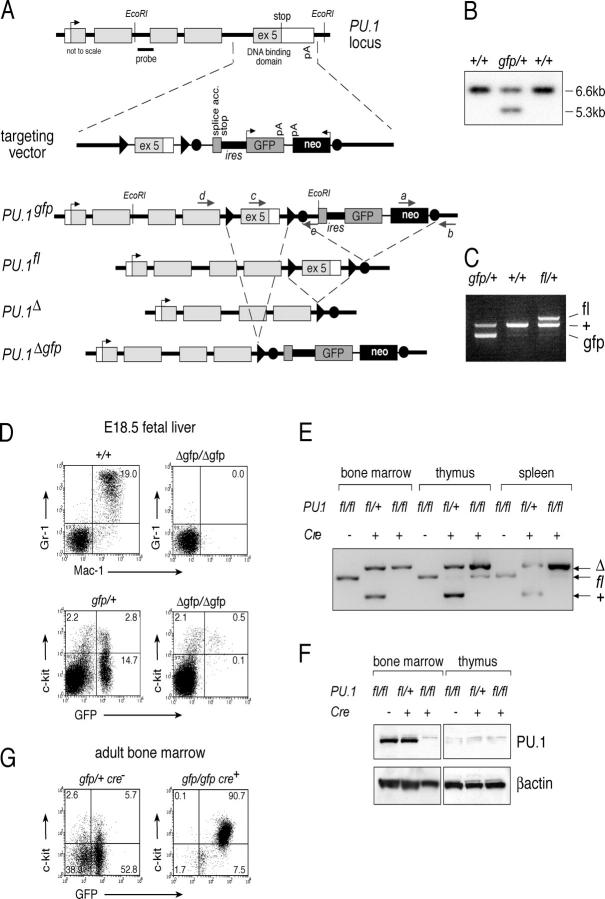
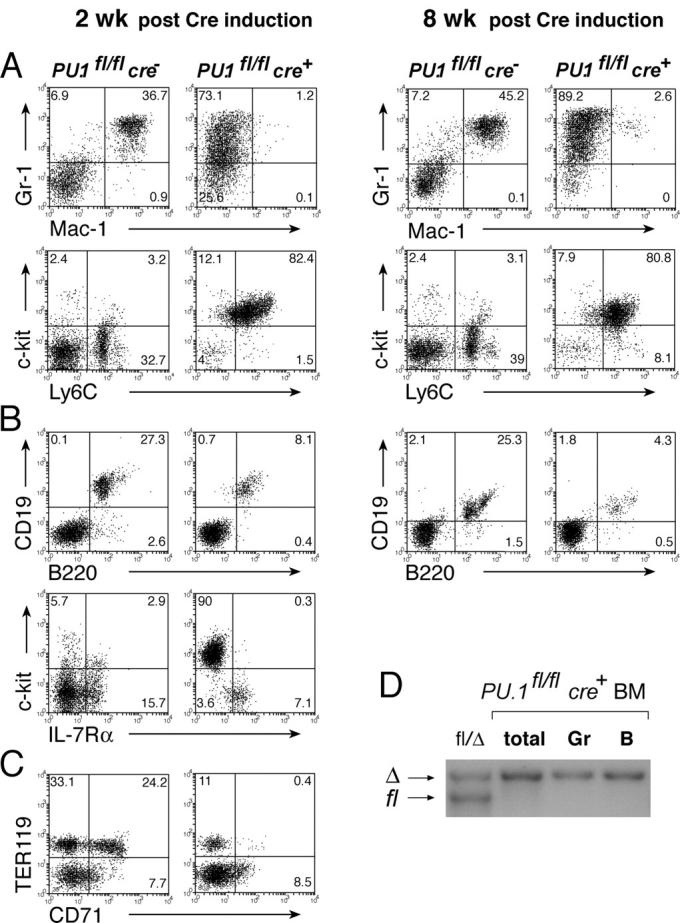
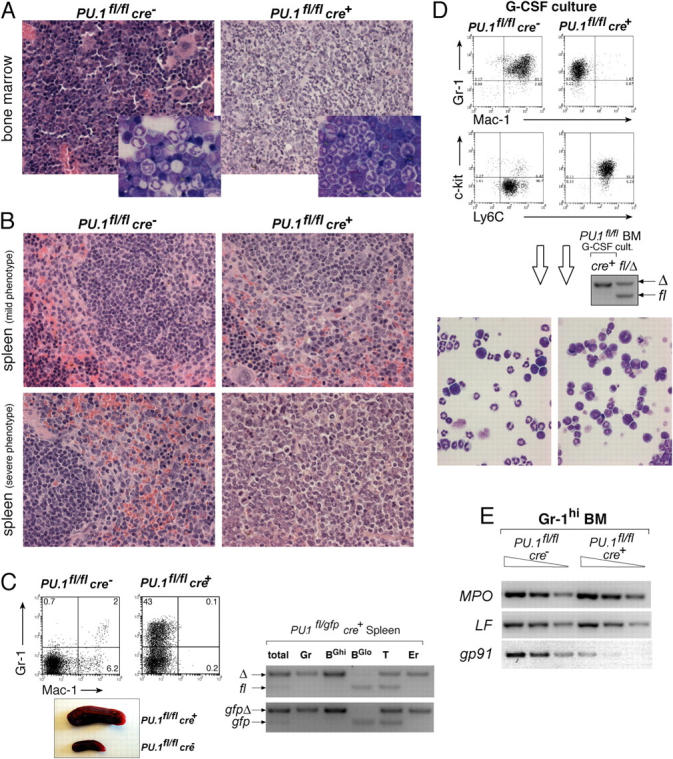
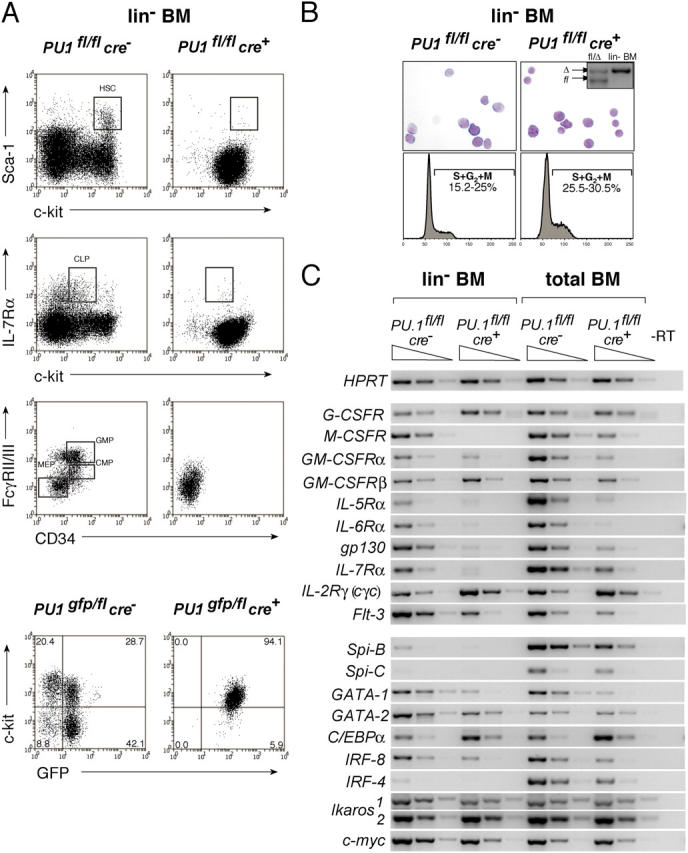
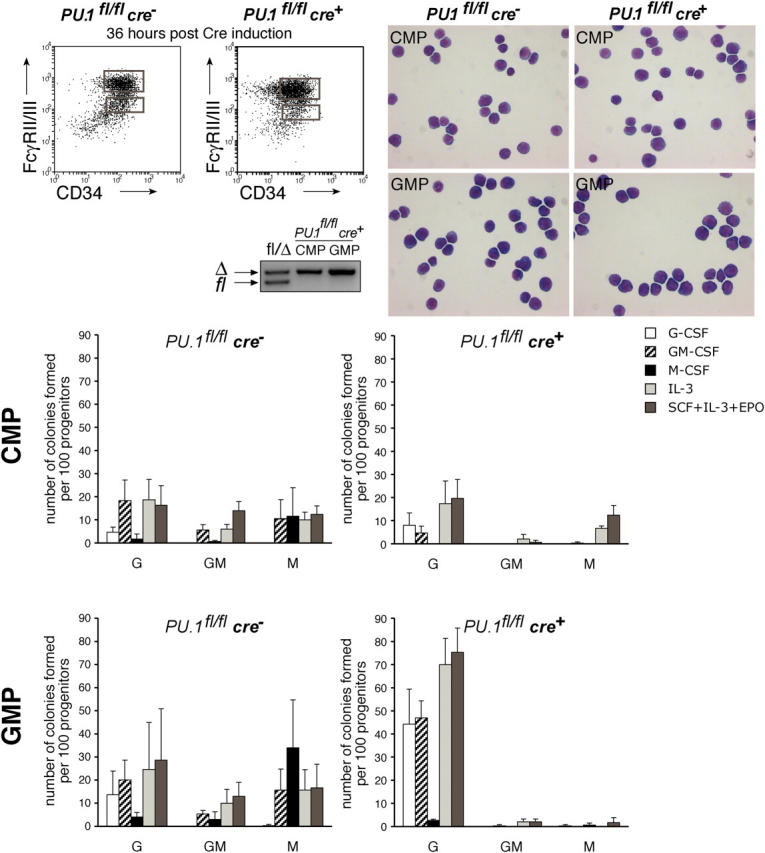
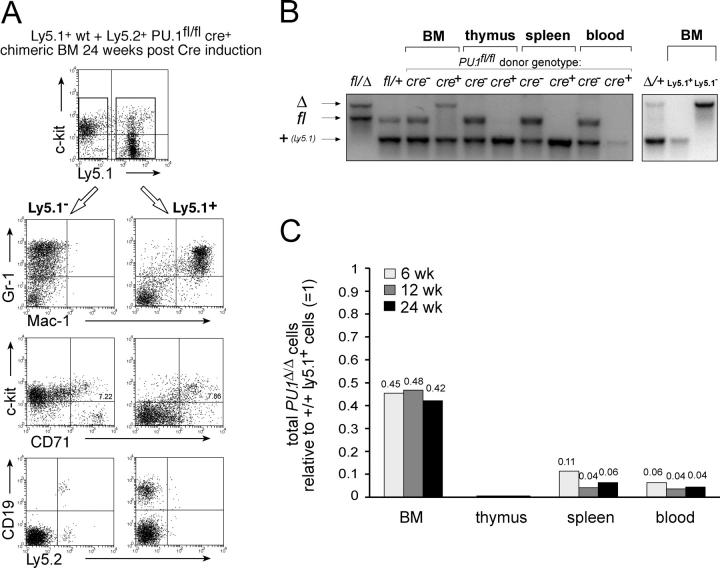
Although the transcription factor PU.1 is essential for fetal lymphomyelopoiesis, we unexpectedly found that elimination of the gene in adult mice allowed disturbed hematopoiesis, dominated by granulocyte production. Impaired production of lymphocytes was evident in PU.1-deficient bone marrow (BM), but myelocytes and clonogenic granulocytic progenitors that are responsive to granulocyte colony-stimulating factor or interleukin-3 increased dramatically. No identifiable common lymphoid or myeloid progenitor populations were discernable by flow cytometry; however, clonogenic assays suggested an overall increased frequency of blast colony-forming cells and BM chimeras revealed existence of long-term self-renewing PU.1-deficient cells that required PU.1 for lymphoid, but not granulocyte, generation. PU.1 deletion in granulocyte-macrophage progenitors, but not in common myeloid progenitors, resulted in excess granulocyte production; this suggested specific roles of PU.1 at different stages of myeloid development. These findings emphasize the distinct nature of adult hematopoiesis and reveal that PU.1 regulates the specification of the multipotent lymphoid and myeloid compartments and restrains, rather than promotes, granulopoiesis.
Overview
The claims and statistics of this paper haven’t been checked yet.
Run the check — free, no account needed. It reads the open-access text and checks the sources it cites.
Integrity signals
Registry
Cites
Statistics
Figures
Verification
Claims the paper makes
The claims and statistics of this paper haven’t been checked yet.
Run the check — free, no account needed. It reads the open-access text and checks the sources it cites.
Claims other papers make about this one
Each is checked against this paper’s own text: does it say what the citing paper says it does?
The source backs part of the claim, not all of it — or backs it for a different population, condition or comparison.
In the citing paper
“Ets family transcription factor PU.1 is pivotal for normal hematopoiesis as it directs differentiation of hematopoietic progenitors to different cell lineages such as macrophage, granulocyte or B cell (1).”
From FBW7 Inhibits Myeloid Differentiation in Acute Myeloid Leukemia via GSK3-Dependent Ubiquitination of PU.1 (2021) · cites this paper as [1]
Experimental — accuracy not yet measuredThe source backs part of the claim, not all of it — or backs it for a different population, condition or comparison.
In the citing paper
“In preleukemic states (e.g., MDS), where PU.1 downregulation permits clonal expansion 33-35”
From USP7 sustains hematopoietic stem cell homeostasis partially via PU.1 stabilization (2026) · cites this paper as [35]
Experimental — accuracy not yet measuredThe source backs part of the claim, not all of it — or backs it for a different population, condition or comparison.
In the citing paper
“One such master regulator is the Ets-family transcription factor PU.1, which is indispensable for HSC function and the differentiation of cells within the myeloid as well as lymphoid lineages3–5.”
From Minimal PU.1 reduction induces a preleukemic state and promotes development of acute myeloid leukemia (2015) · cites this paper as [4]
Experimental — accuracy not yet measuredThe source backs part of the claim, not all of it — or backs it for a different population, condition or comparison.
In the citing paper
“its action is also important or indispensable for sustained generation of all known hematopoietic precursors that have lymphoid developmental potentials (1–9).”
From Mechanisms of Action of Hematopoietic Transcription Factor PU.1 in Initiation of T-Cell Development (2019) · cites this paper as [2]
Experimental — accuracy not yet measuredThe source backs part of the claim, not all of it — or backs it for a different population, condition or comparison.
In the citing paper
“All the hematopoietic progenitors that generate either B or T cells appear to originate from PU.1-expressing, PU.1-dependent prethymic cells (2, 27)”
From Mechanisms of Action of Hematopoietic Transcription Factor PU.1 in Initiation of T-Cell Development (2019) · cites this paper as [2]
Experimental — accuracy not yet measured
The source backs part of the claim, not all of it — or backs it for a different population, condition or comparison.
In the citing paper
“It probably extends for over 10 days for the thymocytes in young adult mice (153), where it is crucial for successful T-cell generation (2, 147).”
From Mechanisms of Action of Hematopoietic Transcription Factor PU.1 in Initiation of T-Cell Development (2019) · cites this paper as [2]
Experimental — accuracy not yet measuredThe source backs part of the claim, not all of it — or backs it for a different population, condition or comparison.
In the citing paper
“Dysregulation of the PU.1 transcriptional network is a common phenotype associated with hematological malignancy, particularly diseases of the myeloid lineage (Cook et al., 2004; Dakic et al., 2005; Koschmieder et al., 2005; Will et al., 2015; Sive et al., 2016; Aivalioti et al., 2022).”
From PU.1 is required to restrain myelopoiesis during chronic inflammatory stress (2023) · cites this paper as Dakic et al., 2005
Experimental — accuracy not yet measuredThe cited source says what the claim attributes to it.
In the citing paper
“PU.1 is a hematopoietic-specific and ETS family transcription factor that is essential for lymphoid and myeloid development25–28.”
From HIV-1 Vpr combats the PU.1-driven antiviral response in primary human macrophages (2024) · cites this paper as [27]
The cited source says what the claim attributes to it.
In the citing paper
“in postnatal mice, although T cell development is much more severely affected by PU.1 deletion than neutrophil development (2)”
From Mechanisms of Action of Hematopoietic Transcription Factor PU.1 in Initiation of T-Cell Development (2019) · cites this paper as [2]
The cited source says what the claim attributes to it.
In the citing paper
“These findings are consistent with prior work indicating PU.1 can constrain myelopoietic activity (DeKoter et al., 1998; Dakic et al., 2005)”
From PU.1 is required to restrain myelopoiesis during chronic inflammatory stress (2023) · cites this paper as Dakic et al., 2005
In the citing paper
“PU.1 binds to purine-rich sequence (PU-box) and activates gene expression during immune cell development [24, 25].”
From Transcriptional and Epigenetic Regulation of Microglia in Health and Disease (2019) · cites this paper as [25]
Self-check
Percentages, sums and reported differences re-computed from the paper’s own numbers.
The self-check needs the paper’s full text.
Citations
Cites
A clonogenic common myeloid progenitor that gives rise to all myeloid lineages
Akashi, K., Traver, D., Miyamoto, T., & Weissman, I. L. (2000) · Nature · doi:10.1038/35004599 · Cited by 2,617
Identification of Clonogenic Common Lymphoid Progenitors in Mouse Bone Marrow
Kondo, M., Weissman, I. L., & Akashi, K. (1997) · Cell · doi:10.1016/s0092-8674(00)80453-5 · Cited by 2,253
Inducible Gene Targeting in Mice
Kühn, R., Schwenk, F., Aguet, M., & Rajewsky, K. (1995) · Science · doi:10.1126/science.7660125 · Cited by 1,641
Requirement of transcription factor PU.1 in the development of multiple hematopoietic lineages
Scott, E. W., Simon, M. C., Anastasi, J., & Singh, H. (1994) · Science · doi:10.1126/science.8079170 · Cited by 1,532
Schwenk, F., Baron, U., & Rajewsky, K. (1995) · Nucleic Acids Research · doi:10.1093/nar/23.24.5080 · Cited by 1,289
Targeted disruption of the PU.1 gene results in multiple hematopoietic abnormalities
McKercher, S. R., Torbett, B. E., Anderson, K. L., Henkel, G. W., Vestal, D. J., Baribault, H., Klemsz, M., Feeney, A. J., Wu, G. E., Paige, C. J., et al. (1996) · The EMBO Journal · doi:10.1002/j.1460-2075.1996.tb00949.x · Cited by 1,130
Biology of Hematopoietic Stem Cells and Progenitors: Implications for Clinical Application
Kondo, M., Wagers, A. J., Manz, M. G., Prohaska, S. S., Scherer, D. C., Beilhack, G. F., Shizuru, J. A., & Weissman, I. L. (2003) · Annual Review of Immunology · doi:10.1146/annurev.immunol.21.120601.141007 · Cited by 1,025
Regulation of B lymphocyte and macrophage development by graded expression of PU.1
DeKoter, R. P., & Singh, H. (2000) · Science · doi:10.1126/science.288.5470.1439 · Cited by 749
Holtschke, T., Löhler, J., Kanno, Y., Fehr, T., Giese, N., Rosenbauer, F., Lou, J., Knobeloch, K.-P., Gabriele, L., Waring, J. F., et al. (1996) · Cell · doi:10.1016/s0092-8674(00)81348-3 · Cited by 644
Widespread recombinase expression using FLPeR (Flipper) mice
Farley, F. W., Soriano, P. M., Steffen, L. S., & Dymecki, S. M. (2000) · genesis · doi:10.1002/1526-968x(200011/12)28:3/4 · Cited by 602
Research works printed but not linked: 5
- 2004, Blood., 104, 3437
- 1996, Curr. Top. Microbiol. Immunol., 211, 137
- 1995, Oncogene., 11, 1549
- 1995, Leukemia., 9, 1556
- 1992, Exp. Hematol., 20, 600
Cited by
Sorted by citations
A Lineage of Myeloid Cells Independent of Myb and Hematopoietic Stem Cells
Schulz, C., Perdiguero, E. G., Chorro, L., Szabo-Rogers, H., Cagnard, N., Kierdorf, K., Prinz, M., Wu, B., Jacobsen, S. E. W., Pollard, J. W., et al. (2012) · Science · doi:10.1126/science.1219179 · Cited by 2,578
Blood Monocytes: Development, Heterogeneity, and Relationship with Dendritic Cells
Auffray, C., Sieweke, M. H., & Geissmann, F. (2009) · Annual Review of Immunology · doi:10.1146/annurev.immunol.021908.132557 · Cited by 1,744
Weng, H., Huang, H., Wu, H., Qin, X., Zhao, B. S., Dong, L., Shi, H., Skibbe, J. R., Shen, C., Hu, C., et al. (2017) · Cell stem cell · doi:10.1016/j.stem.2017.11.016 · Cited by 979
RNA N6-methyladenosine modification in cancers: current status and perspectives
Deng, X., Su, R. J., Weng, H., Huang, H., Li, Z., & Chen, J. (2018) · Cell Research · doi:10.1038/s41422-018-0034-6 · Cited by 855
Transcription factors in myeloid development: balancing differentiation with transformation
Rosenbauer, F., & Tenen, D. G. (2007) · Nature Reviews Immunology · doi:10.1038/nri2024 · Cited by 606
Chang, H.-C., Sehra, S., Goswami, R., Yao, W., Yu, Q., Stritesky, G. L., Jabeen, R., McKinley, C., Ahyi, A.-N., Han, L., et al. (2010) · Nature Immunology · doi:10.1038/ni.1867 · Cited by 577
Self-citationGenomic and biochemical insights into the specificity of ETS transcription factors
Hollenhorst, P. C., McIntosh, L. P., & Graves, B. J. (2011) · Annual Review of Biochemistry · doi:10.1146/annurev.biochem.79.081507.103945 · Cited by 490
Launching the T-cell-lineage developmental programme
Rothenberg, E. V., Moore, J. E., & Yui, M. A. (2007) · Nature reviews. Immunology · doi:10.1038/nri2232 · Cited by 514
Iwasaki, H., Somoza, C., Shigematsu, H., Duprez, E. A., Iwasaki-Arai, J., Mizuno, S.-I., Arinobu, Y., Geary, K., Zhang, P., Dayaram, T., et al. (2005) · Blood · doi:10.1182/blood-2005-03-0860 · Cited by 433
Transcriptional control of granulocyte and monocyte development
Friedman, A. D. (2007) · Oncogene · doi:10.1038/sj.onc.1210764 · Cited by 427
Hematopoietic Cytokines Can Instruct Lineage Choice
Rieger, M. A., Hoppe, P. S., Smejkal, B. M., Eitelhuber, A. C., & Schroeder, T. (2009) · Science · doi:10.1126/science.1171461 · Cited by 404
Myeloid Lineage Commitment from the Hematopoietic Stem Cell
Iwasaki, H., & Akashi, K. (2007) · Immunity · doi:10.1016/j.immuni.2007.06.004 · Cited by 394
The Transcriptional Regulation of B Cell Lineage Commitment
Nutt, S. L., & Kee, B. L. (2007) · Immunity · doi:10.1016/j.immuni.2007.05.010 · Cited by 384
Self-citationM-CSF instructs myeloid lineage fate in single haematopoietic stem cells
Mossadegh‐Keller, N., Sarrazin, S., Kandalla, P. K., Espinosa, L., Stanley, E. R., Nutt, S. L., Moore, J. T., & Sieweke, M. H. (2013) · Nature · doi:10.1038/nature12026 · Cited by 392
Self-citationDevelopmental gene networks: a triathlon on the course to T cell identity
Yui, M. A., & Rothenberg, E. V. (2014) · Nature Reviews Immunology · doi:10.1038/nri3702 · Cited by 342
Platelets and cancer: a casual or causal relationship: revisited
Menter, D. G., Tucker, S. C., Kopetz, S., Sood, A. K., Crissman, J. D., & Honn, K. V. (2014) · Cancer and Metastasis Reviews · doi:10.1007/s10555-014-9498-0 · Cited by 324
miR‐155: an ancient regulator of the immune system
Vigorito, E., Kohlhaas, S. L., Lu, D., & Leyland, R. (2013) · Immunological Reviews · doi:10.1111/imr.12057 · Cited by 296
Menezes, S., Melandri, D., Anselmi, G., Perchet, T., Loschko, J., Dubrot, J., Patel, R., Gautier, E. L., Hugues, S., Longhi, M. P., et al. (2016) · Immunity · doi:10.1016/j.immuni.2016.12.001 · Cited by 288
Carotta, S., Dakic, A., D'Amico, A., Pang, S. H. M., Greig, K. T., Nutt, S. L., & Wu, L. (2010) · Immunity · doi:10.1016/j.immuni.2010.05.005 · Cited by 279
Self-citationDETERMINANTS OF LYMPHOID-MYELOID LINEAGE DIVERSIFICATION
Laiosa, C. V., Stadtfeld, M., & Graf, T. (2006) · Annual Review of Immunology · doi:10.1146/annurev.immunol.24.021605.090742 · Cited by 265
Rosenbauer, F., Owens, B. M., Yu, L., Tumang, J. R., Steidl, U., Kutok, J. L., Clayton, L. K., Wagner, K., Scheller, M., Iwasaki, H., et al. (2006) · Nature Genetics · doi:10.1038/ng1679 · Cited by 237
Microglia Modulate Hippocampal Neural Precursor Activity in Response to Exercise and Aging
Vukovic, J., Colditz, M. J., Blackmore, D. G., Ruitenberg, M. J., & Bartlett, P. F. (2012) · The Journal of Neuroscience · doi:10.1523/jneurosci.5925-11.2012 · Cited by 241
Yan, J., Tie, G., Wang, S., Tutto, A. A., DeMarco, N., Khair, L., Fazzio, T. G., & Messina, L. M. (2017) · Nature Communications · doi:10.1038/s41467-017-02425-z · Cited by 238
E2A Proteins Promote Development of Lymphoid-Primed Multipotent Progenitors
Dias, S., Månsson, R., Gurbuxani, S. K., Sigvardsson, M., & Kee, B. L. (2008) · Immunity · doi:10.1016/j.immuni.2008.05.015 · Cited by 226
Th9 cell development requires a BATF-regulated transcriptional network
Jabeen, R., Goswami, R., Awe, O., Kulkarni, A., Nguyen, E., Attenasio, A., Walsh, D., Olson, M. R., Kim, M. H., Tepper, R. S., et al. (2013) · Journal of Clinical Investigation · doi:10.1172/jci69489 · Cited by 225
Role of Macrophages in Pregnancy and Related Complications
Jena, M. K., Nayak, N., Chen, K., & Nayak, N. R. (2019) · Archivum Immunologiae et Therapiae Experimentalis · doi:10.1007/s00005-019-00552-7 · Cited by 210
Mori, Y., Iwasaki, H., Kohno, K., Yoshimoto, G., Kikushige, Y., Okeda, A., Uike, N., Niiro, H., Takenaka, K., Nagafuji, K., et al. (2008) · The Journal of Experimental Medicine · doi:10.1084/jem.20081756 · Cited by 209
The role of PU.1 and GATA-1 transcription factors during normal and leukemogenic hematopoiesis
Burda, P., Laslo, P., & Stopka, T. (2010) · Leukemia · doi:10.1038/leu.2010.104 · Cited by 184
Interleukin-9 Is Required for Allergic Airway Inflammation Mediated by the Cytokine TSLP
Yao, W., Zhang, Y., Jabeen, R., Nguyen, E., Wilkes, D. S., Tepper, R. S., Kaplan, M. H., & Zhou, B. (2013) · Immunity · doi:10.1016/j.immuni.2013.01.007 · Cited by 185
Development and homeostasis of “resident” myeloid cells: the case of the microglia
Gomez Perdiguero, E., Schulz, C., & Geissmann, F. (2013) · Glia · doi:10.1002/glia.22393 · Cited by 182
TH9 cells are required for tissue mast cell accumulation during allergic inflammation
Sehra, S., Yao, W., Nguyen, E., Glosson, N. L., Akhtar, N., Zhou, B., & Kaplan, M. H. (2015) · Journal of Allergy and Clinical Immunology · doi:10.1016/j.jaci.2015.01.021 · Cited by 174
Wes, P. D., Holtman, I. R., Boddeke, E. W. G. M., Möller, T., & Eggen, B. J. L. (2016) · Glia · doi:10.1002/glia.22866 · Cited by 167
Wang, K., Wang, P., Shi, J., Zhu, X., He, M., Jia, X., Yang, X., Qiu, F., Jin, W. Y., Qian, M., et al. (2010) · Cancer Cell · doi:10.1016/j.ccr.2009.12.045 · Cited by 161
Staber, P. B., Zhang, P., Ye, M., Welner, R. S., Nombela-Arrieta, C., Bach, C., Kerenyi, M., Bartholdy, B. A., Zhang, H., Alberich-Jordà, M., et al. (2013) · Molecular Cell · doi:10.1016/j.molcel.2013.01.007 · Cited by 158
Endogenous microglia regulate development of embryonic cortical precursor cells
Antony, J. M., Paquin, A., Nutt, S. L., Kaplan, D. R., & Miller, F. D. (2011) · Journal of Neuroscience Research · doi:10.1002/jnr.22533 · Cited by 157
Self-citationThalidomide derivative CC-4047 inhibits osteoclast formation by down-regulation of PU.1
Anderson, G., Gries, M., Kurihara, N., Honjo, T., Anderson, J., Donnenberg, V. S., Donnenberg, A. D., Ghobrial, I. M., Mapara, M. Y., Stirling, D., et al. (2005) · Blood · doi:10.1182/blood-2005-08-3450 · Cited by 148
Transcription factor networks in B-cell differentiation link development to acute lymphoid leukemia
Somasundaram, R., Prasad, M. A. J., Ungerbäck, J., & Sigvardsson, M. (2015) · Blood · doi:10.1182/blood-2014-12-575688 · Cited by 135
The importance of microglia in the development of the vasculature in the central nervous system
Arnold, T., & Betsholtz, C. (2013) · Vascular Cell · doi:10.1186/2045-824x-5-4 · Cited by 157
Gordon, E. J., Rao, S., Pollard, J. W., Nutt, S. L., Lang, R. A., & Harvey, N. L. (2010) · Development · doi:10.1242/dev.050021 · Cited by 144
Self-citationIRF8 regulates B-cell lineage specification, commitment, and differentiation
Wang, H., Lee, C. H., Qi, C., Tailor, P. B., Feng, J., Abbasi, S., Atsumi, T., & Morse, H. C. (2008) · Blood · doi:10.1182/blood-2008-01-129049 · Cited by 144
Regulation of microglia development and homeostasis.
Greter, M., & Merad, M. (2013) · Glia · doi:10.1002/glia.22408 · Cited by 141
IFN Regulatory Factor 4 Regulates the Expression of a Subset of Th2 Cytokines
Ahyi, A.-N. N., Chang, H.-C., Dent, A. L., Nutt, S. L., & Kaplan, M. H. (2009) · The Journal of Immunology · doi:10.4049/jimmunol.0803302 · Cited by 137
Self-citationThe diverse roles of neutrophils from protection to pathogenesis
Herro, R., & Grimes, H. L. (2024) · Nature Immunology · doi:10.1038/s41590-024-02006-5 · Cited by 156
Transcriptional and Epigenetic Regulation of Microglia in Health and Disease
Yeh, H., & Ikezu, T. (2019) · Trends in Molecular Medicine · doi:10.1016/j.molmed.2018.11.004 · Cited by 135
Yáñez, A., Ng, M. Y., Hassanzadeh‐Kiabi, N., & Goodridge, H. S. (2015) · Blood · doi:10.1182/blood-2014-09-600833 · Cited by 140
Two distinct auto-regulatory loops operate at the PU.1 locus in B cells and myeloid cells
Leddin, M., Perrod, C., Hoogenkamp, M., Ghani, S., Assi, S., Heinz, S., Wilson, N. K., Follows, G., Schönheit, J., Vockentanz, L., et al. (2011) · Blood · doi:10.1182/blood-2010-08-302976 · Cited by 131
Critical roles for c-Myb in hematopoietic progenitor cells
Greig, K. T., Carotta, S., & Nutt, S. L. (2008) · Seminars in Immunology · doi:10.1016/j.smim.2008.05.003 · Cited by 128
Self-citationWill, B., Vogler, T. O., Narayanagari, S., Bartholdy, B., Todorova, T. I., da Silva Ferreira, M., Chen, J., Yu, Y., Mayer, J., Barreyro, L., et al. (2015) · Nature Medicine · doi:10.1038/nm.3936 · Cited by 127
Macrophages and Cardiovascular Health
Frodermann, V., & Nahrendorf, M. (2018) · Physiological Reviews · doi:10.1152/physrev.00068.2017 · Cited by 128
IRF8 regulates myeloid and B lymphoid lineage diversification
Wang, H., & Morse, H. C. (2008) · Immunologic Research · doi:10.1007/s12026-008-8055-8 · Cited by 121
Regulation of Lymphoid versus Myeloid Fate 'choice' by the Transcription Factor Mef2c
Stehling-Sun, S., Dade, J., Nutt, S. L., DeKoter, R. P., & Camargo, F. D. (2009) · Nature Immunology · doi:10.1038/ni.1694 · Cited by 125
Self-citationFOG‐1 and GATA‐1 act sequentially to specify definitive megakaryocytic and erythroid progenitors
Mancini, E., Sanjuán-Pla, A., Luciani, L., Moore, S., Grover, A., Zay, A., Rasmussen, K. D., Luc, S., Bilbao, D., O’Carroll, D., et al. (2011) · The EMBO Journal · doi:10.1038/emboj.2011.390 · Cited by 117
Langerhans cells are generated by two distinct PU.1-dependent transcriptional networks
Chopin, M., Seillet, C., Chevrier, S., Wu, L., Wang, H., Morse, H. C., Belz, G. T., & Nutt, S. L. (2013) · The Journal of Experimental Medicine · doi:10.1084/jem.20130930 · Cited by 117
Self-citationC/EBPα binds and activates the PU.1 distal enhancer to induce monocyte lineage commitment
Yeamans, C., Wang, D., Paz-Priel, I., Torbett, B. E., Tenen, D. G., & Friedman, A. D. (2007) · Blood · doi:10.1182/blood-2007-03-080291 · Cited by 118
From hematopoietic progenitors to B cells: mechanisms of lineage restriction and commitment
Ramírez, J. A., Lukin, K., & Hagman, J. R. (2010) · Current Opinion in Immunology · doi:10.1016/j.coi.2010.02.003 · Cited by 128
Steidl, U., Steidl, C., Ebralidze, A., Chapuy, B., Han, H.-J., Will, B., Rosenbauer, F., Becker, A., Wagner, K., Koschmieder, S., et al. (2007) · Journal of Clinical Investigation · doi:10.1172/jci30525 · Cited by 114
Fiedler, K., Sindrilaru, A., Terszowski, G., Kókai, E., Feyerabend, T. B., Bullinger, L., Rodewald, H.-R., & Brunner, C. (2010) · Blood · doi:10.1182/blood-2010-04-281170 · Cited by 113
Shimizu, R., Engel, J. D., & Yamamoto, M. P. (2008) · Nature reviews. Cancer · doi:10.1038/nrc2348 · Cited by 113
Graded repression of PU.1/Sfpi1 gene transcription by GATA factors regulates hematopoietic cell fate
Chou, S. T., Khandros, E., Bailey, L. C., Nichols, K. E., Vakoc, C. R., Yao, Y., Huang, Z., Crispino, J. D., Hardison, R. C., Blobel, G. A., et al. (2009) · Blood · doi:10.1182/blood-2009-03-207944 · Cited by 126
An overview of IL-7 biology and its use in immunotherapy
El-Kassar, N., & Gress, R. E. (2009) · Journal of Immunotoxicology · doi:10.3109/15476910903453296 · Cited by 110
Notch/Delta signaling constrains reengineering of pro-T cells by PU.1
Franco, C. B., Scripture-Adams, D. D., Proekt, I., Taghon, T., Weiss, A. H., Yui, M. A., Adams, S. L., Diamond, R. A., & Rothenberg, E. V. (2006) · Proceedings of the National Academy of Sciences · doi:10.1073/pnas.0601188103 · Cited by 109
Gutiérrez, L., Tsukamoto, S., Suzuki, M., Yamamoto‐Mukai, H., Yamamoto, M. P., Philipsen, S., & Ohneda, K. (2008) · Blood · doi:10.1182/blood-2007-09-115121 · Cited by 115
Environmental sensing by mature B cells is controlled by the transcription factors PU.1 and SpiB
Willis, S. N., Tellier, J., Liao, Y., Trezise, S., Light, A., O’Donnell, K., Garrett-Sinha, L. A., Shi, W., Tarlinton, D. M., & Nutt, S. L. (2017) · Nature Communications · doi:10.1038/s41467-017-01605-1 · Cited by 112
Self-citationChopin, M., Lun, A. T., Zhan, Y., Schreuder, J., Coughlan, H., D’Amico, A., Mielke, L. A., Almeida, F. F., Kueh, A. J., Dickins, R. A., et al. (2019) · Immunity · doi:10.1016/j.immuni.2018.11.010 · Cited by 104
Self-citationJin, H., Li, L., Xu, J., Zhen, F., Zhu, L., Liu, P. P., Zhang, M., Zhang, W., & Wen, Z. (2012) · Blood · doi:10.1182/blood-2011-12-398362 · Cited by 106
PU.1: A crucial and versatile player in hematopoiesis and leukemia
Kastner, P., & Chan, S. (2008) · The International Journal of Biochemistry & Cell Biology · doi:10.1016/j.biocel.2007.01.026 · Cited by 101
The Transcription Factor PU.1 is a Critical Regulator of Cellular Communication in the Immune System
Turkistany, S. A., & DeKoter, R. P. (2011) · Archivum Immunologiae et Therapiae Experimentalis · doi:10.1007/s00005-011-0147-9 · Cited by 96
Mechanisms of Action of Hematopoietic Transcription Factor PU.1 in Initiation of T-Cell Development
Rothenberg, E. V., Hosokawa, H., & Ungerbäck, J. (2019) · Frontiers in Immunology · doi:10.3389/fimmu.2019.00228 · Cited by 99
“It probably extends for over 10 days for the thymocytes in young adult mice (153), where it is crucial for successful T-cell generation (2, 147).”
BackgroundThe miR-155–PU.1 axis acts on Pax5 to enable efficient terminal B cell differentiation
Lu, D., Nakagawa, R., Lazzaro, S., Staudacher, P., Abreu‐Goodger, C., Henley, T., Boiani, S., Leyland, R., Galloway, A., Andrews, S., et al. (2014) · The Journal of Experimental Medicine · doi:10.1084/jem.20140338 · Cited by 106
Self-citationTranscription factors drive B cell development
Hagman, J., & Lukin, K. (2006) · Current Opinion in Immunology · doi:10.1016/j.coi.2006.01.007 · Cited by 82
Effect of transcription-factor concentrations on leukemic stem cells
Rosenbauer, F., Koschmieder, S., Steidl, U. G., & Tenen, D. G. (2005) · Blood · doi:10.1182/blood-2005-02-0717 · Cited by 99
Gcn5 Is Required for PU.1-Dependent IL-9 Induction in Th9 Cells
Goswami, R., & Kaplan, M. H. (2012) · The Journal of Immunology · doi:10.4049/jimmunol.1201496 · Cited by 100
“1 gene deletion (Sfpi1) on C57BL/6 background were previously described (24) and were mated to mice expressing Cre transgene under the control of Lck promoter.”
BackgroundGuo, H. W., Ma, O., Speck, N. A., & Friedman, A. D. (2012) · Blood · doi:10.1182/blood-2011-12-397091 · Cited by 99
Inactivation of PU.1 in adult mice leads to the development of myeloid leukemia
Metcalf, D., Dakic, A., Mifsud, S., Di Rago, L., Wu, L., & Nutt, S. (2006) · Proceedings of the National Academy of Sciences · doi:10.1073/pnas.0510616103 · Cited by 95
Self-citationMyocyte enhancer factor 2C in hematopoiesis and leukemia
Canté-Barrett, K., Pieters, R., & Meijerink, J. P. P. (2013) · Oncogene · doi:10.1038/onc.2013.56 · Cited by 94
Surprising new roles for PU.1 in the adaptive immune response
Carotta, S., Wu, L., & Nutt, S. L. (2010) · Immunological Reviews · doi:10.1111/j.1600-065x.2010.00955.x · Cited by 93
Self-citationYe, M., Ermakova, O. V., & Graf, T. (2005) · The Journal of Experimental Medicine · doi:10.1084/jem.20051089 · Cited by 94
The development of functional B lymphocytes in conditional PU.1 knock-out mice
Polli, M., Dakic, A., Light, A., Wu, L., Tarlinton, D. M., & Nutt, S. L. (2005) · Blood · doi:10.1182/blood-2005-01-0283 · Cited by 89
Self-citationImmunomodulatory derivatives induce PU.1 down-regulation, myeloid maturation arrest, and neutropenia
Pal, R., Monaghan, S. A., Hassett, A. C., Mapara, M. Y., Schafer, P. H., Roodman, G. D., Ragni, M. V., Moscinski, L. C., List, A. F., & Lentzsch, S. (2009) · Blood · doi:10.1182/blood-2009-05-221077 · Cited by 90
The origins and non-canonical functions of macrophages in development and regeneration
Théret, M., Mounier, R., & Rossi, F. M. V. (2019) · Development · doi:10.1242/dev.156000 · Cited by 90
C/EBPα directs monocytic commitment of primary myeloid progenitors
Wang, D., D’Costa, J., Civin, C. I., & Friedman, A. D. (2006) · Blood · doi:10.1182/blood-2005-12-008763 · Cited by 85
Rothenberg, E. V. (2007) · Immunity · doi:10.1016/j.immuni.2007.06.005 · Cited by 87
Multilayered specification of the T-cell lineage fate.
Rothenberg, E. V., Zhang, J., & Li, L. (2010) · Immunological Reviews · doi:10.1111/j.1600-065x.2010.00964.x · Cited by 81
New Advances and Contributions to Fish Biology
Türker, H. (2012) · InTech eBooks · doi:10.5772/45635 · Cited by 82
Cytokines, Transcription Factors, and the Initiation of T-Cell DevelopmentPreprint
Hosokawa, H., & Rothenberg, E. V. (2017) · Cold Spring Harbor Perspectives in Biology · doi:10.1101/cshperspect.a028621 · Cited by 89
PU.1 and Haematopoietic Cell Fate: Dosage Matters
Mak, K. S., Funnell, A. P. W., Pearson, R. C. M., & Crossley, M. (2011) · International Journal of Cell Biology · doi:10.1155/2011/808524 · Cited by 77
Critical roles for c-Myb in lymphoid priming and early B-cell development
Greig, K. T., de Graaf, C. A., Murphy, J. M., Carpinelli, M. R., Pang, S. H. M., Frampton, J., Kile, B. T., Hilton, D. J., & Nutt, S. L. (2010) · Blood · doi:10.1182/blood-2009-08-239210 · Cited by 79
Self-citationProgramming for T-lymphocyte fates: modularity and mechanismsPreprint
Rothenberg, E. V. (2019) · Genes & Development · doi:10.1101/gad.327163.119 · Cited by 75
Champhekar, A., Damle, S. S., Freedman, G., Carotta, S., Nutt, S. L., & Rothenberg, E. V. (2015) · Genes & Development · doi:10.1101/gad.259879.115 · Cited by 74
Self-citationIs PU.1 a dosage-sensitive regulator of haemopoietic lineage commitment and leukaemogenesis?
Dakic, A., Wu, L., & Nutt, S. L. (2007) · Trends in Immunology · doi:10.1016/j.it.2007.01.006 · Cited by 72
Self-citationThe MADS transcription factor Mef2c is a pivotal modulator of myeloid cell fate
Schüler, A., Schwieger, M., Engelmann, A., Riecken, K., Horn, S., Müller, U., Arnold, M., Olson, E. N., & Stocking, C. (2008) · Blood · doi:10.1182/blood-2007-10-116343 · Cited by 69
Molecular control of monocyte development
Terry, R. L., & Miller, S. D. (2014) · Cellular Immunology · doi:10.1016/j.cellimm.2014.02.008 · Cited by 75
PU.1 cooperates with IRF4 and IRF8 to suppress pre-B-cell leukemia
Pang, S. H. M., Minnich, M., Gangatirkar, P., Zheng, Z., Ebert, A., Song, G., Dickins, R. A., Corcoran, L. M., Mullighan, C. G., Busslinger, M., et al. (2016) · Leukemia · doi:10.1038/leu.2016.27 · Cited by 69
Self-citationC/EBPα induces PU.1 and interacts with AP-1 and NF-κB to regulate myeloid development
Friedman, A. D. (2007) · Blood Cells Molecules and Diseases · doi:10.1016/j.bcmd.2007.06.010 · Cited by 72
Hematopoietic Stem Cell Factors: Their Functional Role in Self-Renewal and Clinical Aspects
Mann, Z., Sengar, M., Verma, Y. K., Rajalingam, R., & Raghav, P. K. (2022) · Frontiers in Cell and Developmental Biology · doi:10.3389/fcell.2022.664261 · Cited by 69
Epigenetic program and transcription factor circuitry of dendritic cell development
Lin, Q., Chauvistré, H., Costa, I. G., Gusmao, E. G., Mitzka, S., Hänzelmann, S., Baying, B., Klisch, T., Moriggl, R., Hennuy, B., et al. (2015) · Nucleic Acids Research · doi:10.1093/nar/gkv1056 · Cited by 67
PU.1 regulates TCR expression by modulating GATA-3 activity
Chang, H.-C., Han, L., Jabeen, R., Carotta, S., Nutt, S. L., & Kaplan, M. H. (2009) · The Journal of Immunology · doi:10.4049/jimmunol.0900363 · Cited by 66
Self-citationPathomechanisms of Immunological Disturbances in β-Thalassemia
Gluba-Brzózka, A., Franczyk, B., Rysz-Górzyńska, M., Rokicki, R., Koziarska-Rościszewska, M., & Rysz, J. (2021) · International Journal of Molecular Sciences · doi:10.3390/ijms22189677 · Cited by 64
Zohren, F., Souroullas, G. P., Luo, M., Gerdemann, U., Imperato, M. R., Wilson, N. K., Göttgens, B., Lukov, G. L., & Goodell, M. A. (2012) · Nature Immunology · doi:10.1038/ni.2365 · Cited by 63
Hoogenkamp, M., Krysinska, H., Ingram, R., Huang, G., Barlow, R. E. L., Clarke, D., Ebralidze, A. K., Zhang, P., Tagoh, H., Cockerill, P. N., et al. (2007) · Molecular and Cellular Biology · doi:10.1128/mcb.00905-07 · Cited by 62
Metadata
- Authors
- Dakic, A., Metcalf, D., Di Rago, L., Mifsud, S., Wu, L., & Nutt, S. L.
- Affiliations
- Walter and Eliza Hall Institute of Medical Research (AU)
- The Walter and Eliza Hall Institute of Medical Research, Parkville, Victoria 3050, Australia
- Venue
- The Journal of Experimental Medicine
- Publisher
- Rockefeller University Press
- Published
- 2005-05-02
- Volume
- 201
- Issue
- 9
- Pages
- 1487-1502
- ISSN
- 0022-1007 (ISSN-L)
- 1540-9538
- PMC
- PMC2213186
- OpenAlex
- W2136610354
- Cited by
- 297
- References
- 51
- Citations by year
- 2026: 4 · 2025: 4 · 2024: 15 · 2023: 13 · 2022: 6 · 2021: 9 · 2020: 7 · 2019: 12 · 2018: 13 · 2017: 17 · 2016: 9 · 2015: 18 · 2014: 15 · 2013: 26 · 2012: 21
- FWCI
- 10.47
- Type
- journal article
- Language
- en
- Open access
- green
- europepmc.org
- Licence
- cc-by-nc-sa
- Locations
- The Journal of Experimental Medicine (publishedVersion)
- Europe PMC (PubMed Central) (publishedVersion, cc-by-nc-sa)
- PubMed Central (publishedVersion, cc-by-nc-sa)
- PubMed (publishedVersion)
- Minerva Access (University of Melbourne) (submittedVersion, cc-by-nc-sa)
- Funders
- National Institutes of Health (CA22556)
- Medical Research Council
- National Health and Medical Research Council
- Cancer Council Victoria
- National Cancer Institute (R37CA022556, CA22556, R01CA022556)
- Topics
- Health Sciences › Medicine › Hematology › Hematopoietic Stem Cell Transplantation
- Health Sciences › Medicine › Hematology › Acute Myeloid Leukemia Research
- Health Sciences › Medicine › Hematology › Blood disorders and treatments
- Keywords
- PU.1, granulopoiesis, hematopoietic progenitor cells, CFU-GM, common myeloid progenitors, lymphocyte production, granulocyte colony-stimulating factor, interleukin-3, bone marrow chimeras, transcription factors, adult hematopoiesis
- MeSH terms
- Proto-Oncogene Protein Spi-1, Animals, Antibodies, Monoclonal, Blood Cell Count, Cell Differentiation, Cells, Cultured, Colony-Forming Units Assay, Flow Cytometry, Genetic Vectors, Genotype, Granulocytes, Hematopoietic Stem Cells, Mice, Inbred C57BL, Mice, Transgenic, Proto-Oncogene Proteins, Blotting, Western, Trans-Activators, DNA Primers, Reverse Transcriptase Polymerase Chain Reaction, Myeloid Cells, Green Fluorescent Proteins, Mice
About these checks
Registry, retraction, Cites and statistics results are computed, not judged, with one exception: a printed reference that no index lists is read once by a model before it counts as a citation error. Claims are extracted by a model and kept only when their quote appears verbatim in the text; each cited source is then checked, with a model’s help, for whether it says what the claim relies on. Those verdicts can be wrong — read the claim’s quote and the cited source before relying on one.
Statistics and arithmetic are recomputed, not judged.
Confidence bands are shown only for fields calibrated on our annotated test set. None is calibrated yet, so no band is shown.
What counts as a claim ›How we measure confidence ›How we check this ›
Are you an author, or do you see a problem with this page? Request a review
