

STRING v9.1: protein-protein interaction networks, with increased coverage and integration
Open accessThe DOI matches its Crossref record; 61 of the 61 references it cites were found in a registry or an index.
Abstract
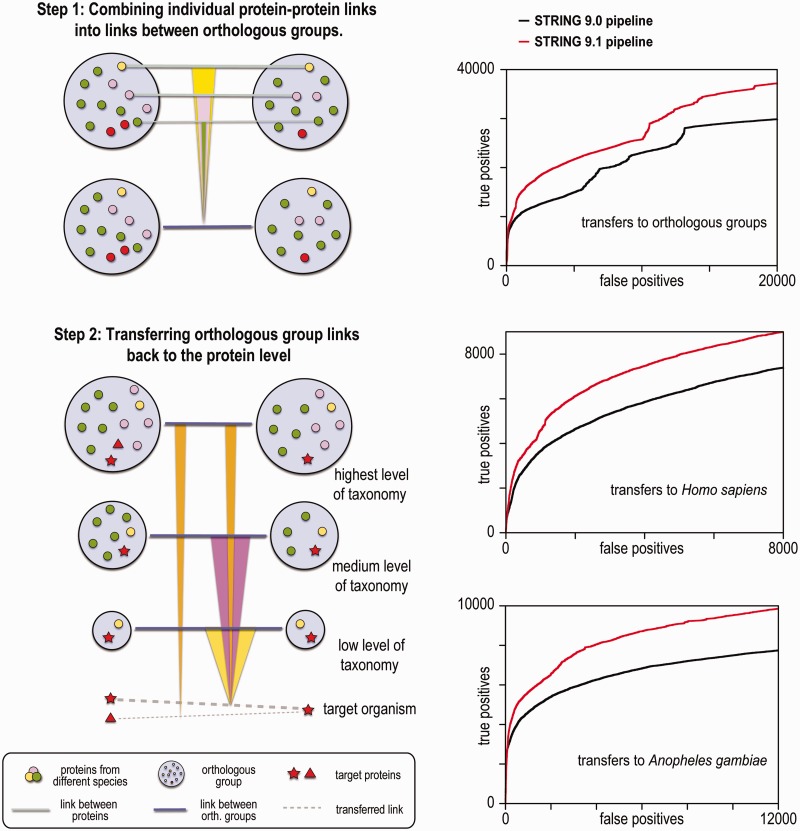
Complete knowledge of all direct and indirect interactions between proteins in a given cell would represent an important milestone towards a comprehensive description of cellular mechanisms and functions. Although this goal is still elusive, considerable progress has been made-particularly for certain model organisms and functional systems. Currently, protein interactions and associations are annotated at various levels of detail in online resources, ranging from raw data repositories to highly formalized pathway databases. For many applications, a global view of all the available interaction data is desirable, including lower-quality data and/or computational predictions. The STRING database (http://string-db.org/) aims to provide such a global perspective for as many organisms as feasible. Known and predicted associations are scored and integrated, resulting in comprehensive protein networks covering >1100 organisms. Here, we describe the update to version 9.1 of STRING, introducing several improvements: (i) we extend the automated mining of scientific texts for interaction information, to now also include full-text articles; (ii) we entirely re-designed the algorithm for transferring interactions from one model organism to the other; and (iii) we provide users with statistical information on any functional enrichment observed in their networks.
Overview
The claims and statistics of this paper haven’t been checked yet.
Free: it reads the open-access text and checks the first 5 claims that cite a source we can check. Create a free account to check every claim.
Integrity signals
Registry
Cites
Statistics
Figures
Verification
Claims the paper makes
The claims and statistics of this paper haven’t been checked yet.
Free: it reads the open-access text and checks the first 5 claims that cite a source we can check. Create a free account to check every claim.
Claims other papers make about this one
Each is checked against this paper’s own text: does it say what the citing paper says it does?
The source backs part of the claim, not all of it — or backs it for a different population, condition or comparison.
In the citing paper
“One approach is to treat the multiple datasets as different “features” annotated to each edge in a single unified network; these multiple features are combined to estimate a single interaction likelihood score for each node pair using supervised machine learning (Kramer et al., 2017) or Bayesian inference (Franceschini et al., 2013; Wong et al., 2004).”
From Mapping the multiscale structure of biological systems (2021) · cites this paper as Franceschini et al., 2013
Experimental — accuracy not yet measuredIn the citing paper
“Bioinformatic network tools, including STRING and GeneMania (93, 94), can score direct and indirect protein functional relationships using public database repositories, such as IntAct and Reactome (95, 96).”
From The Impact of Mass Spectrometry–Based Proteomics on Fundamental Discoveries in Virology (2014) · cites this paper as [94]
Self-check
Percentages, sums and reported differences re-computed from the paper’s own numbers.
The self-check needs the paper’s full text.
Citations
Cites
Controlling the False Discovery Rate: A Practical and Powerful Approach to Multiple Testing
Benjamini, Y., & Hochberg, Y. (1995) · Journal of the Royal Statistical Society Series B: Statistical Methodology · doi:10.1111/j.2517-6161.1995.tb02031.x · Cited by 109,482 · cited 1×
“The P -values are corrected for multiple testing using the method of Benjamini and Hochberg (54), but we also provide options to either disable that correction or to select a more stringent statistical test (Bonferroni).”
MethodSystematic and integrative analysis of large gene lists using DAVID bioinformatics resources
Huang, D. W., Sherman, B. T., & Lempicki, R. A. (2009) · Nature Protocols · doi:10.1038/nprot.2008.211 · Cited by 35,890 · cited 1×
“To address this question, a variety of dedicated online resources are already available (49,50), most notably the DAVID resource (51).”
BackgroundHuang, D. W., Sherman, B. T., & Lempicki, R. A. (2009) · Nucleic Acids Research · doi:10.1093/nar/gkn923 · Cited by 14,108 · cited 1×
“To address this question, a variety of dedicated online resources are already available (49,50), most notably the DAVID resource (51).”
BackgroundWarde-Farley, D., Donaldson, S. L., Comes, O., Zuberi, K., Badrawi, R., Chao, P., Franz, M., Grouios, C., Kazi, F., Lopes, C. T., et al. (2010) · Nucleic Acids Research · doi:10.1093/nar/gkq537 · Cited by 4,835 · cited 1×
“These include GeneMANIA (23), Consensus-PathDB (24), I2D (25), VisANT (26) and, more recently, hPRINT (27), HitPredict (28), IMID (29) and IMP (30).”
BackgroundThe COG database: a tool for genome-scale analysis of protein functions and evolution
Tatusov, R. L. (2000) · Nucleic Acids Research · doi:10.1093/nar/28.1.33 · Cited by 4,520 · cited 1×
“In the past, STRING has therefore used two distinct heuristic options: either to substitute homology for orthology (46) or to use pre-defined orthology relations described at high-level taxonomic groups, from the COG database (47).”
MethodSzklarczyk, D., Franceschini, A., Kuhn, M., Simonovic, M., Roth, A., Minguez, P., Doerks, T., Stark, M., Muller, J., Bork, P., et al. (2011) · Nucleic Acids Research · doi:10.1093/nar/gkq973 · Cited by 3,460 · cited 2×
“We have already discussed many aspects of the STRING resource previously, e.g. (31,32), including its data-sources, prediction algorithms and user-interface.”
BackgroundSelf-citationCaspi, R., Billington, R., Ferrer, L., Foerster, H., Fulcher, C. A., Keseler, I. M., Kothari, A., Krummenacker, M., Latendresse, M., Mueller, L. A., et al. (2016) · Nucleic Acids Research · doi:10.1093/nar/gkv1164 · Cited by 3,395
Specificity and Stability in Topology of Protein Networks
Maslov, S., & Sneppen, K. (2002) · Science · doi:10.1126/science.1065103 · Cited by 3,051
STRING 8--a global view on proteins and their functional interactions in 630 organisms
Jensen, L. J., Kuhn, M., Stark, M., Chaffron, S., Creevey, C., Muller, J., Doerks, T., Julien, P., Roth, A., Simonovic, M., et al. (2009) · Nucleic Acids Research · doi:10.1093/nar/gkn760 · Cited by 2,474 · cited 1×
“We have already discussed many aspects of the STRING resource previously, e.g. (31,32), including its data-sources, prediction algorithms and user-interface.”
BackgroundSelf-citationCOSMIC: mining complete cancer genomes in the Catalogue of Somatic Mutations in Cancer
Forbes, S. A., Bindal, N., Bamford, S., Cole, C., Kok, C. Y., Beare, D., Jia, M., Shepherd, R., Leung, K., Menzies, A., et al. (2011) · Nucleic Acids Research · doi:10.1093/nar/gkq929 · Cited by 2,278 · cited 1×
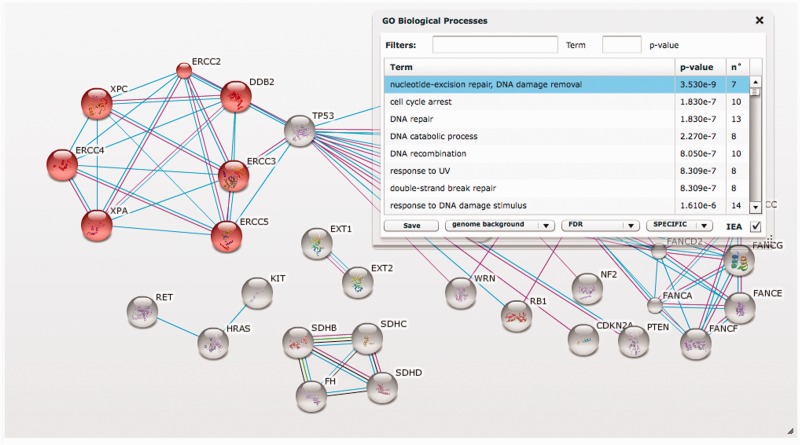
“The STRING screenshot shows a user-supplied set of genes, here a selection of cancer genes as annotated at the COSMIC database (52).”
Cited by
Items 901–1,000 of 1,021
Chubar, V., Leeuwen, K. G. V., Bijttebier, P., Assche, E. V., Bosmans, G., Noortgate, W. V. D., van Winkel, R., Goossens, L., & Claes, S. J. (2020) · European Psychiatry · doi:10.1192/j.eurpsy.2020.62 · Cited by 43
“It was shown that highly complex behaviors can arise from a restricted set of gene families, by a tightly regulated interaction network of proteins encoded by these genes [30].”
BackgroundBowman, E., Cameron, C., Richardson, B., Kulkarni, M., Gabriel, J., Cichon, M. J., Riedl, K. M., Mustafa, Y., Cartwright, M. J., Snyder, B., et al. (2020) · PLoS Pathogens · doi:10.1371/journal.ppat.1008869 · Cited by 43
“Protein-protein interaction visualizations were generated using Stringdb and perfuse-force class directed functional enrichment of differential gene expression was performed using GOlorize and BINGO to determine Gene Ontology and map functional groups [96, 97].”
MethodXi, Y., Jing, Z., Wu, W., Zhang, C., Quan, Q., Zhou, Q., Jiamin, X., & Han, S. (2021) · BMC Cancer · doi:10.1186/s12885-021-07845-1 · Cited by 43
Wang, K., Lü, L., Cao, J., Qiao, Y., Liang, R., Duan, J., Feng, Z., Ding, Y., Ma, Y., 张恩户, et al. (2021) · Experimental and Therapeutic Medicine · doi:10.3892/etm.2021.10484 · Cited by 43
“The higher the degree, the better the correlation between the protein and therapeutic mechanism (18).”
BackgroundProkop, J. W., Hartog, N., Chesla, D. W., Faber, W., Love, C. P., Karam, R., Abualkheir, N., Feldmann, B., Teng, L., McBride, T., et al. (2021) · Frontiers in Immunology · doi:10.3389/fimmu.2021.694243 · Cited by 44
Mohammadinejad, F., Mohammadabadi, M., Roudbari, Z., & Sadkowski, T. (2022) · Animals · doi:10.3390/ani12243471 · Cited by 43
“The protein–protein interaction networks of DEGs were derived from validated experiments [14].”
MethodATR inhibition rewires cellular signaling networks induced by replication stress
Wagner, S., Oehler, H., Voigt, A., Dalic, D., Freiwald, A., Serve, H. L., & Beli, P. (2016) · PROTEOMICS · doi:10.1002/pmic.201500172 · Cited by 45
“Functional protein interaction network analysis was performed using interaction data from the STRING database [54].”
MethodSarcosine Catabolism in Pseudomonas aeruginosa Is Transcriptionally Regulated by SouR
Willsey, G. G., & Wargo, M. J. (2015) · Journal of Bacteriology · doi:10.1128/jb.00739-15 · Cited by 43
“Evidence for this function is supported by a search of PA3628, adhC, and PA3630 using the String database (38), which revealed that the synteny of these genes is conserved among hundreds of proteobacterial taxa.”
BackgroundResultNovák, J., Černý, M., Pavlů, J., Zemánková, J., Skalák, J., Plačková, L., & Brzobohatý, B. (2015) · Plant and Cell Physiology · doi:10.1093/pcp/pcv026 · Cited by 43
“1 (http://string-db.org/; Franceschini et al. 2013).”
MethodInfluentialCoumans, J. V. F., Gau, D. M., Poljak, A., Wasinger, V. C., Roy, P. S., & Moens, P. (2014) · OMICS A Journal of Integrative Biology · doi:10.1089/omi.2014.0075 · Cited by 43
Sensitizing Triple-Negative Breast Cancer to PI3K Inhibition by Cotargeting IGF1R
de Lint, K., Poell, J. B., Soueidan, H., Jastrzebski, K., Rodriguez, J. V., Lieftink, C., Wessels, L. F. A., & Beijersbergen, R. L. (2016) · Molecular Cancer Therapeutics · doi:10.1158/1535-7163.mct-15-0865 · Cited by 43
“1 database of known and predicted protein–protein interactions based on default settings (14).”
BackgroundYang, Y., Lai, W., Long, L., Gao, W., Xu, F., Li, P., Zhou, S., Ding, Y., & Hu, H. (2023) · Scientific Reports · doi:10.1038/s41598-023-28084-3 · Cited by 42
Diagnostic and Prognostic Value
Schuijf, J. D., van Werkhoven, J. M., Bax, J. J., & van der Wall, E. E. (2012) · Springer eBooks · doi:10.1007/978-88-470-2522-6_28 · Cited by 42
Kuperstein, I., Grieco, L., Cohen, D., Thieffry, D., Zinovyev, A. Y., & Barillot, E. (2015) · Mutagenesis · doi:10.1093/mutage/geu078 · Cited by 42
“This made popular the pathway resources that collect computationally or predicted by text mining molecular and functional interactions such as STRING (13), BioGRID (14), HumanNet (15) or compilations of many databases together, such as PathwayCommons (16) or ConsensusPathDB (17).”
BackgroundComparative proteomics and glycoproteomics of plasma proteins in Indian visceral leishmaniasis
Bag, A. K., Saha, S., Sundar, S., Saha, B., Chakrabarti, A., & Mandal, C. (2014) · Proteome Science · doi:10.1186/s12953-014-0048-z · Cited by 42
“The network is represented in confidence view, but action view was also used in the case of biological relevance analysis [28].”
MethodNi, Y., Li, J., & Panagiotou, G. (2015) · mBio · doi:10.1128/mbio.01263-15 · Cited by 42
Roos, A., Kollipara, L., Buchkremer, S., Labisch, T., Brauers, E., Gatz, C., Lentz, C., Gerardo‐Nava, J., Weis, J., & Zahedi, R. P. (2015) · Molecular Neurobiology · doi:10.1007/s12035-015-9456-z · Cited by 42
“To provide insight into SIL1 cytopathology , the spectrum of affected proteins was analyzed for enriched gene ontology (GO) terms using STRING [21] and for biological pathways using the Reactome Pathway Database version 53 (http://www.reactome.org/version-53- released/) (Online Resource 1).”
MethodFolador, E. L., de Carvalho, P. V. S. D., da Silva, W. M., Ferreira, R. S., Silva, A., Gromiha, M. M., Ghosh, P., Barh, D., Azevedo, V., & Röttger, R. (2016) · BMC Systems Biology · doi:10.1186/s12918-016-0346-4 · Cited by 42
“The STRING database [54] is composed of known and predicted PPIs, including direct (physical) and indirect (functional) associations derived mainly from genomic context, high-throughput experiments, co-expression and computational prediction methods.”
BackgroundMethodFunctional annotation of Alzheimer's disease associated loci revealed by GWASs
Han, Z., Huang, H., Gao, Y., & Huang, Q. (2017) · PLoS ONE · doi:10.1371/journal.pone.0179677 · Cited by 42
Zhang, Y., Huang, J., Cai, K., Yu, X., Chen, Y., Pan, W., He, Z., Lv, J., Feng, Z., & Chen, G. (2017) · International Journal of Oncology · doi:10.3892/ijo.2017.4164 · Cited by 42
Tan, Z., Wang, Y., Yang, T., Xing, K., Ao, H., Chen, S., Zhang, F., Zhao, X., Liu, J., & Wang, C. (2017) · Scientific Reports · doi:10.1038/s41598-017-14568-6 · Cited by 42
Satapathy, L., Kumar, D., Kumar, M., & Mukhopadhyay, K. (2017) · 3 Biotech · doi:10.1007/s13205-017-1064-3 · Cited by 42
“A functional interacting network of proteins was performed for the in silico translated protein sequences obtained from cloned TaWRKY56, 60 and 62 genes using STRING 10 software (Franceschini et al. 2013) with a confidence value of 0.”
MethodProteome-based systems biology in chronic pain
Gómez‐Varela, D., Barry, A. M., & Schmidt, M. (2018) · Journal of Proteomics · doi:10.1016/j.jprot.2018.04.004 · Cited by 42
Zhong, Y., Luo, J., Tang, T., Li, P., Liu, T., Cui, H., Wang, Y., & Huang, Z. (2018) · Evidence-based Complementary and Alternative Medicine · doi:10.1155/2018/8916938 · Cited by 42
Identification of Key Biomarkers in Bladder Cancer: Evidence from a Bioinformatics Analysis
Zhang, C., Berndt‐Paetz, M., & Neuhaus, J. (2020) · Diagnostics · doi:10.3390/diagnostics10020066 · Cited by 42
“0) [28] was used to acquire the PPI information of the DEGs.”
MethodHorváth, E., Bela, K., Gallé, Á., Riyazuddin, R., Csomor, G., Csenki, D., & Csiszár, J. (2020) · International Journal of Molecular Sciences · doi:10.3390/ijms21072349 · Cited by 42
“Monitoring the known or predicted interactions of these isoenzymes in the STRING database [49] shed light on connections among the AtGSTs and DHARs (Figure S3 ).”
BackgroundHan, L., Zhou, L., Zou, H., Yuan, M., & Wang, Y. (2022) · International Journal of Molecular Sciences · doi:10.3390/ijms23031423 · Cited by 42
“org/, accessed on 23 December 2021) [71] to predict the proteins that may interact with PsGSTF3.”
BackgroundHo, V. W. S., Wong, M., An, X., Guan, D., Shao, J., Ng, H. C. K., Ren, X., He, K., Liao, J., Ang, Y., et al. (2015) · Molecular Systems Biology · doi:10.15252/msb.20145857 · Cited by 42
“…excretory cell specification could be constructed based on a combination of the genes identified in our study with the existing functional data defined in STRING (version 9.1) (Supplementary Fig S12), which establishes gene interaction with known and predicted evidences (Franceschini et al , 2013).”
InfluentialKarunasena, E., McMahon, K. W., Chang, D., & Brashears, M. M. (2014) · Applied and Environmental Microbiology · doi:10.1128/aem.01229-14 · Cited by 33
“animalis was not available in the database) (45, 46).”
BackgroundLynx: a database and knowledge extraction engine for integrative medicine
Sulakhe, D., Balasubramanian, S., Xie, B., Feng, B., Taylor, A., Wang, S., Berrocal, E., Dave, U. J., Xu, J., Börnigen, D., et al. (2013) · Nucleic Acids Research · doi:10.1093/nar/gkt1166 · Cited by 42
“Here, for networkbased gene prioritization, Lynx integrates five network propagation algorithms [simple random walk, heat kernel diffusion (31), PageRank with priors (32), HITS with priors (33) and K-step Markov (33)], and using STRING version 9.0 (15) as the underlying protein interaction network as initially suggest…”
BackgroundInfluentialZhang, S., Shan, L., Li, Q., Wang, X., Li, S., Zhang, Y., Fu, J., Liu, X., Li, H., & Zhang, W. (2014) · Evidence-based Complementary and Alternative Medicine · doi:10.1155/2014/512081 · Cited by 42
Tuteja, G., Chung, T. R., & Bejerano, G. (2015) · Placenta · doi:10.1016/j.placenta.2015.11.001 · Cited by 42
“We then used this gene set as input to string-db [40], a database for known and predicted protein-protein interactions.”
MethodProtein function prediction using guilty by association from interaction networks
Piovesan, D., Giollo, M., Ferrari, C., & Tosatto, S. C. E. (2015) · Amino Acids · doi:10.1007/s00726-015-2049-3 · Cited by 44
“Given a protein with unknown function, GAS uses the STRING (Franceschini et al. 2013) network to collect the set N of directly interacting nodes.”
BackgroundMethodInfluentialRouwette, T., Sondermann, J. R., Avenali, L., Gómez‐Varela, D., & Schmidt, M. (2016) · Molecular & Cellular Proteomics · doi:10.1074/mcp.m116.058966 · Cited by 42
“STRING settings: Confidence view; confidence level 0.4; clustering algorithm MCL set to 2.”
MethodInfluentialSchwartz, S., Truglio, M., Scott, M. J., & Fitzsimons, H. L. (2016) · Genetics · doi:10.1534/genetics.115.183194 · Cited by 43
“…database predicts physical and functional links between proteins and provides an integrated confidence score for the predicted associations (Franceschini et al. 2013; 1254 S. Schwartz et al. Szklarczyk et al. 2015); and furthermore, genes that represent real interactions, are more likely…”
BackgroundFNTM: a server for predicting functional networks of tissues in mouse
Goya, J., Wong, A. K., Yao, V., Krishnan, A., Homilius, M., & Troyanskaya, O. G. (2015) · Nucleic Acids Research · doi:10.1093/nar/gkv443 · Cited by 41
Transcriptomic analysis on the promoter regions discover gene networks involving mastitis in cattle
Gorji, A. E., Roudbari, Z., Sadeghı, B., Javadmanesh, A., & Sadkowski, T. (2019) · Microbial Pathogenesis · doi:10.1016/j.micpath.2019.103801 · Cited by 41
Wang, Z., Li, M., Xu, C., Zhang, Y., Deng, Q., Sun, R., Hu, Q., Zhang, S., Zhang, J.-W., & Liang, H. (2020) · BMC Urology · doi:10.1186/s12894-020-00709-z · Cited by 41
“org/), a database that provides experimental and predicted proteins interaction information [26], was used to build proteinprotein interaction networks.”
MethodMar, T., Liú, W., & Wang, X. (2014) · Journal of Proteomics · doi:10.1016/j.jprot.2014.03.004 · Cited by 41
“org) [36].”
BackgroundiPEAP: integrating multiple omics and genetic data for pathway enrichment analysis
Sun, H., Wang, H., Zhu, R., Tang, K., Gong, Q., Cui, J., Cao, Z., & Liu, Q. (2013) · Bioinformatics · doi:10.1093/bioinformatics/btt576 · Cited by 41
Na, Y. R., Hong, J. H., Lee, M. Y., Jung, J. H., Jung, D., Kim, Y. W., Son, D., Choi, M., Kim, K. P., & Seok, S. H. (2015) · Molecular & Cellular Proteomics · doi:10.1074/mcp.m115.048744 · Cited by 41
Gara, S. K., Wang, Y., Patel, D., Liu‐Chittenden, Y., Jain, M., Boufraqech, M., Zhang, L., Meltzer, P. S., & Kebebew, E. (2015) · Nucleic Acids Research · doi:10.1093/nar/gkv908 · Cited by 41
“For each category, the corresponding genes were uploaded to the STRING database to get insight into the molecular network (28).”
MethodSunitinib activates Axl signaling in renal cell cancer
van der Mijn, J. C., Broxterman, H. J., Knol, J. C., Piersma, S. R., de Haas, R. R., Dekker, H., Pham, T. V., van Beusechem, V. W., Halmos, B., Mier, J. W., et al. (2016) · International Journal of Cancer · doi:10.1002/ijc.30022 · Cited by 42
“Gene identifiers for proteins of interest were uploaded to the STRING webtool for retrieval of protein-protein interaction (PPI) information using default settings.(13) This information was then imported into Cytoscape 2.”
MethodActivation of the Aryl Hydrocarbon Receptor Interferes with Early Embryonic Development
Gialitakis, M., Tolaini, M., Li, Y., Pardo, M., Yu, L., Toribio, A. L., Choudhary, J. S., Niakan, K. K., Papayannopoulos, V., & Stockinger, B. (2017) · Stem Cell Reports · doi:10.1016/j.stemcr.2017.09.025 · Cited by 42
“To examine the relationship among the interacting proteins, we investigated their physical and functional associations using the STRING database (Franceschini et al., 2013).”
MethodAn R2R3-MYB transcription factor, SlMYB28, involved in the regulation of TYLCV infection in tomato
Li, T., Zhang, X., Huang, Y., Xu, Z., Wang, F., & Xiong, A. (2018) · Scientia Horticulturae · doi:10.1016/j.scienta.2018.04.020 · Cited by 41
Pro-oxidant and pro-inflammatory effects of glycated albumin on cardiomyocytes
Martínez, A. E., Regazzoni, L., Brioschi, M., Gianazza, E., Agostoni, P., Aldini, G., & Banfi, C. (2019) · Free Radical Biology and Medicine · doi:10.1016/j.freeradbiomed.2019.06.023 · Cited by 41
Jiao, Y., Jiang, S., Wang, Y., Yu, T., Zou, G., Zhuo, L., & Li, W. (2022) · Journal of Diabetes Investigation · doi:10.1111/jdi.13739 · Cited by 41
Vilela, J. E. R., Asif, M., Marques, A. R., Santos, J. X., Rasga, C., Vicente, A. M., & Martiniano, H. (2022) · Expert Systems · doi:10.1111/exsy.13181 · Cited by 42
“To identify biological pathways that can be shared by people with mutations in ASD-associated genes, we created a network consisting of the genes from the ASD candidate gene list and gene – gene interactions obtained from STRING.”
MethodSchöner, T. A., Fuchs, S. W., Reinhold‐Hurek, B., & Bode, H. B. (2014) · PLoS ONE · doi:10.1371/journal.pone.0090922 · Cited by 41
Ko, J., Gu, W., Lim, I., Zhou, T., & Bang, H. (2014) · PLoS ONE · doi:10.1371/journal.pone.0110094 · Cited by 41
“In total, we collected 342 wellannotated genes which interact with VDAC1 (Table S2), according to the definition provided by BioGRID [35], UniProtKB [37,38], MINT [39,40], I2D [41,42], STRING [43,44], and published literature [36].”
MethodEcoliNet: a database of cofunctional gene network for Escherichia coli
Kim, H., Shim, J. E., Shin, J., & Lee, I. (2015) · Database · doi:10.1093/database/bav001 · Cited by 40
Pavlidis, C., Lanara, Z., Balasopoulou, A., Nebel, J., Κάτσιλα, Θ., & Patrinos, G. P. (2015) · OMICS A Journal of Integrative Biology · doi:10.1089/omi.2015.0109 · Cited by 41
Gan, Y., Zheng, S., Baak, J. P. A., Zhao, S.-L., Zheng, Y., Luo, N., Liao, W., & Fu, C. (2015) · Acta Pharmaceutica Sinica B · doi:10.1016/j.apsb.2015.09.005 · Cited by 41
Hori, H., Sasayama, D., Teraishi, T., Yamamoto, N., Nakamura, S., Ota, M., Hattori, K., Kim, Y., Higuchi, T., & Kunugi, H. (2016) · Scientific Reports · doi:10.1038/srep18776 · Cited by 43
Overexpression of RKIP and its cross-talk with several regulatory gene products in multiple myeloma
Shvartsur, A., Givechian, K. B., Garbán, H., & Bonavida, B. (2017) · Journal of Experimental & Clinical Cancer Research · doi:10.1186/s13046-017-0535-z · Cited by 41
“Bcl-2 is overexpressed in the data, but according to findings in literature, if RKIP is overexpressed, Bcl-2 should be inhibited via NF-κB and PTEN [61, 69].”
BackgroundInfluentialLung Transcriptomics during Protective Ventilatory Support in Sepsis-Induced Acute Lung Injury
Acosta‐Herrera, M., Lorenzo-Díaz, F., Pino-Yanes, M. D. M., Corrales, A., Valladares, F., Klassert, T. E., Valladares, B., Slevogt, H., Ma, S., Villar, J., et al. (2015) · PLoS ONE · doi:10.1371/journal.pone.0132296 · Cited by 40
“For that, we used a human protein-protein interaction network obtained from STRING [24] and the pathways and processes obtained from Reactome [25].”
Screening of potential diagnostic markers and therapeutic targets against colorectal cancer
Fang, J., Tian, X.-Q., Sun, D.-F., Zhao, S., & Xiong, H. (2015) · OncoTargets and Therapy · doi:10.2147/ott.s81621 · Cited by 40
Dornfeld, C., Weisberg, A. J., Ritesh, K. C., Dudareva, N., Jelesko, J. G., & Maeda, H. A. (2014) · The Plant Cell · doi:10.1105/tpc.114.127407 · Cited by 41
AraC-Type Regulator Rsp Adapts Staphylococcus aureus Gene Expression to Acute Infection
Li, T., He, L., Song, Y. J., Villaruz, A. E., Joo, H., Liu, Q., Zhu, Y., Wang, Y., Qin, J., Otto, M. J., et al. (2015) · Infection and Immunity · doi:10.1128/iai.01088-15 · Cited by 40
Venkatesh, I., & Blackmore, M. G. (2016) · Neuroscience Letters · doi:10.1016/j.neulet.2016.12.032 · Cited by 40
Proteomic analysis and cross species comparison of casein fractions from the milk of dairy animals
Wang, X., Zhao, X., Huang, D., Pan, X., Qi, Y., Yang, Y., Zhao, H., & Cheng, G. (2017) · Scientific Reports · doi:10.1038/srep43020 · Cited by 40
Proteomics analysis of bladder cancer invasion: Targeting EIF3D for therapeutic intervention
Latosińska, A., Mokou, M., Makridakis, M., Mullen, W., Zoidakis, J., Lygirou, V., Frantzi, M., Katafigiotis, I., STRAVODIMOS, K. G., Hupe, M. C., et al. (2017) · Oncotarget · doi:10.18632/oncotarget.17279 · Cited by 41
Mortalin is a distinct bio-marker and prognostic factor in serous ovarian carcinoma
Xu, M., Jin, T., Chen, L., Zhang, X., Zhu, G., Wang, Q., & Lin, Z. (2019) · Gene · doi:10.1016/j.gene.2019.02.033 · Cited by 40
Xie, G., Wu, C., Sun, Y., Fan, Z., & Liu, J. (2019) · Frontiers in Genetics · doi:10.3389/fgene.2019.00343 · Cited by 40
“Protein-protein interactions (PPI) were obtained from the STRING 9.1 database (Franceschini et al., 2013), which included weighted protein-protein interactions through co-expression data, genomic context predictions, automated text mining, and high-throughput lab experiments.”
MethodInfluentialAnticancer Effects of Emodin on HepG2 Cell: Evidence from Bioinformatic Analysis
Zhou, R.-S., Wang, X., Sun, Q., Ye, Z. J., Liu, J., Zhou, D.-H., & Tang, Y. C. (2019) · BioMed Research International · doi:10.1155/2019/3065818 · Cited by 40
Kaddour, H., Lyu, Y., Welch, J. L., Paromov, V. M., Mandape, S. N., Sakhare, S. S., Pandhare, J., Stapleton, J. T., Pratap, S., Dash, C., et al. (2019) · Molecular & Cellular Proteomics · doi:10.1074/mcp.ra119.001594 · Cited by 40
“org/) (1, 2) identified highly-interconnected network of proteins with CLU (Fig.”
BackgroundMethodInfluentialScharf, B., Schmidt, T. J., Rabbani, S., Stork, C., Dobrindt, U., Sendker, J., Ernst, B., & Hensel, A. (2020) · Journal of Ethnopharmacology · doi:10.1016/j.jep.2020.112889 · Cited by 40
Zhao, B., Wang, D., Liu, Y., Zhang, X., Wan, Z., Wang, J., Su, T., Duan, L., Wang, Y., Zhang, Y., et al. (2020) · Cardiovascular Therapeutics · doi:10.1155/2020/1230513 · Cited by 41
“First, the identified DEGs were uploaded to the STRING [35] (version 11.”
MethodInfluentialMaternal dominance contributes to subgenome differentiation in allopolyploid fishes
Xu, M.-R.-X., Liao, Z., Brock, J. R., Du, K., Li, G.-Y., Chen, Z., Wang, Y.-H., Gao, Z.-N., Agarwal, G., Wei, K. H.-C., et al. (2023) · Nature Communications · doi:10.1038/s41467-023-43740-y · Cited by 40
“The p-value was computed using a hypergeometric test in STRING v.9.1 147 , and multiple testing was corrected using the method of Benjamini and Hochberg 148 .”
InfluentialNetwork-assisted crop systems genetics: network inference and integrative analysis
Lee, T., Kim, H., & Lee, I. (2015) · Current Opinion in Plant Biology · doi:10.1016/j.pbi.2015.02.001 · Cited by 40
“PLANEX [43] A, B, G, M, R, S, T, W CX(CC) PlantArrayNet [37] Bs, R CX(CC) STARNET2 [33] A, R CX(CC) STRING [29] A, Br, G, Po, R, Sg AA, CX(CC), GC, NA VirtualPlant [34] A, C, M, R, S AA, CX(CC)”
BackgroundMapping eQTLs in the Norfolk Island Genetic Isolate Identifies Candidate Genes for CVD Risk Traits
Benton, M. C., Lea, R. A., Macartney-Coxson, D. P., Carless, M. A., Göring, H. H. H., Bellis, C., Hanna, M., Eccles, D., Chambers, G. K., Curran, J. E., et al. (2013) · The American Journal of Human Genetics · doi:10.1016/j.ajhg.2013.11.004 · Cited by 40
Low Temperature Assembly of Functional 3D DNA-PNA-Protein Complexes
Flory, J. D., Simmons, C. R., Lin, S., Johnson, T., Andreoni, A., Zook, J., Ghirlanda, G., Liu, Y., Yan, H., & Fromme, P. (2014) · Journal of the American Chemical Society · doi:10.1021/ja501228c · Cited by 37
EvoTol: a protein-sequence based evolutionary intolerance framework for disease-gene prioritization
Rackham, O. J. L., Shihab, H. A., Johnson, M. R., & Petretto, E. G. (2014) · Nucleic Acids Research · doi:10.1093/nar/gku1322 · Cited by 40
“Another gene networklevel application of EvoTol to the analysis of the human interactome (STRING (27)) revealed two highly intolerant networks enriched for nuclear receptors and genes involved in the regulation of metabolic processes.”
MethodJin, N., Wu, H., Miao, Z., Huang, Y., Hu, Y., Bi, X., Wu, D., Qian, K., Wang, L., Wang, C., et al. (2015) · Scientific Reports · doi:10.1038/srep11566 · Cited by 40
“In this paper, based on constructed weighted survival and differential co-expression network between longer-versus shorter-survival patients using survival information, protein-protein interactions (PPI) in STRING 26 and gene expression data from TCGA ovarian cancer, we adopted a network-based approach to capture a 12…”
InfluentialA Guide to Genome-Wide In Vivo RNAi Applications in Drosophila
Kaya-Çopur, A., & Schnorrer, F. (2016) · Methods in molecular biology · doi:10.1007/978-1-4939-6371-3_6 · Cited by 40
Wang, Q., Huang, X., Zhou, S., Ding, Y., Wang, H., Jiang, W., & Xu, M. (2022) · International Journal of Genomics · doi:10.1155/2022/2723264 · Cited by 39
Moon, H., Lee, M.-K., Bok, I., Bok, J. W., Keller, N. P., & Yu, J. (2023) · Microbiology Spectrum · doi:10.1128/spectrum.00166-23 · Cited by 39
Day and night variations in the repair of ionizing-radiation-induced DNA damage in mouse splenocytes
Palombo, P., Moreno‐Villanueva, M., & Mangerich, A. (2015) · DNA repair · doi:10.1016/j.dnarep.2015.02.002 · Cited by 39
Quantitative mass spectrometry of posttranslational modifications: Keys to confidence
Hennrich, M. L., & Gavin, A. (2015) · Science Signaling · doi:10.1126/scisignal.aaa6466 · Cited by 39
Murphy, S. J., Hart, S. N., Halling, G. C., Johnson, S. H., Smadbeck, J. B., Drucker, T., Lima, J. F., Rohakhtar, F. R., Harris, F. R., Kosari, F., et al. (2015) · Cancer Research · doi:10.1158/0008-5472.can-15-2198 · Cited by 39
“KEGG pathways (25) influenced by WES and/or rearrangements identified 16 main pathways (Figure 5A) with mutations evenly distributed between large genomic rearrangements and SNVs.”
BackgroundHedgehog Signaling Strength Is Orchestrated by themir-310Cluster of MicroRNAs in Response to Diet
Çiçek, I. Ö., Karaca, S., Brankatschk, M., Eaton, S., Urlaub, H., & Shcherbata, H. R. (2016) · Genetics · doi:10.1534/genetics.115.185371 · Cited by 39
“…analysis followed by GO term analysis of identified proteins (UniProt Consortium 2014) and evaluation of functional association networks (Franceschini et al. 2013) revealed a group of 12 proteins as components of COPIcoated vesicle machinery among a larger number of other identified…”
BackgroundMethodComputational Reconstruction of NFκB Pathway Interaction Mechanisms during Prostate Cancer
Börnigen, D., Tyekucheva, S., Wang, X., Rider, J. R., Lee, G. M., Mucci, L. A., Sweeney, C. J., & Huttenhower, C. (2016) · PLoS Computational Biology · doi:10.1371/journal.pcbi.1004820 · Cited by 40
“…to gene expression assays, we collected 225 non-microarray datasets from the protein interaction databases Bio-GRID [122], IntAct [123], STRING [124], Prosite [125], Domine [126], Transfac [127], and ORegAnno [128], which collectively contained 1,351,782 pairwise gene interactions (S6 Table)…”
Evaluation of Kinase Activity Profiling Using Chemical Proteomics
Ruprecht, B., Zecha, J., Heinzlmeir, S., Médard, G., Lemeer, S., & Küster, B. (2015) · ACS Chemical Biology · doi:10.1021/acschembio.5b00616 · Cited by 40
Proteomic responses to gold( iii )-toxicity in the bacterium Cupriavidus metallidurans CH34
Zammit, C. M., Weiland, F., Brugger, J., Wade, B. P., Winderbaum, L., Nies, D. H., Southam, G., Hoffmann, P., & Reith, F. (2016) · Metallomics · doi:10.1039/c6mt00142d · Cited by 39
Zhang, H., Liang, Y., Han, S., Peng, C., & Li, Y. (2019) · International Journal of Molecular Sciences · doi:10.3390/ijms20061284 · Cited by 40
“1 database [104] to text mining, data obtained from the three weighted protein interaction degrees.”
MethodHou, Y., Wang, Y., Xu, S., Qi, G., & Wu, X. (2019) · Molecular Medicine Reports · doi:10.3892/mmr.2019.10253 · Cited by 39
Kaushik, K., & Das, A. (2020) · Diabetes · doi:10.2337/db20-0138 · Cited by 39
“org) to determine the existing information about the interactions between selected genes (21,22) for further in vitro analysis.”
BackgroundZheng, A., Zhang, A., Chen, Z., Pirzado, S. A., Chang, W., Cai, H., Bryden, W. L., & Liu, G. (2021) · Journal of Animal Science and Biotechnology/Journal of animal science and biotechnology · doi:10.1186/s40104-021-00591-1 · Cited by 39
Investigation of Potential Molecular Biomarkers for Diagnosis and Prognosis of AFP-Negative HCC
Liu, Z., Pu, Y., Bao, Y., & He, S. (2021) · International Journal of General Medicine · doi:10.2147/ijgm.s323868 · Cited by 39
Uncovering cancer vulnerabilities by machine learning prediction of synthetic lethality
Benfatto, S., Serçin, Ö., Dejure, F. R., Abdollahi, A., Zenke, F. T., & Mardin, B. R. (2021) · Molecular Cancer · doi:10.1186/s12943-021-01405-8 · Cited by 39
Liu, X., Li, L., Li, A., Li, Y., Wang, W., & Zhang, G. (2019) · Marine Biotechnology · doi:10.1007/s10126-019-09896-9 · Cited by 39
Anup, C. P., Melvin, P., Shilpa, N. C., Gandhi, M., Jadhav, M., Ali, H., & Kini, K. R. (2015) · Journal of Proteomics · doi:10.1016/j.jprot.2015.02.013 · Cited by 39
“stringdb-org) containing predicted and known physical and functional association between protein molecules based on the evidences retrieved from seven different evidences [22].”
BackgroundGenome wide in silico analysis of Plasmodium falciparum phosphatome
Pandey, R., Mohmmed, A., Pierrot, C., Khalife, J., Malhotra, P., & Gupta, D. K. (2014) · BMC Genomics · doi:10.1186/1471-2164-15-1024 · Cited by 39
“In order to identify important protein interactions involving the parasite phosphatases, we performed STRING (version 9.05, http://STRING-db. org) [32] and PlasmoMAP analysis (The functional interac-tome of Plasmodium , (http://cbil.upenn.edu/plasmoMAP/…”
MethodInfluentialTargets of Wnt/ß-Catenin Transcription in Penile Carcinoma
Arya, M., Thrasivoulou, C., Henrique, R., Millar, M., Hamblin, R., Davda, R., Aare, K., Masters, J. R., Thomson, C., Muneer, A., et al. (2015) · PLoS ONE · doi:10.1371/journal.pone.0124395 · Cited by 40
Identification of SUMO‐2/3‐modified proteins associated with mitotic chromosomes
Cubeñas-Potts, C., Srikumar, T., Lee, C., Osula, O., Subramonian, D., Zhang, X. D., Cotter, R. J., Raught, B., & Matunis, M. J. (2014) · PROTEOMICS · doi:10.1002/pmic.201400400 · Cited by 39
“(A) Identified proteins with chromatin modifying or remodeling activity were analyzed using STRING [49].”
Pongsakul, N., Vinaiphat, A., Chanchaem, P., Fong‐ngern, K., & Thongboonkerd, V. (2016) · The FASEB Journal · doi:10.1096/fj.201600426r · Cited by 39
“Protein network analysis by using the STRING tool (10) revealed potential interactions among these identified altered proteins, which were involved in several biologic processes, including cell migration, negative regulation of cell death, regulation ofmetabolic process, DNA repair, and calcium ion binding (Fig.”
BackgroundMethodInfluentialOždian, T., Holub, D., Macečková, Z., Varanasi, L., Rylová, G., Rehulka, J., Václavková, J., Slavík, H., Moudrý, P., Znojek, P., et al. (2017) · Journal of Proteomics · doi:10.1016/j.jprot.2017.05.005 · Cited by 39
Díaz, N., & Piferrer, F. (2017) · BMC Genomics · doi:10.1186/s12864-017-4345-7 · Cited by 39
“org/); [63]) using the STRING human database as a background.”
MethodWeng, J. T.-Y., Wu, L. S.-H., Lee, C.-S., Hsu, P. W.-C., & Cheng, A. T. A. (2015) · Computers in Biology and Medicine · doi:10.1016/j.compbiomed.2014.12.003 · Cited by 37
Metadata
- Authors
- Franceschini, A., Szklarczyk, D., Frankild, S., Kuhn, M., Simonovic, M., Roth, A., Lin, J., Minguez, P., Bork, P., von Mering, C., & Jensen, L. J.
- Affiliations
- SIB Swiss Institute of Bioinformatics (CH)
- University of Copenhagen (DK)
- Venue
- Nucleic Acids Research
- Publisher
- Oxford University Press (OUP)
- Published
- 2012-11-29
- Volume
- 41
- Issue
- D1
- Pages
- D808-D815
- ISSN
- 0305-1048 (ISSN-L)
- 1362-4962
- PMC
- PMC3531103
- OpenAlex
- W2105924489
- Cited by
- 4,398
- References
- 61
- Citations by year
- 2026: 77 · 2025: 153 · 2024: 201 · 2023: 247 · 2022: 325 · 2021: 335 · 2020: 366 · 2019: 281 · 2018: 291 · 2017: 371 · 2016: 476 · 2015: 675 · 2014: 457 · 2013: 134 · 2012: 3
- FWCI
- 163.15
- Type
- journal article
- Language
- en
- Open access
- gold
- doi.org
- Licence
- Locations
- Nucleic Acids Research (publishedVersion, cc-by-nc)
- Europe PMC (PubMed Central) (publishedVersion, cc-by-nc)
- PubMed Central (publishedVersion, cc-by-nc)
- PubMed (publishedVersion)
- MDC Repository (Max-Delbrueck-Center for Molecular Medicine) (acceptedVersion)
- Zurich Open Repository and Archive (University of Zurich) (acceptedVersion, other-oa)
- reroDoc Digital Library (submittedVersion)
- Archivio Istituzionale della Ricerca (Universita Degli Studi Di Milano) (submittedVersion, cc-by-nc)
- Research at the University of Copenhagen (University of Copenhagen) (submittedVersion)
- Zurich Open Repository and Archive (University of Zurich) (submittedVersion, other-oa)
- Zurich Open Repository and Archive (University of Zurich)
- Funders
- European Molecular Biology Laboratory
- Novo Nordisk
- Universität Zürich
- Topics
- Life Sciences › Biochemistry, Genetics and Molecular Biology › Molecular Biology › Bioinformatics and Genomic Networks
- Health Sciences › Medicine › Health Informatics › Biomedical Text Mining and Ontologies
- Life Sciences › Biochemistry, Genetics and Molecular Biology › Molecular Biology › Genomics and Phylogenetic Studies
- Keywords
- STRING database, protein-protein interaction network, interaction prediction, literature mining, functional enrichment, biological pathway databases
- MeSH terms
- Algorithms, Data Interpretation, Statistical, User-Computer Interface, Systems Integration, Internet, Protein Interaction Mapping, Databases, Protein, Data Mining
About these checks
Registry, retraction, Cites and statistics results are computed, not judged, with one exception: a printed reference that no index lists is read once by a model before it counts as a citation error. Claims are extracted by a model and kept only when their quote appears verbatim in the text; each cited source is then checked, with a model’s help, for whether it says what the claim relies on. Those verdicts can be wrong — read the claim’s quote and the cited source before relying on one.
Statistics and arithmetic are recomputed, not judged.
Confidence bands are shown only for fields calibrated on our annotated test set. None is calibrated yet, so no band is shown.
What counts as a claim ›How we measure confidence ›How we check this ›
Are you an author, or do you see a problem with this page? Request a review
Data sources
Bibliographic data: Semantic Scholar, OpenAlex, Crossref.
Contains information from the Semantic Scholar Academic Graph Datasets, made available under the ODC Attribution License (ODC-BY 1.0).
Semantic Scholar’s data is described in: Kinney, R., et al. (2023). The Semantic Scholar Open Data Platform. arXiv:2301.10140.
