

STRING v9.1: protein-protein interaction networks, with increased coverage and integration
Open accessThe DOI matches its Crossref record; 61 of the 61 references it cites were found in a registry or an index.
Abstract
Complete knowledge of all direct and indirect interactions between proteins in a given cell would represent an important milestone towards a comprehensive description of cellular mechanisms and functions. Although this goal is still elusive, considerable progress has been made-particularly for certain model organisms and functional systems. Currently, protein interactions and associations are annotated at various levels of detail in online resources, ranging from raw data repositories to highly formalized pathway databases. For many applications, a global view of all the available interaction data is desirable, including lower-quality data and/or computational predictions. The STRING database (http://string-db.org/) aims to provide such a global perspective for as many organisms as feasible. Known and predicted associations are scored and integrated, resulting in comprehensive protein networks covering >1100 organisms. Here, we describe the update to version 9.1 of STRING, introducing several improvements: (i) we extend the automated mining of scientific texts for interaction information, to now also include full-text articles; (ii) we entirely re-designed the algorithm for transferring interactions from one model organism to the other; and (iii) we provide users with statistical information on any functional enrichment observed in their networks.
Overview
The claims and statistics of this paper haven’t been checked yet.
Free: it reads the open-access text and checks the first 5 claims that cite a source we can check. Create a free account to check every claim.
Integrity signals
Registry
Cites
Statistics
Figures

Verification
Claims the paper makes
The claims and statistics of this paper haven’t been checked yet.
Free: it reads the open-access text and checks the first 5 claims that cite a source we can check. Create a free account to check every claim.
Claims other papers make about this one
Each is checked against this paper’s own text: does it say what the citing paper says it does?
The source backs part of the claim, not all of it — or backs it for a different population, condition or comparison.
In the citing paper
“One approach is to treat the multiple datasets as different “features” annotated to each edge in a single unified network; these multiple features are combined to estimate a single interaction likelihood score for each node pair using supervised machine learning (Kramer et al., 2017) or Bayesian inference (Franceschini et al., 2013; Wong et al., 2004).”
From Mapping the multiscale structure of biological systems (2021) · cites this paper as Franceschini et al., 2013
Experimental — accuracy not yet measuredIn the citing paper
“Bioinformatic network tools, including STRING and GeneMania (93, 94), can score direct and indirect protein functional relationships using public database repositories, such as IntAct and Reactome (95, 96).”
From The Impact of Mass Spectrometry–Based Proteomics on Fundamental Discoveries in Virology (2014) · cites this paper as [94]
Self-check
Percentages, sums and reported differences re-computed from the paper’s own numbers.
The self-check needs the paper’s full text.
Citations
Cites
Controlling the False Discovery Rate: A Practical and Powerful Approach to Multiple Testing
Benjamini, Y., & Hochberg, Y. (1995) · Journal of the Royal Statistical Society Series B: Statistical Methodology · doi:10.1111/j.2517-6161.1995.tb02031.x · Cited by 109,482 · cited 1×
“The P -values are corrected for multiple testing using the method of Benjamini and Hochberg (54), but we also provide options to either disable that correction or to select a more stringent statistical test (Bonferroni).”
MethodSystematic and integrative analysis of large gene lists using DAVID bioinformatics resources
Huang, D. W., Sherman, B. T., & Lempicki, R. A. (2009) · Nature Protocols · doi:10.1038/nprot.2008.211 · Cited by 35,890 · cited 1×
“To address this question, a variety of dedicated online resources are already available (49,50), most notably the DAVID resource (51).”
BackgroundHuang, D. W., Sherman, B. T., & Lempicki, R. A. (2009) · Nucleic Acids Research · doi:10.1093/nar/gkn923 · Cited by 14,108 · cited 1×
“To address this question, a variety of dedicated online resources are already available (49,50), most notably the DAVID resource (51).”
BackgroundWarde-Farley, D., Donaldson, S. L., Comes, O., Zuberi, K., Badrawi, R., Chao, P., Franz, M., Grouios, C., Kazi, F., Lopes, C. T., et al. (2010) · Nucleic Acids Research · doi:10.1093/nar/gkq537 · Cited by 4,835 · cited 1×
“These include GeneMANIA (23), Consensus-PathDB (24), I2D (25), VisANT (26) and, more recently, hPRINT (27), HitPredict (28), IMID (29) and IMP (30).”
BackgroundThe COG database: a tool for genome-scale analysis of protein functions and evolution
Tatusov, R. L. (2000) · Nucleic Acids Research · doi:10.1093/nar/28.1.33 · Cited by 4,520 · cited 1×
“In the past, STRING has therefore used two distinct heuristic options: either to substitute homology for orthology (46) or to use pre-defined orthology relations described at high-level taxonomic groups, from the COG database (47).”
MethodSzklarczyk, D., Franceschini, A., Kuhn, M., Simonovic, M., Roth, A., Minguez, P., Doerks, T., Stark, M., Muller, J., Bork, P., et al. (2011) · Nucleic Acids Research · doi:10.1093/nar/gkq973 · Cited by 3,460 · cited 2×
“We have already discussed many aspects of the STRING resource previously, e.g. (31,32), including its data-sources, prediction algorithms and user-interface.”
BackgroundSelf-citationCaspi, R., Billington, R., Ferrer, L., Foerster, H., Fulcher, C. A., Keseler, I. M., Kothari, A., Krummenacker, M., Latendresse, M., Mueller, L. A., et al. (2016) · Nucleic Acids Research · doi:10.1093/nar/gkv1164 · Cited by 3,395
Specificity and Stability in Topology of Protein Networks
Maslov, S., & Sneppen, K. (2002) · Science · doi:10.1126/science.1065103 · Cited by 3,051
STRING 8--a global view on proteins and their functional interactions in 630 organisms
Jensen, L. J., Kuhn, M., Stark, M., Chaffron, S., Creevey, C., Muller, J., Doerks, T., Julien, P., Roth, A., Simonovic, M., et al. (2009) · Nucleic Acids Research · doi:10.1093/nar/gkn760 · Cited by 2,474 · cited 1×
“We have already discussed many aspects of the STRING resource previously, e.g. (31,32), including its data-sources, prediction algorithms and user-interface.”
BackgroundSelf-citationCOSMIC: mining complete cancer genomes in the Catalogue of Somatic Mutations in Cancer
Forbes, S. A., Bindal, N., Bamford, S., Cole, C., Kok, C. Y., Beare, D., Jia, M., Shepherd, R., Leung, K., Menzies, A., et al. (2011) · Nucleic Acids Research · doi:10.1093/nar/gkq929 · Cited by 2,278 · cited 1×
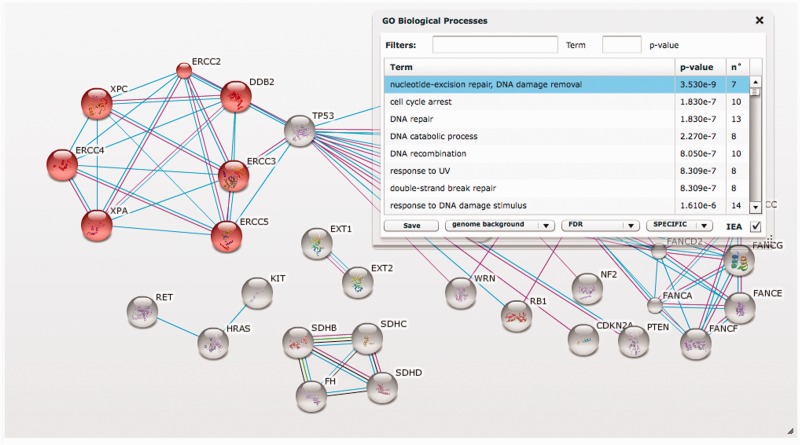
“The STRING screenshot shows a user-supplied set of genes, here a selection of cancer genes as annotated at the COSMIC database (52).”
Cited by
Items 701–800 of 1,021
Chacon, D., Beck, D., Perera, D., Wong, J. W. H., & Pimanda, J. E. (2014) · Nucleic Acids Research · doi:10.1093/nar/gkt1036 · Cited by 51
“To explore protein–protein interactions of the set of genes displayed in main table, a link is provided to the STRING database (16).”
MethodInfluentialDeBlasio, S. L., Johnson, R. S., Mahoney, J. E., Karasev, A. V., Gray, S. M., MacCoss, M. J., & Cilia, M. (2014) · Molecular Plant-Microbe Interactions · doi:10.1094/mpmi-11-14-0363-r · Cited by 52
Antigen Arrays for Profiling Autoantibody Repertoires
Ayoglu, B., Schwenk, J. M., & Nilsson, P. (2016) · Bioanalysis · doi:10.4155/bio.16.31 · Cited by 53
Gil, V., Bhagat, G., Howell, L., Zhang, J., Kim, C., Stengel, S., Vega, F., Zelent, A., & Petrie, K. R. (2016) · Disease Models & Mechanisms · doi:10.1242/dmm.023366 · Cited by 53
Identification of disease comorbidity through hidden molecular mechanisms
Ko, Y., Cho, M., Lee, J., & Kim, J. (2016) · Scientific Reports · doi:10.1038/srep39433 · Cited by 52
The adaptive genomic landscape of beak morphology in Darwin's finches
Lawson, L. P., & Petren, K. (2017) · Molecular Ecology · doi:10.1111/mec.14166 · Cited by 52
Jacobs, B. M., Taylor, T. R., Awad, A. M. M., Baker, D., Giovanonni, G., Noyce, A. J., & Dobson, R. (2020) · Brain Communications · doi:10.1093/braincomms/fcaa119 · Cited by 53
Ivanisenko, T., Saik, O., Сергеевич, Д. П., Ivanisenko, N. V., Savostyanov, A. N., & Иванисенко, В. А. (2020) · BMC Bioinformatics · doi:10.1186/s12859-020-03557-8 · Cited by 52
“The values for ω s , ω a , and α parameters were obtained from [74].”
MethodZhang, J., Wang, L., Xu, X., Li, X., Guan, W., Meng, T., & Xu, G. (2020) · Frontiers in Oncology · doi:10.3389/fonc.2020.01787 · Cited by 52
Identification of key genes and novel immune infiltration-associated biomarkers of sepsis
Xu, C., Xu, J., Lu, L., Tian, W., Ma, J., & Wu, M. (2020) · Innate Immunity · doi:10.1177/1753425920966380 · Cited by 52
Green fluorescent protein expression triggers proteome changes in breast cancer cells
Coumans, J. V. F., Gau, D. M., Poljak, A., Wasinger, V. C., Roy, P. S., & Moens, P. (2013) · Experimental Cell Research · doi:10.1016/j.yexcr.2013.07.019 · Cited by 52
Dun, B., Sharma, A. K., Teng, Y., Liu, H., Purohit, S. B., Xu, H., Zeng, L., & She, J. (2013) · PLoS ONE · doi:10.1371/journal.pone.0081702 · Cited by 52
Isnard, A., Christian, J. G., Kodiha, M., Stochaj, U., McMaster, W. R., & Olivier, M. (2015) · PLoS Pathogens · doi:10.1371/journal.ppat.1004776 · Cited by 52
Comparative Genomics Reveals New Candidate Genes Involved in Selenium Metabolism in Prokaryotes
Lin, J., Peng, T., Jiang, L., Ni, J., Liu, Q., Chen, L., & Zhang, Y. (2015) · Genome Biology and Evolution · doi:10.1093/gbe/evv022 · Cited by 52
Self-citationBiomedical Event Extraction with Machine Learning
Björne, J. (2014) · UTUPub (University of Turku) · Cited by 52
Microenvironmental reprogramming of human dermal papilla cells for hair follicle tissue engineering
Liu, Z., Huang, J., Kang, D., Zhou, Y., Du, L., Qu, Q., Wang, J., Wen, L., Fu, D., Hu, Z., et al. (2022) · Acta Biomaterialia · doi:10.1016/j.actbio.2022.11.004 · Cited by 51
Martins‐de‐Souza, D., Cassoli, J. S., Nascimento, J. M., Hensley, K., Guest, P. C., Velasco, A. M. P., & Turck, C. W. (2015) · PROTEOMICS - CLINICAL APPLICATIONS · doi:10.1002/prca.201500004 · Cited by 51
“1 database [32], was used to identify all known CRMP2 interactors.”
MethodFranck, W. L., Gökce, E., Randall, S. M., Oh, Y., Eyre, A. W., Muddiman, D. C., & Dean, R. A. (2015) · Journal of Proteome Research · doi:10.1021/pr501064q · Cited by 51
Brimacombe, C. A., Ding, H., & Beatty, J. T. (2014) · Molecular Microbiology · doi:10.1111/mmi.12628 · Cited by 52
“data (Franceschini et al., 2013), the top three hits were TopI (encoded by topA), ComM, and RecA.”
InfluentialTranscriptomic Analyses of Adipocyte Differentiation From Human Mesenchymal Stromal‐Cells (MSC)
Casado‐Díaz, A., Anter, J., Müller, S., Winter, P., Quesada‐Gómez, J. M., & Dorado, G. (2016) · Journal of Cellular Physiology · doi:10.1002/jcp.25472 · Cited by 51
Harmon, B., Bird, S. W., Schudel, B. R., Hatch, A. V., Rasley, A., & Negrete, O. A. (2016) · Journal of Virology · doi:10.1128/jvi.00543-16 · Cited by 51
“Last, the hit list was subjected to the protein-protein interaction database STRING, to identify proteins known or predicted to interact within the list (41).”
MethodGlobal Dynamic Proteome Study of a Pellicle-forming Acinetobacter baumannii Strain
Kentache, T., Abdelkrim, A. B., Jouenne, T., Dé, E., & Hardouin, J. (2016) · Molecular & Cellular Proteomics · doi:10.1074/mcp.m116.061044 · Cited by 51
Yi, G., Xiang, W., Feng, W.-Y., Chen, Z., Li, Y., Deng, S., Guo, M., Zhao, L., Sun, X., He, M., et al. (2018) · BioMed Research International · doi:10.1155/2018/5238760 · Cited by 51
Analysis of Protein–Protein Functional Associations by Using Gene Ontology and KEGG Pathway
Yuan, F., Pan, X., Chen, L., Zhang, Y., Huang, T., & Cai, Y. (2019) · BioMed Research International · doi:10.1155/2019/4963289 · Cited by 51
Liu, G., Jiang, J., Liu, X., Jiang, J., Sun, L., Duan, W., Li, R., Wang, Y., Lecourieux, D., Liu, C., et al. (2019) · Horticulture Research · doi:10.1038/s41438-019-0183-x · Cited by 52
HGCS: an online tool for prioritizing disease-causing gene variants by biological distance
Itan, Y., Mazel, M., Mazel, B., Abhyankar, A., Nitschké, P., Quintana‐Murci, L., Boisson‐Dupuis, S., Boisson, B., Abel, L., Zhang, S., et al. (2014) · BMC Genomics · doi:10.1186/1471-2164-15-256 · Cited by 51
“Most bioinformatic methods for identifying genes potentially associated with specific phenotypes [7-9] are not optimized for Mendelian traits with complete or incomplete clinical penetrance, because they lack the metrics for estimating the relatedness of genes not belonging to the same biological function pathway, or…”
MethodLuxR solos in Photorhabdus species
Brameyer, S., Kresovic, D., Bode, H. B., & Heermann, R. (2014) · Frontiers in Cellular and Infection Microbiology · doi:10.3389/fcimb.2014.00166 · Cited by 51
Minor Fitness Costs in an Experimental Model of Horizontal Gene Transfer in Bacteria
Knöppel, A., Lind, P. A., Lustig, U., Näsvall, J., & Andersson, D. I. (2014) · Molecular Biology and Evolution · doi:10.1093/molbev/msu076 · Cited by 51
“Twelve of 81 fragments in the Bacteroides and Proteus groups contained full sequences of high connectivity genes ( 10 predicted interaction partners with high confidence [Franceschini et al. 2013]) and 21/81 fragments contained genes that are likely to be expressed from PBAD (full genes in forward direction from PBAD…”
BackgroundMethodInfluentialModulation of the Chromatin Phosphoproteome by the Haspin Protein Kinase
Maiolica, A., de Medina-Redondo, M., Schoof, E. M., Chaikuad, A., Villa, F., Gatti, M., Jeganathan�, S., Lou, H. J., Novy, K., Hauri, S., et al. (2014) · Molecular & Cellular Proteomics · doi:10.1074/mcp.m113.034819 · Cited by 53
“05) was used to predicted protein–protein interaction within Haspin binding partners (33).”
MethodAn overview of the neurobiology of suicidal behaviors as one meta-system
Sokolowski, M., Wasserman, J., & Wasserman, D. (2015) · Molecular Psychiatry · doi:10.1038/mp.2014.101 · Cited by 50
Rayapuram, N., Jarad, M., Alhoraibi, H., Bigeard, J., Abulfaraj, A. A., Völz, R., Mariappan, K. G., Almeida-Trapp, M., Schlöffel, M. A., Lastrucci, E., et al. (2021) · Proceedings of the National Academy of Sciences · doi:10.1073/pnas.2004670118 · Cited by 50
“Next, we analyzed the three MAPK-dependent phosphoproteomes for protein interaction networks using the program STRING (60) within the Cytoscape environment (Fig.”
BackgroundMethodInfluentialOld plasma dilution reduces human biological age: a clinical study
Kim, D., KIPROV, D. D., Luellen, C., Lieb, M., Liu, C., Watanabe, E., Mei, X., Casaletto, K. B., Kramer, J. H., Conboy, M. J., et al. (2022) · GeroScience · doi:10.1007/s11357-022-00645-w · Cited by 50
Srivastava, R., Mohan, K., Pandey, B., Singh, S. P., & Sawant, S. V. (2015) · PLoS ONE · doi:10.1371/journal.pone.0134709 · Cited by 51
AMP-Activated Protein Kinase Regulates the Cell Surface Proteome and Integrin Membrane Traffic
Ross, E., Ata, R., Thavarajah, T., Medvedev, S., Bowden, P., Marshall, J. G., & Antonescu, C. N. (2015) · PLoS ONE · doi:10.1371/journal.pone.0128013 · Cited by 50
“The list of 32 proteins with cell adhesion and migration GO annotation (Table 2) was subjected to STRING analysis to visualize known and predicted interactions [54].”
Jastrab, J. B., Wang, T., Murphy, J. P., Bai, L., Hu, K., Merkx, R., Huang, J. Y., Chatterjee, C., Ovaa, H., Gygi, S. P., et al. (2015) · Proceedings of the National Academy of Sciences · doi:10.1073/pnas.1423319112 · Cited by 52
“Second, STRING-DB analysis (46) demonstrated that it co-occurs evolutionarily with the bacterial proteasome, suggesting that the two are functionally related.”
Happold, C., Roth, P., Silginer, M., Florea, A.-M., Lamszus, K., Frei, K., Deenen, R., Reifenberger, G., & Weller, M. (2014) · Molecular Cancer Therapeutics · doi:10.1158/1535-7163.mct-13-0772 · Cited by 48
LncReg: a reference resource for lncRNA-associated regulatory networks
Zhou, Z., Shen, Y., Khan, M. R., & Li, A. (2015) · Database · doi:10.1093/database/bav083 · Cited by 52
VHLdb: A database of von Hippel-Lindau protein interactors and mutations
Tabaro, F., Minervini, G., Sundus, F., Quaglia, F., Leonardi, E., Piovesan, D., & Tosatto, S. C. E. (2016) · Scientific Reports · doi:10.1038/srep31128 · Cited by 50
“A number of experimental and in silico data of proteins involved in pVHL tumorigenesis is reported 9,13 and contained in large databases, such as IntAct 18 , STRING 31 and BioGRID 32 .”
BackgroundInfluentialTensor Factorization for Precision Medicine in Heart Failure with Preserved Ejection Fraction
Luo, Y., Ahmad, F. S., & Shah, S. J. (2017) · Journal of Cardiovascular Translational Research · doi:10.1007/s12265-016-9727-8 · Cited by 49
“such as STRING [34], KEGG [35], InterPro [36], Aceview [37], and Pfam [38].”
Cheng, C., Guo, L., Lü, L., Xu, X., Zhang, S., Gao, J., Waqas, M., Zhu, C., Chen, Y., Zhang, X., et al. (2017) · Frontiers in Molecular Neuroscience · doi:10.3389/fnmol.2017.00122 · Cited by 50
“…to obtain a comprehensive view of the gene network involved in inner ear HC regeneration, we performed a STRING protein–protein interaction analysis (Franceschini et al., 2013), which assembles the predicted networks of the differentially expressed genes (fold change > 2.0, p 0.01) with the…”
MethodInfluentialPumilio2 deficient mice show a predisposition for epilepsy
Follwaczny, P., Schieweck, R., Riedemann, T., Demleitner, A. F., Straub, T., Klemm, A. H., Bilban, M., Sutor, B., Popper, B., & Kiebler, M. A. (2017) · Disease Models & Mechanisms · doi:10.1242/dmm.029678 · Cited by 50
“False discovery rate (FDR) was calculated according to the method of Benjamini and Hochberg (Benjamini and Hochberg, 1995; Franceschini et al., 2013).”
MethodHildebrandt, A., Brüggemann, M., Rücklé, C., Boerner, S., Heidelberger, J. B., Busch, A., Hänel, H., Voigt, A., Möckel, M., Ebersberger, S., et al. (2019) · Genome biology · doi:10.1186/s13059-019-1814-0 · Cited by 50
Li, Z., Huang, T., Tang, M., Cheng, B., Yan, P., & Zhang, X. (2019) · Plant Physiology and Biochemistry · doi:10.1016/j.plaphy.2019.10.018 · Cited by 50
Ma, F., Zhang, S., Song, L., Wang, B., Wei, L., & Zhang, F. (2021) · Cell & Bioscience · doi:10.1186/s13578-021-00635-z · Cited by 51
Chen, Y., Azman, S. N., Kerishnan, J. P., Zain, R. B., Chen, Y. N., Wong, Y.-L., & Gopinath, S. C. B. (2014) · PLoS ONE · doi:10.1371/journal.pone.0109012 · Cited by 50
Huang, X., Liu, J., Mo, X., Liu, H., Wei, C., Huang, L., Chen, J., Tian, C., Meng, Y., Wu, G., et al. (2019) · Aging · doi:10.18632/aging.102319 · Cited by 50
Rabbani, G., Khan, M. E., Zakri, W., Khan, M. V., & Bashiri, A. H. (2024) · Microchemical Journal · doi:10.1016/j.microc.2024.112079 · Cited by 49
Zhulin, I. B. (2015) · Journal of Bacteriology · doi:10.1128/jb.00330-15 · Cited by 48
“The STRING database is the leading resource for functional protein networks (29).”
BackgroundLarge-scale phosphoproteome analysis in seedling leaves of Brachypodium distachyon L.
Lv, D., Li, X., Zhang, M., Gu, A.-Q., Zhen, S., Wang, C., Li, X., & Yan, Y. (2014) · BMC Genomics · doi:10.1186/1471-2164-15-375 · Cited by 50
“org) [93].”
Chen, Y., Ni, H., Zhao, Y., Chen, K., Li, M., Li, C., Zhu, X., & Fu, Q. (2015) · Medical Science Monitor · doi:10.12659/msm.894638 · Cited by 49
Vlasblom, J., Zuberi, K., Rodriguez, H., Arnold, R., Gagarinova, A., Deineko, V., Kumar, A., Leung, E., Rizzolo, K., Samanfar, B., et al. (2015) · Bioinformatics · doi:10.1093/bioinformatics/btu671 · Cited by 45
Time-resolved dissection of early phosphoproteome and ensuing proteome changes in response to TGF-β
D’Souza, R. C. J., Knittle, A. M., Nagaraj, N., van Dinther, M., Choudhary, C., ten Dijke, P., Mann, M., & Sharma, K. (2014) · Science Signaling · doi:10.1126/scisignal.2004856 · Cited by 51
Boland, M. R., Jacunski, A., Lorberbaum, T., Romano, J. D., Moskovitch, R., & Tatonetti, N. P. (2016) · WIREs Systems Biology and Medicine · doi:10.1002/wsbm.1323 · Cited by 48
Zhou, A., Ma, H., Liu, E., Jiang, T., Feng, S., Gong, S., & Wang, J. (2017) · International Journal of Molecular Sciences · doi:10.3390/ijms18040849 · Cited by 49
Zeng, M., Liu, J., Yang, W., Zhang, S., Liu, F., Dong, Z., Peng, Y., Sun, L., & Xiao, L. (2019) · Journal of Cellular Physiology · doi:10.1002/jcp.28313 · Cited by 49
“Search tool for the retrieval of interacting genes (STRING 10.5; http:// string‐db.org; Franceschini et al., 2013) was applied to establish a PPI network of DEGs.”
MethodInfluentialLi, J., Zhao, Y., Cao, S., Wang, H., & Zhang, J.-J. (2019) · Fish & Shellfish Immunology · doi:10.1016/j.fsi.2019.10.045 · Cited by 49
Deriving disease modules from the compressed transcriptional space embedded in a deep autoencoder
Dwivedi, S. K., Tjärnberg, A., Tegner, J. N., & Gustafsson, M. (2020) · Nature Communications · doi:10.1038/s41467-020-14666-6 · Cited by 49
Tian, X., Xu, W., Wang, Y., Anwaier, A., Wang, H., Wan, F., Zhu, Y., Cao, D., Shi, G., Zhu, Y., et al. (2020) · OncoImmunology · doi:10.1080/2162402x.2020.1784529 · Cited by 50
Gong, P.-J., Shao, Y.-C., Huang, S., Zeng, Y., Yuan, X., Xu, J., Yin, W., Wei, L., & Zhang, J. (2020) · Frontiers in Oncology · doi:10.3389/fonc.2020.579868 · Cited by 49
Peura, S., Sinclair, L., Bertilsson, S., & Eiler, A. (2015) · Scientific Reports · doi:10.1038/srep12102 · Cited by 49
“The processed sequences from humic lakes as well as those from clearwater lake metagenomes were searched against the STRING database 10 using the BLASTX algorithm (max_targets 10, -evalue 0.001, -seg yes).”
InfluentialBeer, L., Seemann, R., Ristl, R., Ellinger, A., Kasiri, M. M., Mitterbauer, A., Zimmermann, M., Gabriel, C., Gyöngyösi, M., Klepetko, W., et al. (2014) · BMC Genomics · doi:10.1186/1471-2164-15-814 · Cited by 49
“1 (Search Tool for the Retrieval of Interacting Genes/Proteins) was used [25].”
Nassour, H., Wang, Z., Saad, A., Papaluca, A., Brosseau, N., Affar, E. B., Alaoui‐Jamali, M. A., & Ramotar, D. (2016) · Scientific Reports · doi:10.1038/srep29389 · Cited by 49
PrePPI: A structure informed proteome-wide database of protein-protein interactions
Petrey, D., Zhao, H., Trudeau, S., Murray, D., & Honig, B. (2023) · doi:10.1101/2023.02.27.530276 · Cited by 49
Pathway analysis in attention deficit hyperactivity disorder: An ensemble approach
Mooney, M. A., McWeeney, S. K., Faraone, S. V., Hinney, A., Hebebrand, J., IMAGE2 Consortium, German ADHD GWAS Group, Nigg, J. T., & Wilmot, B. (2016) · American Journal of Medical Genetics Part B: Neuropsychiatric Genetics · doi:10.1002/ajmg.b.32446 · Cited by 48
“…can be seen in the online version of this artic Figure 3 shows gene-level association measures (minimum SNP P-value) for all potassium channel genes, along with interactions from the STRING protein-protein interaction database (lowconfidence interactions excluded) [Franceschini et al., 2013].”
BackgroundPrePPI: A Structure Informed Proteome-wide Database of Protein–Protein Interactions
(2023) · doi:10.1016/j.jmb.2023.168052 · Cited by 48
Multilingual translation for zero-shot biomedical classification using BioTranslator
Xu, H., Woicik, A., Poon, H., Altman, R. B., & Wang, S. (2023) · Nature Communications · doi:10.1038/s41467-023-36476-2 · Cited by 48
“We downloaded gene textual descriptions from the STRING database 88 .”
MethodComiRNet: a web-based system for the analysis of miRNA-gene regulatory networks
Pio, G., Ceci, M., Malerba, D., & D’Elia, D. (2015) · BMC Bioinformatics · doi:10.1186/1471-2105-16-s9-s7 · Cited by 48
“Actually, the biological processes selected and shown in the pictures are only a few of those returned by STRING, each reflecting known functional properties of the miRNAs included in the two considered biclusters.”
InfluentialNaqvi, A. A. T., Shahbaaz, M., Ahmad, F., & Hassan, M. I. (2015) · PLoS ONE · doi:10.1371/journal.pone.0124177 · Cited by 48
Liu, H., Sun, W.-B., Liang, R., Huang, L. J., Hou, J., & Liu, J. (2015) · Journal of Proteomics · doi:10.1016/j.jprot.2015.03.034 · Cited by 48
Carberry, S., Zweyer, M., Swandulla, D., & Ohlendieck, K. (2013) · Biology · doi:10.3390/biology2041438 · Cited by 48
Gu, A., Hao, P., Lv, D., Zhen, S., Bian, Y., Ma, C., Xu, Y., Zhang, W., & Yan, Y. (2015) · Journal of Agricultural and Food Chemistry · doi:10.1021/acs.jafc.5b00575 · Cited by 48
Computational analysis of protein interaction networks for infectious diseases
Pan, A., Lahiri, C., Rajendiran, A., & Shanmugham, B. (2015) · Briefings in Bioinformatics · doi:10.1093/bib/bbv059 · Cited by 48
Xu, J., Xu, Z., Zhou, Y. Q., & Ye, B. (2016) · Journal of Proteome Research · doi:10.1021/acs.jproteome.6b00131 · Cited by 49
Mahdieh, N., & Rabbani, B. (2016) · Blood Reviews · doi:10.1016/j.blre.2016.07.001 · Cited by 48
“As the interactome analysis showed, the interaction is seen in ten proteins including HBA1 and HBA2, which are mainly involved in oxygen transport [38].”
BackgroundDistinct epigenomes in CD4+ T cells of newborns, middle-ages and centenarians
Zhao, M., Qin, J., Yin, H., Tan, Y., Liao, W., Liu, Q., Luo, S., He, M., Liang, G., Shi, Y., et al. (2016) · Scientific Reports · doi:10.1038/srep38411 · Cited by 45
The Potential Protective Effect of Curcumin on Amyloid- β -42 Induced Cytotoxicity in HT-22 Cells
Zhang, L., Fang, Y., Cheng, X., Lian, Y., Zeng, Z., Wu, C., Zhu, H., & Xu, H. (2018) · BioMed Research International · doi:10.1155/2018/8134902 · Cited by 48
In Vivo Molecular Toxicity Profile of Dental Bioceramics in Embryonic Zebrafish (Danio rerio)
Makkar, H., Verma, S. K., Panda, P. K., Jha, E., Das, B. B., Mukherjee, K., & Suar, M. (2018) · Chemical Research in Toxicology · doi:10.1021/acs.chemrestox.8b00129 · Cited by 48
Long, T., Liu, Z., Zhou, X., Yu, S., Tian, H., & Bao, Y. (2019) · Molecular Medicine Reports · doi:10.3892/mmr.2019.9878 · Cited by 48
“org/) (18), covering 9,643,763 proteins from 2,031 organisms and 932,553,897 interactions, was used to retrieve predicted PPIs.”
MethodShen, J., Zou, Z., Xing, H., Duan, Y., Zhu, X., Ma, Y., Wang, Y., & Fang, W. (2020) · International Journal of Molecular Sciences · doi:10.3390/ijms21072433 · Cited by 48
Podvin, S., Jones, A., Liu, Q., Aulston, B., Ransom, L., Ames, J., Shen, G., Lietz, C. B., Jiang, Z., O'Donoghue, A. J., et al. (2020) · Molecular & Cellular Proteomics · doi:10.1074/mcp.ra120.002079 · Cited by 45
“STRING-db protein interaction network analyses indicated that 311 proteins (out of the 329 proteins shared between mTau and control exosomes) were enriched for known protein-protein interactions, based on STRING-db evaluation of interaction databases of DIP, BioGRID, HPRD, IntAct, MINT, and PDB (36) and interaction sc…”
Sazonova, O., Zhao, Y., Nürnberg, S., Miller, C. L., Pjanic, M., Castano, V. G., Kim, J. B., Salfati, E., Kundaje, A. B., Bejerano, G., et al. (2015) · PLoS Genetics · doi:10.1371/journal.pgen.1005202 · Cited by 48
Protein Kinase Activity Decreases with Higher Braak Stages of Alzheimer’s Disease Pathology
Rosenberger, A. F. N., Hilhorst, R., Coart, E., García Barrado, L., Naji, F., Rozemuller, A. J. M., van der Flier, W. M., Scheltens, P., Hoozemans, J. J. M., & van der Vies, S. M. (2016) · Journal of Alzheimer’s Disease · doi:10.3233/jad-150429 · Cited by 42
“3) [22].”
Strain-level diversity of secondary metabolism in the biocontrol species Aneurinibacillus migulanus
Alenezi, F. N., Rekik, I., Bełka, M., Ibrahim, A. F., Luptáková, L., Jaspars, M., Woodward, S., & Belbahri, L. (2015) · Microbiological Research · doi:10.1016/j.micres.2015.10.007 · Cited by 48
Human genome meeting 2016: Houston, TX, USA. 28 February - 2 March 2016
GUSTO study group, Srivastava, A. K., NHLBI GO Exome Sequencing Project, ICGC PCAWG Structural Alterations Group, genomics, B., Global Alliance for Genomics and Health - Regulatory and Ethics Working Group, Melbourne Genomics Health Alliance, Go, C. K. C., Lifepool, The Philippine Cardiogenomics Study Group, et al. (2016) · Human Genomics · doi:10.1186/s40246-016-0063-5 · Cited by 48
Marthandan, S., Priebe, S., Baumgart, M., Groth, M., Cellerino, A., Guthke, R., Hemmerich, P., & Diekmann, S. (2015) · BioMed Research International · doi:10.1155/2015/731938 · Cited by 47
Multi-omics integration strategies for animal epigenetic studies — A review
Kim, D.-Y., & Kim, J.-M. (2021) · Animal Bioscience · doi:10.5713/ab.21.0042 · Cited by 47
“Biological understanding can be improved through pathway mapping using previously identified databases [85-87,97].”
BackgroundMethodUtami, K. H., Skotte, N. H., Colaço, A. R., Yusof, N. A. B. M., Sim, B., Yeo, X. Y., Bae, H.-G., Garcia-Miralles, M., Radulescu, C. I., Chen, Q., et al. (2020) · Biological Psychiatry · doi:10.1016/j.biopsych.2020.05.005 · Cited by 47
Bioinformatics Analysis of Stromal Molecular Signatures Associated with Breast and Prostate Cancer
Sun, C., Gu, Y., Chen, G., & Du, Y. (2019) · Journal of Computational Biology · doi:10.1089/cmb.2019.0045 · Cited by 47
“DEGs were mapped into STRING database to construct PPI network with combined score of protein pairs not 0.8 as the cutoff.”
InfluentialQuantitative proteomics reveals the central changes of wheat in response to powdery mildew
Fu, Y., Zhang, H., Mandal, S. N., Wang, C., Chen, C., & Ji, W. (2015) · Journal of Proteomics · doi:10.1016/j.jprot.2015.09.006 · Cited by 47
A multifunctional protein EWS regulates the expression of Drosha and microRNAs
Kim, K., Hwang, Y. J., Jung, M.-K., Choe, J., Kim, Y., Kim, S., Lee, C. J., Ahn, H., Lee, J.-H., Kowall, N. W., et al. (2013) · Cell Death and Differentiation · doi:10.1038/cdd.2013.144 · Cited by 47
“Then direct neighbors of the 91 genes were collected by querying each of the 91 genes to the NCBI Entrez EUtilities Web Service Client provided by Cytoscape (v. 2.8.0)28 and STRING.29 Finally, 46 genes were selected by removal of some genes without neighboring and were displayed in a network with 161 genes including n…”
InfluentialArabidopsis proteome responses to the smoke-derived growth regulator karrikin
Baldrianová, J., Černý, M., Novák, J., Jedelský, P. L., Divíšková, E., & Brzobohatý, B. (2015) · Journal of Proteomics · doi:10.1016/j.jprot.2015.02.011 · Cited by 47
Measuring semantic similarities by combining gene ontology annotations and gene co-function networks
Peng, J., Uygun, S., Kim, T., Wang, Y., Rhee, S. Y., & Chen, J. (2015) · BMC Bioinformatics · doi:10.1186/s12859-015-0474-7 · Cited by 48
Möller, P., Overlöper, A., Förstner, K. U., Wen, T., Sharma, C. M., Lai, E., & Narberhaus, F. (2014) · PLoS ONE · doi:10.1371/journal.pone.0110427 · Cited by 47
Franchin, C., Cesaro, L., Salvi, M., Millioni, R., Iori, E., Cifani, P., James, P., Arrigoni, G., & Pinna, L. A. (2014) · Biochimica et Biophysica Acta (BBA) - Proteins and Proteomics · doi:10.1016/j.bbapap.2014.09.017 · Cited by 47
Warner, N., Burberry, A., Pliakas, M., McDonald, C., & Núñez, G. (2014) · Journal of Biological Chemistry · doi:10.1074/jbc.m114.574756 · Cited by 43
“A, PPIs between IL-8 regulators identified in the siRNA screen were taken from publically available databases, such as STRING and BIOGRID, and are depicted by solid black.”
MethodLaukens, K., Naulaerts, S., & Berghe, W. V. (2015) · PROTEOMICS · doi:10.1002/pmic.201400296 · Cited by 49
“To address the scattering of information over multiple databases [140], several recent (and nontrivial) efforts have been initiated to consolidate resources, e.g. Mintact [141] and String [142].”
MethodRole of MicroRNAs in carcinogenesis that potential for biomarker of endometrial cancer
Widodo, N., Djati, M. S., & Rifa’i, M. (2016) · Annals of Medicine and Surgery · doi:10.1016/j.amsu.2016.01.091 · Cited by 47
Muenchhoff, J., Poljak, A., Thalamuthu, A., Gupta, V. B., Chatterjee, P., Raftery, M. J., Masters, C. L., Morris, J. C., Bateman, R. J., Fagan, A. M., et al. (2016) · Scientific Reports · doi:10.1038/srep29078 · Cited by 47
MacPherson, C. W., Shastri, P., Mathieu, O., Tompkins, T. A., & Burguière, P. (2017) · PLoS ONE · doi:10.1371/journal.pone.0169847 · Cited by 49
Swegen, A., Grupen, C. G., Gibb, Z., Baker, M. A., de Ruijter‐Villani, M., Smith, N. D., Stout, T. A. E., & Aitken, R. J. (2017) · PROTEOMICS · doi:10.1002/pmic.201600433 · Cited by 47
“STRING database was employed to assist with data mining and for detection of putative functional networks [23].”
Method
Metadata
- Authors
- Franceschini, A., Szklarczyk, D., Frankild, S., Kuhn, M., Simonovic, M., Roth, A., Lin, J., Minguez, P., Bork, P., von Mering, C., & Jensen, L. J.
- Affiliations
- SIB Swiss Institute of Bioinformatics (CH)
- University of Copenhagen (DK)
- Venue
- Nucleic Acids Research
- Publisher
- Oxford University Press (OUP)
- Published
- 2012-11-29
- Volume
- 41
- Issue
- D1
- Pages
- D808-D815
- ISSN
- 0305-1048 (ISSN-L)
- 1362-4962
- PMC
- PMC3531103
- OpenAlex
- W2105924489
- Cited by
- 4,398
- References
- 61
- Citations by year
- 2026: 77 · 2025: 153 · 2024: 201 · 2023: 247 · 2022: 325 · 2021: 335 · 2020: 366 · 2019: 281 · 2018: 291 · 2017: 371 · 2016: 476 · 2015: 675 · 2014: 457 · 2013: 134 · 2012: 3
- FWCI
- 163.15
- Type
- journal article
- Language
- en
- Open access
- gold
- doi.org
- Licence
- Locations
- Nucleic Acids Research (publishedVersion, cc-by-nc)
- Europe PMC (PubMed Central) (publishedVersion, cc-by-nc)
- PubMed Central (publishedVersion, cc-by-nc)
- PubMed (publishedVersion)
- MDC Repository (Max-Delbrueck-Center for Molecular Medicine) (acceptedVersion)
- Zurich Open Repository and Archive (University of Zurich) (acceptedVersion, other-oa)
- reroDoc Digital Library (submittedVersion)
- Archivio Istituzionale della Ricerca (Universita Degli Studi Di Milano) (submittedVersion, cc-by-nc)
- Research at the University of Copenhagen (University of Copenhagen) (submittedVersion)
- Zurich Open Repository and Archive (University of Zurich) (submittedVersion, other-oa)
- Zurich Open Repository and Archive (University of Zurich)
- Funders
- European Molecular Biology Laboratory
- Novo Nordisk
- Universität Zürich
- Topics
- Life Sciences › Biochemistry, Genetics and Molecular Biology › Molecular Biology › Bioinformatics and Genomic Networks
- Health Sciences › Medicine › Health Informatics › Biomedical Text Mining and Ontologies
- Life Sciences › Biochemistry, Genetics and Molecular Biology › Molecular Biology › Genomics and Phylogenetic Studies
- Keywords
- STRING database, protein-protein interaction network, interaction prediction, literature mining, functional enrichment, biological pathway databases
- MeSH terms
- Algorithms, Data Interpretation, Statistical, User-Computer Interface, Systems Integration, Internet, Protein Interaction Mapping, Databases, Protein, Data Mining
About these checks
Registry, retraction, Cites and statistics results are computed, not judged, with one exception: a printed reference that no index lists is read once by a model before it counts as a citation error. Claims are extracted by a model and kept only when their quote appears verbatim in the text; each cited source is then checked, with a model’s help, for whether it says what the claim relies on. Those verdicts can be wrong — read the claim’s quote and the cited source before relying on one.
Statistics and arithmetic are recomputed, not judged.
Confidence bands are shown only for fields calibrated on our annotated test set. None is calibrated yet, so no band is shown.
What counts as a claim ›How we measure confidence ›How we check this ›
Are you an author, or do you see a problem with this page? Request a review
Data sources
Bibliographic data: Semantic Scholar, OpenAlex, Crossref.
Contains information from the Semantic Scholar Academic Graph Datasets, made available under the ODC Attribution License (ODC-BY 1.0).
Semantic Scholar’s data is described in: Kinney, R., et al. (2023). The Semantic Scholar Open Data Platform. arXiv:2301.10140.
