

STRING v9.1: protein-protein interaction networks, with increased coverage and integration
Open accessThe DOI matches its Crossref record; 61 of the 61 references it cites were found in a registry or an index.
Abstract
Complete knowledge of all direct and indirect interactions between proteins in a given cell would represent an important milestone towards a comprehensive description of cellular mechanisms and functions. Although this goal is still elusive, considerable progress has been made-particularly for certain model organisms and functional systems. Currently, protein interactions and associations are annotated at various levels of detail in online resources, ranging from raw data repositories to highly formalized pathway databases. For many applications, a global view of all the available interaction data is desirable, including lower-quality data and/or computational predictions. The STRING database (http://string-db.org/) aims to provide such a global perspective for as many organisms as feasible. Known and predicted associations are scored and integrated, resulting in comprehensive protein networks covering >1100 organisms. Here, we describe the update to version 9.1 of STRING, introducing several improvements: (i) we extend the automated mining of scientific texts for interaction information, to now also include full-text articles; (ii) we entirely re-designed the algorithm for transferring interactions from one model organism to the other; and (iii) we provide users with statistical information on any functional enrichment observed in their networks.
Overview
The claims and statistics of this paper haven’t been checked yet.
Free: it reads the open-access text and checks the first 5 claims that cite a source we can check. Create a free account to check every claim.
Integrity signals
Registry
Cites
Statistics
Figures

Verification
Claims the paper makes
The claims and statistics of this paper haven’t been checked yet.
Free: it reads the open-access text and checks the first 5 claims that cite a source we can check. Create a free account to check every claim.
Claims other papers make about this one
Each is checked against this paper’s own text: does it say what the citing paper says it does?
The source backs part of the claim, not all of it — or backs it for a different population, condition or comparison.
In the citing paper
“One approach is to treat the multiple datasets as different “features” annotated to each edge in a single unified network; these multiple features are combined to estimate a single interaction likelihood score for each node pair using supervised machine learning (Kramer et al., 2017) or Bayesian inference (Franceschini et al., 2013; Wong et al., 2004).”
From Mapping the multiscale structure of biological systems (2021) · cites this paper as Franceschini et al., 2013
Experimental — accuracy not yet measuredIn the citing paper
“Bioinformatic network tools, including STRING and GeneMania (93, 94), can score direct and indirect protein functional relationships using public database repositories, such as IntAct and Reactome (95, 96).”
From The Impact of Mass Spectrometry–Based Proteomics on Fundamental Discoveries in Virology (2014) · cites this paper as [94]
Self-check
Percentages, sums and reported differences re-computed from the paper’s own numbers.
The self-check needs the paper’s full text.
Citations
Cites
Controlling the False Discovery Rate: A Practical and Powerful Approach to Multiple Testing
Benjamini, Y., & Hochberg, Y. (1995) · Journal of the Royal Statistical Society Series B: Statistical Methodology · doi:10.1111/j.2517-6161.1995.tb02031.x · Cited by 109,482 · cited 1×
“The P -values are corrected for multiple testing using the method of Benjamini and Hochberg (54), but we also provide options to either disable that correction or to select a more stringent statistical test (Bonferroni).”
MethodSystematic and integrative analysis of large gene lists using DAVID bioinformatics resources
Huang, D. W., Sherman, B. T., & Lempicki, R. A. (2009) · Nature Protocols · doi:10.1038/nprot.2008.211 · Cited by 35,890 · cited 1×
“To address this question, a variety of dedicated online resources are already available (49,50), most notably the DAVID resource (51).”
BackgroundHuang, D. W., Sherman, B. T., & Lempicki, R. A. (2009) · Nucleic Acids Research · doi:10.1093/nar/gkn923 · Cited by 14,108 · cited 1×
“To address this question, a variety of dedicated online resources are already available (49,50), most notably the DAVID resource (51).”
BackgroundWarde-Farley, D., Donaldson, S. L., Comes, O., Zuberi, K., Badrawi, R., Chao, P., Franz, M., Grouios, C., Kazi, F., Lopes, C. T., et al. (2010) · Nucleic Acids Research · doi:10.1093/nar/gkq537 · Cited by 4,835 · cited 1×
“These include GeneMANIA (23), Consensus-PathDB (24), I2D (25), VisANT (26) and, more recently, hPRINT (27), HitPredict (28), IMID (29) and IMP (30).”
BackgroundThe COG database: a tool for genome-scale analysis of protein functions and evolution
Tatusov, R. L. (2000) · Nucleic Acids Research · doi:10.1093/nar/28.1.33 · Cited by 4,520 · cited 1×
“In the past, STRING has therefore used two distinct heuristic options: either to substitute homology for orthology (46) or to use pre-defined orthology relations described at high-level taxonomic groups, from the COG database (47).”
MethodSzklarczyk, D., Franceschini, A., Kuhn, M., Simonovic, M., Roth, A., Minguez, P., Doerks, T., Stark, M., Muller, J., Bork, P., et al. (2011) · Nucleic Acids Research · doi:10.1093/nar/gkq973 · Cited by 3,460 · cited 2×
“We have already discussed many aspects of the STRING resource previously, e.g. (31,32), including its data-sources, prediction algorithms and user-interface.”
BackgroundSelf-citationCaspi, R., Billington, R., Ferrer, L., Foerster, H., Fulcher, C. A., Keseler, I. M., Kothari, A., Krummenacker, M., Latendresse, M., Mueller, L. A., et al. (2016) · Nucleic Acids Research · doi:10.1093/nar/gkv1164 · Cited by 3,395
Specificity and Stability in Topology of Protein Networks
Maslov, S., & Sneppen, K. (2002) · Science · doi:10.1126/science.1065103 · Cited by 3,051
STRING 8--a global view on proteins and their functional interactions in 630 organisms
Jensen, L. J., Kuhn, M., Stark, M., Chaffron, S., Creevey, C., Muller, J., Doerks, T., Julien, P., Roth, A., Simonovic, M., et al. (2009) · Nucleic Acids Research · doi:10.1093/nar/gkn760 · Cited by 2,474 · cited 1×
“We have already discussed many aspects of the STRING resource previously, e.g. (31,32), including its data-sources, prediction algorithms and user-interface.”
BackgroundSelf-citationCOSMIC: mining complete cancer genomes in the Catalogue of Somatic Mutations in Cancer
Forbes, S. A., Bindal, N., Bamford, S., Cole, C., Kok, C. Y., Beare, D., Jia, M., Shepherd, R., Leung, K., Menzies, A., et al. (2011) · Nucleic Acids Research · doi:10.1093/nar/gkq929 · Cited by 2,278 · cited 1×
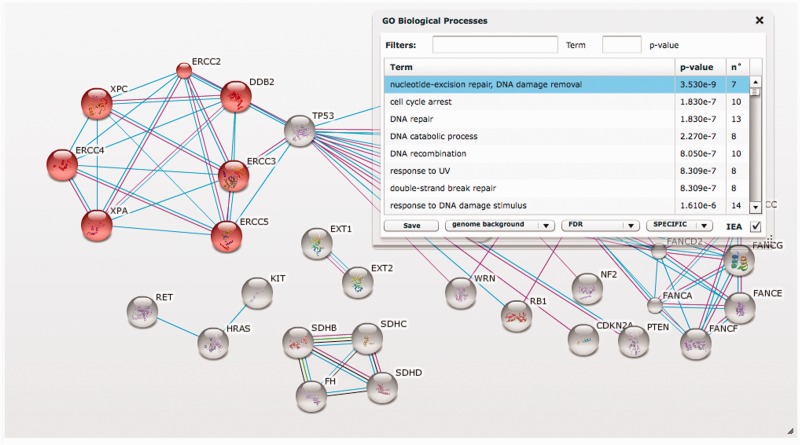
“The STRING screenshot shows a user-supplied set of genes, here a selection of cancer genes as annotated at the COSMIC database (52).”
Cited by
Items 201–300 of 1,021
A Pan-Cancer Catalogue of Cancer Driver Protein Interaction Interfaces
Porta-Pardo, E., Garcia-Alonso, L., Hrabe, T., Dopazo, J., & Godzik, A. (2015) · PLOS Computational Biology · doi:10.1371/journal.pcbi.1004518 · Cited by 133
“Given the large number of available human PPI networks and the variability in their quality, we decided to use 16 different networks from 7 different sources (Figs H-K in S1 Text): HPRD [67], Biogrid[68], STRING[69], HumNet[70], PSICQUIC[71], one PPI derived from unbiased experiments as well as curated literature[43]…”
MethodSu, W., Zhao, Y., Wei, Y., Zhang, X., Ji, J., & Yang, S. F. (2021) · Frontiers in Immunology · doi:10.3389/fimmu.2021.667690 · Cited by 133
“0) (13) can search for the relationship between proteins of interest, such as direct binding relationships, or coexisting upstream and downstream regulatory pathways, to construct a PPI network with complex regulatory relationships.”
BackgroundThe Acetate Switch of an Intestinal Pathogen Disrupts Host Insulin Signaling and Lipid Metabolism
Hang, S., Purdy, A. E., Robins, W. P., Wang, Z., Mandal, M., Chang, S. M., Mekalanos, J. J., & Watnick, P. I. (2014) · Cell Host & Microbe · doi:10.1016/j.chom.2014.10.006 · Cited by 133
“Based on the co-occurrence and proximity of homologs of these two proteins in the genomes of other bacteria, STRING analysis suggested that the transcription factor encoded at locus VC2702 might be the cognate response regulator of CrbS (Figure S2A) (Franceschini et al., 2013).”
BackgroundAn Organoruthenium Anticancer Agent Shows Unexpected Target Selectivity For Plectin
Meier, S. M., Kreutz, D., Winter, L., Klose, M. H. M., Cseh, K., Weiss, T., Bileck, A., Alte, B., Mader, J. C., Jana, S., et al. (2017) · Angewandte Chemie International Edition · doi:10.1002/anie.201702242 · Cited by 135
Widespread Post-transcriptional Attenuation of Genomic Copy-Number Variation in Cancer
Gonçalves, E., Fragoulis, A., Garcia-Alonso, L., Cramer, T., Saez-Rodriguez, J., & Beltrao, P. (2017) · Cell Systems · doi:10.1016/j.cels.2017.08.013 · Cited by 117
Wong, A. K., Park, C. Y., Greene, C. S., Bongo, L. A., Guan, Y., & Troyanskaya, O. G. (2012) · Nucleic Acids Research · doi:10.1093/nar/gks458 · Cited by 126
Cao, M., Pietras, C. M., Feng, X., Doroschak, K. J., Schaffner, T., Park, J., Zhang, H., Cowen, L. J., & Hescott, B. J. (2014) · Bioinformatics · doi:10.1093/bioinformatics/btu263 · Cited by 120
“…pathway information from KEGG XML files, and for calculating the cDSD, caDSD and capDSD matrices are available from http://dsd. cs.tufts.edu/capdsd Contact: lenore.cowen@tufts.edu or benjamin.hescott@tufts.edu Supplementary information: Supplementary data are available at Bioinformatics online.”
MethodInfluentialButcher, S., O’Carroll, C., Wells, C. A., & Carmody, R. J. (2018) · Frontiers in Immunology · doi:10.3389/fimmu.2018.00933 · Cited by 131
Toxoplasma Modulates Signature Pathways of Human Epilepsy, Neurodegeneration & Cancer
Ngô, H. M., Zhou, Y., Lorenzi, H., Wang, K., Kim, T., Zhou, Y. F., Bissati, K. E., Mui, E. J., Fraczek, L., Rajagopala, S. V., et al. (2017) · Scientific Reports · doi:10.1038/s41598-017-10675-6 · Cited by 132
Wang, Y., Liu, Z., Wu, Z., Li, H., Wang, W., Cui, X., & Zhuang, J. (2018) · Scientific Reports · doi:10.1038/s41598-018-22275-z · Cited by 132
System-wide identification of wild-type SUMO-2 conjugation sites
Hendriks, I. A., D’Souza, R. C. J., Chang, J.-G., Mann, M., & Vertegaal, A. C. O. (2015) · Nature Communications · doi:10.1038/ncomms8289 · Cited by 130
CyTargetLinker: A Cytoscape App to Integrate Regulatory Interactions in Network Analysis
Kutmon, M., Kelder, T., Mandaviya, P. R., Evelo, C. T., & Coort, S. L. (2013) · PLoS ONE · doi:10.1371/journal.pone.0082160 · Cited by 129
Protein–protein interaction networks: the puzzling riches
Wodak, S. J., Vlasblom, J., Turinsky, A. L., & Pu, S. (2013) · Current Opinion in Structural Biology · doi:10.1016/j.sbi.2013.08.002 · Cited by 129
Global quantitative analysis of the human brain proteome and phosphoproteome in Alzheimer’s disease
Ping, L., Kundinger, S. R., Duong, D. M., Yin, L., Gearing, M., Lah, J. J., Levey, A. I., & Seyfried, N. T. (2020) · Scientific Data · doi:10.1038/s41597-020-00650-8 · Cited by 127
P2CS: updates of the prokaryotic two-component systems database
Ortet, P., Whitworth, D. E., Santaella, C., Achouak, W., & Barakat, M. (2014) · Nucleic Acids Research · doi:10.1093/nar/gku968 · Cited by 130
“Each individual gene page now provides an enriched secondary structure highlighting the protein domains, extended clustering data to include clusters sharing 80% identity, and available gene associated literature through UniProt and Search Tool for the Retrieval of Interacting Genes/Proteins (STRING) (19,20) D ow nade…”
BackgroundKumar, A., Pathak, R. K., Gupta, S. M., Gaur, V. S., & Pandey, D. (2015) · OMICS A Journal of Integrative Biology · doi:10.1089/omi.2015.0106 · Cited by 128
“…is to collect a huge amount of biological data and information to develop a database in organized form for the benefits of the scientific community (Chelliah et al., 2013; Franceschini et al., 2013; Le et al., 2006; Mi et al., 2013; Ogata et al., 1999; Snel et al., 2000; Thomas et al., 2003).”
BackgroundRAIN: RNA–protein Association and Interaction Networks
Junge, A., Refsgaard, J. C., Garde, C., Pan, X., Santos, A., Alkan, F., Anthon, C., von Mering, C., Workman, C. T., Jensen, L. J., et al. (2017) · Database · doi:10.1093/database/baw167 · Cited by 117
“The subsequent text mining was performed using the same name tagger as used in STRING (33).”
BackgroundMethodSelf-citationVilloutreix, B. O., Kuenemann, M. A., Poyet, J., Bruzzoni‐Giovanelli, H., Labbé, C., Lagorce, D., Sperandio, O., & Miteva, M. A. (2014) · Molecular Informatics · doi:10.1002/minf.201400040 · Cited by 116
Selecting causal genes from genome-wide association studies via functionally coherent subnetworks
Taşan, M., Musso, G., Hao, T., Vidal, M., MacRae, C. A., & Roth, F. P. (2015) · Nature Methods · doi:10.1038/nmeth.3215 · Cited by 95
Breen, M. S., Tylee, D. S., Maihofer, A. X., Neylan, T. C., Mehta, D., Binder, E. B., Chandler, S. D., Hess, J. L., Kremen, W. S., Risbrough, V. B., et al. (2018) · Neuropsychopharmacology · doi:10.1038/npp.2017.220 · Cited by 116
“PPIs were obtained from the STRING database (Franceschini et al, 2012) with a signature query of DGE lists from the mega-analytic case-control comparisons.”
Liú, W., Gray, S. M., Huo, Y., Li, L., Wèi, T., & Wang, X. (2015) · Molecular & Cellular Proteomics · doi:10.1074/mcp.m114.046763 · Cited by 123
“org), with a parameter setting confidence score of autodetect organism for any clusters of orthologous groups of proteins (26).”
BackgroundAssociation of Omics Features with Histopathology Patterns in Lung Adenocarcinoma
Yu, K.-H., Berry, G. J., Rubin, D. L., Ré, C., Altman, R. B., & Snyder, M. (2017) · Cell Systems · doi:10.1016/j.cels.2017.10.014 · Cited by 118
“…used a Poisson-Binomial variable tomodel the number of edges connecting the genes, and calculated the P-value of observing the number of gene-gene interactions under the null hypothesis that this gene set did not possess more gene-gene interactions than a random set (Franceschini et al., 2013).”
MethodProença, M. A., Biselli, J. M., Succi, M., Severino, F. E., Berardinelli, G. N., Caetano, A., Reis, R. M., Hughes, D. J., & Silva, A. E. (2018) · World Journal of Gastroenterology · doi:10.3748/wjg.v24.i47.5351 · Cited by 108
Radeke, M. J., Radeke, C. M., Shih, Y.-H., Hu, J., Bok, D., Johnson, L. V., & Coffey, P. J. (2015) · Genome Medicine · doi:10.1186/s13073-015-0183-x · Cited by 109
“1 [27] using a medium confidence setting and the Experiment and Databases prediction methods.”
MethodHigdon, R., Earl, R. K., Stanberry, L. I., Hudac, C. M., Montague, E., Stewart, E., Janko, I., Choiniere, J., Broomall, W., Kolker, N., et al. (2015) · OMICS A Journal of Integrative Biology · doi:10.1089/omi.2015.0020 · Cited by 124
“Many public (e.g., Reactome, Panther, BioCyc, KEGG) (Caspi et al., 2014; Croft et al., 2014; Ka-nehisa et al., 2014; Mi et al., 2013) and commercial pathway resources (e.g. Ingenuity) are available, as well as interaction databases (e.g., String, Intact) (Franceschini et al., 2013; Kerrien et al., 2011).”
Koczorowska, M. M., Tholen, S., Bucher, F., Lutz, L., Kizhakkedathu, J. N., De Wever, O., Wellner, U. F., Biniossek, M. L., Stahl, A., Lassmann, S., et al. (2016) · Molecular Oncology · doi:10.1016/j.molonc.2015.08.001 · Cited by 112
Multilayered proteomics reveals molecular switches dictating ligand-dependent EGFR trafficking
Francavilla, C., Papetti, M., Rigbolt, K. T. G., Pedersen, A.-K., Sigurdsson, J. O., Cazzamali, G., Karemore, G., Blagoev, B., & Olsen, J. V. (2016) · Nature Structural & Molecular Biology · doi:10.1038/nsmb.3218 · Cited by 104
“The overview of proteins was manually curated on the basis of either STRING database 66 and visualized in Cytoscape (version 3.1).”
MethodInfluentialProteomic Profiling of the Acid Stress Response in Lactobacillus plantarum 423
Heunis, T., Deane, S., Smit, S., & Dicks, L. M. T. (2014) · Journal of Proteome Research · doi:10.1021/pr500353x · Cited by 105
Centriolar satellites: key mediators of centrosome functions
Tollenaere, M. A. X., Mailand, N., & Bekker‐Jensen, S. (2014) · Cellular and Molecular Life Sciences · doi:10.1007/s00018-014-1711-3 · Cited by 120
Song, S., Yao, N., Yang, M., Liu, X., Dong, K., Zhao, Q., Pu, Y., He, X., Guan, W., Yang, N., et al. (2016) · BMC Genomics · doi:10.1186/s12864-016-2449-0 · Cited by 122
“1 program using standard parameters [77], and removal of the redundant GO terms from this list was performed with REVIGO using standard parameters [78].”
MethodWang, H., Yan, A., Liu, Z., Yang, X., Xu, Z., Wang, Y., Wang, R., Koohi‐Moghadam, M., Hu, L., Xia, W. T., et al. (2019) · PLoS Biology · doi:10.1371/journal.pbio.3000292 · Cited by 120
Verma, S. K., Kumari, N., Panda, P. K., Patel, P., Kumari, P., Mallick, M. A., Sarkar, B., & Das, B. B. (2020) · The Science of The Total Environment · doi:10.1016/j.scitotenv.2020.136521 · Cited by 120
Peffers, M. J., Thorpe, C. T., Collins, J. A., Eong, R., Wei, T. K. J., Screen, H. R. C., & Clegg, P. (2014) · Journal of Biological Chemistry · doi:10.1074/jbc.m114.566554 · Cited by 119
Chromosomal contacts connect loci associated with autism, BMI and head circumference phenotypes
2p15 Consortium, Loviglio, M. N., 16p11.2 Consortium, Leleu, M., Männik, K., Passeggeri, M., Giannuzzi, G., van der Werf, I., Waszak, S. M., Zazhytska, M., et al. (2017) · Molecular Psychiatry · doi:10.1038/mp.2016.84 · Cited by 118
Use of Bioinformatics Tools in Different Spheres of Life Sciences
Mehmood, M. A. (2014) · Journal of Data Mining in Genomics & Proteomics · doi:10.4172/2153-0602.1000158 · Cited by 120
“[148] MIMO A dynamics graph-matching tool for the comparison of biological pathways in an efficient manner.”
MethodTrugilho, M. R. D. O., Hottz, E. D., Brunoro, G. V. F., Teixeira‐Ferreira, A., Carvalho, P. C., Salazar, G. A., Zimmerman, G. A., Bozza, F. A., Bozza, P. T., & Perales, J. (2017) · PLoS Pathogens · doi:10.1371/journal.ppat.1006385 · Cited by 118
Histone methyltransferase Smyd1 regulates mitochondrial energetics in the heart
Warren, J. S., Tracy, C. M., Miller, M. R., Makaju, A., Szulik, M. W., Oka, S., Yuzyuk, T. N., Cox, J. E., Kumar, A., Lozier, B. K., et al. (2018) · Proceedings of the National Academy of Sciences · doi:10.1073/pnas.1800680115 · Cited by 119
“Enrichment analyses in biological processes, cellular components, and KEGG pathways were performed using the STRING database (53).”
MethodNetwork representations of immune system complexity
Subramanian, N., Torabi‐Parizi, P., Gottschalk, R. A., Germain, R. N., & Dutta, B. (2015) · WIREs Systems Biology and Medicine · doi:10.1002/wsbm.1288 · Cited by 117
A review on computational systems biology of pathogen–host interactions
DurmuÅŸ, S., Çakır, T., Özgür, A., & Guthke, R. (2015) · Frontiers in Microbiology · doi:10.3389/fmicb.2015.00235 · Cited by 120
FunCoup 3.0: database of genome-wide functional coupling networks
Schmitt, T., Ogris, C., & Sonnhammer, E. L. L. (2014) · Nucleic Acids Research · doi:10.1093/nar/gkt984 · Cited by 108
“05 (6) but has a high FBS in FunCoup 2.”
BackgroundИванисенко, В. А., Saik, O., Ivanisenko, N. V., Tiys, E., Ivanisenko, T., Сергеевич, Д. П., & Kolchanov, N. A. (2015) · BMC Systems Biology · doi:10.1186/1752-0509-9-s2-s2 · Cited by 117
“In order to compare ANDSystem with existing programs, we applied our Gold Standard to well-known text-mining based systems, such as Pathway Studio [1] and STRING [2].”
BackgroundMethodMilioli, M., Ibáñez-Vea, M., Sidoli, S., Palmisano, G., Careri, M., & Larsen, M. R. (2015) · Journal of Proteomics · doi:10.1016/j.jprot.2015.03.013 · Cited by 116
“[38] Franceschini A, Szklarczyk D, Frankild S, Kuhn M, Simonovic M, Roth A, et al.”
Choudhary, M. K., Nomura, Y., Wang, L., Nakagami, H., & Somers, D. E. (2015) · Molecular & Cellular Proteomics · doi:10.1074/mcp.m114.047183 · Cited by 116
“Functionally Related Proteins Have Similar Phosphorylation Patterns—We next used STRING, a database which allows accumulated protein-protein interaction data to be assembled and viewed as interaction networks, for further analysis of known or predicted interactions between the significantly circadian regulated phospho…”
MethodThorwarth, A., Schnittert-Hübener, S., Schrumpf, P., Müller, I., Jyrch, S., Dame, C., Biebermann, H., Kleinau, G., Katchanov, J., Schuelke, M., et al. (2014) · Journal of Medical Genetics · doi:10.1136/jmedgenet-2013-102248 · Cited by 115
GeneFriends: a human RNA-seq-based gene and transcript co-expression database
van Dam, S., Craig, T., & de Magalhães, J. P. (2015) · Nucleic Acids Research · doi:10.1093/nar/gku1042 · Cited by 115
MIEF1 Microprotein Regulates Mitochondrial Translation
Rathore, A., Chu, Q., Tan, D., Martinez, T. F., Donaldson, C. J., Diedrich, J. K., Yates, J. R., & Saghatelian, A. (2018) · Biochemistry · doi:10.1021/acs.biochem.8b00726 · Cited by 104
Lv, L., Deng, H., Li, Y., Zhang, C., Liu, X., Liu, Q., Zhang, D., Wang, L., Pu, Y., Zhang, H., et al. (2014) · Cell Death and Disease · doi:10.1038/cddis.2014.367 · Cited by 115
“(PLAU, SRSF2 and HIC2 genes) and the master transcription factor genes for these five signaling pathways (Figure 5d): NRF1 for Oxidative stress, MYC for Myc/Max, RBPJ for Notch, TP53 for DNA Damage and NFKB1 for NF-kB pathways from the STRING database of the known protein– protein interactions (PPI) interactions.(17)…”
MethodGene set analysis: A step‐by‐step guide
Mooney, M. A., & Wilmot, B. (2015) · American Journal of Medical Genetics Part B Neuropsychiatric Genetics · doi:10.1002/ajmg.b.32328 · Cited by 115
Yoon, W. H., Sandoval, H., Nagarkar-Jaiswal, S., Jaiswal, M., Yamamoto, S., Haelterman, N. A., Putluri, N., Putluri, V., Sreekumar, A., Tos, T., et al. (2017) · Neuron · doi:10.1016/j.neuron.2016.11.038 · Cited by 106
“Bioinformatics analyses based on STRING (http://string-db.org/) (Franceschini et al., 2013) and COMPLEAT (http://www.flyrnai.org/compleat/) (Vinayagam et al., 2013) revealed that 10 of the 20 mitochondrial proteins can be assigned to three different functional categories (Figure S5B).”
Monti, C., Zilocchi, M., Colugnat, I., & Alberio, T. (2018) · Journal of Proteomics · doi:10.1016/j.jprot.2018.12.012 · Cited by 115
Long, M., Zhao, J., Li, T., Tafalla, C., Zhang, Q., Wang, X., Gong, X., Shen, Z., & Li, A. (2015) · Journal of Proteomics · doi:10.1016/j.jprot.2015.03.031 · Cited by 114
“[72] Franceschini A, Szklarczyk D, Frankild S, Kuhn M, Simonovic M, Roth A, et al.”
BackgroundPhillips, B. W., Veljkovic, E., Boué, S., Schlage, W. K., Vuillaume, G., Martin, F. P., Titz, B., Leroy, P., Buettner, A., Elamin, A., et al. (2015) · Toxicological Sciences · doi:10.1093/toxsci/kfv243 · Cited by 113
“1) was employed (Franceschini et al., 2013).”
Systematic analysis of somatic mutations impacting gene expression in 12 tumour types
Ding, J., McConechy, M. K., Horlings, H. M., Ha, G., Chan, F. C., Funnell, T., Mullaly, S. C., Reimand, J., Bashashati, A., Bader, G. D., et al. (2015) · Nature Communications · doi:10.1038/ncomms9554 · Cited by 117
Thorpe, C. T., Peffers, M. J., Simpson, D. M., Halliwell, E., Screen, H. R. C., & Clegg, P. (2016) · Scientific Reports · doi:10.1038/srep20455 · Cited by 115
CCNA2 acts as a novel biomarker in regulating the growth and apoptosis of colorectal cancer
Gan, Y., Li, Y., Li, T., Shu, G., & Yin, G. (2018) · Cancer Management and Research · doi:10.2147/cmar.s176833 · Cited by 112
Hu, L., Yang, S., Luo, X., Yuan, H., Sedraoui, K., & Zhou, M. (2021) · IEEE/CAA Journal of Automatica Sinica · doi:10.1109/jas.2021.1004198 · Cited by 112
The `dnet¿ approach promotes emerging research on cancer patient survival
Fang, H., & Gough, J. (2014) · Genome Medicine · doi:10.1186/preaccept-1248435140128963 · Cited by 96
“Knowledge of genes can be: their interacting networks [19], annotations by various ontologies (in dcGO database [27,28]), evolutionary ages [29], and residual domain superfamilies [30].”
BackgroundMethodVella, D., Zoppis, I. F., Mauri, G., Mauri, P., & Silvestre, D. D. (2017) · EURASIP Journal on Bioinformatics and Systems Biology · doi:10.1186/s13637-017-0059-z · Cited by 115
“The most popular include MINT [36], IntAct [37], STRING [38], and HPRD [39].”
MethodPhillips, B. W., Veljkovic, E., Peck, M. J., Buettner, A., Elamin, A., Guedj, E., Vuillaume, G., Ivanov, N. V., Martin, F. P., Boué, S., et al. (2015) · Food and Chemical Toxicology · doi:10.1016/j.fct.2015.03.009 · Cited by 111
“1 (Franceschini et al., 2013) and visualized using Cytoscape (Smoot et al.”
MethodOperon Gene Order Is Optimized for Ordered Protein Complex Assembly
Wells, J. N., Bergendahl, L. T., & Marsh, J. A. (2016) · Cell Reports · doi:10.1016/j.celrep.2015.12.085 · Cited by 99
Large-Scale Profiling of Kinase Dependencies in Cancer Cell Lines
Campbell, J., Ryan, C. J., Brough, R., Bajrami, I., Pemberton, H. N., Chong, I. Y., Costa-Cabral, S., Frankum, J., Gulati, A., Holme, H., et al. (2016) · Cell Reports · doi:10.1016/j.celrep.2016.02.023 · Cited by 101
“7) functional interactions were obtained from the STRING database (Version 9.1; Franceschini et al., 2013).”
BackgroundMethodInfluentialHuang, Y., Li, M., Wu, P., Xu, Z., Que, F., Wang, F., & Xiong, A. (2016) · BMC Genomics · doi:10.1186/s12864-016-3123-2 · Cited by 113
“STRING software was responsible for the conduction of the interaction network [44].”
MethodKhan, F. M., Marquardt, S., Gupta, S. K., Knoll, S., Schmitz, U., Spitschak, A., Engelmann, D., Vera, J., Wolkenhauer, O., & Pützer, B. M. (2017) · Nature Communications · doi:10.1038/s41467-017-00268-2 · Cited by 111
Mínguez, P., Letunić, I., Parca, L., García‐Alonso, L., Dopazo, J., Huerta‐Cepas, J., & Bork, P. (2014) · Nucleic Acids Research · doi:10.1093/nar/gku1081 · Cited by 112
“PTMcode uses the same protein repertoire and synonyms dictionary as the databases eggNOG (13) and STRING (34), a powerful tool that allows us to easily include orthologs and network neighborhood information.”
BackgroundMethodSelf-citationBadertscher, L., Wild, T., Montellese, C., Alexander, L. T., Bammert, L., Sarazova, M., Stebler, M., Csucs, G., Mayer, T. U., Zamboni, N., et al. (2015) · Cell Reports · doi:10.1016/j.celrep.2015.11.061 · Cited by 102
Bone, W. P., Washington, N. L., Buske, O. J., Adams, D. R., Davis, J., Draper, D., Flynn, E. D., Girdea, M., Godfrey, R., Golas, G., et al. (2016) · Genetics in Medicine · doi:10.1038/gim.2015.137 · Cited by 103
“The high-confidence interactions include direct (physical) and indirect (functional) protein–protein interactions, as well as associations transferred by orthology from other species or obtained through text mining 19 ( Figure 1c ).”
BackgroundShan, Z., Luo, X., Wei, M., Huang, T., Khan, A., & Zhu, Y. (2018) · Scientific Reports · doi:10.1038/s41598-018-35711-x · Cited by 110
Hao, P., Zhu, J., Gu, A., Lv, D., Ge, P., Chen, G., Li, X. F., & Yan, Y. (2014) · PROTEOMICS · doi:10.1002/pmic.201400179 · Cited by 110
“org) [34] and displayed in Cytoscape software (version 3.”
Functional and genomic context in pathway analysis of GWAS data
Mooney, M. A., Nigg, J. T., McWeeney, S. K., & Wilmot, B. (2014) · Trends in Genetics · doi:10.1016/j.tig.2014.07.004 · Cited by 97
Martínez-Ledesma, E., Verhaak, R. G. W., & Treviño, V. (2015) · Scientific Reports · doi:10.1038/srep11966 · Cited by 109
“In principle, however, the NCA approach can be applied to other biological networks such BioGrid 73 , iRefWeb 74 , STRING 75 , and to genetic regulatory networks such as MotEvo 76 and the conserved transcription factor binding sites track in UCSC (https://genome.ucsc.edu).”
MethodRayapuram, N., Bigeard, J., Alhoraibi, H., Bonhomme, L., Hesse, A.-M., Vinh, J., Hirt, H., & Pflieger, D. (2017) · Molecular & Cellular Proteomics · doi:10.1074/mcp.ra117.000135 · Cited by 109
“We then grouped the corresponding phosphoproteins into a protein interaction network using the program STRING (43) (Fig.”
BackgroundMethodInfluentialA complex V ATP5A1 defect causes fatal neonatal mitochondrial encephalopathy
Jonckheere, A. I., Renkema, G. H., Bras, M., van den Heuvel, L. P., Hoischen, A., Gilissen, C., Nabuurs, S. B., Huynen, M. A., de Vries, M. C., Smeitink, J. A. M., et al. (2013) · Brain · doi:10.1093/brain/awt086 · Cited by 103
“Also STRING data- base analysis (Franceschini et al., 2013) did not reveal evidence for an interaction with complex V.”
BackgroundDrug discovery for autism spectrum disorder: challenges and opportunities
Ghosh, A., Michalon, A., Lindemann, L., Fontoura, P., & Santarelli, L. (2013) · Nature Reviews Drug Discovery · doi:10.1038/nrd4102 · Cited by 108
Swaney, D. L., Rodríguez‐Mias, R. A., & Villén, J. (2015) · EMBO Reports · doi:10.15252/embr.201540298 · Cited by 109
“STRING analysis of proteins enriched in S65E conjugates revealed highconfidence protein interactions between many of these SNARE proteins, as well as two vacuolar sorting proteins Vps21 and Pep1 [34] (Fig 6E).”
Bai, Y., Wang, S., Zhong, H., Yang, Q., Zhang, F., Zhuang, Z., Yuan, J., Nie, X., & Wang, S. (2015) · Scientific Reports · doi:10.1038/srep14582 · Cited by 108
Discovering cellular protein‐protein interactions: Technological strategies and opportunities
Titeca, K., Lemmens, I., Tavernier, J., & Eyckerman, S. (2019) · Mass Spectrometry Reviews · doi:10.1002/mas.21574 · Cited by 91
Host genetics of Epstein–Barr virus infection, latency and disease
Houldcroft, C. J., & Kellam, P. (2014) · Reviews in Medical Virology · doi:10.1002/rmv.1816 · Cited by 108
“Predicted protein–protein interactions (STRING [94]) of the EBV infection and disease-associated genes summarised in this paper.”
BackgroundReview of Biological Network Data and Its Applications
Yu, D., Kim, M., Xiao, G., & Hwang, T. H. (2013) · Genomics & Informatics · doi:10.5808/gi.2013.11.4.200 · Cited by 99
“We report these disease gene prioritization methods with their data resources in Table 4 [12, 13, 15-18, 91-94, 96-99].”
BackgroundMethodInfluentialExploiting ontology graph for predicting sparsely annotated gene function
Wang, S., Cho, H., Zhai, C., Berger, B., & Peng, J. (2015) · Bioinformatics · doi:10.1093/bioinformatics/btv260 · Cited by 108
Martins-de-Souza, D. (2014) · Dialogues in Clinical Neuroscience · doi:10.31887/dcns.2014.16.1/dmartins · Cited by 96
Wymeersch, F. J., Skylaki, S., Huang, Y., Watson, J. A., Economou, C., Marek-Johnson, C., Tomlinson, S. R., & Wilson, V. A. (2018) · Development · doi:10.1242/dev.168161 · Cited by 108
“To assign genes of interest to a specific signalling pathway or cellular process, we used the Kyoto Encyclopedia of Genes and Genomes (Kanehisa et al., 2016) and the STRING database (Franceschini et al., 2013).”
Nine quick tips for pathway enrichment analysis
Chicco, D., & Agapito, G. (2022) · PLoS Computational Biology · doi:10.1371/journal.pcbi.1010348 · Cited by 108
Konze, S. A., van Diepen, L., Schröder, A., Olmer, R., Möller, H., Pich, A., Weißmann, R., Kuss, A. W., Zweigerdt, R., & Buettner, F. F. R. (2014) · Molecular & Cellular Proteomics · doi:10.1074/mcp.m113.033423 · Cited by 107
“sional culture conditions in biological pathways, we used the STRING database (50) to perform KEGG pathway enrichment analyses.”
MethodInfluentialThe Cardiac TBX5 Interactome Reveals a Chromatin Remodeling Network Essential for Cardiac Septation
Waldron, L., Steimle, J. D., Greco, T. M., Gomez, N. C., Dorr, K. M., Kweon, J., Temple, B., Yang, X. H., Wilczewski, C. M., Davis, I. J., et al. (2016) · Developmental Cell · doi:10.1016/j.devcel.2016.01.009 · Cited by 97
“Gene symbols were submitted to the web-based STRING database (Franceschini et al., 2013) for interaction network analysis.”
MethodMolecular Mechanism of Flocculation Self-Recognition in Yeast and Its Role in Mating and Survival
Goossens, K. V. Y., Ielasi, F., Nookaew, I., Stals, I., Alonso‐Sarduy, L., Daenen, L., Mulders, S. E. V., Stassen, C., van Eijsden, R. G. E., Siewers, V., et al. (2015) · mBio · doi:10.1128/mbio.00427-15 · Cited by 107
Prokopenko, D., Morgan, S. L., Mullin, K., Hofmann, O., Chapman, B., Kirchner, R., (ADNI), A. D. N. I., Amberkar, S., Wohlers, I., Lange, C., et al. (2021) · Alzheimer's & Dementia · doi:10.1002/alz.12319 · Cited by 105
“A multiple testing correction was applied.”
The Coming of Age of Phosphoproteomics—from Large Data Sets to Inference of Protein Functions
Roux, P. P., & Thibault, P. (2013) · Molecular & Cellular Proteomics · doi:10.1074/mcp.r113.032862 · Cited by 95
Current perspective of yellowish-orange pigments from microorganisms- a review
Aruldass, C. A., Dufossé, L., & Ahmad, W. A. (2018) · Journal of Cleaner Production · doi:10.1016/j.jclepro.2018.01.093 · Cited by 105
“Franceschini et al. (2013) found similar gene cluster spanning Cpin_1853 (flxA) to Cpin_1877 (flxY) for C. pinensis and F. johnsoniae flexirubin gene cluster.”
Network Pharmacology: Exploring the Resources and Methodologies
Junaid, M., Khan, A., Ali, A., Fang, L., Yanjing, W., Xu, Q., & Wei, D. (2018) · Current Topics in Medicinal Chemistry · doi:10.2174/1568026618666180330141351 · Cited by 106
Protein domain identification methods and online resources
Wang, Y., Zhang, H., Zhong, H., & Xue, Z. (2021) · Computational and Structural Biotechnology Journal · doi:10.1016/j.csbj.2021.01.041 · Cited by 105
“It is synchronized with UniProt [65], Ensembl [66], and STRING [67].”
MethodKidd, M. S., Drozdov, I. A., & Modlin, I. M. (2015) · Endocrine Related Cancer · doi:10.1530/erc-15-0092 · Cited by 105
Labbé, C. M., Laconde, G., Kuenemann, M. A., Villoutreix, B. O., & Sperandio, O. (2013) · Drug Discovery Today · doi:10.1016/j.drudis.2013.05.003 · Cited by 104
Piovesan, D., Giollo, M., Leonardi, E., Ferrari, C., & Tosatto, S. C. E. (2015) · Nucleic Acids Research · doi:10.1093/nar/gkv523 · Cited by 99
Cheng, Z., Dong, K., Ge, P., Bian, Y., Dong, L., Deng, X., Li, X. F., & Yan, Y. (2015) · PLoS ONE · doi:10.1371/journal.pone.0125302 · Cited by 104
Protein Kinase A Activation Promotes Cancer Cell Resistance to Glucose Starvation and Anoikis
Palorini, R., Votta, G., Pirola, Y., Vitto, H. D., Palma, S. D., Airoldi, C., Vasso, M., Ricciardiello, F., Lombardi, P. P., Cirulli, C., et al. (2016) · PLoS Genetics · doi:10.1371/journal.pgen.1005931 · Cited by 107
“1 [23], PIANO [24] and MetaboAnalyst 3.”
Huang, Y., Chen, H., Reinfelder, J. R., Liang, X., Sun, C., Liu, C., Li, F., & Yi, J. (2019) · The Science of The Total Environment · doi:10.1016/j.scitotenv.2019.02.281 · Cited by 104
Ji, Z., Mohammed, H., Webber, A., Ridsdale, J., Han, N., Carroll, J. S., & Sharrocks, A. D. (2014) · Nucleic Acids Research · doi:10.1093/nar/gku274 · Cited by 88
Castro, J., França, A., Bradwell, K. R., Serrano, M. G., Jefferson, K. K., & Cerca, N. (2017) · npj Biofilms and Microbiomes · doi:10.1038/s41522-017-0012-7 · Cited by 97
“Thereafter, an enrichment analysis of clusters was performed using STRING with a threshold of p 0.05, FDRadjusted.16 Published in partnership with Nanyang Technological University npj Biofilms and Microbiomes (2017) 3 Quantitative PCR In order to validate RNA-seq data, qPCR was performed to quantify the transcription…”
BackgroundMethodInfluentialTowards a detailed atlas of protein–protein interactions
Mosca, R., Pons, T., Ceol, A. G. M., Valencia, A., & Aloy, P. (2013) · Current Opinion in Structural Biology · doi:10.1016/j.sbi.2013.07.005 · Cited by 104
Link Prediction on Complex Networks: An Experimental Survey
Wu, H., Song, C., Ge, Y., & Ge, T. (2022) · Data Science and Engineering · doi:10.1007/s41019-022-00188-2 · Cited by 103
Metadata
- Authors
- Franceschini, A., Szklarczyk, D., Frankild, S., Kuhn, M., Simonovic, M., Roth, A., Lin, J., Minguez, P., Bork, P., von Mering, C., & Jensen, L. J.
- Affiliations
- SIB Swiss Institute of Bioinformatics (CH)
- University of Copenhagen (DK)
- Venue
- Nucleic Acids Research
- Publisher
- Oxford University Press (OUP)
- Published
- 2012-11-29
- Volume
- 41
- Issue
- D1
- Pages
- D808-D815
- ISSN
- 0305-1048 (ISSN-L)
- 1362-4962
- PMC
- PMC3531103
- OpenAlex
- W2105924489
- Cited by
- 4,398
- References
- 61
- Citations by year
- 2026: 77 · 2025: 153 · 2024: 201 · 2023: 247 · 2022: 325 · 2021: 335 · 2020: 366 · 2019: 281 · 2018: 291 · 2017: 371 · 2016: 476 · 2015: 675 · 2014: 457 · 2013: 134 · 2012: 3
- FWCI
- 163.15
- Type
- journal article
- Language
- en
- Open access
- gold
- doi.org
- Licence
- Locations
- Nucleic Acids Research (publishedVersion, cc-by-nc)
- Europe PMC (PubMed Central) (publishedVersion, cc-by-nc)
- PubMed Central (publishedVersion, cc-by-nc)
- PubMed (publishedVersion)
- MDC Repository (Max-Delbrueck-Center for Molecular Medicine) (acceptedVersion)
- Zurich Open Repository and Archive (University of Zurich) (acceptedVersion, other-oa)
- reroDoc Digital Library (submittedVersion)
- Archivio Istituzionale della Ricerca (Universita Degli Studi Di Milano) (submittedVersion, cc-by-nc)
- Research at the University of Copenhagen (University of Copenhagen) (submittedVersion)
- Zurich Open Repository and Archive (University of Zurich) (submittedVersion, other-oa)
- Zurich Open Repository and Archive (University of Zurich)
- Funders
- European Molecular Biology Laboratory
- Novo Nordisk
- Universität Zürich
- Topics
- Life Sciences › Biochemistry, Genetics and Molecular Biology › Molecular Biology › Bioinformatics and Genomic Networks
- Health Sciences › Medicine › Health Informatics › Biomedical Text Mining and Ontologies
- Life Sciences › Biochemistry, Genetics and Molecular Biology › Molecular Biology › Genomics and Phylogenetic Studies
- Keywords
- STRING database, protein-protein interaction network, interaction prediction, literature mining, functional enrichment, biological pathway databases
- MeSH terms
- Algorithms, Data Interpretation, Statistical, User-Computer Interface, Systems Integration, Internet, Protein Interaction Mapping, Databases, Protein, Data Mining
About these checks
Registry, retraction, Cites and statistics results are computed, not judged, with one exception: a printed reference that no index lists is read once by a model before it counts as a citation error. Claims are extracted by a model and kept only when their quote appears verbatim in the text; each cited source is then checked, with a model’s help, for whether it says what the claim relies on. Those verdicts can be wrong — read the claim’s quote and the cited source before relying on one.
Statistics and arithmetic are recomputed, not judged.
Confidence bands are shown only for fields calibrated on our annotated test set. None is calibrated yet, so no band is shown.
What counts as a claim ›How we measure confidence ›How we check this ›
Are you an author, or do you see a problem with this page? Request a review
Data sources
Bibliographic data: Semantic Scholar, OpenAlex, Crossref.
Contains information from the Semantic Scholar Academic Graph Datasets, made available under the ODC Attribution License (ODC-BY 1.0).
Semantic Scholar’s data is described in: Kinney, R., et al. (2023). The Semantic Scholar Open Data Platform. arXiv:2301.10140.
