

STRING v9.1: protein-protein interaction networks, with increased coverage and integration
Open accessThe DOI matches its Crossref record; 61 of the 61 references it cites were found in a registry or an index.
Abstract
Complete knowledge of all direct and indirect interactions between proteins in a given cell would represent an important milestone towards a comprehensive description of cellular mechanisms and functions. Although this goal is still elusive, considerable progress has been made-particularly for certain model organisms and functional systems. Currently, protein interactions and associations are annotated at various levels of detail in online resources, ranging from raw data repositories to highly formalized pathway databases. For many applications, a global view of all the available interaction data is desirable, including lower-quality data and/or computational predictions. The STRING database (http://string-db.org/) aims to provide such a global perspective for as many organisms as feasible. Known and predicted associations are scored and integrated, resulting in comprehensive protein networks covering >1100 organisms. Here, we describe the update to version 9.1 of STRING, introducing several improvements: (i) we extend the automated mining of scientific texts for interaction information, to now also include full-text articles; (ii) we entirely re-designed the algorithm for transferring interactions from one model organism to the other; and (iii) we provide users with statistical information on any functional enrichment observed in their networks.
Overview
The claims and statistics of this paper haven’t been checked yet.
Free: it reads the open-access text and checks the first 5 claims that cite a source we can check. Create a free account to check every claim.
Integrity signals
Registry
Cites
Statistics
Figures

Verification
Claims the paper makes
The claims and statistics of this paper haven’t been checked yet.
Free: it reads the open-access text and checks the first 5 claims that cite a source we can check. Create a free account to check every claim.
Claims other papers make about this one
Each is checked against this paper’s own text: does it say what the citing paper says it does?
The source backs part of the claim, not all of it — or backs it for a different population, condition or comparison.
In the citing paper
“One approach is to treat the multiple datasets as different “features” annotated to each edge in a single unified network; these multiple features are combined to estimate a single interaction likelihood score for each node pair using supervised machine learning (Kramer et al., 2017) or Bayesian inference (Franceschini et al., 2013; Wong et al., 2004).”
From Mapping the multiscale structure of biological systems (2021) · cites this paper as Franceschini et al., 2013
Experimental — accuracy not yet measuredIn the citing paper
“Bioinformatic network tools, including STRING and GeneMania (93, 94), can score direct and indirect protein functional relationships using public database repositories, such as IntAct and Reactome (95, 96).”
From The Impact of Mass Spectrometry–Based Proteomics on Fundamental Discoveries in Virology (2014) · cites this paper as [94]
Self-check
Percentages, sums and reported differences re-computed from the paper’s own numbers.
The self-check needs the paper’s full text.
Citations
Cites
Controlling the False Discovery Rate: A Practical and Powerful Approach to Multiple Testing
Benjamini, Y., & Hochberg, Y. (1995) · Journal of the Royal Statistical Society Series B: Statistical Methodology · doi:10.1111/j.2517-6161.1995.tb02031.x · Cited by 109,482 · cited 1×
“The P -values are corrected for multiple testing using the method of Benjamini and Hochberg (54), but we also provide options to either disable that correction or to select a more stringent statistical test (Bonferroni).”
MethodSystematic and integrative analysis of large gene lists using DAVID bioinformatics resources
Huang, D. W., Sherman, B. T., & Lempicki, R. A. (2009) · Nature Protocols · doi:10.1038/nprot.2008.211 · Cited by 35,890 · cited 1×
“To address this question, a variety of dedicated online resources are already available (49,50), most notably the DAVID resource (51).”
BackgroundHuang, D. W., Sherman, B. T., & Lempicki, R. A. (2009) · Nucleic Acids Research · doi:10.1093/nar/gkn923 · Cited by 14,108 · cited 1×
“To address this question, a variety of dedicated online resources are already available (49,50), most notably the DAVID resource (51).”
BackgroundWarde-Farley, D., Donaldson, S. L., Comes, O., Zuberi, K., Badrawi, R., Chao, P., Franz, M., Grouios, C., Kazi, F., Lopes, C. T., et al. (2010) · Nucleic Acids Research · doi:10.1093/nar/gkq537 · Cited by 4,835 · cited 1×
“These include GeneMANIA (23), Consensus-PathDB (24), I2D (25), VisANT (26) and, more recently, hPRINT (27), HitPredict (28), IMID (29) and IMP (30).”
BackgroundThe COG database: a tool for genome-scale analysis of protein functions and evolution
Tatusov, R. L. (2000) · Nucleic Acids Research · doi:10.1093/nar/28.1.33 · Cited by 4,520 · cited 1×
“In the past, STRING has therefore used two distinct heuristic options: either to substitute homology for orthology (46) or to use pre-defined orthology relations described at high-level taxonomic groups, from the COG database (47).”
MethodSzklarczyk, D., Franceschini, A., Kuhn, M., Simonovic, M., Roth, A., Minguez, P., Doerks, T., Stark, M., Muller, J., Bork, P., et al. (2011) · Nucleic Acids Research · doi:10.1093/nar/gkq973 · Cited by 3,460 · cited 2×
“We have already discussed many aspects of the STRING resource previously, e.g. (31,32), including its data-sources, prediction algorithms and user-interface.”
BackgroundSelf-citationCaspi, R., Billington, R., Ferrer, L., Foerster, H., Fulcher, C. A., Keseler, I. M., Kothari, A., Krummenacker, M., Latendresse, M., Mueller, L. A., et al. (2016) · Nucleic Acids Research · doi:10.1093/nar/gkv1164 · Cited by 3,395
Specificity and Stability in Topology of Protein Networks
Maslov, S., & Sneppen, K. (2002) · Science · doi:10.1126/science.1065103 · Cited by 3,051
STRING 8--a global view on proteins and their functional interactions in 630 organisms
Jensen, L. J., Kuhn, M., Stark, M., Chaffron, S., Creevey, C., Muller, J., Doerks, T., Julien, P., Roth, A., Simonovic, M., et al. (2009) · Nucleic Acids Research · doi:10.1093/nar/gkn760 · Cited by 2,474 · cited 1×
“We have already discussed many aspects of the STRING resource previously, e.g. (31,32), including its data-sources, prediction algorithms and user-interface.”
BackgroundSelf-citationCOSMIC: mining complete cancer genomes in the Catalogue of Somatic Mutations in Cancer
Forbes, S. A., Bindal, N., Bamford, S., Cole, C., Kok, C. Y., Beare, D., Jia, M., Shepherd, R., Leung, K., Menzies, A., et al. (2011) · Nucleic Acids Research · doi:10.1093/nar/gkq929 · Cited by 2,278 · cited 1×
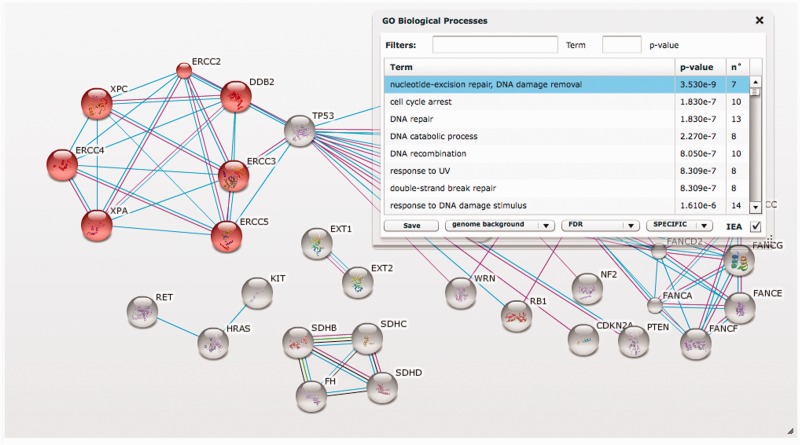
“The STRING screenshot shows a user-supplied set of genes, here a selection of cancer genes as annotated at the COSMIC database (52).”
Cited by
Items 401–500 of 1,021
Xu, F., Guan, Y., Li, X., Huang, S., Gao, K., Yang, Z., & Chong, T. (2020) · BMC Cancer · doi:10.1186/s12885-020-07702-7 · Cited by 84
Wu, Z., Li, X., Liu, Z., Li, H., Wang, Y., & Zhuang, J. (2015) · Molecular Genetics and Genomics · doi:10.1007/s00438-015-1107-6 · Cited by 84
“The functional interacting networks of proteins were integrated in STRING software (Franceschini et al. 2013) with the confidence parameter set at 0.”
MethodInfluentialMetabolome and proteome changes with aging in Caenorhabditis elegans
Copes, N., Edwards, C., Chaput, D., Saifee, M., Barjuca, I., Nelson, D., Paraggio, A., Saad, P., Lipps, D., Stevens, S. M., et al. (2015) · Experimental Gerontology · doi:10.1016/j.exger.2015.09.013 · Cited by 85
Multi-parameter systematic strategies for predictive, preventive and personalised medicine in cancer
Hu, R., Wang, X., & Zhan, X. (2013) · The EPMA Journal · doi:10.1186/1878-5085-4-2 · Cited by 84
Lee, F. X. Z., Houweling, P. J., North, K. N., & Quinlan, K. G. R. (2016) · Biochimica et Biophysica Acta (BBA) - Molecular Cell Research · doi:10.1016/j.bbamcr.2016.01.013 · Cited by 84
Thinon, E., Morales‐Sanfrutos, J., Mann, D. J., & Tate, E. W. (2016) · ACS Chemical Biology · doi:10.1021/acschembio.6b00371 · Cited by 84
Lobo, D., & Levin, M. G. (2015) · PLoS Computational Biology · doi:10.1371/journal.pcbi.1004295 · Cited by 85
Du, J., Ji, H., Ma, S., Jin, J., Mi, S., Hou, K., Dong, J., Wang, F., Zhang, C., Li, Y., et al. (2021) · Briefings in Bioinformatics · doi:10.1093/bib/bbab013 · Cited by 88
Cai, J., Zhang, W., Yang, P., Wang, Y., Li, M., Zhang, C., Wang, Z., Hu, H., Liu, Y., Li, Q., et al. (2015) · PLoS ONE · doi:10.1371/journal.pone.0126022 · Cited by 84
“STRING takes a list of gene products and returns a diagram of known and potential interactions [32].”
BackgroundBelcher, S. M., Gear, R. B., & Kendig, E. L. (2015) · Endocrinology · doi:10.1210/en.2014-1847 · Cited by 74
“1 (33) was used to identify and visualize interactions between individual differentially expressed genes.”
Proteomic Profile of Cryptococcus neoformans Biofilm Reveals Changes in Metabolic Processes
Santi, L., Beys‐da‐Silva, W. O., Berger, M., Calzolari, D., Guimarães, J. A., Moresco, J. J., & Yates, J. R. (2014) · Journal of Proteome Research · doi:10.1021/pr401075f · Cited by 83
Zhang, Y., Li, F., Xu, F., Yang, H., Zhu, A., Pang, J., Han, L. K., Zhang, T., Yao, X., & Wang, F. (2017) · BMC Genomics · doi:10.1186/s12864-017-4068-9 · Cited by 82
An overview of graph databases and their applications in the biomedical domain
Reina, S. T., Rincón, M., & Martínez‐Tomás, R. (2021) · Database · doi:10.1093/database/baab026 · Cited by 83
“Along with other associated elements, it includes genes annotated/described from ENTREZ (114) and their relationships integrated from STRING-DB (60), which contribute to posterior transcriptome analysis.”
BackgroundGunawardhana, L. P., Gibson, P. G., Simpson, J. L., Benton, M. C., Lea, R. A., & Baines, K. J. (2014) · Epigenetics · doi:10.4161/epi.33066 · Cited by 82
Labrador, C. R., Bland, C., Miotello, G., Guerin, P. P., Pible, O., Baena, S., & Armengaud, J. (2013) · Journal of Proteomics · doi:10.1016/j.jprot.2013.05.020 · Cited by 82
“[41] Franceschini A, Szklarczyk D, Frankild S, KuhnM, Simonovic M, RothA, et al.”
MethodWang, J., Zhao, L., Lin, P., Su, X., Chen, S., Huang, L., Wang, H., Zhang, H., Hu, Z.-F., Yao, K., et al. (2014) · Bioinformatics · doi:10.1093/bioinformatics/btu241 · Cited by 82
“Received on January 27, 2014; revised on April 3, 2014; accepted on April 17, 2014”
BackgroundRyan, D., Pati, N. B., Ojha, U. K., Padhi, C., Ray, S., Jaiswal, S., Singh, G. P., Mannala, G. K., Schultze, T. G., Chakraborty, T., et al. (2015) · Applied and Environmental Microbiology · doi:10.1128/aem.02172-15 · Cited by 82
The use of Gene Ontology terms and KEGG pathways for analysis and prediction of oncogenes
Xing, Z., Chu, C., Chen, L., & Kong, X. (2016) · Biochimica et Biophysica Acta (BBA) - General Subjects · doi:10.1016/j.bbagen.2016.01.012 · Cited by 82
Wan, Q., & Su, J. (2015) · Scientific Reports · doi:10.1038/srep12946 · Cited by 81
Yuan, Y., Li, J., Wang, X., Yanhui, L., Jiang, S., Maling, G., & Mao, Q. (2018) · Journal of Neuro-Oncology · doi:10.1007/s11060-018-2757-0 · Cited by 81
PFKFB3 blockade inhibits hepatocellular carcinoma growth by impairing DNA repair through AKT
Shi, W.-K., Zhu, X.-D., Wang, C.-H., Zhang, Y.-Y., Cai, H., Li, X., Cao, M.-Q., Zhang, S.-Z., Li, K.-S., & Sun, H. (2018) · Cell Death and Disease · doi:10.1038/s41419-018-0435-y · Cited by 81
Metagenomic study focusing on antibiotic resistance genes from the sediments of River Yamuna
Das, B. K., Behera, B. K., Chakraborty, H. J., Paria, P., Gangopadhyay, A., Rout, A. K., Nayak, K. K., Parida, P. K., & Rai, A. K. (2020) · Gene · doi:10.1016/j.gene.2020.144951 · Cited by 81
Tian, R., Wang, H., Gish, G. D., Petsalaki, E., Pasculescu, A., Shi, Y., Mollenauer, M., Bagshaw, R. D., Yosef, N., Hunter, T., et al. (2015) · Proceedings of the National Academy of Sciences · doi:10.1073/pnas.1503286112 · Cited by 76
“1 (38) (score cutoff 805) and BIOGRID (39).”
Systems Biology Brings New Dimensions for Structure-Based Drug Design
Pei, J., Yin, N., Ma, X., & Lai, L. (2014) · Journal of the American Chemical Society · doi:10.1021/ja504810z · Cited by 73
New Mass-Spectrometry-Compatible Degradable Surfactant for Tissue Proteomics
Chang, Y.-H., Gregorich, Z. R., Chen, A. J., Hwang, L., Guner, H., Yu, D., Zhang, J., & Ge, Y. (2015) · Journal of Proteome Research · doi:10.1021/pr5012679 · Cited by 80
Zhu, H.-E., Chen, H., Wang, J., Zhou, L., & Liu, S. (2019) · OncoTargets and Therapy · doi:10.2147/ott.s194568 · Cited by 80
“4 used as the threshold criterion.(26) Then, Cytoscape software Zhu et al Dovepress”
MethodDefoort, J., de Peer, Y. V., & Carretero‐Paulet, L. (2019) · Genome Biology and Evolution · doi:10.1093/gbe/evz156 · Cited by 83
Maleszewska, M., Vanchin, B., Harmsen, M. C., & Krenning, G. (2015) · Angiogenesis · doi:10.1007/s10456-015-9485-2 · Cited by 80
“1 tool was used to explore the mutual relationships between the products of the genes(28, 29).”
Methodvan Voss, M. R. H., Vesuna, F., Bol, G. M., Afzal, J. M., Tantravedi, S., Bergman, Y., Kammers, K., Lehar, M., Malek, R. A., Ballew, M., et al. (2017) · Oncogene · doi:10.1038/onc.2017.308 · Cited by 80
Epigenetic Dysregulation in the Prefrontal Cortex of Suicide Completers
Schneider, E., El Hajj, N., Müller, F., Navarro, B., & Haaf, T. (2015) · Cytogenetic and Genome Research · doi:10.1159/000435778 · Cited by 71
“Network analysis was performed with STRING version 9.1 [Franceschini et al., 2013], a database of known and predicted protein interactions, including direct (physical) and indirect (functional) associations derived from high-throughput experiments, genomic context, conserved coexpression and…”
InfluentialProteomics of a fuzzy organelle: interphase chromatin
Kustatscher, G., Hégarat, N., Wills, K. L. H., Furlan, C., Wills, J. C., Hochegger, H., & Rappsilber, J. (2014) · The EMBO Journal · doi:10.1002/embj.201387614 · Cited by 79
“The PPI map was complemented using data obtained from STRING (Franceschini et al, 2013) using experimental data and 0.4 confidence as parameters.”
InfluentialTemporal and spatial transcriptomic and micro RNA dynamics of CAM photosynthesis in pineapple
Wai, C. M., VanBuren, R., Zhang, J., Huang, L., Miao, W., Edger, P. P., Yim, W. C., Priest, H. D., Meyers, B. C., Mockler, T. C., et al. (2017) · The Plant Journal · doi:10.1111/tpj.13630 · Cited by 79
Chen, R., Yin, C., Hu, Q., Liu, B., Tai, Y., Zheng, X., Li, Y., Fang, J., & Liu, B. (2020) · Journal of Neuroinflammation · doi:10.1186/s12974-020-01834-0 · Cited by 79
“org/) was used to produce PPI predictions after uploading the union gene list to the search bar [30].”
Exogenous isoprene modulates gene expression in unstressed Arabidopsis thaliana plants
Harvey, C. M., & Sharkey, T. D. (2016) · Plant Cell & Environment · doi:10.1111/pce.12660 · Cited by 79
Miao, X., Luo, Q., Zhao, H., & Qin, X. (2016) · Scientific Reports · doi:10.1038/srep35299 · Cited by 79
Zhang, M., Yan, F., Li, F., Jiang, K., Li, D., Han, R., Li, Z.-J., Jiang, R., Liu, X., Kang, X., et al. (2017) · Scientific Reports · doi:10.1038/srep45564 · Cited by 79
Genheden, M., Kenney, J. W., Johnston, H. E., Manousopoulou, A., Garbis, S. D., & Proud, C. G. (2015) · The Journal of Neuroscience · doi:10.1523/jneurosci.2641-14.2015 · Cited by 78
“7) threshold (Franceschini et al., 2013).”
Recent findings and technological advances in phosphoproteomics for cells and tissues
von Stechow, L., Francavilla, C., & Olsen, J. V. (2015) · Expert Review of Proteomics · doi:10.1586/14789450.2015.1078730 · Cited by 77
“Visualizing interactions with tools such as STRING DB [96] or Cytoscape [99] can give insights into the biological context in which phosphorylation sites function.”
MethodMesenchymal glioblastoma constitutes a major ceRNA signature in the TGF-β pathway
Wang, Q., Cai, J., Fang, C., Yang, C., Zhou, J., Tan, Y., Wang, Y., Li, Y., Meng, X., Zhao, K., et al. (2018) · Theranostics · doi:10.7150/thno.26550 · Cited by 79
“STRING takes a list of gene products and returns a diagram of known and potential interactions [26].”
BackgroundProteomics and Its Current Application in Biomedical Area: Concise Review
Gobena, S., Admassu, B., Kinde, M. Z., & Gessese, A. T. (2024) · The Scientific World JOURNAL · doi:10.1155/2024/4454744 · Cited by 78
“In addition, the STRING database enables the creation of protein networks based on the provided gene list and available interactions [75, 76].”
MethodThe human DEPhOsphorylation database DEPOD: a 2015 update
Duan, G., Li, X., & Köhn, M. (2015) · Nucleic Acids Research · doi:10.1093/nar/gku1009 · Cited by 70
“Beyond the pathway information also as a new feature, the protein interaction information for phosphatase or substrate extracted from IntAct (25), MINT (26) and STRING (27) is provided as an integrated resource.”
BackgroundLuo, J., Zheng, A., Meng, K., Chang, W., Bai, Y., Li, K., Cai, H., Liu, G., & Yao, B. (2013) · Journal of Proteomics · doi:10.1016/j.jprot.2013.07.017 · Cited by 79
Patterson, H. C., Gerbeth, C., Thiru, P., Vögtle, N. F., Knoll, M., Shahsafaei, A., Samocha, K. E., Huang, C. X., Harden, M. M., Song, R., et al. (2015) · Proceedings of the National Academy of Sciences · doi:10.1073/pnas.1517932112 · Cited by 67
“(C) Known network interactions of phosphorylated proteins regulated by Syk identified in the experiment described in B as determined by algorithms of the string database (87) (Left) and an extract (boxed) from this network focusing on signaling pathways clustering around Syk (Right).”
Lysophosphatidic Acid Receptor Is a Functional Marker of Adult Hippocampal Precursor Cells
Walker, T. L., Overall, R. W., Vogler, S., Sykes, A. M., Ruhwald, S., Lasse, D., Ichwan, M., Fabel, K., & Kempermann, G. (2016) · Stem Cell Reports · doi:10.1016/j.stemcr.2016.03.002 · Cited by 71
“Interestingly, when viewed as a STRING protein-protein interaction network (Franceschini et al., 2013), many of the KEGG pathway-enriched genes clustered together, further suggesting that they are functionally similar (Figure 4E).”
BackgroundDey, G., Jaimovich, A., Collins, S. R., Seki, A., & Meyer, T. (2015) · Cell Reports · doi:10.1016/j.celrep.2015.01.025 · Cited by 77
“Benchmarking and Enrichment Statistics We used the STRING protein-protein interaction database (http://string-db. org/, version 9.1; Franceschini et al., 2013) to optimize and benchmark the co-occurrence metrics between hOP profiles.”
MethodInfluentialMcCloy, R. A., Parker, B. L., Rogers, S., Chaudhuri, R., Gayevskiy, V., Hoffman, N. J., Ali, N., Watkins, D. N., Daly, R. J., James, D. E., et al. (2015) · Molecular & Cellular Proteomics · doi:10.1074/mcp.m114.046938 · Cited by 72
“org/) (32), whereas Gene Ontology (GO) enrichment was performed with Enrichr (http://amp.”
BackgroundAdvances in Biomarkers of Major Depressive Disorder
Huang, T., & Lin, C.-C. (2015) · Advances in clinical chemistry · doi:10.1016/bs.acc.2014.11.003 · Cited by 79
Characterization of intellectual disability and autism comorbidity through gene panel sequencing
Aspromonte, M. C., Bellini, M., Gasparini, A., Carraro, M., Bettella, E., Polli, R., Cesca, F., Bigoni, S., Boni, S., Carlet, O., et al. (2019) · Human Mutation · doi:10.1002/humu.23822 · Cited by 77
Haverland, N. A., Fox, H. S., & Ciborowski, P. S. (2014) · Journal of Proteome Research · doi:10.1021/pr4012602 · Cited by 78
Determinants of expression variability
Alemu, E. Y., Carl, J. W., Bravo, H. C., & Hannenhalli, S. S. (2014) · Nucleic Acids Research · doi:10.1093/nar/gkt1364 · Cited by 77
“To characterize the prevalence of this observation across a large number of primary human tissues, we obtained PPI data from STRING database (25).”
Cobbold, S. A., Santos, J., Ochoa, A., Perlman, D. H., & Llinás, M. (2016) · Scientific Reports · doi:10.1038/srep19722 · Cited by 76
A computational interactome and functional annotation for the human proteome
Garzón, J. I., Deng, L., Murray, D., Shapira, S., Petrey, D., & Honig, B. (2016) · eLife · doi:10.7554/elife.18715 · Cited by 70
“…et al., 2011), MIPS (Mewes et al., 1997), IntAct (Kerrien et al., 2007) and HPRD (Keshava Prasad et al., 2009); and (3) ’computational’ to indicate the use of computationally derived PPIs from HumanNet (Franceschini et al., 2013), PIP (McDowall et al., 2009), and OPHID (Brown and Jurisica, 2007).”
BackgroundMethodInfluentialTordjman, S., Cohen, D., Anderson, G. M., Botbol, M., Canitano, R., Coulon, N., & Roubertoux, P. L. (2018) · Neuroscience & Biobehavioral Reviews · doi:10.1016/j.neubiorev.2018.01.014 · Cited by 77
Huang, Y., Li, T., Xu, Z., Wang, F., & Xiong, A. (2017) · Plant Physiology and Biochemistry · doi:10.1016/j.plaphy.2017.09.020 · Cited by 76
Mapping the multiscale structure of biological systems
Schaffer, L. V., & Ideker, T. (2021) · Cell Systems · doi:10.1016/j.cels.2021.05.012 · Cited by 75
IKAP: A heuristic framework for inference of kinase activities from Phosphoproteomics data
Mischnik, M., Sacco, F., Cox, J., Schneider, H.-C., Schäfer, M., Hendlich, M., Crowther, D., Mann, M., & Klabunde, T. (2016) · Bioinformatics · doi:10.1093/bioinformatics/btv699 · Cited by 75
Network Biology in Medicine and Beyond
Zhang, B., Tian, Y., & Zhang, Z. (2014) · Circulation Cardiovascular Genetics · doi:10.1161/circgenetics.113.000123 · Cited by 77
“org/) is a database including both experimentally determined and predicted PPIs, which include direct (physical) and indirect (functional) associations, derived from genomic context, high-throughput experiments, conserved co-expression, and previous knowledege.(29) Recently, a new algorithm, pre-PPI, was proposed to u…”
BackgroundNode similarity-based graph convolution for link prediction in biological networks
Coşkun, M., & Koyutürk, M. (2021) · Bioinformatics · doi:10.1093/bioinformatics/btab464 · Cited by 75
“1 (Franceschini et al. , 2012).”
Brina, D., Ponzoni, A. A., Troiani, M., Calì, B., Pasquini, E., Attanasio, G., Mosole, S., Mirenda, M., D’Ambrosio, M., Colucci, M., et al. (2023) · Nature Cancer · doi:10.1038/s43018-023-00594-z · Cited by 75
Phosphoproteome dynamics of Saccharomyces cerevisiae under heat shock and cold stress
Kanshin, E., Kubiniok, P., Thattikota, Y., D’Amours, D., & Thibault, P. (2015) · Molecular Systems Biology · doi:10.15252/msb.20156170 · Cited by 77
“C Proteins that displayed changes in phosphorylation upon temperature shifts were used to build interaction network using the STRING database (http://string-db.org/), and selecting high stringency (score > 0.7) interactions inferred from experimental data.”
MethodInfluentialH2A.Z.1 Monoubiquitylation Antagonizes BRD2 to Maintain Poised Chromatin in ESCs
Surface, L. E., Fields, P., Subramanian, V., Behmer, R., Udeshi, N. D., Peach, S. E., Carr, S. A., Jaffe, J. D., & Boyer, L. A. (2016) · Cell Reports · doi:10.1016/j.celrep.2015.12.100 · Cited by 75
“Z.1-interacting proteins (Franceschini et al., 2013).”
Mansfield, A. S., Murphy, S. J., Harris, F. R., Robinson, S., Marks, R. S., Johnson, S. H., Smadbeck, J. B., Halling, G. C., Yi, E. S., Wigle, D. A., et al. (2016) · Annals of Oncology · doi:10.1093/annonc/mdw405 · Cited by 75
“Analysis of protein–protein interactions between the rearranged genes [10] revealed an extensive node of interacting proteins (supplementary Figure S4, available at Annals of Oncology online).”
BackgroundCivantos, E., Bosch, E., Bustillo, E. R., Zhenyukh, O., Egido, J., Lorenzo, Ó., & Mas, S. (2017) · Diabetes Metabolic Syndrome and Obesity · doi:10.2147/dmso.s132537 · Cited by 75
Hitzel, J., Lee, E., Zhang, Y., Bibli, S. I., Li, X., Zukunft, S., Pflüger, B., Hu, J., Schürmann, C., Vasconez, A. E., et al. (2018) · Nature Communications · doi:10.1038/s41467-018-04602-0 · Cited by 66
Putative Biomarkers in Tears for Diabetic Retinopathy Diagnosis
Amorim, M., Martins, B. D., Caramelo, F. J., Gonçalves, C., Trindade, G., Simão, J., Barreto, P., Marques, I. P., Leal, E. C., Carvalho, E., et al. (2022) · Frontiers in Medicine · doi:10.3389/fmed.2022.873483 · Cited by 74
Anitha, P., Anbarasu, A., & Ramaiah, S. (2015) · Gene · doi:10.1016/j.gene.2015.08.068 · Cited by 74
Omics and System Biology Approaches in Plant Stress Research
Mosa, K. A., Ismail, A., & Helmy, M. (2017) · SpringerBriefs in systems biology · doi:10.1007/978-3-319-59379-1_2 · Cited by 74
A rare loss-of-function variant of ADAM17 is associated with late-onset familial Alzheimer disease
AESG, Hartl, D., May, P., Gu, W., Mayhaus, M., Pichler, S., Spaniol, C., Glaab, E., Bobbili, D. R., Antony, P., et al. (2020) · Molecular Psychiatry · doi:10.1038/s41380-018-0091-8 · Cited by 66
Carteri, R. B., Kopczynski, A., Rodolphi, M. S., Strogulski, N. R., Sartor, M., Feldmann, M., Bastiani, M. A. D., Wannmacher, C. M. D., de Franceschi, I. D., Hansel, G., et al. (2019) · Journal of Neurotrauma · doi:10.1089/neu.2018.6266 · Cited by 74
“The Protein–Protein Interaction (PPI) Network between the genes, Sdha and Sdhb (subunits of mitochondrial complex II-succinate dehydrogenase); Atp5d, Atp5a1 and Atp5c1 (subunits of mitochondrial complex V-ATP synthase), and SOD2; Bcl2 (B-Cell Lynphoma 2) and Bax (Bcl-2like protein 4); Casp3 (caspase-3) and Capn2 (calp…”
MethodOasis: online analysis of small RNA deep sequencing data
Capece, V., Vizcaino, J. C. G., Vidal, R. O., Rahman, R., Centeno, T. P., Shomroni, O., Suberviola, I., Fischer, A., & Bonn, S. (2015) · Bioinformatics · doi:10.1093/bioinformatics/btv113 · Cited by 73
Lleo, A., Zhang, W., McDonald, H. W., Seeley, E. H., Leung, P. S. C., Coppel, R. L., Ansari, A. A., Adams, D. H., Afford, S., Invernizzi, P., et al. (2014) · Hepatology · doi:10.1002/hep.27230 · Cited by 68
Ren, X., Chen, X., Fang, K., Zhang, X., Wei, X., Zhang, T.-T., Li, G., Lü, Z., Song, N., Wang, S., et al. (2021) · Frontiers in Oncology · doi:10.3389/fonc.2021.583083 · Cited by 73
Liechtenstein, T., Pérez‐Janices, N., Gato, M., Caliendo, F., Kochan, G. T., Blanco‐Luquin, I., der Jeught, K. V., Vargas, F. A., Guerrero‐Setas, D., Fernández‐Irigoyen, J., et al. (2014) · Oncotarget · doi:10.18632/oncotarget.2279 · Cited by 73
Lipid Cooperativity as a General Membrane-Recruitment Principle for PH Domains
Vonkova, I., Saliba, A., Deghou, S., Anand, K., Ceschia, S., Doerks, T., Haribowo, A. G., Kugler, K., Maeda, K., Rybin, V., et al. (2015) · Cell Reports · doi:10.1016/j.celrep.2015.07.054 · Cited by 73
“The PH domains were annotated using the information of the corresponding full length proteins available in STRING database (Franceschini et al., 2013) and Yeast GFP fusion localization database (Huh et al.”
MethodSelf-citationSelenoprotein S is involved in maintenance and transport of multiprotein complexes
Turanov, A. A., Shchedrina, V. A., Everley, R. A., Lobanov, A. V., Yim, S. H., Marino, S. M., Gygi, S. P., Hatfield, D. L., & Gladyshev, V. N. (2014) · Biochemical Journal · doi:10.1042/bj20140076 · Cited by 73
“To further validate association of SelS with protein complexes identified in the SelS-overexpressing experiments, endogenous SelS was immunoprecipitated from HEK 293 cells, followed by identification of interacting proteins by LC-MS/MS. STRING analysis of top-scoring hits revealed several SelS-interacting protein comp…”
MethodInfluentialTHPP target assignment reveals EchA6 as an essential fatty acid shuttle in mycobacteria
Cox, J. A. G., Abrahams, K. A., Alemparte, C., Ghidelli, S., Rullás, J., Angulo‐Barturen, Í., Singh, A., Gurcha, S. S., Nataraj, V., Bethell, S., et al. (2016) · Nature Microbiology · doi:10.1038/nmicrobiol.2015.6 · Cited by 73
The landscape of copy number variations in F innish families with autism spectrum disorders
Kanduri, C., Kantojärvi, K., Salo, P., Vanhala, R., Buck, G., Blancher, C., Lähdesmäki, H. J., & Järvelä, I. E. (2015) · Autism Research · doi:10.1002/aur.1502 · Cited by 74
Wang, H., Wu, K., Liú, Y., Wu, Y., & Wang, X. (2015) · Scientific Reports · doi:10.1038/srep10971 · Cited by 72
Single-cell RNA-seq reveals a distinct transcriptome signature of aneuploid hematopoietic cells
Zhao, X., Gao, S., Wu, Z., Kajigaya, S., Feng, X., Liu, Q., Townsley, D. M., Cooper, J., Chen, J., Keyvanfar, K., et al. (2017) · Blood · doi:10.1182/blood-2017-08-803353 · Cited by 73
Fatihi, A., Latimer, S., Schmollinger, S., Block, A. K., Dussault, P. H., Vermaas, W. F. J., Merchant, S., & Basset, G. J. C. (2015) · The Plant Cell · doi:10.1105/tpc.15.00103 · Cited by 72
“Comparative genomics searches were performed with the STRING (http://string.embl.de) and SEED (http://theseed.uchicago.edu/FIG/index.cgi) databases using their associated tools and Arabidopsis NDC1 as an initial query.”
InfluentialBek-Thomsen, M., Lomholt, H. B., Scavenius, C., Enghild, J. J., & Brüggemann, H. (2014) · PLoS ONE · doi:10.1371/journal.pone.0107908 · Cited by 64
Georgakilas, A. G., Pavlopoulou, A., Louka, M. A., Nikitaki, Z., Vorgias, C. E., Bagos, P. G., & Michalopoulos, I. (2015) · Cancer Letters · doi:10.1016/j.canlet.2015.03.021 · Cited by 72
Pathway and Network Approaches for Identification of Cancer Signature Markers from Omics Data
Wang, J., Zuo, Y., Man, Y.-G., Avital, I., Stojadinovic, A., Liu, M., Yang, X., Varghese, R. S., Tadesse, M. G., & Ressom, H. W. (2014) · Journal of Cancer · doi:10.7150/jca.10631 · Cited by 72
Lind, A., Khoonsari, P. E., Sjödin, M. O. D., Katila, L., Wetterhall, M., Gordh, T., & Kultima, K. (2016) · Neuromodulation Technology at the Neural Interface · doi:10.1111/ner.12473 · Cited by 72
“The interactions between significantly altered proteins (combined from the two labeling methods) was visualized using STRING (search tool for the retrieval of interacting genes) (38) setting 0.”
MethodIdentification of tumor-educated platelet biomarkers of non-small-cell lung cancer
Sheng, M., Dong, Z., & Xie, Y. (2018) · OncoTargets and Therapy · doi:10.2147/ott.s177384 · Cited by 72
Zhou, L., Tang, H., Wang, F., Chen, L., Ou, S., Wu, T., Xu, J., & Guo, K. (2018) · Molecular Medicine Reports · doi:10.3892/mmr.2018.9411 · Cited by 71
“Search Tool for the Retrieval of Interacting Genes (18) (STRING, version 10.0, http://string-db.org/) was used to conduct PPI network and module analysis.”
InfluentialLiu, Y., Qi, J., Dou, Z., Hu, J., Lu, L., Dai, H., Wang, H., & Yang, W. (2019) · Cell Proliferation · doi:10.1111/cpr.12741 · Cited by 71
Sun, Y., Hao, P., Lv, X., Tian, J., Wang, Y., Zhang, X., Xu, X., Han, Z., & Wu, T. (2020) · The Plant Journal · doi:10.1111/tpj.14706 · Cited by 71
The SOX Transcription Factors as Key Players in Pluripotent Stem Cells
Abdelalim, E. M., Emara, M. M., & Kolatkar, P. R. (2014) · Stem Cells and Development · doi:10.1089/scd.2014.0297 · Cited by 71
“This protein interaction map was done using STRING database version 9.1 based on medium confidence events [109].”
InfluentialTang, Z., Yang, Y., Wang, Z., Zhao, S., Mu, Y., & Li, K. (2015) · Scientific Reports · doi:10.1038/srep15544 · Cited by 71
Cellular reprogramming through mitogen-activated protein kinases
Lee, J., Eschen‐Lippold, L., Lassowskat, I., Böttcher, C., & Scheel, D. (2015) · Frontiers in Plant Science · doi:10.3389/fpls.2015.00940 · Cited by 71
Phenotypic comparison of common mouse strains developing high-fat diet-induced hepatosteatosis
Kahle, M., Horsch, M., Fridrich, B., Seelig, A., Schultheiß, J., Leonhardt, J., Irmler, M., Beckers, J., Rathkolb, B., Wolf, E., et al. (2013) · Molecular Metabolism · doi:10.1016/j.molmet.2013.07.009 · Cited by 73
“1 was employed for literature-based analyses of overrepresented GO terms and KEGG pathways of significantly differentially expressed genes as well as graphical representation of regulated genes in network diagrams [13].”
N-Cadherin/Catenin Complex as a Master Regulator of Intercalated Disc Function
Vite, A., & Radice, G. L. (2014) · Cell Communication & Adhesion · doi:10.3109/15419061.2014.908853 · Cited by 69
Geddes, J. M. H., Caza, M., Croll, D., Stoynov, N., Foster, L. J., & Kronstad, J. W. (2016) · mBio · doi:10.1128/mbio.01862-15 · Cited by 67
Quantitative Proteomic and Phosphoproteomic Comparison of 2D and 3D Colon Cancer Cell Culture Models
Yue, X. S., Lukowski, J. K., Weaver, E. M., Skube, S. B., & Hummon, A. B. (2016) · Journal of Proteome Research · doi:10.1021/acs.jproteome.6b00342 · Cited by 73
“(28) Only those proteins/phosphoproteins that were quantified”
Identification of target genes in cardiomyopathy with fibrosis and cardiac remodeling
Zhao, J., Lv, T., Quan, J., Zhao, W., Song, J., Li, Z., Lei, H., Huang, W., & Ran, L. (2018) · Journal of Biomedical Science · doi:10.1186/s12929-018-0459-8 · Cited by 71
“org/) [15] provide online analysis of interactions among DEG-encoding proteins.”
BackgroundA sentinel protein assay for simultaneously quantifying cellular processes
Soste, M., Hrabáková, R., Wanka, S., Melnik, A., Boersema, P. J., Maiolica, A., Wernas, T., Tognetti, M., von Mering, C., & Picotti, P. (2014) · Nature Methods · doi:10.1038/nmeth.3101 · Cited by 73
Guise, A. J., Misal, S. A., Carson, R. H., Chu, J.-H., Boekweg, H., Watt, D. V. D., Welsh, N. C., Truong, T., Liang, Y., Xu, S., et al. (2024) · Cell Reports · doi:10.1016/j.celrep.2023.113636 · Cited by 70
Integrated web visualizations for protein-protein interaction databases
Jeanquartier, F., Jean-Quartier, C., & Holzinger, A. (2015) · BMC Bioinformatics · doi:10.1186/s12859-015-0615-z · Cited by 67
“…Molecular INTeraction database (MINT) [64], or more specific its’ separate annotation of human PPIs called HomoMINT [65], Protein Interaction Network Visual-izer (PINV) [23], StringDB - Search Tool for the Retrieval of Interacting Genes/Proteins [66] and Unified Human Interactome (UniHI) [67].”
BackgroundAlves-Cruzeiro, J., Nogales‐Cadenas, R., & Pascual-Montano, A. (2013) · Nucleic Acids Research · doi:10.1093/nar/gkt1126 · Cited by 72
Metadata
- Authors
- Franceschini, A., Szklarczyk, D., Frankild, S., Kuhn, M., Simonovic, M., Roth, A., Lin, J., Minguez, P., Bork, P., von Mering, C., & Jensen, L. J.
- Affiliations
- SIB Swiss Institute of Bioinformatics (CH)
- University of Copenhagen (DK)
- Venue
- Nucleic Acids Research
- Publisher
- Oxford University Press (OUP)
- Published
- 2012-11-29
- Volume
- 41
- Issue
- D1
- Pages
- D808-D815
- ISSN
- 0305-1048 (ISSN-L)
- 1362-4962
- PMC
- PMC3531103
- OpenAlex
- W2105924489
- Cited by
- 4,398
- References
- 61
- Citations by year
- 2026: 77 · 2025: 153 · 2024: 201 · 2023: 247 · 2022: 325 · 2021: 335 · 2020: 366 · 2019: 281 · 2018: 291 · 2017: 371 · 2016: 476 · 2015: 675 · 2014: 457 · 2013: 134 · 2012: 3
- FWCI
- 163.15
- Type
- journal article
- Language
- en
- Open access
- gold
- doi.org
- Licence
- Locations
- Nucleic Acids Research (publishedVersion, cc-by-nc)
- Europe PMC (PubMed Central) (publishedVersion, cc-by-nc)
- PubMed Central (publishedVersion, cc-by-nc)
- PubMed (publishedVersion)
- MDC Repository (Max-Delbrueck-Center for Molecular Medicine) (acceptedVersion)
- Zurich Open Repository and Archive (University of Zurich) (acceptedVersion, other-oa)
- reroDoc Digital Library (submittedVersion)
- Archivio Istituzionale della Ricerca (Universita Degli Studi Di Milano) (submittedVersion, cc-by-nc)
- Research at the University of Copenhagen (University of Copenhagen) (submittedVersion)
- Zurich Open Repository and Archive (University of Zurich) (submittedVersion, other-oa)
- Zurich Open Repository and Archive (University of Zurich)
- Funders
- European Molecular Biology Laboratory
- Novo Nordisk
- Universität Zürich
- Topics
- Life Sciences › Biochemistry, Genetics and Molecular Biology › Molecular Biology › Bioinformatics and Genomic Networks
- Health Sciences › Medicine › Health Informatics › Biomedical Text Mining and Ontologies
- Life Sciences › Biochemistry, Genetics and Molecular Biology › Molecular Biology › Genomics and Phylogenetic Studies
- Keywords
- STRING database, protein-protein interaction network, interaction prediction, literature mining, functional enrichment, biological pathway databases
- MeSH terms
- Algorithms, Data Interpretation, Statistical, User-Computer Interface, Systems Integration, Internet, Protein Interaction Mapping, Databases, Protein, Data Mining
About these checks
Registry, retraction, Cites and statistics results are computed, not judged, with one exception: a printed reference that no index lists is read once by a model before it counts as a citation error. Claims are extracted by a model and kept only when their quote appears verbatim in the text; each cited source is then checked, with a model’s help, for whether it says what the claim relies on. Those verdicts can be wrong — read the claim’s quote and the cited source before relying on one.
Statistics and arithmetic are recomputed, not judged.
Confidence bands are shown only for fields calibrated on our annotated test set. None is calibrated yet, so no band is shown.
What counts as a claim ›How we measure confidence ›How we check this ›
Are you an author, or do you see a problem with this page? Request a review
Data sources
Bibliographic data: Semantic Scholar, OpenAlex, Crossref.
Contains information from the Semantic Scholar Academic Graph Datasets, made available under the ODC Attribution License (ODC-BY 1.0).
Semantic Scholar’s data is described in: Kinney, R., et al. (2023). The Semantic Scholar Open Data Platform. arXiv:2301.10140.
