

STRING v9.1: protein-protein interaction networks, with increased coverage and integration
Open accessThe DOI matches its Crossref record; 61 of the 61 references it cites were found in a registry or an index.
Abstract
Complete knowledge of all direct and indirect interactions between proteins in a given cell would represent an important milestone towards a comprehensive description of cellular mechanisms and functions. Although this goal is still elusive, considerable progress has been made-particularly for certain model organisms and functional systems. Currently, protein interactions and associations are annotated at various levels of detail in online resources, ranging from raw data repositories to highly formalized pathway databases. For many applications, a global view of all the available interaction data is desirable, including lower-quality data and/or computational predictions. The STRING database (http://string-db.org/) aims to provide such a global perspective for as many organisms as feasible. Known and predicted associations are scored and integrated, resulting in comprehensive protein networks covering >1100 organisms. Here, we describe the update to version 9.1 of STRING, introducing several improvements: (i) we extend the automated mining of scientific texts for interaction information, to now also include full-text articles; (ii) we entirely re-designed the algorithm for transferring interactions from one model organism to the other; and (iii) we provide users with statistical information on any functional enrichment observed in their networks.
Overview
The claims and statistics of this paper haven’t been checked yet.
Free: it reads the open-access text and checks the first 5 claims that cite a source we can check. Create a free account to check every claim.
Integrity signals
Registry
Cites
Statistics
Figures

Verification
Claims the paper makes
The claims and statistics of this paper haven’t been checked yet.
Free: it reads the open-access text and checks the first 5 claims that cite a source we can check. Create a free account to check every claim.
Claims other papers make about this one
Each is checked against this paper’s own text: does it say what the citing paper says it does?
The source backs part of the claim, not all of it — or backs it for a different population, condition or comparison.
In the citing paper
“One approach is to treat the multiple datasets as different “features” annotated to each edge in a single unified network; these multiple features are combined to estimate a single interaction likelihood score for each node pair using supervised machine learning (Kramer et al., 2017) or Bayesian inference (Franceschini et al., 2013; Wong et al., 2004).”
From Mapping the multiscale structure of biological systems (2021) · cites this paper as Franceschini et al., 2013
Experimental — accuracy not yet measuredIn the citing paper
“Bioinformatic network tools, including STRING and GeneMania (93, 94), can score direct and indirect protein functional relationships using public database repositories, such as IntAct and Reactome (95, 96).”
From The Impact of Mass Spectrometry–Based Proteomics on Fundamental Discoveries in Virology (2014) · cites this paper as [94]
Self-check
Percentages, sums and reported differences re-computed from the paper’s own numbers.
The self-check needs the paper’s full text.
Citations
Cites
Controlling the False Discovery Rate: A Practical and Powerful Approach to Multiple Testing
Benjamini, Y., & Hochberg, Y. (1995) · Journal of the Royal Statistical Society Series B: Statistical Methodology · doi:10.1111/j.2517-6161.1995.tb02031.x · Cited by 109,482 · cited 1×
“The P -values are corrected for multiple testing using the method of Benjamini and Hochberg (54), but we also provide options to either disable that correction or to select a more stringent statistical test (Bonferroni).”
MethodSystematic and integrative analysis of large gene lists using DAVID bioinformatics resources
Huang, D. W., Sherman, B. T., & Lempicki, R. A. (2009) · Nature Protocols · doi:10.1038/nprot.2008.211 · Cited by 35,890 · cited 1×
“To address this question, a variety of dedicated online resources are already available (49,50), most notably the DAVID resource (51).”
BackgroundHuang, D. W., Sherman, B. T., & Lempicki, R. A. (2009) · Nucleic Acids Research · doi:10.1093/nar/gkn923 · Cited by 14,108 · cited 1×
“To address this question, a variety of dedicated online resources are already available (49,50), most notably the DAVID resource (51).”
BackgroundWarde-Farley, D., Donaldson, S. L., Comes, O., Zuberi, K., Badrawi, R., Chao, P., Franz, M., Grouios, C., Kazi, F., Lopes, C. T., et al. (2010) · Nucleic Acids Research · doi:10.1093/nar/gkq537 · Cited by 4,835 · cited 1×
“These include GeneMANIA (23), Consensus-PathDB (24), I2D (25), VisANT (26) and, more recently, hPRINT (27), HitPredict (28), IMID (29) and IMP (30).”
BackgroundThe COG database: a tool for genome-scale analysis of protein functions and evolution
Tatusov, R. L. (2000) · Nucleic Acids Research · doi:10.1093/nar/28.1.33 · Cited by 4,520 · cited 1×
“In the past, STRING has therefore used two distinct heuristic options: either to substitute homology for orthology (46) or to use pre-defined orthology relations described at high-level taxonomic groups, from the COG database (47).”
MethodSzklarczyk, D., Franceschini, A., Kuhn, M., Simonovic, M., Roth, A., Minguez, P., Doerks, T., Stark, M., Muller, J., Bork, P., et al. (2011) · Nucleic Acids Research · doi:10.1093/nar/gkq973 · Cited by 3,460 · cited 2×
“We have already discussed many aspects of the STRING resource previously, e.g. (31,32), including its data-sources, prediction algorithms and user-interface.”
BackgroundSelf-citationCaspi, R., Billington, R., Ferrer, L., Foerster, H., Fulcher, C. A., Keseler, I. M., Kothari, A., Krummenacker, M., Latendresse, M., Mueller, L. A., et al. (2016) · Nucleic Acids Research · doi:10.1093/nar/gkv1164 · Cited by 3,395
Specificity and Stability in Topology of Protein Networks
Maslov, S., & Sneppen, K. (2002) · Science · doi:10.1126/science.1065103 · Cited by 3,051
STRING 8--a global view on proteins and their functional interactions in 630 organisms
Jensen, L. J., Kuhn, M., Stark, M., Chaffron, S., Creevey, C., Muller, J., Doerks, T., Julien, P., Roth, A., Simonovic, M., et al. (2009) · Nucleic Acids Research · doi:10.1093/nar/gkn760 · Cited by 2,474 · cited 1×
“We have already discussed many aspects of the STRING resource previously, e.g. (31,32), including its data-sources, prediction algorithms and user-interface.”
BackgroundSelf-citationCOSMIC: mining complete cancer genomes in the Catalogue of Somatic Mutations in Cancer
Forbes, S. A., Bindal, N., Bamford, S., Cole, C., Kok, C. Y., Beare, D., Jia, M., Shepherd, R., Leung, K., Menzies, A., et al. (2011) · Nucleic Acids Research · doi:10.1093/nar/gkq929 · Cited by 2,278 · cited 1×
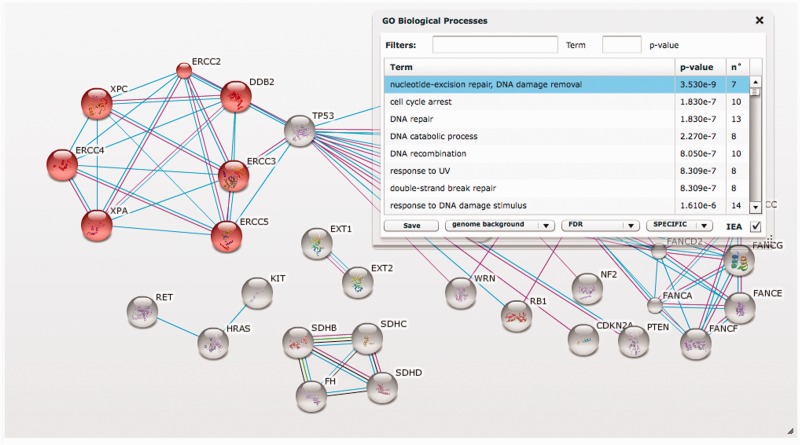
“The STRING screenshot shows a user-supplied set of genes, here a selection of cancer genes as annotated at the COSMIC database (52).”
Cited by
Items 501–600 of 1,021
Age-related changes in mesenchymal stem cells identified using a multi-omics approach
Peffers, M. J., Collins, J., Fang, Y., Goljanek‐Whysall, K., Rushton, Loughlin, J. A., Proctor, C. J., & Clegg, P. (2016) · European Cells and Materials · doi:10.22203/ecm.v031a10 · Cited by 70
Miao, L., Yuan, Y., Cheng, F., Fang, J., Zhou, F., Ma, W., Jiang, Y., Huang, X., Wang, Y., Shan, L., et al. (2016) · Development · doi:10.1242/dev.144642 · Cited by 70
“Results from a STRING database search (Franceschini et al., 2013) indicate that Zar1, Pabpc1l (ePAB), 4E-T and Cpeb1 (CPEB) share an association network (Fig.”
VanBuren, R., Wai, C. M., Zhang, Q., Song, X., Edger, P. P., Bryant, D., Michael, T. P., Mockler, T. C., & Bartels, D. (2017) · Plant Cell & Environment · doi:10.1111/pce.13027 · Cited by 70
“1 global Arabidopsis protein interaction network (Franceschini et al. 2013).”
Mukherjee, P. K., Banerjee, S., & Kar, A. (2021) · Phytochemistry Reviews · doi:10.1007/s11101-020-09730-4 · Cited by 70
Shabbir, S., Boruah, P., Xie, L., Kulyar, M. F., Nawaz, M., Yousuf, S., Liu, T., Jabeen, F., & Miao, X. (2021) · Scientific Reports · doi:10.1038/s41598-021-85245-y · Cited by 69
BIONIC: biological network integration using convolutions
Forster, D. T., Li, S. C., Yashiroda, Y., Yoshimura, M., Li, Z., Isuhuaylas, L. A. V., Itto-Nakama, K., Yamanaka, D., Ohya, Y., Osada, H., et al. (2022) · Nature Methods · doi:10.1038/s41592-022-01616-x · Cited by 60
Zelaya, M. V., Pérez-Valderrama, E., de Morentin, X. M., Tuñon, T., Ferrer, I., Luquin, M. R., Fernandez-Irigoyen, J., & Santamaría, E. (2015) · Oncotarget · doi:10.18632/oncotarget.6254 · Cited by 67
“For that, we have undertaken a system biology approach performing different molecular networks and protein profiling analysis [16, 51, 52] in order to identify biologically relevant pathways from large-scale OB proteome data.”
Asymmetric mRNA localization contributes to fidelity and sensitivity of spatially localized systems
Weatheritt, R. J., Gibson, T. J., & Babu, M. M. (2014) · Nature Structural & Molecular Biology · doi:10.1038/nsmb.2876 · Cited by 61
Davies, K. T. J., Bennett, N. C., Tsagkogeorga, G., Rossiter, S. J., & Faulkes, C. G. (2015) · Molecular Biology and Evolution · doi:10.1093/molbev/msv175 · Cited by 70
“1) database (Franceschini et al. 2013) available at http:// string-db.org/ (last accessed October 28, 2014).”
InfluentialNorling, A., Hirschberg, A. L., Rodriguez‐Wallberg, K. A., Iwarsson, E., Wedell, A., & Barbaro, M. (2014) · Human Reproduction · doi:10.1093/humrep/deu149 · Cited by 69
“SH3GL3 interacts with the similar protein SH3GL2 (SH3-domain GRB2-like-2) (Franceschini et al., 2013) that in mice Sh3Gl2 has a sex differential expression profile at E12.”
BackgroundGibson, T. J., Dinkel, H., Van Roey, K., & Diella, F. (2015) · Cell Communication and Signaling · doi:10.1186/s12964-015-0121-y · Cited by 62
“Each resource is listed with its name, weblink, main reference, and short description (Continued) Online interaction respository with data compiled through comprehensive curation efforts STRING http://string-db.org [57] Provides known and predicted protein-protein interactions IntAct http://www.ebi.ac.uk/intact [105]…”
BackgroundMiryala, S. K., & Ramaiah, S. (2018) · Genomics · doi:10.1016/j.ygeno.2018.06.002 · Cited by 69
van Uitert, M., Moerland, P. D., Enquobahrie, D. A., Laivuori, H. M., van der Post, J., Ris‐Stalpers, C., & Afink, G. (2015) · PLoS ONE · doi:10.1371/journal.pone.0132468 · Cited by 69
“To further identify preeclampsia-related pathways or networks within our 388-gene metasignature, the STRING network of both physical and functional interactions between proteins was used [30].”
MethodChen, L., Zhang, Y., Zheng, M., Huang, T., & Cai, Y. (2016) · Molecular Genetics and Genomics · doi:10.1007/s00438-016-1240-x · Cited by 68
“Given a protein p and a GO term G j , let H be a protein set consisting of p and its direct neighbors in the protein–protein interaction network reported in STRING (Franceschini et al. 2013).”
BackgroundZhou, J., Zhang, Y., Wu, J., Qiao, M., Xu, Z., Peng, X., & Mei, S. (2021) · Journal of Proteomics · doi:10.1016/j.jprot.2021.104235 · Cited by 68
Cryopreservation alters the membrane and cytoskeletal protein profile of platelet microparticles
Raynel, S., Padula, M. P., Marks, D. C., & Johnson, L. (2015) · Transfusion · doi:10.1111/trf.13165 · Cited by 68
Chou, C., & Wang, A. H. ‐. (2015) · Molecular BioSystems · doi:10.1039/c5mb00206k · Cited by 68
Network analysis of gene essentiality in functional genomics experiments
Jiang, P., Wang, H., Li, W., Zang, C., Li, B., Wong, Y. J., Meyer, C., Liu, J. S., Aster, J. C., & Liu, X. S. (2015) · Genome biology · doi:10.1186/s13059-015-0808-9 · Cited by 68
“The reduction ratios were plotted for NEST and original CRISPR scores. d The reduction ratios were plotted for toxin sensitizing genes. e The STRING network was randomized and the NEST scores were calculated for 1,000 random networks.”
InfluentialIdentification of molecular signature of head and neck cancer stem-like cells
Shrivastava, S., Steele, R., Sowadski, M., Crawford, S. E., Varvares, M. A., & Ray, R. B. (2015) · Scientific Reports · doi:10.1038/srep07819 · Cited by 68
Holland, A., Dowling, P., Meleady, P., Henry, M. A., Zweyer, M., Mundegar, R. R., Swandulla, D., & Ohlendieck, K. (2015) · PROTEOMICS · doi:10.1002/pmic.201400471 · Cited by 68
“The prediction of muscle-associated protein interactions is based on published data with respect to neighborhood, gene fusion, co-occurrence, coexpression, experiments, databases, text-mining, and homology data [45].”
BackgroundMethodInfluentialArtigaud, S., Richard, J., Thorne, M. A. S., Lavaud, R., Flye‐Sainte‐Marie, J., Jean, F., Peck, L. S., Clark, M. S., & Pichereau, V. (2015) · BMC Genomics · doi:10.1186/s12864-015-2132-x · Cited by 68
The biochemical and mass spectrometric profiling of the dystrophin complexome from skeletal muscle
Murphy, S., & Ohlendieck, K. (2015) · Computational and Structural Biotechnology Journal · doi:10.1016/j.csbj.2015.11.002 · Cited by 69
“using the bioinformatics database STRING [102].”
InfluentialDeng, Y., Luo, S., Deng, C., Luo, T., Yin, W., Zhang, H., Zhang, Y., Zhang, X., Lan, Y., Ping, Y., et al. (2017) · Briefings in Bioinformatics · doi:10.1093/bib/bbx109 · Cited by 68
Platelet protein biomarker panel for ovarian cancer diagnosis
Lomnytska, M. I., Pinto, R. C., Becker, S., Engström, U., Gustafsson, S., Björklund, C., Templin, M. F., Bergstrand, J., Xu, L., Widengren, J., et al. (2018) · Biomarker Research · doi:10.1186/s40364-018-0118-y · Cited by 68
“Using the STRING database [36], we analyzed potential interactions and functional impact of the identified platelet proteins on other known protein targets (Additional file 1: Table S4, Fig.”
BackgroundMethodGupta, S., Ylä‐Anttila, P., Callegari, S., Tsai, M.-H., Delecluse, H., & Masucci, M. G. (2018) · PLoS Pathogens · doi:10.1371/journal.ppat.1006852 · Cited by 68
Chronic LSD alters gene expression profiles in the mPFC relevant to schizophrenia
Martin, D. A., Marona-Lewicka, D., Nichols, D. E., & Nichols, C. D. (2014) · Neuropharmacology · doi:10.1016/j.neuropharm.2014.03.013 · Cited by 67
“Functional clustering analysis of the final candidate list was performed using the DAVID Bioinformatics Resource (http://david.abcc.ncifcrf.gov/ home.jsp) (Huang da et al., 2009b,a) and the STRING Protein Interaction Database (Franceschini et al., 2013).”
MethodThe Impact of Mass Spectrometry–Based Proteomics on Fundamental Discoveries in Virology
Greco, T. M., Diner, B. A., & Cristea, I. M. (2014) · Annual Review of Virology · doi:10.1146/annurev-virology-031413-085527 · Cited by 67
“Bioinformatic network tools, including STRING and GeneMania (93, 94), can score direct and indirect protein functional relationships using public database repositories, such as IntAct and Reactome (95, 96).”
MethodZan, T., Li, L., Li, J., Zhang, L., & Li, X. (2020) · Gene · doi:10.1016/j.gene.2020.144422 · Cited by 68
Wang, B., Hajano, J., Ren, Y., Lu, C., & Wang, X. (2015) · Virology Journal · doi:10.1186/s12985-015-0328-y · Cited by 67
“org/) [63].”
Proteomics for systems toxicology
Titz, B., Elamin, A., Martin, F. P., Schneider, T. L., Dijon, S., Ivanov, N. V., Hoeng, J., & Peitsch, M. C. (2014) · Computational and Structural Biotechnology Journal · doi:10.1016/j.csbj.2014.08.004 · Cited by 68
“The STRING database is one of the most comprehensive, freely available databases for functional protein–protein links for a broad range of species [123].”
BackgroundMethodSu, B., Luo, T., Zhu, J., Fu, J., Zhao, X., Chen, L., Zhang, H., Ren, Y., Yu, L., Yang, X., et al. (2014) · Hepatology · doi:10.1002/hep.27551 · Cited by 67
Li, H., Zhang, Y., Ströse, A., Tedesco, D., Gurova, K., & Selivanova, G. (2014) · Cell Death & Differentiation · doi:10.1038/cdd.2014.69 · Cited by 66
“Pathway analysis was performed with DAVID (gene-enrichment analysis using EASE score, a modified Fisher exact P-value, as threshold).32 ChIP-seq data were analyzed with a web-based tool, Galaxy.33 Functional protein network analysis was performed with STRING.34 Putative binding sites of Sp1 were predicted using oPOSSU…”
MethodZhou, J., Benito‐Martín, A., Mighty, J., Chang, L., Ghoroghi, S., Wu, H., Wong, M., Guariglia, S. R., Baranov, P. Y., Young, M. J., et al. (2018) · Scientific Reports · doi:10.1038/s41598-018-20421-1 · Cited by 67
Wong, A. K., Krishnan, A., Yao, V., Tadych, A., & Troyanskaya, O. G. (2015) · Nucleic Acids Research · doi:10.1093/nar/gkv486 · Cited by 55
Co-occurring protein phosphorylation are functionally associated
Li, Y., Zhou, X., Zhai, Z., & Li, T. (2017) · PLoS Computational Biology · doi:10.1371/journal.pcbi.1005502 · Cited by 66
Post-transcriptional Regulation of Colorectal Cancer: A Focus on RNA-Binding Proteins
García-Cárdenas, J. M., Guerrero, S. X., López‐Cortés, A., Armendáriz‐Castillo, I., Guevara‐Ramírez, P., Pérez‐Villa, A., Yumiceba, V., Zambrano, A. K., Leone, P., & Paz‐y‐Miño, C. (2019) · Frontiers in Molecular Biosciences · doi:10.3389/fmolb.2019.00065 · Cited by 67
“Embryonic Lethal, Abnormal Vision Drosophila-Like 1 (ELAVL1) or Hu Antigen R (HuR) was the first factor to be identified for its ability to cooperate and compete with miRNA activity (Franceschini et al., 2012; Ciafrè and Galardi, 2013; Iadevaia and Gerber, 2015).”
BackgroundDu, J., Hou, K., Mi, S., Ji, H., Ma, S., Ba, Y., Hu, S., Xie, R., & Chen, L. (2020) · Frontiers in Oncology · doi:10.3389/fonc.2020.00208 · Cited by 66
Origins and evolvability of the PAX family
Paixão‐Côrtes, V. R., Salzano, F. M., & Bortolini, M. C. (2015) · Seminars in Cell and Developmental Biology · doi:10.1016/j.semcdb.2015.08.014 · Cited by 69
Turkay, Ç., Jeanquartier, F., Holzinger, A., & Hauser, H. (2014) · Lecture notes in computer science · doi:10.1007/978-3-662-43968-5_7 · Cited by 66
Green genes: bioinformatics and systems-biology innovations drive algal biotechnology
Reijnders, M. J. M. F., van Heck, R. G. A., Lam, C. M. C., Scaife, M. A., dos Santos, V. A. P. M., Smith, A. G., & Schaap, P. J. (2014) · Trends in biotechnology · doi:10.1016/j.tibtech.2014.10.003 · Cited by 66
Park, S., & Lehner, B. (2015) · Molecular Systems Biology · doi:10.15252/msb.20156102 · Cited by 61
Hasan, M. A., Mazumder, M. H. H., Chowdhury, A. S., Datta, A., & Khan, M. A. (2015) · Source Code for Biology and Medicine · doi:10.1186/s13029-015-0037-3 · Cited by 67
“At present, string database covers up to 5,214,234 proteins from 1133 organisms [41].”
BackgroundThe effect of music performance on the transcriptome of professional musicians
Kanduri, C., Kuusi, T., Ahvenainen, M., Philips, A. K., Lähdesmäki, H. J., & Järvelä, I. E. (2015) · Scientific Reports · doi:10.1038/srep09506 · Cited by 66
Glaab, E. (2015) · Briefings in Bioinformatics · doi:10.1093/bib/bbv044 · Cited by 66
“One of the most comprehensive resources is the STRING PPI database, which allows users to filter and extract biochemical interactions for a wide range of organisms using different sources of evidence, as well as a combined confidence score [60, 61].”
BackgroundPrediction of biomarkers of oral squamous cell carcinoma using microarray technology
Li, G., Li, X., Yang, M., Xu, L., Deng, S., & Ran, L. (2017) · Scientific Reports · doi:10.1038/srep42105 · Cited by 66
Liu, Y., Han, C., Deng, X., Liu, D., Liu, N., & Yan, Y. (2018) · Journal of Plant Physiology · doi:10.1016/j.jplph.2018.06.011 · Cited by 65
Multi-Omics and Integrative Approach towards Understanding Salinity Tolerance in Rice: A Review
Muthuramalingam, P., Jeyasri, R., Rakkammal, K., Satish, L., Shamili, S., Karthikeyan, A., Valliammai, A., Priya, A., Selvaraj, A., Gowri, P., et al. (2022) · Biology · doi:10.3390/biology11071022 · Cited by 66
Bollineni, R. C., Hoffmann, R., & Fedorova, M. (2013) · Free Radical Biology and Medicine · doi:10.1016/j.freeradbiomed.2013.11.030 · Cited by 65
Structural Bioinformatics of the Interactome
Petrey, D., & Honig, B. (2014) · Annual Review of Biophysics · doi:10.1146/annurev-biophys-051013-022726 · Cited by 59
“Given that a model constructed from a template is unlikely to be accurate enough to be evaluated using a physical-chemical approach, evaluation is frequently carried out using methods that are designed to be insensitive to atomic detail, instead examining whether the properties of the modeled interface correlate those…”
BackgroundInfluentialSzalowska, E., van der Burg, B., Man, H.-Y., Hendriksen, P. J. M., & Peijnenburg, A. (2014) · PLoS ONE · doi:10.1371/journal.pone.0086795 · Cited by 65
“STRING constructs these networks using information from known and predicted protein-protein and genegene interactions present in curated as well as experimental databases, using statistical algorithms [33].”
MethodGenomic Analysis of the Human Gut Microbiome Suggests Novel Enzymes Involved in Quinone Biosynthesis
Ravcheev, D. A., & Thiele, I. (2016) · Frontiers in Microbiology · doi:10.3389/fmicb.2016.00128 · Cited by 68
Jagiella, N., Rickert, D., Theis, F. J., & Hasenauer, J. (2017) · Cell Systems · doi:10.1016/j.cels.2016.12.002 · Cited by 70
Peng, Z., He, S., Gong, W., Xu, F., Pan, Z., Jia, Y., Geng, X., & Du, X. (2018) · BMC Plant Biology · doi:10.1186/s12870-018-1350-1 · Cited by 65
Network Inference and Reconstruction in Bioinformatics
Tieri, P., Farina, L., Petti, M., Astolfi, L., Paci, P., & Castiglione, F. (2018) · Elsevier eBooks · doi:10.1016/b978-0-12-809633-8.20290-2 · Cited by 68
Reddy, R. B., Bhat, A. R., James, B. L., Govindan, S., Mathew, R., Ravindra, D. R., Hedne, N., Krishnan, J. I., Kekatpure, V. D., Khora, S. S., et al. (2016) · PLoS ONE · doi:10.1371/journal.pone.0147409 · Cited by 64
“orgnewstring_cgi) [19] was used to predict and catalog the protein-protein interactions between the concordant genes.”
MethodPrognostic implications of Aquaporin 9 expression in clear cell renal cell carcinoma
Xu, W., Shi, S.-N., Xu, Y., Wang, J., Wang, H., Cao, D., Shi, G., Qu, Y.-Y., Zhang, H.-L., & Ye, D. (2019) · Journal of Translational Medicine · doi:10.1186/s12967-019-2113-y · Cited by 64
“0) online database was used to predict PPI network of co-regulated hub genes and analyzing the functional interactions between proteins [22].”
MethodDeng, L., Jiang, A., Zeng, H., Peng, X., & Song, L. (2022) · Frontiers in Pharmacology · doi:10.3389/fphar.2022.947372 · Cited by 64
“The STRING website was utilized for the molecule interaction network analysis (Franceschini et al., 2013).”
MethodLi, Y., Jin, S., Lei, L., Pan, Z., & Zou, X. (2015) · Scientific Reports · doi:10.1038/srep09283 · Cited by 64
Liu, N. Q., Marchi, T. D., Timmermans, A. M., Beekhof, R., Trapman-Jansen, A., Foekens, R., Look, M. P., van Deurzen, C. H. M., Span, P. N., Sweep, F. C. G. J., et al. (2014) · Molecular & Cellular Proteomics · doi:10.1074/mcp.m113.037176 · Cited by 65
Structure-based inhibition of protein–protein interactions
Watkins, A. M., & Arora, P. S. (2014) · European Journal of Medicinal Chemistry · doi:10.1016/j.ejmech.2014.09.047 · Cited by 64
Feltcher, M. E., Gunawardena, H. P., Zulauf, K. E., Malik, S., Griffin, J. E., Sassetti, C. M., Chen, X., & Braunstein, M. (2015) · Molecular & Cellular Proteomics · doi:10.1074/mcp.m114.044685 · Cited by 54
“1 using medium confidence are shown (45).”
Phenotype Specific Analyses Reveal Distinct Regulatory Mechanism for Chronically Activated p53
Kirschner, K., Samarajiwa, S. A., Cairns, J. M., Menon, S., Pérez-Mancera, P. A., Tomimatsu, K., Bermejo-Rodriguez, C., Ito, Y., Chandra, T., Narita, M., et al. (2015) · PLOS Genetics · doi:10.1371/journal.pgen.1005053 · Cited by 61
Dill, B. D., Gierliński, M., Härtlová, A., Arandilla, A. G., Guo, M., Clarke, R. G., & Trost, M. (2015) · Molecular & Cellular Proteomics · doi:10.1074/mcp.m114.044594 · Cited by 64
“other directly and performed a network analysis using interaction data from the STRING database (46).”
MethodWirth, M., Stojanovic, N., Christian, J. G., Paul, M. C., Stauber, R. H., Schmid, R. M., Häcker, G. A., Krämer, O. H., Saur, D., & Schneider, G. (2014) · Nucleic Acids Research · doi:10.1093/nar/gku763 · Cited by 66
“1 was used (30) and a combined score of < 0.”
MethodZallot, R., Brochier‐Armanet, C., Gaston, K. W., Forouhar, F., Limbach, P. A., Hunt, J. F., & de Crécy‐Lagard, V. (2014) · ACS Chemical Biology · doi:10.1021/cb500278k · Cited by 64
Chung, F. F., Tan, P. F. T. M., Raja, V. J., Tan, B.-S., Lim, K., Kam, T., Hii, L., Tan, S. H., See, S.-J., Tan, Y.-F., et al. (2017) · Scientific Reports · doi:10.1038/srep42504 · Cited by 64
Pathways governing development of stem cell‐derived pancreatic β cells: lessons from embryogenesis
Al‐Khawaga, S., Memon, B., Butler, A. E., Taheri, S., Abou‐Samra, A., & Abdelalim, E. M. (2017) · Biological reviews/Biological reviews of the Cambridge Philosophical Society · doi:10.1111/brv.12349 · Cited by 64
Non-conventional role of haemoglobin beta in breast malignancy
Ponzetti, M., Capulli, M., Angelucci, A., Ventura, L., Monache, S. D., Mercurio, C., Calgani, A., Sanità, P., Teti, A. M., & Rucci, N. (2017) · British Journal of Cancer · doi:10.1038/bjc.2017.247 · Cited by 64
“1 (Franceschini et al, 2013) revealed a common interactive pathway for HIF-1a, VEGF, Nitric-Oxide Synthase 2 (NOS2) and MMP-9 (Supplementary Figure 8C).”
BackgroundWani, N., & Raza, K. (2019) · Computational Biology and Chemistry · doi:10.1016/j.compbiolchem.2019.107120 · Cited by 65
“Most of the data integration studies for heterogeneous biological data have used Naive Bayes (simple BN) for constructing integrated networks from genomic datasets, such as gene-gene association network (Lee et al., 2004; Linghu et al., 2009; Franceschini et al., 2012; Jansen et al., 2003).”
Bludau, I., Heusel, M., Frank, M., Rosenberger, G., Hafen, R., Banaei-Esfahani, A., van Drogen, A., Collins, B. C., Gstaiger, M., & Aebersold, R. (2020) · Nature Protocols · doi:10.1038/s41596-020-0332-6 · Cited by 66
Nuclear stabilization of p53 requires a functional nucleolar surveillance pathway
Hannan, K. M., Soo, P., Wong, M., Lee, J. K., Hein, N., Poh, P., Wysoke, K. D., Williams, T. D., Montellese, C., Smith, L. K., et al. (2022) · Cell Reports · doi:10.1016/j.celrep.2022.111571 · Cited by 63
Braun, K. A., Vaga, S., Dombek, K. M., Fang, F., Palmisano, S., Aebersold, R. H., & Young, E. T. (2014) · Science Signaling · doi:10.1126/scisignal.2005000 · Cited by 62
Meierhofer, D., Weidner, C., & Sauer, S. (2014) · Journal of Proteome Research · doi:10.1021/pr5005828 · Cited by 63
Novel Primary Immunodeficiency Candidate Genes Predicted by the Human Gene Connectome
Itan, Y., & Casanova, J. (2015) · Frontiers in Immunology · doi:10.3389/fimmu.2015.00142 · Cited by 63
“GENERATION AND PLOTTING OF GENE NETWORKS For visual depiction of the distribution of the 229 currently known PID genes within the full human genome, we used the predicted HGC biological distance between all human genes, selecting only direct biological connections (5, 13) between genes, to lower the complexity of the…”
MethodCheng, T., Chen, J., Zhang, J., Shi, S., Zhou, Y., Lu, L., Wang, P., Jiang, Z., Jin-Chang, Y., Zhang, S., et al. (2015) · Frontiers in Plant Science · doi:10.3389/fpls.2015.00030 · Cited by 63
“Compared with glycophytes, halophytes have developed unique structures, including salt glands, bladder hairs, succulent tissues, and thick layers of suberin, to tolerate salt stress (Flowers and Colmer, 2008).”
BackgroundInfluentialAlQuraishi, M., Koytiger, G., Jenney, A., MacBeath, G., & Sorger, P. K. (2014) · Nature Genetics · doi:10.1038/ng.3138 · Cited by 59
A multiobjective memetic algorithm for PPI network alignment
Clark, C., & Kalita, J. K. (2015) · Bioinformatics · doi:10.1093/bioinformatics/btv063 · Cited by 63
“A large amount of effort has gone into collecting and curating the results of many protein interaction experiments, and the results are stored in databases such as DIP (Xenarios et al., 2002), Isobase (Park et al., 2011), BIOGrid (Chatr-aryamontri et al., 2013) and STRING (Franceschini et al., 2013).”
A high-resolution network model for global gene regulation in Mycobacterium tuberculosis
Peterson, E. J. R., Reiss, D. J., Turkarslan, S., Minch, K. J., Rustad, T. R., Plaisier, C. L., Longabaugh, W. J. R., Sherman, D. R., & Baliga, N. S. (2014) · Nucleic Acids Research · doi:10.1093/nar/gku777 · Cited by 63
“The microarray data were integrated with ∼250 000 functional gene associations from STRING (15) and nearly 5000 operon prediction associations from MicrobesOnline (21).”
MethodNiehaus, T. D., Nguyen, T. N. D., Gidda, S. K., Elbadawi-Sidhu, M., Lambrecht, J. A., McCarty, D. R., Downs, D. M., Cooper, A. J. L., Fiehn, O., Mullen, R. T., et al. (2014) · The Plant Cell · doi:10.1105/tpc.114.126854 · Cited by 63
“sets were accessed via ATTED-II, STRING (Franceschini et al., 2013), and”
MethodGlobal iTRAQ-based proteomic profiling of Toxoplasma gondii oocysts during sporulation
Zhou, C., Zhu, X., Elsheikha, H. M., He, S., Li, Q., Zhou, D., & Suo, X. (2016) · Journal of Proteomics · doi:10.1016/j.jprot.2016.07.010 · Cited by 63
Li, L., Wang, Y., An, L., Kong, X., & Huang, T. (2017) · PLoS ONE · doi:10.1371/journal.pone.0182592 · Cited by 63
Tyagi, S., Sharma, S., Taneja, M., Shumayla, Kumar, R., Sembi, J. K., & Upadhyay, S. K. (2017) · Agri Gene · doi:10.1016/j.aggene.2017.08.003 · Cited by 63
Genome-Wide Analysis Reveals Novel Regulators of Growth in Drosophila melanogaster
Vonesch, S. C., Lamparter, D., Mackay, T. F. C., Bergmann, S., & Hafen, E. (2016) · PLoS Genetics · doi:10.1371/journal.pgen.1005616 · Cited by 63
“To this end we used the STRING database [56], which revealed that the number of observed curated interactions between the two gene sets was much larger than expected by chance (p<<0.”
BackgroundMethodInfluentialMartínez-Jiménez, F., Muiños, F., López‐Arribillaga, E., López-Bigas, N., & González-Pérez, A. (2019) · Nature Cancer · doi:10.1038/s43018-019-0001-2 · Cited by 63
Mao, P., Jin, X., Bao, Q., Mei, C., Zhou, Q., Min, X., & Liu, Z. (2020) · DNA and Cell Biology · doi:10.1089/dna.2020.5726 · Cited by 62
“The MsWRKY proteins potentially involved in plant stress responses were integrated for functional interacting networks using the STRING database with confidence limits set at 0.4 (Franceschini et al. , 2012).”
InfluentialPhosphoPath: Visualization of Phosphosite-centric Dynamics in Temporal Molecular Networks
Raaijmakers, L. M., Giansanti, P., Possik, P. A., Mueller, J., Peeper, D. S., Heck, A. J. R., & Altelaar, M. A. F. (2015) · Journal of Proteome Research · doi:10.1021/acs.jproteome.5b00529 · Cited by 62
Possible functional links among brain- and skull-related genes selected in modern humans
BenÃtez-Burraco, A., & Boeckx, C. (2015) · Frontiers in Psychology · doi:10.3389/fpsyg.2015.00794 · Cited by 55
Ouyang, H., He, X., Li, G., Xu, H., Jia, X., Nie, Q., & Zhang, X. (2015) · International Journal of Molecular Sciences · doi:10.3390/ijms160716242 · Cited by 62
“org/) [32], and a medium Pearson Correlation Coefficient (PCC) value of 0.”
BackgroundTransient protein–protein interactions visualized by solution NMR
Liu, Z., Gong, Z., Xu, D., & Tang, C. (2015) · Biochimica et Biophysica Acta (BBA) - Proteins and Proteomics · doi:10.1016/j.bbapap.2015.04.009 · Cited by 62
Filteau, M., Hamel, V., Pouliot, M., Gagnon‐Arsenault, I., Dubé, A. K., & Landry, C. R. (2015) · Molecular Systems Biology · doi:10.15252/msb.20156444 · Cited by 57
“The PPI enrichment was calculated by String 9.1 (Franceschini et al , 2013).”
InfluentialCuenca, M. D. S., Roca, A., Molina‐Santiago, C., Duque, E., Armengaud, J., Gómez‐Garcia, M. R., & Ramos, J. L. (2016) · Microbial Biotechnology · doi:10.1111/1751-7915.12328 · Cited by 62
“The highest confidence level (0.900) was applied for the network display (Franceschini et al., 2013).”
BackgroundMethodInfluentialProtein complex prediction for large protein protein interaction networks with the Core&Peel method
Pellegrini, M., Baglioni, M., & Geraci, F. (2016) · BMC Bioinformatics · doi:10.1186/s12859-016-1191-6 · Cited by 63
“For example very large PPIN arise in multi-species PPI studies, ([37, 38]), in immunology studies ([39, 40]) and cancer data analysis ([41]).”
BackgroundMethodHackenberg, M., Langenberger, D., Schwarz, A., Erhart, J., & Kotsyfakis, M. (2017) · RNA · doi:10.1261/rna.061168.117 · Cited by 62
“Lists of target host genes were functionally characterized using the STRING web server (Franceschini et al. 2013).”
MethodGene Profiling in Patients with Systemic Sclerosis Reveals the Presence of Oncogenic Gene Signatures
Dolcino, M., Pelosi, A., Fiore, P. F., Patuzzo, G., Tinazzi, E., Lunardi, C., & Puccetti, A. (2018) · Frontiers in Immunology · doi:10.3389/fimmu.2018.00449 · Cited by 63
Gao, W.-F., Zhang, X., Yang, W., Dou, D., Zhang, H., Tang, Y., Zhong, W., Meng, J., Bai, Y., Liu, Y., et al. (2019) · Journal for ImmunoTherapy of Cancer · doi:10.1186/s40425-019-0676-z · Cited by 62
miRTex: A Text Mining System for miRNA-Gene Relation Extraction
Li, G., Ross, K. E., Arighi, C. N., Peng, Y., Wu, C. H., & Vijay-Shanker, K. (2015) · PLOS Computational Biology · doi:10.1371/journal.pcbi.1004391 · Cited by 61
“Kinases, phosphorylated substrates and miRNA targets identified in all of the above queries were input into STRING [53] (parameters: data sources = Experiments and Databases; confidence> 0.”
MethodInfluentialAgrawal, S. A., Anand, D., Siddam, A. D., Kakrana, A., Dash, S., Scheiblin, D. A., Dang, C. A., Terrell, A. M., Waters, S. M., Singh, A., et al. (2015) · Human Genetics · doi:10.1007/s00439-015-1554-5 · Cited by 61
“…to derive a regulatory network for small Maf proteins in the mouse lens, we proceeded to further integrate known interactions between Mafg−/−:Mafk+/− DRGs that are present in the String database (Franceschini et al. 2013), and analyzed the resulting network for enrichment of GO categories (Fig.”
Lassowskat, I., Böttcher, C., Eschen‐Lippold, L., Scheel, D., & Lee, J. (2014) · Frontiers in Plant Science · doi:10.3389/fpls.2014.00554 · Cited by 62
A core of kinase-regulated interactomes defines the neoplastic MDSC lineage
Gato, M., de Morentin, X. M., Blanco‐Luquin, I., Fernández‐Irigoyen, J., Zudaire, I., Liechtenstein, T., Arasanz, H., Lozano, T., Casares, N., Chaikuad, A., et al. (2015) · Oncotarget · doi:10.18632/oncotarget.4746 · Cited by 61
“1) [14] and with the Ingenuity Pathway Analysis Tool (Qiagen).”
MethodPawar, S., Donthamsetty, S., Pannu, V., Rida, P. C. G., Ogden, A., Bowen, N. J., Osan, R. M., Cantuaria, G. H., & Aneja, R. (2014) · Journal of Ovarian Research · doi:10.1186/1757-2215-7-53 · Cited by 61
“1 [22] to obtain confidence values for their interactions, which were then fed into Cytoscape 3.”
Background
Metadata
- Authors
- Franceschini, A., Szklarczyk, D., Frankild, S., Kuhn, M., Simonovic, M., Roth, A., Lin, J., Minguez, P., Bork, P., von Mering, C., & Jensen, L. J.
- Affiliations
- SIB Swiss Institute of Bioinformatics (CH)
- University of Copenhagen (DK)
- Venue
- Nucleic Acids Research
- Publisher
- Oxford University Press (OUP)
- Published
- 2012-11-29
- Volume
- 41
- Issue
- D1
- Pages
- D808-D815
- ISSN
- 0305-1048 (ISSN-L)
- 1362-4962
- PMC
- PMC3531103
- OpenAlex
- W2105924489
- Cited by
- 4,398
- References
- 61
- Citations by year
- 2026: 77 · 2025: 153 · 2024: 201 · 2023: 247 · 2022: 325 · 2021: 335 · 2020: 366 · 2019: 281 · 2018: 291 · 2017: 371 · 2016: 476 · 2015: 675 · 2014: 457 · 2013: 134 · 2012: 3
- FWCI
- 163.15
- Type
- journal article
- Language
- en
- Open access
- gold
- doi.org
- Licence
- Locations
- Nucleic Acids Research (publishedVersion, cc-by-nc)
- Europe PMC (PubMed Central) (publishedVersion, cc-by-nc)
- PubMed Central (publishedVersion, cc-by-nc)
- PubMed (publishedVersion)
- MDC Repository (Max-Delbrueck-Center for Molecular Medicine) (acceptedVersion)
- Zurich Open Repository and Archive (University of Zurich) (acceptedVersion, other-oa)
- reroDoc Digital Library (submittedVersion)
- Archivio Istituzionale della Ricerca (Universita Degli Studi Di Milano) (submittedVersion, cc-by-nc)
- Research at the University of Copenhagen (University of Copenhagen) (submittedVersion)
- Zurich Open Repository and Archive (University of Zurich) (submittedVersion, other-oa)
- Zurich Open Repository and Archive (University of Zurich)
- Funders
- European Molecular Biology Laboratory
- Novo Nordisk
- Universität Zürich
- Topics
- Life Sciences › Biochemistry, Genetics and Molecular Biology › Molecular Biology › Bioinformatics and Genomic Networks
- Health Sciences › Medicine › Health Informatics › Biomedical Text Mining and Ontologies
- Life Sciences › Biochemistry, Genetics and Molecular Biology › Molecular Biology › Genomics and Phylogenetic Studies
- Keywords
- STRING database, protein-protein interaction network, interaction prediction, literature mining, functional enrichment, biological pathway databases
- MeSH terms
- Algorithms, Data Interpretation, Statistical, User-Computer Interface, Systems Integration, Internet, Protein Interaction Mapping, Databases, Protein, Data Mining
About these checks
Registry, retraction, Cites and statistics results are computed, not judged, with one exception: a printed reference that no index lists is read once by a model before it counts as a citation error. Claims are extracted by a model and kept only when their quote appears verbatim in the text; each cited source is then checked, with a model’s help, for whether it says what the claim relies on. Those verdicts can be wrong — read the claim’s quote and the cited source before relying on one.
Statistics and arithmetic are recomputed, not judged.
Confidence bands are shown only for fields calibrated on our annotated test set. None is calibrated yet, so no band is shown.
What counts as a claim ›How we measure confidence ›How we check this ›
Are you an author, or do you see a problem with this page? Request a review
Data sources
Bibliographic data: Semantic Scholar, OpenAlex, Crossref.
Contains information from the Semantic Scholar Academic Graph Datasets, made available under the ODC Attribution License (ODC-BY 1.0).
Semantic Scholar’s data is described in: Kinney, R., et al. (2023). The Semantic Scholar Open Data Platform. arXiv:2301.10140.
