

ACTsmart: Guided Smartphone-Delivered Acceptance and Commitment Therapy for Chronic Pain—A Pilot Trial.
Open accessThe DOI matches its Crossref record; 81 of the 87 references it cites were found in a registry or an index; 28 of the 66 sources its claims cite were checked for support.
Abstract
Background Acceptance and commitment therapy (ACT) is a behavioral health intervention with strong empirical support for chronic pain but, to date, widespread dissemination is limited. Digital solutions improve access to care and can be integrated into patients' everyday lives. Objective ACTsmart, a guided smartphone-delivered ACT intervention, was developed to improve the accessibility of an evidence-based behavioral treatment for chronic pain. In the present study, we evaluated the preliminary efficacy of ACTsmart in adults with chronic pain. Methods The study was an open-label pilot trial. The treatment lasted for 8 weeks, and participants completed all outcome measures at pretreatment and posttreatment and at 3-, 6-, and 12-month follow-ups, with weekly assessments of selected measures during treatment. The primary outcome was pain interference. The secondary outcomes were psychological flexibility, values, insomnia, anxiety, depressive symptoms, health-related quality of life, and pain intensity. All outcomes were analyzed using linear mixed-effects models. Results The sample consisted of 34 adults (88% women) with long-standing chronic pain (M =20.4 years, SD=11.7). Compliance to treatment was high, and at the end of treatment, we observed a significant improvement in the primary outcome of pain interference (d = –1.01). All secondary outcomes significantly improved from pretreatment to posttreatment with small to large effect sizes. Improvements were maintained throughout 12 months of follow-up. Conclusion The results of this pilot study provide preliminary support for ACTsmart as an accessible and effective behavioral health treatment for adults with chronic pain and warrant a randomized controlled trial to further evaluate the efficacy of the intervention.
Overview
CoChat Summary
## TL;DR
This open-label pilot trial found that 8 weeks of guided smartphone-delivered ACT (ACTsmart) was associated with significant posttreatment improvements in pain interference and all secondary outcomes in 34 adults with chronic pain, with gains maintained through 12 months. The authors present the results as preliminary support for a randomized controlled trial, while noting important design limitations.
## Key findings
- The sample included 34 adults; 88% were women, mean age was 44.4 years, and mean pain duration was 20.4 years (SD = 11.67).
- At end of treatment, the primary outcome of pain interference improved significantly with a large effect size (d = –1.01).
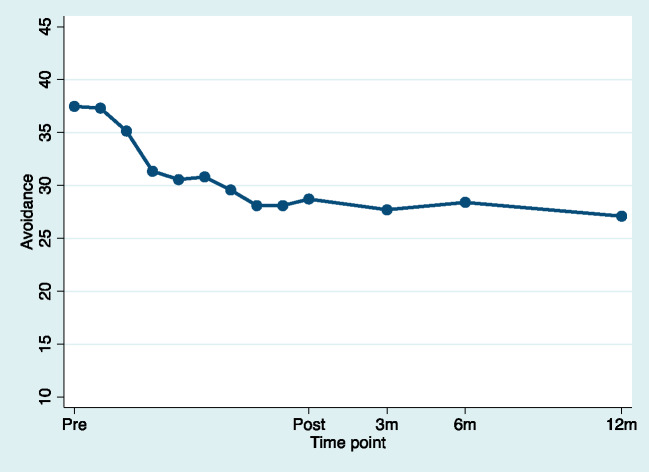
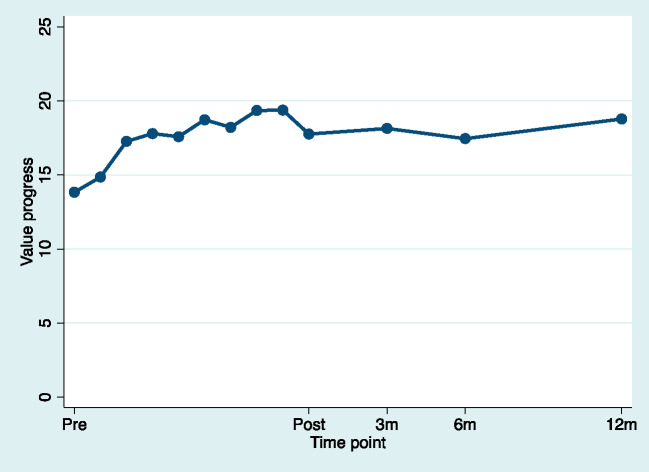
- All secondary outcomes improved significantly from pretreatment to posttreatment, with effect sizes ranging from d = 0.16 for health-related QoL to d = –1.34 for avoidance; improvements were maintained through 12 months.
- Treatment completion was high: among the 31 participants who remained after pre-treatment attrition, 28 (90%) met completion criteria; therapists spent an average of 16 minutes per patient per week.
- No serious adverse events were reported, but 11 participants (35%) showed clinically significant deterioration (>30%) at posttreatment, and 6 (19%) still had deterioration at the end of follow-up.
## Methods
- Design: Open-label pilot trial with one intake at a tertiary pain clinic; treatment lasted 8 weeks with assessments at pretreatment, posttreatment, and 3-, 6-, and 12-month follow-ups, plus weekly assessments during treatment.
- Sample/data: 34 adults with chronic pain recruited by self-referral via social media; eligibility required pain for at least 6 months, age 18–70, Swedish language ability, and internet-connected smartphone/tablet, among other criteria.
- Analysis: Outcomes were analyzed using intent-to-treat linear mixed-effects models with full-information maximum-likelihood estimation; effect sizes were calculated for pretreatment-to-posttreatment and posttreatment-to-follow-up change.
## Limitations
- The paper explicitly states limitations of no control condition, small sample size, predominance of female participants, and missing data at 12 months.
- The authors also note that the self-referred sample may reduce external validity because such patients may be more healthy, better educated, and more motivated than clinical patients.
- Evident from the text: this is an open-label pilot with therapists trained in ACT and chronic pain, so the results may not generalize to less specialized clinical settings.
Model-written summary. Check it against the paper before relying on it.
Integrity signals
Registry
Cites
Statistics
Figures



Verification
Claims the paper makes
16 Valid · 0 Not valid · 12 Not checked · 28 Own results and interpretations
The cited sources support only part of this claim — read each source’s verdict below.
In the paper
“In comparison with previous research on internet-delivered (via a desktop computer) ACT treatment for chronic pain patients [20, 23–25], the compliance rate in the present study was high (90%).”
§ ACTsmart: Guided Smartphone-Delivered Acceptance and Commitment Therapy for Chronic Pain—A Pilot Trial > Discussion
What the sources say
- Partly supportedcites [20] Buhrman, Internet interventions for chronic pain including headache: A systematic review, Internet Interv 2016;4:17–34. sourceExperimental — accuracy not yet measured
The Results tables identify Buhrman et al. (2013b) as an internet-delivered ACT trial for chronic pain and report 19.7% dropout; the Outcomes table reports 27.7% dropout for another ACT trial, Trompetter et al. (2015). Those figures provide context for calling 90% high, but dropout is not necessarily the same measure as treatment compliance. This review does not report the citing study’s 90% compliance rate. (LLM, conf=0.84)
- Not checked — no full text of the sourcecites [23] Trompetter, 2015, Internet-based guided self-help intervention for chronic pain based on Acceptance and Commitment Therapy: A randomized controlled trial, J Behav Med source
- Supportedcites [24] Lin, 2017, An internet-based intervention for chronic pain, Dtsch Arztebl Int source
The Methods and Discussion identify this as a prior online ACT study for chronic pain. The Results report attrition rates of 40% in the guided group and 61% in the unguided group, supporting its use as a comparison for the citing study’s 90% compliance rate; the 90% figure is not attributed to this source. (LLM, conf=0.90)
- Supportedcites [25] Scott, 2018, Feasibility randomized-controlled trial of online Acceptance and Commitment Therapy for patients with complex chronic pain in the United Kingdom, Eur J Pain source
The Results (§3.1.2) report that 61.3% of participants completed the specified dose of online ACT, and the Discussion (§4) describes this as a 61% treatment completion rate. That supports the citing paper’s comparison with its own reported 90% compliance rate; the cited paper is not being asked to establish the 90% figure. (LLM, conf=0.91)
plain- Asserted: passes — The authors put it forward as true.
- Checkable: passes — It can be checked against evidence.
- Load-bearing: unclear — It is unclear whether the paper’s conclusions depend on it.
- Based: passes — The paper gives a reason why it holds.
- Rests on an assumption not shown here.
- Partly supported
The cited sources support only part of this claim — read each source’s verdict below.
In the paper
“The obtained results are also comparable with those of clinical studies of face-to-face interventions of ACT for adults with chronic pain in which significant small to medium effect sizes have been found for pain, depression, anxiety, physical well-being, and QoL [9, 11, 15].”
§ ACTsmart: Guided Smartphone-Delivered Acceptance and Commitment Therapy for Chronic Pain—A Pilot Trial > Discussion
What the sources say
- Not checked — no full text of the sourcecites [9] Hann, 2014, A systematic review of randomized controlled trials of Acceptance and Commitment Therapy for adults with chronic pain: Outcome domains, design quality, and efficacy, J Context Behav Sci source
- Partly supportedcites [11] Veehof, 2016, Acceptance- and mindfulness-based interventions for the treatment of chronic pain: A meta-analytic review, Cogn Behav Ther sourceExperimental — accuracy not yet measured
The Main findings and Subgroup analyses (page unavailable) report effects in chronic-pain trials and higher ACT effects for depression and anxiety than for mindfulness-based interventions. But the review pools ACT with other interventions rather than restricting its findings to face-to-face ACT, and Post-treatment effects reports that the pooled quality-of-life effect was not statistically significant (p = .08). It therefore does not support the claim that face-to-face ACT studies found significant small-to-medium effects on every listed outcome. (LLM, conf=0.90)
- Not checked — no full text of the sourcecites [15] Veehof, 2011, Acceptance-based interventions for the treatment of chronic pain: A systematic review and meta-analysis, Pain source
plain- Asserted: passes — The authors put it forward as true.
- Checkable: passes — It can be checked against evidence.
- Load-bearing: passes — The paper’s conclusions depend on it.
- Based: passes — The paper gives a reason why it holds.
The sources with a verdict support this claim; the rest weren’t checked yet, have no full text we could read, or their verdicts aren’t rated yet.
In the paper
“However, baseline characteristics in the present study such as pain intensity and pain duration correspond with those of previous research using participants recruited from pain clinics [38, 45, 48].”
§ ACTsmart: Guided Smartphone-Delivered Acceptance and Commitment Therapy for Chronic Pain—A Pilot Trial > Discussion
What the sources say
- Not checked — no full text of the sourcecites [38] Wicksell, 2008, Can exposure and acceptance strategies improve functioning and life satisfaction in people with chronic pain and whiplash-associated disorders (WAD)? A randomized controlled trial, Cogn Behav Ther source
- Supportedcites [45] Kemani, 2016, A validation of the pain interference index in adults with long-standing pain, Acta Anaesthesiol Scand source
The Participants section describes adults referred to a hospital pain treatment service, and the abstract calls it a tertiary pain clinic. Table 1 reports mean pain duration of 11.0 years in the total sample; Table 3 reports average pain intensity over the past week. The paper therefore provides the pain-clinic characteristics the citing sentence uses for comparison. (LLM, conf=0.90)
- Not checked — no full text of the sourcecites [48] Wicksell, 2010, Psychological flexibility as a mediator of improvement in Acceptance and Commitment Therapy for patients with chronic pain following whiplash, Eur J Pain source
plain- Asserted: passes — The authors put it forward as true.
- Checkable: passes — It can be checked against evidence.
- Load-bearing: unclear — It is unclear whether the paper’s conclusions depend on it.
- Based: passes — The paper gives a reason why it holds.
The cited sources support only part of this claim — read each source’s verdict below.
In the paper
“As encouraging as it is that the present study showed significant effects despite the long pain duration, several studies instead point to the importance of early interventions in order to prevent the pain from becoming chronic [76, 77].”
§ ACTsmart: Guided Smartphone-Delivered Acceptance and Commitment Therapy for Chronic Pain—A Pilot Trial > Discussion
What the sources say
- Partly supportedcites [76] Kosek, 2017, Lower placebo responses after long-term exposure to fibromyalgia pain, J Pain sourceExperimental — accuracy not yet measured
The Accepted Manuscript says early fibromyalgia interventions may harness pain regulation and avoid further chronification. But its patients already had fibromyalgia, and it describes early prevention as a hypothesis; it does not establish that intervention prevents pain from becoming chronic in the first place. No page number is available in our copy. (LLM, conf=0.84)
- Not checked — no full text of the sourcecites [77] Martín, 2017, Assessment of predictors of the impact of fibromyalgia on health-related quality of life 12 months after the end of an interdisciplinary treatment, J Affect Disord source
plainstates a possible cause- Asserted: passes — The authors put it forward as true.
- Checkable: passes — It can be checked against evidence.
- Load-bearing: unclear — It is unclear whether the paper’s conclusions depend on it.
- Based: passes — The paper gives a reason why it holds.
- Partly supported
The cited sources support only part of this claim — read each source’s verdict below.
In the paper
“Prior research has demonstrated that smartphone applications that use reminders and instant feedback and that bring psychoeducation, assignments, and assessments closer to users’ everyday lives increase the accessibility and reach of effective treatment [31].”
§ ACTsmart: Guided Smartphone-Delivered Acceptance and Commitment Therapy for Chronic Pain—A Pilot Trial > Introduction
What the sources say
- Partly supportedcites [31] Lindner, 2013, Guided and unguided CBT for social anxiety disorder and/or panic disorder via the Internet and a smartphone application: Study protocol for a randomised controlled trial, Trials sourceExperimental — accuracy not yet measured
The Background (page not provided) describes reminders, feedback, and access to psychoeducation in everyday contexts. The Discussion (page not provided) calls smartphone-supplemented iCBT a promising way to expand treatment reach. But this is a study protocol: it presents increased reach as a possibility, not a demonstrated outcome, and does not establish increased accessibility. (LLM, conf=0.88)
boostedstates a cause- Asserted: passes — The authors put it forward as true.
- Checkable: passes — It can be checked against evidence.
- Load-bearing: passes — The paper’s conclusions depend on it.
- Based: passes — The paper gives a reason why it holds.
- Partly supported
10 more claims
Create a free account to see all 56 claims and to verify the 1 reference still open.
- It may state two separate claims as one. 35
- Probably not a substantial claim. 17
- The quote only partly states this claim. 3
Claims other papers make about this one
Each is checked against this paper’s own text: does it say what the citing paper says it does?
The source backs part of the claim, not all of it — or backs it for a different population, condition or comparison.
In the citing paper
“The pattern found, of PII and PIPS improving significantly over time during ACT while pain intensity did not, is in line with the previous studies on treatment effects published by our group [12,13,31,39,40,41,42].”
From Baseline Pro-Inflammatory Cytokine Levels Moderate Psychological Inflexibility in Behavioral Treatment for Chronic Pain (2022) · cites this paper as [40]
Experimental — accuracy not yet measuredThe cited source says what the claim attributes to it.
In the citing paper
“In a recent pilot study examining a therapist-guided smart-phone ACT intervention, participants with chronic pain reported improvement in pain interference as well as in secondary outcome measures of insomnia, values, and quality of life.39”
From Design and implementation of online acceptance and commitment therapy with enhanced therapist support for chronic low back pain (ACT for PAIN) (2025) · cites this paper as [39]
Citations
Cites
The PHQ-9: Validity of a brief depression severity measure
Kroenke, K., Spitzer, R. L., & Williams, J. B. W. (2001) · Journal of General Internal Medicine · doi:10.1046/j.1525-1497.2001.016009606.x · Cited by 44,910 · cited 3×
“The PHQ-9 has been validated for migraine patients [55] as well as chronically ill patients [56].”
MethodInfluentialA Brief Measure for Assessing Generalized Anxiety Disorder: The GAD-7
Spitzer, R. L., Kroenke, K., Williams, J. B. W., & Löwe, B. (2006) · Archives of Internal Medicine · doi:10.1001/archinte.166.10.1092 · Cited by 31,765
(1998) · The Journal of Clinical Psychiatry · Cited by 19,139
EuroQol: a new facility for the measurement of health-related quality of life
(1990) · Health Policy · doi:10.1016/0168-8510(90)90421-9 · Cited by 15,736 · cited 1×
“Health-related QoL was assessed using the European Quality of Life Questionnaire (EQ-5D-3L [59, 60].”
MethodDiagnostic and Statistical Manual of Mental Disorders, 5th ed.
Carter, M. J. (2014) · Therapeutic Recreation Journal · Cited by 15,169
(1998) · PubMed · Cited by 10,216
A test of missing completely at random for multivariate data with missing values
Little, R. J. A. (1988) · Journal of the American Statistical Association · doi:10.1080/01621459.1988.10478722 · Cited by 8,963 · cited 1×
“Little’s MCAR test [71] showed that data were MCAR (v(2) 1⁄4 724.”
MethodValidation of the Insomnia Severity Index as an outcome measure for insomnia research
Bastien, C. (2001) · Sleep Medicine · doi:10.1016/s1389-9457(00)00065-4 · Cited by 8,067 · cited 1×
“74) [52] and has been validated in a Swedish chronic pain sample [53].”
BackgroundAcceptance and commitment therapy: model, processes and outcomes
Hayes, S. C., Luoma, J. B., Bond, F. W., Masuda, A., & Lillis, J. (2006) · Behaviour Research and Therapy · doi:10.1016/j.brat.2005.06.006 · Cited by 6,587 · cited 1×
“Content was divided into six different themes intended to reflect the core processes of psychological flexibility—acceptance, distance to thoughts, distance to emotional and bodily experiences, noticing and changing behaviors, selfobservation, and values [44].”
BackgroundEuroQol: the current state of play
Brooks, R. (1996) · Health Policy · doi:10.1016/0168-8510(96)00822-6 · Cited by 5,815
EQ-SD: a measure of health status from the EuroQol Group
Rabin, R., & Charro, F. D. (2001) · Annals of Medicine · doi:10.3109/07853890109002087 · Cited by 5,613 · cited 1×
“Health-related QoL was assessed using the European Quality of Life Questionnaire (EQ-5D-3L [59, 60].”
MethodSurvey of chronic pain in Europe: Prevalence, impact on daily life, and treatment
Breivik, H., Collett, B., Ventafridda, V., Cohen, R., & Gallacher, D. (2006) · European Journal of Pain · doi:10.1016/j.ejpain.2005.06.009 · Cited by 5,486 · cited 2×
“As attention, sitting still, and processing large amounts of information are tasks that are known to be difficult for chronic pain patients [3, 4, 78], perhaps the microinteractions possible with smartphone-delivered treatment better suit the needs of the chronic pain population.”
BackgroundHayes, S. C., Wilson, K. G., Gifford, E. V., Follette, V. M., & Strosahl, K. (1996) · Journal of Consulting and Clinical Psychology · doi:10.1037//0022-006x.64.6.1152 · Cited by 3,595 · cited 1×
“In ACT, this avoidant behavior pattern is called psychological inflexibility [12], and in the context of chronic pain these behaviors can lead to reduced pain tolerance as well as increased pain intensity [13, 14].”
BackgroundThe biopsychosocial approach to chronic pain: Scientific advances and future directions.
Gatchel, R. J., Peng, Y. B., Peters, M. L., Fuchs, P. N., & Turk, D. C. (2007) · Psychological Bulletin · doi:10.1037/0033-2909.133.4.581 · Cited by 3,392
(1993) · Medical Entomology and Zoology · Cited by 2,324
Sheehan, D., Lecrubier, Y., Harnett Sheehan, K., Janavs, J., Weiller, E., Keskiner, A., Schinka, J., Knapp, E., Sheehan, M., & Dunbar, G. (1997) · European Psychiatry · doi:10.1016/s0924-9338(97)83297-x · Cited by 2,149 · cited 2×
“The interview consisted of assessments of eligibility, pain-related dysfunction, and psychiatric comorbidities assessed with sections A (Depressive Disorder), B (Suicidal Ideation), D (Panic Disorder), E (Agoraphobia), F (Social Anxiety), G (Obsessive Compulsive Disorder), H (Posttraumatic Stress Disorder), I (Alcohol…”
MethodOstelo, R. W. J. G., Deyo, R. A., Stratford, P., Waddell, G., Croft, P., Von Korff, M., Bouter, L. M., & de Vet, H. C. (2008) · Spine · doi:10.1097/brs.0b013e31815e3a10 · Cited by 2,009
Pain demands attention: A cognitive–affective model of the interruptive function of pain.
Eccleston, C., & Crombez, G. (1999) · Psychological Bulletin · doi:10.1037/0033-2909.125.3.356 · Cited by 1,718 · cited 1×
“As attention, sitting still, and processing large amounts of information are tasks that are known to be difficult for chronic pain patients [3, 4, 78], perhaps the microinteractions possible with smartphone-delivered treatment better suit the needs of the chronic pain population.”
BackgroundAdvantages and limitations of Internet-based interventions for common mental disorders
Andersson, G., & Titov, N. (2014) · World Psychiatry · doi:10.1002/wps.20083 · Cited by 1,160
Smith, M. T., & Haythornthwaite, J. A. (2004) · Sleep Medicine Reviews · doi:10.1016/s1087-0792(03)00044-3 · Cited by 914 · cited 1×
“Sleep disorders are among the most common concerns related to pain [73].”
BackgroundFeingold, A. (2009) · Psychological Methods · doi:10.1037/a0014699 · Cited by 851 · cited 1×
“Effect sizes for the within-group effect were calculated using model-implied estimates of standard deviations and mean differences [68, 69].”
MethodVeehof, M. M., Oskam, M.-J., Schreurs, K. M. G., & Bohlmeijer, E. T. (2011) · PAIN · doi:10.1016/j.pain.2010.11.002 · Cited by 792
Performance of Some Resistant Rules for Outlier Labeling
Hoaglin, D. C., Iglewicz, B., & Tukey, J. W. (1986) · Journal of the American Statistical Association · doi:10.1080/01621459.1986.10478363 · Cited by 773
Veehof, M. M., Trompetter, H. R., Bohlmeijer, E. T., & Schreurs, K. M. G. (2016) · Cognitive Behaviour Therapy · doi:10.1080/16506073.2015.1098724 · Cited by 737 · cited 11×
“For the secondary treatment outcomes of avoidance, fusion, value progress, value obstruction, insomnia, anxiety, depression, health-related QoL, and pain intensity, improvement was seen in all study variables, illustrated by a significant linear effect of time from pretreatment to posttreatment.”
ResultInfluentialTreatment of chronic non-cancer pain
Turk, D. C., Wilson, H. D., & Cahana, A. (2011) · The Lancet · doi:10.1016/s0140-6736(11)60402-9 · Cited by 716
Swedish population health-related quality of life results using the EQ-5D
Burström, K., Johannesson, M., & Diderichsen, F. (2001) · Quality of Life Research · doi:10.1023/a:1013171831202 · Cited by 664
Breivik, H., Eisenberg, E., & O’Brien, T. (2013) · BMC Public Health · doi:10.1186/1471-2458-13-1229 · Cited by 643 · cited 1×
“Chronic pain is common and affects 20% of adults [1], often leading to reduced functioning in daily activities, in social situations, and at work [2].”
BackgroundAcceptance and Commitment Therapy (ACT) for Chronic Pain: A Systematic Review and Meta-Analyses
Hughes, L. S., Clark, J., Colclough, J. A., Dale, E., & McMillan, D. (2017) · The Clinical Journal of Pain · doi:10.1097/ajp.0000000000000425 · Cited by 611
Performance of Some Resistant Rules for Outlier Labeling
Hoaglin, D. C., Iglewicz, B., & Tukey, J. W. (1986) · Journal of the American Statistical Association · doi:10.2307/2289073 · Cited by 519
Reid, K. J., Harker, J., Bala, M. M., Truyers, C., Kellen, E., Bekkering, G. E., & Kleijnen, J. (2011) · Current Medical Research and Opinion · doi:10.1185/03007995.2010.545813 · Cited by 476 · cited 1×
“Chronic pain is common and affects 20% of adults [1], often leading to reduced functioning in daily activities, in social situations, and at work [2].”
BackgroundWicksell, R. K., Melin, L., Lekander, M., & Olsson, G. L. (2009) · Pain · doi:10.1016/j.pain.2008.11.006 · Cited by 393
Self-citationSmartphone applications for pain management
Rosser, B. A., & Eccleston, C. (2011) · Journal of Telemedicine and Telecare · doi:10.1258/jtt.2011.101102 · Cited by 364
Development of the Valuing Questionnaire (VQ)
Smout, M., Davies, M., Burns, N., & Christie, A. (2014) · Journal of Contextual Behavioral Science · doi:10.1016/j.jcbs.2014.06.001 · Cited by 350 · cited 2×
“87) for both the Progress and Obstruction subscales [49].”
MethodCognitive-Behavioral Treatments for Chronic Pain: What Works for Whom?
Vlaeyen, J. W. S., & Morley, S. (2005) · The Clinical Journal of Pain · doi:10.1097/00002508-200501000-00001 · Cited by 350
Validation of the Generalized Anxiety Disorder-7 (GAD-7) and GAD-2 in patients with migraine
Seo, J.-G., & Park, S.-P. (2015) · The Journal of Headache and Pain · doi:10.1186/s10194-015-0583-8 · Cited by 341 · cited 1×
“92) [57] and is validated for chronic pain patients with migraine [58].”
BackgroundEpidemiology of Chronic Pain with Psychological Comorbidity: Prevalence, Risk, Course, and Prognosis
Tunks, E. R., Crook, J., & Weir, R. (2008) · The Canadian Journal of Psychiatry · doi:10.1177/070674370805300403 · Cited by 323 · cited 3×
“As attention, sitting still, and processing large amounts of information are tasks that are known to be difficult for chronic pain patients [3, 4, 78], perhaps the microinteractions possible with smartphone-delivered treatment better suit the needs of the chronic pain population.”
BackgroundMacea, D. D., Gajos, K., Daglia Calil, Y. A., & Fregni, F. (2010) · The Journal of Pain · doi:10.1016/j.jpain.2010.06.005 · Cited by 289 · cited 1×
“One major breakthrough in improving access to behavioral health treatments is internet-based solutions [18, 19].”
BackgroundBuhrman, M., Skoglund, A., Husell, J., Bergström, K., Gordh, T., Hursti, T., Bendelin, N., Furmark, T., & Andersson, G. (2013) · Behaviour Research and Therapy · doi:10.1016/j.brat.2013.02.010 · Cited by 285
Psychological therapies (Internet-delivered) for the management of chronic pain in adults
Eccleston, C., Fisher, E., Craig, L., Duggan, G. B., Rosser, B. A., & Keogh, E. (2014) · Cochrane Database of Systematic Reviews · doi:10.1002/14651858.cd010152.pub2 · Cited by 271 · cited 1×
“These results are in line with those of a previous systematic review on internet treatments for pain [21].”
ResultHann, K. E. J., & McCracken, L. M. (2014) · Journal of Contextual Behavioral Science · doi:10.1016/j.jcbs.2014.10.001 · Cited by 259 · cited 11×
“For the secondary treatment outcomes of avoidance, fusion, value progress, value obstruction, insomnia, anxiety, depression, health-related QoL, and pain intensity, improvement was seen in all study variables, illustrated by a significant linear effect of time from pretreatment to posttreatment.”
ResultInfluentialWicksell, R. K., Olsson, G. L., & Hayes, S. C. (2010) · European Journal of Pain · doi:10.1016/j.ejpain.2010.05.001 · Cited by 259 · cited 2×
“However, baseline characteristics in the present study such as pain intensity and pain duration correspond with those of previous research using participants recruited from pain clinics [38, 45, 48].”
ResultSelf-citationLalloo, C., Jibb, L. A., Rivera, J., Agarwal, A., & Stinson, J. N. (2015) · The Clinical Journal of Pain · doi:10.1097/ajp.0000000000000171 · Cited by 257
Trompetter, H. R., Bohlmeijer, E. T., Veehof, M. M., & Schreurs, K. M. G. (2015) · Journal of Behavioral Medicine · doi:10.1007/s10865-014-9579-0 · Cited by 255
Disrupted sleep patterns and daily functioning in patients with chronic pain
McCracken, L. M., & Iverson, G. L. (2002) · Pain Research and Management · doi:10.1155/2002/579425 · Cited by 254 · cited 1×
“Sleep-related variables have been shown to predict pain-related outcomes such as disability [74], and sleep disruption is related to increased pain sensitivity and lowered pain thresholds [75].”
BackgroundBurström, K., Johannesson, M., & Diderichsen, F. (2001) · Health Policy · doi:10.1016/s0168-8510(00)00111-1 · Cited by 244
Acceptance and commitment therapy for fibromyalgia: A randomized controlled trial.
Wicksell, R. K., Kemani, M., Jensen, K., Kosek, E., Kadetoff, D., Sorjonen, K., Ingvar, M., & Olsson, G. L. (2013) · European Journal of Pain · doi:10.1002/j.1532-2149.2012.00224.x · Cited by 244
Self-citationWicksell, R. K., Ahlqvist, J., Bring, A., Melin, L., & Olsson, G. L. (2008) · Cognitive Behaviour Therapy · doi:10.1080/16506070802078970 · Cited by 235 · cited 1×
“However, baseline characteristics in the present study such as pain intensity and pain duration correspond with those of previous research using participants recruited from pain clinics [38, 45, 48].”
ResultSelf-citationObradovic, M., Lal, A., & Liedgens, H. (2013) · Health and Quality of Life Outcomes · doi:10.1186/1477-7525-11-110 · Cited by 233 · cited 1×
“The EQ-5D-3L has been validated in chronic pain samples [62], and the Swedish version of the EQ-5D-3L has been validated in several Swedish samples [63–65].”
MethodCan pain be managed through the Internet? A systematic review of randomized controlled trials
Bender, J. L., Radhakrishnan, A., Diorio, C., Englesakis, M., & Jadad, A. R. (2011) · Pain · doi:10.1016/j.pain.2011.02.012 · Cited by 223 · cited 1×
“One major breakthrough in improving access to behavioral health treatments is internet-based solutions [18, 19].”
BackgroundInternet interventions for chronic pain including headache: a systematic review
Buhrman, M., Gordh, T., & Andersson, G. (2016) · Internet Interventions · doi:10.1016/j.invent.2015.12.001 · Cited by 223 · cited 2×
“A recent systematic review on internet treatment for chronic pain based on CBT or ACT principles presented a number of beneficial effects [20].”
BackgroundCurrent status of acceptance and commitment therapy for chronic pain: A narrative review
Feliu Soler, A., Montesinos, F., Gutiérrez-Martínez, O., Scott, W., McCracken, L., & Luciano, J. (2018) · Journal of Pain Research · doi:10.2147/jpr.s144631 · Cited by 198
Wicksell, R. K., Renöfält, J., Olsson, G. L., Bond, F. W., & Melin, L. (2008) · European Journal of Pain · doi:10.1016/j.ejpain.2007.08.003 · Cited by 193 · cited 4×
“The PIPS has shown satisfactory internal consistency, with Cronbach’s a ¼ 0.87 for the total scale, Cronbach’s a ¼ 0.89 for the Avoidance subscale, and Cronbach’s a ¼ 0.66 for the Cognitive Fusion subscale [47, 48].”
MethodInfluentialSelf-citationHesser, H. (2015) · Internet Interventions · doi:10.1016/j.invent.2015.02.003 · Cited by 192 · cited 1×
“This piecewise approach was used to model change with how likely it is to occur in a trial that includes follow-up assessments [67].”
MethodMasedo, A. I., & Rosa Esteve, M. (2007) · Behaviour Research and Therapy · doi:10.1016/j.brat.2006.02.006 · Cited by 182 · cited 1×
“In ACT, this avoidant behavior pattern is called psychological inflexibility [12], and in the context of chronic pain these behaviors can lead to reduced pain tolerance as well as increased pain intensity [13, 14].”
BackgroundAssessing the quality and usability of smartphone apps for pain self-management
Reynoldson, C., Stones, C., Allsop, M., Gardner, P., Bennett, M. I., Closs, S. J., Jones, R., & Knapp, P. (2014) · Pain Medicine · doi:10.1111/pme.12327 · Cited by 178
Wicksell, R. K., Lekander, M., Sorjonen, K., & Olsson, G. L. (2010) · European Journal of Pain · doi:10.1016/j.ejpain.2009.11.015 · Cited by 176 · cited 1×
“66 for the Cognitive Fusion subscale [47, 48].”
Self-citationKristjánsdóttir, Ó. B., Fors, E. A., Eide, E., Finset, A., Stensrud, T. L., van Dulmen, S., Wigers, S. H., & Eide, H. (2013) · Journal of Medical Internet Research · doi:10.2196/jmir.2249 · Cited by 176
Validation of the Patient Health Questionnaire-9 (PHQ-9) and PHQ-2 in patients with migraine
Seo, J.-G., & Park, S.-P. (2015) · The Journal of Headache and Pain · doi:10.1186/s10194-015-0552-2 · Cited by 165 · cited 1×
“The PHQ-9 has been validated for migraine patients [55] as well as chronically ill patients [56].”
Randomized Controlled Trial of Online Acceptance and Commitment Therapy for Fibromyalgia
Simister, H. D., Tkachuk, G. A., Shay, B. L., Vincent, N., Pear, J. J., & Skrabek, R. Q. (2018) · The Journal of Pain · doi:10.1016/j.jpain.2018.02.004 · Cited by 157 · cited 1×
“Randomized controlled studies concerning internetdelivered ACT for chronic pain have so far either failed to show improvements in insomnia [26] or have not used it as a measure of outcome, which implies that the moderate improvement shown in this study is promising and warrants future studies.”
ResultStaffe, A. T., Bech, M. W., Clemmensen, S. L. K., Nielsen, H. T., Larsen, D. B., & Petersen, K. K. (2019) · PLoS ONE · doi:10.1371/journal.pone.0225849 · Cited by 150 · cited 1×
“Sleep-related variables have been shown to predict pain-related outcomes such as disability [74], and sleep disruption is related to increased pain sensitivity and lowered pain thresholds [75].”
BackgroundGoubert, L., Crombez, G., Eccleston, C., & Devulder, J. (2004) · Pain · doi:10.1016/j.pain.2004.03.034 · Cited by 143
Herbert, M. S., Afari, N., Liu, L., Heppner, P., Rutledge, T., Williams, K., Eraly, S., VanBuskirk, K., Nguyen, C., Bondi, M., et al. (2017) · The Journal of Pain · doi:10.1016/j.jpain.2016.10.014 · Cited by 137
Hogg, M. N., Gibson, S., Helou, A., DeGabriele, J., & Farrell, M. J. (2012) · Medical Journal of Australia · doi:10.5694/mja12.10140 · Cited by 133 · cited 1×
“Altogether, limited access results in many patients with chronic pain either failing to receive or waiting very long for evidence-based care [16, 17].”
Backgrounde-Health and chronic pain management: Current status and developments
Keogh, E., Rosser, B. A., & Eccleston, C. (2010) · Pain · doi:10.1016/j.pain.2010.07.014 · Cited by 132 · cited 1×
“Altogether, limited access results in many patients with chronic pain either failing to receive or waiting very long for evidence-based care [16, 17].”
BackgroundFeingold, A. (2015) · Journal of Consulting and Clinical Psychology · doi:10.1037/a0037721 · Cited by 129 · cited 1×
“Effect sizes for the within-group effect were calculated using model-implied estimates of standard deviations and mean differences [68, 69].”
MethodThe use of mobile telephones as adjuncts to cognitive behavioral psychotherapy.
Boschen, M. J., & Casey, L. M. (2008) · Professional Psychology: Research and Practice · doi:10.1037/0735-7028.39.5.546 · Cited by 125
Agile research to complement agile development: A proposal for an mHealth research lifecycle
Wilson, K., Bell, C., Wilson, L., & Witteman, H. (2018) · npj Digital Medicine · doi:10.1038/s41746-018-0053-1 · Cited by 118 · cited 1×
“ACTsmart Intervention The treatment was an ACT-based intervention derived from a clinical model used at a tertiary pain clinic [38– 41] that was then converted into a smartphone-delivered treatment using a process that followed the guidelines of the mHealth Agile Development & Evaluation Lifecycle [42].”
MethodAn Internet-Based Intervention for Chronic Pain
Lin, J., Paganini, S., Sander, L., Lüking, M., Ebert, D. D., Buhrman, M., Andersson, G., & Baumeister, H. (2017) · Deutsches Ärzteblatt international · doi:10.3238/arztebl.2017.0681 · Cited by 110
Statistical Analysis of EQ-5D Profiles: Does the Use of Value Sets Bias Inference?
Parkin, D., Rice, N., & Devlin, N. (2010) · Medical Decision Making · doi:10.1177/0272989x09357473 · Cited by 98
Scott, W., Chilcot, J., Guildford, B., Daly‐Eichenhardt, A., & McCracken, L. M. (2018) · European Journal of Pain · doi:10.1002/ejp.1236 · Cited by 69
Kemani, M. K., Olsson, G. L., Lekander, M., Hesser, H., Andersson, E., & Wicksell, R. K. (2015) · The Clinical Journal of Pain · doi:10.1097/ajp.0000000000000203 · Cited by 61
Self-citationDragioti, E., Wiklund, T., Alföldi, P., & Gerdle, B. (2015) · Scandinavian Journal of Pain · doi:10.1016/j.sjpain.2015.06.001 · Cited by 55 · cited 1×
“74) [52] and has been validated in a Swedish chronic pain sample [53].”
BackgroundWu, S.-F. V. (2014) · Depression Research and Treatment · doi:10.1155/2014/239490 · Cited by 40 · cited 1×
“The PHQ-9 has been validated for migraine patients [55] as well as chronically ill patients [56].”
Lindner, P., Ivanova, E., Ly, K. H., Andersson, G., & Carlbring, P. (2013) · Trials · doi:10.1186/1745-6215-14-437 · Cited by 39 · cited 1×
“Prior research has demonstrated that smartphone applications that use reminders and instant feedback and that bring psychoeducation, assignments, and assessments closer to users’ everyday lives increase the accessibility and reach of effective treatment [31].”
BackgroundLower placebo responses after long-term exposure to fibromyalgia pain
Kosek, E., Rosen, A., Carville, S., Choy, E., Gracely, R. H., Marcus, H., Petzke, F., Ingvar, M., & Jensen, K. B. (2017) · The Journal of Pain · doi:10.1016/j.jpain.2017.02.434 · Cited by 37 · cited 1×
“As encouraging as it is that the present study showed significant effects despite the long pain duration, several studies instead point to the importance of early interventions in order to prevent the pain from becoming chronic [76, 77].”
ResultRickardsson, J., Zetterqvist, V., Gentili, C., Andersson, E., Holmström, L., Lekander, M., Persson, M., Persson, J., Ljótsson, B., & Wicksell, R. K. (2020) · mHealth · doi:10.21037/mhealth.2020.02.02 · Cited by 28 · cited 1×
“Furthermore, a recent direct comparison between clinical and self-referred pain patients showed similar effects and similar degrees of feasibility for both groups when receiving a therapist-guided ACT protocol through the internet [79].”
ResultSelf-citationGentili, C., Zetterqvist, V., Rickardsson, J., Holmström, L., Simons, L. E., & Wicksell, R. K. (2020) · npj Digital Medicine · doi:10.1038/s41746-020-0228-4 · Cited by 24 · cited 1×
“Prior to the present study, ACTsmart underwent rigorous alpha testing, and the present efficacy testing was done using a beta testing sample, who also tested the solution with regard to feasibility (acceptability, usage, practicality), a procedure described in detail elsewhere [43].”
MethodSelf-citationA validation of the pain interference index in adults with long-standing pain
Kemani, M. K., Zetterqvist, V., Kanstrup, M., Holmström, L., & Wicksell, R. K. (2016) · Acta Anaesthesiologica Scandinavica · doi:10.1111/aas.12599 · Cited by 23 · cited 5×
“In the original validation study [45], the instrument showed a one-factor structure and satisfactory internal consistency (Cronbach’s a 1⁄4 0.”
MethodResultInfluentialSelf-citationRickardsson, J., Zetterqvist, V., Kemani, M. K., Holmström, L., Andersson, E., & Wicksell, R. K. (2019) · Journal of Contextual Behavioral Science · doi:10.1016/j.jcbs.2019.08.009 · Cited by 19 · cited 1×
“The VQ has been translated into Swedish and validated in a Swedish chronic pain sample with adequate psychometric properties [50].”
MethodSelf-citationSacco, S., & Ripa, P. (2015) · The Journal of Headache and Pain · doi:10.1186/1129-2377-16-s1-a24 · Cited by 15
Martín, J., Torre, F., Aguirre, U., Padierna, A., Matellanes, B., & Quintana, J. M. (2017) · Journal of Affective Disorders · doi:10.1016/j.jad.2016.08.073 · Cited by 10 · cited 1×
“As encouraging as it is that the present study showed significant effects despite the long pain duration, several studies instead point to the importance of early interventions in order to prevent the pain from becoming chronic [76, 77].”
Result
Cited by
Jakob, R., Harperink, S., Rudolf, A. M., Fleisch, E., Haug, S., Mair, J. L., Salamanca-Sanabria, A., & Kowatsch, T. (2022) · Journal of Medical Internet Research · doi:10.2196/35371 · Cited by 446
Eaton, C. K., Vallejo, N., McDonald, X., Wu, J., Rodríguez, R., Muthusamy, N., Mathioudakis, N. N., & Riekert, K. A. (2024) · Journal of Medical Internet Research · doi:10.2196/50508 · Cited by 139
Robinson, C. L., D'Souza, R. S., Yazdi, C., Diejomaoh, E. M., Schatman, M. E., Emerick, T. D., & Orhurhu, V. (2024) · Journal of Pain Research · doi:10.2147/jpr.s439452 · Cited by 70
“14,15 One potential area of development is the integration of NLP, the field that utilizes computational linguistics, and ML to process human language, potentially resulting in improved conversational AI interfaces.”
BackgroundHerbert, M. S., Dochat, C., Wooldridge, J. S., Materna, K., Blanco, B. H., Tynan, M., Lee, M. W., Gasperi, M., Camodeca, A., Harris, D., et al. (2022) · Behaviour Research and Therapy · doi:10.1016/j.brat.2021.103995 · Cited by 44
Tunç, H., Morris, P. G., Kyranides, M. N., McArdle, A., McConachie, D., & Williams, J. (2023) · Journal of Contextual Behavioral Science · doi:10.1016/j.jcbs.2023.02.004 · Cited by 40
Metadata
- Authors
- Gentili, C., Zetterqvist, V., Rickardsson, J., Holmström, L., Simons, L. E., & Wicksell, R. K.
- Affiliations
- Karolinska University Hospital (SE)
- Uppsala University (SE)
- Stanford Medicine (US)
- Karolinska Institutet (SE)
- Corresponding author
- Gentili, Charlotte
- ORCID
- Venue
- Pain Medicine
- Publisher
- Oxford University Press (OUP)
- Published
- 2020-11-16
- Volume
- 22
- Issue
- 2
- Pages
- 315-328
- ISSN
- 1526-2375 (ISSN-L)
- 1526-4637
- PMC
- PMC7901852
- OpenAlex
- W3105460477
- Cited by
- 20
- References
- 87
- Citations by year
- 2026: 4 · 2025: 2 · 2024: 6 · 2023: 4 · 2022: 3 · 2021: 1
- FWCI
- 0.80
- Type
- journal article
- Language
- en
- Open access
- hybrid
- doi.org
- Licence
- Locations
- Pain Medicine (publishedVersion, cc-by-nc-nd)
- PubMed Central (publishedVersion, cc-by-nc-nd)
- PubMed (publishedVersion)
- Uppsala University Publications (Uppsala University) (submittedVersion, other-oa)
- Funders
- Karolinska Institutet
- Topics
- Social Sciences › Psychology › Clinical Psychology › Mindfulness and Compassion Interventions
- Social Sciences › Psychology › Applied Psychology › Digital Mental Health Interventions
- Health Sciences › Health Professions › Physical Therapy, Sports Therapy and Rehabilitation › Musculoskeletal pain and rehabilitation
- Keywords
- acceptance and commitment therapy, chronic pain, smartphone-based intervention, digital mental health, pain interference, psychological flexibility, values, insomnia, anxiety, depressive symptoms, health-related quality of life, medication adherence
- MeSH terms
- Smartphone, Adult, Female, Humans, Male, Pilot Projects, Quality of Life, Treatment Outcome, Chronic Pain, Acceptance and Commitment Therapy
About these checks
Registry, retraction, Cites and statistics results are computed, not judged, with one exception: a printed reference that no index lists is read once by a model before it counts as a citation error. Claims are extracted by a model and kept only when their quote appears verbatim in the text; each cited source is then checked, with a model’s help, for whether it says what the claim relies on. Those verdicts can be wrong — read the claim’s quote and the cited source before relying on one.
The claim verdicts this report counts are experimental: their accuracy is not yet measured.
A language model drew the claims from the paper on 2026-10-11, under version 3 of the claim definition (model deepseek-v4.1-flash, prompt extract-v3).
A second model labelled each claim on 2026-10-11 (model jev-1.13-20260917, definition revision gold-guideline-v0.2).
Cited sources are checked with a language model’s help (gpt-6-sol).
Statistics and arithmetic are recomputed, not judged.
Confidence bands are shown only for fields calibrated on our annotated test set. None is calibrated yet, so no band is shown.
What counts as a claim ›How we measure confidence ›How we check this ›
Are you an author, or do you see a problem with this page? Request a review
Data sources
Bibliographic data: Semantic Scholar, OpenAlex, Crossref.
Contains information from the Semantic Scholar Academic Graph Datasets, made available under the ODC Attribution License (ODC-BY 1.0).
Semantic Scholar’s data is described in: Kinney, R., et al. (2023). The Semantic Scholar Open Data Platform. arXiv:2301.10140.
