

Binodal, wireless epidermal electronic systems with in-sensor analytics for neonatal intensive care
Open accessThe DOI matches its Crossref record; 44 of the 44 references it cites were found in a registry or an index; 12 of the 42 sources its claims cite were checked for support.
Abstract
Sensitive sensing Neonatal care, particularly for premature babies, is complicated by the infants' fragility and by the need for a large number of tethered sensors to be attached to their tiny bodies. Chung et al. developed a pair of sensors that only require water to adhere to the skin and allow for untethered monitoring of key vital signs (see the Perspective by Guinsburg). On-board data processing allowed for efficient wireless near-field communication using standard protocols. The absence of cables makes it easier to handle the infants and allows for skin-to-skin contact between the babies and their parents or caregivers. Science , this issue p. eaau0780 ; see also p. 924
Overview
CoChat Summary
TL;DR
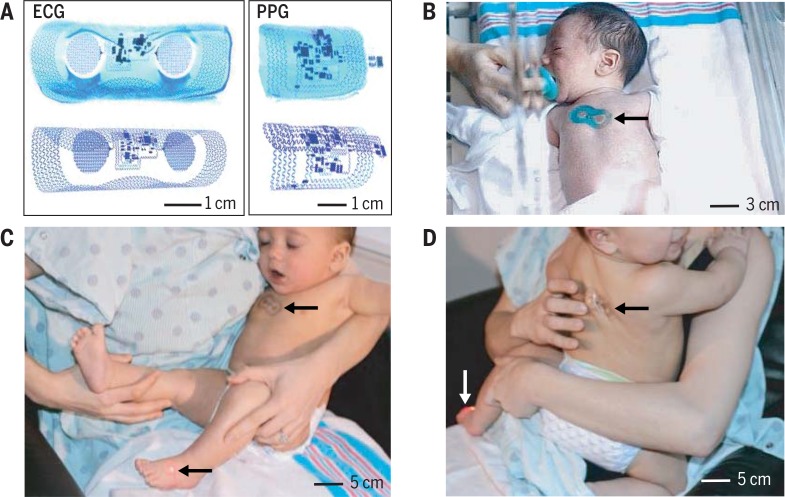
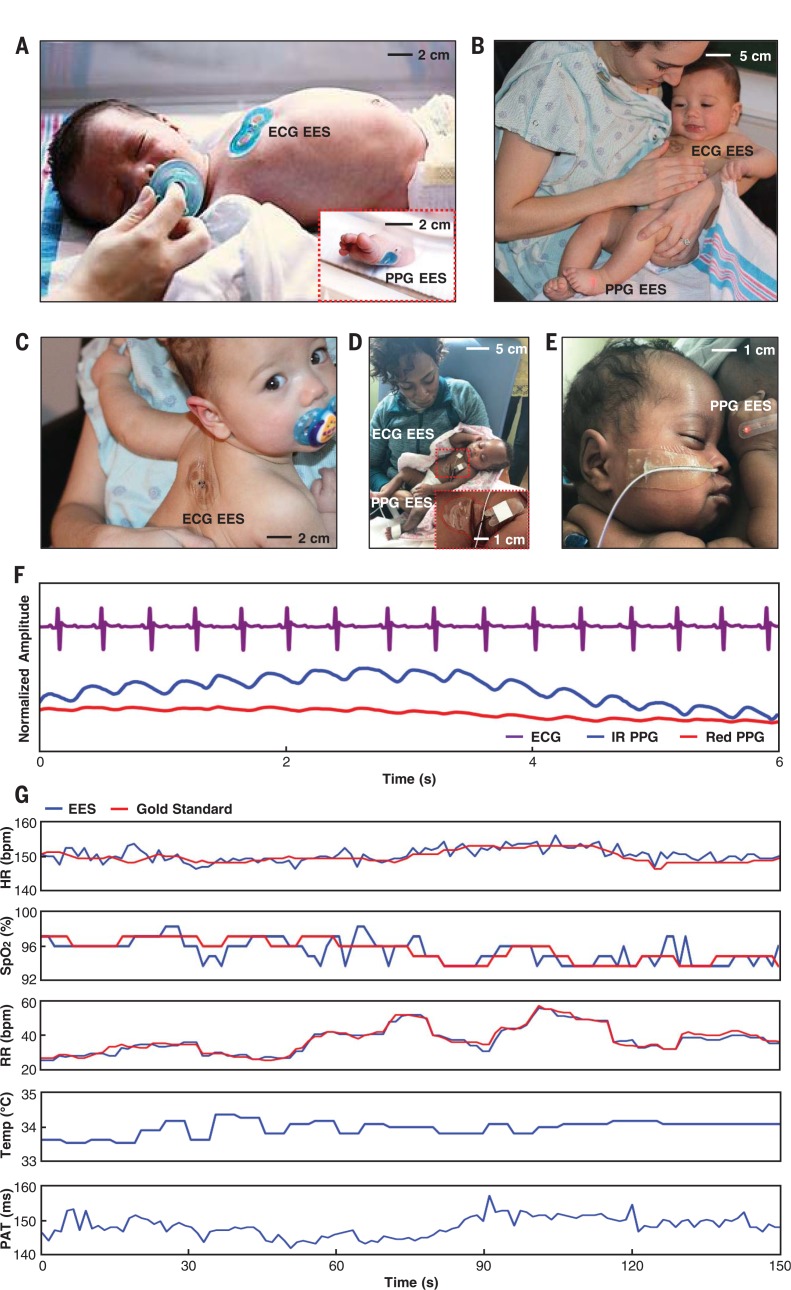
The paper introduces a pair of ultrathin, wireless, battery-free epidermal electronic systems (EES) for neonatal intensive care: one chest-mounted ECG device and one foot-mounted PPG device. Pilot studies in neonates show clinical-grade agreement for heart rate, respiratory rate, and SpO₂, plus added capabilities for skin temperature and pulse arrival time as a systolic blood pressure surrogate.
Key findings
- The binodal EES continuously streams ECG, PPG, and skin temperature data, yielding HR, HRV, RR, SpO₂, and PAT; wireless data rates reach up to 800 bytes/s with dual channels, NFC operation works up to 25 cm through NICU materials, and BLE range reaches up to 20 m.
- The devices have effective moduli of 200 to 300 kPa, adhere via van der Waals forces, and show peel forces about a factor of ~10 lower than conventional NICU adhesives, with maximum von Mises stress on skin reduced by a factor of 4.3; the microfluidic channel reduces interfacial stresses by up to a factor of 2.5, and adhesion energy is G = 16 N/m.
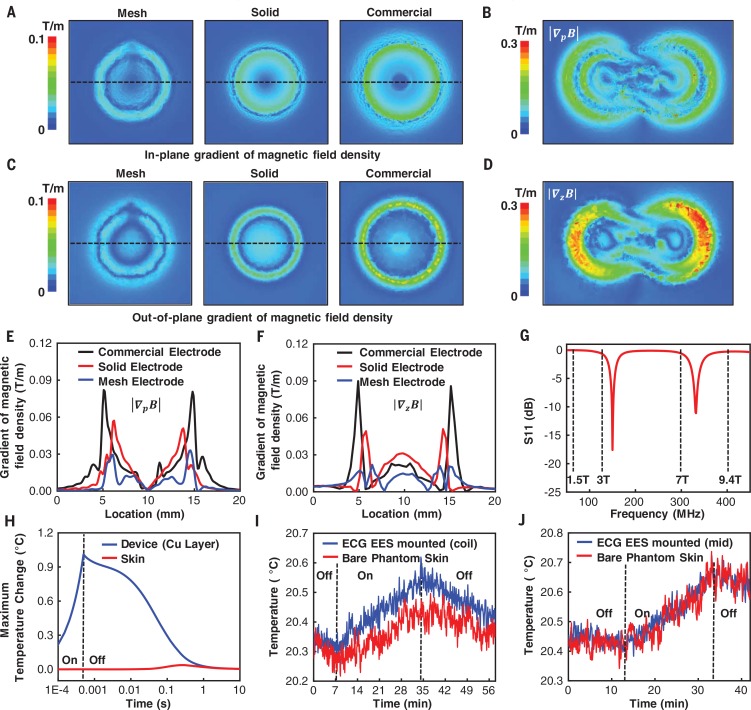
- For MRI compatibility, mesh electrodes reduce the in-plane magnetic field gradient by a factor of ~3 and the out-of-plane gradient by a factor of 4 versus commercial electrodes; simulated copper heating is 1°C with maximum skin temperature change of 0.04°C, and experimental 3-T MRI measurements show ~0.1°C temperature difference, meeting FDA “MRI-safe” requirements.
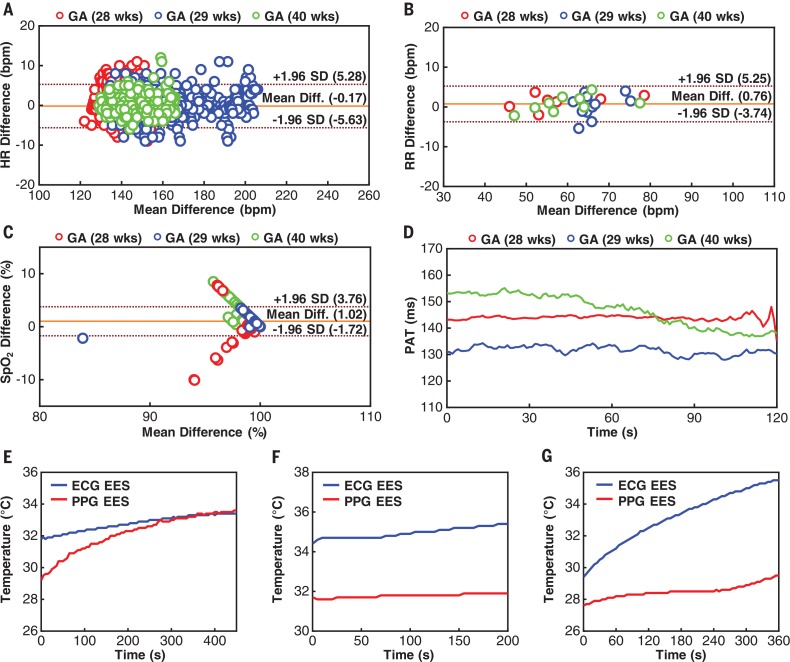
- In neonates (n = 3, gestational age 28 to 40 weeks), mean differences versus standard-of-care monitors were –0.17 beats per minute for HR, 0.76 breaths per minute for RR, and 1.02% for SpO₂; additional studies in n = 18 neonates with gestational ages as low as 28 weeks and weights as low as 1470 g showed similar performance, and scaled production cost is estimated at less than $20 USD per unit.
Methods
- Fabrication used semiconductor processing, lamination, transfer printing, chip placement, and solder bonding; each EES includes serpentine Cu traces, chip-scale ICs, fractal mesh electrodes, an ionic-liquid microfluidic chamber, silicone encapsulation, and an NFC loop antenna for simultaneous wireless power and data.
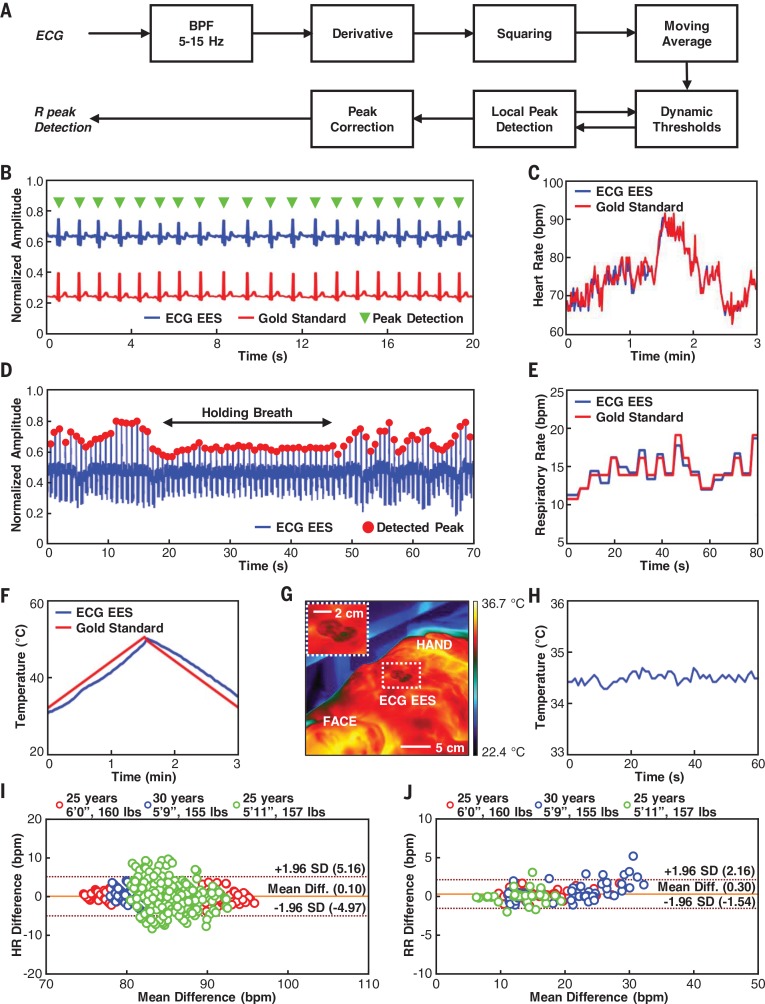
- In-sensor analytics include a streamlined Pan-Tompkins algorithm for real-time QRS detection to yield HR and HRV, dynamic baseline control and SpO₂ calculation for PPG, and time-synchronized ECG/PPG processing for PAT.
- Validation included healthy adult volunteers (n = 3) against FDA-cleared monitoring equipment, and neonates in two tertiary-level NICUs: n = 3 with synchronous standard-of-care measurements and n = 18 using related device platforms with onboard power supplies; the protocol was IRB-approved and registered on ClinicalTrials.gov (NCT02865070).
Limitations
- The paper states that results are preliminary feasibility testing and validation; comprehensive clinical studies are ongoing to verify measurements across increased age groups and ethnic backgrounds, and remaining challenges include nursing acceptance, compatibility with legacy monitoring systems, and device sterilization for reuse.
- The paper notes that additional testing is needed for altered skin barrier function, such as burn victims or patients with epidermolysis bullosa.
- Evident from the text: the neonatal validation cohorts are small (n = 3 with synchronous standard-of-care comparisons; n = 18 using related platforms with onboard power supplies), adult validation is n = 3, and temperature and PAT data in neonates are shown without reference comparators because conventional devices acquire these only periodically.
Model-written summary. Check it against the paper before relying on it.
Integrity signals
Registry
Cites
Statistics
Figures




Verification
Claims the paper makes
6 Valid · 2 Not valid · 18 Not checked · 82 Own results and interpretations
The cited sources support only part of this claim — read each source’s verdict below.
In the paper
“A key example is the measurement of pulse arrival time (PAT), defined by the time lapse between the maximum fiducial point in the ECG signal (R peak) and the corresponding minimal fiducial point in the PPG signal at valley as in Fig. 6H, as a direct correlate to systolic blood pressure (29 , 30).”
§ Binodal, wireless epidermal electronic systems with in-sensor analytics for neonatal intensive care > Real-time measurements, in-sensor analytics, and data transmission
What the sources say
- Partly supportedcites [29] Kim J. S., Chee Y. J., Park J. W., Choi J. W., Park K. S., A new approach for non-intrusive monitoring of blood pressure on a toilet seat. Physiol. Meas. 27, 203– 211 (2006). doi: 10.1088/0967-3334/27/2/010; pmid: 16400206 sourceExperimental — accuracy not yet measured
Section 4.1 reports that PAT was significantly, but moderately, correlated with systolic blood pressure. Section 2.2 defines the study’s PAT using the ECG R-peak and the PPG’s maximum first-derivative point, not the PPG valley; it says the minimum point was unclear in its signal. The claimed correlation is supported, but the attributed measurement definition is not. (LLM, conf=0.87)
- Not checked — no full text of the sourcecites [30] Geddes L. A., Voelz M. H., Babbs C. F., Bourland J. D., Tacker W. A., Pulse transit time as an indicator of arterial blood pressure. Psychophysiology 18, 71– 74 (1981). doi: 10.1111/j.1469-8986.1981.tb01545.x; pmid: 7465731 source
plainstates an association- Asserted: passes — The authors put it forward as true.
- Checkable: passes — It can be checked against evidence.
- Load-bearing: passes — The paper’s conclusions depend on it.
- Based: passes — The paper gives a reason why it holds.
- Partly supported
A result the paper reports from its own data — it cites no other source for it, so there is none to check. The quote shows it is in the paper.
In the paper
“The inherently thin, soft mechanical properties of the sensors (Fig. 1A) reported here allow for adhesion via van derWaals forces alone.”
§ Binodal, wireless epidermal electronic systems with in-sensor analytics for neonatal intensive care > Low-modulus mechanics, soft interface adhesion, and implications for neonatal skin safety
plainstates a cause- Asserted: passes — The authors put it forward as true.
- Checkable: passes — It can be checked against evidence.
- Load-bearing: passes — The paper’s conclusions depend on it.
- Based: passes — The paper gives a reason why it holds.
A result the paper reports from its own data — it cites no other source for it, so there is none to check. The quote shows it is in the paper.
In the paper
“The mechanical decoupling afforded by the microfluidic channel decreases these stresses by up to a factor of 2.5 (Fig. 2B) relative to otherwise similar designs without the microfluidics.”
§ Binodal, wireless epidermal electronic systems with in-sensor analytics for neonatal intensive care > Low-modulus mechanics, soft interface adhesion, and implications for neonatal skin safety
plainstates a cause- Asserted: passes — The authors put it forward as true.
- Checkable: passes — It can be checked against evidence.
- Load-bearing: passes — The paper’s conclusions depend on it.
- Based: passes — The paper gives a reason why it holds.
A result the paper reports from its own data — it cites no other source for it, so there is none to check. The quote shows it is in the paper.
In the paper
“Oscillations in the force only appear for holes larger than the characteristic size of the cohesive zone (~500 mm, as in Fig. 2I).”
§ Binodal, wireless epidermal electronic systems with in-sensor analytics for neonatal intensive care > Low-modulus mechanics, soft interface adhesion, and implications for neonatal skin safety
plainstates a cause- Asserted: passes — The authors put it forward as true.
- Checkable: passes — It can be checked against evidence.
- Load-bearing: unclear — It is unclear whether the paper’s conclusions depend on it.
- Based: passes — The paper gives a reason why it holds.
A result the paper reports from its own data — it cites no other source for it, so there is none to check. The quote shows it is in the paper.
In the paper
“Specifically, the interface starts to delaminate when the normal stress reaches ~20 kPa (Fig. 2G, inset).”
§ Binodal, wireless epidermal electronic systems with in-sensor analytics for neonatal intensive care > Low-modulus mechanics, soft interface adhesion, and implications for neonatal skin safety
plainstates a cause- Asserted: passes — The authors put it forward as true.
- Checkable: passes — It can be checked against evidence.
- Load-bearing: passes — The paper’s conclusions depend on it.
- Based: passes — The paper gives a reason why it holds.
61 more claims
Create a free account to see all 108 claims and to verify the 1 reference still open.
- Probably not a substantial claim. 14
- It may state two separate claims as one. 33
- The quote only partly states this claim. 2
Claims other papers make about this one
Each is checked against this paper’s own text: does it say what the citing paper says it does?
The source backs part of the claim, not all of it — or backs it for a different population, condition or comparison.
In the citing paper
“Researchers have developed various versatile epidermal electrodes with high performance that can universally measure EEG, EMG, EOG, and ECG through placing electrodes on different areas of the skin.[25,414]”
From Flexible Electronics and Devices as Human–Machine Interfaces for Medical Robotics (2022) · cites this paper as [414]
Experimental — accuracy not yet measuredThe source backs part of the claim, not all of it — or backs it for a different population, condition or comparison.
In the citing paper
“Previous reports validated the performance of an FDA-cleared physiological monitoring system against gold standard monitoring platforms [18–23].”
From Pregnancy outcomes in infertility patients diagnosed with sleep disordered breathing with wireless wearable sensors (2022) · cites this paper as [18]
Experimental — accuracy not yet measuredThe source backs part of the claim, not all of it — or backs it for a different population, condition or comparison.
In the citing paper
“In previous work, we demonstrate the ability for the chest- and finger-mounted sensors to monitor vital signs in both children and adults; the abdominal sensor allows for maternal–fetal monitoring of pregnant women in both high- and low-resource settings as well as the clinical and home settings (22, 23).”
From Comprehensive pregnancy monitoring with a network of wireless, soft, and flexible sensors in high- and low-resource health settings (2021) · cites this paper as [23]
Experimental — accuracy not yet measuredThe source backs part of the claim, not all of it — or backs it for a different population, condition or comparison.
In the citing paper
“and have been used in neonatal and pediatric intensive care units. 4,5”
From Advanced wireless monitoring for children in the cardiac perioperative setting (2023) · cites this paper as [4]
Experimental — accuracy not yet measuredThe source backs part of the claim, not all of it — or backs it for a different population, condition or comparison.
In the citing paper
“However, this system is limited by (1) the modest maximum operating distances (~30 cm) supported by near-field communication (NFC) protocols used for power transfer and data communication, (2) the mechanically fragile nature of the ultrathin, compliant mechanics designs, (3) the sufficient, but constrained range of measurement capabilities, and (4) the demand for highly advanced device configur”
From Skin-interfaced biosensors for advanced wireless physiological monitoring in neonatal and pediatric intensive-care units (2020) · cites this paper as [9]
Experimental — accuracy not yet measured
5 more claims about this paper
Create a free account to see every claim other papers make about this one.
Self-check
Percentages, sums and reported differences re-computed from the paper’s own numbers.
Each contradiction between two passages listed here was confirmed by an independent check.
Rated minor: it would not touch a result — a value no result rests on, a p-value that stays on the same side of the significance level, or a conflict that is clerical, resolved elsewhere in the paper, or outside its own findings.
In the paper
§ Binodal, wireless epidermal electronic systems with in-sensor analytics for neonatal intensive care > Compatibility with medical imaging techniques used in the NICU
“eliminating any parasitic heating from magnetically induced eddy currents.”
§ Binodal, wireless epidermal electronic systems with in-sensor analytics for neonatal intensive care > Compatibility with medical imaging techniques used in the NICU
“Full three-dimensional multi-physicsmodeling shows that, at the end of a single scan for 0.5 ms, the copper layer of an ECG EES undergoes heating by only 1°C (Fig. 3H).”
Citations
Cites
A Real-Time QRS Detection Algorithm
Pan, J., & Tompkins, W. J. (1985) · IEEE Transactions on Biomedical Engineering · doi:10.1109/tbme.1985.325532 · Cited by 7,855
Fully integrated wearable sensor arrays for multiplexed in situ perspiration analysis
Gao, W., Emaminejad, S., Nyein, H. Y. Y., Challa, S., Chen, K., Peck, A., Fahad, H. M., Ota, H., Shiraki, H., Kiriya, D., et al. (2016) · Nature · doi:10.1038/nature16521 · Cited by 5,087
Kim, D.-H., Lu, N., Ma, R., Kim, Y.-S., Kim, R.-H., Wang, S., Wu, J., Won, S. M., Tao, H., Islam, A., et al. (2011) · Science · doi:10.1126/science.1206157 · Cited by 4,836
Self-citationWearable Sensors for Remote Health Monitoring
Majumder, S., Mondal, T., & Deen, M. (2017) · Sensors · doi:10.3390/s17010130 · Cited by 1,375
Kiserud, T., Piaggio, G., Carroli, G., Widmer, M., Carvalho, J., Neerup Jensen, L., Giordano, D., Cecatti, J. G., Abdel Aleem, H., Talegawkar, S. A., et al. (2017) · PLOS Medicine · doi:10.1371/journal.pmed.1002220 · Cited by 729
Thermochemistry of ionic liquid heat-transfer fluids
Valkenburg, M. E. V., Vaughn, R. L., Williams, M., & Wilkes, J. S. (2005) · Thermochimica Acta · doi:10.1016/j.tca.2004.11.013 · Cited by 595
Halcox, J. P. J., Wareham, K., Cardew, A., Gilmore, M., Barry, J. P., Phillips, C., & Gravenor, M. B. (2017) · Circulation · doi:10.1161/circulationaha.117.030583 · Cited by 580
Self-assembled three dimensional network designs for soft electronics
Jang, K.-I., Li, K., Chung, H. U., Xu, S., Jung, H. N., Yang, Y., Kwak, J. W., Jung, H. H., Song, J., Yang, C., et al. (2017) · Nature Communications · doi:10.1038/ncomms15894 · Cited by 445
Self-citationChen, W., Kobayashi, T., Ichikawa, S., Takeuchi, Y., & Togawa, T. (2000) · Medical & Biological Engineering & Computing · doi:10.1007/bf02345755 · Cited by 425
Harris, K. D., Elias, A. L., & Chung, H.-J. (2016) · Journal of Materials Science · doi:10.1007/s10853-015-9643-3 · Cited by 403
Self-citation
Research works printed but not linked: 2
- O. Sharma, S. N. Lewis, U. Telang, L. D’Almeida, L. E. S. Lewis, Design of a Bluetooth Enabled Health Monitoring System for Infants Using Wearable Technology. J. Adv. Res. Dyn. Contrl. Syst. 15, 887–894 (2017). http://jardcs.org/papers/v9/sp/20181075.pdf
- C. H. Lund J. A. Tucker in Neonatal Skin: Structure and Function S. B. Hoath H. I. Maibach Eds. (Dekker ed. 2 2003) pp. 299–324.
Cited by
Items 101–200 of 800
Strain-invariant stretchable radio-frequency electronics
Kim, S. H., Basir, A., Avila, R. O., Lim, J., Hong, S. W., Choe, G., Shin, J. H., Hwang, J. H., Park, S. Y., Joo, J., et al. (2024) · Nature · doi:10.1038/s41586-024-07383-3 · Cited by 179
Self-citationSkin-Friendly Electronics for Acquiring Human Physiological Signatures
Zhang, Y., & Tao, T. H. (2019) · Advanced Materials · doi:10.1002/adma.201905767 · Cited by 140
Self-citationA flexible ECG patch compatible with NFC RF communication
Zulqarnain, M., Stanzione, S., Rathinavel, G., Smout, S., Willegems, M., Myny, K., & Cantatore, E. (2020) · npj Flexible Electronics · doi:10.1038/s41528-020-0077-x · Cited by 137
Smart Wearable Systems for Health Monitoring
Deng, Z., Guo, L., Chen, X., & Wu, W. (2023) · Sensors · doi:10.3390/s23052479 · Cited by 174
“Moreover, another way to integrate devices and substrates is to attach the devices above the substrate [11,123,124].”
BackgroundA review of wearable and unobtrusive sensing technologies for chronic disease management
Guo, Y., Liu, X., Peng, S., Jiang, X., Xu, K., Chen, C., Wang, Z., Dai, C., & Chen, W. (2021) · Computers in Biology and Medicine · doi:10.1016/j.compbiomed.2020.104163 · Cited by 137
Advances in Sweat Wearables: Sample Extraction, Real-Time Biosensing, and Flexible Platforms
Qiao, L., Benzigar, M. R., Subramony, J. A., Lovell, N. H., & Liu, G. (2020) · ACS Applied Materials & Interfaces · doi:10.1021/acsami.0c07614 · Cited by 144
Skin‐Integrated Vibrohaptic Interfaces for Virtual and Augmented Reality
Jung, Y. H., Kim, J., & Rogers, J. A. (2020) · Advanced Functional Materials · doi:10.1002/adfm.202008805 · Cited by 147
Self-citationAdvances in Biosensing and Environmental Monitoring Based on Electrospun Nanofibers
Kang, S., Zhao, K., Yu, D., Zheng, X., & Huang, C. (2022) · Advanced Fiber Materials · doi:10.1007/s42765-021-00129-0 · Cited by 138
E-Tattoos: Toward Functional but Imperceptible Interfacing with Human Skin
Li, H., Tan, P., Rao, Y., Bhattacharya, S., Wang, Z., Kim, S., Gangopadhyay, S., Shi, H., Jankovic, M., Huh, H., et al. (2024) · Chemical Reviews · doi:10.1021/acs.chemrev.3c00626 · Cited by 151
Feng, B., Jiang, X., Zou, G., Wang, W., Sun, T., Yang, H., Zhao, G., Dong, M., Xiao, Y., Zhu, H., et al. (2021) · Advanced Functional Materials · doi:10.1002/adfm.202102359 · Cited by 135
Ultra‐Deformable and Tissue‐Adhesive Liquid Metal Antennas with High Wireless Powering Efficiency
Yamagishi, K., Zhou, W., Ching, T., Huang, S. Y., & Hashimoto, M. (2021) · Advanced Materials · doi:10.1002/adma.202008062 · Cited by 137
Wirelessly operated bioelectronic sutures for the monitoring of deep surgical wounds
Kalidasan, V., Yang, X. Y., Xiong, Z., Li, R. R., Yao, H., Godaba, H., Obuobi, S. A. O., Singh, P., Guan, X., Tian, X., et al. (2021) · Nature Biomedical Engineering · doi:10.1038/s41551-021-00802-0 · Cited by 145
Tactile Near‐Sensor Analogue Computing for Ultrafast Responsive Artificial Skin
Wang, M., Tu, J., Huang, Z., Wang, T., Liu, Z., Zhang, F., Li, W., He, K., Pan, L., Zhang, X., et al. (2022) · Advanced Materials · doi:10.1002/adma.202201962 · Cited by 144
Self-citationZhu, Y., Haghniaz, R., Hartel, M. C., Guan, S., Bahari, J., Li, Z., Baidya, A., Cao, K., Gao, X., Li, J., et al. (2022) · Advanced Materials · doi:10.1002/adma.202209300 · Cited by 152
Peng, B., Peng, R., Zhang, Y., Dong, G., Zhou, Z., Zhou, Y., Li, T., Liu, Z., Luo, Z., Wang, S. H., et al. (2020) · Science Advances · doi:10.1126/sciadv.aba5847 · Cited by 142
Self-citationFlexible Pressure Sensors for Objective Assessment of Motor Disorders
Amit, M., Chukoskie, L., Skalsky, A. J., Garudadri, H., & Ng, T. N. (2020) · Advanced Functional Materials · doi:10.1002/adfm.201905241 · Cited by 129
La, T., & Le, L. H. (2021) · Advanced Materials Technologies · doi:10.1002/admt.202100798 · Cited by 150
Translational gaps and opportunities for medical wearables in digital health
Xu, S., Kim, J., Walter, J. R., Ghaffari, R., & Rogers, J. A. (2022) · Science Translational Medicine · doi:10.1126/scitranslmed.abn6036 · Cited by 148
Self-citationEmerging Soft Conductors for Bioelectronic Interfaces
Gao, D., Parida, K., & Lee, P. S. (2019) · Advanced Functional Materials · doi:10.1002/adfm.201907184 · Cited by 136
Bioinspired, Microstructured Silk Fibroin Adhesives for Flexible Skin Sensors
Liu, X., Liu, J., Wang, J., Wang, T., Jiang, Y., Hu, J., Liu, Z., Chen, X., & Yu, J. (2020) · ACS Applied Materials & Interfaces · doi:10.1021/acsami.9b21197 · Cited by 132
Self-citationLiu, H., Zhang, S., Li, Z., Lu, T. J., Lin, H., Zhu, Y., Ahadian, S., Emaminejad, S., Dokmeci, M. R., Xu, F., et al. (2021) · Matter · doi:10.1016/j.matt.2021.06.034 · Cited by 130
Self-healing, stretchable, and highly adhesive hydrogels for epidermal patch electrodes
Zhou, X., Rajeev, A., Subramanian, A., Li, Y., Rossetti, N., Natale, G., Lodygensky, G. A., & Cicoira, F. (2021) · Acta Biomaterialia · doi:10.1016/j.actbio.2021.07.069 · Cited by 142
Wang, H., Wang, J., Yao, K., Fu, J., Xia, X., Zhang, R., Li, J., Xu, G., Wang, L., Yang, J., et al. (2021) · Science Advances · doi:10.1126/sciadv.abi6751 · Cited by 133
Flexible electronics for cardiovascular healthcare monitoring
Zhang, T., Liu, N., Xu, J., Liu, Z., Zhou, Y., Yang, Y., Li, S., Huang, Y., & Jiang, S. (2023) · The Innovation · doi:10.1016/j.xinn.2023.100485 · Cited by 169
“Chung et al.(57) introduced an ultra-thin, ultra-soft, skin-like electrode for neonatal intensive care, comprising filamentary metal mesh microstructures in fractal geometries (Figure 6B).”
InfluentialSelf-citationZhang, S., Zhu, J., Zhang, Y., Chen, Z., Song, C., Li, J., Yi, N., Qiu, D., Guo, K., Zhang, C., et al. (2021) · Nano Energy · doi:10.1016/j.nanoen.2022.107069 · Cited by 127
Self-citationBio-inspired flexible electronics for smart E-skin
Nie, B., Liu, S., Qu, Q., Zhang, Y., Zhao, M., & Liu, J. (2021) · Acta Biomaterialia · doi:10.1016/j.actbio.2021.06.018 · Cited by 130
Self-citationQu, C., Sun, X., Sun, W., Cao, L., Wang, X., & He, Z. (2021) · Small · doi:10.1002/smll.202104482 · Cited by 126
Bashir, A., Maqbool, M., Usman, A., Younis, U., Khan, A. Z., Li, Z., Liu, C., Chen, D.-Z., & Bai, S. (2025) · Materials Science and Engineering R Reports · doi:10.1016/j.mser.2025.100968 · Cited by 142
Physically transient electronic materials and devices
Shim, J., Rogers, J. A., & Kang, S. (2021) · Materials Science and Engineering R Reports · doi:10.1016/j.mser.2021.100624 · Cited by 131
Self-citationJeong, H., Lee, J. Y., Lee, K., Kang, Y. J., Kim, J.-T., Avila, R., Tzavelis, A., Kim, J., Ryu, H., Kwak, S. S., et al. (2021) · Science Advances · doi:10.1126/sciadv.abg3092 · Cited by 121
Self-citationMicrofluidics for flexible electronics
Guo, J., Yu, Y., Cai, L., Wang, Y., Shi, K., Shang, L., Pan, J., & Zhao, Y. (2021) · Materials Today · doi:10.1016/j.mattod.2020.08.017 · Cited by 123
Self-citationDesigning wearable microgrids: towards autonomous sustainable on-body energy management
Yin, L., Kim, K. N., Trifonov, A., Podhajny, T., & Wang, J. (2022) · Energy & Environmental Science · doi:10.1039/d1ee03113a · Cited by 111
Wireless Power Transfer and Telemetry for Implantable Bioelectronics
Yoo, S., Lee, J. H., Joo, H., Sunwoo, S., Kim, S., & Kim, D. (2021) · Advanced Healthcare Materials · doi:10.1002/adhm.202100614 · Cited by 126
Self-citationApplications of nanogenerators for biomedical engineering and healthcare systems
Wang, W., Pang, J., Su, J., Li, F., Li, Q., Wang, X., Wang, J., Ibarlucea, B., Liu, X., Li, Y., et al. (2021) · InfoMat · doi:10.1002/inf2.12262 · Cited by 122
The future of neuroscience: flexible and wireless implantable neural electronics
McGlynn, E., Nabaei, V., Ren, E., Galeote‐Checa, G., Das, R., Curia, G., & Heidari, H. (2021) · Advanced Science · doi:10.1002/advs.202002693 · Cited by 115
Recent Progress in Flexible Wearable Sensors for Vital Sign Monitoring
Liu, J., Liu, M., Bai, Y., Zhang, J., Liu, H., & Zhu, W. (2020) · Sensors · doi:10.3390/s20144009 · Cited by 104
“[75] developed a portable non-invasive sensor, namely, the essential electronic system (EES), which only needs water to attach the sensor to the skin, so as to monitor the vital signs without restriction.”
BackgroundYang, X., Wang, S., Liu, M., Li, L., Zhao, Y., Wang, Y., Bai, Y., Lu, Q., Xiong, Z., Feng, S., et al. (2022) · Small · doi:10.1002/smll.202106477 · Cited by 129
Epidermal self-powered sweat sensors for glucose and lactate monitoring
Huang, X., Li, J., Liu, Y., Wong, T., Su, J., Yao, K., Zhou, J., Huang, Y., Li, H., Li, D., et al. (2021) · Bio-Design and Manufacturing · doi:10.1007/s42242-021-00156-1 · Cited by 119
Self-citationPPG Sensor Contact Pressure Should Be Taken Into Account for Cuff-Less Blood Pressure Measurement
Chandrasekhar, A., Yavarimanesh, M., Natarajan, K., Hahn, J.-O., & Mukkamala, R. (2020) · IEEE Transactions on Biomedical Engineering · doi:10.1109/tbme.2020.2976989 · Cited by 110
“Reflectance-mode PPG sensors are also now available in smartphones and smartwatches via a dedicated transducer or the video camera [8] and may be emerging as conformable bioelectronic systems [9].”
Toward Integrated Multifunctional Laser-Induced Graphene-Based Skin-Like Flexible Sensor Systems
Xu, K., Cai, Z., Luo, H., Lu, Y., Ding, C., Yang, G., Wang, L., Kuang, C., Liu, J., & Yang, H. (2024) · ACS Nano · doi:10.1021/acsnano.4c09062 · Cited by 115
Wearable devices for continuous monitoring of biosignals: Challenges and opportunities
Stuart, T., Hanna, J., & Gutruf, P. (2022) · APL Bioengineering · doi:10.1063/5.0086935 · Cited by 133
Recent progress in thermal management for flexible/wearable devices
Yun, J. (2023) · Soft Science · doi:10.20517/ss.2023.04 · Cited by 123
A monolithically integrated in-textile wristband for wireless epidermal biosensing
Ma, X., Wang, P., Huang, L., Ding, R., Zhou, K., Shi, Y., Chen, F., Zhuang, Q., Huang, Q., Lin, Y., et al. (2023) · Science Advances · doi:10.1126/sciadv.adj2763 · Cited by 124
Devising Materials Manufacturing Toward Lab‐to‐Fab Translation of Flexible Electronics
Luo, Y., Wang, M., Wan, C., Cai, P., Loh, X. J., & Chen, X. (2020) · Advanced Materials · doi:10.1002/adma.202001903 · Cited by 121
High-performance printed electronics based on inorganic semiconducting nano to chip scale structures
Dahiya, A. S., Shakthivel, D., Kumaresan, Y., Zumeit, A., Christou, A., & Dahiya, R. (2020) · Nano Convergence · doi:10.1186/s40580-020-00243-6 · Cited by 113
Phase-separated porous nanocomposite with ultralow percolation threshold for wireless bioelectronics
Xu, Y., Ye, Z., Zhao, G., Fei, Q., Chen, Z., Li, J., Yang, M., Ren, Y., Berigan, B. R., Ling, Y., et al. (2024) · Nature Nanotechnology · doi:10.1038/s41565-024-01658-6 · Cited by 135
Self-citationSelf-powered ultrasensitive pulse sensors for noninvasive multi-indicators cardiovascular monitoring
Xu, L., Zhang, Z., Gao, F., Zhao, X., Xun, X., Kang, Z., Liao, Q., & Zhang, Y. (2020) · Nano Energy · doi:10.1016/j.nanoen.2020.105614 · Cited by 110
Self-citationDissecting Biological and Synthetic Soft–Hard Interfaces for Tissue-Like Systems
Fang, Y., Yang, X., Lin, Y., Shi, J., Promiński, A., Clayton, C., Ostroff, E., & Tian, B. (2021) · Chemical Reviews · doi:10.1021/acs.chemrev.1c00365 · Cited by 114
From lab to life: how wearable devices can improve health equity
Walter, J. R., Xu, S., & Rogers, J. A. (2024) · Nature Communications · doi:10.1038/s41467-023-44634-9 · Cited by 121
Self-citationContactless Infant Monitoring using White Noise
Wang, A., Sunshine, J. E., & Gollakota, S. (2019) · ACM Annual International Conference on Mobile Computing and Networking (MobiCom) · doi:10.1145/3300061.3345453 · Cited by 109
“These require wearables in contact with the infant body including smart socks [9], wristbands [7] or other probes [21, 60] which track the heart rate of infants.”
BackgroundOutdoor‐Useable, Wireless/Battery‐Free Patch‐Type Tissue Oximeter with Radiative Cooling
Kang, M. H., Lee, G. J., Lee, J. H., Kim, M. S., Yan, Z., Jeong, J., Jang, K., & Song, Y. M. (2021) · Advanced Science · doi:10.1002/advs.202004885 · Cited by 114
Self-citationRyu, D., Kim, D. H., Price, J. T., Lee, J. Y., Chung, H. U., Allen, E., Walter, J. R., Jeong, H., Cao, J., Kulikova, E., et al. (2021) · Proceedings of the National Academy of Sciences · doi:10.1073/pnas.2100466118 · Cited by 105
“In previous work, we demonstrate the ability for the chest- and finger-mounted sensors to monitor vital signs in both children and adults; the abdominal sensor allows for maternal–fetal monitoring of pregnant women in both high- and low-resource settings as well as the clinical and home settings (22, 23).”
Self-citationFlexible Ultrasonic Patch for Accelerating Chronic Wound Healing
Lyu, W., Ma, Y., Chen, S., Li, H., Wang, P., Chen, Y., & Feng, X. (2021) · Advanced Healthcare Materials · doi:10.1002/adhm.202100785 · Cited by 127
Self-citationElectronic biopolymers: From molecular engineering to functional devices
Li, X., Ding, C., Li, X., Yang, H., Liu, S., Wang, X. S., Zhang, L., Sun, Q., Liu, X., & Chen, J. (2020) · Chemical Engineering Journal · doi:10.1016/j.cej.2020.125499 · Cited by 108
Mucosa-interfacing electronics
Nan, K., Feig, V. R., Ying, B., Howarth, J. G., Kang, Z., Yang, Y., & Traverso, G. (2022) · Nature Reviews Materials · doi:10.1038/s41578-022-00477-2 · Cited by 108
Wireless broadband acousto-mechanical sensing system for continuous physiological monitoring
Yoo, J., Oh, S., Shalish, W., Maeng, W., Cerier, E. J., Jeanne, E., Chung, M., Lv, S., Wu, Y., Yoo, S., et al. (2023) · Nature Medicine · doi:10.1038/s41591-023-02637-5 · Cited by 115
Self-citationRespiratory Monitoring: Current State of the Art and Future Roads
Costanzo, I., Sen, D., Rhein, L., & Güler, Ü. (2020) · IEEE Reviews in Biomedical Engineering · doi:10.1109/rbme.2020.3036330 · Cited by 117
Fully solution processed liquid metal features as highly conductive and ultrastretchable conductors
Zhu, H., Wang, S., Zhang, M., Li, T., Hu, G., & Kong, D. (2021) · npj Flexible Electronics · doi:10.1038/s41528-021-00123-x · Cited by 116
Active tissue adhesive activates mechanosensors and prevents muscle atrophy
Nam, S., Seo, B. R., Najibi, A. J., McNamara, S. L., & Mooney, D. J. (2022) · Nature Materials · doi:10.1038/s41563-022-01396-x · Cited by 105
Flexible Pressure Sensors for Biomedical Applications: From Ex Vivo to In Vivo
Li, L., Zheng, J., Chen, J., Luo, Z., Su, Y., Tang, W., Gao, X., Li, Y., Cao, C., Liu, Q., et al. (2020) · Advanced Materials Interfaces · doi:10.1002/admi.202000743 · Cited by 105
Wearable Sensing Devices for Point of Care Diagnostics
Mondal, S., Zehra, N., Choudhury, A., & Iyer, P. K. (2020) · ACS Applied Bio Materials · doi:10.1021/acsabm.0c00798 · Cited by 104
Wireless, implantable catheter-type oximeter designed for cardiac oxygen saturation
Lu, W., Bai, W., Zhang, H., Xu, C., Chiarelli, A. M., Vázquez‐Guardado, A., Xie, Z., Shen, H., Nandoliya, K. R., Zhao, H., et al. (2021) · Science Advances · doi:10.1126/sciadv.abe0579 · Cited by 99
Self-citationContinuous health monitoring: An opportunity for precision health
Gambhir, S. S., Ge, T. J., Vermesh, O., Spitler, R., & Gold, G. E. (2021) · Science Translational Medicine · doi:10.1126/scitranslmed.abe5383 · Cited by 93
Jinkins, K. R., Li, S., Arafa, H., Jeong, H., Lee, Y. J., Wu, C., Campisi, E., Ni, X., Cho, D., Huang, Y. Y., et al. (2022) · Science Advances · doi:10.1126/sciadv.abo0537 · Cited by 98
Self-citationCui, T., Qiao, Y., Li, D., Huang, X.-R., Yang, L., Yan, A.-Z., Chen, Z., Xu, J., Tan, X., Jian, J., et al. (2022) · Chemical Engineering Journal · doi:10.1016/j.cej.2022.140690 · Cited by 101
Skin-inspired electronics: emerging semiconductor devices and systems
Ma, Z., Kong, D., Pan, L., & Bao, Z. (2020) · Journal of Semiconductors · doi:10.1088/1674-4926/41/4/041601 · Cited by 99
Pan, L., Han, L., Liu, H., Zhao, J., Dong, Y., & Wang, X. (2022) · Chemical Engineering Journal · doi:10.1016/j.cej.2022.137929 · Cited by 102
Kim, S., Baek, S., Sluyter, R., Konstantinov, K., Kim, J. H., Kim, S., & Kim, J. H. (2023) · EcoMat · doi:10.1002/eom2.12356 · Cited by 106
Self-citationLinh, V. T. N., Han, S., Koh, E., Kim, S., Jung, H. S., & Koo, J. (2024) · Biomaterials · doi:10.1016/j.biomaterials.2024.122865 · Cited by 122
Flexible sensors and machine learning for heart monitoring
Kwon, S. H., & Dong, L. (2022) · Nano Energy · doi:10.1016/j.nanoen.2022.107632 · Cited by 102
Zhang, Y., Huo, Z., Wang, X., Han, X., Wu, W., Wan, B., Wang, H., Zhai, J., Tao, J., Pan, C., et al. (2020) · Nature Communications · doi:10.1038/s41467-020-19367-8 · Cited by 103
Self-citationEpidermal electronics for respiration monitoring via thermo-sensitive measuring
Liu, Y., Zhao, L., Avila, R. O., Yiu, C. K., Wong, T., Chan, Y., Yao, K., Li, D., Zhang, Y., Li, W., et al. (2020) · Materials Today Physics · doi:10.1016/j.mtphys.2020.100199 · Cited by 91
Self-citationCyber–Physiochemical Interfaces
Wang, T., Wang, M., Yang, L., Li, Z., Loh, X. J., & Chen, X. (2020) · Advanced Materials · doi:10.1002/adma.201905522 · Cited by 89
Flexible Multiplexed In2O3 Nanoribbon Aptamer-Field-Effect Transistors for Biosensing
Liu, Q., Zhao, C., Chen, M., Liu, Y., Zhao, Z., Wu, F., Li, Z., Weiss, P. S., Andrews, A. M., & Zhou, C. (2020) · iScience · doi:10.1016/j.isci.2020.101469 · Cited by 97
Trovato, V., Sfameni, S., Rando, G., Rosace, G., Libertino, S., Ferri, A., & Plutino, M. R. (2022) · Molecules · doi:10.3390/molecules27175709 · Cited by 103
“[105] combined both ECG and PPG for the simultaneous monitoring of cardiac parameters in neonates (Figure 4e,f).”
BackgroundAdvancements in Wearable and Implantable BioMEMS Devices: Transforming Healthcare Through Technology
Abhinav, V., Basu, P., Verma, S. S., Verma, J., Das, A., Kumari, S., Yadav, P. R., & Kumar, V. (2025) · Micromachines · doi:10.3390/mi16050522 · Cited by 124
Kharaziha, M., Scheibel, T., & Salehi, S. (2024) · Progress in Polymer Science · doi:10.1016/j.progpolymsci.2024.101792 · Cited by 95
Self‐Assembled Wavy Optical Microfiber for Stretchable Wearable Sensor
Zhu, H., Zhan, L., Dai, Q., Xu, B., Chen, Y., Lu, Y., & Xu, F. (2021) · Advanced Optical Materials · doi:10.1002/adom.202002206 · Cited by 84
Beltrão, G., Stutz, R., Hornberger, F., Martins, W. A., Tatarinov, D., Alaee–Kerahroodi, M., Lindner, U., Stock, L., Kaiser, E., Goedicke‐Fritz, S., et al. (2022) · Scientific Reports · doi:10.1038/s41598-022-08836-3 · Cited by 97
“The following step is to calculate the NLS frequency estimates ω̂ , which are obtained by maximizing the similarity between d̂(t) and the displacement signal model in (12).”
MethodIntelligent wearable devices based on nanomaterials and nanostructures for healthcare
Xie, L., Zhang, Z., Wu, Q., Gao, Z., Mi, G., Wang, R., Sun, H., Zhao, Y., & Du, Y. (2023) · Nanoscale · doi:10.1039/d2nr04551f · Cited by 88
Liu, Y., Huang, X., Zhou, J., Yiu, C. K., Song, Z. F., Huang, W. B., Nejad, S. K., Li, H., Wong, T. H., Yao, K., et al. (2022) · Advanced Science · doi:10.1002/advs.202104635 · Cited by 90
Self-citationZhang, Q., Yang, G., Li, X., Dong, G., Su, W., Cui, M. J., Wang, Z. G., Liu, M., Zhou, Z., & Zhang, X. (2022) · ACS Nano · doi:10.1021/acsnano.2c10404 · Cited by 82
Wearable Body Sensor Networks: State-of-the-Art and Research Directions
Gravina, R., & Fortino, G. (2020) · IEEE Sensors Journal · doi:10.1109/jsen.2020.3044447 · Cited by 90
“E-skin biostamp [95], [96] (Image: John A.”
Stretchable wideband dipole antennas and rectennas for RF energy harvesting
Zhu, J., Hu, Z., Song, C., Yi, N., Yu, Z., Liu, Z., Liu, S., Wang, M., Dexheimer, M. G., Yang, J. Y., et al. (2021) · Materials Today Physics · doi:10.1016/j.mtphys.2021.100377 · Cited by 82
Self-citationInamori, G., Kamoto, U., Nakamura, F., Isoda, Y., Uozumi, A., Matsuda, R., Shimamura, M., Okubo, Y., Ito, S., & Ota, H. (2021) · Science Advances · doi:10.1126/sciadv.abe3793 · Cited by 88
Mormyroidea-inspired electronic skin for active non-contact three-dimensional tracking and sensing
Zhou, J., Li, J., Jia, H., Yao, K., Jia, S., Li, J., Zhao, G., Yiu, C. K., Gao, Z., Li, D., et al. (2024) · Nature Communications · doi:10.1038/s41467-024-54249-3 · Cited by 106
Self-citationZeng, Z., Huang, Z., Leng, K., Han, W., Niu, H., Yu, Y., Ling, Q., Liu, J., Wu, Z., & Zang, J. (2020) · ACS Sensors · doi:10.1021/acssensors.9b02451 · Cited by 78
Self-citationUltrathin, Stretchable, and Breathable Epidermal Electronics Based on a Facile Bubble Blowing Method
Yang, X., Li, L., Wang, S., Lu, Q., Bai, Y., Sun, F., Li, T., Li, Y., Wang, Z., Zhao, Y., et al. (2020) · Advanced Electronic Materials · doi:10.1002/aelm.202000306 · Cited by 81
Flexible and Stretchable Microwave Electronics: Past, Present, and Future Perspective
Zhang, H., Lan, Y., Qiu, S., Min, S., Jang, H., Park, J., Gong, S., & Ma, Z. (2020) · Advanced Materials Technologies · doi:10.1002/admt.202000759 · Cited by 79
Self-citationWireless and battery-free platforms for collection of biosignals
Stuart, T., Cai, L., Burton, A., & Gutruf, P. (2021) · Biosensors and Bioelectronics · doi:10.1016/j.bios.2021.113007 · Cited by 81
Rodeheaver, N., Herbert, R., Kim, Y., Mahmood, M., Kim, H., Jeong, J., & Yeo, W. (2021) · Advanced Functional Materials · doi:10.1002/adfm.202104070 · Cited by 77
Self-citationUltrathin Stretchable Triboelectric Nanogenerators Improved by Postcharging Electrode Material
Zhang, W., Liu, Q., Chao, S., Liu, R., Cui, X. J., Sun, Y., Ouyang, H., & Li, Z. (2021) · ACS Applied Materials & Interfaces · doi:10.1021/acsami.1c13840 · Cited by 76
Chen, H., Ding, Y., Zhu, G., Yu, L., Fang, Q., Bai, X. B., Zhao, Y. J., Li, X., Huang, X., Zhang, T., et al. (2023) · npj Flexible Electronics · doi:10.1038/s41528-023-00257-0 · Cited by 82
Rauf, S., Bilal, R. M., Li, J., Vaseem, M., Ahmad, A., & Shamim, A. (2024) · ACS Nano · doi:10.1021/acsnano.3c12477 · Cited by 85
Edible and Nutritive Electronics: Materials, Fabrications, Components, and Applications
Wu, Y., Ye, D., Shan, Y., He, S., Su, Z., Liang, J., Zheng, J., Yang, Z., Yang, H., Xu, W., et al. (2020) · Advanced Materials Technologies · doi:10.1002/admt.202000100 · Cited by 81
Dynamic tactility by position-encoded spike spectrum
Kim, T. Y., Kim, J., You, I., Oh, J., Kim, S.-P., & Jeong, U. (2022) · Science Robotics · doi:10.1126/scirobotics.abl5761 · Cited by 80
Self-citationThermoelectric Hydrogel Electronic Skin for Passive Multimodal Physiological Perception
Tian, C., Khan, S. A., Zhang, Z., Cui, X., & Zhang, H. (2024) · ACS Sensors · doi:10.1021/acssensors.3c02172 · Cited by 76
High‐Resolution 3D Printing of Freeform, Transparent Displays in Ambient Air
An, H. S., Park, Y., Kim, K., Nam, Y. S., Song, M. H., & Park, J. (2019) · Advanced Science · doi:10.1002/advs.201901603 · Cited by 75
Self-citationChen, K., Ren, J., Chen, C., Xu, W., & Zhang, S. (2020) · Nano Today · doi:10.1016/j.nantod.2020.100939 · Cited by 76
Guo, H., Bai, W., Ouyang, W., Liu, Y., Wu, C., Xu, Y., Weng, Y., Zang, H., Liu, Y., Jacobson, L., et al. (2022) · Nature Communications · doi:10.1038/s41467-022-30594-z · Cited by 86
Self-citation
Metadata
- Authors
- Chung, H. U., Kim, B. H., Lee, J. Y., Lee, J., Xie, Z., Ibler, E. M., Lee, K., Banks, A., Jeong, J. Y., Kim, J., Ogle, C., Grande, D., Yu, Y., Jang, H., Assem, P., Ryu, D., Kwak, J. W., Namkoong, M., Park, J. B., Lee, Y., Kim, D. H., Ryu, A., Jeong, J., You, K., Ji, B., Liu, Z., Huo, Q., Feng, X., Deng, Y., Xu, Y., Jang, K.-I., Kim, J., Zhang, Y., Ghaffari, R., Rand, C. M., Schau, M., Hamvas, A., Weese-Mayer, D. E., Huang, Y., Lee, S. M., Lee, C. H., Shanbhag, N. R., Paller, A. S., Xu, S., & Rogers, J. A.
- Affiliations
- Northwestern University (US)
- University of Illinois Urbana-Champaign (US)
- Department of Materials Science and Engineering, Northwestern University, Evanston, IL 60208, USA.
- Agency for Science, Technology and Research (SG)
- Tsinghua University (CN)
- Daegu Gyeongbuk Institute of Science and Technology (KR)
- Lurie Children's Hospital (US)
- Center for Autonomic Medicine, Department of Pediatrics, Ann & Robert H. Lurie Children’s Hospital of Chicago, Chicago, IL 60611, USA.
- Kookmin University (KR)
- Purdue University West Lafayette (US)
- Corresponding author
- Chung, Ha Uk
- Kim, Bong Hoon
- Lee, Jong Yoon
- Lee, Jungyup
- Xie, Zhaoqian
- Paller, Amy S.
- Xu, Shuai
- Rogers, John A.
- ORCID
- Chung, Ha Uk
- Kim, Bong Hoon
- Lee, Jong Yoon
- Lee, Jungyup
- Xie, Zhaoqian
- Lee, KunHyuck
- Banks, Anthony
- Jeong, Ji Yoon
- Kim, Jongwon
- Grande, Dominic
- Yu, Yongjoon
- Jang, Hokyung
- Assem, Pourya
- Kwak, Jean Won
- Namkoong, Myeong
- Park, Jun Bin
- Lee, Yechan
- Kim, Do Hoon
- Ryu, Arin
- You, Kevin
- Ji, Bowen
- Liu, Zhuangjian
- Huo, Qingze
- Feng, Xue
- Deng, Yujun
- Xu, Yeshou
- Jang, Kyung-In
- Kim, Jeonghyun
- Zhang, Yihui
- Ghaffari, Roozbeh
- Rand, Casey M.
- Hamvas, Aaron
- Huang, Yonggang
- Lee, Seung Min
- Lee, Chi Hwan
- Shanbhag, Naresh R.
- Paller, Amy S.
- Xu, Shuai
- Rogers, John A.
- Venue
- Science
- Published
- 2019-03
- Volume
- 363
- Issue
- 6430
- ISSN
- 0036-8075 (ISSN-L)
- 1095-9203
- PMC
- PMC6510306
- OpenAlex
- W2916533817
- Semantic Scholar
- b0511afac0cc252946aa8f08a078b12e48030581
- Cited by
- 807
- References
- 43
- Citations by year
- 2026: 72 · 2025: 112 · 2024: 103 · 2023: 121 · 2022: 124 · 2021: 131 · 2020: 97 · 2019: 47
- FWCI
- 35.10
- Type
- journal article
- Language
- en
- Open access
- hybrid
- doi.org
- Licence
- cc-by
- Locations
- Science (publishedVersion, cc-by)
- PubMed Central (publishedVersion, cc-by)
- PubMed (publishedVersion)
- Funders
- Bill and Melinda Gates Foundation (OPP1182909)
- Topics
- Physical Sciences › Engineering › Biomedical Engineering › Advanced Sensor and Energy Harvesting Materials
- Physical Sciences › Engineering › Biomedical Engineering › Non-Invasive Vital Sign Monitoring
- Physical Sciences › Engineering › Biomedical Engineering › Wireless Body Area Networks
- Keywords
- epidermal electronics, neonatal intensive care, battery-free operation, neonatal monitoring
- MeSH terms
- Diagnostic Imaging, Electronics, Equipment Design, Humans, Infant, Newborn, Monitoring, Physiologic, Skin, Intensive Care, Neonatal, Vital Signs, Lab-On-A-Chip Devices, Wireless Technology
About these checks
Registry, retraction, Cites and statistics results are computed, not judged, with one exception: a printed reference that no index lists is read once by a model before it counts as a citation error. Claims are extracted by a model and kept only when their quote appears verbatim in the text; each cited source is then checked, with a model’s help, for whether it says what the claim relies on. Those verdicts can be wrong — read the claim’s quote and the cited source before relying on one.
The claim verdicts this report counts are experimental: their accuracy is not yet measured.
A language model drew the claims from the paper on 2026-10-10, under version 3 of the claim definition (model deepseek-v4.1-flash, prompt extract-v3).
A second model labelled each claim on 2026-10-10 (model jev-1.13-20260917, definition revision gold-guideline-v0.2).
Cited sources are checked with a language model’s help (gpt-6-sol).
Statistics and arithmetic are recomputed, not judged.
Confidence bands are shown only for fields calibrated on our annotated test set. None is calibrated yet, so no band is shown.
What counts as a claim ›How we measure confidence ›How we check this ›
Are you an author, or do you see a problem with this page? Request a review
Data sources
Bibliographic data: Semantic Scholar, OpenAlex, Crossref.
Contains information from the Semantic Scholar Academic Graph Datasets, made available under the ODC Attribution License (ODC-BY 1.0).
Semantic Scholar’s data is described in: Kinney, R., et al. (2023). The Semantic Scholar Open Data Platform. arXiv:2301.10140.
