

The DOI matches its Crossref record; 277 of the 277 references it cites were found in a registry or an index.
ROS Generation and Antioxidant Defense Systems in Normal and Malignant Cells
Open accessAbstract
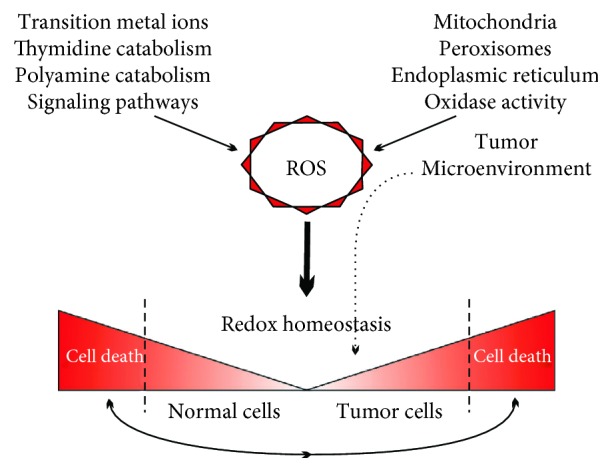
Reactive oxygen species (ROS) are by-products of normal cell activity. They are produced in many cellular compartments and play a major role in signaling pathways. Overproduction of ROS is associated with the development of various human diseases (including cancer, cardiovascular, neurodegenerative, and metabolic disorders), inflammation, and aging. Tumors continuously generate ROS at increased levels that have a dual role in their development. Oxidative stress can promote tumor initiation, progression, and resistance to therapy through DNA damage, leading to the accumulation of mutations and genome instability, as well as reprogramming cell metabolism and signaling. On the contrary, elevated ROS levels can induce tumor cell death. This review covers the current data on the mechanisms of ROS generation and existing antioxidant systems balancing the redox state in mammalian cells that can also be related to tumors.
Overview
The claims and statistics of this paper haven’t been checked yet.
Run the check — free, no account needed. It reads the open-access text and checks the sources it cites.
Integrity signals
Registry
Cites
Statistics
Figures
Verification
Claims the paper makes
The claims and statistics of this paper haven’t been checked yet.
Run the check — free, no account needed. It reads the open-access text and checks the sources it cites.
Claims other papers make about this one
Each is checked against this paper’s own text: does it say what the citing paper says it does?
In the citing paper
“In addition to mitochondria, ROS are produced by a variety of enzymes such as NOx, xanthine oxidase, nitric oxide synthase NOS, and in other cell organelles such as the endoplasmic reticulum, peroxisomes, and cytosol [11].”
From The Role of Reactive Species on Innate Immunity (2022) · cites this paper as [11]
Self-check
Percentages, sums and reported differences re-computed from the paper’s own numbers.
The self-check needs the paper’s full text.
Citations
Cites
Understanding the Warburg Effect: The Metabolic Requirements of Cell Proliferation
Vander Heiden, M. G., Cantley, L. C., & Thompson, C. B. (2009) · Science · doi:10.1126/science.1160809 · Cited by 16,197
Warburg, O. (1956) · Science · doi:10.1126/science.123.3191.309 · Cited by 13,425
The NOX Family of ROS-Generating NADPH Oxidases: Physiology and Pathophysiology
Bedard, K., & Krause, K.-H. (2007) · Physiological Reviews · doi:10.1152/physrev.00044.2005 · Cited by 6,989
Nitric Oxide and Peroxynitrite in Health and Disease
Pacher, P., Beckman, J. S., & Liaudet, L. (2007) · Physiological Reviews · doi:10.1152/physrev.00029.2006 · Cited by 6,390
Molecular mechanisms and clinical applications of angiogenesis
Carmeliet, P., & Jain, R. K. (2011) · Nature · doi:10.1038/nature10144 · Cited by 5,467
Oxidative Stress and Antioxidant Defense
Birben, E., Şahiner, Ü. M., Saçkesen, C., ERZURUM, S. C., & Kalaycı, Ö. (2012) · World Allergy Organization Journal · doi:10.1097/wox.0b013e3182439613 · Cited by 5,190
Metals, Toxicity and Oxidative Stress
Valko, M., Morris, H., & Cronin, M. (2005) · Current Medicinal Chemistry · doi:10.2174/0929867053764635 · Cited by 5,018
Oxyl radicals, redox-sensitive signalling cascades and antioxidants
Genestra, M. (2007) · Cellular Signalling · doi:10.1016/j.cellsig.2007.04.009 · Cited by 4,930
Mutation of the mouse klotho gene leads to a syndrome resembling ageing
Kuro-o, M., Matsumura, Y., Aizawa, H., Kawaguchi, H., Suga, T., Utsugi, T., Ohyama, Y., Kurabayashi, M., Kaname, T., Kume, E., et al. (1997) · Nature · doi:10.1038/36285 · Cited by 3,837
Cyclooxygenase in biology and disease
Dubois, R. N., Abramson, S. B., Crofford, L., Gupta, R., Simon, L. S., Putte, L., & Lipsky, P. (1998) · The FASEB Journal · doi:10.1096/fasebj.12.12.1063 · Cited by 2,606
A model for p53-induced apoptosis
Polyak, K., Xia, Y., Zweier, J. L., Kinzler, K. W., & Vogelstein, B. (1997) · Nature · doi:10.1038/38525 · Cited by 2,500
The tumor microenvironment and its role in promoting tumor growth
Whiteside, T. L. (2008) · Oncogene · doi:10.1038/onc.2008.271 · Cited by 2,376
TIGAR, a p53-Inducible Regulator of Glycolysis and Apoptosis
Bensaad, K., Tsuruta, A., Selak, M. A., Vidal, M. N. C., Nakano, K., Bartrons, R., Gottlieb, E., & Vousden, K. H. (2006) · Cell · doi:10.1016/j.cell.2006.05.036 · Cited by 2,019
Chandrasekharan, N. V., Dai, H., Roos, K. L. T., Evanson, N. K., Tomsik, J., Elton, T. S., & Simmons, D. L. (2002) · Proceedings of the National Academy of Sciences · doi:10.1073/pnas.162468699 · Cited by 1,989
8-hydroxy-2′ -deoxyguanosine (8-OHdG): A Critical Biomarker of Oxidative Stress and Carcinogenesis
Valavanidis, A., Vlachogianni, T., & FIOTAKIS, C. (2009) · Journal of Environmental Science and Health Part C · doi:10.1080/10590500902885684 · Cited by 1,985
Ros and ros-mediated cellular signaling
Zhang, J., Wang, X., Vikash, V., Ye, Q., Wu, D., Liu, Y., & Dong, W. (2016) · Oxidative Medicine and Cellular Longevity · doi:10.1155/2016/4350965 · Cited by 1,980
ER stress and the unfolded protein response
Schröder, M., & Kaufman, R. J. (2004) · Mutation research. Fundamental and molecular mechanisms of mutagenesis · doi:10.1016/j.mrfmmm.2004.06.056 · Cited by 1,793
Role of ROS and RNS Sources in Physiological and Pathological Conditions
Meo, S. D., Reed, T. T., Venditti, P., & Víctor, V. M. (2016) · Oxidative Medicine and Cellular Longevity · doi:10.1155/2016/1245049 · Cited by 1,712
Peroxisomes (microbodies and related particles).
De Duve, C., & Baudhuin, P. (1966) · Physiological Reviews · doi:10.1152/physrev.1966.46.2.323 · Cited by 1,666
The endoplasmic reticulum: structure, function and response to cellular signaling
Schwarz, D. S., & Blower, M. D. (2016) · Cellular and Molecular Life Sciences · doi:10.1007/s00018-015-2052-6 · Cited by 1,613
The cellular production of hydrogen peroxide
Boveris, A., Oshino, N., & Chance, B. (1972) · Biochemical Journal · doi:10.1042/bj1280617 · Cited by 1,549
Clinical importance of the cytochromes P450
Nebert, D. W., & Russell, D. W. (2002) · The Lancet · doi:10.1016/s0140-6736(02)11203-7 · Cited by 1,416
Role of tumor microenvironment in tumorigenesis
Wang, M., Zhao, J., Zhang, L., Wei, F., Lian, Y., Wu, Y., Gong, Z., Zhang, S., Zhou, J., Cao, K., et al. (2017) · Journal of Cancer · doi:10.7150/jca.17648 · Cited by 1,404
PTEN and the PI3-Kinase Pathway in Cancer
Chalhoub, N., & Baker, S. J. (2008) · Annual Review of Pathology Mechanisms of Disease · doi:10.1146/annurev.pathol.4.110807.092311 · Cited by 1,281
The sites and topology of mitochondrial superoxide production
Brand, M. D. (2010) · Experimental Gerontology · doi:10.1016/j.exger.2010.01.003 · Cited by 1,217
Carcinogenic metal compounds: recent insight into molecular and cellular mechanisms
Beyersmann, D., & Hartwig, A. (2008) · Archives of Toxicology · doi:10.1007/s00204-008-0313-y · Cited by 1,209
ROS homeostasis and metabolism: a dangerous liason in cancer cells
Panieri, E., & Santoro, M. M. (2016) · Cell Death and Disease · doi:10.1038/cddis.2016.105 · Cited by 1,187
Giorgio, M., Migliaccio, E., Orsini, F., Paolucci, D., Moroni, M., Contursi, C., Pelliccia, G., Luzi, L., Minucci, S., Marcaccio, M., et al. (2005) · Cell · doi:10.1016/j.cell.2005.05.011 · Cited by 1,176
The antioxidant function of the p53 tumor suppressor
Sablina, A. A., Budanov, A. V., Ilyinskaya, G. V., Agapova, L. S., Kravchenko, J. E., & Chumakov, P. M. (2005) · Nature Medicine · doi:10.1038/nm1320 · Cited by 1,137
Membrane transport of hydrogen peroxide
Bienert, G. P., Schjoerring, J. K., & Jahn, T. P. (2006) · Biochimica et Biophysica Acta (BBA) - Biomembranes · doi:10.1016/j.bbamem.2006.02.015 · Cited by 1,079
Redox- and non-redox-metal-induced formation of free radicals and their role in human disease
Valko, M., Jomová, K., Rhodes, C. J., Kuča, K., & Musílek, K. (2015) · Archives of Toxicology · doi:10.1007/s00204-015-1579-5 · Cited by 1,062
Oxidative protein folding in eukaryotes
Tu, B. P., & Weissman, J. S. (2004) · The Journal of Cell Biology · doi:10.1083/jcb.200311055 · Cited by 1,041
Subcellular Distribution of Superoxide Dismutases (SOD) in Rat Liver
Okado‐Matsumoto, A., & Fridovich, I. (2001) · Journal of Biological Chemistry · doi:10.1074/jbc.m105395200 · Cited by 1,036
Mitochondrial Glutathione, a Key Survival Antioxidant
Marí, M., Morales, A., Colell, A., García‐Ruiz, C., & Fernández-Checa, J. C. (2009) · Antioxidants and Redox Signaling · doi:10.1089/ars.2009.2695 · Cited by 1,006
Endoplasmic Reticulum Stress and Associated ROS
Zeeshan, H. M. A., Lee, K. H., Kim, H., & Chae, H. (2016) · International Journal of Molecular Sciences · doi:10.3390/ijms17030327 · Cited by 976
Reactive oxygen species in tumor progression
Peter, S. F. (2005) · Frontiers in bioscience · doi:10.2741/1667 · Cited by 972
Cytochromes P450: a success story.
Werck‐Reichhart, D., & Feyereisen, R. (2000) · Genome biology · doi:10.1186/gb-2000-1-6-reviews3003 · Cited by 962
NADPH oxidases: An overview from structure to innate immunity-associated pathologies
Panday, A., Sahoo, M. K., Osorio, D., & Batra, S. (2015) · Cellular & Molecular Immunology · doi:10.1038/cmi.2014.89 · Cited by 944
Reactive oxygen species and cancer paradox: To promote or to suppress?
Galadari, S., Rahman, A. U., Pallichankandy, S., & Thayyullathil, F. (2017) · Free Radical Biology and Medicine · doi:10.1016/j.freeradbiomed.2017.01.004 · Cited by 918
Inflammatory caspases and inflammasomes: master switches of inflammation
Martinon, F., & Tschopp, J. (2006) · Cell Death and Differentiation · doi:10.1038/sj.cdd.4402038 · Cited by 848
Polyamine metabolism and cancer: treatments, challenges and opportunities
Casero, R. A., Stewart, T. M., & Pegg, A. E. (2018) · Nature reviews. Cancer · doi:10.1038/s41568-018-0050-3 · Cited by 826
Reactive oxygen species in health and disease
Alfadda, A. A., & Sallam, R. M. (2012) · Journal of Biomedicine and Biotechnology · doi:10.1155/2012/936486 · Cited by 824
Reactive Oxygen Species: A Key Constituent in Cancer Survival
Kumari, S., Badana, A. K., Murali Mohan, G., Gugalavath, S., & Malla, R. R. (2018) · Biomarker Insights · doi:10.1177/1177271918755391 · Cited by 809
Structure and function of xanthine oxidoreductase: where are we now?
Harrison, R. (2002) · Free Radical Biology and Medicine · doi:10.1016/s0891-5849(02)00956-5 · Cited by 807
Mammalian polyamine metabolism and function
Pegg, A. E. (2009) · IUBMB Life · doi:10.1002/iub.230 · Cited by 786
Activation of SAT1 engages polyamine metabolism with p53-mediated ferroptotic responses
Ou, Y., Wang, S.-J., Li, D., Chu, B., & Gu, W. J. (2016) · Proceedings of the National Academy of Sciences · doi:10.1073/pnas.1607152113 · Cited by 783
The human protein disulphide isomerase family: substrate interactions and functional properties
Ellgaard, L., & Ruddock, L. W. (2005) · EMBO Reports · doi:10.1038/sj.embor.7400311 · Cited by 757
The signaling mechanism of ROS in tumor progression
Wu, W. (2006) · Cancer and Metastasis Reviews · doi:10.1007/s10555-006-9037-8 · Cited by 752
The Regulation of Rat Liver Xanthine Oxidase
Stirpe, F., Corte, E. D., & Lorenzoni, E. (1969) · Journal of Biological Chemistry · doi:10.1016/s0021-9258(17)36428-1 · Cited by 733
Regeneration of peroxiredoxins by p53-regulated sestrins, homologs of bacterial AhpD
Budanov, A. V., Sablina, A. A., Feinstein, E., Koonin, E. V., & Chumakov, P. M. (2004) · Science · doi:10.1126/science.1095569 · Cited by 731
Bach, A. W., Lan, N. C., Johnson, D. L., Abell, C. W., Bembenek, M. E., Kwan, S. W., SEEBURG, P. H., & Shih, J. C. (1988) · Proceedings of the National Academy of Sciences · doi:10.1073/pnas.85.13.4934 · Cited by 725
Functions of Polyamines in Mammals
Pegg, A. E. (2016) · Journal of Biological Chemistry · doi:10.1074/jbc.r116.731661 · Cited by 720
Glucose‐6‐phosphate dehydrogenase, NADPH, and cell survival
Stanton, R. C. (2012) · IUBMB Life · doi:10.1002/iub.1017 · Cited by 706
Suzuki, S., Tanaka, T., Poyurovsky, M. V., Nagano, H., Mayama, T., Ohkubo, S., Lokshin, M., Hosokawa, H., Nakayama, T., Suzuki, Y., et al. (2010) · Proceedings of the National Academy of Sciences · doi:10.1073/pnas.1002459107 · Cited by 705
Expression of cyclooxygenase-1 and cyclooxygenase-2 in human breast cancer.
Hwang, D., Scollard, D., Byrne, J., & Levine, E. (1998) · Journal of the National Cancer Institute · doi:10.1093/jnci/90.6.455 · Cited by 705
Newsholme, P., Haber, E. P., Hirabara, S. M., Rebelato, E. L. O., Procopio, J., Morgan, D., Oliveira‐Emilio, H. C., Carpinelli, A. R., & Curi, R. (2007) · The Journal of Physiology · doi:10.1113/jphysiol.2007.135871 · Cited by 684
The natural polyamine spermine functions directly as a free radical scavenger
Ha, H. C., Sirisoma, N. S., Kuppusamy, P., Zweier, J. L., Woster, P. M., & Casero, R. A. (1998) · Proceedings of the National Academy of Sciences · doi:10.1073/pnas.95.19.11140 · Cited by 676
Regulation of Reactive Oxygen Species Generation in Cell Signaling
Bae, Y. S., Oh, H., Rhee, S. G., & Yoo, Y. D. (2011) · Molecules and Cells · doi:10.1007/s10059-011-0276-3 · Cited by 675
Role of peroxisomes in ros/rns-metabolism: Implications for human disease
Fransen, M., Nordgren, M., Wang, B., & Apanasets, O. (2012) · Biochimica et Biophysica Acta (BBA) - Molecular Basis of Disease · doi:10.1016/j.bbadis.2011.12.001 · Cited by 644
Park, H. S., Jung, H. Y., Park, E. Y., Kim, J., Lee, W. J., & Bae, Y. S. (2004) · The Journal of Immunology · doi:10.4049/jimmunol.173.6.3589 · Cited by 635
Monoamine oxidase inactivation: from pathophysiology to therapeutics
Bortolato, M., Chen, K., & Shih, J. C. (2008) · Advanced Drug Delivery Reviews · doi:10.1016/j.addr.2008.06.002 · Cited by 634
Redox regulation of PI 3‐kinase signalling via inactivation of PTEN
Leslie, N. R., Bennett, D., Lindsay, Y. E., Stewart, H., Gray, A., & Downes, C. P. (2003) · The EMBO Journal · doi:10.1093/emboj/cdg513 · Cited by 631
Bauernfeind, F., Bartok, E., Rieger, A., Franchi, L., Núñez, G., & Hornung, V. (2011) · The Journal of Immunology · doi:10.4049/jimmunol.1100613 · Cited by 617
Goodwin, A. C., Shields, C. E. D., Wu, S., Huso, D. L., Wu, X., Murray-Stewart, T. R., Hacker-Prietz, A., Rabizadeh, S., Woster, P. M., Sears, C. L., et al. (2011) · Proceedings of the National Academy of Sciences · doi:10.1073/pnas.1010203108 · Cited by 612
p21-activated kinases in cancer
Kumar, R., Gururaj, A. E., & Barnes, C. J. (2006) · Nature reviews. Cancer · doi:10.1038/nrc1892 · Cited by 609
Induction of reactive oxygen species: an emerging approach for cancer therapy
Zou, Z., Chang, H., Li, H., & Wang, S. (2017) · APOPTOSIS · doi:10.1007/s10495-017-1424-9 · Cited by 599
Detection of catalase in rat heart mitochondria.
Radi, R., Turrens, J. F., Chang, L. Y., Bush, K. M., Crapo, J. D., & Freeman, B. A. (1991) · Journal of Biological Chemistry · doi:10.1016/s0021-9258(18)54740-2 · Cited by 573
Santos, C. X. C., Tanaka, L. Y., Wosniak, J., & Laurindo, F. R. M. (2009) · Antioxidants & Redox Signaling · doi:10.1089/ars.2009.2625 · Cited by 572
Mitochondrial dysfunction and oxidative stress in aging and cancer
Kudryavtseva, A. V., Krasnov, G. S., Dmitriev, A. A., Alekseev, B. Y., Kardymon, O. L., Садритдинова, А. Ф., Fedorova, M., Pokrovsky, A. V., Melnikova, N. V., Каприн, А. Д., et al. (2016) · Oncotarget · doi:10.18632/oncotarget.9821 · Cited by 564
Self-citationMechanisms that regulate production of reactive oxygen species by cytochrome P450
Zangar, R. C. (2004) · Toxicology and Applied Pharmacology · doi:10.1016/j.taap.2004.01.018 · Cited by 555
Oxidative Stress, Toxicology, and Pharmacology of CYP2E1
Caro, A. A., & Cederbaum, A. I. (2004) · The Annual Review of Pharmacology and Toxicology · doi:10.1146/annurev.pharmtox.44.101802.121704 · Cited by 513
Millar, T. M., Stevens, C. R., Benjamin, N., Eisenthal, R., Harrison, R., & Blake, D. R. (1998) · FEBS Letters · doi:10.1016/s0014-5793(98)00430-x · Cited by 491
Stress hormone-mediated invasion of ovarian cancer cells
Sood, A. K., Bhatty, R., Kamat, A. A., Landen, C. N., Han, L., Thaker, P. H., Li, Y., Gershenson, D. M., Lutgendorf, S., & Cole, S. W. (2006) · Clinical Cancer Research · doi:10.1158/1078-0432.ccr-05-1698 · Cited by 491
Endoplasmic Reticulum Stress in Malignancy
Clarke, H. J., Chambers, J. E., Liniker, E., & Marciniak, S. J. (2014) · Cancer Cell · doi:10.1016/j.ccr.2014.03.015 · Cited by 473
Benna, J. E., Dang, P. M., Gougerot‐Pocidalo, M., Marie, J., & Braut‐Boucher, F. (2009) · Experimental & Molecular Medicine · doi:10.3858/emm.2009.41.4.058 · Cited by 453
Mechanisms of PTEN loss in cancer: It’s all about diversity
Garcia, V. A., Tawil, Y., Wise, H. M., & Leslie, N. R. (2019) · Seminars in Cancer Biology · doi:10.1016/j.semcancer.2019.02.001 · Cited by 407
Molecular pathology of cyclooxygenase-2 in neoplasia.
Fosslien, E. (2000) · PubMed · Cited by 400
Reactive oxygen species and mitochondrial diseases
Kirkinezos, I. G., & Moraes, C. T. (2001) · Seminars in Cell and Developmental Biology · doi:10.1006/scdb.2001.0282 · Cited by 397
Nishino, T., Okamoto, K., Eger, B. T., PAI, E. F., & Nishino, T. (2008) · FEBS Journal · doi:10.1111/j.1742-4658.2008.06489.x · Cited by 397
p53-Induced Up-Regulation of MnSOD and GPx but not Catalase Increases Oxidative Stress and Apoptosis
Hussain, S. P., Amstad, P., He, P., Robles, A. I., Lupold, S. E., Kaneko, I., Ichimiya, M., Sengupta, S., Mechanic, L. E., Okamura, S., et al. (2004) · Cancer Research · doi:10.1158/0008-5472.can-2287-2 · Cited by 394
Tumor microenvironment and cancer therapy resistance
Sun, Y. (2015) · Cancer Letters · doi:10.1016/j.canlet.2015.07.044 · Cited by 391
Henzler, T., & Steudle, E. (2000) · Journal of Experimental Botany · doi:10.1093/jexbot/51.353.2053 · Cited by 376
Spermidine/spermine- N 1 -acetyltransferase: a key metabolic regulator
Pegg, A. E. (2008) · American Journal of Physiology-Endocrinology and Metabolism · doi:10.1152/ajpendo.90217.2008 · Cited by 360
The molecular determinants of de novo nucleotide biosynthesis in cancer cells
Tong, X., Zhao, F., & Thompson, C. B. (2009) · Current Opinion in Genetics & Development · doi:10.1016/j.gde.2009.01.002 · Cited by 351
Oxidation of spermidine and spermine in rat liver: purification and properties of polyamine oxidase
Hölttä, E. (1977) · Biochemistry · doi:10.1021/bi00620a015 · Cited by 335
ROS Generation in Peroxisomes and its Role in Cell Signaling
del Río, L. A., & López‐Huertas, E. (2016) · Plant and Cell Physiology · doi:10.1093/pcp/pcw076 · Cited by 332
Reactive Oxygen Species Regulate T Cell Immune Response in the Tumor Microenvironment
Chen, X., Song, M., Zhang, B., & Zhang, Y. (2016) · Oxidative Medicine and Cellular Longevity · doi:10.1155/2016/1580967 · Cited by 326
Control of Oxygenation in Lipoxygenase and Cyclooxygenase Catalysis
Schneider, C. G., Pratt, D. A., Porter, N. A., & BRASH, A. R. (2007) · Chemistry & Biology · doi:10.1016/j.chembiol.2007.04.007 · Cited by 324
Mitochondrial Aconitase Is a Source of Hydroxyl Radical
Vasquez-Vivar, J. M., Kalyanaraman, B., & Kennedy, M. C. (2000) · Journal of Biological Chemistry · doi:10.1074/jbc.275.19.14064 · Cited by 317
Aiding and abetting roles of NOX oxidases in cellular transformation
Block, K. L., & Gorin, Y. C. (2012) · Nature reviews. Cancer · doi:10.1038/nrc3339 · Cited by 308
Toxicity of Polyamines and Their Metabolic Products
Pegg, A. E. (2013) · Chemical Research in Toxicology · doi:10.1021/tx400316s · Cited by 306
Molecular and Mechanistic Properties of the Membrane-Bound Mitochondrial Monoamine Oxidases
Edmondson, D. E., Binda, C., Wang, J., Upadhyay, A. K., & Mattevi, A. (2009) · Biochemistry · doi:10.1021/bi900413g · Cited by 302
Tumor suppressor genes and ROS: complex networks of interactions
Vurusaner, B., Poli, G., & Başağa, H. (2011) · Free Radical Biology and Medicine · doi:10.1016/j.freeradbiomed.2011.09.035 · Cited by 300
THE ENZYMATIC SYNTHESIS OF NUCLEOSIDES
Friedkin, M. E., & Roberts, D. (1954) · Journal of Biological Chemistry · doi:10.1016/s0021-9258(18)71264-7 · Cited by 298
Hanukoglu, I. (2006) · Drug Metabolism Reviews · doi:10.1080/03602530600570040 · Cited by 293
A molecular correlate to the Gleason grading system for prostate adenocarcinoma
True, L. D., Coleman, I. M., Hawley, S. J., Huang, C.-Y., Gifford, D., COLEMAN, R. T., Beer, T. M., Gelmann, E. P., Datta, M. W., Mostaghel, E. A., et al. (2006) · Proceedings of the National Academy of Sciences · doi:10.1073/pnas.0603678103 · Cited by 291
Patricelli, M. P., Giang, D. K., Stamp, L. M., & Burbaum, J. J. (2001) · PROTEOMICS · doi:10.1002/1615-9861(200109)1:9 · Cited by 281
Cyclooxygenase 2 is a key enzyme for inflammatory cytokine‐induced angiogenesis
Kuwano, T., Nakao, S., Yamamoto, H., Tsuneyoshi, M., Yamamoto, T., Kuwano, M., & Ono, M. (2004) · The FASEB Journal · doi:10.1096/fj.03-0473com · Cited by 279
Differential expression of manganese superoxide dismutase and catalase in lung cancer.
Ho, J., Zheng, X. F. S., COMHAIR, S. A. A., Farver, C. F., & ERZURUM, S. C. (2001) · PubMed · Cited by 277
Bostwick, D. G., Alexander, E. E., Singh, R., Shan, A., Qian, J., Santella, R. M., Oberley, L. W., Yan, T., Zhong, W., Jiang, X., et al. (2000) · Cancer · doi:10.1002/1097-0142(20000701)89:1 · Cited by 273
The Haber-Weiss cycle—70 years later: an alternative view
Liochev, S. I., & Fridovich, I. (2002) · Redox Report · doi:10.1179/135100002125000190 · Cited by 270
Tiburcio, A. F., Kaur‐Sawhney, R., & Galston, A. W. (1990) · Elsevier eBooks · doi:10.1016/b978-0-08-092616-2.50013-9 · Cited by 265
NOX Activation by Subunit Interaction and Underlying Mechanisms in Disease
Rastogi, R., Geng, X., Li, F., & Ding, Y. (2017) · Frontiers in Cellular Neuroscience · doi:10.3389/fncel.2016.00301 · Cited by 259
Transcriptional Activation of the Human Glutathione Peroxidase Promoter by p53
Tan, M., Li, S., Swaroop, M., Guan, K., Oberley, L. W., & Sun, Y. (1999) · Journal of Biological Chemistry · doi:10.1074/jbc.274.17.12061 · Cited by 255
Monoamine oxidases as sources of oxidants in the heart
Kaludercic, N., Mialet‐Perez, J., Paolocci, N., Parini, A., & Lisa, F. D. (2014) · Journal of Molecular and Cellular Cardiology · doi:10.1016/j.yjmcc.2013.12.032 · Cited by 253
Generation of Superoxide Anion by Succinate-Cytochromec Reductase from Bovine Heart Mitochondria
Zhang, L., Yu, L. P. C., & Yu, C. (1998) · Journal of Biological Chemistry · doi:10.1074/jbc.273.51.33972 · Cited by 251
Janiszewski, M., Lopes, L. R., Carmo, A. O., Pedro, M. D. A., Brandes, R. P., Santos, C. X. C., & Laurindo, F. R. M. (2005) · Journal of Biological Chemistry · doi:10.1074/jbc.m509255200 · Cited by 247
Wang, Y., Devereux, W. L., Woster, P. M., et al. (2001) · PubMed · Cited by 242
Identification of ALDH4 as a p53-inducible gene and its protective role in cellular stresses
Yoon, K., Nakamura, Y., & Arakawa, H. (2004) · Journal of Human Genetics · doi:10.1007/s10038-003-0122-3 · Cited by 240
Monoamine oxidase A mediates prostate tumorigenesis and cancer metastasis
Wu, J. B., Shao, C., Li, X., Li, Q., Hu, P., Shi, C., Li, Y., Chen, Y., Yin, F., Liao, C., et al. (2014) · Journal of Clinical Investigation · doi:10.1172/jci70982 · Cited by 238
Contribution of hepatic cytochrome P450 systems to the generation of reactive oxygen species
Bondy, S. C., & Naderi, S. (1994) · Biochemical Pharmacology · doi:10.1016/0006-2952(94)90235-6 · Cited by 237
Seiler, N. (2004) · Amino Acids · doi:10.1007/s00726-004-0070-z · Cited by 236
Involvement of Cytochrome P450 in Reactive Oxygen Species Formation and Cancer
Hrycay, E. G., & Bandiera, S. M. (2015) · Advances in pharmacology · doi:10.1016/bs.apha.2015.03.003 · Cited by 234
Purcell, R. V., Pearson, J., Aitchison, A., Dixon, L., Frizelle, F. A., & Keenan, J. I. (2017) · PLoS ONE · doi:10.1371/journal.pone.0171602 · Cited by 230
Tomozawa, S., Tsuno, N. H., Sunami, E., et al. (2000) · British Journal of Cancer · doi:10.1054/bjoc.2000.1270 · Cited by 226
Sastry, K. S., Karpova, Y., Prokopovich, S., Smith, A. J., Essau, B., Gersappe, A., Carson, J. P., Weber, M. J., Register, T. C., Chen, Y. Q., et al. (2007) · Journal of Biological Chemistry · doi:10.1074/jbc.m611370200 · Cited by 225
Oxidation of amines by flavoproteins
Fitzpatrick, P. F. (2009) · Archives of Biochemistry and Biophysics · doi:10.1016/j.abb.2009.07.019 · Cited by 219
Hara‐Chikuma, M., Satooka, H., Watanabe, S., Honda, T., Miyachi, Y., Watanabe, T., & Verkman, A. S. (2015) · Nature Communications · doi:10.1038/ncomms8454 · Cited by 218
Rimessi, A., Previati, M., Nigro, F., Wieckowski, M. R., & Pinton, P. (2016) · The International Journal of Biochemistry & Cell Biology · doi:10.1016/j.biocel.2016.06.015 · Cited by 216
Movahed, Z. G., Rastegari‐Pouyani, M., Mohammadi, M. H., & Mansouri, K. (2019) · Biomedicine & Pharmacotherapy · doi:10.1016/j.biopha.2019.108690 · Cited by 214
Vujcic, S., Diegelman, P., Bacchi, C. J., Kramer, D. L., & Porter, C. W. (2002) · Biochemical Journal · doi:10.1042/bj20020720 · Cited by 213
Role of Peroxisomes as a Source of Reactive Oxygen Species (ROS) Signaling Molecules
Sandalio, L. M., Rodríguez‐Serrano, M., Romero‐Puertas, M. C., & del Río, L. A. (2013) · Sub-cellular biochemistry/Subcellular biochemistry · doi:10.1007/978-94-007-6889-5_13 · Cited by 210
The participation of coenzyme Q in free radical production and antioxidation
Beyer, R. E. (1990) · Free Radical Biology and Medicine · doi:10.1016/0891-5849(90)90154-b · Cited by 209
Peng, L., Ran, Y., Hu, H., Yu, L., Liu, Q., Zhou, Z., Sun, Y.-M., Sun, L.-C., Pan, J., Sun, L., et al. (2009) · Carcinogenesis · doi:10.1093/carcin/bgp178 · Cited by 204
DUOX2-derived reactive oxygen species are effectors of NOD2-mediated antibacterial responses
Lipinski, S., Till, A., Sina, C., Arlt, A., Grasberger, H., Schreiber, S., & Rosenstiel, P. C. (2009) · Journal of Cell Science · doi:10.1242/jcs.050690 · Cited by 200
Diverting Glycolysis to Combat Oxidative Stress
Mullarky, E., & Cantley, L. C. (2015) · Springer eBooks · doi:10.1007/978-4-431-55651-0_1 · Cited by 197
Chen, Q., Galleano, M., & Cederbaum, A. I. (1997) · Journal of Biological Chemistry · doi:10.1074/jbc.272.23.14532 · Cited by 195
Brown, N. S., Jones, A., Fujiyama, C., Harris, A. L., & Bicknell, R. (2000) · PubMed · Cited by 187
de Mochel, N. S. R., Seronello, S., Wang, S. H., Ito, C., Zheng, J. X., Liang, J. T., Lambeth, D. J., & Choi, J. (2010) · Hepatology · doi:10.1002/hep.23671 · Cited by 183
Detection of superoxide anion and hydrogen peroxide production by cellular NADPH oxidases
Nauseef, W. M. (2014) · Biochimica et Biophysica Acta (BBA) - General Subjects · doi:10.1016/j.bbagen.2013.04.040 · Cited by 180
Yang, C., Shin, D., Kim, K.-H., Lee, Z.-W., Lee, C., Park, S. G., Bae, Y. S., & Jo, E. (2009) · The Journal of Immunology · doi:10.4049/jimmunol.0802217 · Cited by 175
What are cyclooxygenases and lipoxygenases doing in the driver's seat of carcinogenesis?
Fürstenberger, G., Krieg, P., Müller‐Decker, K., & Habenicht, A. J. R. (2006) · International Journal of Cancer · doi:10.1002/ijc.22153 · Cited by 174
van der Vliet, A., Janssen-Heininger, Y. M. W., & Anathy, V. (2018) · Molecular Aspects of Medicine · doi:10.1016/j.mam.2018.08.001 · Cited by 174
ERO1: A protein disulfide oxidase and H2O2 producer
Zito, E. (2015) · Free Radical Biology and Medicine · doi:10.1016/j.freeradbiomed.2015.01.011 · Cited by 172
Sales, K. J., Katz, A. A., Howard, B., Soeters, R., Millar, R. P., Jabbour, H. N., & Soeters, R. P. (2002) · PubMed · Cited by 171
Spermine Oxidation Induced by Helicobacter pylori Results in Apoptosis and DNA Damage
Xu, H., Chaturvedi, R., Cheng, Y., Bussière, F. I., Asim, M., Yao, M. D., Potosky, D. R., Meltzer, S. J., Rhee, J. G., Kim, S. S., et al. (2004) · Cancer Research · doi:10.1158/0008-5472.can-04-3511 · Cited by 168
Xanthine oxidoreductase in cancer: more than a differentiation marker
Battelli, M. G., Polito, L., Bortolotti, M., & Bolognesi, A. (2015) · Cancer Medicine · doi:10.1002/cam4.601 · Cited by 164
Bureau, C., Bernad, J., Chaouche, N., Orfila, C., Béraud, M., Gonindard, C., Alric, L., Vinel, J., & Pipy, B. (2001) · Journal of Biological Chemistry · doi:10.1074/jbc.m100698200 · Cited by 164
Spermine-DNA interactions: a theoretical study.
Feuerstein, B. G., Pattabiraman, N., & Marton, L. J. (1986) · Proceedings of the National Academy of Sciences · doi:10.1073/pnas.83.16.5948 · Cited by 163
Li, J., Yang, X., Wang, Y., Feng, M., Liu, X., Zhang, Y., Huang, S., Wu, Z., Xue, F., Qin, W., et al. (2014) · Journal of Hepatology · doi:10.1016/j.jhep.2014.02.025 · Cited by 155
Mammalian cytochromes P450—Importance of tissue specificity
Seliškar, M., & Rozman, D. (2006) · Biochimica et Biophysica Acta (BBA) - General Subjects · doi:10.1016/j.bbagen.2006.09.016 · Cited by 154
Lee, M. (2015) · World Journal of Biological Chemistry · doi:10.4331/wjbc.v6.i3.148 · Cited by 152
Peroxisomes as a cellular source of reactive nitrogen species signal molecules
del Río, L. A. (2010) · Archives of Biochemistry and Biophysics · doi:10.1016/j.abb.2010.10.022 · Cited by 149
Biochemistry of peroxisomes in health and disease
Singh, I. (1997) · Molecular and Cellular Biochemistry · doi:10.1023/a:1006883229684 · Cited by 146
Biegański, T., Kusche, J., Lorenz, W. E., Hesterberg, R., Stahlknecht, C. D., & Feussner, K. (1983) · Biochimica et Biophysica Acta (BBA) - General Subjects · doi:10.1016/0304-4165(83)90092-2 · Cited by 137
Boudreau, H. E., Emerson, S. U., Korzeniowska, A., Jendrysik, M. A., & Leto, T. L. (2009) · Journal of Virology · doi:10.1128/jvi.01059-09 · Cited by 132
Hrycay, E. G., & Bandiera, S. M. (2015) · Advances in experimental medicine and biology · doi:10.1007/978-3-319-16009-2_1 · Cited by 132
Cancer-associated fibroblasts enact field cancerization by promoting extratumoral oxidative stress
Chan, J. S. K., Tan, M. J., Sng, M. K., Teo, Z., Phua, T., Choo, C. C., LI, L., Zhu, P., & Tan, N. S. (2017) · Cell Death & Disease · doi:10.1038/cddis.2016.492 · Cited by 130
Basu, H. S., Schwietert, H. C. A., Feuerstein, B. G., et al. (1990) · Biochemical Journal · doi:10.1042/bj2690329 · Cited by 128
Liu, Z., Lu, H., Shi, H., Du, Y., Yu, J., Gu, S., Chen, X., Liu, K. J., & Hu, C. A. (2005) · Cancer Research · doi:10.1158/0008-5472.can-04-1754 · Cited by 127
Origin and evolution of lysyl oxidases
Grau‐Bové, X., Ruiz‐Trillo, I., & Rodríguez‐Pascual, F. (2015) · Scientific Reports · doi:10.1038/srep10568 · Cited by 125
Seiler, N. (2009) · Digestion · doi:10.1159/000200405 · Cited by 125
Mitochondrial dysfunction in cancer
Księżakowska‐Łakoma, K., Żyła, M. M., & Wilczyński, J. R. (2014) · Menopause Review/Przegląd Menopauzalny · doi:10.5114/pm.2014.42717 · Cited by 120
Pledgie, A., Huang, Y., Hacker, A., et al. (2005) · Journal of Biological Chemistry · doi:10.1074/jbc.m508177200 · Cited by 118
Omura, T. (2006) · Chemico-Biological Interactions · doi:10.1016/j.cbi.2006.06.008 · Cited by 117
Monoamine Oxidases, Oxidative Stress, and Altered Mitochondrial Dynamics in Cardiac Ageing
Maggiorani, D., Manzella, N., Edmondson, D. E., Mattevi, A., Parini, A., Binda, C., & Mialet‐Perez, J. (2017) · Oxidative Medicine and Cellular Longevity · doi:10.1155/2017/3017947 · Cited by 112
Targeting extracellular ROS signaling of tumor cells.
Bauer, G. (2014) · PubMed · Cited by 111
Zhang, Z., Blake, D. R., Stevens, C. R., Kanuler, J. M., Ward, P. G., Symons, M. C. R., Benboubetra, M., & Harrison, R. (1998) · Free Radical Research · doi:10.3109/10715769809065801 · Cited by 110
Superoxide Free Radicals Are Produced in Glyoxysomes
Sandalio, L. M., Fernández, V. M., Rupérez, F. L., & del Río, L. A. (1988) · PLANT PHYSIOLOGY · doi:10.1104/pp.87.1.1 · Cited by 108
Kinetics, mechanism, and inhibition of monoamine oxidase
Ramsay, R. R., & Albreht, A. (2018) · Journal of Neural Transmission · doi:10.1007/s00702-018-1861-9 · Cited by 108
Chaturvedi, R., de Sablet, T., Asim, M., Piazuelo, M. B., Barry, D. P., Verriere, T. G., Sierra, J. C., Hardbower, D. M., Delgado, A., Schneider, B., et al. (2014) · Oncogene · doi:10.1038/onc.2014.273 · Cited by 107
Thymidine Phosphorylase in Cancer; Enemy or Friend?
Elamin, Y. Y., Rafee, S., Osman, N., O'Byrne, K. J., & Gately, K. A. (2015) · Cancer Microenvironment · doi:10.1007/s12307-015-0173-y · Cited by 105
Krasnov, G. S., Dmitriev, A. A., Snezhkina, A. V., & Kudryavtseva, A. V. (2013) · Expert Opinion on Therapeutic Targets · doi:10.1517/14728222.2013.775253 · Cited by 102
Self-citationOnyango, A. N. (2016) · Oxidative Medicine and Cellular Longevity · doi:10.1155/2016/2398573 · Cited by 101
NADPH: new oxygen for the ROS theory of aging
Fernández-Marcos, P. J., & Pereira, S. N. (2016) · Oncotarget · doi:10.18632/oncotarget.10744 · Cited by 101
A top-down view of the tumor microenvironment: structure, cells and signaling
Bhome, R., Bullock, M. D., AlSaihati, H., Goh, R. W., Primrose, J. M., Sayan, E., & Mirnezami, A. H. (2015) · Frontiers in Cell and Developmental Biology · doi:10.3389/fcell.2015.00033 · Cited by 101
Chaturvedi, R., Asim, M., Piazuelo, M. B., Yan, F., Barry, D. P., Sierra, J. C., Delgado, A. G., Hill, S., Casero, R. A., Bravo, L. E., et al. (2014) · Gastroenterology · doi:10.1053/j.gastro.2014.02.005 · Cited by 101
Mammalian Polyamine Catabolism: A Therapeutic Target, a Pathological Problem, or Both?
Wang, Y., & Casero, R. A. (2006) · The Journal of Biochemistry · doi:10.1093/jb/mvj021 · Cited by 99
Tissue specificity and species differences in the distribution of urate oxidase in peroxisomes.
Usuda, N., Mk, R., Hashimoto, T., et al. (1988) · PubMed · Cited by 98
Gutteridge, J. M. C., & Halliwell, B. B. (1992) · Free Radical Biology and Medicine · doi:10.1016/0891-5849(92)90062-l · Cited by 97
Protection against Radiation-Induced Degradation of DNA Bases by Polyamines
Douki, T., Bretonnière, Y., & Cadet, J. (2000) · Radiation Research · doi:10.1667/0033-7587(2000)153[0029:parido]2.0.co;2 · Cited by 97
Dihydroorotate-dependent superoxide producton in rat brain and liver
Forman, H. J., & Kennedy, J. (1976) · Archives of Biochemistry and Biophysics · doi:10.1016/0003-9861(76)90252-6 · Cited by 95
Goodwin, A. C., Jadallah, S., Toubaji, A., et al. (2008) · The Prostate · doi:10.1002/pros.20735 · Cited by 95
Link between PI3K/AKT/PTEN Pathway and NOX Proteinin Diseases
Nakanishi, A. (2014) · Aging and Disease · doi:10.14336/ad.2014.0500203 · Cited by 95
Snezhkina, A. V., Krasnov, G. S., Lipatova, A. V., Садритдинова, А. Ф., Kardymon, O. L., Fedorova, M., Melnikova, N. V., Stepanov, O. A., Zaretsky, A. R., Каприн, А. Д., et al. (2016) · Oxidative Medicine and Cellular Longevity · doi:10.1155/2016/2353560 · Cited by 94
Self-citationThorén, F. B., Romero, A. I., Lindh, M., Dahlgren, C., & Hellstrand, K. (2004) · Journal of Leukocyte Biology · doi:10.1189/jlb.0704387 · Cited by 94
Cytosolic phospholipase A2, lipoxygenase metabolites, and reactive oxygen species
Kim, C.-M., Kim, J., & Kim, J. (2008) · BMB Reports · doi:10.5483/bmbrep.2008.41.8.555 · Cited by 93
Nishino, T., & Nishino, T. (1997) · Journal of Biological Chemistry · doi:10.1074/jbc.272.47.29859 · Cited by 93
Whatley, S. A., Curti, D., Gupta, F. D., Ferrier, I. N., Jones, S., Taylor, C., & Marchbanks, R. M. (1998) · Molecular Psychiatry · doi:10.1038/sj.mp.4000375 · Cited by 92
Labak, C. M., Wang, P. Y., Arora, R., Guda, M. R., Asuthkar, S., Tsung, A. J., & Velpula, K. K. (2016) · Europe PMC (PubMed Central) · Cited by 90
Hydrogen-Peroxide Metabolism in Skeletal-Muscle Mitochondria
Phung, C.-T., Ezieme, J. A., & Turrens, J. F. (1994) · Archives of Biochemistry and Biophysics · doi:10.1006/abbi.1994.1528 · Cited by 89
Oxygen in the tumor microenvironment: effects on dendritic cell function
Paardekooper, L. M., de Vos, W., & van den Bogaart, G. (2019) · Oncotarget · doi:10.18632/oncotarget.26608 · Cited by 89
Radioprotection of DNA by Polyamines
Spotheim-Maurizot, M., Ruiz, S., Sabattier, R., & Charlier, M. (1995) · International Journal of Radiation Biology · doi:10.1080/09553009514551561 · Cited by 88
Microsomal monooxygenase as a multienzyme system: the role of P450-P450 interactions
Davydov, D. R. (2011) · Expert Opinion on Drug Metabolism & Toxicology · doi:10.1517/17425255.2011.562194 · Cited by 87
Production of superoxide/H2O2 by dihydroorotate dehydrogenase in rat skeletal muscle mitochondria
Hey‐Mogensen, M., Goncalves, R. L. S., Orr, A. L., & Brand, M. D. (2014) · Free Radical Biology and Medicine · doi:10.1016/j.freeradbiomed.2014.04.007 · Cited by 84
Kutomi, G., Tamura, Y., Tanaka, T., Kajiwara, T., Kukita, K., Ohmura, T., Shima, H., Takamaru, T., Satomi, F., Suzuki, Y., et al. (2013) · Cancer Science · doi:10.1111/cas.12177 · Cited by 84
ROS signalling, NADPH oxidases and cancer
Landry, W. D., & Cotter, T. G. (2014) · Biochemical Society Transactions · doi:10.1042/bst20140060 · Cited by 83
Aberrant cyclooxygenase isozyme expression in human intrahepatic cholangiocarcinoma
Chariyalertsak, S., Sirikulchayanonta, V., Mayer, D., et al. (2001) · Gut · doi:10.1136/gut.48.1.80 · Cited by 83
Caretta, A., & Mucignat‐Caretta, C. (2011) · Cancers · doi:10.3390/cancers3010913 · Cited by 83
Driving Cancer Tumorigenesis and Metastasis Through UPR Signaling
Papaioannou, A., & Chevet, É. (2017) · Current topics in microbiology and immunology · doi:10.1007/82_2017_36 · Cited by 83
An indicator of cancer: downregulation of Monoamine Oxidase-A in multiple organs and species
Rybaczyk, L. A., Bashaw, M. J., Pathak, D. R., et al. (2008) · BMC Genomics · doi:10.1186/1471-2164-9-134 · Cited by 81
Regulation of pentose phosphate pathway dehydrogenases by NADP+/NADPH ratios
Holten, D. D., Procsal, D. A., & Chang, H.-L. (1976) · Biochemical and Biophysical Research Communications · doi:10.1016/0006-291x(76)91164-5 · Cited by 80
Present and future of cancer immunotherapy: A tumor microenvironmental perspective (Review)
Yu, Y., & Cui, J. (2018) · Oncology Letters · doi:10.3892/ol.2018.9219 · Cited by 80
Tang, C., Lin, X., Wu, S., Liang, Q., Li, Y., Gao, Y., & Ge, Z. (2018) · Cellular Signalling · doi:10.1016/j.cellsig.2018.02.007 · Cited by 78
The Peroxisome in Oxidative Stress
Dansen, T. B., & WIRTZ, K. W. A. (2001) · IUBMB Life · doi:10.1080/152165401753311762 · Cited by 77
Impairment of peroxisomal biogenesis in human colon carcinoma
Lauer, C. (1999) · Carcinogenesis · doi:10.1093/carcin/20.6.985 · Cited by 75
Durak, İ., Işik, C. Ü., Canbolat, O., Akyol, Ö., & Kavutçu, M. (1993) · Free Radical Biology and Medicine · doi:10.1016/0891-5849(93)90174-s · Cited by 75
Mitogen activated protein kinase phosphatases and cancer
Haagenson, K. K., & Wu, G. S. (2010) · Cancer Biology & Therapy · doi:10.4161/cbt.9.5.11217 · Cited by 73
HK3 overexpression associated with epithelial-mesenchymal transition in colorectal cancer
Pudova, E. A., Kudryavtseva, A. V., Fedorova, M., Zaretsky, A. R., Shcherbo, D. S., Lukyanova, E., Popov, A., Садритдинова, А. Ф., Abramov, I. S., Kharitonov, S., et al. (2018) · BMC Genomics · doi:10.1186/s12864-018-4477-4 · Cited by 72
Self-citationAlbinger‐Hegyi, A., Stoeckli, S. J., Schmid, S., Storz, M., Iotzova, G., Probst-Hensch, N. M., Rehrauer, H., Tinguely, M., Moch, H., & Hegyi, I. (2009) · International Journal of Cancer · doi:10.1002/ijc.24948 · Cited by 69
Research works printed but not linked: 18
- 2016, Plant and Cell Physiology, 57, 1364
- 1988, Laboratory Investigation, 58, 100
- 2001, Cancer Research, 61, 8578
- 1994, Molecular Pharmacology, 45, 150
- 1994, Alcohol and Alcoholism, 2, 131
- 2000, Cancer Research, 60, 6298
- 2001, Cancer Detection and Prevention, 25, 76
- 1994, Zhonghua Zhong Liu Za Zhi [Chinese journal of oncology], 16, 288
- 2001, Cancer Research, 61, 5370
- 1998, Cancer Biochemistry Biophysics, 16, 157
- 2000, Annals of Clinical and Laboratory Science, 30, 3
- 2002, Cancer Research, 62, 424
- 2007, The Kobe Journal of Medical Sciences, 53, 177
- 2004, Asian Pacific Journal of Cancer Prevention, 5, 44
- 2010, Anticancer Research, 30, 4567
- 2016, American Journal of Cancer Research, 6, 1599
- 2015, Biofizika, 60, 1050
- 2014, Anticancer Research, 34, 1467
Cited by
Sorted by citations
Andrés, C. M. C., Pérez de la Lastra, J. M., Juan, C. A., Plou, F. J., & Pérez-Lebeña, E. (2022) · Stresses · doi:10.3390/stresses2030019 · Cited by 218
The Role of Reactive Species on Innate Immunity
Andrés, C., Pérez de la Lastra, J., Juan, C., Plou, F., & Pérez-Lebeña, E. (2022) · Vaccines · doi:10.3390/vaccines10101735 · Cited by 142
Recent advances in nanomaterial-based augmented sonodynamic therapy of cancer
Um, W., E. K., P. K., Lee, J., Kim, C. H., You, D. G., & Park, J. H. (2021) · Chemical Communications · doi:10.1039/d0cc07750j · Cited by 120
Oxidative Stress-Related Mechanisms in Melanoma and in the Acquired Resistance to Targeted Therapies
Pizzimenti, S., Ribero, S., Cucci, M. A., Grattarola, M., Monge, C., Dianzani, C., Barrera, G., & Muzio, G. (2021) · Antioxidants · doi:10.3390/antiox10121942 · Cited by 79
Impact of Reactive Species on Amino Acids—Biological Relevance in Proteins and Induced Pathologies
Andrés, C. M. C., Pérez de la Lastra, J. M., Andrés Juan, C., Plou, F. J., & Pérez-Lebeña, E. (2022) · International Journal of Molecular Sciences · doi:10.3390/ijms232214049 · Cited by 71
Metadata
- Authors
- Snezhkina, A. V., Kudryavtseva, A. V., Kardymon, O. L., Savvateeva, M. V., Melnikova, N. V., Krasnov, G. S., & Dmitriev, A. A.
- Affiliations
- Engelhardt Institute of Molecular Biology (RU)
- Corresponding author
- Snezhkina, Anastasiya V.
- Dmitriev, Alexey A.
- ORCID
- Venue
- Oxidative Medicine and Cellular Longevity
- Publisher
- Wiley
- Published
- 2019-08-05
- Volume
- 2019
- Pages
- 1-17
- ISSN
- 1942-0994 (ISSN-L)
- 1942-0900
- PMC
- PMC6701375
- OpenAlex
- W2966094674
- Cited by
- 934
- References
- 277
- Citations by year
- 2026: 84 · 2025: 136 · 2024: 161 · 2023: 155 · 2022: 177 · 2021: 129 · 2020: 83 · 2019: 8
- FWCI
- 8.81
- Type
- journal article
- Language
- en
- Open access
- hybrid
- doi.org
- Locations
- Oxidative Medicine and Cellular Longevity (publishedVersion, cc-by)
- PubMed Central (publishedVersion, cc-by)
- PubMed (publishedVersion)
- DOAJ (DOAJ: Directory of Open Access Journals) (submittedVersion)
- Funders
- Russian Science Foundation (17-74-20064, 17-75-20105)
- Topics
- Life Sciences › Biochemistry, Genetics and Molecular Biology › Molecular Biology › Redox biology and oxidative stress
- Life Sciences › Biochemistry, Genetics and Molecular Biology › Molecular Biology › Cancer and biochemical research
- Health Sciences › Medicine › Biochemistry (medical) › Antioxidant Activity and Oxidative Stress
- Keywords
- reactive oxygen species, antioxidant defense, oxidative stress, cancer, tumor progression, DNA damage, genomic instability, redox signaling, cancer cell death, treatment resistance, inflammation, aging
- MeSH terms
- Antioxidants, Cell Count, Cell Transformation, Neoplastic, Humans, Reactive Oxygen Species
About these checks
Registry, retraction, Cites and statistics results are computed, not judged, with one exception: a printed reference that no index lists is read once by a model before it counts as a citation error. Claims are extracted by a model and kept only when their quote appears verbatim in the text; each cited source is then checked, with a model’s help, for whether it says what the claim relies on. Those verdicts can be wrong — read the claim’s quote and the cited source before relying on one.
Statistics and arithmetic are recomputed, not judged.
Confidence bands are shown only for fields calibrated on our annotated test set. None is calibrated yet, so no band is shown.
What counts as a claim ›How we measure confidence ›How we check this ›
Are you an author, or do you see a problem with this page? Request a review
