

The DOI matches its Crossref record; 3 of the 3 references it cites were found in a registry or an index.
Comprehensive survey of human brain microRNA by deep sequencing
Abstract
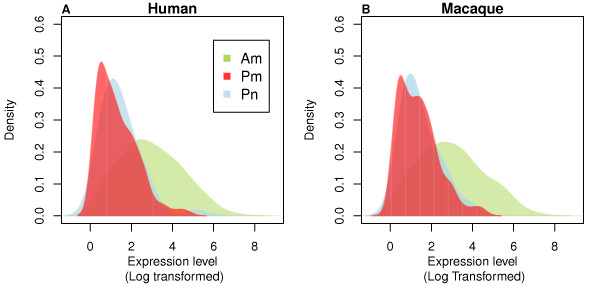
Background: MicroRNA (miRNA) play an important role in gene expression regulation. At present, the number of annotated miRNA continues to grow rapidly, in part due to advances of high-throughput sequencing techniques. Here, we use deep sequencing to characterize a population of small RNA expressed in human and rhesus macaques brain cortex. Results: Based on a total of more than 150 million sequence reads we identify 197 putative novel miRNA, in humans and rhesus macaques, that are highly conserved among mammals. These putative miRNA have significant excess of conserved target sites in genes' 3'UTRs, supporting their functional role in gene regulation. Additionally, in humans and rhesus macaques respectively, we identify 41 and 22 conserved putative miRNA originating from non-coding RNA (ncRNA) transcripts. While some of these molecules might function as conventional miRNA, others might be harmful and result in target avoidance. Conclusions: Here, we further extend the repertoire of conserved human and rhesus macaque miRNA. Even though our study is based on a single tissue, the coverage depth of our study allows identification of functional miRNA present in brain tissue at background expression levels. Therefore, our study might cover large proportion of the yet unannotated conserved miRNA present in the human genome.
Overview
The claims and statistics of this paper haven’t been checked yet.
Run the check — free, no account needed. It reads the open-access text and checks the sources it cites.
Integrity signals
Registry
Cites
Statistics
Figures
Verification
Claims the paper makes
The claims and statistics of this paper haven’t been checked yet.
Run the check — free, no account needed. It reads the open-access text and checks the sources it cites.
Claims other papers make about this one
Each is checked against this paper’s own text: does it say what the citing paper says it does?
The source backs part of the claim, not all of it — or backs it for a different population, condition or comparison.
In the citing paper
“In total, we detected nearly 1,900 unique miRNAs (Table S2), including an abundance of known brain-enriched miRNAs that were present at relative levels comparable to previous studies profiling human brain miRNAs by small RNA sequencing and microarray (Hu et al., 2011; Shao et al., 2010).”
From Transcriptome-wide Discovery of microRNA Binding Sites in Human Brain (2014) · cites this paper as Shao et al., 2010
Experimental — accuracy not yet measuredIn the citing paper
“Predominantly high expression of miR-128-3p was found in neurons and synapses,21,22”
From MiR-128-3p – a gray eminence of the human central nervous system (2024) · cites this paper as [22]
In the citing paper
“MiR-128-3p, encoded by two separate genes, hsa-MIR128-1 and hsa-MIR128-2 (www.ensembl.org), is one of the most highly expressed microRNAs across the CNS and surroundings tissues (Figure 2).22”
From MiR-128-3p – a gray eminence of the human central nervous system (2024) · cites this paper as [22]
Self-check
Percentages, sums and reported differences re-computed from the paper’s own numbers.
The self-check needs the paper’s full text.
Citations
Cites
Most mammalian mRNAs are conserved targets of microRNAs
Friedman, R. C., Farh, K. K.-H., Burge, C. B., & Bartel, D. P. (2009) · Genome Research · doi:10.1101/gr.082701.108 · Cited by 8,462
Evolutionarily conserved elements in vertebrate, insect, worm, and yeast genomes
Siepel, A., Bejerano, G., Pedersen, J. S., Hinrichs, A. S., Hou, M., Rosenbloom, K., Clawson, H., Spieth, J., Hillier, L. W., Richards, S., et al. (2005) · Genome Research · doi:10.1101/gr.3715005 · Cited by 3,971 · cited 2×
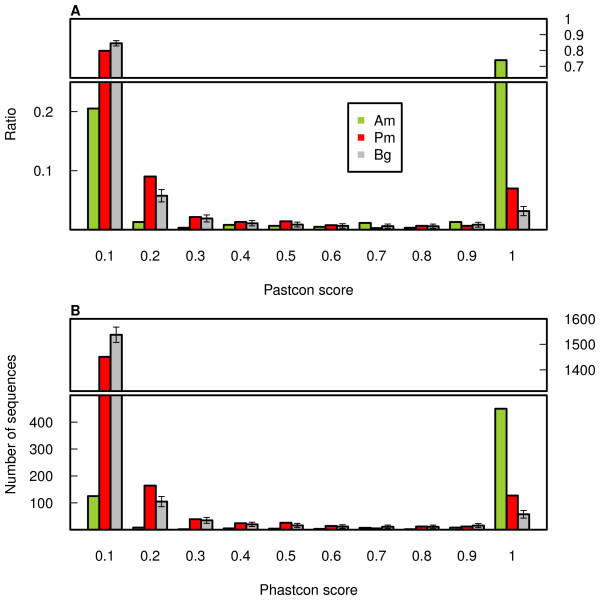
“targets We used phastCon scores based the 17 placental mammal alignment to the human genome to determine the conservation of annotated and candidate mature miRNA sequences [26].”
MethodA Family of Human MicroRNA Genes from Miniature Inverted-Repeat Transposable Elements
Piriyapongsa, J., & Jordan, I. K. (2007) · PLoS ONE · doi:10.1371/journal.pone.0000203 · Cited by 283
Research works printed but not linked: 40
- Bartel DP: MicroRNAs: genomics, biogenesis, mechanism, and function. Cell. 2004, 116 (2): 281-297. 10.1016/S0092-8674(04)00045-5. · DOI
- Bartel DP: MicroRNAs: target recognition and regulatory functions. Cell. 2009, 136 (2): 215-233. 10.1016/j.cell.2009.01.002. · DOI · Paper page
- Lewis BP, Burge CB, Bartel DP: Conserved seed pairing, often flanked by adenosines, indicates that thousands of human genes are microRNA targets. Cell. 2005, 120 (1): 15-20. 10.1016/j.cell.2004.12.035. · DOI · Paper page
- Lytle JR, Yario TA, Steitz JA: Target mRNAs are repressed as efficiently by microRNA-binding sites in the 5' UTR as in the 3' UTR. Proc Natl Acad Sci USA. 2007, 104 (23): 9667-9672. 10.1073/pnas.0703820104. · DOI
- Miranda KC, Huynh T, Tay Y, Ang YS, Tam WL, Thomson AM, Lim B, Rigoutsos I: A pattern-based method for the identification of MicroRNA binding sites and their corresponding heteroduplexes. Cell. 2006, 126 (6): 1203-1217. 10.1016/j.cell.2006.07.031. · DOI · Paper page
- Grimson A, Srivastava M, Fahey B, Woodcroft BJ, Chiang HR, King N, Degnan BM, Rokhsar DS, Bartel DP: Early origins and evolution of microRNAs and Piwi-interacting RNAs in animals. Nature. 2008, 455 (7217): 1193-1197. 10.1038/nature07415. · DOI
- Lee RC, Feinbaum RL, Ambros V: The C. elegans heterochronic gene lin-4 encodes small RNAs with antisense complementarity to lin-14. Cell. 1993, 75 (5): 843-854. 10.1016/0092-8674(93)90529-Y. · DOI · Paper page
- Lindow M, Gorodkin J: Principles and limitations of computational microRNA gene and target finding. DNA Cell Biol. 2007, 26 (5): 339-351. 10.1089/dna.2006.0551. · DOI
- Reinhart BJ, Slack FJ, Basson M, Pasquinelli AE, Bettinger JC, Rougvie AE, Horvitz HR, Ruvkun G: The 21-nucleotide let-7 RNA regulates developmental timing in Caenorhabditis elegans. Nature. 2000, 403 (6772): 901-906. 10.1038/35002607. · DOI
- Ambros V, Bartel B, Bartel DP, Burge CB, Carrington JC, Chen X, Dreyfuss G, Eddy SR, Griffiths-Jones S, Marshall M: A uniform system for microRNA annotation. RNA. 2003, 9 (3): 277-279. 10.1261/rna.2183803. · DOI · Paper page
- Bentwich I, Avniel A, Karov Y, Aharonov R, Gilad S, Barad O, Barzilai A, Einat P, Einav U, Meiri E: Identification of hundreds of conserved and nonconserved human microRNAs. Nat Genet. 2005, 37 (7): 766-770. 10.1038/ng1590. · DOI · Paper page
- Axtell MJ: Evolution of microRNAs and their targets: are all microRNAs biologically relevant?. Biochim Biophys Acta. 2008, 1779 (11): 725-734. · DOI
- Berezikov E, Thuemmler F, van Laake LW, Kondova I, Bontrop R, Cuppen E, Plasterk RHA: Diversity of microRNAs in human and chimpanzee brain. Nat Genet. 2006, 38 (12): 1375-1377. 10.1038/ng1914. · DOI · Paper page
- Ender C, Krek A, Friedlander MR, Beitzinger M, Weinmann L, Chen W, Pfeffer S, Rajewsky N, Meister G: A human snoRNA with microRNA-like functions. Mol Cell. 2008, 32 (4): 519-528. 10.1016/j.molcel.2008.10.017. · DOI
- Hasler J, Samuelsson T, Strub K: Useful 'junk': Alu RNAs in the human transcriptome. Cell Mol Life Sci. 2007, 64 (14): 1793-1800. 10.1007/s00018-007-7084-0. · DOI
- Miska EA, Alvarez-Saavedra E, Townsend M, Yoshii A, Sestan N, Rakic P, Constantine-Paton M, Horvitz HR: Microarray analysis of microRNA expression in the developing mammalian brain. Genome Biol. 2004, 5 (9): R68-10.1186/gb-2004-5-9-r68. · DOI · Paper page
- Yue J, Sheng Y, Orwig KE: Identification of novel homologous microRNA genes in the rhesus macaque genome. BMC Genomics. 2008, 9: 8-10.1186/1471-2164-9-8. · DOI
- Friedlaender MR, Chen W, Adamidi C, Maaskola J, Einspanier R, Knespel S, Rajewsky N: Discovering microRNAs from deep sequencing data using miRDeep. Nat Biotechnol. 2008, 26 (4): 407-415. 10.1038/nbt1394. · DOI
- Morin RD, O'Connor MD, Griffith M, Kuchenbauer F, Delaney A, Prabhu AL, Zhao Y, McDonald H, Zeng T, Hirst M: Application of massively parallel sequencing to microRNA profiling and discovery in human embryonic stem cells. Genome Res. 2008, 18: 610-621. 10.1101/gr.7179508. · DOI · Paper page
- Su H, Yang JR, Xu T, Huang J, Xu L, Yuan Y, Zhuang SM: MicroRNA-101, down-regulated in hepatocellular carcinoma, promotes apoptosis and suppresses tumorigenicity. Cancer Res. 2009, 69 (3): 1135-1142. 10.1158/0008-5472.CAN-08-2886. · DOI
- Varambally S, Cao Q, Mani RS, Shankar S, Wang X, Ateeq B, Laxman B, Cao X, Jing X, Ramnarayanan K: Genomic loss of microRNA-101 leads to overexpression of histone methyltransferase EZH2 in cancer. Science. 2008, 322 (5908): 1695-1699. 10.1126/science.1165395. · DOI
- Wilfred BR, Wang WX, Nelson PT: Energizing miRNA research: a review of the role of miRNAs in lipid metabolism, with a prediction that miR-103/107 regulates human metabolic pathways. Mol Genet Metab. 2007, 91 (3): 209-217. 10.1016/j.ymgme.2007.03.011. · DOI · Paper page
- Xu H, Cheung IY, Guo HF, Cheung NK: MicroRNA miR-29 modulates expression of immunoinhibitory molecule B7-H3: potential implications for immune based therapy of human solid tumors. Cancer Res. 2009, 69 (15): 6275-6281. 10.1158/0008-5472.CAN-08-4517. · DOI
- Hofacker IL, Priwitzer B, Stadler PF: Prediction of locally stable RNA secondary structures for genome-wide surveys. Bioinformatics. 2004, 20 (2): 186-190. 10.1093/bioinformatics/btg388. · DOI
- Jiang P, Wu H, Wang W, Ma W, Sun X, Lu Z: MiPred: classification of real and pseudo microRNA precursors using random forest prediction model with combined features. Nucleic Acids Res. 2007, W339-W344. 10.1093/nar/gkm368. 35 Web Server · DOI
- Lee CT, Risom T, Strauss WM: Evolutionary conservation of microRNA regulatory circuits: an examination of microRNA gene complexity and conserved microRNA-target interactions through metazoan phylogeny. DNA Cell Biol. 2007, 26 (4): 209-218. 10.1089/dna.2006.0545. · DOI
- Chi SW, Zang JB, Mele A, Darnell RB: Argonaute HITS-CLIP decodes microRNA-mRNA interaction maps. Nature. 2009, 460 (7254): 479-486. · DOI · Paper page
- Okamura K, Phillips MD, Tyler DM, Duan H, Chou YT, Lai EC: The regulatory activity of microRNA* species has substantial influence on microRNA and 3' UTR evolution. Nat Struct Mol Biol. 2008, 15 (4): 354-363. 10.1038/nsmb.1409. · DOI · Paper page
- Smalheiser NR, Torvik VI: Mammalian microRNAs derived from genomic repeats. Trends Genet. 2005, 21 (6): 322-326. 10.1016/j.tig.2005.04.008. · DOI · Paper page
- Nelson PT, De Planell-Saguer M, Lamprinaki S, Kiriakidou M, Zhang P, O'Doherty U, Mourelatos Z: A novel monoclonal antibody against human Argonaute proteins reveals unexpected characteristics of miRNAs in human blood cells. Rna. 2007, 13 (10): 1787-1792. 10.1261/rna.646007. · DOI · Paper page
- Babiarz JE, Ruby JG, Wang Y, Bartel DP, Blelloch R: Mouse ES cells express endogenous shRNAs, siRNAs, and other Microprocessor-independent, Dicer-dependent small RNAs. Genes Dev. 2008, 22 (20): 2773-2785. 10.1101/gad.1705308. · DOI
- Willenbrock H, Salomon J, Sokilde R, Barken KB, Hansen TN, Nielsen FC, Moller S, Litman T: Quantitative miRNA expression analysis: comparing microarrays with next-generation sequencing. Rna. 2009, 15 (11): 2028-2034. 10.1261/rna.1699809. · DOI · Paper page
- Linsen SE, de Wit E, Janssens G, Heater S, Chapman L, Parkin RK, Fritz B, Wyman SK, de Bruijn E, Voest EE: Limitations and possibilities of small RNA digital gene expression profiling. Nat Methods. 2009, 6 (7): 474-476. 10.1038/nmeth0709-474. · DOI
- Git A, Dvinge H, Salmon-Divon M, Osborne M, Kutter C, Hadfield J, Bertone P, Caldas C: Systematic comparison of microarray profiling, real-time PCR, and next-generation sequencing technologies for measuring differential microRNA expression. Rna. 2010, 16 (5): 991-1006. 10.1261/rna.1947110. · DOI · Paper page
- Rosenkranz R, Borodina T, Lehrach H, Himmelbauer H: Characterizing the mouse ES cell transcriptome with Illumina sequencing. Genomics. 2008, 92 (4): 187-194. 10.1016/j.ygeno.2008.05.011. · DOI · Paper page
- Griffiths-Jones S: The microRNA Registry. Nucleic Acids Res. 2004, D109-D111. 10.1093/nar/gkh023. 32 Database · DOI
- Griffiths-Jones S, Grocock RJ, van Dongen S, Bateman A, Enright AJ: miRBase: microRNA sequences, targets and gene nomenclature. Nucleic Acids Res. 2006, D140-D144. 10.1093/nar/gkj112. 34 Database · DOI · Paper page
- Griffiths-Jones S, Saini HK, van Dongen S, Enright AJ: miRBase: tools for microRNA genomics. Nucleic Acids Res. 2008, D154-D158. 36 Database · DOI
- Baev V, Daskalova E, Minkov I: Computational identification of novel microRNA homologs in the chimpanzee genome. Comput Biol Chem. 2009, 33 (1): 62-70. 10.1016/j.compbiolchem.2008.07.024. · DOI
- Brameier M: Genome-wide comparative analysis of microRNAs in three non-human primates. BMC Res Notes. 2010, 3: 64-10.1186/1756-0500-3-64. · DOI
Cited by
Sorted by citations
Quail, M., Smith, M. E., Coupland, P., Otto, T. D., Harris, S. R., Connor, T. R., Bertoni, A., Swerdlow, H. P., & Gu, Y. (2012) · BMC Genomics · doi:10.1186/1471-2164-13-341 · Cited by 2,031
Transcriptome-wide Discovery of microRNA Binding Sites in Human Brain
Boudreau, R. L., Jiang, P., Gilmore, B. L., Spengler, R. M., Tirabassi, R., Nelson, J. A., Ross, C. A., Xing, Y., & Davidson, B. L. (2014) · Neuron · doi:10.1016/j.neuron.2013.10.062 · Cited by 217
Identification of differentially expressed microRNAs across the developing human brain
Ziats, M. N., & Rennert, O. M. (2014) · Molecular Psychiatry · doi:10.1038/mp.2013.93 · Cited by 214
General Principals of miRNA Biogenesis and Regulation in the Brain
O'Carroll, D., & Schaefer, A. (2013) · Neuropsychopharmacology · doi:10.1038/npp.2012.87 · Cited by 205
Peripheral whole blood microRNA alterations in major depression and bipolar disorder
Maffioletti, E., Cattaneo, A., Rosso, G., Maina, G., Maj, C., Gennarelli, M., Tardito, D., & Bocchio-Chiavetto, L. (2016) · Journal of Affective Disorders · doi:10.1016/j.jad.2016.04.021 · Cited by 181
Metadata
- Authors
- Shao, N.-Y., Hu, H. Y., Yan, Z., Xu, Y., Hu, H., Menzel, C., Li, N., Chen, W., & Khaitovich, P.
- Venue
- BMC Genomics
- Published
- 2010-06-30
- Volume
- 11
- Issue
- 1
- ISSN
- 1471-2164
- PMC
- PMC2996937
- Cited by
- 131
- References
- 3
- Language
- en
About these checks
Registry, retraction, Cites and statistics results are computed, not judged, with one exception: a printed reference that no index lists is read once by a model before it counts as a citation error. Claims are extracted by a model and kept only when their quote appears verbatim in the text; each cited source is then checked, with a model’s help, for whether it says what the claim relies on. Those verdicts can be wrong — read the claim’s quote and the cited source before relying on one.
Statistics and arithmetic are recomputed, not judged.
Confidence bands are shown only for fields calibrated on our annotated test set. None is calibrated yet, so no band is shown.
What counts as a claim ›How we measure confidence ›How we check this ›
Are you an author, or do you see a problem with this page? Request a review
