

The Firmicutes/Bacteroidetes ratio of the human microbiota changes with age
Open accessThe DOI matches its Crossref record; 33 of the 33 references it cites were found in a registry or an index.
Abstract
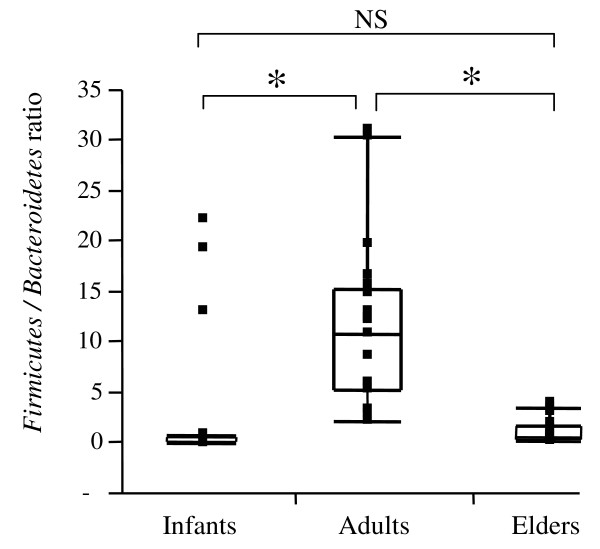
BACKGROUND: In humans, the intestinal microbiota plays an important role in the maintenance of host health by providing energy, nutrients, and immunological protection. Applying current molecular methods is necessary to surmount the limitations of classical culturing techniques in order to obtain an accurate description of the microbiota composition. RESULTS: Here we report on the comparative assessment of human fecal microbiota from three age-groups: infants, adults and the elderly. We demonstrate that the human intestinal microbiota undergoes maturation from birth to adulthood and is further altered with ageing. The counts of major bacterial groups Clostridium leptum, Clostridium coccoides, Bacteroidetes, Bifidobacterium, Lactobacillus and Escherichia coli were assessed by quantitative PCR (qPCR). By comparing species diversity profiles, we observed age-related changes in the human fecal microbiota. The microbiota of infants was generally characterized by low levels of total bacteria. C. leptum and C. coccoides species were highly represented in the microbiota of infants, while elderly subjects exhibited high levels of E. coli and Bacteroidetes. We observed that the ratio of Firmicutes to Bacteroidetes evolves during different life stages. For infants, adults and elderly individuals we measured ratios of 0.4, 10.9 and 0.6, respectively. CONCLUSION: In this work we have confirmed that qPCR is a powerful technique in studying the diverse and complex fecal microbiota. Our work demonstrates that the fecal microbiota composition evolves throughout life, from early childhood to old age.
Overview
The claims and statistics of this paper haven’t been checked yet.
Free: it reads the open-access text and checks the first 5 claims that cite a source we can check. Create a free account to check every claim.
Integrity signals
Registry
Cites
Statistics
Figures
Verification
Claims the paper makes
The claims and statistics of this paper haven’t been checked yet.
Free: it reads the open-access text and checks the first 5 claims that cite a source we can check. Create a free account to check every claim.
Claims other papers make about this one
Each is checked against this paper’s own text: does it say what the citing paper says it does?
The source backs part of the claim, not all of it — or backs it for a different population, condition or comparison.
In the citing paper
“A reduced Firmicutes:Bacteroidetes ratio has been reported in Irish and French elderly compared to young adults”
From The Microbiota-Gut-Brain Axis (2019) · cites this paper as Mariat et al., 2009
Experimental — accuracy not yet measuredIn the citing paper
“The disappearance of these microorganisms is important because they normally counteract the expansion of pathogenic microbial communities, while also maintaining intestinal barrier integrity by fermenting starches and dietary fibres and producing mucus and lipid metabolites, such as short-chain fatty acids (primarily acetate, propionate, and butyrate)66–68.”
From Inflammageing: chronic inflammation in ageing, cardiovascular disease, and frailty (2018) · cites this paper as [66]
In the citing paper
“Despite large variability in the gut microbiota found in different populations, geographic regions, and settings, evidence suggests that ageing is associated with a reduction in beneficial commensal microorganisms — such as Coprococcus, Faecalibacterium, and Lactobacillus — as well as a decrease in the Firmicutes: Bacteroidetes ratio66–68.”
From Inflammageing: chronic inflammation in ageing, cardiovascular disease, and frailty (2018) · cites this paper as [66]
In the citing paper
“In fact it has been reported that breast-fed infants generally harbor a more complex and numerous Bifidobacterium microbiota than formula-fed infants (19, 20).”
From Bifidobacteria and Their Health-Promoting Effects (2017) · cites this paper as [19]
In the citing paper
“An increased F/B ratio, caused by an expansion of Firmicutes and/or a contraction of Bacteroidetes, has been widely considered a signature of gut dysbiosis and has been associated with obesity, diabetes, and CVD8, 13, 16.”
From Gut Dysbiosis Is Linked to Hypertension (2015) · cites this paper as [8]
1 more claim about this paper
Create a free account to see every claim other papers make about this one.
Self-check
Percentages, sums and reported differences re-computed from the paper’s own numbers.
The self-check needs the paper’s full text.
Citations
Cites
Human gut microbes associated with obesity
Ley, R. E., Turnbaugh, P. J., Klein, S., & Gordon, J. I. (2006) · Nature · doi:10.1038/4441022a · Cited by 8,785 · cited 4×
“[7] when a correlation between body weight and gut microbial ecology was analysed.”
BackgroundInfluentialDiversity of the Human Intestinal Microbial Flora
Eckburg, P. B., Bik, E. M., Bernstein, C. N., Purdom, E., Dethlefsen, L., Sargent, M., Gill, S. R., Nelson, K. E., & Relman, D. A. (2005) · Science · doi:10.1126/science.1110591 · Cited by 7,913 · cited 1×
“This has markedly increased the information available concerning the complexity of the human bowel microbiota, from which over 1250 Operational Taxonomic Units have been identified corresponding to several dominant phyla [4,5].”
BackgroundHost-Bacterial Mutualism in the Human Intestine
Bäckhed, F., Ley, R. E., Sonnenburg, J. L., Peterson, D. A., & Gordon, J. I. (2005) · Science · doi:10.1126/science.1104816 · Cited by 5,277 · cited 1×
“The major functions attributed to the microbiota present in the gut begin to manifest at the end of the second year of life and comprise: i) nutrients absorption and food fermentation [10], ii) stimulation of the host immune system [11] and iii) barrier effects against pathogens [12].”
BackgroundDevelopment of the Human Infant Intestinal Microbiota
Palmer, C., Bik, E. M., DiGiulio, D. B., Relman, D. A., & Brown, P. O. (2007) · PLoS Biology · doi:10.1371/journal.pbio.0050177 · Cited by 2,877 · cited 1×
“Establishment of the intestinal microbiota has been shown to be a progressive process [9].”
BackgroundMICROBIAL ECOLOGY OF THE GASTROINTESTINAL TRACT
Savage, D. C. (1977) · Annual Review of Microbiology · doi:10.1146/annurev.mi.31.100177.000543 · Cited by 2,436 · cited 1×
“methods for more accurately assessing its composition and diversity, formerly thought to contain a mere 400– 500 bacterial species [2].”
MethodReduced diversity of faecal microbiota in Crohn’s disease revealed by a metagenomic approach
Manichanh, C., Rigottier-Gois, L., Bonnaud, E., Gloux, K., Pelletier, E., Frangeul, L., Nalin, R., Jarrin, C., Chardon, P., Marteau, P., et al. (2006) · Gut · doi:10.1136/gut.2005.073817 · Cited by 2,277 · cited 1×
“This has markedly increased the information available concerning the complexity of the human bowel microbiota, from which over 1250 Operational Taxonomic Units have been identified corresponding to several dominant phyla [4,5].”
BackgroundSelf-citationInteractions between commensal intestinal bacteria and the immune system
Macpherson, A. J., & Harris, N. L. (2004) · Nature Reviews Immunology · doi:10.1038/nri1373 · Cited by 1,610
Anatomical basis of tolerance and immunity to intestinal antigens
Mowat, A. M. (2003) · Nature Reviews Immunology · doi:10.1038/nri1057 · Cited by 1,415 · cited 1×
“The major functions attributed to the microbiota present in the gut begin to manifest at the end of the second year of life and comprise: i) nutrients absorption and food fermentation [10], ii) stimulation of the host immune system [11] and iii) barrier effects against pathogens [12].”
BackgroundHarmsen, H. J. M., Wildeboer–Veloo, A. C. M., Raangs, G. C., Wagendorp, A. A., Klijn, N., Bindels, J. G., & Welling, G. W. (2000) · Journal of Pediatric Gastroenterology and Nutrition · doi:10.1002/j.1536-4801.2000.tb02655.x · Cited by 1,337
Franks, A. H., Harmsen, H. J. M., Raangs, G. C., Jansen, G. J., Schut, F., & Welling, G. W. (1998) · Applied and Environmental Microbiology · doi:10.1128/aem.64.9.3336-3345.1998 · Cited by 1,056 · cited 1×
“Once climax composition is achieved near the end of adolescence, this ecosystem displays a high stability in healthy adults [13].”
Background
Cited by
Items 801–900 of 1,003
Vitheejongjaroen, P., Kasorn, A., Puttarat, N., Loison, F., & Taweechotipatr, M. (2022) · Antioxidants · doi:10.3390/antiox11112146 · Cited by 31
“animalis alleviated pro-inflammatory cytokines such as TNF-α, IL-1β and IL-6 in the hippocampus of D-gal model mice through inhibition of NF-κB and TLR4 signaling [18].”
BackgroundFeng, X., Li, Z., Guo, W., & Hu, Y. (2023) · Frontiers in Immunology · doi:10.3389/fimmu.2023.1087755 · Cited by 28
“Actinobacteria, Bacteroidetes, Firmicutes, and Fusobacteria constitute the majority of the human gut microbiota (12).”
BackgroundMammeri, M., Chevillot, A., Thomas, M., Julien, C., Auclair, E., Pollet, T., Polack, B., Vallée, I., & Adjou, K. T. (2019) · Acta Parasitologica · doi:10.2478/s11686-019-00044-w · Cited by 30
He, Q., Hou, Q., Wang, Y., Shen, L., Sun, Z., Zhang, H., Liong, M., & Kwok, L. Y. (2019) · Journal of Functional Foods · doi:10.1016/j.jff.2019.103682 · Cited by 27
Li, Y., Zhu, Y., Wei, H., Chen, Y., & Shang, H. (2020) · Current Microbiology · doi:10.1007/s00284-020-02240-8 · Cited by 31
Su, S., Jing, X., Zhang, C., Hou, Y., Li, Z., Yang, X., Zhou, X., Xu, P., Tang, Y., & Zhu, J. X. (2021) · Frontiers in Microbiology · doi:10.3389/fmicb.2021.659602 · Cited by 28
Changes in the rodent gut microbiome following chronic restraint stress and low-intensity rTMS
Seewoo, B. J., Chua, E. G., Arena-Foster, Y., Hennessy, L. A., Gorecki, A. M., Anderton, R. S., & Rodger, J. (2022) · Neurobiology of Stress · doi:10.1016/j.ynstr.2022.100430 · Cited by 32
“, 2020), but also because of the variation of this ratio across the human lifespan (Mariat et al., 2009).”
Edible Insects: a Neglected and Promising Food Source
Dunkel, F. V., & van Huis, A. (2024) · Elsevier eBooks · doi:10.1016/b978-0-323-91652-3.00036-8 · Cited by 26
Potential importance of B cells in aging and aging-associated neurodegenerative diseases
Biragyn, A., Aliseychik, M., & Rogaev, E. (2017) · Seminars in Immunopathology · doi:10.1007/s00281-016-0615-8 · Cited by 25
Caruso, M. G., Nicolas, S., Lucassen, P. J., Mul, J. D., O’Leary, O. F., & Nolan, Y. M. (2024) · Brain Plasticity · doi:10.3233/bpl-230157 · Cited by 26
Zhang, L., Ko, C., & Zeng, Y.-M. (2022) · Nature and Science of Sleep · doi:10.2147/nss.s354742 · Cited by 26
“An increased F/B ratio is widely considered a sign of GM imbalance.(30,31) Gut commensal bacteria communicate with the host physiology and immune system through their metabolites.”
BackgroundMichaud, E., Waeckel, L., Gayet, R., Goguyer‐Deschaumes, R., Chanut, B., Jospin, F., Bathany, K., Monnoye, M., Genet, C., Prier, A., et al. (2022) · EMBO Molecular Medicine · doi:10.15252/emmm.202115386 · Cited by 31
Implication of Paraprobiotics in Age-Associated Gut Dysbiosis and Neurodegenerative Diseases
Rahman, Z., & Dandekar, M. P. (2022) · NeuroMolecular Medicine · doi:10.1007/s12017-022-08722-1 · Cited by 26
Dong, S., Liu, Q., Zhou, X., Zhao, Y., Yang, K., Li, L., & Zhu, D. (2023) · Molecules · doi:10.3390/molecules28020612 · Cited by 27
“Firmicutes and Bacteroidetes are the dominant bacteria in humans, and there are increasing evidence to suggest that changes in the ratio of Firmicutes (F) to Bacteroidetes (B) in the microbial community, which is known as the F/B ratio, can be used as a biomarker for a pathological condition [3,4].”
Development of the intestinal microbiome in cystic fibrosis in early life
Price, C. E., Hampton, T. H., Valls, R. A., Barrack, K. E., O’Toole, G. A., Madan, J. C., & Coker, M. O. (2023) · mSphere · doi:10.1128/msphere.00046-23 · Cited by 29
Improving the bowel habits of elderly residents in a nursing home using probiotic fermented milk
van den Nieuwboer, M., Klomp-Hogeterp, A., Verdoorn, S., Metsemakers-Brameijer, L., Vriend, T., Claassen, E., & Larsen, O. F. A. (2015) · Beneficial Microbes · doi:10.3920/bm2014.0113 · Cited by 28
“Ageing may cause a change in the Firmicutes to Bacteroidetes ratio (Mariat et al., 2009).”
BackgroundTan, S. C., Chong, C. W., Yap, I. K. S., Thong, K. L., & Teh, C. S. J. (2020) · Scientific Reports · doi:10.1038/s41598-020-65891-4 · Cited by 27
Gut Microbiota between Environment and Genetic Background in Familial Mediterranean Fever (FMF)
Ciaula, A. D., Stella, A., Bonfrate, L., Wang, D. Q. ‐., & Portincasa, P. (2020) · Genes · doi:10.3390/genes11091041 · Cited by 30
“During health, the dominant phyla are Bacteroides and Firmicutes [99,100] with a minor presence of Spirochaetes, Proteobacteria, Verrucomicrobia, Actinobacteria, Lentisphaerae and Fusobacteria [19,94].”
BackgroundGut microbiota in Immunoglobulin A Nephropathy: a Malaysian Perspective
Sugurmar, A. N. K., Mohd, R., Shah, S. A., Neoh, H., & Cader, R. A. (2021) · BMC Nephrology · doi:10.1186/s12882-021-02315-z · Cited by 27
“Firmicutes and Bacteroidetes are the major phyla representing the gut microbiome [19, 20].”
BackgroundBernal, M. J., Periago, M. J., Martínez, R., Ortuño, I., Sánchez‐Solís, M., Ros, G., Romero, F., & Abellán, P. (2013) · European Journal of Pediatrics · doi:10.1007/s00431-013-2079-3 · Cited by 33
“The establishment of intestinal microbiota is a progressive process, and the main functions attributed to microbiota present in the gut begin to manifest before the second year of life and comprise: nutrient absorption and food fermentation, stimulation of the host immune system and barrier effects against pathogens […”
BackgroundFecal transplantation for the treatment of recurrentClostridium difficileinfection
Karadsheh, Z., & Sule, S. S. (2013) · North American Journal of Medical Sciences · doi:10.4103/1947-2714.114163 · Cited by 29
“[41,42] The microbiota changes with age showing higher ratio of Bacteroidetes phyla in infancy and old age, and a smaller ratio in adulthood.[43] Antibiotics, dietary change, and suppression of immunity can compromise the microbiota and predispose host to CDI.”
BackgroundA Healthy Gut for a Healthy Brain: Preclinical, Clinical and Regulatory Aspects
Petrella, C., Vecchioli, S. F., Cisale, G. Y., Strimpakos, G., Borg, J.-J., Ceccanti, M., Fiore, M., Monteleone, G., & Nisticò, R. (2020) · Current Neuropharmacology · doi:10.2174/1570159x18666200730111528 · Cited by 27
“However, recent studies have shown that during aging numerous Firmicutes subgroups decrease in number with a corresponding increase in Bacteroidetes [76].”
BackgroundLi, Z., Zhang, C., Ли, Б., Zhang, S., Haj, F. G., Zhang, G., & Lee, Y. (2021) · Scientific Reports · doi:10.1038/s41598-021-90060-6 · Cited by 25
Wang, Y., Ning, Y., Yuan, C., Cui, B., Liu, G., & Zhang, Z. (2021) · Food & Function · doi:10.1039/d1fo01233a · Cited by 24
Microbiome-liver crosstalk: A multihit therapeutic target for liver disease
Kirundi, J., Moghadamrad, S., & Urbaniak, C. (2023) · World Journal of Gastroenterology · doi:10.3748/wjg.v29.i11.1651 · Cited by 26
“It is believed that the role in homeostasis is optimized when the relative abundance is 80% Firmicutes and 15% Bacteroidetes[8,10,11].”
Tan, T., Ba, Z., Sanders, M. E., D'Amico, F. J., Roberts, R., Smith, K. H., & Merenstein, D. J. (2017) · Journal of Pediatric Gastroenterology and Nutrition · doi:10.1097/mpg.0000000000001272 · Cited by 27
“The discrepancies found across studies could be linked to heterogeneity in age of subjects as the ratio of Firmicutes:Bacteroidetes has been found to change with age, or to many other factors such as overall diet, lifestyle, experimental setup, and methodology of data analysis (36).”
BackgroundLee, W., Wu, Y., Chen, Y., Wu, S.-R., Shih, T.-M., Li, T., Yang, L., Yeh, C., Tsai, P.-J., & Shieh, D.-B. (2017) · Scientific Reports · doi:10.1038/s41598-017-08387-y · Cited by 25
Jia, T., Zhao, S., Knott, K. K., Li, X., Liu, Y., Li, Y., Chen, Y., Yang, M., Lu, Y., Wu, J., et al. (2018) · Scientific Reports · doi:10.1038/s41598-018-21117-2 · Cited by 25
Saito, K., Suzuki, R., Koyanagi, Y., Isogai, H., Hiroshi Yoneyama, C., & Isogai, E. (2019) · Biomedical Reports · doi:10.3892/br.2019.1193 · Cited by 27
“It was recently reported that the ratio of Bacteroides in intestinal microbiota gradually increases with aging (30).”
Qian, L., Gao, R., Huang, J., & Qin, H. (2019) · Experimental and Therapeutic Medicine · doi:10.3892/etm.2019.7801 · Cited by 29
Huang, Y., Huang, L., Sheen, J., Hou, C., Yeh, Y., Chiang, C.-P., Lin, I.-C., Tiao, M., Tsai, C., Lin, Y., et al. (2019) · The Journal of Nutritional Biochemistry · doi:10.1016/j.jnutbio.2019.108260 · Cited by 25
Li, Y., Liu, N., Yang, H., Zhao, F., Yu, Y. E., Tian, Y., & Lu, X. (2014) · BMC Biotechnology · doi:10.1186/1472-6750-14-85 · Cited by 36
“With the function of glycosyl hydrolase, Bacteroidetes play key roles in the decomposition of carbohydrate polymers and proteins in digestive system of mammal [21,22].”
BackgroundResearch progress of gut microbiota and frailty syndrome
Wang, X. Q., & Wu, M. (2021) · Open Medicine · doi:10.1515/med-2021-0364 · Cited by 25
“, Enterococcus faecalis, Bacillus faecalis, and Lactobacilli) and a lower Firmicutes/Bacteroidetes ratio, despite the tremendous differences in the gut microbiota of populations of different races and in different regions and environments [53].”
BackgroundMucci, N., Tommasi, E., Chiarelli, A., Lulli, L. G., Traversini, V., Galea, R. P., & Arcangeli, G. (2022) · International Journal of Environmental Research and Public Health · doi:10.3390/ijerph19031043 · Cited by 27
“Other factors can also alter the gut microbiota, such as age and diet [17,18].”
BackgroundLi, S., Young, T., Archer, S. D. J., Lee, K. C. Y., Sharma, S. S., & Alfaro, A. C. (2022) · Current Microbiology · doi:10.1007/s00284-021-02758-5 · Cited by 27
Chen, L., Zheng, T., Yang, Y., Chaudhary, P. P., Teh, J. P. Y., Cheon, B. K., Moses, D., Schuster, S. C., Schlundt, J., Li, J., et al. (2022) · Gut Microbes · doi:10.1080/19490976.2022.2070392 · Cited by 28
Jung, K.-M., Kim, A., Lee, J., Cho, D., Seo, J., Jung, E. S., Kang, H., Roh, J., & Kim, W.-G. (2022) · Nutrients · doi:10.3390/nu14102015 · Cited by 28
“This ratio can be used to predict health or disease, although age and existing pathological conditions must also be considered [65].”
BackgroundHigh-fat diet-induced intestinal dysbiosis is associated with the exacerbation of Sjogren’s syndrome
Zhang, M., Liang, Y., Liu, Y., Li, Y., Shen, L., & Shi, G. (2022) · Frontiers in Microbiology · doi:10.3389/fmicb.2022.916089 · Cited by 25
“Firmicutes/Bacteroidetes ratio is usually used as a marker of microbiome dynamics to reflect the change of gut bacteria species (Mariat et al., 2009).”
MethodGut microbiota in alopecia areata
Brzychcy, K., Dróźdż, I., Skoczylas, S., Płoszaj, T., Sobolewska-Sztychny, D., Skibińska, M., Narbutt, J., & Lesiak, A. (2022) · Advances in Dermatology and Allergology · doi:10.5114/ada.2022.120453 · Cited by 27
“This is due to numerous factors influencing the proportions of the intestinal microflora like diet, age, ethnicity, physical activity, food additives and contaminants, antibiotic consumption [54, 55].”
BackgroundSi–Ni-San improves experimental colitis by favoring Akkermensia colonization
Cai, Y., Li, X., Han, Q., Bai, J., Zheng, Q., Sun, R. Y., & Liu, R. (2022) · Journal of Ethnopharmacology · doi:10.1016/j.jep.2022.116067 · Cited by 24
Ray, S., Narayanan, A., Vesterbacka, J., Blennow, O., Chen, P., Gao, Y., Gabarrini, G., Ljunggren, H., Buggert, M., Manoharan, L., et al. (2023) · npj Biofilms and Microbiomes · doi:10.1038/s41522-023-00461-w · Cited by 25
“Notably, while the elderly population has been reported to have a lower F/ B ratio 72 , our study shows it to display a higher F/B ratio.”
Gut Symptoms, Gut Dysbiosis and Gut-Derived Toxins in ALS
Lee, A., Henderson, R. D., Aylward, J., & McCombe, P. (2024) · International Journal of Molecular Sciences · doi:10.3390/ijms25031871 · Cited by 28
“The ratio of Firmicutes and Bacteroidetes phyla is frequently regarded as an important index for the health of the GI tract in humans [79].”
BackgroundČierniková, S., Mego, M., Hainova, K., Adamcikova, Z., Števurková, V., & Zajac, V. (2015) · Neoplasma · doi:10.4149/neo_2015_042 · Cited by 26
“Contrary, phylum Firmicutes, Bacteroidetes have been dominating in healthy subjects [34].”
BackgroundVlčková, K., Gomez, A. M., Petrželková, K. J., Whittier, C. A., Todd, A. F., Yeoman, C. J., Nelson, K. E., Wilson, B. A., Stumpf, R. M., Modrý, D., et al. (2016) · Microbial Ecology · doi:10.1007/s00248-016-0745-5 · Cited by 25
“The shifts in the levels of Firmicutes and Bacteroidetes, the two main phyla in the mammalian GI microbiome [31], are consistent with results of Welling et al.”
ResultChen, R., Wu, P., Cai, Z., Tang, L., Ye, L., Hou, C., Yang, N., & Zhao, J. (2018) · Journal of Functional Foods · doi:10.1016/j.jff.2018.05.043 · Cited by 23
Kapoor, M. P., Koido, M., Kawaguchi, M., Timm, D. A., Ozeki, M., Yamada, M., Mitsuya, T., & Ōkubo, T. (2020) · Journal of Functional Foods · doi:10.1016/j.jff.2020.104067 · Cited by 25
Jun, S., Cheema, A. K., Bose, C., Boerma, M., Palade, P., Carvalho, E., Awasthi, S., & Singh, S. P. (2020) · Microorganisms · doi:10.3390/microorganisms8101500 · Cited by 25
“The ratio of Firmicutes to Bacteroidetes in the human gut microbiota changes with age, undergoing a significant increase from birth to adults and a significant decrease from adults to elderly, to where there is no significant difference between infants and elderly [60].”
BackgroundXie, M., Zhang, S., Xu, L., Wu, Z., Yuan, J. F., & Chen, X. (2021) · Frontiers in Microbiology · doi:10.3389/fmicb.2021.696281 · Cited by 27
Gut Microbiota as a Hidden Player in the Pathogenesis of Alzheimer’s Disease
Choi, H., Lee, D., & Mook‐Jung, I. (2022) · Journal of Alzheimer s Disease · doi:10.3233/jad-215235 · Cited by 24
Silva, F., Enaud, R., Creissen, E., Henao-Tamayo, M. I., Delhaès, L., & Izzo, A. A. (2022) · Microbiology Spectrum · doi:10.1128/spectrum.01693-21 · Cited by 24
Probiotic-Reduced Inflammaging in Older Adults: A Randomized, Double-Blind, Placebo-Controlled Trial
Ahrén, I. L., Björklund, M., Molin, G., Xu, J., Önning, G., Elmståhl, S., & Jeppsson, B. W. (2024) · Probiotics and Antimicrobial Proteins · doi:10.1007/s12602-024-10310-7 · Cited by 26
“…older adults tend to have a decreased proportion of Bacillota (also known as Firmicutes) and an increased proportion of Bacteroidota (also known as Bacte-roidetes) and Pseudomonadota (also known as Proteobacteria), along with decreased microbial diversity, compared to younger individuals [10–14].”
Czaja, A. J. (2017) · Alimentary Pharmacology & Therapeutics · doi:10.1111/apt.14324 · Cited by 22
“The intestinal microbiome tends to be stable from late childhood through adulthood, whereas it becomes less diverse and more variable over short intervals with ageing.(206,218,219,228) This foreknowledge can strengthen the design of clinical studies by directing the selection of cohorts matched for the”
BackgroundCheng, T., Li, J., Chen, J., Chen, P., Ma, L.-R., Zhang, G., & Yan, P. (2021) · Chinese Medicine · doi:10.1186/s13020-021-00516-0 · Cited by 23
“Accordingly, it has been proposed that the Firmicutes/Bacteroidetes (F/B) ratio is considered a biomarker of gut dysbiosis and a diagnostic marker to identify CHD patients [13, 14].”
BackgroundA unique gut microbiota signature in pulmonary arterial hypertension: A pilot study
Jose, A., Apewokin, S. K., Hussein, W. E., Ollberding, N. J., Elwing, J., & Haslam, D. B. (2022) · Pulmonary Circulation · doi:10.1002/pul2.12051 · Cited by 27
Gao, S., & Wang, J. (2023) · Protein & Cell · doi:10.1093/procel/pwad029 · Cited by 22
“Comparative assessment of human fecal microbiota from three age-groups: infants, adults, and the elderly, demonstrated that the human intestinal microbiota undergoes maturation from birth to adulthood and is further altered with aging (Mariat et al., 2009).”
BackgroundInfluentialFrom heart to gut: Exploring the gut microbiome in congenital heart disease
Liu, Y., Huang, Y., He, Q., Dou, Z., Zeng, M., Wang, X., & Li, S. (2023) · iMeta · doi:10.1002/imt2.144 · Cited by 23
“The Firmicutes to Bacteroidetes ratio ( F / B ratio) varies at different stages of a lifetime: 0.4 in infants, 10.9 in adults, and 0.6 in older people [27].”
BackgroundInfluentialSex differences in neuromuscular and biological determinants of isometric maximal force
Giuriato, G., Romanelli, M. G., Bartolini, D., Vernillo, G., Pedrinolla, A., Moro, T., Franchi, M. V., Locatelli, E., Andani, M. E., Laginestra, F. G., et al. (2024) · Acta Physiologica · doi:10.1111/apha.14118 · Cited by 26
The Gut and Skin Microbiome and Its Association with Aging Clocks
Min, M., Egli, C., & Sivamani, R. K. (2024) · International Journal of Molecular Sciences · doi:10.3390/ijms25137471 · Cited by 23
“Many of these bacteria are also counted when calculating the Firmicutes/Bacteroides ratio [32], which is a relevant marker of gut dysbiosis.”
BackgroundJiang, Y., Zeng, X., Dai, H., Luo, S., & Zhang, X. (2024) · International Journal of Biological Macromolecules · doi:10.1016/j.ijbiomac.2024.134494 · Cited by 32
Basic Definitions and Concepts: Organization of the Gut Microbiome
Quigley, E. M. M. (2017) · Gastroenterology Clinics of North America · doi:10.1016/j.gtc.2016.09.002 · Cited by 26
Zhu, H., Zeng, D., Wang, Q., Wang, N., Zeng, B., Niu, L., & Ni, X. (2018) · Microbes and Environments · doi:10.1264/jsme2.me17163 · Cited by 26
Li, X., Cao, Z., Yang, Y., Chen, L., Liu, J., Lin, Q., Qiao, Y., Zhao, Z., An, Q., Zhang, C., et al. (2019) · Scientific Reports · doi:10.1038/s41598-019-47323-0 · Cited by 24
Gastrointestinal tract microbiota modifications in systemic sclerosis
Volkmann, E. R., & Hoffmann‐Vold, A. (2020) · European Journal of Rheumatology · doi:10.5152/eurjrheum.2019.19103 · Cited by 23
Zhang, D., Zhu, C., Fang, Z., Zhang, H., Yang, J., Tao, K., Hu, D., Han, J., & Yang, X. (2020) · Burns · doi:10.1016/j.burns.2020.01.007 · Cited by 23
Profile of the gut microbiota of Pacific white shrimp under industrial indoor farming system
Li, M., Ghonimy, A., Chen, D.-Q., Li, J., He, Y., Greco, L. S. L., Dyzenchauz, F. J., & Chang, Z. (2024) · Applied Microbiology and Biotechnology · doi:10.1007/s00253-024-13046-0 · Cited by 22
“In humans, Firmicutes are associated with energy metabolism (Fan and Li 2019), and F/B is associated with disease sensitiv‑ ity (Mariat et al. 2009).”
Daniel, N., Farinella, R., Belluomini, F., Fajkić, A., Rizzato, C., Souček, P., Campa, D., & Hughes, D. J. (2025) · Seminars in Cancer Biology · doi:10.1016/j.semcancer.2025.03.002 · Cited by 25
Kwa, M. J., Hussey, G. A., Novik, Y., Franke, A. A., Volkova, A., Flores, K., Blaser, M. J., Speyer, J. L., Oratz, R., Meyers, M. I., et al. (2025) · Journal of Cancer Research and Clinical Oncology · doi:10.1007/s00432-025-06338-z · Cited by 23
“The bacterial compo - sition of the estrobolome may be affected by host factors such as age, ethnicity, and body mass index (BMI), as well as lifestyle and dietary habits (Mariat et al. 2009 ; Modi et al. 2014 ; Hullar, Burnett-Hartman, and Lampe 2014 ).”
Herbal Extract Mixture Modulates Intestinal Antioxidative Capacity and Microbiota in Weaning Piglets
Wang, M., Huang, H., Wang, L., Yang, H., He, S., Liu, F., Tu, Q., & He, S. (2021) · Frontiers in Microbiology · doi:10.3389/fmicb.2021.706758 · Cited by 22
“Furthermore, the ratio of Firmicutes to Bacteroidetes is associated with the overall health status (Mariat et al., 2009; Koliada et al., 2017).”
BackgroundGomes, M. J. C., Kolba, N., Agarwal, N., Kim, D. Y., Eshel, A., Koren, O., & Tako, E. (2021) · Nutrients · doi:10.3390/nu13093247 · Cited by 23
“In general, the cecal gut microbiome of Gallus gallus at the phylum level is very similar to that observed in the human gut, as has been previously demonstrated in human clinical trials [41].”
BackgroundPayen, A., Chen, M. J., Carter, T. G., Kilmer, R. P., & Bennett, J. M. (2022) · Frontiers in Endocrinology · doi:10.3389/fendo.2022.738065 · Cited by 25
“, Firmicutes, Bacteroidetes, Proteobacteria, Actinobacteria, Verrucomicrobiota, and Fusobacteria), Firmicutes and Bacteroidetes are the most prevalent in the gut microbiome (68), such that the ratio between these two phyla has been investigated as a potential developmental marker of unbalanced gut microbiota (69).”
BackgroundThe effect of young blood plasma administration on gut microbiota in middle-aged rats
Ceylani, T., & Teker, H. T. (2022) · Archives of Microbiology · doi:10.1007/s00203-022-03154-8 · Cited by 28
“The changes in the Firmicutes to Bacteroidetes ratio (F/B ratio) have been reported in three age groups: infants, adults, and the elderly (Mariat et al. 2009).”
BackgroundAnalysis of gut microbiota in patients with acute myocardial infarction by 16S rRNA sequencing
Qian, X., Liu, A., Chen, L., He, L., Xu, Z., & Tang, S. (2022) · Annals of Translational Medicine · doi:10.21037/atm-22-5671 · Cited by 22
Walker, J. W. T., Joy, A. A., Vos, L. J., Stenson, T. H., Mackey, J. R., Jovel, J., Kao, D. H., Madsen, K. L., & Wong, G. K. (2023) · BMC Medicine · doi:10.1186/s12916-023-02751-8 · Cited by 27
“This is important as the composition of the gut microbiota is known to be dynamic [34], even within an individual, and without pre- and post-treatment sampling it would be difficult to determine whether differences between patients groups (e.”
BackgroundZheng, C., Chen, Z., Yan, X., Xiao, G., Qiu, T., Ou, J., Cen, M., Li, W., Huang, Y., Cao, Y., et al. (2023) · Poultry Science · doi:10.1016/j.psj.2023.102825 · Cited by 23
“Faecalibacterium and Alistipes are suitable for growth under acidic conditions (Minelli et al., 1996; Mariat et al., 2009), which makes their growth more favorable.”
BackgroundMultiomics analysis revealed the mechanism of the anti-diabetic effect of Salecan
Yuan, L., Zhao, J., Liu, Y., Zhao, J., Olnood, C. G., Xu, Y., & Liu, Y. (2023) · Carbohydrate Polymers · doi:10.1016/j.carbpol.2023.121694 · Cited by 21
Liu, X., Yu, J., Huan, Z., Mei, X., Song, T., Yang, R., Zhu, W., & Jiang, J. (2024) · BMC Genomics · doi:10.1186/s12864-024-10041-7 · Cited by 23
Ramadass, B., Magne, F., Balakrishnan, D., Suau, A., Ramani, S., Kang, G., & Ramakrishna, B. S. (2010) · PubMed Central · Cited by 21
Oral Nickel Changes of Intestinal Microflora in Mice
Zhou, X., Li, J., & Sun, J. (2019) · Current Microbiology · doi:10.1007/s00284-019-01664-1 · Cited by 21
Zhe, Z., Liao, Y., Ye, J., Yang, C., Adzigbli, L., Wang, Q., Du, X., & Deng, Y. (2021) · Frontiers in Marine Science · doi:10.3389/fmars.2021.655698 · Cited by 21
Waite, D. W., Deines, P., & Taylor, M. W. (2013) · Zoo Biology · doi:10.1002/zoo.21098 · Cited by 25
Marungruang, N., Arévalo Sureda, E., Lefrançoise, A., Weström, B., Nyman, M., Prykhodko, O., & Fåk Hållenius, F. (2018) · Neurogastroenterology & Motility · doi:10.1111/nmo.13285 · Cited by 20
Francini, E., Pazmay, G. V. B., Fumarola, S., Procopio, A. D., Olivieri, F., & Marchegiani, F. (2025) · International Journal of Molecular Sciences · doi:10.3390/ijms26041759 · Cited by 20
“Decreasing Firmicutes and increasing Bac-teroidetes decreases the F/B ratio, which may be a potential indicator of dysbiosis [24,25].”
Hughes, R., Arnold, C. D., Young, R. R., Ashorn, P., Maleta, K. M., Fan, Y., Ashorn, U., Chaima, D., Malamba-Banda, C., Kable, M. E., et al. (2020) · Scientific Reports · doi:10.1038/s41598-020-71922-x · Cited by 21
Piotrowski, M., Wultańska, D., & Pituch, H. M. (2022) · Future Microbiology · doi:10.2217/fmb-2021-0206 · Cited by 22
Jiang, C., Hou, X., Gao, X., Liu, P., Guo, X., Hu, G., Li, Q., Huang, C., Li, G., Fang, W., et al. (2023) · BMC Microbiology · doi:10.1186/s12866-023-02925-7 · Cited by 20
“This suggests that the occurrence of mastitis disease affects the normal function of the intestinal tract and contributes to changes in the intestinal flora [22, 23].”
BackgroundMetabolites: a converging node of host and microbe to explain meta-organism
Chakraborty, N. (2024) · Frontiers in Microbiology · doi:10.3389/fmicb.2024.1337368 · Cited by 22
Influence of selected dosages of plastic microparticles on the porcine fecal microbiome
Gałęcka, I., Rychlik, A., & Całka, J. (2025) · Scientific Reports · doi:10.1038/s41598-024-80337-x · Cited by 22
“Studies have shown that this ratio increases with age and in obese animals in pigs 65,74 , with similar changes observed in humans 75 .”
A social–ecological framework for “micromanaging” microbial services
Peralta, A. L., Stuart, D., Kent, A. D., & Lennon, J. T. (2014) · Frontiers in Ecology and the Environment · doi:10.1890/130308 · Cited by 20
“indicator taxa (Mariat et al. 2009)”
BackgroundFaecal microbiota of healthy adults in south India
Ramadass, B., Rani, B. S., Pugazhendhi, S., John, K. R., & Ramakrishna, B. (2017) · The Indian Journal of Medical Research · doi:10.4103/ijmr.ijmr_639_14 · Cited by 20
Wu, J., Ding, Y., Gong, H., Qi, Y., Sun, H., Liu, Y., Liu, Y., & Qiu, X. (2020) · BMC Genomics · doi:10.1186/s12864-020-07048-1 · Cited by 23
“The Bacteroidetes / Firmicutes ratio is considered as an index of gut homeostasis [12], which also varies with age and weight [19, 20].”
BackgroundFan, Y., Luo, K., Guo, Y., Gao, W., Xu, Q., Zhang, W., & Mai, K. (2021) · Aquaculture Research · doi:10.1111/are.15296 · Cited by 20
Kong, Y., Liao, Z., Ma, X., Liang, M., Xu, H., Mai, K., & Zhang, Y. (2021) · Aquaculture Nutrition · doi:10.1111/anu.13302 · Cited by 22
Guo, X., Tang, P., Hou, C., Chong, L., Zhang, X., Liu, P., Chen, L., Liu, Y., Zhang, L., & Li, R. (2022) · Frontiers in Microbiology · doi:10.3389/fmicb.2022.875101 · Cited by 19
The microbiota shapes the life trajectory of mucosal-associated invariant T cells
Li, Y.-R., Shen, X., Zhu, Y., Lyu, Z., & Yang, L. (2025) · Trends in Microbiology · doi:10.1016/j.tim.2025.03.011 · Cited by 20
Yang, J., Dong, C., Ren, F., Xie, Y., Liu, H., Zhang, H., & Jin, J. (2021) · Journal of the Science of Food and Agriculture · doi:10.1002/jsfa.11652 · Cited by 22
Gut Microbiota and Cardiovascular System: An Intricate Balance of Health and the Diseased State
Bhat, M. A., Mishra, A. K., Tantray, J. A., Alatawi, H. A., Saeed, M., Rahman, S., & Jan, A. T. (2022) · Life · doi:10.3390/life12121986 · Cited by 24
Shintani, T., Shintani, H., Sato, M., & Ashida, H. (2023) · GeroScience · doi:10.1007/s11357-023-00851-0 · Cited by 21
“Thus, the Bacillota/Bacte-roidetes ratio is known to increase obesity [31].”
BackgroundTargeting the Adipose Tissue–Liver–Gut Microbiota Crosstalk to Cure MASLD
Gabbia, D., & Martin, S. D. (2023) · Biology · doi:10.3390/biology12121471 · Cited by 25
“The Firmicutes/Bacteroidetes ratio has regularly been used as a marker of microbiome dynamics to describe changes in gut bacteria [14].”
MethodBugs as features (part 2): a perspective on enriching microbiome–gut–brain axis analyses
Bastiaanssen, T. F. S., Quinn, T. P., & Loughman, A. (2023) · Nature Mental Health · doi:10.1038/s44220-023-00149-2 · Cited by 19
“These mesoscale features are unique in that they are defined explicitly as a ratio between groups of taxa, similar to the Firmicutes-to-Bacteroidetes ratio 62 .”
Liu, L., Yi, Y., Yan, R., Hu, R., Sun, W., Zhou, W., Zhou, H., Si, X., Ye, Y., Li, W., et al. (2024) · Frontiers in Cardiovascular Medicine · doi:10.3389/fcvm.2024.1394929 · Cited by 26
Metadata
- Authors
- Mariat, D., Firmesse, O., Levenez, F., Guimarăes, V., Sokol, H., Doré, J., Corthier, G., & Furet, J.-P.
- Affiliations
- Institut National de Recherche pour l'Agriculture, l'Alimentation et l'Environnement (FR)
- Institut National de la Recherche Agronomique (FR)
- Assistance Publique – Hôpitaux de Paris (FR)
- Corresponding author
- Mariat, D
- ORCID
- Venue
- BMC Microbiology
- Published
- 2009
- Volume
- 9
- Issue
- 1
- Pages
- 123
- ISSN
- 1471-2180 (ISSN-L)
- PMC
- PMC2702274
- OpenAlex
- W2142536690
- Cited by
- 1,755
- References
- 33
- Citations by year
- 2026: 63 · 2025: 123 · 2024: 150 · 2023: 162 · 2022: 187 · 2021: 179 · 2020: 195 · 2019: 130 · 2018: 115 · 2017: 92 · 2016: 79 · 2015: 54 · 2014: 55 · 2013: 54 · 2012: 48
- FWCI
- 15.42
- Type
- journal article
- Language
- en
- Open access
- gold
- doi.org
- Licence
- cc-by
- Locations
- BMC Microbiology (publishedVersion, cc-by)
- PubMed Central (publishedVersion, cc-by)
- PubMed (publishedVersion)
- HAL (submittedVersion, other-oa)
- DOAJ (DOAJ: Directory of Open Access Journals) (submittedVersion)
- Topics
- Life Sciences › Biochemistry, Genetics and Molecular Biology › Molecular Biology › Gut microbiota and health
- Health Sciences › Nursing › Nutrition and Dietetics › Infant Nutrition and Health
- Health Sciences › Dentistry › Periodontics › Oral microbiology and periodontitis research
- Keywords
- Firmicutes/Bacteroidetes ratio, human gut microbiome, fecal microbiota, age-related changes, microbiota maturation, infants, older adults, Clostridium leptum, Clostridium coccoides, Bacteroidetes, Bifidobacterium, Lactobacillus, Escherichia coli, bacterial diversity, real-time PCR
- MeSH terms
- Adult, Aged, Aged, 80 and over, Aging, Bifidobacterium, Clostridium, DNA, Bacterial, Escherichia coli, Feces, Humans, Infant, Infant, Newborn, Intestines, Lactobacillus, Middle Aged, Colony Count, Microbial, Bacteroidetes
About these checks
Registry, retraction, Cites and statistics results are computed, not judged, with one exception: a printed reference that no index lists is read once by a model before it counts as a citation error. Claims are extracted by a model and kept only when their quote appears verbatim in the text; each cited source is then checked, with a model’s help, for whether it says what the claim relies on. Those verdicts can be wrong — read the claim’s quote and the cited source before relying on one.
Statistics and arithmetic are recomputed, not judged.
Confidence bands are shown only for fields calibrated on our annotated test set. None is calibrated yet, so no band is shown.
What counts as a claim ›How we measure confidence ›How we check this ›
Are you an author, or do you see a problem with this page? Request a review
Data sources
Bibliographic data: Semantic Scholar, OpenAlex, Crossref.
Contains information from the Semantic Scholar Academic Graph Datasets, made available under the ODC Attribution License (ODC-BY 1.0).
Semantic Scholar’s data is described in: Kinney, R., et al. (2023). The Semantic Scholar Open Data Platform. arXiv:2301.10140.
