

The Firmicutes/Bacteroidetes ratio of the human microbiota changes with age
Open accessThe DOI matches its Crossref record; 33 of the 33 references it cites were found in a registry or an index.
Abstract
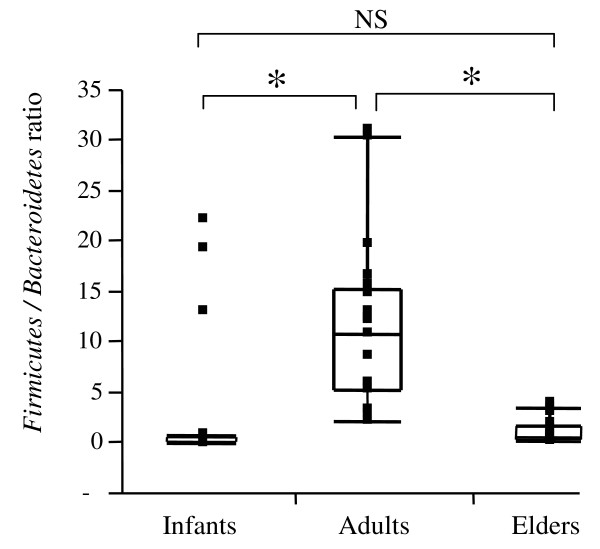
BACKGROUND: In humans, the intestinal microbiota plays an important role in the maintenance of host health by providing energy, nutrients, and immunological protection. Applying current molecular methods is necessary to surmount the limitations of classical culturing techniques in order to obtain an accurate description of the microbiota composition. RESULTS: Here we report on the comparative assessment of human fecal microbiota from three age-groups: infants, adults and the elderly. We demonstrate that the human intestinal microbiota undergoes maturation from birth to adulthood and is further altered with ageing. The counts of major bacterial groups Clostridium leptum, Clostridium coccoides, Bacteroidetes, Bifidobacterium, Lactobacillus and Escherichia coli were assessed by quantitative PCR (qPCR). By comparing species diversity profiles, we observed age-related changes in the human fecal microbiota. The microbiota of infants was generally characterized by low levels of total bacteria. C. leptum and C. coccoides species were highly represented in the microbiota of infants, while elderly subjects exhibited high levels of E. coli and Bacteroidetes. We observed that the ratio of Firmicutes to Bacteroidetes evolves during different life stages. For infants, adults and elderly individuals we measured ratios of 0.4, 10.9 and 0.6, respectively. CONCLUSION: In this work we have confirmed that qPCR is a powerful technique in studying the diverse and complex fecal microbiota. Our work demonstrates that the fecal microbiota composition evolves throughout life, from early childhood to old age.
Overview
The claims and statistics of this paper haven’t been checked yet.
Free: it reads the open-access text and checks the first 5 claims that cite a source we can check. Create a free account to check every claim.
Integrity signals
Registry
Cites
Statistics
Figures
Verification
Claims the paper makes
The claims and statistics of this paper haven’t been checked yet.
Free: it reads the open-access text and checks the first 5 claims that cite a source we can check. Create a free account to check every claim.
Claims other papers make about this one
Each is checked against this paper’s own text: does it say what the citing paper says it does?
The source backs part of the claim, not all of it — or backs it for a different population, condition or comparison.
In the citing paper
“A reduced Firmicutes:Bacteroidetes ratio has been reported in Irish and French elderly compared to young adults”
From The Microbiota-Gut-Brain Axis (2019) · cites this paper as Mariat et al., 2009
Experimental — accuracy not yet measuredIn the citing paper
“The disappearance of these microorganisms is important because they normally counteract the expansion of pathogenic microbial communities, while also maintaining intestinal barrier integrity by fermenting starches and dietary fibres and producing mucus and lipid metabolites, such as short-chain fatty acids (primarily acetate, propionate, and butyrate)66–68.”
From Inflammageing: chronic inflammation in ageing, cardiovascular disease, and frailty (2018) · cites this paper as [66]
In the citing paper
“Despite large variability in the gut microbiota found in different populations, geographic regions, and settings, evidence suggests that ageing is associated with a reduction in beneficial commensal microorganisms — such as Coprococcus, Faecalibacterium, and Lactobacillus — as well as a decrease in the Firmicutes: Bacteroidetes ratio66–68.”
From Inflammageing: chronic inflammation in ageing, cardiovascular disease, and frailty (2018) · cites this paper as [66]
In the citing paper
“In fact it has been reported that breast-fed infants generally harbor a more complex and numerous Bifidobacterium microbiota than formula-fed infants (19, 20).”
From Bifidobacteria and Their Health-Promoting Effects (2017) · cites this paper as [19]
In the citing paper
“An increased F/B ratio, caused by an expansion of Firmicutes and/or a contraction of Bacteroidetes, has been widely considered a signature of gut dysbiosis and has been associated with obesity, diabetes, and CVD8, 13, 16.”
From Gut Dysbiosis Is Linked to Hypertension (2015) · cites this paper as [8]
1 more claim about this paper
Create a free account to see every claim other papers make about this one.
Self-check
Percentages, sums and reported differences re-computed from the paper’s own numbers.
The self-check needs the paper’s full text.
Citations
Cites
Human gut microbes associated with obesity
Ley, R. E., Turnbaugh, P. J., Klein, S., & Gordon, J. I. (2006) · Nature · doi:10.1038/4441022a · Cited by 8,785 · cited 4×
“[7] when a correlation between body weight and gut microbial ecology was analysed.”
BackgroundInfluentialDiversity of the Human Intestinal Microbial Flora
Eckburg, P. B., Bik, E. M., Bernstein, C. N., Purdom, E., Dethlefsen, L., Sargent, M., Gill, S. R., Nelson, K. E., & Relman, D. A. (2005) · Science · doi:10.1126/science.1110591 · Cited by 7,913 · cited 1×
“This has markedly increased the information available concerning the complexity of the human bowel microbiota, from which over 1250 Operational Taxonomic Units have been identified corresponding to several dominant phyla [4,5].”
BackgroundHost-Bacterial Mutualism in the Human Intestine
Bäckhed, F., Ley, R. E., Sonnenburg, J. L., Peterson, D. A., & Gordon, J. I. (2005) · Science · doi:10.1126/science.1104816 · Cited by 5,277 · cited 1×
“The major functions attributed to the microbiota present in the gut begin to manifest at the end of the second year of life and comprise: i) nutrients absorption and food fermentation [10], ii) stimulation of the host immune system [11] and iii) barrier effects against pathogens [12].”
BackgroundDevelopment of the Human Infant Intestinal Microbiota
Palmer, C., Bik, E. M., DiGiulio, D. B., Relman, D. A., & Brown, P. O. (2007) · PLoS Biology · doi:10.1371/journal.pbio.0050177 · Cited by 2,877 · cited 1×
“Establishment of the intestinal microbiota has been shown to be a progressive process [9].”
BackgroundMICROBIAL ECOLOGY OF THE GASTROINTESTINAL TRACT
Savage, D. C. (1977) · Annual Review of Microbiology · doi:10.1146/annurev.mi.31.100177.000543 · Cited by 2,436 · cited 1×
“methods for more accurately assessing its composition and diversity, formerly thought to contain a mere 400– 500 bacterial species [2].”
MethodReduced diversity of faecal microbiota in Crohn’s disease revealed by a metagenomic approach
Manichanh, C., Rigottier-Gois, L., Bonnaud, E., Gloux, K., Pelletier, E., Frangeul, L., Nalin, R., Jarrin, C., Chardon, P., Marteau, P., et al. (2006) · Gut · doi:10.1136/gut.2005.073817 · Cited by 2,277 · cited 1×
“This has markedly increased the information available concerning the complexity of the human bowel microbiota, from which over 1250 Operational Taxonomic Units have been identified corresponding to several dominant phyla [4,5].”
BackgroundSelf-citationInteractions between commensal intestinal bacteria and the immune system
Macpherson, A. J., & Harris, N. L. (2004) · Nature Reviews Immunology · doi:10.1038/nri1373 · Cited by 1,610
Anatomical basis of tolerance and immunity to intestinal antigens
Mowat, A. M. (2003) · Nature Reviews Immunology · doi:10.1038/nri1057 · Cited by 1,415 · cited 1×
“The major functions attributed to the microbiota present in the gut begin to manifest at the end of the second year of life and comprise: i) nutrients absorption and food fermentation [10], ii) stimulation of the host immune system [11] and iii) barrier effects against pathogens [12].”
BackgroundHarmsen, H. J. M., Wildeboer–Veloo, A. C. M., Raangs, G. C., Wagendorp, A. A., Klijn, N., Bindels, J. G., & Welling, G. W. (2000) · Journal of Pediatric Gastroenterology and Nutrition · doi:10.1002/j.1536-4801.2000.tb02655.x · Cited by 1,337
Franks, A. H., Harmsen, H. J. M., Raangs, G. C., Jansen, G. J., Schut, F., & Welling, G. W. (1998) · Applied and Environmental Microbiology · doi:10.1128/aem.64.9.3336-3345.1998 · Cited by 1,056 · cited 1×
“Once climax composition is achieved near the end of adolescence, this ecosystem displays a high stability in healthy adults [13].”
Background
Cited by
Items 601–700 of 1,003
Gut-microbiota-on-a-chip: an enabling field for physiological research
Trujillo-de Santiago, G., Lobo-Zegers, M. J., Montes-Fonseca, S. L., Zhang, Y. S., & Alvarez, M. M. (2018) · Microphysiological Systems · doi:10.21037/mps.2018.09.01 · Cited by 43
“Within an individual, the microbiota composition varies across age (2,59,60).”
BackgroundGut Microbiota and Microbiota-Related Metabolites as Possible Biomarkers of Cognitive Aging
Ticinesi, A., Nouvenne, A., Tana, C., Prati, B., & Meschi, T. (2019) · Advances in experimental medicine and biology · doi:10.1007/978-3-030-25650-0_8 · Cited by 52
Intestinal Dysbiosis in Carriers of Carbapenem-Resistant Enterobacteriaceae
Korach-Rechtman, H., Hreish, M., Fried, C., Gerassy-Vainberg, S., Azzam, Z. S., Kashi, Y., & Berger, G. (2020) · mSphere · doi:10.1128/msphere.00173-20 · Cited by 48
“The ratio of Firmicutes to Bacteroidetes, considered highly relevant in human gut microbiota composition (12, 13), was lowest in the CRE carriers”
BackgroundThe gut microbiota and Bergmann’s rule in wild house mice
Suzuki, T. A., Martins, F. M., Phifer‐Rixey, M., & Nachman, M. W. (2020) · Molecular Ecology · doi:10.1111/mec.15476 · Cited by 46
“However, the F/B ratio is also associated with many other factors, including diet (De Filippo et al., 2010), age (Mariat et al., 2009) and inflammation (Hansen, Gulati, & Sartor, 2010).”
van der Kooij, M. K., Wetzels, M. J. A. L., Aarts, M. J. B., van den Berkmortel, F. W. P. J., Blank, C. U., Boers‐Sonderen, M. J., Dierselhuis, M. P., de Groot, J. W. B., Hospers, G. A. P., Piersma, D., et al. (2020) · Cancers · doi:10.3390/cancers12082072 · Cited by 51
“It is unclear, however, whether AYAs have a higher proportion of Bacteroidetes than older adults, as recent studies have shown contradicting results [25,26].”
ResultLi, Y., Zafar, S., Ibrahim, R. M. S., Chi, H., Xiao, T., Xia, W., Li, H., & Kang, Y. (2021) · Life Sciences · doi:10.1016/j.lfs.2021.119097 · Cited by 44
Pereira, T. D. M. C., Côco, L. Z., Ton, A. M. M., Meyrelles, S. S., Campos‐Toimil, M., Campagnaro, B. P., & Vasquez, E. C. (2021) · Antioxidants · doi:10.3390/antiox10111845 · Cited by 72
Hao, Y., Ji, Z., Shen, Z., Xue, Y., Zhang, B., Yu, D., Liu, T., Luo, D., Xing, G., Tang, J., et al. (2022) · Frontiers in Microbiology · doi:10.3389/fmicb.2022.853797 · Cited by 48
Dhami, M., Raj, K., & Singh, S. (2023) · Aging and Health Research · doi:10.1016/j.ahr.2023.100128 · Cited by 52
An accurate aging clock developed from large-scale gut microbiome and human gene expression data
Gopu, V., Cai, Y., Krishnan, S., Rajagopal, S., Camacho, F. R., Toma, R., Torres, P. J., Vuyisich, M., Perlina, A., Banavar, G. S., et al. (2023) · iScience · doi:10.1016/j.isci.2023.108538 · Cited by 43
Wu, H., Zhang, P., Zhou, J., Hu, S., Hao, J., Zhong, Z., Yu, H., Yang, J., Chi, J., & Guo, H. (2024) · American Journal of Physiology-Cell Physiology · doi:10.1152/ajpcell.00565.2023 · Cited by 43
Influence of human gut microbiome on the healthy and the neurodegenerative aging
Borrego-Ruiz, A., & Borrego, J. J. (2024) · Experimental Gerontology · doi:10.1016/j.exger.2024.112497 · Cited by 48
Age and Microenvironment Outweigh Genetic Influence on the Zucker Rat Microbiome
Lees, H., Swann, J. R., Poucher, S. M., Nicholson, J. K., Holmes, E. C., Wilson, I. D., & Marchesi, J. R. (2014) · PLoS ONE · doi:10.1371/journal.pone.0100916 · Cited by 49
“in contrast to the findings of previous investigators [8,35].”
ResultThe microbial epigenome in metabolic syndrome
Remely, M., & Haslberger, A. G. (2016) · Molecular Aspects of Medicine · doi:10.1016/j.mam.2016.09.003 · Cited by 42
“The ratio of Firmicutes to Bacteroidetes is mentioned as a marker for human health, with an imbalance leading to various diseases (Mariat et al., 2009).”
BackgroundIntestinal microbiome in scleroderma: recent progress
Volkmann, E. R. (2017) · Current Opinion in Rheumatology · doi:10.1097/bor.0000000000000429 · Cited by 43
High relative abundance of firmicutes and increased TNF-α levels correlate with obesity in children
Orbe-Orihuela, Y. C., Lagunas-Martínez, A., Bahena-Román, M., Madrid‐Marina, V., Torres-Poveda, K., Flores‐Alfaro, E., Méndez-Padrón, A., Díaz-Benítez, C. E., Peralta-Zaragoza, Ó., Antúnez-Ortiz, D. L., et al. (2017) · Salud Pública de México · doi:10.21149/8133 · Cited by 47
Microbiota and Immune-Mediated Skin Diseases—An Overview
Cătinean, A., Neag, M. A., Mitre, A. O., Bocșan, I. C., & Buzoianu, A. D. (2019) · Microorganisms · doi:10.3390/microorganisms7090279 · Cited by 49
Dávidová‐Geržová, L., Videnska, P., Faldynová, M., Sedlář, K., Provazník, I., Čížek, A., & Rychlík, I. (2014) · PLoS ONE · doi:10.1371/journal.pone.0103865 · Cited by 47
“However, the composition of ornamental fish carriage water samples was similar to that of fresh water aquatic environments [12,21], and mostly differed from fish gut microbiota [16,22,23], sea water microbiota, or even fecal material of warm blooded animals [11,15,17,24,25].”
BackgroundHaimov, I., Magzal, F., Tamir, S., Lalzar, M., Asraf, K., Milman, U., Agmon, M., & Shochat, T. (2022) · Nature and Science of Sleep · doi:10.2147/nss.s377114 · Cited by 45
“Firmicutes and Bacteroidetes are the two main bacterial phyla in the gastrointestinal tract of healthy adults.(41) The ratio between these two phyla (the Firmicutes/Bacteroidetes (F/B) ratio) has been associated with gut microbiota homeostasis, and changes in the ratio could lead to various pathologies.”
BackgroundGao, M., Tu, H., Liu, P., Zhang, Y., Zhang, R., Jing, L., & Zhang, K. (2023) · Journal of Affective Disorders · doi:10.1016/j.jad.2023.02.143 · Cited by 47
Exploiting the interactions between plant proteins and gut microbiota to promote intestinal health
Jia, J., Dell’Olio, A., Izquierdo-Sandoval, D., Capuano, E., Liu, X., Duan, X., & Rubert, J. (2024) · Trends in Food Science & Technology · doi:10.1016/j.tifs.2024.104749 · Cited by 43
Kwok, L. Y., Zhang, J., Guo, Z., Gesudu, Q., Zheng, Y., Qiao, J., Huo, D., & Zhang, H. (2014) · PLoS ONE · doi:10.1371/journal.pone.0093631 · Cited by 48
“[34] reported the correlation of age with the fecal F/B ratio (0.”
BackgroundKhanna, S., & Pardi, D. S. (2016) · Expert Review of Gastroenterology & Hepatology · doi:10.1586/17474124.2016.1158097 · Cited by 53
Bishehsari, F., Saadalla, A. M., Khazaie, K., Engen, P. A., Voigt, R. M., Shetuni, B., Forsyth, C. B., Shaikh, M. W., Vitaterna, M. H., Turek, F. W., et al. (2016) · International Journal of Molecular Sciences · doi:10.3390/ijms17122017 · Cited by 44
“The altered ratio of these phyla has been associated with a variety of inflammation-driven chronic pathologies, including metabolic syndrome and cancer [33,34].”
BackgroundHall, J. A., Vondran, J. C., Vanchina, M. A., & Jewell, D. E. (2018) · Journal of Experimental Biology · doi:10.1242/jeb.173450 · Cited by 52
“Studies in humans show that, with increasing age, changes occur in the composition of the intestinal microflora, with a reduction in species diversity in most bacterial groups (Mariat et al., 2009; Woodmansey, 2007).”
BackgroundThe gut microbiome and frailty
Piggott, D. A., & Tuddenham, S. (2020) · Translational research · doi:10.1016/j.trsl.2020.03.012 · Cited by 46
Different Bacteroides Species Colonise Human and Chicken Intestinal Tract
Kollarcikova, M., Faldynová, M., Matiasovicova, J., Jahodářová, E., Kubasová, T., Seidlerová, Z., Babák, V., Videnska, P., Čížek, A., & Rychlík, I. (2020) · Microorganisms · doi:10.3390/microorganisms8101483 · Cited by 46
Panpetch, W., Kullapanich, C., Dang, C. P., Visitchanakun, P., Saisorn, W., Wongphoom, J., Wannigama, D. L., Thim-uam, A., Patarakul, K., Somboonna, N., et al. (2021) · mSystems · doi:10.1128/msystems.01187-20 · Cited by 45
“However, L34 did not alter fecal total Gram-negative bacteria, a source of fecal LPS, and the ratio of Bacteroides/Firmicutes in feces, an indicator of microbiota alterations (68), but increased Proteobacteria.”
BackgroundModulation of faecal metagenome in Crohn’s disease: Role of microRNAs as biomarkers
Rojas-Feria, M., Romero-García, T., Caballero-Rico, J. Á. F., Pastor‐Ramírez, H., Avilés-Recio, M., Castro‐Fernández, M., Chueca, N., Romero‐Gómez, M., García, F., Grande, L., et al. (2018) · World Journal of Gastroenterology · doi:10.3748/wjg.v24.i46.5223 · Cited by 43
Kumar, H., Park, W., Lim, D., Srikanth, K., Kim, J., Jia, X., Han, J.-L., Hanotte, O., Park, J., & Oyola, S. O. (2019) · Genomics · doi:10.1016/j.ygeno.2019.11.011 · Cited by 58
Gao, H., Chi, X., Li, G., Qin, W., Song, P., Jiang, F., Liu, D., Zhang, J., Zhou, X., Li, S., et al. (2020) · MicrobiologyOpen · doi:10.1002/mbo3.1025 · Cited by 50
Kang, G.-U., Jung, D.-R., Lee, Y. H., Jeon, S. Y., Han, H. S., Chong, G. O., & Shin, J. (2020) · Cancers · doi:10.3390/cancers12123800 · Cited by 44
Moore, J. H., Pinheiro, C. C. D., Zaenker, E. I., Bolick, D. T., Kolling, G. L., van Opstal, E. J., Noronha, F. J., de Medeiros, P. H. Q. S., Rodriguez, R. S., Lima, A. Â. M., et al. (2015) · PLoS ONE · doi:10.1371/journal.pone.0131829 · Cited by 47
Does Whole Grain Consumption Alter Gut Microbiota and Satiety?
Cooper, D., Martin, R., & Keim, N. (2015) · Healthcare · doi:10.3390/healthcare3020364 · Cited by 40
“However, the ratio of Firmicutes to Bacteroidetes may vary with a number of non-diet-related factors; one study showed that the ratio of Firmicutes to Bacteroidetes changes with age [39,40].”
BackgroundAgeing, immunity and influenza: a role for probiotics?
Yaqoob, P. (2014) · Proceedings of the Nutrition Society · doi:10.1017/s0029665113003777 · Cited by 40
Wen, Y., Li, R., Piao, X., Lin, G., & He, P. (2021) · Animal nutrition · doi:10.1016/j.aninu.2021.10.007 · Cited by 42
“This is of interest as an increased ratio of Firmicutes to Bacteroidetes is an important occurrence marker of obesity (Mariat et al., 2009).”
BackgroundLandsiedel, R., Hahn, D., Ossig, R., Ritz, S., Sauer, L., Buesen, R., Rehm, S. R., Wohlleben, W., Groeters, S., Strauss, V., et al. (2022) · Particle and Fibre Toxicology · doi:10.1186/s12989-022-00459-w · Cited by 42
“Such a decrease has been described as an important parameter for microbial dysbiosis [2, 60].”
BackgroundGaber, M. K., Wilson, A. S., Millen, A. E., Hovey, K. M., LaMonte, M. J., Wactawski‐Wende, J., Ochs‐Balcom, H. M., & Cook, K. L. (2024) · Microbiome · doi:10.1186/s40168-024-01901-1 · Cited by 41
Kumari, T., Bag, K. K., Das, A. B., & Deka, S. C. (2024) · Food Bioengineering · doi:10.1002/fbe2.12107 · Cited by 49
Tian, B., Zhao, J., An, W., Zhang, J., Cao, X., Mi, J., Zhao, J., Zhang, Y., & Li, J. (2018) · Journal of Functional Foods · doi:10.1016/j.jff.2018.11.034 · Cited by 41
Su, A., Ma, G., Xie, M., Ji, Y., Li, X., Zhao, L., & Hu, Q. (2019) · International Journal of Food Science & Technology · doi:10.1111/ijfs.14142 · Cited by 40
The gut microbiome in differential diagnosis of diabetic kidney disease and membranous nephropathy
Yu, W., Shang, J., Guo, R., Zhang, F., Zhang, W., Zhang, Y., Wu, F., Ren, H., Liu, C., Xiao, J., et al. (2020) · Renal Failure · doi:10.1080/0886022x.2020.1837869 · Cited by 42
Evidence for the Contribution of Gut Microbiota to Age-Related Anabolic Resistance
Watson, M. D., Cross, B. L., & Grosicki, G. J. (2021) · Nutrients · doi:10.3390/nu13020706 · Cited by 39
“Although human gut microbiome composition seems relatively stable throughout early life, recent studies have highlighted distinct shifts in microbiota in later years (≥65 yrs) [27,28].”
BackgroundLikotrafiti, E., Tuohy, K. M., Gibson, G. R., & Rastall, R. A. (2013) · Anaerobe · doi:10.1016/j.anaerobe.2013.01.002 · Cited by 43
Braun, T., Segni, A. D., BenShoshan, M., Asaf, R., Squires, J. E., Barhom, S. F., Saar, E. G., Cesarkas, K., Smollan, G., Weiss, B., et al. (2017) · Scientific Reports · doi:10.1038/s41598-017-01217-1 · Cited by 45
Granata, M., Brandi, G., Borsari, A., Gasbarri, R., & Gioia, D. D. (2012) · International Journal of Food Sciences and Nutrition · doi:10.3109/09637486.2012.718742 · Cited by 41
“influenced by the considerable variation in the composition of the intestinal microbiota among elderly individuals, as has already been evidenced in several other studies (Woodmansey et al. 2004; Mariat et al. 2009; Claesson et al. 2011).”
ResultInfluentialHIV and aging: role of the microbiome
Desai, S. N., & LANDAY, A. L. (2017) · Current Opinion in HIV and AIDS · doi:10.1097/coh.0000000000000433 · Cited by 45
Impact of Gut Microbiome Manipulation in 5xFAD Mice on Alzheimer’s Disease-Like Pathology
Guilherme, M. D. S., Nguyen, V. T. T., Reinhardt, C., & Endres, K. (2021) · Microorganisms · doi:10.3390/microorganisms9040815 · Cited by 41
Age-associated changes in innate and adaptive immunity: role of the gut microbiota
Gao, H., Nepovimová, E., Adam, V., Heger, Z., Valko, M., Wu, Q., & Kuča, K. (2024) · Frontiers in Immunology · doi:10.3389/fimmu.2024.1421062 · Cited by 47
“Firmicutes and Bacteroidetes were the dominant bacterial phyla in the intestinal tract during the stable phase (258 – 260), however, there were signi fi cant differences in families and genera between children and adults.”
BackgroundXu, J., Li, F., Zheng, M., Li, S., Shi, D., & Song, K. (2024) · Plants · doi:10.3390/plants13243557 · Cited by 40
Lai, Y.-T., Qiu, R.-R., Zhou, J., Ren, L., Qu, Y., & Zhang, G. (2025) · Inflammation · doi:10.1007/s10753-024-02233-w · Cited by 47
“Changes in dominant bacterial genera at different stages indicate changes in the way the body metabolizes and simultaneous production of SCFAs [37].”
Sugahara, H., Okai, S., Odamaki, T., Wong, C. B., Kato, K., Mitsuyama, E., Xiao, J., & Shinkura, R. (2017) · Frontiers in Microbiology · doi:10.3389/fmicb.2017.01757 · Cited by 42
“…(Mitsuoka and Hayakawa, 1973; Mitsuoka, 2014; Arboleya et al., 2016; Odamaki et al., 2016) while Enterobacteriaceae and C. perfringens which is assigned to the family Clostridiaceae increased in elderly people (Mitsuoka and Hayakawa, 1973; Mariat et al., 2009; Mitsuoka, 2014; Odamaki et al., 2016).”
BackgroundThe alterations of gut microbiota in mice with chronic pancreatitis
Han, M., Zhu, X., Peng, Y., Lin, H., Liu, D., & Li, L. (2019) · Annals of Translational Medicine · doi:10.21037/atm.2019.08.18 · Cited by 40
“Indeed, the ratio of Firmicutes/Bacteroidetes has been used as a significant indicator to estimate the status of human gut microbes (37,38).”
BackgroundSex-related Alterations of Gut Microbiota in the C57BL/6 Mouse Model of Inflammatory Bowel Disease
Son, H. J., Kim, N., Song, C., Nam, R. H., Choi, S. I., Kim, J. S., & Lee, D. H. (2019) · Journal of Cancer Prevention · doi:10.15430/jcp.2019.24.3.173 · Cited by 42
“F/B ratio is a representative index comparing different microbial communities [44].”
BackgroundLiu, H., Zhao, X., Han, X., Xu, S., Zhao, L., Hu, L., Xu, T., Zhao, N., Zhang, X., Chen, D., et al. (2020) · PeerJ · doi:10.7717/peerj.9032 · Cited by 37
“This has been confirmed by former studies on intestinal microbial diversity in mammals (Mariat et al., 2009; Middelbos et al., 2010; Sahu & Kamra, 2002), as these microorganisms facilitate the digestion of cellulose and hemicellulose in the diet (Wu et al.”
ResultWatanabe, D., Murakami, H., Ohno, H., Tanisawa, K., Konishi, K., Tsunematsu, Y., Sato, M., Miyoshi, N., Wakabayashi, K., Watanabe, K., et al. (2020) · Scientific Reports · doi:10.1038/s41598-020-72245-7 · Cited by 40
Sheng, L., Jena, P. K., Hu, Y. C., & Wan, Y. Y. (2021) · HepatoBiliary Surgery and Nutrition · doi:10.21037/hbsn-20-671 · Cited by 39
Influence of immunomodulatory drugs on the gut microbiota
Cohen, I., Ruff, W. E., & Longbrake, E. E. (2021) · Translational research · doi:10.1016/j.trsl.2021.01.009 · Cited by 39
Kimble, R., Keane, K. M., Lodge, J. K., & Howatson, G. (2021) · Nutrients · doi:10.3390/nu13051417 · Cited by 38
“However, in the current study, middle-aged adults likely have higher numbers and diversity of protective microbial species [53,54]; hence, they are less amenable to these changes [25].”
BackgroundGemikonakli, G., Mach, J., Zhang, F., Bullock, M., Tran, T., El-Omar, E. M., & Hilmer, S. N. (2022) · The Journals of Gerontology Series A · doi:10.1093/gerona/glac195 · Cited by 42
“Similarly, in cross-sectional human gut microbiota studies, Firmicutes decreases with increasing age, while Bacteroidetes increases (44), trends most pronounced in adults living in nursing homes compared with those living in the community (16).”
BackgroundAging and the Biological Response to Liver Injury
Marzioni, M., Pinto, C., Ninfole, E., Gaggiano, L., Benedetti, A., & Maroni, L. (2020) · Seminars in Liver Disease · doi:10.1055/s-0039-3402033 · Cited by 36
Zacharias, H. U., Kaleta, C., Cossais, F., Schaeffer, E., Berndt, H., Best, L., Dost, T., Glüsing, S., Groussin, M., Poyet, M., et al. (2022) · Metabolites · doi:10.3390/metabo12121222 · Cited by 41
“Bacteria of the Firmicutes phylum (including butyrate producers) are reduced in aged individuals [99] as well as in AD patients [100], and furthermore in the AD mouse models 5xFAD [101] and P301L [102].”
BackgroundVolf, J., Polanský, O., Varmužová, K., Dávidová‐Geržová, L., Sekelová, Z., Faldynová, M., Babák, V., Medvecký, M., Smith, A. L., Kaspers, B., et al. (2016) · PLoS ONE · doi:10.1371/journal.pone.0163932 · Cited by 38
Zhang, W., Su, W., Li, P., Rao, H., Lin, Q., Zeng, X., Chen, T., Yan, Z., Liu, H., & Yao, H. (2019) · Frontiers in Pharmacology · doi:10.3389/fphar.2019.01128 · Cited by 41
Guan, Y., Chen, K., Quan, D., Kang, L., Yang, D., Wu, H., Yan, M., Wu, S., Lv, L., & Zhang, G. (2021) · Frontiers in Pharmacology · doi:10.3389/fphar.2020.575294 · Cited by 44
“An imbalance in gut microbiota is quantified the changes via the ratio of F/B, which can be used as a biomarker for pathological conditions (Mariat et al., 2009; Hevia et al., 2014; Koliada et al., 2017).”
BackgroundA Comparison Study of Age and Colorectal Cancer-Related Gut Bacteria
Zhang, Y., Zhang, Q., Wang, Y., Zhang, W., Hu, H., Wu, H., Sheng, X.-Z., Luo, K., Zhang, H., Wang, M., et al. (2021) · Frontiers in Cellular and Infection Microbiology · doi:10.3389/fcimb.2021.606490 · Cited by 43
“age, diet, and tumor can affect the bacterial community (Mariat et al., 2009; Arkan, 2017; Deshpande et al., 2018).”
BackgroundMicrobiota: Overview and Implication in Immunotherapy-Based Cancer Treatments
Brandi, G., & Frega, G. (2019) · International Journal of Molecular Sciences · doi:10.3390/ijms20112699 · Cited by 38
“Autochthonous bacteria should be considered dominant (>107 CFU/g) or subdominant (<107 CFU/g) depending on their concentration [7,8].”
BackgroundCalorie restriction prevents age-related changes in the intestinal microbiota
Kurup, K., Matyi, S., Giles, C. B., Wren, J. D., Jones, K. L., Ericsson, A. C., Raftery, D., Wang, L., Promislow, D., Richardson, A. G., et al. (2021) · Aging · doi:10.18632/aging.202753 · Cited by 42
He, N., Yang, Y., Wang, H., Liu, N., Yang, Z., & Li, S. (2021) · Journal of Functional Foods · doi:10.1016/j.jff.2021.104536 · Cited by 37
Li, H., Wang, Y., Zhao, C., Liu, J., Zhang, L., & Li, A. (2022) · Chinese Medical Journal · doi:10.1097/cm9.0000000000001885 · Cited by 37
“[24] Studies on the intestinal flora of patients with neurological diseases, such as Alzheimer disease and autism, also revealed significant increases in Firmicutes and/or decreases in Bacteroidetes,[25-27] as well as lower ratios of Firmicutes to Bacteroidetes.”
BackgroundChiu, L. S., & Anderton, R. S. (2022) · European Journal of Neuroscience · doi:10.1111/ejn.15892 · Cited by 37
“There appear to be stark differences in microbiota composition between infants, adults, and the elderly (Mariat et al., 2009), shifting at critical points that coincide with neurodevelopment and behaviour (Borre et al., 2014).”
BackgroundCao, T., Wang, S., Pan, Y., Guo, F., Wu, B., Zhang, Y., Wang, Y., Tian, J., Xing, Q., & Liu, X. (2023) · Frontiers in Microbiology · doi:10.3389/fmicb.2023.1182320 · Cited by 41
Hobden, M. R., Guérin‐Deremaux, L., Rowland, I. R., Gibson, G. R., & Kennedy, O. B. (2015) · Proceedings of The Nutrition Society · doi:10.1017/s0029665115000087 · Cited by 39
“The composition and metabolic activity of the gut microbiota are influenced by a range of host characteristics, including genetic background((43)), age((44)), sex((45)), diet((46)), physical activity levels((47)), medication usage((48)), gastrointestinal surgery((49)), geographical location((45)) and delivery mode at…”
BackgroundTuomisto, S., Karhunen, P. J., & Pessi, T. (2013) · Gut Pathogens · doi:10.1186/1757-4749-5-35 · Cited by 35
“Compared to these two major phyla, Bifidobacterium genus is present in eight to ten-fold lower numbers [8].”
BackgroundDeng, L., Tay, H., Peng, G., Lee, J. W. J., & Tan, K. S. W. (2021) · Parasites & Vectors · doi:10.1186/s13071-021-04749-8 · Cited by 36
Intestinal Microbiota in Common Chronic Inflammatory Disorders Affecting Children
Torun, A., Hupalowska, A., Trzonkowski, P., Kierkuś, J., & Pyrzyńska, B. (2021) · Frontiers in Immunology · doi:10.3389/fimmu.2021.642166 · Cited by 42
“microbiota and is lower in infants and the elderly compared to that in adults (40).”
ResultInfluence of the Gut Microbiome on Feed Intake of Farm Animals
Wessels, A. G. (2022) · Microorganisms · doi:10.3390/microorganisms10071305 · Cited by 42
Early intestinal microbiota changes in aged and adult mice with sepsis
Yuan, Y., Liu, S., Ding, X., Li, Y., Zhang, X., Song, H., Qi, X., Zhang, Z., Guo, K., & Sun, T. (2022) · Frontiers in Cellular and Infection Microbiology · doi:10.3389/fcimb.2022.1061444 · Cited by 38
“It is generally believed that the ratio of Firmicutes to Bacteroidetes is strongly correlated with health and disease (Mariat et al., 2009).”
BackgroundHypotheses of the origin of natural antibodies: A glycobiologist’s opinion
Khasbiullina, N. R., & Bovin, N. V. (2015) · Biochemistry (Moscow) · doi:10.1134/s0006297915070032 · Cited by 37
“From the moment of birth, the gastrointestinal tract and respiratory system in mammals are actively colonized by bacteria [42, 43].”
BackgroundTherapeutic Potential of the Microbiome in the Treatment of Neuropsychiatric Disorders
Evrensel, A., Ünsalver, B. Ö., & Ceylan, M. E. (2019) · Medical Sciences · doi:10.3390/medsci7020021 · Cited by 36
“The ratio of Firmicutes/Bacteroidetes is estimated to be approximately 11% [22].”
BackgroundUntapped potential of gut microbiome for hypertension management
Gao, K., Wang, P., Mei, X., Yang, T., & Yu, K. (2024) · Gut Microbes · doi:10.1080/19490976.2024.2356278 · Cited by 40
Epigenetic Mechanisms in Aging: Extrinsic Factors and Gut Microbiome
Borrego-Ruiz, A., & Borrego, J. J. (2024) · Genes · doi:10.3390/genes15121599 · Cited by 36
“Research has revealed that the ratio of Bacillota/Bacteroidota phyla decreases with age, dropping from 10.9 in individuals aged 25–45 years old to 0.6 in those over 70 years old [285–287].”
InfluentialNelson, T. A., Holmes, S., Alekseyenko, A. V., Shenoy, M., Desantis, T., Wu, C. H., Andersen, G. L., Winston, J., Sonnenburg, J., Pasricha, P. J., et al. (2011) · Neurogastroenterology & Motility · doi:10.1111/j.1365-2982.2010.01637.x · Cited by 33
Villamil, S. I., Huerlimann, R., Morianos, C., Sarnyai, Z., & Maes, G. E. (2017) · Nutrition Research · doi:10.1016/j.nutres.2017.11.008 · Cited by 38
Gut Microbiome in Critical Illness (Review)
Chernevskaya, E., & Nv, B. (2018) · General Reanimatology · doi:10.15360/1813-9779-2018-5-96-119 · Cited by 40
Murray, E., Smith, K. B., Stoby, K. S., Thomas, B. J., Swenson, M. J., Arber, L., Frenette, E., & Ismail, N. (2019) · Psychoneuroendocrinology · doi:10.1016/j.psyneuen.2019.104481 · Cited by 35
Liu, K., Zhang, Y., Li, Q., Li, H., Long, D., Yan, S., Huang, W., Long, R., & Huang, X. (2020) · Microorganisms · doi:10.3390/microorganisms8020254 · Cited by 33
“The relative proportions of Firmicutes and Bacteroidetes are reportedly influenced by many factors [32,33].”
BackgroundCrowe, J., Lumb, F. E., Doonan, J., Broussard, M., Tarafdar, A., Pineda, M. A., Landabaso, C., Mulvey, L., Hoskisson, P. A., Babayan, S. A., et al. (2020) · PLoS Pathogens · doi:10.1371/journal.ppat.1008391 · Cited by 36
“Typically, whilst the ratio of Bacteriodetes:Firmicutes increases from birth through to adulthood, it subsequently remains relatively stable in healthy individuals before decreasing in old age [51].”
BackgroundGan, L., Fan, H., Mahmood, T., & Guo, Y. (2020) · Poultry Science · doi:10.1016/j.psj.2020.03.062 · Cited by 38
Gastrointestinal surgery and the gut microbiome: a systematic literature review
Ferrie, S., Webster, A., Wu, B., Tan, C. Q. Y., & Carey, S. (2020) · European Journal of Clinical Nutrition · doi:10.1038/s41430-020-0681-9 · Cited by 35
Watanabe, S., Kameoka, S., Shinozaki, N. O., Ryuichi, K. U. B. O., Nishida, A., Kuriyama, M., & Takeda, A. (2021) · Bioscience of Microbiota Food and Health · doi:10.12938/bmfh.2020-038 · Cited by 38
Jollet, M., Nay, K., Chopard, A., Bareille, M., Beck, A., Ollendorff, V., Vernus, B., Bonnieu, A., Mariadassou, M., Rué, O., et al. (2021) · Nutrients · doi:10.3390/nu13113865 · Cited by 35
Cremonesi, P., Curone, G., Biscarini, F., Cotozzolo, E., Menchetti, L., Riva, F., Marongiu, M. L., Castiglioni, B., Barbato, O., Munga, A., et al. (2022) · Animals · doi:10.3390/ani12010121 · Cited by 38
“In obese people, the population of Firmicutes shows an elevated proportion with a reduced Bacteroidetes population; this unbalance causes an altered F:B ratio [62].”
BackgroundHost Age Prediction from Fecal Microbiota Composition in Male C57BL/6J Mice
Low, A., Soh, M., Miyake, S., & Seedorf, H. (2022) · Microbiology Spectrum · doi:10.1128/spectrum.00735-22 · Cited by 38
“microbiome differs at different phases of life (2, 3).”
BackgroundBrooks, C. N., Wight, M. E., Azeez, O. E., Bleich, R. M., & Zwetsloot, K. A. (2023) · Frontiers in Sports and Active Living · doi:10.3389/fspor.2023.1168731 · Cited by 38
Chen, S., Huang, L., Liu, B., Duan, H., Li, Z., Liu, Y., Li, H., Fu, X., Lin, J., Xu, Y., et al. (2023) · Science China Life Sciences · doi:10.1007/s11427-023-2400-3 · Cited by 37
“Major differences in the relative abundance of gut microbiota across different ages were observed at the taxonomical phyla levels, such as Bacteroidetes, Firmicutes, Actinobacteria, and Proteobacteria (Figure 3E).”
Ichim, T. E., Kesari, S., & Shafer, K. (2018) · Oncotarget · doi:10.18632/oncotarget.25778 · Cited by 41
“Indeed, in the gut microbiome, the Bacteroidetes to Firmicutes ratio is regarded to be of significant relevance in diverse conditions that are associated with inflammation, including not only obesity [5], but also in aging [6], irritable bowel syndrome [7], and colon cancer [8].”
BackgroundGuo, T.-Y., Zhao, W., He, J., Liao, S., Xie, J.-J., Xie, S., Masagounder, K., Liu, Y., Tian, L., & Niu, J. (2019) · British Journal Of Nutrition · doi:10.1017/s0007114519002289 · Cited by 35
“also demonstrated that lower Firmicutes:Bacteroidetes ratios in the intestine could increase the sensitivity of infants and the elderly to pathogens(58).”
BackgroundHallmarks of aging: A user’s guide for comparative biologists
Biga, P. R., Duan, J. E., Young, T. E., Marks, J. R., Bronikowski, A. M., Decena-Segarra, L. P., Randolph, E. C., Pavuluri, A., Li, G., Fang, Y., et al. (2024) · Ageing Research Reviews · doi:10.1016/j.arr.2024.102616 · Cited by 33
“In addition, the chronological age of the host can impact the gut microbiota (Hopkins et al., 2002; Koenig et al., 2011; Mariat et al., 2009; Yatsunenko et al., 2012).”
Federici, E., Prete, R., Lazzi, C., Pellegrini, N., Moretti, M., Corsetti, A., & Cenci, G. (2017) · Frontiers in Microbiology · doi:10.3389/fmicb.2017.00300 · Cited by 39
“The values found for omnivores were compatible with those previously described (Zimmer et al., 2012; Matijasic et al., 2014).”
BackgroundResult
Metadata
- Authors
- Mariat, D., Firmesse, O., Levenez, F., Guimarăes, V., Sokol, H., Doré, J., Corthier, G., & Furet, J.-P.
- Affiliations
- Institut National de Recherche pour l'Agriculture, l'Alimentation et l'Environnement (FR)
- Institut National de la Recherche Agronomique (FR)
- Assistance Publique – Hôpitaux de Paris (FR)
- Corresponding author
- Mariat, D
- ORCID
- Venue
- BMC Microbiology
- Published
- 2009
- Volume
- 9
- Issue
- 1
- Pages
- 123
- ISSN
- 1471-2180 (ISSN-L)
- PMC
- PMC2702274
- OpenAlex
- W2142536690
- Cited by
- 1,755
- References
- 33
- Citations by year
- 2026: 63 · 2025: 123 · 2024: 150 · 2023: 162 · 2022: 187 · 2021: 179 · 2020: 195 · 2019: 130 · 2018: 115 · 2017: 92 · 2016: 79 · 2015: 54 · 2014: 55 · 2013: 54 · 2012: 48
- FWCI
- 15.42
- Type
- journal article
- Language
- en
- Open access
- gold
- doi.org
- Licence
- cc-by
- Locations
- BMC Microbiology (publishedVersion, cc-by)
- PubMed Central (publishedVersion, cc-by)
- PubMed (publishedVersion)
- HAL (submittedVersion, other-oa)
- DOAJ (DOAJ: Directory of Open Access Journals) (submittedVersion)
- Topics
- Life Sciences › Biochemistry, Genetics and Molecular Biology › Molecular Biology › Gut microbiota and health
- Health Sciences › Nursing › Nutrition and Dietetics › Infant Nutrition and Health
- Health Sciences › Dentistry › Periodontics › Oral microbiology and periodontitis research
- Keywords
- Firmicutes/Bacteroidetes ratio, human gut microbiome, fecal microbiota, age-related changes, microbiota maturation, infants, older adults, Clostridium leptum, Clostridium coccoides, Bacteroidetes, Bifidobacterium, Lactobacillus, Escherichia coli, bacterial diversity, real-time PCR
- MeSH terms
- Adult, Aged, Aged, 80 and over, Aging, Bifidobacterium, Clostridium, DNA, Bacterial, Escherichia coli, Feces, Humans, Infant, Infant, Newborn, Intestines, Lactobacillus, Middle Aged, Colony Count, Microbial, Bacteroidetes
About these checks
Registry, retraction, Cites and statistics results are computed, not judged, with one exception: a printed reference that no index lists is read once by a model before it counts as a citation error. Claims are extracted by a model and kept only when their quote appears verbatim in the text; each cited source is then checked, with a model’s help, for whether it says what the claim relies on. Those verdicts can be wrong — read the claim’s quote and the cited source before relying on one.
Statistics and arithmetic are recomputed, not judged.
Confidence bands are shown only for fields calibrated on our annotated test set. None is calibrated yet, so no band is shown.
What counts as a claim ›How we measure confidence ›How we check this ›
Are you an author, or do you see a problem with this page? Request a review
Data sources
Bibliographic data: Semantic Scholar, OpenAlex, Crossref.
Contains information from the Semantic Scholar Academic Graph Datasets, made available under the ODC Attribution License (ODC-BY 1.0).
Semantic Scholar’s data is described in: Kinney, R., et al. (2023). The Semantic Scholar Open Data Platform. arXiv:2301.10140.
