

The Firmicutes/Bacteroidetes ratio of the human microbiota changes with age
Open accessThe DOI matches its Crossref record; 33 of the 33 references it cites were found in a registry or an index.
Abstract
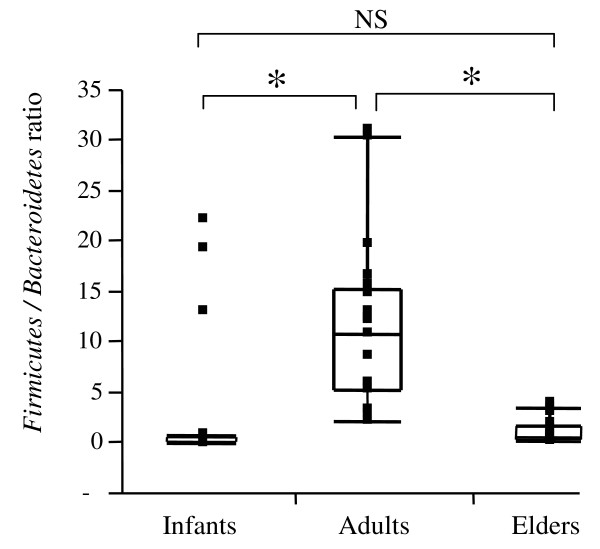
BACKGROUND: In humans, the intestinal microbiota plays an important role in the maintenance of host health by providing energy, nutrients, and immunological protection. Applying current molecular methods is necessary to surmount the limitations of classical culturing techniques in order to obtain an accurate description of the microbiota composition. RESULTS: Here we report on the comparative assessment of human fecal microbiota from three age-groups: infants, adults and the elderly. We demonstrate that the human intestinal microbiota undergoes maturation from birth to adulthood and is further altered with ageing. The counts of major bacterial groups Clostridium leptum, Clostridium coccoides, Bacteroidetes, Bifidobacterium, Lactobacillus and Escherichia coli were assessed by quantitative PCR (qPCR). By comparing species diversity profiles, we observed age-related changes in the human fecal microbiota. The microbiota of infants was generally characterized by low levels of total bacteria. C. leptum and C. coccoides species were highly represented in the microbiota of infants, while elderly subjects exhibited high levels of E. coli and Bacteroidetes. We observed that the ratio of Firmicutes to Bacteroidetes evolves during different life stages. For infants, adults and elderly individuals we measured ratios of 0.4, 10.9 and 0.6, respectively. CONCLUSION: In this work we have confirmed that qPCR is a powerful technique in studying the diverse and complex fecal microbiota. Our work demonstrates that the fecal microbiota composition evolves throughout life, from early childhood to old age.
Overview
The claims and statistics of this paper haven’t been checked yet.
Free: it reads the open-access text and checks the first 5 claims that cite a source we can check. Create a free account to check every claim.
Integrity signals
Registry
Cites
Statistics
Figures
Verification
Claims the paper makes
The claims and statistics of this paper haven’t been checked yet.
Free: it reads the open-access text and checks the first 5 claims that cite a source we can check. Create a free account to check every claim.
Claims other papers make about this one
Each is checked against this paper’s own text: does it say what the citing paper says it does?
The source backs part of the claim, not all of it — or backs it for a different population, condition or comparison.
In the citing paper
“A reduced Firmicutes:Bacteroidetes ratio has been reported in Irish and French elderly compared to young adults”
From The Microbiota-Gut-Brain Axis (2019) · cites this paper as Mariat et al., 2009
Experimental — accuracy not yet measuredIn the citing paper
“The disappearance of these microorganisms is important because they normally counteract the expansion of pathogenic microbial communities, while also maintaining intestinal barrier integrity by fermenting starches and dietary fibres and producing mucus and lipid metabolites, such as short-chain fatty acids (primarily acetate, propionate, and butyrate)66–68.”
From Inflammageing: chronic inflammation in ageing, cardiovascular disease, and frailty (2018) · cites this paper as [66]
In the citing paper
“Despite large variability in the gut microbiota found in different populations, geographic regions, and settings, evidence suggests that ageing is associated with a reduction in beneficial commensal microorganisms — such as Coprococcus, Faecalibacterium, and Lactobacillus — as well as a decrease in the Firmicutes: Bacteroidetes ratio66–68.”
From Inflammageing: chronic inflammation in ageing, cardiovascular disease, and frailty (2018) · cites this paper as [66]
In the citing paper
“In fact it has been reported that breast-fed infants generally harbor a more complex and numerous Bifidobacterium microbiota than formula-fed infants (19, 20).”
From Bifidobacteria and Their Health-Promoting Effects (2017) · cites this paper as [19]
In the citing paper
“An increased F/B ratio, caused by an expansion of Firmicutes and/or a contraction of Bacteroidetes, has been widely considered a signature of gut dysbiosis and has been associated with obesity, diabetes, and CVD8, 13, 16.”
From Gut Dysbiosis Is Linked to Hypertension (2015) · cites this paper as [8]
1 more claim about this paper
Create a free account to see every claim other papers make about this one.
Self-check
Percentages, sums and reported differences re-computed from the paper’s own numbers.
The self-check needs the paper’s full text.
Citations
Cites
Human gut microbes associated with obesity
Ley, R. E., Turnbaugh, P. J., Klein, S., & Gordon, J. I. (2006) · Nature · doi:10.1038/4441022a · Cited by 8,785 · cited 4×
“[7] when a correlation between body weight and gut microbial ecology was analysed.”
BackgroundInfluentialDiversity of the Human Intestinal Microbial Flora
Eckburg, P. B., Bik, E. M., Bernstein, C. N., Purdom, E., Dethlefsen, L., Sargent, M., Gill, S. R., Nelson, K. E., & Relman, D. A. (2005) · Science · doi:10.1126/science.1110591 · Cited by 7,913 · cited 1×
“This has markedly increased the information available concerning the complexity of the human bowel microbiota, from which over 1250 Operational Taxonomic Units have been identified corresponding to several dominant phyla [4,5].”
BackgroundHost-Bacterial Mutualism in the Human Intestine
Bäckhed, F., Ley, R. E., Sonnenburg, J. L., Peterson, D. A., & Gordon, J. I. (2005) · Science · doi:10.1126/science.1104816 · Cited by 5,277 · cited 1×
“The major functions attributed to the microbiota present in the gut begin to manifest at the end of the second year of life and comprise: i) nutrients absorption and food fermentation [10], ii) stimulation of the host immune system [11] and iii) barrier effects against pathogens [12].”
BackgroundDevelopment of the Human Infant Intestinal Microbiota
Palmer, C., Bik, E. M., DiGiulio, D. B., Relman, D. A., & Brown, P. O. (2007) · PLoS Biology · doi:10.1371/journal.pbio.0050177 · Cited by 2,877 · cited 1×
“Establishment of the intestinal microbiota has been shown to be a progressive process [9].”
BackgroundMICROBIAL ECOLOGY OF THE GASTROINTESTINAL TRACT
Savage, D. C. (1977) · Annual Review of Microbiology · doi:10.1146/annurev.mi.31.100177.000543 · Cited by 2,436 · cited 1×
“methods for more accurately assessing its composition and diversity, formerly thought to contain a mere 400– 500 bacterial species [2].”
MethodReduced diversity of faecal microbiota in Crohn’s disease revealed by a metagenomic approach
Manichanh, C., Rigottier-Gois, L., Bonnaud, E., Gloux, K., Pelletier, E., Frangeul, L., Nalin, R., Jarrin, C., Chardon, P., Marteau, P., et al. (2006) · Gut · doi:10.1136/gut.2005.073817 · Cited by 2,277 · cited 1×
“This has markedly increased the information available concerning the complexity of the human bowel microbiota, from which over 1250 Operational Taxonomic Units have been identified corresponding to several dominant phyla [4,5].”
BackgroundSelf-citationInteractions between commensal intestinal bacteria and the immune system
Macpherson, A. J., & Harris, N. L. (2004) · Nature Reviews Immunology · doi:10.1038/nri1373 · Cited by 1,610
Anatomical basis of tolerance and immunity to intestinal antigens
Mowat, A. M. (2003) · Nature Reviews Immunology · doi:10.1038/nri1057 · Cited by 1,415 · cited 1×
“The major functions attributed to the microbiota present in the gut begin to manifest at the end of the second year of life and comprise: i) nutrients absorption and food fermentation [10], ii) stimulation of the host immune system [11] and iii) barrier effects against pathogens [12].”
BackgroundHarmsen, H. J. M., Wildeboer–Veloo, A. C. M., Raangs, G. C., Wagendorp, A. A., Klijn, N., Bindels, J. G., & Welling, G. W. (2000) · Journal of Pediatric Gastroenterology and Nutrition · doi:10.1002/j.1536-4801.2000.tb02655.x · Cited by 1,337
Franks, A. H., Harmsen, H. J. M., Raangs, G. C., Jansen, G. J., Schut, F., & Welling, G. W. (1998) · Applied and Environmental Microbiology · doi:10.1128/aem.64.9.3336-3345.1998 · Cited by 1,056 · cited 1×
“Once climax composition is achieved near the end of adolescence, this ecosystem displays a high stability in healthy adults [13].”
Background
Cited by
Items 501–600 of 1,003
Bioengineering approaches to simulate human colon microbiome ecosystem
Roupar, D., Berni, P. R. D. A., Martins, J. T., Caetano, A. C., Teixeira, J. A., & Nobre, C. (2021) · Trends in Food Science & Technology · doi:10.1016/j.tifs.2021.04.035 · Cited by 63
Clark, M., Centner, A. M., Ukhanov, V., Nagpal, R., & Salazar, G. (2022) · The Journal of Nutritional Biochemistry · doi:10.1016/j.jnutbio.2022.109132 · Cited by 56
Shen, H., Wang, T., Dong, W., Sun, G., Liu, J., Peng, N., & Zhao, S. (2024) · Microbiome · doi:10.1186/s40168-023-01745-1 · Cited by 60
Update on the Gastrointestinal Microbiome in Systemic Sclerosis
Bellocchi, C., & Volkmann, E. R. (2018) · Current Rheumatology Reports · doi:10.1007/s11926-018-0758-9 · Cited by 60
Tian, S., Wang, J., Yu, H., Wang, J., & Zhu, W. (2019) · Nutrients · doi:10.3390/nu11081753 · Cited by 68
“Previous study has shown that the Firmicutes/Bacteroidetes ratio increased with an increased body mass index (BMI), which is consistent with our previous results on the improvement of growth performance [31,34].”
ResultSorrenti, V., Fortinguerra, S., Caudullo, G., & Buriani, A. (2020) · Nutrients · doi:10.3390/nu12051265 · Cited by 54
Enduring neurobehavioral effects induced by microbiota depletion during the adolescent period
Lach, G., Fülling, C., Bastiaanssen, T. F. S., Fouhy, F., Donovan, A. N. O., Ventura‐Silva, A. P., Stanton, C., Dinan, T. G., & Cryan, J. F. (2020) · Translational Psychiatry · doi:10.1038/s41398-020-01073-0 · Cited by 66
Maneerat, S., Lehtinen, M. J., Childs, C. E., Forssten, S. D., Alhoniemi, E., Tiphaine, M., Yaqoob, P., Ouwehand, A. C., & Rastall, R. A. (2013) · Journal of Nutritional Science · doi:10.1017/jns.2013.31 · Cited by 53
Gut Dysbiosis and IL-21 Response in Patients with Severe COVID-19
Khan, M., Mathew, B. J., Gupta, P., Garg, G., Khadanga, S., Vyas, A. K., & Singh, A. K. (2021) · Microorganisms · doi:10.3390/microorganisms9061292 · Cited by 57
“Similar low Firmicutes to Bacteroidetes ratios have been reported in low-grade systemic inflammation, cognitive deficits, depression, Crohn’s disease, and type 2 diabetes [26,27].”
BackgroundHutchinson, A. N., Bergh, C., Kruger, K., Sűsserová, M., Allen, J., Améen, S., & Tingö, L. (2021) · Microorganisms · doi:10.3390/microorganisms9061344 · Cited by 53
The gut microbiome in sickle cell disease: Characterization and potential implications
Brim, H., Taylor, J. G., Abbas, M. M., Vilmenay, K., Daremipouran, M., Varma, S., Lee, E., Pace, B. S., Song-Naba, W. L., Gupta, K., et al. (2021) · PLoS ONE · doi:10.1371/journal.pone.0255956 · Cited by 61
“The Firmicutes/Bacteroidetes ratio in adults with SCD is comparable to ratios previously reported for infants and elderly subjects [29].”
ResultLiu, Y., Ji, J., Zhang, W. Y., Suo, Y., Zhao, J., Lin, X., Cui, L., Li, Y., Hu, H., Chen, C., et al. (2019) · Ecotoxicology and Environmental Safety · doi:10.1016/j.ecoenv.2019.109720 · Cited by 57
Effect of dietary fat to starch content on fecal microbiota composition and activity in dogs1
Schauf, S., de la Fuente, G., Newbold, C. J., Salas, A., Torre, C., Abecia, L., & Castrillo, C. (2018) · Journal of Animal Science · doi:10.1093/jas/sky264 · Cited by 67
The intestinal microbiome associated with lipid metabolism and obesity in humans and animals
Jian, Z., Zeng, L., Xu, T., Sun, S., Yan, S., Zhao, S., Su, Z., Ge, C., Zhang, Y., Jia, J., et al. (2022) · Journal of Applied Microbiology · doi:10.1111/jam.15740 · Cited by 57
Cecal Microbial Succession and Its Apparent Association with Nutrient Metabolism in Broiler Chickens
Yin, Z., Ji, S., Yang, J., Guo, W., Li, Y., Ren, Z., & Yang, X. (2023) · mSphere · doi:10.1128/msphere.00614-22 · Cited by 58
“Bacteroides used complex polysaccharides to produce propionate and butyrate (42).”
BackgroundStrzępa, A., Majewska‐Szczepanik, M., Lobo, F. M., Li, W., & Szczepanik, M. (2017) · Journal of Allergy and Clinical Immunology · doi:10.1016/j.jaci.2016.11.052 · Cited by 58
“Values for all bacteria were subtracted from values obtained for selected bacteria.(23)”
Bekiares, N., Krueger, C. G., Meudt, J. J., Shanmuganayagam, D., & Reed, J. D. (2017) · OMICS A Journal of Integrative Biology · doi:10.1089/omi.2016.0167 · Cited by 58
“Another measure commonly addressed in discussions of digestive health is the Firmicutes:Bacteroidetes ratio (Ley et al., 2006; Mariat et al., 2009).”
BackgroundAoe, S., Nakamura, F., & Fujiwara, S. (2018) · Nutrients · doi:10.3390/nu10121980 · Cited by 57
“Significant decreases in the relative proportions of Bacteroidetes and Firmicutes have been observed in older adults as compared to younger adults [46].”
BackgroundAntibiotic exposure across three generations from Chinese families and cumulative health risk
Zhang, J., Liu, X., Zhu, Y., Yang, L., Sun, L., Wei, R., Chen, G., Wang, Q., Sheng, J., Liu, A., et al. (2020) · Ecotoxicology and Environmental Safety · doi:10.1016/j.ecoenv.2020.110237 · Cited by 57
Kim, H. S., Son, J. L., Lee, D., Tsai, J., Wang, D., Chocrón, E. S., Jeong, S., Kittrell, P., Murchison, C., Kennedy, R., et al. (2022) · BMC Neurology · doi:10.1186/s12883-022-02586-5 · Cited by 58
“3A-C), consistent with other studies [49].”
BackgroundRokhsefat, S., Lin, A., & Comelli, E. M. (2016) · Digestive Diseases and Sciences · doi:10.1007/s10620-016-4032-6 · Cited by 58
“Thus, four main bacterial phyla are present in the gut microbiota, the relative amounts of which vary in early life in a different manner [62, 68]; Proteobacteria emerge during the first days of life but later become subdominant (less than 109 CFU/g) [69], Actinobacteria predominate before weaning but then represent 4…”
BackgroundInfluentialXiao, Y., Dong, J., Yin, Z., Wu, Q., Zhou, Y., & Zhou, X. (2018) · Food and Chemical Toxicology · doi:10.1016/j.fct.2018.05.017 · Cited by 53
Mahnic, A., & Rupnik, M. (2018) · PLOS ONE · doi:10.1371/journal.pone.0209209 · Cited by 53
Acute Radiation Syndrome and the Microbiome: Impact and Review
Hollingsworth, B. A., Cassatt, D. R., DiCarlo, A. L., Rios, C. I., Satyamitra, M. M., Winters, T. A., & Taliaferro, L. P. (2021) · Frontiers in Pharmacology · doi:10.3389/fphar.2021.643283 · Cited by 54
“The Firmicutes-toBacteroidetes ratio is often analyzed as a marker for gut health but can fluctuate often and change with age (Mariat et al., 2009).”
BackgroundLi, J., Si, H., Du, H., Guo, H., Dai, H., Xu, S., & Wan, J. (2021) · BMC Microbiology · doi:10.1186/s12866-020-02068-z · Cited by 60
“Ruminococcus, which can decompose cellulose, is almost absent in the elderly, whereas it is dominant in healthy young adults [21].”
BackgroundCremonesi, P., Biscarini, F., Castiglioni, B., Sgoifo, C. A., Compiani, R., & Moroni, P. (2022) · PLoS ONE · doi:10.1371/journal.pone.0262199 · Cited by 51
“The F:B ratio has been reported to increase with age in the gut microbiomes of humans [26] and experimental mice models [27]; also in pigs, the F:B ratio was previously found to increase in the transition from piglets (1 month old) to adult pigs (2–3 months old) [28], which seems to suggest a pattern in omnivorous mon…”
BackgroundThe impact of aging-induced gut microbiome dysbiosis on dendritic cells and lung diseases
Malik, J. A., Zafar, M. A., Lamba, T., Nanda, S., Khan, M. A., & Agrewala, J. N. (2023) · Gut Microbes · doi:10.1080/19490976.2023.2290643 · Cited by 55
“Another investigation reported a decline in the Firmicutes/Bacteroidetes ratio from 10.9 to 0.6 between young (25–45 years) and old (70–90 years) subjects 107 .”
BackgroundInfluentialMicroecology, intestinal epithelial barrier and necrotizing enterocolitis
Sharma, R. R., & Tepas, J. J. (2009) · Pediatric Surgery International · doi:10.1007/s00383-009-2536-2 · Cited by 55
“In premature infants who are hospitalized for prolonged duration in the intensive care nurseries and are exposed to numerous antibiotics, the process of normal colonization by commensal bacteria is disrupted [8,9].”
BackgroundSwann, J. R., Spagou, K., Lewis, M. R., Nicholson, J. K., Glei, D. A., Seeman, T. E., Coe, C. L., Goldman, N., Ryff, C. D., Weinstein, M., et al. (2013) · Journal of Proteome Research · doi:10.1021/pr4000152 · Cited by 61
Xiong, F., Wu, S., Zhang, J., Jakovlić, I., Li, W.-X., Zou, H., Li, M., & Wang, G.-T. (2018) · Frontiers in Microbiology · doi:10.3389/fmicb.2018.02209 · Cited by 54
Exploring the impact of intestinal ion transport on the gut microbiota
Engevik, A. C., & Engevik, M. A. (2020) · Computational and Structural Biotechnology Journal · doi:10.1016/j.csbj.2020.12.008 · Cited by 56
Age-associated gut microbiota impairs hippocampus-dependent memory in a vagus-dependent manner
Rei, D., Saha, S., Haddad, M., Rubio, A. H., Perlaza, B. L., Berard, M., Ungeheuer, M., Sokol, H., & Lledo, P. (2022) · JCI Insight · doi:10.1172/jci.insight.147700 · Cited by 57
Self-citationLiu, Z., Fayyaz, S., Zhao, D., Yi, Z., Huang, J., Zhou, R.-R., Xie, J., Liu, P.-A., He, W. G., Zhang, S., et al. (2023) · Journal of Functional Foods · doi:10.1016/j.jff.2023.105476 · Cited by 54
Jang, K. B., Purvis, J. M., & Kim, S. W. (2020) · Journal of Animal Science · doi:10.1093/jas/skaa227 · Cited by 50
Characteristics and Functions of the Rumen Microbial Community of Cattle‐Yak at Different Ages
Sha, Y., Hu, J., Shi, B., Dingkao, R., Wang, J., Li, S., Zhang, W., Luo, Y., & Liu, X. (2020) · BioMed Research International · doi:10.1155/2020/3482692 · Cited by 55
“In the rumen cattle-yak, Firmicutes and Fibrobacteres were the main bacteria; the relatively low Bacteroides content may be attributable to diet, species, season, and geographic location [19, 20].”
Alterations of Gut Microbiota in Patients With Graves’ Disease
Chang, S., Lin, S., Chen, S., Chang, P.-Y., Yeh, Y., Lo, F., & Lu, J. (2021) · Frontiers in Cellular and Infection Microbiology · doi:10.3389/fcimb.2021.663131 · Cited by 54
Gut microbial metabolism in Alzheimer's disease and related dementias
Kang, J. W., Vemuganti, V., Kuehn, J. F., Ulland, T. K., Rey, F. E., & Bendlin, B. B. (2024) · Neurotherapeutics · doi:10.1016/j.neurot.2024.e00470 · Cited by 60
Hidalgo‐Liberona, N., González‐Domínguez, R., Vegas, E., Riso, P., Bo’, C. D., Bernardi, S., Peron, G., Guglielmetti, S., Gargari, G., Kroon, P. A., et al. (2020) · Journal of Agricultural and Food Chemistry · doi:10.1021/acs.jafc.0c04976 · Cited by 51
Aljahdali, N. H., Sanad, Y. M., Han, J., & Foley, S. L. (2020) · BMC Microbiology · doi:10.1186/s12866-020-02008-x · Cited by 58
Zheng, R., Wang, P., Cao, B., Wu, M., Li, X., Wang, H., & Chai, L. (2021) · Chemosphere · doi:10.1016/j.chemosphere.2020.129511 · Cited by 50
Wang, Z., Zhu, H., Jiang, Q. Y., & Zhu, Y. Z. (2021) · Microbial Pathogenesis · doi:10.1016/j.micpath.2021.104976 · Cited by 54
Ling, Z., Cheng, Y., Chen, F., Yan, X., Liu, X., Shao, L., Jin, G., Zhou, D., Jiang, G., Li, H., et al. (2022) · Frontiers in Immunology · doi:10.3389/fimmu.2022.964910 · Cited by 57
“However, the Firmicutes/Bacteroidetes ratio in healthy gut naturally increases from 1 to 3 with growing age (43, 77), demonstrating the age-related dynamics of human microbiota composition.”
BackgroundPereira, A. M., Pinna, C., Biagi, G., Stefanelli, C., Maia, M. R. G., Matos, E., Segundo, M. A., Fonseca, A. J. M., & Cabrita, A. R. J. (2020) · FEMS Microbiology Ecology · doi:10.1093/femsec/fiaa212 · Cited by 53
“A shift on Firmicutes: Bacteroidetes ratio with age was reported in humans (Mariat et al. 2009).”
BackgroundModulation of intestinal microbiota in mice by kefir administration
Kim, D.-H., Chon, J.-W., Kim, H., & Seo, K.-H. (2015) · Food Science and Biotechnology · doi:10.1007/s10068-015-0179-8 · Cited by 48
Impact of diet on the human intestinal microbiota
Tan, H., & O’Toole, P. W. (2015) · Current Opinion in Food Science · doi:10.1016/j.cofs.2015.01.005 · Cited by 55
Cella, V., Bimonte, V. M., Sabato, C., Paoli, A., Baldari, C., Campanella, M., Lenzi, A., Ferretti, E., & Migliaccio, S. (2021) · Foods · doi:10.3390/foods10123075 · Cited by 71
“The results showed an increase in Faecalibacterium species and a decrease in Bacteroides species in normal weight subjects, while the opposite result was registered in obese individuals.”
BackgroundInfluentialHu, Y., Satten, G. A., & Hu, Y. (2022) · Proceedings of the National Academy of Sciences · doi:10.1073/pnas.2122788119 · Cited by 56
Changes in human gut flora with age: an Indian familial study
Marathe, N. P., Shetty, S. A., Lanjekar, V. B., Ranade, D. R., & Shouche, Y. S. (2012) · BMC Microbiology · doi:10.1186/1471-2180-12-222 · Cited by 55
“Changes in Firmicutes / Bacteroidetes ratio have also been reported in other physiological conditions such as ageing and diabetes [18,19].”
Saxena, S., SAXENA, V. K., Tomar, S., Sapcota, D., & Gonmei, G. (2016) · British Poultry Science · doi:10.1080/00071668.2016.1161728 · Cited by 48
“The ratio of Firmicutes to Bacteroidetes (F/ B) in human has been found to vary with age and is associated with growth (Mariat et al., 2009).”
BackgroundRéquilé, M., González–Alvarez, D., Delanaud, S., Rhazi, L., Bach, V., Dépeint, F., & Khorsi‐Cauet, H. (2018) · Environmental Science and Pollution Research · doi:10.1007/s11356-018-2332-4 · Cited by 52
Lee, S. M., Kim, N., Yoon, H., Nam, R. H., & Lee, D. H. (2018) · Frontiers in Microbiology · doi:10.3389/fmicb.2018.02236 · Cited by 60
Yoshikata, R., Myint, K. Z. Y., Ohta, H., & Ishigaki, Y. (2018) · Menopause The Journal of The North American Menopause Society · doi:10.1097/gme.0000000000001202 · Cited by 55
Immunological design of commensal communities to treat intestinal infection and inflammation
Brown, R. L., Larkinson, M. L. Y., & Clarke, T. B. (2021) · PLoS Pathogens · doi:10.1371/journal.ppat.1009191 · Cited by 52
High-Throughput Sequencing Reveals the Gut Microbiome of the Bactrian Camel in Different Ages
He, J., Hai, L., Orgoldol, K., Yi, L., Ming, L., Guo, F., Li, G., & Ji, R. (2019) · Current Microbiology · doi:10.1007/s00284-019-01689-6 · Cited by 53
Fernandes, K. A., Gee, E. K., Rogers, C. W., Kittelmann, S., Biggs, P. J., Bermingham, E. N., Bolwell, C. F., & Thomas, D. G. (2021) · Animals · doi:10.3390/ani11082300 · Cited by 48
Gao, B., Tu, P., Bian, X., Chi, L., Ru, H., & Lü, K. (2017) · BMC Pharmacology and Toxicology · doi:10.1186/s40360-017-0150-9 · Cited by 55
“Likewise, the ratio of Firmicutes to Bacteroidetes fluctuates across the lifespan [32].”
Metagenomic analysis of gut microbial communities from a Central Asian population
Kushugulova, A., Forslund, S. K., Costea, P. I., Kozhakhmetov, S., Khassenbekova, Z., Urazova, M., Nurgozhin, T., Zhumadilov, Z., Benberin, V., Driessen, M., et al. (2018) · BMJ Open · doi:10.1136/bmjopen-2018-021682 · Cited by 47
“However, in the present study, overall antibiotic resistance potential 23 of gut microbes was not significantly higher in Kazakh than European samples.”
Megahed, A., Zeineldin, M. M., Evans, K. L., Maradiaga, N. C., Blair, B., Aldridge, B. M., & Lowe, J. F. (2019) · Scientific Reports · doi:10.1038/s41598-019-50187-z · Cited by 57
The Differences between Luminal Microbiota and Mucosal Microbiota in Mice
Wu, M., Li, P., Li, J., An, Y., Wang, M., & Zhong, G. (2020) · Journal of Microbiology and Biotechnology · doi:10.4014/jmb.1908.08037 · Cited by 56
“It has been reported that the F/B ratio of microbiota changes with various factors, such as diet, age, drug and disease [16, 21, 23, 24].”
BackgroundSun, Y., Yan, T., Gong, G., Li, Y., Zhang, J., Wu, B., Bi, K., & Jia, Y. (2020) · International Immunopharmacology · doi:10.1016/j.intimp.2020.107029 · Cited by 58
Cpl-7, a Lysozyme Encoded by a Pneumococcal Bacteriophage with a Novel Cell Wall-binding Motif*
Bustamante, N., Campillo, N. E., García, E., Gallego-Páramo, C., Pera, B., Diakun, G. P., Saíz, J. L., García, P., Díaz, J. F., & Menéndez, M. (2010) · Journal of Biological Chemistry · doi:10.1074/jbc.m110.154559 · Cited by 54
De Giani, A., Sandionigi, A., Zampolli, J., Michelotti, A., Tursi, F., Labra, M., & Di Gennaro, P. (2022) · Microorganisms · doi:10.3390/microorganisms10061256 · Cited by 46
“Commonly, the relative abundances of Lactobacillus and Bifidobacterium species within the intestinal microbiota are very low [4], particularly in the elderly people [11], although their beneficial properties.”
BackgroundGut microbiota in ALS: possible role in pathogenesis?
McCombe, P. A., Henderson, R. D., Lee, A., Lee, J. D., Woodruff, T. M., Restuadi, R., McRae, A., Wray, N. R., Ngo, S., & Steyn, F. J. (2019) · Expert Review of Neurotherapeutics · doi:10.1080/14737175.2019.1623026 · Cited by 46
“The gut microbiota changes with age [115].”
Gut Microbiome in Chronic Coronary Syndrome Patients
Sawicka, E., Bondarczuk, K., Bauer, W., Niemira, M., Szalkowska, A., Raczkowska, J., Kwaśniewski, M., Tarasiuk, E., Dubatówka, M., Łapińska, M., et al. (2021) · Journal of Clinical Medicine · doi:10.3390/jcm10215074 · Cited by 51
“It was proven that the Firmicutes/Bacteroidetes ratio was significantly associated with many traditional cardiovascular risk factors such as diet [18,55], sex [56–58], age [59], and BMI [60].”
BackgroundKhaledi, M., Poureslamfar, B., Alsaab, H. O., Tafaghodi, S., Hjazi, A. M., Singh, R., Alawadi, A. H., Alsaalamy, A. H., Qasim, Q. A., & Sameni, F. (2024) · Annals of Microbiology · doi:10.1186/s13213-023-01744-5 · Cited by 59
“As a result, one sign of aging is a decline in the Firmicutes/Bacteroidetes ratio (Mariat et al. 2009).”
BackgroundBuzoianu, S. G., Walsh, M. C., Rea, M. C., O’Sullivan, Ó., Cotter, P. D., Ross, R. P., Gardiner, G. E., & Lawlor, P. G. (2012) · Applied and Environmental Microbiology · doi:10.1128/aem.00307-12 · Cited by 58
“The relative distribution is in agreement with that previously observed in the large intestine of humans and pigs using 16S rRNA gene sequencing (28, 29, 31, 38).”
ResultWhy Don't All Infants Have Bifidobacteria in Their Stool?
Tannock, G. W., Lee, P. S., Wong, K. H., & Lawley, B. (2016) · Frontiers in Microbiology · doi:10.3389/fmicb.2016.00834 · Cited by 49
“…the stool of most human infants during the initial exclusively milk-fed period of life, especially at an age of 2–3 months (Harmsen et al., 2000; Favier et al., 2002; Mariat et al., 2009; Coppa et al., 2011; Turroni et al., 2012; Yatsunenko et al., 2012; Tannock et al., 2013; Barrett et al., 2015).”
BackgroundCao, X., Wang, J., Liao, J., Gao, Z., Jiang, D., Sun, J., Zhao, L., Huang, Y., & Luan, S. (2016) · The Science of The Total Environment · doi:10.1016/j.scitotenv.2016.11.143 · Cited by 47
“Bacteroidetes and Firmicutes are the dominant phyla in fecal microbiota because they account for N98% of the 16S rRNA sequences detected in the intestinal microbiota of human and other mammals (Ley et al., 2006; Mariat et al., 2009; Thomas et al., 2011).”
BackgroundTsuji, H., Matsuda, K., & Nomoto, K. (2018) · Frontiers in Microbiology · doi:10.3389/fmicb.2018.01417 · Cited by 57
“Also, as reported in previous studies (Hayashi et al., 2003; Bartosch et al., 2004; Woodmansey et al., 2004; Mitsuoka, 2005; Mueller et al., 2006; Tiihonen et al., 2008; Enck et al., 2009; Mariat et al., 2009), in elderly people the levels of Bifidobacterium are decreased, whereas those of Lactobacillus and Enterobact…”
ResultGonzález-Hernández, L. A., Ruiz-Briseño, M. D. R., Sánchez-Reyes, K., Álvarez-Zavala, M., Vega‐Magaña, N., López-Íñiguez, Á., Díaz‐Ramos, J. A., Martínez-Ayala, P., Soria-Rodriguez, R. A., Ramos‐Solano, M., et al. (2019) · BMC Infectious Diseases · doi:10.1186/s12879-019-3867-9 · Cited by 49
Fahim, K. M., Ismael, E., Khalefa, H. S., Farag, H. S., & Hamza, D. A. (2019) · International Journal of Veterinary Science and Medicine · doi:10.1080/23144599.2019.1691378 · Cited by 46
“coli is mainly a commensal bacterium in the intestinal tract of animals, birds and humans [14].”
BackgroundKao, H.-F., Wang, Y.-C., Tseng, H.-Y., Wu, L. S.-H., Tsai, H., Hsieh, M.-H., Chen, P., Kuo, W.-S., Liu, L., Liu, Z.-G., et al. (2020) · Frontiers in Immunology · doi:10.3389/fimmu.2020.00184 · Cited by 49
“maternal mice to their offspring during pregnancy and lactation periods (48).”
BackgroundMicrobiome and ischemic stroke: A systematic review
Lee, Y. T., Ismail, N. I. M., & Wei, L. K. (2021) · PLoS ONE · doi:10.1371/journal.pone.0245038 · Cited by 47
“An increment of Firmicutes/Bacteroidetes ratio is the hallmarks of aging and dysbiosis [21,38].”
BackgroundTian, H., Liang, Y. Y., Liu, G., Li, Y., Deng, M., Liu, D., Guo, Y., & Sun, B. (2021) · International Journal of Biological Macromolecules · doi:10.1016/j.ijbiomac.2021.03.144 · Cited by 50
Bello-Medina, P. C., Hernández-Quiroz, F., Pérez-Morales, M., González-Franco, D. A., Cruz-Pauseno, G., García-Mena, J., Díaz-Cintra, S. Y., & Pacheco‐López, G. (2021) · Frontiers in Neuroscience · doi:10.3389/fnins.2021.595583 · Cited by 51
Gut microbiota as prognosis markers for patients with HBV-related acute-on-chronic liver failure
Wang, K., Zhang, Z., Mo, Z., Yang, X., Lin, B., Peng, L., Yang, X., Lei, C.-Y., Zhuang, X., Lü, L., et al. (2021) · Gut Microbes · doi:10.1080/19490976.2021.1921925 · Cited by 59
“Clinically, cocci to bacilli ratio is a common parameter used to inform the status of gut microbiota and the choice of antibiotics, therefore are often tested for patients with ACLF or abdominal and intestinal infections[27, 28].”
BackgroundResultGut dysbiosis is associated with poorer long-term prognosis in cirrhosis
Maslennikov, R. V., Ivashkin, V. T., Efremova, I., Alieva, A. M., Kashuh, E., Tsvetaeva, E. K., Poluektova, E. A., Shirokova, E. N., & Владимирович, И. К. (2021) · World Journal of Hepatology · doi:10.4254/wjh.v13.i5.557 · Cited by 48
Regulatory effects of marine polysaccharides on gut microbiota dysbiosis: A review
Ou, J., Wang, Z., Liu, X., Song, B., Chen, J., Li, R., Jia, X., Huang, R., Xiang, W., & Zhong, S. (2022) · Food Chemistry X · doi:10.1016/j.fochx.2022.100444 · Cited by 55
“bacterial species Bacteroidetes and Firmicutes has been shown to play an important role in health and disease (Mariat et al., 2009).”
BackgroundLanggartner, D., Vaihinger, C. A., Haffner-Luntzer, M., Kunze, J. F., Weiss, A.-L. J., Foertsch, S., Bergdolt, S., Ignatius, A., & Reber, S. O. (2018) · Frontiers in Behavioral Neuroscience · doi:10.3389/fnbeh.2018.00252 · Cited by 45
“, 2017), age (Mariat et al., 2009), pharmaceutics (Langdon et al.”
Gut microbiota dysbiosis in patients with hepatitis B virus-related cirrhosis
Wu, S., Shanjian, C., Lin, J., & Ou, Q. (2022) · Annals of Hepatology · doi:10.1016/j.aohep.2022.100676 · Cited by 52
Review of the Relationships Between Human Gut Microbiome, Diet, and Obesity
Patloka, O., Komprda, T., & Franke, G. (2024) · Nutrients · doi:10.3390/nu16233996 · Cited by 55
“The obese enterotypes, including abundances of the gut microbiome phyla/genera/ species also depend on the stage of life: Mariat et al. [234] reported Firmicutes/Bacteroidetes ratios 0.4, 10.9, and 0.6 in infants, adults, and elderly subjects.”
InfluentialGut microbiota correlates with fiber and apparent nutrients digestion in goose
Liu, G., Luo, X., Zhao, X., Zhang, A., Jiang, N., Yang, L., Huang, M., Li, X., Ding, L., Li, M., et al. (2018) · Poultry Science · doi:10.3382/ps/pey249 · Cited by 47
Role of Gut Microbiota in Combating Oxidative Stress
Dam, B., Misra, A., & Banerjee, S. (2019) · Springer eBooks · doi:10.1007/978-981-13-8763-0_4 · Cited by 49
Lakshmanan, A. P., Za’abi, M. A., Ali, B. H., & Terranegra, A. (2020) · Biomedicine & Pharmacotherapy · doi:10.1016/j.biopha.2020.110992 · Cited by 50
Zhang, M., Zhou, H., Xu, S., Liu, D., Cheng, Y., Gao, B. X., Li, X., & Chen, J. (2020) · Annals of Palliative Medicine · doi:10.21037/apm-20-2183 · Cited by 52
“According to their concentration, the intrinsic bacteria in the gastrointestinal tract can be classified as dominant bacteria (>10(7) CFU/g) or inferior bacteria (<10(7) CFU/g) (9,10).”
BackgroundWei, Z.-Y., Rao, J.-H., Tang, M.-T., Guo-an, Z., Li, Q.-C., Wu, L., Liu, S., Li, B.-H., Xiao, B., Liu, X., et al. (2021) · Genomics Proteomics & Bioinformatics · doi:10.1016/j.gpb.2021.09.009 · Cited by 49
“The F/B ratio is considered as an indicator of the maturation and development Wei ZY et al/Gut Microbiota During Healthy Aging of gut microbiota [29], and has been reported to be involved in health-related conditions or diseases such as obesity [30].”
Borsom, E. M., Conn, K. A., Keefe, C. R., Herman, C., Orsini, G. M., Hirsch, A. H., Avila, M. P., Testo, G., Jaramillo, S. A., Bolyen, E. K., et al. (2023) · Microbiology Spectrum · doi:10.1128/spectrum.03458-22 · Cited by 47
“microbiota, which makes up approximately 70% of the total microbial burden in the body (3), contributes to a myriad of roles, including host immune regulation (4), macro-”
BackgroundBartley, A., Yang, T., Arocha, R., Malphurs, W. L., Larkin, R., Magee, K. L., Vickroy, T. W., & Zubcevic, J. (2018) · Frontiers in Physiology · doi:10.3389/fphys.2018.01593 · Cited by 44
“There is no absolute definition of a “healthy” gut microbiota as yet, however, evidence suggests that the ratio of Firmicutes (F) to Bacteroidetes (B), the F/B ratio as a biomarker for pathological conditions (Mariat et al., 2009; Sanz and Moya-Pérez, 2014; Yang et al., 2015, 2017; Adnan et al., 2017; Santisteban et a…”
BackgroundDe Sales-Millán, A., Aguirre-Garrido, J. F., González-Cervantes, R. M., & Velázquez-Aragón, J. A. (2023) · doi:10.20944/preprints202305.1223.v1 · Cited by 44
Abenavoli, L., Scarlata, G. G. M., Scarpellini, E., Boccuto, L., Spagnuolo, R., Tilocca, B., Roncada, P., & Luzza, F. (2023) · Medicina · doi:10.3390/medicina59030594 · Cited by 47
“6 in the elderly [18], and in dysmetabolic conditions, such as T2DM [19] and obesity [20].”
BackgroundArtificial Sweeteners: A Double-Edged Sword for Gut Microbiome
Hetta, H. F., Sirag, N., Elfadil, H., Salama, A., Aljadrawi, S. F., Alfaifi, A. J., Alwabisi, A. N., AbuAlhasan, B. M. N., Alanazi, L. S., Aljohani, Y. A., et al. (2025) · Diseases · doi:10.3390/diseases13040115 · Cited by 58
“The phylum The The Firmicutes/Bacteroidetes ratio (F/B) has been shown to in fl uence gut homeostasis and the development of di ff erent diseases [27,28].”
Rodriguez, C., Taminiau, B., Korsak, N., Avesani, V., Broeck, J. V., Brach, P., Delmée, M., & Daube, G. (2016) · BMC Microbiology · doi:10.1186/s12866-016-0848-7 · Cited by 47
Anand, R., Song, Y., Garg, S., Girotra, M., Sinha, A., Sivaraman, A., Phillips, L. E., & Dutta, S. (2017) · Digestive Diseases and Sciences · doi:10.1007/s10620-017-4449-6 · Cited by 49
Huang, G., Sun, K., Yin, S., Jiang, B., Chen, Y., Gong, Y., Chen, Y., Yang, Z., Chen, J., Yuan, Z., et al. (2017) · Frontiers in Microbiology · doi:10.3389/fmicb.2017.01237 · Cited by 44
“A Qubit 2.0 was used to quantify the DNA before PCR amplification.”
BackgroundInfluentialMiao, T., Yu, Y., Sun, J., Ma, A., Yu, J., Cui, M., Yang, L., & Wang, H. (2021) · Food & Nutrition Research · doi:10.29219/fnr.v65.5781 · Cited by 48
“In GM, a balance in the abundance of bacteria from four phyla (Bacteroidetes, Firmicutes, Actinomycetes, and Proteobacteria) is crucial for the maintenance of intestinal immune homeostasis (28).”
BackgroundGut Microbiota Profiles in Children and Adolescents with Psychiatric Disorders
Šoltýsová, M., Tomova, A., & Ostatníková, D. (2022) · Microorganisms · doi:10.3390/microorganisms10102009 · Cited by 47
Shedding Light on the Microbial Community of the Macropod Foregut Using 454-Amplicon Pyrosequencing
Gulino, L.-M., Ouwerkerk, D., Kang, A. Y. H., Maguire, A. J., Kienzle, M., & Klieve, A. V. (2013) · PLoS ONE · doi:10.1371/journal.pone.0061463 · Cited by 47
“The gut FB ratio has been linked in humans to several variables including: age, obesity and diet [31,32,33].”
BackgroundFgf21-Dubosiella axis mediates the protective effects of exercise against NAFLD development
Ye, X., Sun, P., Lao, S., Wen, M., Zheng, R., Lin, Y., Gan, L., Fan, X., Wang, P., Li, Z., et al. (2023) · Life Sciences · doi:10.1016/j.lfs.2023.122231 · Cited by 46
Biomarkers for nutrient intake with focus on alternative sampling techniques
Holen, T., Norheim, F., Gundersen, T. E., Mitry, P., Linseisen, J., Iversen, P. O., & Drevon, C. A. (2016) · Genes & Nutrition · doi:10.1186/s12263-016-0527-1 · Cited by 49
“, the change from breast-feeding to solid food or a higher butyrate production at higher age as a consequence of an increase in bacteroides [178].”
Vinke, P. C., Aidy, S. E., & van Dijk, G. (2017) · Frontiers in Nutrition · doi:10.3389/fnut.2017.00034 · Cited by 46
Metadata
- Authors
- Mariat, D., Firmesse, O., Levenez, F., Guimarăes, V., Sokol, H., Doré, J., Corthier, G., & Furet, J.-P.
- Affiliations
- Institut National de Recherche pour l'Agriculture, l'Alimentation et l'Environnement (FR)
- Institut National de la Recherche Agronomique (FR)
- Assistance Publique – Hôpitaux de Paris (FR)
- Corresponding author
- Mariat, D
- ORCID
- Venue
- BMC Microbiology
- Published
- 2009
- Volume
- 9
- Issue
- 1
- Pages
- 123
- ISSN
- 1471-2180 (ISSN-L)
- PMC
- PMC2702274
- OpenAlex
- W2142536690
- Cited by
- 1,755
- References
- 33
- Citations by year
- 2026: 63 · 2025: 123 · 2024: 150 · 2023: 162 · 2022: 187 · 2021: 179 · 2020: 195 · 2019: 130 · 2018: 115 · 2017: 92 · 2016: 79 · 2015: 54 · 2014: 55 · 2013: 54 · 2012: 48
- FWCI
- 15.42
- Type
- journal article
- Language
- en
- Open access
- gold
- doi.org
- Licence
- cc-by
- Locations
- BMC Microbiology (publishedVersion, cc-by)
- PubMed Central (publishedVersion, cc-by)
- PubMed (publishedVersion)
- HAL (submittedVersion, other-oa)
- DOAJ (DOAJ: Directory of Open Access Journals) (submittedVersion)
- Topics
- Life Sciences › Biochemistry, Genetics and Molecular Biology › Molecular Biology › Gut microbiota and health
- Health Sciences › Nursing › Nutrition and Dietetics › Infant Nutrition and Health
- Health Sciences › Dentistry › Periodontics › Oral microbiology and periodontitis research
- Keywords
- Firmicutes/Bacteroidetes ratio, human gut microbiome, fecal microbiota, age-related changes, microbiota maturation, infants, older adults, Clostridium leptum, Clostridium coccoides, Bacteroidetes, Bifidobacterium, Lactobacillus, Escherichia coli, bacterial diversity, real-time PCR
- MeSH terms
- Adult, Aged, Aged, 80 and over, Aging, Bifidobacterium, Clostridium, DNA, Bacterial, Escherichia coli, Feces, Humans, Infant, Infant, Newborn, Intestines, Lactobacillus, Middle Aged, Colony Count, Microbial, Bacteroidetes
About these checks
Registry, retraction, Cites and statistics results are computed, not judged, with one exception: a printed reference that no index lists is read once by a model before it counts as a citation error. Claims are extracted by a model and kept only when their quote appears verbatim in the text; each cited source is then checked, with a model’s help, for whether it says what the claim relies on. Those verdicts can be wrong — read the claim’s quote and the cited source before relying on one.
Statistics and arithmetic are recomputed, not judged.
Confidence bands are shown only for fields calibrated on our annotated test set. None is calibrated yet, so no band is shown.
What counts as a claim ›How we measure confidence ›How we check this ›
Are you an author, or do you see a problem with this page? Request a review
Data sources
Bibliographic data: Semantic Scholar, OpenAlex, Crossref.
Contains information from the Semantic Scholar Academic Graph Datasets, made available under the ODC Attribution License (ODC-BY 1.0).
Semantic Scholar’s data is described in: Kinney, R., et al. (2023). The Semantic Scholar Open Data Platform. arXiv:2301.10140.
