

The Firmicutes/Bacteroidetes ratio of the human microbiota changes with age
Open accessThe DOI matches its Crossref record; 33 of the 33 references it cites were found in a registry or an index.
Abstract
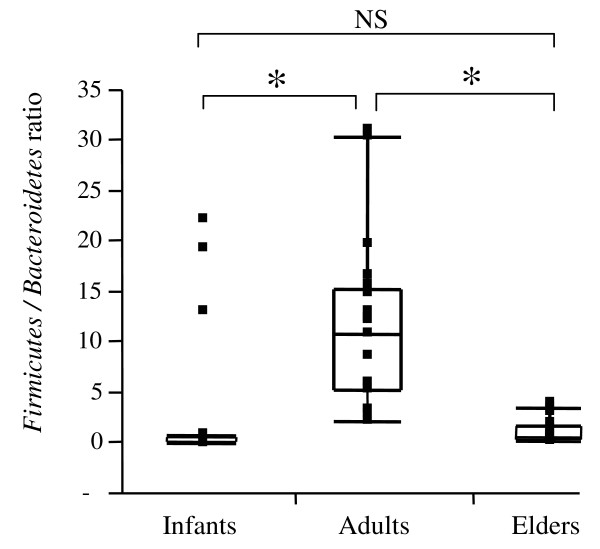
BACKGROUND: In humans, the intestinal microbiota plays an important role in the maintenance of host health by providing energy, nutrients, and immunological protection. Applying current molecular methods is necessary to surmount the limitations of classical culturing techniques in order to obtain an accurate description of the microbiota composition. RESULTS: Here we report on the comparative assessment of human fecal microbiota from three age-groups: infants, adults and the elderly. We demonstrate that the human intestinal microbiota undergoes maturation from birth to adulthood and is further altered with ageing. The counts of major bacterial groups Clostridium leptum, Clostridium coccoides, Bacteroidetes, Bifidobacterium, Lactobacillus and Escherichia coli were assessed by quantitative PCR (qPCR). By comparing species diversity profiles, we observed age-related changes in the human fecal microbiota. The microbiota of infants was generally characterized by low levels of total bacteria. C. leptum and C. coccoides species were highly represented in the microbiota of infants, while elderly subjects exhibited high levels of E. coli and Bacteroidetes. We observed that the ratio of Firmicutes to Bacteroidetes evolves during different life stages. For infants, adults and elderly individuals we measured ratios of 0.4, 10.9 and 0.6, respectively. CONCLUSION: In this work we have confirmed that qPCR is a powerful technique in studying the diverse and complex fecal microbiota. Our work demonstrates that the fecal microbiota composition evolves throughout life, from early childhood to old age.
Overview
The claims and statistics of this paper haven’t been checked yet.
Free: it reads the open-access text and checks the first 5 claims that cite a source we can check. Create a free account to check every claim.
Integrity signals
Registry
Cites
Statistics
Figures
Verification
Claims the paper makes
The claims and statistics of this paper haven’t been checked yet.
Free: it reads the open-access text and checks the first 5 claims that cite a source we can check. Create a free account to check every claim.
Claims other papers make about this one
Each is checked against this paper’s own text: does it say what the citing paper says it does?
The source backs part of the claim, not all of it — or backs it for a different population, condition or comparison.
In the citing paper
“A reduced Firmicutes:Bacteroidetes ratio has been reported in Irish and French elderly compared to young adults”
From The Microbiota-Gut-Brain Axis (2019) · cites this paper as Mariat et al., 2009
Experimental — accuracy not yet measuredIn the citing paper
“The disappearance of these microorganisms is important because they normally counteract the expansion of pathogenic microbial communities, while also maintaining intestinal barrier integrity by fermenting starches and dietary fibres and producing mucus and lipid metabolites, such as short-chain fatty acids (primarily acetate, propionate, and butyrate)66–68.”
From Inflammageing: chronic inflammation in ageing, cardiovascular disease, and frailty (2018) · cites this paper as [66]
In the citing paper
“Despite large variability in the gut microbiota found in different populations, geographic regions, and settings, evidence suggests that ageing is associated with a reduction in beneficial commensal microorganisms — such as Coprococcus, Faecalibacterium, and Lactobacillus — as well as a decrease in the Firmicutes: Bacteroidetes ratio66–68.”
From Inflammageing: chronic inflammation in ageing, cardiovascular disease, and frailty (2018) · cites this paper as [66]
In the citing paper
“In fact it has been reported that breast-fed infants generally harbor a more complex and numerous Bifidobacterium microbiota than formula-fed infants (19, 20).”
From Bifidobacteria and Their Health-Promoting Effects (2017) · cites this paper as [19]
In the citing paper
“An increased F/B ratio, caused by an expansion of Firmicutes and/or a contraction of Bacteroidetes, has been widely considered a signature of gut dysbiosis and has been associated with obesity, diabetes, and CVD8, 13, 16.”
From Gut Dysbiosis Is Linked to Hypertension (2015) · cites this paper as [8]
1 more claim about this paper
Create a free account to see every claim other papers make about this one.
Self-check
Percentages, sums and reported differences re-computed from the paper’s own numbers.
The self-check needs the paper’s full text.
Citations
Cites
Human gut microbes associated with obesity
Ley, R. E., Turnbaugh, P. J., Klein, S., & Gordon, J. I. (2006) · Nature · doi:10.1038/4441022a · Cited by 8,785 · cited 4×
“[7] when a correlation between body weight and gut microbial ecology was analysed.”
BackgroundInfluentialDiversity of the Human Intestinal Microbial Flora
Eckburg, P. B., Bik, E. M., Bernstein, C. N., Purdom, E., Dethlefsen, L., Sargent, M., Gill, S. R., Nelson, K. E., & Relman, D. A. (2005) · Science · doi:10.1126/science.1110591 · Cited by 7,913 · cited 1×
“This has markedly increased the information available concerning the complexity of the human bowel microbiota, from which over 1250 Operational Taxonomic Units have been identified corresponding to several dominant phyla [4,5].”
BackgroundHost-Bacterial Mutualism in the Human Intestine
Bäckhed, F., Ley, R. E., Sonnenburg, J. L., Peterson, D. A., & Gordon, J. I. (2005) · Science · doi:10.1126/science.1104816 · Cited by 5,277 · cited 1×
“The major functions attributed to the microbiota present in the gut begin to manifest at the end of the second year of life and comprise: i) nutrients absorption and food fermentation [10], ii) stimulation of the host immune system [11] and iii) barrier effects against pathogens [12].”
BackgroundDevelopment of the Human Infant Intestinal Microbiota
Palmer, C., Bik, E. M., DiGiulio, D. B., Relman, D. A., & Brown, P. O. (2007) · PLoS Biology · doi:10.1371/journal.pbio.0050177 · Cited by 2,877 · cited 1×
“Establishment of the intestinal microbiota has been shown to be a progressive process [9].”
BackgroundMICROBIAL ECOLOGY OF THE GASTROINTESTINAL TRACT
Savage, D. C. (1977) · Annual Review of Microbiology · doi:10.1146/annurev.mi.31.100177.000543 · Cited by 2,436 · cited 1×
“methods for more accurately assessing its composition and diversity, formerly thought to contain a mere 400– 500 bacterial species [2].”
MethodReduced diversity of faecal microbiota in Crohn’s disease revealed by a metagenomic approach
Manichanh, C., Rigottier-Gois, L., Bonnaud, E., Gloux, K., Pelletier, E., Frangeul, L., Nalin, R., Jarrin, C., Chardon, P., Marteau, P., et al. (2006) · Gut · doi:10.1136/gut.2005.073817 · Cited by 2,277 · cited 1×
“This has markedly increased the information available concerning the complexity of the human bowel microbiota, from which over 1250 Operational Taxonomic Units have been identified corresponding to several dominant phyla [4,5].”
BackgroundSelf-citationInteractions between commensal intestinal bacteria and the immune system
Macpherson, A. J., & Harris, N. L. (2004) · Nature Reviews Immunology · doi:10.1038/nri1373 · Cited by 1,610
Anatomical basis of tolerance and immunity to intestinal antigens
Mowat, A. M. (2003) · Nature Reviews Immunology · doi:10.1038/nri1057 · Cited by 1,415 · cited 1×
“The major functions attributed to the microbiota present in the gut begin to manifest at the end of the second year of life and comprise: i) nutrients absorption and food fermentation [10], ii) stimulation of the host immune system [11] and iii) barrier effects against pathogens [12].”
BackgroundHarmsen, H. J. M., Wildeboer–Veloo, A. C. M., Raangs, G. C., Wagendorp, A. A., Klijn, N., Bindels, J. G., & Welling, G. W. (2000) · Journal of Pediatric Gastroenterology and Nutrition · doi:10.1002/j.1536-4801.2000.tb02655.x · Cited by 1,337
Franks, A. H., Harmsen, H. J. M., Raangs, G. C., Jansen, G. J., Schut, F., & Welling, G. W. (1998) · Applied and Environmental Microbiology · doi:10.1128/aem.64.9.3336-3345.1998 · Cited by 1,056 · cited 1×
“Once climax composition is achieved near the end of adolescence, this ecosystem displays a high stability in healthy adults [13].”
Background
Cited by
Items 101–200 of 1,003
Probiotics, Prebiotics, and Synbiotics: Gut and Beyond
Vyas, U., & Ranganathan, N. (2012) · Gastroenterology Research and Practice · doi:10.1155/2012/872716 · Cited by 256
“They found significant reduction in the total number of bacteria, and ratios of the types of bacteria of the genus Bacteroidetes, Firmicutes and Proteobacteria [150].”
MethodInfluentialBilirubin in the Liver–Gut Signaling Axis
Hamoud, A.-R., Weaver, L., Stec, D. E., & Hinds, T. D. (2018) · Trends in Endocrinology & Metabolism · doi:10.1016/j.tem.2018.01.002 · Cited by 254
“The total number and diversity of microbiota are reduced in the elderly as compared to adults, and thus the composition of the gut microbiota is frequently changing [66].”
Lee, S., Yun, Y., Kim, S., Lee, E.-J., Chang, Y., Ryu, S., Shin, H., Kim, H.-L., Kim, H.-N., & Lee, J. (2018) · Journal of Clinical Medicine · doi:10.3390/jcm7090282 · Cited by 255
“Other studies have reported that gut microbiota is associated with human metabolic diseases [42,43], and the Firmicutes/Bacteroidetes ratio is associated with predisposition to disease states and obesity [30,31,44].”
BackgroundSellitto, M., Bai, G., Serena, G., Fricke, W. F., Sturgeon, C., Gajer, P., White, J. R., Koenig, S. S. K., Sakamoto, J., Boothe, D., et al. (2012) · PLoS ONE · doi:10.1371/journal.pone.0033387 · Cited by 251
“The ratio is lower in the first year of life, becomes higher in adulthood, and decreases in elderly [45].”
BackgroundVidenska, P., Sedlar, K., Lukac, M., Faldynova, M., Gerzova, L., Cejkova, D., Sisak, F., & Rychlik, I. (2014) · PLoS ONE · doi:10.1371/journal.pone.0115142 · Cited by 245
“Soon after, representatives of Firmicutes begin to appear in chickens within a week after hatching, and lastly, representatives of Bacteroidetes appear as part of the intestinal tract microbiota [1–6].”
Microbes, immunity, and behavior: psychoneuroimmunology meets the microbiome
Dinan, T. G., & Cryan, J. F. (2017) · Neuropsychopharmacology · doi:10.1038/npp.2016.103 · Cited by 246
Williams, K., Milner, J., Boudreau, M. D., Gokulan, K., Cerniglia, C. E., & Khare, S. (2015) · Nanotoxicology · doi:10.3109/17435390.2014.921346 · Cited by 246
“in the gut has been correlated with the overall health status of the gastrointestinal tract (Mariat et al., 2009).”
Proteobacteria explain significant functional variability in the human gut microbiome
Bradley, P. H., & Pollard, K. S. (2017) · Microbiome · doi:10.1186/s40168-017-0244-z · Cited by 249
Gut microbiota, host health, and polysaccharides
Xu, X., Xu, P., Ma, C., Tang, J., & Zhang, X. (2013) · Biotechnology Advances · doi:10.1016/j.biotechadv.2012.12.009 · Cited by 245
“It has been suggested that the expression of IVb tight adherence pilus gene in the Bifidobacterium is responsible for host colonization and persistence in the newborn gastrointestinal tract (O'Connell Motherway et al., 2011).”
InfluentialStructural and Functional Dysbiosis of Fecal Microbiota in Chinese Patients With Alzheimer's Disease
Ling, Z., Zhu, M., Yan, X., Cheng, Y., Shao, L., Liu, X., Jiang, R., & Wu, S. (2021) · Frontiers in Cell and Developmental Biology · doi:10.3389/fcell.2020.634069 · Cited by 241
“One aging indicator, the decreased ratios of Firmicutes/Bacteroidetes (Mariat et al., 2009), also did not change significantly in AD-associated microbiota.”
BackgroundFan, L., Qi, Y., Qu, S., Chen, X., Li, A., Hendi, M., Xu, C., Wang, L., Hou, T., Si, J., et al. (2021) · Gut Microbes · doi:10.1080/19490976.2020.1826746 · Cited by 239
“B:F ratio has been reported to be associated with aging and metabolic syndrome.(37,38) In our study, we found a lower genus abundance of Akkermansia and Escherichiashigella in the B.”
Bahl, M. I., Bergström, A., & Licht, T. R. (2012) · FEMS Microbiology Letters · doi:10.1111/j.1574-6968.2012.02523.x · Cited by 244
“An example of this is the use of the ratio between the two most predominant phyla, namely the Firmicutes and the Bacteriodetes, as a biomarker in relation to human physiology (Armougom & Raoult, 2008; Guo et al., 2008; Mariat et al., 2009).”
BackgroundPandit, R. J., Hinsu, A. T., Patel, N. V., Koringa, P. G., Jakhesara, S. J., Thakkar, J. R., Shah, T. M., Limon, G., Psifidi, A., Guitian, J., et al. (2018) · Microbiome · doi:10.1186/s40168-018-0501-9 · Cited by 242
“Higher Firmicutes/Bacteroidetes ratios have been associated with human obesity [49, 50], and the reverse has been linked with weight loss [51].”
BackgroundA review of probiotic supplementation in healthy adults: helpful or hype?
Khalesi, S., Bellissimo, N., Vandelanotte, C., Williams, S., Stanley, D., & Irwin, C. (2019) · European Journal of Clinical Nutrition · doi:10.1038/s41430-018-0135-9 · Cited by 242
Mossad, O., Batut, B., Yilmaz, B., Dokalis, N., Mezö, C., Nent, E., Nabavi, L. S., Mayer, M., Maron, F. J. M., Buescher, J. M., et al. (2022) · Nature Neuroscience · doi:10.1038/s41593-022-01027-3 · Cited by 241
Rajca, S., Grondin, V., Louis, E., Vernier-Massouille, G., Grimaud, J.-C., Bouhnik, Y., Laharie, D., Dupas, J.-L., Pillant, H., Picon, L., et al. (2014) · Inflammatory Bowel Diseases · doi:10.1097/mib.0000000000000036 · Cited by 236
“3 (Applied Biosystems, Life Technology, Saint-Aubin, France).(17,19) The total numbers of bacteria were inferred from averaged standard curves as described by Lyons et al.”
MethodSelf-citationPan, F., Zhang, L., Li, M., Hu, Y., Zeng, B., Yuan, H., Zhao, L., & Zhang, C. (2018) · Microbiome · doi:10.1186/s40168-018-0440-5 · Cited by 232
The potential role of vitamin D supplementation as a gut microbiota modifier in healthy individuals
Singh, P., Rawat, A., Alwakeel, M., Sharif, E., & Al Khodor, S. (2020) · Scientific Reports · doi:10.1038/s41598-020-77806-4 · Cited by 225
Bharwani, A., Mian, M. F., Surette, M. G., Bienenstock, J., & Forsythe, P. (2017) · BMC Medicine · doi:10.1186/s12916-016-0771-7 · Cited by 236
On inflammatory hypothesis of depression: what is the role of IL-6 in the middle of the chaos?
Roohi, E., Jaafari, N., & Hashemian, F. (2021) · Journal of Neuroinflammation · doi:10.1186/s12974-021-02100-7 · Cited by 225
“The Firmicutes/Bacteroideteds ratio is of great relevance in signaling human gut microbiota status [185].”
BackgroundComparative Analysis of Korean Human Gut Microbiota by Barcoded Pyrosequencing
Nam, Y.-D., Jung, M.-J., Roh, S. W., Kim, M.-S., & Bae, J.-W. (2011) · PLoS ONE · doi:10.1371/journal.pone.0022109 · Cited by 232
“higher proportion of Bacteriodetes in the elderly than in younger, healthy adults or infants [10,41].”
BackgroundGomez, A., Luckey, D., Yeoman, C. J., Marietta, E. V., Berg Miller, M. E., Murray, J. A., White, B. A., & Taneja, V. (2012) · PLoS ONE · doi:10.1371/journal.pone.0036095 · Cited by 236
“Our data on gut microbiome in genetically resistant mice is consistent with previous reports of age and sex based differences in the fecal microbiomes of healthy individuals [23,24].”
ResultInteractions in the microbiome: communities of organisms and communities of genes
Boon, E., Meehan, C. J., Whidden, C., Wong, D. H.-J., Langille, M. G. I., & Beiko, R. G. (2014) · FEMS Microbiology Reviews · doi:10.1111/1574-6976.12035 · Cited by 230
“Larger taxonomic groups may be of interest because they share one or more important attributes: Class Amphibia is seen as a leading indicator of a general decline in biodiversity, in part due to their sensitivity to disturbances in both terrestrial and aquatic habitats (Collins & Crump, 2009), while the balance betwee…”
BackgroundLu, H., Wu, Z., Xu, W., Yang, J., Chen, Y., & Li, L. (2011) · Microbial Ecology · doi:10.1007/s00248-010-9801-8 · Cited by 224
Damman, C. J., Miller, S. I., Surawicz, C. M., & Zisman, T. L. (2012) · American Journal of Gastroenterology · doi:10.1038/ajg.2012.93 · Cited by 226
Gut microbiota of healthy and malnourished children in bangladesh
Monira, S., Nakamura, S., Gotoh, K., Izutsu, K., Watanabe, H., Alam, N. H., Endtz, H. P., Cravioto, A., Ali, S. I., Nakaya, T., et al. (2011) · Frontiers in Microbiology · doi:10.3389/fmicb.2011.00228 · Cited by 223
“Microbial ecology of the gastrointestinal tract also plays a key role in nutrition research into the relation between colonic microbiota signatures and age (Mariat et al., 2009), diet (De Filippo et al., 2010), dietary allergies (Lay et al., 2005), or diseases (Frank et al., 2007).”
BackgroundBosi, A., Banfi, D., Bistoletti, M., Giaroni, C., & Baj, A. (2020) · International Journal of Tryptophan Research · doi:10.1177/1178646920928984 · Cited by 221
“The epithelium of the gastrointestinal tract contains different types of single sensory/secretory EECs, which represent the largest endocrine system of the human body.151 At least 15 types of EECs have been described, releasing more than 20 peptide hormones involved in the regulation of gut motility, gastric acid secr…”
BackgroundOjima, M., Motooka, D., Shimizu, K., Gotoh, K., Shintani, A., Yoshiya, K., Nakamura, S., Ogura, H., Iida, T., & Shimazu, T. (2016) · Digestive Diseases and Sciences · doi:10.1007/s10620-015-4011-3 · Cited by 223
“[24] demonstrated that the ratio of Firmicutes to Bacteroidetes of the human microbiota changes with age.”
BackgroundThe human gut microbiome in health: Establishment and resilience of microbiota over a lifetime
Greenhalgh, K., Meyer, K. M., Aagaard, K. M., & Wilmes, P. (2016) · Environmental Microbiology · doi:10.1111/1462-2920.13318 · Cited by 218
Park, J. C., & Im, S.-H. (2020) · Experimental & Molecular Medicine · doi:10.1038/s12276-020-0473-2 · Cited by 210
Bishehsari, F., Engen, P. A., Preite, N. Z., Tuncil, Y. E., Naqib, A., Shaikh, M., Rossi, M., Wilber, S., Green, S. J., Hamaker, B. R., et al. (2018) · Genes · doi:10.3390/genes9020102 · Cited by 214
Vaiserman, A., Romanenko, M., Piven, L., Moseiko, V., Lushchak, O., Kryzhanovska, N., Guryanov, V., & Koliada, A. (2020) · BMC Microbiology · doi:10.1186/s12866-020-01903-7 · Cited by 214
Houtman, T. A., Eckermann, H. A., Smidt, H., & de Weerth, C. (2022) · Scientific Reports · doi:10.1038/s41598-022-07176-6 · Cited by 213
The intestinal microbiota: its role in health and disease
Biedermann, L., & Rogler, G. (2015) · European Journal of Pediatrics · doi:10.1007/s00431-014-2476-2 · Cited by 211
“Interestingly, the microbial composition of the gut has been shown to be different in the elderly [33, 122].”
BackgroundWaddell, I. S., & Orfila, C. (2023) · Critical Reviews in Food Science and Nutrition · doi:10.1080/10408398.2022.2061909 · Cited by 211
“However, contradictory results for this proposal were observed by both Fernandes et al. (2014) and Mariat et al. (2009), whereby no significant differences in Bacteroidetes and Firmicutes were seen between obese and lean individuals (Fernandes et al. 2014), and that moreover the ratio between these…”
BackgroundResultThe intestinal microbiota and obesity
Kallus, S. J., & Brandt, L. J. (2012) · Journal of Clinical Gastroenterology · doi:10.1097/mcg.0b013e31823711fd · Cited by 210
Age-dependent changes in GI physiology and microbiota: time to reconsider?
An, R., Wilms, E., Masclee, A. A. M., Smidt, H., Zoetendal, E. G., & Jonkers, D. (2018) · Gut · doi:10.1136/gutjnl-2017-315542 · Cited by 209
The links between the gut microbiome, aging, modern lifestyle and Alzheimer's disease
Askarova, S., Umbayev, B., Masoud, A.-R., Kaiyrlykyzy, A., Safarova, Y., Tsoy, A., Olzhayev, F., & Kushugulova, A. (2020) · Frontiers in Cellular and Infection Microbiology · doi:10.3389/fcimb.2020.00104 · Cited by 208
“It was shown that general age-related changes in the composition of the intestinal microflora include an increase in the number of facultative anaerobes, changes in species dominance, while, at the same time, there is stability in the total number of anaerobes (Mariat et al., 2009; Satokari et al., 2010).”
BackgroundTachon, S., Zhou, J., Keenan, M., Martin, R., & Marco, M. L. (2013) · FEMS Microbiology Ecology · doi:10.1111/j.1574-6941.2012.01475.x · Cited by 205
“Perturbations in the intestinal microbiota were recently identified in elderly individuals (Mariat et al., 2009; O’Toole & Claesson, 2010; Claesson et al., 2011).”
BackgroundBana, B., & Cabreiro, F. (2019) · Annual Review of Genetics · doi:10.1146/annurev-genet-112618-043650 · Cited by 203
Fang, X., Wang, X., Yang, S., Meng, F., Wang, X., Wei, H., & Chen, T. (2016) · Frontiers in Microbiology · doi:10.3389/fmicb.2016.01479 · Cited by 205
“For group H, 43.78% OTUs (169/386) were identified as common OUTs among samples H1, H2, H3, H4, and H5, while the common OTUs only occupied 17.56% (49/279) among samples A1, A2, A3, A4, A5, and A6.”
BackgroundInfluentialRole of gut microbiota in cardiovascular diseases
Novakovic, M., Rout, A., Kingsley, T., Kirchoff, R., Singh, A., Verma, V., Kant, R., & Chaudhary, R. (2020) · World Journal of Cardiology · doi:10.4330/wjc.v12.i4.110 · Cited by 202
Modulation of the gut microbiota by metformin improves metabolic profiles in aged obese mice
Lee, H., Lee, Y., Kim, J., An, J., Lee, S., Kong, H., Song, Y., Lee, C.-K., & Kim, K. (2018) · Gut Microbes · doi:10.1080/19490976.2017.1405209 · Cited by 203
Wacklin, P., Laurikka, P., Lindfors, K., Collin, P., Salmi, T., Lähdeaho, M.-L., Saavalainen, P., Mäki, M., Mättö, J., Kurppa, K., et al. (2014) · American Journal of Gastroenterology · doi:10.1038/ajg.2014.355 · Cited by 201
Fu, X., Cao, C., Ren, B., Zhang, B., Huang, Q., & Li, C. (2018) · Carbohydrate Polymers · doi:10.1016/j.carbpol.2017.12.048 · Cited by 200
Links between the microbiome and bone
Hernandez, C. J., Guss, J. D., Luna, M., & Goldring, S. R. (2016) · Journal of Bone and Mineral Research · doi:10.1002/jbmr.2887 · Cited by 200
“For example, gut microbial diversity changes with age((51)) and is negatively correlated with clinical indices of frailty in the elderly.”
BackgroundDiet-microbiota interactions and their implications for healthy living
Jeffery, I., & O'Toole, P. (2013) · Nutrients · doi:10.3390/nu5010234 · Cited by 199
“These bacteria are present at low levels in healthy young adults, but are present in increased abundances in the inflamed gut [22,24,25].”
BackgroundInvolvement of the gut microbiota and barrier function in glucocorticoid-induced osteoporosis
Schepper, J. D., Collins, F., Rios-Arce, N. D., Kang, H. J., Schaefer, L., Gardinier, J. D., Raghuvanshi, R., Quinn, R. A., Britton, R., Parameswaran, N., et al. (2020) · Journal of Bone and Mineral Research · doi:10.1002/jbmr.3947 · Cited by 199
“The Firmicutes and Bacteroidetes phyla comprise a significant portion of the human and mouse microbiota, and the ratio of their abundance is often used as a marker of dysbiosis,((41)) though both phyla contain bacteria that can benefit as well as reduce health.”
BackgroundLiang, D., Leung, R. K.-K., Guan, W., & Au, W. W. (2018) · Gut Pathogens · doi:10.1186/s13099-018-0230-4 · Cited by 203
“One example is the ratio of Firmicutes to Bacteroidetes (F:B) which was also affected by age [21, 73].”
BackgroundDegnan, P. H., Pusey, A. E., Lonsdorf, E. V., Goodall, J., Wroblewski, E. E., Wilson, M. L., Rudicell, R. S., Hahn, B. H., & Ochman, H. (2012) · Proceedings of the National Academy of Sciences · doi:10.1073/pnas.1110994109 · Cited by 197
“Although these microbial communities are continually seeded from external sources and can change drastically over the lifetime of an individual (4, 5), the gut microbial communities of conspecifics tend to be more similar to one another than to those of other species (6–9).”
BackgroundGut microbiota lipopolysaccharide accelerates inflamm-aging in mice
Kim, K.-A., Jeong, J.-J., Yoo, S.-Y., & Kim, D.-H. (2016) · BMC Microbiology · doi:10.1186/s12866-016-0625-7 · Cited by 196
Aitbali, Y., Ba-M'hamed, S., Elhidar, N., Nafis, A., Soraa, N., & Bennis, M. (2018) · Neurotoxicology and Teratology · doi:10.1016/j.ntt.2018.04.002 · Cited by 193
Tong, L., Zhang, X., Hao, H., Liu, Q., Zhou, Z., Liang, X., Liu, T., Gong, P., Zhang, L., Zhai, Z., et al. (2021) · Nutrients · doi:10.3390/nu13103319 · Cited by 188
“Generally, a low F/B ratio contributed to a healthy condition [23].”
BackgroundChen, H., Zhao, R., Wang, B., Cai, C., Zheng, L., Wang, H., Wang, M., Ouyang, H., Zhou, X., Chai, Z., et al. (2017) · NanoImpact · doi:10.1016/j.impact.2017.07.005 · Cited by 190
Duan, R., Zhu, S., Wang, B., & Duan, L. (2019) · Clinical and Translational Gastroenterology · doi:10.14309/ctg.0000000000000012 · Cited by 185
“In general terms, the F/B ratio is regarded to be of significant relevance in signaling human gut microbiota status (40).”
BackgroundLee, K.-E., Kim, J.-K., Han, S.-K., Lee, D. Y., Lee, H.-J., Yim, S.-V., & Kim, D.-H. (2020) · Microbiome · doi:10.1186/s40168-020-00881-2 · Cited by 188
Guerville, M., & Boudry, G. (2016) · American Journal of Physiology-Gastrointestinal and Liver Physiology · doi:10.1152/ajpgi.00098.2016 · Cited by 189
“In jejunum and ileum tissues, biopsy microbiota analysis revealed that the Gram-positive Firmicutes remains the major phyla (43%); however, the quantity of Gram-negative Proteobacteria and Bacteroidetes increases gradually to reach 23% and 20%, respectively, from the jejunum to the ileum (33, 38).”
BackgroundInfluentialThe intestinal microenvironment in sepsis
Fay, K. T., Ford, M. L., & Coopersmith, C. M. (2017) · Biochimica et Biophysica Acta (BBA) - Molecular Basis of Disease · doi:10.1016/j.bbadis.2017.03.005 · Cited by 184
“Administration of TPN increases intestinal permeability, alters Paneth cell function and decreases the Firmicutes to Bacteroidetes ratio (96).”
BackgroundInfluentialGut microbiota: An underestimated and unintended recipient for pesticide-induced toxicity
Yuan, X., Pan, Z., Jin, C., Ni, Y., Fu, Z., & Jin, Y. (2019) · Chemosphere · doi:10.1016/j.chemosphere.2019.04.088 · Cited by 188
Cardiometabolic Benefits of Intermittent Fasting
Varady, K. A., Cienfuegos, S., Ezpeleta, M., & Gabel, K. (2021) · Annual Review of Nutrition · doi:10.1146/annurev-nutr-052020-041327 · Cited by 186
Role of Personalized Nutrition in Chronic-Degenerative Diseases
Di Renzo, L., Gualtieri, P., Romano, L., Marrone, G., Noce, A., Pujia, A., Perrone, M. A., Aiello, V., Colica, C., & De Lorenzo, A. (2019) · Nutrients · doi:10.3390/nu11081707 · Cited by 181
Ling, Z., Jin, C., Xie, T., Cheng, Y., Li, L., & Wu, N. (2016) · Scientific Reports · doi:10.1038/srep30673 · Cited by 185
Postbiotics as potential new therapeutic agents for metabolic disorders management
Bourebaba, Y., Marycz, K., Mularczyk, M., & Bourebaba, L. (2022) · Biomedicine & Pharmacotherapy · doi:10.1016/j.biopha.2022.113138 · Cited by 177
The Clostridium Sporulation Programs: Diversity and Preservation of Endospore Differentiation
Al-Hinai, M. A., Jones, S. W., & Papoutsakis, E. T. (2015) · Microbiology and Molecular Biology Reviews · doi:10.1128/mmbr.00025-14 · Cited by 184
“health benefits and immune protection (8).”
Fan, L., Wang, Z., Chen, M., Qu, Y., Li, J., Zhou, A., Xie, S., Zeng, F., & Zou, J. (2019) · Science of The Total Environment · doi:10.1016/j.scitotenv.2018.12.069 · Cited by 180
Commensal bacteria contribute to insulin resistance in aging by activating innate B1a cells
Bodogai, M., O’Connell, J., Kim, K., Kim, Y., Moritoh, K., Chen, C., Gusev, F., Vaughan, K., Shulzhenko, N., Mattison, J. A., et al. (2018) · Science Translational Medicine · doi:10.1126/scitranslmed.aat4271 · Cited by 182
Zhang, J.-C., Yao, W., Dong, C., Yang, C., Ren, Q., Ma, M., & Hashimoto, K. (2017) · Translational Psychiatry · doi:10.1038/tp.2017.112 · Cited by 182
Schepper, J. D., Collins, F. L., Rios-Arce, N. D., Raehtz, S., Schaefer, L., Gardinier, J. D., Britton, R. A., Parameswaran, N., & McCabe, L. R. (2019) · Journal of Bone and Mineral Research · doi:10.1002/jbmr.3635 · Cited by 182
“Firmicutes and Bacteroidetes are the predominant phylum in the human intestine.((17)) The environment, diet, drugs, and disease can affect microbiota composition and lead to dysbiosis, an altered microbial community that contributes to disease.”
BackgroundBrunt, V. E., Gioscia‐Ryan, R. A., Richey, J. J., Zigler, M. C., Cuevas, L. M., Gonzalez, A., Vázquez‐Baeza, Y., Battson, M. L., Smithson, A. T., Gilley, A. D., et al. (2019) · The Journal of Physiology · doi:10.1113/jp277336 · Cited by 182
“ageing in the absence of overt pathology) (Hopkins et al. 2001; Mariat et al. 2009; Claesson et al. 2011).”
BackgroundResultInfluentialGut Dysbiosis and Muscle Aging: Searching for Novel Targets against Sarcopenia
Picca, A., Fanelli, F., Calvani, R., Mulè, G., Pesce, V., Sisto, A., Pantanelli, C., Bernabei, R., Landi, F., & Marzetti, E. (2018) · Mediators of Inflammation · doi:10.1155/2018/7026198 · Cited by 181
“[49] via qPCR analysis and confirmed by Claesson et al.”
MethodWickens, K., Black, P., Stanley, T. V., Mitchell, E., Barthow, C., Fitzharris, P., Purdie, G., & Crane, J. (2012) · Clinical & Experimental Allergy · doi:10.1111/j.1365-2222.2012.03975.x · Cited by 177
Human gut microbiota: Does diet matter?
Maukonen, J., & Saarela, M. (2015) · Proceedings of The Nutrition Society · doi:10.1017/s0029665114000688 · Cited by 177
Lamas, B., Martins Breyner, N., & Houdeau, E. (2020) · Particle and Fibre Toxicology · doi:10.1186/s12989-020-00349-z · Cited by 174
“SCFAs (i.e., butyrate, propionate and acetate) are by-products of the fermentation of non-digestible dietary fibres through the action of intestinal bacteria, while AhR ligands are mostly derived from tryptophan metabolism.”
BackgroundInfluentialGut Microbiota: Its Role in Hepatic Encephalopathy
Rai, R., Saraswat, V. A., & Dhiman, R. K. (2015) · Journal of Clinical and Experimental Hepatology · doi:10.1016/j.jceh.2014.12.003 · Cited by 175
Metformin attenuated sepsis-related liver injury by modulating gut microbiota
Liang, H., Song, H., Zhang, X., Song, G., Wang, Y., Ding, X., Duan, X., Li, L., Sun, T., & Kan, Q. (2022) · Emerging Microbes & Infections · doi:10.1080/22221751.2022.2045876 · Cited by 176
“Gut microbial composition varies with age [11], undergoing dramatic changes from infant to adult and from dominant Bifidobacterium to Bacteroidetes and Clostridia genus [11,12].”
BackgroundClostridium difficile – From Colonization to Infection
Schäffler, H., & Breitrück, A. (2018) · Frontiers in Microbiology · doi:10.3389/fmicb.2018.00646 · Cited by 174
“First, an inadequate innate or humoral immune response might lead to a higher incidence and also severity of CDI (Kelly, 1996; Mariat et al., 2009; Ogra, 2010).”
BackgroundFuentes, S., van Nood, E., Tims, S., Heikamp-de Jong, I., ter Braak, C. J. F., Keller, J. J., Zoetendal, E. G., & de Vos, W. M. (2014) · The ISME Journal · doi:10.1038/ismej.2014.13 · Cited by 175
“The main components of the observed changes in composition were Bacilli (mostly small intestinal bacteria) and Proteobacteria (including vancomycin-resistant and potentially pathogenic bacteria).”
BackgroundInfluentialThe Influence of Milk Oligosaccharides on Microbiota of Infants: Opportunities for Formulas
Chichlowski, M., German, J. B., Lebrilla, C. B., & Mills, D. A. (2011) · Annual Review of Food Science and Technology · doi:10.1146/annurev-food-022510-133743 · Cited by 174
“A number of studies have demonstrated that bifidobacteria are overrepresented in the gastrointestinal microbiota of breastfed infants by comparison with adults (Favier et al. 2003, Harmsen et al. 2000, Mariat et al. 2009, Penders et al. 2006).”
ResultFernandes, R., Viana, S. D., Nunes, S., & Reis, F. (2019) · Biochimica et Biophysica Acta (BBA) - Molecular Basis of Disease · doi:10.1016/j.bbadis.2018.09.032 · Cited by 168
Kandpal, M., Indari, O., Baral, B., Jakhmola, S., Tiwari, D., Bhandari, V., Pandey, R. K., Bala, K., Sonawane, A., & Jha, H. C. (2022) · Metabolites · doi:10.3390/metabo12111064 · Cited by 159
“Firmicutes, the other dominant group of bacteria, includes several genera, such as Clostridium, Lactobacillus, Streptococcus, Enterococcus, Eubacterium, and Ruminococcus, among others [33].”
BackgroundThomas, M., Webb, M., Ghimire, S., Blair, A., Olson, K., Fenske, G. J., Fonder, A. T., Christopher-Hennings, J., Brake, D., & Scaria, J. (2017) · Scientific Reports · doi:10.1038/s41598-017-12481-6 · Cited by 170
Jeong, J., Yun, K., Mun, S., Chung, W.-H., Choi, S.-Y., Nam, Y.-D., Lim, M. Y., Hong, C. P., Park, C., Ahn, Y. J., et al. (2021) · Scientific Reports · doi:10.1038/s41598-020-80826-9 · Cited by 176
Breton, J., Galmiche, M., & Déchelotte, P. (2022) · Microorganisms · doi:10.3390/microorganisms10020452 · Cited by 165
“The gut microbiota also varies with age, with decreased diversity, which may result in bias in clinical studies [11,19].”
BackgroundResultFaecal bacterial and short-chain fatty acids signature in hypercholesterolemia
Granado-Serrano, A. B., Martín-Garí, M., Sánchez, V., Riart Solans, M., Berdún, R., Ludwig, I. A., Rubió, L., Vilaprinyó, E., Portero-Otín, M., & Serrano, J. C. E. (2019) · Scientific Reports · doi:10.1038/s41598-019-38874-3 · Cited by 169
Reynolds, A. C., Paterson, J. L., Ferguson, S. A., Stanley, D., Wright, K. P., & Dawson, D. (2017) · Sleep Medicine Reviews · doi:10.1016/j.smrv.2016.06.009 · Cited by 163
Collado, M. C., Engen, P. A., Bandín, C., Cabrera‐Rubio, R., Voigt, R. M., Green, S. J., Naqib, A., Keshavarzian, A., Scheer, F. A. J. L., & Garaulet, M. (2018) · The FASEB Journal · doi:10.1096/fj.201700697rr · Cited by 168
“Numerous human studies have used the ratio of relative abundance of Firmicutes-to-Bacteroidetes as an important parameter associated with factors such as host age (46) or disease (47).”
BackgroundIndole-3-Acetic Acid Alters Intestinal Microbiota and Alleviates Ankylosing Spondylitis in Mice
Shen, J., Yang, L., You, K., Chen, T., Su, Z., Cui, Z., Wang, M., Zhang, W., Liu, B., Zhou, K., et al. (2022) · Frontiers in Immunology · doi:10.3389/fimmu.2022.762580 · Cited by 166
“The Firmicutes/Bacteroidetes ratio can be used as a useful indicator for evaluating the balance of the intestinal microbiota population (97).”
MethodNew insights into the gut as the driver of critical illness and organ failure
Meng, M., Klingensmith, N. J., & Coopersmith, C. M. (2017) · Current Opinion in Critical Care · doi:10.1097/mcc.0000000000000386 · Cited by 166
Miller, G. E., Engen, P. A., Gillevet, P. M., Shaikh, M., Sikaroodi, M., Forsyth, C. B., Mutlu, E., & Keshavarzian, A. (2016) · PLOS ONE · doi:10.1371/journal.pone.0148952 · Cited by 171
Dougal, K., de la Fuente, G., Harris, P. A., Girdwood, S. E., Pinloche, E., Geor, R. J., Nielsen, B. D., Schott, H. C., Elzinga, S., & Newbold, C. J. (2014) · PLoS ONE · doi:10.1371/journal.pone.0087424 · Cited by 165
Effects of a high fat diet on intestinal microbiota and gastrointestinal diseases
Zhang, M., & Yang, X.-J. (2016) · World Journal of Gastroenterology · doi:10.3748/wjg.v22.i40.8905 · Cited by 162
Lee, H.-J., Lee, K.-E., Kim, J.-K., & Kim, D.-H. (2019) · Scientific Reports · doi:10.1038/s41598-019-48342-7 · Cited by 164
Pagliai, G., Russo, E., Niccolai, E., Dinu, M., Di Pilato, V., Magrini, A., Bartolucci, G., Baldi, S., Menicatti, M., Giusti, B., et al. (2020) · European Journal of Nutrition · doi:10.1007/s00394-019-02050-0 · Cited by 161
Gut microbiota composition correlates with changes in body fat content due to weight loss
Remely, M., Tesar, I., Hippe, B., Gnauer, S., Rust, P., & Haslberger, A. G. (2015) · Beneficial Microbes · doi:10.3920/bm2014.0104 · Cited by 162
“The Firmicutes/ Bacteroidetes ratio is known as a marker for an individual’s health, and an imbalance of the ratio is associated with different diseases (Mariat et al., 2009).”
BackgroundCo-evolution in context: The importance of studying gut microbiomes in wild animals
Amato, K. R. (2013) · Microbiome Science and Medicine · doi:10.2478/micsm-2013-0002 · Cited by 166
Metabolic Influences of Gut Microbiota Dysbiosis on Inflammatory Bowel Disease
Sultan, S., El-Mowafy, M., Elgaml, A., Ahmed, T. A. E., Hassan, H., & Mottawea, W. (2021) · Frontiers in Physiology · doi:10.3389/fphys.2021.715506 · Cited by 156
“Using multiplex PCR to identify fecal-SRB isolates, luminal SRB are dominated by Desulfovibriopiger, D. fairfieldensis, and D. desulfuricans (Loubinoux et al., 2002).”
MethodInfluentialLing, Z., Liu, X., Jia, X., Cheng, Y., Luo, Y., Yuan, L., Wang, Y., Zhao, C., Guo, S., Li, L., et al. (2014) · Scientific Reports · doi:10.1038/srep07485 · Cited by 158
Age and the aging process significantly alter the small bowel microbiome
Leite, G., Pimentel, M., Barlow, G. M., Chang, C., Hosseini, A., Wang, J., Parodi, G., Sedighi, R., Rezaie, A., & Mathur, R. (2021) · Cell Reports · doi:10.1016/j.celrep.2021.109765 · Cited by 158
Modulation of the faecal microbiome of healthy adult dogs by inclusion of potato fibre in the diet
Panasevich, M. R., Kerr, K. R., Dilger, R. N., Fahey, G. C., Guérin-Deremaux, L., Lynch, G. L., Wils, D., Suchodolski, J. S., Steer, J. M., Dowd, S. E., et al. (2015) · British Journal of Nutrition · doi:10.1017/s0007114514003274 · Cited by 158
“products and consistency, and (2) to assess the modulatory effects of dietary PF on the faecal microbiome.”
BackgroundComparative evaluation of establishing a human gut microbial community within rodent models
Wos-Oxley, M. L., Bleich, A., Oxley, A. P. A., Kahl, S., Janus, L. M., Smoczek, A., Nahrstedt, H., Pils, M. C., Taudien, S., Platzer, M., et al. (2012) · Gut Microbes · doi:10.4161/gmic.19934 · Cited by 152
Metadata
- Authors
- Mariat, D., Firmesse, O., Levenez, F., Guimarăes, V., Sokol, H., Doré, J., Corthier, G., & Furet, J.-P.
- Affiliations
- Institut National de Recherche pour l'Agriculture, l'Alimentation et l'Environnement (FR)
- Institut National de la Recherche Agronomique (FR)
- Assistance Publique – Hôpitaux de Paris (FR)
- Corresponding author
- Mariat, D
- ORCID
- Venue
- BMC Microbiology
- Published
- 2009
- Volume
- 9
- Issue
- 1
- Pages
- 123
- ISSN
- 1471-2180 (ISSN-L)
- PMC
- PMC2702274
- OpenAlex
- W2142536690
- Cited by
- 1,755
- References
- 33
- Citations by year
- 2026: 63 · 2025: 123 · 2024: 150 · 2023: 162 · 2022: 187 · 2021: 179 · 2020: 195 · 2019: 130 · 2018: 115 · 2017: 92 · 2016: 79 · 2015: 54 · 2014: 55 · 2013: 54 · 2012: 48
- FWCI
- 15.42
- Type
- journal article
- Language
- en
- Open access
- gold
- doi.org
- Licence
- cc-by
- Locations
- BMC Microbiology (publishedVersion, cc-by)
- PubMed Central (publishedVersion, cc-by)
- PubMed (publishedVersion)
- HAL (submittedVersion, other-oa)
- DOAJ (DOAJ: Directory of Open Access Journals) (submittedVersion)
- Topics
- Life Sciences › Biochemistry, Genetics and Molecular Biology › Molecular Biology › Gut microbiota and health
- Health Sciences › Nursing › Nutrition and Dietetics › Infant Nutrition and Health
- Health Sciences › Dentistry › Periodontics › Oral microbiology and periodontitis research
- Keywords
- Firmicutes/Bacteroidetes ratio, human gut microbiome, fecal microbiota, age-related changes, microbiota maturation, infants, older adults, Clostridium leptum, Clostridium coccoides, Bacteroidetes, Bifidobacterium, Lactobacillus, Escherichia coli, bacterial diversity, real-time PCR
- MeSH terms
- Adult, Aged, Aged, 80 and over, Aging, Bifidobacterium, Clostridium, DNA, Bacterial, Escherichia coli, Feces, Humans, Infant, Infant, Newborn, Intestines, Lactobacillus, Middle Aged, Colony Count, Microbial, Bacteroidetes
About these checks
Registry, retraction, Cites and statistics results are computed, not judged, with one exception: a printed reference that no index lists is read once by a model before it counts as a citation error. Claims are extracted by a model and kept only when their quote appears verbatim in the text; each cited source is then checked, with a model’s help, for whether it says what the claim relies on. Those verdicts can be wrong — read the claim’s quote and the cited source before relying on one.
Statistics and arithmetic are recomputed, not judged.
Confidence bands are shown only for fields calibrated on our annotated test set. None is calibrated yet, so no band is shown.
What counts as a claim ›How we measure confidence ›How we check this ›
Are you an author, or do you see a problem with this page? Request a review
Data sources
Bibliographic data: Semantic Scholar, OpenAlex, Crossref.
Contains information from the Semantic Scholar Academic Graph Datasets, made available under the ODC Attribution License (ODC-BY 1.0).
Semantic Scholar’s data is described in: Kinney, R., et al. (2023). The Semantic Scholar Open Data Platform. arXiv:2301.10140.
