

The Firmicutes/Bacteroidetes ratio of the human microbiota changes with age
Open accessThe DOI matches its Crossref record; 33 of the 33 references it cites were found in a registry or an index.
Abstract
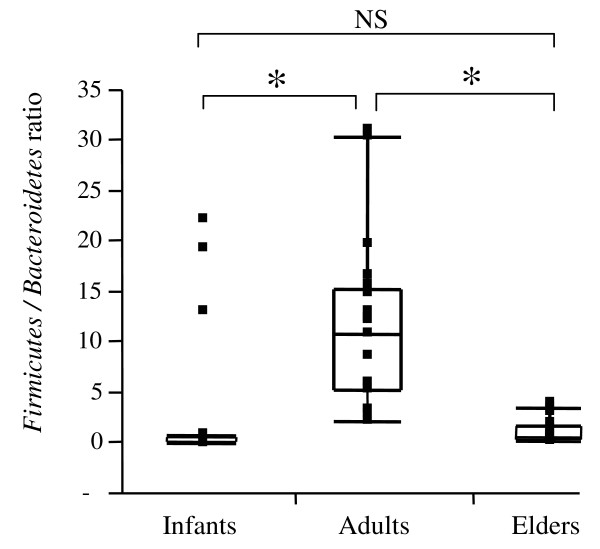
BACKGROUND: In humans, the intestinal microbiota plays an important role in the maintenance of host health by providing energy, nutrients, and immunological protection. Applying current molecular methods is necessary to surmount the limitations of classical culturing techniques in order to obtain an accurate description of the microbiota composition. RESULTS: Here we report on the comparative assessment of human fecal microbiota from three age-groups: infants, adults and the elderly. We demonstrate that the human intestinal microbiota undergoes maturation from birth to adulthood and is further altered with ageing. The counts of major bacterial groups Clostridium leptum, Clostridium coccoides, Bacteroidetes, Bifidobacterium, Lactobacillus and Escherichia coli were assessed by quantitative PCR (qPCR). By comparing species diversity profiles, we observed age-related changes in the human fecal microbiota. The microbiota of infants was generally characterized by low levels of total bacteria. C. leptum and C. coccoides species were highly represented in the microbiota of infants, while elderly subjects exhibited high levels of E. coli and Bacteroidetes. We observed that the ratio of Firmicutes to Bacteroidetes evolves during different life stages. For infants, adults and elderly individuals we measured ratios of 0.4, 10.9 and 0.6, respectively. CONCLUSION: In this work we have confirmed that qPCR is a powerful technique in studying the diverse and complex fecal microbiota. Our work demonstrates that the fecal microbiota composition evolves throughout life, from early childhood to old age.
Overview
The claims and statistics of this paper haven’t been checked yet.
Free: it reads the open-access text and checks the first 5 claims that cite a source we can check. Create a free account to check every claim.
Integrity signals
Registry
Cites
Statistics
Figures
Verification
Claims the paper makes
The claims and statistics of this paper haven’t been checked yet.
Free: it reads the open-access text and checks the first 5 claims that cite a source we can check. Create a free account to check every claim.
Claims other papers make about this one
Each is checked against this paper’s own text: does it say what the citing paper says it does?
The source backs part of the claim, not all of it — or backs it for a different population, condition or comparison.
In the citing paper
“A reduced Firmicutes:Bacteroidetes ratio has been reported in Irish and French elderly compared to young adults”
From The Microbiota-Gut-Brain Axis (2019) · cites this paper as Mariat et al., 2009
Experimental — accuracy not yet measuredIn the citing paper
“The disappearance of these microorganisms is important because they normally counteract the expansion of pathogenic microbial communities, while also maintaining intestinal barrier integrity by fermenting starches and dietary fibres and producing mucus and lipid metabolites, such as short-chain fatty acids (primarily acetate, propionate, and butyrate)66–68.”
From Inflammageing: chronic inflammation in ageing, cardiovascular disease, and frailty (2018) · cites this paper as [66]
In the citing paper
“Despite large variability in the gut microbiota found in different populations, geographic regions, and settings, evidence suggests that ageing is associated with a reduction in beneficial commensal microorganisms — such as Coprococcus, Faecalibacterium, and Lactobacillus — as well as a decrease in the Firmicutes: Bacteroidetes ratio66–68.”
From Inflammageing: chronic inflammation in ageing, cardiovascular disease, and frailty (2018) · cites this paper as [66]
In the citing paper
“In fact it has been reported that breast-fed infants generally harbor a more complex and numerous Bifidobacterium microbiota than formula-fed infants (19, 20).”
From Bifidobacteria and Their Health-Promoting Effects (2017) · cites this paper as [19]
In the citing paper
“An increased F/B ratio, caused by an expansion of Firmicutes and/or a contraction of Bacteroidetes, has been widely considered a signature of gut dysbiosis and has been associated with obesity, diabetes, and CVD8, 13, 16.”
From Gut Dysbiosis Is Linked to Hypertension (2015) · cites this paper as [8]
1 more claim about this paper
Create a free account to see every claim other papers make about this one.
Self-check
Percentages, sums and reported differences re-computed from the paper’s own numbers.
The self-check needs the paper’s full text.
Citations
Cites
Human gut microbes associated with obesity
Ley, R. E., Turnbaugh, P. J., Klein, S., & Gordon, J. I. (2006) · Nature · doi:10.1038/4441022a · Cited by 8,785 · cited 4×
“[7] when a correlation between body weight and gut microbial ecology was analysed.”
BackgroundInfluentialDiversity of the Human Intestinal Microbial Flora
Eckburg, P. B., Bik, E. M., Bernstein, C. N., Purdom, E., Dethlefsen, L., Sargent, M., Gill, S. R., Nelson, K. E., & Relman, D. A. (2005) · Science · doi:10.1126/science.1110591 · Cited by 7,913 · cited 1×
“This has markedly increased the information available concerning the complexity of the human bowel microbiota, from which over 1250 Operational Taxonomic Units have been identified corresponding to several dominant phyla [4,5].”
BackgroundHost-Bacterial Mutualism in the Human Intestine
Bäckhed, F., Ley, R. E., Sonnenburg, J. L., Peterson, D. A., & Gordon, J. I. (2005) · Science · doi:10.1126/science.1104816 · Cited by 5,277 · cited 1×
“The major functions attributed to the microbiota present in the gut begin to manifest at the end of the second year of life and comprise: i) nutrients absorption and food fermentation [10], ii) stimulation of the host immune system [11] and iii) barrier effects against pathogens [12].”
BackgroundDevelopment of the Human Infant Intestinal Microbiota
Palmer, C., Bik, E. M., DiGiulio, D. B., Relman, D. A., & Brown, P. O. (2007) · PLoS Biology · doi:10.1371/journal.pbio.0050177 · Cited by 2,877 · cited 1×
“Establishment of the intestinal microbiota has been shown to be a progressive process [9].”
BackgroundMICROBIAL ECOLOGY OF THE GASTROINTESTINAL TRACT
Savage, D. C. (1977) · Annual Review of Microbiology · doi:10.1146/annurev.mi.31.100177.000543 · Cited by 2,436 · cited 1×
“methods for more accurately assessing its composition and diversity, formerly thought to contain a mere 400– 500 bacterial species [2].”
MethodReduced diversity of faecal microbiota in Crohn’s disease revealed by a metagenomic approach
Manichanh, C., Rigottier-Gois, L., Bonnaud, E., Gloux, K., Pelletier, E., Frangeul, L., Nalin, R., Jarrin, C., Chardon, P., Marteau, P., et al. (2006) · Gut · doi:10.1136/gut.2005.073817 · Cited by 2,277 · cited 1×
“This has markedly increased the information available concerning the complexity of the human bowel microbiota, from which over 1250 Operational Taxonomic Units have been identified corresponding to several dominant phyla [4,5].”
BackgroundSelf-citationInteractions between commensal intestinal bacteria and the immune system
Macpherson, A. J., & Harris, N. L. (2004) · Nature Reviews Immunology · doi:10.1038/nri1373 · Cited by 1,610
Anatomical basis of tolerance and immunity to intestinal antigens
Mowat, A. M. (2003) · Nature Reviews Immunology · doi:10.1038/nri1057 · Cited by 1,415 · cited 1×
“The major functions attributed to the microbiota present in the gut begin to manifest at the end of the second year of life and comprise: i) nutrients absorption and food fermentation [10], ii) stimulation of the host immune system [11] and iii) barrier effects against pathogens [12].”
BackgroundHarmsen, H. J. M., Wildeboer–Veloo, A. C. M., Raangs, G. C., Wagendorp, A. A., Klijn, N., Bindels, J. G., & Welling, G. W. (2000) · Journal of Pediatric Gastroenterology and Nutrition · doi:10.1002/j.1536-4801.2000.tb02655.x · Cited by 1,337
Franks, A. H., Harmsen, H. J. M., Raangs, G. C., Jansen, G. J., Schut, F., & Welling, G. W. (1998) · Applied and Environmental Microbiology · doi:10.1128/aem.64.9.3336-3345.1998 · Cited by 1,056 · cited 1×
“Once climax composition is achieved near the end of adolescence, this ecosystem displays a high stability in healthy adults [13].”
Background
Cited by
De Filippo, C., Cavalieri, D., Di Paola, M., Ramazzotti, M., Poullet, J. B., Massart, S., Collini, S., Pieraccini, G., & Lionetti, P. (2010) · Proceedings of the National Academy of Sciences · doi:10.1073/pnas.1005963107 · Cited by 5,579
“In western populations, the human intestinal microbiota undergoes maturation from birth to adulthood and aging, with particular emphasis on the F/B ratio, that evolves during different life stages (16).”
BackgroundCryan, J. F., O'Riordan, K. J., Cowan, C. S. M., Sandhu, K. V., Bastiaanssen, T. F. S., Boehme, M., Codagnone, M. G., Cussotto, S., Fulling, C., Golubeva, A. V., et al. (2019) · Physiological Reviews · doi:10.1152/physrev.00018.2018 · Cited by 5,286
Host-gut microbiota metabolic interactions
Nicholson, J. K., Holmes, E., Kinross, J., Burcelin, R., Gibson, G., Jia, W., & Pettersson, S. (2012) · Science · doi:10.1126/science.1223813 · Cited by 4,760
Inflammageing: chronic inflammation in ageing, cardiovascular disease, and frailty
Ferrucci, L., & Fabbri, E. (2018) · Nature Reviews Cardiology · doi:10.1038/s41569-018-0064-2 · Cited by 3,690
The human microbiome: at the interface of health and disease
Cho, I., & Blaser, M. J. (2012) · Nature Reviews Genetics · doi:10.1038/nrg3182 · Cited by 3,449
Role of the normal gut microbiota
Jandhyala, S. M. (2015) · World Journal of Gastroenterology · doi:10.3748/wjg.v21.i29.8787 · Cited by 3,001
Dysfunction of the intestinal microbiome in inflammatory bowel disease and treatment
Morgan, X. C., Tickle, T. L., Sokol, H., Gevers, D., Devaney, K. L., Ward, D. V., Reyes, J. A., Shah, S. A., LeLeiko, N., Snapper, S. B., et al. (2012) · Genome Biology · doi:10.1186/gb-2012-13-9-r79 · Cited by 2,713
“The Firmicutes phylum also significantly decreased while Bacteroides increased with age in this cohort (Additional file 1); this agrees with previous studies [38,39] and potentially reflects dietary or body mass-related changes with increasing age, which were not directly measured in these subjects, or host metabolism…”
BackgroundResultSelf-citationYou are what you eat: Diet, health and the gut microbiota
Zmora, N., Suez, J., & Elinav, E. (2019) · Nature Reviews Gastroenterology & Hepatology · doi:10.1038/s41575-018-0061-2 · Cited by 1,792
Odamaki, T., Kato, K., Sugahara, H., Hashikura, N., Takahashi, S., Xiao, J.-Z., Abe, F., & Osawa, R. (2016) · BMC Microbiology · doi:10.1186/s12866-016-0708-5 · Cited by 1,521
“However, almost all studies related to the gut microbiota of the elderly have been performed on subjects classified into segmented age groups based on varying definitions of ‘elderly’, such as ‘over 60’ [12], ‘over 65’ [13], ‘over 70’ [14] or ‘centenarian’ [15].”
BackgroundThe central nervous system and the gut microbiome
Sharon, G., Sampson, T. R., Geschwind, D. H., & Mazmanian, S. K. (2016) · Cell · doi:10.1016/j.cell.2016.10.027 · Cited by 1,513
An insight into gut microbiota and its functionalities
Adak, A., & Khan, M. R. (2019) · Cellular and Molecular Life Sciences · doi:10.1007/s00018-018-2943-4 · Cited by 1,485
Through Ageing, and Beyond: Gut Microbiota and Inflammatory Status in Seniors and Centenarians
Biagi, E., Nylund, L., Candela, M., Ostan, R., Bucci, L., Pini, E., Nikkïla, J., Monti, D., Satokari, R., Franceschi, C., et al. (2010) · PLoS ONE · doi:10.1371/journal.pone.0010667 · Cited by 1,483
“years old) and elderly with a wide interval of age, ranging from 60 to 95 years old [14,16,17].”
BackgroundResultGut Dysbiosis Is Linked to Hypertension
Yang, T., Santisteban, M. M., Rodriguez, V., Li, E., Ahmari, N., Carvajal, J. M., Zadeh, M., Gong, M., Qi, Y., Zubcevic, J., et al. (2015) · Hypertension · doi:10.1161/hypertensionaha.115.05315 · Cited by 1,478
“Although characterization of a healthy microbiota is at its initial stages,(15) increasing evidence suggests that changes in the ratio of the microbe communities Firmicutes (F) and Bacteroidetes (B), known as the F/B ratio, can be potentially used as a biomarker for pathological conditions.(8,16) Several clinical tria…”
BackgroundHow glycan metabolism shapes the human gut microbiota
Koropatkin, N. M., Cameron, E. A., & Martens, E. C. (2012) · Nature Reviews Microbiology · doi:10.1038/nrmicro2746 · Cited by 1,419
How informative is the mouse for human gut microbiota research?
Nguyen, T. L. A., Vieira-Silva, S., Liston, A., & Raes, J. (2015) · Disease Models & Mechanisms · doi:10.1242/dmm.017400 · Cited by 1,334
“More recently, Martínez et al. defined a core set of 24 bacterial genera (Martínez et al., 2013) in a longitudinal study of three healthy human individuals during one year, which would constitute a ‘healthy’ core microbiota set.”
BackgroundThevaranjan, N., Puchta, A., Schulz, C., Naidoo, A., Szamosi, J. C., Verschoor, C. P., Loukov, D., Schenck, L. P., Jury, J., Foley, K. P., et al. (2017) · Cell Host & Microbe · doi:10.1016/j.chom.2017.03.002 · Cited by 1,322
“Numerous studies have demonstrated that there are characteristic changes in gut microbial communities in elderly humans (Claesson et al., 2011; M€ akivuokko et al., 2010; Mariat et al., 2009; Zwielehner et al., 2009) and that these changes correlate with health status in the elderly population (Bartosch et al.”
Human gut microbiota/microbiome in health and diseases: a review
Gomaa, E. Z. (2020) · Antonie van Leeuwenhoek · doi:10.1007/s10482-020-01474-7 · Cited by 1,294
Murphy, E. F., Cotter, P. D., Healy, S., Marques, T. M., O'Sullivan, O., Fouhy, F., Clarke, S. F., O'Toole, P. W., Quigley, E. M., Stanton, C., et al. (2010) · Gut · doi:10.1136/gut.2010.215665 · Cited by 946
“Indeed, it has been suggested that the Firmicutes/Bacteroidetes ratio of the human microbiota changes with age.(21) A recent study in mice has shown that a high-fat diet determines the composition of the gut microbiota independent of obesity.”
BackgroundConnecting dysbiosis, bile-acid dysmetabolism and gut inflammation in inflammatory bowel diseases
Duboc, H., Rajca, S., Rainteau, D., Benarous, D., Maubert, M.-A., Quervain, E., Thomas, G., Barbu, V., Humbert, L., Despras, G., et al. (2013) · Gut · doi:10.1136/gutjnl-2012-302578 · Cited by 930
Self-citationProbiotics and the gut microbiota in intestinal health and disease
Gareau, M. G., Sherman, P. M., & Walker, W. A. (2010) · Nature Reviews Gastroenterology & Hepatology · doi:10.1038/nrgastro.2010.117 · Cited by 907
De Angelis, M., Piccolo, M., Vannini, L., Siragusa, S., De Giacomo, A., Serrazzanetti, D. I., Cristofori, F., Guerzoni, M. E., Gobbetti, M., & Francavilla, R. (2013) · PLoS ONE · doi:10.1371/journal.pone.0076993 · Cited by 887
“The composition of the GI microbiota is mainly influenced by genetic factors [21], age [22] and diet [23,24].”
BackgroundThe Gut Microbiota and Alzheimer’s Disease
Jiang, C., Li, G., Huang, P., Liu, Z., & Zhao, B. (2017) · Journal of Alzheimer's Disease · doi:10.3233/jad-161141 · Cited by 852
High-Fat, Western-Style Diet, Systemic Inflammation, and Gut Microbiota: A Narrative Review
Malesza, I. J., Malesza, M., Walkowiak, J., Mussin, N., Walkowiak, D., Aringazina, R., Bartkowiak-Wieczorek, J., & Mądry, E. (2021) · Cells · doi:10.3390/cells10113164 · Cited by 782
The chicken gastrointestinal microbiome
Oakley, B. B., Lillehoj, H. S., Kogut, M. H., Kim, W. K., Maurer, J. J., Pedroso, A., Lee, M. D., Collett, S. R., Johnson, T. J., & Cox, N. A. (2014) · FEMS Microbiology Letters · doi:10.1111/1574-6968.12608 · Cited by 799
“, 2011), and the Firmicutes : Bacteroides ratio may also be important for optimum physiology and nutrition (Mariat et al., 2009; De Filippo et al., 2010; Bervoets et al., 2013).”
BackgroundCommensal clostridia: Leading players in the maintenance of gut homeostasis
Lopetuso, L. R., Scaldaferri, F., Petito, V., & Gasbarrini, A. (2013) · Gut Pathogens · doi:10.1186/1757-4749-5-23 · Cited by 753
“In the elderly (>65 years), most available studies obtained with molecular methods showed a decrease in the number of strict anaerobes and an increase in the number of facultative anaerobes (streptococci, staphylococci, enterococci, enterobacteriaceae) [44-47].”
ResultIntestinal microbiota in patients with nonalcoholic fatty liver disease
Mouzaki, M., Comelli, E. M., Arendt, B. M., Bonengel, J., Fung, S. K., Fischer, S. E., McGilvray, I. D., & Allard, J. P. (2013) · Hepatology · doi:10.1002/hep.26319 · Cited by 749
“Insulin (pmol/L) 21 (15-61) 33 (15-465) 97 (29-437)”
InfluentialLlewellyn, M. S., Boutin, S., Hoseinifar, S. H., & Derome, N. (2014) · Frontiers in Microbiology · doi:10.3389/fmicb.2014.00207 · Cited by 745
“Such finding corroborates the observation that during the initial stage of gut colonization, microbiota is highly unstable in humans (Palmer et al., 2007; Mariat et al., 2009; Cho and Blaser, 2012) and mice (El Aidy et al., 2012, 2013).”
ResultIntestinal microbiota in human health and disease: the impact of probiotics
Gerritsen, J., Smidt, H., Rijkers, G. T., & de Vos, W. M. (2011) · Genes & Nutrition · doi:10.1007/s12263-011-0229-7 · Cited by 724
“At the phylum-level, both culturedependent and independent studies have demonstrated that the majority of the intestinal bacteria belong to two phyla, the Bacteroidetes and the Firmicutes (Mariat et al. 2009).”
BackgroundHuman milk glycobiome and its impact on the infant gastrointestinal microbiota
Zivkovic, A. M., German, J. B., Lebrilla, C. B., & Mills, D. A. (2011) · Proceedings of the National Academy of Sciences · doi:10.1073/pnas.1000083107 · Cited by 679
“A prominent bifidobacterial population in the feces of breast-fed infants has been reported from numerous culturebased and non–culture-based studies (58).”
BackgroundLiu, P., Wu, L., Peng, G., Han, Y., Tang, R., Ge, J., Zhang, L., Jia, L., Yue, S., Zhou, K., et al. (2019) · Brain, Behavior, and Immunity · doi:10.1016/j.bbi.2019.05.008 · Cited by 669
Our gut microbiome: The evolving inner self
Kundu, P., Blacher, E., Elinav, E., & Pettersson, S. (2017) · Cell · doi:10.1016/j.cell.2017.11.024 · Cited by 633
“Several studies have attempted to examine the aging-related changes in the dynamics of the gut microbiome by comparing the microbiome composition of infants and adults to those of elderly people and centenarians (Biagi et al., 2010, 2016, Claesson et al., 2011, 2012; Mariat et al., 2009; Ottaviani et al., 2011).”
Adiposity, gut microbiota and faecal short chain fatty acids are linked in adult humans
Fernandes, J., Su, W., Rahat-Rozenbloom, S., Wolever, T. M. S., & Comelli, E. M. (2014) · Nutrition & Diabetes · doi:10.1038/nutd.2014.23 · Cited by 628
Interaction of dietary compounds, especially polyphenols, with the intestinal microbiota: a review
Duda-Chodak, A., Tarko, T., Satora, P., & Sroka, P. (2015) · European Journal of Nutrition · doi:10.1007/s00394-015-0852-y · Cited by 599
“6) [26].”
The Gut Microbiome, Aging, and Longevity: A Systematic Review
Badal, V. D., Vaccariello, E. D., Murray, E. R., Yu, K. E., Knight, R., Jeste, D. V., & Nguyen, T. T. (2020) · Nutrients · doi:10.3390/nu12123759 · Cited by 551
“Oldest-old adults were found to generally have lower Firmicutes and increased Bacteroidetes abundances, consistent with previous evidence suggesting that the Firmicutes/Bacteroidetes ratio increases in adulthood but declines again in older age [54].”
ResultThe Intestinal Microbiome and Estrogen Receptor–Positive Female Breast Cancer
(2016) · JNCI: Journal of the National Cancer Institute · doi:10.1093/jnci/djw029 · Cited by 523
Deciphering microbial interactions in synthetic human gut microbiome communities
Venturelli, O. S., Carr, A. V., Fisher, G., Hsu, R. H., Lau, R., Bowen, B. P., Hromada, S., Northen, T., & Arkin, A. P. (2018) · Molecular Systems Biology · doi:10.15252/msb.20178157 · Cited by 544
Hollister, E. B., Gao, C., & Versalovic, J. (2014) · Gastroenterology · doi:10.1053/j.gastro.2014.01.052 · Cited by 527
Development of intestinal microbiota in infants and its impact on health
Matamoros, S., Gras-Leguen, C., Le Vacon, F., Potel, G., & de La Cochetiere, M.-F. (2013) · Trends in Microbiology · doi:10.1016/j.tim.2012.12.001 · Cited by 534
Pathophysiological mechanisms and therapeutic approaches in obstructive sleep apnea syndrome
Lv, R., Liu, X., Zhang, Y., Dong, N., Wang, X., He, Y., Yue, H., & Yin, Q. (2023) · Signal Transduction and Targeted Therapy · doi:10.1038/s41392-023-01496-3 · Cited by 477
Gill, P. A., van Zelm, M. C., Muir, J. G., & Gibson, P. R. (2018) · Alimentary Pharmacology & Therapeutics · doi:10.1111/apt.14689 · Cited by 520
Structural resilience of the gut microbiota in adult mice under high-fat dietary perturbations
Zhang, C., Zhang, M., Pang, X., Zhao, Y., Wang, L., & Zhao, L. (2012) · The ISME Journal · doi:10.1038/ismej.2012.27 · Cited by 499
“The longitudinal agerelated changes we observed here were over a relatively short period of time compared with other reports (Mariat et al., 2009; Biagi et al., 2010).”
ResultBifidobacteria and Their Health-Promoting Effects
Hidalgo-Cantabrana, C., Delgado, S., Ruiz, L., Ruas-Madiedo, P., Sánchez, B., & Margolles, A. (2017) · Microbiology Spectrum · doi:10.1128/microbiolspec.bad-0010-2016 · Cited by 490
“On: Mon, 07 May 2018 13:37:38 infants generally harbor a more complex and numerous Bifidobacterium microbiota than formula-fed infants (19, 20).”
BackgroundThe function of our microbiota: who is out there and what do they do?
Ottman, N., Smidt, H., de Vos, W. M., & Belzer, C. (2012) · Frontiers in Cellular and Infection Microbiology · doi:10.3389/fcimb.2012.00104 · Cited by 488
“Assessment of the gut microbiota of the elderly with quantitative PCR revealed high levels of Escherichia coli and Bacteroidetes as well as a significant difference in the Firmicutes to Bacteroidetes ratio for adults (10.9) and elderly individuals (0.6) (Mariat et al., 2009).”
BackgroundInfluentialNursing our microbiota: molecular linkages between bifidobacteria and milk oligosaccharides
Sela, D. A., & Mills, D. A. (2010) · Trends in Microbiology · doi:10.1016/j.tim.2010.03.008 · Cited by 468
“This phenomenon has been observed in culture-based studies, and more recently, verified with molecular methodologies including those applied in a large prospective study [14–18].”
MethodGut microbiome, liver immunology, and liver diseases
Wang, R., Tang, R., Li, B., Ma, X., Schnabl, B., & Tilg, H. (2021) · Cellular & Molecular Immunology · doi:10.1038/s41423-020-00592-6 · Cited by 466
Gut microbiota: A player in aging and a target for anti-aging intervention
Vaiserman, A. M., Koliada, A. K., & Marotta, F. (2017) · Ageing Research Reviews · doi:10.1016/j.arr.2017.01.001 · Cited by 465
Molecular Characterisation of the Faecal Microbiota in Patients with Type II Diabetes
Wu, X., Ma, C., Han, L., Nawaz, M., Gao, F., Zhang, X., Yu, P., Zhao, C., Li, L., Zhou, A., et al. (2010) · Current Microbiology · doi:10.1007/s00284-010-9582-9 · Cited by 462
“reported the comparative assessment of human faecal microbiota from three different age groups by qPCR, and demonstrated that the faecal microbiota composition evolves throughout life from early childhood to old age [22].”
BackgroundDifferences in gut microbiota composition between obese and lean children: a cross-sectional study
Bervoets, L., Van Hoorenbeeck, K., Kortleven, I., Van Noten, C., Hens, N., Vael, C., Goossens, H., Desager, K. N., & Vankerckhoven, V. (2013) · Gut Pathogens · doi:10.1186/1757-4749-5-10 · Cited by 448
“[43].”
Kumar Singh, A., Cabral, C., Kumar, R., Ganguly, R., Kumar Rana, H., Gupta, A., Rosaria Lauro, M., Carbone, C., Reis, F., & Pandey, A. K. (2019) · Nutrients · doi:10.3390/nu11092216 · Cited by 433
“Further causes of aging-related altered GM are the deterioration of physical health, including loss of dentition, impaired salivary function, digestion and transit time in the GI tract, as well as abnormal dietary nutrients resulting in malnutrition [36,37].”
BackgroundThe Gastrointestinal Microbiome: Alcohol Effects on the Composition of Intestinal Microbiota
Engen, P. (2015) · Alcohol Research: Current Reviews · doi:10.35946/arcr.v37.2.07 · Cited by 436
Microbial shifts in the aging mouse gut
Langille, M. G., Meehan, C. J., Koenig, J. E., Dhanani, A. S., Rose, R. A., Howlett, S. E., & Beiko, R. G. (2014) · Microbiome · doi:10.1186/s40168-014-0050-9 · Cited by 437
“Centenarians were found to have a decrease in Clostridia and an increase in Proteobacteria and Bacilli in their gut microbiomes [20].”
BackgroundInfluentialSignatures of early frailty in the gut microbiota
Jackson, M. A., Jeffery, I. B., Beaumont, M., Bell, J. T., Clark, A. G., Ley, R. E., O’Toole, P. W., Spector, T. D., & Steves, C. J. (2016) · Genome Medicine · doi:10.1186/s13073-016-0262-7 · Cited by 436
“Similarly in humans, significant differences have been observed between the composition of the adult and elderly adult microbiota [13].”
Lopez-Siles, M., Khan, T. M., Duncan, S. H., Harmsen, H. J. M., Garcia-Gil, L. J., & Flint, H. J. (2012) · Applied and Environmental Microbiology · doi:10.1128/aem.06858-11 · Cited by 433
“prausnitzii abundance has also been reported in colorectal cancer (1) and in the frail elderly (29, 56), leading to the suggestion that this bacterium could provide an indicator of a healthy gut microbiota.”
BackgroundUse of pigs as a potential model for research into dietary modulation of the human gut microbiota
Heinritz, S. N., Mosenthin, R., & Weiss, E. (2013) · Nutrition Research Reviews · doi:10.1017/s0954422413000152 · Cited by 420
Blautia genus associated with visceral fat accumulation in adults 20–76 years of age
Ozato, N., Saito, S., Yamaguchi, T., Katashima, M., Tokuda, I., Sawada, K., Katsuragi, Y., Kakuta, M., Imoto, S., Ihara, K., et al. (2019) · npj Biofilms and Microbiomes · doi:10.1038/s41522-019-0101-x · Cited by 416
Precision Nutrition and the Microbiome, Part I: Current State of the Science
Mills, S., Stanton, C., Lane, J., Smith, G., & Ross, R. (2019) · Nutrients · doi:10.3390/nu11040923 · Cited by 399
“[54] reported a change in the ratio of Firmicutes: Bacteriodetes with age, which was recorded as 0.”
BackgroundAged Gut Microbiota Contributes to Systemical Inflammaging after Transfer to Germ-Free Mice
Fransen, F., van Beek, A. A., Borghuis, T., Aidy, S. E., Hugenholtz, F., van der Gaast – de Jongh, C., Savelkoul, H. F. J., De Jonge, M. I., Boekschoten, M. V., Smidt, H., et al. (2017) · Frontiers in Immunology · doi:10.3389/fimmu.2017.01385 · Cited by 403
Zhao, W., Wang, Y., Liu, S., Huang, J., Zhai, Z., He, C., Ding, J., Wang, J., Wang, H., Fan, W., et al. (2015) · PLOS ONE · doi:10.1371/journal.pone.0117441 · Cited by 404
“It had been reported that the Firmicutes/Bacteroidetes ratio of the human microbiota changed with age [33], and the same trend was observed in our swine study.”
BackgroundAge- and Sex-Dependent Patterns of Gut Microbial Diversity in Human Adults
de la Cuesta-Zuluaga, J., Kelley, S. T., Chen, Y., Escobar, J. S., Mueller, N. T., Ley, R. E., McDonald, D., Huang, S., Swafford, A. D., Knight, R., et al. (2019) · mSystems · doi:10.1128/msystems.00261-19 · Cited by 387
A survey of modulation of gut microbiota by dietary polyphenols
Dueñas, M., Muñoz-González, I., Cueva, C., Jiménez-Girón, A., Sánchez-Patán, F., Santos-Buelga, C., Moreno-Arribas, M. V., & Bartolomé, B. (2015) · BioMed Research International · doi:10.1155/2015/850902 · Cited by 396
“Most of intestinal bacteria belong to phylum Firmicutes (including Clostridium, Enterococcus, Lactobacillus, and Ruminococcus genera) and Bacteroidetes (including Prevotella and Bacteroides genera) which constitute over 90% of known phylogenetic categories and dominate the distal gut microbiota [22].”
BackgroundGut bacteria in health and disease.
Quigley, E. M. M. (2013) · Europe PMC (PubMed Central) · Cited by 590
Bile Acids and Dysbiosis in Non-Alcoholic Fatty Liver Disease
Mouzaki, M., Wang, A. Y., Bandsma, R., Comelli, E. M., Arendt, B. M., Zhang, L., Fung, S., Fischer, S. E., McGilvray, I. G., & Allard, J. P. (2016) · PLOS ONE · doi:10.1371/journal.pone.0151829 · Cited by 385
“DNA samples were subsequently stored at -20°C. Fifty nanograms of the extracted DNA were used for the quantification of fecal bifidobacteria, Bacteroides/Prevotella, Clostridium leptum, C. coccoides, Escherichia coli, as well as total bacteria and Archaea, by quantitative polymerase chain reaction (qPCR) using a 7900H…”
BackgroundMethodInfluentialTechniques used to characterize the gut microbiota: a guide for the clinician
Fraher, M. H., O'Toole, P. W., & Quigley, E. M. M. (2012) · Nature Reviews Gastroenterology & Hepatology · doi:10.1038/nrgastro.2012.44 · Cited by 385
Rea, M. C., Dobson, A., O'Sullivan, O., Crispie, F., Fouhy, F., Cotter, P. D., Shanahan, F., Kiely, B., Hill, C., & Ross, R. P. (2011) · Proceedings of the National Academy of Sciences · doi:10.1073/pnas.1001224107 · Cited by 377
“This composition is well within the normal range found in healthy adults (24).”
BackgroundNiu, Q., Li, P., Hao, S., Zhang, Y., Kim, S. W., Li, H., Ma, X., Gao, S., He, L., Wu, W., et al. (2015) · Scientific Reports · doi:10.1038/srep09938 · Cited by 375
Regulation of intestinal homeostasis and immunity with probiotic lactobacilli
van Baarlen, P., Wells, J. M., & Kleerebezem, M. (2013) · Trends in Immunology · doi:10.1016/j.it.2013.01.005 · Cited by 368
Thomas, S., Izard, J., Walsh, E., Batich, K., Chongsathidkiet, P., Clarke, G., Sela, D. A., Muller, A. J., Mullin, J. M., Albert, K., et al. (2017) · Cancer Research · doi:10.1158/0008-5472.can-16-2929 · Cited by 367
“Obese mice microbiota was found to be rich in Firmicutes compared with the lean mice microbiota, which was abundant in Bacteroidetes (177).”
BackgroundInfluentialMetagenomics of urban sewage identifies an extensively shared antibiotic resistome in China
Su, J.-Q., An, X.-L., Li, B., Chen, Q.-L., Gillings, M. R., Chen, H., Zhang, T., & Zhu, Y.-G. (2017) · Microbiome · doi:10.1186/s40168-017-0298-y · Cited by 366
“Median fecal dry mass production is estimated at 29 g per person per day [56, 57]; and human intestinal contents range from 10(10) to 10(11) bacterial cells per gram (dry weight) [58].”
BackgroundLing, Z., Liu, X., Cheng, Y., Yan, X., & Wu, S. (2022) · Critical Reviews in Food Science and Nutrition · doi:10.1080/10408398.2020.1867054 · Cited by 352
“In humans, the gut microbiota is dynamic over a lifetime, and the establishment of the stable gut microbiota undergoes progressive age-related physiological succession of species (Kim et al. 2011) driven by both internal host properties and external factors (Mateos et al. 2018).”
BackgroundAgeing of the human metaorganism: the microbial counterpart
Biagi, E., Candela, M., Fairweather-Tait, S., Franceschi, C., & Brigidi, P. (2012) · AGE · doi:10.1007/s11357-011-9217-5 · Cited by 365
“…for the studies, there are discrepancies in the definition of ‘elderly’: Groups of people with a wide range of age are often recruited, on the basis of general ‘over 60’ (Mueller et al. 2006), ‘over 65’ (Woodmansey et al. 2004; Claesson et al. 2010) or ‘over 70’ (Mariat et al. 2009) criteria.”
BackgroundInfluentialThe impact of the microbiota-gut-brain axis on Alzheimer’s disease pathophysiology
Doifode, T., Giridharan, V. V., Generoso, J. S., Bhatti, G., Collodel, A., Schulz, P. E., Forlenza, O. V., & Barichello, T. (2021) · Pharmacological Research · doi:10.1016/j.phrs.2020.105314 · Cited by 347
Biagi, E., Nylund, L., Candela, M., Ostan, R., Bucci, L., Pini, E., Nikkïla, J., Monti, D., Satokari, R., Franceschi, C., et al. (2010) · PLoS ONE · doi:10.1371/annotation/df45912f-d15c-44ab-8312-e7ec0607604d · Cited by 345
Towards microbial fermentation metabolites as markers for health benefits of prebiotics
Verbeke, K. A., Boobis, A. R., Chiodini, A., Edwards, C. A., Franck, A., Kleerebezem, M., Nauta, A., Raes, J., van Tol, E. A. F., & Tuohy, K. M. (2015) · Nutrition Research Reviews · doi:10.1017/s0954422415000037 · Cited by 343
“In the elderly, the microbiota changes, with higher levels of Bacteroidetes (18) , which is likely to affect SCFA production.”
InfluentialThe gut microbiota and its biogeography
McCallum, G., & Tropini, C. (2024) · Nature Reviews Microbiology · doi:10.1038/s41579-023-00969-0 · Cited by 329
Gastrointestinal symptoms associated with COVID-19: impact on the gut microbiome
Villapol, S. (2020) · Translational Research · doi:10.1016/j.trsl.2020.08.004 · Cited by 343
Tamargo, A., Molinero, N., Reinosa, J. J., Alcolea-Rodriguez, V., Portela, R., Bañares, M. A., Fernández, J. F., & Moreno-Arribas, M. V. (2022) · Scientific Reports · doi:10.1038/s41598-021-04489-w · Cited by 305
Exercise Training Modulates Gut Microbiota Profile and Improves Endotoxemia
MOTIANI, K. K., COLLADO, M. C., ESKELINEN, J.-J., VIRTANEN, K. A., LÖYTTYNIEMI, E., SALMINEN, S., NUUTILA, P., KALLIOKOSKI, K. K., & HANNUKAINEN, J. C. (2020) · Medicine & Science in Sports & Exercise · doi:10.1249/mss.0000000000002112 · Cited by 333
Microbiota in neuroinflammation and synaptic dysfunction: a focus on Alzheimer’s disease
Bairamian, D., Sha, S., Rolhion, N., Sokol, H., Dorothée, G., Lemere, C. A., & Krantic, S. (2022) · Molecular Neurodegeneration · doi:10.1186/s13024-022-00522-2 · Cited by 314
“The ratio of Firmicutes / Bacteroidetes increased several fold with aging.”
InfluentialSelf-citationNod2 is essential for temporal development of intestinal microbial communities
Rehman, A., Sina, C., Gavrilova, O., Häsler, R., Ott, S., Baines, J. F., Schreiber, S., & Rosenstiel, P. (2011) · Gut · doi:10.1136/gut.2010.216259 · Cited by 316
The Urinary Tract Microbiome in Health and Disease
Aragón, I. M., Herrera-Imbroda, B., Queipo-Ortuño, M. I., Castillo, E., Del Moral, J. S.-G., Gómez-Millán, J., Yucel, G., & Lara, M. F. (2018) · European Urology Focus · doi:10.1016/j.euf.2016.11.001 · Cited by 306
Probiotics, Prebiotics, and Phytogenic Substances for Optimizing Gut Health in Poultry
Shehata, A. A., Yalçın, S., Latorre, J. D., Basiouni, S., Attia, Y. A., Abd El-Wahab, A., Visscher, C., El-Seedi, H. R., Huber, C., Hafez, H. M., et al. (2022) · Microorganisms · doi:10.3390/microorganisms10020395 · Cited by 285
“More than 90% of all gut microbiota species in humans and animals belong to the phyla Bacteroidetes, Firmicutes and Actinobacteria, others are Fusobacteria, Proteobacteria, Verrucomicrobia, and Cyanobacteria [22,23].”
BackgroundLin, P., Ding, B., Feng, C., Yin, S., Zhang, T., Qi, X., Lv, H., Guo, X., Dong, K., Zhu, Y., et al. (2017) · Journal of Affective Disorders · doi:10.1016/j.jad.2016.09.051 · Cited by 311
A phylogenetic transform enhances analysis of compositional microbiota data
Silverman, J. D., Washburne, A. D., Mukherjee, S., & David, L. A. (2017) · eLife · doi:10.7554/elife.21887 · Cited by 319
The intestinal microbiota and chronic disorders of the gut
DuPont, A. W., & DuPont, H. L. (2011) · Nature Reviews Gastroenterology & Hepatology · doi:10.1038/nrgastro.2011.133 · Cited by 307
Dodiya, H. B., Forsyth, C. B., Voigt, R. M., Engen, P. A., Patel, J., Shaikh, M., Green, S. J., Naqib, A., Roy, A., Kordower, J. H., et al. (2020) · Neurobiology of Disease · doi:10.1016/j.nbd.2018.12.012 · Cited by 305
“, 2005) and several studies have analyzed the ratio of relative abundance of F/B as an important marker of the disruption of microbiota community structure and one of the microbiota parameter associated with gut health (Verdam et al., 2013; Mariat et al., 2009; Hodin et al., 2012).”
Tun, H. M., Bridgman, S. L., Chari, R., Field, C. J., Guttman, D. S., Becker, A. B., Mandhane, P. J., Turvey, S. E., Subbarao, P., Sears, M. R., et al. (2018) · JAMA Pediatrics · doi:10.1001/jamapediatrics.2017.5535 · Cited by 300
the CHILD Study Investigators, Tun, H. M., Konya, T., Takaro, T. K., Brook, J. R., Chari, R., Field, C. J., Guttman, D. S., Becker, A. B., Mandhane, P. J., et al. (2017) · Microbiome · doi:10.1186/s40168-017-0254-x · Cited by 291
“As shown in previous reports [20, 25], ratios of specific taxa are commonly evaluated due to the co-existence nature of gut microbiota.”
BackgroundChanges of colonic bacterial composition in Parkinson's disease and other neurodegenerative diseases
Gerhardt, S., & Mohajeri, M. H. (2018) · Nutrients · doi:10.3390/nu10060708 · Cited by 298
Structural & functional consequences of chronic psychosocial stress on the microbiome & host
Bharwani, A., Mian, M. F., Foster, J. A., Surette, M. G., Bienenstock, J., & Forsythe, P. (2016) · Psychoneuroendocrinology · doi:10.1016/j.psyneuen.2015.10.001 · Cited by 293
“We also examine the nature of the stress-induced dysbiosis—specifically, the Firmicutes/Bacteroidetes ratio, which signals the status of the human gut microbiota in models of obesity and antibiotic-induced dysbiosis (Mariat et al., 2009; Sanderson et al., 2006; Thompson et al., 2015).”
Grigor’eva, I. N. (2020) · Journal of Personalized Medicine · doi:10.3390/jpm11010013 · Cited by 277
(2016) · PubMed · Cited by 287
Labus, J. S., Hollister, E. B., Jacobs, J., Kirbach, K., Oezguen, N., Gupta, A., Acosta, J., Luna, R. A., Aagaard, K., Versalovic, J., et al. (2017) · Microbiome · doi:10.1186/s40168-017-0260-z · Cited by 284
“However, age [59] and diet [55, 57, 60] are important modulatory factors.”
BackgroundNutrition and the gut microbiome in the elderly
Salazar, N., Valdés-Varela, L., González, S., Gueimonde, M., & de los Reyes-Gavilán, C. G. (2017) · Gut Microbes · doi:10.1080/19490976.2016.1256525 · Cited by 282
Gut microbiota: Changes throughout the lifespan from infancy to elderly
O'Toole, P. W., & Claesson, M. J. (2010) · International Dairy Journal · doi:10.1016/j.idairyj.2009.11.010 · Cited by 279
Ageing and gut microbes: Perspectives for health maintenance and longevity
Biagi, E., Candela, M., Turroni, S., Garagnani, P., Franceschi, C., & Brigidi, P. (2013) · Pharmacological Research · doi:10.1016/j.phrs.2012.10.005 · Cited by 276
Hooda, S., Boler, B. M. V., Serao, M. C. R., Brulc, J. M., Staeger, M. A., Boileau, T. W., Dowd, S. E., Fahey, G. C., & Swanson, K. S. (2012) · The Journal of Nutrition · doi:10.3945/jn.112.158766 · Cited by 272
“The diversity and composition of the gut microbiota have been reported to be influenced by age (7), genetics (8), and, most importantly, diet (9).”
BackgroundBanerjee, S., Sindberg, G., Wang, F., Meng, J., Sharma, U., Zhang, L., Dauer, P., Chen, C., Dalluge, J., Johnson, T., et al. (2016) · Mucosal Immunology · doi:10.1038/mi.2016.9 · Cited by 266
“Similar changes in the Bacteroidetes/Firmicutes ratio is correlated with increased systemic inflammation in obesity and aging.(9,16,17) Additionally, elevated abundance of bacterial families Enterococcaceae, Staphylococcaceae, Bacillaceae, Streptococcaceae, and Erysipelotrichaceae was seen in the morphine-implanted an…”
BackgroundThe gut microbiota: A treasure for human health
Li, D., Wang, P., Wang, P., Hu, X., & Chen, F. (2016) · Biotechnology Advances · doi:10.1016/j.biotechadv.2016.08.003 · Cited by 261
“…and was characterized by higher proportions of pathogenic enterobacteria and lower proportions of probiotic Bifidobacteria (Hopkins and Macfarlane, 2002; Woodmansey et al., 2004; Bartosch et al., 2004; Mueller et al., 2006; Claesson et al., 2011; Zwielehner et al., 2009; Mariat et al., 2009).”
BackgroundMacedo, D., Filho, A. J. M. C., Soares de Sousa, C. N., Quevedo, J., Barichello, T., Júnior, H. V. N., & Freitas de Lucena, D. (2017) · Journal of Affective Disorders · doi:10.1016/j.jad.2016.09.012 · Cited by 261
Exercise influence on the microbiome–gut–brain axis
Dalton, A., Mermier, C., & Zuhl, M. (2019) · Gut Microbes · doi:10.1080/19490976.2018.1562268 · Cited by 251
“In human adults, approximately 90% of the gut bacteria belong to the Bacteroidetes and Firmicutes phyla, whereas the minority bacteria belongs to Proteobacteria, Actinobacteria, Fusobacteria, and Verrucomicrobia phyla.(17,18) The Firmicutes phylum contains over 250 genera of bacteria, including Lactobacillus and Clost…”
Background
Metadata
- Authors
- Mariat, D., Firmesse, O., Levenez, F., Guimarăes, V., Sokol, H., Doré, J., Corthier, G., & Furet, J.-P.
- Affiliations
- Institut National de Recherche pour l'Agriculture, l'Alimentation et l'Environnement (FR)
- Institut National de la Recherche Agronomique (FR)
- Assistance Publique – Hôpitaux de Paris (FR)
- Corresponding author
- Mariat, D
- ORCID
- Venue
- BMC Microbiology
- Published
- 2009
- Volume
- 9
- Issue
- 1
- Pages
- 123
- ISSN
- 1471-2180 (ISSN-L)
- PMC
- PMC2702274
- OpenAlex
- W2142536690
- Cited by
- 1,755
- References
- 33
- Citations by year
- 2026: 63 · 2025: 123 · 2024: 150 · 2023: 162 · 2022: 187 · 2021: 179 · 2020: 195 · 2019: 130 · 2018: 115 · 2017: 92 · 2016: 79 · 2015: 54 · 2014: 55 · 2013: 54 · 2012: 48
- FWCI
- 15.42
- Type
- journal article
- Language
- en
- Open access
- gold
- doi.org
- Licence
- cc-by
- Locations
- BMC Microbiology (publishedVersion, cc-by)
- PubMed Central (publishedVersion, cc-by)
- PubMed (publishedVersion)
- HAL (submittedVersion, other-oa)
- DOAJ (DOAJ: Directory of Open Access Journals) (submittedVersion)
- Topics
- Life Sciences › Biochemistry, Genetics and Molecular Biology › Molecular Biology › Gut microbiota and health
- Health Sciences › Nursing › Nutrition and Dietetics › Infant Nutrition and Health
- Health Sciences › Dentistry › Periodontics › Oral microbiology and periodontitis research
- Keywords
- Firmicutes/Bacteroidetes ratio, human gut microbiome, fecal microbiota, age-related changes, microbiota maturation, infants, older adults, Clostridium leptum, Clostridium coccoides, Bacteroidetes, Bifidobacterium, Lactobacillus, Escherichia coli, bacterial diversity, real-time PCR
- MeSH terms
- Adult, Aged, Aged, 80 and over, Aging, Bifidobacterium, Clostridium, DNA, Bacterial, Escherichia coli, Feces, Humans, Infant, Infant, Newborn, Intestines, Lactobacillus, Middle Aged, Colony Count, Microbial, Bacteroidetes
About these checks
Registry, retraction, Cites and statistics results are computed, not judged, with one exception: a printed reference that no index lists is read once by a model before it counts as a citation error. Claims are extracted by a model and kept only when their quote appears verbatim in the text; each cited source is then checked, with a model’s help, for whether it says what the claim relies on. Those verdicts can be wrong — read the claim’s quote and the cited source before relying on one.
Statistics and arithmetic are recomputed, not judged.
Confidence bands are shown only for fields calibrated on our annotated test set. None is calibrated yet, so no band is shown.
What counts as a claim ›How we measure confidence ›How we check this ›
Are you an author, or do you see a problem with this page? Request a review
Data sources
Bibliographic data: Semantic Scholar, OpenAlex, Crossref.
Contains information from the Semantic Scholar Academic Graph Datasets, made available under the ODC Attribution License (ODC-BY 1.0).
Semantic Scholar’s data is described in: Kinney, R., et al. (2023). The Semantic Scholar Open Data Platform. arXiv:2301.10140.
