

The Firmicutes/Bacteroidetes ratio of the human microbiota changes with age
Open accessThe DOI matches its Crossref record; 33 of the 33 references it cites were found in a registry or an index.
Abstract
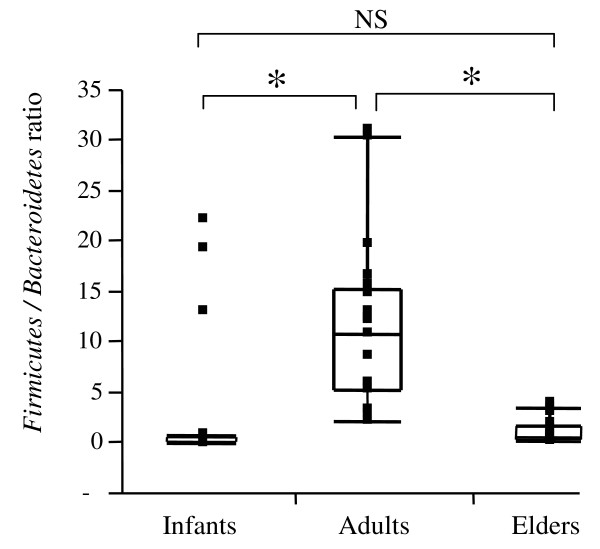
BACKGROUND: In humans, the intestinal microbiota plays an important role in the maintenance of host health by providing energy, nutrients, and immunological protection. Applying current molecular methods is necessary to surmount the limitations of classical culturing techniques in order to obtain an accurate description of the microbiota composition. RESULTS: Here we report on the comparative assessment of human fecal microbiota from three age-groups: infants, adults and the elderly. We demonstrate that the human intestinal microbiota undergoes maturation from birth to adulthood and is further altered with ageing. The counts of major bacterial groups Clostridium leptum, Clostridium coccoides, Bacteroidetes, Bifidobacterium, Lactobacillus and Escherichia coli were assessed by quantitative PCR (qPCR). By comparing species diversity profiles, we observed age-related changes in the human fecal microbiota. The microbiota of infants was generally characterized by low levels of total bacteria. C. leptum and C. coccoides species were highly represented in the microbiota of infants, while elderly subjects exhibited high levels of E. coli and Bacteroidetes. We observed that the ratio of Firmicutes to Bacteroidetes evolves during different life stages. For infants, adults and elderly individuals we measured ratios of 0.4, 10.9 and 0.6, respectively. CONCLUSION: In this work we have confirmed that qPCR is a powerful technique in studying the diverse and complex fecal microbiota. Our work demonstrates that the fecal microbiota composition evolves throughout life, from early childhood to old age.
Overview
The claims and statistics of this paper haven’t been checked yet.
Free: it reads the open-access text and checks the first 5 claims that cite a source we can check. Create a free account to check every claim.
Integrity signals
Registry
Cites
Statistics
Figures
Verification
Claims the paper makes
The claims and statistics of this paper haven’t been checked yet.
Free: it reads the open-access text and checks the first 5 claims that cite a source we can check. Create a free account to check every claim.
Claims other papers make about this one
Each is checked against this paper’s own text: does it say what the citing paper says it does?
The source backs part of the claim, not all of it — or backs it for a different population, condition or comparison.
In the citing paper
“A reduced Firmicutes:Bacteroidetes ratio has been reported in Irish and French elderly compared to young adults”
From The Microbiota-Gut-Brain Axis (2019) · cites this paper as Mariat et al., 2009
Experimental — accuracy not yet measuredIn the citing paper
“The disappearance of these microorganisms is important because they normally counteract the expansion of pathogenic microbial communities, while also maintaining intestinal barrier integrity by fermenting starches and dietary fibres and producing mucus and lipid metabolites, such as short-chain fatty acids (primarily acetate, propionate, and butyrate)66–68.”
From Inflammageing: chronic inflammation in ageing, cardiovascular disease, and frailty (2018) · cites this paper as [66]
In the citing paper
“Despite large variability in the gut microbiota found in different populations, geographic regions, and settings, evidence suggests that ageing is associated with a reduction in beneficial commensal microorganisms — such as Coprococcus, Faecalibacterium, and Lactobacillus — as well as a decrease in the Firmicutes: Bacteroidetes ratio66–68.”
From Inflammageing: chronic inflammation in ageing, cardiovascular disease, and frailty (2018) · cites this paper as [66]
In the citing paper
“In fact it has been reported that breast-fed infants generally harbor a more complex and numerous Bifidobacterium microbiota than formula-fed infants (19, 20).”
From Bifidobacteria and Their Health-Promoting Effects (2017) · cites this paper as [19]
In the citing paper
“An increased F/B ratio, caused by an expansion of Firmicutes and/or a contraction of Bacteroidetes, has been widely considered a signature of gut dysbiosis and has been associated with obesity, diabetes, and CVD8, 13, 16.”
From Gut Dysbiosis Is Linked to Hypertension (2015) · cites this paper as [8]
1 more claim about this paper
Create a free account to see every claim other papers make about this one.
Self-check
Percentages, sums and reported differences re-computed from the paper’s own numbers.
The self-check needs the paper’s full text.
Citations
Cites
Human gut microbes associated with obesity
Ley, R. E., Turnbaugh, P. J., Klein, S., & Gordon, J. I. (2006) · Nature · doi:10.1038/4441022a · Cited by 8,785 · cited 4×
“[7] when a correlation between body weight and gut microbial ecology was analysed.”
BackgroundInfluentialDiversity of the Human Intestinal Microbial Flora
Eckburg, P. B., Bik, E. M., Bernstein, C. N., Purdom, E., Dethlefsen, L., Sargent, M., Gill, S. R., Nelson, K. E., & Relman, D. A. (2005) · Science · doi:10.1126/science.1110591 · Cited by 7,913 · cited 1×
“This has markedly increased the information available concerning the complexity of the human bowel microbiota, from which over 1250 Operational Taxonomic Units have been identified corresponding to several dominant phyla [4,5].”
BackgroundHost-Bacterial Mutualism in the Human Intestine
Bäckhed, F., Ley, R. E., Sonnenburg, J. L., Peterson, D. A., & Gordon, J. I. (2005) · Science · doi:10.1126/science.1104816 · Cited by 5,277 · cited 1×
“The major functions attributed to the microbiota present in the gut begin to manifest at the end of the second year of life and comprise: i) nutrients absorption and food fermentation [10], ii) stimulation of the host immune system [11] and iii) barrier effects against pathogens [12].”
BackgroundDevelopment of the Human Infant Intestinal Microbiota
Palmer, C., Bik, E. M., DiGiulio, D. B., Relman, D. A., & Brown, P. O. (2007) · PLoS Biology · doi:10.1371/journal.pbio.0050177 · Cited by 2,877 · cited 1×
“Establishment of the intestinal microbiota has been shown to be a progressive process [9].”
BackgroundMICROBIAL ECOLOGY OF THE GASTROINTESTINAL TRACT
Savage, D. C. (1977) · Annual Review of Microbiology · doi:10.1146/annurev.mi.31.100177.000543 · Cited by 2,436 · cited 1×
“methods for more accurately assessing its composition and diversity, formerly thought to contain a mere 400– 500 bacterial species [2].”
MethodReduced diversity of faecal microbiota in Crohn’s disease revealed by a metagenomic approach
Manichanh, C., Rigottier-Gois, L., Bonnaud, E., Gloux, K., Pelletier, E., Frangeul, L., Nalin, R., Jarrin, C., Chardon, P., Marteau, P., et al. (2006) · Gut · doi:10.1136/gut.2005.073817 · Cited by 2,277 · cited 1×
“This has markedly increased the information available concerning the complexity of the human bowel microbiota, from which over 1250 Operational Taxonomic Units have been identified corresponding to several dominant phyla [4,5].”
BackgroundSelf-citationInteractions between commensal intestinal bacteria and the immune system
Macpherson, A. J., & Harris, N. L. (2004) · Nature Reviews Immunology · doi:10.1038/nri1373 · Cited by 1,610
Anatomical basis of tolerance and immunity to intestinal antigens
Mowat, A. M. (2003) · Nature Reviews Immunology · doi:10.1038/nri1057 · Cited by 1,415 · cited 1×
“The major functions attributed to the microbiota present in the gut begin to manifest at the end of the second year of life and comprise: i) nutrients absorption and food fermentation [10], ii) stimulation of the host immune system [11] and iii) barrier effects against pathogens [12].”
BackgroundHarmsen, H. J. M., Wildeboer–Veloo, A. C. M., Raangs, G. C., Wagendorp, A. A., Klijn, N., Bindels, J. G., & Welling, G. W. (2000) · Journal of Pediatric Gastroenterology and Nutrition · doi:10.1002/j.1536-4801.2000.tb02655.x · Cited by 1,337
Franks, A. H., Harmsen, H. J. M., Raangs, G. C., Jansen, G. J., Schut, F., & Welling, G. W. (1998) · Applied and Environmental Microbiology · doi:10.1128/aem.64.9.3336-3345.1998 · Cited by 1,056 · cited 1×
“Once climax composition is achieved near the end of adolescence, this ecosystem displays a high stability in healthy adults [13].”
Background
Cited by
Items 201–300 of 1,003
Aging and the human gut microbiota—from correlation to causality
Saraswati, S., & Sitaraman, R. (2015) · Frontiers in Microbiology · doi:10.3389/fmicb.2014.00764 · Cited by 153
“In terms of ecological succession, the Bifidobacterium-dominated microbiota of the infant changes over time into the Bacteroidetes- and Firmicutes-dominated microbiota of the adult (Ottman et al., 2012), remaining fairly stable through adulthood in the absence of perturbations like long-term dietary changes or repeate…”
BackgroundInfluentialHost–microbe interactions shaping the gastrointestinal environment
Kaiko, G. E., & Stappenbeck, T. S. (2014) · Trends in Immunology · doi:10.1016/j.it.2014.08.002 · Cited by 180
“Competition between commensals for available nutrients begins early in life during breastfeeding, which provides a major source of oligosaccharides, leading to an early-life abundance of Bifdobacterium infantis [25-29].”
BackgroundSex, gut microbiome, and cardiovascular disease risk
Razavi, A. C., Potts, K. S., Kelly, T. N., & Bazzano, L. (2019) · Biology of Sex Differences · doi:10.1186/s13293-019-0240-z · Cited by 170
“increasing in magnitude from birth to adulthood [31], is”
BackgroundDrug–gut microbiota interactions: implications for neuropharmacology
Walsh, J., Griffin, B. T., Clarke, G., & Hyland, N. P. (2018) · British Journal of Pharmacology · doi:10.1111/bph.14366 · Cited by 149
Gut microbiota changes in children with autism spectrum disorder: a systematic review
Ho, L. K. H., Tong, V. J. W., Syn, N., Nagarajan, N., Tham, E. H., Tay, S. K., Shorey, S., Tambyah, P. A., & Law, E. C. N. (2020) · Gut Pathogens · doi:10.1186/s13099-020-0346-1 · Cited by 149
Alfa, M. J., Strang, D., Tappia, P. S., Graham, M., Van Domselaar, G., Forbes, J. D., Laminman, V., Olson, N., DeGagne, P., Bray, D., et al. (2018) · Clinical Nutrition · doi:10.1016/j.clnu.2017.03.025 · Cited by 149
“Mariat et al (35) (population not specified) and Claesson et al 437 (14) (Irish elderly) reported that the Firmicutes/Bacteroidetes ratio was lower in elderly 438 whereas Biagi et al (12) did not observe this ratio change in elderly Italians.”
BackgroundInfluentialZhao, J., Yao, Y., Li, D., Xu, H., Wu, J., Wen, A., Xie, M., Ni, Q., Zhang, M., Peng, G., et al. (2018) · Microbial Ecology · doi:10.1007/s00248-018-1146-8 · Cited by 165
Stability of the Maternal Gut Microbiota During Late Pregnancy and Early Lactation
Jost, T., Lacroix, C., Braegger, C., & Chassard, C. (2013) · Current Microbiology · doi:10.1007/s00284-013-0491-6 · Cited by 160
Li, S., Qi, Y., Chen, L., Qu, D., Li, Z., Gao, K., Chen, J., & Sun, Y. (2018) · International Journal of Biological Macromolecules · doi:10.1016/j.ijbiomac.2018.11.271 · Cited by 152
Secretome of Intestinal Bacilli: A Natural Guard against Pathologies
Ilinskaya, O. N., Владимировна, У. В., Рашидовна, Я. Д., & Гатауллин, И. Г. (2017) · Frontiers in Microbiology · doi:10.3389/fmicb.2017.01666 · Cited by 158
“It is significantly decreased in infants and elderly individuals as compared to adults (0.4, 0.6, and 10.9, respectively) (Mariat et al., 2009) and lowers upon antibiotic-associated diarrhea, coeliac disease, Crohn’s disease, and ulcerative colitis (Ott et al., 2004; Panda et al., 2014; Carding et…”
BackgroundInfluentialDiet, gut microbiota and cognition
Proctor, C., Thiennimitr, P., Chattipakorn, N., & Chattipakorn, S. C. (2017) · Metabolic Brain Disease · doi:10.1007/s11011-016-9917-8 · Cited by 144
“Due to the limitations of the existence in each model, it is important to compare the study outcomes from different studied models.”
MethodThe human gut microbiome, a taxonomic conundrum
Sankar, S. A., Lagier, J., Pontarotti, P., Raoult, D., & Fournier, P. (2015) · Systematic and Applied Microbiology · doi:10.1016/j.syapm.2015.03.004 · Cited by 182
Macfarlane, S., Cleary, S., Bahrami, B., Reynolds, N., & Macfarlane, G. T. (2013) · Alimentary Pharmacology & Therapeutics · doi:10.1111/apt.12453 · Cited by 144
Ramakrishna, B., Jayakanthan, P., Pugazhendhi, S., & Kabeerdoss, J. (2015) · Indian Journal of Medical Research · doi:10.4103/0971-5916.162091 · Cited by 145
McGaughey, K. D., Yilmaz-Swenson, T., Elsayed, N. M., Cruz, D. A., Rodriguiz, R. M., Kritzer, M. D., Peterchev, A. V., Roach, J., Wetsel, W. C., & Williamson, D. E. (2019) · Scientific Reports · doi:10.1038/s41598-019-40140-5 · Cited by 144
Yang, J., Tan, Q., Fu, Q., Zhou, Y., Hu, Y., Tang, S., Zhou, Y., Zhang, J., Qiu, J., & Lv, Q. (2016) · Breast Cancer · doi:10.1007/s12282-016-0734-z · Cited by 149
“In addition, such benefit extends to postmenopausal women, even though the gastrointestinal microbiome ratio of Firmicutes to Bacteroidetes phylum changes unfavorably in elder population [54].”
BackgroundWang, Q., Duan, Y., Wang, S., Wang, L., Hou, Z., Cui, Y., Hou, J., Das, R., Mao, D., & Luo, Y. (2019) · Journal of Hazardous Materials · doi:10.1016/j.jhazmat.2019.121129 · Cited by 162
The microbiome: An emerging key player in aging and longevity
Kim, M., & Benayoun, B. A. (2020) · Translational Medicine of Aging · doi:10.1016/j.tma.2020.07.004 · Cited by 143
“to result from changed lifestyle, dietary pattern, reduced mobility, weakened immune strength, reduced intestinal functionality, changes in gut morphology, use of medication, recurrent infections and more [27,34,35,39,61,65,67].”
BackgroundVemuri, R., Gundamaraju, R., Shastri, M. D., Shukla, S. D., Kalpurath, K., Ball, M., Tristram, S., Shankar, E. M., Ahuja, K., & Eri, R. (2018) · BioMed Research International · doi:10.1155/2018/4178607 · Cited by 141
A clinical update on the significance of the gut microbiota in systemic autoimmunity
Rosser, E. C., & Mauri, C. (2016) · Journal of Autoimmunity · doi:10.1016/j.jaut.2016.06.009 · Cited by 141
Soy and Gut Microbiota: Interaction and Implication for Human Health
Huang, H., Krishnan, H. B., Pham, Q., Yu, L. L., & Wang, T. T. Y. (2016) · Journal of Agricultural and Food Chemistry · doi:10.1021/acs.jafc.6b03725 · Cited by 138
Compositional and functional features of the female premenopausal and postmenopausal gut microbiota
Zhao, H., Chen, J., Li, X., Sun, Q., Qin, P., & Wang, Q. (2019) · FEBS Letters · doi:10.1002/1873-3468.13527 · Cited by 138
Rousseau, C., Levenez, F., Fouqueray, C., Doré, J., Collignon, A., & Lepage, P. (2011) · Journal of Clinical Microbiology · doi:10.1128/jcm.01507-10 · Cited by 138
“However, the Firmicutes/Bacteroidetes ratio is lower than in adults (22).”
BackgroundSelf-citationShah, B. R., Li, B., Sabbah, H. A., Xu, W., & Mráz, J. (2020) · Trends in Food Science & Technology · doi:10.1016/j.tifs.2020.06.010 · Cited by 158
“The diversity and constitution of bacterial flora residing in the GIT significantly differ from person to person and is greatly affected by many factors including age (Mariat et al., 2009), genetics (Khachatryan et al.”
A Microbiological Map of the Healthy Equine Gastrointestinal Tract
Ericsson, A. C., Johnson, P. J., Lopes, M. A. F., Perry, S. C., & Lanter, H. R. (2016) · PLoS ONE · doi:10.1371/journal.pone.0166523 · Cited by 160
The pleiotropic effects of prebiotic galacto-oligosaccharides on the aging gut
Arnold, J. W., Roach, J., Fabela, S., Moorfield, E., Ding, S., Blue, E., Dagher, S., Magness, S., Tamayo, R., Bruno-Barcena, J. M., et al. (2021) · Microbiome · doi:10.1186/s40168-020-00980-0 · Cited by 131
Lu, J., Zhang, S., Huang, Y., Qian, J., Tan, B., Qian, X., Jia, Z., Zou, X., Li, Y., & Yan, F. (2022) · Gut Microbes · doi:10.1080/19490976.2022.2126272 · Cited by 156
“The phylum Bacteroidetes consists of a diverse group of gram-negative commensal bacteria in the intestine and is more predominant than Firmicutes in the elderly.(46,47) According to Spearman’s correlation analysis with AD-related parameters, Lactobacillus, Sutterella, Oscillospira, Ruminococcus, Rikenella, and Helicob…”
BackgroundTaştan, C., Karhan, E., Zhou, W. L., Fleming, E. S., Voigt, A. Y., Yao, X., Wang, L., Horne, M., Placek, L., Kozhaya, L., et al. (2018) · Mucosal Immunology · doi:10.1038/s41385-018-0072-x · Cited by 147
Alteration of the gut microbiota associated with childhood obesity by 16S rRNA gene sequencing
Chen, X., Sun, H., Jiang, F., Shen, Y., Li, X., Hu, X., Shen, X., & Wei, P. (2020) · PeerJ · doi:10.7717/peerj.8317 · Cited by 133
“, 2012), among which Firmicutes and Bacteroidetes accounted for more than 90% (Mariat et al., 2009).”
BackgroundThe gut microbiota and the liver. Pathophysiological and clinical implications
Quigley, E. M. M., Stanton, C., & Murphy, E. F. (2013) · Journal of Hepatology · doi:10.1016/j.jhep.2012.11.023 · Cited by 133
“Once the microbiota has reached maturity, it is thought to remain stable until old age when changes are seen, possibly related to alterations in digestive physiology and diet [13,40,41].”
BackgroundSafarchi, A., Al-Qadami, G. H., Tran, C. D., & Conlon, M. A. (2025) · Frontiers in Microbiology · doi:10.3389/fmicb.2025.1559521 · Cited by 158
Guan, Y., Yang, H., Han, S., Feng, L., Wang, T., & Ge, J. (2017) · AMB Express · doi:10.1186/s13568-017-0517-8 · Cited by 140
“Additionally, the Firmicutes/Bacteroidetes ratio also evolved during different stages of life in human gut microbiota that represented distinct diversity of bacterial communities and digestive ability (Mariat et al. 2009).”
BackgroundHu, X.-F., Zhang, W., Wen, Q., Chen, W., Wang, Z., Chen, J., Zhu, F., Liu, K., Cheng, L., Yang, J., et al. (2018) · Pharmacological Research · doi:10.1016/j.phrs.2018.11.042 · Cited by 144
Gut Microbiota as an Objective Measurement for Auxiliary Diagnosis of Insomnia Disorder
Liu, B., Lin, W., Chen, S., Xiang, T., Yang, Y., Yin, Y., Xu, G., Liu, Z., Liu, L., Pan, J., et al. (2019) · Frontiers in Microbiology · doi:10.3389/fmicb.2019.01770 · Cited by 141
Altomare, A., Rosa, C. D., Imperia, E., Emerenziani, S., Cicala, M., & Guarino, M. P. L. (2021) · Nutrients · doi:10.3390/nu13051506 · Cited by 158
“The Firmicutes/Bacteroidetes ratio is considered a predictive marker of health or disease and can be modified at different stages of life and in pathological conditions [35].”
BackgroundSingh, A., D’Amico, D., Andreux, P. A., Dunngalvin, G., Kern, T., Blanco-Bose, W., Auwerx, J., Aebischer, P., & Rinsch, C. (2022) · European Journal of Clinical Nutrition · doi:10.1038/s41430-021-00950-1 · Cited by 124
Masetti, G., Moshkelgosha, S., Köhling, H.-L., Covelli, D., Banga, J. P., Berchner‐Pfannschmidt, U., Horstmann, M., Díaz‐Cano, S. J., Goertz, G.-E., Plummer, S. F., et al. (2018) · Microbiome · doi:10.1186/s40168-018-0478-4 · Cited by 138
“The Firmicutes/Bacteroidetes ratio has been used to describe the shift in the gut microbiota associated with aging [34] and also in disease conditions such as obesity [35].”
MethodJasirwan, C. O. M., Muradi, A., Hasan, I., Simadibrata, M., & Rinaldi, I. (2020) · Bioscience of Microbiota Food and Health · doi:10.12938/bmfh.2020-046 · Cited by 149
“Changes in this ratio have also been found in several metabolic disorders [9].”
BackgroundIntegration of 168,000 samples reveals global patterns of the human gut microbiome
Abdill, R. J., Graham, S. P., Rubinetti, V., Ahmadian, M., Hicks, P., Chetty, A., McDonald, D., Ferretti, P., Gibbons, E., Rossi, M., et al. (2025) · Cell · doi:10.1016/j.cell.2024.12.017 · Cited by 151
Nakatsu, C. H., Armstrong, A., Clavijo, A. P., Martin, B. R., Barnes, S., & Weaver, C. M. (2014) · PLoS ONE · doi:10.1371/journal.pone.0108924 · Cited by 126
“Age could also be a contributing factor; other studies have also found variable results between elderly with younger age groups [40,43].”
ResultThe impact of sequence database choice on metaproteomic results in gut microbiota studies
Tanca, A., Palomba, A., Fraumene, C., Pagnozzi, D., Manghina, V., Deligios, M., Muth, T., Rapp, E., Martens, L., Addis, M. F., et al. (2016) · Microbiome · doi:10.1186/s40168-016-0196-8 · Cited by 131
“We finally took into account the Firmicutes / Bac-teroidetes ratio, whose longitudinal change has been established as a synthetic measure of eubiosis/dysbiosis state within the gut microbiota [23, 24].”
MethodTesticular microbiome in azoospermic men—first evidence of the impact of an altered microenvironment
Alfano, M., Ferrarese, R., Locatelli, I., Ventimiglia, E., Ippolito, S., Gallina, P., Cesana, D., Canducci, F., Pagliardini, L., Viganò, P., et al. (2018) · Human Reproduction · doi:10.1093/humrep/dey116 · Cited by 134
“the elderly compared to younger male population, this correlating with signs of frailty, comorbidity and inflammation (Biagi et al., 2010; Mariat et al., 2009).”
BackgroundBicknell, B. T., Liebert, A. D., Borody, T. J., Herkes, G., McLachlan, C. S., & Kiat, H. (2023) · International Journal of Molecular Sciences · doi:10.3390/ijms24119577 · Cited by 148
“There is also a diminishment in the Firmicutes–Bacteroidetes ratio and a decrease in the genus Bacteroides [167].”
Villa, C. R., Ward, W. E., & Comelli, E. M. (2017) · Critical Reviews in Food Science and Nutrition · doi:10.1080/10408398.2015.1010034 · Cited by 129
“However, the elderly display greater inter-individual variation relative to young adults (age ranging from 28–46 years old) (Claesson et al., 2012) and a Firmicutes: Bacteroidetes ratio which is closer to infants than adults (Mariat et al., 2009).”
Gut dysbiosis is associated with primary hypothyroidism with interaction on gut-thyroid axis
Su, X., Zhao, Y., Li, Y., Ma, S., & Wang, Z. (2020) · Clinical Science · doi:10.1042/cs20200475 · Cited by 149
The Equine Gastrointestinal Microbiome: Impacts of Age and Obesity
Morrison, P. K., Newbold, C. J., Jones, E., Worgan, H. J., Grove‐White, D., Dugdale, A., Barfoot, C. F., Harris, P. A., & Argo, C. M. (2018) · Frontiers in Microbiology · doi:10.3389/fmicb.2018.03017 · Cited by 141
Understanding the Connection between Gut Homeostasis and Psychological Stress
Zhang, H., Wang, Z., Wang, G., Song, X., Qian, Y., Liao, Z., Sui, L., Ai, L., & Xia, Y. (2023) · Journal of Nutrition · doi:10.1016/j.tjnut.2023.01.026 · Cited by 139
Brain–Gut–Bone Marrow Axis: Implications for Hypertension and Related Therapeutics
Santisteban, M. M., Kim, S., Pepine, C. J., & Raizada, M. K. (2016) · Circulation Research · doi:10.1161/circresaha.116.307709 · Cited by 126
“The human by guest on July 19, 2018 http://circres.ahajournals.org/ D ow nloaded from gut microbiota is dominated by Firmicutes, Bacteroidetes, Actinobacteria, and Proteobacteria phyla.67 Recent studies note an association of intestinal dysbiosis with several cardiometabolic diseases, including insulin resistance, obe…”
BackgroundAge-related shifts in gut microbiota contribute to cognitive decline in aged rats
Li, Y., Ning, L., Yin, Y., Wang, R., Zhang, Z., Hao, L., Wang, B., Zhao, X., Yang, X., Yin, L., et al. (2020) · Aging · doi:10.18632/aging.103093 · Cited by 125
“Previous studies have shown a decreased ratio of Firmicutes to Bacteroides (F/B) [17], increase in the facultative anaerobes Staphylococcus and Bacillus, increase in E.”
BackgroundTottey, W., Feria-Gervasio, D., Gaci, N., Laillet, B., Pujos, E., Martin, J.-F., Sebedio, J.-L., Sion, B., Jarrige, J.-F., Alric, M., et al. (2017) · Journal of Neurogastroenterology and Motility · doi:10.5056/jnm16042 · Cited by 125
Mongolians core gut microbiota and its correlation with seasonal dietary changes
Zhang, J., Guo, Z., Lim, A. A. Q., Zheng, Y., Koh, E. Y., Ho, D., Qiao, J., Huo, D., Hou, Q., Huang, W., et al. (2014) · Scientific Reports · doi:10.1038/srep05001 · Cited by 123
Ma, G., Kimatu, B. M., Zhao, L., Yang, W., Pei, F., & Hu, Q. (2017) · Food & Function · doi:10.1039/c7fo00341b · Cited by 128
Response of host–bacterial colonization in shrimp to developmental stage, environment and disease
Xiong, J., Dai, W., Qiu, Q., Zhu, J., Yang, W., & Li, C. (2018) · Molecular Ecology · doi:10.1111/mec.14822 · Cited by 135
“…the most important variables shaping the bacterial communities in a distance‐based multivariate linear model (DistLM), which sequentially added one variable that improves the selection criterion (R2) the most at each step, until no improvement can be reached in R2 (McArdle & Anderson, 2001).”
BackgroundMethodThe Gut Microbiome in Myalgic Encephalomyelitis (ME)/Chronic Fatigue Syndrome (CFS)
König, R. S., Albrich, W. C., Kahlert, C. R., Bahr, L. S., Löber, U., Vernazza, P., Scheibenbogen, C., & Forslund, S. K. (2022) · Frontiers in Immunology · doi:10.3389/fimmu.2021.628741 · Cited by 149
Jiang, P., Green, S. J., Chlipala, G. E., Turek, F. W., & Vitaterna, M. H. (2019) · Microbiome · doi:10.1186/s40168-019-0724-4 · Cited by 134
“Examples include changes in the F/B ratio in patients with obesity [10], during aging in humans [11], and in response to dietary fiber particle size [12].”
BackgroundMutual Interactions among Exercise, Sport Supplements and Microbiota
Zeppa, S. D., Agostini, D., Gervasi, M., Annibalini, G., Amatori, S., Ferrini, F., Sisti, D., Piccoli, G., Barbieri, E., Sestili, P., et al. (2019) · Nutrients · doi:10.3390/nu12010017 · Cited by 147
“The Firmicutes:Bacteroidetes ratio undergoes an increase from birth to adulthood and is further altered with advanced age [19].”
BackgroundRecent advances in modulation of cardiovascular diseases by the gut microbiota
Masenga, S. K., Hamooya, B., Hangoma, J., Hayumbu, V., Ertuglu, L. A., Ishimwe, J., Rahman, S., Saleem, M., Laffer, C. L., Elijovich, F., et al. (2022) · Journal of Human Hypertension · doi:10.1038/s41371-022-00698-6 · Cited by 121
“Specifically, the aging microbiota has been characterized by a reduction in the Firmicutus:Bacteroidetes ratio [62, 63] and by overpopulation of facultative anaerobes [64].”
BackgroundChi, L., Khan, I., Lin, Z., Zhang, J., Lee, M. Y. S., Leong, W., Hsiao, W. L. W., & Zheng, Y. (2020) · Phytomedicine · doi:10.1016/j.phymed.2019.153157 · Cited by 118
Jenkins, E. K., DeChant, M. T., & Perry, E. B. (2018) · Frontiers in Veterinary Science · doi:10.3389/fvets.2018.00056 · Cited by 154
Ried, K., Travica, N., & Sali, A. (2018) · Frontiers in Nutrition · doi:10.3389/fnut.2018.00122 · Cited by 140
Ke, S., Fang, S., He, M., Huang, X., Yang, H., Yang, B., Chen, C., & Huang, L. (2019) · BMC Veterinary Research · doi:10.1186/s12917-019-1918-5 · Cited by 141
“The age-based dynamic changes of the relative abundance of Bacteroidetes were mainly contributed by Bacteroides and Prevotella.”
BackgroundInfluentialJi, Y., Kim, H., Park, H., Lee, J., Yeo, S., Yang, J., Park, S., Yoon, H., Cho, G., Franz, C., et al. (2012) · Beneficial Microbes · doi:10.3920/bm2011.0046 · Cited by 117
Tao, J., Li, S., Gan, R.-Y., Zhao, C.-N., Meng, X., & Li, H.-B. (2020) · Critical Reviews in Food Science and Nutrition · doi:10.1080/10408398.2018.1555789 · Cited by 119
“According to previous studies, African children consume more grains, legumes, and vegetables compared with Italian kids in their diets, resulting in increased abundance of Prevotella, Bacteroidetes, Spirochaetes, and Firmicutes (De Filippo et al. 2010).”
BackgroundInfluentialMicrobiome-health interactions in older people
O’Toole, P. W., & Jeffery, I. B. (2018) · Cellular and Molecular Life Sciences · doi:10.1007/s00018-017-2673-z · Cited by 117
Alternative Growth Promoters Modulate Broiler Gut Microbiome and Enhance Body Weight Gain
Salaheen, S., Kim, S.-W., Haley, B. J., Kessel, J. A. S. V., & Biswas, D. (2017) · Frontiers in Microbiology · doi:10.3389/fmicb.2017.02088 · Cited by 133
“…and associated with AGP supplementation and weight gain in animals) were determined to be the core microbiome representing that group and these samples were selected for further analysis (total 12 samples, 3 from each group) (Mariat et al., 2009; Singh et al., 2013; Mancabelli et al., 2016).”
BackgroundMethodMilk Polar Lipids: Underappreciated Lipids with Emerging Health Benefits
Anto, L., Warykas, S. W., Torres‐Gonzalez, M., & Blesso, C. N. (2020) · Nutrients · doi:10.3390/nu12041001 · Cited by 130
“Bifidobacterium belongs to the phylum Actinobacteria, and it is the most abundant bacteria seen in the gut of breastfed infants [89,90].”
BackgroundOrtega, M. A., Fraile-Martínez, O., Naya, I., García-Honduvilla, N., Álvarez-Mon, M., Buján, J., Asúnsolo, Á., & de la Torre, B. (2020) · Nutrients · doi:10.3390/nu12092749 · Cited by 115
Diet Effects in Gut Microbiome and Obesity
Chen, J., He, X., & Huang, J. (2014) · Journal of Food Science · doi:10.1111/1750-3841.12397 · Cited by 114
Metabolic tinkering by the gut microbiome: Implications for brain development and function
Selkrig, J., Wong, P., Zhang, X., & Pettersson, S. (2014) · Gut Microbes · doi:10.4161/gmic.28681 · Cited by 116
Role of gut microbiota in aging-related health decline: insights from invertebrate models
Clark, R. I., & Walker, D. W. (2018) · Cellular and Molecular Life Sciences · doi:10.1007/s00018-017-2671-1 · Cited by 111
Yuan, M. S., Dean, S. H., Longo, A. V., Rothermel, B. B., Tuberville, T. D., & Zamudio, K. R. (2015) · Molecular Ecology · doi:10.1111/mec.13169 · Cited by 130
“…humans show ontogenetic changes in gut microbial communities, typically with juvenile microbial communities being less diverse and less stable than adult microbial communities (Hopkins et al. 2002; Jim enez et al. 2008; Mariat et al. 2009; Koenig et al. 2011; Funkhouser & Bordenstein 2013).”
BackgroundToxicology and Microbiota: How Do Pesticides Influence Gut Microbiota? A Review
Giambò, F., Teodoro, M., Costa, C., & Fenga, C. (2021) · International Journal of Environmental Research and Public Health · doi:10.3390/ijerph18115510 · Cited by 119
“microbiota composition and diversity remain relatively stable throughout life, although some changes have been observed in infancy and old age [22].”
BackgroundMoludi, J., Maleki, V., Jafari‐Vayghyan, H., Vaghef‐Mehrabany, E., & Alizadeh, M. (2020) · Clinical and Experimental Pharmacology and Physiology · doi:10.1111/1440-1681.13250 · Cited by 111
Conserved and variable responses of the gut microbiome to resistant starch type 2
Bendiks, Z. A., Knudsen, K. E. B., Keenan, M. J., & Marco, M. L. (2020) · Nutrition Research · doi:10.1016/j.nutres.2020.02.009 · Cited by 110
Probiotics ameliorate intestinal pathophysiology in a mouse model of Alzheimer’s disease
Kaur, H., Nagamoto-Combs, K., Golovko, S., Golovko, M. Y., Klug, M. G., & Combs, C. K. (2020) · Neurobiology of Aging · doi:10.1016/j.neurobiolaging.2020.04.009 · Cited by 112
“Interestingly, changes in this ratio are also observed in various metabolic disorders and conditions including obesity and aging in both humans and rodents (Ley et al., 2006; Mariat et al., 2009).”
BackgroundAdipose Tissue in Metabolic Syndrome: Onset and Progression of Atherosclerosis
Luna‐Luna, M., Medina-Urrutia, A. X., Vargas‐Alarcón, G., Coss-Rovirosa, F., Vargas‐Barrón, J., & Pérez-Méndez, O. A. (2015) · Archives of Medical Research · doi:10.1016/j.arcmed.2015.05.007 · Cited by 124
“Duncan et al. (179) did not find differences in the Bacteroidetes/ Firmicutes ratio in obese subjects or significant changes of fecal Bacteroidetes count during diet-induced weight loss.”
BackgroundAl-Assal, K., Martinez, A. C., Torrinhas, R. S., Cardinelli, C., & Waitzberg, D. (2018) · Clinical Nutrition Experimental · doi:10.1016/j.yclnex.2018.03.001 · Cited by 112
Dysbiosis and Alzheimer’s Disease: A Role for Chronic Stress?
Sharma, V., Singh, T. G., Garg, N., Dhiman, S., Gupta, S., Rahman, M. H., Najda, A., Walasek-Janusz, M., Kamel, M. S., Albadrani, G. M., et al. (2021) · Biomolecules · doi:10.3390/biom11050678 · Cited by 117
Pyrosequencing reveals diverse fecal microbiota in Simmental calves during early development
Klein-Jöbstl, D., Schornsteiner, E., Mann, E., Wagner, M., Drillich, M., & Schmitz‐Esser, S. (2014) · Frontiers in Microbiology · doi:10.3389/fmicb.2014.00622 · Cited by 139
Effects of Flammulina velutipes polysaccharide on immune response and intestinal microbiota in mice
Zhao, R., Hu, Q., Ma, G., Su, A., Xie, M., Li, X., Chen, G., & Zhao, L. (2019) · Journal of Functional Foods · doi:10.1016/j.jff.2019.03.031 · Cited by 113
The Role of the Microbiome-Brain-Gut Axis in the Pathogenesis of Depressive Disorder
Młynarska, E., Gadzinowska, J., Tokarek, J., Forycka, J., Szuman, A., Franczyk, B., & Rysz, J. (2022) · Nutrients · doi:10.3390/nu14091921 · Cited by 109
“The method of feeding the newborn significantly influences the microbiome composition—breast-fed infants exhibit an overgrowth of Actinobacteria and an inhibition of Firmicutes and Proteobacteria, whereas formula-fed infants experience an increase of Clostridium, Streptococci, Bacteroides and Enterobacteriaceae [27].”
BackgroundProkopidis, K., Chambers, E., Ni Lochlainn, M., & Witard, O. C. (2021) · Frontiers in Physiology · doi:10.3389/fphys.2021.770455 · Cited by 102
“In addition, cross-sectional studies have revealed a higher ratio of Firmicutes/Bacteoidetes and lower overall microbial richness in older adult patient groups compared with healthy young adult controls (Mariat et al., 2009; Larsen et al., 2010; Claesson et al., 2012; Le Chatelier et al., 2013).”
BackgroundGut microbiome mediates the protective effects of exercise after myocardial infarction
Zhou, Q., Deng, J., Pan, X., Meng, D., Zhu, Y., Bai, Y., Shi, C., Duan, Y., Wang, T., Li, X., et al. (2022) · Microbiome · doi:10.1186/s40168-022-01271-6 · Cited by 118
“In coronary heart disease, Phyla Bacteroidetes and Proteobacteria were decreased, whereas the Phyla Firmicutes were increased [50].”
BackgroundInfluentialAging and serum MCP-1 are associated with gut microbiome composition in a murine model
Conley, M. N., Wong, C. P., Duyck, K. M., Hord, N., Ho, E., & Sharpton, T. J. (2016) · PeerJ · doi:10.7717/peerj.1854 · Cited by 107
Kim, S. J., Kim, S.-E., Kim, A.-R., Kang, S., Park, M.-Y., & Sung, M.-K. (2019) · BMC Microbiology · doi:10.1186/s12866-019-1557-9 · Cited by 107
Seo, D.-O., & Holtzman, D. M. (2020) · The Journals of Gerontology: Series A · doi:10.1093/gerona/glz262 · Cited by 106
Bifidobacterial utilization of human milk oligosaccharides
Sela, D. A. (2011) · International Journal of Food Microbiology · doi:10.1016/j.ijfoodmicro.2011.01.025 · Cited by 121
Salamon, D., Sroka-Oleksiak, A., Kapusta, P., Szopa, M., Mrozińska, S., Ludwig‐Słomczyńska, A. H., Wołkow, P. P., Bulanda, M., Klupa, T., Malecki, M. T., et al. (2018) · Polskie Archiwum Medycyny Wewnętrznej · doi:10.20452/pamw.4246 · Cited by 140
Sansores‐España, L. D., Melgar‐Rodríguez, S., Sagredo-Olivares, K., Cafferata, E. A., Martínez-Aguilar, V. M., Vernal, R., Paula-Lima, A. C., & Díaz‐Zúñiga, J. (2021) · Frontiers in Aging · doi:10.3389/fragi.2021.781582 · Cited by 120
“Firmicutes and Bacteroidetes species are the main components of the human bacterial microbiota, as revealed by gene sequencing of human fecal samples (Mariat et al., 2009).”
BackgroundInfluence of penicillin on microbial diversity of the cecal microbiota in broiler chickens
Singh, P., Karimi, A., Devendra, K., Waldroup, P. W., Cho, K. K., & Kwon, Y. M. (2012) · Poultry Science · doi:10.3382/ps.2012-02603 · Cited by 106
“For growth and development, an elevated amount of energy is required by the body, during which time the F/B ratio is elevated (Mariat et al., 2009).”
BackgroundVolkmann, E. R., Hoffmann‐Vold, A., Chang, Y., Jacobs, J. P., Tillisch, K., Mayer, E. A., Clements, P. J., Hov, J. R., Kummen, M., Midtvedt, Ø., et al. (2017) · BMJ Open Gastroenterology · doi:10.1136/bmjgast-2017-000134 · Cited by 113
Microbiota and Aging. A Review and Commentary
García‐Peña, C., Álvarez‐Cisneros, T., Quiroz‐Baez, R., & Friedland, R. P. (2017) · Archives of Medical Research · doi:10.1016/j.arcmed.2017.11.005 · Cited by 116
Nanoparticles in the Food Industry and Their Impact on Human Gut Microbiome and Diseases
Ghebretatios, M., Schaly, S., & Prakash, S. (2021) · International Journal of Molecular Sciences · doi:10.3390/ijms22041942 · Cited by 110
“In a healthy adult, 80% of fecal microbiota can be classified into three dominant phyla; Bacteroidetes, Firmicutes, and Actinobacteria [33].”
BackgroundThe inflammatory status of the elderly: The intestinal contribution
Schiffrin, E. J., Morley, J. E., Donnet‐Hughes, A., & Guigoz, Y. (2009) · Mutation research. Fundamental and molecular mechanisms of mutagenesis · doi:10.1016/j.mrfmmm.2009.07.011 · Cited by 116
Qiu, C. C., Caricchio, R., & Gallucci, S. (2019) · Frontiers in Immunology · doi:10.3389/fimmu.2019.02608 · Cited by 119
Li, Z., Wang, W., Liu, D., & Guo, Y. (2017) · PLoS ONE · doi:10.1371/journal.pone.0188634 · Cited by 109
Current state of knowledge: the canine gastrointestinal microbiome
Hooda, S., Minamoto, Y., Suchodolski, J. S., & Swanson, K. S. (2012) · Animal Health Research Reviews · doi:10.1017/s1466252312000059 · Cited by 160
“Various host factors, such as genetic background, age, sex, initial environmental exposure and diet contribute to the development and maintenance of the core intestinal microbiota (Louis et al., 2007; Khachatryan et al., 2008; Mariat et al., 2009).”
BackgroundHippe, B., Zwielehner, J., Liszt, K., Lassl, C., Unger, F., & Haslberger, A. G. (2011) · FEMS Microbiology Letters · doi:10.1111/j.1574-6968.2010.02197.x · Cited by 99
Microbes and Cancer: Friends or Faux?
Azevedo, M. M., Pina‐Vaz, C., & Baltazar, F. (2020) · International Journal of Molecular Sciences · doi:10.3390/ijms21093115 · Cited by 104
Han, M., Yang, K., Yang, P., Zhong, C., Chen, C., Wang, S., Lu, Q., & Ning, K. (2020) · Gut Microbes · doi:10.1080/19490976.2020.1842991 · Cited by 131
Metadata
- Authors
- Mariat, D., Firmesse, O., Levenez, F., Guimarăes, V., Sokol, H., Doré, J., Corthier, G., & Furet, J.-P.
- Affiliations
- Institut National de Recherche pour l'Agriculture, l'Alimentation et l'Environnement (FR)
- Institut National de la Recherche Agronomique (FR)
- Assistance Publique – Hôpitaux de Paris (FR)
- Corresponding author
- Mariat, D
- ORCID
- Venue
- BMC Microbiology
- Published
- 2009
- Volume
- 9
- Issue
- 1
- Pages
- 123
- ISSN
- 1471-2180 (ISSN-L)
- PMC
- PMC2702274
- OpenAlex
- W2142536690
- Cited by
- 1,755
- References
- 33
- Citations by year
- 2026: 63 · 2025: 123 · 2024: 150 · 2023: 162 · 2022: 187 · 2021: 179 · 2020: 195 · 2019: 130 · 2018: 115 · 2017: 92 · 2016: 79 · 2015: 54 · 2014: 55 · 2013: 54 · 2012: 48
- FWCI
- 15.42
- Type
- journal article
- Language
- en
- Open access
- gold
- doi.org
- Licence
- cc-by
- Locations
- BMC Microbiology (publishedVersion, cc-by)
- PubMed Central (publishedVersion, cc-by)
- PubMed (publishedVersion)
- HAL (submittedVersion, other-oa)
- DOAJ (DOAJ: Directory of Open Access Journals) (submittedVersion)
- Topics
- Life Sciences › Biochemistry, Genetics and Molecular Biology › Molecular Biology › Gut microbiota and health
- Health Sciences › Nursing › Nutrition and Dietetics › Infant Nutrition and Health
- Health Sciences › Dentistry › Periodontics › Oral microbiology and periodontitis research
- Keywords
- Firmicutes/Bacteroidetes ratio, human gut microbiome, fecal microbiota, age-related changes, microbiota maturation, infants, older adults, Clostridium leptum, Clostridium coccoides, Bacteroidetes, Bifidobacterium, Lactobacillus, Escherichia coli, bacterial diversity, real-time PCR
- MeSH terms
- Adult, Aged, Aged, 80 and over, Aging, Bifidobacterium, Clostridium, DNA, Bacterial, Escherichia coli, Feces, Humans, Infant, Infant, Newborn, Intestines, Lactobacillus, Middle Aged, Colony Count, Microbial, Bacteroidetes
About these checks
Registry, retraction, Cites and statistics results are computed, not judged, with one exception: a printed reference that no index lists is read once by a model before it counts as a citation error. Claims are extracted by a model and kept only when their quote appears verbatim in the text; each cited source is then checked, with a model’s help, for whether it says what the claim relies on. Those verdicts can be wrong — read the claim’s quote and the cited source before relying on one.
Statistics and arithmetic are recomputed, not judged.
Confidence bands are shown only for fields calibrated on our annotated test set. None is calibrated yet, so no band is shown.
What counts as a claim ›How we measure confidence ›How we check this ›
Are you an author, or do you see a problem with this page? Request a review
Data sources
Bibliographic data: Semantic Scholar, OpenAlex, Crossref.
Contains information from the Semantic Scholar Academic Graph Datasets, made available under the ODC Attribution License (ODC-BY 1.0).
Semantic Scholar’s data is described in: Kinney, R., et al. (2023). The Semantic Scholar Open Data Platform. arXiv:2301.10140.
