

The Firmicutes/Bacteroidetes ratio of the human microbiota changes with age
Open accessThe DOI matches its Crossref record; 33 of the 33 references it cites were found in a registry or an index.
Abstract
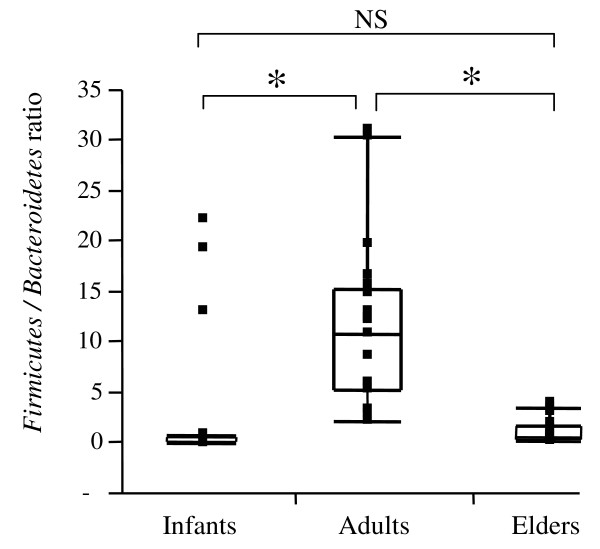
BACKGROUND: In humans, the intestinal microbiota plays an important role in the maintenance of host health by providing energy, nutrients, and immunological protection. Applying current molecular methods is necessary to surmount the limitations of classical culturing techniques in order to obtain an accurate description of the microbiota composition. RESULTS: Here we report on the comparative assessment of human fecal microbiota from three age-groups: infants, adults and the elderly. We demonstrate that the human intestinal microbiota undergoes maturation from birth to adulthood and is further altered with ageing. The counts of major bacterial groups Clostridium leptum, Clostridium coccoides, Bacteroidetes, Bifidobacterium, Lactobacillus and Escherichia coli were assessed by quantitative PCR (qPCR). By comparing species diversity profiles, we observed age-related changes in the human fecal microbiota. The microbiota of infants was generally characterized by low levels of total bacteria. C. leptum and C. coccoides species were highly represented in the microbiota of infants, while elderly subjects exhibited high levels of E. coli and Bacteroidetes. We observed that the ratio of Firmicutes to Bacteroidetes evolves during different life stages. For infants, adults and elderly individuals we measured ratios of 0.4, 10.9 and 0.6, respectively. CONCLUSION: In this work we have confirmed that qPCR is a powerful technique in studying the diverse and complex fecal microbiota. Our work demonstrates that the fecal microbiota composition evolves throughout life, from early childhood to old age.
Overview
The claims and statistics of this paper haven’t been checked yet.
Free: it reads the open-access text and checks the first 5 claims that cite a source we can check. Create a free account to check every claim.
Integrity signals
Registry
Cites
Statistics
Figures
Verification
Claims the paper makes
The claims and statistics of this paper haven’t been checked yet.
Free: it reads the open-access text and checks the first 5 claims that cite a source we can check. Create a free account to check every claim.
Claims other papers make about this one
Each is checked against this paper’s own text: does it say what the citing paper says it does?
The source backs part of the claim, not all of it — or backs it for a different population, condition or comparison.
In the citing paper
“A reduced Firmicutes:Bacteroidetes ratio has been reported in Irish and French elderly compared to young adults”
From The Microbiota-Gut-Brain Axis (2019) · cites this paper as Mariat et al., 2009
Experimental — accuracy not yet measuredIn the citing paper
“The disappearance of these microorganisms is important because they normally counteract the expansion of pathogenic microbial communities, while also maintaining intestinal barrier integrity by fermenting starches and dietary fibres and producing mucus and lipid metabolites, such as short-chain fatty acids (primarily acetate, propionate, and butyrate)66–68.”
From Inflammageing: chronic inflammation in ageing, cardiovascular disease, and frailty (2018) · cites this paper as [66]
In the citing paper
“Despite large variability in the gut microbiota found in different populations, geographic regions, and settings, evidence suggests that ageing is associated with a reduction in beneficial commensal microorganisms — such as Coprococcus, Faecalibacterium, and Lactobacillus — as well as a decrease in the Firmicutes: Bacteroidetes ratio66–68.”
From Inflammageing: chronic inflammation in ageing, cardiovascular disease, and frailty (2018) · cites this paper as [66]
In the citing paper
“In fact it has been reported that breast-fed infants generally harbor a more complex and numerous Bifidobacterium microbiota than formula-fed infants (19, 20).”
From Bifidobacteria and Their Health-Promoting Effects (2017) · cites this paper as [19]
In the citing paper
“An increased F/B ratio, caused by an expansion of Firmicutes and/or a contraction of Bacteroidetes, has been widely considered a signature of gut dysbiosis and has been associated with obesity, diabetes, and CVD8, 13, 16.”
From Gut Dysbiosis Is Linked to Hypertension (2015) · cites this paper as [8]
1 more claim about this paper
Create a free account to see every claim other papers make about this one.
Self-check
Percentages, sums and reported differences re-computed from the paper’s own numbers.
The self-check needs the paper’s full text.
Citations
Cites
Human gut microbes associated with obesity
Ley, R. E., Turnbaugh, P. J., Klein, S., & Gordon, J. I. (2006) · Nature · doi:10.1038/4441022a · Cited by 8,785 · cited 4×
“[7] when a correlation between body weight and gut microbial ecology was analysed.”
BackgroundInfluentialDiversity of the Human Intestinal Microbial Flora
Eckburg, P. B., Bik, E. M., Bernstein, C. N., Purdom, E., Dethlefsen, L., Sargent, M., Gill, S. R., Nelson, K. E., & Relman, D. A. (2005) · Science · doi:10.1126/science.1110591 · Cited by 7,913 · cited 1×
“This has markedly increased the information available concerning the complexity of the human bowel microbiota, from which over 1250 Operational Taxonomic Units have been identified corresponding to several dominant phyla [4,5].”
BackgroundHost-Bacterial Mutualism in the Human Intestine
Bäckhed, F., Ley, R. E., Sonnenburg, J. L., Peterson, D. A., & Gordon, J. I. (2005) · Science · doi:10.1126/science.1104816 · Cited by 5,277 · cited 1×
“The major functions attributed to the microbiota present in the gut begin to manifest at the end of the second year of life and comprise: i) nutrients absorption and food fermentation [10], ii) stimulation of the host immune system [11] and iii) barrier effects against pathogens [12].”
BackgroundDevelopment of the Human Infant Intestinal Microbiota
Palmer, C., Bik, E. M., DiGiulio, D. B., Relman, D. A., & Brown, P. O. (2007) · PLoS Biology · doi:10.1371/journal.pbio.0050177 · Cited by 2,877 · cited 1×
“Establishment of the intestinal microbiota has been shown to be a progressive process [9].”
BackgroundMICROBIAL ECOLOGY OF THE GASTROINTESTINAL TRACT
Savage, D. C. (1977) · Annual Review of Microbiology · doi:10.1146/annurev.mi.31.100177.000543 · Cited by 2,436 · cited 1×
“methods for more accurately assessing its composition and diversity, formerly thought to contain a mere 400– 500 bacterial species [2].”
MethodReduced diversity of faecal microbiota in Crohn’s disease revealed by a metagenomic approach
Manichanh, C., Rigottier-Gois, L., Bonnaud, E., Gloux, K., Pelletier, E., Frangeul, L., Nalin, R., Jarrin, C., Chardon, P., Marteau, P., et al. (2006) · Gut · doi:10.1136/gut.2005.073817 · Cited by 2,277 · cited 1×
“This has markedly increased the information available concerning the complexity of the human bowel microbiota, from which over 1250 Operational Taxonomic Units have been identified corresponding to several dominant phyla [4,5].”
BackgroundSelf-citationInteractions between commensal intestinal bacteria and the immune system
Macpherson, A. J., & Harris, N. L. (2004) · Nature Reviews Immunology · doi:10.1038/nri1373 · Cited by 1,610
Anatomical basis of tolerance and immunity to intestinal antigens
Mowat, A. M. (2003) · Nature Reviews Immunology · doi:10.1038/nri1057 · Cited by 1,415 · cited 1×
“The major functions attributed to the microbiota present in the gut begin to manifest at the end of the second year of life and comprise: i) nutrients absorption and food fermentation [10], ii) stimulation of the host immune system [11] and iii) barrier effects against pathogens [12].”
BackgroundHarmsen, H. J. M., Wildeboer–Veloo, A. C. M., Raangs, G. C., Wagendorp, A. A., Klijn, N., Bindels, J. G., & Welling, G. W. (2000) · Journal of Pediatric Gastroenterology and Nutrition · doi:10.1002/j.1536-4801.2000.tb02655.x · Cited by 1,337
Franks, A. H., Harmsen, H. J. M., Raangs, G. C., Jansen, G. J., Schut, F., & Welling, G. W. (1998) · Applied and Environmental Microbiology · doi:10.1128/aem.64.9.3336-3345.1998 · Cited by 1,056 · cited 1×
“Once climax composition is achieved near the end of adolescence, this ecosystem displays a high stability in healthy adults [13].”
Background
Cited by
Items 401–500 of 1,003
Comparative analysis of racial differences in breast tumor microbiome
Thyagarajan, S., Zhang, Y., Thapa, S., Allen, M. S., Phillips, N., Chaudhary, P., Kashyap, M. V., & Vishwanatha, J. K. (2020) · Scientific Reports · doi:10.1038/s41598-020-71102-x · Cited by 78
Old Friends, immunoregulation, and stress resilience
Langgartner, D., Lowry, C. A., & Reber, S. O. (2018) · Pflügers Archiv - European Journal of Physiology · doi:10.1007/s00424-018-2228-7 · Cited by 81
Zhai, C.-D., Zheng, J.-J., An, B.-C., Huang, H.-F., & Tan, Z.-C. (2019) · Chinese Medical Journal · doi:10.1097/cm9.0000000000000351 · Cited by 72
Connection between gut microbiome and the development of obesity
Zhi, C., Huang, J., Wang, J., Cao, H., Bai, Y., Guo, J., & Su, Z. (2019) · European Journal of Clinical Microbiology & Infectious Diseases · doi:10.1007/s10096-019-03623-x · Cited by 81
Heyer, C. M. E., Weiss, E., Schmucker, S. S., Rodehutscord, M., Hoelzle, L. E., Mosenthin, R., & Stefanski, V. (2015) · Nutrition Research Reviews · doi:10.1017/s0954422415000049 · Cited by 81
Linking Peripartal Dynamics of Ruminal Microbiota to Dietary Changes and Production Parameters
Derakhshani, H., Tun, H. M., Cardoso, F. C., Plaizier, J. C., Khafipour, E., & Loor, J. J. (2017) · Frontiers in Microbiology · doi:10.3389/fmicb.2016.02143 · Cited by 81
“The Firmicutesto-Bacteroidetes ratio has traditionally been considered as a biomarker for metabolic potential of the gut microbiota and is known to modulate host metabolism, physiology, and health (Mariat et al., 2009; Tilg and Kaser, 2011; Clemente et al., 2012).”
BackgroundGut bacterial dysbiosis in children with intractable epilepsy
Lee, K., Kim, N., Shim, J. O., & Kim, G.-H. (2020) · Journal of Clinical Medicine · doi:10.3390/jcm10010005 · Cited by 70
“We presumed that the lack of consensus could be the result of inconsistency in their control over the confounding factors, such as age [23,24], body mass index [25], type of diet [26–30], modes of delivery [31,32], or recent antibiotic exposure [33], which are known to have an influence over the gut microbiota.”
BackgroundCaspase deficiency alters the murine gut microbiome
Brinkman, B. M., Hildebrand, F., Kubica, M., Goosens, D., Del Favero, J., Declercq, W., Raes, J., & Vandenabeele, P. (2011) · Cell Death & Disease · doi:10.1038/cddis.2011.101 · Cited by 70
“The ratio of Bacteroidetes to Firmicutes might be important for a healthy intestinal bacterial community and has been described several times, for example, in the context of obesity and aging.(18,24) To validate the results obtained by sequencing (Figure 2b), we extended the initial sample set of five mice per genotyp…”
ResultPark, S. H., Lee, S. I., & Ricke, S. C. (2016) · PLoS ONE · doi:10.1371/journal.pone.0151944 · Cited by 72
“[43], a decrease in the phylum Firmicutes/Bacteroidetes ratio is directly associated with a weight loss in humans and mice.”
BackgroundGallé, F., Valeriani, F., Cattaruzza, M. S., Gianfranceschi, G., Liguori, R., Antinozzi, M., Hengstl, B. K. M., Liguori, G., & Spica, V. R. (2020) · Nutrients · doi:10.3390/nu12072164 · Cited by 87
Wang, M., Zhang, S., Zhong, R., Wan, F., Chen, L., Liu, L., Yi, B., & Zhang, H. (2021) · Frontiers in Nutrition · doi:10.3389/fnut.2021.645099 · Cited by 80
“In humans, healthy adults who are more resistant to pathogens have a higher Firmicutes/Bacteroidetes ratio than infants and the elderly (70).”
BackgroundThe Role of Probiotics and Their Metabolites in the Treatment of Depression
Jach, M. E., Serefko, A., Szopa, A., Sajnaga, E., Golczyk, H., Santos, L. S., Borowicz, K. K., & Sieniawska, E. (2023) · Molecules · doi:10.3390/molecules28073213 · Cited by 90
“For example, Clostridium (Firmicutes phylum) is positively associated with the body mass index (BMI) in children, and it is more important in young adults [61].”
BackgroundInfluentialJadhav, A., Jagtap, S., Vyavahare, S., Sharbidre, A. A., & Kunchiraman, B. N. (2023) · Frontiers in Cellular and Infection Microbiology · doi:10.3389/fcimb.2023.1268041 · Cited by 80
Alcoholic and non-alcoholic steatohepatitis
Neuman, M. G., French, S. W., French, B. A., Seitz, H. K., Cohen, L. B., Mueller, S., Osna, N. A., Kharbanda, K. K., Seth, D., Bautista, A., et al. (2014) · Experimental and Molecular Pathology · doi:10.1016/j.yexmp.2014.09.005 · Cited by 70
“The fecal microbiota composition changes from childhood to old age (Mariat et al., 2009).”
BackgroundFish oil, lard and soybean oil differentially shape gut microbiota of middle-aged rats
Li, H., Zhu, Y., Zhao, F., Song, S., Li, Y., Xu, X., Zhou, G., & Li, C. (2017) · Scientific Reports · doi:10.1038/s41598-017-00969-0 · Cited by 75
Gaskell, S. K., Taylor, B., Muir, J. G., & Costa, R. J. S. (2019) · Applied Physiology, Nutrition, and Metabolism · doi:10.1139/apnm-2019-0187 · Cited by 79
Epithelial Barrier Function in Gut-Bone Signaling
Rios‐Arce, N. D., Collins, F. L., Schepper, J. D., Steury, M. D., Raehtz, S., Mallin, H., Schoenherr, D. T., Parameswaran, N., & McCabe, L. R. (2017) · Advances in experimental medicine and biology · doi:10.1007/978-3-319-66653-2_8 · Cited by 80
“The Firmicutes/ Bacteroidetes ratio of the human microbiota increased with age [83].”
BackgroundProbiotics, Photobiomodulation, and Disease Management: Controversies and Challenges
Ailioaie, L. M., & Litscher, G. (2021) · International Journal of Molecular Sciences · doi:10.3390/ijms22094942 · Cited by 75
“The intestinal microbiota of a healthy individual has a different composition depending on the segments of the digestive tract, and changes throughout life, starting with the infant period and changing with age [31], through the intervention of lifestyle, environment, diversity of food consumed, and by using drugs suc…”
BackgroundLiu, J., Wu, D., Ahmed, A., Li, X., Ma, Y., Tang, L., Mo, D., Ma, Y., & Xin, Y. (2012) · Current Microbiology · doi:10.1007/s00284-012-0105-8 · Cited by 73
Lactobacillus sp. improved microbiota and metabolite profiles of aging rats
Hor, Y.-Y., Lew, L.-C., Jaafar, M. H., Lau, A. S.-Y., Ong, J.-S., Kato, T., Nakanishi, Y., Azzam, G., Azlan, A., Ohno, H., et al. (2019) · Pharmacological Research · doi:10.1016/j.phrs.2019.104312 · Cited by 67
Targeting the Microbiota in Pharmacology of Psychiatric Disorders
Pascale, A., Marchesi, N., Govoni, S., & Barbieri, A. (2020) · Pharmacological Research · doi:10.1016/j.phrs.2020.104856 · Cited by 67
Björklund, M., Ouwehand, A. C., Forssten, S. D., Nikkilä, J., Tiihonen, K., Rautonen, N., & Lahtinen, S. J. (2012) · AGE · doi:10.1007/s11357-011-9294-5 · Cited by 67
Salami, M. (2021) · Frontiers in Neuroscience · doi:10.3389/fnins.2021.613120 · Cited by 67
“, 2005); of them, the first and second phyla represent 70% of the total microbiota (Mariat et al., 2009).”
BackgroundWang, Y., Xu, L., Sun, X., Wan, X., Sun, G., Jiang, R., Li, W., Tian, Y., Liu, X., & Kang, X. (2020) · Research in Veterinary Science · doi:10.1016/j.rvsc.2020.01.020 · Cited by 67
The role of gut microbiota in bone homeostasis: a systematic review of preclinical animal studies
Li, J., Ho, W. T., Liu, C., Chow, S. K., Ip, M., Yu, J. Q., Wong, H. S., Cheung, W., Sung, J. J. �., & Wong, R. M. Y. (2021) · Bone and Joint Research · doi:10.1302/2046-3758.101.bjr-2020-0273.r1 · Cited by 76
The emerging role of dark berry polyphenols in human health and nutrition
Higbee, J., Solverson, P. M., Zhu, M. J., & Carbonero, F. G. (2022) · Food Frontiers · doi:10.1002/fft2.128 · Cited by 74
Palmas, V., Pisanu, S., Madau, V., Casula, E., Deledda, A., Cusano, R., Uva, P., Loviselli, A., Velluzzi, F., & Manzin, A. (2022) · Nutrients · doi:10.3390/nu14122436 · Cited by 69
“LEfSe showed that the Verrucomicrobia phylum was identified as the main biomarker in CENT, together with its members Verrucomicrobiaceae, Akkermansia and Akkermansia muciniphila, as often reported in previous studies of centenarians [57,65,66], while one study observed an opposite trend [64].”
ResultChen, Y.-C., Lin, H.-Y., Chien, Y., Tung, Y.-H., Ni, Y.-H., & Gau, S. S.-F. (2022) · Brain, Behavior, and Immunity · doi:10.1016/j.bbi.2022.08.015 · Cited by 67
“58) is similar to that of the neurotypical population with a similar age range (Mariat et al., 2009).”
Saint-Cyr, M. J., Perrin‐Guyomard, A., Houée, P., Rolland, J.-G., & Laurentie, M. (2013) · PLoS ONE · doi:10.1371/journal.pone.0080578 · Cited by 74
“To overcome the fact that fecal samples may contain more or less water, normalization was done by subtracting the log10 CFU/ g obtained for the ‘‘all bacteria’’ group from the log10 CFU/g for the other bacterial groups [33,36].”
MethodBonfrate, L., Tack, J., Grattagliano, I., Cuomo, R., & Portincasa, P. (2013) · Scandinavian Journal of Gastroenterology · doi:10.3109/00365521.2013.799220 · Cited by 67
“Author Year No. of IBS subjects No. of controls Methods Common findings in IBS Matto et al. [85] 2005 21 (not subdivided) 17 Culture-based techniques; PCR-DGGE analysis " Temporal instability " Numbers of coliforms " Aerobe:anaerobe ratio Malinen et al. [88] 2005 27 22 qPCR # Lactobacillus spp. in IBS-D (vs. IBS-C) "…”
BackgroundInfluentialDietary macronutrients and the aging liver sinusoidal endothelial cell
Cogger, V. C., Mohamad, M., Solon-Biet, S. M., Senior, A. M., Warren, A., O'Reilly, J. N., Tung, B. T., Svistounov, D., McMahon, A. C., Fraser, R., et al. (2016) · American Journal of Physiology-Heart and Circulatory Physiology · doi:10.1152/ajpheart.00949.2015 · Cited by 66
He, M., Fang, S., Huang, X., Zhao, Y., Ke, S., Yang, H., Li, Z., Gao, J., Chen, C., & Huang, L. (2016) · Frontiers in Microbiology · doi:10.3389/fmicb.2016.02108 · Cited by 74
Does the Gut Microbiota Influence Immunity and Inflammation in Multiple Sclerosis Pathophysiology?
Adamczyk-Sowa, M., Medrek, A., Madej, P., Michlicka, W., & Dobrakowski, P. (2017) · Journal of Immunology Research · doi:10.1155/2017/7904821 · Cited by 67
“[29] suggested that the changes in the composition of the intestinal flora might”
BackgroundGuardians of the Gut: Enteric Defensins
Sankaran‐Walters, S., Hart, R., & Dills, C. (2017) · Frontiers in Microbiology · doi:10.3389/fmicb.2017.00647 · Cited by 78
“As a result, defensins may play a mechanistic role in the microbiota changes that can be observed with aging (Mariat et al., 2009; Salzman, 2010; Jandhyala et al., 2015).”
BackgroundLi, G., Li, J., Kohl, K. D., Yin, B., Wei, W., Wan, X., Zhu, B., & Zhang, Z. (2018) · Journal of Animal Ecology · doi:10.1111/1365-2656.12920 · Cited by 76
Gut Microbiota Alteration and Its Time Course in a Tauopathy Mouse Model
Sun, B.-L., Li, W.-W., Wang, J., Xu, Y.-L., Sun, H.-L., Tian, D.-Y., Wang, Y.-J., & Yao, X.-Q. (2019) · Journal of Alzheimer's Disease · doi:10.3233/jad-181220 · Cited by 66
“Homeostasis between Bacteroidetes and Firmi-cutes reportedly changes with aging [29].”
Ramadan Fasting Leads to Shifts in Human Gut Microbiota Structured by Dietary Composition
Ali, I., Liu, K., Long, D., Faisal, S., Hilal, M. G., Ali, I., Huang, X., & Long, R. (2021) · Frontiers in Microbiology · doi:10.3389/fmicb.2021.642999 · Cited by 76
Gut Microbiota Parameters Potentially Useful in Clinical Perspective
Pierro, F. D. (2021) · Microorganisms · doi:10.3390/microorganisms9112402 · Cited by 70
Chen, L., Xu, X., Wu, X., Cao, H., Li, X., Hou, Z., Wang, B., Liu, J., Ji, X., Zhang, P., et al. (2022) · Frontiers in Cellular and Infection Microbiology · doi:10.3389/fcimb.2022.942460 · Cited by 69
“(2021) reported a general increase in Firmicutes, Actinobacteria, and Bacteroidetes, and a reduction in Fusobacteria in the dental plaques of elderly patients with AD when compared with the abundances in controls; in addition, one indicator of aging (Mariat et al., 2009), the ratio of Firmicutes to Bacteroidetes (F/B…”
BackgroundKain, V., Pol, W. V. D., Mariappan, N., Ahmad, A. M., Eipers, P. G., Gibson, D. L., Gladine, C., Vigor, C., Durand, T., Morrow, C. D., et al. (2019) · The FASEB Journal · doi:10.1096/fj.201802477r · Cited by 68
Phthalate exposure alters gut microbiota composition and IgM vaccine response in human newborns
Yang, Y., Yang, Y. S. H., Lin, I., Chen, Y., Lin, H., Wu, C., Su, Y., Yang, Y., Yang, S., & Suen, J. (2019) · Food and Chemical Toxicology · doi:10.1016/j.fct.2019.110700 · Cited by 72
The interplay of obesity, gut microbiome and diet in the immune check point inhibitors therapy era
Spyrou, N., Vallianou, N. G., Kadillari, J., & Dalamaga, Μ. (2021) · Seminars in Cancer Biology · doi:10.1016/j.semcancer.2021.05.008 · Cited by 73
Dorelli, B., Gallé, F., Vito, C. D., Duranti, G., Iachini, M., Zaccarin, M., Standoli, J. P., Ceci, R., Romano, F., Liguori, G., et al. (2021) · Nutrients · doi:10.3390/nu13061890 · Cited by 75
Zhang, Z., & Bao, J. (2021) · Starch - Stärke · doi:10.1002/star.202100141 · Cited by 82
Memorable Food: Fighting Age-Related Neurodegeneration by Precision Nutrition
Milošević, M. S., Arsić, A., Cvetković, Z., & Vučić, V. (2021) · Frontiers in Nutrition · doi:10.3389/fnut.2021.688086 · Cited by 76
“The most prominent feature in the microbiota of elderly individuals is a reduced Firmicutes-to-Bacteroidetes ratio compared with young adults (89) and decreased beneficial Lactobacillus and Bifidobacterium.”
BackgroundChen, L., Wang, Z., Wang, P., Yu, X., Ding, H., Wang, Z., & Feng, J. (2021) · Microbiology Spectrum · doi:10.1128/spectrum.00483-21 · Cited by 71
Wang, L., Gao, C. Y., Wang, B., Wang, C., Sagada, G., & Yan, Y. (2023) · Aquaculture · doi:10.1016/j.aquaculture.2023.739310 · Cited by 71
Li, W., & Ma, Z. S. (2020) · Scientific Reports · doi:10.1038/s41598-019-56561-1 · Cited by 74
Ottaviani, E., Ventura, N., Mandrioli, M., Candela, M., Franchini, A., & Franceschi, C. (2011) · Biogerontology · doi:10.1007/s10522-011-9352-5 · Cited by 64
“In the literature, there is a general agreement to report a significant increase of facultative anaerobes in the aged human GM (Gavini et al. 2001; Woodmansey et al. 2004; Müller et al. 2006; Mariat et al. 2009; Rajilić-Stojanović et al. 2009; Mäkivuokko et al. 2010).”
BackgroundGao, H., Chi, X., Qin, W., Wang, L., Song, P., Cai, Z., Zhang, J., & Zhang, T. (2019) · Journal of Applied Microbiology · doi:10.1111/jam.14240 · Cited by 74
“This is consistent with previous studies of intestinal microbial diversity in mammals (Eckburg et al. 2005; Mariat et al. 2009; Middelbos et al. 2010; Qin et al. 2010; Van den Abbeele et al. 2010; Zhu et al. 2011; Guan et al. 2016) and these organisms facilitate the digestion of cellulose and hemicellulose in food (Wu…”
ResultAdaptation of bifidobacteria to the gastrointestinal tract and functional consequences
Sánchez, B., Ruíz, L., Gueimonde, M., Ruas‐Madiedo, P., & Margollés, A. (2012) · Pharmacological Research · doi:10.1016/j.phrs.2012.11.004 · Cited by 74
The gastrointestinal microbiome: a malleable, third genome of mammals
Carroll, I. M., Threadgill, D. W., & Threadgill, D. S. (2009) · Mammalian Genome · doi:10.1007/s00335-009-9204-7 · Cited by 66
“Supporting the strong link between the GI microbiome and its host is the fact that the composition of the GI microbiota changes with age, mirroring changes in diet that occur between milk-fed infants and adults and into the elderly years (Mariat et al. 2009; Sela et al. 2008).”
BackgroundNon-dairy probiotic beverages: the next step into human health
Gawkowski, D., & Chikindas, M. L. (2012) · Beneficial Microbes · doi:10.3920/bm2012.0030 · Cited by 70
“During the human lifespan, factors such as ageing, diet, family size, and hygiene level are associated with affecting the balance between beneficial and harmful bacteria in the GI tract, which could lead to development of allergies, chronic diseases and infections (Bernstein and Shanahan, 2008; De Filippo et al., 2010…”
Distinct gut microbiota of healthy children from two different geographic regions of Thailand
La-ongkham, O., Nakphaichit, M., Leelavatcharamas, V., Keawsompong, S., & Nitisinprasert, S. (2015) · Archives of Microbiology · doi:10.1007/s00203-015-1089-0 · Cited by 72
“Quantification of the bacterial groups in the fecal samples Human microbiota has been studied for their important role in host metabolism and human health (Mariat et al. 2009).”
BackgroundMicrobiome to Brain: Unravelling the Multidirectional Axes of Communication
Aidy, S. E., Stilling, R. M., Dinan, T. G., & Cryan, J. F. (2016) · Advances in experimental medicine and biology · doi:10.1007/978-3-319-20215-0_15 · Cited by 69
“A shift in the ratio of Bacteroidetes to Firmicutes, distinct decrease in Bifi dobacteria, and an overall increase in the total number of facultative anaerobes were observed in aged people (Mariat et al. 2009 ).”
BackgroundCho, S.-Y., Kim, J., Lee, J. H., Sim, J. H., Cho, D.-H., Bae, I.-H., Lee, H., Seol, M. A., Shin, H. M., Kim, T.-J., et al. (2016) · Scientific Reports · doi:10.1038/srep39026 · Cited by 62
Current understanding of the role of gut dysbiosis in type 1 diabetes
Abdellatif, A. M., & Sarvetnick, N. (2019) · Journal of Diabetes · doi:10.1111/1753-0407.12915 · Cited by 75
“The Firmicutes: Bacteroidetes ratio has been suggested as an indicator of the degree of maturation of human gut microbiota, being found lower in infants and the elderly compared with adult individuals.(47) Clostridium, Streptococcus, Ruminococcus, Lactobacillus, and Bifidobacterium (Grampositive bacteria) and Bacteroi…”
ResultMushtaq, N., Hussain, S., Zhang, S., Lü, Y., Li, H., Ullah, S., Wang, Y., & Xu, J. (2019) · International Journal of Molecular Medicine · doi:10.3892/ijmm.2019.4235 · Cited by 77
Song, C., Kim, N., Nam, R. H., Choi, S. I., Lee, H., & Surh, Y. (2020) · Scientific Reports · doi:10.1038/s41598-020-69112-w · Cited by 77
Barelli, C., Albanese, D., Stumpf, R. M., Asangba, A. E., Donati, C., Rovero, F., & Hauffe, H. C. (2020) · mSystems · doi:10.1128/msystems.00061-20 · Cited by 76
Deng, T., Li, J., He, B., Chen, B., Liu, F., Chen, Z., Zheng, J., Shi, Z., Zhang, T., Deng, L., et al. (2022) · Hepatology International · doi:10.1007/s12072-021-10279-3 · Cited by 73
“Firmicute/Bacteroidetes ratio was commonly used to assess the status of human gut microbes associated with dysbiosis and obesity [29, 30].”
Utilizing the fecal microbiota to understand foal gut transitions from birth to weaning
Torre, U. D. L., Henderson, J., Furtado, K. L., Pedroja, M., Elenamarie, O., Mora, A., Pechanec, M. Y., Maga, E. A., & Mienaltowski, M. J. (2019) · PLoS ONE · doi:10.1371/journal.pone.0216211 · Cited by 71
Interactions between dietary polyphenols and aging gut microbiota: A review
Davinelli, S., & Scapagnini, G. (2021) · BioFactors · doi:10.1002/biof.1785 · Cited by 65
“This is consistent with previous studies indicating that the F/B ratio increases during adulthood but declines in older age.(47) Evidence also suggests that the F/B ratio depends on the community context within DAVINELLI AND SCAPAGNINI 277”
ResultGut Microbiome Dysbiosis in Alcoholism: Consequences for Health and Recovery
Day, A. W., & Kumamoto, C. A. (2022) · Frontiers in Cellular and Infection Microbiology · doi:10.3389/fcimb.2022.840164 · Cited by 66
“, 2017), aging (Mariat et al., 2009), poor cardiovascular health (Yang et al.”
BackgroundFactoring the intestinal microbiome into the pathogenesis of autoimmune hepatitis
Czaja, A. J. (2016) · World Journal of Gastroenterology · doi:10.3748/wjg.v22.i42.9257 · Cited by 64
Yard vegetation is associated with gut microbiota composition
Parajuli, A., Hui, N., Puhakka, R., Oikarinen, S., Grönroos, M., Selonen, V. A. O., Siter, N., Kramna, L., Roslund, M. I., Vari, H. K., et al. (2020) · Science of The Total Environment · doi:10.1016/j.scitotenv.2020.136707 · Cited by 64
“Reduction in Firmicutes to Bacteroidetes ratio is typical for gut flora among the elderly (Mariat et al., 2009), probably an indication of unstable and deteriorating gut microbiota, and the reduction is also associated with an increased incidence of inflammatory bowel disease and allergic reactions (Clemente et al.”
BackgroundCooper, D., Kable, M., Marco, M., De Leon, A., Rust, B., Baker, J., Horn, W., Burnett, D., & Keim, N. (2017) · Nutrients · doi:10.3390/nu9020173 · Cited by 61
“Overall, Firmicutes was the most relatively abundant phylum detected in our subjects, as has previously been observed in studies examining urban adult human gut microbiota using stool samples [38,39].”
BackgroundMoshkelgosha, S., Masetti, G., Berchner‐Pfannschmidt, U., Verhasselt, H. L., Horstmann, M., Díaz‐Cano, S. J., Noble, A., Edelman, B., Covelli, D., Plummer, S. F., et al. (2018) · Hormone and Metabolic Research · doi:10.1055/a-0653-3766 · Cited by 64
Age-related changes in the gut microbiota and the core gut microbiome of healthy Thai humans
La-ongkham, O., Nakphaichit, M., Nakayama, J., Keawsompong, S., & Nitisinprasert, S. (2020) · 3 Biotech · doi:10.1007/s13205-020-02265-7 · Cited by 67
“Most common studies have shown decreasing numbers of strict anaerobes (bifidobacteria, bacteroides and clostridia) and increasing numbers of facultative anaerobes (streptococci, staphylococci, enterococci and enterobacteria) in elderly subjects (Hayashi et al. 2003; Bartosch et al. 2004; Mueller et al. 2006; Mariat et…”
BackgroundErinle, T. J., Oladokun, S., MacIsaac, J., Rathgeber, B. M., & Adewole, D. I. (2021) · Poultry Science · doi:10.1016/j.psj.2021.101519 · Cited by 72
Microbiota and healthy ageing: observational and nutritional intervention studies
Brüssow, H. (2013) · Microbial Biotechnology · doi:10.1111/1751-7915.12048 · Cited by 61
“When the Bacteroidetes group was further differentiated, some differences between the young and elderly adults could be identified.”
BackgroundInfluentialRuengsomwong, S., Korenori, Y., Sakamoto, N., Wannissorn, B., Nakayama, J., & Nitisinprasert, S. (2014) · Journal of Microbiology and Biotechnology · doi:10.4014/jmb.1310.10043 · Cited by 60
Gut microbiota in kidney disease and hypertension
Antza, C., Stabouli, S., & Kotsis, V. (2018) · Pharmacological Research · doi:10.1016/j.phrs.2018.02.028 · Cited by 65
Neuropsychiatric Disorders: Influence of Gut Microbe to Brain Signalling
Scriven, M., Dinan, T. G., Cryan, J. F., & Wall, M. (2018) · Diseases · doi:10.3390/diseases6030078 · Cited by 63
“The majority of the gut microbiota consist of bacteriodetes and firmicutes [22].”
BackgroundGut Microbiota in Lung Cancer: Where Do We Stand?
Georgiou, K. E., Marinov, B. I., Farooqi, A. A., & Gazouli, M. (2021) · International Journal of Molecular Sciences · doi:10.3390/ijms221910429 · Cited by 65
“, Bacteroides, Porphyromonas, and Prevotella) [24].”
Gut Microbiota Modulation as a Novel Therapeutic Strategy in Cardiometabolic Diseases
Mutalub, Y. B., Abdulwahab, M., Mohammed, A., Yahkub, A. M., Al-Mhanna, S. B., Yusof, W., Tang, S. P., Rasool, A. H. G., & Mokhtar, S. S. (2022) · Foods · doi:10.3390/foods11172575 · Cited by 72
“Studies therefore propose that changes in the ratio of the microbe communities Firmicutes (F) and Bacteroidetes (B), known as the F/B ratio, can be possibly employed as a biosignature for disease conditions [100,101].”
BackgroundThe microbiota–gut–brain axis in Huntington's disease: pathogenic mechanisms and therapeutic targets
Ekwudo, M. N., Gubert, C., & Hannan, A. J. (2024) · FEBS Journal · doi:10.1111/febs.17102 · Cited by 65
“A change in this ratio has also been linked to aging and, consequently, neurodegeneration [114,115].”
Our gut microbiota: a long walk to homeostasis
Dicks, L. M. T., Geldenhuys, J., Mikkelsen, L. S., Brandsborg, E., & Marcotte, H. (2018) · Beneficial Microbes · doi:10.3920/bm2017.0066 · Cited by 59
Washburne, A. D., Silverman, J. D., Morton, J. T., Becker, D. J., Crowley, D., Mukherjee, S., David, L. A., & Plowright, R. K. (2019) · Ecological Monographs · doi:10.1002/ecm.1353 · Cited by 65
Liao, J.-F., Cheng, Y.-F., Li, S.-W., Lee, W., Hsu, C.-C., Wu, C.-C., Jeng, O.-J., Wang, S. Z., & Tsai, Y.-C. (2019) · Brain Research Bulletin · doi:10.1016/j.brainresbull.2019.07.027 · Cited by 62
“conditions such as obesity, hypertension, and aging (Mariat et al., 2009; Sanz and Moya-Perez, 2014; Yang et al., 2015).”
BackgroundImpact of Nutrition on Pulmonary Arterial Hypertension
Callejo, M., Barberà, J. A., Duarte, J., & Pérez‐Vizcaíno, F. (2020) · Nutrients · doi:10.3390/nu12010169 · Cited by 64
“In recent years, a growing body of evidence points to a relationship between gut dysbiosis and many diseases, including essential hypertension [124,125], obesity [126,127], inflammation [128] neurologic disorders [129], and pulmonary hypertension [130].”
BackgroundBacterial extracellular vesicles at the interface of gut microbiota and immunity
Melo-Marques, I., Cardoso, S. M., & Empadinhas, N. (2024) · Gut Microbes · doi:10.1080/19490976.2024.2396494 · Cited by 67
“136 These findings highlight the need to consider microbiota data at a much smaller scale, specifically at the family, genus or even species level whenever possible, where significant differences are often hidden.”
BackgroundStadlbauer, V., Leber, B., Lemesch, S., Trajanoski, S., Bashir, M., Horvath, A., Tawdrous, M., Stojakovic, T., Fauler, G., Fickert, P., et al. (2015) · PLOS ONE · doi:10.1371/journal.pone.0141399 · Cited by 59
“[69] This study suggests that investigating gut microbiota composition is challenging and interventions are difficult.”
Kwok, L. Y., Wang, L., Zhang, J., Guo, Z., & Zhang, H. (2014) · Beneficial Microbes · doi:10.3920/bm2013.0047 · Cited by 60
“These together contribute to the reshaping of the gut microbial composition in the elderly (Mariat et al., 2009).”
BackgroundLi, M., Gu, M.-M., Lang, Y., Shi, J., Chen, B. P. C., Guan, H., Yu, L., Zhou, P., & Shang, Z. (2019) · Free Radical Biology and Medicine · doi:10.1016/j.freeradbiomed.2019.09.035 · Cited by 62
Wang, L.-J., Yang, C.-Y., Kuo, H.-C., Chou, W.-J., Tsai, C.-S., & Lee, S.-Y. (2022) · Journal of Personalized Medicine · doi:10.3390/jpm12020227 · Cited by 58
“The F/B ratio evolves during different life stages [49], and a higher F/B ratio has been considered as a biomarker of obesity in animals and humans [50].”
BackgroundMuñoz-Yáñez, C., Hernández, A. M., Martínez-Sandoval, A., Domínguez, M. A. M., Muñiz, S. A. Z., & Guangorena-Gómez, J. O. (2021) · BMC Microbiology · doi:10.1186/s12866-021-02402-z · Cited by 60
“Likewise, a low Firmicutes/Bacteroidetes ratio is related to weight loss [32], which corresponds with FACSA cohort individuals with lower BMI in this study (Table 1).”
Zhao, C., Men, X., Dang, Y., Zhou, Y., & Ren, Y. (2023) · Microbiology Spectrum · doi:10.1128/spectrum.03980-22 · Cited by 70
Juvenile ferric iron prevents microbiota dysbiosis and colitis in adult rodents
Ettreiki, C. (2012) · World Journal of Gastroenterology · doi:10.3748/wjg.v18.i21.2619 · Cited by 58
Wang, G., Chen, Q., Tian, P., Wang, L., Li, X., Lee, Y.-K., Zhao, J., Zhang, H., & Chen, W. (2020) · Environmental Pollution · doi:10.1016/j.envpol.2020.114164 · Cited by 60
Fisher, J. C., Eren, A. M., Green, H., Shanks, O. C., Morrison, H. G., Vineis, J. H., Sogin, M. L., & McLellan, S. L. (2015) · Applied and Environmental Microbiology · doi:10.1128/aem.01524-15 · Cited by 62
Johnson‐Henry, K. C., Pinnell, L. J., Waskow, A., Irrazábal, T., Martín, A., Hausner, M., & Sherman, P. M. (2014) · Journal of Nutrition · doi:10.3945/jn.114.195081 · Cited by 63
“The findings in the current study demonstrate that a sc-FOS has differential effects than a polysaccharide FIGURE 6 Semiquantification of the amount of Actinobacteria (represented as a percentage of total Eubacteria) on the colonic mucosa of mice treated with prebiotics (10% wt:v) or infected with Citrobacter rodentiu…”
BackgroundInfluentialDe, R., Mukhopadhyay, A. K., & Dutta, S. (2020) · Gut Pathogens · doi:10.1186/s13099-020-00371-8 · Cited by 61
Zhao, J., Gong, L., Wu, L., She, S., Liao, Y., Hong, Z., Zhao, Z., Liu, G., & Shen, Y. (2020) · Journal of Functional Foods · doi:10.1016/j.jff.2020.104219 · Cited by 58
Microbiome and Allergy: New Insights and Perspectives
Zubeldia‐Varela, E., Barker‐Tejeda, T. C., Obeso, D., Villaseñor, A., Barber, D., & Pérez‐Gordo, M. (2022) · Journal of Investigational Allergology and Clinical Immunology · doi:10.18176/jiaci.0852 · Cited by 64
The Role of the Gut Microbiome and Trimethylamine Oxide in Atherosclerosis and Age-Related Disease
Hage, R. E., Al-Arawe, N., & Hinterseher, I. (2023) · International Journal of Molecular Sciences · doi:10.3390/ijms24032399 · Cited by 62
“However, the major gut microbiota aging feature is the decreased ratio of Firmicutes/Bacteroidetes [53].”
BackgroundPepper, I. L., Zerzghi, H., Bengson, S. A., Iker, B. C., Banerjee, M. J., & Brooks, J. P. (2012) · Journal of Applied Microbiology · doi:10.1111/j.1365-2672.2012.05374.x · Cited by 56
Lim, S., Chang, D., Ahn, S., & Kim, B. C. (2016) · Gut Pathogens · doi:10.1186/s13099-016-0087-3 · Cited by 57
Agent Based Modeling of Human Gut Microbiome Interactions and Perturbations
Shashkova, T., Popenko, A., Tyakht, A., Peskov, K. V., Kosinsky, Y., Bogolubsky, L. I., Raigorodskii, A. M., Ischenko, D. S., Alexeev, D. G., & Govorun, V. M. (2016) · PLoS ONE · doi:10.1371/journal.pone.0148386 · Cited by 64
“Many bacterial species are involved in SCFAs metabolism, we used a scheme belong to Bacteroidetes and Firmicutes, which are the dominant bacterial species in adult human intestine [36] and also Firmicutes/Bacteroidetes ratio is indicator of the development of obesity and overweight [37].”
Prebiotic Xylo-Oligosaccharides Ameliorate High-Fat-Diet-Induced Hepatic Steatosis in Rats
Lensu, S., Pariyani, R., Mäkinen, E., Yang, B., Saleem, W., Munukka, E., Lehti, M., Driuchina, A., Lindén, J., Tiirola, M., et al. (2020) · Nutrients · doi:10.3390/nu12113225 · Cited by 60
Metadata
- Authors
- Mariat, D., Firmesse, O., Levenez, F., Guimarăes, V., Sokol, H., Doré, J., Corthier, G., & Furet, J.-P.
- Affiliations
- Institut National de Recherche pour l'Agriculture, l'Alimentation et l'Environnement (FR)
- Institut National de la Recherche Agronomique (FR)
- Assistance Publique – Hôpitaux de Paris (FR)
- Corresponding author
- Mariat, D
- ORCID
- Venue
- BMC Microbiology
- Published
- 2009
- Volume
- 9
- Issue
- 1
- Pages
- 123
- ISSN
- 1471-2180 (ISSN-L)
- PMC
- PMC2702274
- OpenAlex
- W2142536690
- Cited by
- 1,755
- References
- 33
- Citations by year
- 2026: 63 · 2025: 123 · 2024: 150 · 2023: 162 · 2022: 187 · 2021: 179 · 2020: 195 · 2019: 130 · 2018: 115 · 2017: 92 · 2016: 79 · 2015: 54 · 2014: 55 · 2013: 54 · 2012: 48
- FWCI
- 15.42
- Type
- journal article
- Language
- en
- Open access
- gold
- doi.org
- Licence
- cc-by
- Locations
- BMC Microbiology (publishedVersion, cc-by)
- PubMed Central (publishedVersion, cc-by)
- PubMed (publishedVersion)
- HAL (submittedVersion, other-oa)
- DOAJ (DOAJ: Directory of Open Access Journals) (submittedVersion)
- Topics
- Life Sciences › Biochemistry, Genetics and Molecular Biology › Molecular Biology › Gut microbiota and health
- Health Sciences › Nursing › Nutrition and Dietetics › Infant Nutrition and Health
- Health Sciences › Dentistry › Periodontics › Oral microbiology and periodontitis research
- Keywords
- Firmicutes/Bacteroidetes ratio, human gut microbiome, fecal microbiota, age-related changes, microbiota maturation, infants, older adults, Clostridium leptum, Clostridium coccoides, Bacteroidetes, Bifidobacterium, Lactobacillus, Escherichia coli, bacterial diversity, real-time PCR
- MeSH terms
- Adult, Aged, Aged, 80 and over, Aging, Bifidobacterium, Clostridium, DNA, Bacterial, Escherichia coli, Feces, Humans, Infant, Infant, Newborn, Intestines, Lactobacillus, Middle Aged, Colony Count, Microbial, Bacteroidetes
About these checks
Registry, retraction, Cites and statistics results are computed, not judged, with one exception: a printed reference that no index lists is read once by a model before it counts as a citation error. Claims are extracted by a model and kept only when their quote appears verbatim in the text; each cited source is then checked, with a model’s help, for whether it says what the claim relies on. Those verdicts can be wrong — read the claim’s quote and the cited source before relying on one.
Statistics and arithmetic are recomputed, not judged.
Confidence bands are shown only for fields calibrated on our annotated test set. None is calibrated yet, so no band is shown.
What counts as a claim ›How we measure confidence ›How we check this ›
Are you an author, or do you see a problem with this page? Request a review
Data sources
Bibliographic data: Semantic Scholar, OpenAlex, Crossref.
Contains information from the Semantic Scholar Academic Graph Datasets, made available under the ODC Attribution License (ODC-BY 1.0).
Semantic Scholar’s data is described in: Kinney, R., et al. (2023). The Semantic Scholar Open Data Platform. arXiv:2301.10140.
