

Positive psychology interventions: a meta-analysis of randomized controlled studies
Open accessThe DOI matches its Crossref record; 109 of the 115 references it cites were found in a registry or an index; 10 of the 22 sources its claims cite were checked for support.
Abstract
BACKGROUND: The use of positive psychological interventions may be considered as a complementary strategy in mental health promotion and treatment. The present article constitutes a meta-analytical study of the effectiveness of positive psychology interventions for the general public and for individuals with specific psychosocial problems. METHODS: We conducted a systematic literature search using PubMed, PsychInfo, the Cochrane register, and manual searches. Forty articles, describing 39 studies, totaling 6,139 participants, met the criteria for inclusion. The outcome measures used were subjective well-being, psychological well-being and depression. Positive psychology interventions included self-help interventions, group training and individual therapy. RESULTS: The standardized mean difference was 0.34 for subjective well-being, 0.20 for psychological well-being and 0.23 for depression indicating small effects for positive psychology interventions. At follow-up from three to six months, effect sizes are small, but still significant for subjective well-being and psychological well-being, indicating that effects are fairly sustainable. Heterogeneity was rather high, due to the wide diversity of the studies included. Several variables moderated the impact on depression: Interventions were more effective if they were of longer duration, if recruitment was conducted via referral or hospital, if interventions were delivered to people with certain psychosocial problems and on an individual basis, and if the study design was of low quality. Moreover, indications for publication bias were found, and the quality of the studies varied considerably. CONCLUSIONS: The results of this meta-analysis show that positive psychology interventions can be effective in the enhancement of subjective well-being and psychological well-being, as well as in helping to reduce depressive symptoms. Additional high-quality peer-reviewed studies in diverse (clinical) populations are needed to strengthen the evidence-base for positive psychology interventions.
Overview
CoChat Summary
## TL;DR
This meta-analysis of 39 randomized studies (40 articles; 6,139 participants) found that positive psychology interventions had small but significant benefits for subjective well-being, psychological well-being, and depressive symptoms. Effects were somewhat sustained at 3–6 months for well-being outcomes, but study heterogeneity and publication bias were notable.
## Key findings
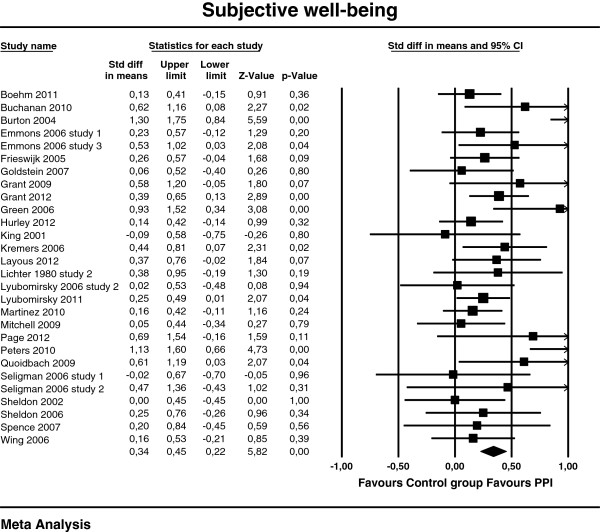
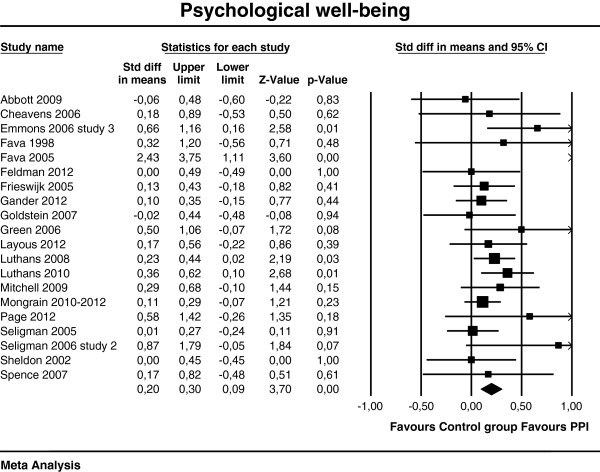
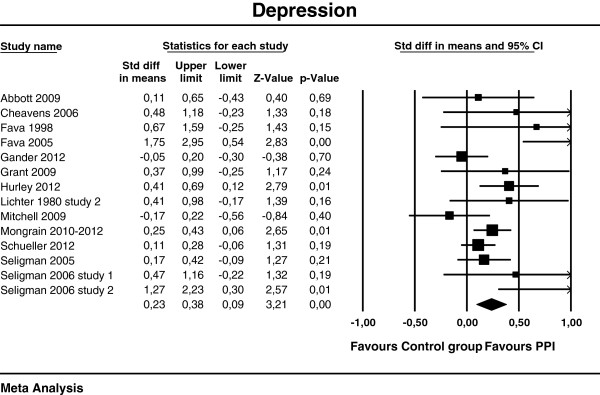
- Across all included studies, the pooled standardized mean differences were 0.34 for subjective well-being, 0.20 for psychological well-being, and 0.23 for depression, which the authors describe as small effects.
- At follow-up of 3–6 months (10 studies), effects remained significant for subjective well-being (d = 0.22, 95% CI [0.05, 0.38], p<.01) and psychological well-being (d = 0.16, 95% CI [0.02, 0.30], p=.03), but not for depression (d = 0.17, 95% CI [-0.06, 0.39], p=.15).
- Heterogeneity was moderate for subjective well-being (I² = 49.5%) and depression (I² = 47.0%), and low for psychological well-being (I² = 29.0%); effect sizes ranged from below 0 to as high as 2.4.
- For depression, larger effects were associated with longer duration, individual delivery, referral/hospital recruitment, inclusion of people with specific psychosocial problems, and lower study quality.
## Methods
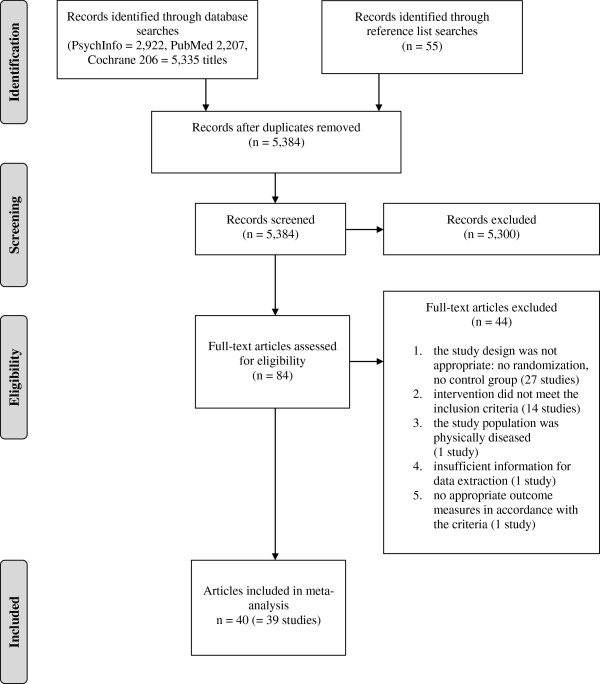
- Systematic review and meta-analysis of randomized controlled studies of positive psychology interventions, using PubMed, PsychInfo, the Cochrane Central Register of Controlled Trials, manual searches, and reference checking, covering 1998 to November 2012.
- Included 40 articles describing 39 studies with 6,139 participants; intervention formats included self-help, group training, and individual therapy.
- Main analysis used Cohen’s d under a random-effects model for three outcomes: subjective well-being, psychological well-being, and depression, with subgroup analyses and checks for heterogeneity and publication bias.
## Limitations
- The paper states that study quality was not high: no study met all quality criteria, randomization was often unclear, intention-to-treat analysis was rare (3/39 studies), and none reported an adequate power analysis.
- The authors note that heterogeneity was rather high because the included studies were diverse, and that the follow-up findings should be treated with caution because of the small number of studies and high attrition rates at follow-up.
- The text makes evident that publication bias is a limitation: funnel plots were asymmetric, fail-safe numbers were below the required thresholds, and Egger’s test suggested bias for psychological well-being and depression.
Model-written summary. Check it against the paper before relying on it.
Integrity signals
Registry
Cites
Statistics
Figures
Verification
Claims the paper makes
8 Valid · 2 Not valid · 9 Not checked · 90 Own results and interpretations
The cited sources that could be checked couldn’t confirm or dispute this claim.
In the paper
“First, the meta-analysis included both randomized studies and quasi-experimental studies.”
§ Positive psychology interventions: a meta-analysis of randomized controlled studies > Background
What the sources say
- Could not verifycites Sin and Lyubomirsky (2009) matched to “Enhancing well-being and alleviating depressive symptoms with positive psychology interventions: a practice-friendly meta-analysis” (2009) sourceExperimental — accuracy not yet measured
The Literature Search section requires included studies to have a comparison group, and Data Recorded distinguishes self-selected from non-self-selected participants. Neither passage establishes whether the meta-analysis included both randomized and quasi-experimental studies; searches for those design terms and for random assignment found no decisive passage. Page numbers were unavailable in our copy. (LLM, conf=0.72)
plain- Asserted: passes — The authors put it forward as true.
- Checkable: passes — It can be checked against evidence.
- Load-bearing: unclear — It is unclear whether the paper’s conclusions depend on it.
- Based: passes — The paper gives a reason why it holds.
- Could not verify
The cited sources support only part of this claim — read each source’s verdict below.
In the paper
“Their results show that PPIs can indeed be effective in enhancing well-being (r = 0.29, standardized mean difference Cohen’s d = 0.61) and help to reduce depressive symptom levels in clinical populations (r = 0.31, Cohen’s d = 0.65).”
§ Positive psychology interventions: a meta-analysis of randomized controlled studies > Background
What the sources say
- Partly supportedcites Sin and Lyubomirsky (2009) matched to “Enhancing well-being and alleviating depressive symptoms with positive psychology interventions: a practice-friendly meta-analysis” (2009) sourceExperimental — accuracy not yet measured
The Depression section reports that PPIs reduced depressive symptoms across 25 studies, with a mean effect of r = .31. The Participant Moderators section distinguishes depressed from nondepressed participants, so .31 is not an estimate specifically for clinical populations. The paper reports the effect as r, not as Cohen’s d = .65. (LLM, conf=0.87)
plainstates a cause- Asserted: passes — The authors put it forward as true.
- Checkable: passes — It can be checked against evidence.
- Load-bearing: unclear — It is unclear whether the paper’s conclusions depend on it.
- Based: passes — The paper gives a reason why it holds.
- Partly supported
Every source the paper cites for this claim was checked and supports it.
In the paper
“Their results show that PPIs can indeed be effective in enhancing well-being (r = 0.29, standardized mean difference Cohen’s d = 0.61) and help to reduce depressive symptom levels in clinical populations (r = 0.31, Cohen’s d = 0.65).”
§ Positive psychology interventions: a meta-analysis of randomized controlled studies > Background
What the sources say
- Supportedcites Sin and Lyubomirsky (2009) matched to “Enhancing well-being and alleviating depressive symptoms with positive psychology interventions: a practice-friendly meta-analysis” (2009) source
The Well-Being section reports that PPIs significantly improved well-being across 49 studies, with a mean r of .29. The paper reports r rather than Cohen’s d; converting .29 to d gives approximately .61, so the cited figures are consistent. (LLM, conf=0.90)
plainstates a cause- Asserted: passes — The authors put it forward as true.
- Checkable: passes — It can be checked against evidence.
- Load-bearing: passes — The paper’s conclusions depend on it.
- Based: passes — The paper gives a reason why it holds.
- Supported
Every source the paper cites for this claim was checked and supports it.
In the paper
“Second, study quality was not addressed as a potential effect moderator.”
§ Positive psychology interventions: a meta-analysis of randomized controlled studies > Background
What the sources say
- Supportedcites Sin and Lyubomirsky (2009) matched to “Enhancing well-being and alleviating depressive symptoms with positive psychology interventions: a practice-friendly meta-analysis” (2009) source
The Data Recorded section lists the variables coded for moderator analysis: participant characteristics, intervention format and duration, and comparison-group type. It does not include study quality, and the Methodological Moderators section discusses those methodological variables rather than study quality. Page numbers are unavailable in our copy. (LLM, conf=0.88)
plain- Asserted: passes — The authors put it forward as true.
- Checkable: passes — It can be checked against evidence.
- Load-bearing: unclear — It is unclear whether the paper’s conclusions depend on it.
- Based: passes — The paper gives a reason why it holds.
- Supported
Every source the paper cites for this claim was checked and supports it.
In the paper
“Remarkably, effect sizes in the current meta-analysis are around 0.3 points lower than the effect sizes in the meta-analysis by Sin and Lyubomirsky (2009) [37].”
§ Positive psychology interventions: a meta-analysis of randomized controlled studies > Discussion > Main findings
What the sources say
- Supportedcites Sin and Lyubomirsky (2009) [37] matched to “Enhancing well-being and alleviating depressive symptoms with positive psychology interventions: a practice-friendly meta-analysis” (2009) source
The Well-Being and Depression results report mean effect sizes of r = .29 and r = .31, respectively, establishing the values attributed to Sin and Lyubomirsky’s meta-analysis. The difference from the current meta-analysis is the citing authors’ comparison, not a finding this source could report. (LLM, conf=0.88)
plain- Asserted: passes — The authors put it forward as true.
- Checkable: passes — It can be checked against evidence.
- Load-bearing: passes — The paper’s conclusions depend on it.
- Based: passes — The paper gives a reason why it holds.
- Supported
70 more claims · 1 with their cited sources checked
Create a free account to see all 109 claims and to verify the 1 reference still open.
- Probably not a substantial claim. 14
- It may state two separate claims as one. 23
Claims other papers make about this one
Each is checked against this paper’s own text: does it say what the citing paper says it does?
The source backs part of the claim, not all of it — or backs it for a different population, condition or comparison.
In the citing paper
“In contrast to complex multicomponent health behavior or psychology interventions, PP exercises are simple, can be delivered remotely (e.g., by phone), and require minimal training of providers [34, 41, 42].”
From Positive Psychological Interventions for Patients with Type 2 Diabetes: Rationale, Theoretical Model, and Intervention Development (2015) · cites this paper as [41]
Experimental — accuracy not yet measuredThe source backs part of the claim, not all of it — or backs it for a different population, condition or comparison.
In the citing paper
“Studies supporting the efficacy of positive activity interventions (PAIs) have been primarily conducted in unselected (non-clinical) community samples and examined single positive activities in isolation (for a meta-analysis, see66, 67).”
From Upregulating the positive affect system in anxiety and depression: Outcomes of a positive activity intervention: Taylor et al. (2017) · cites this paper as [67]
Experimental — accuracy not yet measuredThe source backs part of the claim, not all of it — or backs it for a different population, condition or comparison.
In the citing paper
“Two meta-analyses of PPIs for depression and well-being found that these interventions have small to moderate effects in enhancing well-being and decreasing depressive symptoms and that effects are stronger for individual vs. group formats [30, 31].”
From Skills to Enhance Positivity in adolescents at risk for suicide: Protocol for a randomized controlled trial (2023) · cites this paper as [31]
Experimental — accuracy not yet measuredThe source backs part of the claim, not all of it — or backs it for a different population, condition or comparison.
In the citing paper
“Bolier and Abello (Bolier et al., 2013) reviewed digital PPIs and found that the majority of the included studies showed improvement in well-being or reduction of distress in the intervention group, compared to the control group.”
From Strength Back – A qualitative study on the co-creation of a positive psychology digital health intervention for spinal surgery patients (2023) · cites this paper as Bolier et al., 2013
Experimental — accuracy not yet measuredThe source backs part of the claim, not all of it — or backs it for a different population, condition or comparison.
In the citing paper
“PPIs may support patients to notice and savour positive experiences (Bolier et al., 2013). This may strengthen their commitment to value-based action.”
From Strength Back – A qualitative study on the co-creation of a positive psychology digital health intervention for spinal surgery patients (2023) · cites this paper as Bolier et al., 2013
Experimental — accuracy not yet measured
24 more claims about this paper
Create a free account to see every claim other papers make about this one.
Statistics recomputed
Every reported test result, recomputed from its test statistic and degrees of freedom. A result shows as not adding up only once an independent check has confirmed it.
- Consistentz = 6.43reported p < .01 · recomputed p < .001
“Z=6.43, p < .01”
- Consistentz = 4.18reported p < .01 · recomputed p < .001
“Z=4.18, p < .01”
- Consistentz = 3.33reported p < .01 · recomputed p < .001
“Z=3.33, p < .01”
Self-check
Percentages, sums and reported differences re-computed from the paper’s own numbers.
Self-check results appear here once an independent check has confirmed them.
Citations
Cites
Preferred Reporting Items for Systematic Reviews and Meta-Analyses: the PRISMA statement
Moher, D., Liberati, A., Tetzlaff, J., Altman, D. G., & for the PRISMA Group (2009) · BMJ · doi:10.1136/bmj.b2535 · Cited by 83,823
Preferred Reporting Items for Systematic Reviews and Meta-Analyses: The PRISMA Statement
Moher, D., Liberati, A., Tetzlaff, J., Altman, D. G., & The PRISMA Group (2009) · PLoS Medicine · doi:10.1371/journal.pmed.1000097 · Cited by 64,042 · cited 1×
“For the reporting of the results of this meta-analysis, we applied Preferred Reporting Items for Systematic Reviews and Meta-Analyses (PRISMA) guidelines [50].”
Measuring inconsistency in meta-analyses
Higgins, J. P. T., Thompson, S. G., Deeks, J. J., & Altman, D. G. (2003) · BMJ · doi:10.1136/bmj.327.7414.557 · Cited by 63,139 · cited 1×
“A value of 0% indicates an absence of dispersion, and larger values show increasing levels of heterogeneity where 25% can be considered as low, 50% as moderate and 75% as a high level of heterogeneity [46].”
Preferred reporting items for systematic reviews and meta-analyses: the PRISMA Statement.
(2009) · PubMed Central · Cited by 44,859
Cochrane Handbook for Systematic Reviews of Interventions: Cochrane Book Series
(2008) · doi:10.1002/9780470712184 · Cited by 25,048
Preferred Reporting Items for Systematic Reviews and Meta-Analyses: The PRISMA Statement
Moher, D., Liberati, A., Tetzlaff, J., & Altman, D. G. (2009) · Journal of Clinical Epidemiology · doi:10.1016/j.jclinepi.2009.06.005 · Cited by 19,575
Happiness is everything, or is it? Explorations on the meaning of psychological well-being.
Ryff, C. D. (1989) · Journal of Personality and Social Psychology · doi:10.1037/0022-3514.57.6.1069 · Cited by 14,847 · cited 1×
“Psychological well-being focuses on the optimal functioning of the individual and includes concepts such as mastery, hope and purpose in life [13,14].”
Borenstein, M., Hedges, L. V., Higgins, J. P. T., & Rothstein, H. R. (2009) · doi:10.1002/9780470743386 · Cited by 14,225
Duval, S., & Tweedie, R. (2000) · Biometrics · doi:10.1111/j.0006-341x.2000.00455.x · Cited by 14,099 · cited 1×
“If asymmetry is found in the funnel plot, the Trim and Fill method adjusts the pooled effect size for the outcomes of missing studies [49].”
Subjective well-being: Three decades of progress.
Diener, E., Suh, E. M., Lucas, R. E., & Smith, H. L. (1999) · Psychological Bulletin · doi:10.1037/0033-2909.125.2.276 · Cited by 12,910 · cited 2×
“Although the basic concepts of well-being, happiness and human flourishing have been studied for some decades [12,25-27], there was a lack of evidence-based interventions [24].”
Research works printed but not linked: 3
- Rupke SJ Blecke D Renfrow M Cognitive Therapy for Depression Am Fam Physician 2006 73 83 86 16417069
- Veenhoven R Gezond geluk: Effecten van geluk op gezondheid en wat dat kan betekenen voor de preventieve gezondheidszorg (Healthy happiness: effect of happiness on health and what this could mean for preventive public health) 2006 Rotterdam: Erasmus Universiteit
- Lamers S Bolier L Westerhof GJ Smit F Bohlmeijer E The impact of emotional well-being on long-term recovery and survival in physical illness: a meta-analysis J Behav Med 2012 5 538 547 21918889 PMC3439612 · DOI · Paper page
Cited by
Items 1,401–1,500 of 2,037
Bartha, S., Schmidt, S., & Tomczyk, S. (2025) · Internet Interventions · doi:10.1016/j.invent.2025.100827 · Cited by 5
“Prior studies suggest that positive psychological interventions yield stronger effects when implemented over extended periods, as they allow participants to internalize and transform positive activities into habits (Bolier et al., 2013; Carr et al., 2021; Sin and Lyubomirsky, 2009).”
Going It Alone: The Single, Unmarried, Unpartnered, Childless Woman Physician
Paynter, K. S. (2020) · Springer eBooks · doi:10.1007/978-3-030-44459-4_9 · Cited by 2
Xie, F., Tang, M., Wu, S., & Wang, Y. (2025) · Frontiers in Psychology · doi:10.3389/fpsyg.2025.1651008 · Cited by 3
“According to Bolier et al. (2013), this method can improve emotional regulation, enhance subjective well-being, and reduce anxiety and depression.”
An online positive psychology intervention to promote resilience
Masselink, J. (2013) · Cited by 2
Brauer, K. (2024) · International Journal of Applied Positive Psychology · doi:10.1007/s41042-024-00204-y · Cited by 2
“…effect sizes; for example, with regard to outcomes (e.g., subjective well-being and depression) and subfields such as in school and at work (Bolier et al., 2013; Carr et al., 2021; Chakhssi et al., 2018; Donaldson et al., 2019; Hendriks et al., 2018; Kirca et al., 2023; Sin & Lyubomirsky,…”
Talbot, F., Fournier, J.-S., & Hendriks, M. (2021) · Internet Interventions · doi:10.1016/j.invent.2021.100431 · Cited by 2
Noguchi, T., & Kyougoku, M. (2024) · Hong Kong Journal of Occupational Therapy · doi:10.1177/15691861241295339 · Cited by 2
“Moreover, engaging in positive occupations that promote well-being, as exempli fi ed earlier, has been proposed to alleviate psychological distress, including depression and anxiety (Bolier et al., 2013).”
Celano, C. M., Golden, J., Healy, B. C., Longley, R. M., & Huffman, J. C. (2021) · The International Journal of Psychiatry in Medicine · doi:10.1177/0091217421989830 · Cited by 3
Perera, D. M., & Moe, J. L. (2020) · Cambridge University Press eBooks · doi:10.1017/9781108650182.005 · Cited by 3
Drążkowski, D., & Trepanowski, R. (2022) · International Journal of Environmental Research and Public Health · doi:10.3390/ijerph192316339 · Cited by 2
“In general, positive interventions are more effective if they last longer [41,42].”
BackgroundBem-estar psicológico, sintomas de depressão e forças do caráter em idosos da comunidade
Freitas, E. R., & Barbosa, A. J. G. (2022) · Psico · doi:10.15448/1980-8623.2022.1.36703 · Cited by 2
ColorGuardian: Customize Skin Tattoos for Children with Vitiligo
Huang, M., Zhang, L., Liu, L., Zhu, P., Zhang, C., Sonchaeng, P., Ying, W., Wang, P., Hu, Y., Ying, F., et al. (2021) · CHI Conference Extended Abstracts on Human Factors in Computing Systems (CHI EA) · doi:10.1145/3411763.3451615 · Cited by 3
“Therefore, physiological treatment and positive psychological intervention [2] are indispensable to treat vitiligo in children.”
BackgroundWalter, O., Bader, N. G., & Kasler, J. (2024) · American Journal of Health Behavior · doi:10.5993/ajhb.48.5.12 · Cited by 2
Living the Good Life: A Conversation about Well-being, Education, and Culture
Cardinal, T., Lambert, L., & Lamouche, S. (2020) · Paideusis · doi:10.7202/1071455ar · Cited by 2
Positivity at Work: It’s Not a Contradiction!
Lambert, L., Topolskaya, E., Warren, M. A., & Habib, M. A. (2019) · Springer eBooks · doi:10.1007/978-3-030-13921-6_7 · Cited by 5
Fostering positive emotion through self-compassion in individuals with chronic pain.
Ellsworth, M. (2018) · ThinkIR: The University of Louisville's Institutional Repository (University of Louisville) · doi:10.18297/etd/3009 · Cited by 3
Self-Reported Personal Well-Being of Youth Accessing Intensive Mental Health Treatment
Patterson, A., Preyde, M., Maitland, S. B., Penney, R., & Ashbourne, G. (2016) · Child and Adolescent Social Work Journal · doi:10.1007/s10560-016-0448-2 · Cited by 4
Martow, J. H., Barlow, G., Austin, S., Henshaw, S., & Lumley, M. N. (2025) · The Journal of Positive Psychology · doi:10.1080/17439760.2025.2582004 · Cited by 3
Segev‐Jacubovski, O. (2023) · Canadian Journal of Occupational Therapy · doi:10.1177/00084174231168018 · Cited by 3
“Those interventions include expressing gratitude and blessings, practicing kindness, setting personal goals (Bolier et al., 2013; Mohammadi et al., 2018), cognitive-behavioral therapy, and life review (Hernandez & Overholser, 2021).”
BackgroundSharma‐Brymer, V., Dashper, K. L., & Brymer, E. (2020) · Cambridge University Press eBooks · doi:10.1017/9781108650182.034 · Cited by 3
Dreisoerner, A., Heekerens, J. B., Karle, V., & Pawelkiewicz, J. M. (2024) · Journal of Happiness Studies · doi:10.1007/s10902-024-00767-2 · Cited by 3
“…designed to increase well-being, also called positive psychology interventions (PPI, Seligman & Csikszentmihalyi, 2000), have emerged to complement psychological interventions designed to reduce psychopathology (for reviews, see Bolier et al., 2013; Carr et al., 2021; Sin & Lyubomirsky, 2009).”
Hoelterhoff, M., Wei, Y., Jutarat, T., & Dennis, R.-H. (2023) · i-manager’s Journal on Educational Psychology · doi:10.26634/jpsy.17.2.19468 · Cited by 1
Adventure Therapy and Positive Psychology: A Match Made in … Nature
Potgieter, J. C. (2019) · Springer eBooks · doi:10.1007/978-3-030-20583-6_12 · Cited by 1
Makhmur, S., & Rath, S. (2022) · Psychological Studies · doi:10.1007/s12646-022-00677-4 · Cited by 2
“, can build these elements (Bolier et al., 2013) among diabetes patients.”
BackgroundKamsickas, L., Stephens, J. E., Jackson, K., Heard‐Garris, N., Chang, V. Y., Schoeps, K., Bussolari, C. J., Vo, D. X., Moskowitz, J. T., & Duncan, L. G. (2024) · Discover Education · doi:10.1007/s44217-024-00370-w · Cited by 6
Rogiers, R., Baeken, C., Watkins, E. R., den Abbeele, D. V., Remue, J., Raedt, R. D., & Lemmens, G. M. D. (2022) · International Journal of Group Psychotherapy · doi:10.1080/00207284.2022.2066535 · Cited by 6
“…(stemming from positive psychology; Fredrickson, 2009; Fredrickson & Branigan, 2005; Lyubomirsky, 2007) are included because of their potentially beneficial, albeit modest, effects on enhancing well-being and reducing symptoms of depression (Bolier et al., 2013; Sin & Lyubomirsky, 2009;).”
BackgroundWaddington, M., Hill, T. G., & Thiruvannarathu, V. (2026) · International Journal of Applied Positive Psychology · doi:10.1007/s41042-026-00286-w · Cited by 2
“These findings are comparable to effect sizes reported in broader meta-analyses that include both clinical and non-clinical samples, d = 0.34–0.61 (e.g., Bolier et al., 2013 ; Hendriks et al., 2020; Sin & Lyu-bomirsky, 2009 ).”
InfluentialVnímané překážky vstupu do psychoterapie
Masarykova univerzita, C. R., Čevelíček, M., Tarinová, A., & Řiháček, T. (2021) · Ceskoslovenska psychologie · doi:10.51561/cspsych.65.1.1 · Cited by 1
“Psychoterapie je účinná při léčbě řady duševních potíží (Campbell et al., 2013), pomáhá lidem zvládat obtížné životní situace a nabízí také možnost seberozvoje, který zvyšuje kvalitu života klientů (Bolier et al., 2013).”
Positive Psychotherapy: Practice, Process, and Mechanisms of Change
Rashid, T., & Seligman, M. (2018) · Oxford University Press eBooks · doi:10.1093/med-psych/9780195325386.003.0005 · Cited by 2
Emeleus, M. (2021) · Springer eBooks · doi:10.1007/978-981-15-6631-8_16 · Cited by 1
Arifin, S., Yuniardi, M. S., Karmiyati, D., Iswinarti, Hasanati, N., Winarsunu, T., & Suryaningrum, C. (2023) · Routledge eBooks · doi:10.1201/9781003402381 · Cited by 10
Turabián, J. L. (2018) · Archives of Community and Family Medicine · doi:10.22259/2638-4787.0101003 · Cited by 1
Cognitive and physical age-gaps in relation to mild cognitive impairment and behavioral phenotypesPreprint
Yu, J., Ng, T. K. S., & Mahendran, R. (2023) · Research Square · doi:10.21203/rs.3.rs-2437986/v1 · Cited by 1
Deiters, J. A. (2016) · Cited by 1
Bajestani, A. A., Shirazi, M., & Moharer, G. S. (2022) · Jundishapur Journal of Chronic Disease Care · doi:10.5812/jjcdc-117676 · Cited by 1
Madva, E. N., Huffman, J. C., Castillo, C., Harnedy, L. E., Franklin, T., Song, M., Murray, H. B., Healy, B. C., Staller, K. D., Bartels, S., et al. (2025) · Neurogastroenterology & Motility · doi:10.1111/nmo.70146 · Cited by 2
“Importantly, well-being is not simply the absence of psychopathology; correlations between PP constructs and symptoms of depression and anxiety are typically small to moderate [24, 25].”
Huffman, J. C., Healy, B. C., Jacobson, L. H., Harnedy, L. E., Bell, M., Carrillo, A., & Celano, C. M. (2023) · Current Psychology · doi:10.1007/s12144-023-05267-9 · Cited by 1
“PP interventions have by now been used for decades in a wide range of research in healthy populations, and have been found to improve psychological well-being (including optimism and positive affect) and reduce depression (Bolier et al., 2013; Carr et al., 2021).”
Kebria, M. F., Hassanzadeh, R., Mirzaian, B., & Khoshli, A. K. (2019) · Journal of Religion and Health · Cited by 3
The Ripple Effect: Applying Positive Psychology Principles in Debriefing to Transform Team Culture
Kessler, D. O., Feingold, J., Elkin, R., Dubé, M. M., & Reid, J. (2025) · Cureus · doi:10.7759/cureus.98971 · Cited by 1
“Beyond conceptual models, positive psychology researchers have designed and tested intentional activities aimed at cultivating well-being known as positive psychology interventions (PPIs) [11-16] (see Table 1 ).”
The Scientific and Practical Explorations of Positive Psychology Interventions in School Education
Jie, Z. (2023) · Advances in educational marketing, administration, and leadership book series · doi:10.4018/978-1-6684-8837-9.ch013 · Cited by 1
Oosthuizen, R. M. (2024) · Springer eBooks · doi:10.1007/978-3-031-52288-8_18 · Cited by 1
IsHak, W. W. (2020) · Cambridge University Press eBooks · doi:10.1017/9781108650182.052 · Cited by 2
Rincón, P., Vázquez, C., García, F. E., Rivera, C., & Bruna, B. (2022) · Ajayu Órgano de Difusión Científica del Departamento de Psicología UCBSP · doi:10.35319/ajayu.201114 · Cited by 3
“Diversos meta-análisis respaldan la eficacia de ellas para incrementar el bienestar y reducir los síntomas depresivos y ansiosos (Antoine, Dauvier, Andreotti y Congard, 2018; Bolier et al., 2013; Chakhssi, Kraiss, Sommers-Spijkerman y Bohlmeijer, 2018).”
BackgroundEducación médica y bienestar: orientaciones para el desarrollo de una educación médica positiva
Tala, Á., Plaza, C., Tamara Galleguillos, U., Donaire, E., Tagle, C., González, I., Fonseca, R. D.-S., Saavedra, M. P., Cruz, J., Fuentes, N., et al. (2022) · Revista médica de Chile · doi:10.4067/s0034-98872022000200241 · Cited by 3
Ressourcen und Resilienzfaktoren
Willutzki, U., & Schürmann‐Vengels, J. (2021) · Elsevier eBooks · doi:10.1016/b978-3-437-21352-6.00009-2 · Cited by 1
Volle, D. C., & DeBonis, K. (2020) · Cambridge University Press eBooks · doi:10.1017/9781108650182.023 · Cited by 1
A Positive Technology Approach for Improving Health Service Quality: Wearable Technologies
Akbaş, M., & Toker, K. (2023) · Advances in healthcare information systems and administration book series · doi:10.4018/978-1-6684-8103-5.ch017 · Cited by 3
Prydz, M. B., Bjørndal, L. D., Czajkowski, N. O., Røysamb, E., & Nes, R. B. (2024) · doi:10.31234/osf.io/cev7x · Cited by 1
Bridou, M. (2018) · Doin eBooks · doi:10.3917/jle.plagn.2018.01.0075 · Cited by 1
OPTIMIZING THE BEHAVIOR OF THE EMERGING ADULT BY DECREASING OF MALADAPTIVE MENTAL SCHEMAS
Lungu, V., & Stomff, M. (2021) · Proceedings of CBU in Social Sciences · doi:10.12955/pss.v2.227 · Cited by 1
“The results confirmed the effectiveness of group interventions and cognitive-behavioral methods and techniques, and positive psychology (e.g., Boiler et al., 2013).”
Wolff, L., & Andretta, I. (2023) · Revista Psicologia Organizações e Trabalho · doi:10.5935/rpot/2023.1.23095 · Cited by 1
“Essas intervenções são métodos de tratamento ou atividades intencionais que visam cultivar sentimentos, comportamentos ou pensamentos positivos (Sin & Lyubomirsky, 2009) e podem ser eficazes no aprimoramento de bem-estar subjetivo e psicológico (Bolier et al., 2013).”
BackgroundTangible Tools for Positive Psychology Coaching
Boniwell, I., & Ryan, L. (2021) · Springer eBooks · doi:10.1007/978-3-030-79952-6_23 · Cited by 2
Wang, W., Schweickle, M. J., Hägglund, K., & Vella, S. A. (2026) · Journal of Sport and Exercise Psychology · doi:10.1123/jsep.2025-0077 · Cited by 3
Wu, X., Chang, L., Fong, Y. C., & Lau, E. Y. H. (2026) · Early Education and Development · doi:10.1080/10409289.2026.2657044 · Cited by 1
“…that maternal distress is associated with maternal PC, which in turn relates to children’s RA, intervention programs targeting parental mental health should aim at reducing mothers’ depression, anxiety, and stress, and facilitate their emotional well-being (Bolier et al., 2013; Carr et al., 2021).”
(2025) · doi:10.21203/rs.3.rs-5967699/v1 · Cited by 1
“Gratitude fosters positive emotions and enhances individuals’ sense of connection and resilience, particularly when engaging with meaningful and supportive experiences [34–36].”
Bohlen, L. C., Oselinsky, K. M., Vornlocher, C., Lee, H., Michels, E., DUNSIGER, S. I., Bock, B. C., Kahler, C. W., & Williams, D. M. (2025) · Annals of Behavioral Medicine · doi:10.1093/abm/kaaf004 · Cited by 1
YILMAZ, R., & EKİNCİ, N. (2023) · Ahmet Keleşoğlu Eğitim Fakültesi Dergisi · doi:10.38151/akef.2023.67 · Cited by 3
Das Potenzial Positiver Psychologie in der Arbeitswelt
Lobbe, C. E., & Reinke, K. (2021) · Organisationsberatung Supervision Coaching · doi:10.1007/s11613-021-00740-5 · Cited by 3
“Bolier et al. (2013) zeigten in ihrer Metaanalyse, dass Interventionen aus der Positiven Psychologie persönliche Ressourcen steigern können.”
BackgroundHall, J. E., & Kreppner, J. M. (2019) · Frontiers research topics · doi:10.3389/978-2-88963-146-9 · Cited by 2
Khan, A., & Rieger, E. (2023) · Pastoral Care in Education · doi:10.1080/02643944.2023.2247396 · Cited by 2
“…or visit, a savouring exercise, performing random acts of kindness, identifying character strengths, using signature strengths in new ways, goal-setting, self-compassionate letter writing, the best possible self exercise, and engaging in physical activity (Bolier et al., 2013; White et al., 2019).”
Ooi, S. L., & Pak, S. C. (2020) · Cambridge University Press eBooks · doi:10.1017/9781108650182.033 · Cited by 1
Crăciun, I. C. (2023) · Springer eBooks · doi:10.1007/978-3-031-44679-5_13 · Cited by 1
Wang, S., Zhang, C., Huang, J. W., Liu, T., & Xu, W. (2025) · Behavioral Sciences · doi:10.3390/bs15111554 · Cited by 2
“In contrast to addressing negative issues, positive psychology centers on enhancing positive feelings and seeking meaning to counteract anhedonia (Bolier et al., 2013; Carr et al., 2020; Koydemir et al., 2021; Steger et al., 2014).”
Positive Psychological Well-Being and Cardiovascular Disease
Boehm, J. K., & Kubzansky, L. D. (2022) · Springer eBooks · doi:10.1007/978-0-387-85960-6_22 · Cited by 1
Magán, I., Barba, R. J., Moreno, G., Sanz-Ayan, P., Izquierdo-García, J., Corradi, G. B., Tello, R., & Bueno, H. (2024) · Frontiers in Psychology · doi:10.3389/fpsyg.2024.1420137 · Cited by 2
“…and lifestyle habits (Linden, 2000, 2013) rather than on enhancing positive psychological dimensions and wellbeing, despite its potential benefits in ACS patients (Huffman et al., 2016; Magán et al., 2021; Mohammadi et al., 2018; Sanjuan et al., 2016; Bolier et al., 2013; Nikrahan et al., 2016).”
Ciocarlan, A., Masthoff, J., & Oren, N. (2023) · Lecture notes in computer science · doi:10.1007/978-3-031-30933-5_13 · Cited by 21
Boiroux, F., & Junot, A. (2022) · Psychologie Française · doi:10.1016/j.psfr.2021.10.005 · Cited by 1
Eilertsen, M., Czajkowski, N. O., Røysamb, E., Omsland, T. K., Prydz, M. B., Blom, E. E., & Nes, R. B. (2026) · International Journal of Applied Positive Psychology · doi:10.1007/s41042-025-00271-9 · Cited by 1
“…effect sizes ( d = 0.18–0.63), though based on within-individual changes, align with prior research on PPIs, with meta-analyses reporting comparable effects (Bolier et al., 2013; Carr et al., 2021; Chakhssi et al., 2018; Hendriks et al., 2018 , 2020 ; Sin & Lyubomirsky, 2009 ; Weiss et al., 2016).”
InfluentialVeasey, C. M., Lieu, J., Aledeh, M., Lawson, A., & Kotera, Y. (2024) · International Journal of Spa and Wellness · doi:10.1080/24721735.2024.2374525 · Cited by 2
“The wellbeing pillars of PERMA are building blocks for wellbeing and formulate the theoretical model (Bolier et al., 2013).”
“Stajyer” Filminin İleri Yaştaki Bireylerin Yaşam Rollerindeki Değişimler Açısından İncelenmesi
BİLGİLİ, H., & Özdemir, N. K. (2020) · Psikiyatride Guncel Yaklasimlar - Current Approaches in Psychiatry · doi:10.18863/pgy.726180 · Cited by 1
Emeleus, M. (2020) · Springer eBooks · doi:10.1007/978-981-10-5012-1_16-1 · Cited by 1
Kaur, R., Kaur, S., & Kaur, G. (2021) · International Journal of Health Sciences and Research · doi:10.52403/ijhsr.20210419 · Cited by 1
“International Journal of Health Sciences and Research (www.ijhsr.org) 147 Vol.11; Issue: 4; April 2021 Efficiency: question under this domain 11 to 20 Sociability: question under this domain 21 to 30 Mental health: question under this domain 31 to 40 Interpersonal relationship: question under this domain 41 to 50 SCOR…”
BackgroundInfluentialChatzisarantis, N. L. D., Kamarova, S., Ahmadi, M., Ada, E. N., & Papaioannou, A. G. (2024) · SN Social Sciences · doi:10.1007/s43545-024-00925-6 · Cited by 2
“Finally, though exposures of five weeks and shorter showed its efficiency (McNaughton-Cassill et al. 2000; Fjeldsoe et al. 2011; DeFouw et al. 2021; Kiyono et al. 2022) a longer exposure could have produced a stronger effect (Bolier et al. 2013), which can be further examined in future research.”
Mira, A., Enrique, Á., Díaz‐García, A., Rachyla, I., González‐Robles, A., Bretón, J., & Botella, C. (2018) · REVISTA ARGENTINA DE CLINICA PSICOLOGICA · doi:10.24205/03276716.2018.1077 · Cited by 3
Designing Education for Wellbeing and Connection in a COVID Impacted World
Colla, R. H., Gowing, A., Murphy, A. M., & Ryan, T. (2023) · Rethinking higher education · doi:10.1007/978-981-19-8951-3_4 · Cited by 2
Hendricks, A. N., Dhurandhar, E. J., Fontaine, K. R., & Hendricks, P. S. (2015) · Clinical Obesity · doi:10.1111/cob.12084 · Cited by 1
“Nevertheless, from a clinical perspective, the present findings suggest that those with weight difficulties may benefit from interventions designed to increase hope (see (42)) and ameliorate the impact of prior traumatic events (see (43)).”
BackgroundGuo, S., Li, T.-Y., Lai, C. K. Y., & Xue, B. (2025) · Adolescent Research Review · doi:10.1007/s40894-025-00260-8 · Cited by 4
Understanding and improving police health and wellbeing: the PHeW project
Kukucska, D. (2020) · University of Bedfordshire Repository (University of Bedfordshire) · Cited by 3
The Subjective Wellbeing of Emirati Youth: Does Work Really Matter?
Поплавская, А. А., & Karabchuk, T. (2018) · Middle East Journal of Positive Psychology · Cited by 5
Safi, J. M., Rescigno, S. M., & Shih, J. H. (2022) · Journal of Prevention and Health Promotion · doi:10.1177/26320770221111757 · Cited by 2
“However, follow-up meta-analyses critiqued earlier methodology (e.g., Bolier et al., 2013; White et al., 2019) and suggested that the effect of PPIs on well-being and depression may be much smaller than previously reported.”
MethodBecker, F. (2024) · Springer eBooks · doi:10.1007/978-3-662-67620-2_1 · Cited by 1
An Innovative Online Positive Psychology Training Addressed to Pregnant Youth
Corno, G., Molinari, G., Espinoza, M., Herrero, R., Etchemendy, E., Carrillo, A., & Baños, R. (2016) · Communications in computer and information science · doi:10.1007/978-3-319-32270-4_24 · Cited by 2
Pellerin, N. (2021) · theses.fr (ABES) · doi:10.70675/a71cb8c1z354cz4dfaza3bdz1d81c8e88283 · Cited by 6
Dieppe, P. A., Goldingay, S., & Warber, S. L. (2020) · Cambridge University Press eBooks · doi:10.1017/9781108650182.042 · Cited by 3
Pathways to well-being in Germany: a systematic review of positive psychosocial factors
Özbey-Duygu, E., & Peseschkian, H. (2026) · Academia Mental Health and Well-Being · doi:10.20935/mhealthwellb8265 · Cited by 1
Urbanowicz, A. M. (2022) · theses.fr (ABES) · doi:10.23889/suthesis.61639 · Cited by 4
Enrique, Á. (2017) · Tesis Doctorals en Xarxa (Consorci de Serveis Universitaris de Catalunya) · doi:10.6035/14023.2017.209666 · Cited by 1
Six strategies to build resilience
Hegazy, J. (2020) · Nursing Made Incredibly Easy! · doi:10.1097/01.nme.0000723412.89627.98 · Cited by 1
Bruna, B., Rozas, G., Guerra, C., & García, F. E. (2024) · Psychologia · doi:10.21500/19002386.6672 · Cited by 4
“…basadas en terapia canina muestran una reducción en los niveles de estrés de los participantes con un tamaño del efecto que es significativamente mayor que el tama-ño del efecto promedio de las intervenciones estándar de psicología positiva destinadas a aumentar el bienestar (Bolier et al. , 2013).”
BackgroundAlpay, Ü., & Yılmaz, A. E. (2024) · Klinik Psikoloji Dergisi · doi:10.57127/kpd.26024438.1246094 · Cited by 2
Piette, J. D., Marinec, N. S., Chen, J., Yon, S., Maly, M., & Pfeiffer, P. N. (2024) · Journal of Affective Disorders Reports · doi:10.1016/j.jadr.2024.100761 · Cited by 2
Social Media Posts to Encourage In-Person Connections: Online Experiment With Young Adults
Lazard, A. J., Queen, T. L., Avendaño-Galdamez, M. I., Varma, T., Zhou, J., Berman, C. J., West, T. N., Firestine, A. M., Dasgupta, N., & Fredrickson, B. L. (2025) · Journal of Adolescent Health · doi:10.1016/j.jadohealth.2025.08.016 · Cited by 1
Általános és középiskolai tanulók jóllétének pozitív pszichológiai aspektusa
Hamvai, C. (2014) · SZTE Repository of Dissertations (University of Szeged) · doi:10.14232/phd.2485 · Cited by 1
Tomczyk, J., Krejtz, I., & Nezlek, J. B. (2022) · OSF Preprints (OSF Preprints) · doi:10.31219/osf.io/5xjh6 · Cited by 1
Emotional Intelligence and Its Role in Sustaining Fulfillment in Life
Sax, H. C., & Gewertz, B. L. (2020) · Cambridge University Press eBooks · doi:10.1017/9781108650182.038 · Cited by 1
Metadata
- Authors
- Bolier, L., Haverman, M., Westerhof, G. J., Riper, H., Smit, F., & Bohlmeijer, E.
- Affiliations
- Trimbos Institute (NL)
- University of Twente (NL)
- Leuphana University of Lüneburg (DE)
- Corresponding author
- Bolier, Linda
- Venue
- BMC Public Health
- Published
- 2013-02-08
- Volume
- 13
- Issue
- 1
- Pages
- 119-119
- ISSN
- 1471-2458 (ISSN-L)
- PMC
- PMC3599475
- OpenAlex
- W2120582212
- Cited by
- 1,996
- References
- 115
- Citations by year
- 2026: 97 · 2025: 134 · 2024: 155 · 2023: 197 · 2022: 190 · 2021: 208 · 2020: 231 · 2019: 201 · 2018: 182 · 2017: 153 · 2016: 117 · 2015: 76 · 2014: 40 · 2013: 12
- FWCI
- 10.79
- Type
- journal article
- Language
- en
- Open access
- gold
- doi.org
- Licence
- Locations
- BMC Public Health (publishedVersion, cc-by)
- Europe PMC (PubMed Central) (publishedVersion, cc-by)
- PubMed Central (publishedVersion, cc-by)
- PubMed (publishedVersion)
- Pure Amsterdam UMC (publishedVersion, other-oa)
- Amsterdam UMC (VU Amsterdam) - Institutional Repository (publishedVersion, other-oa)
- Multilingual Matters (Channel View Publications) (acceptedVersion, cc-by)
- University of Twente Research Information (acceptedVersion, cc-by)
- Data Archiving and Networked Services (DANS) (submittedVersion, other-oa)
- Digital Academic REpository of VU University Amsterdam (Vrije Universiteit Amsterdam) (submittedVersion)
- VU Research Portal (submittedVersion, other-oa)
- University of Twente Research Information (submittedVersion, cc-by)
- Topics
- Social Sciences › Psychology › Social Psychology › Psychological Well-being and Life Satisfaction
- Social Sciences › Psychology › Clinical Psychology › Mindfulness and Compassion Interventions
- Social Sciences › Psychology › Applied Psychology › Optimism, Hope, and Well-being
- Keywords
- positive psychology interventions, subjective well-being, psychological well-being, depression, self-help intervention, group training, individual psychotherapy, mental health promotion, intervention effectiveness, publication bias, study quality
- MeSH terms
- Depression, Health Promotion, Humans, Psychotherapy, Randomized Controlled Trials as Topic, Treatment Outcome
About these checks
Registry, retraction, Cites and statistics results are computed, not judged, with one exception: a printed reference that no index lists is read once by a model before it counts as a citation error. Claims are extracted by a model and kept only when their quote appears verbatim in the text; each cited source is then checked, with a model’s help, for whether it says what the claim relies on. Those verdicts can be wrong — read the claim’s quote and the cited source before relying on one.
The claim verdicts this report counts are experimental: their accuracy is not yet measured.
A language model drew the claims from the paper on 2026-10-10, under version 3 of the claim definition (model deepseek-v4.1-flash, prompt extract-v3).
A second model labelled each claim on 2026-10-10 (model jev-1.13-20260917, definition revision gold-guideline-v0.2).
Cited sources are checked with a language model’s help (gpt-6-sol).
Statistics and arithmetic are recomputed, not judged.
Confidence bands are shown only for fields calibrated on our annotated test set. None is calibrated yet, so no band is shown.
What counts as a claim ›How we measure confidence ›How we check this ›
Are you an author, or do you see a problem with this page? Request a review
Data sources
Bibliographic data: Semantic Scholar, OpenAlex, Crossref.
Contains information from the Semantic Scholar Academic Graph Datasets, made available under the ODC Attribution License (ODC-BY 1.0).
Semantic Scholar’s data is described in: Kinney, R., et al. (2023). The Semantic Scholar Open Data Platform. arXiv:2301.10140.
