

The incidence of co-morbidities related to obesity and overweight: A systematic review and meta-analysis
Open accessThe DOI matches its Crossref record; 140 of the 140 references it cites were found in a registry or an index.
Abstract
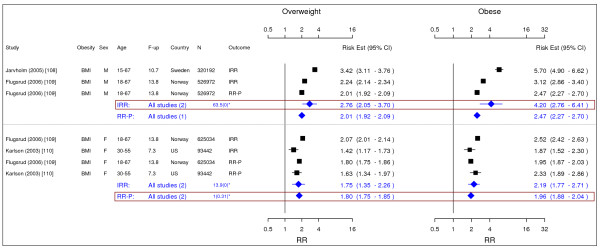
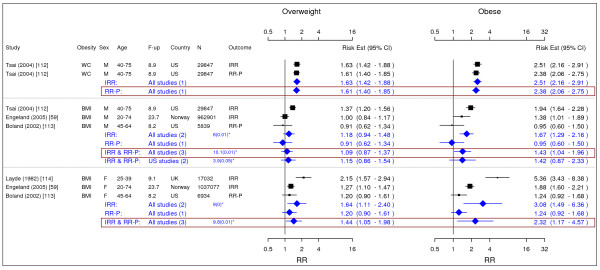
Background: Overweight and obese persons are at risk of a number of medical conditions which can lead to further morbidity and mortality. The primary objective of this study is to provide an estimate of the incidence of each co-morbidity related to obesity and overweight using a meta-analysis. Methods: A literature search for the twenty co-morbidities identified in a preliminary search was conducted in Medline and Embase (Jan 2007). Studies meeting the inclusion criteria (prospective cohort studies of sufficient size reporting risk estimate based on the incidence of disease) were extracted. Study-specific unadjusted relative risks (RRs) on the log scale comparing overweight with normal and obese with normal were weighted by the inverse of their corresponding variances to obtain a pooled RR with 95% confidence intervals (CI). Results: A total of 89 relevant studies were identified. The review found evidence for 18 co-morbidities which met the inclusion criteria. The meta-analysis determined statistically significant associations for overweight with the incidence of type II diabetes, all cancers except esophageal (female), pancreatic and prostate cancer, all cardiovascular diseases (except congestive heart failure), asthma, gallbladder disease, osteoarthritis and chronic back pain. We noted the strongest association between overweight defined by body mass index (BMI) and the incidence of type II diabetes in females (RR = 3.92 (95% CI: 3.10–4.97)). Statistically significant associations with obesity were found with the incidence of type II diabetes, all cancers except esophageal and prostate cancer, all cardiovascular diseases, asthma, gallbladder disease, osteoarthritis and chronic back pain. Obesity defined by BMI was also most strongly associated with the incidence of type II diabetes in females (12.41 (9.03–17.06)). Conclusion: Both overweight and obesity are associated with the incidence of multiple co-morbidities including type II diabetes, cancer and cardiovascular diseases. Maintenance of a healthy weight could be important in the prevention of the large disease burden in the future. Further studies are needed to explore the biological mechanisms that link overweight and obesity with these co-morbidities.
Overview
The claims and statistics of this paper haven’t been checked yet.
Free: it reads the open-access text and checks the first 5 claims that cite a source we can check. Create a free account to check every claim.
Integrity signals
Registry
Cites
Statistics
Figures
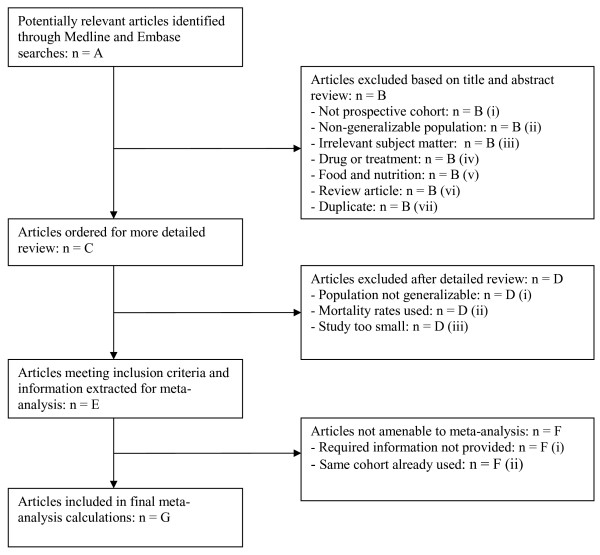
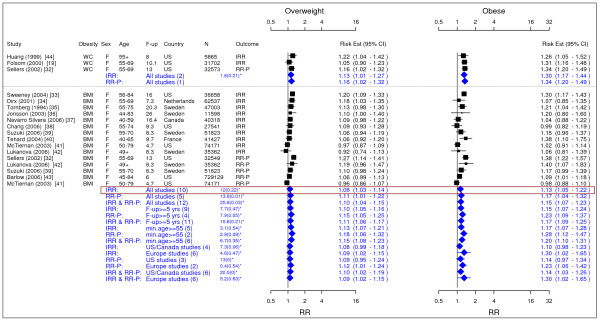
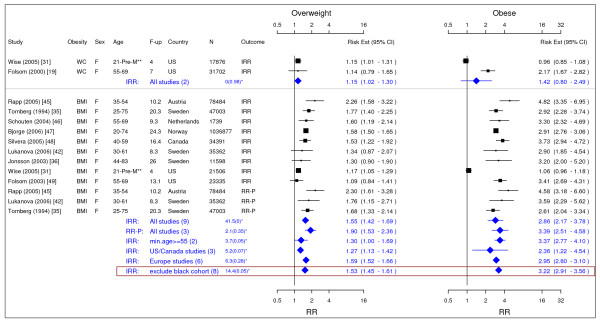
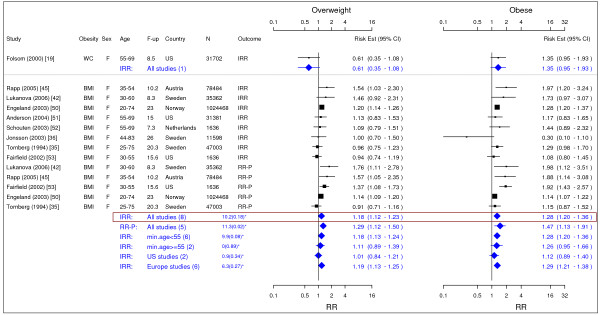
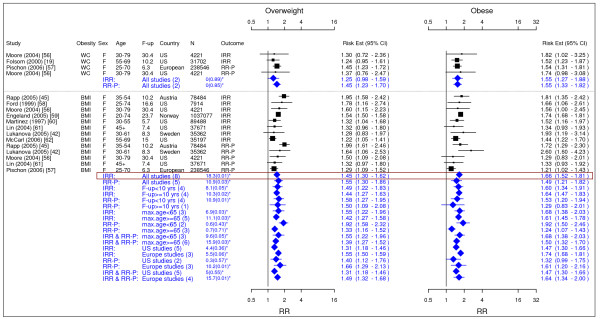
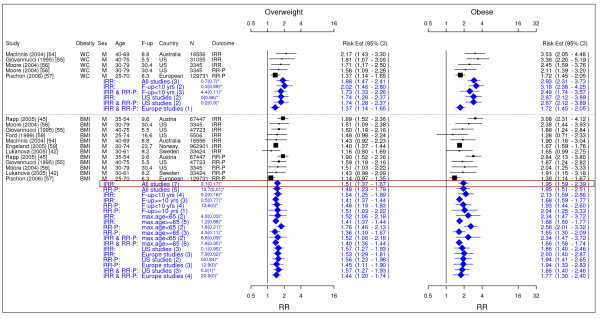
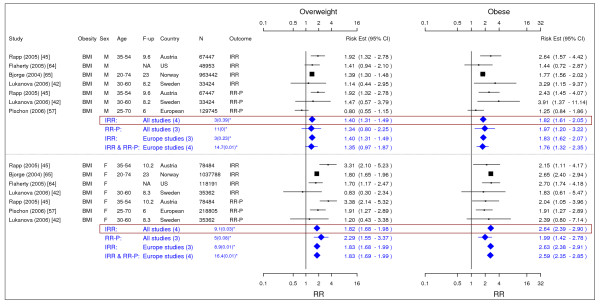
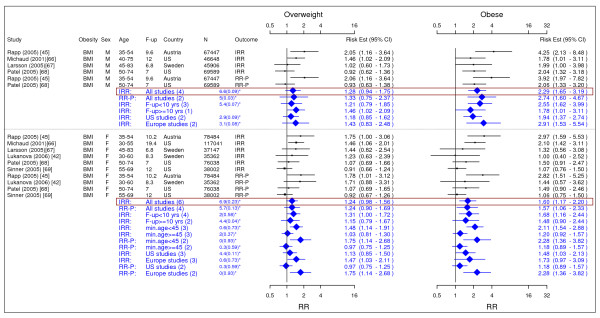
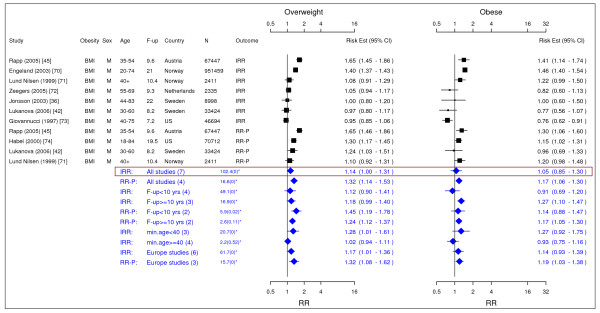
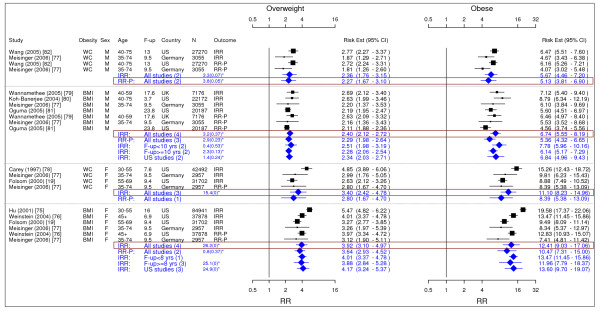
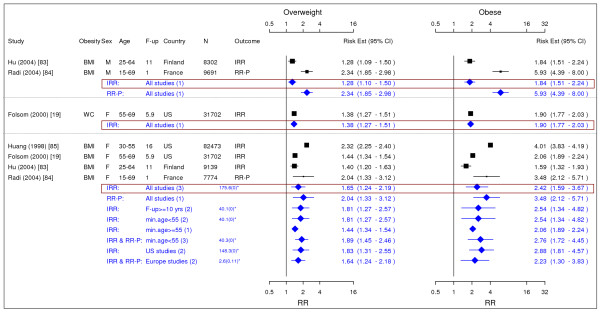
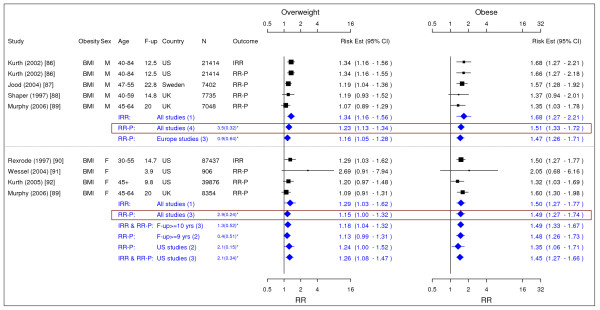
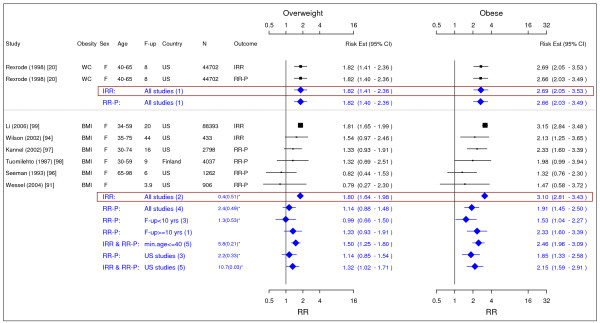
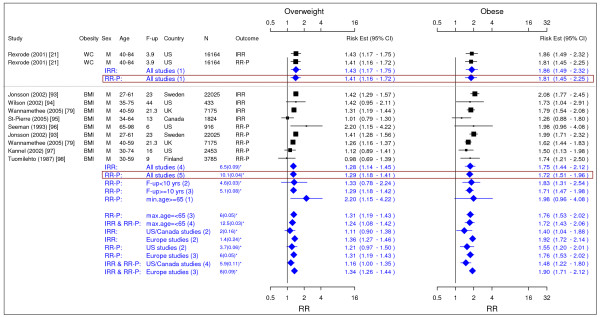
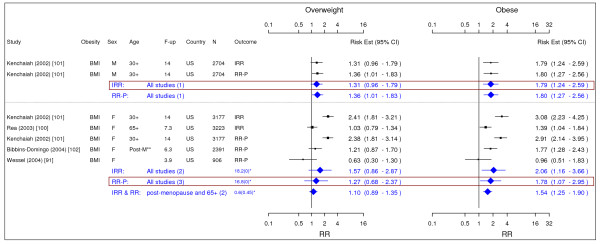
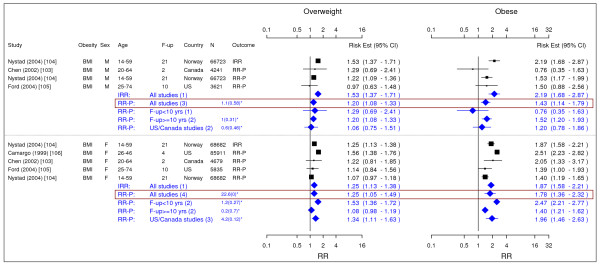
Verification
Claims the paper makes
The claims and statistics of this paper haven’t been checked yet.
Free: it reads the open-access text and checks the first 5 claims that cite a source we can check. Create a free account to check every claim.
Claims other papers make about this one
Each is checked against this paper’s own text: does it say what the citing paper says it does?
The source backs part of the claim, not all of it — or backs it for a different population, condition or comparison.
In the citing paper
“Obesity is a burgeoning worldwide epidemic and contributes to the pathogenesis and progression of numerous complications, including obstructive sleep apnea (OSA), osteoarthritis (OA), type 2 diabetes (T2D) and cardiovascular disease (CVD).”
From Retatrutide for the treatment of obesity, obstructive sleep apnea and knee osteoarthritis: Rationale and design of the TRIUMPH registrational clinical trials (2026) · cites this paper as [2]
Experimental — accuracy not yet measured
Self-check
Percentages, sums and reported differences re-computed from the paper’s own numbers.
The self-check needs the paper’s full text.
Citations
Cites
Bias in meta-analysis detected by a simple, graphical test
Egger, M., Smith, G. D., Schneider, M., & Minder, C. (1997) · BMJ · doi:10.1136/bmj.315.7109.629 · Cited by 56,722 · cited 1×
“Potential publication bias was visually inspected by funnel plots and tested by asymmetry tests [29,30]; however it was performed only on those meta-analyses which included sufficient number of studies (N>5).”
MethodMeta-analysis in clinical trials
DerSimonian, R., & Laird, N. (1986) · Controlled Clinical Trials · doi:10.1016/0197-2456(86)90046-2 · Cited by 39,552 · cited 2×
“The Q statistic was also calculated to assess the homogeneity of RRs (log scale) [28].”
Method(2000) · PubMed · Cited by 13,173
Obesity : Preventing and managing the global epidemic
Akram, D. S., Astrup, A. V., Atinmo, T., Boissin, J.-L., Bray, G. A., Carroll, K. N., Chitson, P., Chen, C., Dietz, W. H., Hill, J. O., et al. (2000) · Research at the University of Copenhagen (University of Copenhagen) · Cited by 12,945
‘Small Changes' to Diet and Physical Activity Behaviors for Weight Management
Hills, A. P., Byrne, N. M., Lindstrom, R., & Hill, J. O. (2013) · Obesity Facts · doi:10.1159/000345030 · Cited by 9,493
Child abuse: Adolescent records vs. adult recall
Femina, D. D., Yeager, C. A., & Lewis, D. O. (1990) · Child Abuse & Neglect · doi:10.1016/0145-2134(90)90033-p · Cited by 8,820
Renehan, A. G., Tyson, M., Egger, M., Heller, R. F., & Zwahlen, M. (2008) · The Lancet · doi:10.1016/s0140-6736(08)60269-x · Cited by 5,219
Funnel plots for detecting bias in meta-analysis
Sterne, J. A. C., & Egger, M. (2001) · Journal of Clinical Epidemiology · doi:10.1016/s0895-4356(01)00377-8 · Cited by 3,779 · cited 1×
“Potential publication bias was visually inspected by funnel plots and tested by asymmetry tests [29,30]; however it was performed only on those meta-analyses which included sufficient number of studies (N>5).”
MethodHaslam, D. W., & James, W. P. T. (2005) · The Lancet · doi:10.1016/s0140-6736(05)67483-1 · Cited by 3,757
European Guidelines for Obesity Management in Adults
Yumuk, V., Tsigos, C., Fried, M., Schindler, K., Busetto, L., Micic, D., & Toplak, H. (2015) · Obesity Facts · doi:10.1159/000442721 · Cited by 3,432
Research works printed but not linked: 1
- Health Canada: Canadian Guidelines for Body Weight Classification in Adults. Ottawa. 2003, [http://www.hc-sc.gc.ca/fn-an/nutrition/weights-poids/guide-ld-adult/weight_book_tc-livres_des_poids_tm-eng.php]
Cited by
Items 101–200 of 1,039
Tirzepatide, a new era of dual-targeted treatment for diabetes and obesity: A mini-review
Chavda, V. P., Ajabiya, J., Teli, D., Bojarska, J., & Apostolopoulos, V. (2022) · Molecules · doi:10.3390/molecules27134315 · Cited by 208
“It should be highlighted that obesity is related to an increased risk of other serious conditions and diseases such as diabetes, hypertension, cardiovascular disease, cancer, asthma, hypercholesterolemia, and so on [7].”
Wong, H. J., Sim, B., Teo, Y. H., Teo, Y. N., Chan, M. Y., Yeo, L. L. L., Eng, P. C., Tan, B. Y. Q., Sattar, N., Dalakoti, M., et al. (2025) · Diabetes Care · doi:10.2337/dc24-1678 · Cited by 208
Liang, Z., Wu, Q., Chen, B., Yu, P., Zhao, H., & Ouyang, X. (2013) · Diabetes Research and Clinical Practice · doi:10.1016/j.diabres.2013.04.005 · Cited by 206
“association between obesity and diabetes is well established with 90% of patients with T2DM having an excess body weight, and obese T2DM patients are more likely to have hypertension and cardiovascular diseases [1].”
BackgroundIntermittent fasting and weight loss: Systematic review.
(2020) · Europe PMC (PubMed Central) · Cited by 206
Stanford, F. C., Alfaris, N., Gomez, G., Ricks, E. T., Shukla, A. P., Corey, K. E., Pratt, J. S., Pomp, A., Rubino, F., & Aronne, L. J. (2017) · Surgery for Obesity and Related Diseases · doi:10.1016/j.soard.2016.10.018 · Cited by 206
Physical activity motives, barriers, and preferences in people with obesity: A systematic review
Baillot, A., Chenail, S., Barros Polita, N., Simoneau, M., Libourel, M., Nazon, E., Riesco, E., Bond, D. S., & Romain, A. J. (2021) · PLOS ONE · doi:10.1371/journal.pone.0253114 · Cited by 203
“Obesity contributes to impaired physical and mental health-related quality of life, and increased morbidity and mortality [3,4].”
BackgroundPrevalence of Individuals Experiencing the Effects of Stroke in Canada: Trends and Projections
Krueger, H., Koot, J., Hall, R. E., O’Callaghan, C., Bayley, M., & Corbett, D. (2015) · Stroke · doi:10.1161/strokeaha.115.009616 · Cited by 199
Kahn, B. E., & Brannigan, R. E. (2017) · Current Opinion in Urology · doi:10.1097/mou.0000000000000417 · Cited by 196
BMI and BMD: the potential interplay between obesity and bone fragility
Palermo, A., Tuccinardi, D., Defeudis, G., Watanabe, M., D’Onofrio, L., Lauria Pantano, A., Napoli, N., Pozzilli, P., & Manfrini, S. (2016) · International Journal of Environmental Research and Public Health · doi:10.3390/ijerph13060544 · Cited by 197
Jerosch, J. (2011) · International Journal of Rheumatology · doi:10.1155/2011/969012 · Cited by 197
“It was able to show that overweight and obesity lead to a significantly higher OA risk [13].”
BackgroundPhung, O. J., Baker, W. L., Matthews, L. J., Lanosa, M., Thorne, A., & Coleman, C. I. (2010) · The American Journal of Clinical Nutrition · doi:10.3945/ajcn.2009.28157 · Cited by 196
Obesity and Respiratory Hospitalizations During Influenza Seasons in Ontario, Canada: A Cohort Study
Kwong, J. C., Campitelli, M. A., & Rosella, L. C. (2011) · Clinical Infectious Diseases · doi:10.1093/cid/cir442 · Cited by 196
“Individuals with high BMIs are more likely to have conditions that increase the risk of influenza complications, including diabetes mellitus and cardiovascular conditions [10–12], but it is unclear whether elevated BMI is an independent risk factor.”
BackgroundMahamat-Saleh, Y., Fiolet, T., Rebeaud, M. E., Mulot, M., Guihur, A., El Fatouhi, D., Laouali, N., Peiffer-Smadja, N., Aune, D., & Severi, G. (2021) · BMJ Open · doi:10.1136/bmjopen-2021-052777 · Cited by 196
Custos atribuíveis a obesidade, hipertensão e diabetes no Sistema Único de Saúde, Brasil, 2018
Nilson, E. A. F., Andrade, R. D. C. S., Brito, D. A. D., & Michele Lessa de, O. (2020) · Revista Panamericana de Salud Pública · doi:10.26633/rpsp.2020.32 · Cited by 192
“Sumário das principais variáveis utilizadas para estimar os custos atribuíveis das doenças crônicas não transmissíveis Variáveis Código da CID-10 Fontea Custos diretos — Hospitalizações — SIH-SUS 2018 Procedimentos ambulatoriais — SIA-SUS 2018 Medicamentos — Prevalências — Hipertensão arterial — PNS 2013 Diabetes mell…”
InfluentialSharma, V., Coleman, S., Nixon, J., Sharples, L., Hamilton‐Shield, J., Rutter, H., & Bryant, M. (2019) · Obesity Reviews · doi:10.1111/obr.12904 · Cited by 194
The performance of anthropometric tools to determine obesity: a systematic review and meta-analysis
Sommer, I., Teufer, B., Szelag, M., Nussbaumer-Streit, B., Titscher, V., Klerings, I., & Gartlehner, G. (2020) · Scientific Reports · doi:10.1038/s41598-020-69498-7 · Cited by 192
Body mass index and the risk of obesity in coeliac disease treated with the gluten‐free diet
Kabbani, T. A., Goldberg, A., Kelly, C. P., Pallav, K., Tariq, S., Peer, A., Hansen, J., Dennis, M., & Leffler, D. A. (2012) · Alimentary Pharmacology & Therapeutics · doi:10.1111/j.1365-2036.2012.05001.x · Cited by 192
White Paper AGA: POWER — Practice Guide on Obesity and Weight Management, Education, and Resources
Acosta, A., Streett, S., Kroh, M. D., Cheskin, L. J., Saunders, K. H., Kurian, M., Schofield, M., Barlow, S. E., & Aronne, L. (2017) · Clinical Gastroenterology and Hepatology · doi:10.1016/j.cgh.2016.10.023 · Cited by 191
Backholer, K., Beauchamp, A., Ball, K., Turrell, G., Martin, J., Woods, J., & Peeters, A. (2014) · American Journal of Public Health · doi:10.2105/ajph.2014.302066 · Cited by 190
Comorbidity associated with obesity in a large population: The APNA study
Martin-Rodriguez, E., Guillen-Grima, F., Martí, A., & Brugos-Larumbe, A. (2015) · Obesity Research & Clinical Practice · doi:10.1016/j.orcp.2015.04.003 · Cited by 187
“The associaion between BMI and type 2 diabetes observed n our sample is concordant with studies from he literature [13,18,20,21].”
ResultThe Obesity Epidemic: The USA as a Cautionary Tale for the Rest of the World
Imes, C. C., & Burke, L. E. (2014) · Current Epidemiology Reports · doi:10.1007/s40471-014-0012-6 · Cited by 188
Bakal, D. R., Coelho, L. E., Luz, P. M., Clark, J. L., De Boni, R. B., Cardoso, S. W., Veloso, V. G., Lake, J. E., & Grinsztejn, B. (2018) · Journal of Antimicrobial Chemotherapy · doi:10.1093/jac/dky145 · Cited by 188
The associations between chronotype, a healthy diet and obesity
Maukonen, M., Kanerva, N., Partonen, T., Kronholm, E., Konttinen, H., Wennman, H., & Männistö, S. (2016) · Chronobiology International · doi:10.1080/07420528.2016.1183022 · Cited by 187
“Obesity has become a worldwide epidemic and excessive adiposity may promote detrimental metabolic responses that induce comorbidities and premature mortality (Flegal et al., 2013; Guh et al., 2009).”
BackgroundSleep Quality and Body Mass Index in College Students: The Role of Sleep Disturbances
Vargas, P. A., Flores, M., & Robles, E. (2014) · Journal of American College Health · doi:10.1080/07448481.2014.933344 · Cited by 186
“Of these, type 2 diabetes was estimated to have the greatest burden, followed by cardiovascular diseases and several forms of cancer (eg, esophageal, colon, endometrial, gall bladder, and breast cancers).(96) Excess body weight has also been associated with nonfatal disorders that impact the patients’ quality of life,…”
BackgroundGarvey, W. T., Birkenfeld, A. L., Dicker, D., Mingrone, G., Pedersen, S. D., Satylganova, A., Skovgaard, D., Sugimoto, D., Jensen, C., & Mosenzon, O. (2020) · Diabetes Care · doi:10.2337/dc19-1745 · Cited by 186
Anti-obesity drugs: a review about their effects and their safety
Derosa, G., & Maffioli, P. (2012) · Expert Opinion on Drug Safety · doi:10.1517/14740338.2012.675326 · Cited by 185
“Obesity substantially raises the risk of morbidity from dyslipidemia [2], type 2 diabetes mellitus (T2DM) [3], fatty liver [4], coronary heart disease and stroke [5], hypertension, gallbladder disease, osteoarthritis, sleep apnea and respiratory problems, endometrial, breast, prostate and colon cancers [6].”
BackgroundDiabetes Mellitus and Cardiovascular Disease: Emerging Therapeutic Approaches
Schmidt, A. M. (2019) · Arteriosclerosis, Thrombosis, and Vascular Biology · doi:10.1161/atvbaha.119.310961 · Cited by 183
Okati-Aliabad, H., Ansari-Moghaddam, A., Kargar, S., & Jabbari, N. (2022) · Journal of Obesity · doi:10.1155/2022/8074837 · Cited by 185
Cawley, J., Meyerhoefer, C., Biener, A., Hammer, M., & Wintfeld, N. (2015) · PharmacoEconomics · doi:10.1007/s40273-014-0230-2 · Cited by 184
“This has substantial consequences for the US healthcare system, because obesity is a significant risk factor for type 2 diabetes, stroke, myocardial infarction, cancer, and many other conditions [3–5].”
BackgroundLocalization of fat depots and cardiovascular risk
Gruzdeva, O., Borodkina, D., Uchasova, E., Dyleva, Y., & Barbarash, O. (2018) · Lipids in Health and Disease · doi:10.1186/s12944-018-0856-8 · Cited by 182
Obesity and Aging: Consequences for Cognition, Brain Structure, and Brain Function
Bischof, G. N., & Park, D. C. (2015) · Psychosomatic Medicine · doi:10.1097/psy.0000000000000212 · Cited by 181
“coronary artery disease, congestive heart failure, and gallbladder disease using WC to determine overweight and obese status (4).”
BackgroundSchwingshackl, L., Dias, S., Strasser, B., & Hoffmann, G. (2013) · PLoS ONE · doi:10.1371/journal.pone.0082853 · Cited by 180
“Since overweight and obesity are evidencebased risk factors for diabetes, cardiovascular disease (CVD) or cancer, [2] the emergence of obesity as a pandemic represents a serious challenge for public health authorities.”
BackgroundCross-sectional study of the prevalence and clinical features of osteoarthritis in 100 cats
Slingerland, L. I., Hazewinkel, H. A. W., Meij, B. P., Picavet, P., & Voorhout, G. (2011) · The Veterinary Journal · doi:10.1016/j.tvjl.2009.12.014 · Cited by 180
“The prevalence and severity of OA in several joints is correlated with overweight in dogs and humans (Guh et al., 2009; Kealy et al., 2000) and overweight cats are more likely to suffer from owner-reported lameness (Scarlett and Donoghue, 1998).”
BackgroundIqbal, J., Wu, H., Hu, N., Zhou, Y., Li, L., Xiao, F., Wang, T., Jiang, H., Xu, S., Huang, B., et al. (2022) · Obesity Reviews · doi:10.1111/obr.13435 · Cited by 179
“Obesity has been recognized as one of the significant risk factors of type 2 diabetes, cardiovascular disease, hyperlipidemia, hepatobiliary disease, obstructive sleep apnea, osteoarthritis, and certain cancers.(2) According to an estimate, 44%, 23%, and 7%–41% of Abbreviations: BMI, body mass index; CI, confidence in…”
BackgroundMECHANISMS IN ENDOCRINOLOGY: Are metabolically healthy obese individuals really healthy?
Blüher, M. (2014) · European Journal of Endocrinology · doi:10.1530/eje-14-0540 · Cited by 177
The Look AHEAD Trial: a review and discussion of its outcomes
Pi-Sunyer, X. (2014) · Current Nutrition Reports · doi:10.1007/s13668-014-0099-x · Cited by 176
“In addition, these physicians were repeatedly reminded by LookAhead sites of the guidelines for treatment of DM2 patients promulgated by the American Diabetes Association.”
BackgroundInfluentialBradford, P. G. (2013) · BioFactors · doi:10.1002/biof.1074 · Cited by 175
Biology of Obesity: Lessons from Animal Models of Obesity
Kanasaki, K., & Koya, D. (2011) · BioMed Research International · doi:10.1155/2011/197636 · Cited by 174
“Obesity is associated with premature death through increasing the risk of many chronic diseases, including type 2 diabetes, cardiovascular disease, and certain cancers (Figure 1) [3, 4].”
BackgroundWren, A. A., Somers, T. J., Wright, M. A., Goetz, M. C., Leary, M. R., Fras, A. M., Huh, B. K., Rogers, L. L., & Keefe, F. J. (2012) · Journal of Pain and Symptom Management · doi:10.1016/j.jpainsymman.2011.04.014 · Cited by 173
Muscle Lipid Metabolism: Role of Lipid Droplets and Perilipins
Morales, P. E., Bucarey, J. L., & Espinosa, A. (2017) · Journal of Diabetes Research · doi:10.1155/2017/1789395 · Cited by 172
“In the case of T2DM, this overt hyperglycemia results from the reduced action of insulin on its target tissues, such as skeletal muscle, liver, and adipose tissue, at least on initial stages [4, 8, 9].”
BackgroundReasons for underutilization of bariatric surgery: The role of insurance benefit design
Gasoyan, H., Tajeu, G., Halpern, M. T., & Sarwer, D. B. (2019) · Surgery for Obesity and Related Diseases · doi:10.1016/j.soard.2018.10.005 · Cited by 171
Obesity Paradox: Fact or Fiction?
Simati, S., Kokkinos, A., Dalamaga, M., & Argyrakopoulou, G. (2023) · Current Obesity Reports · doi:10.1007/s13679-023-00497-1 · Cited by 169
Grove, K. A., & Lambert, J. D. (2010) · The Journal of Nutrition · doi:10.3945/jn.109.115972 · Cited by 170
“Obesity has been reported as a risk factor for a number of chronic diseases, including heart disease, liver disease, diabetes, cancer, arthritis, and others (8,9).”
BackgroundBarber, T. M., Kyrou, I., Randeva, H. S., & Weickert, M. O. (2021) · International Journal of Molecular Sciences · doi:10.3390/ijms22020546 · Cited by 169
Schreier, H. M. C., Schonert-Reichl, K. A., & Chen, E. (2013) · JAMA Pediatrics · doi:10.1001/jamapediatrics.2013.1100 · Cited by 169
Bahia, L., Coutinho, E. S. F., Barufaldi, L. A., de Azevedo Abreu, G., Malhão, T. A., Ribeiro de Souza, C. P., & Araujo, D. V. (2012) · BMC Public Health · doi:10.1186/1471-2458-12-440 · Cited by 166
“[8] and Larson et al.”
Trends in obesity and abdominal obesity among adults in the United States from 1999–2008
Ford, E. S., Li, C., Zhao, G., & Tsai, J. (2011) · International Journal of Obesity · doi:10.1038/ijo.2010.186 · Cited by 170
‘Metabolically healthy obesity’: Origins and implications
Denis, G. V., & Obin, M. S. (2013) · Molecular Aspects of Medicine · doi:10.1016/j.mam.2012.10.004 · Cited by 169
“Obesity also promotes cardiovascular disease (CVD), hypertension, stroke and cancer (Van Gaal et al., 2006; Guh et al., 2009).”
BackgroundBrauer, P., Gorber, S. C., Shaw, E., Singh, H., Bell, N., Shane, A. R. E., Jaramillo, A., Tonelli, M., & Canadian Task Force on Preventive Health Care (2015) · Canadian Medical Association Journal · doi:10.1503/cmaj.140887 · Cited by 169
Guillemot-Legris, O., Masquelier, J., Everard, A., Cani, P. D., Alhouayek, M., & Muccioli, G. G. (2016) · Journal of Neuroinflammation · doi:10.1186/s12974-016-0666-8 · Cited by 168
“Obesity and related disorders are becoming worldwide health issues [1 – 3].”
Aune, D., Sen, A., Schlesinger, S., Norat, T., Janszky, I., Romundstad, P., Tonstad, S., Riboli, E., & Vatten, L. J. (2017) · European Journal of Epidemiology · doi:10.1007/s10654-017-0232-4 · Cited by 167
“Adiposity is associated with increased risk of hypertension [2], insulin resistance [69], diabetes [70], obstructive sleep apnea [71], coronary heart disease [72], and heart failure [7], which are established risk factors for atrial fibrillation [53, 73, 74].”
Kang, S. S., Kurti, A., Fair, D. A., & Fryer, J. D. (2014) · Journal of Neuroinflammation · doi:10.1186/s12974-014-0156-9 · Cited by 167
“While obesity is a comorbidity for several diseases, including diabetes, cancer, and cardiovascular disease [51], studies now also show associations between obesity and altered cognition and behavior [52].”
BackgroundGagne, D. A., Von Holle, A., Brownley, K. A., Runfola, C. D., Hofmeier, S., Branch, K. E., & Bulik, C. M. (2012) · International Journal of Eating Disorders · doi:10.1002/eat.22030 · Cited by 166
“Numerous studies associate obesity with a variety of comorbidities, many of which have been validated in meta-analyses and population studies, including various cancers, cardiovascular disease,(54,55,58,59) osteoarthritis,(54,57,59,60) and type II diabetes mellitus.(54,55,59,61) Obesity is also associated with increas…”
BackgroundAdipokines as Drug Targets in Diabetes and Underlying Disturbances
Andrade-Oliveira, V., Câmara, N. O. S., & Moraes-Vieira, P. M. (2015) · Journal of Diabetes Research · doi:10.1155/2015/681612 · Cited by 166
“…and Underlying Disturbances Vinícius Andrade-Oliveira,1 Niels O.S. Câmara,1,2 and Pedro M. Moraes-Vieira3 1Laboratory of Transplantation Immunobiology, Department of Immunology, Institute of Biomedical Sciences IV, University of São Paulo, SP, Brazil 2Laboratory of Clinical and Experimental…”
BackgroundChan, Y. Y., Lim, K. K., Lim, K. H., Teh, C. H., Kee, C. C., Cheong, S. M., Khoo, Y. Y., Baharudin, A., Ling, M. Y., Omar, M. A., et al. (2017) · BMC Public Health · doi:10.1186/s12889-017-4772-z · Cited by 166
Jeong, S.-M., Lee, D. H., Rezende, L. F. M., & Giovannucci, E. L. (2023) · Scientific Reports · doi:10.1038/s41598-023-30527-w · Cited by 164
Ralph, S. J., Rodríguez-Enríquez, S., Neuzil, J., & Moreno-Sánchez, R. (2010) · Molecular Aspects of Medicine · doi:10.1016/j.mam.2009.12.006 · Cited by 165
Obesity predisposes to the risk of higher mortality in young COVID‐19 patients
Zhang, F., Xiong, Y., Wei, Y., Hu, Y., Wang, F., Li, G., Liu, K., Du, R., Wang, C., & Zhu, W. (2020) · Journal of Medical Virology · doi:10.1002/jmv.26039 · Cited by 165
Reichenberger, J., Schnepper, R., Arend, A.-K., & Blechert, J. (2020) · Proceedings of the Nutrition Society · doi:10.1017/s0029665120007004 · Cited by 161
“However, human subjects regularly consume more food than needed and such overeating can lead to negative physiological and psychological health outcomes((1,2)).”
BackgroundJuanola-Falgarona, M., Salas-Salvadó, J., Ibarrola-Jurado, N., Rabassa-Soler, A., Díaz-López, A., Guasch-Ferré, M., Hernández-Alonso, P., Balanza, R., & Bulló, M. (2014) · The American Journal of Clinical Nutrition · doi:10.3945/ajcn.113.081216 · Cited by 159
Saffron: A Natural Potent Antioxidant as a Promising Anti-Obesity Drug
Mashmoul, M., Azlan, A., Khaza'ai, H., Yusof, B., & Noor, S. (2013) · Antioxidants · doi:10.3390/antiox2040293 · Cited by 160
“Usually, orlistat has some gastrointestinal side effects including oily spotting, flatulence and frequent loose stools [66].”
BackgroundKim, K.-K., Haam, J.-H., Kim, B. T., Kim, E. M., Park, J. H., Rhee, S. Y., Jeon, E., Kang, E., Nam, G. E., Koo, H. Y., et al. (2023) · Journal of Obesity & Metabolic Syndrome · doi:10.7570/jomes23016 · Cited by 158
Are there still healthy obese patients?
Blüher, M. (2012) · Current Opinion in Endocrinology, Diabetes & Obesity · doi:10.1097/med.0b013e328357f0a3 · Cited by 157
“In addition, quality of life of obese individuals is impaired by a number of psycho-social factors, osteoarthritis, chronic pain, asthma, gallbladder disease, and metabolic disorders [7].”
BackgroundAhrén, B., Atkin, S. L., Charpentier, G., Warren, M. L., Wilding, J. P. H., Birch, S., Holst, A. G., & Leiter, L. A. (2018) · Diabetes, Obesity and Metabolism · doi:10.1111/dom.13353 · Cited by 157
Bouret, S., Levin, B. E., & Ozanne, S. E. (2015) · Physiological Reviews · doi:10.1152/physrev.00007.2014 · Cited by 157
Associations between adipokines and obesity-related cancer
Paz-Filho, G., Lim, E. L., Wong, M.-L., & Licinio, J. (2010) · Frontiers in bioscience · doi:10.2741/3810 · Cited by 172
ACE Inhibition Is Renoprotective among Obese Patients with Proteinuria
Mallamaci, F., Ruggenenti, P., Perna, A., Leonardis, D., Tripepi, R., Tripepi, G., Remuzzi, G., & Zoccali, C. (2011) · Journal of the American Society of Nephrology · doi:10.1681/asn.2010090969 · Cited by 157
The Stress of Stigma: Exploring the Effect of Weight Stigma on Cortisol Reactivity
Schvey, N. A., Puhl, R. M., & Brownell, K. D. (2014) · Psychosomatic Medicine · doi:10.1097/psy.0000000000000031 · Cited by 155
Association between dietary meat consumption and incident type 2 diabetes: the EPIC-InterAct study
The InterAct Consortium (2013) · Diabetologia · doi:10.1007/s00125-012-2718-7 · Cited by 154
The impact of obesity on health-related quality of life in Spain
Busutil, R., Espallardo, O., Torres, A., Martínez-Galdeano, L., Zozaya, N., & Hidalgo‐Vega, Á. (2017) · Health and Quality of Life Outcomes · doi:10.1186/s12955-017-0773-y · Cited by 189
Borek, A. J., Abraham, C., Greaves, C. J., & Tarrant, M. (2018) · Applied Psychology: Health and Well-Being · doi:10.1111/aphw.12121 · Cited by 154
Adderley, N. J., Subramanian, A., Nirantharakumar, K., Yiangou, A., Gokhale, K. M., Mollan, S. P., & Sinclair, A. J. (2019) · JAMA Neurology · doi:10.1001/jamaneurol.2019.1812 · Cited by 165
Slawson, D. L., Fitzgerald, N., & Morgan, K. T. (2013) · Journal of the Academy of Nutrition and Dietetics · doi:10.1016/j.jand.2013.05.005 · Cited by 153
“In a systematic review and metaanalysis, Guh and colleagues found evidence to support a link between excess body weight and type 2 diabetes; cancers of the breast, endometrium, ovaries, colon, rectum,andkidney;hypertension; coronary artery disease; stroke; asthma; gallbladder disease; and osteoarthritis.(21) Primary p…”
BackgroundFerreira, A. P. D. S., Szwarcwald, C. L., & Damacena, G. N. (2019) · Revista Brasileira de Epidemiologia · doi:10.1590/1980-549720190024 · Cited by 338
Urban-associated diseases: Candidate diseases, environmental risk factors, and a path forward
Flies, E. J., Mavoa, S., Zosky, G. R., Mantzioris, E., Williams, C., Eri, R., Brook, B. W., & Buettel, J. C. (2019) · Environment International · doi:10.1016/j.envint.2019.105187 · Cited by 151
Weber, M. A., Jamerson, K., Bakris, G. L., Weir, M. R., Zappe, D., Zhang, Y., Dahlof, B., Velazquez, E. J., & Pitt, B. (2013) · The Lancet · doi:10.1016/s0140-6736(12)61343-9 · Cited by 150
Haughton, C. F., Silfee, V. J., Wang, M. L., Lopez-Cepero, A. C., Estabrook, D. P., Frisard, C., Rosal, M. C., Pagoto, S. L., & Lemon, S. C. (2018) · Preventive Medicine Reports · doi:10.1016/j.pmedr.2018.01.012 · Cited by 149
“Achieving and sustaining healthy weight loss can reduce health problems and co-morbidities associated with obesity among burdened racial/ethnic groups (Guh et al., 2009; Cossrow and Falkner, 2004).”
BackgroundSattler, K. M., Deane, F. P., Tapsell, L., & Kelly, P. J. (2018) · Health Psychology Open · doi:10.1177/2055102918759691 · Cited by 150
“Health risks associated with overweight and obesity include cardiovascular disease and Type 2 diabetes (Guh et al., 2009).”
Ryan, L., Coyne, R., Heary, C., Birney, S., Crotty, M., Dunne, R., Conlan, O., & Walsh, J. C. (2023) · Obesity Reviews · doi:10.1111/obr.13606 · Cited by 149
“1 | INTRODUCTION Obesity is a chronic relapsing disease typified by the accumulation of excess adiposity,(1) which is associated with acute health burdens including cardiovascular disease, type 2 diabetes mellitus, hypertension, and premature mortality.(2) According to the World Health Organization,(1) the risk of com…”
BackgroundWeight Loss in Underserved Patients — A Cluster-Randomized Trial
Katzmarzyk, P. T., Martin, C. K., Newton, R. L., Apolzan, J. W., Arnold, C. L., Davis, T. C., Price-Haywood, E. G., Denstel, K. D., Mire, E. F., Thethi, T. K., et al. (2020) · New England Journal of Medicine · doi:10.1056/nejmoa2007448 · Cited by 147
Koceva, A., Herman, R., Janež, A., Rakuša, M., & Jensterle, M. (2024) · International Journal of Molecular Sciences · doi:10.3390/ijms25137342 · Cited by 219
“Obesity is an important risk factor for diabetes development [116] and according to a meta-analysis by Guh et al. diabetes incidence rate ratios are higher in females than males [117].”
BackgroundObesity and Chronic Pain: Systematic Review of Prevalence and Implications for Pain Practice
Narouze, S., & Souzdalnitski, D. (2015) · Regional Anesthesia and Pain Medicine · doi:10.1097/aap.0000000000000218 · Cited by 148
“Some have hypothesized that effective weight reduction can decrease the burden of obesity comorbidities, including chronic pain.(17) Pain physicians not only should be familiar with these strategies but also should use them efficiently for their patients.”
BackgroundEstimating population attributable fractions to quantify the health burden of obesity
Flegal, K. M., Panagiotou, O. A., & Graubard, B. I. (2015) · Annals of Epidemiology · doi:10.1016/j.annepidem.2014.11.010 · Cited by 148
Hypertension in Obesity and the Impact of Weight Loss
Cohen, J. B. (2017) · Current Cardiology Reports · doi:10.1007/s11886-017-0912-4 · Cited by 147
“…nervous system activity, renin-angiotensin aldosterone system activity, inflammatory cytokines, and oxidative stress in the setting of excess adipose tissue can contribute to left ventricular hypertrophy, ischemic heart disease, cardiac fibrosis, and cerebrovascular disease [17, 27, 42].”
Liraglutide and obesity: a review of the data so far
Ladenheim, E. (2015) · Drug Design, Development and Therapy · doi:10.2147/dddt.s58459 · Cited by 146
Body mass index, abdominal fatness and the risk of gallbladder disease
Aune, D., Norat, T., & VATTEN, L. J. (2015) · European Journal of Epidemiology · doi:10.1007/s10654-015-0081-y · Cited by 181
“The current findings are consistent with two previous metaanalyses which found increased risk with greater BMI in relation to gallbladder disease [30, 31], but the present results indicate a slightly stronger dose–response relationship 1.”
ResultMcAuliffe, F. M., Killeen, S. L., Jacob, C. M., Hanson, M. A., Hadar, E., McIntyre, D. H., Kapur, A., Kihara, A., Ronald, C. W., Divakar, H., et al. (2020) · International Journal of Gynecology & Obstetrics · doi:10.1002/ijgo.13334 · Cited by 197
Schreckinger, M. E., Wang, J., Yousef, G., Lila, M. A., & Gonzalez de Mejia, E. (2010) · Journal of Agricultural and Food Chemistry · doi:10.1021/jf100975m · Cited by 146
A scoping review of what is known of the physical health of adults with autism spectrum disorder
Cashin, A., Buckley, T., Trollor, J. N., & Lennox, N. (2018) · Journal of Intellectual Disabilities · doi:10.1177/1744629516665242 · Cited by 146
Foods and dietary profiles associated with ‘food addiction’ in young adults
Pursey, K. M., Collins, C. E., Stanwell, P., & Burrows, T. L. (2015) · Addictive Behaviors Reports · doi:10.1016/j.abrep.2015.05.007 · Cited by 144
“Obesity is associatedwith a greater risk of chronic conditions including type 2 diabetes and cardiovascular disease (World Health Organization, 2014; Guh et al., 2009) as well as poorer psychological and social wellbeing (Luppino et al., 2010; Jia & Lubetkin, 2005; McLaren, 2007).”
BackgroundImpact of Obesity on Cancer Survivorship and the Potential Relevance of Race and Ethnicity
Schmitz, K. H., Neuhouser, M. L., Agurs‐Collins, T., Zanetti, K. A., Cadmus‐Bertram, L., Dean, L. T., & Drake, B. F. (2013) · JNCI Journal of the National Cancer Institute · doi:10.1093/jnci/djt223 · Cited by 163
“BMI is clearly associated with multiple chronic conditions, including cardiovascular diseases, type 2 diabetes (55), pulmonary disease (56), renal disease (57), and dementia (51).”
BackgroundChronic Disease Risks in Young Adults With Autism Spectrum Disorder: Forewarned Is Forearmed
Tyler, C. V., Schramm, S. C., Karafa, M., Tang, A. S., & Jain, A. K. (2011) · American Journal on Intellectual and Developmental Disabilities · doi:10.1352/1944-7558-116.5.371 · Cited by 144
“Obesity is associated with increased incidence of Type 2 diabetes, cancer (including colorectal, pancreatic, ovarian, kidney, and breast cancer in postmenopausal women), cardiovascular disease (including hypertension, coronary heart disease, congestive heart failure, pulmonary embolism, and stroke), asthma, gallbladde…”
BackgroundBooth, H. P., Prevost, T. A., Wright, A. J., & Gulliford, M. C. (2014) · Family Practice · doi:10.1093/fampra/cmu064 · Cited by 144
“Obesity is associated with an increased risk of morbidity from diabetes, cancer and cardiovascular disease (1).”
BackgroundMelo, H. M., Seixas da Silva, G. D. S., Sant’Ana, M. R., Teixeira, C. V. L., Clarke, J. R., Miya Coreixas, V. S., de Melo, B. C., Fortuna, J. T. S., Forny-Germano, L., Ledo, J. H., et al. (2020) · Cell Reports · doi:10.1016/j.celrep.2020.01.072 · Cited by 140
Obesity and COVID-19: Molecular Mechanisms Linking Both Pandemics
Ritter, A., Kreis, N., Louwen, F., & Yuan, J. (2020) · International Journal of Molecular Sciences · doi:10.3390/ijms21165793 · Cited by 152
“This excessive expansion of AT leads to the formation of class III obesity (morbid obesity, BMI > 40 kg/m2), which is associated with at least 18 comorbidities highlighted in a comprehensive meta-analysis report [174].”
BackgroundBond, D. S., Roth, J. L., Nash, J. M., & Wing, R. R. (2010) · Obesity Reviews · doi:10.1111/j.1467-789x.2010.00791.x · Cited by 155
Alkhezi, O. S., Alahmed, A. A., Alfayez, O. M., Alzuman, O. A., Almutairi, A. R., & Almohammed, O. A. (2023) · Obesity Reviews · doi:10.1111/obr.13543 · Cited by 139
“2 diabetes (T2DM), hypertension, dyslipidemia, and cardiovascular disease.(3) In addition, obesity alone has been associated with an increased risk of overall mortality.”
BackgroundKent, S., Fusco, F., Gray, A., Jebb, S. A., Cairns, B. J., & Mihaylova, B. (2017) · Obesity Reviews · doi:10.1111/obr.12560 · Cited by 137
“Good/fair 8 14% (1, 20) 20 12% (4, 24) 22 36% (28, 53)”
BackgroundMethodInfluentialInterdisziplinäre Leitlinie der Qualität S3 zur „Prävention und Therapie der Adipositas”
Hauner, H., Moss, A., Berg, A., Bischoff, S. C., Colombo‐Benkmann, M., Ellrott, T., Heintze, C., Kanthak, U., Kunze, D., Stefan, N., et al. (2014) · Adipositas - Ursachen Folgeerkrankungen Therapie · doi:10.1055/s-0037-1618857 · Cited by 217
“A 5.(25) Menschen mit Übergewicht und Adipositas sollen dazu motiviert werden, ihre körperliche Aktivität im Alltag zu steigern.”
BackgroundInfluentialJaremka, L. M., Lindgren, M. E., & Kiecolt-Glaser, J. K. (2013) · Depression and Anxiety · doi:10.1002/da.22078 · Cited by 137
“, belly fat) is a major source of proinflammatory cytokines including IL-6, TNF-α, and IL-1β,[108, 109] and is an important risk factor for a variety of diseases such as metabolic syndrome, Type II diabetes, and cardiovascular disease.[110, 111] Importantly, stress, depression, and obesity independently elevate inflam…”
Background
Metadata
- Authors
- Guh, D. P., Zhang, W., Bansback, N., Amarsi, Z., Birmingham, C. L., & Anis, A. H.
- Affiliations
- St. Paul's Hospital (CA)
- University of British Columbia (CA)
- Corresponding author
- Anis, Aslam H
- Venue
- BMC Public Health
- Published
- 2009-03-25
- Volume
- 9
- Issue
- 1
- Pages
- 88-88
- ISSN
- 1471-2458 (ISSN-L)
- PMC
- PMC2667420
- OpenAlex
- W1994014704
- Semantic Scholar
- 06bc35e6b33ffdad79a7506a26d255e55c810117
- Cited by
- 3,855
- References
- 136
- Citations by year
- 2026: 120 · 2025: 220 · 2024: 249 · 2023: 301 · 2022: 280 · 2021: 338 · 2020: 288 · 2019: 269 · 2018: 283 · 2017: 256 · 2016: 259 · 2015: 251 · 2014: 216 · 2013: 191 · 2012: 139
- FWCI
- 14.57
- Type
- journal article
- Language
- en
- Open access
- gold
- doi.org
- Licence
- Locations
- BMC Public Health (publishedVersion, cc-by)
- PubMed Central (publishedVersion, cc-by)
- PubMed (publishedVersion)
- cIRcle (University of British Columbia) (submittedVersion, cc-by)
- DOAJ (DOAJ: Directory of Open Access Journals) (submittedVersion, cc-by-sa)
- Funders
- Sanofi
- Topics
- Health Sciences › Medicine › Public Health, Environmental and Occupational Health › Obesity, Physical Activity, Diet
- Health Sciences › Medicine › Oncology › Cancer Risks and Factors
- Health Sciences › Medicine › Endocrinology, Diabetes and Metabolism › Diabetes, Cardiovascular Risks, and Lipoproteins
- Keywords
- obesity, overweight, comorbidities, incidence, type 2 diabetes, cancer, cardiovascular disease, asthma, gallbladder disease, osteoarthritis, chronic back pain, body mass index, sex differences
- MeSH terms
- Cardiovascular Diseases, Diabetes Mellitus, Type 2, Female, Gallbladder Diseases, Humans, Male, Neoplasms, Obesity, Osteoarthritis, Comorbidity, Incidence, Overweight
About these checks
Registry, retraction, Cites and statistics results are computed, not judged, with one exception: a printed reference that no index lists is read once by a model before it counts as a citation error. Claims are extracted by a model and kept only when their quote appears verbatim in the text; each cited source is then checked, with a model’s help, for whether it says what the claim relies on. Those verdicts can be wrong — read the claim’s quote and the cited source before relying on one.
Statistics and arithmetic are recomputed, not judged.
Confidence bands are shown only for fields calibrated on our annotated test set. None is calibrated yet, so no band is shown.
What counts as a claim ›How we measure confidence ›How we check this ›
Are you an author, or do you see a problem with this page? Request a review
Data sources
Bibliographic data: Semantic Scholar, OpenAlex, Crossref.
Contains information from the Semantic Scholar Academic Graph Datasets, made available under the ODC Attribution License (ODC-BY 1.0).
Semantic Scholar’s data is described in: Kinney, R., et al. (2023). The Semantic Scholar Open Data Platform. arXiv:2301.10140.
