

International Society of Sports Nutrition Position Stand: beta-hydroxy-beta-methylbutyrate (HMB)
Open accessThe DOI matches its Crossref record; 81 of the 81 references it cites were found in a registry or an index.
Abstract
Position Statement: The International Society of Sports Nutrition (ISSN) bases the following position stand on a critical analysis of the literature on the use of beta-hydroxy-beta-methylbutyrate (HMB) as a nutritional supplement. The ISSN has concluded the following. 1. HMB can be used to enhance recovery by attenuating exercise induced skeletal muscle damage in trained and untrained populations. 2. If consuming HMB, an athlete will benefit from consuming the supplement in close proximity to their workout. 3. HMB appears to be most effective when consumed for 2 weeks prior to an exercise bout. 4. Thirty-eight mg·kg·BM-1 daily of HMB has been demonstrated to enhance skeletal muscle hypertrophy, strength, and power in untrained and trained populations when the appropriate exercise prescription is utilized. 5. Currently, two forms of HMB have been used: Calcium HMB (HMB-Ca) and a free acid form of HMB (HMB-FA). HMB-FA may increase plasma absorption and retention of HMB to a greater extent than HMB-CA. However, research with HMB-FA is in its infancy, and there is not enough research to support whether one form is superior. 6. HMB has been demonstrated to increase LBM and functionality in elderly, sedentary populations. 7. HMB ingestion in conjunction with a structured exercise program may result in greater declines in fat mass (FM). 8. HMB's mechanisms of action include an inhibition and increase of proteolysis and protein synthesis, respectively. 9. Chronic consumption of HMB is safe in both young and old populations.
Overview
The claims and statistics of this paper haven’t been checked yet.
Free: it reads the open-access text and checks the first 5 claims that cite a source we can check. Create a free account to check every claim.
Integrity signals
Registry
Cites
Statistics
Figures
Verification
Claims the paper makes
The claims and statistics of this paper haven’t been checked yet.
Free: it reads the open-access text and checks the first 5 claims that cite a source we can check. Create a free account to check every claim.
Claims other papers make about this one
Each is checked against this paper’s own text: does it say what the citing paper says it does?
The source backs part of the claim, not all of it — or backs it for a different population, condition or comparison.
In the citing paper
“In this respect, it has been suggested by Wilson and colleagues [15] that program design (periodized resistance training models) and duration of supplementation (minimum of 6 weeks) likely operate as key factors.”
From ISSN exercise & sports nutrition review update: research & recommendations (2018) · cites this paper as [15]
Experimental — accuracy not yet measuredThe cited source says what the claim attributes to it.
In the citing paper
“From a safety perspective, dosages of 1.5–6 g per day have been well tolerated [15, 169, 170].”
From ISSN exercise & sports nutrition review update: research & recommendations (2018) · cites this paper as [15]
The cited source says what the claim attributes to it.
In the citing paper
“The leucine metabolite, β-Hydroxy-β-methylbutyrate has been shown to promote anabolism and limit muscle catabolism [52, 53].”
From Muscle loss and GLP-1R agonists use (2025) · cites this paper as [52]
The cited source says what the claim attributes to it.
In the citing paper
“However, there are divergent results showing no such effects [28] and the efficiency of this combination appears to be population-specific [27].”
The cited source says what the claim attributes to it.
In the citing paper
“Previous studies demonstrated that RT and the metabolite of the branched-chain amino acid leucine, β-hydroxyβ-methylbutyrate (HMB), increased muscle mass and strength and reduced body fat [14–18], despite recent findings [19, 20].”
1 more claim about this paper
Create a free account to see every claim other papers make about this one.
Self-check
Percentages, sums and reported differences re-computed from the paper’s own numbers.
The self-check needs the paper’s full text.
Citations
Cites
Multiple types of skeletal muscle atrophy involve a common program of changes in gene expression
Lecker, S. H., Jagoe, R. T., Gilbert, A., Gomes, M., Baracos, V., Bailey, J., Price, S. R., Mitch, W. E., & Goldberg, A. L. (2004) · The FASEB Journal · doi:10.1096/fj.03-0610com · Cited by 1,539 · cited 2×
“The activity of this pathway is significantly increased in conditions of exacerbated skeletal muscle catabolism, such as fasting, immobilization, bed rest and disease [77].”
BackgroundExercise-Induced Muscle Damage in Humans
Clarkson, P. M., & Hubal, M. J. (2002) · American Journal of Physical Medicine & Rehabilitation · doi:10.1097/00002060-200211001-00007 · Cited by 1,462
Muscle strength and speed of movement in relation to age and muscle morphology
Larsson, L., Grimby, G., & Karlsson, J. (1979) · Journal of Applied Physiology · doi:10.1152/jappl.1979.46.3.451 · Cited by 1,135
Minireview: The AMP-Activated Protein Kinase Cascade: The Key Sensor of Cellular Energy Status
Hardie, D. G. (2003) · Endocrinology · doi:10.1210/en.2003-0982 · Cited by 994 · cited 2×
“Adenosine mono-phosphate protein kinase (AMPK) is also a sensor of energy balance, but does so through changes in AMP/ATP ratios [68].”
BackgroundKatsanos, C. S., Kobayashi, H., Sheffield-Moore, M., Aarsland, A., & Wolfe, R. R. (2006) · American Journal of Physiology-Endocrinology and Metabolism · doi:10.1152/ajpendo.00488.2005 · Cited by 923 · cited 1×
“These data suggest a potential benefit of HMB supplementation in aging individuals [58,60].”
BackgroundAMP-Activated Protein Kinase – Development of the Energy Sensor Concept
Hardie, D. G., Hawley, S. A., & Scott, J. W. (2006) · The Journal of Physiology · doi:10.1113/jphysiol.2006.108944 · Cited by 813
Anthony, J. C., Yoshizawa, F., Anthony, T. G., Vary, T. C., Jefferson, L. S., & Kimball, S. R. (2000) · The Journal of Nutrition · doi:10.1093/jn/130.10.2413 · Cited by 801
Sirtuin regulation of mitochondria: energy production, apoptosis, and signaling
Verdin, E., Hirschey, M. D., Finley, L. W. S., & Haigis, M. C. (2010) · Trends in Biochemical Sciences · doi:10.1016/j.tibs.2010.07.003 · Cited by 661 · cited 2×
“Sirt proteins modify the acetylation level of histones and proteins [67].”
BackgroundHartman, J. W., Tang, J. E., Wilkinson, S. B., Tarnopolsky, M. A., Lawrence, R. L., Fullerton, A. V., & Phillips, S. M. (2007) · The American Journal of Clinical Nutrition · doi:10.1093/ajcn/86.2.373 · Cited by 498
Ahtiainen, J. P., Pakarinen, A., Alen, M., Kraemer, W. J., & H�kkinen, K. (2003) · European Journal of Applied Physiology · doi:10.1007/s00421-003-0833-3 · Cited by 469
Smith, K., Gunaratnam, L., Morley, M., Franovic, A., Mekhail, K., & Lee, S. (2005) · Cancer Research · doi:10.1158/0008-5472.can-05-0169 · Cited by 458
Nissen, S., Sharp, R., Ray, M., Rathmacher, J. A., Rice, D., Fuller, J. C., Connelly, A. S., & Abumrad, N. (1996) · Journal of Applied Physiology · doi:10.1152/jappl.1996.81.5.2095 · Cited by 393
Exercise-Induced Muscle Damage and Potential Mechanisms for the Repeated Bout Effect
McHugh, M. P., Connolly, D. A. J., Eston, R. G., & Gleim, G. W. (1999) · Sports Medicine · doi:10.2165/00007256-199927030-00002 · Cited by 378
Leucine Regulates Translation Initiation of Protein Synthesis in Skeletal Muscle after Exercise
Norton, L. E., & Layman, D. K. (2006) · The Journal of Nutrition · doi:10.1093/jn/136.2.533s · Cited by 333
Wilson, G. J., Wilson, J. M., & Manninen, A. H. (2008) · Nutrition & Metabolism · doi:10.1186/1743-7075-5-1 · Cited by 306
Self-citationNutritional role of the leucine metabolite β-hydroxy β-methylbutyrate (HMB)
Nissen, S. L., & Abumrad, N. N. (1997) · The Journal of Nutritional Biochemistry · doi:10.1016/s0955-2863(97)00048-x · Cited by 269
Flakoll, P., Sharp, R., Baier, S., Levenhagen, D., Carr, C., & Nissen, S. (2004) · Nutrition · doi:10.1016/j.nut.2004.01.009 · Cited by 260
The influence of direct supervision of resistance training on strength performance
MAZZETTI, S. A., KRAEMER, W. J., VOLEK, J. S., DUNCAN, N. D., RATAMESS, N. A., G??MEZ, A. L., NEWTON, R. U., H??KKINEN, K., & FLECK, S. J. (2000) · Medicine & Science in Sports & Exercise · doi:10.1097/00005768-200006000-00023 · Cited by 258
Maximum Strength-Power-Performance Relationships in Collegiate Throwers
STONE, M. H., SANBORN, K., OʼBRYANT, H. S., HARTMAN, M., STONE, M. E., PROULX, C., WARD, B., & HRUBY, J. (2003) · Journal of Strength and Conditioning Research · doi:10.1519/00124278-200311000-00019 · Cited by 254
Leucine Supplementation Enhances Skeletal Muscle Recovery in Rats Following Exercise
Anthony, J. C., Anthony, T. G., & Layman, D. K. (1999) · The Journal of Nutrition · doi:10.1093/jn/129.6.1102 · Cited by 225
Vukovich, M. D., Stubbs, N. B., & Bohlken, R. M. (2001) · The Journal of Nutrition · doi:10.1093/jn/131.7.2049 · Cited by 222 · cited 1×
“[64] compared the effects of eight weeks of either HMB or placebo supplementation on body composition and strength in 70 year old men and women performing a strength training program.”
BackgroundDietary implications on mechanisms of sarcopenia: roles of protein, amino acids and antioxidants
Kim, J.-S., Wilson, J. M., & Lee, S.-R. (2010) · The Journal of Nutritional Biochemistry · doi:10.1016/j.jnutbio.2009.06.014 · Cited by 222
Self-citationHowatson, G., Hoad, M., Goodall, S., Tallent, J., Bell, P. G., & French, D. N. (2012) · Journal of the International Society of Sports Nutrition · doi:10.1186/1550-2783-9-20 · Cited by 220
Eley, H. L., Russell, S. T., Baxter, J. H., Mukerji, P., & Tisdale, M. J. (2007) · American Journal of Physiology-Endocrinology and Metabolism · doi:10.1152/ajpendo.00314.2007 · Cited by 204
Panton, L. B., Rathmacher, J. A., Baier, S., & Nissen, S. (2000) · Nutrition · doi:10.1016/s0899-9007(00)00376-2 · Cited by 204
Bioimpedance measurements of human body composition: critical analysis and outlook
Matthie, J. R. (2008) · Expert Review of Medical Devices · doi:10.1586/17434440.5.2.239 · Cited by 199
Jówko, E., Ostaszewski, P., Jank, M., Sacharuk, J., Zieniewicz, A., Wilczak, J., & Nissen, S. (2001) · Nutrition · doi:10.1016/s0899-9007(01)00540-8 · Cited by 189 · cited 9×
“For these reasons HMB’s magnitude of effect over a placebo in novices only slightly increases when analyzing results over eight weeks [12] versus three to four weeks utilizing a linear resistance training model [7,10].”
BackgroundMethodResultInfluentialKornasio, R., Riederer, I., Butler-Browne, G., Mouly, V., Uni, Z., & Halevy, O. (2009) · Biochimica et Biophysica Acta (BBA) - Molecular Cell Research · doi:10.1016/j.bbamcr.2008.12.017 · Cited by 182
The Science and Practice of Periodization: A Brief Review
Turner, A. (2011) · Strength & Conditioning Journal · doi:10.1519/ssc.0b013e3182079cdf · Cited by 180
Nissen, S., Sharp, R. L., Panton, L., Vukovich, M., Trappe, S., & Fuller, J. C. (2000) · The Journal of Nutrition · doi:10.1093/jn/130.8.1937 · Cited by 173
??-hydroxy-??-methylbutyrate ingestion, Part I: effects on strength and fat free mass
GALLAGHER, P. M., CARRITHERS, J. A., GODARD, M. P., SCHULZE, K. E., & TRAPPE, A. S. W. (2000) · Medicine and Science in Sports and Exercise · doi:10.1097/00005768-200012000-00022 · Cited by 171
Effects of β-hydroxy-β-methylbutyrate on muscle damage after a prolonged run
Knitter, A. E., Panton, L., Rathmacher, J. A., Petersen, A., & Sharp, R. (2000) · Journal of Applied Physiology · doi:10.1152/jappl.2000.89.4.1340 · Cited by 152
HMB supplementation: clinical and athletic performance-related effects and mechanisms of action
Zanchi, N. E., Gerlinger-Romero, F., Guimarães-Ferreira, L., de Siqueira Filho, M. A., Felitti, V., Lira, F. S., Seelaender, M., & Lancha, A. H. (2011) · Amino Acids · doi:10.1007/s00726-010-0678-0 · Cited by 151
Self-citationBaier, S., Johannsen, D., Abumrad, N., Rathmacher, J. A., Nissen, S., & Flakoll, P. (2009) · Journal of Parenteral and Enteral Nutrition · doi:10.1177/0148607108322403 · Cited by 133
Smith, H. J., Wyke, S. M., & Tisdale, M. J. (2004) · Cancer Research · doi:10.1158/0008-5472.can-04-1760 · Cited by 132
Bruckbauer, A., Zemel, M. B., Thorpe, T., Akula, M. R., Stuckey, A. C., Osborne, D., Martin, E. B., Kennel, S., & Wall, J. S. (2012) · Nutrition & Metabolism · doi:10.1186/1743-7075-9-77 · Cited by 128
Hao, Y., Jackson, J. R., Wang, Y., Edens, N., Pereira, S. L., & Alway, S. E. (2011) · American Journal of Physiology-Regulatory, Integrative and Comparative Physiology · doi:10.1152/ajpregu.00840.2010 · Cited by 124
Kreider, Ferreira, Wilson, & Almada (1999) · International Journal of Sports Medicine · doi:10.1055/s-1999-8835 · Cited by 122
Self-citationSlater, G., Jenkins, D., Logan, P., Lee, H., Vukovich, M., Rathmacher, J. A., & Hahn, A. G. (2001) · International Journal of Sport Nutrition and Exercise Metabolism · doi:10.1123/ijsnem.11.3.384 · Cited by 122
Skeletal muscle protein balance and metabolism in the elderly
S. Fry, C., & B. Rasmussen, B. (2011) · Current Aging Sciencee · doi:10.2174/1874609811104030260 · Cited by 111 · cited 1×
“In addition, the elderly exhibit impaired anabolic and anti-catabolic responsiveness to resistance exercise and amino acid feeding, termed anabolic resistance [59].”
Backgroundvan Someren, K. A., Edwards, A. J., & Howatson, G. (2005) · International Journal of Sport Nutrition and Exercise Metabolism · doi:10.1123/ijsnem.15.4.413 · Cited by 109
Effects of Amino Acids Supplement on Physiological Adaptations to Resistance Training
KRAEMER, W. J., HATFIELD, D. L., VOLEK, J. S., FRAGALA, M. S., VINGREN, J. L., ANDERSON, J. M., SPIERING, B. A., THOMAS, G. A., HO, J. Y., QUANN, E. E., et al. (2009) · Medicine & Science in Sports & Exercise · doi:10.1249/mss.0b013e318194cc75 · Cited by 108
Holeček, M., Muthný, T., Kovařík, M., & Šišpera, L. (2008) · Food and Chemical Toxicology · doi:10.1016/j.fct.2008.11.021 · Cited by 106
Kovařík, M., Muthný, T., Šišpera, L., & Holeček, M. (2010) · Journal of Physiology and Biochemistry · doi:10.1007/s13105-010-0037-3 · Cited by 104
Eley, H. L., Russell, S. T., & Tisdale, M. J. (2008) · American Journal of Physiology-Endocrinology and Metabolism · doi:10.1152/ajpendo.90567.2008 · Cited by 100 · cited 1×
“However, HMB has also been shown to attenuate the up-regulation of caspases, reduce myonuclear apoptosis in catabolic states, such as skeletal muscle cells cultured with large concentrations of inflammatory cytokines [81], and skeletal muscle unloading [82].”
BackgroundSelf-Selected Resistance Training Intensity in Healthy Women: The Influence of a Personal Trainer
Ratamess, N. A., Faigenbaum, A. D., Hoffman, J. R., & Kang, J. (2008) · Journal of Strength and Conditioning Research · doi:10.1519/jsc.0b013e31815f29cc · Cited by 100 · cited 1×
“vised training [48].”
Self-citationEfficacy of β-hydroxy-β-methylbutyrate supplementation in elderly and clinical populations
Fitschen, P. J., Wilson, G. J., Wilson, J. M., & Wilund, K. R. (2013) · Nutrition · doi:10.1016/j.nut.2012.05.005 · Cited by 97
Self-citationPortal, S., Zadik, Z., Rabinowitz, J., Pilz-Burstein, R., Adler-Portal, D., Meckel, Y., Cooper, D. M., Eliakim, A., & Nemet, D. (2011) · European Journal of Applied Physiology · doi:10.1007/s00421-011-1855-x · Cited by 90 · cited 1×
“Portal 2011[23] Elite adolescent volleyball players 13.”
Pimentel, G. D., Rosa, J. C., Lira, F. S., Zanchi, N. E., Ropelle, E. R., Oyama, L. M., Oller do Nascimento, C. M., de Mello, M., Tufik, S., & Santos, R. V. (2011) · Nutrition & Metabolism · doi:10.1186/1743-7075-8-11 · Cited by 89
Self-citationThe effects of amino acid supplementation on hormonal responses to resistance training overreaching
Kraemer, W. J., Ratamess, N. A., Volek, J. S., Häkkinen, K., Rubin, M. R., French, D. N., Gómez, A. L., McGuigan, M. R., Scheett, T. P., Newton, R. U., et al. (2006) · Metabolism · doi:10.1016/j.metabol.2005.08.023 · Cited by 89 · cited 1×
“Moreover, leucine appears to decrease skeletal muscle soreness following eccentric exercise [4], and prevent declines in both circulating testosterone and skeletal muscle power following an overreaching cycle [5].”
BackgroundInfluentialGerlinger-Romero, F., Guimarães-Ferreira, L., Giannocco, G., & Nunes, M. T. (2011) · Growth Hormone & IGF Research · doi:10.1016/j.ghir.2010.12.006 · Cited by 86
Rathmacher, J., Nissen, S., Panton, L., Clark, R., May, P., Barber, A., D'Olimpio, J., & Abumrad, N. (2004) · Journal of Parenteral and Enteral Nutrition · doi:10.1177/014860710402800265 · Cited by 86
Muscaritoli (2011) · International Journal of Oncology · doi:10.3892/ijo.2010.885 · Cited by 86
??-hydroxy-??-methylbutyrate ingestion, Part II: effects on hematology, hepatic and renal function
GALLAGHER, P. M., CARRITHERS, J. A., GODARD, M. P., SCHULZE, K. E., & TRAPPE, A. S. W. (2000) · Medicine and Science in Sports and Exercise · doi:10.1097/00005768-200012000-00023 · Cited by 84
Pinheiro, C. H. D. J., Gerlinger-Romero, F., Guimarães-Ferreira, L., de Souza-Jr, A. L., Vitzel, K. F., Nachbar, R. T., Nunes, M. T., & Curi, R. (2012) · European Journal of Applied Physiology · doi:10.1007/s00421-011-2224-5 · Cited by 77
Hoffman, J. R., Cooper, J., Wendell, M., Im, J., & Kang, J. (2004) · The Journal of Strength and Conditioning Research · doi:10.1519/13973.1 · Cited by 77 · cited 6×
“For example, the majority of studies in trained individuals lasting six weeks or less found little to no significant differences with HMB-Ca compared to a placebo [15,18,19,26].”
BackgroundInfluentialSelf-citationThe Digestion of Pentosans in Hay by Sheep
Marshall, R. A. (1949) · British Journal Of Nutrition · doi:10.1079/bjn19490003 · Cited by 76
Potential antiproteolytic effects of L-leucine: observations of in vitro and in vivo studies
Zanchi, N. E., Nicastro, H., & Lancha, A. H. (2008) · Nutrition & Metabolism · doi:10.1186/1743-7075-5-20 · Cited by 75
Self-citationFuller, J. C., Sharp, R. L., Angus, H. F., Baier, S. M., & Rathmacher, J. A. (2011) · British Journal of Nutrition · doi:10.1017/s0007114510003582 · Cited by 75
Wilson, J. M., Lowery, R. P., Joy, J. M., Walters, J. A., Baier, S. M., Fuller, J. C., Stout, J. R., Norton, L. E., Sikorski, E. M., Wilson, S. M. C., et al. (2013) · British Journal of Nutrition · doi:10.1017/s0007114512005387 · Cited by 74
Self-citationThomson, J. S., Watson, P. E., & Rowlands, D. S. (2009) · Journal of Strength and Conditioning Research · doi:10.1519/jsc.0b013e3181a00d47 · Cited by 72
Wilson, J. M., Kim, J.-S., Lee, S.-R., Rathmacher, J. A., Dalmau, B., Kingsley, J. D., Koch, H., Manninen, A. H., Saadat, R., & Panton, L. B. (2009) · Nutrition & Metabolism · doi:10.1186/1743-7075-6-6 · Cited by 72
Self-citationWilson, G. J., Layman, D. K., Moulton, C. J., Norton, L. E., Anthony, T. G., Proud, C. G., Rupassara, S. I., & Garlick, P. J. (2011) · American Journal of Physiology-Endocrinology and Metabolism · doi:10.1152/ajpendo.00242.2011 · Cited by 71
Self-citationβ-hydroxy-β-methylbutyrate (HMB) kinetics and the influence of glucose ingestion in humans
Vukovich, M. D., Slater, G., Macchi, M. B., Turner, M. J., Fallon, K., Boston, T., & Rathmacher, J. (2001) · The Journal of Nutritional Biochemistry · doi:10.1016/s0955-2863(01)00182-6 · Cited by 66 · cited 1×
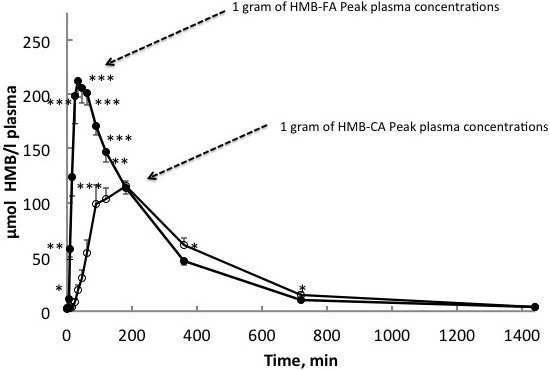
“[29] found that 1 g of HMB-Ca resulted in a peak”
BackgroundEnergy expenditure, body composition, and disease risk in children and adolescents
Goran, M. I. (1997) · Proceedings of The Nutrition Society · doi:10.1079/pns19970025 · Cited by 63
Michael, I., & Min, S. (1998) · American Journal of Clinical Nutrition · doi:10.1093/ajcn/68.4.944s · Cited by 62
O'Connor, D. M., & Crowe, M. J. (2007) · The Journal of Strength and Conditioning Research · doi:10.1519/r-15974.1 · Cited by 57
Paddon-Jones, D., Keech, A., & Jenkins, D. (2001) · International Journal of Sport Nutrition and Exercise Metabolism · doi:10.1123/ijsnem.11.4.442 · Cited by 57
Dietary toxicity of calcium β-hydroxy-β-methyl butyrate (CaHMB)
Baxter, J. H., Carlos, J. L., Thurmond, J., Rehani, R. N., Bultman, J., & Frost, D. (2005) · Food and Chemical Toxicology · doi:10.1016/j.fct.2005.05.016 · Cited by 55
Wilson, J. M., Grant, S. C., Lee, S.-R., Masad, I. S., Park, Y.-M., Henning, P. C., Stout, J. R., Loenneke, J. P., Arjmandi, B. H., Panton, L. B., et al. (2012) · Journal of the International Society of Sports Nutrition · doi:10.1186/1550-2783-9-18 · Cited by 52
Self-citationKreider, R. B., Ferreira, M. P., Greenwood, M. P., Wilson, M. J., Grindstaff, P., Plisk, S. S., Reinardy, J., Cantler, E. C., & Amalda, A. L. (2000) · Human Biology · Cited by 49
Self-citationEffects of β-hydroxy-β-methyl butyrate on performance and carcass quality of feedlot steers
Van Koevering, M. T., Dolezal, H. G., Gill, D. R., Owens, F. N., Strasia, C. A., Buchanan, D. S., Lake, R., & Nissen, S. (1994) · Journal of Animal Science · doi:10.2527/1994.7281927x · Cited by 46
Tatara, M. R., Krupski, W., Tymczyna, B., & Studziński, T. (2012) · Nutrition & Metabolism · doi:10.1186/1743-7075-9-39 · Cited by 38
(2001) · PubMed · Cited by 35
Hung, W., Liu, T.-H., Chen, C.-Y., & Chang, C.-K. (2010) · Journal of Exercise Science & Fitness · doi:10.1016/s1728-869x(10)60007-x · Cited by 24
Role of β‐hydroxy‐β‐methylbutyrate (HMB) in leucine stimulation of muscle mitochondrial biogenesis
Stancliffe, R. A., & Zemel, M. B. (2012) · The FASEB Journal · doi:10.1096/fasebj.26.1_supplement.251.6 · Cited by 18
Is There a Physiologic Basis for Creatine Use in Children and Adolescents?
UNNITHAN, V. B., VEEHOF, S. H. E., VELLA, C. A., & KERN, M. (2001) · Journal of Strength and Conditioning Research · doi:10.1519/00124278-200111000-00021 · Cited by 18
Hormonal and Metabolic Effects of Nutrition in Athletes
Zadik, Z., Nemet, D., & Eliakim, A. R. (2009) · Journal of Pediatric Endocrinology and Metabolism · doi:10.1515/jpem.2009.22.9.769 · Cited by 17
Dunsmore, K., Lowery, R. P., Duncan, N., Davis, G., Rathmacher, J., Baier, S., Sikorski, E., Morrison, T., Naimo, M., Walters, J., et al. (2012) · Journal of the International Society of Sports Nutrition · doi:10.1186/1550-2783-9-s1-p5 · Cited by 10
Self-citationDirect Determination of β-Hydroxy-β-Methylbutyrate (HMB) in Liquid Nutritional Products
Baxter, J. H., Phillips, R. R., Dowlati, L., Goehring, K. C., & Johns, P. W. (2010) · Food Analytical Methods · doi:10.1007/s12161-010-9173-1 · Cited by 10
Sikorski, E. M., Wilson, J. M., Lowery, R. P., Duncan, N., Davis, G., Rathmacher, J., Baier, S., Naimo, M., Wilson, S. M., Dunsmore, K., et al. (2012) · Journal of the International Society of Sports Nutrition · doi:10.1186/1550-2783-9-s1-p27 · Cited by 4
Self-citation
Research works printed but not linked: 3
- Nissen S Panton L Fuller J Rice D Sharp R Effect of feeding ß-hydroxy-ß-methylbutyrate (HMB) on body composition and strength of women FASEB J 1997 11 A150(abs)
- O'Connor DM Crowe MJ Effects of six weeks of beta-hydroxy-beta-methylbutyrate (HMB) and HMB/creatine supplementation on strength, power, and anthropometry of highly trained athletes J Strength Cond Res 2007 21 419 423 17530933 · DOI · Paper page
- Vukovich MD Dreifort GD Effect of beta-hydroxy beta-methylbutyrate on the onset of blood lactate accumulation and V(O)(2) peak in endurance-trained cyclists J Strength Conditioning Res/ National Strength & Conditioning Assoc 2001 15 491 497 11726262
Cited by
ISSN exercise & sports nutrition review update: research & recommendations
Kerksick, C. M., Wilborn, C. D., Roberts, M. D., Smith-Ryan, A., Kleiner, S. M., Jäger, R., Collins, R., Cooke, M., Davis, J. N., Galvan, E., et al. (2018) · Journal of the International Society of Sports Nutrition · doi:10.1186/s12970-018-0242-y · Cited by 945
“The same research group published data of 58 highly trained males athletes who supplemented with either 3 g of calcium-HMB or placebo for 12 weeks in a randomized, double-blind, crossover fashion [179].”
BackgroundInfluentialSelf-citationNutrition, frailty, and sarcopenia
Cruz-Jentoft, A. J., Kiesswetter, E., Drey, M., & Sieber, C. C. (2017) · Aging Clinical and Experimental Research · doi:10.1007/s40520-016-0709-0 · Cited by 488
Holeček, M. (2017) · Journal of Cachexia, Sarcopenia and Muscle · doi:10.1002/jcsm.12208 · Cited by 286
Gielen, E., Beckwée, D., Delaere, A., De Breucker, S., Vandewoude, M., Bautmans, I., the Sarcopenia Guidelines Development Group of the Belgian Society of Gerontology and Geriatrics (BSGG), Bautmans, I., Beaudart, C., Beckwée, D., et al. (2021) · Nutrition Reviews · doi:10.1093/nutrit/nuaa011 · Cited by 269
Time-restricted feeding plus resistance training in active females: a randomized trial
Tinsley, G. M., Moore, M. L., Graybeal, A. J., Paoli, A., Kim, Y., Gonzales, J. U., Harry, J. R., VanDusseldorp, T. A., Kennedy, D. N., & Cruz, M. R. (2019) · The American Journal of Clinical Nutrition · doi:10.1093/ajcn/nqz126 · Cited by 221
Metadata
- Authors
- Wilson, J. M., Fitschen, P. J., Campbell, B., Wilson, G. J., Zanchi, N., Taylor, L., Wilborn, C., Kalman, D. S., Stout, J. R., Hoffman, J. R., Ziegenfuss, T. N., Lopez, H. L., Kreider, R. B., Smith-Ryan, A. E., & Antonio, J.
- Affiliations
- University of Tampa (US)
- University of Illinois Urbana-Champaign (US)
- University of South Florida (US)
- Rutgers, The State University of New Jersey (US)
- Universidade de São Paulo (BR)
- University of Mary Hardin–Baylor (US)
- Miami Research AssociatesEndocrinology & Nutrition Department 6141 Sunset Drive - Suite 30133143 Miami FL USA
- University of Central Florida (US)
- The Center for Applied Health Sciences 44224 Stow OH USA
- Texas A&M University (US)
- Applied Physiology Laboratory, Department of Exercise and Sport ScienceUniversity of North Carolina Chapel Hill 27599-8605 Chapel Hill NC USA
- Exercise and Sports ScienceNova Southeastern University 33314 Davie FL USA
- Corresponding author
- Wilson, Jacob M
- ORCID
- Venue
- Journal of the International Society of Sports Nutrition
- Publisher
- Informa UK Limited
- Published
- 2013-01-03
- Volume
- 10
- Issue
- 1
- Pages
- 6-6
- ISSN
- 1550-2783 (ISSN-L)
- PMC
- PMC3568064
- OpenAlex
- W2156318742
- Cited by
- 196
- References
- 80
- Citations by year
- 2026: 11 · 2025: 18 · 2024: 17 · 2023: 15 · 2022: 17 · 2021: 10 · 2020: 24 · 2019: 16 · 2018: 19 · 2017: 8 · 2016: 16 · 2015: 10 · 2014: 12 · 2013: 3
- FWCI
- 7.93
- Type
- journal article
- Language
- en
- Open access
- gold
- doi.org
- Licence
- Locations
- Journal of the International Society of Sports Nutrition (publishedVersion, cc-by)
- Europe PMC (PubMed Central) (publishedVersion, cc-by)
- PubMed Central (publishedVersion, cc-by)
- PubMed (publishedVersion)
- Carolina Digital Repository (University of North Carolina at Chapel Hill) (submittedVersion, cc-by)
- NSUWorks (Nova Southeastern University) (submittedVersion)
- Journal of International Crisis and Risk Communication Research (submittedVersion)
- Carolina Digital Repository (University of North Carolina at Chapel Hill) (submittedVersion)
- DOAJ (DOAJ: Directory of Open Access Journals) (submittedVersion, cc-by-sa)
- OakTrust (Texas A&M University Libraries) (submittedVersion)
- UNC Libraries
- Topics
- Health Sciences › Nursing › Nutrition and Dietetics › Muscle metabolism and nutrition
- Health Sciences › Medicine › Physiology (medical) › Exercise and Physiological Responses
- Life Sciences › Biochemistry, Genetics and Molecular Biology › Molecular Biology › Muscle Physiology and Disorders
- Keywords
- beta-hydroxy-beta-methylbutyrate, HMB supplementation, post-exercise recovery, skeletal muscle hypertrophy, muscle strength and power, lean body mass, fat mass, proteolysis, protein synthesis
About these checks
Registry, retraction, Cites and statistics results are computed, not judged, with one exception: a printed reference that no index lists is read once by a model before it counts as a citation error. Claims are extracted by a model and kept only when their quote appears verbatim in the text; each cited source is then checked, with a model’s help, for whether it says what the claim relies on. Those verdicts can be wrong — read the claim’s quote and the cited source before relying on one.
Statistics and arithmetic are recomputed, not judged.
Confidence bands are shown only for fields calibrated on our annotated test set. None is calibrated yet, so no band is shown.
What counts as a claim ›How we measure confidence ›How we check this ›
Are you an author, or do you see a problem with this page? Request a review
Data sources
Bibliographic data: Semantic Scholar, OpenAlex, Crossref.
Contains information from the Semantic Scholar Academic Graph Datasets, made available under the ODC Attribution License (ODC-BY 1.0).
Semantic Scholar’s data is described in: Kinney, R., et al. (2023). The Semantic Scholar Open Data Platform. arXiv:2301.10140.
