

The dynamic sustainability framework: addressing the paradox of sustainment amid ongoing change
Open accessThe DOI matches its Crossref record; 64 of the 64 references it cites were found in a registry or an index.
Abstract
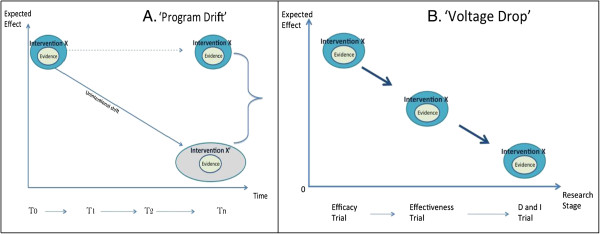
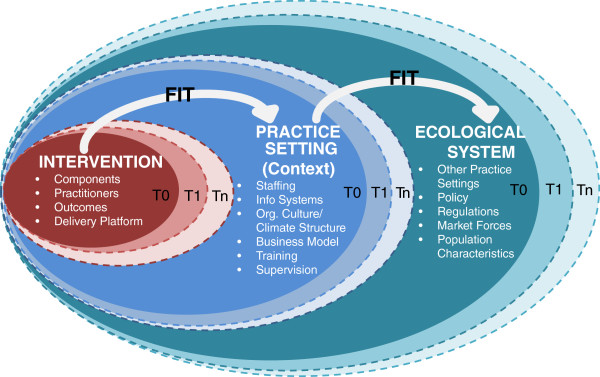
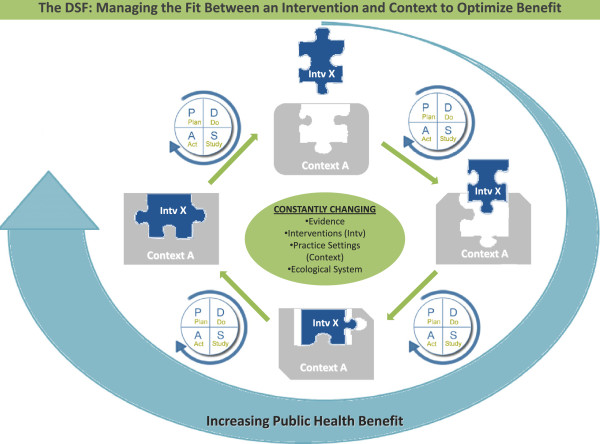
BACKGROUND: Despite growth in implementation research, limited scientific attention has focused on understanding and improving sustainability of health interventions. Models of sustainability have been evolving to reflect challenges in the fit between intervention and context. DISCUSSION: We examine the development of concepts of sustainability, and respond to two frequent assumptions -'voltage drop,' whereby interventions are expected to yield lower benefits as they move from efficacy to effectiveness to implementation and sustainability, and 'program drift,' whereby deviation from manualized protocols is assumed to decrease benefit. We posit that these assumptions limit opportunities to improve care, and instead argue for understanding the changing context of healthcare to continuously refine and improve interventions as they are sustained. Sustainability has evolved from being considered as the endgame of a translational research process to a suggested 'adaptation phase' that integrates and institutionalizes interventions within local organizational and cultural contexts. These recent approaches locate sustainability in the implementation phase of knowledge transfer, but still do not address intervention improvement as a central theme. We propose a Dynamic Sustainability Framework that involves: continued learning and problem solving, ongoing adaptation of interventions with a primary focus on fit between interventions and multi-level contexts, and expectations for ongoing improvement as opposed to diminishing outcomes over time. SUMMARY: A Dynamic Sustainability Framework provides a foundation for research, policy and practice that supports development and testing of falsifiable hypotheses and continued learning to advance the implementation, transportability and impact of health services research.
Overview
The claims and statistics of this paper haven’t been checked yet.
Free: it reads the open-access text and checks the first 5 claims that cite a source we can check. Create a free account to check every claim.
Integrity signals
Registry
Cites
Statistics
Figures
Verification
Claims the paper makes
The claims and statistics of this paper haven’t been checked yet.
Free: it reads the open-access text and checks the first 5 claims that cite a source we can check. Create a free account to check every claim.
Claims other papers make about this one
Each is checked against this paper’s own text: does it say what the citing paper says it does?
The source backs part of the claim, not all of it — or backs it for a different population, condition or comparison.
In the citing paper
“Internal organizational supports include champion roles, leadership, resources, policies and procedures, and expert support (ie, coaching).”
From Successful Organizational Strategies to Sustain Use of A-CHESS: A Mobile Intervention for Individuals With Alcohol Use Disorders (2015) · cites this paper as [32]
Experimental — accuracy not yet measuredThe source backs part of the claim, not all of it — or backs it for a different population, condition or comparison.
In the citing paper
“However, modifications that remove key elements of an intervention, or fail to align with population needs, may be less effective [7, 11–14].”
From The FRAME: an expanded framework for reporting adaptations and modifications to evidence-based interventions (2019) · cites this paper as [7]
Experimental — accuracy not yet measuredThe cited source says what the claim attributes to it.
In the citing paper
“the failure of most implementation processes to incorporate ongoing, iterative intervention development increases the risk that local users will find new technologies to be low on key implementation outcomes such as acceptability, feasibility, and appropriateness (Proctor et al., 2011) and may limit effectiveness (Chambers et al., 2013)”
From User‐centered design for psychosocial intervention development and implementation. (2016) · cites this paper as Chambers et al., 2013
The cited source says what the claim attributes to it.
In the citing paper
“ongoing adjustment and evaluation of EBT to ensure that a program is response to the local context provides an opportunity to increase intervention effectiveness over time (Aarons et al., 2012; Chambers et al., 2013)”
From User‐centered design for psychosocial intervention development and implementation. (2016) · cites this paper as Chambers et al., 2013
The cited source says what the claim attributes to it.
In the citing paper
“EBT are typically disseminated as static tools to be used only as directed by developers, rather than products to be improved over time (Chambers, Glasgow, & Stange, 2013)”
From User‐centered design for psychosocial intervention development and implementation. (2016) · cites this paper as Chambers, Glasgow, & Stange, 2013
25 more claims about this paper
Create a free account to see every claim other papers make about this one.
Self-check
Percentages, sums and reported differences re-computed from the paper’s own numbers.
The self-check needs the paper’s full text.
Citations
Cites
DiMaggio, P. J., & Powell, W. W. (1983) · American Sociological Review · doi:10.2307/2095101 · Cited by 38,435
DiMaggio, P. J., & Powell, W. W. (2004) · Advances in Strategic Management · doi:10.1016/s0742-3322(00)17011-1 · Cited by 25,802
Damschroder, L. J., Aron, D. C., Keith, R. E., Kirsh, S. R., Alexander, J. A., & Lowery, J. C. (2009) · Implementation Science · doi:10.1186/1748-5908-4-50 · Cited by 14,496 · cited 3×
“Brownson RC, Colditz GA, Proctor EK: Dissemination and Implementation Research in Health.”
MethodInfluentialDeveloping and evaluating complex interventions: the new Medical Research Council guidance
Craig, P., Dieppe, P., Macintyre, S., Michie, S., Nazareth, I., & Petticrew, M. (2008) · BMJ · doi:10.1136/bmj.a1655 · Cited by 10,995 · cited 1×
“A linear approach may be particularly challenging to apply to complex, multi-component interventions, psychosocial treatments, treatment of the growing number of people with multimorbid conditions [14,15], and systemic approaches to care [15].”
BackgroundDiMaggio, P. (1983) · American Sociological Review · Cited by 9,078
Diffusion of Innovations in Service Organizations: Systematic Review and Recommendations
GREENHALGH, T., ROBERT, G., MACFARLANE, F., BATE, P., & KYRIAKIDOU, O. (2004) · The Milbank Quarterly · doi:10.1111/j.0887-378x.2004.00325.x · Cited by 7,448 · cited 1×
“As implementation science has grown [1,2], researchers have advanced from study of facilitators and barriers that influence uptake of effective programs and policies to investigations of strategies to improve uptake.”
BackgroundSelf-management education: History, definition, outcomes, and mechanisms
Lorig, K. R., & Holman, H. R. (2003) · Annals of Behavioral Medicine · doi:10.1207/s15324796abm2601_01 · Cited by 4,094 · cited 1×
“The context both within an organization and in the broader ecological system is constantly changing, and requires a ‘learning organization’ [52] to engage in problem-solving capacity at multiple levels [53].”
BackgroundAdvancing a Conceptual Model of Evidence-Based Practice Implementation in Public Service Sectors
Aarons, G. A., Hurlburt, M., & Horwitz, S. M. (2011) · Administration and Policy in Mental Health and Mental Health Services Research · doi:10.1007/s10488-010-0327-7 · Cited by 3,240 · cited 1×
“Sustainment The continued use of an intervention within practice [10].”
BackgroundOrganizing Care for Patients with Chronic Illness
Wagner, E. H., Austin, B. T., & Korff, M. V. (1996) · The Milbank Quarterly · doi:10.2307/3350391 · Cited by 2,877 · cited 1×
“Perhaps an even greater benefit to practice would come through pooling of data across a larger set of sites, practitioners and patients, something done with success for chronic disease [55,56].”
BackgroundThe challenge of complexity in health care
Plsek, P. E., & Greenhalgh, T. (2001) · BMJ · doi:10.1136/bmj.323.7313.625 · Cited by 2,578 · cited 1×
“These include Wandersman’s Getting to Outcomes model [31], Continuous Quality Improvement (CQI) [34], system dynamics [35], complexity theory [36], adaptive management [37], and the Evidence Integration Triangle [30].”
Method
Research works printed but not linked: 5
- Brownson RC Colditz GA Proctor EK Dissemination and Implementation Research in Health 2012 New York: OUP
- Wandersman A Imm P Chinman M Getting to Outcomes: Methods and tools for planning, evaluation and accountability 1999 Rockville, MD: Center for Substance Abuse Prevention
- Bughlin J Chui M Johnson B The next step in open innovation The McKinsey Quarterly 2012 http://www.mckinseyquarterly.com/next_step_in_open_innovation_2155. Accessed
- Institute of Medicine A foundation for evidence-driven practice: A rapid learning system for cancer care 2010 Workshop Summary. Washington, D.C: NAS Press 25032381
- PatientsLikeMe PatientsLikeMe website 2012 http://patientslikeme.com. Accessed March 15, 2012
Cited by
Items 701–800 of 1,006
Christie, L., McCluskey, A., & Lovarini, M. (2021) · Journal of Health Organization and Management · doi:10.1108/jhom-07-2020-0297 · Cited by 12
Slemming, W., Drysdale, R. E., & Richter, L. (2021) · Frontiers in Public Health · doi:10.3389/fpubh.2020.589870 · Cited by 11
“This is beneficial for the study at this time but will also enable better acceptance and translation of interventions when moving to scale (26, 27).”
BackgroundFagnan, L. J., Ramsey, K., Dickinson, C., Kline, T., & Parchman, M. L. (2021) · The Journal of the American Board of Family Medicine · doi:10.3122/jabfm.2021.04.210011 · Cited by 14
Nalugwa, T., Handley, M. A., Shete, P. B., Ojok, C., Nantale, M., Reza, T. F., Katamba, A., Cattamanchi, A., & Ackerman, S. (2022) · Implementation Science Communications · doi:10.1186/s43058-022-00260-y · Cited by 12
“, the initial integration of interventions into settings) [10] and to optimize early and effective adoption [11], including in sub-Saharan Africa [12].”
BackgroundAllchin, B., & Solantaus, T. S. (2022) · Frontiers in Psychiatry · doi:10.3389/fpsyt.2022.824241 · Cited by 17
“Development in-situ means that intervention development is influenced by context and knowledge from evolving experience over time (9).”
BackgroundWoldetsadik, M. A., Bratton, S., Fitzpatrick, K., Ravat, F., Castillo, L. D., McIntosh, K. J., Jarvis, D., Carnevale, C. R., Cassell, C. H., Chhea, C., et al. (2022) · BMJ Open · doi:10.1136/bmjopen-2021-056767 · Cited by 10
Implementation of Electronic Psychosocial Screening Among Caregivers in Pediatric Oncology
Manikowski, A., Lewis, R. W., Bennett, T., Miller, H., Mertens, A. C., Wasilewski‐Masker, K. J., Escoffery, C., & Marchak, J. G. (2022) · JCO Oncology Practice · doi:10.1200/op.21.00836 · Cited by 11
“The literature has placed increasing emphasis on improvements and adaptations of evidence-based programs.(47-49) With regard to our e-screening program, we had planned to allow for adaptations in screening delivery to pivot to paper-andpencil or nurse-led verbal screening in response to hardware issues (ie, tablet mal…”
BackgroundSullivan, J. L., Montano, A.-R. L., Hughes, J. M., Davila, H. W., O’Malley, K. A., Engle, R. L., Hawley, C. E., Shin, M. H., Smith, J. G., & Pimentel, C. B. (2022) · The Gerontologist · doi:10.1093/geront/gnac096 · Cited by 15
Lubans, D. R., Sanders, T., Noetel, M., Parker, P. D., McKay, H. A., Morgan, P. J., Salmon, J., Kirwan, M., Bennie, A., Peralta, L. R., et al. (2022) · International Journal of Behavioral Nutrition and Physical Activity · doi:10.1186/s12966-022-01371-4 · Cited by 14
“, reduction in effectiveness) [11] typically occurs as interventions progress from efficacy to effectiveness to implementation at-scale [12, 13].”
BackgroundHill, Z. E., Zafar, S., Soremekun, S., Sikander, S., Avan, B. I., Roy, R., Aziz, S., Kumar, D., Parveen, N., Saleem, S., et al. (2023) · Frontiers in Nutrition · doi:10.3389/fnut.2023.1152548 · Cited by 13
“Given the complexities of the contexts a pilot and having on-going adaptation, improvement and responsive feedback built into implementation would have given us the opportunity to refine the intervention and maximize impacts and should be built into future programs (44, 45).”
BackgroundDiabetes and hypertension MobileHealth systems: a review of general challenges and advancements
Stephen, B. U.-A., Uzoewulu, B. C., Asuquo, P. M., & Ozuomba, S. (2023) · Journal of Engineering and Applied Science · doi:10.1186/s44147-023-00240-6 · Cited by 12
“Sustainability also dictates that an mHealth solution should be economically workable, environmentally tolerable, and socially fair [124, 165].”
BackgroundTouati, N., & Denis, J. (2014) · Télescope Revue d’analyse comparée en administration publique · doi:10.7202/1023837ar · Cited by 11
Pursuing Precision Speech-Language Therapy Services for Children with Down Syndrome
Yoder, P. J., & McDaniel, J. (2016) · Seminars in Speech and Language · doi:10.1055/s-0036-1587708 · Cited by 16
“While implementing these empirically based recommendations, adaptations and variations due to practical constraints are expected and likely necessary.(41,43)”
BackgroundMethodInfluentialClinician-Reported Modification to a CBT Approach in Children’s Mental Health
Meza, R. D., Jungbluth, N., Sedlar, G., Martin, P., Berliner, L., Wiltsey-Stirman, S., & Dorsey, S. (2020) · Journal of Emotional and Behavioral Disorders · doi:10.1177/1063426619828369 · Cited by 11
“Alternatively, just as views on modification vary in the literature (Blakely et al., 1987; Chambers et al., 2013), organizations may differ in whether they view modification as problematic or as an important aspect of quality treatment delivery.”
BackgroundA cross-country study of mis-implementation in public health practice
Furtado, K. S., Budd, E. L., Armstrong, R., Pettman, T. L., Reis, R. S., Sung‐Chan, P., Wang, Z., & Brownson, R. C. (2019) · BMC Public Health · doi:10.1186/s12889-019-6591-x · Cited by 11
Marin, D. B., Costello, Z., Sharma, V., Knott, C. L., Lam, D., & Jandorf, L. H. (2019) · Progress in community health partnerships · doi:10.1353/cpr.2019.0059 · Cited by 11
Exploring Variation in Housing First Implementation: The Role of Fit
Fenwick, K. M., Henwood, B. F., Lengnick‐Hall, R., Stefančić, A., & Gilmer, T. (2019) · Human Services Organizations Management Leadership & Governance · doi:10.1080/23303131.2019.1673864 · Cited by 14
Zechmeister‐Koss, I., Goodyear, M. J., Tüchler, H., & Paul, J. L. (2020) · BMC Health Services Research · doi:10.1186/s12913-020-05184-8 · Cited by 12
Nicol, G. E., Ricchio, A., Metts, C. L., Yingling, M. D., Ramsey, A. T., Schweiger, J. A., Miller, J. P., & Lenze, E. J. (2020) · JMIR mhealth and uhealth · doi:10.2196/18609 · Cited by 14
Trialists perspectives on sustaining, spreading, and scaling-up of quality improvement interventions
Laur, C. V., Corrado, A. M., Grimshaw, J., & Ivers, N. M. (2021) · Implementation Science Communications · doi:10.1186/s43058-021-00137-6 · Cited by 13
“The investments needed to design, implement, and evaluate QI programs can be more worthwhile if programs shown to effectively improve care are sustained— as a minimum in the local settings where initial implementation occurred [2], and ideally spread or scaled-up to new settings to increase impact.”
BackgroundMethodInfluentialPittman, J. O. E., Lindamer, L. A., Afari, N., Depp, C. A., Villodas, M. T., Hamilton, A., Kim, B., Mor, M. K., Almklov, E., Gault, J. D., et al. (2021) · Implementation Science Communications · doi:10.1186/s43058-021-00142-9 · Cited by 16
“These processes are well described and recommended by Chambers and colleagues in their paper on the dynamic sustainability framework [75].”
BackgroundKourouche, S., Curtis, K. A., Munroe, B., Asha, S. E., Carey, I., Considine, J., Fry, M., Lyons, J., Middleton, S., Mitchell, R. J., et al. (2021) · Australian Critical Care · doi:10.1016/j.aucc.2021.04.003 · Cited by 11
Choosing Wisely: An idea worth sustaining
Kastner, M., Makarski, J., Mossman, K., Harris, K., Hayden, L., Giraldo, M., Sharma, D., Asalya, M., Jussaume, L., Eisen, D., et al. (2021) · Health Services Research · doi:10.1111/1475-6773.13917 · Cited by 13
Co-producing an action-oriented framework for community-based Physical Activity Promotion in Germany
Kohler, S., Helsper, N., Dippon, L., Rütten, A., Abu‐Omar, K., Pfeifer, K., & Semrau, J. (2021) · Health Promotion International · doi:10.1093/heapro/daab159 · Cited by 18
“The integration of practice-based knowledge and scientific knowledge has been discussed as crucial to translate research into practice (Green, 2006; Glasgow et al., 2012; Chambers et al., 2013; Ammerman et al., 2014).”
BackgroundAshmore, J. A., Ditterich, K. W., Conley, C. C., Wright, M. R., Howland, P. S., Huggins, K. L., Cooreman, J., Andrews, P. S., Nicholas, D. R., Roberts, L., et al. (2019) · American Psychologist · doi:10.1037/amp0000309 · Cited by 12
“More broadly, new standards and cancer patient guidelines specified the use of EBTs (e.g., “cognitive change, Ashmore et al. Page 13 Am Psychol.”
BackgroundInfluentialAcker, W. V. (2018) · SSRN Electronic Journal · doi:10.2139/ssrn.3231503 · Cited by 12
Miller, C. J., Kim, B., Connolly, S. L., Spitzer, E. G., Brown, M., Bailey, H. M., Weaver, K., & Sullivan, J. L. (2023) · Administration and Policy in Mental Health and Mental Health Services Research · doi:10.1007/s10488-022-01231-0 · Cited by 10
Moreland‐Russell, S., Combs, T., Gannon, J., Jost, E., Saliba, L. F., Prewitt, K., Luke, D. A., & Brownson, R. C. (2024) · Implementation Science · doi:10.1186/s13012-024-01340-4 · Cited by 14
“The Dynamic Sustainability Framework offered by Chambers et al. considers the context in which an evidence-based intervention is implemented and operationalized within a system [11].”
MethodHutchings, J., Ferdinandi, I., Janowski, R., Ward, C. L., McCoy, A., Lachman, J. M., Gardner, F. E. M., & Williams, M. E. (2024) · Prevention Science · doi:10.1007/s11121-024-01682-x · Cited by 12
“…and UNICEF, the Parenting for Lifelong Health (PLH) initiative was founded to develop and evaluate evidence informed interventions that also addressed issues of cost, transportability, and sustainability—or the continued use of programs in usual practice (Chambers et al., 2013; Ward et al., 2014).”
BackgroundFostering an aged care organizational culture that supports innovation
Davy, C. P., Windle, A., & Harvey, G. (2024) · International Journal of Evidence-Based Healthcare · doi:10.1097/xeb.0000000000000465 · Cited by 11
Adams, D. R., ALLEN, H. L., Nicol, G. E., & Cabassa, L. J. (2024) · Translational Behavioral Medicine · doi:10.1093/tbm/ibae053 · Cited by 11
Showkat, M., & Nagina, R. (2024) · The Learning Organization · doi:10.1108/tlo-04-2024-0103 · Cited by 13
Harkness, A., Soulliard, Z. A., Layland, E. K., Behari, K., Rogers, B. G., Bharat, B., Safren, S. A., & Pachankis, J. E. (2024) · Implementation Science Communications · doi:10.1186/s43058-024-00657-x · Cited by 11
“Challenges often arise in translating research to practice, including but not limited to the “voltage drop,” wherein evidence-based interventions show reduced effects in real-world versus controlled settings [30].”
BackgroundLyon, A. R., Munson, S. A., Pullmann, M. D., Mosser, B., Aung, T., Fortney, J. C., Dopp, A. R., Osterhage, K. P., Haile, H. G., Bruzios, K. E., et al. (2025) · JMIR Research Protocols · doi:10.2196/65446 · Cited by 13
Harvey, A. G., Agnew, E. R., Hache, R. E., Spencer, J. M., Diaz, M., Patino, E. O., Milner, A., Dong, L., Kilbourne, A. M., Buysse, D. J., et al. (2025) · Implementation Science · doi:10.1186/s13012-025-01440-9 · Cited by 13
“Indeed, Chambers et al. [31] has cautioned against “creating and freezing an intervention” as this reduces the customization and optimization that are the basis of effective sustainment (p. 2).”
Brown, V., Tran, H. N. Q., Blake, M. R., Rachel, L., & Moodie, M. (2020) · Health Research Policy and Systems · doi:10.1186/s12961-020-00633-6 · Cited by 11
Olumide, A. O., McGuire, C., Calhoun, L. M., Speizer, I. S., Babawarun, T., & Ojengbede, O. A. (2020) · BMJ Open · doi:10.1136/bmjopen-2019-034482 · Cited by 11
Ford, J. H., & Gilson, A. M. (2021) · BMC Health Services Research · doi:10.1186/s12913-020-06026-3 · Cited by 12
Hall, T. L., Ortiz, C. B., Peña-Jackson, G., Fultineer, C., Werner, K., & Sunshine, J. E. (2021) · Journal of patient-centered research and reviews · doi:10.17294/2330-0698.1770 · Cited by 10
Gallo, C. G., Berkel, C., Mauricio, A. M., Sandler, I. N., Wolchik, S. A., Villamar, J. A., Mehrotra, S., & Brown, C. H. (2021) · Families Systems & Health · doi:10.1037/fsh0000590 · Cited by 10
“Declines in implementation fidelity are considered a major cause of the observed drop off in participant outcomes when programs go to scale (Chambers et al., 2013; Gallo, Pantin, et al., 2015; Schoenwald et al., 2008).”
BackgroundGordon, E. J., Uriarte, J. J., Anderson, N., Smith, J. D., Caicedo, J. C., & Shumate, M. (2022) · Journal of Clinical and Translational Science · doi:10.1017/cts.2022.378 · Cited by 10
“Initial adaptation is likely undertaken to ensure fit of the intervention with a specific implementation context [30], whereas ongoing adaptation reflects attempts to align the intervention with an ever-changing delivery system and policy context [2,10].”
BackgroundMethodInfluentialShoesmith, A., Hall, A. E., Wolfenden, L., Shelton, R. C., Yoong, S. L., Crane, M. A., Lane, C., McCarthy, N., Lecathelinais, C., & Nathan, N. (2022) · BMC Public Health · doi:10.1186/s12889-022-13732-6 · Cited by 13
“To avoid attenuation of intervention effects and ensure ongoing, long-term delivery of PA by schools following withdrawal of active implementation support, strategies are needed to address key determinants of sustainment [21, 23, 24].”
BackgroundPeacock‐Chambers, E., Clark, M. C., Moran, M. J., Lowell, A. F., & Zayde, A. (2023) · Infant Mental Health Journal · doi:10.1002/imhj.22039 · Cited by 10
Iwelunmor, J., Ezechi, O., Obiezu‐Umeh, C., Gbaja-Biamila, T. A., Musa, A. Z., Nwaozuru, U., Obasi, N. L., Ojo, V., Xian, H., Oladele, D. A., et al. (2023) · Implementation Science Communications · doi:10.1186/s43058-023-00404-8 · Cited by 12
Smith, J. A., van der Groen, O., & Learmonth, Y. C. (2023) · International Journal of Qualitative Methods · doi:10.1177/16094069231180162 · Cited by 14
“…highlights something missing within our case examples that included more thought over intervention design considerations using implementation science frameworks to guide intervention design optimisation, and therefore this too needs to be employed in feasibility studies (Chambers et al., 2013).”
BackgroundInfluentialHelsper, N., Dippon, L., Birkholz, L., Rütten, A., Kohler, S., Weber, P., Pfeifer, K., & Semrau, J. (2023) · Perspectives in Public Health · doi:10.1177/17579139231186693 · Cited by 16
“23,52 Díaz Del Castillo et al. 47 also described this as a need and willingness to be flexible, for instance, by adapting to people’s preferences and funding changes.”
Decosimo, K. P., Drake, C., Coffman, C. J., Sperber, N. R., Tucker, M., Hughes, J. M., Zullig, L. L., Chadduck, T., Christensen, L., Kaufman, B. G., et al. (2023) · Implementation Science Communications · doi:10.1186/s43058-023-00475-7 · Cited by 11
“Understanding implementation as a dynamic and iterative process, we will use an overarching framework guided by the QUERI Implementation Roadmap and the Dynamic Sustainability Framework [14, 22, 23].”
MethodFeng, J., Liu, H., Mai, S., Su, J., Sun, J., Zhou, J., Zhang, Y., Wang, Y., Wu, F., Zheng, G., et al. (2023) · BMC Public Health · doi:10.1186/s12889-023-16434-9 · Cited by 13
“In contrast to the feeding trials with promising results, the impact of the intervention might dilute in real life [29].”
ResultRucci, J. M., Ball, S. L., Brunner, J., Moldestad, M., Cutrona, S. L., Sayre, G. G., & Rinne, S. T. (2023) · Journal of General Internal Medicine · doi:10.1007/s11606-023-08284-3 · Cited by 11
“Adapting a dynamic sustainability framework may provide a structure to minimize the compounded disruption to care when a second stressor occurs simultaneously with an EHR transition 32 .”
BackgroundRamkumar, V., Shankar, V., & Kumar, S. (2023) · BMJ Open · doi:10.1136/bmjopen-2023-075430 · Cited by 11
Adaptation for sustainability in an implementation trial of team-based collaborative care
Miller, C. J., Sullivan, J. L., Connolly, S. L., Richardson, E. J., Stolzmann, K. L., Brown, M. B., Bailey, H. M., Weaver, K. R., Sippel, L. M., & Kim, B. (2024) · Implementation Research and Practice · doi:10.1177/26334895231226197 · Cited by 12
“…contains various methodologies and frameworks for conceptualizing adaptations (e.g., the Model for Adaptation Design and Impact; (Kirk et al., 2020) and sustainability (e.g., the dynamic sustainability framework (Chambers et al., 2013) that we did not formally incorporate into our approach.”
MethodSecondary Transition Interventions in Rural Communities: A Systematic Literature Review
McLucas, A. S., Therrien, W. J., & Rowe, D. A. (2024) · Career Development and Transition for Exceptional Individuals · doi:10.1177/21651434231223435 · Cited by 12
“They argue “har-nessing the understanding of context can enable beneficial adaptation of the intervention and improve sustainability” (Chambers et al., 2013, p. 3).”
Adsul, P., English, K. C., Jim, C. C., Pankratz, V. S., Edwardson, N., Sheche, J. N., Rodman, J., Charlie, J., Pagett, J., Trujillo, J., et al. (2024) · Implementation Science Communications · doi:10.1186/s43058-024-00591-y · Cited by 11
Davis, M. M., Coury, J., Sanchez, V., Kenzie, E. S., Larson, J. H., Barnes, C., McCormack, J. L., Durr, R. L., Weekley, T., Robbins, A., et al. (2024) · BMC Health Services Research · doi:10.1186/s12913-024-11870-8 · Cited by 17
“The DSF highlights the longitudinal nature of change, such that interventions are adapted and improved as they integrate into real-world settings over time [43].”
O'Campo, P. J., Zerger, S., Gozdzik, A., Jeyaratnam, J., & Stergiopoulos, V. (2015) · Journal of Health Care for the Poor and Underserved · doi:10.1353/hpu.2015.0031 · Cited by 15
Hoekstra, F., Hettinga, F. J., den Breejen, M., Duijf, M., van der Woude, L. H. V., Dekker, R., & van der Schans, C. P. (2017) · Journal of Rehabilitation Medicine · doi:10.2340/16501977-2220 · Cited by 10
“The continuation of a program over an extended period may be even more difficult [8-11].”
BackgroundInfluentialFindings From a Multiyear Scale-Up Effectiveness Trial of Open Court Reading
Vaden-Kiernan, M., Borman, G. D., Caverly, S. L., Bell, N., Sullivan, K., de Castilla, V. R., Fleming, G., Rodriguez, D., Henry, C., Long, T., et al. (2017) · Journal of Research on Educational Effectiveness · doi:10.1080/19345747.2017.1342886 · Cited by 15
“Chambers et al. (2013) argue that because of this there is a need to extend effectiveness work to increase and support the sustainability of programs in real-world contexts by conducting implementation science research within a dynamic continuous quality-improvement process to attempt to sustain broader impacts by foc…”
BackgroundIsobel, S., Allchin, B., Goodyear, M. J., & Gladstone, B. (2019) · Frontiers in Psychiatry · doi:10.3389/fpsyt.2019.00310 · Cited by 13
“Further examination would be needed to track sustained benefits, to be able to understand outcomes achieved within global systems change (34) within its specific context, over time (33, 39, 40) A recognized and well-defined “field” was necessary to identify systems change experts for the first stage of the primary (De…”
BackgroundRyba, M. M., Lo, S. B., & Andersen, B. L. (2019) · Translational Behavioral Medicine · doi:10.1093/tbm/ibz175 · Cited by 11
Mahoney, J., Gangnon, R. E., Clemson, L. M., Jaros, L., Cech, S., & Renken, J. (2020) · Journal of Clinical and Translational Science · doi:10.1017/cts.2020.17 · Cited by 11
“Given the potential “voltage drop” in effectiveness that occurs with dissemination [2], it is important to conduct program evaluation to assure continued effectiveness.”
BackgroundHarvey, A. G., Lammers, H. S., Dolsen, E. A., Mullin, A. C., Hilmoe, H. E., Tran, M., Portnova, V., Tuck, A. B., Mallidi, A., Fang, A., et al. (2020) · Evidence-Based Mental Health · doi:10.1136/ebmental-2020-300225 · Cited by 12
Sustainability determinants of the Burkinabe performance-based financing project
Seppey, M., Somé, P., & Ridde, V. (2021) · Journal of Health Organization and Management · doi:10.1108/jhom-04-2020-0137 · Cited by 13
Knott, C. L., Chen, C., Bowie, J. V., Mullins, C. D., Slade, J. L., Woodard, N., Robinson-Shaneman, B.-J., Okwara, L., Huq, M. R., Williams, R., et al. (2021) · Translational Behavioral Medicine · doi:10.1093/tbm/ibab088 · Cited by 11
Puri, J., Prowse, M., Roy, E. D., & Huang, D. (2022) · Climate Risk Management · doi:10.1016/j.crm.2022.100398 · Cited by 12
Glasgow, R. E., Brtnikova, M., Dickinson, L. M., Carroll, J. K., & Studts, J. L. (2023) · Journal of Behavioral Medicine · doi:10.1007/s10865-023-00400-2 · Cited by 11
“, 2017) that the optimal and preferred strategies will vary by issue, context, and other factors (Chambers et al., 2013; Waltz et al., 2019).”
BackgroundSelf-citationHalje, K., Timpka, T., Ekberg, J., Bång, M., Fröberg, A., & Eriksson, H. (2016) · International Journal of Telemedicine and Applications · doi:10.1155/2016/5151793 · Cited by 11
“Although the situation is likely to have improved, the introduction of mHealth systems into psychotherapeutic practice risks being unnecessarily delayed by the research-practice gap if attention is not paid to the techniques used when these systems are adapted to clinical routines and the methods used when their effec…”
BackgroundContext matters—the phased development of an adaptable food literacy intervention: Up for Cooking
Harms, L. S. E., van Assema, P., Gubbels, J. S., Gerards, S. M. P. L., Linssen, E., Vonken, L., & Bessems, K. M. H. H. (2023) · Health Promotion International · doi:10.1093/heapro/daad071 · Cited by 9
Kalver, E., McInnes, D. K., Yakovchenko, V., Hyde, J. K., Petrakis, B. A., & Kim, B. (2021) · Frontiers in Health Services · doi:10.3389/frhs.2021.752177 · Cited by 9
“PIE is being spread to other sites around the United States, providing an important opportunity for the implementation team to record and analyze modifications that are made to adapt to local contexts (18).”
BackgroundLeeman, J., Draeger, L. B., Lyons, K. M., Pham, L., & Samuel‐Hodge, C. D. (2022) · Frontiers in Health Services · doi:10.3389/frhs.2022.934479 · Cited by 9
“, staffing, population served, funding) (28).”
Njoki, N., Cutherell, M., Musau, A., Mireri, D., Nana-Sinkam, A., & Phillips, M. (2023) · Global Health Science and Practice · doi:10.9745/ghsp-d-22-00557 · Cited by 10
“11,12 Guidance for scaling up such practices consistently recognizes the need to adapt interventions to fit with the new implementation context.”
BackgroundAnalysis of a Medication Safety Intervention in the Pediatric Emergency Department
Samuels‐Kalow, M. E., Tassone, R., Manning, W., Cash, R. E., Davila-Parrilla, L., Hayes, B. D., Porter, S. C., & Camargo, C. A. (2024) · JAMA Network Open · doi:10.1001/jamanetworkopen.2023.51629 · Cited by 9
Holzer, J., Grützmacher, L., Ludwig, S. K. J., Bacher, J., Dumont, H., Kampa, N., Krainer, K., Lüftenegger, M., Maaz, K., Pant, H. A., et al. (2024) · Zeitschrift für Erziehungswissenschaft · doi:10.1007/s11618-024-01273-0 · Cited by 14
“So plädiert etwa das Dynamic Sustainability Framework (Chambers et al. 2013)”
Wolfenden, L., Wiggers, J., Barnes, C., Lane, C., Groombridge, D., Robertson, K., Jones, J. Z., McCrabb, S., Hodder, R. K., Shoesmith, A., et al. (2024) · Learning Health Systems · doi:10.1002/lrh2.10466 · Cited by 12
“27 While LHSs may be a promising approach to prevent chronic disease, the LHS literature and guidance to date have focused almost exclusively on its application to improve clinical-based patient-focused health care.”
BackgroundNettlefold, L., MACDONALD, H. M., Sims‐Gould, J., Bauman, A. E., Szewczyk, Z., & McKay, H. A. (2024) · International Journal of Behavioral Nutrition and Physical Activity · doi:10.1186/s12966-024-01649-9 · Cited by 12
“Scaling-up and sustaining EBIs are dynamic processes [52] that occur over the ‘life cycle’ of a program.”
Hunter, S. C., Morgillo, S., Kim, B., Bergström, A., Ehrenberg, A., Eldh, A. C., Wallin, L., & Kitson, A. A. (2025) · Implementation Science Communications · doi:10.1186/s43058-025-00704-1 · Cited by 11
“…Programs (REP) [61]: n = 2 [49, 53] • Theoretical Domains Framework (TDF) [10, 11]: n = 2 [51, 55] • Dynamic Sustainability Framework (DSF) [62]: n = 1 [35] • Knowledge to Action (KTA) [6]: n = 1 [46] • Stetler’s Model [9]: n = 1 [56] • Strategic Implementation Framework (SIF) [63]: The…”
Introduction to New Frontiers in Scaling Up Research
Cannata, M. A., & Rutledge, S. A. (2017) · Peabody Journal of Education · doi:10.1080/0161956x.2017.1368629 · Cited by 12
Caton, L., Yuan, M., Louie, D., Gallo, C. G., Abram, K. M., Palinkas, L. A., Brown, C. H., & McGovern, M. P. (2020) · Substance Abuse Treatment Prevention and Policy · doi:10.1186/s13011-020-00326-x · Cited by 10
“It is the first to qualitatively identify barriers and facilitators among policy-facing leaders within the sustainment phase and in-relation to opioid epidemic funding [6, 11].”
BackgroundResultInfluential‘We Learned the Language of the Tree’ Ecovillages as Spaces of Place-Based Transformative Learning
Pisters, S. R., Vihinen, H., Figueiredo, E., & Wals, A. E. J. (2022) · Journal of Transformative Education · doi:10.1177/15413446211068550 · Cited by 9
“Even if an initiative is successful, sustainability involves continuous learning (Chambers et al., 2013).”
BackgroundUnderstanding How Newly Implemented Rehabilitation Best Practices Are Sustained: A Realist Review
Ataman, R., Ahmed, S., Zidan, A., & Thomas, A. (2022) · Archives of Physical Medicine and Rehabilitation · doi:10.1016/j.apmr.2022.05.016 · Cited by 12
Implementing Evidence-Based Preventive Interventions During a Pandemic
Buckley, P. R., Edwards, D., Ladika, A., Steeger, C. M., & Hill, K. G. (2022) · Global Implementation Research and Applications · doi:10.1007/s43477-022-00047-2 · Cited by 9
“Implementing these evidence-based interventions with fidelity (i.e., as intended) is essential to yielding positive outcomes, since poor implementation can undermine effectiveness (Chambers et al., 2013; Durlak & DuPre, 2008).”
BackgroundKable, T. J., Leahy, A. A., Smith, J. J., Eather, N., Shields, N., Noetel, M., Lonsdale, C., Hillman, C. H., Reeves, P., Oldmeadow, C. J., et al. (2022) · BMJ Open · doi:10.1136/bmjopen-2022-065321 · Cited by 10
“If the intervention is successful, we will support dissemination via a series of professional learning workshops for teachers in NSW schools.”
BackgroundHamdani, S. U., Huma, Z., & Wissow, L. S. (2022) · Implementation Science Communications · doi:10.1186/s43058-022-00343-w · Cited by 10
Irani, L., Verma, S., Mathur, R., Verma, R. K., Mohan, D., Dhar, D., Seth, A., Chaudhuri, I., Chaudhury, M. R., Purthy, A., et al. (2022) · BMJ Open · doi:10.1136/bmjopen-2021-052336 · Cited by 9
Love, P., Laws, R., Taki, S., West, M. L., Hesketh, K. D., & Campbell, K. J. (2022) · Frontiers in Health Services · doi:10.3389/frhs.2022.1031628 · Cited by 10
“They propose that sustained implementation be a consideration throughout the implementation process to accommodate adaptation so that the intervention becomes integrated into the local context (34).”
BackgroundMeaning of sustainability of innovations in healthcare organizations: A systematic review
Louredo, F. D. S. G., de Vargas, E. R., & Araújo, C. A. S. (2023) · Health Services Management Research · doi:10.1177/09514848231154758 · Cited by 16
“4,5,9 Choosing to assess, monitor, or plan for sustainability over time rather than just looking at it after implementation may indicate a shift in sustainability perspectives.”
Mui, H. Z., Brown‐Johnson, C. G., Saliba‐Gustafsson, E. A., Lessios, A. S., Verano, M., Siden, R., & Holdsworth, L. M. (2023) · Learning Health Systems · doi:10.1002/lrh2.10364 · Cited by 10
McLaughlin, M. J., Campbell, E. M., Sutherland, R., McKenzie, T., Davies, L. J., Wiggers, J., & Wolfenden, L. (2021) · Frontiers in Health Services · doi:10.3389/frhs.2021.719194 · Cited by 10
“Understanding program adaptations andmodifications is important as they can have significant implications to the effectiveness of programs (9, 12, 17).”
BackgroundInfluentialOesch, S., Verweij, L., Clack, L., Finch, T. L., Riguzzi, M., & Naef, R. (2023) · BMJ Open · doi:10.1136/bmjopen-2023-074142 · Cited by 13
Duffy, D. J., Richards, D., Earley, C., & Timulák, L. (2023) · Frontiers in Digital Health · doi:10.3389/fdgth.2023.1139125 · Cited by 10
Jackson, G. L., Fix, G. M., White, B. S., Cutrona, S. L., Reardon, C. M., Damschroder, L. J., Burns, M., DeLaughter, K. L., Widerquist, M. A. O., Arasim, M. E., et al. (2024) · Frontiers in Health Services · doi:10.3389/frhs.2023.1223277 · Cited by 11
Sustentabilidade de intervenções em promoção da saúde: uma sistematização do conhecimento produzido
Oliveira, S. R. D. A., Potvin, L., & Medina, M. G. (2015) · Saúde em Debate · doi:10.1590/0103-110420161070357 · Cited by 13
“Embora considere esse fator relevante, Chambers et al. (2013) chamam a atenção para o fato de que os estudos raramente avaliam resultados utilizando como fonte a população a quem foi dirigida a intervenção; Planejamento –”
BackgroundInfluentialSustainability of Evidence-Based Acute Pain Management Practices for Hospitalized Older Adults
Shuman, C. J., Xie, X., Herr, K., & Titler, M. G. (2017) · Western Journal of Nursing Research · doi:10.1177/0193945917738781 · Cited by 10
“This finding provides additional support for considering, in future research, the effect of dynamic context factors on sustainability (Chambers et al., 2013).”
BackgroundResultAdapting Antibiotic Stewardship to the Community Hospital
Livorsi, D. J., Reisinger, H. S., & Stenehjem, E. A. (2019) · JAMA Network Open · doi:10.1001/jamanetworkopen.2019.9356 · Cited by 9
Borrman, M. J., Davis, D. L., Porteous, A., & Lim, B. (2019) · Women and Birth · doi:10.1016/j.wombi.2019.07.301 · Cited by 9
Klodnick, V. V., Kissane, B., Johnson, R. P., Malina, C., Ewing, A. R., & Fagan, M. A. (2020) · Residential Treatment for Children & Youth · doi:10.1080/0886571x.2020.1751017 · Cited by 10
“Monitoring core component adherence can also enhance intervention integration and quality in community settings (Chambers et al., 2013; Zayas et al., 2012).”
BackgroundProtocol refinement for a diabetes pragmatic trial using the PRECIS-2 framework
Glasgow, R. E., Gurfinkel, D., Waxmonsky, J. A., Rementer, J., Ritchie, N. D., Dailey-Vail, J., Hosokawa, P. W., Dickinson, L. M., & Kwan, B. M. (2021) · BMC Health Services Research · doi:10.1186/s12913-021-07084-x · Cited by 11
Self-citationNoyd, D. H., Berkman, A. M., Howell, C., Power, S., Kreissman, S. G., Landstrom, A. P., Khouri, M. G., Oeffinger, K. C., & Kibbe, W. A. (2021) · JCO Clinical Cancer Informatics · doi:10.1200/cci.21.00099 · Cited by 10
Haroz, E. E., Wexler, L. M., Manson, S. M., Cwik, M. F., O’Keefe, V. M., Allen, J., Rasmus, S., Buchwald, D., & Barlow, A. (2021) · Implementation Research and Practice · doi:10.1177/26334895211057042 · Cited by 10
“During the meeting, participants listened to a brief presentation regarding current definitions and conceptual models pertaining to program sustainability (Chambers et al., 2013; Schell et al., 2013).”
BackgroundResultKinney, M. V., George, A. S., Rhoda, N. R., Pattinson, R., & Bergh, A. (2023) · Global Health Science and Practice · doi:10.9745/ghsp-d-22-00213 · Cited by 12
Use of a Living Lab Approach to Implement a Smoke-Free Campus Policy
Mullin, M., Allwright, S., McGrath, D., & Hayes, C. B. (2023) · International Journal of Environmental Research and Public Health · doi:10.3390/ijerph20075354 · Cited by 14
Metadata
- Authors
- Chambers, D. A., Glasgow, R. E., & Stange, K. C.
- Affiliations
- National Institute of Mental Health (US)
- University of Colorado Anschutz (US)
- Case Western Reserve University (US)
- Corresponding author
- Chambers, David A
- Venue
- Implementation Science
- Published
- 2013-10-02
- Volume
- 8
- Issue
- 1
- Pages
- 117-117
- ISSN
- 1748-5908 (ISSN-L)
- PMC
- PMC3852739
- OpenAlex
- W2111534125
- Cited by
- 1,724
- References
- 62
- Citations by year
- 2026: 150 · 2025: 164 · 2024: 205 · 2023: 221 · 2022: 188 · 2021: 214 · 2020: 165 · 2019: 114 · 2018: 90 · 2017: 79 · 2016: 46 · 2015: 64 · 2014: 20
- FWCI
- 77.44
- Type
- journal article
- Language
- en
- Open access
- gold
- doi.org
- Licence
- Locations
- Implementation Science (publishedVersion, cc-by)
- Europe PMC (PubMed Central) (publishedVersion, cc-by)
- PubMed Central (publishedVersion, cc-by)
- PubMed (publishedVersion)
- Scholarly Commons @ Case Western Reserve University (submittedVersion, cc-by)
- Topics
- Health Sciences › Health Professions › General Health Professions › Health Policy Implementation Science
- Health Sciences › Health Professions › General Health Professions › Health Sciences Research and Education
- Social Sciences › Public Administration › Evaluation and Performance Assessment
- Keywords
- intervention sustainability, voltage drop, intervention adaptation, knowledge transfer, implementation research, health services research
- MeSH terms
- Concept Formation, Diffusion of Innovation, Organizational Innovation, United States, Program Evaluation, Program Development, Evidence-Based Practice
About these checks
Registry, retraction, Cites and statistics results are computed, not judged, with one exception: a printed reference that no index lists is read once by a model before it counts as a citation error. Claims are extracted by a model and kept only when their quote appears verbatim in the text; each cited source is then checked, with a model’s help, for whether it says what the claim relies on. Those verdicts can be wrong — read the claim’s quote and the cited source before relying on one.
Statistics and arithmetic are recomputed, not judged.
Confidence bands are shown only for fields calibrated on our annotated test set. None is calibrated yet, so no band is shown.
What counts as a claim ›How we measure confidence ›How we check this ›
Are you an author, or do you see a problem with this page? Request a review
Data sources
Bibliographic data: Semantic Scholar, OpenAlex, Crossref.
Contains information from the Semantic Scholar Academic Graph Datasets, made available under the ODC Attribution License (ODC-BY 1.0).
Semantic Scholar’s data is described in: Kinney, R., et al. (2023). The Semantic Scholar Open Data Platform. arXiv:2301.10140.
