

The World Health Organization's Health Promoting Schools framework: a Cochrane systematic review and meta-analysis
Open accessThe DOI matches its Crossref record; 119 of the 124 references it cites were found in a registry or an index; 1 of the 7 sources its claims cite were checked for support.
Abstract
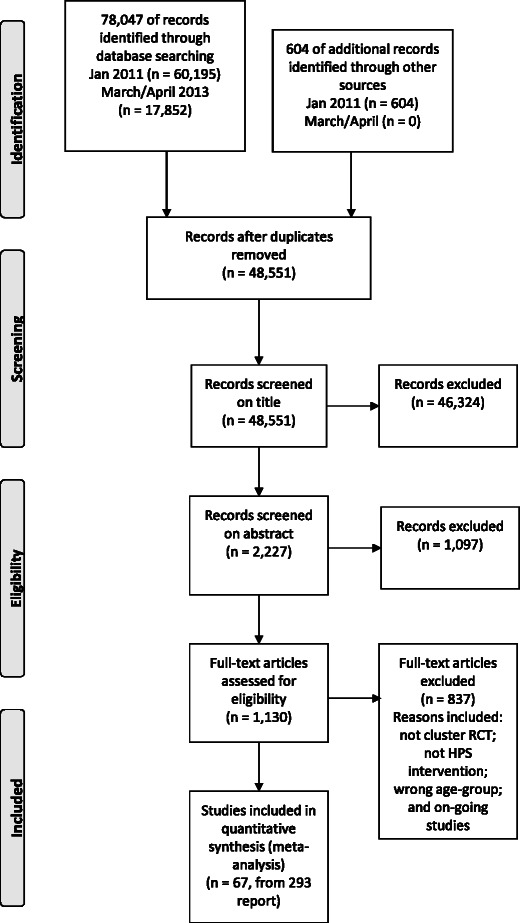
BACKGROUND: Healthy children achieve better educational outcomes which, in turn, are associated with improved health later in life. The World Health Organization's Health Promoting Schools (HPS) framework is a holistic approach to promoting health and educational attainment in school. The effectiveness of this approach has not yet been rigorously reviewed. METHODS: We searched 20 health, education and social science databases, and trials registries and relevant websites in 2011 and 2013. We included cluster randomised controlled trials. Participants were children and young people aged four to 18 years attending schools/colleges. HPS interventions had to include the following three elements: input into the curriculum; changes to the school's ethos or environment; and engagement with families and/or local communities. Two reviewers identified relevant trials, extracted data and assessed risk of bias. We grouped studies according to the health topic(s) targeted. Where data permitted, we performed random-effects meta-analyses. RESULTS: We identified 67 eligible trials tackling a range of health issues. Few studies included any academic/attendance outcomes. We found positive average intervention effects for: body mass index (BMI), physical activity, physical fitness, fruit and vegetable intake, tobacco use, and being bullied. Intervention effects were generally small. On average across studies, we found little evidence of effectiveness for zBMI (BMI, standardized for age and gender), and no evidence for fat intake, alcohol use, drug use, mental health, violence and bullying others. It was not possible to meta-analyse data on other health outcomes due to lack of data. Methodological limitations were identified including reliance on self-reported data, lack of long-term follow-up, and high attrition rates. CONCLUSION: This Cochrane review has found the WHO HPS framework is effective at improving some aspects of student health. The effects are small but potentially important at a population level.
Overview
CoChat Summary
## TL;DR
This Cochrane systematic review/meta-analysis of 67 cluster RCTs found that the WHO Health Promoting Schools framework improves some student health outcomes, but the effects are generally small. Evidence was strongest for reductions in smoking and being bullied, with mixed or little evidence for many other outcomes and very limited evidence on educational attainment.
## Key findings
- The review included 67 eligible trials/studies and found positive average intervention effects for BMI, physical activity, physical fitness, fruit and vegetable intake, tobacco use, and being bullied.
- For BMI, physical activity interventions reduced BMI by 0.38 kg/m² (95% CI 0.03 to 0.73), while physical activity + nutrition interventions reduced BMI by 0.11 kg/m² (95% CI −0.24 to 0.02).
- For smoking, tobacco-only interventions reduced smoking (OR = 0.77, 95% CI 0.64 to 0.93) and multiple risk behaviour interventions also reduced smoking (OR = 0.84, 95% CI 0.76 to 0.93).
- For bullying, anti-bullying interventions reduced reports of being bullied by 17% (OR = 0.83, 95% CI 0.72 to 0.96), but evidence for bullying others was not clear overall (OR = 0.90, 95% CI 0.78 to 1.04).
## Methods
- Design: Cochrane systematic review and meta-analysis of cluster randomized controlled trials evaluating interventions that included all three HPS domains: curriculum input, school ethos/environment change, and family/community engagement.
- Data/sample: Searches of 20 databases plus trials registries and websites in 2011 and 2013 identified studies of children and young people aged 4–18 years in schools/colleges; 67 studies met eligibility.
- Analysis: Two reviewers screened, extracted data, and assessed bias; outcomes were grouped by health topic, and random-effects meta-analyses were used where data permitted, with odds ratios for dichotomous outcomes and mean differences/SMDs for continuous outcomes.
## Limitations
- The paper states several methodological limitations: reliance on self-reported data, lack of long-term follow-up, high attrition rates, and poor reporting that made risk-of-bias assessment difficult.
- The authors note that few studies reported academic/attendance outcomes, and many outcomes could not be meta-analyzed because of paucity of data.
- Evident from the text: the evidence base is predominantly from high-income contexts, mostly North America, with only eight studies outside high-income countries and one in a low-income country, limiting generalizability.
Model-written summary. Check it against the paper before relying on it.
Integrity signals
Registry
Cites
Statistics
Figures
Verification
Claims the paper makes
1 Valid · 1 Not valid · 4 Not checked · 46 Own results and interpretations
The paper states this without a source or data behind it here, so there is nothing to check it against. The quote shows it is in the paper.
In the paper
“Intervention effects were generally small.”
§ The World Health Organization’s Health Promoting Schools framework: a Cochrane systematic review and meta-analysis > Abstract > Results
- Asserted: passes — The authors put it forward as true.
- Checkable: passes — It can be checked against evidence.
- Load-bearing: passes — The paper’s conclusions depend on it.
- Based: unclear — It is unclear why the paper says it holds.
A result the paper reports from its own data — it cites no other source for it, so there is none to check. The quote shows it is in the paper.
In the paper
“For physical fitness, there was evidence that Physical Activity + Nutrition interventions were effective at increasing fitness levels in students (SMD = 0.12, 95% CI 0.04, 0.20).”
§ The World Health Organization’s Health Promoting Schools framework: a Cochrane systematic review and meta-analysis > Results > Physical activity/fitness
plainstates a cause- Asserted: passes — The authors put it forward as true.
- Checkable: passes — It can be checked against evidence.
- Load-bearing: passes — The paper’s conclusions depend on it.
- Based: passes — The paper gives a reason why it holds.
A result the paper reports from its own data — it cites no other source for it, so there is none to check. The quote shows it is in the paper.
In the paper
“There was no evidence that these interventions were effective in reducing depression (Table 4).”
§ The World Health Organization’s Health Promoting Schools framework: a Cochrane systematic review and meta-analysis > Results > Mental health
plain- Asserted: passes — The authors put it forward as true.
- Checkable: passes — It can be checked against evidence.
- Load-bearing: passes — The paper’s conclusions depend on it.
- Based: passes — The paper gives a reason why it holds.
A result the paper reports from its own data — it cites no other source for it, so there is none to check. The quote shows it is in the paper.
In the paper
“Nutrition-only interventions were effective on average in increasing reported fruit and vegetable intake among students (SMD = 0.15, 95% CI 0.02 to 0.29, I2 = 83%), but not for reducing fat intake.”
§ The World Health Organization’s Health Promoting Schools framework: a Cochrane systematic review and meta-analysis > Results > Nutrition
plainstates a cause- Asserted: passes — The authors put it forward as true.
- Checkable: passes — It can be checked against evidence.
- Load-bearing: passes — The paper’s conclusions depend on it.
- Based: passes — The paper gives a reason why it holds.
A result the paper reports from its own data — it cites no other source for it, so there is none to check. The quote shows it is in the paper.
In the paper
“Methodological limitations were identified including reliance on self-reported data, lack of long-term follow-up, and high attrition rates.”
§ The World Health Organization’s Health Promoting Schools framework: a Cochrane systematic review and meta-analysis > Abstract > Results
plain- Asserted: passes — The authors put it forward as true.
- Checkable: passes — It can be checked against evidence.
- Load-bearing: unclear — It is unclear whether the paper’s conclusions depend on it.
- Based: passes — The paper gives a reason why it holds.
25 more claims
Create a free account to see all 52 claims and to verify the 1 reference still open.
- It may state two separate claims as one. 18
- The quote only partly states this claim. 1
- Probably not a substantial claim. 3
Claims other papers make about this one
Each is checked against this paper’s own text: does it say what the citing paper says it does?
The source backs part of the claim, not all of it — or backs it for a different population, condition or comparison.
In the citing paper
“Within the school setting single or multi-component interventions that address dietary intake, and/or physical activity or sedentary behavior have shown limited effectiveness in reducing sedentary behavior and BMI [8–10].”
From Barriers, facilitators and capacities for childhood obesity prevention in 12 European nations: results of a policy-maker survey (2018) · cites this paper as [10]
Experimental — accuracy not yet measuredThe cited source says what the claim attributes to it.
In the citing paper
“On the whole, an HPS approach demonstrated effectiveness for physical activity promotion.”
From The school environment and adolescent physical activity and sedentary behaviour: a mixed-studies systematic review (2016) · cites this paper as [12]
The cited source says what the claim attributes to it.
In the citing paper
“However, limited conclusions can be drawn regarding the specific role of the school environment as interventions combined environmental modifications with traditional health education and/or family involvement.”
From The school environment and adolescent physical activity and sedentary behaviour: a mixed-studies systematic review (2016) · cites this paper as [12]
The cited source says what the claim attributes to it.
In the citing paper
“Given that the aforementioned reviews 11, 12 and others 14, 15, 16 examine evidence across childhood and adolescence (e.g. 5–18 years old), it is unclear how the associations observed operate among different age groups.”
From The school environment and adolescent physical activity and sedentary behaviour: a mixed-studies systematic review (2016) · cites this paper as [12]
Self-check
Percentages, sums and reported differences re-computed from the paper’s own numbers.
Rated major: it would touch a result — a value a result rests on, reported and recomputed p-values on opposite sides of the significance level, two passages that conflict with no sign which is right, or a cited work retracted before this paper was published.
In the paper
“Indeed, for the two studies focusing specifically on mental health and emotional well-being, estimated effect sizes were in the opposite direction with intervention students reporting slightly poorer mental health (OR = 0.06, 95% CI 0.00 to 0.13).”
§ The World Health Organization’s Health Promoting Schools framework: a Cochrane systematic review and meta-analysis > Results > Mental health
Reported 0.06 · recomputed 0.13
Citations
Cites
Preferred Reporting Items for Systematic Reviews and Meta-Analyses: the PRISMA statement
Moher, D., Liberati, A., Tetzlaff, J., Altman, D. G., & for the PRISMA Group (2009) · BMJ · doi:10.1136/bmj.b2535 · Cited by 83,823
Measuring inconsistency in meta-analyses
Higgins, J. P. T., Thompson, S. G., Deeks, J. J., & Altman, D. G. (2003) · BMJ · doi:10.1136/bmj.327.7414.557 · Cited by 63,139
Preferred reporting items for systematic reviews and meta-analyses: the PRISMA Statement.
(2009) · PubMed Central · Cited by 44,859
Cochrane Handbook for Systematic Reviews of Interventions: Cochrane Book Series
(2008) · doi:10.1002/9780470712184 · Cited by 25,048
Preferred Reporting Items for Systematic Reviews and Meta-Analyses: The PRISMA Statement
Moher, D., Liberati, A., Tetzlaff, J., & Altman, D. G. (2009) · Journal of Clinical Epidemiology · doi:10.1016/j.jclinepi.2009.06.005 · Cited by 19,575
Felitti, V. J., Anda, R. F., Nordenberg, D., Williamson, D. F., Spitz, A. M., Edwards, V., Koss, M. P., & Marks, J. S. (1998) · American Journal of Preventive Medicine · doi:10.1016/s0749-3797(98)00017-8 · Cited by 18,943
Hao (2015) · doi:10.1002/14651858 · Cited by 11,321
Child abuse: Adolescent records vs. adult recall
Femina, D. D., Yeager, C. A., & Lewis, D. O. (1990) · Child Abuse & Neglect · doi:10.1016/0145-2134(90)90033-p · Cited by 8,820
Genetics of Food Intake Self-Regulation in Childhood: Literature Review and Research Opportunities
Faith, M. S., Carnell, S., & Kral, T. V. E. (2013) · Human Heredity · doi:10.1159/000353879 · Cited by 7,601
The cochrane database of systematic reviews
Geddes, J. (1996) · Journal of Psychosomatic Research · doi:10.1016/s0022-3999(96)90063-x · Cited by 5,989
Cochrane Database of Systematic Reviews
(2011) · Progress in Neurology and Psychiatry · doi:10.1002/pnp.208 · Cited by 4,667
Predicting Obesity in Young Adulthood from Childhood and Parental Obesity
Whitaker, R. C., Wright, J. A., Pepe, M. S., Seidel, K. D., & Dietz, W. H. (1997) · New England Journal of Medicine · doi:10.1056/nejm199709253371301 · Cited by 4,397
(2008) · Cited by 3,790
Sick individuals and sick populations
Rose, G. (2001) · International Journal of Epidemiology · doi:10.1093/ije/30.3.427 · Cited by 3,736 · cited 1×
“Small effects scaled up to population level can produce public health benefits [89], although at present these potential gains appear modest.”
BackgroundAssessing Risk of Bias in Included Studies
Higgins, J. P., & Altman, D. G. (2008) · Cochrane Handbook for Systematic Reviews of Interventions · doi:10.1002/9780470712184.ch8 · Cited by 3,396 · cited 1×
“We assessed risk of bias using the Cochrane tool [17].”
MethodClosing the gap in a generation: health equity through action on the social determinants of health
Marmot, M., Friel, S., Bell, R., Houweling, T. A., & Taylor, S. (2008) · The Lancet · doi:10.1016/s0140-6736(08)61690-6 · Cited by 3,247
Interventions for preventing obesity in children
Brown, T., Moore, T. H., Hooper, L., Gao, Y., Zayegh, A., Ijaz, S., Elwenspoek, M., Foxen, S. C., Magee, L., O'Malley, C., et al. (2019) · Cochrane Database of Systematic Reviews · doi:10.1002/14651858.cd001871.pub4 · Cited by 2,982
Self-citationSick individuals and sick populations
ROSE, G. (1985) · International Journal of Epidemiology · doi:10.1093/ije/14.1.32 · Cited by 2,701
Childhood adversities and adult psychopathology in the WHO World Mental Health Surveys
Kessler, R. C., McLaughlin, K. A., Green, J. G., Gruber, M. J., Sampson, N. A., Zaslavsky, A. M., Aguilar-Gaxiola, S., Alhamzawi, A. O., Alonso, J., Angermeyer, M., et al. (2010) · British Journal of Psychiatry · doi:10.1192/bjp.bp.110.080499 · Cited by 2,640 · cited 1×
“The influence of childhood experiences on health later in life is well documented [1-6], with attitudes and behaviours acquired then ‘tracking’ into adulthood [7-9].”
BackgroundAdolescence: A foundation for future health
Sawyer, S. M., Afifi, R. A., Bearinger, L. H., Blakemore, S.-J., Dick, B., Ezeh, A. C., & Patton, G. C. (2012) · The Lancet · doi:10.1016/s0140-6736(12)60072-5 · Cited by 2,635 · cited 1×
“Promoting health during this early period of life is key to many public health agendas [11].”
BackgroundTracking of childhood overweight into adulthood: a systematic review of the literature
Singh, A. S., Mulder, C., Twisk, J. W. R., Van Mechelen, W., & Chinapaw, M. J. M. (2008) · Obesity Reviews · doi:10.1111/j.1467-789x.2008.00475.x · Cited by 2,494 · cited 1×
“The influence of childhood experiences on health later in life is well documented [1-6], with attitudes and behaviours acquired then ‘tracking’ into adulthood [7-9].”
BackgroundGama e Colombo, D. (2010) · Revista de Direito Sanitário · doi:10.11606/issn.2316-9044.v10i3p253-266 · Cited by 1,788
Interventions for preventing obesity in children
Waters, E., de Silva-Sanigorski, A., Burford, B. J., Brown, T., Campbell, K. J., Gao, Y., Armstrong, R., Prosser, L., & Summerbell, C. D. (2011) · Cochrane Database of Systematic Reviews · doi:10.1002/14651858.cd001871.pub3 · Cited by 1,455
Self-citationLongitudinal tracking of adolescent smoking, physical activity, and food choice behaviors
Kelder, S. H., Perry, C. L., Klepp, K. I., & Lytle, L. L. (1994) · American Journal of Public Health · doi:10.2105/ajph.84.7.1121 · Cited by 1,388 · cited 1×
“The influence of childhood experiences on health later in life is well documented [1-6], with attitudes and behaviours acquired then ‘tracking’ into adulthood [7-9].”
BackgroundComplex interventions: how “out of control” can a randomised controlled trial be?
Hawe, P., Shiell, A., & Riley, T. (2004) · BMJ · doi:10.1136/bmj.328.7455.1561 · Cited by 1,244 · cited 1×
“Well-designed cluster RCTS can capture complexity and allow for local adaptation; the critical issue is ‘what’ is standardised (the intervention components or the steps in the change process) [94].”
BackgroundCriteria for evaluating evidence on public health interventions
Rychetnik, L., Frommer, M., Hawe, P., & Shiell, A. (2002) · Journal of Epidemiology and Community Health · doi:10.1136/jech.56.2.119 · Cited by 1,042 · cited 1×
“This assumption is unfounded [93,94].”
Luepker, R. V. (1996) · JAMA · doi:10.1001/jama.1996.03530340032026 · Cited by 1,023
Poulton, R., Caspi, A., Milne, B. J., Thomson, W. M., Taylor, A., Sears, M. R., & Moffitt, T. E. (2002) · The Lancet · doi:10.1016/s0140-6736(02)11602-3 · Cited by 1,010
Berkman, D. S., Lescano, A. G., Gilman, R. H., Lopez, S. L., & Black, M. M. (2002) · The Lancet · doi:10.1016/s0140-6736(02)07744-9 · Cited by 810 · cited 1×
“Given the well-established links between poor nutrition and infectious disease on children’s cognitive development [100,101], the HPS framework should have much to offer in such contexts.”
BackgroundLangford, R., Bonell, C. P., Jones, H. E., Pouliou, T., Murphy, S. M., Waters, E., Komro, K. A., Gibbs, L. F., Magnus, D., & Campbell, R. (2014) · Cochrane Database of Systematic Reviews · doi:10.1002/14651858.cd008958.pub2 · Cited by 768
Self-citationA Large-Scale Evaluation of the KiVa Antibullying Program: Grades 4–6
Kärnä, A., Voeten, M., Little, T. D., Poskiparta, E., Kaljonen, A., & Salmivalli, C. (2011) · Child Development · doi:10.1111/j.1467-8624.2010.01557.x · Cited by 725 · cited 5×
“Kärnä 2011 [76] KiVa (1) Bullying Finland Grade 4-6 9 months Social cognitive theory”
BackgroundInfluentialEvaluating health promotion—progress, problems and solutions
Nutbeam, D. (1998) · Health Promotion International · doi:10.1093/heapro/13.1.27 · Cited by 671 · cited 1×
“Some have argued that RCTs are an inappropriate method to evaluate complex public health programmes, based on an assumption that RCTs require highly standardised intervention components and methods of delivery that preclude the possibility of local adaptation [91,92].”
MethodSchool-based programs to reduce bullying and victimization: (528362010-001)
Farrington, D. P., & Ttofi, M. M. (2009) · PsycEXTRA Dataset · doi:10.1037/e528362010-001 · Cited by 667
Metcalf, B., Henley, W., & Wilkin, T. (2012) · BMJ · doi:10.1136/bmj.e5888 · Cited by 658 · cited 2×
“While HPS effect sizes are broadly similar to results from other school-based systematic reviews [86-88,97,98], the latter often include different types of interventions ranging from ‘curriculum only’ interventions to more comprehensive programmes making meaningful comparisons difficult.”
ResultGalobardes, B., Smith, G. D., & Lynch, J. W. (2006) · Annals of Epidemiology · doi:10.1016/j.annepidem.2005.06.053 · Cited by 643 · cited 1×
“The influence of childhood experiences on health later in life is well documented [1-6], with attitudes and behaviours acquired then ‘tracking’ into adulthood [7-9].”
BackgroundCaballero, B., Clay, T., Davis, S. M., Ethelbah, B., Rock, B. H., Lohman, T., Norman, J., Story, M., Stone, E. J., Stephenson, L., et al. (2003) · The American Journal of Clinical Nutrition · doi:10.1093/ajcn/78.5.1030 · Cited by 627 · cited 9×
“Table 3 Characteristics of the trials included in the review, by intervention focus Authors Name Review outcomes Country Target group Duration for study design Theory Nutrition Interventions Anderson 2005 [19] - Nutrition UK 6-7 and 10–11 year- olds 8 months Health Promoting Schools framework Bere 2006 [20] Fruits and…”
BackgroundInfluentialSchool-based programmes for preventing smoking
Thomas, R. E., McLellan, J., & Perera, R. (2013) · Cochrane Database of Systematic Reviews · doi:10.1002/14651858.cd001293.pub3 · Cited by 614
Interventions for preventing obesity in children
Waters, E., Silva-Sanigorski, A. D., Burford, B. J., Brown, T., Campbell, K. J., Gao, Y., Armstrong, R., Prosser, L., & Summerbell, C. D. (2014) · Sao Paulo Medical Journal · doi:10.1590/1516-3180.20141322t2 · Cited by 584
Self-citationEnvironmental interventions for eating and physical activity
Sallis, J. F., McKenzie, T. L., Conway, T. L., Elder, J. P., Prochaska, J. J., Brown, M., Zive, M. M., Marshall, S. J., & Alcaraz, J. E. (2003) · American Journal of Preventive Medicine · doi:10.1016/s0749-3797(02)00646-3 · Cited by 529 · cited 9×
“Table 3 Characteristics of the trials included in the review, by intervention focus Authors Name Review outcomes Country Target group Duration for study design Theory Nutrition Interventions Anderson 2005 [19] - Nutrition UK 6-7 and 10–11 year- olds 8 months Health Promoting Schools framework Bere 2006 [20] Fruits and…”
BackgroundInfluentialKriemler, S., Zahner, L., Schindler, C., Meyer, U., Hartmann, T., Hebestreit, H., Brunner-La Rocca, H. P., van Mechelen, W., & Puder, J. J. (2010) · BMJ · doi:10.1136/bmj.c785 · Cited by 524 · cited 5×
“Twenty-nine studies were conducted in North America (27 USA [22,23,25-27,29,35,37,39,40,45,48,50-52,57-63,65, 66,70,75,83], 2 in Canada [71,82]), 19 in Europe [19-21,24,30, 32,33,36,41,42,44,47,53,74,76-78,85], 11 in Australasia [28,31,34,46,54,64,68,69,72,73,81] and eight in middleor low-income countries (China [56,7…”
BackgroundInfluentialA Policy-Based School Intervention to Prevent Overweight and Obesity
Foster, G. D., Sherman, S., Borradaile, K. E., Grundy, K. M., Vander Veur, S. S., Nachmani, J., Karpyn, A., Kumanyika, S., & Shults, J. (2008) · Pediatrics · doi:10.1542/peds.2007-1365 · Cited by 496
A School-Based Program to Prevent Adolescent Dating Violence: A Cluster Randomized Trial
Wolfe, D. A., Crooks, C., Jaffe, P., Chiodo, D., Hughes, R., Ellis, W., Stitt, L., & Donner, A. (2009) · Archives of Pediatrics & Adolescent Medicine · doi:10.1001/archpediatrics.2009.69 · Cited by 470 · cited 4×
“Orpinas 2000 [70] Students for Peace Violence USA Grades 6-8 3 semesters Social cognitive theory Wolfe 2009 [71] Fourth R Violence, sexual health Canada Grade 9 15 weeks None stated Anti-bullying Interventions Cross 2011 [72] Friendly Schools Bullying Australia Grade 4 2 years Health Promoting Schools framework, Socia…”
BackgroundInfluentialPerry, C. L., Williams, C. L., Veblen-Mortenson, S., Toomey, T. L., Komro, K. A., Anstine, P. S., McGovern, P. G., Finnegan, J. R., Forster, J. L., Wagenaar, A. C., et al. (1996) · American Journal of Public Health · doi:10.2105/ajph.86.7.956 · Cited by 470 · cited 13×
“Table 3 Characteristics of the trials included in the review, by intervention focus Authors Name Review outcomes Country Target group Duration for study design Theory Nutrition Interventions Anderson 2005 [19] - Nutrition UK 6-7 and 10–11 year- olds 8 months Health Promoting Schools framework Bere 2006 [20] Fruits and…”
BackgroundResultInfluentialSelf-citationA Review of Studies of the Effect of Severe Malnutrition on Mental Development
Grantham-McGregor, S. (1995) · The Journal of Nutrition · doi:10.1093/jn/125.suppl_8.2233s · Cited by 411 · cited 1×
“Given the well-established links between poor nutrition and infectious disease on children’s cognitive development [100,101], the HPS framework should have much to offer in such contexts.”
BackgroundHealth promoting schools and health promotion in schools: two systematic reviews.
Lister-Sharp, Chapman, Stewart-Brown, & Sowden (1999) · Health Technology Assessment · doi:10.3310/hta3220 · Cited by 379 · cited 2×
“A systematic review [13] conducted in 1999 suggested there were ‘limited but promising’ data that this approach could benefit student health.”
BackgroundRandomised controlled trial of primary school based intervention to reduce risk factors for obesity
Sahota, P., Rudolf, M. C. J., Dixey, R., Hill, A. J., Barth, J. H., & Cade, J. (2001) · BMJ · doi:10.1136/bmj.323.7320.1029 · Cited by 379 · cited 4×
“Twenty-nine studies were conducted in North America (27 USA [22,23,25-27,29,35,37,39,40,45,48,50-52,57-63,65, 66,70,75,83], 2 in Canada [71,82]), 19 in Europe [19-21,24,30, 32,33,36,41,42,44,47,53,74,76-78,85], 11 in Australasia [28,31,34,46,54,64,68,69,72,73,81] and eight in middleor low-income countries (China [56,7…”
BackgroundInfluentialFlay, B. R., Graumlich, S., Segawa, E., Burns, J. L., & Holliday, M. Y. (2004) · Archives of Pediatrics & Adolescent Medicine · doi:10.1001/archpedi.158.4.377 · Cited by 369 · cited 9×
“Table 3 Characteristics of the trials included in the review, by intervention focus Authors Name Review outcomes Country Target group Duration for study design Theory Nutrition Interventions Anderson 2005 [19] - Nutrition UK 6-7 and 10–11 year- olds 8 months Health Promoting Schools framework Bere 2006 [20] Fruits and…”
BackgroundInfluentialImplications of childhood obesity for adult health: findings from thousand families cohort study
Wright, C. M., Parker, L., Lamont, D., & Craft, A. W. (2001) · BMJ · doi:10.1136/bmj.323.7324.1280 · Cited by 360 · cited 1×
“The influence of childhood experiences on health later in life is well documented [1-6], with attitudes and behaviours acquired then ‘tracking’ into adulthood [7-9].”
BackgroundA School-Based Intervention for Diabetes Risk Reduction
(2010) · New England Journal of Medicine · doi:10.1056/nejmoa1001933 · Cited by 350 · cited 9×
“Table 3 Characteristics of the trials included in the review, by intervention focus Authors Name Review outcomes Country Target group Duration for study design Theory Nutrition Interventions Anderson 2005 [19] - Nutrition UK 6-7 and 10–11 year- olds 8 months Health Promoting Schools framework Bere 2006 [20] Fruits and…”
BackgroundInfluentialPerry, C. L., Bishop, D. B., Taylor, G., Murray, D. M., Mays, R. W., Dudovitz, B. S., Smyth, M., & Story, M. (1998) · American Journal of Public Health · doi:10.2105/ajph.88.4.603 · Cited by 342
Ross, D. A., Changalucha, J., Obasi, A. I., Todd, J., Plummer, M. L., Cleophas-Mazige, B., Anemona, A., Everett, D., Weiss, H. A., Mabey, D. C., et al. (2007) · AIDS · doi:10.1097/qad.0b013e3282ed3cf5 · Cited by 317
Gaffney, H., Ttofi, M. M., & Farrington, D. P. (2021) · Campbell Systematic Reviews: Better Evidence for a Better World · doi:10.1002/cl2.1143 · Cited by 313
Frey, K. S., Hirschstein, M. K., Snell, J. L., Edstrom, L. V. S., MacKenzie, E. P., & Broderick, C. J. (2005) · Developmental Psychology · doi:10.1037/0012-1649.41.3.479 · Cited by 306 · cited 9×
“Table 3 Characteristics of the trials included in the review, by intervention focus Authors Name Review outcomes Country Target group Duration for study design Theory Nutrition Interventions Anderson 2005 [19] - Nutrition UK 6-7 and 10–11 year- olds 8 months Health Promoting Schools framework Bere 2006 [20] Fruits and…”
MethodInfluentialIncreasing the Fruit and Vegetable Consumption of Fourth-Graders: Results from the High 5 Project
Reynolds, K. D., Franklin, F. A., Binkley, D., Raczynski, J. M., Harrington, K. F., Kirk, K. A., & Person, S. (2000) · Preventive Medicine · doi:10.1006/pmed.1999.0630 · Cited by 271 · cited 2×
“Twenty-nine studies were conducted in North America (27 USA [22,23,25-27,29,35,37,39,40,45,48,50-52,57-63,65, 66,70,75,83], 2 in Canada [71,82]), 19 in Europe [19-21,24,30, 32,33,36,41,42,44,47,53,74,76-78,85], 11 in Australasia [28,31,34,46,54,64,68,69,72,73,81] and eight in middleor low-income countries (China [56,7…”
BackgroundBond, L., Patton, G., Glover, S., Carlin, J. B., Butler, H., Thomas, L., & Bowes, G. (2004) · Journal of Epidemiology and Community Health · doi:10.1136/jech.2003.009449 · Cited by 267
Effectiveness of the KiVa Antibullying Program: Grades 1–3 and 7–9.
Kärnä, A., Voeten, M., Little, T. D., Alanen, E., Poskiparta, E., & Salmivalli, C. (2013) · Journal of Educational Psychology · doi:10.1037/a0030417 · Cited by 259 · cited 4×
“Kärnä 2013 [77] KiVa (2) Bullying Finland Grade 1–3 and 7-9 9 months Social cognitive theory”
BackgroundInfluentialTalaat, M., Afifi, S., Dueger, E., El-Ashry, N., Marfin, A., Kandeel, A., Mohareb, E., & El-Sayed, N. (2011) · Emerging Infectious Diseases · doi:10.3201/eid1704.101353 · Cited by 238 · cited 5×
“Talaat 2011 [80] Hand hygiene Positive intervention effect found for: attendance.”
BackgroundInfluentialBeets, M. W., Flay, B. R., Vuchinich, S., Snyder, F. J., Acock, A., Li, K.-K., Burns, K., Washburn, I. J., & Durlak, J. (2009) · American Journal of Public Health · doi:10.2105/ajph.2008.142919 · Cited by 231 · cited 14×
“Equally, two of the most effective Multiple Risk Behaviour interventions [59,62] focusing on substance use and violence were conducted in elementary-school children, suggesting that intervening early may help prevent risk-taking in teenage years.”
BackgroundInfluentialWadsworth, M. E. J., & Kuh, D. J. L. (1997) · Paediatric and Perinatal Epidemiology · doi:10.1046/j.1365-3016.1997.d01-7.x · Cited by 228 · cited 1×
“The influence of childhood experiences on health later in life is well documented [1-6], with attitudes and behaviours acquired then ‘tracking’ into adulthood [7-9].”
BackgroundStevens, V., De Bourdeaudhuij, I., & Van Oost, P. (2000) · British Journal of Educational Psychology · doi:10.1348/000709900158056 · Cited by 228 · cited 3×
“Twenty-nine studies were conducted in North America (27 USA [22,23,25-27,29,35,37,39,40,45,48,50-52,57-63,65, 66,70,75,83], 2 in Canada [71,82]), 19 in Europe [19-21,24,30, 32,33,36,41,42,44,47,53,74,76-78,85], 11 in Australasia [28,31,34,46,54,64,68,69,72,73,81] and eight in middleor low-income countries (China [56,7…”
BackgroundBOWEN, A., MA, H., OU, J., BILLHIMER, W., LONG, T., MINTZ, E., HOEKSTRA, R. M., & LUBY, S. (2007) · The American Journal of Tropical Medicine and Hygiene · doi:10.4269/ajtmh.2007.76.1166 · Cited by 208 · cited 4×
“Bowen 2007 [79] Illness from infectious diseases China Grade 1 5 months None stated”
BackgroundInfluential(2011) · Cited by 207
Bonell, C., Jamal, F., Harden, A., Wells, H., Parry, W., Fletcher, A., Petticrew, M., Thomas, J., Whitehead, M., Campbell, R., et al. (2013) · Public Health Research · doi:10.3310/phr01010 · Cited by 192 · cited 1×
“Indeed, interventions focusing specifically on school environments have shown promising effects in reducing alcohol use and violence in students [90].”
BackgroundSelf-citationAnderson, A., Porteous, L., Foster, E., Higgins, C., Stead, M., Hetherington, M., Ha, M.-A., & Adamson, A. (2005) · Public Health Nutrition · doi:10.1079/phn2004721 · Cited by 192 · cited 3×
“Anderson 2005 [19] Nutrition UK 6-7 and 10–11 year- olds 8 months Health Promoting Schools framework”
BackgroundMagarey, A., Watson, J., Golley, R. K., Burrows, T., Sutherland, R., McNaughton, S. A., Denney-Wilson, E., Campbell, K., & Collins, C. (2011) · International Journal of Pediatric Obesity · doi:10.3109/17477161003728469 · Cited by 178
Perry, C. L., Komro, K. A., Veblen-Mortenson, S., Bosma, L. M., Farbakhsh, K., Munson, K. A., Stigler, M. H., & Lytle, L. A. (2003) · Archives of Pediatrics & Adolescent Medicine · doi:10.1001/archpedi.157.2.178 · Cited by 175
Self-citationMcVey, G. L., Tweed, S., & Blackmore, E. (2007) · Body Image · doi:10.1016/j.bodyim.2007.01.004 · Cited by 172 · cited 5×
“The Multiple Risk Behaviour interventions similarly produced conflicting results, with the two Positive Action trials both indicating a positive effect (OR = 0.48, 95% Table 3 Characteristics of the trials included in the review, by intervention focus (Continued) Frey 2005 [75] Steps to Respect Bullying USA Grades 3-6…”
BackgroundInfluentialWhy schools should promote students’ health and wellbeing
Bonell, C., Humphrey, N., Fletcher, A., Moore, L., Anderson, R., & Campbell, R. (2014) · BMJ · doi:10.1136/bmj.g3078 · Cited by 169 · cited 1×
“Schools are an obvious place to facilitate this investment given the inextricable links between health and education [104].”
BackgroundSelf-citationCrespo, N. C., Elder, J. P., Ayala, G. X., Slymen, D. J., Campbell, N. R., Sallis, J. F., McKenzie, T. L., Baquero, B., & Arredondo, E. M. (2012) · Annals of Behavioral Medicine · doi:10.1007/s12160-011-9332-7 · Cited by 156 · cited 9×
“Table 3 Characteristics of the trials included in the review, by intervention focus Authors Name Review outcomes Country Target group Duration for study design Theory Nutrition Interventions Anderson 2005 [19] - Nutrition UK 6-7 and 10–11 year- olds 8 months Health Promoting Schools framework Bere 2006 [20] Fruits and…”
BackgroundInfluentialSchool-Based Approaches to Affect Adolescents’ Diets: Results From the TEENS Study
Lytle, L. A., Murray, D. M., Perry, C. L., Story, M., Birnbaum, A. S., Kubik, M. Y., & Varnell, S. (2004) · Health Education & Behavior · doi:10.1177/1090198103260635 · Cited by 154 · cited 9×
“Table 3 Characteristics of the trials included in the review, by intervention focus Authors Name Review outcomes Country Target group Duration for study design Theory Nutrition Interventions Anderson 2005 [19] - Nutrition UK 6-7 and 10–11 year- olds 8 months Health Promoting Schools framework Bere 2006 [20] Fruits and…”
BackgroundInfluentialNicklas, T. A., Johnson, C. C., Myers, L., Farris, R. P., & Cunningham, A. (1998) · Journal of School Health · doi:10.1111/j.1746-1561.1998.tb06348.x · Cited by 152 · cited 9×
“Table 3 Characteristics of the trials included in the review, by intervention focus Authors Name Review outcomes Country Target group Duration for study design Theory Nutrition Interventions Anderson 2005 [19] - Nutrition UK 6-7 and 10–11 year- olds 8 months Health Promoting Schools framework Bere 2006 [20] Fruits and…”
BackgroundInfluentialte Velde, S. J., Brug, J., Wind, M., Hildonen, C., Bjelland, M., Pérez-Rodrigo, C., & Klepp, K.-I. (2008) · British Journal of Nutrition · doi:10.1017/s000711450782513x · Cited by 140
Cross, D., Monks, H., Hall, M., Shaw, T., Pintabona, Y., Erceg, E., Hamilton, G., Roberts, C., Waters, S., & Lester, L. (2011) · British Educational Research Journal · doi:10.1080/01411920903420024 · Cited by 136 · cited 2×
“Cross 2011 [72] Friendly Schools Bullying Australia Grade 4 2 years Health Promoting Schools framework, Social cognitive theory, Ecological theory, Social control theory, Health belief model, Problem behaviour theory”
BackgroundSchool-Based Programs to Reduce Bullying and Victimization: A Systematic Review
Farrington, D. P., & Ttofi, M. M. (2009) · Campbell Systematic Reviews · Cited by 132
Llargues, E., Franco, R., Recasens, A., Nadal, A., Vila, M., Pérez, M. J., Manresa, J. M., Recasens, I., Salvador, G., Serra, J., et al. (2011) · Journal of Epidemiology and Community Health · doi:10.1136/jech.2009.102319 · Cited by 131 · cited 3×
“Llargues 2011 [44] AVall Obesity/overweight, Physical Activity, Nutrition Spain 5-6 year olds 2 years Educational methodology ‘IVAC’”
BackgroundPreventing Tobacco Use Among Young People in India: Project MYTRI
Perry, C. L., Stigler, M. H., Arora, M., & Reddy, K. S. (2009) · American Journal of Public Health · doi:10.2105/ajph.2008.145433 · Cited by 128
Komro, K. A., Perry, C. L., Veblen‐Mortenson, S., Farbakhsh, K., Toomey, T. L., Stigler, M. H., Jones‐Webb, R., Kugler, K. C., Pasch, K. E., & Williams, C. L. (2008) · Addiction · doi:10.1111/j.1360-0443.2007.02110.x · Cited by 126
Self-citationTreviño, R. P., Yin, Z., Hernandez, A., Hale, D. E., Garcia, O. A., & Mobley, C. (2004) · Archives of Pediatrics & Adolescent Medicine · doi:10.1001/archpedi.158.9.911 · Cited by 124 · cited 9×
“Table 3 Characteristics of the trials included in the review, by intervention focus Authors Name Review outcomes Country Target group Duration for study design Theory Nutrition Interventions Anderson 2005 [19] - Nutrition UK 6-7 and 10–11 year- olds 8 months Health Promoting Schools framework Bere 2006 [20] Fruits and…”
BackgroundInfluentialHowerton, M. W., Bell, B. S., Dodd, K. W., Berrigan, D., Stolzenberg-Solomon, R., & Nebeling, L. (2007) · Journal of Nutrition Education and Behavior · doi:10.1016/j.jneb.2007.01.010 · Cited by 123
Bere, E. (2005) · Health Education Research · doi:10.1093/her/cyh062 · Cited by 119 · cited 3×
“Bere 2006 [20] Fruits and Vegetables Make the Mark Nutrition Norway Grade 6 6 months Social cognitive theory”
BackgroundICAPS: a multilevel program to improve physical activity in adolescents
Simon, C., Wagner, A., Platat, C., Arveiler, D., Schweitzer, B., Schlienger, J.-L., & Triby, E. (2006) · Diabetes & Metabolism · doi:10.1016/s1262-3636(07)70245-8 · Cited by 115 · cited 4×
“The two Physical Activity interventions showed differing results with one favouring the intervention [33] and the other showing no effect [32].”
BackgroundInfluentialEddy, J. M., Reid, J. B., Stoolmiller, M., & Fetrow, R. A. (2003) · Behavior Therapy · doi:10.1016/s0005-7894(03)80034-5 · Cited by 113 · cited 9×
“Eddy 2003 [60] LIFT Tobacco, alcohol, drugs USA Grades 1 and 5 10 weeks Coercion theory”
BackgroundInfluentialBody Mass Effects of a Physical Activity and Healthy Food Intervention in Middle Schools
Haerens, L., Deforche, B., Maes, L., Stevens, V., Cardon, G., & De Bourdeaudhuij, I. (2006) · Obesity · doi:10.1038/oby.2006.98 · Cited by 112
Eather, N., Morgan, P. J., & Lubans, D. R. (2013) · Preventive Medicine · doi:10.1016/j.ypmed.2012.10.019 · Cited by 110
Orpinas, P. (2000) · Health Education Research · doi:10.1093/her/15.1.45 · Cited by 109 · cited 10×
“Table 3 Characteristics of the trials included in the review, by intervention focus Authors Name Review outcomes Country Target group Duration for study design Theory Nutrition Interventions Anderson 2005 [19] - Nutrition UK 6-7 and 10–11 year- olds 8 months Health Promoting Schools framework Bere 2006 [20] Fruits and…”
BackgroundInfluentialLi, K.-K., Washburn, I., DuBois, D. L., Vuchinich, S., Ji, P., Brechling, V., Day, J., Beets, M. W., Acock, A. C., Berbaum, M., et al. (2011) · Psychology & Health · doi:10.1080/08870446.2011.531574 · Cited by 108 · cited 16×
“Equally, two of the most effective Multiple Risk Behaviour interventions [59,62] focusing on substance use and violence were conducted in elementary-school children, suggesting that intervening early may help prevent risk-taking in teenage years.”
BackgroundResultInfluentialBasen-Engquist, K., Coyle, K. K., Parcel, G. S., Kirby, D., Banspach, S. W., Carvajal, S. C., & Baumler, E. (2001) · Health Education & Behavior · doi:10.1177/109019810102800204 · Cited by 106 · cited 9×
“Table 3 Characteristics of the trials included in the review, by intervention focus Authors Name Review outcomes Country Target group Duration for study design Theory Nutrition Interventions Anderson 2005 [19] - Nutrition UK 6-7 and 10–11 year- olds 8 months Health Promoting Schools framework Bere 2006 [20] Fruits and…”
MethodInfluentialThe European Smoking prevention Framework Approach (ESFA): effects after 24 and 30 months
de Vries, H., Dijk, F., Wetzels, J., Mudde, A., Kremers, S., Ariza, C., Vitória, P. D., Fielder, A., Holm, K., Janssen, K., et al. (2006) · Health Education Research · doi:10.1093/her/cyh048 · Cited by 106
The heart smart cardiovascular school health promotion: Behavior correlates of risk factor change
Arbeit, M. L., Johnson, C., Mott, D. S., Harsha, D. W., Nicklas, T. A., Webber, L. S., & Berenson, G. S. (1992) · Preventive Medicine · doi:10.1016/0091-7435(92)90003-z · Cited by 106 · cited 9×
“Table 3 Characteristics of the trials included in the review, by intervention focus Authors Name Review outcomes Country Target group Duration for study design Theory Nutrition Interventions Anderson 2005 [19] - Nutrition UK 6-7 and 10–11 year- olds 8 months Health Promoting Schools framework Bere 2006 [20] Fruits and…”
BackgroundInfluentialEffects of Antibullying School Program on Bullying and Health Complaints
Fekkes, M., Pijpers, F. I. M., & Verloove-Vanhorick, S. P. (2006) · Archives of Pediatrics & Adolescent Medicine · doi:10.1001/archpedi.160.6.638 · Cited by 105 · cited 5×
“Twenty-nine studies were conducted in North America (27 USA [22,23,25-27,29,35,37,39,40,45,48,50-52,57-63,65, 66,70,75,83], 2 in Canada [71,82]), 19 in Europe [19-21,24,30, 32,33,36,41,42,44,47,53,74,76-78,85], 11 in Australasia [28,31,34,46,54,64,68,69,72,73,81] and eight in middleor low-income countries (China [56,7…”
BackgroundInfluentialHealth Survey for England 2011. Health, social care and lifestyles
Mindell, J. S. (2012) · UCL Discovery (University College London) · Cited by 101
Sawyer, M. G., Harchak, T. F., Spence, S. H., Bond, L. M., GRAETZ, B. W., Kay, D., Patton, G. C., & Sheffield, J. K. (2010) · Journal of Adolescent Health · doi:10.1016/j.jadohealth.2010.02.007 · Cited by 99 · cited 3×
“Twenty-nine studies were conducted in North America (27 USA [22,23,25-27,29,35,37,39,40,45,48,50-52,57-63,65, 66,70,75,83], 2 in Canada [71,82]), 19 in Europe [19-21,24,30, 32,33,36,41,42,44,47,53,74,76-78,85], 11 in Australasia [28,31,34,46,54,64,68,69,72,73,81] and eight in middleor low-income countries (China [56,7…”
BackgroundEffectiveness of a primary school-based intervention to reduce overweight
Jansen, W., Borsboom, G., Meima, A., Zwanenburg, E. J.-V., Mackenbach, J. P., Raat, H., & Brug, J. (2011) · International Journal of Pediatric Obesity · doi:10.3109/17477166.2011.575151 · Cited by 93 · cited 1×
“Jansen 2011 [43] Lekker Fit Obesity/overweight, Physical Activity Netherlands Grades 3-8 8 months Theory of planned behaviour, Ecological model”
BackgroundA school-based obesity control programme: Project Energize. Two-year outcomes
Rush, E., Reed, P., McLennan, S., Coppinger, T., Simmons, D., & Graham, D. (2012) · British Journal of Nutrition · doi:10.1017/s0007114511003151 · Cited by 93 · cited 2×
“Twenty-nine studies were conducted in North America (27 USA [22,23,25-27,29,35,37,39,40,45,48,50-52,57-63,65, 66,70,75,83], 2 in Canada [71,82]), 19 in Europe [19-21,24,30, 32,33,36,41,42,44,47,53,74,76-78,85], 11 in Australasia [28,31,34,46,54,64,68,69,72,73,81] and eight in middleor low-income countries (China [56,7…”
BackgroundCROSS, D. S., Waters, S. K., Pearce, N., Shaw, T., Hall, M., Erceg, E., Burns, S. K., Roberts, C. M., & Hamilton, G. (2012) · International Journal of Educational Research · doi:10.1016/j.ijer.2012.05.004 · Cited by 92 · cited 2×
“Cross 2012 [73] Friendly Schools, Friendly Families Bullying Australia Grades 2, 4 and 6 2 years Health Promoting Schools framework”
BackgroundWilliamson, D. A., Champagne, C. M., Harsha, D. W., Han, H., Martin, C. K., Newton, R. L., Sothern, M. S., Stewart, T. M., Webber, L. S., & Ryan, D. H. (2012) · Obesity · doi:10.1038/oby.2012.60 · Cited by 91 · cited 9×
“Table 3 Characteristics of the trials included in the review, by intervention focus Authors Name Review outcomes Country Target group Duration for study design Theory Nutrition Interventions Anderson 2005 [19] - Nutrition UK 6-7 and 10–11 year- olds 8 months Health Promoting Schools framework Bere 2006 [20] Fruits and…”
BackgroundInfluentialAssessing the effectiveness of a school‐based oral health promotion programme in Yichang City, China
Tai, B., Jiang, H., Du, M., & Peng, B. (2009) · Community Dentistry and Oral Epidemiology · doi:10.1111/j.1600-0528.2009.00484.x · Cited by 80 · cited 2×
“Twenty-nine studies were conducted in North America (27 USA [22,23,25-27,29,35,37,39,40,45,48,50-52,57-63,65, 66,70,75,83], 2 in Canada [71,82]), 19 in Europe [19-21,24,30, 32,33,36,41,42,44,47,53,74,76-78,85], 11 in Australasia [28,31,34,46,54,64,68,69,72,73,81] and eight in middleor low-income countries (China [56,7…”
BackgroundShamah Levy, T., Morales Ruán, C., Amaya Castellanos, C., Salazar Coronel, A., Jiménez Aguilar, A., & Méndez Gómez Humarán, I. (2012) · BMC Public Health · doi:10.1186/1471-2458-12-152 · Cited by 78 · cited 3×
“Shamah Levy 2012 [49] Nutrición en Movimiento Obesity/overweight, Nutrition Mexico Grade 5 6 months Not explicitly theorybased, but mentions use of theory of peer learning for one element of the intervention (puppet theatre)”
BackgroundInfluentialLuepker, R. V., Perry, C. L., McKinlay, S. M., Nader, P., Parcel, G., & Stone, E. (1996) · The Journal of Pediatrics · doi:10.1016/s0022-3476(96)70091-4 · Cited by 75
Grydeland, M., Bjelland, M., Anderssen, S. A., Klepp, K.-I., Bergh, I. H., Andersen, L. F., Ommundsen, Y., & Lien, N. (2014) · British Journal of Sports Medicine · doi:10.1136/bjsports-2013-092284 · Cited by 74 · cited 3×
“Twenty-nine studies were conducted in North America (27 USA [22,23,25-27,29,35,37,39,40,45,48,50-52,57-63,65, 66,70,75,83], 2 in Canada [71,82]), 19 in Europe [19-21,24,30, 32,33,36,41,42,44,47,53,74,76-78,85], 11 in Australasia [28,31,34,46,54,64,68,69,72,73,81] and eight in middleor low-income countries (China [56,7…”
BackgroundOlson, A. L., Gaffney, C., Starr, P., Gibson, J. J., Cole, B. F., & Dietrich, A. J. (2007) · Pediatrics · doi:10.1542/peds.2006-1579 · Cited by 74
Longitudinal Behavioral Effects of a School-Based Fruit and Vegetable Promotion Program
Hoffman, J. A., Franko, D. L., Thompson, D. R., Power, T. J., & Stallings, V. A. (2010) · Journal of Pediatric Psychology · doi:10.1093/jpepsy/jsp041 · Cited by 69 · cited 9×
“Table 3 Characteristics of the trials included in the review, by intervention focus Authors Name Review outcomes Country Target group Duration for study design Theory Nutrition Interventions Anderson 2005 [19] - Nutrition UK 6-7 and 10–11 year- olds 8 months Health Promoting Schools framework Bere 2006 [20] Fruits and…”
BackgroundInfluentialEvaluation of a Health Promoting Schools program to reduce smoking in Australian secondary schools
Schofield, M. J. (2003) · Health Education Research · doi:10.1093/her/cyf048 · Cited by 67 · cited 2×
“Twenty-nine studies were conducted in North America (27 USA [22,23,25-27,29,35,37,39,40,45,48,50-52,57-63,65, 66,70,75,83], 2 in Canada [71,82]), 19 in Europe [19-21,24,30, 32,33,36,41,42,44,47,53,74,76-78,85], 11 in Australasia [28,31,34,46,54,64,68,69,72,73,81] and eight in middleor low-income countries (China [56,7…”
BackgroundWen, L. M., Fry, D., Merom, D., Rissel, C. E., Dirkis, H., & Balafas, A. (2008) · Preventive Medicine · doi:10.1016/j.ypmed.2008.09.002 · Cited by 66 · cited 2×
“Twenty-nine studies were conducted in North America (27 USA [22,23,25-27,29,35,37,39,40,45,48,50-52,57-63,65, 66,70,75,83], 2 in Canada [71,82]), 19 in Europe [19-21,24,30, 32,33,36,41,42,44,47,53,74,76-78,85], 11 in Australasia [28,31,34,46,54,64,68,69,72,73,81] and eight in middleor low-income countries (China [56,7…”
BackgroundProtocols and Guidelines for Health Promoting Schools
St Leger, L. (2005) · Promotion & Education · doi:10.1177/10253823050120030112 · Cited by 63
Jansen, W., Raat, H., Zwanenburg, E. J.-V., Reuvers, I., van Walsem, R., & Brug, J. (2008) · BMC Public Health · doi:10.1186/1471-2458-8-257 · Cited by 60 · cited 2×
“Twenty-nine studies were conducted in North America (27 USA [22,23,25-27,29,35,37,39,40,45,48,50-52,57-63,65, 66,70,75,83], 2 in Canada [71,82]), 19 in Europe [19-21,24,30, 32,33,36,41,42,44,47,53,74,76-78,85], 11 in Australasia [28,31,34,46,54,64,68,69,72,73,81] and eight in middleor low-income countries (China [56,7…”
The Effects of the Going Places Program on Early Adolescent Substance Use and Antisocial Behavior
Simons‐Morton, B. G., Haynie, D. L., Saylor, K. E., Crump, A. D., & Chen, R. (2005) · Prevention Science · doi:10.1007/s11121-005-0005-2 · Cited by 60 · cited 10×
“Table 3 Characteristics of the trials included in the review, by intervention focus Authors Name Review outcomes Country Target group Duration for study design Theory Nutrition Interventions Anderson 2005 [19] - Nutrition UK 6-7 and 10–11 year- olds 8 months Health Promoting Schools framework Bere 2006 [20] Fruits and…”
BackgroundInfluentialOverweight Prevention Implemented by Primary School Teachers: A Randomised Controlled Trial
Brandstetter, S., Klenk, J., Berg, S., Galm, C., Fritz, M., Peter, R., Prokopchuk, D., Steiner, R. P., Wartha, O., Steinacker, J., et al. (2012) · Obesity Facts · doi:10.1159/000336255 · Cited by 57 · cited 3×
“Twenty-nine studies were conducted in North America (27 USA [22,23,25-27,29,35,37,39,40,45,48,50-52,57-63,65, 66,70,75,83], 2 in Canada [71,82]), 19 in Europe [19-21,24,30, 32,33,36,41,42,44,47,53,74,76-78,85], 11 in Australasia [28,31,34,46,54,64,68,69,72,73,81] and eight in middleor low-income countries (China [56,7…”
The diet of adolescents can be improved by school intervention
Hoppu, U., Lehtisalo, J., Kujala, J., Keso, T., Garam, S., Tapanainen, H., Uutela, A., Laatikainen, T., Rauramo, U., & Pietinen, P. (2010) · Public Health Nutrition · doi:10.1017/s1368980010001163 · Cited by 55 · cited 3×
“Hoppu 2010 [24] Nutrition Finland Grade 8 8 months Social cognitive theory”
BackgroundWen, X., Chen, W., Gans, K. M., Colby, S. M., Lu, C., Liang, C., & Ling, W. (2010) · International Journal of Epidemiology · doi:10.1093/ije/dyq001 · Cited by 55 · cited 2×
“Wen 2010 [56] Tobacco China Grades 7-8 2 years Socio-ecological framework, PRECEDEPROCEED model Langford et al.”
BackgroundLangford, R., Campbell, R., Magnus, D., Bonell, C. P., Murphy, S. M., Waters, E., Komro, K. A., & Gibbs, L. F. (2011) · Cochrane Database of Systematic Reviews · doi:10.1002/14651858.cd008958 · Cited by 51 · cited 1×
“A protocol [15] for this review was published in The Cochrane Library and reporting of it adheres to PRISMA [16] guidelines.”
MethodSelf-citationA school‐based harm minimization smoking intervention trial: outcome results
Hamilton, G., Cross, D., Resnicow, K., & Hall, M. (2005) · Addiction · doi:10.1111/j.1360-0443.2005.01052.x · Cited by 51 · cited 2×
“Hamilton 2005 [54] Tobacco Australia Grade 9 2 years Health Promoting Schools framework”
BackgroundColin-Ramirez, E., Castillo-Martinez, L., Orea-Tejeda, A., Vergara-Castaneda, A., Keirns-Davis, C., & Villa-Romero, A. (2010) · Health Education Research · doi:10.1093/her/cyq056 · Cited by 43 · cited 3×
“Colín-Ramírez 2010 [38] RESCATE Obesity/overweight, Physical Activity, Nutrition Mexico Grades 4-5 1 year None stated Langford et al.”
BackgroundInfluentialBonell, C., Harden, A., Wells, H., Jamal, F., Fletcher, A., Petticrew, M., Thomas, J., Whitehead, M., Campbell, R., Murphy, S., et al. (2011) · BMC Public Health · doi:10.1186/1471-2458-11-453 · Cited by 37
Self-citationEvaluation of a school-based peer leader bicycle helmet intervention
Hall, M., Cross, D., Howat, P., Stevenson, M., & Shaw, T. (2004) · Injury Control and Safety Promotion · doi:10.1080/156609704/233/289652 · Cited by 37 · cited 2×
“Twenty-nine studies were conducted in North America (27 USA [22,23,25-27,29,35,37,39,40,45,48,50-52,57-63,65, 66,70,75,83], 2 in Canada [71,82]), 19 in Europe [19-21,24,30, 32,33,36,41,42,44,47,53,74,76-78,85], 11 in Australasia [28,31,34,46,54,64,68,69,72,73,81] and eight in middleor low-income countries (China [56,7…”
BackgroundEffect of the Bienestar Health Program on Physical Fitness in Low-Income Mexican American Children
Treviño, R. P., Hernandez, A. E., Yin, Z., Garcia, O. A., & Hernandez, I. (2005) · Hispanic Journal of Behavioral Sciences · doi:10.1177/0739986304272359 · Cited by 35 · cited 9×
“Table 3 Characteristics of the trials included in the review, by intervention focus Authors Name Review outcomes Country Target group Duration for study design Theory Nutrition Interventions Anderson 2005 [19] - Nutrition UK 6-7 and 10–11 year- olds 8 months Health Promoting Schools framework Bere 2006 [20] Fruits and…”
BackgroundInfluentialThe Queensland School Breakfast Project: a health promoting schools approach
Radcliffe, B., Ogden, C., Welsh, J., Carroll, S., Coyne, T., & Craig, P. (2005) · Nutrition & Dietetics · doi:10.1111/j.1747-0080.2005.tb00007.x · Cited by 29 · cited 2×
“Radcliffe 2005 [28] Nutrition Australia Grade 7 11 months Health Promoting Schools framework”
BackgroundEvans, C. E., Ransley, J. K., Christian, M. S., Greenwood, D. C., Thomas, J. D., & Cade, J. E. (2013) · Public Health Nutrition · doi:10.1017/s1368980012005290 · Cited by 26
Research works printed but not linked: 4
- World Health Organization Europe Health Promotion Evaluation: Recommendations for Policy Makers 1999 Copenhagen WHO Working group on Health Promotion Evaluation
- International Union for Health Promotion and Education Promoting Health in Schools: From evidence to Action 2010
- Keats S Wiggins S Future Diets. Implications for Agriculture and Food Prices 2014 London Overseas Development Institute
- United Nations World Population Prospects: The 2012 Revision, Highlights and Advance Tables 2013 New York Department of Economic and Social Affairs Population Division
Cited by
Bullying in schools: the state of knowledge and effective interventions
Menesini, E., & Salmivalli, C. (2017) · Psychology, Health & Medicine · doi:10.1080/13548506.2017.1279740 · Cited by 804
“However, the effects vary considerably across programmes; they are also weaker when programmes are evaluated with more stringent designs, such as randomised controlled trials (Langford et al., 2015; Ttofi & Farrington, 2011).”
BackgroundCraig, P., Di Ruggiero, E., Frohlich, K. L., Mykhalovskiy, E., White, M., on behalf of the Canadian Institutes of Health Research (CIHR)–National Institute for Health Research (NIHR) Context Guidance Authors Group (listed alphabetically), Campbell, R., Cummins, S., Edwards, N., Hunt, K., et al. (2018) · doi:10.3310/cihr-nihr-01 · Cited by 370
“Summary The review synthesised evidence from cluster randomised controlled trials on the effectiveness of interventions using the Health Promoting Schools framework for improving the health, well-being and educational achievement of school students.(118,119)”
MethodSelf-citationGoldberg, J. M., Sklad, M., Elfrink, T. R., Schreurs, K. M. G., Bohlmeijer, E. T., & Clarke, A. M. (2019) · European Journal of Psychology of Education · doi:10.1007/s10212-018-0406-9 · Cited by 364
Caldwell, D. M., Davies, S. R., Hetrick, S. E., Palmer, J. C., Caro, P., López-López, J. A., Gunnell, D., Kidger, J., Thomas, J., French, C., et al. (2019) · The Lancet Psychiatry · doi:10.1016/s2215-0366(19)30403-1 · Cited by 336
Self-citationMorton, K. L., Atkin, A. J., Corder, K., Suhrcke, M., & van Sluijs, E. M. F. (2016) · Obesity Reviews · doi:10.1111/obr.12352 · Cited by 325
“A recent Cochrane review (12) examined the evidence for the ‘health promoting schools’ (HPS) framework, which combines (a) the school’s social and physical environment, (b) health education within the formal school curriculum and (c) links with families and the wider community.”
Background
Metadata
- Authors
- Langford, R., Bonell, C., Jones, H., Pouliou, T., Murphy, S., Waters, E., Komro, K., Gibbs, L., Magnus, D., & Campbell, R.
- Affiliations
- University of Bristol (GB)
- Cardiff University (GB)
- The University of Melbourne (AU)
- University of Florida Health (US)
- Corresponding author
- Langford, Rebecca
- ORCID
- Venue
- BMC Public Health
- Published
- 2015-02-12
- Volume
- 15
- Issue
- 1
- Pages
- 130-130
- ISSN
- 1471-2458 (ISSN-L)
- PMC
- PMC4339015
- OpenAlex
- W2002670491
- Cited by
- 578
- References
- 124
- Citations by year
- 2026: 51 · 2025: 60 · 2024: 52 · 2023: 61 · 2022: 73 · 2021: 83 · 2020: 74 · 2019: 39 · 2018: 34 · 2017: 28 · 2016: 20 · 2015: 3
- FWCI
- 6.30
- Type
- journal article
- Language
- en
- Open access
- gold
- doi.org
- Locations
- BMC Public Health (publishedVersion, cc-by)
- Europe PMC (PubMed Central) (publishedVersion, cc-by)
- PubMed Central (publishedVersion, cc-by)
- PubMed (publishedVersion)
- LSHTM Research Online (London School of Hygiene and Tropical Medicine) (acceptedVersion)
- UCL Discovery (University College London) (submittedVersion, cc-by)
- Minerva Access (University of Melbourne) (submittedVersion, cc-by)
- Bristol Research (University of Bristol) (submittedVersion)
- Funders
- Wellcome Trust (MR/KO232331/1)
- United Kingdom Clinical Research Collaboration (MR/KO232331/1)
- Llywodraeth Cymru (MR/KO232331/1)
- Cancer Research UK (MR/KO232331/1)
- National Institute for Health and Care Research (NF-SI-0514-10114)
- British Heart Foundation (MR/KO232331/1)
- Medical Research Council (MR/K025643/1, MR/KO232331/1, MR/K023233/1)
- Economic and Social Research Council (MR/KO232331/1)
- Centre for the Development and Evaluation of Complex Interventions for Public Health Improvement (MR/KO232331/1)
- Topics
- Health Sciences › Medicine › Public Health, Environmental and Occupational Health › School Health and Nursing Education
- Health Sciences › Medicine › Public Health, Environmental and Occupational Health › Obesity, Physical Activity, Diet
- Health Sciences › Medicine › Public Health, Environmental and Occupational Health › Adolescent Health and Behaviors
- Keywords
- health promoting schools, school health promotion, child and adolescent health, body mass index, physical activity, physical fitness, fruit and vegetable intake, tobacco use, bullying, school curriculum, school environment, family and community involvement, educational attainment
- MeSH terms
- Achievement, Adolescent, Child, Child, Preschool, Diet, Female, Fruit, Humans, Male, Mental Health, Physical Fitness, School Health Services, World Health Organization, Program Evaluation, Health Behavior, Body Mass Index, Randomized Controlled Trials as Topic
About these checks
Registry, retraction, Cites and statistics results are computed, not judged, with one exception: a printed reference that no index lists is read once by a model before it counts as a citation error. Claims are extracted by a model and kept only when their quote appears verbatim in the text; each cited source is then checked, with a model’s help, for whether it says what the claim relies on. Those verdicts can be wrong — read the claim’s quote and the cited source before relying on one.
A language model drew the claims from the paper on 2026-10-10, under version 3 of the claim definition (model deepseek-v4.1-flash, prompt extract-v3).
A second model labelled each claim on 2026-10-10 (model jev-1.13-20260917, definition revision gold-guideline-v0.2).
Statistics and arithmetic are recomputed, not judged.
Confidence bands are shown only for fields calibrated on our annotated test set. None is calibrated yet, so no band is shown.
What counts as a claim ›How we measure confidence ›How we check this ›
Are you an author, or do you see a problem with this page? Request a review
Data sources
Bibliographic data: Semantic Scholar, OpenAlex, Crossref.
Contains information from the Semantic Scholar Academic Graph Datasets, made available under the ODC Attribution License (ODC-BY 1.0).
Semantic Scholar’s data is described in: Kinney, R., et al. (2023). The Semantic Scholar Open Data Platform. arXiv:2301.10140.
