

Online parent-targeted cognitive-behavioural therapy intervention to improve quality of life in families of young cancer survivors: study protocol for a randomised controlled trial.
Open accessThe DOI matches its Crossref record; 75 of the 77 references it cites were found in a registry or an index; 17 of the 53 sources its claims cite were checked for support.
Abstract
Background: Due to advances in multimodal therapies, most children survive cancer. In addition to the stresses of diagnosis and treatment, many families are now navigating the challenges of survivorship. Without sufficient support, the ongoing distress that parents experience after their child's cancer treatment can negatively impact the quality of life and psychological wellbeing of all family members.Methods/design: The 'Cascade' (Cope, Adapt, Survive: Life after C AncEr) study is a three-arm randomised controlled trial to evaluate the feasibility and efficacy of a new intervention to improve the quality of life of parents of young cancer survivors. Cascade will be compared to a peer-support group control and a 6-month waitlist control. Parents (n = 120) whose child (under 16 years of age) has completed cancer treatment in the past 1 to 12 months will be recruited from hospitals across Australia. Those randomised to receive Cascade will participate in four, weekly, 90-minute online group sessions led live by a psychologist. Cascade involves peer discussion on cognitive-behavioural coping skills, including behavioural activation, thought challenging, mindfulness and acceptance, communication and assertiveness skills training, problem-solving and goal-setting. Participants randomised to peer support will receive four, weekly, 90-minute, live, sessions of non-directive peer support. Participants will complete measures at baseline, directly post-intervention, one month post-intervention, and 6 months post-intervention. The primary outcome will be parents' quality of life. Secondary outcomes include parent depression, anxiety, parenting self-agency, and the quality of life of children in the family. The child cancer survivor and all siblings aged 7 to 15 years will be invited to complete self-report quality of life measures covering physical, emotional, social and school-related domains.Discussion: This article reviews the empirical rationale for group-based, online cognitive-behavioural therapy in parents of children who have recently finished cancer treatment. The potential challenges of delivering skills-based programs online are highlighted. Cascade's videoconferencing technology has the potential to address the geographic and psychological isolation of families after cancer treatment. Teaching parents coping skills as they resume their normal lives after their child's cancer may see long-term benefits for the quality of life of the family as a whole.Trial Registration: ACTRN12613000270718 (registered 6 March 2013).
Overview
CoChat Summary
## TL;DR
This is a study protocol for a three-arm randomized controlled trial testing Cascade, an online CBT-based group intervention for parents of children who recently completed cancer treatment, against peer support and waitlist control. The trial is designed to assess feasibility and whether Cascade improves parents’ quality of life and related psychosocial outcomes.
## Key findings
- The planned trial will recruit 120 parents of children under 16 years who completed cancer treatment with curative intent in the past 12 months, with about 40 per arm.
- The study’s primary outcome is parents’ quality of life, measured with the PedsQL Family Impact Module; secondary outcomes include parent depression, anxiety, parenting self-agency, and children’s quality of life.
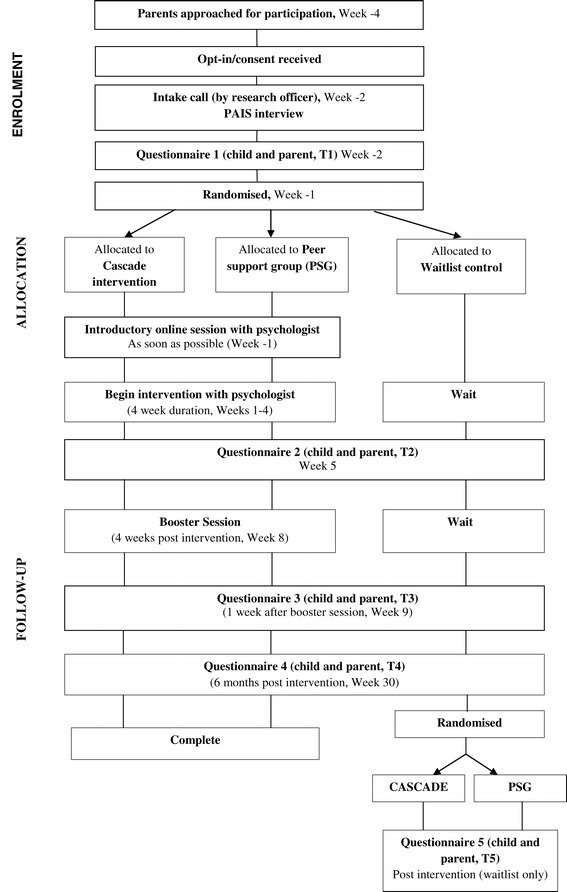
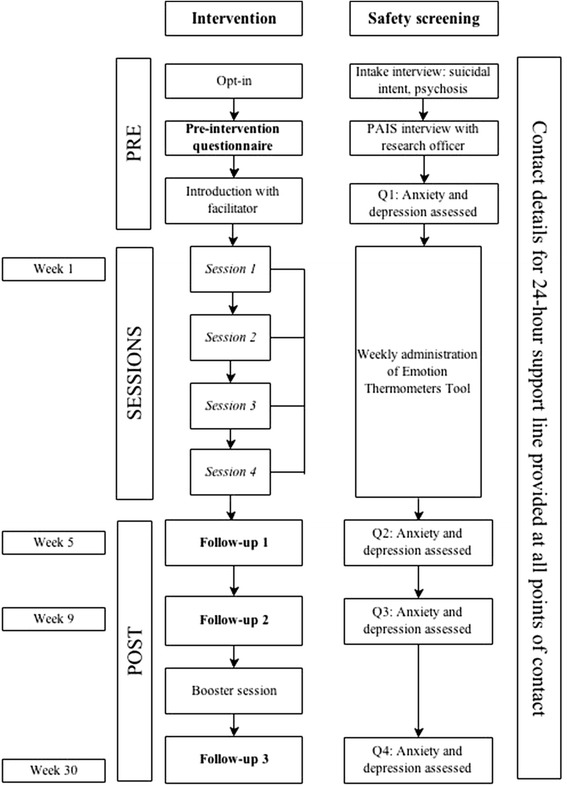
- The intervention consists of four weekly online 90-minute group sessions, plus an introductory session and a booster session one month later.
- Feasibility targets include a 40% response rate and 20% attrition; the authors estimate about 375 parents would need to be approached to recruit 120 participants.
## Methods
- Design: Multi-site, three-arm randomized controlled trial with Cascade, peer-support group, and 6-month waitlist control; assessments at baseline (T1), post-intervention (T2), 5 weeks post-intervention / 1 week post-booster (T3), and 6 months post-intervention (T4).
- Sample/data: Parents or legal guardians of children <16 years who finished cancer treatment with curative intent within the last 1–12 months; children aged 7–15 years are invited to complete self-report measures.
- Analysis: Intention-to-treat and as-treated analyses using mixed random-intercept models; multiple regression to identify predictors of treatment outcome; multiple comparisons with Holm-Bonferroni adjustment.
## Limitations
- The paper itself notes that the three-armed design will increase recruitment time and that the 6-month follow-up may complicate analyses because participants may receive other support during follow-up.
- It also makes evident that this is a protocol, so no trial results are reported here (evident from the text).
- The study may have generalizability constraints because eligibility requires English literacy and private internet/computer access; this is evident from the inclusion and access criteria.
Model-written summary. Check it against the paper before relying on it.
Integrity signals
Registry
Cites
Statistics
Figures
Verification
Claims the paper makes
12 Valid · 1 Not valid · 22 Not checked · 7 Own results and interpretations
The cited sources support only part of this claim — read each source’s verdict below.
In the paper
“Any variation or systematic biases between groups will be detected and corrected by the independent assessors during treatment fidelity checks of a random 15% of all video-recorded sessions (the validated ‘Method of Assessing Treatment Delivery’ advises a minimum of 11%) [51].”
§ Online parent-targeted cognitive-behavioural therapy intervention to improve quality of life in families of young cancer survivors: study protocol for a randomised controlled trial > Methods/Design > Procedures
What the sources say
- Partly supportedcites [51] Leeuw M Goossens M de Vet H Vlaeyena J The fidelity of treatment delivery can be assessed in treatment outcome studies: a successful illustration from behavioral medicine J Clin Epidemiol. 2009 62 81 90 10.1016/j.jclinepi.2008.03.008 18722086 sourceExperimental — accuracy not yet measured
Sections 4.1.1 and 4.2.1 support randomly selecting recorded sessions for assessment by independent raters, and the discussion says repeated assessment during a trial can help improve treatment delivery. But Section 4.1.2 describes 11% as the proportion selected in this particular study to calculate interrater reliability, not a minimum advised by MATD. The paper also does not guarantee that assessors will detect and correct any variation or systematic bias between groups. Page numbers were not available in our copy. (LLM, conf=0.88)
plainstates a cause- Asserted: passes — The authors put it forward as true.
- Checkable: passes — It can be checked against evidence.
- Load-bearing: unclear — It is unclear whether the paper’s conclusions depend on it.
- Based: passes — The paper gives a reason why it holds.
- Partly supported
Every source the paper cites for this claim was checked and supports it.
In the paper
“Each Cascade module applies CBT techniques to the key domains of concern identified in our previous research [4,49] (see Table 2).”
§ Online parent-targeted cognitive-behavioural therapy intervention to improve quality of life in families of young cancer survivors: study protocol for a randomised controlled trial > Methods/Design > Interventions
What the sources say
- Supportedcites [4] Wakefield CE McLoone JK Butow P Lenthen K Cohn RJ Parental adjustment to the completion of their child’s cancer treatment: A systematic review Pediatr Blood Cancer. 2011 56 524 31 10.1002/pbc.22725 21298736 source
In the Results and Discussion (page unavailable), the paper identifies parents’ concerns after their child’s cancer treatment, including fear of recurrence, uncertainty and helplessness. Its concluding discussion (page unavailable) also identifies fatigue, loneliness, social isolation and parenting issues as targets for interventions. The citation supports the identification of these domains; the sentence describes the Cascade modules as the citing authors’ own application of CBT. (LLM, conf=0.90)
- Supportedcites [49] Wakefield CE McLoone JK Butow P Lenthen K Cohn RJ Support after the completion of cancer treatment: Perspectives of Australian adolescents and their families Eur J Cancer Care (Engl). 2013 22 530 9 10.1111/ecc.12059 23730980 source
The cited study identifies unmet post-treatment support needs among adolescent cancer survivors and their families. Its Discussion (page unavailable) highlights gaps in emotional and psychological support and recommends psycho-oncology-specific modules. The citation supports the identification of concerns; the statement about how Cascade applies CBT describes the citing authors’ own modules. (LLM, conf=0.88)
plain- Asserted: passes — The authors put it forward as true.
- Checkable: passes — It can be checked against evidence.
- Load-bearing: unclear — It is unclear whether the paper’s conclusions depend on it.
- Based: passes — The paper gives a reason why it holds.
- Supported
The cited sources that could be checked couldn’t confirm or dispute this claim.
In the paper
“Improving parents’ communication skills can also promote adaptive functioning in children with cancer [27].”
§ Online parent-targeted cognitive-behavioural therapy intervention to improve quality of life in families of young cancer survivors: study protocol for a randomised controlled trial > Background
What the sources say
- Could not verifycites [27] Drotar D Relating parent and family functioning to the psychological adjustment of children with chronic health conditions: What have we learned? What do we need to know? J Pediatr Psychol. 1997 22 149 65 10.1093/jpepsy/22.1.1 9114640 sourceExperimental — accuracy not yet measured
The Discussion and clinical-implications passages concern family support and psychological distress among mothers of children with hemophilia and HIV infection. Searches for parental communication skills and children’s adaptive functioning found no passage addressing whether improving those skills benefits children with cancer. (LLM, conf=0.76)
plainstates a possible cause- Asserted: passes — The authors put it forward as true.
- Checkable: passes — It can be checked against evidence.
- Load-bearing: passes — The paper’s conclusions depend on it.
- Based: passes — The paper gives a reason why it holds.
- Could not verify
Every source the paper cites for this claim was checked and supports it.
In the paper
“The Pediatric Quality of Life inventory (PedsQL) Family Impact Module [57] was selected as the primary psychosocial outcome variable as it assesses parent/caregiver functional concerns specifically related to their child’s illness.”
§ Online parent-targeted cognitive-behavioural therapy intervention to improve quality of life in families of young cancer survivors: study protocol for a randomised controlled trial > Methods/Design > Assessments
What the sources say
- Supportedcites [57] Varni JW Sherman SA Burwinkle TM Dickinson PE Dixon P The PedsQL™ family impact module: preliminary reliability and validity Health Qual Life Outcomes. 2004 2 55 10.1186/1477-7525-2-55 15450120 PMC521692 source
The Abstract describes the PedsQL™ Family Impact Module as measuring the impact of pediatric chronic health conditions on parents and families. The PedsQL™ Family Impact Module section specifies parent-reported functioning, including communication and worry; Table 1 includes concerns about the child’s health condition and treatment. The decision to use it as the primary outcome belongs to the citing authors. (LLM, conf=0.93)
plain- Asserted: passes — The authors put it forward as true.
- Checkable: passes — It can be checked against evidence.
- Load-bearing: passes — The paper’s conclusions depend on it.
- Based: passes — The paper gives a reason why it holds.
- Supported
The cited sources support only part of this claim — read each source’s verdict below.
In the paper
“PROMIS has excellent psychometric properties superior to many other measures available to assess emotional functioning [61].”
§ Online parent-targeted cognitive-behavioural therapy intervention to improve quality of life in families of young cancer survivors: study protocol for a randomised controlled trial > Methods/Design > Assessments
What the sources say
- Partly supportedcites [61] Cella D Riley W Stone A Rothrock N Reeve B Yount S The patient-reported outcomes measurement information system (PROMIS) developed and tested its first wave of adult self-reported health outcome item banks: 2005–2008 J Clin Epidemiol. 2010 63 1179 94 10.1016/j.jclinepi.2010.04.011 20685078 PMC2965562 sourceExperimental — accuracy not yet measured
The Results report high reliability and strong correlations with legacy measures for the emotional-distress item banks and their short forms. But the Abstract Conclusion describes PROMIS short forms as comparable to legacy instruments, not superior to other measures of emotional functioning. (LLM, conf=0.90)
plain- Asserted: passes — The authors put it forward as true.
- Checkable: passes — It can be checked against evidence.
- Load-bearing: unclear — It is unclear whether the paper’s conclusions depend on it.
- Based: passes — The paper gives a reason why it holds.
- Partly supported
11 more claims
Create a free account to see all 42 claims and to verify the 1 reference still open.
- It may state two separate claims as one. 18
- Probably not a substantial claim. 11
Claims other papers make about this one
Each is checked against this paper’s own text: does it say what the citing paper says it does?
The cited source says what the claim attributes to it.
In the citing paper
“With ethical approval, some aspects of the study design were modified after publication of the study protocol [35] as challenges were identified in the roll-out of the trial.”
From Providing psychological support to parents of childhood cancer survivors: ‘cascade’ intervention trial results and lessons for the future (2021) · cites this paper as [35]
The cited source says what the claim attributes to it.
In the citing paper
“Our target sample size was 120, which would have provided 80% power to detect medium-large differences in HRQL (an effect size of 0.65) [35]; however, recruitment was closed when the funding period ended.”
From Providing psychological support to parents of childhood cancer survivors: ‘cascade’ intervention trial results and lessons for the future (2021) · cites this paper as [35]
The cited source says what the claim attributes to it.
In the citing paper
“Even with multiple amendments to our original trial protocol [35], our trial did not meet our recruitment targets, with slower than anticipated launch of the trial at each site, and lower than anticipated participant accrual.”
From Providing psychological support to parents of childhood cancer survivors: ‘cascade’ intervention trial results and lessons for the future (2021) · cites this paper as [35]
Citations
Cites
CONSORT 2010 Statement: updated guidelines for reporting parallel group randomised trials
the CONSORT Group, Schulz, K. F., Altman, D. G., & Moher, D. (2010) · BMC Medicine · doi:10.1186/1741-7015-8-18 · Cited by 13,371
Development and preliminary testing of the new five-level version of EQ-5D (EQ-5D-5L)
Herdman, M., Gudex, C., Lloyd, A., Janssen, M., Kind, P., Parkin, D., Bonsel, G., & Badia, X. (2011) · Quality of Life Research · doi:10.1007/s11136-011-9903-x · Cited by 9,795
Moher, D., Hopewell, S., Schulz, K. F., Montori, V., Gotzsche, P. C., Devereaux, P. J., Elbourne, D., Egger, M., & Altman, D. G. (2010) · BMJ · doi:10.1136/bmj.c869 · Cited by 8,883
Cella, D., Riley, W., Stone, A., Rothrock, N., Reeve, B., Yount, S., Amtmann, D., Bode, R., Buysse, D., Choi, S., et al. (2010) · Journal of Clinical Epidemiology · doi:10.1016/j.jclinepi.2010.04.011 · Cited by 5,128
Norman, G. R., Sloan, J. A., & Wyrwich, K. W. (2003) · Medical Care · doi:10.1097/01.mlr.0000062554.74615.4c · Cited by 4,700
CONSORT 2010 statement: updated guidelines for reporting parallel group randomized trials
Schulz, K. F., Altman, D. G., Moher, D., & for the CONSORT Group* (2010) · Annals of Internal Medicine · doi:10.7326/0003-4819-152-11-201006010-00232 · Cited by 3,824
Principles and Practice of Pediatric Oncology
(1990) · Annals of Internal Medicine · doi:10.7326/0003-4819-112-8-636_3 · Cited by 2,027
Moher, D., Hopewell, S., Schulz, K. F., Montori, V., Gøtzsche, P. C., Devereaux, P. J., Elbourne, D., Egger, M., & Altman, D. G. (2010) · Journal of Clinical Epidemiology · doi:10.1016/j.jclinepi.2010.03.004 · Cited by 1,858
Tutorial on maximum likelihood estimation
Myung, I. J. (2003) · Journal of Mathematical Psychology · doi:10.1016/s0022-2496(02)00028-7 · Cited by 1,802 · cited 1×
“Random intercept models, which utilise maximumlikelihood estimation, provide more efficient estimates of effects with unbalanced data than the traditional repeated measures approach [67].”
MethodPotential roles of parental self-efficacy in parent and child adjustment: A review
Jones, T. L., & Prinz, R. J. (2005) · Clinical Psychology Review · doi:10.1016/j.cpr.2004.12.004 · Cited by 1,743 · cited 1×
“Importantly, parents’ confidence in their ability to parent and associated positive parenting practices may be a protective factor for families under stress [60].”
BackgroundVarni, J. W., Burwinkle, T. M., Katz, E. R., Meeske, K., & Dickinson, P. (2002) · Cancer · doi:10.1002/cncr.10428 · Cited by 1,448
Internet-Based and Other Computerized Psychological Treatments for Adult Depression: A Meta-Analysis
Andersson, G., & Cuijpers, P. (2009) · Cognitive Behaviour Therapy · doi:10.1080/16506070903318960 · Cited by 1,368 · cited 3×
“There is growing evidence supporting the potential of telepsychology in treating disorders such as anxiety and depression [31,73,74].”
BackgroundDevelopment and validation of a revised short version of the working alliance inventory
Hatcher, R. L., & Gillaspy, J. A. (2006) · Psychotherapy Research · doi:10.1080/10503300500352500 · Cited by 1,355 · cited 1×
“The Working Alliance Inventory - Short (WAI- S) [65] and The California Psychotherapy Alliance Scale - Group (CALPAS-G) [66] will be used to assess participants’ perceptions of the therapeutic working alliance, during and after the intervention.”
MethodAdjusting for multiple testing when reporting research results: the Bonferroni vs Holm methods.
Aickin, M., & Gensler, H. (1996) · American Journal of Public Health · doi:10.2105/ajph.86.5.726 · Cited by 1,346 · cited 1×
“Multiple comparisons will be used to test a priori hypotheses and to conduct post-hoc testing, with the alpha rate adjusted using the Holm-Bonferroni method [68].”
MethodThe Effectiveness of Telemental Health: A 2013 Review
Hilty, D. M., Ferrer, D. C., Parish, M. B., Johnston, B., Callahan, E. J., & Yellowlees, P. M. (2013) · Telemedicine and e-Health · doi:10.1089/tmj.2013.0075 · Cited by 1,048
Principles and Practice of Pediatric Oncology
Labotka, R. J. (2002) · JAMA: The Journal of the American Medical Association · doi:10.1001/jama.288.7.894-a · Cited by 1,046
The Working Alliance: Theory, Research, and Practice
Bogart, G. (1995) · American Journal of Psychotherapy · doi:10.1176/appi.psychotherapy.1995.49.2.306 · Cited by 994
Epidemiology of childhood cancer
Kaatsch, P. (2010) · Cancer Treatment Reviews · doi:10.1016/j.ctrv.2010.02.003 · Cited by 978
Quality-of-life measures in chronic diseases of childhood
Eiser, C., & Morse, R. (2001) · Health Technology Assessment · doi:10.3310/hta5040 · Cited by 872 · cited 1×
“In a recent review of QoL measures for children, the PedsQL emerged as a feasible and valid tool that is widely used in cancer and chronic disease [63].”
MethodThe PedsQL™ family impact module: Preliminary reliability and validity
Varni, J. W., Sherman, S. A., Burwinkle, T. M., Dickinson, P. E., & Dixon, P. (2004) · Health and Quality of Life Outcomes · doi:10.1186/1477-7525-2-55 · Cited by 699
The distinctive biology of cancer in adolescents and young adults
on behalf of the Biology and Clinical Trials Subgroups of the US National Cancer Institute Progress Review Group in Adolescent and Young Adult Oncology, Bleyer, A., Barr, R., Hayes-Lattin, B., Thomas, D., Ellis, C., & Anderson, B. (2008) · Nature Reviews Cancer · doi:10.1038/nrc2349 · Cited by 660
The psychosocial adjustment to illness scale (PAIS)
Derogatis, L. R. (1986) · Journal of Psychosomatic Research · doi:10.1016/0022-3999(86)90069-3 · Cited by 621
Mohr, D. C., Spring, B., Freedland, K. E., Beckner, V., Arean, P., Hollon, S. D., Ockene, J., & Kaplan, R. (2009) · Psychotherapy and Psychosomatics · doi:10.1159/000228248 · Cited by 565 · cited 1×
“The PSG arm holds constant the amount of treatment contact, human interaction variables (such as facilitator warmth and interaction between participants), as well as controlling for participants’ expectations of receiving some form of treatment [37].”
BackgroundPosttraumatic Growth in Adolescent Survivors of Cancer and Their Mothers and Fathers
Barakat, L. P., Alderfer, M. A., & Kazak, A. E. (2006) · Journal of Pediatric Psychology · doi:10.1093/jpepsy/jsj058 · Cited by 478 · cited 1×
“Despite the acknowledged positive aspects of treatment completion [5,6], this is a vulnerable time for some parents, who can experience worsening quality of life (QoL), anxiety, depression, and feelings of helplessness [7,8].”
BackgroundComputer‐Aided Psychotherapy for Anxiety Disorders: A Meta‐Analytic Review
Cuijpers, P., Marks, I. M., van Straten, A., Cavanagh, K., Gega, L., & Andersson, G. (2009) · Cognitive Behaviour Therapy · doi:10.1080/16506070802694776 · Cited by 429 · cited 1×
“It is clear that online cognitive-behavioural therapy (CBT) programs can be effective, with meta-analyses reporting mediumlarge effects for anxiety [30] and depression [31].”
BackgroundMoher, D., Hopewell, S., Schulz, K. F., Montori, V., Gøtzsche, P. C., Devereaux, P. J., Elbourne, D., Egger, M., & Altman, D. G. (2012) · Journal of Clinical Epidemiology · doi:10.1016/j.jclinepi.2011.10.006 · Cited by 414
Kazak, A. E., & Drotar, D. (1997) · Journal of Pediatric Psychology · doi:10.1093/jpepsy/22.2.149 · Cited by 321
Cancer peer support programs—do they work?
Campbell, H. S., Phaneuf, M. R., & Deane, K. (2004) · Patient Education and Counseling · doi:10.1016/j.pec.2003.10.001 · Cited by 288
Transdiagnostic internet treatment for anxiety and depression: a randomised controlled trial
Titov, N., Dear, B. F., Schwencke, G., Andrews, G., Johnston, L., Craske, M. G., & McEvoy, P. (2011) · Behaviour Research and Therapy · doi:10.1016/j.brat.2011.03.007 · Cited by 285 · cited 1×
“Transdiagnostic programs that target co-morbid anxiety and depression may also be effective when delivered online [32].”
BackgroundDumka, L. E., Stoerzinger, H. D., Jackson, K. M., & Roosa, M. W. (1996) · Family Relations · doi:10.2307/585293 · Cited by 279
An application of an urn model to the design of sequential controlled clinical trials.
Wei, L. J. (1978) · Journal of the American Statistical Association · doi:10.1080/01621459.1978.10480054 · Cited by 271 · cited 1×
“This method is superior to standard stratification in balancing groups across multiple covariates [42,43], whilst also being a suitable method when groups remain small [41,44,45].”
MethodDelivery of Evidence-Based Psychotherapy via Video Telehealth
Gros, D. F., Morland, L. A., Greene, C. J., Acierno, R., Strachan, M., Egede, L. E., Tuerk, P. W., Myrick, H., & Frueh, B. C. (2013) · Journal of Psychopathology and Behavioral Assessment · doi:10.1007/s10862-013-9363-4 · Cited by 227
Kazak, A. E., Hocking, M. C., Ittenbach, R. F., Meadows, A. T., Hobbie, W., DeRosa, B. W., Leahey, A., Kersun, L., & Reilly, A. (2012) · Pediatric Blood & Cancer · doi:10.1002/pbc.23320 · Cited by 226
Parent and family factors associated with child adjustment to pediatric cancer
Robinson, K. E., Gerhardt, C. A., Vannatta, K., & Noll, R. B. (2006) · Journal of Pediatric Psychology · doi:10.1093/jpepsy/jsl038 · Cited by 207 · cited 1×
“flict and poor family cohesion [25].”
Family coping with pediatric leukemia: Ten years after treatment
Kupst, M. J., Natta, M. B., Richardson, C. C., Schulman, J. L., Lavigne, J. V., & Das, L. (1995) · Journal of Pediatric Psychology · doi:10.1093/jpepsy/20.5.601 · Cited by 200 · cited 1×
“The impact of poor parent coping may extend for years, with evidence that even 10 to 15 years post-diagnosis, coping in child cancer survivors may still be related to their mother’s coping [23].”
BackgroundFacilitating family resilience with childhood illness and disability
Rolland, J. S., & Walsh, F. (2006) · Current Opinion in Pediatrics · doi:10.1097/01.mop.0000245354.83454.68 · Cited by 197 · cited 1×
“Cascade is guided by the family systems illness model [47].”
MethodParental adjustment to the completion of their child's cancer treatment
Wakefield, C. E., McLoone, J. K., Butow, P., Lenthen, K., & Cohn, R. J. (2011) · Pediatric Blood & Cancer · doi:10.1002/pbc.22725 · Cited by 177
Self-citationGoldbeck, L. (2001) · Psycho-Oncology · doi:10.1002/pon.530 · Cited by 165 · cited 3×
“sive coping strategies [13], both of which can create con-”
BackgroundA Class of Designs for Sequential Clinical Trials
Wei, L.-J. (1977) · Journal of the American Statistical Association · doi:10.1080/01621459.1977.10481005 · Cited by 163
Evidence-Based Practice for Telemental Health
Grady, B., Myers, K. M., Nelson, E.-L., Belz, N., Bennett, L., Carnahan, L., Decker, V. B., Holden, D., Perry, G., Rosenthal, L., et al. (2011) · Telemedicine and e-Health · doi:10.1089/tmj.2010.0158 · Cited by 160
Sansom-Daly, U. M., Peate, M., Wakefield, C. E., Bryant, R. A., & Cohn, R. J. (2012) · Health Psychology · doi:10.1037/a0025977 · Cited by 157 · cited 1×
“However, generic psychological measures facilitate comparison to healthy norms, which can be clinically and empirically advantageous [56].”
BackgroundSelf-citationPsychological adjustment of parents of pediatric cancer patients revisited: five years later
Wijnberg-Williams, B. J., Kamps, W. A., Klip, E. C., & Hoekstra-Weebers, J. E. H. M. (2006) · Psycho-Oncology · doi:10.1002/pon.927 · Cited by 151
A systematic review of psychosocial interventions to improve cancer caregiver quality of life
Waldron, E. A., Janke, E. A., Bechtel, C. F., Ramirez, M., & Cohen, A. (2013) · Psycho-Oncology · doi:10.1002/pon.3118 · Cited by 147 · cited 1×
“CBT may be particularly effective in improving QoL in carers of cancer patients if it targets communication and problem solving skills (both addressed in Cascade) [48].”
BackgroundHomework compliance: An uncontrolled variable in cognitive therapy outcome research
Primakoff, L., Epstein, N., & Covi, L. (1986) · Behavior Therapy · doi:10.1016/s0005-7894(86)80073-9 · Cited by 136
Attributions, Coping and, Adjustment in Children with Cancer
Frank, N. C., Blount, R. L., & Brown, R. T. (1997) · Journal of Pediatric Psychology · doi:10.1093/jpepsy/22.4.563 · Cited by 126 · cited 2×
“These parenting approaches may result in more behaviour problems [15] and distress [20,21] in young cancer survi-”
BackgroundValdimarsdóttir, U. A., Kreicbergs, U. C., Hauksdóttir, A., Hunt, H., Onelöv, E., Henter, J., & Steineck, G. (2007) · The Lancet Oncology · doi:10.1016/s1470-2045(07)70209-7 · Cited by 115
Hu, C., Kung, S., Rummans, T. A., Clark, M. M., & Lapid, M. I. (2015) · Journal of the American Medical Informatics Association · doi:10.1136/amiajnl-2014-002817 · Cited by 113 · cited 1×
“Online programs also have the potential to reduce distress and improve wellbeing in those who care for someone with a medical condition [33].”
BackgroundGreening, L., & Stoppelbein, L. (2007) · Journal of Pediatric Psychology · doi:10.1093/jpepsy/jsm057 · Cited by 112 · cited 1×
“sion and anxiety [26] and enhance their parenting skills”
BackgroundCalifornia Psychotherapy Alliance Scales
Marmar, C. R., Gaston, L., Gallagher-Thompson, D. E., & Thompson, L. W. (1989) · PsycTESTS Dataset · doi:10.1037/t02049-000 · Cited by 110
Care and support needs of children and young people with cancer and their parents
Mitchell, W., Clarke, S., & Sloper, P. (2006) · Psycho-Oncology · doi:10.1002/pon.1014 · Cited by 105
Family information needs at childhood cancer treatment completion
Wakefield, C. E., Butow, P., Fleming, C. A. K., Daniel, G., & Cohn, R. J. (2012) · Pediatric Blood & Cancer · doi:10.1002/pbc.23316 · Cited by 104 · cited 1×
“Major themes of difficulty in the post-treatment period can include fear of cancer recurrence, isolation, and loneliness, with substantial unmet needs for information about relapse surveillance and how to ‘return to normality’ [10-12].”
BackgroundSelf-citationMaurice‐Stam, H., Oort, F. J., Last, B. F., & Grootenhuis, M. A. (2008) · Psycho-Oncology · doi:10.1002/pon.1260 · Cited by 97
Self-citationMulhern, R. K., Fairclough, D. L., Smith, B., & Douglas, S. M. (1992) · Journal of Pediatric Psychology · doi:10.1093/jpepsy/17.3.313 · Cited by 95 · cited 1×
“These parenting approaches may result in more behaviour problems [15] and distress [20,21] in young cancer survi-”
BackgroundInterventions for improving communication with children and adolescents about their cancer
Ranmal, R., Prictor, M., & Scott, J. T. (2008) · Cochrane Database of Systematic Reviews · doi:10.1002/14651858.cd002969.pub2 · Cited by 95
Drotar, D., Agle, D. P., Eckl, C. L., & Thompson, P. A. (1997) · Journal of Pediatric Psychology · doi:10.1093/jpepsy/22.1.1 · Cited by 88
Lehmann, V., Grönqvist, H., Engvall, G., Ander, M., Tuinman, M. A., Hagedoorn, M., Sanderman, R., Mattsson, E., & von Essen, L. (2014) · Psycho-Oncology · doi:10.1002/pon.3549 · Cited by 86 · cited 1×
“Despite the acknowledged positive aspects of treatment completion [5,6], this is a vulnerable time for some parents, who can experience worsening quality of life (QoL), anxiety, depression, and feelings of helplessness [7,8].”
BackgroundFrueh, B. C., Monnier, J., Grubaugh, A. L., Elhai, J. D., Yim, E., & Knapp, R. (2007) · Behavior Modification · doi:10.1177/0145445507302125 · Cited by 82
The Cessation of Cancer Treatment as a Crisis
Arnold, E. M. (1999) · Social Work in Health Care · doi:10.1300/j010v29n02_02 · Cited by 80 · cited 1×
“Given that no efficacious, online programs currently exist to provide support for Australian parents at this recognised critical adjustment period [35], we developed a tailored intervention, ‘Cascade’, to meet their needs.”
BackgroundThompson, R. J., Gustafson, K. E., George, L. K., & Spock, A. (1994) · Journal of Pediatric Psychology · doi:10.1093/jpepsy/19.2.189 · Cited by 74 · cited 1×
“tressed parents may express more anger toward their surviving child [17], listen less to their children [18], and have more negative parent–child interactions [19].”
BackgroundThe Role of Social Support in Parental Adjustment to Pediatric Cancer
Morrow, G. R., Carpenter, P. J., & Hoagland, A. C. (1984) · Journal of Pediatric Psychology · doi:10.1093/jpepsy/9.3.317 · Cited by 69 · cited 1×
“outcomes for children with cancer when targeted [13,28].”
BackgroundHow Psychological Telehealth Can Alleviate Society's Mental Health Burden: A Literature Review
Perle, J. G., & Nierenberg, B. (2013) · Journal of Technology in Human Services · doi:10.1080/15228835.2012.760332 · Cited by 68
Review of Family-Based Psychosocial Interventions for Childhood Cancer
Meyler, E., Guerin, S., Kiernan, G., Postgrad Dip Counselling and Psychotherapy, P., & Breatnach, F. (2010) · Journal of Pediatric Psychology · doi:10.1093/jpepsy/jsq032 · Cited by 68
Leeuw, M., Goossens, M. E. J. B., de Vet, H. C. W., & Vlaeyen, J. W. S. (2009) · Journal of Clinical Epidemiology · doi:10.1016/j.jclinepi.2008.03.008 · Cited by 65 · cited 1×
“Any variation or systematic biases between groups will be detected and corrected by the independent assessors during treatment fidelity checks of a random 15% of all video-recorded sessions (the validated ‘Method of Assessing Treatment Delivery’ advises a minimum of 11%) [51].”
MethodThe Impact of Childhood Cancer on the Family
Overholser, J. C., & Fritz, G. K. (1990) · Journal of Psychosocial Oncology · doi:10.1300/j077v08n04_05 · Cited by 64
Adaptive Biased Urn Randomization in Small Strata When Blinding Is Impossible
Schouten, H. J. A. (1995) · Biometrics · doi:10.2307/2533283 · Cited by 62
Vogel, P. A., Launes, G., Moen, E. M., Solem, S., Hansen, B. K. A., Håland, Å. T., & Himle, J. A. (2011) · Journal of Anxiety Disorders · doi:10.1016/j.janxdis.2011.10.009 · Cited by 61
Wakefield, C. E., McLoone, J., Butow, P., Lenthen, K., & Cohn, R. J. (2013) · European Journal of Cancer Care · doi:10.1111/ecc.12059 · Cited by 58
Self-citationShulman, L. (1986) · Social Work With Groups · doi:10.1300/j009v08n04_06 · Cited by 58
Long distance related stressors and coping behaviors in parents of children with cancer
Aitken, T. J., & Hathaway, G. (1993) · Journal of Pediatric Oncology Nursing · doi:10.1177/104345429301000103 · Cited by 41 · cited 1×
“Parents living in rural/remote areas appear most at risk of these poor outcomes [9].”
BackgroundIs internet treatment for depressive and anxiety disorders ready for prime time?
Andrews, G., & Titov, N. (2010) · Medical Journal of Australia · doi:10.5694/j.1326-5377.2010.tb03693.x · Cited by 37
Maternal Distress and Discrepancy in Reports of Psychopathology in Chronically Ill Children
Canning, E. H., Hanser, S. B., Shade, K. A., & Boyce, W. T. (1993) · Psychosomatics · doi:10.1016/s0033-3182(93)71825-3 · Cited by 34 · cited 1×
“These parenting approaches may result in more behaviour problems [15] and distress [20,21] in young cancer survi-”
BackgroundIdentifying the Educational Needs of Parents at the Completion of Their Child’s Cancer Therapy
Hobbie, W. L., Ogle, S. K., Reilly, M., Ginsberg, J. P., Rourke, M., Ratcliffe, S., & Deatrick, J. A. (2010) · Journal of Pediatric Oncology Nursing · doi:10.1177/1043454209360778 · Cited by 33 · cited 1×
“Major themes of difficulty in the post-treatment period can include fear of cancer recurrence, isolation, and loneliness, with substantial unmet needs for information about relapse surveillance and how to ‘return to normality’ [10-12].”
BackgroundPage, M. C., Fedele, D. A., Pai, A. L. H., Anderson, J., Wolfe-Christensen, C., Ryan, J. L., & Mullins, L. L. (2012) · Journal of Pediatric Psychology · doi:10.1093/jpepsy/jsr055 · Cited by 23 · cited 1×
“Parental psychological adjustment problems may jeopardise their capacity to provide the ‘secure base’ that children need in times of stress [14] and can lead to less effective parenting [15,16].”
BackgroundTelemental Health: Responding to Mandates for Reform in Primary Healthcare
Myers, K., & Lieberman, D. Z. (2013) · Telemedicine Journal and e-Health · doi:10.1089/tmj.2013.0084 · Cited by 16
Potential Pitfalls of Using Illness-Specific Measures
Dongen-Melman, J. E. W. M. V., Groot, A. D., Hählen, K., & Verhulst, F. C. (1996) · Journal of Pediatric Psychology · doi:10.1093/jpepsy/21.1.103 · Cited by 13
Refining our understanding of family relationships
Robinson, E. (2009) · Family matters · Cited by 7
Rapid screening for psychologic distress in men with prostate carcinoma
Roth, A. J., Kornblith, A. B., Batel-Copel, L., Peabody, E., Scher, H. I., & Holland, J. C. (1998) · Cancer · doi:10.1002/(sici)1097-0142(19980515)82:10<1904::aid-cncr13>3.0.co;2-x
Research works printed but not linked: 3
- Field TM Bornstein M Psychologically depressed parents Handbook of parenting, vol 1995 Mahwah, NJ Lawrence Erlbaum & Associates 85 99
- Patterson P Millar B Visser A The needs of young people who have a sibling with cancer: Report on the CanTeen national member survey for sibling members 2008 CanTeen Australia
- Australia C Cancer support groups: a guide to setting up peer facilitated supports 2009 Cancer Australia Canberra
Cited by
Michel, G., Brinkman, T. M., Wakefield, C. E., & Grootenhuis, M. (2020) · Pediatric Clinics of North America · doi:10.1016/j.pcl.2020.07.005 · Cited by 133
Self-citationFinancial toxicity of childhood cancer and changes to parents’ employment after treatment completion
Kelada, L., Wakefield, C. E., Vetsch, J., SCHOFIELD, D. J., Sansom‐Daly, U. M., Hetherington, K., O'Brien, T. A., Cohn, R. J., Anazodo, A. C., Viney, R. C., et al. (2020) · Pediatric Blood & Cancer · doi:10.1002/pbc.28345 · Cited by 90
Self-citationWakefield, C. E., Sansom-Daly, U. M., McGill, B. C., Ellis, S. J., Doolan, E. L., Robertson, E. G., Mathur, S., & Cohn, R. J. (2016) · Supportive Care in Cancer · doi:10.1007/s00520-016-3077-6 · Cited by 61
“CASCAdE (Cope, Adapt, Survive: Life after CAncEr) was developed by a multidisciplinary team with many years of experience in pediatric psycho-oncology, including psychologists, pediatric oncologists, social workers, and parent consumers [23].”
MethodHarrison, R., Raman, M., Walpola, R. L., Chauhan, A., & Sansom‐Daly, U. M. (2021) · BMC Health Services Research · doi:10.1186/s12913-021-06611-0 · Cited by 55
Self-citationYoga into Cancer Care: A Review of the Evidence-based Research
Agarwal, R. P., & Maroko-Afek, A. (2018) · International Journal of Yoga · doi:10.4103/ijoy.ijoy_42_17 · Cited by 76
Metadata
- Authors
- Wakefield, C. E., Sansom-Daly, U. M., McGill, B. C., McCarthy, M., Girgis, A., Grootenhuis, M., Barton, B., Patterson, P., Osborn, M., Lowe, C., Anazodo, A., Miles, G., & Cohn, R. J.
- Affiliations
- UNSW Sydney (AU)
- Royal Children's Hospital (AU)
- Amsterdam UMC Location University of Amsterdam (NL)
- The University of Sydney (AU)
- Royal Adelaide Hospital (AU)
- Children's Health Queensland Hospital and Health Service (AU)
- Prince of Wales Hospital (AU)
- Princess Margaret Hospital for Children (AU)
- Corresponding author
- Wakefield, Claire E
- ORCID
- Venue
- Trials
- Published
- 2015-04-11
- Volume
- 16
- Issue
- 1
- Pages
- 153-153
- ISSN
- 1745-6215 (ISSN-L)
- PMC
- PMC4395969
- OpenAlex
- W2140037727
- Cited by
- 35
- References
- 77
- Citations by year
- 2026: 1 · 2025: 2 · 2023: 3 · 2022: 3 · 2021: 10 · 2020: 4 · 2019: 3 · 2018: 4 · 2017: 3 · 2016: 2
- FWCI
- 2.98
- Type
- journal article
- Language
- en
- Open access
- gold
- doi.org
- Locations
- Trials (publishedVersion, cc-by)
- PubMed Central (publishedVersion, cc-by)
- PubMed (publishedVersion)
- UNSWorks (University of New South Wales, Sydney, Australia) (submittedVersion, cc-by-nc-nd)
- Pure Amsterdam UMC (submittedVersion, other-oa)
- UNSWorks (UNSW Sydney) (submittedVersion, cc-by-nc-nd)
- Data Archiving and Networked Services (DANS) (submittedVersion)
- Minerva Access (University of Melbourne) (submittedVersion, cc-by)
- Funders
- Cancer Australia (APP1065428)
- University of Technology Sydney
- Medical Research Council
- National Health and Medical Research Council (1067501)
- Topics
- Health Sciences › Medicine › Pediatrics, Perinatology and Child Health › Childhood Cancer Survivors' Quality of Life
- Health Sciences › Medicine › Oncology › Cancer survivorship and care
- Social Sciences › Psychology › Clinical Psychology › Family Support in Illness
- Keywords
- childhood cancer survivors, parental mental health, quality of life, cognitive behavioral therapy, online group therapy, videoconferencing, peer support, coping strategies, behavioral activation, mindfulness, acceptance and commitment therapy, assertiveness training, children's quality of life, family well-being
- MeSH terms
- Adaptation, Psychological, Adolescent, Australia, Child, Clinical Protocols, Feasibility Studies, Humans, Neoplasms, Parent-Child Relations, Parents, Peer Group, Quality of Life, Surveys and Questionnaires, Research Design, Therapy, Computer-Assisted, Time Factors, Cognitive Behavioral Therapy, Parenting, Treatment Outcome, Telemedicine, Survivors, Internet, Videoconferencing
About these checks
Registry, retraction, Cites and statistics results are computed, not judged, with one exception: a printed reference that no index lists is read once by a model before it counts as a citation error. Claims are extracted by a model and kept only when their quote appears verbatim in the text; each cited source is then checked, with a model’s help, for whether it says what the claim relies on. Those verdicts can be wrong — read the claim’s quote and the cited source before relying on one.
The claim verdicts this report counts are experimental: their accuracy is not yet measured.
A language model drew the claims from the paper on 2026-10-11, under version 3 of the claim definition (model deepseek-v4.1-flash, prompt extract-v3).
A second model labelled each claim on 2026-10-11 (model jev-1.13-20260917, definition revision gold-guideline-v0.2).
Cited sources are checked with a language model’s help (gpt-6-sol).
Statistics and arithmetic are recomputed, not judged.
Confidence bands are shown only for fields calibrated on our annotated test set. None is calibrated yet, so no band is shown.
What counts as a claim ›How we measure confidence ›How we check this ›
Are you an author, or do you see a problem with this page? Request a review
Data sources
Bibliographic data: Semantic Scholar, OpenAlex, Crossref.
Contains information from the Semantic Scholar Academic Graph Datasets, made available under the ODC Attribution License (ODC-BY 1.0).
Semantic Scholar’s data is described in: Kinney, R., et al. (2023). The Semantic Scholar Open Data Platform. arXiv:2301.10140.
