

Mapping research in student engagement and educational technology in higher education: a systematic evidence map
Open accessThe DOI matches its Crossref record; 175 of the 182 references it cites were found in a registry or an index; 6 of the 54 sources its claims cite were checked for support.
Abstract
Abstract Digital technology has become a central aspect of higher education, inherently affecting all aspects of the student experience. It has also been linked to an increase in behavioural, affective and cognitive student engagement, the facilitation of which is a central concern of educators. In order to delineate the complex nexus of technology and student engagement, this article systematically maps research from 243 studies published between 2007 and 2016. Research within the corpus was predominantly undertaken within the United States and the United Kingdom, with only limited research undertaken in the Global South, and largely focused on the fields of Arts & Humanities, Education, and Natural Sciences, Mathematics & Statistics. Studies most often used quantitative methods, followed by mixed methods, with little qualitative research methods employed. Few studies provided a definition of student engagement, and less than half were guided by a theoretical framework. The courses investigated used blended learning and text-based tools (e.g. discussion forums) most often, with undergraduate students as the primary target group. Stemming from the use of educational technology, behavioural engagement was by far the most often identified dimension, followed by affective and cognitive engagement. This mapping article provides the grounds for further exploration into discipline-specific use of technology to foster student engagement.
Overview
CoChat Summary
TL;DR
This systematic evidence map synthesizes 243 studies published 2007–2016 on student engagement and educational technology in higher education. It finds research concentrated in the US and UK, dominated by quantitative methods, often lacking definitions or theory, and most frequently linking blended learning and text-based tools to behavioural engagement.
Key findings
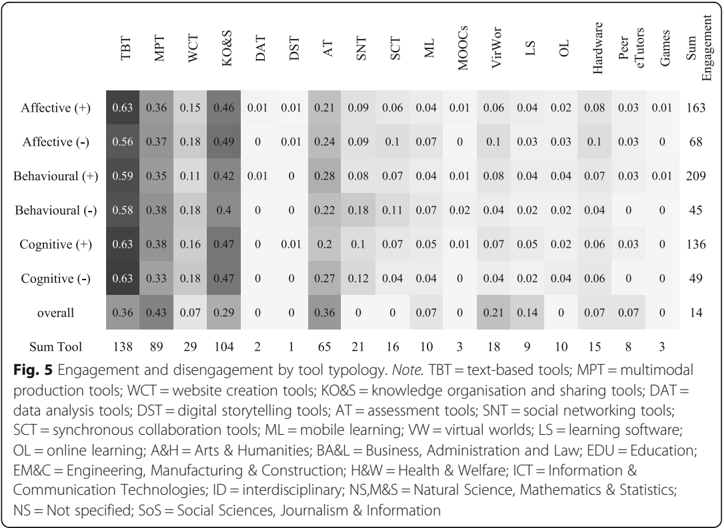
- Across 243 studies, behavioural engagement was documented in 209 studies (86%), affective engagement in 163 (67%), and cognitive engagement in 136 (56%); 117 studies (48%) showed all three dimensions.
- Most studies used quantitative methods (103, 42%), followed by mixed methods (84, 35%) and qualitative methods (56, 23%); 225 studies (93%) lacked a definition of student engagement, and 59% did not employ a theoretical model.
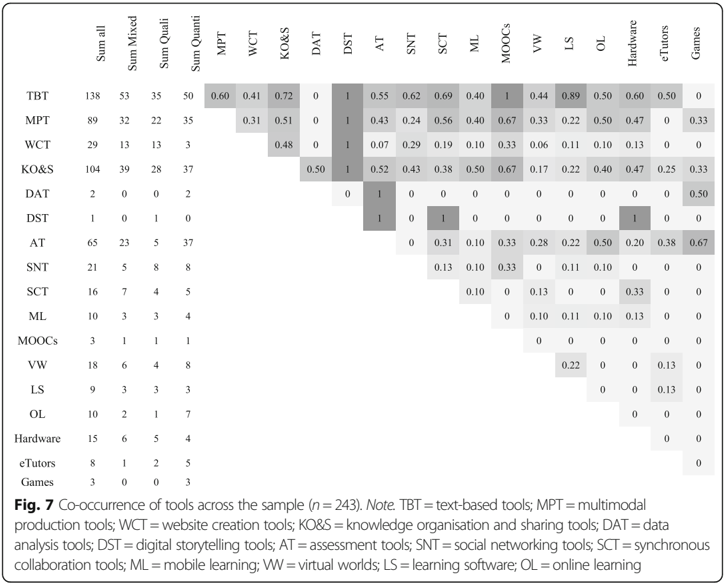
- Research was concentrated in the US (86 studies, 35.4%), UK (26, 10.7%), Australia (19, 7.8%), Taiwan (18, 7.4%), and China (9, 3.7%); top tools were LMS (n = 89), discussion forums (n = 80), videos (n = 44), recorded lectures (n = 25), and chat (n = 24).
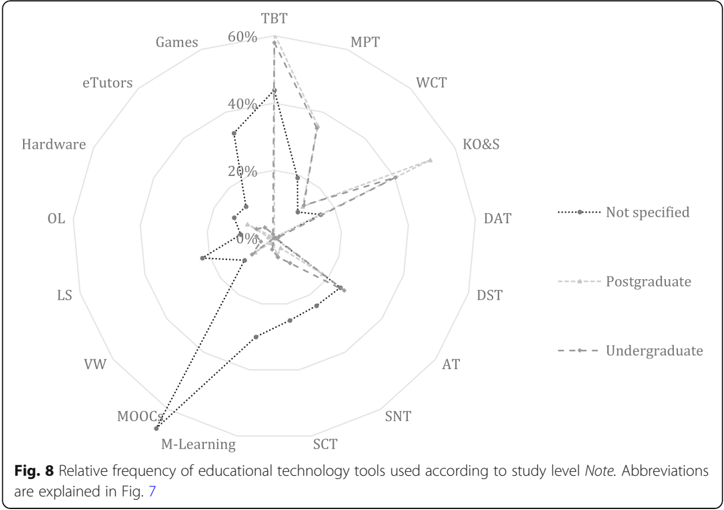
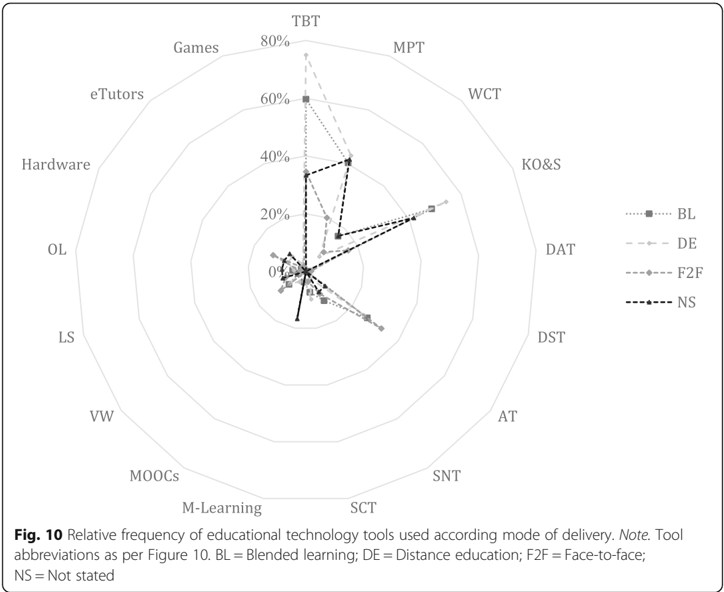
- Blended learning was the most researched mode of delivery (109 studies), followed by distance education (72) and face-to-face instruction (55); undergraduate students were the primary population (146 studies, 60%), while 41 studies (17%) did not specify study level.
Methods
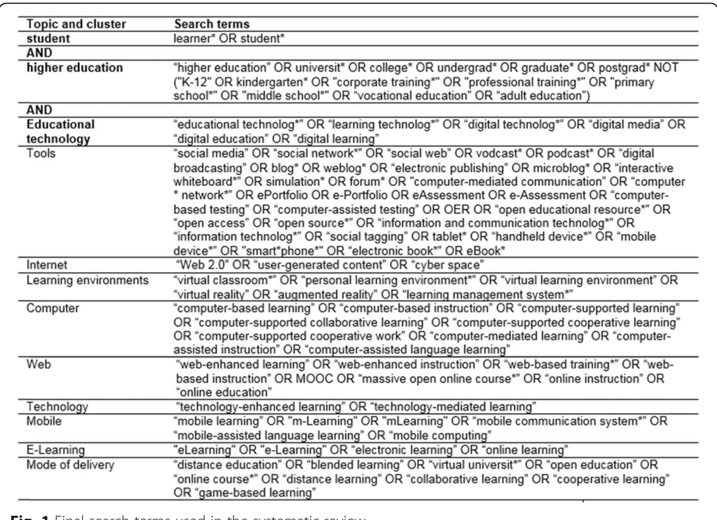
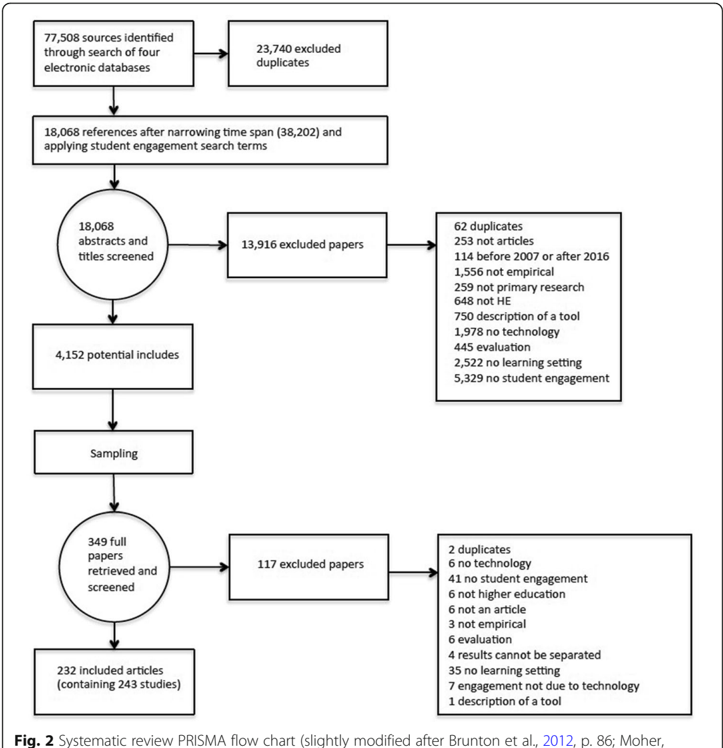
- Systematic evidence map/systematic review; four databases (ERIC, Web of Science, Scopus, PsycINFO) were searched in July 2017, retrieving 77,508 initial references, 53,768 after duplicate removal, and 18,068 records after adjusting the period to 2007–2016.
- After title/abstract screening, 4,152 potentially relevant articles remained; sample size estimation (5% error range, 50% proportion, 5% alpha) produced 349 sampled articles stratified by publishing year, and full-text screening left 232 articles containing 243 studies.
- Data were extracted using an extensive coding system covering study methodology, sample, learning scenario, mode of delivery, educational technology, and cognitive, affective, or behavioural engagement/disengagement indicators.
Limitations
- Stated: only English-language articles were included; grey literature, book chapters, monographs, and journals not indexed in the four databases were excluded; the review was limited to 2007–2016; the sampling strategy likely accounts for low numbers of studies from South America and Africa.
- Stated: peer review was used as a baseline quality criterion, and the human possibility of overlooking or misinterpreting information during coding cannot be fully excluded.
- Evident from the text: the authors note that search and sampling strategy may contribute to geographic imbalance, and they frame student engagement as remaining under-theorised and often considered only fragmentally in the corpus.
Model-written summary. Check it against the paper before relying on it.
Integrity signals
Registry
Cites
Statistics
Figures
Verification
Claims the paper makes
6 Valid · 1 Not valid · 30 Not checked · 118 Own results and interpretations
The cited sources support only part of this claim — read each source’s verdict below.
In the paper
“Linked to this, educational technology research has, however, lacked theoretical guidance (Al-Sakkaf, Omar, & Ahmad, 2019; Hew, Lan, Tang, Jia, & Lo, 2019; Lundin, Bergviken Rensfeldt, Hillman, Lantz-Andersson, & Peterson, 2018).”
- Also stated in: § Introduction · plain
“educational technology research has, however, lacked theoretical guidance (Al-Sakkaf, Omar, & Ahmad, 2019; Hew, Lan, Tang, Jia, & Lo, 2019; Lundin, Bergviken Rensfeldt, Hillman, Lantz-Andersson, & Peterson, 2018).”
What the sources say
- Not checked — no full text of the sourcecites Al-Sakkaf, Omar, & Ahmad, 2019 matched to “A systematic literature review of student engagement in software visualization: a theoretical perspective” (2019) source
- Not checked — no full text of the sourcecites Hew, Lan, Tang, Jia, & Lo, 2019 matched to “Where is the “theory” within the field of educational technology research?” (2019) source
- Partly supportedcites Lundin, Bergviken Rensfeldt, Hillman, Lantz-Andersson, & Peterson, 2018 matched to “Higher education dominance and siloed knowledge: a systematic review of flipped classroom research” (2018) sourceExperimental — accuracy not yet measured
The Abstract says that flipped classroom research often lacks anchoring in learning theory or instructional design, and the Discussion and conclusions recommends stronger theoretical anchoring. The citing sentence extends this finding to educational technology research generally, which the paper does not establish. (LLM, conf=0.87)
plain- Asserted: passes — The authors put it forward as true.
- Checkable: passes — It can be checked against evidence.
- Load-bearing: passes — The paper’s conclusions depend on it.
- Based: passes — The paper gives a reason why it holds.
- Also stated in: § Introduction · plain
The sources with a verdict support this claim; the rest weren’t checked yet, have no full text we could read, or their verdicts aren’t rated yet.
In the paper
“Reviews that have included research using a range of methodologies, have found a limited number of studies employing qualitative methods (e.g. Connolly, Boyle, MacArthur, Hainey, & Boyle, 2012; Kay & LeSage, 2009; Lundin et al., 2018).”
What the sources say
- Not checked — no full text of the sourcecites Connolly et al., 2012 matched to “A systematic literature review of empirical evidence on computer games and serious games” (2012) source
- Not checked — no full text of the sourcecites Kay & LeSage, 2009 matched to “Examining the benefits and challenges of using audience response systems: A review of the literature” (2009) source
- Supportedcites Lundin et al., 2018 matched to “Higher education dominance and siloed knowledge: a systematic review of flipped classroom research” (2018) source
In Discussion and conclusions (page unavailable), Lundin et al. say that qualitative analyses of actual student learning are rare in the flipped-classroom research they reviewed. They also report that simple course questionnaires and pre- and post-tests make up a large part of that research. This supports the citing sentence’s point in the context of flipped-classroom studies. (LLM, conf=0.86)
plain- Asserted: passes — The authors put it forward as true.
- Checkable: passes — It can be checked against evidence.
- Load-bearing: passes — The paper’s conclusions depend on it.
- Based: passes — The paper gives a reason why it holds.
Every source the paper cites for this claim was checked and supports it.
In the paper
“with students showing, for example, disinterest in topics chosen e.g., (Sullivan & Longnecker, 2014)”
What the sources say
- Supportedcites Sullivan & Longnecker, 2014 matched to “Class blogs as a teaching tool to promote writing and student interaction” (2014) source
Table 5 (Conclusion) records a student saying that the week's posts did not necessarily interest them and another asking to choose topics instead of using a fixed set of readings. These comments support the cited example of student disinterest, though the paper also reports positive views of some blog topics. (LLM, conf=0.88)
plain- Asserted: passes — The authors put it forward as true.
- Checkable: passes — It can be checked against evidence.
- Load-bearing: unclear — It is unclear whether the paper’s conclusions depend on it.
- Based: passes — The paper gives a reason why it holds.
- Supported
Every source the paper cites for this claim was checked and supports it.
In the paper
“and continued avoidance of using blogs in some cases, despite introductory training e.g., (Keiller & Inglis-Jassiem, 2015).”
What the sources say
- Supportedcites Keiller & Inglis-Jassiem, 2015 matched to “A lesson in listening: Is the student voice heard in the rush to incorporate technology into health professions education?” (2015) source
The Intervention section says students were invited to training on accessing and using a university-based blogging platform. The Results section reports that students did not access the platform during the study period and cited unfamiliarity with blogging even after training. (LLM, conf=0.94)
plain- Asserted: passes — The authors put it forward as true.
- Checkable: passes — It can be checked against evidence.
- Load-bearing: unclear — It is unclear whether the paper’s conclusions depend on it.
- Based: passes — The paper gives a reason why it holds.
- Supported
In the paper
“Out of 27 identified reviews (see Additional file 3), only 14 report the countries included”
What the sources say
- Not matchedcites Additional file 3
This doesn’t read as a citation we can look up.
plain- Asserted: passes — The authors put it forward as true.
- Checkable: passes — It can be checked against evidence.
- Load-bearing: passes — The paper’s conclusions depend on it.
- Based: passes — The paper gives a reason why it holds.
- Not matched
87 more claims
Create a free account to see all 155 claims and to verify the 1 reference still open.
- Probably not a substantial claim. 27
- It may state two separate claims as one. 44
- The quote only partly states this claim. 2
Claims other papers make about this one
Each is checked against this paper’s own text: does it say what the citing paper says it does?
The source backs part of the claim, not all of it — or backs it for a different population, condition or comparison.
In the citing paper
“As previous LA and educational technology reviews have found (e.g., Bergdahl et al., 2020;Bond et al., 2020;Banihashem et al., 2022), there is an underrepresentation of African and South and Central American research, although this might be due in some part to the search strategy employed for this review.”
From Unpacking student engagement in higher education learning analytics: a systematic review (2024) · cites this paper as Bond et al., 2020
Experimental — accuracy not yet measuredThe source backs part of the claim, not all of it — or backs it for a different population, condition or comparison.
In the citing paper
“HELA research also focused heavily on undergraduate students, with only a small percentage of studies exploring postgraduate student engagement (Bergdahl et al., 2020;Bond et al., 2020), and a large proportion of participants (60%) were from a STEM discipline, which raises questions of wider study generalisability (Kaliisa et al., 2024).”
From Unpacking student engagement in higher education learning analytics: a systematic review (2024) · cites this paper as Bond et al., 2020
Experimental — accuracy not yet measuredThe source backs part of the claim, not all of it — or backs it for a different population, condition or comparison.
In the citing paper
“Studies suggest that professional development and training in LA can improve educators' capacity to use data-driven insights to support student learning (Bergdahl et al., 2020;Bond et al., 2020;Gašević et al., 2019).”
From Unpacking student engagement in higher education learning analytics: a systematic review (2024) · cites this paper as Bond et al., 2020
Experimental — accuracy not yet measuredThe cited source says what the claim attributes to it.
In the citing paper
“Given that the nexus between SE and technology use in higher education has not yet been comprehensively researched, a systematic review was conducted into this topic”
From Facilitating student engagement through educational technology in higher education: A systematic review in the field of arts and humanities (2020) · cites this paper as Bond et al., 2020
The cited source says what the claim attributes to it.
In the citing paper
“Student engagement is often conceptualized along three dimensions: behavioral, cognitive, and affective engagement (Fredericks et al., 2004; Bond et al., 2020).”
From Effects of Generative AI on Engagement and Performance Within Asynchronous Online Courses (2026) · cites this paper as Bond et al., 2020
2 more claims about this paper
Create a free account to see every claim other papers make about this one.
Self-check
Percentages, sums and reported differences re-computed from the paper’s own numbers.
Each contradiction between two passages listed here was confirmed by an independent check.
Rated major: it would touch a result — a value a result rests on, reported and recomputed p-values on opposite sides of the significance level, two passages that conflict with no sign which is right, or a cited work retracted before this paper was published.
In the paper
“59% (n = 100) of studies did not employ a theoretical model in their research. Of the 41% (n = 100) that did”
Reported 59 · recomputed 41.152263
Rated minor: it would not touch a result — a value no result rests on, a p-value that stays on the same side of the significance level, or a conflict that is clerical, resolved elsewhere in the paper, or outside its own findings.
In the paper
§ Discussion
“Natural Sciences, Mathematics & Statistics, nevertheless, assuming rank 3 with 38 studies (15.6%).”
§ Method
“Natural Sciences, Mathematics & Statistics (37) being the top three study fields”
Citations
Cites
Preferred Reporting Items for Systematic Reviews and Meta-Analyses: the PRISMA statement
Moher, D., Liberati, A., Tetzlaff, J., Altman, D. G., & for the PRISMA Group (2009) · BMJ · doi:10.1136/bmj.b2535 · Cited by 83,823
(1978) · Medical Entomology and Zoology · Cited by 53,488
The Discovery of Grounded Theory: Strategies for Qualitative Research.
Wagner, H. R., Glaser, B. G., & Strauss, A. L. (1968) · Social Forces · doi:10.2307/2575405 · Cited by 46,361
Preferred reporting items for systematic reviews and meta-analyses: the PRISMA Statement.
(2009) · PubMed Central · Cited by 44,859
The Discovery of Grounded Theory; Strategies for Qualitative Research
Glaser, B. G., Strauss, A. L., & Strutzel, E. (1968) · Nursing Research · doi:10.1097/00006199-196807000-00014 · Cited by 39,449
Kytle, J., & Bandura, A. (1978) · Contemporary Sociology · doi:10.2307/2065952 · Cited by 25,422 · cited 1×
“Studies coded as SCL included those exploring social learning (Bandura, 1971) and social”
MethodSchool Engagement: Potential of the Concept, State of the Evidence
Fredricks, J. A., Blumenfeld, P. C., & Paris, A. H. (2004) · Review of Educational Research · doi:10.3102/00346543074001059 · Cited by 12,581 · cited 2×
“Therefore, more qualitative and ethnographic measures should also be employed, such as student observations with thick descriptions, which can help shed light on the complexity of teaching and learning environments (Fredricks et al., 2004; Heflin, Shewmaker, & Nguyen, 2017).”
BackgroundPierce, W. D., & Bandura, A. (1977) · Canadian Journal of Sociology / Cahiers canadiens de sociologie · doi:10.2307/3340496 · Cited by 9,650
Bandura, A. (1977) · Zenodo (CERN European Organization for Nuclear Research) · doi:10.5281/zenodo.15521699 · Cited by 7,607
The Discovery of Grounded Theory: Strategies for Qualitative Research
Brodsky, C. M. (1968) · Psychosomatics · doi:10.1016/s0033-3182(68)71872-7 · Cited by 6,679
Research works printed but not linked: 1
- Astin, A. W. (1984). Student involvement: A developmental theory for higher education. Journal of College Student Development, 25(4), 297–308.
Cited by
Items 201–300 of 1,053
Readiness Level of Parents as Student Guide in Online Learning
Siahaan, E. M. C., Murniarti, E., & Simbolon, K. (2021) · Psychology and Education Journal · doi:10.17762/pae.v58i2.3077 · Cited by 17
Nia, H. S., Moghddam, H. A., Marôco, J. P., Rahmatpour, P., Allen, K., Kaur, H., Kaveh, O., Görgülü, Ö., & Sharif, S. P. (2022) · The Asia-Pacific Education Researcher · doi:10.1007/s40299-022-00677-y · Cited by 19
Dmello, V. J., Santekellur, V. J., Rajendran, A., Bidi, S. B., Ghosh, T., Kaur, J., & Haldorai, K. (2023) · Cogent Education · doi:10.1080/2331186x.2023.2226456 · Cited by 18
“…2018; Kennedy, 2020; Pilli & Admiraal, 2017), but relatively little is known about how technology-enhanced learning affects learner engagement as most of the prior research has only explored learner engagement in traditional face-to-face learning setting (Bond et al., 2020; Carroll et al., 2019).”
BackgroundMethodische Ansätze zu Evidenzsynthesen in der Bildungstechnologie: Eine tertiäre Übersichtsarbeit
Buntins, K., Bedenlier, S., Marín, V., Händel, M., & Bond, M. (2023) · MedienPädagogik: Zeitschrift für Theorie und Praxis der Medienbildung · doi:10.21240/mpaed/54/2023.12.20.x · Cited by 13
Self-citationVidić, T., Klasnić, I., & Đuranović, M. (2022) · International Journal of Emerging Technologies in Learning (iJET) · doi:10.3991/ijet.v17i04.27517 · Cited by 14
Psychological Foundations for Effective Human–Computer Interaction in Education
Dell’Aquila, E., Ponticorvo, M., & Limone, P. (2025) · Applied Sciences · doi:10.3390/app15063194 · Cited by 24
Student Engagement in Open, Distance, and Digital Education
Bond, M., & Bergdahl, N. (2023) · Handbook of Open, Distance and Digital Education · doi:10.1007/978-981-19-2080-6_79 · Cited by 26
Self-citationInfluence of ASSURE model in enhancing educational technology
Lei, G. (2023) · Interactive Learning Environments · doi:10.1080/10494820.2023.2172047 · Cited by 13
“Devices of network and intelligence have profoundly changed the characteristics of learners who have the characteristics of “ network natives ” (Bond et al., 2020; Tuma, 2021).”
Chen, Z., Zhu, J., McGrane, J. A., Hopfenbeck, T. N., Wang, Y., & Ji, Y. (2025) · Computers & Education · doi:10.1016/j.compedu.2025.105495 · Cited by 21
Developing a heutagogy approach to promoting teacher competencies in Indonesia
Handayani, S. M., Yeigh, T., Jacka, L., & Peddell, L. (2021) · Cypriot Journal of Educational Sciences · doi:10.18844/cjes.v16i3.5765 · Cited by 12
“Educational technology facilitates learners with intensive learning that stimulates participants to actively participate in learning (Bond et al., 2020).”
BackgroundHow Teachers’ Emotional Leadership Influences College Students’ Learning Engagement
Wang, S., Lu, Z., Li, C., & Zhang, Y. (2024) · Behavioral Sciences · doi:10.3390/bs14090748 · Cited by 27
“Bond et al., in their systematic review on learning engagement, defined it as the energy and effort students invest in their learning community, observable through a range of cognitive, emotional, or behavioral indicators [27].”
BackgroundVirtual Reality–based Methods for Training Novice Electrophysiology Trainees—A Pilot Study
Gorbaty, B., Arango, S., Buyck, D., James, R. C., Porter, S. T., Iaizzo, P. A., Perry, T. E., & Seslar, S. P. (2023) · Journal of Innovations in Cardiac Rhythm Management · doi:10.19102/icrm.2023.14091 · Cited by 11
Garcia, M. B., Goi, C. L., Shively, K., Maher, D., Rosak-Szyrocka, J., Happonen, A., Bozkurt, A., & Damaševičius, R. (2024) · Advances in educational technologies and instructional design book series · doi:10.4018/979-8-3693-5633-3.ch001 · Cited by 22
Effect of interactive e-book use on learning engagement, satisfaction and perceived learning
Chen, C., & Tsai, Y.-H. (2025) · Education and Information Technologies · doi:10.1007/s10639-025-13415-w · Cited by 31
“In a review paper, Bond et al. (2020) noted that “of the 243 papers surveying engagement, fewer than half clearly defined the narrative and lack of theoretical framework for engagement” and that “fewer than half (48”
Anwar, S., Saraih, U. N., & Soomro, B. A. (2025) · International Journal of Organizational Analysis · doi:10.1108/ijoa-01-2024-4204 · Cited by 13
Hassan, B., Raza, M., Siddiqi, Y., Wasiq, M. F., & Siddiqui, R. A. (2025) · Computers · doi:10.3390/computers14030077 · Cited by 11
Effects of interactive-mobile learning modules in students’ engagement and understanding in genetics
Errabo, D. D. R., & Ongoco, A. A. (2024) · Journal of Research in Innovative Teaching & Learning · doi:10.1108/jrit-01-2024-0023 · Cited by 32
Learning engagement; nursing students' experiences in an online environment at a university
Munangatire, T., & Indjamba, L. (2022) · Nursing Open · doi:10.1002/nop2.1564 · Cited by 17
“Web- based technologies such as Kahoot and Poll Everywhere were found to increase students' participation during lectures (Bond et al., 2020; Fotaris et al., 2016).”
BackgroundTeng, Y., Yin, Z.-H., Wang, X., & Yang, H. (2024) · International Journal of Educational Technology in Higher Education · doi:10.1186/s41239-024-00440-x · Cited by 17
“Meanwhile they referred to the indicators under the affective and behavioral dimensions of student engagement (Bond et al., 2020; Teng & Wang, 2021) and factors influencing students’ perceived impact of learning in computer-supported collaborative learning (Ary-adoust et al., 2015; Muñoz-Carril et…”
BackgroundAmaechi, C. V., Amaechi, E. C., Onumonu, U. P., & Kgosiemang, I. M. (2022) · Education Sciences · doi:10.3390/educsci12100699 · Cited by 15
“This paper visualized research on digital technologies and student involvement in 2007–2016 with text-based framework [78]”
BackgroundVirtual classrooms engagement among Jordanian EFL students during the pandemic of COVID-19 period
Al-khresheh, M. H. (2023) · Cogent Education · doi:10.1080/2331186x.2023.2188989 · Cited by 18
“There is a correlation between student disengagement and adverse outcomes, including absenteeism, dropping out, and even aggression (Bond et al., 2020; Kahu & Nelson, 2018).”
BackgroundCastro, U. E. T. (2024) · Cogent Education · doi:10.1080/2331186x.2024.2369002 · Cited by 24
“Researchers like Henrie et al. (2015), Bond et al. (2020), Bolliger and Martin (2018), and Robinson and Hullinger (2008) delve into technology-mediated learning, exploring the relationship between pedagogy and digital interventions.”
Science Mapping Research on Citizenship Education: A Bibliometric Review
Bozkurt, M., Eryılmaz, Ö., & BOYRAZ, C. (2021) · International Journal on Social and Education Sciences · doi:10.46328/ijonses.148 · Cited by 16
Leveraging AI and Learning Analytics for Enhanced Distance Learning: Transformation in Education
Venice, J. A., Vettriselvan, R., Rajesh, D., Velmurugan, P. R., & Cheelo, C. (2025) · Advances in computational intelligence and robotics book series · doi:10.4018/979-8-3693-7195-4.ch008 · Cited by 62
Maldonado, R., Serrano, C. L., & Rodríguez, B. J. P. (2021) · Formación universitaria · doi:10.4067/s0718-50062021000200065 · Cited by 11
Nikolopoulou, K., Saltas, V., & Tsiantos, V. (2023) · Trends in Higher Education · doi:10.3390/higheredu2010009 · Cited by 9
Garcia, M. B., Goi, C. L., Shively, K., Maher, D., Rosak-Szyrocka, J., Happonen, A., Bozkurt, A., & Damaševičius, R. (2025) · SSRN Electronic Journal · doi:10.2139/ssrn.5074608 · Cited by 18
“Engaged students are more likely to retain information, perform better academically, and develop essential skills such as critical thinking and problem-solving (Bond et al., 2020; Li & Xue, 2023).”
Student Engagement: Validating a Model to Unify In-Class and Out-of-Class Contexts
Giang, T. T. T., Andre, J., & Lan, H. H. (2022) · SAGE Open · doi:10.1177/21582440221140334 · Cited by 24
“As the concept of SE developed, variations emerged with different definitions that contain similar, though not always consistent, components (Appleton et al., 2008; Bond, 2020; Fredricks et al., 2004; Fredricks & McColskey, 2012; Furlong et al., 2003).”
BackgroundInfluentialLiu, D., Sun, Z., & Cui, Y. (2025) · Frontiers in Psychology · doi:10.3389/fpsyg.2025.1601764 · Cited by 24
“Digital technology has become indispensable in modern education, enabling new teaching models that enhance communication and resource accessibility for teachers and students (Balalle, 2024; Wang et al., 2024; Bond et al., 2020).”
Overcoming Silos: A Sustainable and Innovative Approach to Curriculum Development
Kirwan, M., Bhatti, A. J., Pacey, V., Gray, K., & Dean, C. M. (2022) · Education Sciences · doi:10.3390/educsci12060375 · Cited by 12
Ziegler, A., Gläser‐Zikuda, M., Kopp, B., Bedenlier, S., & Händel, M. (2021) · Education Sciences · doi:10.3390/educsci11100630 · Cited by 22
Self-citationThe Limited Level of Digital Skills and Competencies of Optometry Students
Nguyen, K. P., Luke, A. K., Cheng, Y.-T., John, A., & Cham, K. M. (2022) · Journal of Information Technology Education Research · doi:10.28945/4929 · Cited by 12
“Bond et al. (2020) discussed digital literacy/ies as encapsulating a merging of technologies, attitudes, and capabilities.”
BackgroundStudent Perceptions of Online Engagement
Redmond, P., Axelsen, M., Maloney, S., Turner, J. F., Brown, A., Basson, M., Galligan, L., Lawrence, J., & Henderson, R. (2023) · Online Learning · doi:10.24059/olj.v27i1.3320 · Cited by 33
“To strengthen teaching practices and improve students’ outcomes in technology-mediated learning experiences, calls have been made to better understand the role technology plays in affecting student engagement (Bond et al., 2020; Castañeda & Selwyn, 2018; Henrie et al., 2015).”
BackgroundGökoğlu, S., Yılmaz, F. G. K., & Yılmaz, R. (2024) · The International Review of Research in Open and Distributed Learning · doi:10.19173/irrodl.v25i4.7660 · Cited by 24
“Behavioral engagement refers to active participation and involvement in online discussions, completing assignments on time, and consistent attendance (Bond et al., 2020) .”
BackgroundLo, C. K., Hew, K. F., Xu, S., Song, Y., Chen, G., & Jong, M. S. (2025) · Journal of Computer Assisted Learning · doi:10.1111/jcal.70005 · Cited by 14
Rodolico, G., & Hirsu, L. (2023) · Educational Media International · doi:10.1080/09523987.2023.2262195 · Cited by 20
Testing Campus-Class-Technology Theory in Student Engagement: A Large Sample Path Analysis
Günüç, S. (2021) · Journal of College Student Retention Research Theory & Practice · doi:10.1177/1521025121995939 · Cited by 18
Yavuz, G. Ö., Akçapınar, G., Sarıca, H. Ç., & Usluel, Y. K. (2024) · Education and Information Technologies · doi:10.1007/s10639-024-12490-9 · Cited by 14
“Learning environment, curriculum/activity, and the way educational technology is used are some of the factors that influence student engagement in the education settings (Bond et al., 2020; Bond & Bedenlier, 2019).”
Zeivots, S., & Shalavin, C. A. (2024) · Academy of Management Learning & Education · doi:10.5465/amle.2022.0364 · Cited by 10
Understanding validity criteria in technology-enhanced learning: A systematic literature review
van Haastrecht, M., Haas, M., Brinkhuis, M. J. S., & Spruit, M. R. (2024) · Computers & Education · doi:10.1016/j.compedu.2024.105128 · Cited by 25
Data literacy for citizenry: A few policy recommendations from a literature review
Filho, A. S., Wasson, B., Lameras, P., & Maloszek, R. (2023) · Edutec Revista Electrónica de Tecnología Educativa · doi:10.21556/edutec.2023.86.2877 · Cited by 12
Bedenlier, S., Buntins, K., Bond, M., Händel, M., & Marín, V. I. (2025) · Review of Education · doi:10.1002/rev3.70022 · Cited by 16
“Three different search terms were developed, derived from the preliminary work of the authors in different collaborations (Bond et al., 2020; Buntins et al., 2023).”
Self-citationEffect of Integrating PBL in BL on Student Engagement in an EFL Course and Students' Perceptions
Zhao, X., Narasuman, S., & Ismail, I. S. (2023) · Journal of Language Teaching and Research · doi:10.17507/jltr.1406.15 · Cited by 17
Díaz, P., Hrastinski, S., & Norström, P. (2024) · Education and Information Technologies · doi:10.1007/s10639-024-12665-4 · Cited by 14
“This form of participation is influenced by the sudden shift to online learning due to the pandemic, highlighting the need to understand and improve digital interaction and engagement strategies in virtual classrooms (Bond et al., 2020; Laufer et al., 2021; Berei & Pusztai, 2022).”
Promoting student engagement with GPTutor: An intelligent tutoring system powered by generative AI
Bai, H., Lui, W. C., & Khiatani, P. V. (2025) · International Journal of Educational Technology in Higher Education · doi:10.1186/s41239-025-00571-9 · Cited by 36
“Since the pedagogical utility of advanced digital technologies like ITS on learning relies on the engagement of students with these technologies (Bond et al., 2020; Nkomo et al., 2021), student engagement can be regarded as a critical metric to assess the effectiveness of an ITS in supporting the…”
InfluentialCrisis-driven digitalization and academic success across disciplines
Tinjić, D., & Nordén, A. (2024) · PLoS ONE · doi:10.1371/journal.pone.0293588 · Cited by 20
Hamilton, J., Costello, M., Barr, L., Cooper, S. J., & Jones, M. (2025) · Nurse Education in Practice · doi:10.1016/j.nepr.2025.104669 · Cited by 22
Faculty members’ strategies to foster students’ learning engagement in writing class
Farizka, N. M., & Cahyono, B. Y. (2021) · Journal on English as a Foreign Language · doi:10.23971/jefl.v11i1.2478 · Cited by 11
“The result of this study supports Baranova et al. (2019), Bond et al. (2020), Tai et al. (2019), and Zheng and Yu (2018) research findings that after being stimulated with meaningful activities and many assistance sources, the students’ learning engagement played an influential role as resulted in…”
BackgroundResultThe Next Generation of Pedagogy: Reflections from EdTech Leaders
Ritter, B., Gopalkrishnan, S. S., & Sockbeson, C. S. (2023) · Organizational Behavior Teaching Review · doi:10.1177/10525629231206182 · Cited by 19
“Technology can positively impact self-directed learning (Rashid & Asghar, 2016), student behavioral, affective, and cognitive engagement (Bond et al., 2020; Bouta et al., 2012; Chen et al., 2010; Salaber, 2014), and student learning, motivation, and collaboration (Alioon & Delialioğlu, 2017;…”
Sandu, N., Gide, E., Karim, S., & Singh, P. (2024) · International Conference on Information Technology Based Higher Education and Training (ITHET) · doi:10.1109/ithet61869.2024.10837623 · Cited by 12
Han, Y., Yang, S., Han, S., He, W., Bao, S., & Kong, J. (2025) · Education and Information Technologies · doi:10.1007/s10639-025-13375-1 · Cited by 16
“The distinctive features such as flexibility, asynchrony, and multimodality empower AI tools to enhance students’ interest, relief, joy, and satisfaction in learning English (Wu et al., 2021), thereby fostering positive emotions to enhance participation in learning activities (Bond et al., 2020).”
Petchamé, J., Iriondo, I., Canaleta, X., Riu, D., & Necchi, S. (2021) · Sustainability · doi:10.3390/su13137440 · Cited by 12
Students’ Engagement through Technology and Cooperative Learning: A Systematic Literature Review
Aliyu, J., Osman, S. B., Kumar, J. A., Talib, C. A., & Jambari, H. B. (2022) · International Journal of Learning and Development · doi:10.5296/ijld.v12i3.20051 · Cited by 9
Ferrer, J. M. C., Martínez, P. M., & Ibáñéz, R. S. (2021) · Humanities and Social Sciences Communications · doi:10.1057/s41599-021-00859-x · Cited by 9
Teaching a Conversational Agent using Natural Language: Effect on Learning and Engagement
Love, R., Law, E., Cohen, P. R., & Kulić, D. (2025) · International Journal of Artificial Intelligence in Education · doi:10.1007/s40593-025-00461-1 · Cited by 21
“Educators are particularly concerned with educational technologies increasing student engagement (Bond et al., 2020), which can be conceptualised along three dimensions: (1) behavioural, which relates to observable behaviours directly related the learning process, such as effort, attention, and…”
Stenalt, M. H., Sørensen, M. T., & Lindvig, K. (2025) · Review of Education · doi:10.1002/rev3.70085 · Cited by 15
Zhang, W., Guan, Y., Hu, Z., Wang, C., Lu, D., & Lu, H. (2025) · Scientific Reports · doi:10.1038/s41598-025-90142-9 · Cited by 17
“Kuh, a scholar in the field of student engagement, contends that the commitment and time students dedicate to academic tasks deeply influence their learning achievements 14 .”
Technology education in academic libraries: An analysis of library workshops
Kang, G., & Sinn, D. (2024) · The Journal of Academic Librarianship · doi:10.1016/j.acalib.2024.102856 · Cited by 21
Georgopoulou, M. S., Troussas, C., Sgouropoulou, C., & Voyiatzis, I. (2024) · Lecture notes in networks and systems · doi:10.1007/978-3-031-73344-4_30 · Cited by 14
Wu, T., Sarwono, E., & Huang, Y. (2025) · Journal of Computer Assisted Learning · doi:10.1111/jcal.70017 · Cited by 9
Pedroso, J. E., Oducado, R. M., Ocampo, A. R. S., Tan, V. S., & Tamdang, K. A. (2021) · Australian Journal of Maritime & Ocean Affairs · doi:10.1080/18366503.2021.2014181 · Cited by 11
“The use of digital technology has also been linked with behavioral, a ff ective, and cognitive student engagement (Bond et al. 2020).”
BackgroundArfat, Y., Shahid, M. K., Altayyar, R. S., Mahmood, K., & Alghamdi, A. (2025) · Sustainable Futures · doi:10.1016/j.sftr.2025.100887 · Cited by 22
Yang, X., & Geng, Y. (2024) · BMC Psychology · doi:10.1186/s40359-024-01548-5 · Cited by 15
“These influences emanate from the political, social, and pedagogical milieu, as well as the interpersonal dynamics within the classroom [34].”
RetractedRistiantita, M., Sari, A. Y., Azahra, N. A., Winarsih, I. O., Alkhoiri, M. F., Mubarak, M., & Mayarni, M. (2024) · Jurnal Pendidikan Guru Sekolah Dasar · doi:10.47134/pgsd.v1i3.290 · Cited by 9
“Selain itu, teknologi juga membuka peluang bagi seseorang bisa belajar juga mengakses sumber belajar di luar lingkungan sekolah (Bernacki, 2020; Bond, 2020; Gunawan, 2021; Triwiyanto, 2022a, 2022b).”
BackgroundPractices and Challenges of Teachers Motivation in Community Colleges of Nepal
Gaihre, G. P., Khanal, J., & Ghimire, S. (2021) · Community College Journal of Research and Practice · doi:10.1080/10668926.2021.1902426 · Cited by 8
“The great importance of studies of community college teachers has been given in advanced countries and western societies as Bond et al. (2020) stated that most of the studies in education are targets in the advanced and high-income countries as the main sample.”
BackgroundIdris, U. P. S., Loh, Y. L., Tahir, M. H. M., Idris, U. P. S., LIM, C. C., & Idris, U. P. S. (2023) · Jurnal Komunikasi Malaysian Journal of Communication · doi:10.17576/jkmjc-2023-3901-28 · Cited by 14
Leveraging Student Engagement through MS Teams at an Open and Distance E-learning Institution
Chaka, C., Nkhobo, T., & Lephalala, M. (2022) · Journal of Education and e-Learning Research · doi:10.20448/jeelr.v9i3.4102 · Cited by 12
Pacheco-Velazquez, E. A., Rodés, V., & Salinas-Navarro, D. E. (2024) · Journal of Technology and Science Education · doi:10.3926/jotse.2219 · Cited by 28
Peftitsis, D., & Mavroudi, A. (2022) · IEEE Access · doi:10.1109/access.2022.3183584 · Cited by 11
“higher education in recent years affecting all aspects of student experience [4].”
BackgroundStudent engagement during pandemic COVID-19 and its implications for guidance and counseling
Nugroho, I. S., Kusumawati, E., & Wahyuningsih, D. D. (2021) · KONSELI Jurnal Bimbingan dan Konseling (E-Journal) · doi:10.24042/kons.v8i2.8778 · Cited by 14
Bond, M., Viberg, O., & Bergdahl, N. (2023) · LAK23: 13th International Learning Analytics and Knowledge Conference · doi:10.1145/3576050.3576085 · Cited by 8
Self-citationDeveloping student capacity to produce digital scholarship in the humanities
Schrum, K. (2021) · Arts and Humanities in Higher Education · doi:10.1177/14740222211045246 · Cited by 13
“There is a need to expand research focused explicitly on student learning related to technology-enhanced assessments (Bond et al., 2020; Keppell et al., 2015), including how students learn and how to measure growth in both content knowledge and digital skills.”
BackgroundUniversity Students’ Acceptance of Online Learning During the Pandemic in Indonesia
Harunasari, S. Y., Dwigustini, R., Halim, N., & Susillawati, S. (2021) · AL-ISHLAH Jurnal Pendidikan · doi:10.35445/alishlah.v13i1.491 · Cited by 11
“However, previous research on university students’ engagement also reported that students actively participating in several numbers online courses are less exposed to effective teaching practices and experience a lower quality of interactions (Dumford & Miller, 2018; Bond et al., 2020).”
BackgroundXiangze, Z., & Abdullah, Z. B. (2023) · Arab World English Journal · doi:10.24093/awej/call9.7 · Cited by 18
“Bond et al. (2020) illustrate that blended learning integrates traditional face-to-face teaching with digital-based instruction.”
BackgroundScoping Review of Character Development Pedagogies in Engineering Education
Yeaman, A., Koehler, J., Pappas, J., & Pierrakos, O. (2022) · IEEE Frontiers in Education Conference (FIE) · doi:10.1109/fie56618.2022.9962514 · Cited by 15
Widiasih, W., Zakirman, Z., & Ekawati, R. (2023) · Jurnal Penelitian Pendidikan IPA · doi:10.29303/jppipa.v9i2.2858 · Cited by 16
Oladipupo, O. O., & Samuel, S. (2024) · IEEE Access · doi:10.1109/access.2024.3352440 · Cited by 13
“As noted by [29] and [30], an exclusive focus on easily quantifiable indicators of student engagement and the use of correlation-based methods or standard regression analysis may not yield accurate results.”
BackgroundA bibliometric exploration of research in mathematics education (2020–2024)
Чкана, Я. О., Мартиненко, О. В., Юрченко, А. О., Gorovoy, I., & Семеніхіна, О. В. (2025) · Eurasia Journal of Mathematics Science and Technology Education · doi:10.29333/ejmste/16561 · Cited by 18
Revolutionizing education sector by leveraging blockchain technology: State of art
Sawant, R. (2023) · AIP conference proceedings · doi:10.1063/5.0119425 · Cited by 8
Systems Thinking in the Role of Fostering Technological and Engineering Literacy
Kurent, B., & Avsec, S. (2025) · Systems · doi:10.3390/systems14010005 · Cited by 15
New is not always better: Virtual reality does not necessarily enhance mnemonic processing
Johnsdorf, M., Pham, K. A., Schmidt, T., Truong, V. L., Wohnig, A., Kisker, J., Gruber, T., & Schöne, B. (2023) · Frontiers in Psychology · doi:10.3389/fpsyg.2023.1089725 · Cited by 13
“In particular, it can 10.3389 /fpsyg.2023.1089725 Frontiers in Psychology 02 frontiersin.org foster students’ engagement (Bond et al., 2020) and has the capability to increase learning outcomes when combined with effective learning principles (for review see Yeung et al., 2021).”
BackgroundInfluentialOnline student engagement in times of emergency: Listening to the voices of students
Addae, D. (2022) · E-Learning and Digital Media · doi:10.1177/20427530221117913 · Cited by 11
“Paramount to this study is the essence of interaction or what Bond et al. (2020) refer to as relationships.”
BackgroundWijayati, E., Setyosarı, P., Kuswandi, D., & Utaya, S. (2024) · AL-HAYAT Journal of Islamic Education · doi:10.35723/ajie.v8i1.516 · Cited by 10
“ICT integration in online teaching and learning during the Covid-19 has recently gained growing attention and development due to its potential to improve learning engagement (Bond et al., 2020).”
BackgroundRefugees and Online Engagement in Higher Education: A Capabilitarian Model
Witthaus, G. (2023) · Online Learning · doi:10.24059/olj.v27i2.3762 · Cited by 15
Open Access Publication Status of Educational Technology with The Bibliometrics Approach
(2021) · İlköğretim Online · doi:10.17051/ilkonline.2021.03.50 · Cited by 10
Influência do ambiente virtual de aprendizagem no desempenho acadêmico de estudantes de enfermagem
Ferreira, D. M., de Oliveira, J. L., Barbosa, N. G., et al. (2022) · Acta Paulista de Enfermagem · doi:10.37689/acta-ape/2022ao0247345 · Cited by 7
A mixed-methods study of online learning in the EFL classroom
Girón-García, C., & Boghiu-Balaur, S. (2021) · Revista de Lingüística y Lenguas Aplicadas · doi:10.4995/rlyla.2021.13950 · Cited by 13
“…meaningful online tasks to enhance student engagement and learning has been confirmed by a recent comprehensive literature review, of 243 peer- reviewed articles, which aimed to “map empirical research on student engagement and educational technology in higher education” (Bond et al., 2020: 6).”
BackgroundNdibalema, P. M. (2022) · International Journal of Technology in Education and Science · doi:10.46328/ijtes.332 · Cited by 13
“…in publishing research articles on remote learning with a very critical emerging themes on smart learning environment such as “virtual reality,” “critical thinking,” and “serious games” “sustainable development” “innovation” (Abad-Segura et al., 2020; Agbo et al., 2021; Bond et al., 2020).”
BackgroundFacebook usage patterns looking into the mind via the ICAP engagement framework
Conley, Q., Sadauskas, J., Christopherson, R. M., Lin, L., Ilgaz, H., Seto, C., Kula, I., Dalal, M., & Atkinson, R. K. (2022) · Behaviour and Information Technology · doi:10.1080/0144929x.2021.2024597 · Cited by 9
“In terms of higher education, research has indicated that students who struggle with engagement tend to predict lower achievement (Bond et al. 2020; Kahu 2013; Lai 2021).”
BackgroundConceptualizing Student Engagement and Its Role in Meaningful Learning and Teaching Experiences
Nyika, J. M., & Mwema, F. M. (2020) · Advances in educational technologies and instructional design book series · doi:10.4018/978-1-7998-4658-1.ch008 · Cited by 11
Taşkın, N., & Kokoç, M. (2025) · Education and Information Technologies · doi:10.1007/s10639-025-13514-8 · Cited by 16
“Engagement can be defined as the energy and effort students invest in the learning environment (Bond et al., 2020) and consists of three dimensions: behavioural, cognitive, and emotional (Fredricks 2011).”
Ye, Y., Zhu, H., Cui, T., Yu, R., Zhang, L., & Xiong, H. (2024) · IEEE Transactions on Knowledge and Data Engineering · doi:10.1109/tkde.2024.3402234 · Cited by 12
“N OWADAYS, millions of high school seniors face big decisions about enrolling in universities every year [1].”
BackgroundQuantitative Political Science Education in the Past and Future
Best, E., & Mallinson, D. J. (2023) · Journal of Political Science Education · doi:10.1080/15512169.2023.2260034 · Cited by 9
“Unsurprisingly, this transition did not disrupt equally, with differences across age, gender, and previous experience with remote instruction (Glazier et al. 2020; Alharthi 2019; Bond et al. 2020).”
Beyond Technology Tools: Supporting Student Engagement in Technology Enhanced Learning
Rotar, O. (2025) · Education Sciences · doi:10.3390/educsci15121617 · Cited by 39
Messaoudi, M. E. (2021) · Educational Process International Journal · doi:10.22521/edupij.2021.102.4 · Cited by 9
“It has also been linked to an increase in behavioral, affective, and cognitive student engagement, the facilitation of which is a central concern to modern-day educators (Bond et al., 2020).”
Koseda, E. M., Reeve, C., Fascia, M., McIntosh, B., & Cohen, I. K. (2024) · Springer eBooks · doi:10.1007/978-3-031-67667-3_30 · Cited by 13
Weatherton, M., & Schussler, E. E. (2022) · CBE—Life Sciences Education · doi:10.1187/cbe.22-06-0112 · Cited by 7
“When provided a broad range of resources, participants in our study seemed to rank them in terms of their ability to fill students’ basic needs, like physiological, safety, and social needs (Zivin et al. , 2009; Tight, 2020; Bond et al. , 2020; Calitz et al. , 2020).”
Detyna, M., Ogunbase, A., & Briffa, H. (2025) · Learning Environments Research · doi:10.1007/s10984-025-09529-0 · Cited by 20
Deep Learning for Enhanced Education Quality: Assessing Student Engagement and Emotional States
Gazawy, Q., Buyrukoğlu, S., & Akbaş, A. (2023) · Innovations in Intelligent Systems and Applications Conference (ASYU) · doi:10.1109/asyu58738.2023.10296748 · Cited by 16
“Advancements in technology have also paved the way for the development of systems that assess and enhance student engagement in the classroom using modern tools [11,12,13].”
BackgroundMapping the prevalence of mixed methods research in educational technology journals
Ketsman, O., Droog, A., & Qazi, S. (2024) · Computers & Education · doi:10.1016/j.compedu.2024.105207 · Cited by 20
Metadata
- Authors
- Bond, M., Buntins, K., Bedenlier, S., Zawacki-Richter, O., & Kerres, M.
- Affiliations
- Carl von Ossietzky Universität Oldenburg (DE)
- University of Duisburg-Essen (DE)
- Corresponding author
- Bond, Melissa
- Venue
- International Journal of Educational Technology in Higher Education
- Published
- 2020-01-22
- Volume
- 17
- Issue
- 1
- ISSN
- 2365-9440 (ISSN-L)
- OpenAlex
- W3014646985
- Cited by
- 1,097
- References
- 182
- Citations by year
- 2026: 257 · 2025: 216 · 2024: 187 · 2023: 170 · 2022: 123 · 2021: 118 · 2020: 26
- FWCI
- 165.40
- Type
- journal article
- Language
- en
- Open access
- diamond
- doi.org
- Licence
- cc-by
- creativecommons.org/licenses/by/4.0 (tdm)
- creativecommons.org/licenses/by/4.0 (vor)
- Locations
- International Journal of Educational Technology in Higher Education (publishedVersion, cc-by)
- UniSA Research Outputs Repository (University of South Australia) (acceptedVersion, other-oa)
- Adelaide Research & Scholarship (AR&S) (University of Adelaide) (submittedVersion, cc-by)
- DOAJ (DOAJ: Directory of Open Access Journals) (submittedVersion, cc-by-sa)
- Funders
- Bundesministerium für Bildung und Forschung (16DHL1007)
- Topics
- Social Sciences › Education › Online and Blended Learning
- Social Sciences › Education › Educational Technology in Learning
- Physical Sciences › Computer Science › Computer Science Applications › Online Learning and Analytics
- Keywords
- student engagement, educational technology, higher education, behavioral engagement, emotional engagement, cognitive engagement, blended learning, online forums, undergraduate students, research gaps
About these checks
Registry, retraction, Cites and statistics results are computed, not judged, with one exception: a printed reference that no index lists is read once by a model before it counts as a citation error. Claims are extracted by a model and kept only when their quote appears verbatim in the text; each cited source is then checked, with a model’s help, for whether it says what the claim relies on. Those verdicts can be wrong — read the claim’s quote and the cited source before relying on one.
The claim verdicts this report counts are experimental: their accuracy is not yet measured.
A language model drew the claims from the paper on 2026-09-29, under version 3 of the claim definition (model deepseek-v4.1-flash, prompt extract-v3).
A second model labelled each claim on 2026-09-29 (model jev-1.13-20260917, definition revision gold-guideline-v0.2).
Cited sources are checked with a language model’s help (gpt-6-sol).
Statistics and arithmetic are recomputed, not judged.
Confidence bands are shown only for fields calibrated on our annotated test set. None is calibrated yet, so no band is shown.
What counts as a claim ›How we measure confidence ›How we check this ›
Are you an author, or do you see a problem with this page? Request a review
Data sources
Bibliographic data: Semantic Scholar, OpenAlex, Crossref.
Contains information from the Semantic Scholar Academic Graph Datasets, made available under the ODC Attribution License (ODC-BY 1.0).
Semantic Scholar’s data is described in: Kinney, R., et al. (2023). The Semantic Scholar Open Data Platform. arXiv:2301.10140.
