

The DOI matches its Crossref record; 223 of the 223 references it cites were found in a registry or an index.
G-protein coupled receptor, PI3K and Rho signaling pathways regulate the cascades of Tau and amyloid-β in Alzheimer’s disease
Open accessAbstract
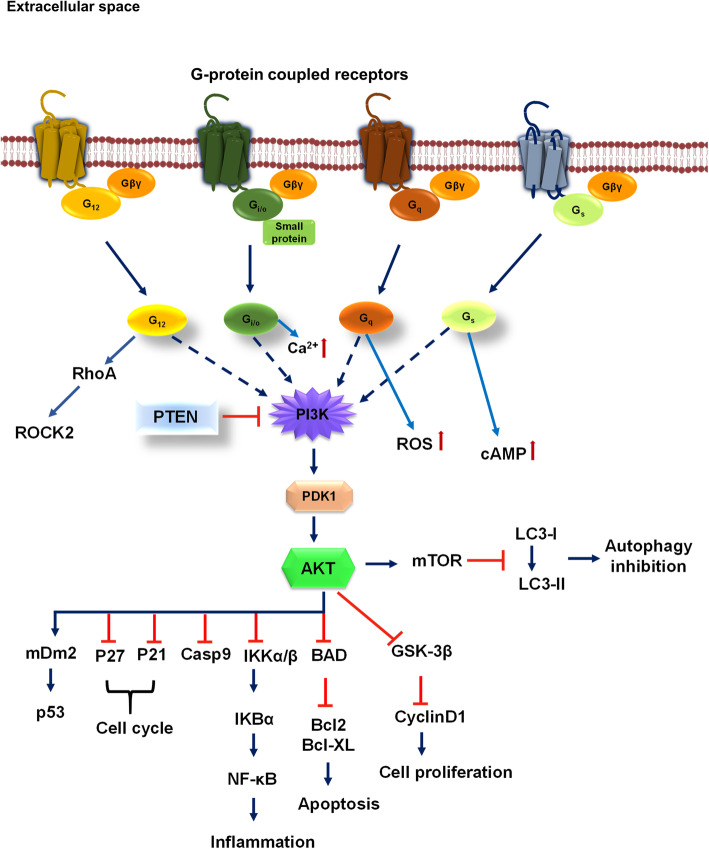
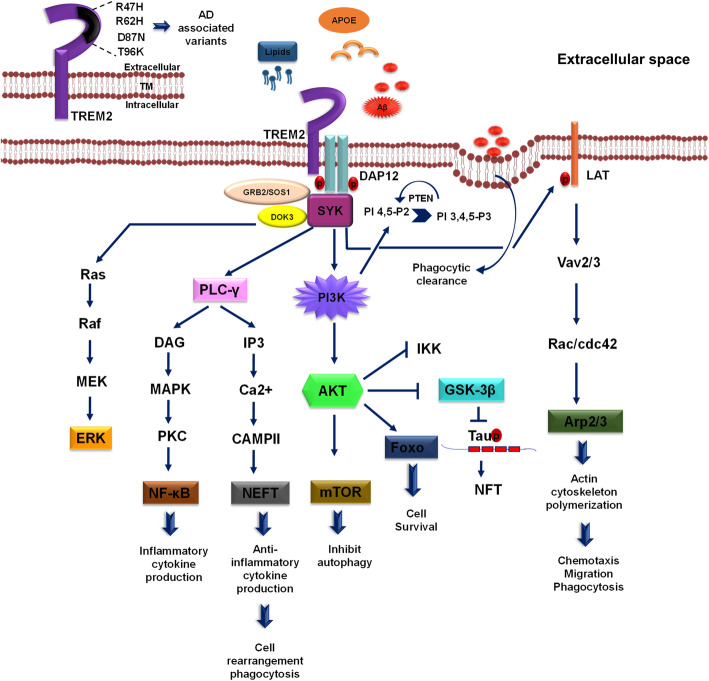
Alzheimer’s disease is a progressive neurodegenerative disease characterized by the presence of amyloid-β plaques in the extracellular environment and aggregates of Tau protein that forms neurofibrillary tangles (NFTs) in neuronal cells. Along with these pathological proteins, the disease shows neuroinflammation, neuronal death, impairment in the immune function of microglia and synaptic loss, which are mediated by several important signaling pathways. The PI3K/Akt-mediated survival-signaling pathway is activated by many receptors such as G-protein coupled receptors (GPCRs), triggering receptor expressed on myeloid cells 2 (TREM2), and lysophosphatidic acid (LPA) receptor. The signaling pathway not only increases the survival of neurons but also regulates inflammation, phagocytosis, cellular protection, Tau phosphorylation and Aβ secretion as well. In this review, we focused on receptors, which activate PI3K/Akt pathway and its potential to treat Alzheimer’s disease. Among several membrane receptors, GPCRs are the major drug targets for therapy, and GPCR signaling pathways are altered during Alzheimer’s disease. Several GPCRs are involved in the pathogenic progression, phosphorylation of Tau protein by activation of various cellular kinases and are involved in the amyloidogenic pathway of amyloid-β synthesis. Apart from various GPCR signaling pathways, GPCR regulating/ interacting proteins are involved in the pathogenesis of Alzheimer’s disease. These include several small GTPases, Ras homolog enriched in brain, GPCR associated sorting proteins, β-arrestins, etc., that play a critical role in disease progression and has been elaborated in this review.
Overview
The claims and statistics of this paper haven’t been checked yet.
Run the check — free, no account needed. It reads the open-access text and checks the sources it cites.
Integrity signals
Registry
Cites
Statistics
Figures
Verification
Claims the paper makes
The claims and statistics of this paper haven’t been checked yet.
Run the check — free, no account needed. It reads the open-access text and checks the sources it cites.
Claims other papers make about this one
Each is checked against this paper’s own text: does it say what the citing paper says it does?
The cited source says what the claim attributes to it.
In the citing paper
“One of the downstream pathways of TREM2-TYROBP is small GTPases in the Ras-homologous (Rho) family (e.g., Cdc42, Rac) (49, 50).”
From The effect of Abi3 locus deletion on the progression of Alzheimer’s disease-related pathologies (2023) · cites this paper as [49]
Self-check
Percentages, sums and reported differences re-computed from the paper’s own numbers.
The self-check needs the paper’s full text.
Citations
Cites
1 retracted
Zhuang, J.-Y., Chen, Z., Zhang, T., Tang, D.-P., Xiao-yin, J., & Zhuang, Z. (2017) · Medical Science Monitor · doi:10.12659/msm.898131 · Cited by 6
RetractedAmyloid oligomers exacerbate tau pathology in a mouse model of tauopathy
Selenica, M.-L. B., Brownlow, M., Jimenez, J. P., Lee, D. C., Pena, G., Dickey, C. A., Gordon, M. N., & Morgan, D. (2013) · Neurodegenerative Diseases · doi:10.1159/000337230 · Cited by 10,359
Cell Signaling by Receptor Tyrosine Kinases
Lemmon, M. A., & Schlessinger, J. (2010) · Cell · doi:10.1016/j.cell.2010.06.011 · Cited by 7,929
A Unique Microglia Type Associated with Restricting Development of Alzheimer’s Disease
Keren-Shaul, H., Spinrad, A., Weiner, A., Matcovitch-Natan, O., Dvir-Szternfeld, R., Ulland, T. K., David, E., Baruch, K., Lara-Astaiso, D., Toth, B., et al. (2017) · Cell · doi:10.1016/j.cell.2017.05.018 · Cited by 5,493
Etienne-Manneville, S., & Hall, A. (2002) · Nature · doi:10.1038/nature01148 · Cited by 4,965
Cell Signaling by Receptor Tyrosine Kinases
Schlessinger, J. (2000) · Cell · doi:10.1016/s0092-8674(00)00114-8 · Cited by 3,774
Rab GTPases as coordinators of vesicle traffic
Stenmark, H. (2009) · Nature Reviews Molecular Cell Biology · doi:10.1038/nrm2728 · Cited by 3,413
Neuropathological alterations in Alzheimer disease
Serrano-Pozo, A., Frosch, M. P., Masliah, E., & Hyman, B. T. (2011) · Cold Spring Harbor Perspectives in Medicine · doi:10.1101/cshperspect.a006189 · Cited by 3,345
The neuropathological diagnosis of Alzheimer's disease
DeTure, M. A., & Dickson, D. W. (2019) · Molecular Neurodegeneration · doi:10.1186/s13024-019-0333-5 · Cited by 3,329
Alessi, D. R., James, S. R., Downes, C. P., Holmes, A. B., Gaffney, P. R. J., Reese, C. B., & Cohen, P. (1997) · Current Biology · doi:10.1016/s0960-9822(06)00122-9 · Cited by 2,881
Trends in GPCR drug discovery: new agents, targets and indications
Hauser, A. S., Attwood, M. M., Rask‐Andersen, M., Schiöth, H. B., & Gloriam, D. E. I. (2017) · Nature Reviews Drug Discovery · doi:10.1038/nrd.2017.178 · Cited by 2,714
Pierce, K. L., Premont, R. T., & Lefkowitz, R. J. (2002) · Nature Reviews Molecular Cell Biology · doi:10.1038/nrm908 · Cited by 2,712
Variant of TREM2 Associated with the Risk of Alzheimer's Disease
Jonsson, T., Stefansson, H., Steinberg, S., Jonsdottir, I., Jonsson, P. V., Snaedal, J., Bjornsson, S., Huttenlocher, J., Levey, A. I., Lah, J. J., et al. (2013) · New England Journal of Medicine · doi:10.1056/nejmoa1211103 · Cited by 2,558
The structure and function of G-protein-coupled receptors
Rosenbaum, D. M., Rasmussen, S. G. F., & Kobilka, B. K. (2009) · Nature · doi:10.1038/nature08144 · Cited by 2,534
Takai, Y., Sasaki, T., & Matozaki, T. (2001) · Physiological Reviews · doi:10.1152/physrev.2001.81.1.153 · Cited by 2,511
HDAC6 is a microtubule-associated deacetylase
Hubbert, C., Guardiola, A., Shao, R., Kawaguchi, Y., Ito, A., Nixon, A., Yoshida, M., Wang, X.-F., & Yao, T.-P. (2002) · Nature · doi:10.1038/417455a · Cited by 2,403
The PI3K‒PDK1 connection: more than just a road to PKB
Vanhaesebroeck, B., & Alessi, D. R. (2000) · Biochemical Journal · doi:10.1042/bj3460561 · Cited by 1,649
The small GTP-binding proteins Rac1 and Cdc42regulate the activity of the JNK/SAPK signaling pathway
Coso, O. A., Chiariello, M., Yu, J., Teramoto, H., Crespo, P., Xu, N., Miki, T., & Gutkind, J. S. (1995) · Cell · doi:10.1016/s0092-8674(05)80018-2 · Cited by 1,629
The distribution of tau in the mammalian central nervous system.
Binder, L. I., Frankfurter, A., & Rebhun, L. I. (1985) · The Journal of cell biology · doi:10.1083/jcb.101.4.1371 · Cited by 1,588
The Ras superfamily at a glance
Wennerberg, K., Rossman, K. L., & Der, C. J. (2005) · Journal of Cell Science · doi:10.1242/jcs.01660 · Cited by 1,549
Molecular signatures of G-protein-coupled receptors
Venkatakrishnan, A., Deupí, X., Lebon, G., Tate, C. G., Schertler, G. F. X., & Babu, M. M. (2013) · Nature · doi:10.1038/nature11896 · Cited by 1,534
NF-κB is a target of AKT in anti-apoptotic PDGF signalling
Romashkova, J. A., & Makarov, S. S. (1999) · Nature · doi:10.1038/43474 · Cited by 1,517
Rho GTPases Control Polarity, Protrusion, and Adhesion during Cell Movement
Nobes, C. D., & Hall, A. K. (1999) · The Journal of Cell Biology · doi:10.1083/jcb.144.6.1235 · Cited by 1,450
β-Arrestins and Cell Signaling
DeWire, S. M., Ahn, S., Lefkowitz, R. J., & Shenoy, S. K. (2007) · Annual Review of Physiology · doi:10.1146/annurev.physiol.69.022405.154749 · Cited by 1,397
G PROTEIN–COUPLED RECEPTOR KINASES
Pitcher, J. A., Freedman, N. J., & Lefkowitz, R. J. (1998) · Annual Review of Biochemistry · doi:10.1146/annurev.biochem.67.1.653 · Cited by 1,370
The nuts and bolts of AGC protein kinases
Pearce, L. R., Komander, D., & Alessi, D. R. (2010) · Nature Reviews Molecular Cell Biology · doi:10.1038/nrm2822 · Cited by 1,294
Bouchon, A., Dietrich, J., & Colonna, M. (2000) · The Journal of Immunology · doi:10.4049/jimmunol.164.10.4991 · Cited by 1,284
Guanine nucleotide exchange factors for Rho GTPases: turning on the switchPreprint
Schmidt, A., & Hall, A. (2002) · Genes & Development · doi:10.1101/gad.1003302 · Cited by 1,267
TREM2 Maintains Microglial Metabolic Fitness in Alzheimer’s Disease
Ulland, T. K., Song, W. M., Huang, S. C.-C., Ulrich, J. D., Sergushichev, A., Beatty, W. L., Loboda, A. A., Zhou, Y., Cairns, N. J., Kambal, A., et al. (2017) · Cell · doi:10.1016/j.cell.2017.07.023 · Cited by 1,263
Variants in ELL2 influencing immunoglobulin levels associate with multiple myeloma
Swaminathan, B., Þorleifsson, G., Jöud, M., Ali, M., Johnsson, E., Ajore, R., Sulem, P., Halvarsson, B.-M., Eyjolfsson, G. I., Haraldsdóttir, V., et al. (2015) · Nature Communications · doi:10.1038/ncomms8213 · Cited by 1,213
Takahashi, K., Rochford, C. D. P., & Neumann, H. (2005) · The Journal of Experimental Medicine · doi:10.1084/jem.20041611 · Cited by 1,124
THE ROLE OF RECEPTOR KINASES AND ARRESTINS IN G PROTEIN–COUPLED RECEPTOR REGULATION
Krupnick, J. G., & Benovic, J. (1998) · The Annual Review of Pharmacology and Toxicology · doi:10.1146/annurev.pharmtox.38.1.289 · Cited by 1,121
Tau-targeting therapies for Alzheimer disease
Congdon, E. E., & Sigurdsson, E. M. (2018) · Nature Reviews Neurology · doi:10.1038/s41582-018-0013-z · Cited by 1,113
Microtubule assembly, organization and dynamics in axons and dendrites
Conde, C., & Cáceres, A. (2009) · Nature Reviews Neuroscience · doi:10.1038/nrn2631 · Cited by 1,086
Cellular function and molecular structure of ecto-nucleotidases
Zimmermann, H., Zebisch, M., & Sträter, N. (2012) · Purinergic Signalling · doi:10.1007/s11302-012-9309-4 · Cited by 985
Nitsch, R. M., Slack, B. E., Wurtman, R. J., & Growdon, J. H. (1992) · Science · doi:10.1126/science.1411529 · Cited by 898
Rac Downregulates Rho Activity
Sander, E. E., ten Klooster, J. P., van Delft, S., van der Kammen, R. A., & Collard, J. G. (1999) · The Journal of Cell Biology · doi:10.1083/jcb.147.5.1009 · Cited by 826
Evolution of the rab family of small GTP-binding proteins
Pereira‐Leal, J. B., & Seabra, M. C. (2001) · Journal of Molecular Biology · doi:10.1006/jmbi.2001.5072 · Cited by 795
Wilden, U., Hall, S. W., & Kühn, H. (1986) · Proceedings of the National Academy of Sciences · doi:10.1073/pnas.83.5.1174 · Cited by 791
Lysophospholipid Receptors: Signaling and Biology
Ishii, I., Fukushima, N., Ye, X., & Chun, J. J. M. (2004) · Annual Review of Biochemistry · doi:10.1146/annurev.biochem.73.011303.073731 · Cited by 771
TREM2 Is a Receptor for β-Amyloid that Mediates Microglial Function
Zhao, Y., Wu, X., Li, X., Jiang, L.-L., Gui, X., Liu, Y., Sun, Y., Zhu, B., Piña-Crespo, J. C., Zhang, M., et al. (2018) · Neuron · doi:10.1016/j.neuron.2018.01.031 · Cited by 763
Structure, regulation and function of PKB/AKT—a major therapeutic target
Hanada, M., Feng, J., & Hemmings, B. A. (2003) · Biochimica et Biophysica Acta (BBA) - Proteins and Proteomics · doi:10.1016/j.bbapap.2003.11.009 · Cited by 739
Hecht, J. H., Weiner, J. A., Post, S. R., & Chun, J. J. M. (1996) · The Journal of Cell Biology · doi:10.1083/jcb.135.4.1071 · Cited by 725
The acetylation of tau inhibits its function and promotes pathological tau aggregation
Cohen, T. J., Guo, J. L., Hurtado, D. E., Kwong, L. K., Mills, I. P., Trojanowski, J. Q., & Lee, V. M. Y. (2011) · Nature Communications · doi:10.1038/ncomms1255 · Cited by 724
Rivera, E. J., Goldin, A., Fulmer, N., Tavares, R., Wands, J. R., & de la Monte, S. M. (2005) · Journal of Alzheimer s Disease · doi:10.3233/jad-2005-8304 · Cited by 723 · cited 1×
“TREM2 knockdown decreases the level of AKT and GSK-3β, which indicates that TREM-2 mediated stabilization of β-catenin is via AKT/ GSK-3β signaling pathway [90, 102].”
BackgroundZempel, H., Thies, E., Mandelkow, E., & Mandelkow, E.-M. (2010) · The Journal of Neuroscience · doi:10.1523/jneurosci.2357-10.2010 · Cited by 686
Post-translational modifications of tau protein: Implications for Alzheimer's disease
Martin, L., Latypova, X., & Terro, F. (2011) · Neurochemistry International · doi:10.1016/j.neuint.2010.12.023 · Cited by 683
Regulating Access to the Genome
Weis, K. (2003) · Cell · doi:10.1016/s0092-8674(03)00082-5 · Cited by 668
The Physiology, Pathology, and Potential Therapeutic Applications of the TREM2 Signaling Pathway
Deczkowska, A., Weiner, A., & Amit, I. (2020) · Cell · doi:10.1016/j.cell.2020.05.003 · Cited by 648
Exploring the opioid system by gene knockout
Kieffer, B. L., & Gavériaux-Ruff, C. (2002) · Progress in Neurobiology · doi:10.1016/s0301-0082(02)00008-4 · Cited by 620
Integrin-mediated Signals Regulated by Members of the Rho Family of GTPases
Clark, E. A., King, W. G., Brugge, J. S., Symons, M. H., & Hynes, R. O. (1998) · The Journal of Cell Biology · doi:10.1083/jcb.142.2.573 · Cited by 604
Rab Proteins and the Compartmentalization of the Endosomal System
Wandinger-Ness, A., & Zerial, M. (2014) · Cold Spring Harbor Perspectives in Biology · doi:10.1101/cshperspect.a022616 · Cited by 586
Redox-dependent downregulation of Rho by Rac
Nimnual, A. S., Taylor, L. J., & Bar‐Sagi, D. (2003) · Nature Cell Biology · doi:10.1038/ncb938 · Cited by 523
Desensitization of G-protein-coupled Receptors
Xiao, Z., Yao, Y., Yu, L., & Devreotes, P. N. (1999) · Journal of Biological Chemistry · doi:10.1074/jbc.274.3.1440 · Cited by 521
Rho GTPases and their role in organizing the actin cytoskeleton
Sit, S.-T., & Manser, E. (2011) · Journal of Cell Science · doi:10.1242/jcs.064964 · Cited by 499
Fine-tuning of GPCR activity by receptor-interacting proteins
Ritter, S. L., & Hall, R. A. (2009) · Nature Reviews Molecular Cell Biology · doi:10.1038/nrm2803 · Cited by 479
A role for TREM2 ligands in the phagocytosis of apoptotic neuronal cells by microglia
Hsieh, C. L., Koike, M., Spusta, S. C., Niemi, E. C., Yenari, M., Nakamura, M. C., & Seaman, W. E. (2009) · Journal of Neurochemistry · doi:10.1111/j.1471-4159.2009.06042.x · Cited by 475
G Protein–Coupled Receptor Sorting to Endosomes and Lysosomes
Marchese, A., Paing, M. M., Temple, B. R. S., & Trejo, J. (2007) · The Annual Review of Pharmacology and Toxicology · doi:10.1146/annurev.pharmtox.48.113006.094646 · Cited by 456
Advances in tau-focused drug discovery for Alzheimer's disease and related tauopathies
Brunden, K. R., Trojanowski, J. Q., & Lee, V. M.-Y. (2009) · Nature Reviews Drug Discovery · doi:10.1038/nrd2959 · Cited by 440
Cellular functions of Rab GTPases at a glance
Zhen, Y., & Stenmark, H. (2015) · Journal of Cell Science · doi:10.1242/jcs.166074 · Cited by 422
Multiple Roles of the Small GTPase Rab7
Guerra, F., & Bucci, C. (2016) · Cells · doi:10.3390/cells5030034 · Cited by 414
TREM2- and DAP12-dependent activation of PI3K requires DAP10 and is inhibited by SHIP1
Peng, Q., Malhotra, S., Torchia, J. A., Kerr, W. G., Coggeshall, K. M., & Humphrey, M. B. (2010) · Science Signaling · doi:10.1126/scisignal.2000500 · Cited by 413
G protein–coupled receptor P2Y5 and its ligand LPA are involved in maintenance of human hair growth
Pasternack, S. M., von Kügelgen, I., Aboud, K. A., Lee, Y., Rüschendorf, F., Voß, K., Hillmer, A. M., Molderings, G. J., Franz, T., Ramı́rez, A., et al. (2008) · Nature Genetics · doi:10.1038/ng.84 · Cited by 411
Chen, S., Peng, J., Sherchan, P., Ma, Y., Xiang, S., Yan, F., Zhao, H., Jiang, Y. Q., Wang, N., Zhang, J. H., et al. (2020) · Journal of Neuroinflammation · doi:10.1186/s12974-020-01853-x · Cited by 392
A GIT1/PIX/Rac/PAK Signaling Module Regulates Spine Morphogenesis and Synapse Formation through MLC
Zhang, H., Webb, D. J., Asmussen, H., Niu, S., & Horwitz, A. F. (2005) · Journal of Neuroscience · doi:10.1523/jneurosci.3553-04.2005 · Cited by 365
Lim kinases, regulators of actin dynamics
Bernard, O. (2006) · The International Journal of Biochemistry & Cell Biology · doi:10.1016/j.biocel.2006.11.011 · Cited by 346
Role of p21-activated kinase pathway defects in the cognitive deficits of Alzheimer disease
Zhao, L., Ma, Q.-L., Calon, F., Harris-White, M. E., Yang, F., Lim, G. P., Morihara, T., Ubeda, O. J., Ambegaokar, S., Hansen, J. E., et al. (2006) · Nature Neuroscience · doi:10.1038/nn1630 · Cited by 317
TREM2 Promotes Microglial Survival by Activating Wnt/β-Catenin Pathway
Zheng, H., Jia, L., Liu, C.-C., Rong, Z., Zhong, L., Yang, L., Chen, X.-F., Fryer, J. D., Wang, X., Zhang, Y.-W., et al. (2017) · The Journal of Neuroscience · doi:10.1523/jneurosci.2459-16.2017 · Cited by 317
G Protein–Coupled Receptor Signaling Through β-Arrestin–Dependent Mechanisms
Jean‐Charles, P., Kaur, S., & Shenoy, S. K. (2017) · Journal of Cardiovascular Pharmacology · doi:10.1097/fjc.0000000000000482 · Cited by 311
GAP control: regulating the regulators of small GTPases
Bernards, A., & Settleman, J. E. (2004) · Trends in Cell Biology · doi:10.1016/j.tcb.2004.05.003 · Cited by 310
Wu, H., Lu, D., Jiang, H., Xiong, Y., Qu, C., Li, B., Mahmood, A., Zhou, D., & Chopp, M. (2008) · Journal of Neurotrauma · doi:10.1089/neu.2007.0369 · Cited by 304
G-protein-coupled receptors: turn-ons and turn-offs
Carman, C. V., & Benovic, J. (1998) · Current Opinion in Neurobiology · doi:10.1016/s0959-4388(98)80058-5 · Cited by 299
Bemiller, S. M., McCray, T. J., Allan, K., Formica, S. V., Xu, G., Wilson, G., Kokiko-Cochran, O. N., Crish, S. D., Lasagna-Reeves, C. A., Ransohoff, R. M., et al. (2017) · Molecular Neurodegeneration · doi:10.1186/s13024-017-0216-6 · Cited by 299
rheb, a growth factor- and synaptic activity-regulated gene, encodes a novel Ras-related protein.
Yamagata, K., Sanders, L. K., Kaufmann, W. E., Yee, W. M., Barnes, C. A., Nathans, D., & Worley, P. F. (1994) · Journal of Biological Chemistry · doi:10.1016/s0021-9258(17)34012-7 · Cited by 297
Controlling the location and activation of Rab GTPases
Seabra, M. C., & Wasmeier, C. (2004) · Current Opinion in Cell Biology · doi:10.1016/j.ceb.2004.06.014 · Cited by 293
The role of G protein-coupled receptors in the pathology of Alzheimer's disease
Thathiah, A., & De Strooper, B. (2011) · Nature Reviews Neuroscience · doi:10.1038/nrn2977 · Cited by 288
TREM2-Ligand Interactions in Health and Disease
Kober, D. L., & Brett, T. J. (2017) · Journal of Molecular Biology · doi:10.1016/j.jmb.2017.04.004 · Cited by 284
Regulation of Mitogen-Activated Protein Kinase Signaling Networks by G Protein-Coupled Receptors
Gutkind, J. S. (2000) · Science Signaling · doi:10.1126/stke.2000.40.re1 · Cited by 277
Activating and inhibitory functions of DAP12
Turnbull, I. R., & Colonna, M. (2007) · Nature Reviews Immunology · doi:10.1038/nri2014 · Cited by 273
Lysophosphatidic Acid Signaling in the Nervous System
Yung, Y. C., Lummis, N. C., Mirendil, H., & Chun, J. J. M. (2015) · Neuron · doi:10.1016/j.neuron.2015.01.009 · Cited by 272
Class II cytokine receptors and their ligands: Key antiviral and inflammatory modulators
Renauld, J. (2003) · Nature reviews. Immunology · doi:10.1038/nri1153 · Cited by 265
Lysophospholipids and their receptors in the central nervous system
Choi, J. W., & Chun, J. J. M. (2012) · Biochimica et Biophysica Acta (BBA) - Molecular and Cell Biology of Lipids · doi:10.1016/j.bbalip.2012.07.015 · Cited by 264
Microglia and aging: the role of the TREM2-DAP12 and CX3CL1-CX3CR1 axes
Mecca, C., Giambanco, I., Donato, R., & Arcuri, C. (2018) · International Journal of Molecular Sciences · doi:10.3390/ijms19010318 · Cited by 258
Dietary regulation of PI3K/AKT/GSK-3β pathway in Alzheimer’s disease
Kitagishi, Y., Nakanishi, A., Ogura, Y., & Matsuda, S. (2014) · Alzheimer s Research & Therapy · doi:10.1186/alzrt265 · Cited by 252
Non-proliferative effects of lysophosphatidic acid enhance cortical growth and folding
Kingsbury, M. A., Rehen, S. K., Contos, J. J. A., Higgins, C., & Chun, J. J. M. (2003) · Nature Neuroscience · doi:10.1038/nn1157 · Cited by 251
Gómez‐Ramos, A., Dı́az-Hernández, M., Rubio, A., Miras‐Portugal, M. T., & Ávila, J. (2008) · Molecular and Cellular Neuroscience · doi:10.1016/j.mcn.2007.12.010 · Cited by 245
Ginsberg, S. D., Alldred, M. J., Counts, S. E., Cataldo, A. M., Neve, R. L., Jiang, Y., Wuu, J., Chao, M. V., Mufson, E. J., Nixon, R. A., et al. (2010) · Biological Psychiatry · doi:10.1016/j.biopsych.2010.05.030 · Cited by 243
TREM-2 (triggering receptor expressed on myeloid cells 2) is a phagocytic receptor for bacteria
N’Diaye, E.-N., Branda, C., Branda, S. S., Nevarez, L., Colonna, M., Lowell, C. A., Hamerman, J. A., & Seaman, W. E. (2009) · The Journal of Cell Biology · doi:10.1083/jcb.200808080 · Cited by 243
Extracellular tau is toxic to neuronal cells
Gómez-Ramos, A., Díaz-Hernández, M., Cuadros, R., Hernández, F., & Avila, J. (2006) · FEBS Letters · doi:10.1016/j.febslet.2006.07.078 · Cited by 241
Ni, Y., Zhao, X., Bao, G., Zou, L., Teng, L., Wang, Z., Song, M., Xiong, J., Bai, Y., & Pei, G. (2006) · Nature Medicine · doi:10.1038/nm1485 · Cited by 240
Second MessengersPreprint
Newton, A. C., Bootman, M. D., & Scott, J. D. (2016) · Cold Spring Harbor Perspectives in Biology · doi:10.1101/cshperspect.a005926 · Cited by 239
Regulation of RhoGEF proteins by G 12/13 ‐coupled receptors
Siehler, S. (2009) · British Journal of Pharmacology · doi:10.1111/j.1476-5381.2009.00121.x · Cited by 238
Frisardi, V., Panza, F., Seripa, D., Farooqui, T., & Farooqui, A. A. (2011) · Progress in Lipid Research · doi:10.1016/j.plipres.2011.06.001 · Cited by 233
Zhong, L., Wang, Z., Wang, D., Wang, Z., Martens, Y. A., Wu, L., Xu, Y., Wang, K., Li, J., Huang, R., et al. (2018) · Molecular Neurodegeneration · doi:10.1186/s13024-018-0247-7 · Cited by 222
Lysophosphatidic acid as a lipid mediator with multiple biological actions
Aikawa, S., Hashimoto, T., Kano, K., & Aoki, J. (2014) · The Journal of Biochemistry · doi:10.1093/jb/mvu077 · Cited by 219
RGS-containing RhoGEFs: the missing link between transforming G proteins and Rho?
Fukuhara, S., Chikumi, H., & Gutkind, J. S. (2001) · Oncogene · doi:10.1038/sj.onc.1204182 · Cited by 219
Aβ reduction in BACE1 heterozygous null 5XFAD mice is associated with transgenic APP level
Sadleir, K. R., Eimer, W. A., Cole, S. L., & Vassar, R. (2015) · Molecular Neurodegeneration · doi:10.1186/1750-1326-10-1 · Cited by 213
Axonal BACE1 dynamics and targeting in hippocampal neurons: a role for Rab11 GTPase
Buggia-Prévot, V., Fernandez, C., Riordan, S. M., Vetrivel, K. S., Roseman, J., Waters, J., Bindokas, V. P., Vassar, R. J., & Thinakaran, G. (2014) · Molecular Neurodegeneration · doi:10.1186/1750-1326-9-1 · Cited by 207
Kurokawa, K., Itoh, R. E., Yoshizaki, H., Nakamura, Y. O. T., & Matsuda, M. (2003) · Molecular Biology of the Cell · doi:10.1091/mbc.e03-08-0609 · Cited by 203
Lysophosphatidic acid synthesis and release
Pagès, C., Simon, M., Valet, P., & Saulnier‐Blache, J. S. (2001) · Prostaglandins & Other Lipid Mediators · doi:10.1016/s0090-6980(01)00110-1 · Cited by 200
Petratos, S., Li, Q.-X., George, A. J., Hou, X., Kerr, M. L., Unabia, S. E., Hatzinisiriou, I., Maksel, D., Aguilar, M.-I., & Small, D. H. (2008) · Brain · doi:10.1093/brain/awm260 · Cited by 197
The Orphan G Protein–Coupled Receptor 3 Modulates Amyloid-Beta Peptide Generation in Neurons
Thathiah, A., Spittaels, K., Hoffmann, M., Staes, M., Cohen, A., Horré, K., Vanbrabant, M., Coun, F., Baekelandt, V., Delacourte, A., et al. (2009) · Science · doi:10.1126/science.1160649 · Cited by 196
Tau-Centric targets and drugs in clinical development for the treatment of alzheimer's disease
Panza, F., Solfrizzi, V., Seripa, D., Imbimbo, B. P., Lozupone, M., Santamato, A., Zecca, C., Barulli, M. R., Bellomo, A., Pilotto, A., et al. (2016) · BioMed Research International · doi:10.1155/2016/3245935 · Cited by 195
Desensitization of G protein-coupled receptors.
Freedman, N. J., & Lefkowitz, R. J. (1996) · PubMed · Cited by 190
G‐protein coupled receptor kinases as modulators of G‐protein signalling
Bünemann, M., & Hosey, M. T. (1999) · The Journal of Physiology · doi:10.1111/j.1469-7793.1999.0005z.x · Cited by 190
β-arrestin 2 regulates Aβ generation and γ-secretase activity in Alzheimer's disease
Thathiah, A., Horré, K., Snellinx, A., Vandewyer, E., Huang, Y., Ciesielska, M., de Kloe, G. E., Munck, S., & Strooper, B. D. (2012) · Nature Medicine · doi:10.1038/nm.3023 · Cited by 189
Crosstalk between Rap1 and Rac regulates secretion of sAPPα
Maillet, M., Robert, S. J., Cacquevel, M., Gastineau, M., Vivien, D., Bertoglio, J. H., Zugaza, J. L., Fischmeister, R., & Lezoualc’h, F. (2003) · Nature Cell Biology · doi:10.1038/ncb1007 · Cited by 187
TREM2 deficiency reduces the efficacy of immunotherapeutic amyloid clearance
Xiang, X., Werner, G., Bohrmann, B., Liesz, A., Mazaheri, F., Capell, A., Feederle, R., Knuesel, I., Kleinberger, G., & Haass, C. (2016) · EMBO Molecular Medicine · doi:10.15252/emmm.201606370 · Cited by 183
Sun, Y., Minthon, L., Wallmark, A., Warkentin, S., Blennow, K., & Janciauskiene, S. M. (2003) · Dementia and Geriatric Cognitive Disorders · doi:10.1159/000071001 · Cited by 179
Angulo-Pueyo, E., Casadó, V., Mallol, J., Canela, E. I., Viñals, F., Ferrer, I., Lluís, C., & Franco, R. (2003) · Brain Pathology · doi:10.1111/j.1750-3639.2003.tb00475.x · Cited by 179
Cytoskeletal pathologies of Alzheimer disease
Bamburg, J. R., & Bloom, G. S. (2009) · Cell Motility and the Cytoskeleton · doi:10.1002/cm.20388 · Cited by 175
Sayas, C. L., Moreno-Flores, M. T., Ávila, J., & Wandosell, F. G. (1999) · Journal of Biological Chemistry · doi:10.1074/jbc.274.52.37046 · Cited by 173
TREM2 in CNS homeostasis and neurodegenerative disease
Painter, M. M., Atagi, Y., Liu, C.-C., Rademakers, R., Xu, H., Fryer, J. D., & Bu, G. (2015) · Molecular Neurodegeneration · doi:10.1186/s13024-015-0040-9 · Cited by 169
Rab GTPases and their roles in brain neurons and glia
Ng, E. L., & Tang, B. L. (2008) · Brain Research Reviews · doi:10.1016/j.brainresrev.2008.04.006 · Cited by 165
Signals and ReceptorsPreprint
Heldin, C., Lu, B. C., Evans, R. M., & Gutkind, J. S. (2016) · Cold Spring Harbor Perspectives in Biology · doi:10.1101/cshperspect.a005900 · Cited by 163
Role of LPA 4 /p2y9/GPR23 in Negative Regulation of Cell Motility
Lee, Z., Cheng, C.-T., Zhang, H., Subler, M. A., Wu, J., Mukherjee, A., Windle, J. J., Chen, C.-K., & Fang, X. (2008) · Molecular Biology of the Cell · doi:10.1091/mbc.e08-03-0316 · Cited by 163
An, S. M., Bleu, T., Zheng, Y., & Goetzl, E. J. (1998) · Molecular Pharmacology · doi:10.1124/mol.54.5.881 · Cited by 160
High‐affinity interactions and signal transduction between Aβ oligomers and TREM2
Lessard, C. B., Malnik, S. L., Zhou, Y., Ladd, T. B., Cruz, P. E., Ran, Y., Chakrabaty, P., Mahan, T. E., Holtzman, D. M., Ulrich, J. D., et al. (2018) · EMBO Molecular Medicine · doi:10.15252/emmm.201809027 · Cited by 156
TREM2 Function in Alzheimer’s Disease and Neurodegeneration
Ulrich, J. D., & Holtzman, D. M. (2016) · ACS Chemical Neuroscience · doi:10.1021/acschemneuro.5b00313 · Cited by 154
Udayar, V., Buggia-Prévot, V., Guerreiro, R. L., Siegel, G., Rambabu, N., Soohoo, A. L., Ponnusamy, M., Siegenthaler, B., Bali, J., Guerreiro, R., et al. (2013) · Cell Reports · doi:10.1016/j.celrep.2013.12.005 · Cited by 147
Microglial priming of antigen presentation and adaptive stimulation in Alzheimer’s disease
Das, R., & Chinnathambi, S. (2019) · Cellular and Molecular Life Sciences · doi:10.1007/s00018-019-03132-2 · Cited by 147
Self-citationCoupling receptor tyrosine kinases to Rho GTPases—GEFs what's the link
Schiller, M. R. (2006) · Cellular Signalling · doi:10.1016/j.cellsig.2006.01.022 · Cited by 145
Identification of Alzheimer disease-associated variants in genes that regulate retromer function
Vardarajan, B. N., Bruesegem, S. Y., Harbour, M. E., George-Hyslop, P. S., Seaman, M. N. J., & Farrer, L. A. (2012) · Neurobiology of Aging · doi:10.1016/j.neurobiolaging.2012.04.020 · Cited by 142
Localization of sequence variations in PGC-1α influence their modifying effect in Huntington disease
Hong Van, B., Metzger, S., Portal, E., Deyle, C., Rieß, O., & Nguyen, H. P. (2011) · Molecular Neurodegeneration · doi:10.1186/1750-1326-6-1 · Cited by 136
Ginsberg, S. D., Mufson, E. J., Counts, S., Wuu, J., Alldred, M. J., Nixon, R. A., & Che, S. (2010) · Journal of Alzheimer s Disease · doi:10.3233/jad-2010-101080 · Cited by 134
Zhong, L., Chen, X.-F., Zhang, Z.-L., Wang, Z., Shi, X.-Z., Xu, K., Zhang, Y.-W., Xu, H., & Bu, G. (2015) · Journal of Biological Chemistry · doi:10.1074/jbc.m115.645986 · Cited by 133
Small GTP-binding protein-coupled receptors
Bhattacharya, M., Babwah, A. V., & Ferguson, S. S. G. (2004) · Biochemical Society Transactions · doi:10.1042/bst0321040 · Cited by 130
Phagocytosis of full-length Tau oligomers by Actin-remodeling of activated microglia
Das, R. R., Balmik, A. A., & Chinnathambi, S. (2020) · Journal of Neuroinflammation · doi:10.1186/s12974-019-1694-y · Cited by 130
Self-citationTakahashi, M., Tomizawa, K., Kato, R., Sato, K., Uchida, T., Fujita, S., & Imahori, K. (1994) · Journal of Neurochemistry · doi:10.1046/j.1471-4159.1994.63010245.x · Cited by 129
EGCG impedes human Tau aggregation and interacts with Tau
Sonawane, S. K., Chidambaram, H., Boral, D., Gorantla, N. V., Balmik, A. A., Dangi, A., Ramasamy, S., Marelli, U. K., & Chinnathambi, S. (2020) · Scientific Reports · doi:10.1038/s41598-020-69429-6 · Cited by 129
Self-citationImpaired regulation of synaptic actin cytoskeleton in Alzheimer's disease
Penzes, P., & VanLeeuwen, J. (2011) · Brain Research Reviews · doi:10.1016/j.brainresrev.2011.01.003 · Cited by 121
Phosphorylation-independent attenuation of GPCR signalling
Ferguson, S. S. G. (2007) · Trends in Pharmacological Sciences · doi:10.1016/j.tips.2007.02.008 · Cited by 120
G protein‐coupled receptor‐induced Akt activity in cellular proliferation and apoptosis
New, D. C., Wu, K. K. H., Kwok, A. W. S., & Wong, Y. H. (2007) · FEBS Journal · doi:10.1111/j.1742-4658.2007.06116.x · Cited by 118
Guixà-González, R., Javanainen, M., Gómez‐Soler, M., Cordobilla, B., Domingo, J. C., Sanz, F., Pastor, M., Ciruela, F., Martinez‐Seara, H., & Selent, J. (2016) · Scientific Reports · doi:10.1038/srep19839 · Cited by 116
Prion-Like Propagation of Post-Translationally Modified Tau in Alzheimer’s Disease: A Hypothesis
Sonawane, S. K., & Chinnathambi, S. (2018) · Journal of Molecular Neuroscience · doi:10.1007/s12031-018-1111-5 · Cited by 115
Self-citationThe role of ADP-ribosylation factor and SAR1 in vesicular trafficking in plants
Memon, A. R. (2004) · Biochimica et Biophysica Acta (BBA) - Biomembranes · doi:10.1016/j.bbamem.2004.04.005 · Cited by 113
Tau Protein Squired by Molecular Chaperones During Alzheimer’s Disease
Gorantla, N. V., & Chinnathambi, S. (2018) · Journal of Molecular Neuroscience · doi:10.1007/s12031-018-1174-3 · Cited by 113
Self-citationG Protein-Coupled Receptors (GPCRs) in Alzheimer’s Disease: A Focus on BACE1 Related GPCRs
Zhao, J., Deng, Y., Jiang, Z., & Qing, H. (2016) · Frontiers in Aging Neuroscience · doi:10.3389/fnagi.2016.00058 · Cited by 112
Nakano, N., Matsuda, S., Ichimura‐Shimizu, M., Minami, A., Ogino, M., Murai, T., & Kitagishi, Y. (2016) · International Journal of Molecular Medicine · doi:10.3892/ijmm.2016.2833 · Cited by 112
Role of dietary fatty acids in microglial polarization in Alzheimer’s disease
Desale, S. E., & Chinnathambi, S. (2020) · Journal of Neuroinflammation · doi:10.1186/s12974-020-01742-3 · Cited by 112
Self-citationDistinct Signaling Pathways Regulate TREM2 Phagocytic and NFκB Antagonistic Activities
Yao, H., Coppola, K., Schweig, J. E., Crawford, F., Mullan, M., & Paris, D. (2019) · Frontiers in Cellular Neuroscience · doi:10.3389/fncel.2019.00457 · Cited by 110
Rho GTPases as therapeutic targets in Alzheimer’s disease
Aguilar, B. J., Zhu, Y., & Lu, Q. (2017) · Alzheimer s Research & Therapy · doi:10.1186/s13195-017-0320-4 · Cited by 110
Pilpel, Y., & Segal, M. (2004) · European Journal of Neuroscience · doi:10.1111/j.0953-816x.2004.03380.x · Cited by 102
Essential role of Rac1 and Rac3 GTPases in neuronal development
Corbetta, S., Gualdoni, S., Ciceri, G., Monari, M., Zuccaro, E., Tybulewicz, V. L. J., & de Curtis, I. (2009) · The FASEB Journal · doi:10.1096/fj.08-121574 · Cited by 101
Baicalein suppresses Repeat Tau fibrillization by sequestering oligomers
Sonawane, S. K., Balmik, A. A., Boral, D., Ramasamy, S., & Chinnathambi, S. (2019) · Archives of Biochemistry and Biophysics · doi:10.1016/j.abb.2019.108119 · Cited by 98
Self-citationChidambaram, H., Das, R. R., & Chinnathambi, S. (2020) · Cell & Bioscience · doi:10.1186/s13578-020-00474-4 · Cited by 97
Self-citationCharacteristics and consequences of muscarinic receptor activation by tau protein
Gómez‐Ramos, A., Dı́az-Hernández, M., Rubio, A., Díaz‐Hernandéz, J. I., Miras‐Portugal, M. T., & Ávila, J. (2009) · European Neuropsychopharmacology · doi:10.1016/j.euroneuro.2009.04.006 · Cited by 95
Fokas, A. S., Cole, D. J., Ahnert, S. E., & Chin, A. W. (2017) · Scientific Reports · doi:10.1038/srep42654 · Cited by 93
Teng, L., Zhao, J., Wang, F., Ma, L., & Pei, G. (2010) · Cell Research · doi:10.1038/cr.2010.3 · Cited by 91
Non‐canonical functions of the tuberous sclerosis complex‐Rheb signalling axis
Neuman, N. A., & Henske, E. P. (2011) · EMBO Molecular Medicine · doi:10.1002/emmm.201100131 · Cited by 87
Dynactin1 depletion leads to neuromuscular synapse instability and functional abnormalities
Bercier, V., Hubbard, J. M., Fidelin, K., Duroure, K., Auer, T. O., Revenu, C., Wyart, C., & Bene, F. D. (2019) · Molecular Neurodegeneration · doi:10.1186/s13024-019-0327-3 · Cited by 87
G-Protein Coupled Receptors and Tau-different Roles in Alzheimer’s Disease
Chidambaram, H., & Chinnathambi, S. (2020) · Neuroscience · doi:10.1016/j.neuroscience.2020.04.019 · Cited by 87
Self-citationRho GTPases at the crossroad of signaling networks in mammals
Wojnacki, J., Quassollo, G., Marzolo, M., & Cáceres, A. (2014) · Small GTPases · doi:10.4161/sgtp.28430 · Cited by 86
LPA Is a Chemorepellent for B16 Melanoma Cells: Action through the cAMP-Elevating LPA5 Receptor
Jongsma, M. A., Matas-Rico, E., Rzadkowski, A., Jalink, K., & Moolenaar, W. H. (2011) · PLoS ONE · doi:10.1371/journal.pone.0029260 · Cited by 85
Involvement of Rac/Cdc42/PAK pathway in cytoskeletal rearrangements.
Szczepanowska, J. (2009) · Acta Biochimica Polonica · doi:10.18388/abp.2009_2453 · Cited by 84
Molecular network of microRNA targets in Alzheimer's disease brains
Satoh, J. (2011) · Experimental Neurology · doi:10.1016/j.expneurol.2011.09.003 · Cited by 84
Serotonin activates angiogenic phosphorylation signaling in human endothelial cells
Zamani, A., & Qu, Z. (2012) · FEBS Letters · doi:10.1016/j.febslet.2012.05.047 · Cited by 84
Initiative, F. T. A. D. N., Ridge, P. G., Karch, C. M., Hsu, S., Arano, I., Teerlink, C. C., Ebbert, M. T. W., Gonzalez Murcia, J. D., Farnham, J. M., Damato, A. R., et al. (2017) · Genome Medicine · doi:10.1186/s13073-017-0486-1 · Cited by 83
Altered distribution of RhoA in Alzheimer’s disease and AβPP overexpressing mice
Huesa, G., Baltrons, M. A., Gómez-Ramos, P., Morán, A., García, A., Hidalgo, J., Francés, S., Santpere, G., Ferrer, I., & Galea, E. (2010) · Journal of Alzheimer's Disease · doi:10.3233/jad-2010-1203 · Cited by 82
Law, N. C., White, M. F., & Hunzicker-Dunn, M. E. (2016) · Journal of Biological Chemistry · doi:10.1074/jbc.m116.763235 · Cited by 82
Desale, S. E., & Chinnathambi, S. (2021) · Cell Communication and Signaling · doi:10.1186/s12964-021-00715-0 · Cited by 81
Self-citationβ-Arrestin1 regulates γ-secretase complex assembly and modulates amyloid-β pathology
Liu, X., Zhao, X., Zeng, X., Bossers, K., Swaab, D. F., Zhao, J., & Pei, G. (2012) · Cell Research · doi:10.1038/cr.2012.167 · Cited by 81
Nakamura, F., Ohshima, T., & Goshima, Y. (2020) · Frontiers in Cellular Neuroscience · doi:10.3389/fncel.2020.00188 · Cited by 81
Glycogen synthase kinase-3β-mediated tau phosphorylation in cultured cell lines
Lee, C. W., Lau, K., Miller, C. C. J., & Shaw, P. (2003) · Neuroreport · doi:10.1097/00001756-200302100-00020 · Cited by 80
Dubin, A. E., Bahnson, T. D., Weiner, J. A., Fukushima, N., & Chun, J. J. M. (1999) · Journal of Neuroscience · doi:10.1523/jneurosci.19-04-01371.1999 · Cited by 79
Moran, S. P., Dickerson, J. W., Cho, H. P., Xiang, Z., Maksymetz, J., Remke, D. H., Lv, X., Doyle, C. A., Rajan, D. H., Niswender, C. M., et al. (2018) · Neuropsychopharmacology · doi:10.1038/s41386-018-0033-9 · Cited by 79
α-Linolenic acid inhibits Tau aggregation and modulates Tau conformation
Desale, S. E., Dubey, T., & Chinnathambi, S. (2020) · International Journal of Biological Macromolecules · doi:10.1016/j.ijbiomac.2020.10.226 · Cited by 77
Self-citationThe phosphorylation of p25/TPPP by LIM kinase 1 inhibits its ability to assemble microtubules
Acevedo, K. M., Li, R., Soo, P., Suryadinata, R., Šarčević, B., Valova, V. A., Graham, M. E., Robinson, P. J., & Bernard, O. (2007) · Experimental Cell Research · doi:10.1016/j.yexcr.2007.08.012 · Cited by 77
Microglia Ontology and Signaling
ElAli, A., & Rivest, S. (2016) · Frontiers in Cell and Developmental Biology · doi:10.3389/fcell.2016.00072 · Cited by 75
Members of the Undiagnosed Diseases Network, Bostwick, B. L., McLean, S., Posey, J. E., Streff, H. E., Gripp, K. W., Blesson, A., Powell‐Hamilton, N., Tusi, J., Stevenson, D. A., et al. (2017) · Genome Medicine · doi:10.1186/s13073-017-0463-8 · Cited by 74
HDAC6 and RhoA are novel players in Abeta-driven disruption of neuronal polarity
Tsushima, H., Emanuele, M., Polenghi, A., Esposito, A., Vassalli, M., Barberis, A., Difato, F., & Chieregatti, E. (2015) · Nature Communications · doi:10.1038/ncomms8781 · Cited by 71
Das, R. R., & Chinnathambi, S. (2020) · Neuroscience · doi:10.1016/j.neuroscience.2020.09.024 · Cited by 71
Self-citationBalmik, A. A., & Chinnathambi, S. (2018) · Journal of Alzheimer s Disease · doi:10.3233/jad-170900 · Cited by 69
Self-citationActivated cofilin exacerbates tau pathology by impairing tau-mediated microtubule dynamics
Woo, J. A., Liu, T., Fang, C. C., Cazzaro, S., Kee, T. R., LePochat, P., Yrigoin, K., Penn, C., Zhao, X., Wang, X., et al. (2019) · Communications Biology · doi:10.1038/s42003-019-0359-9 · Cited by 69
Neem Derivatives Inhibits Tau Aggregation
Gorantla, N. V., Das, R. R., Mulani, F. A., Thulasiram, H. V., & Chinnathambi, S. (2019) · Journal of Alzheimer s Disease Reports · doi:10.3233/adr-190118 · Cited by 69
Self-citationRab5 Mediates an Amyloid Precursor Protein Signaling Pathway That Leads to Apoptosis
Laifenfeld, D., Patzek, L. J., McPhie, D. L., Chen, Y., Levites, Y., Cataldo, A. M., & Neve, R. L. (2007) · Journal of Neuroscience · doi:10.1523/jneurosci.4599-06.2007 · Cited by 68
Rac1 activation links tau hyperphosphorylation and Aβ dysmetabolism in Alzheimer’s disease
Borin, M., Saraceno, C., Catania, M., Lorenzetto, E., Pontelli, V., Paterlini, A., Fostinelli, S., Avesani, A., Di Fede, G., Zanusso, G., et al. (2018) · Acta Neuropathologica Communications · doi:10.1186/s40478-018-0567-4 · Cited by 68
TREM‐2 Promotes Macrophage‐Mediated Eradication of Pseudomonas aeruginosa via a PI3K/Akt Pathway
Zhu, M., Li, D., Wu, Y., Huang, X., & Wu, M. (2014) · Scandinavian Journal of Immunology · doi:10.1111/sji.12148 · Cited by 67
Rodríguez, L. C. D. L. C., Mohamed, N., Desjardins, A., Lippé, R., Fon, E. A., & Leclerc, N. M. (2017) · Journal of Neurochemistry · doi:10.1111/jnc.13994 · Cited by 66
Molecular Cobalt(II) Complexes for Tau Polymerization in Alzheimer’s Disease
Gorantla, N. V., Landge, V. G., Nagaraju, P. G., Sunny, L. P., Nair, A., Midya, S. P., G., P. P. C., Balaraman, E., & Chinnathambi, S. (2019) · ACS Omega · doi:10.1021/acsomega.9b00692 · Cited by 66
Self-citationAnliker, B., Choi, J. W., Lin, M., Gardell, S. E., Rivera, R. R., Kennedy, G., & Chun, J. J. M. (2013) · Glia · doi:10.1002/glia.22572 · Cited by 65
Autotaxin–Lysophosphatidic Acid Signaling in Alzheimer’s Disease
Ramesh, S., Govindarajulu, M., Suppiramaniam, V. D., Moore, T., & Dhanasekaran, M. (2018) · International Journal of Molecular Sciences · doi:10.3390/ijms19071827 · Cited by 62
Increased TLR responses in dendritic cells lacking the ITAM‐containing adapters DAP12 and FcRγ
Chu, C., Yu, Y., Shen, K., Lowell, C. A., Lanier, L. L., & Hamerman, J. A. (2007) · European Journal of Immunology · doi:10.1002/eji.200737600 · Cited by 60
Basic Limonoid modulates Chaperone-mediated Proteostasis and dissolve Tau fibrils
Gorantla, N. V., Das, R. R., Chidambaram, H., Dubey, T., Mulani, F. A., Thulasiram, H. V., & Chinnathambi, S. (2020) · Scientific Reports · doi:10.1038/s41598-020-60773-1 · Cited by 59
Self-citationRac1 inhibition negatively regulates transcriptional activity of the amyloid precursor protein gene
Wang, P., Niidome, T., Akaike, A., Kihara, T., & Sugimoto, H. (2009) · Journal of Neuroscience Research · doi:10.1002/jnr.22039 · Cited by 57
Charles, J. F., Humphrey, M. B., Zhao, X., Quarles, E. K., Nakamura, M. C., Aderem, A. A., Seaman, W. E., & Smith, K. D. (2008) · Infection and Immunity · doi:10.1128/iai.00115-08 · Cited by 54
Effect of Melatonin on Tau aggregation and Tau-mediated cell surface morphology
Das, R. R., Balmik, A. A., & Chinnathambi, S. (2020) · International Journal of Biological Macromolecules · doi:10.1016/j.ijbiomac.2020.01.296 · Cited by 54
Self-citationHua, Z. L., Emiliani, F. E., & Nathans, J. (2015) · Neural Development · doi:10.1186/s13064-015-0049-3 · Cited by 52
Diversity of LPA receptor-mediated intracellular calcium signaling in early cortical neurogenesis
Dubin, A. E., Herr, D., & Chun, J. (2010) · Journal of Neuroscience · doi:10.1523/jneurosci.6151-09.2010 · Cited by 52
Transition metal nickel prevents Tau aggregation in Alzheimer's disease
Gorantla, N. V., Das, R., Balaraman, E., & Chinnathambi, S. (2019) · International Journal of Biological Macromolecules · doi:10.1016/j.ijbiomac.2019.11.176 · Cited by 50
Self-citationSchill, Y., Bijata, M., Kopach, O., Cherkas, V., Galil, D. A., Böhm, K., Schwab, M. H., Matsuda, M., Compan, V., Basu, S., et al. (2020) · Communications Biology · doi:10.1038/s42003-020-0791-x · Cited by 50
Rheb GTPase Regulates β-Secretase Levels and Amyloid β Generation
Shahani, N., Pryor, W., Swarnkar, S., Kholodilov, N. G., Thinakaran, G., Burke, R. E., & Subramaniam, S. (2013) · Journal of Biological Chemistry · doi:10.1074/jbc.m113.532713 · Cited by 48
Emerging Roles for Intersectin (ITSN) in Regulating Signaling and Disease Pathways
Hunter, M. P., Russo, A., & O’Bryan, J. P. (2013) · International Journal of Molecular Sciences · doi:10.3390/ijms14047829 · Cited by 47
Chen, Y., Wang, S., Shi, Y., Chen, J., Ding, S., Tang, J., Shen, L., Wang, R., Ding, H. D., Hu, J., et al. (2020) · Journal of Neuroinflammation · doi:10.1186/s12974-020-01937-8 · Cited by 45
Biological Effects of Lysophosphatidic Acid in the Nervous System
Frisca, F., Sabbadini, R. A., Goldshmit, Y., & Pébay, A. (2012) · International review of cytology · doi:10.1016/b978-0-12-394307-1.00005-9 · Cited by 45
The role of LPA1 in formation of synapses among cultured hippocampal neurons
Pilpel, Y., & Segal, M. (2006) · Journal of Neurochemistry · doi:10.1111/j.1471-4159.2006.03825.x · Cited by 44
α-Linolenic acid induces clearance of Tau seeds via Actin-remodeling in Microglia
Desale, S. E., & Chinnathambi, S. (2021) · Molecular Biomedicine · doi:10.1186/s43556-021-00028-1 · Cited by 43
Self-citationDean, H. B., Roberson, E. D., & Song, Y. (2019) · Frontiers in Neurology · doi:10.3389/fneur.2019.01252 · Cited by 43
Moser, E., Kargl, J., Whistler, J. L., Waldhoer, M., & Tschische, P. (2010) · Pharmacology · doi:10.1159/000314161 · Cited by 42
Das, R., Balmik, A., & Chinnathambi, S. (2020) · ASN Neuro · doi:10.1177/1759091420981204 · Cited by 41
Self-citation
Research works printed but not linked: 2
- Cvetković-Dožić D, Skender-Gazibara M, Dožić S. Neuropathological hallmarks of Alzheimer's disease. Arch Oncol. 2001;9(3):195–9 UDC: 616-091.8-006.6.
- Das R, Balmik AA, Chinnathambi S. Melatonin reduces GSK3β expression and tau phosphorylation via Nrf2 nuclear translocation. BioRxiv. 2019:861229. https://doi.org/10.1101/861229. · DOI
Cited by
Sorted by citations
G protein-coupled receptors in neurodegenerative diseases and psychiatric disorders
Wong, T., Li, G., Li, S., Gao, W., Chen, G., Gan, S., Zhang, M., Li, H., Wu, S., & Du, Y. (2023) · Signal Transduction and Targeted Therapy · doi:10.1038/s41392-023-01427-2 · Cited by 179
Pathological Mechanism and Targeted Drugs of COPD
Guo, P. F., Li, R., Piao, T. H., Wang, C. L., Wu, X. L., & Cai, H. Y. (2022) · International Journal of COPD · doi:10.2147/copd.s366126 · Cited by 153
Chinnathambi, S., & Das, R. R. (2021) · Cell & Bioscience · doi:10.1186/s13578-023-01028-0 · Cited by 45
Self-citationChinnathambi, S., Das, R. R., & Desale, S. E. (2023) · Biochimica et Biophysica Acta (BBA) - Molecular Cell Research · doi:10.1016/j.bbamcr.2023.119477 · Cited by 37
Self-citationZhou, J., Zhang, C., Fang, X., Zhang, N., Zhang, X., & Zhu, Z. (2023) · BMC Neuroscience · doi:10.1186/s12868-023-00777-5 · Cited by 36
Metadata
- Authors
- Desale, S. E., Chidambaram, H., & Chinnathambi, S.
- Affiliations
- National Chemical Laboratory (IN)
- Corresponding author
- Desale, Smita Eknath
- Chidambaram, Hariharakrishnan
- Chinnathambi, Subashchandrabose
- Venue
- Molecular Biomedicine
- Published
- 2021-06-10
- Volume
- 2
- Issue
- 1
- Pages
- 17-17
- ISSN
- 2662-8651 (ISSN-L)
- PMC
- PMC8607389
- OpenAlex
- W3167086420
- Cited by
- 99
- References
- 223
- Citations by year
- 2026: 33 · 2025: 21 · 2024: 28 · 2023: 14 · 2022: 2 · 2021: 1
- FWCI
- 1.50
- Type
- journal article
- Language
- en
- Open access
- gold
- doi.org
- Locations
- Molecular Biomedicine (publishedVersion, cc-by)
- PubMed Central (publishedVersion, cc-by)
- PubMed (publishedVersion)
- DOAJ (DOAJ: Directory of Open Access Journals) (submittedVersion, cc-by-sa)
- Funders
- Council of Scientific and Industrial Research, India (CSIR NCL/MLP 101726)
- Topics
- Life Sciences › Neuroscience › Cellular and Molecular Neuroscience › Alzheimer's disease research and treatments
- Life Sciences › Neuroscience › Neurology › Neuroinflammation and Neurodegeneration Mechanisms
- Life Sciences › Biochemistry, Genetics and Molecular Biology › Molecular Biology › Receptor Mechanisms and Signaling
- Keywords
- Alzheimer's disease, G protein-coupled receptors, PI3K/Akt signaling, Rho GTPase signaling, tau phosphorylation, amyloid-beta, neurofibrillary tangles, TREM2, lysophosphatidic acid receptor, neuroinflammation, microglia, synaptic loss, beta-arrestin, small GTPases, therapeutic target
About these checks
Registry, retraction, Cites and statistics results are computed, not judged, with one exception: a printed reference that no index lists is read once by a model before it counts as a citation error. Claims are extracted by a model and kept only when their quote appears verbatim in the text; each cited source is then checked, with a model’s help, for whether it says what the claim relies on. Those verdicts can be wrong — read the claim’s quote and the cited source before relying on one.
Statistics and arithmetic are recomputed, not judged.
Confidence bands are shown only for fields calibrated on our annotated test set. None is calibrated yet, so no band is shown.
What counts as a claim ›How we measure confidence ›How we check this ›
Are you an author, or do you see a problem with this page? Request a review
